


Semantically-enabled Project-based Collaborative Learning of Software Patterns Zoran Jeremi ć 1 , Jelena Jova nović 1 ,  Dragan Gašević 2   1 University  of Belgrade, Serbia 2 Athabasca University, Canada
Motivation Design patterns  Recurring solutions to software design problems Found in real-world application development Integrative view to problems
Motivation Current learning support  Individual use of tools Limited support for Exchange data about the activities between tools Inter-tool learning
Objective Harmonization of  Instruction flows Learning flows Collaborative learning Access to real-world problems
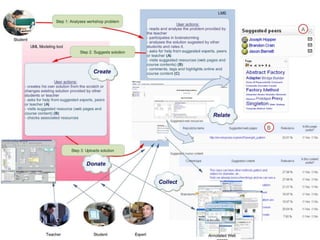
Pedagogical Foundation Learning through design Project-based learning Engagement theory Relate, create, donate Genex framework Collect, relate, create, donate
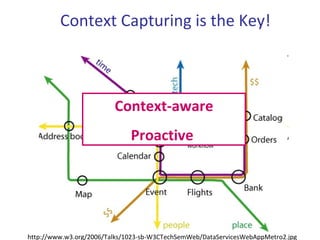
Context Capturing is the Key! http://www.w3.org/2006/Talks/1023-sb-W3CTechSemWeb/DataServicesWebAppMetro2.jpg Context-aware Proactive
Learning Scenario
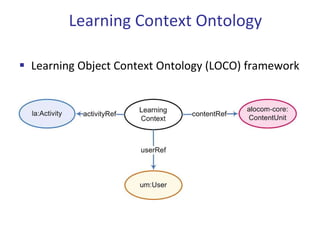
Learning Object Context Ontology (LOCO) framework Learning Context Ontology
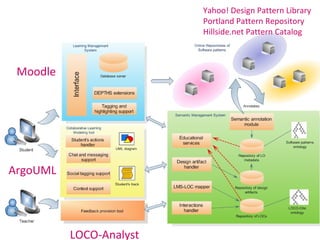
Moodle ArgoUML LOCO-Analyst Yahoo! Design Pattern Library Portland Pattern Repository Hillside.net Pattern Catalog
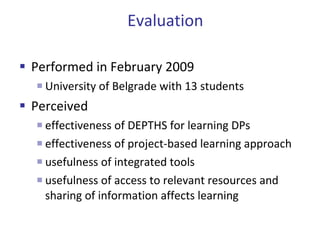
Evaluation Performed in February 2009  University of Belgrade with 13 students Perceived  effectiveness of DEPTHS for learning DPs effectiveness of project-based learning approach usefulness of integrated tools  usefulness of access to relevant resources and  sharing of information affects learning
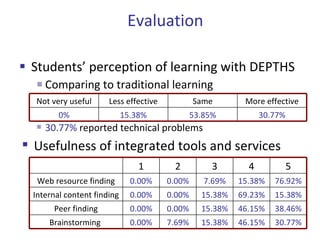
Evaluation Students’ perception of learning with DEPTHS Comparing to traditional learning Usefulness of integrated tools and services 30.77%  reported technical problems 30.77% 53.85% 15.38% 0% More effective Same Less effective Not very useful 38.46% 46.15% 15.38% 0.00% 0.00% Peer finding 46.15% 69.23% 15.38% 4 30.77% 15.38% 7.69% 0.00% Brainstorming  15.38% 15.38% 0.00% 0.00% Internal content finding 76.92% 7.69% 0.00% 0.00% Web resource finding 5 3 2 1
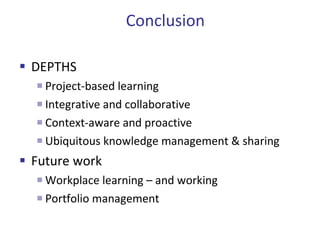
Conclusion DEPTHS Project-based learning Integrative and collaborative Context-aware and proactive Ubiquitous knowledge management & sharing Future work  Workplace learning – and working Portfolio management
Semantically-enabled Project-based Collaborative Learning of Software Patterns Zoran Jeremi ć 1 , Jelena Jova nović 1 ,  Dragan Gašević 2   1 University  of Belgrade, Serbia 2 Athabasca University, Canada

Semantically-enabled Project-based Collaborative Learning of Software Patterns

  • 1.
    Semantically-enabled Project-based CollaborativeLearning of Software Patterns Zoran Jeremi ć 1 , Jelena Jova nović 1 , Dragan Gašević 2 1 University of Belgrade, Serbia 2 Athabasca University, Canada
  • 2.
    Motivation Design patterns Recurring solutions to software design problems Found in real-world application development Integrative view to problems
  • 3.
    Motivation Current learningsupport Individual use of tools Limited support for Exchange data about the activities between tools Inter-tool learning
  • 4.
    Objective Harmonization of Instruction flows Learning flows Collaborative learning Access to real-world problems
  • 5.
    Pedagogical Foundation Learningthrough design Project-based learning Engagement theory Relate, create, donate Genex framework Collect, relate, create, donate
  • 6.
    Context Capturing isthe Key! http://www.w3.org/2006/Talks/1023-sb-W3CTechSemWeb/DataServicesWebAppMetro2.jpg Context-aware Proactive
  • 7.
  • 8.
    Learning Object ContextOntology (LOCO) framework Learning Context Ontology
  • 9.
    Moodle ArgoUML LOCO-AnalystYahoo! Design Pattern Library Portland Pattern Repository Hillside.net Pattern Catalog
  • 10.
    Evaluation Performed inFebruary 2009 University of Belgrade with 13 students Perceived effectiveness of DEPTHS for learning DPs effectiveness of project-based learning approach usefulness of integrated tools usefulness of access to relevant resources and sharing of information affects learning
  • 11.
    Evaluation Students’ perceptionof learning with DEPTHS Comparing to traditional learning Usefulness of integrated tools and services 30.77% reported technical problems 30.77% 53.85% 15.38% 0% More effective Same Less effective Not very useful 38.46% 46.15% 15.38% 0.00% 0.00% Peer finding 46.15% 69.23% 15.38% 4 30.77% 15.38% 7.69% 0.00% Brainstorming 15.38% 15.38% 0.00% 0.00% Internal content finding 76.92% 7.69% 0.00% 0.00% Web resource finding 5 3 2 1
  • 12.
    Conclusion DEPTHS Project-basedlearning Integrative and collaborative Context-aware and proactive Ubiquitous knowledge management & sharing Future work Workplace learning – and working Portfolio management
  • 13.
    Semantically-enabled Project-based CollaborativeLearning of Software Patterns Zoran Jeremi ć 1 , Jelena Jova nović 1 , Dragan Gašević 2 1 University of Belgrade, Serbia 2 Athabasca University, Canada