Self-esteem
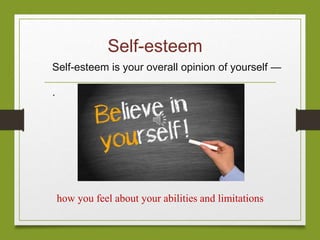
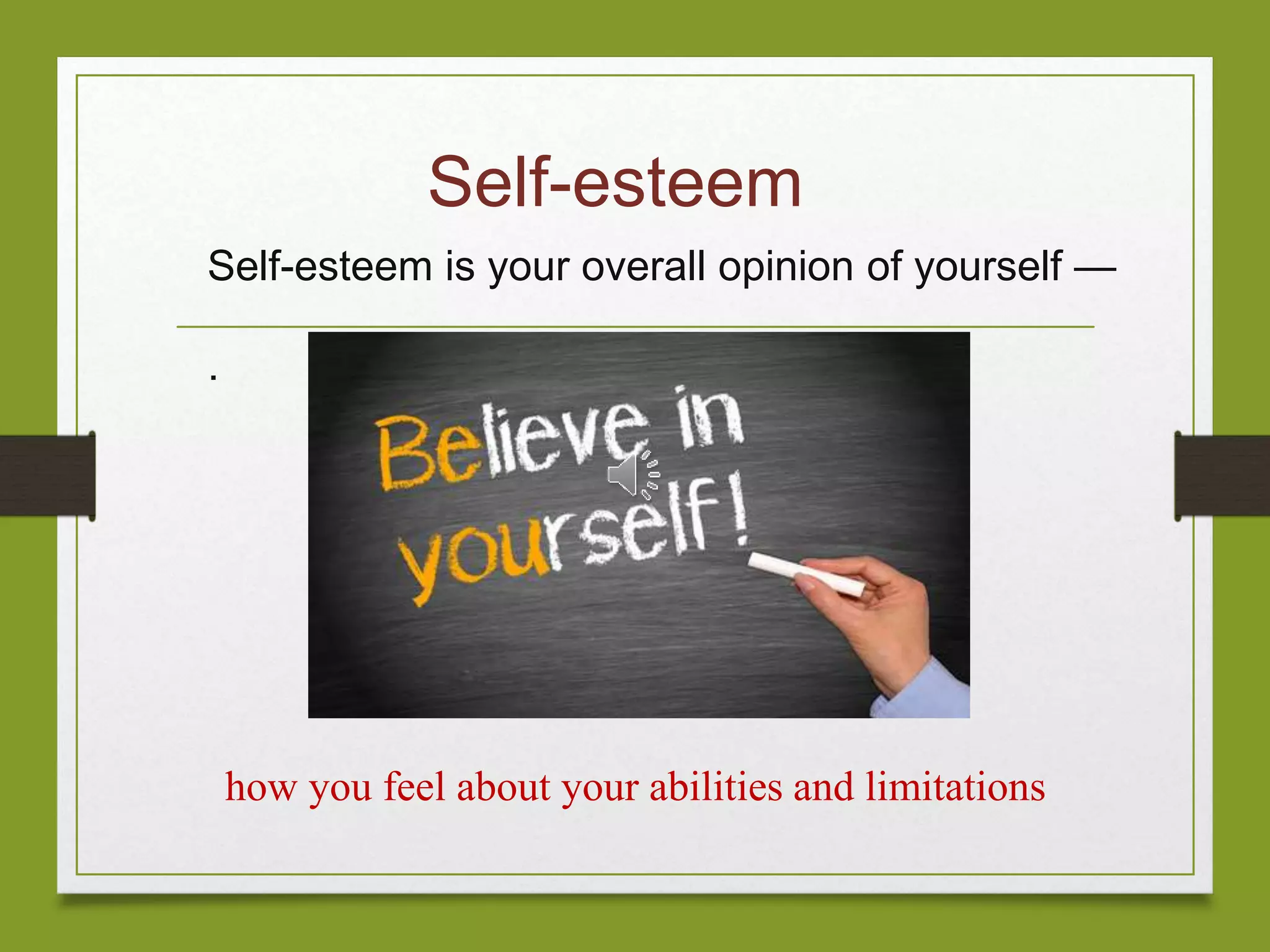
Self-esteem is your overall opinion of yourself —
.
how you feel about your abilities and limitations
Where Does Self-Esteem Come From
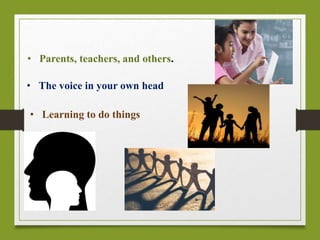
• Parents, teachers, and others.
• The voice in your own head
• Learning to do things
Self-esteem begins to form in early childhood.
Factors that can influence self-esteem include:
 Your thoughts and perceptions
 How other people react to you
 Experiences at home, school, work and in
the community
 Illness, disability or injury
 Age
 Role and status in society
 Media messages
Factors that shape and influence self-esteem
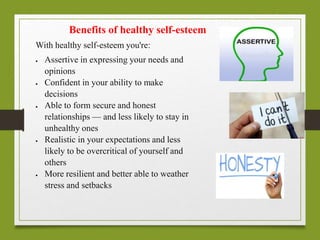
Benefits of healthy self-esteem
With healthy self-esteem you're:
 Assertive in expressing your needs and
opinions
 Confident in your ability to make
decisions
 Able to form secure and honest
relationships — and less likely to stay in
unhealthy ones
 Realistic in your expectations and less
likely to be overcritical of yourself and
others
 More resilient and better able to weather
stress and setbacks
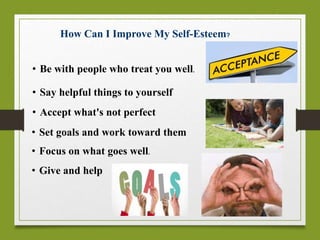
How Can I Improve My Self-Esteem?
• Be with people who treat you well.
• Say helpful things to yourself
• Accept what's not perfect
• Set goals and work toward them
• Focus on what goes well.
• Give and help
Exercise Can Boost Your Self-Esteem
Who I Am: List the top 5 things that made you
smile today. Reflect on why these occurrences
brought you joy.
What I Need: What and/or who could you not live
without? Reflect on this feeling of need.
What I Desire: If you had the ability to accomplish
one thing tomorrow, what would it be and why?
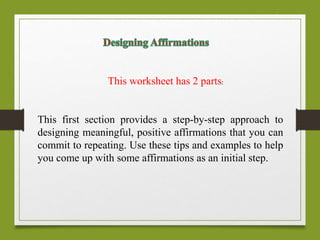
This worksheet has 2 parts:
This first section provides a step-by-step approach to
designing meaningful, positive affirmations that you can
commit to repeating. Use these tips and examples to help
you come up with some affirmations as an initial step.
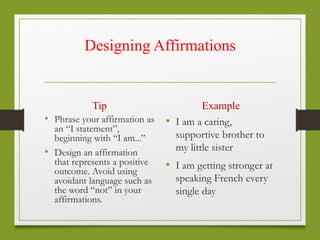
Designing Affirmations
Tip
• Phrase your affirmation as
an “I statement”,
beginning with “I am...”
• Design an affirmation
that represents a positive
outcome. Avoid using
avoidant language such as
the word “not” in your
affirmations.
Example
• I am a caring,
supportive brother to
my little sister
• I am getting stronger at
speaking French every
single day
Self-esteem.pptx

Self-esteem.pptx

  • 1.
    Self-esteem Self-esteem is youroverall opinion of yourself — . how you feel about your abilities and limitations
  • 2.
  • 3.
    • Parents, teachers,and others. • The voice in your own head • Learning to do things
  • 4.
    Self-esteem begins toform in early childhood. Factors that can influence self-esteem include:  Your thoughts and perceptions  How other people react to you  Experiences at home, school, work and in the community  Illness, disability or injury  Age  Role and status in society  Media messages Factors that shape and influence self-esteem
  • 7.
    Benefits of healthyself-esteem With healthy self-esteem you're:  Assertive in expressing your needs and opinions  Confident in your ability to make decisions  Able to form secure and honest relationships — and less likely to stay in unhealthy ones  Realistic in your expectations and less likely to be overcritical of yourself and others  More resilient and better able to weather stress and setbacks
  • 9.
    How Can IImprove My Self-Esteem? • Be with people who treat you well. • Say helpful things to yourself • Accept what's not perfect • Set goals and work toward them • Focus on what goes well. • Give and help
  • 10.
    Exercise Can BoostYour Self-Esteem Who I Am: List the top 5 things that made you smile today. Reflect on why these occurrences brought you joy. What I Need: What and/or who could you not live without? Reflect on this feeling of need. What I Desire: If you had the ability to accomplish one thing tomorrow, what would it be and why?
  • 12.
    This worksheet has2 parts: This first section provides a step-by-step approach to designing meaningful, positive affirmations that you can commit to repeating. Use these tips and examples to help you come up with some affirmations as an initial step.
  • 13.
    Designing Affirmations Tip • Phraseyour affirmation as an “I statement”, beginning with “I am...” • Design an affirmation that represents a positive outcome. Avoid using avoidant language such as the word “not” in your affirmations. Example • I am a caring, supportive brother to my little sister • I am getting stronger at speaking French every single day