SELF
AWARENESS
When I Discover Who I Am, I’ll Be
Free.
Presented by :
Pavithran S
22MBA10005
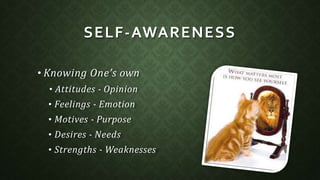
SELF-AWARENESS
• Knowing One’s own
• Attitudes - Opinion
• Feelings - Emotion
• Motives - Purpose
• Desires - Needs
• Strengths - Weaknesses
KEY AREAS OF SELF
AWARENESS
• Personality traits
• Personal values
• Habits
• Emotions
• Psychological needs
HOW TO MAKE SURE THAT WE
ARE SELF AWARE
• By asking for other’s feedback
• Self-Reflection of one’s feelings helps a great
deal.
• By taking Self scoring tests
COMPONENTS OF SELF
AWARNESS
• SELF ANALYSIS
• SELF ESTEEM
• SELF EFFICACY
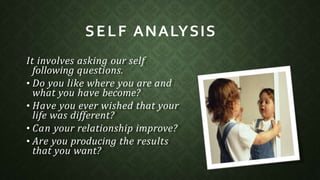
It involves asking our self
following questions.
• Do you like where you are and
what you have become?
• Have you ever wished that your
life was different?
• Can your relationship improve?
• Are you producing the results
that you want?
SELF ANALYSIS
SELF ESTEEM
• It is the feeling I have about my self concept.
• A subjective appraisal of himself as intrinsically
positive or negative to some degree
• Example: I perceive I am an introvert and I feel
proud of it.
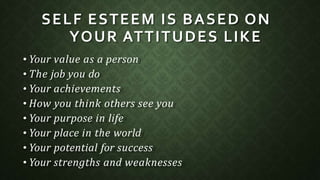
SELF ESTEEM IS BASED ON
YOUR ATTITUDES LIKE
• Your value as a person
• The job you do
• Your achievements
• How you think others see you
• Your purpose in life
• Your place in the world
• Your potential for success
• Your strengths and weaknesses
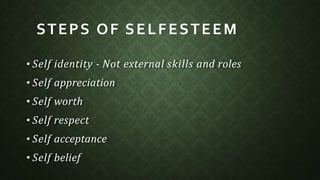
• Self identity - Not external skills and roles
• Self appreciation
• Self worth
• Self respect
• Self acceptance
• Self belief
STEPS OF SELFESTEEM
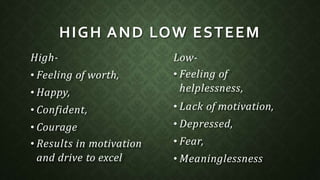
HIGH AND LOW ESTEEM
High-
• Feeling of worth,
• Happy,
• Confident,
• Courage
• Results in motivation
and drive to excel
Low-
• Feeling of
helplessness,
• Lack of motivation,
• Depressed,
• Fear,
• Meaninglessness
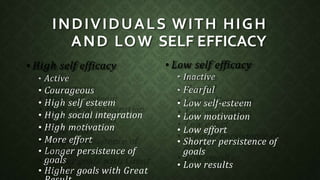
INDIVIDUALS WITH HIGH
AND LOW SELF EFFICACY
• High self efficacy
• Active
• Courageous
• High self esteem
• High social integration
• High motivation
• More effort
• Longer persistence of
goals
• Higher goals with Great
• Low self efficacy
• Inactive
• Fearful
• Low self-esteem
• Low motivation
• Low effort
• Shorter persistence of
goals
• Low results
THANKYOU

selfawareness.pptx

  • 1.
    SELF AWARENESS When I DiscoverWho I Am, I’ll Be Free. Presented by : Pavithran S 22MBA10005
  • 2.
    SELF-AWARENESS • Knowing One’sown • Attitudes - Opinion • Feelings - Emotion • Motives - Purpose • Desires - Needs • Strengths - Weaknesses
  • 3.
    KEY AREAS OFSELF AWARENESS • Personality traits • Personal values • Habits • Emotions • Psychological needs
  • 4.
    HOW TO MAKESURE THAT WE ARE SELF AWARE • By asking for other’s feedback • Self-Reflection of one’s feelings helps a great deal. • By taking Self scoring tests
  • 5.
    COMPONENTS OF SELF AWARNESS •SELF ANALYSIS • SELF ESTEEM • SELF EFFICACY
  • 6.
    It involves askingour self following questions. • Do you like where you are and what you have become? • Have you ever wished that your life was different? • Can your relationship improve? • Are you producing the results that you want? SELF ANALYSIS
  • 7.
    SELF ESTEEM • Itis the feeling I have about my self concept. • A subjective appraisal of himself as intrinsically positive or negative to some degree • Example: I perceive I am an introvert and I feel proud of it.
  • 8.
    SELF ESTEEM ISBASED ON YOUR ATTITUDES LIKE • Your value as a person • The job you do • Your achievements • How you think others see you • Your purpose in life • Your place in the world • Your potential for success • Your strengths and weaknesses
  • 9.
    • Self identity- Not external skills and roles • Self appreciation • Self worth • Self respect • Self acceptance • Self belief STEPS OF SELFESTEEM
  • 10.
    HIGH AND LOWESTEEM High- • Feeling of worth, • Happy, • Confident, • Courage • Results in motivation and drive to excel Low- • Feeling of helplessness, • Lack of motivation, • Depressed, • Fear, • Meaninglessness
  • 11.
    INDIVIDUALS WITH HIGH ANDLOW SELF EFFICACY • High self efficacy • Active • Courageous • High self esteem • High social integration • High motivation • More effort • Longer persistence of goals • Higher goals with Great • Low self efficacy • Inactive • Fearful • Low self-esteem • Low motivation • Low effort • Shorter persistence of goals • Low results
  • 12.