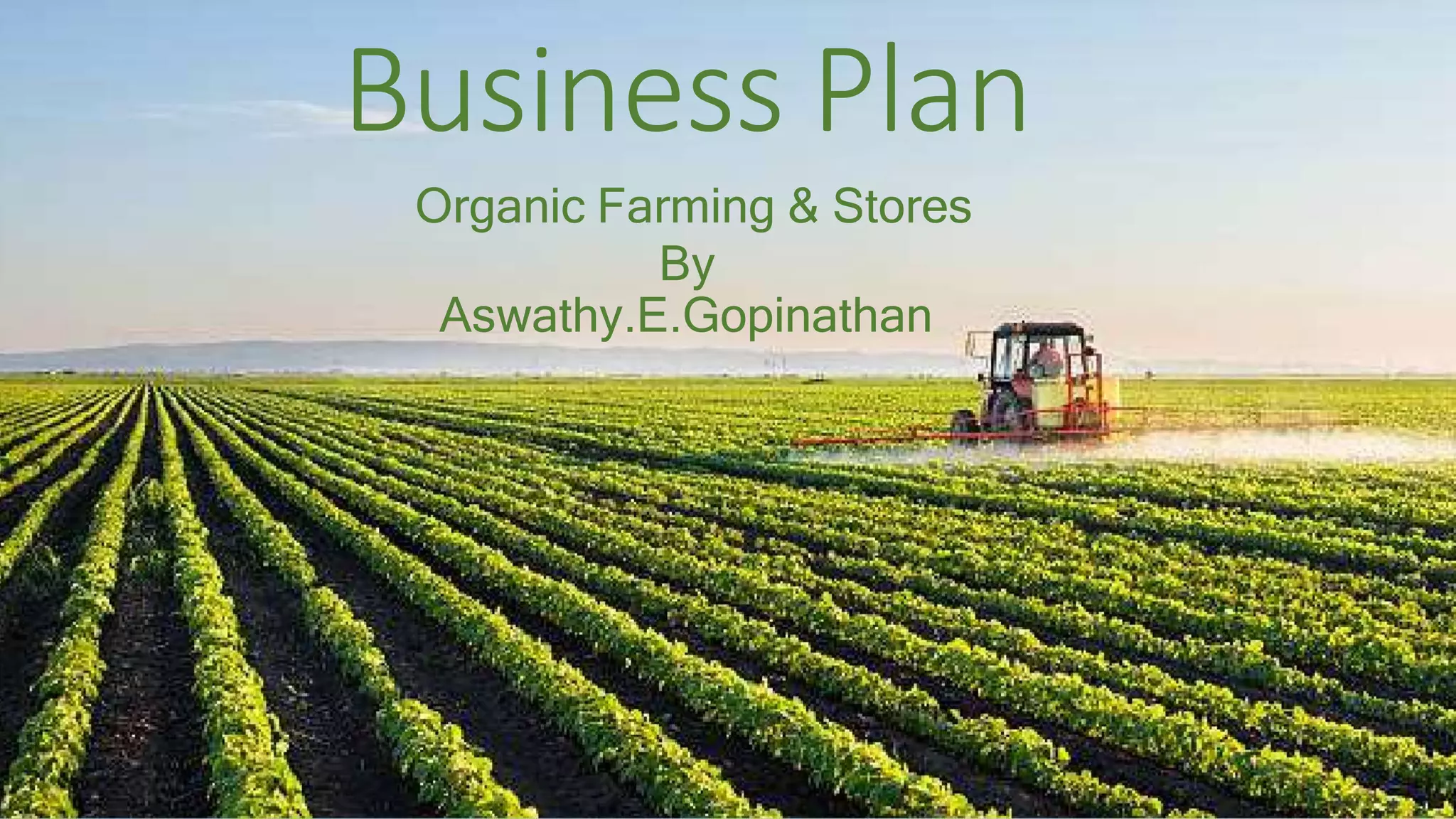
Business Plan
Organic Farming & Stores
By
Aswathy.E.Gopinathan
Why Organic farming…
• The organic farm industry includes farms that primarily
cultivate organic fruit, vegetables, grains and other crops or
livestock.
• free from artificial chemicals, pesticides and fertilizers, or
genetically modified organisms.
• Economy’s best performing industries over the last half a
decade.
• Global demand for organic farm produce is rising due to
increasing health concerns about food.
AGE GROUP OF ORGANIC FARMS & STORES
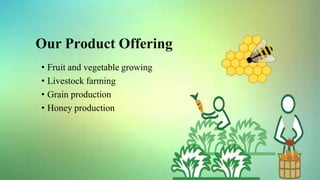
Our Product Offering
• Fruit and vegetable growing
• Livestock farming
• Grain production
• Honey production
Vision
Our Vision is to become one of the leading commercial organic farms and
stores brand not just in India but also on the global stage.
Mission
We want our well packaged organic products to flood every nooks and
crannies of the India and other countries of the world.
By 2025 the No.1 Brand in India
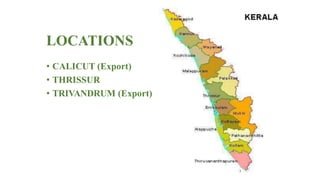
LOCATIONS
• CALICUT (Export)
• THRISSUR
• TRIVANDRUM (Export)
SWOT ANALYSIS
STRENGTH
• We have healthy relationships with loads of major players in the organic farms
industry, both suppliers and buyers within and outside of the Kerala.
• We have some of the latest commercial farm machines; tools and equipment that
will help us cultivate crops in commercial quantities with less stress.
WEAKNESS
• New to the market
• Pricing issues
We are aware of this and from our projection, we will overcome this weakness with
time and turn it to a major advantage for the business.
OPPORTUNITIES
• A good percentage of the population are ready to pay little much more money, if they
are getting original organic products.
• High demand in the market
THREATS
• Global economic downturn that can impact negatively on household spending
• Bad weather cum natural disasters (draughts, epidemics),
• Unfavourable government policies and the arrival of a competitor (a commercial farm
that cultivates same crops) within same location.
• There is hardly much you can do as regards these threats and challenges other than to
be optimistic that things will continue to work for your good.
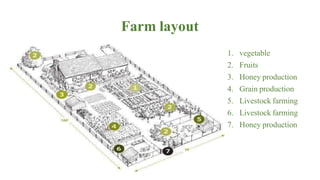
Farm layout
1. vegetable
2. Fruits
3. Honey production
4. Grain production
5. Livestock farming
6. Livestock farming
7. Honey production
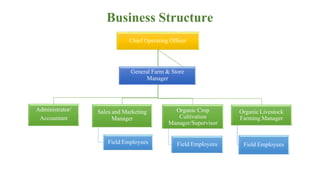
Business Structure
Chief Operating Officer
Sales and Marketing
Manager
Field Employees
Administrator/
Accountant
Organic Crop
Cultivation
Manager/Supervisor
Field Employees
Organic Livestock
Farming Manager
Field Employees
General Farm & Store
Manager
Target Market
• Supermarkets
• Grocery Stores
• Hotels & Resorts
• Restaurants
• Outdoor caterers
• Households
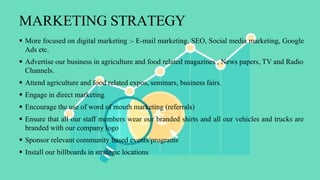
MARKETING STRATEGY
 More focused on digital marketing :- E-mail marketing, SEO, Social media marketing, Google
Ads etc.
 Advertise our business in agriculture and food related magazines , News papers, TV and Radio
Channels.
 Attend agriculture and food related expos, seminars, business fairs.
 Engage in direct marketing
 Encourage the use of word of mouth marketing (referrals)
 Ensure that all our staff members wear our branded shirts and all our vehicles and trucks are
branded with our company logo
 Sponsor relevant community based events/programs
 Install our billboards in strategic locations
Sales
• WWW.AGEORGANIC.COM
• WWW.GROFERS.COM
• WWW.BIGBASKET.COM
• RETAIL STORES (SUPERMARKETS, GROCERY STORES)
Our Pricing Strategy
• Best quality products at best price in the market
• Out of Kerala, Price will be increase (Export)
• During Festival seasons- Offers & Discounts
Payment Options
• Payment via bank transfer (Wholesale)
• Payment with cash
• Payment via online bank transfer
• Payment via mobile money transfer (Patym)
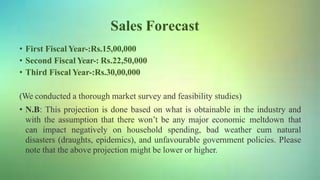
Sales Forecast
• First Fiscal Year-:Rs.15,00,000
• Second Fiscal Year-: Rs.22,50,000
• Third Fiscal Year-:Rs.30,00,000
(We conducted a thorough market survey and feasibility studies)
• N.B: This projection is done based on what is obtainable in the industry and
with the assumption that there won’t be any major economic meltdown that
can impact negatively on household spending, bad weather cum natural
disasters (draughts, epidemics), and unfavourable government policies. Please
note that the above projection might be lower or higher.
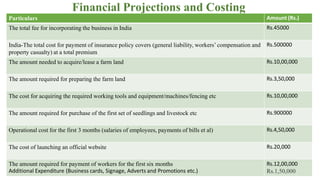
Financial Projections and Costing
Particulars Amount (Rs.)
The total fee for incorporating the business in India Rs.45000
India-The total cost for payment of insurance policy covers (general liability, workers’ compensation and
property casualty) at a total premium
Rs.500000
The amount needed to acquire/lease a farm land Rs.10,00,000
The amount required for preparing the farm land Rs.3,50,000
The cost for acquiring the required working tools and equipment/machines/fencing etc Rs.10,00,000
The amount required for purchase of the first set of seedlings and livestock etc Rs.900000
Operational cost for the first 3 months (salaries of employees, payments of bills et al) Rs.4,50,000
The cost of launching an official website Rs.20,000
The amount required for payment of workers for the first six months
Additional Expenditure (Business cards, Signage, Adverts and Promotions etc.)
Rs.12,00,000
Rs.1,50,000
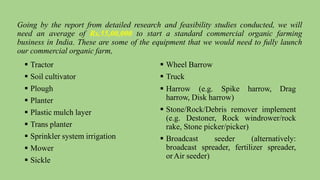
Going by the report from detailed research and feasibility studies conducted, we will
need an average of Rs.55,00,000 to start a standard commercial organic farming
business in India. These are some of the equipment that we would need to fully launch
our commercial organic farm,
 Tractor
 Soil cultivator
 Plough
 Planter
 Plastic mulch layer
 Trans planter
 Sprinkler system irrigation
 Mower
 Sickle
 Wheel Barrow
 Truck
 Harrow (e.g. Spike harrow, Drag
harrow, Disk harrow)
 Stone/Rock/Debris remover implement
(e.g. Destoner, Rock windrower/rock
rake, Stone picker/picker)
 Broadcast seeder (alternatively:
broadcast spreader, fertilizer spreader,
orAir seeder)
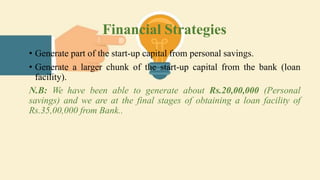
Financial Strategies
• Generate part of the start-up capital from personal savings.
• Generate a larger chunk of the start-up capital from the bank (loan
facility).
N.B: We have been able to generate about Rs.20,00,000 (Personal
savings) and we are at the final stages of obtaining a loan facility of
Rs.35,00,000 from Bank..
businessplan-180506213647.pptx

businessplan-180506213647.pptx

  • 1.
    Business Plan Organic Farming& Stores By Aswathy.E.Gopinathan
  • 2.
    Why Organic farming… •The organic farm industry includes farms that primarily cultivate organic fruit, vegetables, grains and other crops or livestock. • free from artificial chemicals, pesticides and fertilizers, or genetically modified organisms. • Economy’s best performing industries over the last half a decade. • Global demand for organic farm produce is rising due to increasing health concerns about food.
  • 3.
    AGE GROUP OFORGANIC FARMS & STORES
  • 4.
    Our Product Offering •Fruit and vegetable growing • Livestock farming • Grain production • Honey production
  • 5.
    Vision Our Vision isto become one of the leading commercial organic farms and stores brand not just in India but also on the global stage. Mission We want our well packaged organic products to flood every nooks and crannies of the India and other countries of the world. By 2025 the No.1 Brand in India
  • 6.
    LOCATIONS • CALICUT (Export) •THRISSUR • TRIVANDRUM (Export)
  • 7.
    SWOT ANALYSIS STRENGTH • Wehave healthy relationships with loads of major players in the organic farms industry, both suppliers and buyers within and outside of the Kerala. • We have some of the latest commercial farm machines; tools and equipment that will help us cultivate crops in commercial quantities with less stress. WEAKNESS • New to the market • Pricing issues We are aware of this and from our projection, we will overcome this weakness with time and turn it to a major advantage for the business.
  • 8.
    OPPORTUNITIES • A goodpercentage of the population are ready to pay little much more money, if they are getting original organic products. • High demand in the market THREATS • Global economic downturn that can impact negatively on household spending • Bad weather cum natural disasters (draughts, epidemics), • Unfavourable government policies and the arrival of a competitor (a commercial farm that cultivates same crops) within same location. • There is hardly much you can do as regards these threats and challenges other than to be optimistic that things will continue to work for your good.
  • 9.
    Farm layout 1. vegetable 2.Fruits 3. Honey production 4. Grain production 5. Livestock farming 6. Livestock farming 7. Honey production
  • 10.
    Business Structure Chief OperatingOfficer Sales and Marketing Manager Field Employees Administrator/ Accountant Organic Crop Cultivation Manager/Supervisor Field Employees Organic Livestock Farming Manager Field Employees General Farm & Store Manager
  • 11.
    Target Market • Supermarkets •Grocery Stores • Hotels & Resorts • Restaurants • Outdoor caterers • Households
  • 12.
    MARKETING STRATEGY  Morefocused on digital marketing :- E-mail marketing, SEO, Social media marketing, Google Ads etc.  Advertise our business in agriculture and food related magazines , News papers, TV and Radio Channels.  Attend agriculture and food related expos, seminars, business fairs.  Engage in direct marketing  Encourage the use of word of mouth marketing (referrals)  Ensure that all our staff members wear our branded shirts and all our vehicles and trucks are branded with our company logo  Sponsor relevant community based events/programs  Install our billboards in strategic locations
  • 13.
    Sales • WWW.AGEORGANIC.COM • WWW.GROFERS.COM •WWW.BIGBASKET.COM • RETAIL STORES (SUPERMARKETS, GROCERY STORES)
  • 14.
    Our Pricing Strategy •Best quality products at best price in the market • Out of Kerala, Price will be increase (Export) • During Festival seasons- Offers & Discounts Payment Options • Payment via bank transfer (Wholesale) • Payment with cash • Payment via online bank transfer • Payment via mobile money transfer (Patym)
  • 15.
    Sales Forecast • FirstFiscal Year-:Rs.15,00,000 • Second Fiscal Year-: Rs.22,50,000 • Third Fiscal Year-:Rs.30,00,000 (We conducted a thorough market survey and feasibility studies) • N.B: This projection is done based on what is obtainable in the industry and with the assumption that there won’t be any major economic meltdown that can impact negatively on household spending, bad weather cum natural disasters (draughts, epidemics), and unfavourable government policies. Please note that the above projection might be lower or higher.
  • 16.
    Financial Projections andCosting Particulars Amount (Rs.) The total fee for incorporating the business in India Rs.45000 India-The total cost for payment of insurance policy covers (general liability, workers’ compensation and property casualty) at a total premium Rs.500000 The amount needed to acquire/lease a farm land Rs.10,00,000 The amount required for preparing the farm land Rs.3,50,000 The cost for acquiring the required working tools and equipment/machines/fencing etc Rs.10,00,000 The amount required for purchase of the first set of seedlings and livestock etc Rs.900000 Operational cost for the first 3 months (salaries of employees, payments of bills et al) Rs.4,50,000 The cost of launching an official website Rs.20,000 The amount required for payment of workers for the first six months Additional Expenditure (Business cards, Signage, Adverts and Promotions etc.) Rs.12,00,000 Rs.1,50,000
  • 17.
    Going by thereport from detailed research and feasibility studies conducted, we will need an average of Rs.55,00,000 to start a standard commercial organic farming business in India. These are some of the equipment that we would need to fully launch our commercial organic farm,  Tractor  Soil cultivator  Plough  Planter  Plastic mulch layer  Trans planter  Sprinkler system irrigation  Mower  Sickle  Wheel Barrow  Truck  Harrow (e.g. Spike harrow, Drag harrow, Disk harrow)  Stone/Rock/Debris remover implement (e.g. Destoner, Rock windrower/rock rake, Stone picker/picker)  Broadcast seeder (alternatively: broadcast spreader, fertilizer spreader, orAir seeder)
  • 18.
    Financial Strategies • Generatepart of the start-up capital from personal savings. • Generate a larger chunk of the start-up capital from the bank (loan facility). N.B: We have been able to generate about Rs.20,00,000 (Personal savings) and we are at the final stages of obtaining a loan facility of Rs.35,00,000 from Bank..