6
b)
−3 −1 1 3
−6
−4
−2
0
2
4
6
c)
−3 −1 1 3
−6
−4
−2
0
2
4
6
2 3 4 5 6
0
0.01
0.02
0.03
zc
(µm)
<Sext
>⋅z
z=−4 µm
z=−3.6 µm
z=−3.2 µm
z=−2.8 µm
z=−2.4 µm
z=−2.0 µm
z=−1.6 µm
z=−1.2 µm
z=−0.8 µm
z=−0.4 µm
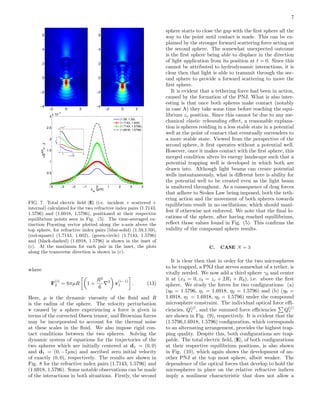
FIG. 4. Total electric field |E| (i.e. incident + scattered +
internal) and the time-averaged extinction Poynting vector
Sext
· ˆz shown for a single sphere system centered at z1 =
−3.5µm with radius R1 = 1.5µm and refractive index η1 =
1.59 in (a) and (b), respectively. Although PNJ behaviour
is observed in both plots, it is harder to discern which part
of the field is generated by the incident and scattered in (a).
A problem that is avoided by capturing only the radiative
interference in (b). Translating the sphere along the z-axis at
discrete intervals from z1 = −4µm to z1 = −0.4µm in steps
of 0.4µm and plotting the time-averaged extinction Poynting
vector along the z-axis above the sphere, we obtain the plots
in (c). The PNJ is best observed when the sphere is held
below the focal point.
We highlight the total electric field, |E|, of the (1.7143,
1.5796) and (1.6918, 1.5796) refractive index pairs in Fig.
(7a) further showing that a tethered PNJ is developed.
The results so far indicate a trapping ability and PNJ
tether ability for compound spheres. Obviously, it is far
more practical to consider a system where the compound
condition is removed, i.e. the two spheres are free to
move. To validate the trapping and PNJ generation in
this free-to-move scenario we should consider a dynamic
system that consists of light-matter interaction and hy-
drodynamic forces over time. The forces acting on the
spheres due to light-matter interaction can be calculated
at each time step with the iterative procedure described
above. The forces on the spheres due to hydrodynamic
interactions, i.e. between the fluid and the spheres, can
be calculated using the Method of Reflections (MoR) [43]
−4 −3 −2 −1 0 1 2 3 4
−0.3
−0.2
−0.1
0
0.1
0.2
0.3
0.4
zc
(µm)
Q
z
#1
#2
z
c
(1.59, 1.59)
(1.7143, 1.602)
(1.7143, 1.5796)
(1.6918, 1.5796)
FIG. 5. Optical force efficiencies Q
(j)
z (zc) of com-
pound microspheres for refractive index pairs (η1, η2): (blue-
solid) (1.59,1.59), (red-square) (1.7143, 1.602), (green-circle)
(1.7143, 1.5796) and (black-dashed) (1.6918, 1.5796). The
centers of the spheres are set by (x1,2 = 0, z1,2 = zc ± R1,2),
where zc is the contact point of the compound spheres as
shown in the inset. The radius of the microspheres are fixed
such that R1 ≡ R2 = 1.5µm and are illuminated with an
x-polarized Gaussian beam focused at (x = 0, z = 0) with a
wavelength of λ = 1.064µm. A zero-crossing is observed for all
pairs except the (1.59, 1.59) pair, which has been previously
to exhibit particle exchange behaviour when the compound
condition is relaxed [15].
−4 −3 −2 −1 0 1 2 3 4
−0.3
−0.2
−0.1
0
0.1
0.2
0.3
0.4
zc
(µm)
Qz
(1)
M=0
M=1
M=2
M=3
−4 −2 0 2 4
−0.5
0
0.5
1
Qz
(2)
FIG. 6. Optical force efficiencies, Q
(1)
z and Q
(2)
z (inset), de-
composed using Debye series analysis, such that the bottom
sphere is represented with the transition matrix TS
M under
the condition that p = M and S = 0, and the top sphere is
represented using the full Mie coefficients. Evidently, Q
(2)
z is
dominated mostly by the first-order of transmission M = 1,
with later components providing only a minute change. In the
case of Q
(1)
z , we observe that the first-order of transmission
(PNJ) from the bottom sphere and the first-order of internal
reflection (evanescent) contributes a significant amount to the
top sphere.
7
−2 0 2
−4
−2
0
2
4
6
−2 0 2
−4
−2
0
2
4
6
−4 −3 −2 −1 0 1 2 3 4
0
0.5
1
1.5
2
2.5
3
x 10
−3
x
m
(µm)
<S
ext
>⋅z
(1.59, 1.59)
(1.7143, 1.602)
(1.7143, 1.5796)
(1.6918, 1.5796)
2 4 6
0
1
2
3
x 10
−3
<S
ext
>⋅z
z
c
(µm)
FIG. 7. Total electric field |E| (i.e. incident + scattered +
internal) calculated for the two refractive index pairs (1.7143,
1.5796) and (1.6918, 1.5796), positioned at their respective
equilibrium points seen in Fig. (5). The time-averaged ex-
tinction Poynting vector plotted along the z-axis above the
top sphere, for refractive index pairs (blue-solid) (1.59,1.59),
(red-square) (1.7143, 1.602), (green-circle) (1.7143, 1.5796)
and (black-dashed) (1.6918, 1.5796) is shown in the inset of
(c). At the maximum for each pair in the inset, the plots
along the transverse direction is shown in (c).
where
F
(i)
2 = 6πµR 1 +
R2
6
2
v
(i−1)
1 . (13)
Here, µ is the dynamic viscosity of the fluid and R
is the radius of the sphere. The velocity perturbation
v caused by a sphere experiencing a force is given in
terms of the corrected Oseen tensor, and Brownian forces
may be incorporated to account for the thermal noise
at these scales in the fluid. We also impose rigid con-
tact conditions between the two spheres. Solving the
dynamic system of equations for the trajectories of the
two spheres which are initially centered at d1 = (0, 0)
and d1 = (0, −7µm) and ascribed zero initial velocity
of exactly (0, 0), respectively. The results are shown in
Fig. 8 for the refractive index pairs (1.7143, 1.5796) and
(1.6918, 1.5796). Some notable observations can be made
of the interactions in both situations. Firstly, the second
sphere starts to close the gap with the first sphere all the
way to the point until contact is made. This can be ex-
plained by the stronger forward scattering force acting on
the second sphere. The somewhat unexpected outcome
is the first sphere being able to displace in the direction
of light application from its position at t = 0. Since this
cannot be attributed to hydrodynamic interactions, it is
clear then that light is able to transmit through the sec-
ond sphere to provide a forward scattering to move the
first sphere.
It is evident that a tethering force had been in action,
caused by the formation of the PNJ. What is also inter-
esting is that once both spheres make contact (notably
in case A) they take some time before reaching the equi-
librium zc position. Since this cannot be due to any me-
chanical elastic rebounding effect, a reasonable explana-
tion is spheres residing in a less stable state in a potential
well at the point of contact that eventually surrenders to
a more stable state. Viewed from the perspective of the
second sphere, it first operates without a potential well.
However, once it makes contact with the first sphere, this
merged condition alters its energy landscape such that a
potential trapping well is developed in which both are
drawn into. Although light beams can create potential
wells instantaneously, what is different here is ability for
the potential well to be created even as the light beam
is unaltered throughout. As a consequence of drag forces
that adhere to Stokes Law being imposed, both the teth-
ering action and the movement of both spheres towards
equilibrium result in no oscillations; which should mani-
fest if otherwise not enforced. We note that the final lo-
cations of the sphere, after having reached equillibrium,
reflect those values found in Fig. (5). This confirms the
validity of the compound sphere results.
C. CASE N = 3
It is clear then that in order for the two microspheres
to be trapped, a PNJ that serves somewhat of a tether, is
vitally needed. We now add a third sphere γ0 and center
it at (x3 = 0, z3 = zc + 2R1 + R3), i.e. above the first
sphere. We study the forces for two configurations: (a)
(η0 = 1.5796, η1 = 1.6918, η2 = 1.5796) and (b) (η0 =
1.6918, η1 = 1.6918, η2 = 1.5796) under the compound
microsphere constraint. The individual optical force effi-
ciencies, Q
(j)
z , and the summed force efficiencies Q
(j)
z
are shown in Fig. (9), respectively. It is evident that the
(1.5796,1.6918, 1.5796) configuration, which corresponds
to an alternating arrangement, provides the highest trap-
ping quality. Despite this, both configurations are trap-
pable. The total electric field, |E|, of both configurations
at their respective equilibrium positions, is also shown
in Fig. (10), which again shows the development of an-
other PNJ at the top most sphere, albeit weaker. The
dependence of the optical forces that develop to hold the
microspheres in place on the relative refractive indices
imply a nonlinear characteristic that does not allow a

selection (1)

  • 1.
    6 b) −3 −1 13 −6 −4 −2 0 2 4 6 c) −3 −1 1 3 −6 −4 −2 0 2 4 6 2 3 4 5 6 0 0.01 0.02 0.03 zc (µm) <Sext >⋅z z=−4 µm z=−3.6 µm z=−3.2 µm z=−2.8 µm z=−2.4 µm z=−2.0 µm z=−1.6 µm z=−1.2 µm z=−0.8 µm z=−0.4 µm FIG. 4. Total electric field |E| (i.e. incident + scattered + internal) and the time-averaged extinction Poynting vector Sext · ˆz shown for a single sphere system centered at z1 = −3.5µm with radius R1 = 1.5µm and refractive index η1 = 1.59 in (a) and (b), respectively. Although PNJ behaviour is observed in both plots, it is harder to discern which part of the field is generated by the incident and scattered in (a). A problem that is avoided by capturing only the radiative interference in (b). Translating the sphere along the z-axis at discrete intervals from z1 = −4µm to z1 = −0.4µm in steps of 0.4µm and plotting the time-averaged extinction Poynting vector along the z-axis above the sphere, we obtain the plots in (c). The PNJ is best observed when the sphere is held below the focal point. We highlight the total electric field, |E|, of the (1.7143, 1.5796) and (1.6918, 1.5796) refractive index pairs in Fig. (7a) further showing that a tethered PNJ is developed. The results so far indicate a trapping ability and PNJ tether ability for compound spheres. Obviously, it is far more practical to consider a system where the compound condition is removed, i.e. the two spheres are free to move. To validate the trapping and PNJ generation in this free-to-move scenario we should consider a dynamic system that consists of light-matter interaction and hy- drodynamic forces over time. The forces acting on the spheres due to light-matter interaction can be calculated at each time step with the iterative procedure described above. The forces on the spheres due to hydrodynamic interactions, i.e. between the fluid and the spheres, can be calculated using the Method of Reflections (MoR) [43] −4 −3 −2 −1 0 1 2 3 4 −0.3 −0.2 −0.1 0 0.1 0.2 0.3 0.4 zc (µm) Q z #1 #2 z c (1.59, 1.59) (1.7143, 1.602) (1.7143, 1.5796) (1.6918, 1.5796) FIG. 5. Optical force efficiencies Q (j) z (zc) of com- pound microspheres for refractive index pairs (η1, η2): (blue- solid) (1.59,1.59), (red-square) (1.7143, 1.602), (green-circle) (1.7143, 1.5796) and (black-dashed) (1.6918, 1.5796). The centers of the spheres are set by (x1,2 = 0, z1,2 = zc ± R1,2), where zc is the contact point of the compound spheres as shown in the inset. The radius of the microspheres are fixed such that R1 ≡ R2 = 1.5µm and are illuminated with an x-polarized Gaussian beam focused at (x = 0, z = 0) with a wavelength of λ = 1.064µm. A zero-crossing is observed for all pairs except the (1.59, 1.59) pair, which has been previously to exhibit particle exchange behaviour when the compound condition is relaxed [15]. −4 −3 −2 −1 0 1 2 3 4 −0.3 −0.2 −0.1 0 0.1 0.2 0.3 0.4 zc (µm) Qz (1) M=0 M=1 M=2 M=3 −4 −2 0 2 4 −0.5 0 0.5 1 Qz (2) FIG. 6. Optical force efficiencies, Q (1) z and Q (2) z (inset), de- composed using Debye series analysis, such that the bottom sphere is represented with the transition matrix TS M under the condition that p = M and S = 0, and the top sphere is represented using the full Mie coefficients. Evidently, Q (2) z is dominated mostly by the first-order of transmission M = 1, with later components providing only a minute change. In the case of Q (1) z , we observe that the first-order of transmission (PNJ) from the bottom sphere and the first-order of internal reflection (evanescent) contributes a significant amount to the top sphere.
  • 2.
    7 −2 0 2 −4 −2 0 2 4 6 −20 2 −4 −2 0 2 4 6 −4 −3 −2 −1 0 1 2 3 4 0 0.5 1 1.5 2 2.5 3 x 10 −3 x m (µm) <S ext >⋅z (1.59, 1.59) (1.7143, 1.602) (1.7143, 1.5796) (1.6918, 1.5796) 2 4 6 0 1 2 3 x 10 −3 <S ext >⋅z z c (µm) FIG. 7. Total electric field |E| (i.e. incident + scattered + internal) calculated for the two refractive index pairs (1.7143, 1.5796) and (1.6918, 1.5796), positioned at their respective equilibrium points seen in Fig. (5). The time-averaged ex- tinction Poynting vector plotted along the z-axis above the top sphere, for refractive index pairs (blue-solid) (1.59,1.59), (red-square) (1.7143, 1.602), (green-circle) (1.7143, 1.5796) and (black-dashed) (1.6918, 1.5796) is shown in the inset of (c). At the maximum for each pair in the inset, the plots along the transverse direction is shown in (c). where F (i) 2 = 6πµR 1 + R2 6 2 v (i−1) 1 . (13) Here, µ is the dynamic viscosity of the fluid and R is the radius of the sphere. The velocity perturbation v caused by a sphere experiencing a force is given in terms of the corrected Oseen tensor, and Brownian forces may be incorporated to account for the thermal noise at these scales in the fluid. We also impose rigid con- tact conditions between the two spheres. Solving the dynamic system of equations for the trajectories of the two spheres which are initially centered at d1 = (0, 0) and d1 = (0, −7µm) and ascribed zero initial velocity of exactly (0, 0), respectively. The results are shown in Fig. 8 for the refractive index pairs (1.7143, 1.5796) and (1.6918, 1.5796). Some notable observations can be made of the interactions in both situations. Firstly, the second sphere starts to close the gap with the first sphere all the way to the point until contact is made. This can be ex- plained by the stronger forward scattering force acting on the second sphere. The somewhat unexpected outcome is the first sphere being able to displace in the direction of light application from its position at t = 0. Since this cannot be attributed to hydrodynamic interactions, it is clear then that light is able to transmit through the sec- ond sphere to provide a forward scattering to move the first sphere. It is evident that a tethering force had been in action, caused by the formation of the PNJ. What is also inter- esting is that once both spheres make contact (notably in case A) they take some time before reaching the equi- librium zc position. Since this cannot be due to any me- chanical elastic rebounding effect, a reasonable explana- tion is spheres residing in a less stable state in a potential well at the point of contact that eventually surrenders to a more stable state. Viewed from the perspective of the second sphere, it first operates without a potential well. However, once it makes contact with the first sphere, this merged condition alters its energy landscape such that a potential trapping well is developed in which both are drawn into. Although light beams can create potential wells instantaneously, what is different here is ability for the potential well to be created even as the light beam is unaltered throughout. As a consequence of drag forces that adhere to Stokes Law being imposed, both the teth- ering action and the movement of both spheres towards equilibrium result in no oscillations; which should mani- fest if otherwise not enforced. We note that the final lo- cations of the sphere, after having reached equillibrium, reflect those values found in Fig. (5). This confirms the validity of the compound sphere results. C. CASE N = 3 It is clear then that in order for the two microspheres to be trapped, a PNJ that serves somewhat of a tether, is vitally needed. We now add a third sphere γ0 and center it at (x3 = 0, z3 = zc + 2R1 + R3), i.e. above the first sphere. We study the forces for two configurations: (a) (η0 = 1.5796, η1 = 1.6918, η2 = 1.5796) and (b) (η0 = 1.6918, η1 = 1.6918, η2 = 1.5796) under the compound microsphere constraint. The individual optical force effi- ciencies, Q (j) z , and the summed force efficiencies Q (j) z are shown in Fig. (9), respectively. It is evident that the (1.5796,1.6918, 1.5796) configuration, which corresponds to an alternating arrangement, provides the highest trap- ping quality. Despite this, both configurations are trap- pable. The total electric field, |E|, of both configurations at their respective equilibrium positions, is also shown in Fig. (10), which again shows the development of an- other PNJ at the top most sphere, albeit weaker. The dependence of the optical forces that develop to hold the microspheres in place on the relative refractive indices imply a nonlinear characteristic that does not allow a