3
SECURITY PLANNING & DESIGN
https://www.academia.edu/7277407/Physical_Security_Historical_perspectiv
es_and_operations
Facility Site Layout – Plan & Design
An Example:
In today's rapidly evolving world,
safeguarding physical spaces and
assets has become more critical than
ever. Whether you are responsible for
securing a residential property, a
corporate facility, a government
installation, or any other physical space,
having a well-thought-out security
design and plan is essential.
Dalam dunia yang berkembang pesat hari ini,
menjaga kemudahan dan aset fizikal telah menjadi
lebih kritikal berbanding sebelum ini. Sama ada anda
bertanggungjawab untuk mendapatkan harta
kediaman, kemudahan korporat, instalasi kerajaan
atau mana-mana kemudahan fizikal lain, mempunyai
reka bentuk dan pelan keselamatan yang
difikirkan dengan baik adalah penting.
In a facility security planning and design phase, it is crucial
to consider security concepts like layered security and
Crime Prevention Through Environmental Design
(CPTED) before finalizing the facility site layout plan. Both
of these approaches play a significant role in determining
the layout and design of the facility, as they influence how
security measures are integrated into the physical
environment.
Principles of Security Planning & Design
Prinsip Perancangan & Reka Bentuk Keselamatan
Dalam fasa perancangan dan reka bentuk keselamatan
kemudahan, adalah penting untuk mempertimbangkan
konsep keselamatan seperti keselamatan berlapis dan
Pencegahan Jenayah Melalui Reka Bentuk Alam Sekitar
(CPTED) sebelum memuktamadkan pelan susun atur tapak
kemudahan. Kedua-dua pendekatan ini memainkan
peranan penting dalam menentukan susun atur dan reka
bentuk kemudahan, kerana ia mempengaruhi cara langkah
keselamatan disepadukan ke dalam persekitaran fizikal.
Layered Security Approach:
•Concept: Layered security involves the use of multiple
security measures in a coordinated manner to create multiple
lines of defense. These layers can include physical barriers,
access control, surveillance, alarms, and security personnel.
•Considerations: Before deciding on the site layout plan,
consider the number and types of security layers needed.
Determine where each layer should be positioned within the
facility and how they will work together to provide
comprehensive security.
•Placement: Identify critical areas or assets that require higher
levels of protection and position security layers accordingly. For
example, access control measures should be placed at entry
points to restrict unauthorized access, while surveillance
cameras should cover vulnerable areas.
Pendekatan Keselamatan Berlapis:
Konsep: Keselamatan berlapis melibatkan penggunaan pelbagai
langkah keselamatan dalam cara yang diselaraskan untuk mencipta
pelbagai barisan pertahanan. Lapisan ini boleh termasuk halangan
fizikal, kawalan akses, pengawasan, penggera dan kakitangan
keselamatan.
Pertimbangan: Sebelum memutuskan pelan susun atur tapak,
pertimbangkan bilangan dan jenis lapisan keselamatan yang
diperlukan. Tentukan di mana setiap lapisan harus diletakkan dalam
kemudahan dan cara ia akan bekerjasama untuk menyediakan
keselamatan yang komprehensif.
Peletakan: Kenal pasti kawasan atau aset kritikal yang memerlukan
tahap perlindungan dan lapisan keselamatan kedudukan yang lebih
tinggi dengan sewajarnya. Sebagai contoh, langkah kawalan akses
hendaklah diletakkan di pintu masuk untuk menyekat akses yang
tidak dibenarkan, manakala kamera pengawasan hendaklah
meliputi kawasan yang terdedah.
Crime Prevention Through Environmental Design (CPTED)
Approach:
•Concept: CPTED is a design philosophy that focuses on
modifying the physical environment to reduce opportunities for
crime. It considers aspects like lighting, landscaping, building
layout, and natural surveillance to deter criminal activity.
•Considerations: Incorporate CPTED principles early in the
site layout plan. Consider factors like lighting design, visibility
of entrances and exits, and the arrangement of physical
features to create a secure and crime-resistant environment.
•Natural Surveillance: Ensure that the site layout allows for
natural surveillance, meaning that security personnel or
bystanders can easily observe and monitor key areas. This
discourages criminal behavior.
Pendekatan Pencegahan Jenayah Melalui Reka Bentuk Alam
Sekitar (CPTED):
Konsep: CPTED ialah falsafah reka bentuk yang memfokuskan
kepada pengubahsuaian persekitaran fizikal untuk mengurangkan
peluang jenayah. Ia mempertimbangkan aspek seperti pencahayaan,
landskap, susun atur bangunan dan pengawasan semula jadi untuk
menghalang aktiviti jenayah.
Pertimbangan: Menggabungkan prinsip CPTED awal dalam pelan
susun atur tapak. Pertimbangkan faktor seperti reka bentuk
pencahayaan, keterlihatan pintu masuk dan keluar serta susunan ciri
fizikal untuk mewujudkan persekitaran yang selamat dan tahan
jenayah.
Pengawasan Semula Jadi: Pastikan susun atur tapak
membenarkan pengawasan semula jadi, bermakna kakitangan
keselamatan atau orang ramai boleh memerhati dan memantau
kawasan utama dengan mudah. Ini tidak menggalakkan tingkah laku
jenayah.
1. Penilaian Risiko
2. Pengenalan Aset
3. Kawalan Akses
4. Halangan Fizikal
5. Sistem Pengawasan
6. Pengesanan Pencerobohan
7. Pencahayaan Keselamatan
8. Kakitangan Keselamatan
Faktor-faktor Reka Bentuk dan perancangan yang
penting untuk dipertimbangkan semasa mewujudkan
Sistem Keselamatan Fizikal:
9. Pengurusan Pelawat
10. Tindakan Kecemasan
11. Polisi dan Prosedur
12.KeselamatanSistem Kawalan Akses
13. Zon Keselamatan
14. Sistem Penggera
15. Kunci Fizikal dan Peti besi
16. Penyelenggaraan dan Pengujian
17. Pematuhan dan Peraturan
18. Belanjawan dan Sumber
19. Skalabiliti dan Perkembangan Masa Depan
20. Latihan dan Kesedaran
21. Integrasi dengan Sistem Lain
22. Pertimbangan Privasi
23. Faktor Persekitaran
24. Landskap Ancaman Tempatan
https://www.youtube.com/watch?app=desktop&v=j9MQMVn3FV4&ab_channel=Tom
Olzak
Important Design and planning factors to consider
when establishing a Physical Security System:
1.Risk Assessment: Begin by identifying potential
threats and vulnerabilities specific to your environment.
Conduct a thorough risk assessment to understand the
types of risks you need to mitigate.
2.Asset Identification: Determine what assets need
protection, including people, property, data, and critical
infrastructure.
3.Access Control: Define who is allowed access to the
premises and what level of access they should have. This
includes access points, entry/exit procedures, and
authentication methods
4. Physical Barriers: Evaluate and select appropriate
physical barriers such as fences, gates, bollards, and walls
to control and deter unauthorized access.
5. Surveillance Systems: Choose the right mix of
surveillance equipment, including cameras, sensors, and
alarms, to monitor and record activities in and around the
facility.
6. Intrusion Detection: Implement intrusion detection
systems (IDS) to detect unauthorized entry or security
breaches and trigger alarms.
7. Security Lighting: Properly illuminate vulnerable areas
to deter intruders and enhance surveillance camera
effectiveness.
8. Security Personnel: Determine the need for security
personnel, including guards, and establish their roles and
responsibilities.
9. Visitor Management: Develop procedures for visitor
identification, registration, and supervision to prevent
unauthorized entry.
10. Emergency Response: Establish clear protocols for
responding to security incidents, including communication,
evacuation plans, and coordination with local authorities.
11. Security Policies and Procedures: Create and
document security policies, procedures, and guidelines for
employees and security personnel to follow
12. Access Control Systems: Deploy access control
technology, such as card readers, biometrics, or keyless
entry systems, to manage and track access.
13. Security Zones: Divide the facility into security zones
with varying levels of access and protection based on asset
value and risk.
14. Alarm Systems: Install intrusion alarms, fire alarms, and
other detection systems to notify authorities and personnel
of emergencies.
15. Physical Locks and Safes: Secure sensitive areas with
strong locks and safes to protect valuable assets
16. Maintenance and Testing: Establish a routine
maintenance schedule for security equipment and
regularly test security measures to ensure they are
functioning correctly.
17. Compliance and Regulations: Ensure that your
security system complies with relevant laws, regulations,
and industry standards.
18. Budget and Resources: Determine the financial
resources available for implementing and maintaining the
security system.
19. Scalability and Future Growth: Design the system
with scalability in mind to accommodate future expansion
or changes in security needs
20. Training and Awareness: Train employees and security
personnel on security procedures and raise security
awareness throughout the organization.
21. Integration with Other Systems: Consider how the
physical security system will integrate with other building
management, IT, and communication systems.
22. Privacy Considerations: Be mindful of privacy concerns,
especially when deploying surveillance systems and collecting
personal data.
23. Environmental Factors: Account for environmental
conditions that may affect the operation of security equipment,
such as weatherproofing and temperature control.
24. Local Threat Landscape: Understand the specific threats
and criminal activities prevalent in your locality to tailor
security measures accordingly.
Video: Security Barriers
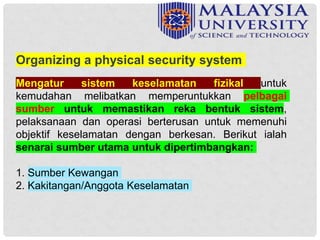
Mengatur sistem keselamatan fizikal untuk
kemudahan melibatkan memperuntukkan pelbagai
sumber untuk memastikan reka bentuk sistem,
pelaksanaan dan operasi berterusan untuk memenuhi
objektif keselamatan dengan berkesan. Berikut ialah
senarai sumber utama untuk dipertimbangkan:
1. Sumber Kewangan
2. Kakitangan/Anggota Keselamatan
Organizing a physical security system
3. Peralatan Keselamatan Fizikal
4. Sistem Pengawasan dan Pemantauan
5. Teknologi Kawalan Capaian
6. Sistem Komunikasi
7. Peralatan Tindakan Kecemasan
8. Perisian Keselamatan
9. Polisi dan Prosedur Keselamatan
10. Program Latihan
11. Papan Tanda Keselamatan
12. Kenderaan Keselamatan
13. Kontrak Penyelenggaraan dan Servis
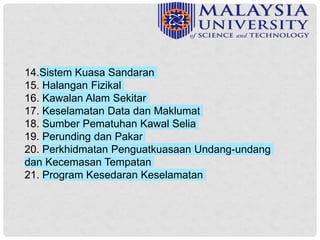
14.Sistem Kuasa Sandaran
15. Halangan Fizikal
16. Kawalan Alam Sekitar
17. Keselamatan Data dan Maklumat
18. Sumber Pematuhan Kawal Selia
19. Perunding dan Pakar
20. Perkhidmatan Penguatkuasaan Undang-undang
dan Kecemasan Tempatan
21. Program Kesedaran Keselamatan
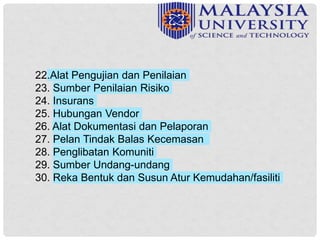
22.Alat Pengujian dan Penilaian
23. Sumber Penilaian Risiko
24. Insurans
25. Hubungan Vendor
26. Alat Dokumentasi dan Pelaporan
27. Pelan Tindak Balas Kecemasan
28. Penglibatan Komuniti
29. Sumber Undang-undang
30. Reka Bentuk dan Susun Atur Kemudahan/fasiliti
Organizing a physical security system for a facility
involves allocating various resources to ensure the
system's design, implementation, and ongoing
operation to meet security objectives effectively. Here's
a list of key resources to consider:
1.Financial Resources: Budget allocation for the purchase,
installation, and maintenance of security equipment and
systems.
2.Personnel: Skilled security professionals, including
security managers, guards, technicians, and administrators
3. Physical Security Equipment: The necessary security
hardware, including cameras, alarms, access control
systems, locks, safes, and intrusion detection devices.
4. Surveillance and Monitoring Systems: CCTV cameras,
sensors, and monitoring software for real-time surveillance
and recording.
5. Access Control Technology: Key cards, biometric
scanners, electronic locks, and access control panels.
6. Communication Systems: Phones, intercoms,
two-way radios, and emergency notification systems
for rapid communication during security incidents.
7. Emergency Response Equipment: Fire
extinguishers, first aid kits, and emergency lighting.
8. Security Software: Security management
software for access control, video management,
alarm monitoring, and incident reporting.
9. Security Policies and Procedures:
Comprehensive documentation outlining security
protocols and procedures
10. Training Programs: Resources for educating
security personnel and employees on security policies
and procedures.
11. Security Signage: Signs indicating restricted areas,
warning signs, and instructions for visitors and
employees.
12. Security Vehicles: If applicable, vehicles for
patrolling and responding to security incidents.
13. Maintenance and Service Contracts: Agreements
with service providers for regular maintenance, updates,
and repairs of security equipment.
14. Backup Power Systems: Uninterruptible power
supplies (UPS) and backup generators to ensure
security systems remain operational during power
outages.
15. Physical Barriers: Fencing, gates, barriers, and
access control points to control entry and exit.
16. Environmental Controls: HVAC systems,
climate control, and environmental monitoring to
protect sensitive equipment.
17.Data and Information Security: Resources to
protect digital records and sensitive information
related to the physical security system
18. Regulatory Compliance Resources: Resources
to ensure compliance with relevant security
regulations, standards, and codes.
19. Consultants and Experts: Expertise from
security consultants or advisors who can assess, plan,
and guide the implementation of security measures.
20. Local Law Enforcement and Emergency
Services: Collaboration with local authorities for
emergency response and support.
21. Security Awareness Programs: Resources for
promoting security awareness among employees and
building occupants.
22. Testing and Evaluation Tools: Tools for
testing and evaluating the effectiveness of security
measures and conducting vulnerability
assessments.
23. Risk Assessment Resources: Resources for
conducting periodic risk assessments to identify
evolving threats and vulnerabilities.
24. Insurance: Adequate insurance coverage to
mitigate potential financial losses resulting from
security incidents
25. Vendor Relationships: Partnerships with
trusted security equipment vendors and service
providers.
26. Documentation and Reporting Tools:
Resources for documenting security incidents,
creating reports, and tracking security system
performance.
27. Emergency Response Plans: Clearly
defined plans and resources for responding to
various security incidents and emergencies
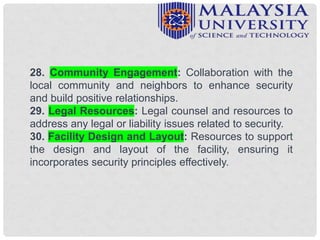
28. Community Engagement: Collaboration with the
local community and neighbors to enhance security
and build positive relationships.
29. Legal Resources: Legal counsel and resources to
address any legal or liability issues related to security.
30. Facility Design and Layout: Resources to support
the design and layout of the facility, ensuring it
incorporates security principles effectively.
ALWAYS HAPPY AND SAFE
LANDINGS !
SECURITY PLANNING  DESIGN (SESSION 3).ppt

SECURITY PLANNING DESIGN (SESSION 3).ppt

  • 3.
  • 4.
    SECURITY PLANNING &DESIGN https://www.academia.edu/7277407/Physical_Security_Historical_perspectiv es_and_operations
  • 5.
    Facility Site Layout– Plan & Design An Example:
  • 6.
    In today's rapidlyevolving world, safeguarding physical spaces and assets has become more critical than ever. Whether you are responsible for securing a residential property, a corporate facility, a government installation, or any other physical space, having a well-thought-out security design and plan is essential.
  • 7.
    Dalam dunia yangberkembang pesat hari ini, menjaga kemudahan dan aset fizikal telah menjadi lebih kritikal berbanding sebelum ini. Sama ada anda bertanggungjawab untuk mendapatkan harta kediaman, kemudahan korporat, instalasi kerajaan atau mana-mana kemudahan fizikal lain, mempunyai reka bentuk dan pelan keselamatan yang difikirkan dengan baik adalah penting.
  • 8.
    In a facilitysecurity planning and design phase, it is crucial to consider security concepts like layered security and Crime Prevention Through Environmental Design (CPTED) before finalizing the facility site layout plan. Both of these approaches play a significant role in determining the layout and design of the facility, as they influence how security measures are integrated into the physical environment. Principles of Security Planning & Design
  • 9.
    Prinsip Perancangan &Reka Bentuk Keselamatan Dalam fasa perancangan dan reka bentuk keselamatan kemudahan, adalah penting untuk mempertimbangkan konsep keselamatan seperti keselamatan berlapis dan Pencegahan Jenayah Melalui Reka Bentuk Alam Sekitar (CPTED) sebelum memuktamadkan pelan susun atur tapak kemudahan. Kedua-dua pendekatan ini memainkan peranan penting dalam menentukan susun atur dan reka bentuk kemudahan, kerana ia mempengaruhi cara langkah keselamatan disepadukan ke dalam persekitaran fizikal.
  • 10.
    Layered Security Approach: •Concept:Layered security involves the use of multiple security measures in a coordinated manner to create multiple lines of defense. These layers can include physical barriers, access control, surveillance, alarms, and security personnel. •Considerations: Before deciding on the site layout plan, consider the number and types of security layers needed. Determine where each layer should be positioned within the facility and how they will work together to provide comprehensive security. •Placement: Identify critical areas or assets that require higher levels of protection and position security layers accordingly. For example, access control measures should be placed at entry points to restrict unauthorized access, while surveillance cameras should cover vulnerable areas.
  • 11.
    Pendekatan Keselamatan Berlapis: Konsep:Keselamatan berlapis melibatkan penggunaan pelbagai langkah keselamatan dalam cara yang diselaraskan untuk mencipta pelbagai barisan pertahanan. Lapisan ini boleh termasuk halangan fizikal, kawalan akses, pengawasan, penggera dan kakitangan keselamatan. Pertimbangan: Sebelum memutuskan pelan susun atur tapak, pertimbangkan bilangan dan jenis lapisan keselamatan yang diperlukan. Tentukan di mana setiap lapisan harus diletakkan dalam kemudahan dan cara ia akan bekerjasama untuk menyediakan keselamatan yang komprehensif. Peletakan: Kenal pasti kawasan atau aset kritikal yang memerlukan tahap perlindungan dan lapisan keselamatan kedudukan yang lebih tinggi dengan sewajarnya. Sebagai contoh, langkah kawalan akses hendaklah diletakkan di pintu masuk untuk menyekat akses yang tidak dibenarkan, manakala kamera pengawasan hendaklah meliputi kawasan yang terdedah.
  • 12.
    Crime Prevention ThroughEnvironmental Design (CPTED) Approach: •Concept: CPTED is a design philosophy that focuses on modifying the physical environment to reduce opportunities for crime. It considers aspects like lighting, landscaping, building layout, and natural surveillance to deter criminal activity. •Considerations: Incorporate CPTED principles early in the site layout plan. Consider factors like lighting design, visibility of entrances and exits, and the arrangement of physical features to create a secure and crime-resistant environment. •Natural Surveillance: Ensure that the site layout allows for natural surveillance, meaning that security personnel or bystanders can easily observe and monitor key areas. This discourages criminal behavior.
  • 13.
    Pendekatan Pencegahan JenayahMelalui Reka Bentuk Alam Sekitar (CPTED): Konsep: CPTED ialah falsafah reka bentuk yang memfokuskan kepada pengubahsuaian persekitaran fizikal untuk mengurangkan peluang jenayah. Ia mempertimbangkan aspek seperti pencahayaan, landskap, susun atur bangunan dan pengawasan semula jadi untuk menghalang aktiviti jenayah. Pertimbangan: Menggabungkan prinsip CPTED awal dalam pelan susun atur tapak. Pertimbangkan faktor seperti reka bentuk pencahayaan, keterlihatan pintu masuk dan keluar serta susunan ciri fizikal untuk mewujudkan persekitaran yang selamat dan tahan jenayah. Pengawasan Semula Jadi: Pastikan susun atur tapak membenarkan pengawasan semula jadi, bermakna kakitangan keselamatan atau orang ramai boleh memerhati dan memantau kawasan utama dengan mudah. Ini tidak menggalakkan tingkah laku jenayah.
  • 14.
    1. Penilaian Risiko 2.Pengenalan Aset 3. Kawalan Akses 4. Halangan Fizikal 5. Sistem Pengawasan 6. Pengesanan Pencerobohan 7. Pencahayaan Keselamatan 8. Kakitangan Keselamatan Faktor-faktor Reka Bentuk dan perancangan yang penting untuk dipertimbangkan semasa mewujudkan Sistem Keselamatan Fizikal:
  • 15.
    9. Pengurusan Pelawat 10.Tindakan Kecemasan 11. Polisi dan Prosedur 12.KeselamatanSistem Kawalan Akses 13. Zon Keselamatan 14. Sistem Penggera 15. Kunci Fizikal dan Peti besi 16. Penyelenggaraan dan Pengujian 17. Pematuhan dan Peraturan
  • 16.
    17. Pematuhan danPeraturan 18. Belanjawan dan Sumber 19. Skalabiliti dan Perkembangan Masa Depan 20. Latihan dan Kesedaran 21. Integrasi dengan Sistem Lain 22. Pertimbangan Privasi 23. Faktor Persekitaran 24. Landskap Ancaman Tempatan https://www.youtube.com/watch?app=desktop&v=j9MQMVn3FV4&ab_channel=Tom Olzak
  • 17.
    Important Design andplanning factors to consider when establishing a Physical Security System: 1.Risk Assessment: Begin by identifying potential threats and vulnerabilities specific to your environment. Conduct a thorough risk assessment to understand the types of risks you need to mitigate. 2.Asset Identification: Determine what assets need protection, including people, property, data, and critical infrastructure. 3.Access Control: Define who is allowed access to the premises and what level of access they should have. This includes access points, entry/exit procedures, and authentication methods
  • 18.
    4. Physical Barriers:Evaluate and select appropriate physical barriers such as fences, gates, bollards, and walls to control and deter unauthorized access. 5. Surveillance Systems: Choose the right mix of surveillance equipment, including cameras, sensors, and alarms, to monitor and record activities in and around the facility. 6. Intrusion Detection: Implement intrusion detection systems (IDS) to detect unauthorized entry or security breaches and trigger alarms. 7. Security Lighting: Properly illuminate vulnerable areas to deter intruders and enhance surveillance camera effectiveness.
  • 19.
    8. Security Personnel:Determine the need for security personnel, including guards, and establish their roles and responsibilities. 9. Visitor Management: Develop procedures for visitor identification, registration, and supervision to prevent unauthorized entry. 10. Emergency Response: Establish clear protocols for responding to security incidents, including communication, evacuation plans, and coordination with local authorities. 11. Security Policies and Procedures: Create and document security policies, procedures, and guidelines for employees and security personnel to follow
  • 20.
    12. Access ControlSystems: Deploy access control technology, such as card readers, biometrics, or keyless entry systems, to manage and track access. 13. Security Zones: Divide the facility into security zones with varying levels of access and protection based on asset value and risk. 14. Alarm Systems: Install intrusion alarms, fire alarms, and other detection systems to notify authorities and personnel of emergencies. 15. Physical Locks and Safes: Secure sensitive areas with strong locks and safes to protect valuable assets
  • 21.
    16. Maintenance andTesting: Establish a routine maintenance schedule for security equipment and regularly test security measures to ensure they are functioning correctly. 17. Compliance and Regulations: Ensure that your security system complies with relevant laws, regulations, and industry standards. 18. Budget and Resources: Determine the financial resources available for implementing and maintaining the security system. 19. Scalability and Future Growth: Design the system with scalability in mind to accommodate future expansion or changes in security needs
  • 22.
    20. Training andAwareness: Train employees and security personnel on security procedures and raise security awareness throughout the organization. 21. Integration with Other Systems: Consider how the physical security system will integrate with other building management, IT, and communication systems. 22. Privacy Considerations: Be mindful of privacy concerns, especially when deploying surveillance systems and collecting personal data. 23. Environmental Factors: Account for environmental conditions that may affect the operation of security equipment, such as weatherproofing and temperature control. 24. Local Threat Landscape: Understand the specific threats and criminal activities prevalent in your locality to tailor security measures accordingly.
  • 23.
  • 24.
    Mengatur sistem keselamatanfizikal untuk kemudahan melibatkan memperuntukkan pelbagai sumber untuk memastikan reka bentuk sistem, pelaksanaan dan operasi berterusan untuk memenuhi objektif keselamatan dengan berkesan. Berikut ialah senarai sumber utama untuk dipertimbangkan: 1. Sumber Kewangan 2. Kakitangan/Anggota Keselamatan Organizing a physical security system
  • 25.
    3. Peralatan KeselamatanFizikal 4. Sistem Pengawasan dan Pemantauan 5. Teknologi Kawalan Capaian 6. Sistem Komunikasi 7. Peralatan Tindakan Kecemasan 8. Perisian Keselamatan 9. Polisi dan Prosedur Keselamatan 10. Program Latihan 11. Papan Tanda Keselamatan 12. Kenderaan Keselamatan 13. Kontrak Penyelenggaraan dan Servis
  • 26.
    14.Sistem Kuasa Sandaran 15.Halangan Fizikal 16. Kawalan Alam Sekitar 17. Keselamatan Data dan Maklumat 18. Sumber Pematuhan Kawal Selia 19. Perunding dan Pakar 20. Perkhidmatan Penguatkuasaan Undang-undang dan Kecemasan Tempatan 21. Program Kesedaran Keselamatan
  • 27.
    22.Alat Pengujian danPenilaian 23. Sumber Penilaian Risiko 24. Insurans 25. Hubungan Vendor 26. Alat Dokumentasi dan Pelaporan 27. Pelan Tindak Balas Kecemasan 28. Penglibatan Komuniti 29. Sumber Undang-undang 30. Reka Bentuk dan Susun Atur Kemudahan/fasiliti
  • 28.
    Organizing a physicalsecurity system for a facility involves allocating various resources to ensure the system's design, implementation, and ongoing operation to meet security objectives effectively. Here's a list of key resources to consider: 1.Financial Resources: Budget allocation for the purchase, installation, and maintenance of security equipment and systems. 2.Personnel: Skilled security professionals, including security managers, guards, technicians, and administrators
  • 29.
    3. Physical SecurityEquipment: The necessary security hardware, including cameras, alarms, access control systems, locks, safes, and intrusion detection devices. 4. Surveillance and Monitoring Systems: CCTV cameras, sensors, and monitoring software for real-time surveillance and recording. 5. Access Control Technology: Key cards, biometric scanners, electronic locks, and access control panels.
  • 30.
    6. Communication Systems:Phones, intercoms, two-way radios, and emergency notification systems for rapid communication during security incidents. 7. Emergency Response Equipment: Fire extinguishers, first aid kits, and emergency lighting. 8. Security Software: Security management software for access control, video management, alarm monitoring, and incident reporting. 9. Security Policies and Procedures: Comprehensive documentation outlining security protocols and procedures
  • 31.
    10. Training Programs:Resources for educating security personnel and employees on security policies and procedures. 11. Security Signage: Signs indicating restricted areas, warning signs, and instructions for visitors and employees. 12. Security Vehicles: If applicable, vehicles for patrolling and responding to security incidents. 13. Maintenance and Service Contracts: Agreements with service providers for regular maintenance, updates, and repairs of security equipment.
  • 32.
    14. Backup PowerSystems: Uninterruptible power supplies (UPS) and backup generators to ensure security systems remain operational during power outages. 15. Physical Barriers: Fencing, gates, barriers, and access control points to control entry and exit. 16. Environmental Controls: HVAC systems, climate control, and environmental monitoring to protect sensitive equipment. 17.Data and Information Security: Resources to protect digital records and sensitive information related to the physical security system
  • 33.
    18. Regulatory ComplianceResources: Resources to ensure compliance with relevant security regulations, standards, and codes. 19. Consultants and Experts: Expertise from security consultants or advisors who can assess, plan, and guide the implementation of security measures. 20. Local Law Enforcement and Emergency Services: Collaboration with local authorities for emergency response and support. 21. Security Awareness Programs: Resources for promoting security awareness among employees and building occupants.
  • 34.
    22. Testing andEvaluation Tools: Tools for testing and evaluating the effectiveness of security measures and conducting vulnerability assessments. 23. Risk Assessment Resources: Resources for conducting periodic risk assessments to identify evolving threats and vulnerabilities. 24. Insurance: Adequate insurance coverage to mitigate potential financial losses resulting from security incidents
  • 35.
    25. Vendor Relationships:Partnerships with trusted security equipment vendors and service providers. 26. Documentation and Reporting Tools: Resources for documenting security incidents, creating reports, and tracking security system performance. 27. Emergency Response Plans: Clearly defined plans and resources for responding to various security incidents and emergencies
  • 36.
    28. Community Engagement:Collaboration with the local community and neighbors to enhance security and build positive relationships. 29. Legal Resources: Legal counsel and resources to address any legal or liability issues related to security. 30. Facility Design and Layout: Resources to support the design and layout of the facility, ensuring it incorporates security principles effectively.
  • 37.
    ALWAYS HAPPY ANDSAFE LANDINGS !