Physical Security
By: Christian Hudson
Overview
 Definition and importance
 Components
 Layers
 Physical Security Briefs
 Zones
 Implementation
Definition
 Physical security is the protection of
personnel, hardware, programs,
networks, and data from physical
circumstances and events that could
cause serious losses or damage to an
enterprise, agency, or institution. This
includes protection from fire, theft,
vandalism, natural disasters, and
terrorism.
Is physical security important?
 Significance is underestimated
 Breaches in action require no technical
background
 Accidents and natural disasters are
inevitable so preparation is necessary
Components
 Accidental and environmental
disasters
 Placing obstacles
 Idea is to confuse attacker,
delay serious ones, and
attempt to avoid the
inevitable
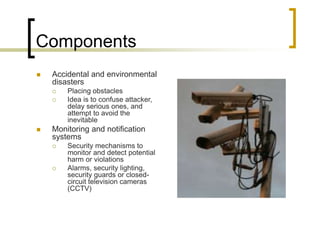
 Monitoring and notification
systems
 Security mechanisms to
monitor and detect potential
harm or violations
 Alarms, security lighting,
security guards or closed-
circuit television cameras
(CCTV)
Components (cont.)
 Recovery mechanisms
 To repel, catch or frustrate attackers
when an attack is detected
 Intrusion handling
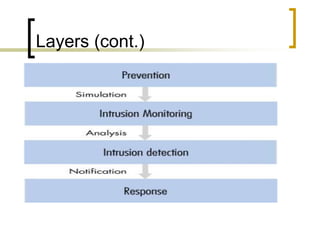
Layers
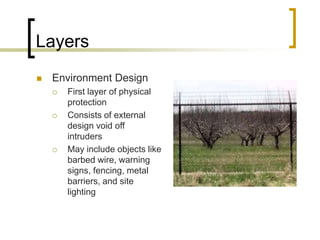
 Environment Design
 First layer of physical
protection
 Consists of external
design void off
intruders
 May include objects like
barbed wire, warning
signs, fencing, metal
barriers, and site
lighting
Layers (cont.)
 Mechanical and
electronic access
control
 Prevents intruders
or unauthorized
users to direct
access to physical
components
 Includes gates,
doors and locks
Layers (cont.)
Layers (cont.)
 Monitoring system
 Less of a
preventative
measure
 Used more for
incident verification
and analysis
 Most common
mechanism is
CCTVs
Layers (cont.)
 Intrusion Detection
 Monitors for attacks
 Less of a preventative measure
 More of an response mechanism
 Alarms/Notification
Physical Security Briefs
 Security site brief
 Security policies used for the framework of
preventing the access to a physical setting
 Security design brief
 Security policies used for the layout or design for
a physical entity (may be coding, layout for
servers, access control, etc)
Zoning
 Public Zone
 Public has access to this area of a facility and its
surrounding
 Examples are facility grounds, elevator lobbies,
etc
 Reception Zone
 Zone which entail the transition from a public
zone to a restricted-access area of control
 Typically means where the contact of visitors
and a department is initiated
Zones (cont.)
 Operations Zone
 An area where access is limited to personnel
who work at facility and to escorted visitors
 Production floors and open office areas
 Security Zone
 An area to which access is limited to authorized
personnel and to authorized and escorted
visitors
 Area where secret information is
processed/stored
Layers (cont.)
 High Security Zone
 An area where access is limited to
authorized, appropriately screened
personnel and authorized and properly
escorted visitors
 A general example would be an area
where high-value assets are handled by
selected personnel
Implementation
 State the plan’s purpose
 Define the areas, buildings, and other
structures considered critical and
establish priorities for their protection
 Define and establish restrictions on
access and movement of critical areas
 Categorize restrictions
Questions?
References and Resources
 Bishop, Matt. Introduction to Computer Security.
Massachusetts: Pearson Education, Inc., 2005.
 http://64.233.167.104/search?q=cache:0xtkul7lJOgJ:www.tess
-
llc.com/Physical%2520Security%2520PolicyV4.pdf+physical+
security+policy&hl=en&ct=clnk&cd=1&gl=us
 http://en.wikipedia.org/wiki/Physical_Security
 http://www.rcmp-grc.gc.ca/tsb/pubs/phys_sec/g1-026_e.pdf
 http://searchsecurity.techtarget.com/sDefinition/0,,sid14_gci11
50976,00.html
 http://tldp.org/HOWTO/Security-HOWTO/physical-
security.html

Physical Security.ppt

  • 1.
  • 2.
    Overview  Definition andimportance  Components  Layers  Physical Security Briefs  Zones  Implementation
  • 3.
    Definition  Physical securityis the protection of personnel, hardware, programs, networks, and data from physical circumstances and events that could cause serious losses or damage to an enterprise, agency, or institution. This includes protection from fire, theft, vandalism, natural disasters, and terrorism.
  • 4.
    Is physical securityimportant?  Significance is underestimated  Breaches in action require no technical background  Accidents and natural disasters are inevitable so preparation is necessary
  • 5.
    Components  Accidental andenvironmental disasters  Placing obstacles  Idea is to confuse attacker, delay serious ones, and attempt to avoid the inevitable  Monitoring and notification systems  Security mechanisms to monitor and detect potential harm or violations  Alarms, security lighting, security guards or closed- circuit television cameras (CCTV)
  • 6.
    Components (cont.)  Recoverymechanisms  To repel, catch or frustrate attackers when an attack is detected  Intrusion handling
  • 7.
    Layers  Environment Design First layer of physical protection  Consists of external design void off intruders  May include objects like barbed wire, warning signs, fencing, metal barriers, and site lighting
  • 8.
    Layers (cont.)  Mechanicaland electronic access control  Prevents intruders or unauthorized users to direct access to physical components  Includes gates, doors and locks
  • 9.
  • 10.
    Layers (cont.)  Monitoringsystem  Less of a preventative measure  Used more for incident verification and analysis  Most common mechanism is CCTVs
  • 11.
    Layers (cont.)  IntrusionDetection  Monitors for attacks  Less of a preventative measure  More of an response mechanism  Alarms/Notification
  • 12.
    Physical Security Briefs Security site brief  Security policies used for the framework of preventing the access to a physical setting  Security design brief  Security policies used for the layout or design for a physical entity (may be coding, layout for servers, access control, etc)
  • 13.
    Zoning  Public Zone Public has access to this area of a facility and its surrounding  Examples are facility grounds, elevator lobbies, etc  Reception Zone  Zone which entail the transition from a public zone to a restricted-access area of control  Typically means where the contact of visitors and a department is initiated
  • 14.
    Zones (cont.)  OperationsZone  An area where access is limited to personnel who work at facility and to escorted visitors  Production floors and open office areas  Security Zone  An area to which access is limited to authorized personnel and to authorized and escorted visitors  Area where secret information is processed/stored
  • 15.
    Layers (cont.)  HighSecurity Zone  An area where access is limited to authorized, appropriately screened personnel and authorized and properly escorted visitors  A general example would be an area where high-value assets are handled by selected personnel
  • 16.
    Implementation  State theplan’s purpose  Define the areas, buildings, and other structures considered critical and establish priorities for their protection  Define and establish restrictions on access and movement of critical areas  Categorize restrictions
  • 17.
  • 18.
    References and Resources Bishop, Matt. Introduction to Computer Security. Massachusetts: Pearson Education, Inc., 2005.  http://64.233.167.104/search?q=cache:0xtkul7lJOgJ:www.tess - llc.com/Physical%2520Security%2520PolicyV4.pdf+physical+ security+policy&hl=en&ct=clnk&cd=1&gl=us  http://en.wikipedia.org/wiki/Physical_Security  http://www.rcmp-grc.gc.ca/tsb/pubs/phys_sec/g1-026_e.pdf  http://searchsecurity.techtarget.com/sDefinition/0,,sid14_gci11 50976,00.html  http://tldp.org/HOWTO/Security-HOWTO/physical- security.html