Sustaining Good Nutrition in the
First 1000 Days: The Synergy of Localization,
Advocacy and Markets
Kennedy Bomfeh, PhD
Director (Projects & Academic Affairs)
KOKO Plus Foundation LBG
kbomfeh@kokoplusfoundation.org
1
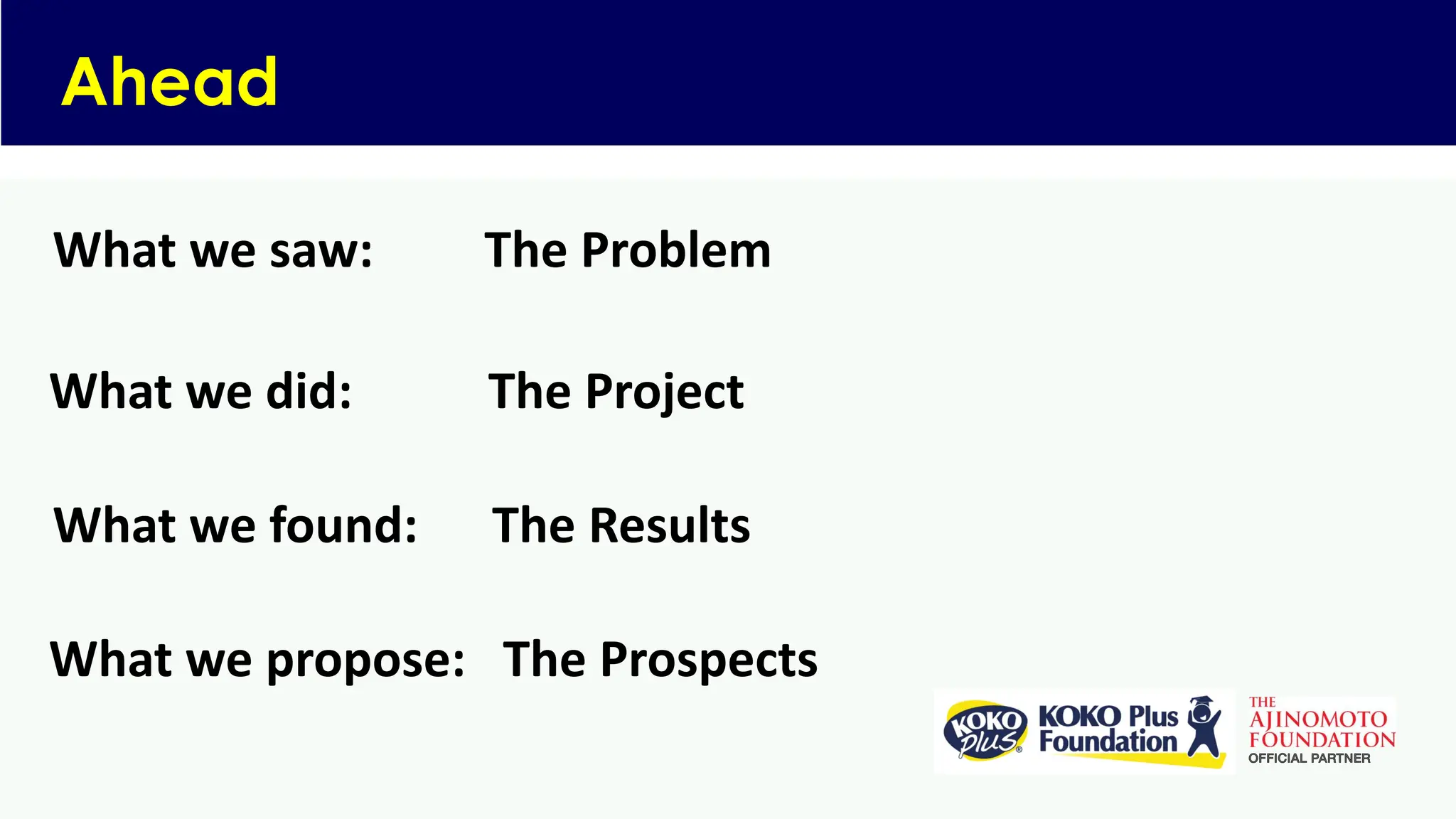
What we saw: The Problem
Ahead
What we did: The Project
What we found: The Results
What we propose: The Prospects
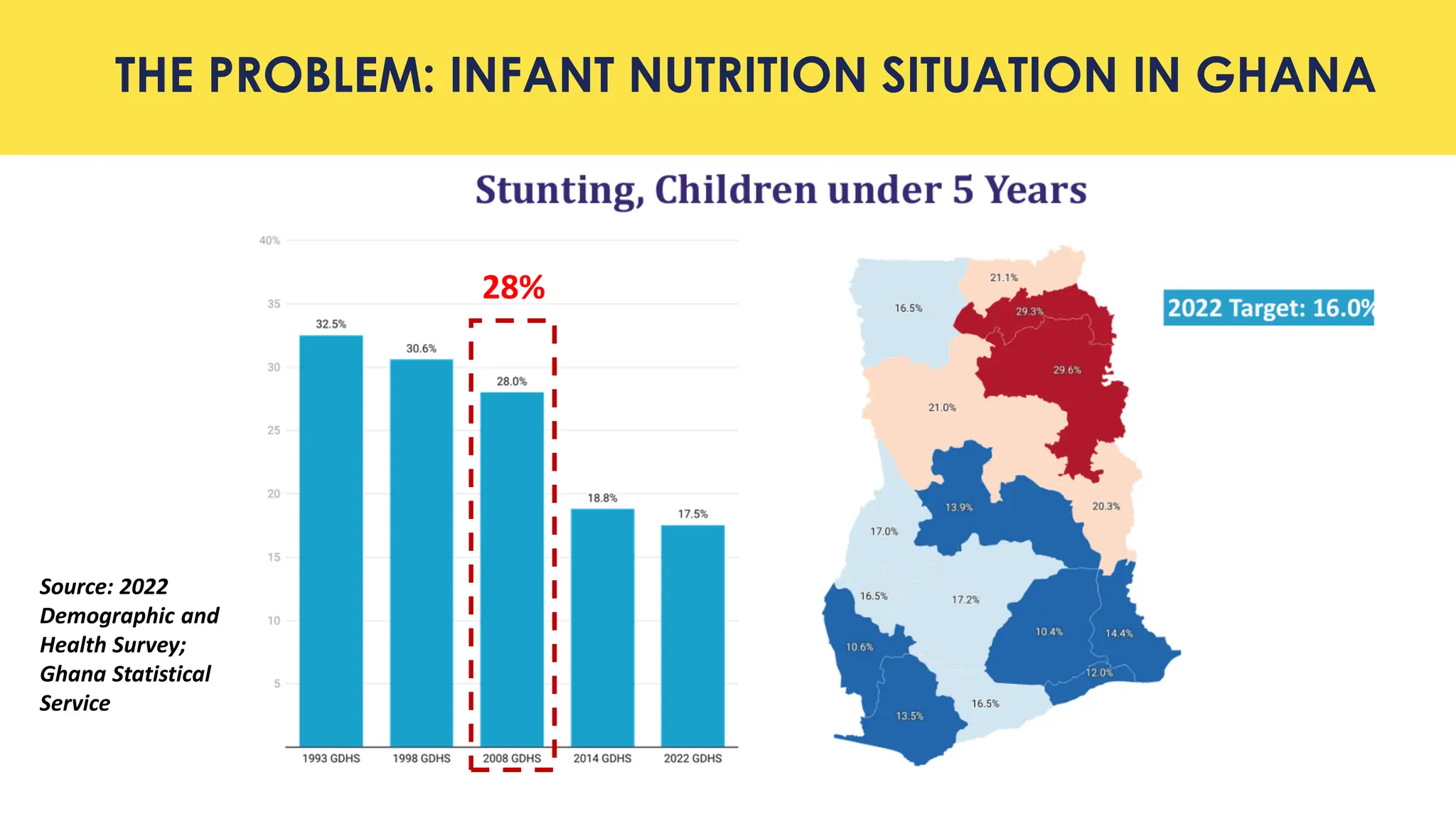
THE PROBLEM: INFANT NUTRITION SITUATION IN GHANA
Source: 2022
Demographic and
Health Survey;
Ghana Statistical
Service
28%
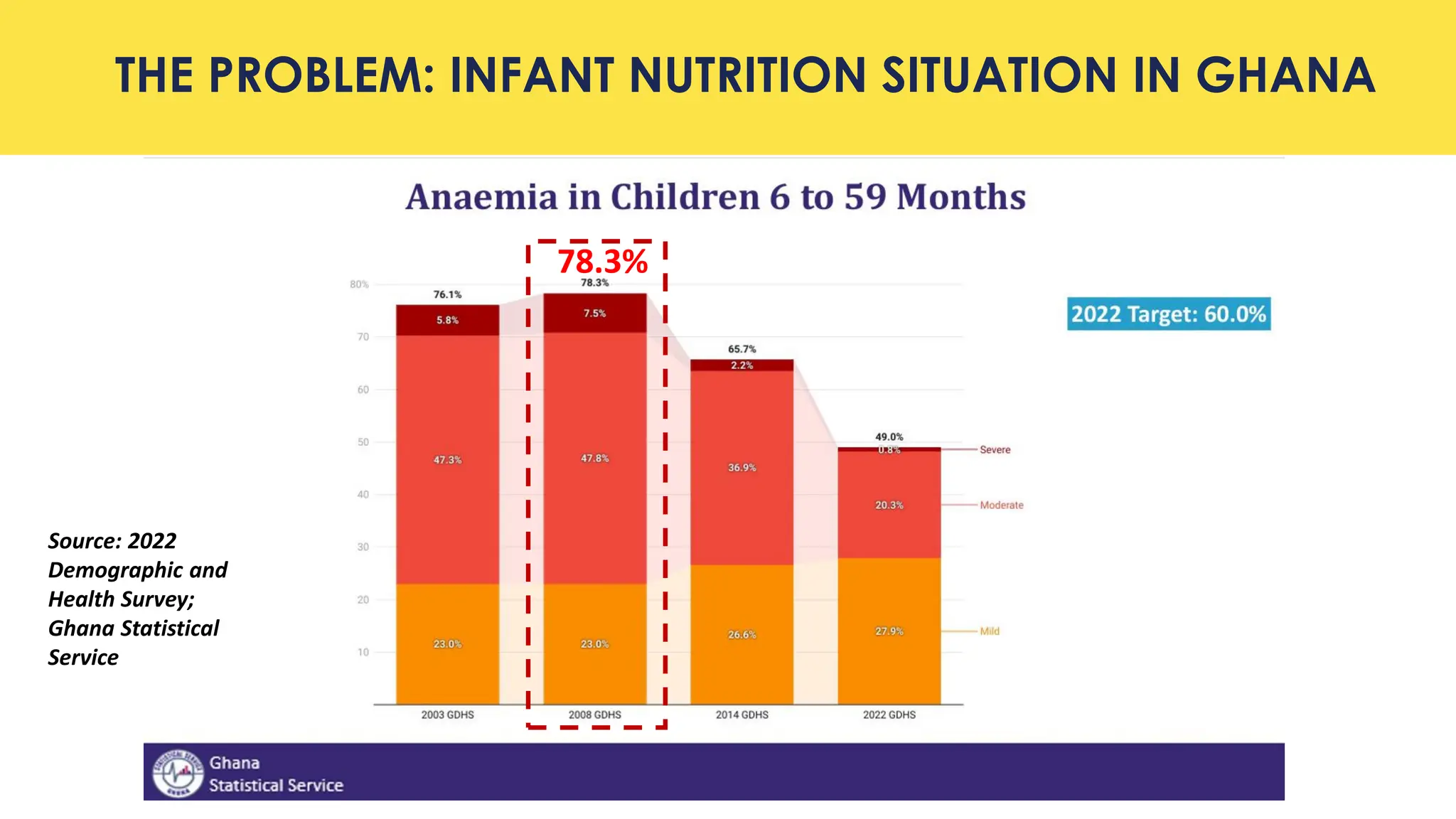
THE PROBLEM: INFANT NUTRITION SITUATION IN GHANA
Source: 2022
Demographic and
Health Survey;
Ghana Statistical
Service
78.3%
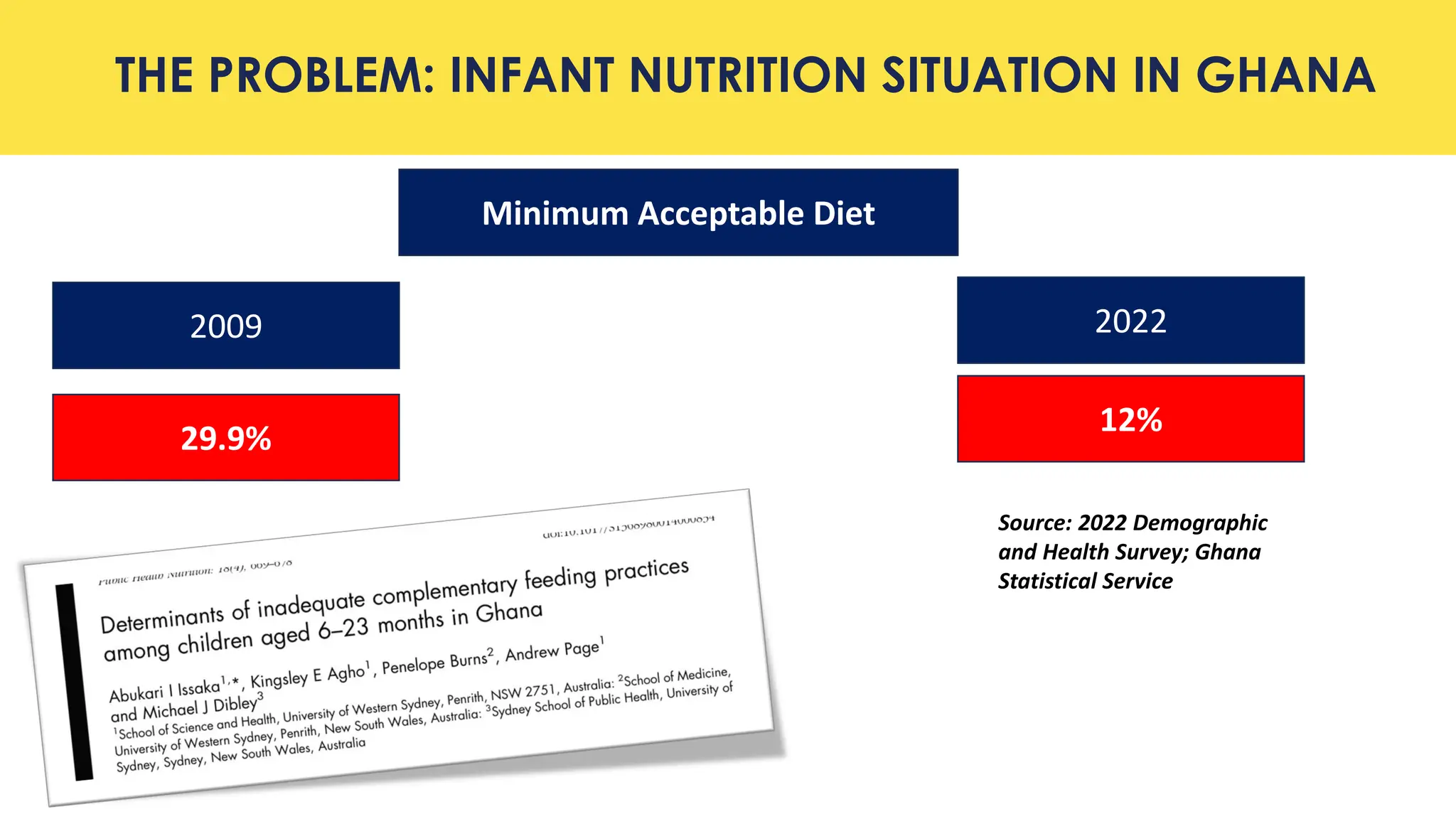
THE PROBLEM: INFANT NUTRITION SITUATION IN GHANA
Minimum Acceptable Diet
2009 2022
29.9%
12%
Source: 2022 Demographic
and Health Survey; Ghana
Statistical Service
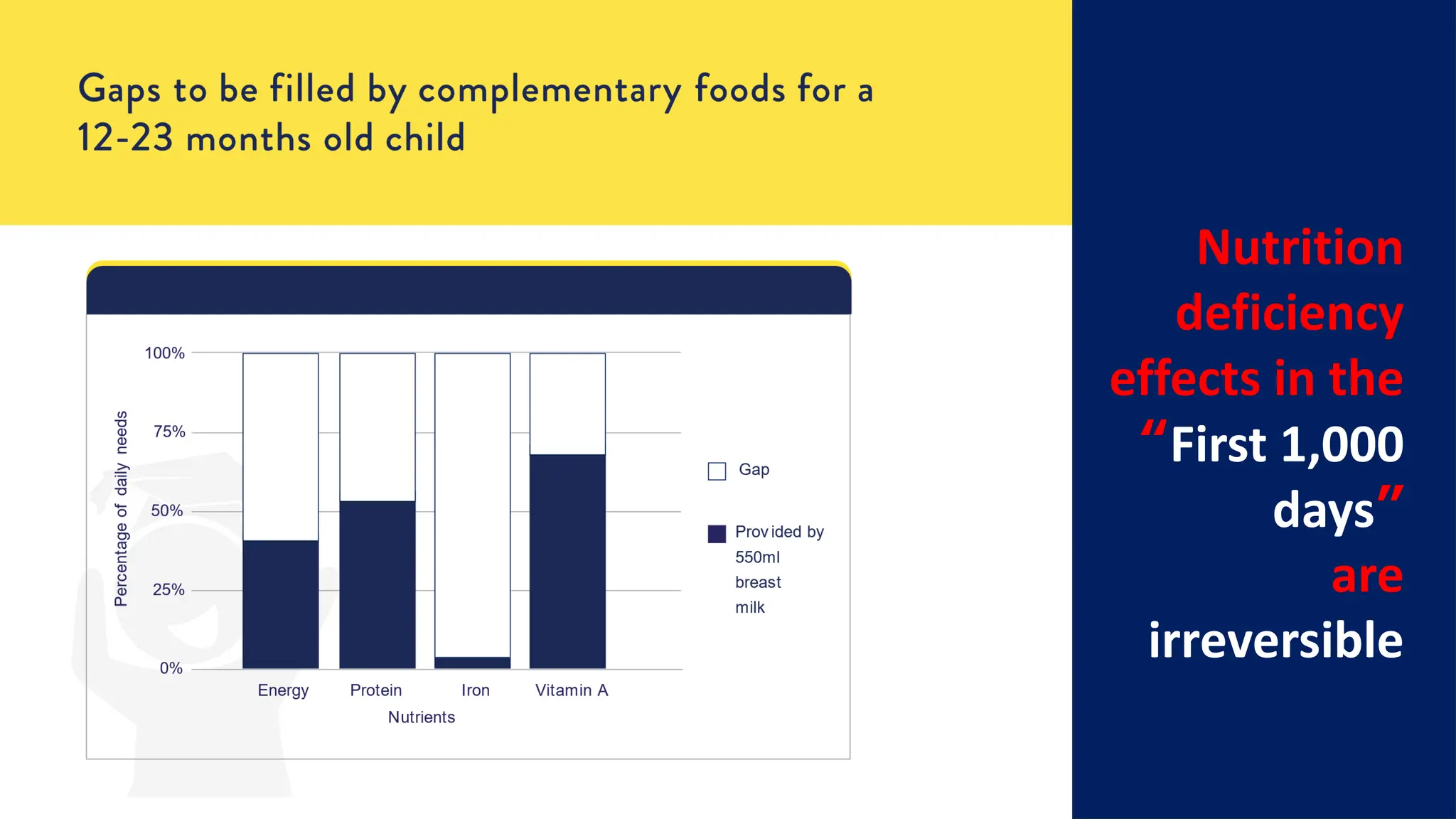
Nutrition
deficiency
effects in the
“First 1,000
days”
are
irreversible
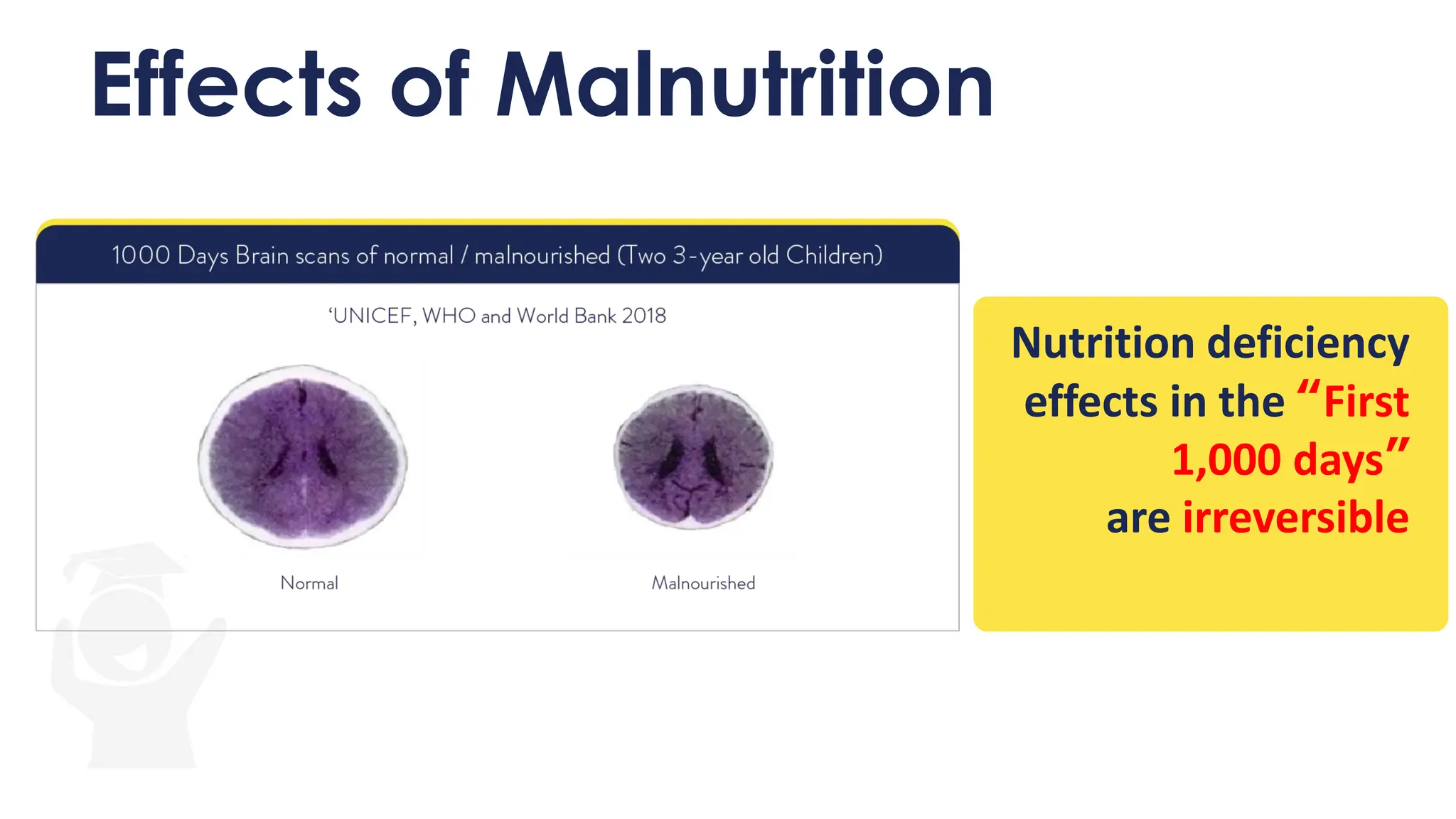
Effects of Malnutrition
Nutrition deficiency
effects in the “First
1,000 days”
are irreversible
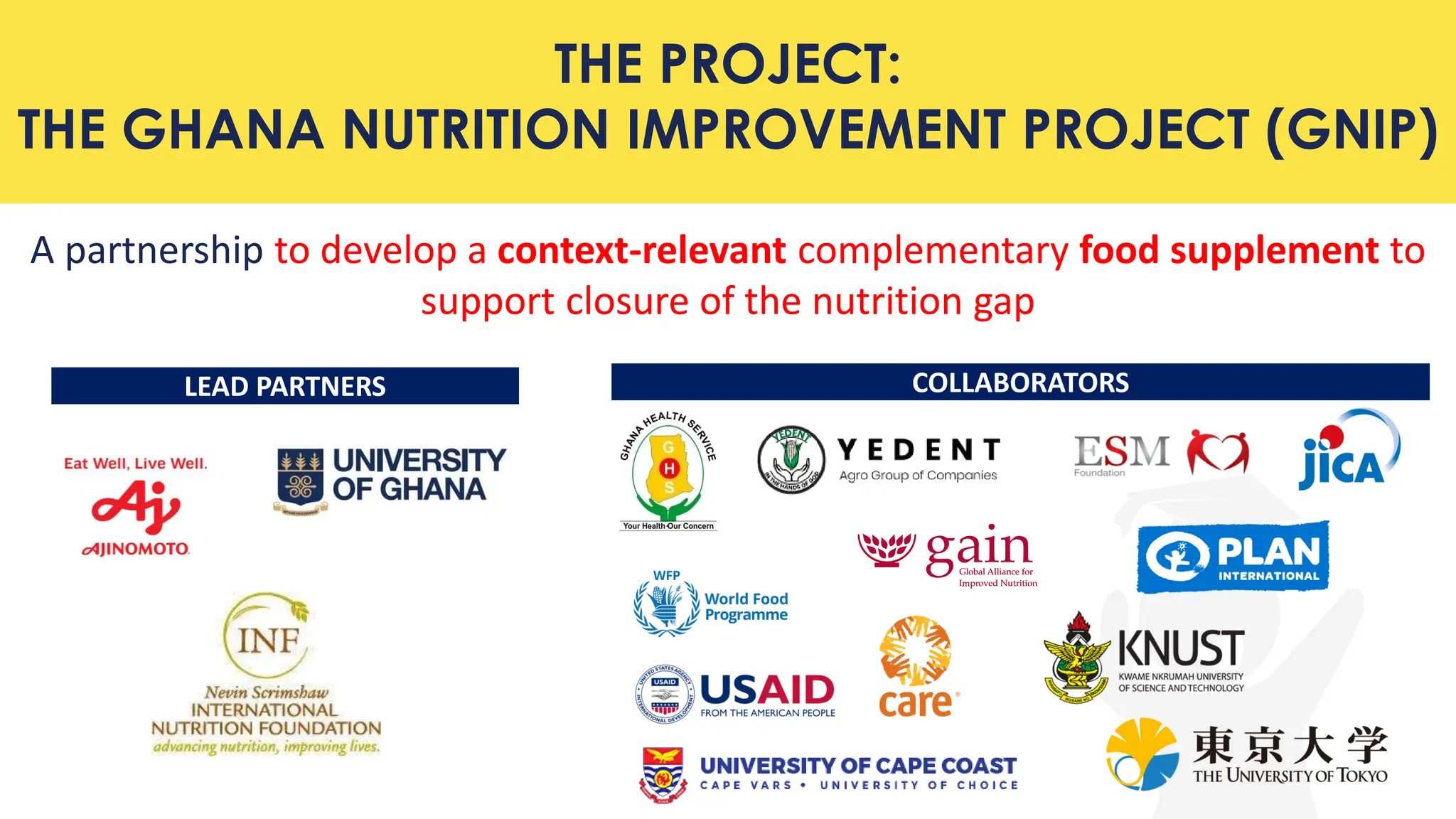
THE PROJECT:
THE GHANA NUTRITION IMPROVEMENT PROJECT (GNIP)
A partnership to develop a context-relevant complementary food supplement to
support closure of the nutrition gap
COLLABORATORS
LEAD PARTNERS
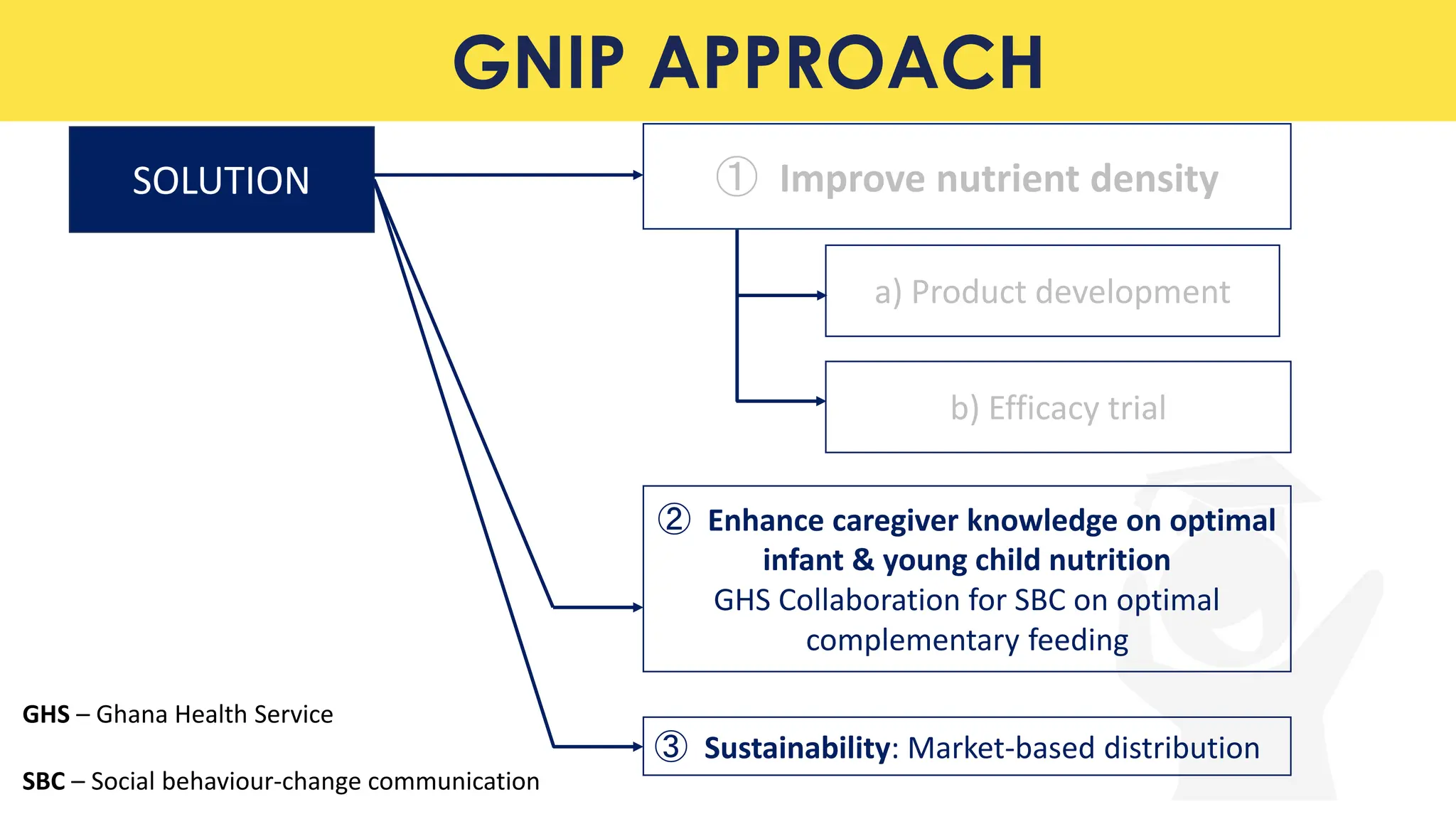
GNIP APPROACH
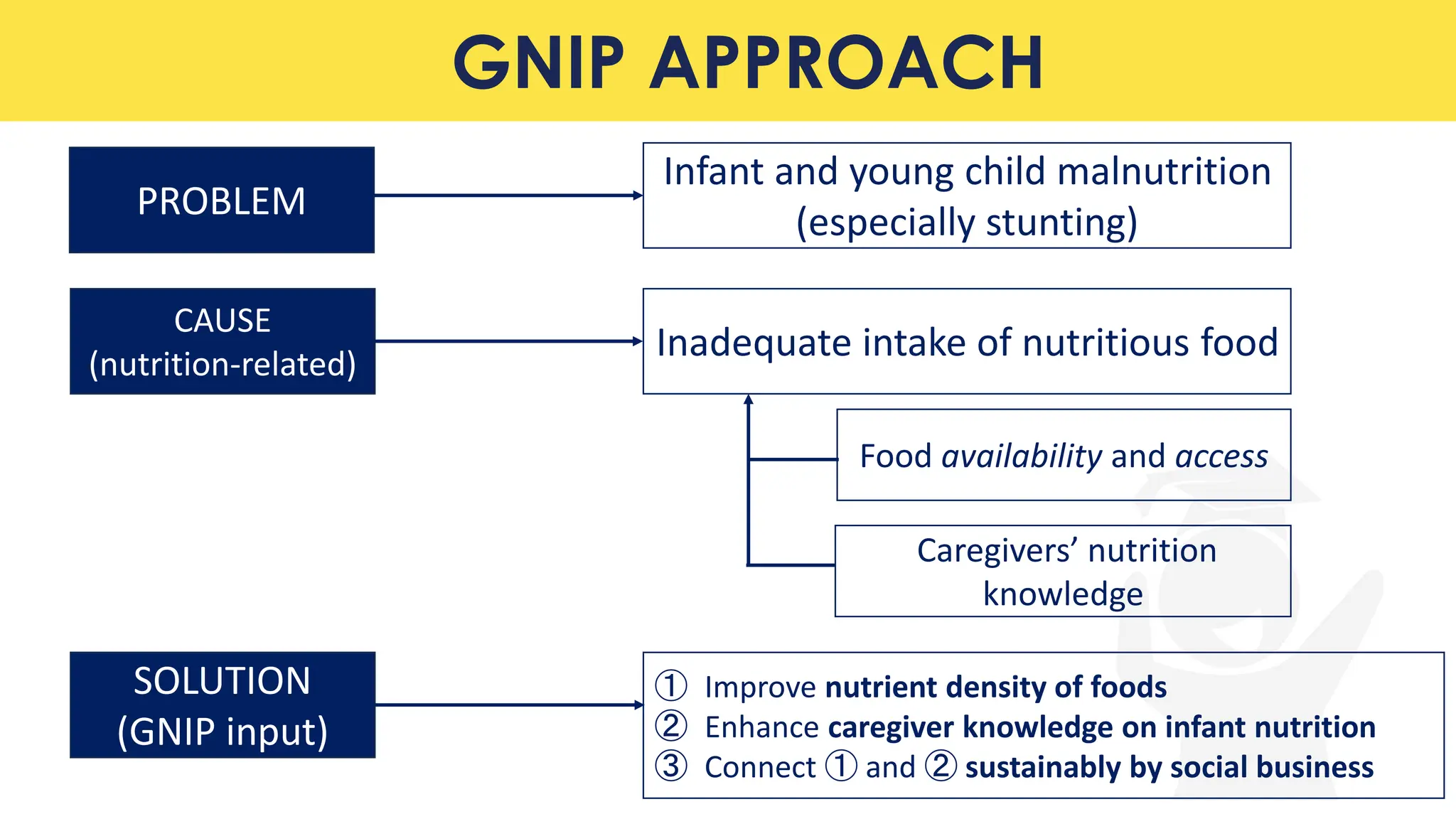
PROBLEM
Infant and young child malnutrition
(especially stunting)
CAUSE
(nutrition-related)
SOLUTION
(GNIP input)
Caregivers’ nutrition
knowledge
Food availability and access
Inadequate intake of nutritious food
① Improve nutrient density of foods
➁ Enhance caregiver knowledge on infant nutrition
➂ Connect ① and ➁ sustainably by social business
GNIP APPROACH
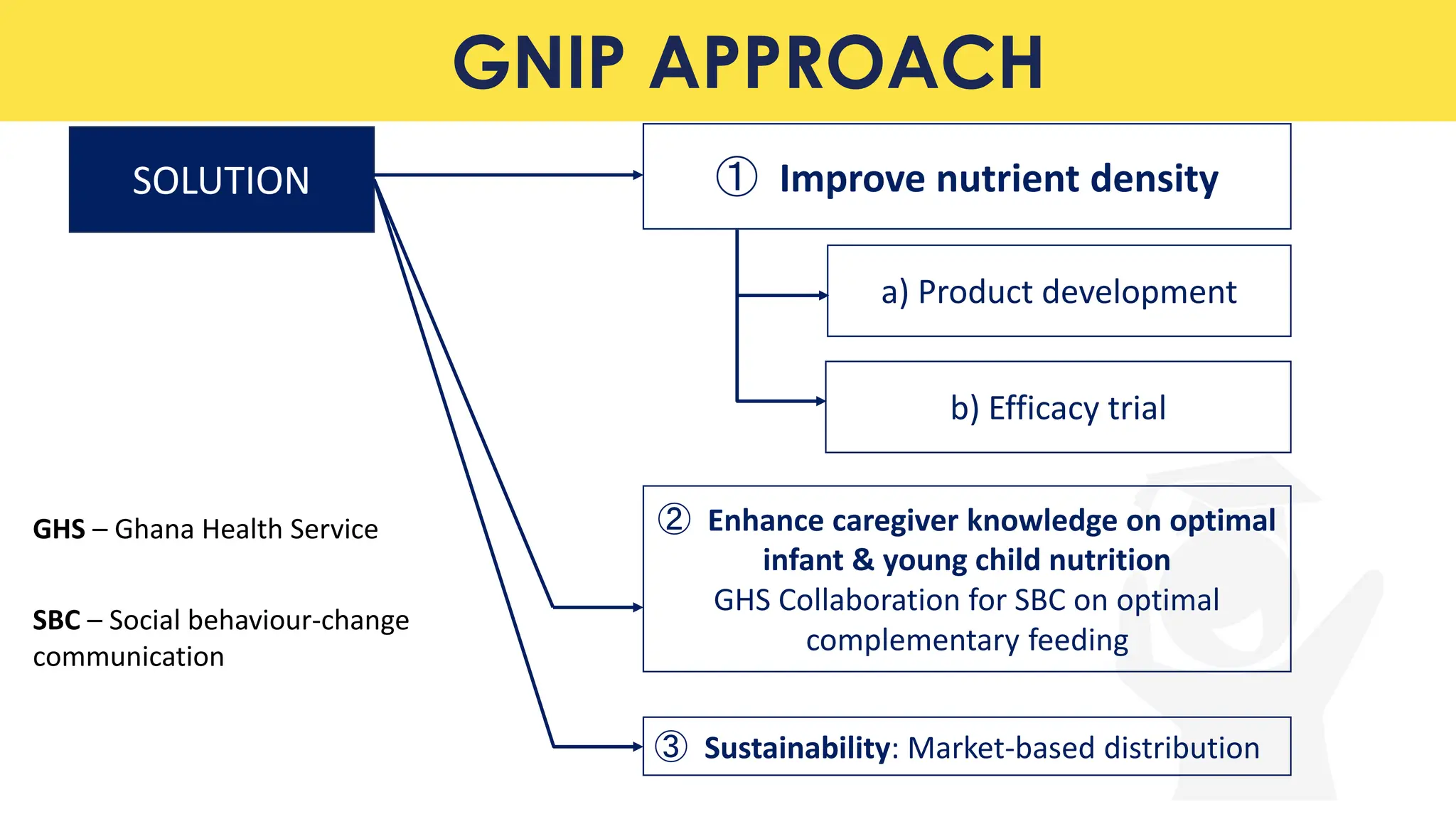
SOLUTION
b) Efficacy trial
a) Product development
① Improve nutrient density
➁ Enhance caregiver knowledge on optimal
infant & young child nutrition
GHS Collaboration for SBC on optimal
complementary feeding
➂ Sustainability: Market-based distribution
GHS – Ghana Health Service
SBC – Social behaviour-change
communication
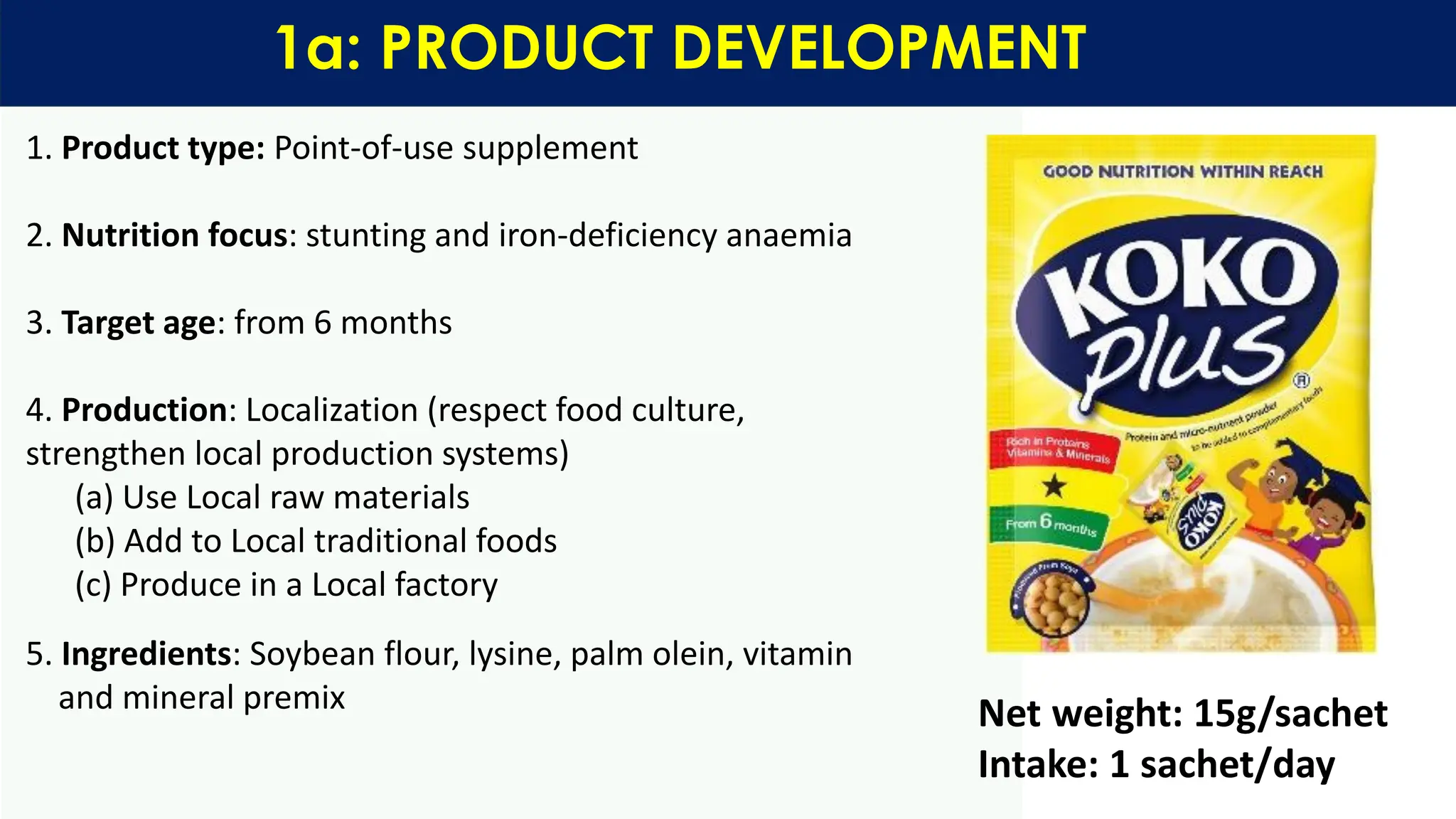
1. Product type: Point-of-use supplement
2. Nutrition focus: stunting and iron-deficiency anaemia
3. Target age: from 6 months
4. Production: Localization (respect food culture,
strengthen local production systems)
(a) Use Local raw materials
(b) Add to Local traditional foods
(c) Produce in a Local factory
5. Ingredients: Soybean flour, lysine, palm olein, vitamin
and mineral premix
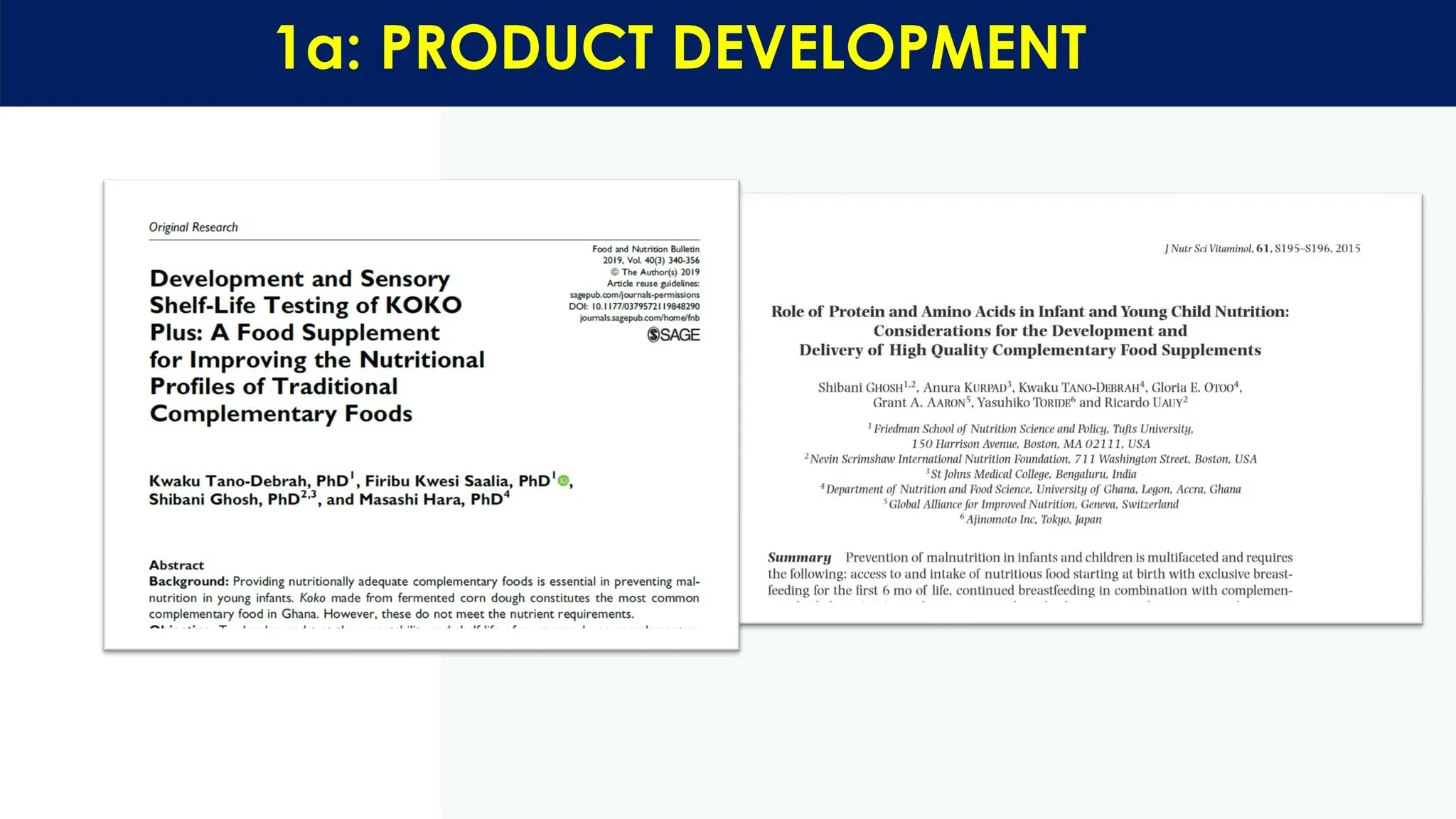
1a: PRODUCT DEVELOPMENT
Net weight: 15g/sachet
Intake: 1 sachet/day
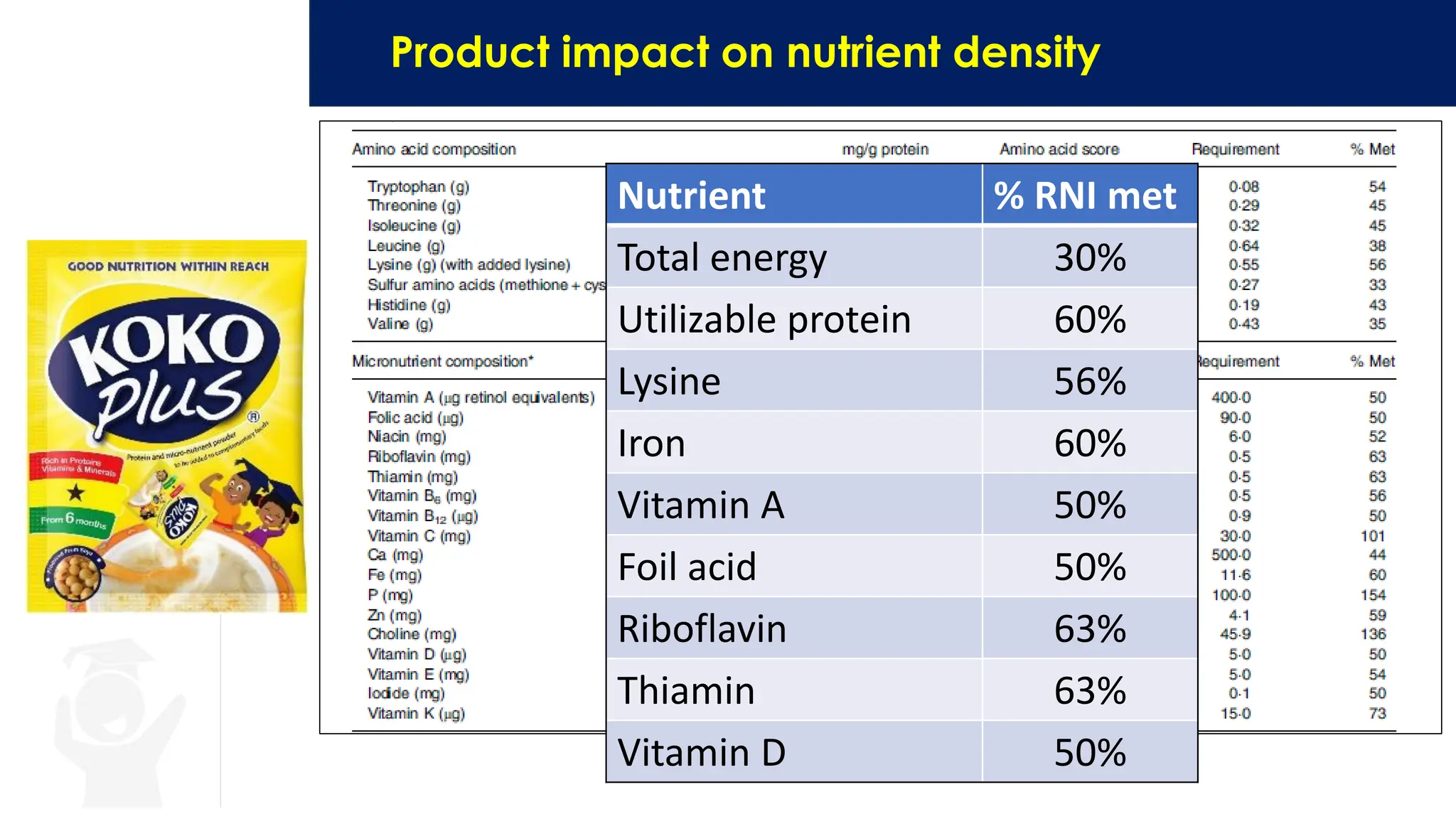
Product impact on nutrient density
Nutrient % RNI met
Total energy 30%
Utilizable protein 60%
Lysine 56%
Iron 60%
Vitamin A 50%
Foil acid 50%
Riboflavin 63%
Thiamin 63%
Vitamin D 50%
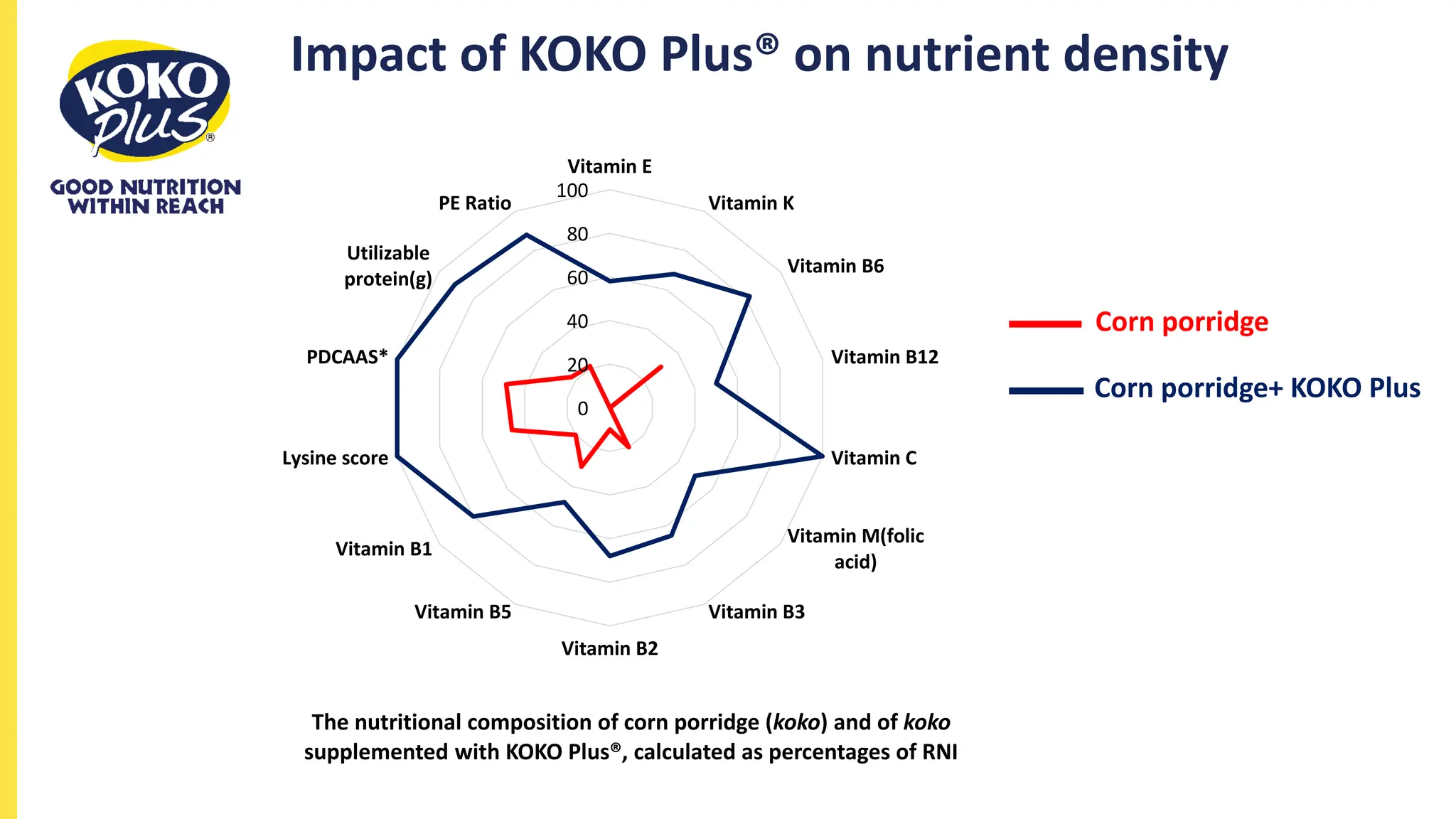
Impact of KOKO Plus® on nutrient density
0
20
40
60
80
100
Vitamin E
Vitamin K
Vitamin B6
Vitamin B12
Vitamin C
Vitamin M(folic
acid)
Vitamin B3
Vitamin B2
Vitamin B5
Vitamin B1
Lysine score
PDCAAS*
Utilizable
protein(g)
PE Ratio
The nutritional composition of corn porridge (koko) and of koko
supplemented with KOKO Plus®, calculated as percentages of RNI
Corn porridge
Corn porridge+ KOKO Plus
1a: PRODUCT DEVELOPMENT
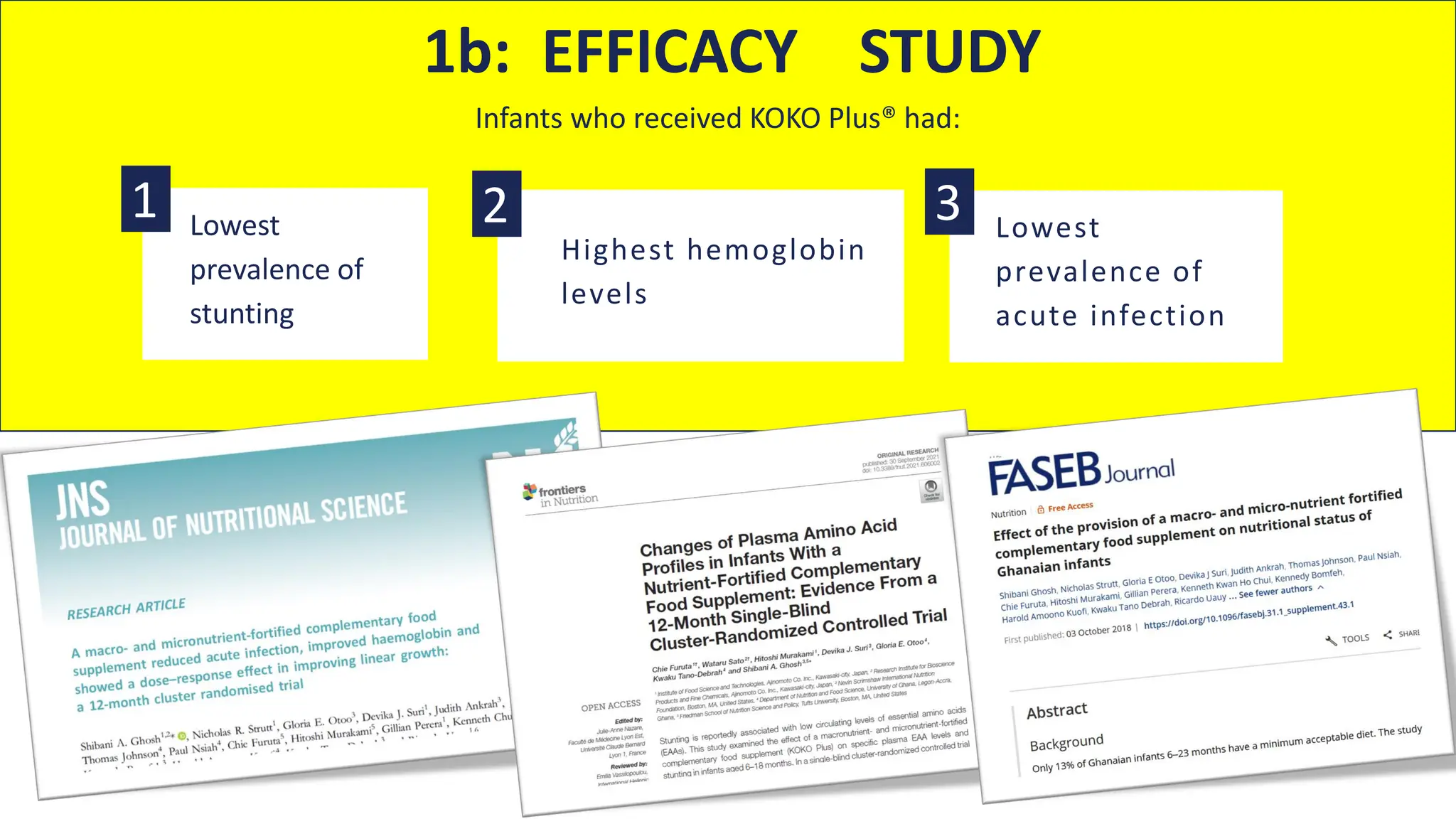
1b: EFFICACY STUDY
Lowest
prevalence of
stunting
Highest hemoglobin
levels
Lowest
prevalence of
acute infection
Infants who received KOKO Plus® had:
1 2 3
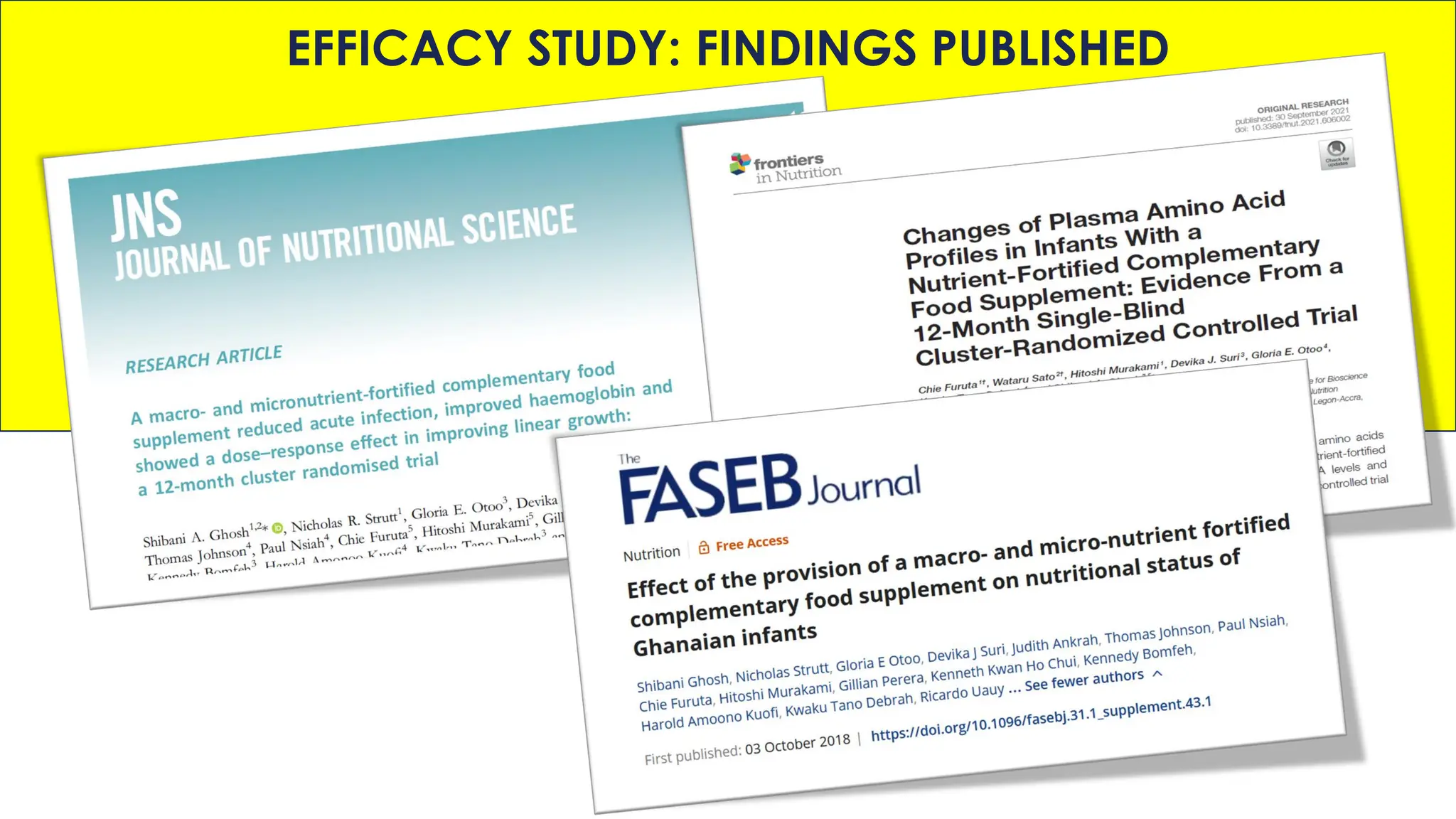
EFFICACY STUDY: FINDINGS PUBLISHED
GNIP APPROACH
SOLUTION
b) Efficacy trial
a) Product development
① Improve nutrient density
➁ Enhance caregiver knowledge on optimal
infant & young child nutrition
GHS Collaboration for SBC on optimal
complementary feeding
➂ Sustainability: Market-based distribution
GHS – Ghana Health Service
SBC – Social behaviour-change communication
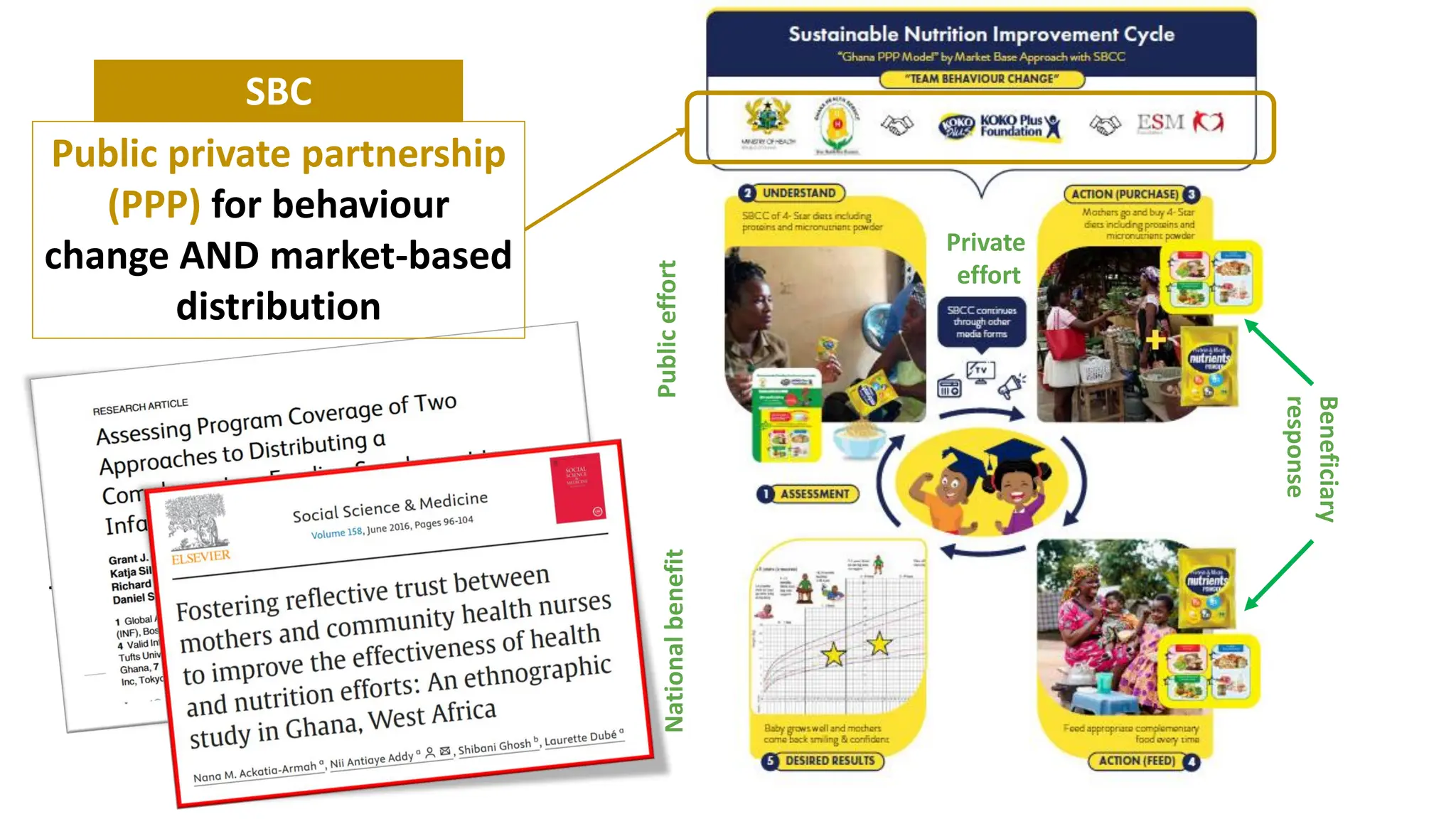
SBC activities
- Nutrition education/counseling
- Cooking demonstrations
- Role play
Public
effort
Private
effort
Public private partnership
(PPP) for behaviour
change AND market-based
distribution
SBC
National
benefit
Beneficiary
response
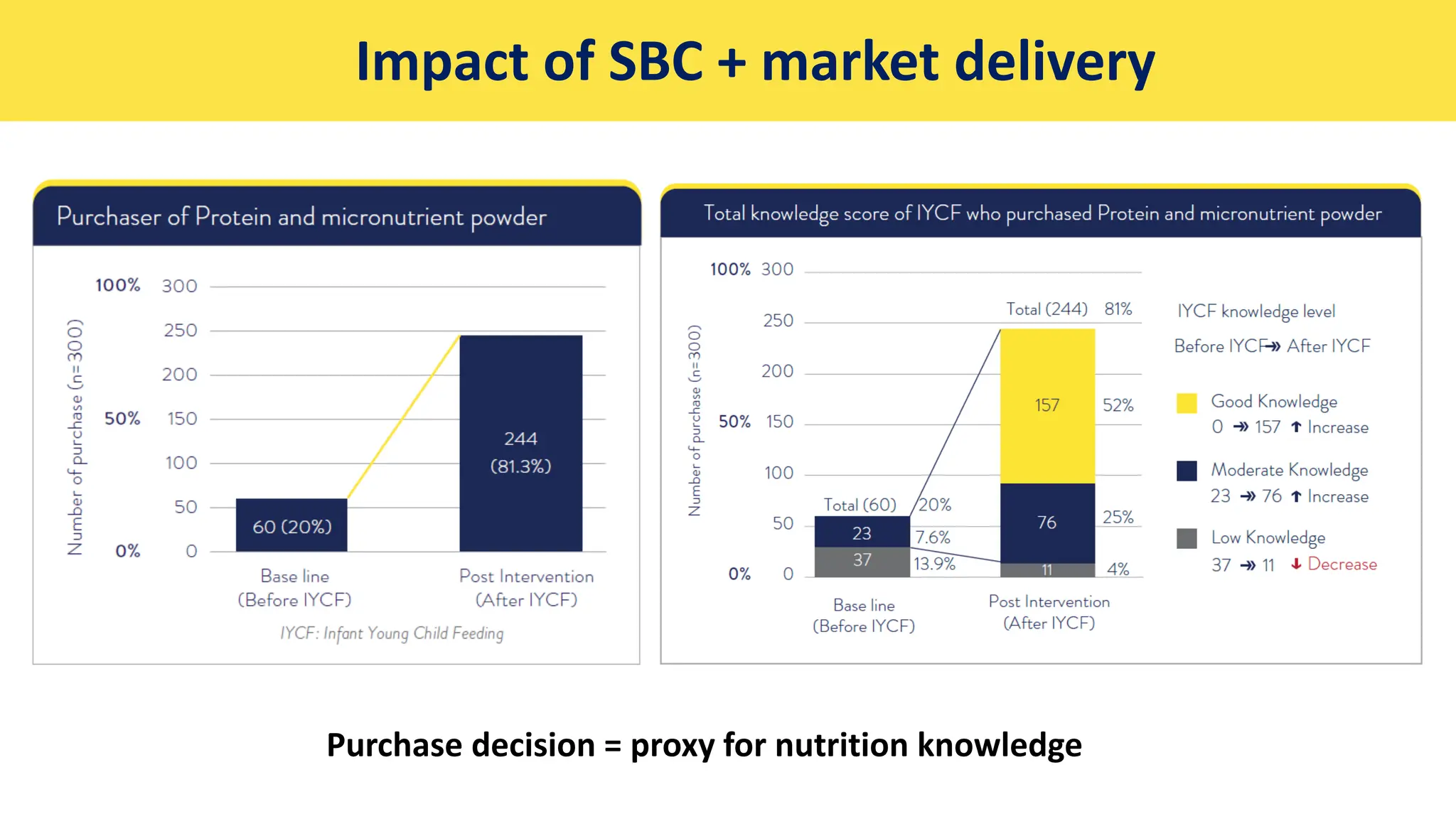
Impact of SBC + market delivery
Purchase decision = proxy for nutrition knowledge
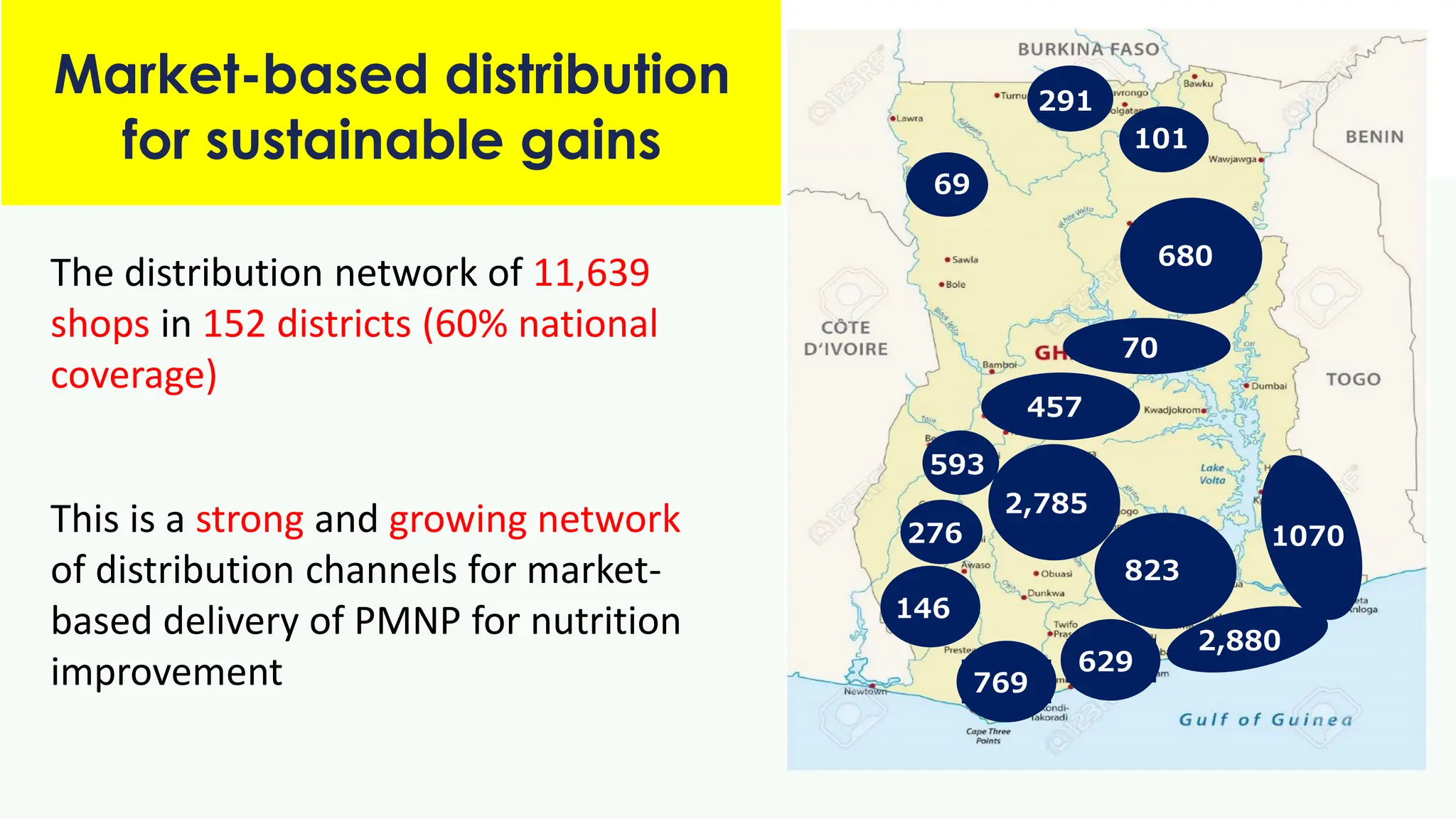
The distribution network of 11,639
shops in 152 districts (60% national
coverage)
2,785
2,880
823
629
769
593
457
276 1070
680
291
70
146
101
69
Market-based distribution
for sustainable gains
This is a strong and growing network
of distribution channels for market-
based delivery of PMNP for nutrition
improvement
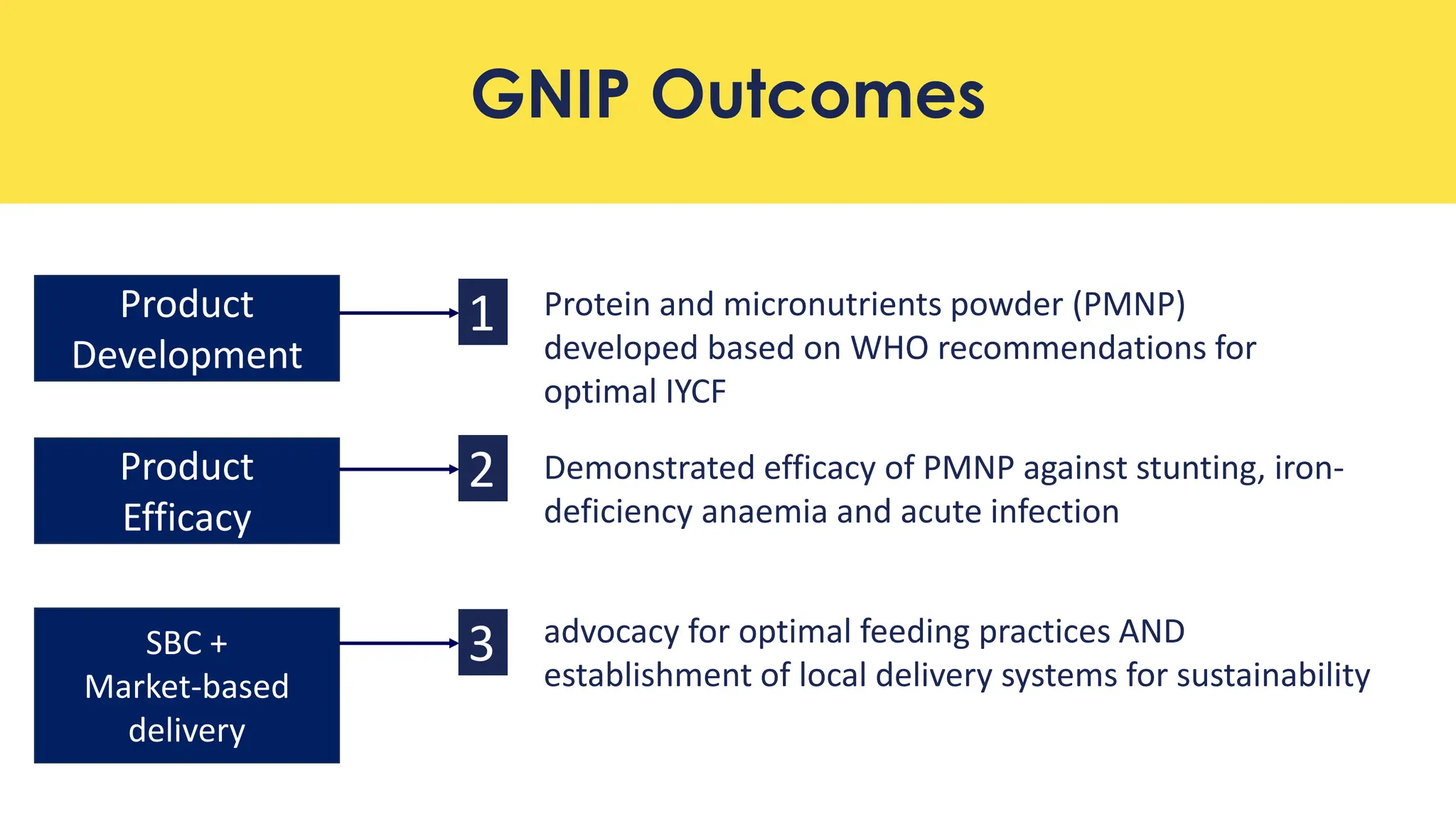
GNIP Outcomes
1. Protein and micronutrients powder (PMNP)
developed based on WHO recommendations for
optimal IYCF
Product
Development
1
2. Demonstrated efficacy of PMNP against stunting, iron-
deficiency anaemia and acute infection
Product
Efficacy
2
3. advocacy for optimal feeding practices AND
establishment of local delivery systems for sustainability
SBC +
Market-based
delivery
3
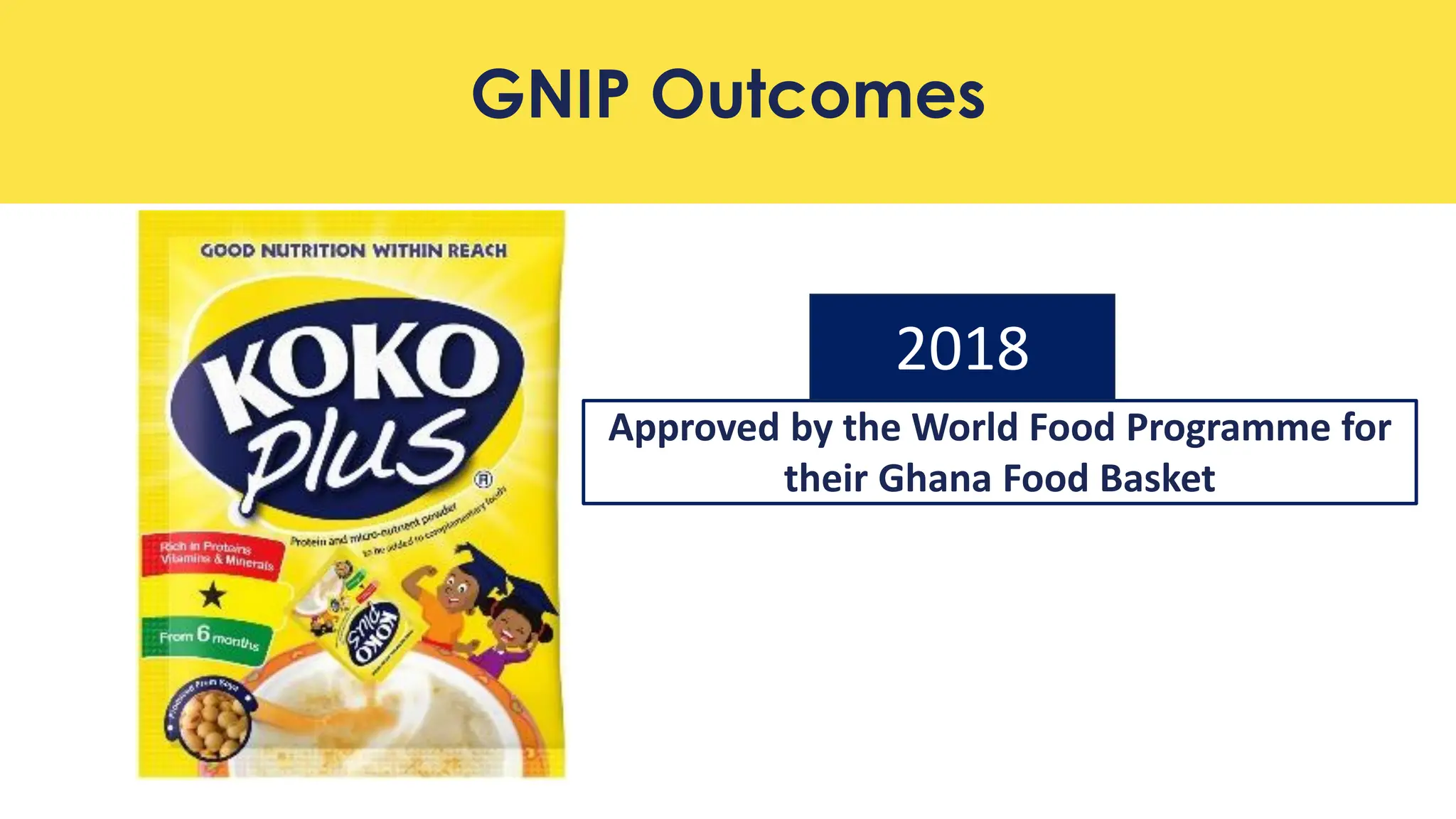
GNIP Outcomes
Approved by the World Food Programme for
their Ghana Food Basket
2018
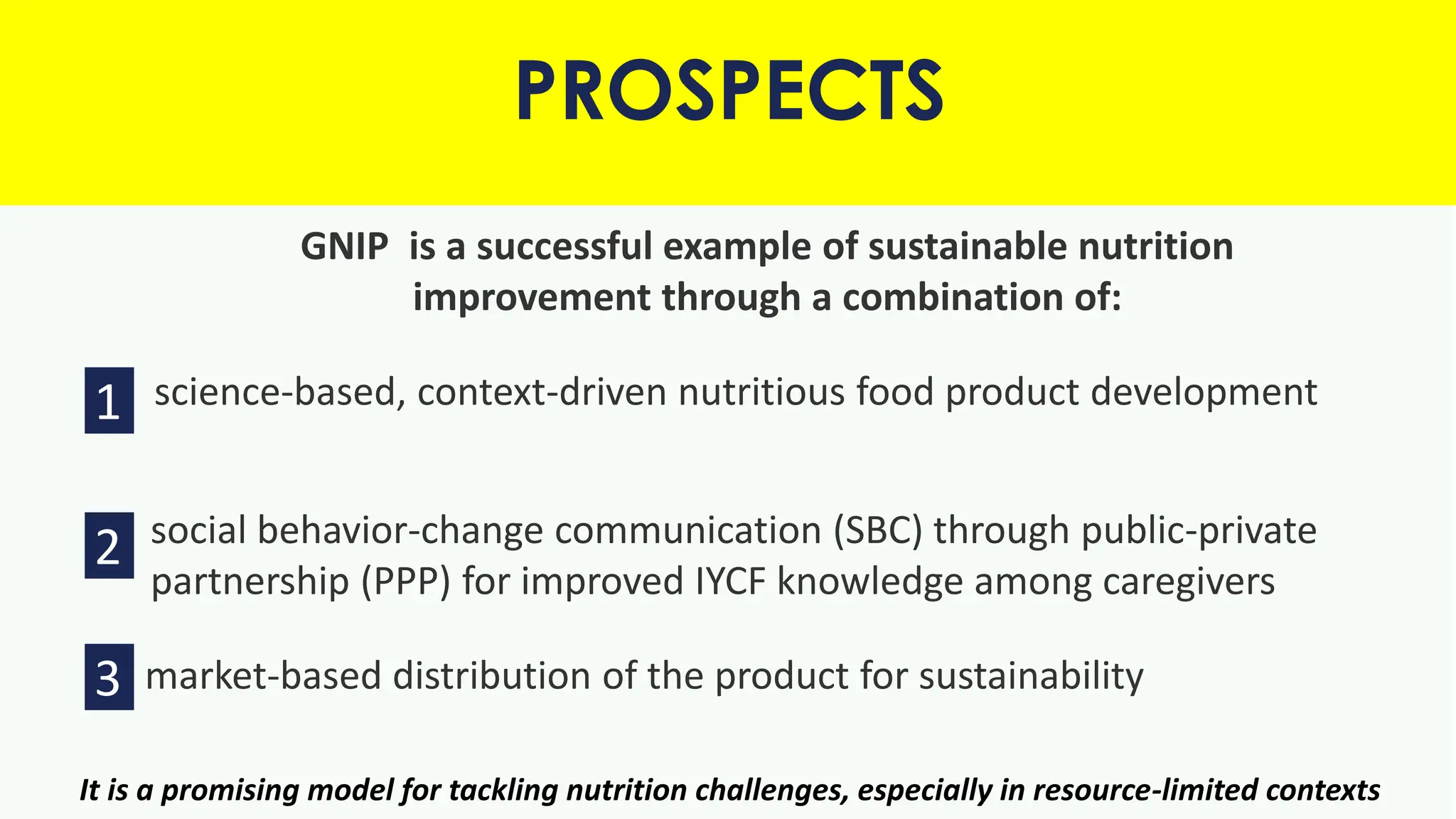
GNIP is a successful example of sustainable nutrition
improvement through a combination of:
1. science-based, context-driven nutritious food product development
2. social behavior-change communication (SBC) through public-private
partnership (PPP) for improved IYCF knowledge among caregivers
market-based distribution of the product for sustainability
PROSPECTS
1
2
3
It is a promising model for tackling nutrition challenges, especially in resource-limited contexts
Thank you
24

Securing sustainable good nutrition in the first 1000 days: The synergy of localization, social behaviour change communication and markets

  • 1.
    Sustaining Good Nutritionin the First 1000 Days: The Synergy of Localization, Advocacy and Markets Kennedy Bomfeh, PhD Director (Projects & Academic Affairs) KOKO Plus Foundation LBG kbomfeh@kokoplusfoundation.org 1
  • 2.
    What we saw:The Problem Ahead What we did: The Project What we found: The Results What we propose: The Prospects
  • 3.
    THE PROBLEM: INFANTNUTRITION SITUATION IN GHANA Source: 2022 Demographic and Health Survey; Ghana Statistical Service 28%
  • 4.
    THE PROBLEM: INFANTNUTRITION SITUATION IN GHANA Source: 2022 Demographic and Health Survey; Ghana Statistical Service 78.3%
  • 5.
    THE PROBLEM: INFANTNUTRITION SITUATION IN GHANA Minimum Acceptable Diet 2009 2022 29.9% 12% Source: 2022 Demographic and Health Survey; Ghana Statistical Service
  • 6.
    Nutrition deficiency effects in the “First1,000 days” are irreversible
  • 7.
    Effects of Malnutrition Nutritiondeficiency effects in the “First 1,000 days” are irreversible
  • 8.
    THE PROJECT: THE GHANANUTRITION IMPROVEMENT PROJECT (GNIP) A partnership to develop a context-relevant complementary food supplement to support closure of the nutrition gap COLLABORATORS LEAD PARTNERS
  • 9.
    GNIP APPROACH PROBLEM Infant andyoung child malnutrition (especially stunting) CAUSE (nutrition-related) SOLUTION (GNIP input) Caregivers’ nutrition knowledge Food availability and access Inadequate intake of nutritious food ① Improve nutrient density of foods ➁ Enhance caregiver knowledge on infant nutrition ➂ Connect ① and ➁ sustainably by social business
  • 10.
    GNIP APPROACH SOLUTION b) Efficacytrial a) Product development ① Improve nutrient density ➁ Enhance caregiver knowledge on optimal infant & young child nutrition GHS Collaboration for SBC on optimal complementary feeding ➂ Sustainability: Market-based distribution GHS – Ghana Health Service SBC – Social behaviour-change communication
  • 11.
    1. Product type:Point-of-use supplement 2. Nutrition focus: stunting and iron-deficiency anaemia 3. Target age: from 6 months 4. Production: Localization (respect food culture, strengthen local production systems) (a) Use Local raw materials (b) Add to Local traditional foods (c) Produce in a Local factory 5. Ingredients: Soybean flour, lysine, palm olein, vitamin and mineral premix 1a: PRODUCT DEVELOPMENT Net weight: 15g/sachet Intake: 1 sachet/day
  • 12.
    Product impact onnutrient density Nutrient % RNI met Total energy 30% Utilizable protein 60% Lysine 56% Iron 60% Vitamin A 50% Foil acid 50% Riboflavin 63% Thiamin 63% Vitamin D 50%
  • 13.
    Impact of KOKOPlus® on nutrient density 0 20 40 60 80 100 Vitamin E Vitamin K Vitamin B6 Vitamin B12 Vitamin C Vitamin M(folic acid) Vitamin B3 Vitamin B2 Vitamin B5 Vitamin B1 Lysine score PDCAAS* Utilizable protein(g) PE Ratio The nutritional composition of corn porridge (koko) and of koko supplemented with KOKO Plus®, calculated as percentages of RNI Corn porridge Corn porridge+ KOKO Plus
  • 14.
  • 15.
    1b: EFFICACY STUDY Lowest prevalenceof stunting Highest hemoglobin levels Lowest prevalence of acute infection Infants who received KOKO Plus® had: 1 2 3
  • 16.
  • 17.
    GNIP APPROACH SOLUTION b) Efficacytrial a) Product development ① Improve nutrient density ➁ Enhance caregiver knowledge on optimal infant & young child nutrition GHS Collaboration for SBC on optimal complementary feeding ➂ Sustainability: Market-based distribution GHS – Ghana Health Service SBC – Social behaviour-change communication
  • 18.
    SBC activities - Nutritioneducation/counseling - Cooking demonstrations - Role play Public effort Private effort Public private partnership (PPP) for behaviour change AND market-based distribution SBC National benefit Beneficiary response
  • 19.
    Impact of SBC+ market delivery Purchase decision = proxy for nutrition knowledge
  • 20.
    The distribution networkof 11,639 shops in 152 districts (60% national coverage) 2,785 2,880 823 629 769 593 457 276 1070 680 291 70 146 101 69 Market-based distribution for sustainable gains This is a strong and growing network of distribution channels for market- based delivery of PMNP for nutrition improvement
  • 21.
    GNIP Outcomes 1. Proteinand micronutrients powder (PMNP) developed based on WHO recommendations for optimal IYCF Product Development 1 2. Demonstrated efficacy of PMNP against stunting, iron- deficiency anaemia and acute infection Product Efficacy 2 3. advocacy for optimal feeding practices AND establishment of local delivery systems for sustainability SBC + Market-based delivery 3
  • 22.
    GNIP Outcomes Approved bythe World Food Programme for their Ghana Food Basket 2018
  • 23.
    GNIP is asuccessful example of sustainable nutrition improvement through a combination of: 1. science-based, context-driven nutritious food product development 2. social behavior-change communication (SBC) through public-private partnership (PPP) for improved IYCF knowledge among caregivers market-based distribution of the product for sustainability PROSPECTS 1 2 3 It is a promising model for tackling nutrition challenges, especially in resource-limited contexts
  • 24.