Introduction
to Nutrition
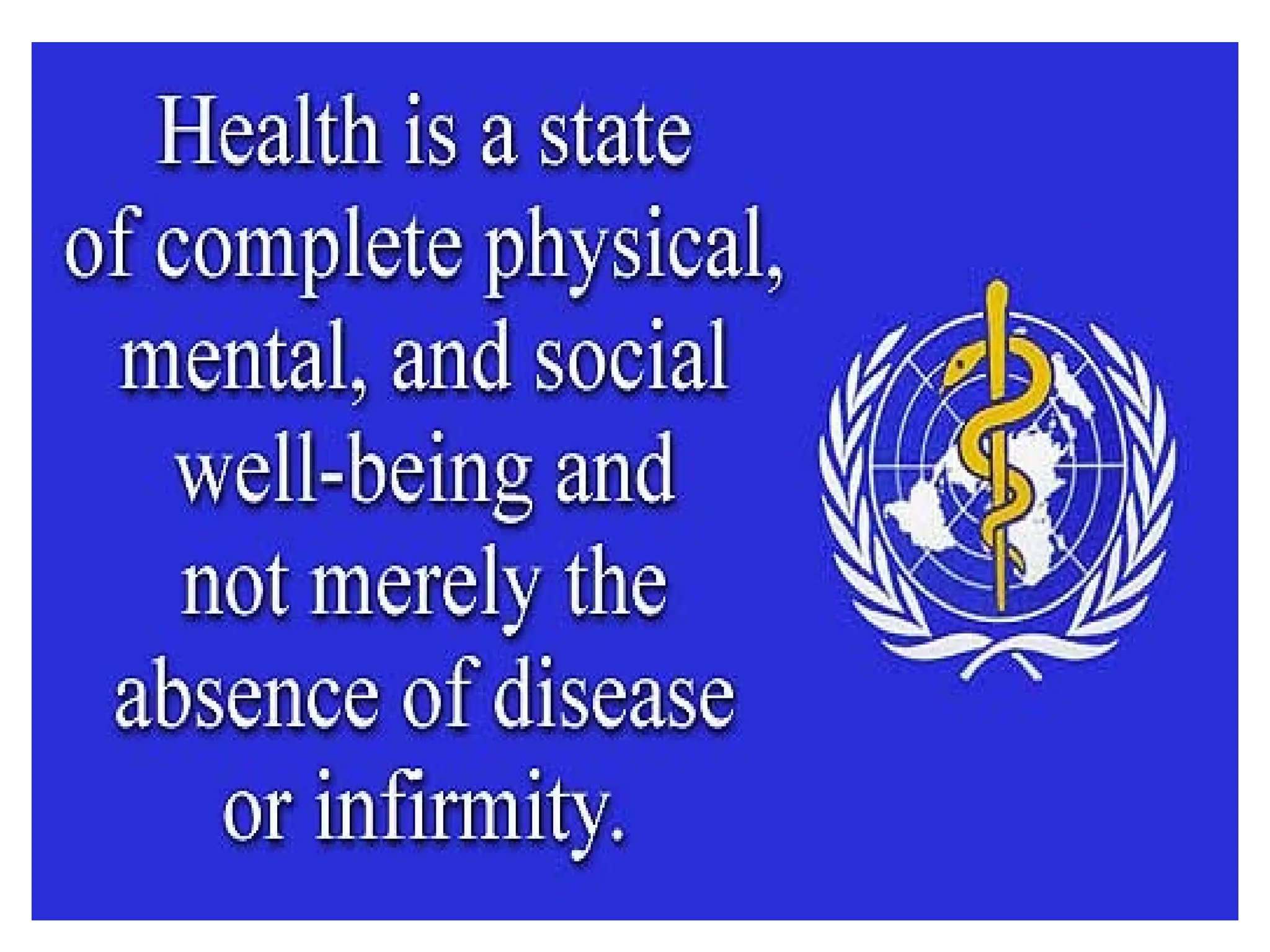
What Is Health ?
2
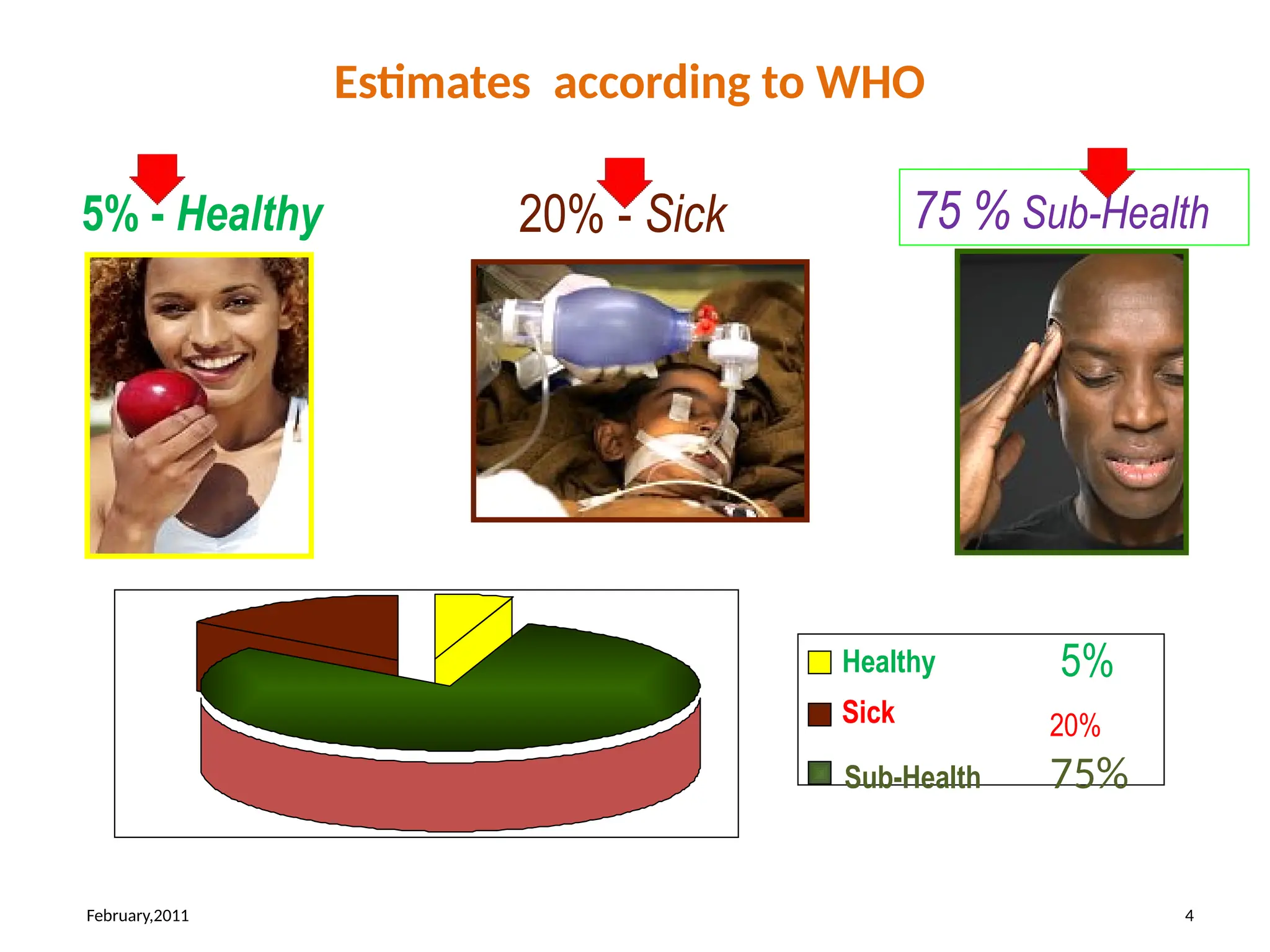
February,2011 4
Healthy
Sub-Health
Sick 20%
75%
5%
5% - Healthy 20% - Sick 75 % Sub-Health
Estimates according to WHO
What is sub-health ?
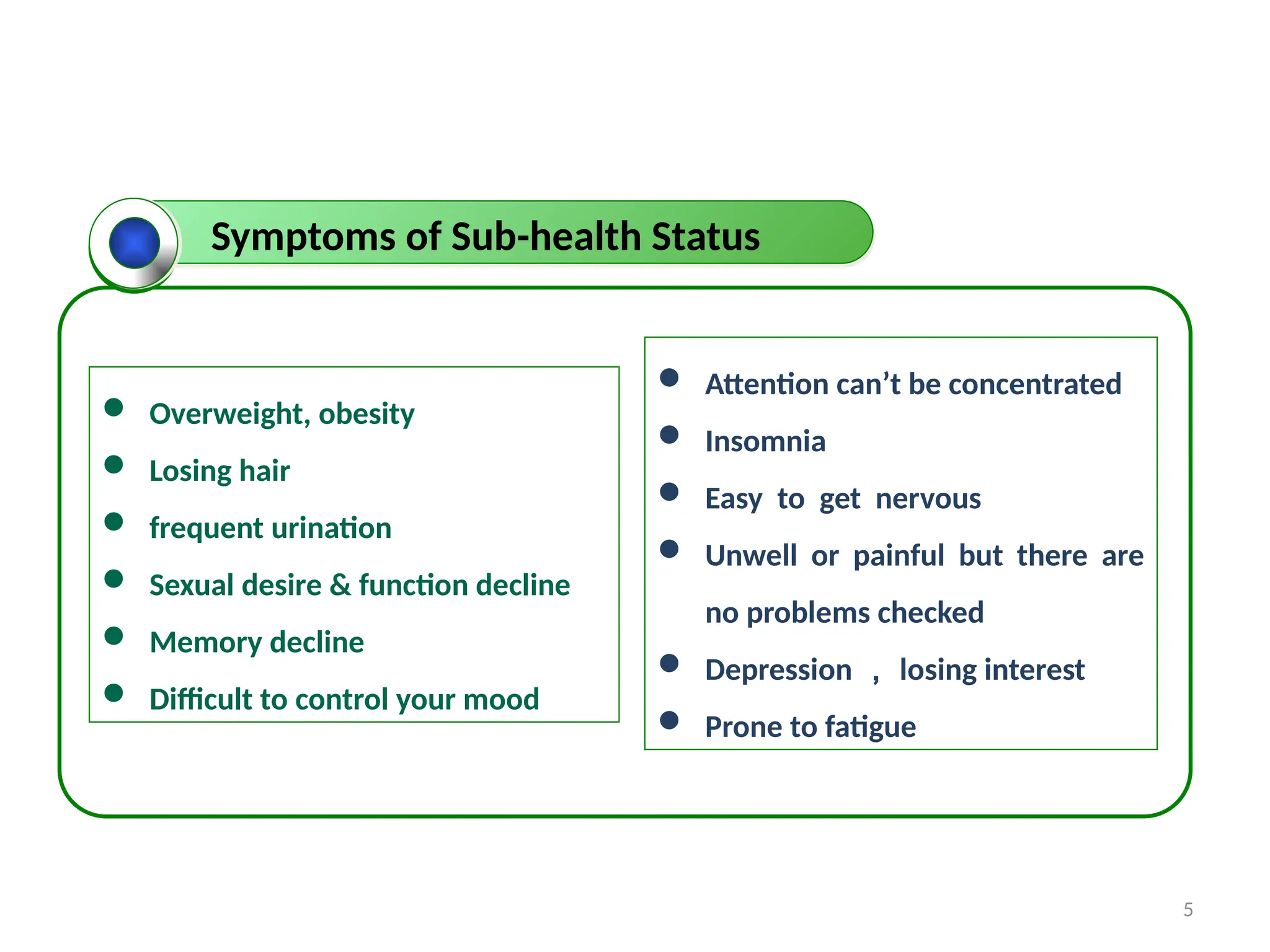
 Overweight, obesity
 Losing hair
 frequent urination
 Sexual desire & function decline
 Memory decline
 Difficult to control your mood
 Attention can’t be concentrated
 Insomnia
 Easy to get nervous
 Unwell or painful but there are
no problems checked
 Depression , losing interest
 Prone to fatigue
Symptoms of Sub-health Status
5
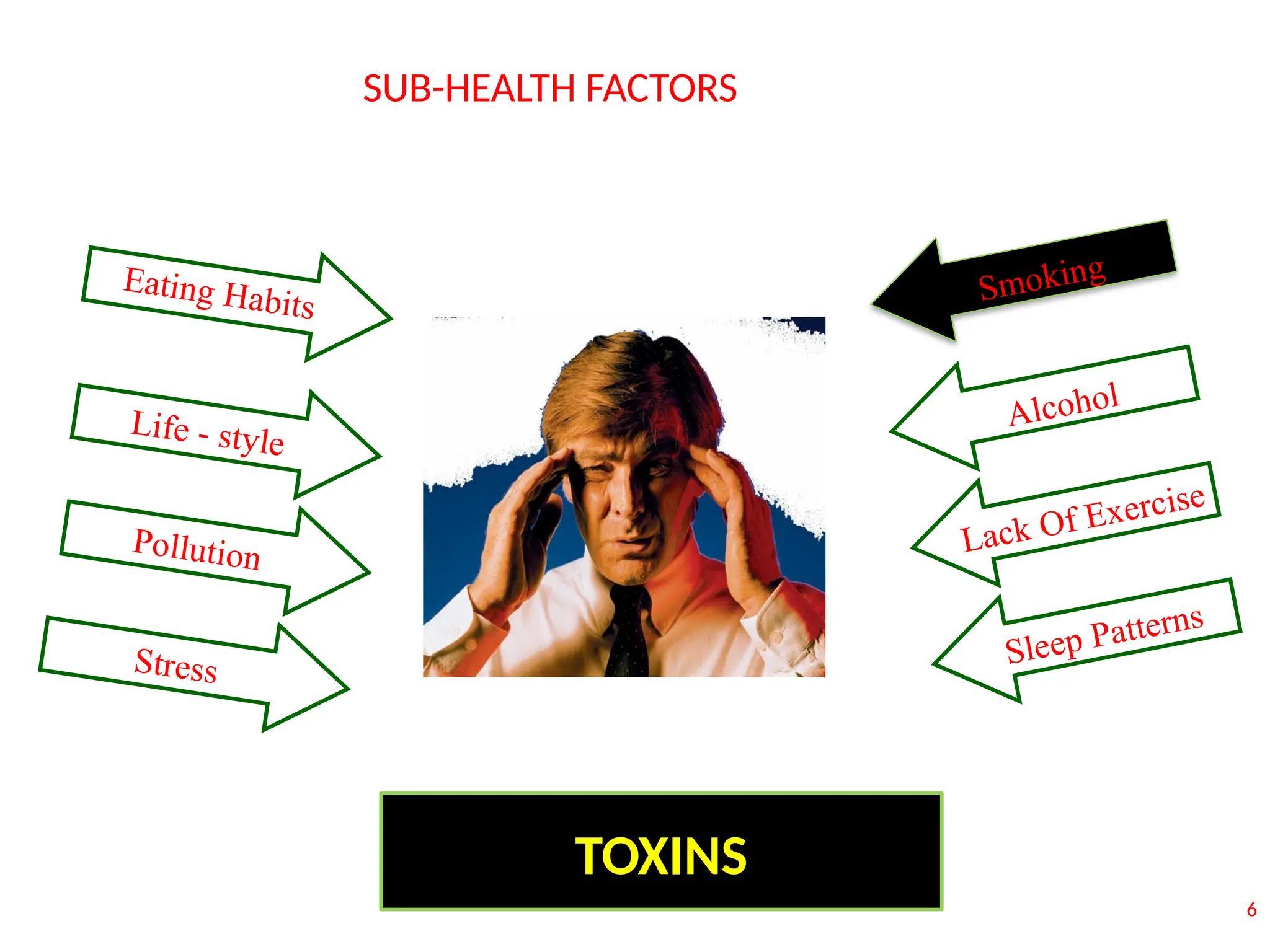
Smoking
Alcohol
Lack Of Exercise
Eating Habits
Pollution
Life - style
6
SUB-HEALTH FACTORS
Stress Sleep Patterns
TOXINS
7
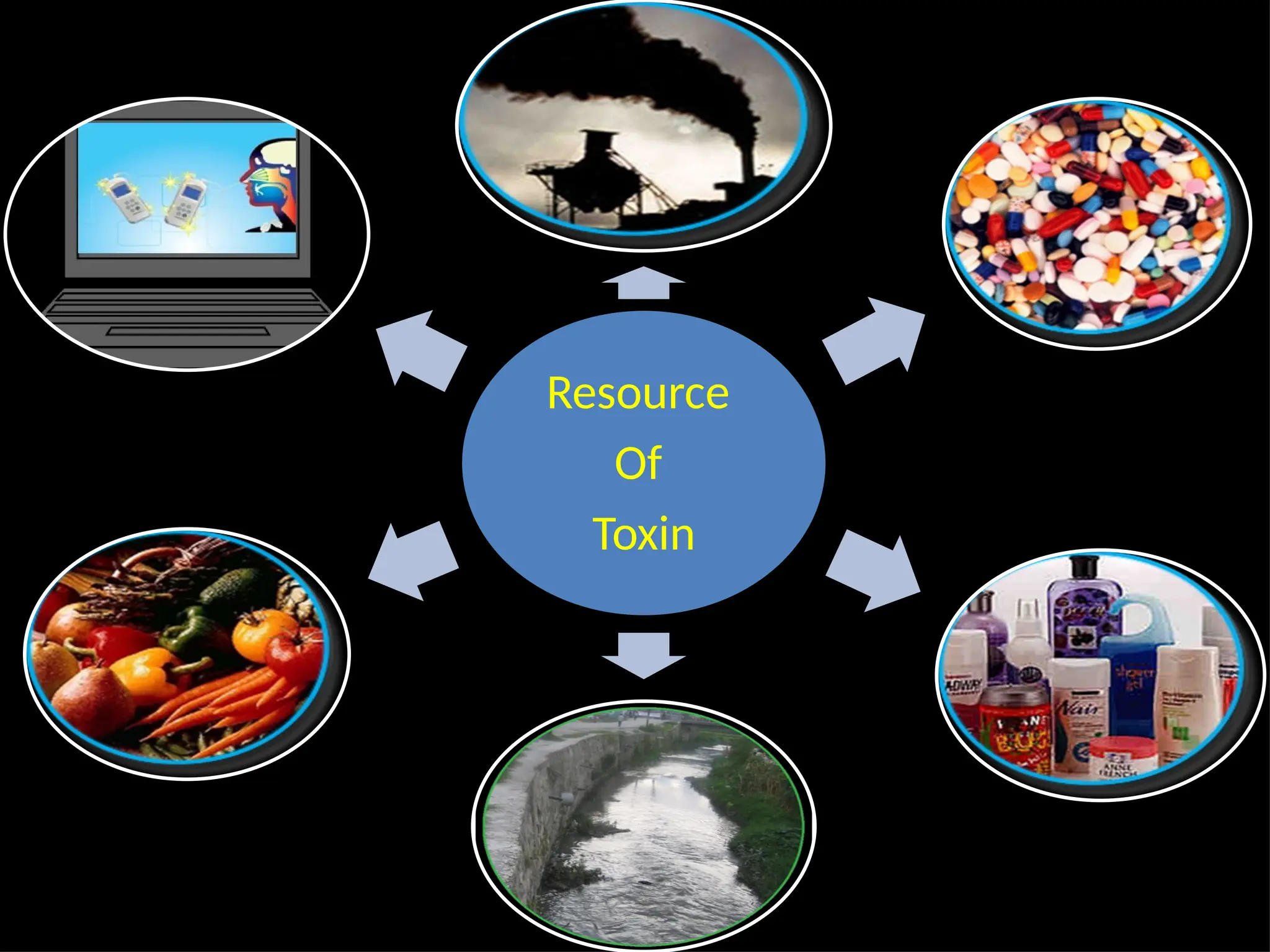
Resource
Of
Toxin
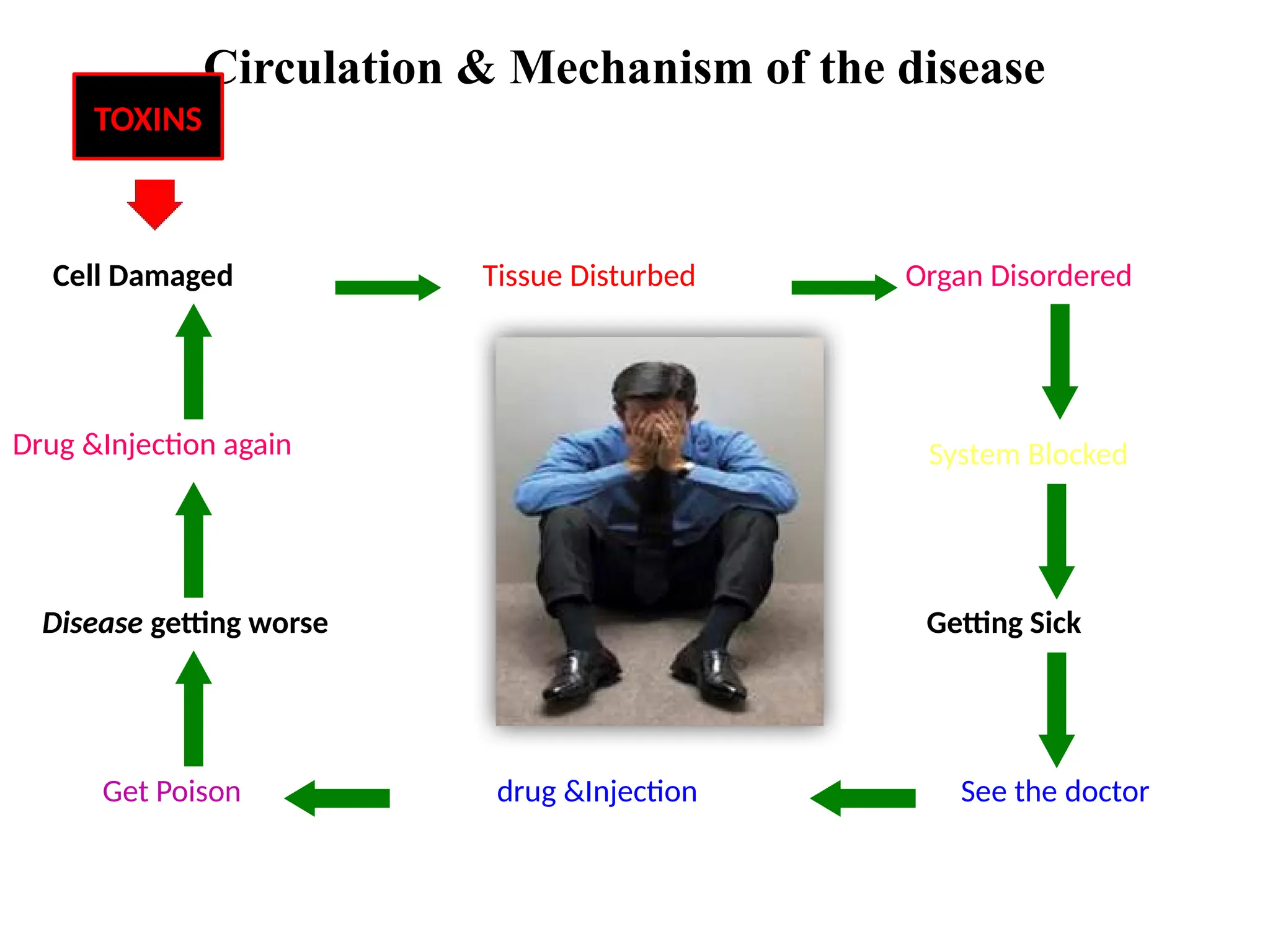
Circulation & Mechanism of the disease
Cell Damaged Tissue Disturbed Organ Disordered
System Blocked
Getting Sick
See the doctor
drug &Injection
Get Poison
Disease getting worse
Drug &Injection again
TOXINS
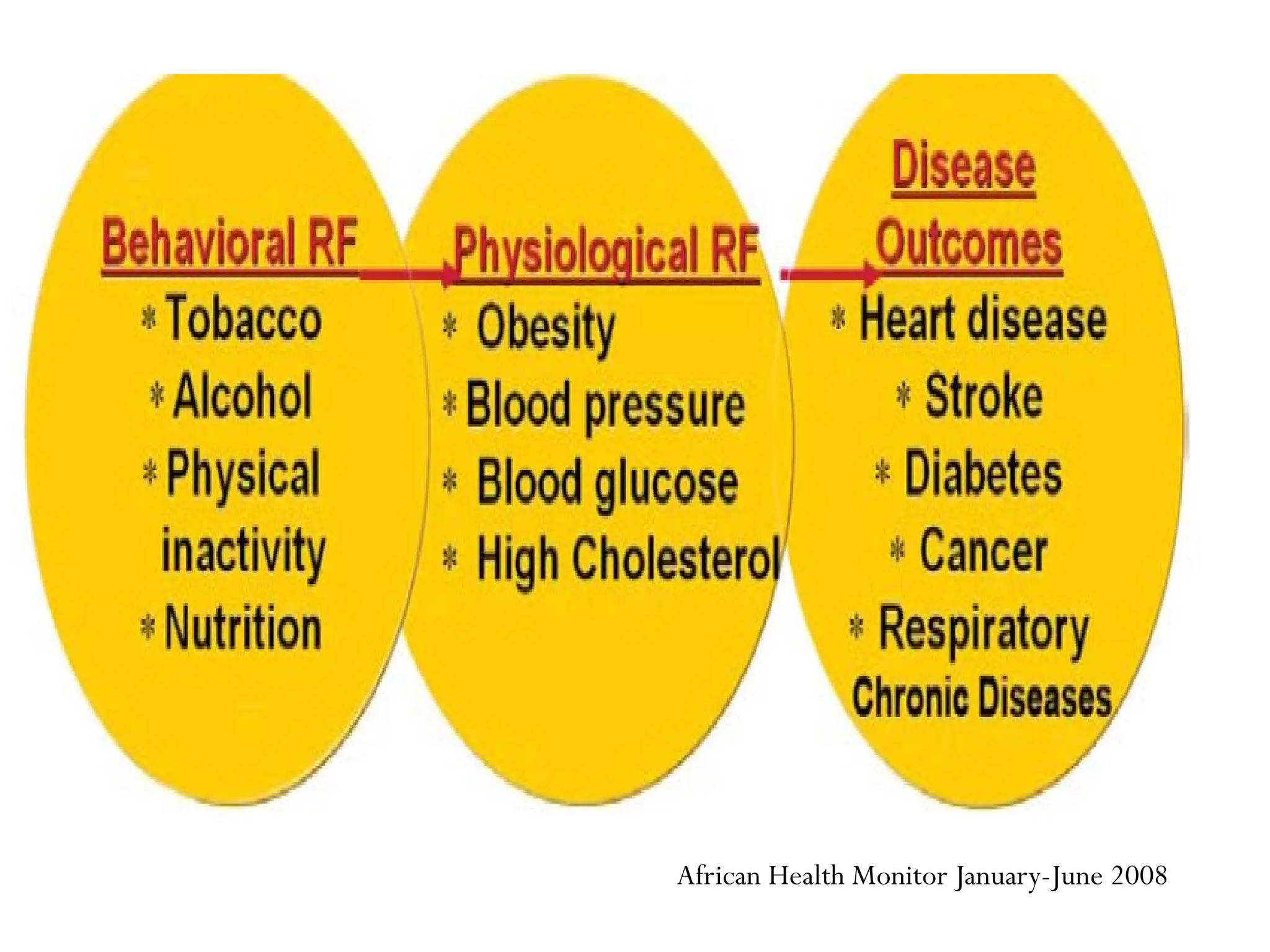
African Health Monitor January-June 2008
Optimum nutrition
status with regular
physical exercise is
a Better solution
10
Nutrition:- is the science of food, nutrients and other
substances, their action interaction and balance in relation to
health and disease and the process by which the organism
ingests, digests, absorbs, transports, utilizes and excretes
food substances.
Food is anything edible based on specific culture, religion,
etc. It includes all foods and drinks acceptable to be
ingested by certain society.
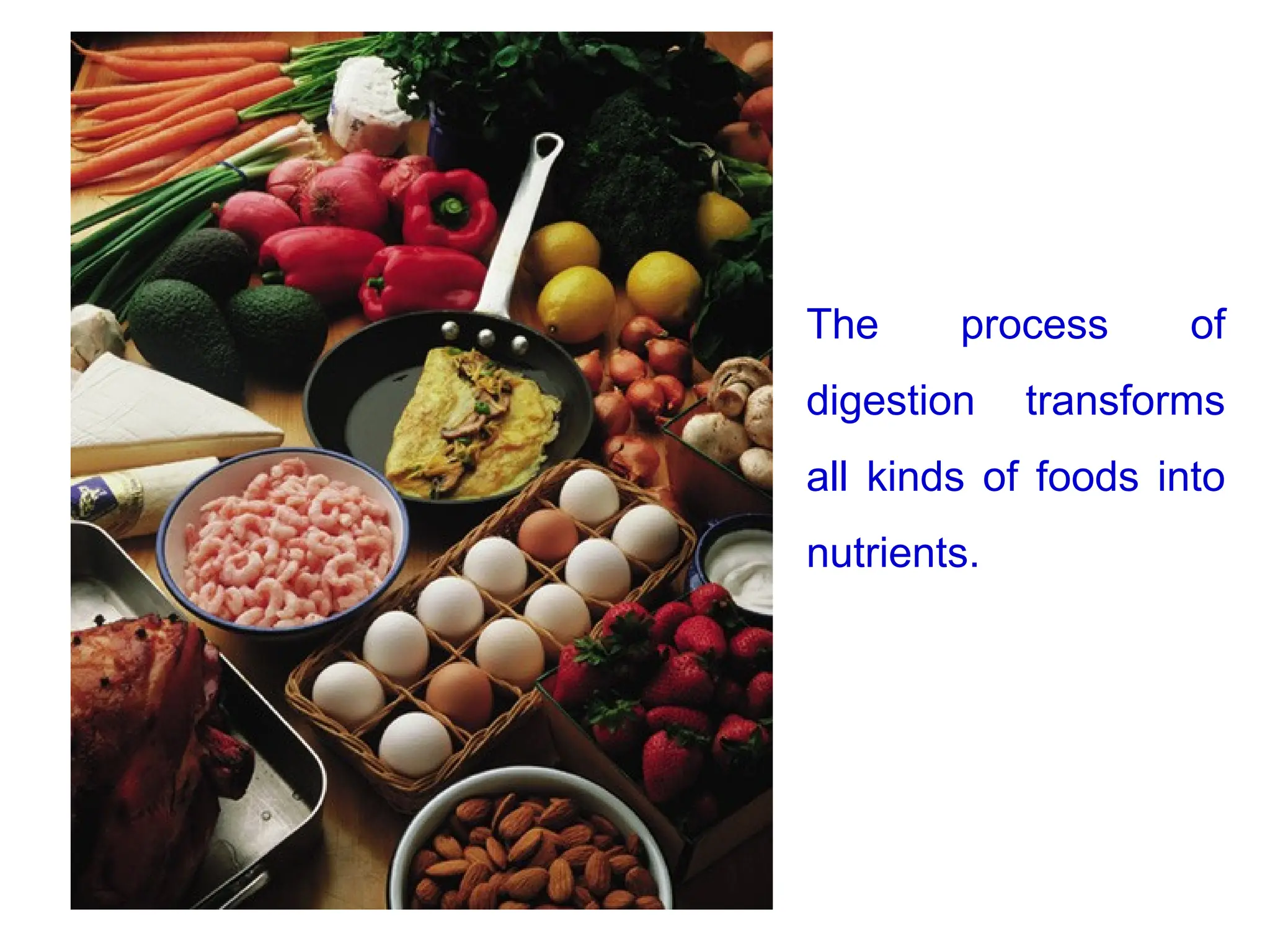
The process of
digestion transforms
all kinds of foods into
nutrients.
Nutrients
Active chemical components in the food that has specific
function.
Diet
 Sequence of meals in a day.
 Eating patterns of individuals or group.
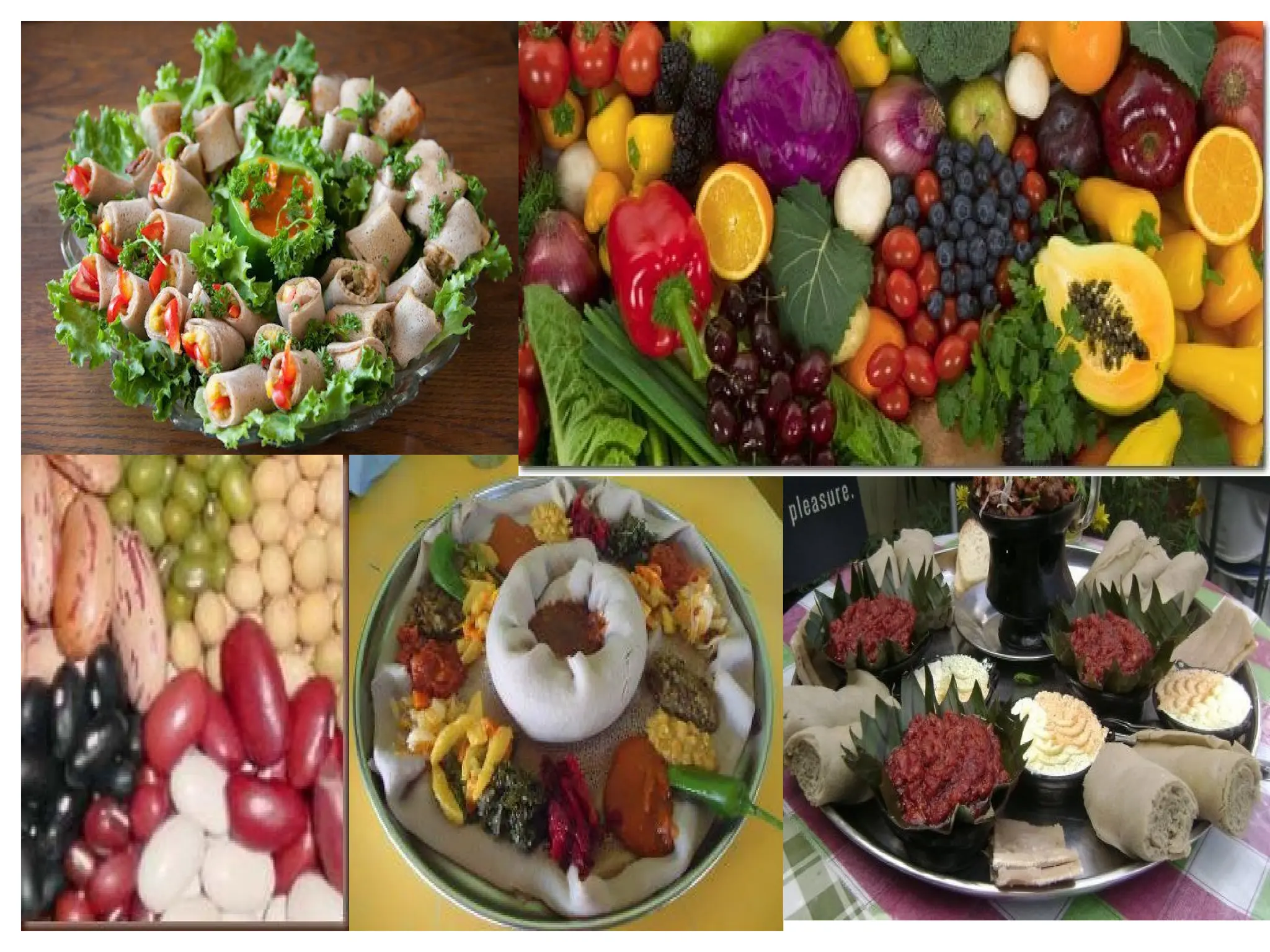
Balanced diet
 All essential nutrients in right proportion.
 Optimal for long time survival and health.
Macronutrients:
Nutrients that are required by our body in larger
quantities on a daily basis. These include carbohydrates,
lipids and proteins. Upon oxidation all of them give energy.
Micronutrients:
nutrients that are required in smaller quantities by the body
and perform essential physiological and structural functions.
This will include vitamins and minerals.
Malnutrition- a pathological state resulting from a relative or
absolute deficiency or excess of one or more essential
nutrients, this state being clinically manifested or detected
only by biochemical, anthropometric or physiological tests.
Under nutrition
Pathological state resulting from the consumption of an
inadequate quality/ quantity over an extended period of time.
Over-nutrition
•Pathological state resulting from the consumption of an
excess quantity of food, and hence an energy excess, over
an extended period of time.
Food, nutrition and malnutrition Food
Food- is any solid or liquid which when ingested will enable the body
to carry out any of its function.
Foods are made up of Macro and Micronutrients.
Foods are classified into three:
Energy giving
Body building
Protecting
Nutrition: is the sum total of the process by which living things
receive and utilize the necessary materials for survival, growth and
maintenance of worn out tissues.
Aristotle a Greek philosopher
•Believed that the innate heat of the heart was the source of life
and that all its power were related to nutrition, sensation,
movement. And thought. The heart was the source of life and
death would occur if the heart lost its heat.
Malnutrition: is the condition that results from an imbalance
between dietary intake and requirements. It includes under
nutrition , which results from less food intake and hard physical
work and over nutrition results from excess food intake and less
physical activities.
Public health nutrition is defined as “the promotion and
maintenance of nutrition related health and wellbeing of
populations through the organized efforts and informed choices
of society”.
Roughage
Roughage enables the body to get rid of waste products, which
would otherwise become poisonous to the body. It prevents
gastrointestinal and metabolic disorders.
Gastrointestinal disorders:
Gastritis
Appendicitis
Gall bladder stone
Constipation
Metabolic disorders
oDiabetes mellitus
oHypertension
oIschemic heart diseases
oColon cancer
Dietary guidelines
Eat a wide variety of foods
Maintain healthy weight
Choose a diet with plenty of vegetable, fruits and grain products
Use sugar in moderation
Use salt and sodium in moderation
If you drink alcohol, do so in moderation
The four food groups
1. Milk, cheese, yoghurt
2. Meat, poultry, fish and alternates
3. Fruits and vegetables
4. Bread and cereals
5. Fats, sweets and alcohols.
Why human beings need food?
Human beings need food to provide energy for the essential physiological
functions like
 Respiration
 Circulation
 Digestion
 Metabolism
Maintaining body temperature
Growth and repair body tissues
Essential nutrients which perform key functions in the biochemical
process of metabolism
Important cause of malnutrition in Ethiopia
Lack of knowledge in selecting foodstuff with high nutritive value
Poverty and infectious diseases
Drought
Insufficient supply of the necessary food
Uneven distribution of the available foods
War
Poor sanitation/hygiene
Transport problems
Increased populations
Inadequate weaning
Family technique- insufficient
Poor management
Topographical differences in different regions(variation in
productivity)
Social problems
Loss of food through destruction by insects
Exploited land due to planting the same type of food crop for many
years, erosion because of over grazing and moreover the farmers
could not use the fertilizers due to many reasons.
Good traditions which favor nutrition in Ethiopia
Breast feeding
Mixing of foods E.g. Injera with wot prepared from cereals,
legumes and vegetables.
Traditional use of DGV “Habesha Gommen”
Different types of foods are prepared during holidays, marriage
days, etc.
Eating cereals in the form of Kolo (roasted) and nefero(cocked)
Additional high calories and high protein diet for pregnant and
lactating mothers
After the 7th
day of delivery the mother and the child warm in the
sun every morning.
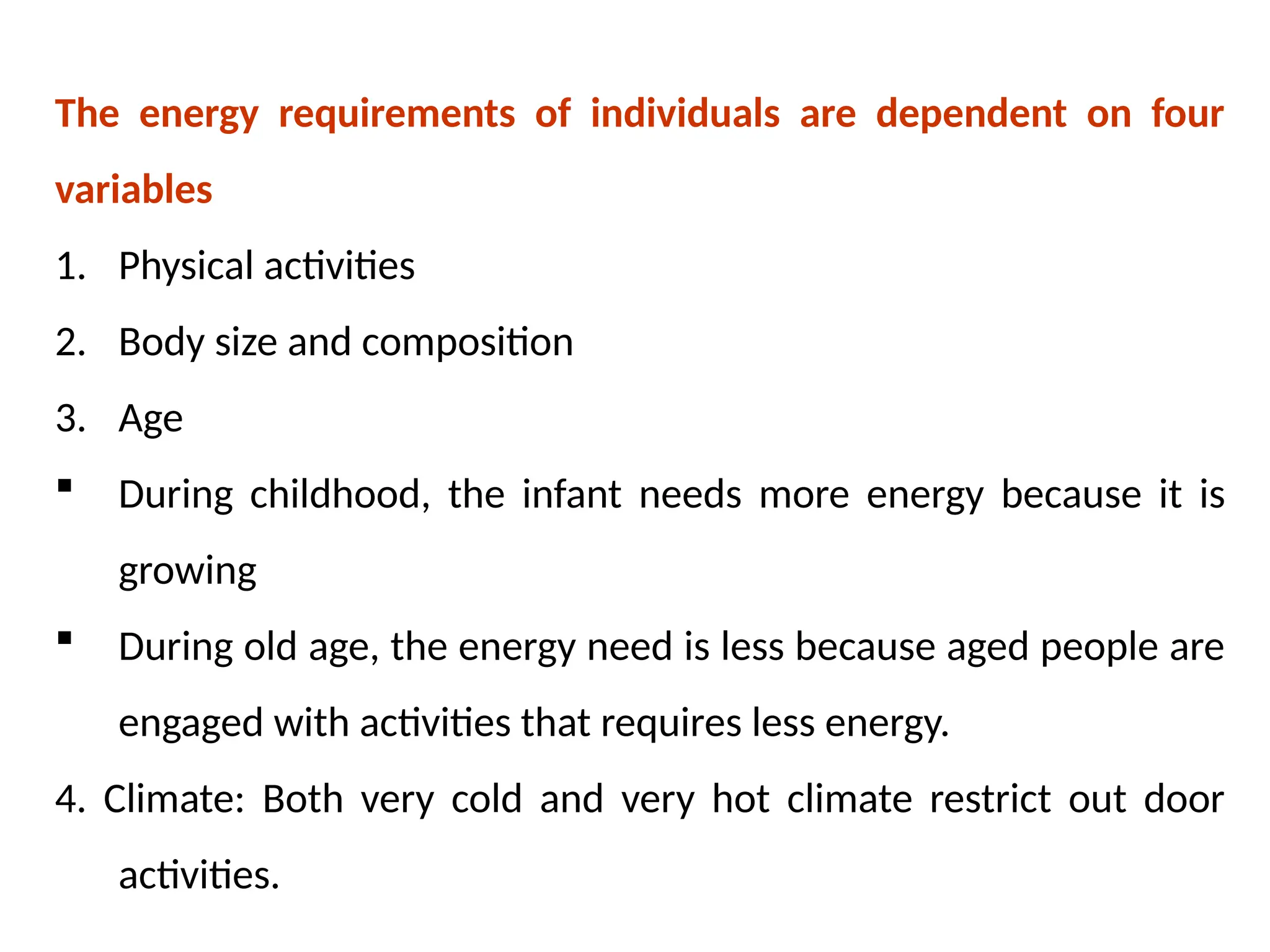
The energy requirements of individuals are dependent on four
variables
1. Physical activities
2. Body size and composition
3. Age
 During childhood, the infant needs more energy because it is
growing
 During old age, the energy need is less because aged people are
engaged with activities that requires less energy.
4. Climate: Both very cold and very hot climate restrict out door
activities.
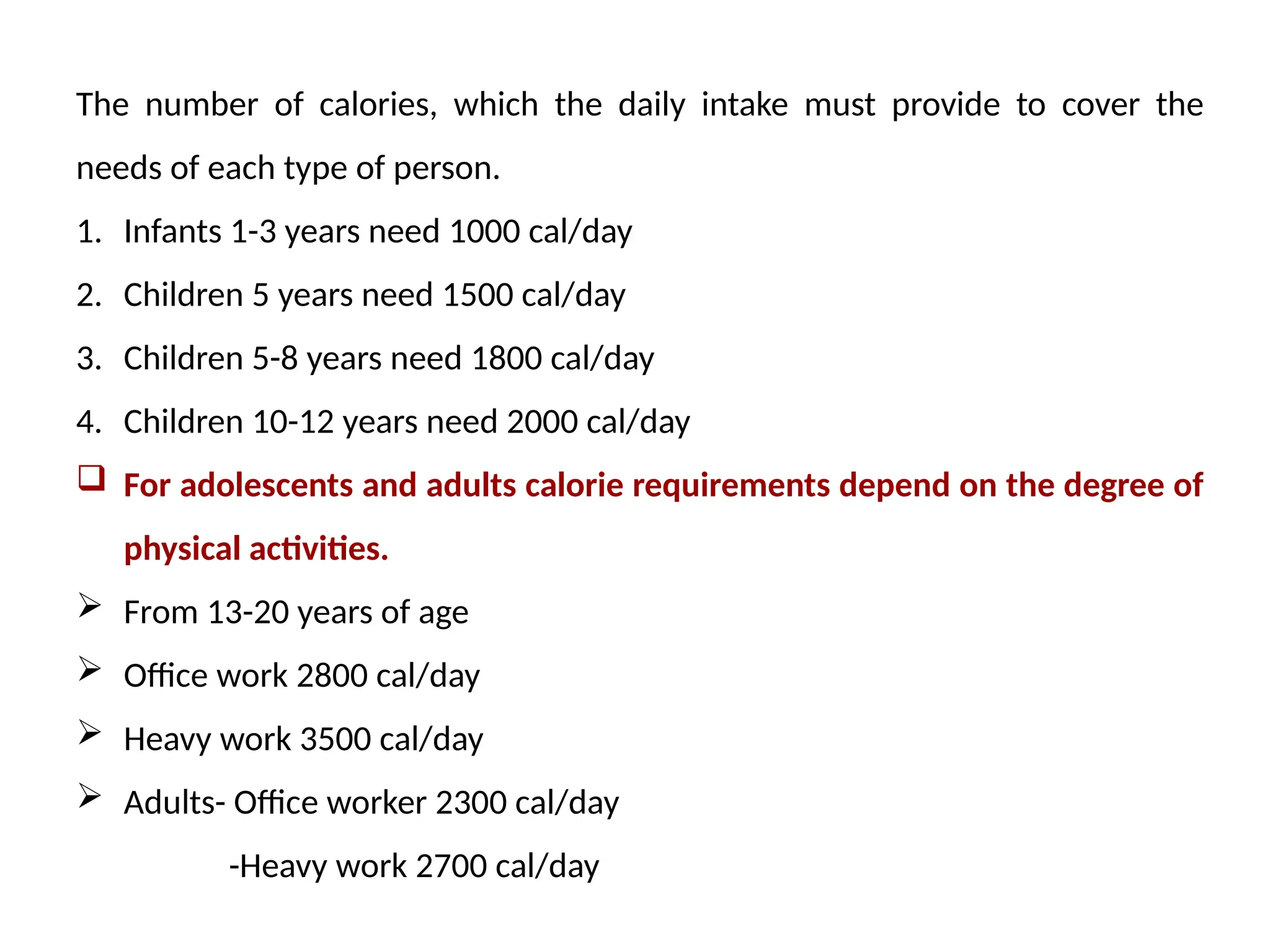
The number of calories, which the daily intake must provide to cover the
needs of each type of person.
1. Infants 1-3 years need 1000 cal/day
2. Children 5 years need 1500 cal/day
3. Children 5-8 years need 1800 cal/day
4. Children 10-12 years need 2000 cal/day
 For adolescents and adults calorie requirements depend on the degree of
physical activities.
 From 13-20 years of age
 Office work 2800 cal/day
 Heavy work 3500 cal/day
 Adults- Office worker 2300 cal/day
-Heavy work 2700 cal/day
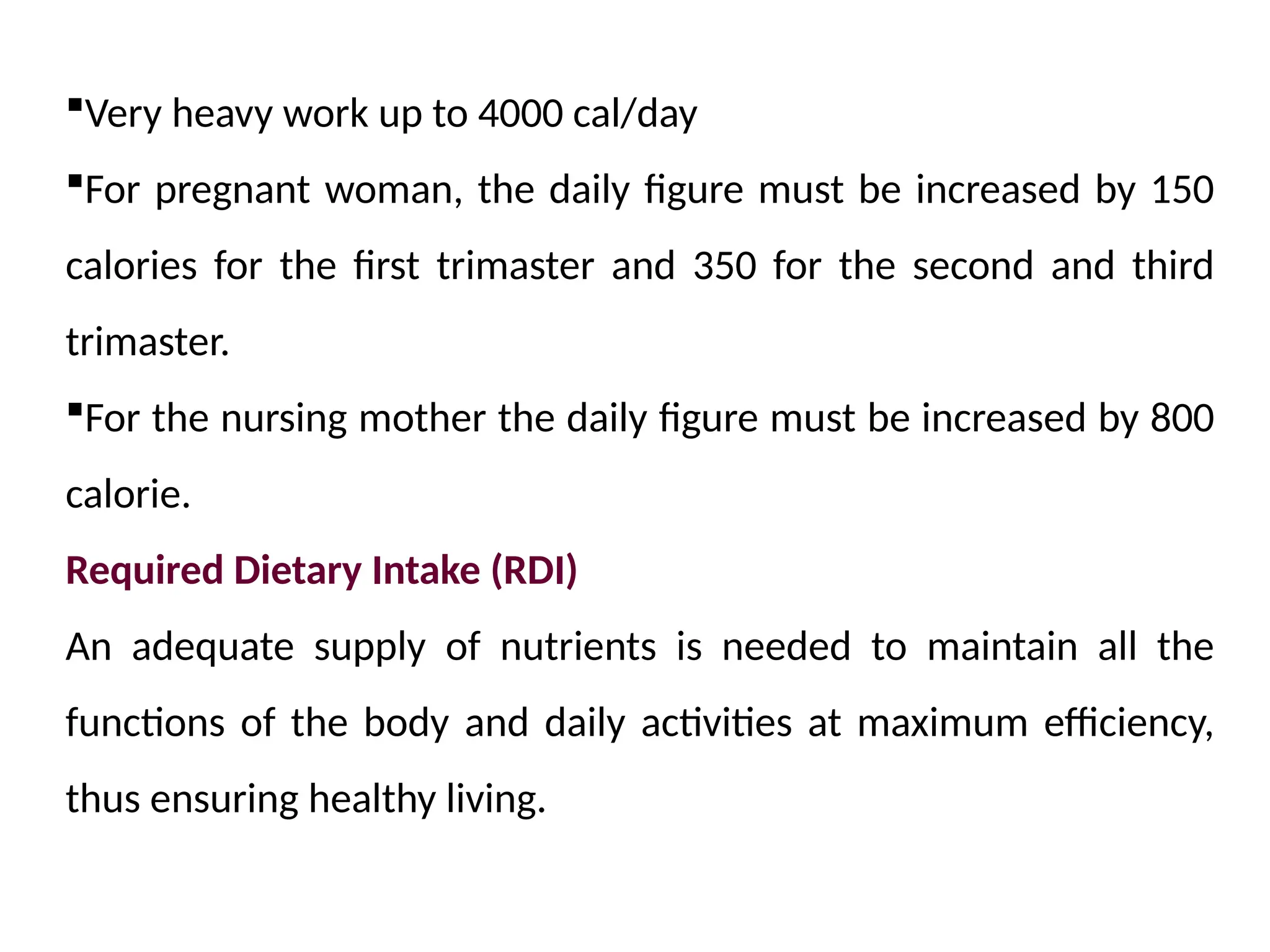
Very heavy work up to 4000 cal/day
For pregnant woman, the daily figure must be increased by 150
calories for the first trimaster and 350 for the second and third
trimaster.
For the nursing mother the daily figure must be increased by 800
calorie.
Required Dietary Intake (RDI)
An adequate supply of nutrients is needed to maintain all the
functions of the body and daily activities at maximum efficiency,
thus ensuring healthy living.
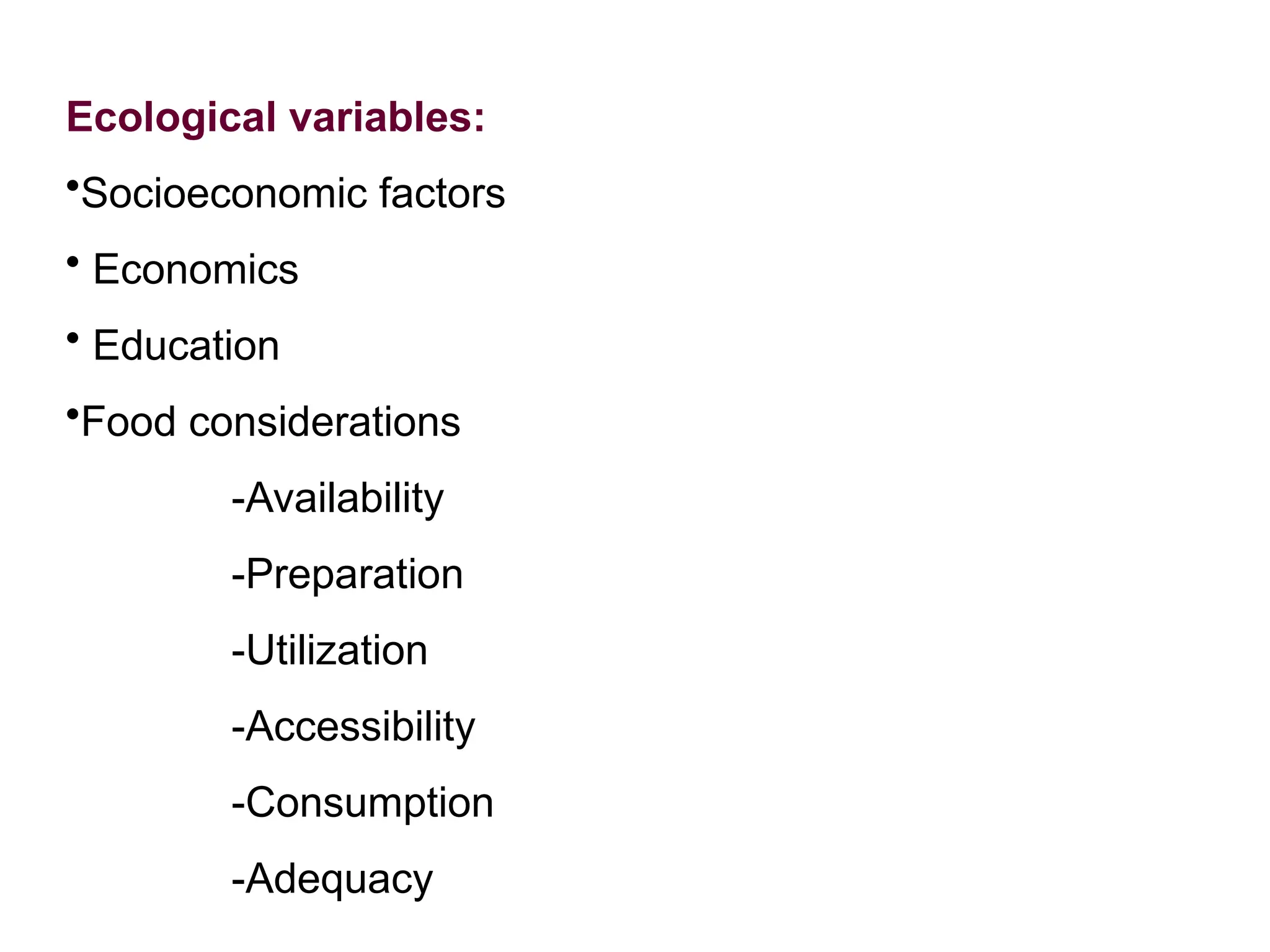
Ecological variables:
•Socioeconomic factors
• Economics
• Education
•Food considerations
-Availability
-Preparation
-Utilization
-Accessibility
-Consumption
-Adequacy
Cont’d
•Aspects of health
• Contributing infections
•Demographic issues
• Political priorities
•Geography and climate
History
• 400 B.C. -- Foods were often used as cosmetics or as
medicines in the treatment of wounds.
• One story describes the treatment of eye disease, now
known to be due to a vitamin A deficiency, by squeezing the
juice of liver onto the eye.
• Vitamin A is stored in large amounts in the liver.
Common nutritional problems in Ethiopia
 PEM- Protein Energy Malnutrition
 IDA- Iron Deficiency Anemia
 IDD- Iodine Deficiency Disorder
 VAD- Vitamin A deficiency
Severe acute malnutrition
Marasmus and kwashiorkor in their extreme forms have
different pathogenesis.
The initiation of the pathogenesis of both problems can be
traced back to the time of weaning, they both are severe
forms of acute malnutrition.

Introduction to basic nutrition and health

  • 1.
  • 2.
  • 4.
    February,2011 4 Healthy Sub-Health Sick 20% 75% 5% 5%- Healthy 20% - Sick 75 % Sub-Health Estimates according to WHO
  • 5.
    What is sub-health?  Overweight, obesity  Losing hair  frequent urination  Sexual desire & function decline  Memory decline  Difficult to control your mood  Attention can’t be concentrated  Insomnia  Easy to get nervous  Unwell or painful but there are no problems checked  Depression , losing interest  Prone to fatigue Symptoms of Sub-health Status 5
  • 6.
    Smoking Alcohol Lack Of Exercise EatingHabits Pollution Life - style 6 SUB-HEALTH FACTORS Stress Sleep Patterns TOXINS
  • 7.
  • 8.
    Circulation & Mechanismof the disease Cell Damaged Tissue Disturbed Organ Disordered System Blocked Getting Sick See the doctor drug &Injection Get Poison Disease getting worse Drug &Injection again TOXINS
  • 9.
    African Health MonitorJanuary-June 2008
  • 10.
    Optimum nutrition status withregular physical exercise is a Better solution 10
  • 11.
    Nutrition:- is thescience of food, nutrients and other substances, their action interaction and balance in relation to health and disease and the process by which the organism ingests, digests, absorbs, transports, utilizes and excretes food substances. Food is anything edible based on specific culture, religion, etc. It includes all foods and drinks acceptable to be ingested by certain society.
  • 12.
    The process of digestiontransforms all kinds of foods into nutrients.
  • 13.
    Nutrients Active chemical componentsin the food that has specific function. Diet  Sequence of meals in a day.  Eating patterns of individuals or group.
  • 14.
    Balanced diet  Allessential nutrients in right proportion.  Optimal for long time survival and health.
  • 16.
    Macronutrients: Nutrients that arerequired by our body in larger quantities on a daily basis. These include carbohydrates, lipids and proteins. Upon oxidation all of them give energy. Micronutrients: nutrients that are required in smaller quantities by the body and perform essential physiological and structural functions. This will include vitamins and minerals.
  • 17.
    Malnutrition- a pathologicalstate resulting from a relative or absolute deficiency or excess of one or more essential nutrients, this state being clinically manifested or detected only by biochemical, anthropometric or physiological tests.
  • 18.
    Under nutrition Pathological stateresulting from the consumption of an inadequate quality/ quantity over an extended period of time. Over-nutrition •Pathological state resulting from the consumption of an excess quantity of food, and hence an energy excess, over an extended period of time.
  • 19.
    Food, nutrition andmalnutrition Food Food- is any solid or liquid which when ingested will enable the body to carry out any of its function. Foods are made up of Macro and Micronutrients. Foods are classified into three: Energy giving Body building Protecting Nutrition: is the sum total of the process by which living things receive and utilize the necessary materials for survival, growth and maintenance of worn out tissues.
  • 20.
    Aristotle a Greekphilosopher •Believed that the innate heat of the heart was the source of life and that all its power were related to nutrition, sensation, movement. And thought. The heart was the source of life and death would occur if the heart lost its heat.
  • 21.
    Malnutrition: is thecondition that results from an imbalance between dietary intake and requirements. It includes under nutrition , which results from less food intake and hard physical work and over nutrition results from excess food intake and less physical activities. Public health nutrition is defined as “the promotion and maintenance of nutrition related health and wellbeing of populations through the organized efforts and informed choices of society”.
  • 22.
    Roughage Roughage enables thebody to get rid of waste products, which would otherwise become poisonous to the body. It prevents gastrointestinal and metabolic disorders. Gastrointestinal disorders: Gastritis Appendicitis Gall bladder stone Constipation
  • 23.
    Metabolic disorders oDiabetes mellitus oHypertension oIschemicheart diseases oColon cancer Dietary guidelines Eat a wide variety of foods Maintain healthy weight Choose a diet with plenty of vegetable, fruits and grain products Use sugar in moderation Use salt and sodium in moderation If you drink alcohol, do so in moderation
  • 24.
    The four foodgroups 1. Milk, cheese, yoghurt 2. Meat, poultry, fish and alternates 3. Fruits and vegetables 4. Bread and cereals 5. Fats, sweets and alcohols. Why human beings need food? Human beings need food to provide energy for the essential physiological functions like  Respiration  Circulation  Digestion  Metabolism
  • 25.
    Maintaining body temperature Growthand repair body tissues Essential nutrients which perform key functions in the biochemical process of metabolism
  • 26.
    Important cause ofmalnutrition in Ethiopia Lack of knowledge in selecting foodstuff with high nutritive value Poverty and infectious diseases Drought Insufficient supply of the necessary food Uneven distribution of the available foods War Poor sanitation/hygiene Transport problems Increased populations
  • 27.
    Inadequate weaning Family technique-insufficient Poor management Topographical differences in different regions(variation in productivity) Social problems Loss of food through destruction by insects Exploited land due to planting the same type of food crop for many years, erosion because of over grazing and moreover the farmers could not use the fertilizers due to many reasons.
  • 28.
    Good traditions whichfavor nutrition in Ethiopia Breast feeding Mixing of foods E.g. Injera with wot prepared from cereals, legumes and vegetables. Traditional use of DGV “Habesha Gommen” Different types of foods are prepared during holidays, marriage days, etc. Eating cereals in the form of Kolo (roasted) and nefero(cocked) Additional high calories and high protein diet for pregnant and lactating mothers After the 7th day of delivery the mother and the child warm in the sun every morning.
  • 29.
    The energy requirementsof individuals are dependent on four variables 1. Physical activities 2. Body size and composition 3. Age  During childhood, the infant needs more energy because it is growing  During old age, the energy need is less because aged people are engaged with activities that requires less energy. 4. Climate: Both very cold and very hot climate restrict out door activities.
  • 30.
    The number ofcalories, which the daily intake must provide to cover the needs of each type of person. 1. Infants 1-3 years need 1000 cal/day 2. Children 5 years need 1500 cal/day 3. Children 5-8 years need 1800 cal/day 4. Children 10-12 years need 2000 cal/day  For adolescents and adults calorie requirements depend on the degree of physical activities.  From 13-20 years of age  Office work 2800 cal/day  Heavy work 3500 cal/day  Adults- Office worker 2300 cal/day -Heavy work 2700 cal/day
  • 31.
    Very heavy workup to 4000 cal/day For pregnant woman, the daily figure must be increased by 150 calories for the first trimaster and 350 for the second and third trimaster. For the nursing mother the daily figure must be increased by 800 calorie. Required Dietary Intake (RDI) An adequate supply of nutrients is needed to maintain all the functions of the body and daily activities at maximum efficiency, thus ensuring healthy living.
  • 32.
    Ecological variables: •Socioeconomic factors •Economics • Education •Food considerations -Availability -Preparation -Utilization -Accessibility -Consumption -Adequacy
  • 33.
    Cont’d •Aspects of health •Contributing infections •Demographic issues • Political priorities •Geography and climate
  • 34.
    History • 400 B.C.-- Foods were often used as cosmetics or as medicines in the treatment of wounds. • One story describes the treatment of eye disease, now known to be due to a vitamin A deficiency, by squeezing the juice of liver onto the eye. • Vitamin A is stored in large amounts in the liver.
  • 35.
    Common nutritional problemsin Ethiopia  PEM- Protein Energy Malnutrition  IDA- Iron Deficiency Anemia  IDD- Iodine Deficiency Disorder  VAD- Vitamin A deficiency
  • 36.
    Severe acute malnutrition Marasmusand kwashiorkor in their extreme forms have different pathogenesis. The initiation of the pathogenesis of both problems can be traced back to the time of weaning, they both are severe forms of acute malnutrition.

Editor's Notes

  • #5 Let us see what the sub-health is and its symptoms. The sub-health condition refers to a state at which the patient experiences reduction in his or her vitality and adaptability although there is no defined disease diagnosed. Included the following symptoms: Fatigue even if you got enough rest, Overweight, frequent urination, Low sexual desire, impaired memory( when you go out, you often ask yourself, Did I lock the door?, attention can not concentrate, depression, irritability, insomnia, nervousness, discomfort or pain, but observed no problems, difficult to control your mood Ok, now how many symptoms above do you have?