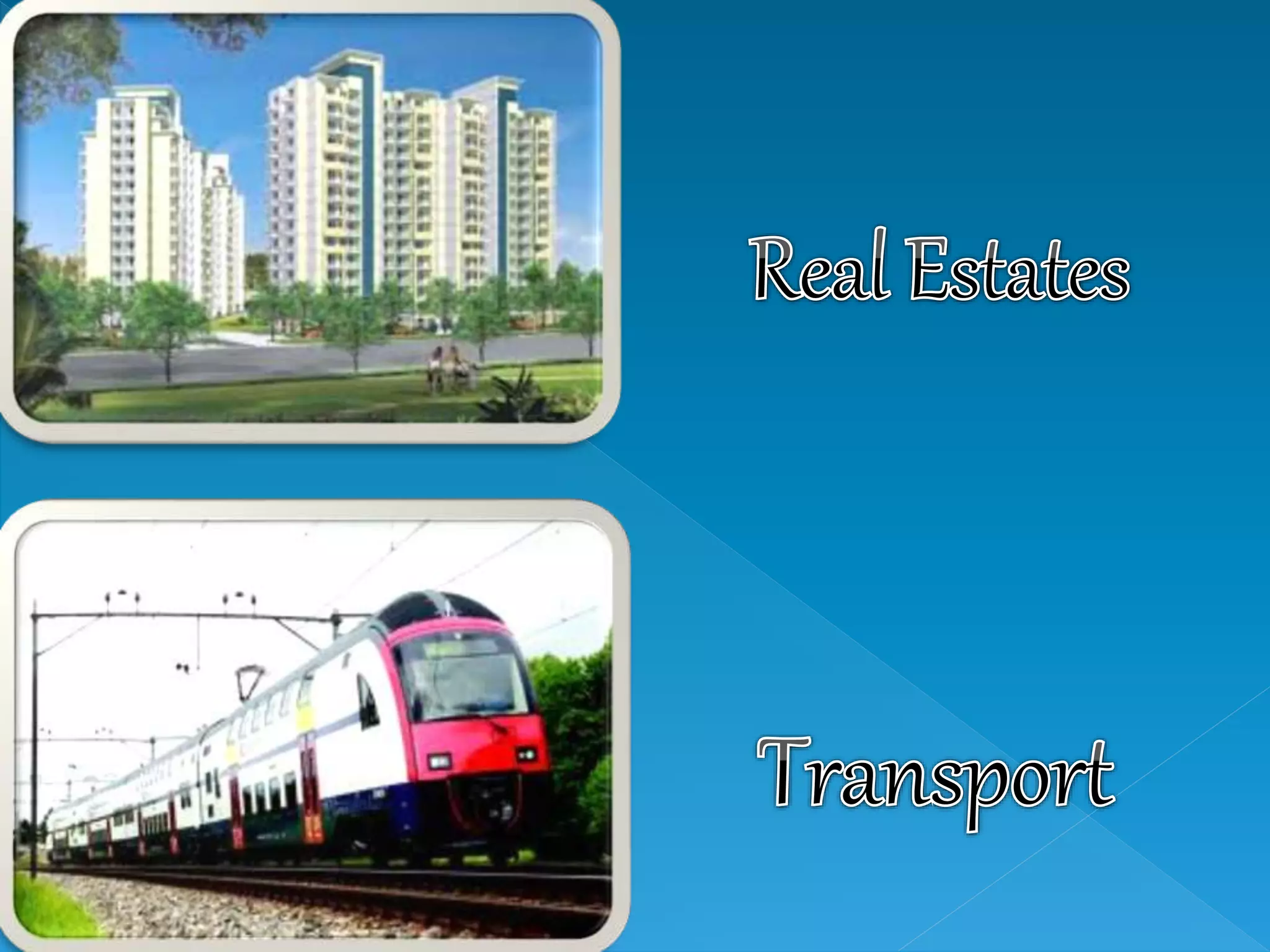
An area of the economy in which business
share the same or a related product or
service. Economy are comprised of four
sectors. The primary sector involves the
extraction and harvesting of natural products
from the earth. ( e.g., agriculture, mining and
forestry). The Secondary sector consists of
processing. Manufacturing and construction.
The Tertiary sector provide services, such as
retail sales, entertainment and financial
sector is made up of intellectual pursuits, like
Sectors of Indian
Economy
1). Primary
sector.
2). Secondary
Sector.
Definition:
When the main activity involve
manufacturing then it is the
secondary sector. All industrial
production where physical goods
are product come under the
secondary sector.
Tertiary sector
When the activity involves
providing in tangible goods
like service then this is part
of the tertiary sector.
Financial services,
management consultancy,
telephony and IT are good
example of service sector.
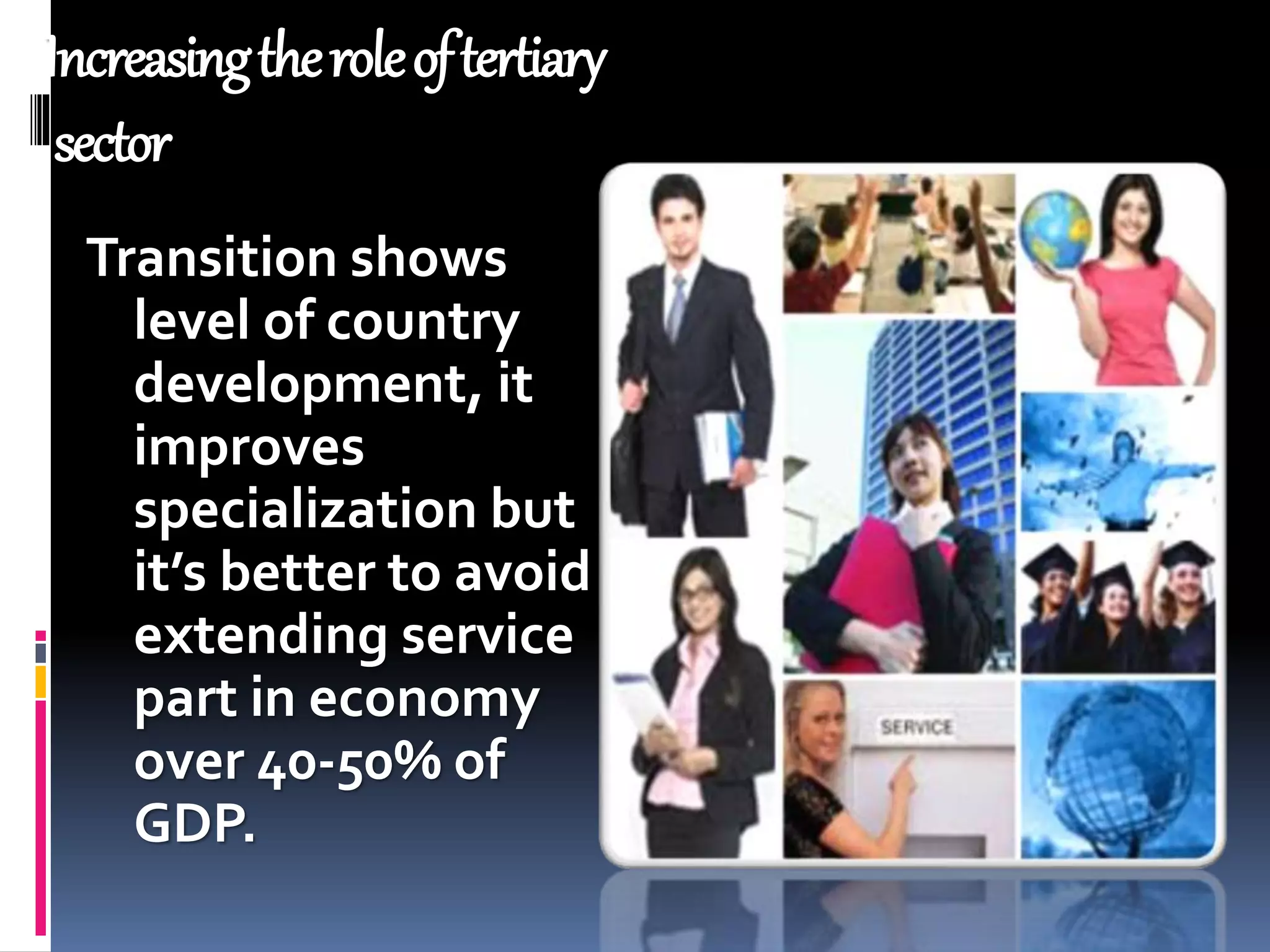
Increasingtheroleoftertiary
sector
Transition shows
level of country
development, it
improves
specialization but
it’s better to avoid
extending service
part in economy
over 40-50% of
GDP.
in
Employment
The sector, which is
registered follows
government rules and
regulation, have employees
and employers union is
called organised sector.
The company form of
business comes under
organised sector. The
private retail business is
called unorganised sector
reliance retail is in
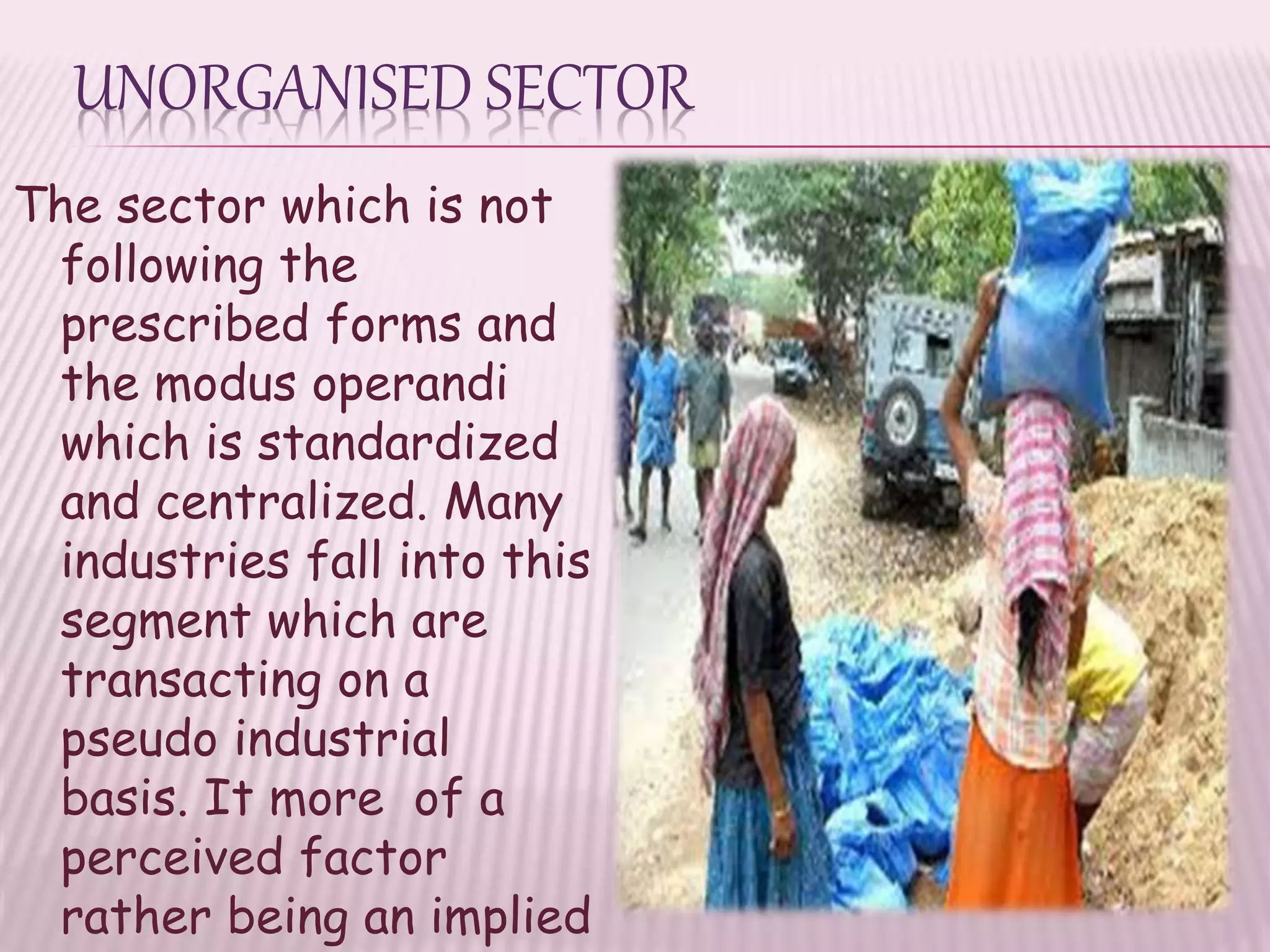
UNORGANISED SECTOR
The sector which is not
following the
prescribed forms and
the modus operandi
which is standardized
and centralized. Many
industries fall into this
segment which are
transacting on a
pseudo industrial
basis. It more of a
perceived factor
rather being an implied
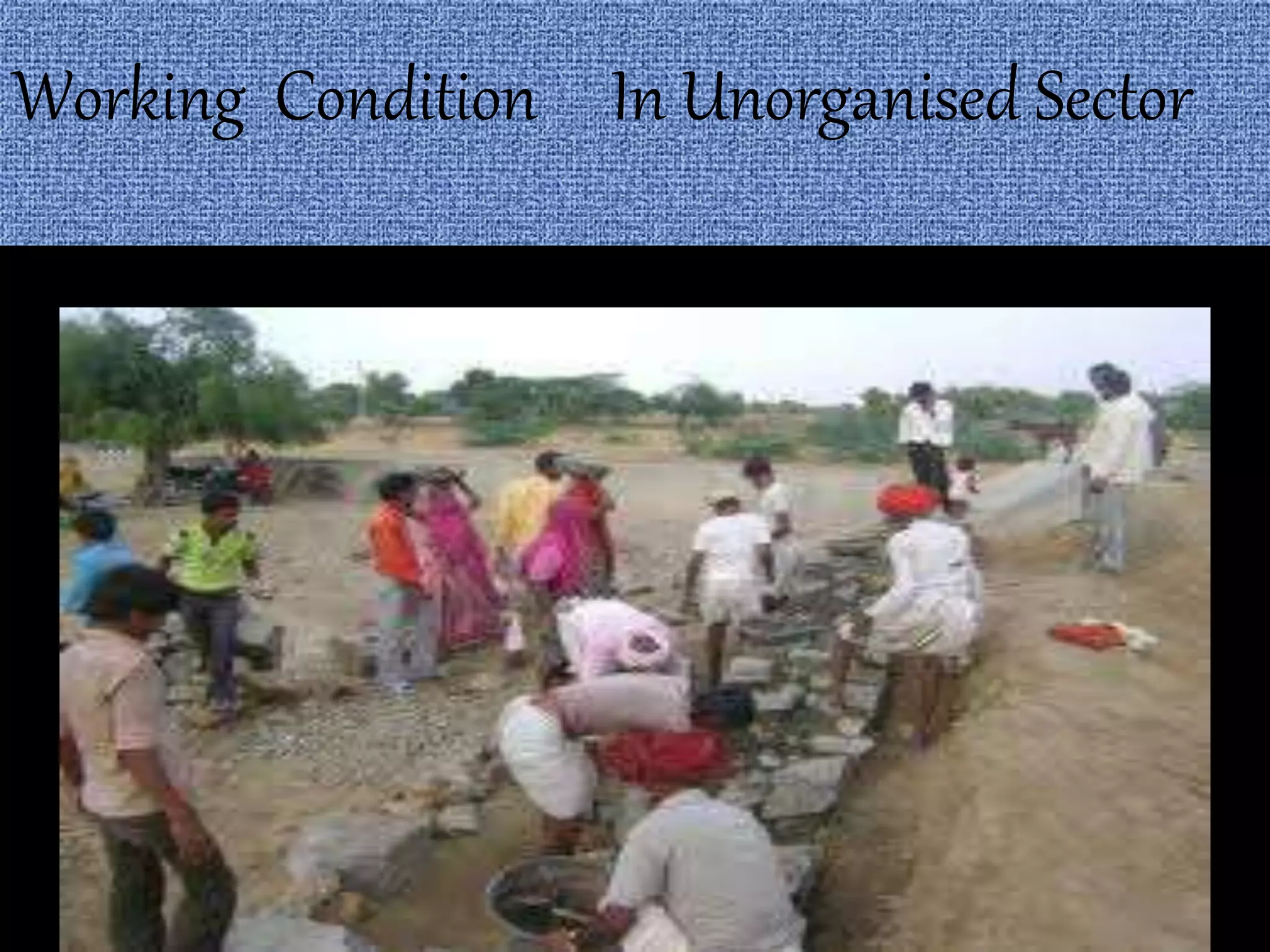
Working Condition In Unorganised Sector
COMPARISON BETWEEN ORGANISED AND
UNORGANISED SECTOR








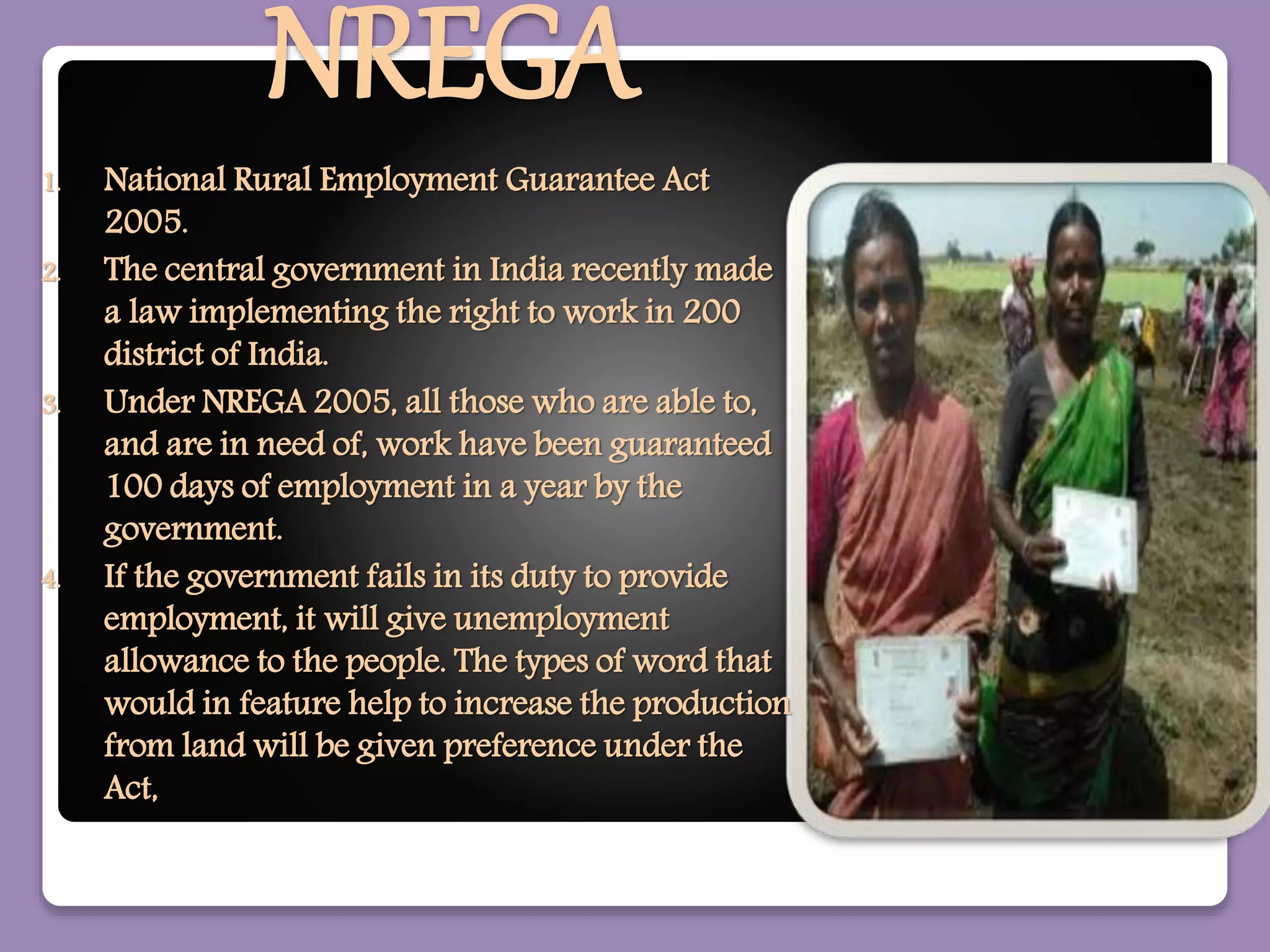
NREGA
1. National Rural Employment Guarantee Act
2005.
2. The central government in India recently made
a law implementing the right to work in 200
district of India.
3. Under NREGA 2005, all those who are able to,
and are in need of, work have been guaranteed
100 days of employment in a year by the
government.
4. If the government fails in its duty to provide
employment, it will give unemployment
allowance to the people. The types of word that
would in feature help to increase the production
from land will be given preference under the
Act,
Sectors of indian economy

Sectors of indian economy

  • 2.
    An area ofthe economy in which business share the same or a related product or service. Economy are comprised of four sectors. The primary sector involves the extraction and harvesting of natural products from the earth. ( e.g., agriculture, mining and forestry). The Secondary sector consists of processing. Manufacturing and construction. The Tertiary sector provide services, such as retail sales, entertainment and financial sector is made up of intellectual pursuits, like
  • 3.
    Sectors of Indian Economy 1).Primary sector. 2). Secondary Sector.
  • 8.
    Definition: When the mainactivity involve manufacturing then it is the secondary sector. All industrial production where physical goods are product come under the secondary sector.
  • 12.
    Tertiary sector When theactivity involves providing in tangible goods like service then this is part of the tertiary sector. Financial services, management consultancy, telephony and IT are good example of service sector.
  • 16.
    Increasingtheroleoftertiary sector Transition shows level ofcountry development, it improves specialization but it’s better to avoid extending service part in economy over 40-50% of GDP.
  • 17.
  • 18.
    The sector, whichis registered follows government rules and regulation, have employees and employers union is called organised sector. The company form of business comes under organised sector. The private retail business is called unorganised sector reliance retail is in
  • 20.
    UNORGANISED SECTOR The sectorwhich is not following the prescribed forms and the modus operandi which is standardized and centralized. Many industries fall into this segment which are transacting on a pseudo industrial basis. It more of a perceived factor rather being an implied
  • 21.
    Working Condition InUnorganised Sector
  • 22.
    COMPARISON BETWEEN ORGANISEDAND UNORGANISED SECTOR        
  • 23.
    NREGA 1. National RuralEmployment Guarantee Act 2005. 2. The central government in India recently made a law implementing the right to work in 200 district of India. 3. Under NREGA 2005, all those who are able to, and are in need of, work have been guaranteed 100 days of employment in a year by the government. 4. If the government fails in its duty to provide employment, it will give unemployment allowance to the people. The types of word that would in feature help to increase the production from land will be given preference under the Act,