THE SECOND
   SINO - JAPANESE WAR
               SEPTEMBER 1931-1945
    THE WAR THAT SET THE TONE FOR WORLD WAR II


A Presentation by Reece Naukana - Christensen
PRE – WAR MANEUVERS
                1931 - 1937
• Japanese troops invade
  Manchuria, a province
  North of China.
• China was at the time
  very unstable, recently
  undergoing a regime
  change.
• The Republic of China
  was fractured and was
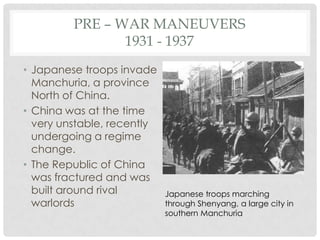
  built around rival        Japanese troops marching
  warlords                  through Shenyang, a large city in
                            southern Manchuria
MARCO POLO BRIDGE INCIDENT
     JULY 7, 1937 – AUGUST 9, 1937
• Japanese and Chinese
  forces exchange fire
  outside of Lugou
  (Marco Polo Bridge)
  Just outside of Beijing
• Cease-fire is called on
  July 9, however the
  treaty is quickly broken
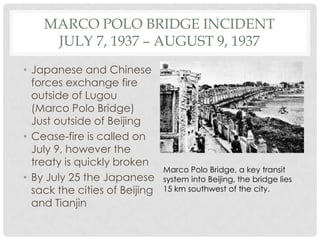
                               Marco Polo Bridge, a key transit
• By July 25 the Japanese      system into Beijing, the bridge lies
  sack the cities of Beijing   15 km southwest of the city.
  and Tianjin
THE BATTLE OF SHANGHAI
  AUGUST 13, 1937 – NOVEMBER 1937
• Chairman Kai-shek feels that
  the Japanese are close to
  breaking
• He then musters a massive
  force to expel the Japanese
  from Shanghai
                     The Japanese
                     land over 200,000
                     troops to retake
                     the city. They
                     eventually
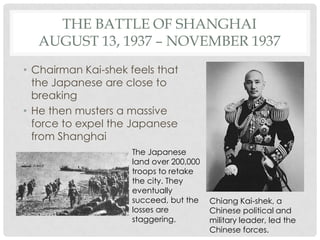
                     succeed, but the    Chiang Kai-shek, a
                     losses are          Chinese political and
                     staggering.         military leader, led the
                                         Chinese forces.
THE RAPE OF NANKING
  DECEMBER 13, 1937 – JANUARY 1938
• Chiang Kai-shek knew
  that the Japanese
  would take
  Nanking, the capital of
  China
• He hopes to wear down
  the Japanese forces
  and Kai-shek abandons
  the city                  When the Japanese enter the city
• Because of the victory    they begin to rape and pillage the
  Japanese field generals   city. Over 300,000 citizens are
                            massacred, and tens of thousands
  continue to push into     of women are raped.
  China
CLOSE OF THE WAR
             JANUARY 1938 - 1941
• The Japanese take their
  first defeats
• With casualties
  mounting the Japanese
  lead a massive air
  campaign, killing
  millions
• In response to this the
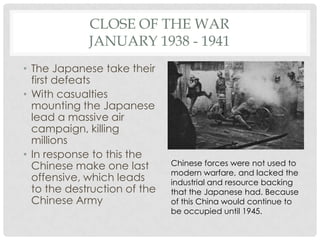
  Chinese make one last       Chinese forces were not used to
                              modern warfare, and lacked the
  offensive, which leads      industrial and resource backing
  to the destruction of the   that the Japanese had. Because
  Chinese Army                of this China would continue to
                              be occupied until 1945.

Second Sino Japanese War

  • 1.
    THE SECOND SINO - JAPANESE WAR SEPTEMBER 1931-1945 THE WAR THAT SET THE TONE FOR WORLD WAR II A Presentation by Reece Naukana - Christensen
  • 2.
    PRE – WARMANEUVERS 1931 - 1937 • Japanese troops invade Manchuria, a province North of China. • China was at the time very unstable, recently undergoing a regime change. • The Republic of China was fractured and was built around rival Japanese troops marching warlords through Shenyang, a large city in southern Manchuria
  • 3.
    MARCO POLO BRIDGEINCIDENT JULY 7, 1937 – AUGUST 9, 1937 • Japanese and Chinese forces exchange fire outside of Lugou (Marco Polo Bridge) Just outside of Beijing • Cease-fire is called on July 9, however the treaty is quickly broken Marco Polo Bridge, a key transit • By July 25 the Japanese system into Beijing, the bridge lies sack the cities of Beijing 15 km southwest of the city. and Tianjin
  • 4.
    THE BATTLE OFSHANGHAI AUGUST 13, 1937 – NOVEMBER 1937 • Chairman Kai-shek feels that the Japanese are close to breaking • He then musters a massive force to expel the Japanese from Shanghai The Japanese land over 200,000 troops to retake the city. They eventually succeed, but the Chiang Kai-shek, a losses are Chinese political and staggering. military leader, led the Chinese forces.
  • 5.
    THE RAPE OFNANKING DECEMBER 13, 1937 – JANUARY 1938 • Chiang Kai-shek knew that the Japanese would take Nanking, the capital of China • He hopes to wear down the Japanese forces and Kai-shek abandons the city When the Japanese enter the city • Because of the victory they begin to rape and pillage the Japanese field generals city. Over 300,000 citizens are massacred, and tens of thousands continue to push into of women are raped. China
  • 6.
    CLOSE OF THEWAR JANUARY 1938 - 1941 • The Japanese take their first defeats • With casualties mounting the Japanese lead a massive air campaign, killing millions • In response to this the Chinese make one last Chinese forces were not used to modern warfare, and lacked the offensive, which leads industrial and resource backing to the destruction of the that the Japanese had. Because Chinese Army of this China would continue to be occupied until 1945.