Downloaded 18 times


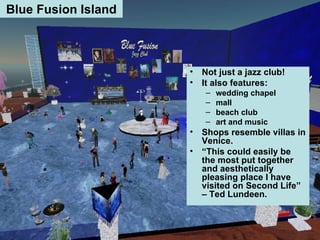


A group of students from two universities explored Second Life to study its business and cultural aspects. As newcomers, they found it overwhelming and confusing to navigate. Their progress was hindered by a lack of time and difficulties accessing the platform without investing money. However, they also found other avatars helpful. The students observed Second Life being used for virtual communities, commerce, and real-world events. Examples of effective spaces included an orientation island, recreations of the Sistine Chapel and Cisco technology park, and a jazz club. The students learned collaboration was difficult without in-person meetings but sharing interests with teammates was rewarding. They concluded Second Life is always changing and its future depends on its developers and users.


