Scrum + Kanban
Agile IT Project Management
2013
Unai Roldán Arellano
June
2013
Sponsors
2013
SILVER
BRONZE
GOLD
PLATINUM
Speaker
2013
Unai Roldán Arellano
Agile IT Project Manager & Software Architect
Unisys
Senior Consultant
Altran
Analyst-Programmer
Atos Origin
Telecommunication Technician ( Specialist )
Telefónica
unai.roldan@gmail.com
linkedin.com/in/unairoldan/
@unairoldan
Introduction and Objectives
2013
Introduction and Objectives
2013
Scrum [1]
- Framework for managing software projects
- Iterative and incremental
- Aligned with the principles of the Agile Manifesto [2]
- Aligned with the principles of the Extreme Programming [3]
Kanban [6]
- Used in companies like Bank of America, Blizzard, Microsoft, Boeing...
- Scrum.org y ScrumAlliance are responsible for spread [4] [5]
- Visual system for monitoring production processes
- It has also emerged as a method of software project management
Introduction and Objectives
2013
Scrum + Kanban
- Light Management Process -agile-
- Capacity to work in changing environments
- Short-term results
- Motivated and productive teams
- Self-managed teams
Nowadays
Objectives of Agile
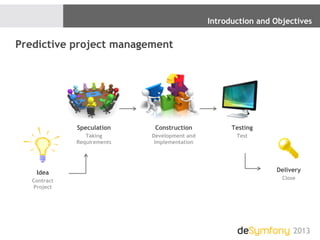
- Predictive project management
- Based on Project Management Institute principles [1]
Introduction and Objectives
2013
Predictive project management
Idea
Contract
Project
Speculation
Taking
Requirements
Construction
Development and
Implementation
Testing
Test
Delivery
Close
Introduction and Objectives
2013
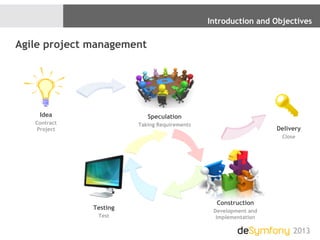
Agile project management
Idea
Contract
Project
Speculation
Taking Requirements
Construction
Development and
Implementation
Testing
Test
Delivery
Close
Explaining the method
2013
Explaining the method
2013
Roles in Scrum
Principal roles
- Scrum Master Facilitator or "Protector" of the team
- Product Owner Represents to customer or key user
- Team Engineers team
Secondary roles
- Stakeholders Suppliers, key users, other departments, etc..
- Managers Control the environment
Explaining the method
2013
Events in Scrum -Meetings-
Sprint Planning Meeting
- Planning of Sprint
- Estimation of tasks
- Set demo date
Daily Scrum
- Daily meeting
Sprint Review
- Sprint and product demonstration
Sprint Retrospective
- Sprint evaluation
Explaining the method
2013
Artefacts in Scrum
Product Backlog
- Formalized requirements stack
Sprint Backlog
- Sprint formalized requirements stack
Product increment
- Result of Sprint
Burndown chart
- Statistical for sprint's progress
Explaining the method
2013
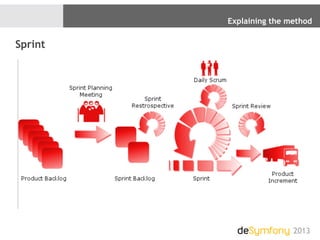
Sprint
Test
Explaining the method
2013
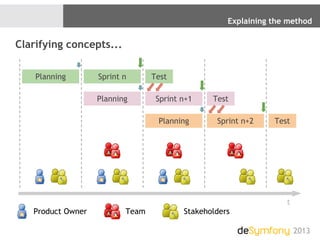
Clarifying concepts...
Planning Sprint n
Planning Sprint n+1 Test
Planning Sprint n+2 Test
t
StakeholdersTeamProduct Owner
Explaining the method
2013
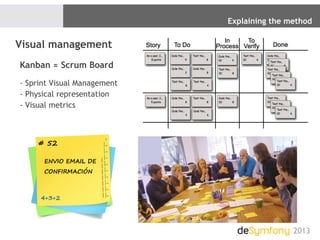
Visual management
Kanban ≈ Scrum Board
- Sprint Visual Management
- Physical representation
- Visual metrics
Applying it in my company
2013
Applying it in my company
2013
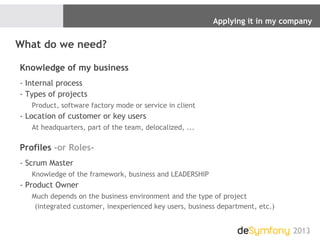
What do we need?
Knowledge of my business
- Internal process
- Types of projects
Product, software factory mode or service in client
- Location of customer or key users
At headquarters, part of the team, delocalized, ...
Profiles -or Roles-
- Scrum Master
Knowledge of the framework, business and LEADERSHIP
- Product Owner
Much depends on the business environment and the type of project
(integrated customer, inexperienced key users, business department, etc.)
Applying it in my company
2013
Adapting Scrum + Kanban
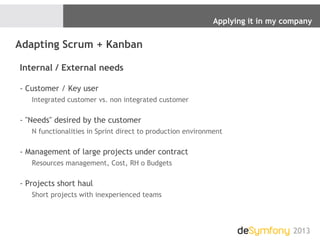
Internal / External needs
- Customer / Key user
Integrated customer vs. non integrated customer
- "Needs" desired by the customer
N functionalities in Sprint direct to production environment
- Management of large projects under contract
Resources management, Cost, RH o Budgets
- Projects short haul
Short projects with inexperienced teams
Applying it in my company
2013
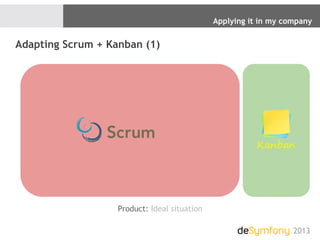
Adapting Scrum + Kanban (1)
Product: Ideal situation
Applying it in my company
2013
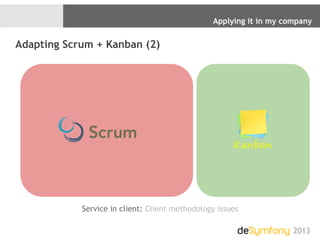
Adapting Scrum + Kanban (2)
Service in client: Client methodology issues
Applying it in my company
2013
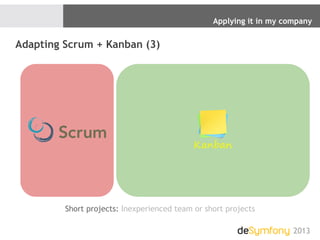
Adapting Scrum + Kanban (3)
Short projects: Inexperienced team or short projects
Applying it in my company
2013
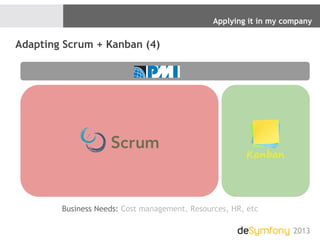
Adapting Scrum + Kanban (4)
Business Needs: Cost management, Resources, HR, etc
Training and certification
2013
Training and certification
2013
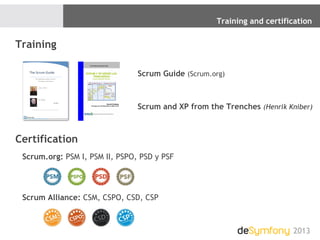
Training
Scrum Guide (Scrum.org)
Scrum and XP from the Trenches (Henrik Kniber)
Certification
Scrum.org: PSM I, PSM II, PSPO, PSD y PSF
Scrum Alliance: CSM, CSPO, CSD, CSP
Final summary
2013
Final summary
2013
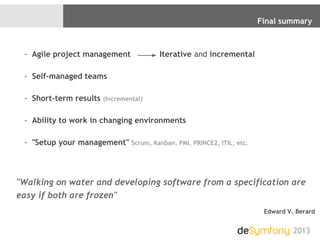
"Walking on water and developing software from a specification are
easy if both are frozen"
Edward V. Berard
- Agile project management Iterative and incremental
- Self-managed teams
- Short-term results (Incremental)
- Ability to work in changing environments
- "Setup your management" Scrum, Kanban, PMI, PRINCE2, ITIL, etc.
Gracias
thanks
merci
grazie
danke
obrigado
2013

Scrum + Kanban - Agile IT Project Management (deSymfony 2013)

  • 1.
    Scrum + Kanban AgileIT Project Management 2013 Unai Roldán Arellano June 2013
  • 2.
  • 3.
    Speaker 2013 Unai Roldán Arellano AgileIT Project Manager & Software Architect Unisys Senior Consultant Altran Analyst-Programmer Atos Origin Telecommunication Technician ( Specialist ) Telefónica unai.roldan@gmail.com linkedin.com/in/unairoldan/ @unairoldan
  • 4.
  • 5.
    Introduction and Objectives 2013 Scrum[1] - Framework for managing software projects - Iterative and incremental - Aligned with the principles of the Agile Manifesto [2] - Aligned with the principles of the Extreme Programming [3] Kanban [6] - Used in companies like Bank of America, Blizzard, Microsoft, Boeing... - Scrum.org y ScrumAlliance are responsible for spread [4] [5] - Visual system for monitoring production processes - It has also emerged as a method of software project management
  • 6.
    Introduction and Objectives 2013 Scrum+ Kanban - Light Management Process -agile- - Capacity to work in changing environments - Short-term results - Motivated and productive teams - Self-managed teams Nowadays Objectives of Agile - Predictive project management - Based on Project Management Institute principles [1]
  • 7.
    Introduction and Objectives 2013 Predictiveproject management Idea Contract Project Speculation Taking Requirements Construction Development and Implementation Testing Test Delivery Close
  • 8.
    Introduction and Objectives 2013 Agileproject management Idea Contract Project Speculation Taking Requirements Construction Development and Implementation Testing Test Delivery Close
  • 9.
  • 10.
    Explaining the method 2013 Rolesin Scrum Principal roles - Scrum Master Facilitator or "Protector" of the team - Product Owner Represents to customer or key user - Team Engineers team Secondary roles - Stakeholders Suppliers, key users, other departments, etc.. - Managers Control the environment
  • 11.
    Explaining the method 2013 Eventsin Scrum -Meetings- Sprint Planning Meeting - Planning of Sprint - Estimation of tasks - Set demo date Daily Scrum - Daily meeting Sprint Review - Sprint and product demonstration Sprint Retrospective - Sprint evaluation
  • 12.
    Explaining the method 2013 Artefactsin Scrum Product Backlog - Formalized requirements stack Sprint Backlog - Sprint formalized requirements stack Product increment - Result of Sprint Burndown chart - Statistical for sprint's progress
  • 13.
  • 14.
    Test Explaining the method 2013 Clarifyingconcepts... Planning Sprint n Planning Sprint n+1 Test Planning Sprint n+2 Test t StakeholdersTeamProduct Owner
  • 15.
    Explaining the method 2013 Visualmanagement Kanban ≈ Scrum Board - Sprint Visual Management - Physical representation - Visual metrics
  • 16.
    Applying it inmy company 2013
  • 17.
    Applying it inmy company 2013 What do we need? Knowledge of my business - Internal process - Types of projects Product, software factory mode or service in client - Location of customer or key users At headquarters, part of the team, delocalized, ... Profiles -or Roles- - Scrum Master Knowledge of the framework, business and LEADERSHIP - Product Owner Much depends on the business environment and the type of project (integrated customer, inexperienced key users, business department, etc.)
  • 18.
    Applying it inmy company 2013 Adapting Scrum + Kanban Internal / External needs - Customer / Key user Integrated customer vs. non integrated customer - "Needs" desired by the customer N functionalities in Sprint direct to production environment - Management of large projects under contract Resources management, Cost, RH o Budgets - Projects short haul Short projects with inexperienced teams
  • 19.
    Applying it inmy company 2013 Adapting Scrum + Kanban (1) Product: Ideal situation
  • 20.
    Applying it inmy company 2013 Adapting Scrum + Kanban (2) Service in client: Client methodology issues
  • 21.
    Applying it inmy company 2013 Adapting Scrum + Kanban (3) Short projects: Inexperienced team or short projects
  • 22.
    Applying it inmy company 2013 Adapting Scrum + Kanban (4) Business Needs: Cost management, Resources, HR, etc
  • 23.
  • 24.
    Training and certification 2013 Training ScrumGuide (Scrum.org) Scrum and XP from the Trenches (Henrik Kniber) Certification Scrum.org: PSM I, PSM II, PSPO, PSD y PSF Scrum Alliance: CSM, CSPO, CSD, CSP
  • 25.
  • 26.
    Final summary 2013 "Walking onwater and developing software from a specification are easy if both are frozen" Edward V. Berard - Agile project management Iterative and incremental - Self-managed teams - Short-term results (Incremental) - Ability to work in changing environments - "Setup your management" Scrum, Kanban, PMI, PRINCE2, ITIL, etc.
  • 27.