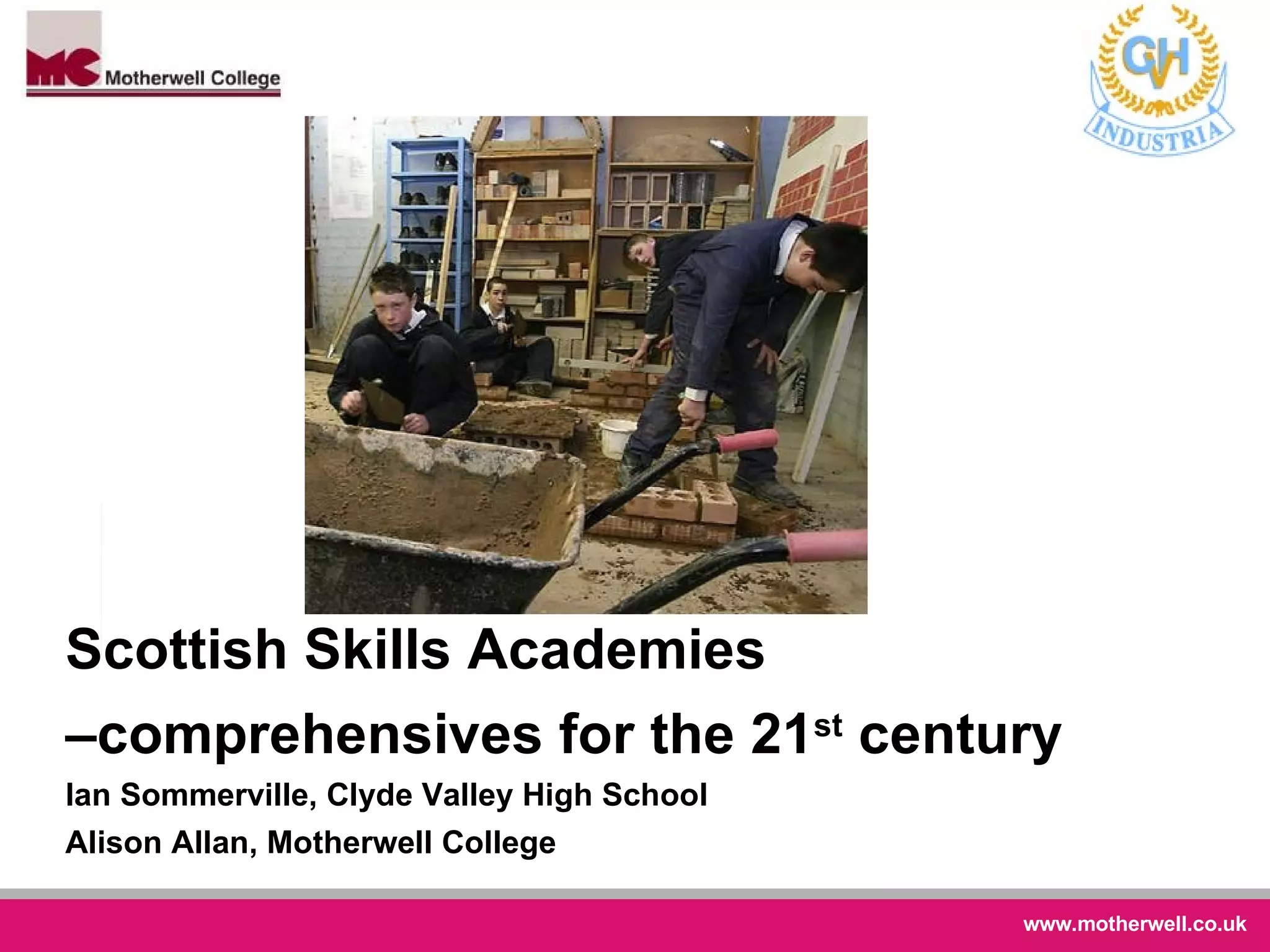
Scottish Skills Academies –comprehensives for the 21 st  century Ian Sommerville, Clyde Valley High School  Alison Allan, Motherwell College
Introduction  ASC and school sector representatives Scottish Executive Steering group  Skills For Work
Leitch Review  “ We recommend radical change right across the skills spectrum. We have defined clear ambitions at basic, intermediate and higher skills. Our study focuses on adult skills but we express concern and suggest action for 14-19s.  Lord Sandy Leitch, December 2006
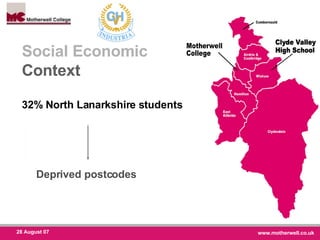
Social Economic Context 32% North Lanarkshire students Deprived postcodes
Skills For Work courses delivered by  Motherwell College S3  660 pupils  S4  510 pupils S5/6  200 pupils Session 2006 / 2007
North Lanarkshire City Vision Programme College staff (65%) Teachers (25%) Sports & Leisure staff (2%) Community Service / Grounds Maintenance staff (3%) Private provider (in-school)  (5%)
Within North Lanarkshire the three local colleges Coatbridge College Cumbernauld College Motherwell College play a major role in course delivery - 65% of the total Skills for work programmes.  The delivery model in North Lanarkshire differs from the situation in most of the rest of the country.  In most other council areas delivery by college staff takes place in the colleges.  However, in NLC almost 90% of the delivery by college staff takes place in schools.
 
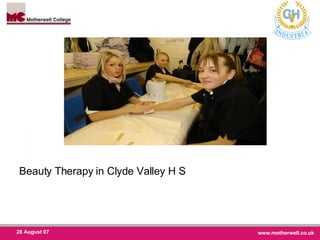
Beauty Therapy in Clyde Valley H S
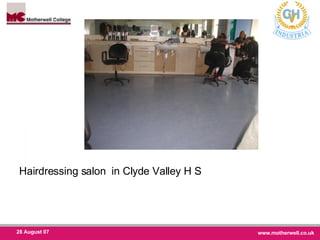
Hairdressing salon  in Clyde Valley H S
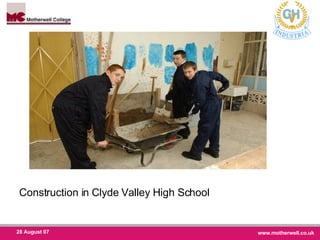
Construction in Clyde Valley High School
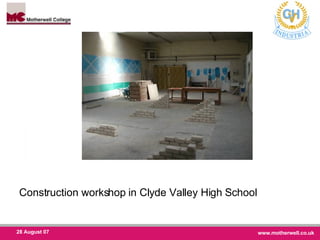
Construction workshop in Clyde Valley High School
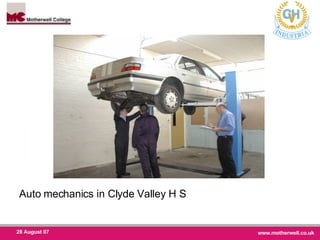
Auto mechanics in Clyde Valley H S
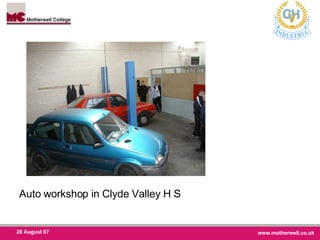
Auto workshop in Clyde Valley H S
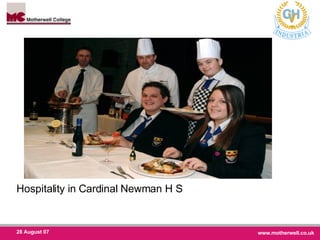
Hospitality in Cardinal Newman H S
Challenges Meeting the increasing demand for courses and  extending the range of courses on offer using scarce resources Equalisation of opportunity / increase number of participating schools Sustainability / alternative funding sources Infrastructure – development of more specialist areas in schools and Colleges Labels – (vocational skills on offer to high performing pupils)  Staff development Timetables
The Way Forward  Develop high quality skills academies with Colleges at the Centre Skills academies are further developed across Scotland with a “best fit” model ensuring the partnership includes Colleges, Local Councils, School head teacher representatives and employers  Strategic mapping is undertaken within Local and National steering groups (Subject areas and geographical locations are identified as Skills academies)  Sustainability of the academies is incorporated within local area steering group business plans Curriculum For Excellence agenda and Skills For Work courses are extended to include alternative subject areas out with Skills For Work Infrastructure – development of more specialist areas in schools  Resources are allocated for Skills academy development i.e travel, staff development, infrastructure
Q and A
Discussion  Is the North Lanarkshire model sustainable? Will Skills academies lead to over supply of provision in schools? EIS and COSLA position on GTC? Progression routes? Student experience – in College or in School? How do non “Skills For Work” e.g Intermediate, higher level and VQ programmes fit within a Skills Academy for school pupils? How do we intend to engage industry and source sponsorship for the skills academies?

Scottish Skills Academies: Colleges supporting learners

  • 1.
    Scottish Skills Academies–comprehensives for the 21 st century Ian Sommerville, Clyde Valley High School Alison Allan, Motherwell College
  • 2.
    Introduction ASCand school sector representatives Scottish Executive Steering group Skills For Work
  • 3.
    Leitch Review “ We recommend radical change right across the skills spectrum. We have defined clear ambitions at basic, intermediate and higher skills. Our study focuses on adult skills but we express concern and suggest action for 14-19s. Lord Sandy Leitch, December 2006
  • 4.
    Social Economic Context32% North Lanarkshire students Deprived postcodes
  • 5.
    Skills For Workcourses delivered by Motherwell College S3 660 pupils S4 510 pupils S5/6 200 pupils Session 2006 / 2007
  • 6.
    North Lanarkshire CityVision Programme College staff (65%) Teachers (25%) Sports & Leisure staff (2%) Community Service / Grounds Maintenance staff (3%) Private provider (in-school) (5%)
  • 7.
    Within North Lanarkshirethe three local colleges Coatbridge College Cumbernauld College Motherwell College play a major role in course delivery - 65% of the total Skills for work programmes. The delivery model in North Lanarkshire differs from the situation in most of the rest of the country. In most other council areas delivery by college staff takes place in the colleges. However, in NLC almost 90% of the delivery by college staff takes place in schools.
  • 8.
  • 9.
    Beauty Therapy inClyde Valley H S
  • 10.
    Hairdressing salon in Clyde Valley H S
  • 11.
    Construction in ClydeValley High School
  • 12.
    Construction workshop inClyde Valley High School
  • 13.
    Auto mechanics inClyde Valley H S
  • 14.
    Auto workshop inClyde Valley H S
  • 15.
  • 16.
    Challenges Meeting theincreasing demand for courses and extending the range of courses on offer using scarce resources Equalisation of opportunity / increase number of participating schools Sustainability / alternative funding sources Infrastructure – development of more specialist areas in schools and Colleges Labels – (vocational skills on offer to high performing pupils) Staff development Timetables
  • 17.
    The Way Forward Develop high quality skills academies with Colleges at the Centre Skills academies are further developed across Scotland with a “best fit” model ensuring the partnership includes Colleges, Local Councils, School head teacher representatives and employers Strategic mapping is undertaken within Local and National steering groups (Subject areas and geographical locations are identified as Skills academies) Sustainability of the academies is incorporated within local area steering group business plans Curriculum For Excellence agenda and Skills For Work courses are extended to include alternative subject areas out with Skills For Work Infrastructure – development of more specialist areas in schools Resources are allocated for Skills academy development i.e travel, staff development, infrastructure
  • 18.
  • 19.
    Discussion Isthe North Lanarkshire model sustainable? Will Skills academies lead to over supply of provision in schools? EIS and COSLA position on GTC? Progression routes? Student experience – in College or in School? How do non “Skills For Work” e.g Intermediate, higher level and VQ programmes fit within a Skills Academy for school pupils? How do we intend to engage industry and source sponsorship for the skills academies?