SCIENCE
1st Quarter | Notes
1st Week
Atom -> Molecule -> Cell Organelles -> Cell -> Tissue ->
Organ -> System of Organs -> Organism -> Population
-> Ecosystem -> Bioma -> Biospere
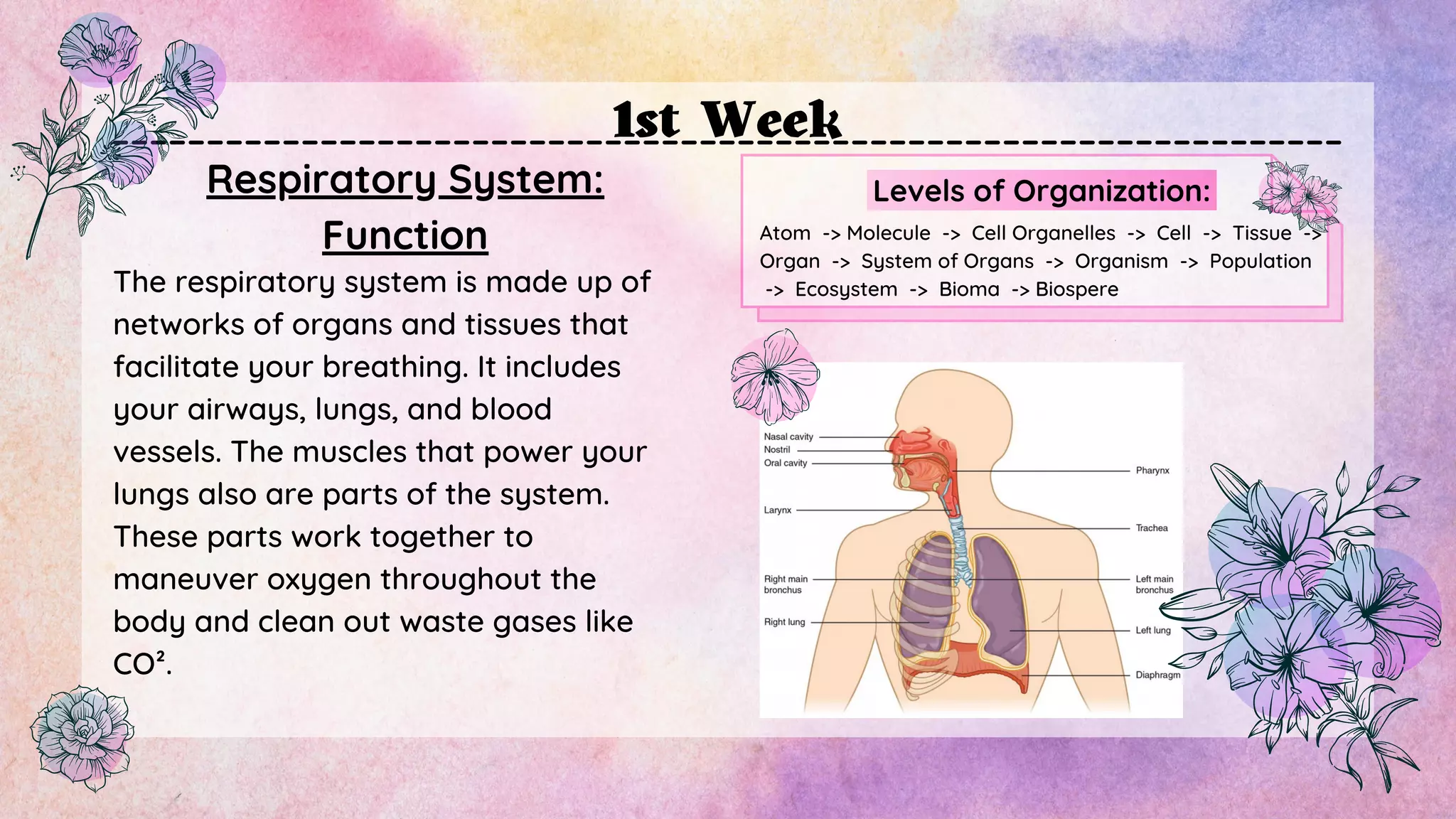
The respiratory system is made up of
networks of organs and tissues that
facilitate your breathing. It includes
your airways, lungs, and blood
vessels. The muscles that power your
lungs also are parts of the system.
These parts work together to
maneuver oxygen throughout the
body and clean out waste gases like
CO².
Levels of Organization:
Respiratory System:
Function
• Nasal Cavity - One of the two entrances, the start, and end of the process. The airway enters the Nares (Nostrils) that are
separated by a nasal septum and the air is filtered by the Cilia (Nose Hair) that traps the dust and others then turns it into
boogers.
• Pharynx - This has three parts (Nasopharynx, Oropharynx, and Hypopharynx) and a passage from the Nasal Cavity to
Larynx.
• Epiglottis - The function of this is to cover the wind pipe to not let food go through to be accidentally inhaled and make the
body choke.
• Larynx - Another name for this is the Voice Box. This is the route for air and food that contains the Epiglottis, also contains
vocal chords and the Glottis.
• Trachea - Connection or the bridge of the Larynx and the Bronchi. Mucus with dirt and germs are pushed out of the lungs
because of this. It also transports air into and out of the lungs.
1st Week
Respiratory System: Parts
• Bronchi - Root-like divisions of the Trachea and subdivides into smaller and smaller branches. This
carries air to and from your lungs. This moisturizes the air that gois into the system and takes out the
particles that aren't needed.
• Alveoli - The location where the Lungs and blood exchange oxygen and CO2 during the method of
inhaling and exhaling. Oxygen breathed in from the air passes through the Alveoli, into the blood, then
travels through the tissues throughout the body.
1st Week
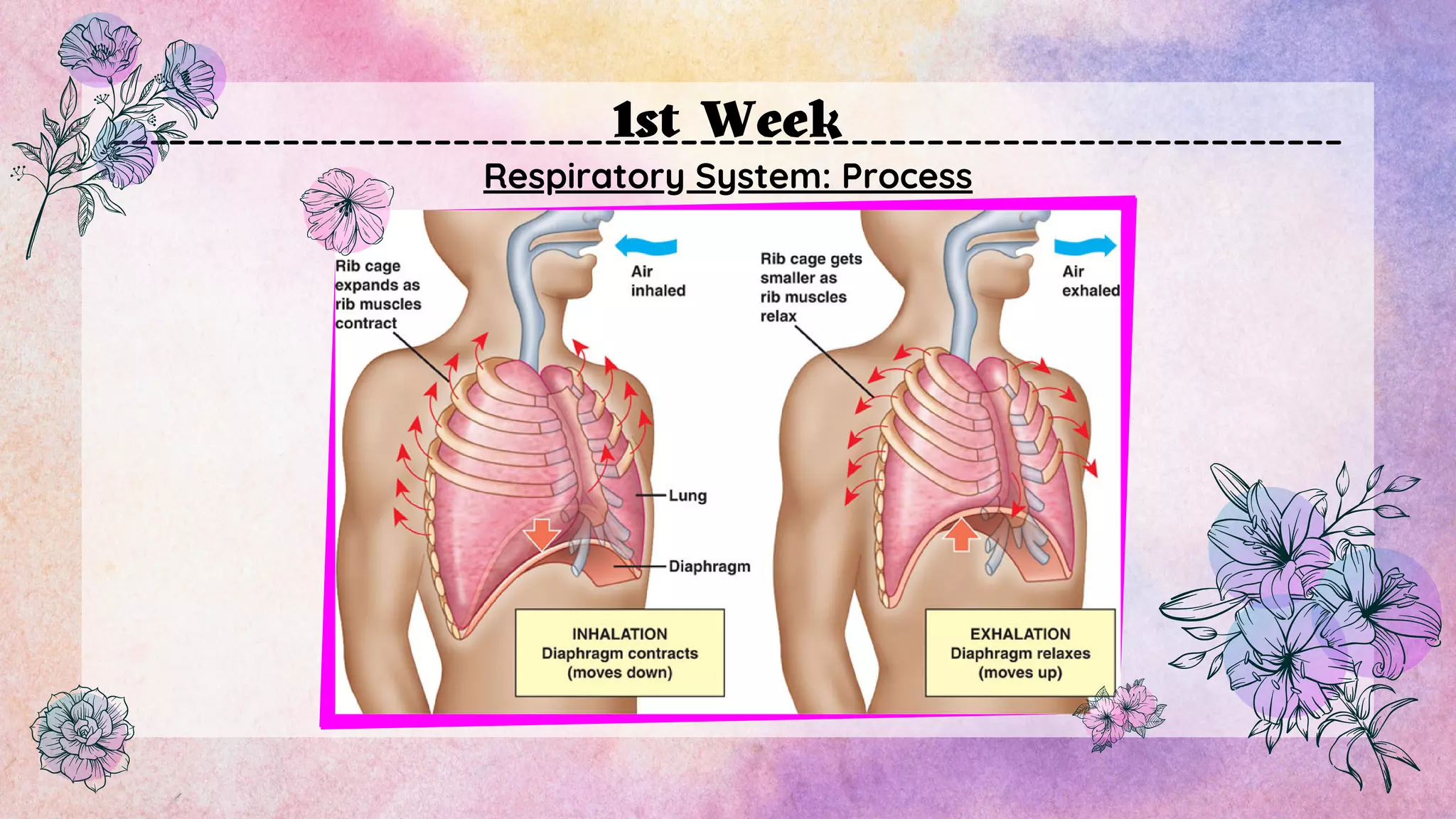
• Diaphragm - Located at the underside of the chest, a skinny musculus that separates the abdomen
from the chest. The Diaphragm helps the process by creating a vacuum effect. This also helps in
Respiration by contracting and expanding. It flattens when the Lungs expand to inhale and this
enlarges when the Lungs flatten to exhale.
• Intercostal Muscles - Intercostal Muscles are many alternating groups of muscles that run between
the ribs, and help form and move the chest wall. The Intercostal Muscles are mainly involved within the
mechanical aspect of breathing by helping expand and shrink the scale of the Chest Cavity.
Respiratory System: Accessory Organs
• Pleura - This is an important element of the tract whose role is to cushion the Lungs and
reduce any friction which develops between the Lungs, Rib Cage, and the Chest Cavity. A two-
layered membrane covers each lung because of the Pleura.
• Rib Cage - The skeletal structure consists of 24 ribs, which are attached to the sternum that
is within the center of the chest. This helps by protecting the organs within the chest
from damage.
1st Week
Respiratory System: Process
1st Week
• Asthma - This affects people of all ages and sometimes starts during childhood. Certain things can
depart or worsen asthma symptoms, like cold air. These are called asthma triggers. Asthma is a chronic
condition that affects the airways within the lungs. The airways are tubes that carry air in and out of
your lungs. If you've got got asthma, the airways can become inflamed and narrowed from time to
time.
• Emphysema - In people with emphysema, the air sacs within the lungs (alveoli) are damaged. Over
time, the inner walls of the alveoli weaken and rupture, creating larger air spaces instead of many
small ones. This reduces the extent of the lungs and, in turn, the quantity of oxygen that reaches your
bloodstream. When you exhale, the damaged alveoli don't work properly and old air becomes
trapped, leaving no room for fresh, oxygen-rich air to enter.
• Chronic Obstructive Pulmonary Disease (COPD) - A group of diseases which are the cause
breathing-related problems and airflow blockages, making the person that have COPD
have a hard time breathing. There are two types of COPD being Chronic bronchitis, which
involves a long-term cough with mucus; and Emphysema, which involves damage to the lungs
over time. Mostly all of the people diagnosed with COPD have a combination of both conditions.
Respiratory System: Examples of Frequent Illnesses
• Heart - Your heart is a vital organ mandatory for our survival. It is a muscle that is about the size
of a clenched fist and weighs between 300g and 450g that pumps blood throughout all the parts of
your body. The blood pumped by your heart provides your body with the oxygen and nutrients it
needs to function.
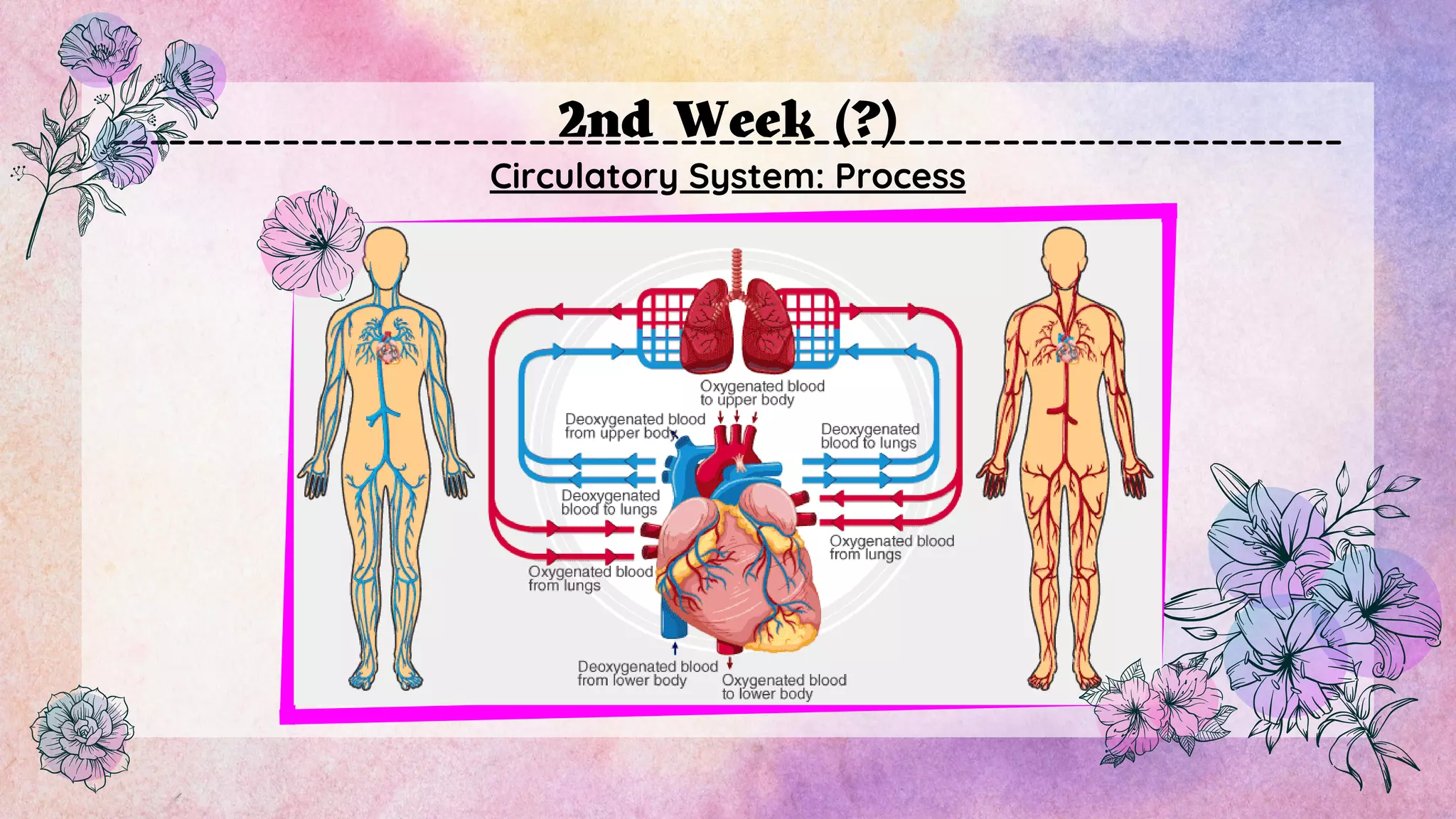
• Blood Vessels - Arteries, veins, and capillaries are the three types of blood cells and each of these
play a very specific role in the Circulatory System. Arteries carry oxygenated blood away from the
heart while veins carry deoxygenated blood into the heart. Capillaries are very tiny blood vessels
and they help to connect your arteries and veins in addition to facilitating the exchange of certain
elements between your blood and tissues. They're tough on the outside but they contain a smooth
interior layer of epithelial cells that allows blood to flow easily.
• Blood - Blood is a constantly circulating fluid providing the body with nutrition, oxygen, and waste
removal. Blood is mostly liquid, with numerous cells and proteins suspended in it, making blood
"thicker" than pure water. The average person has about 5 liters of blood.
2nd Week (?)
Circulatory System: Main Parts
2nd Week (?)
• Cardiac fat.
• Chambers of heart. Left atrium and auricle.
• Valves of heart. Tricuspid valve.
• Aorta.
• Ligamentum arteriosum.
• Pulmonary trunk.
• Coronary vessels.
(Imma not copy-paste definitions into this for I'm actually cramming as evident to the deteriorating quality of my
notes. Plus, these accessory organs weren't touched on for me to give my attention to them and attempt to
paraphrase them while I forget and get distracted by playing Dank Memer but wanting to play COD or just draw
my life away. ~v~)
Circulatory System: Accessory Organs
2nd Week (?)
Circulatory System: Process
2nd Week (?)
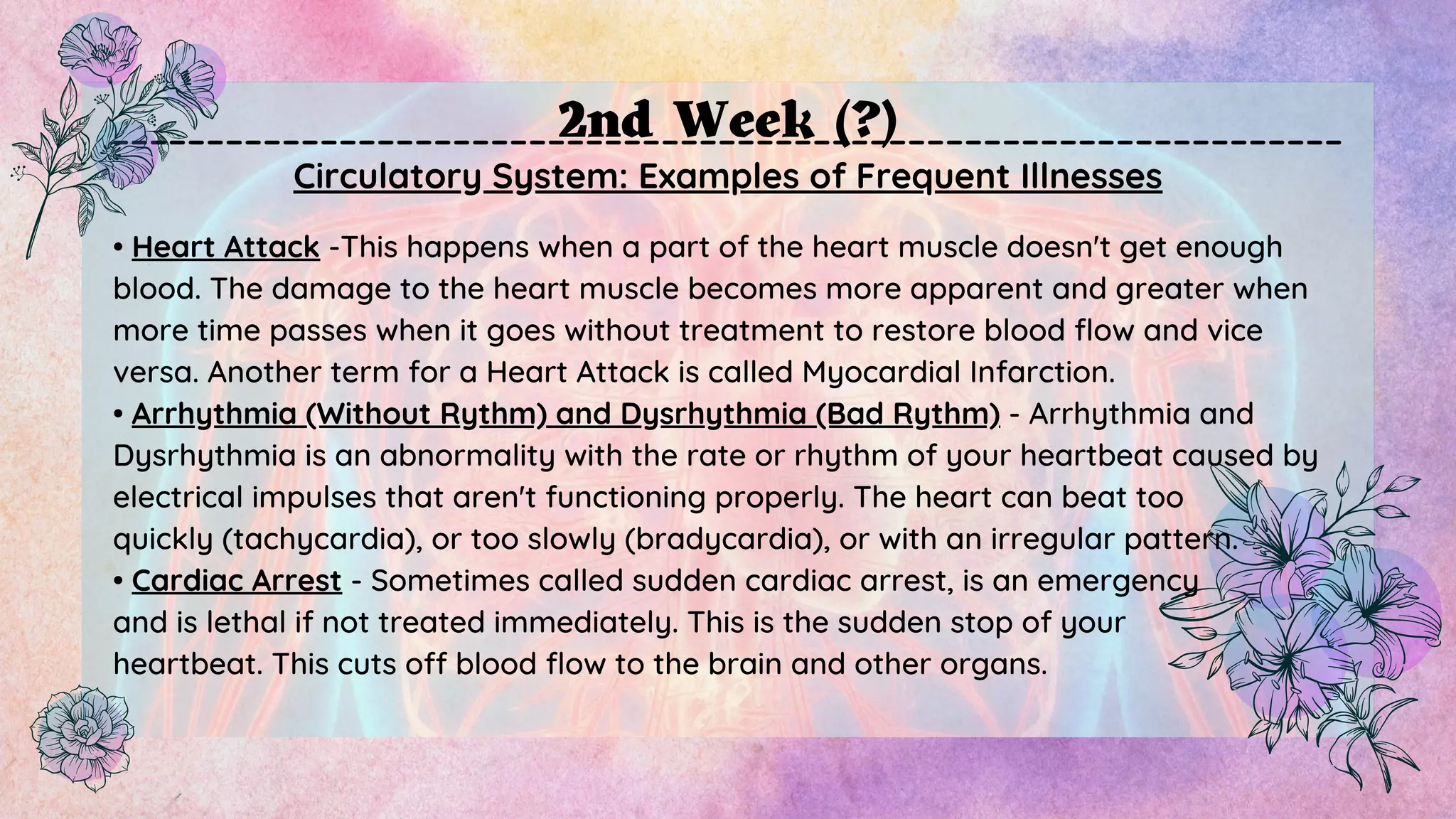
• Heart Attack -This happens when a part of the heart muscle doesn't get enough
blood. The damage to the heart muscle becomes more apparent and greater when
more time passes when it goes without treatment to restore blood flow and vice
versa. Another term for a Heart Attack is called Myocardial Infarction.
• Arrhythmia (Without Rythm) and Dysrhythmia (Bad Rythm) - Arrhythmia and
Dysrhythmia is an abnormality with the rate or rhythm of your heartbeat caused by
electrical impulses that aren't functioning properly. The heart can beat too
quickly (tachycardia), or too slowly (bradycardia), or with an irregular pattern.
• Cardiac Arrest - Sometimes called sudden cardiac arrest, is an emergency
and is lethal if not treated immediately. This is the sudden stop of your
heartbeat. This cuts off blood flow to the brain and other organs.
Circulatory System: Examples of Frequent Illnesses
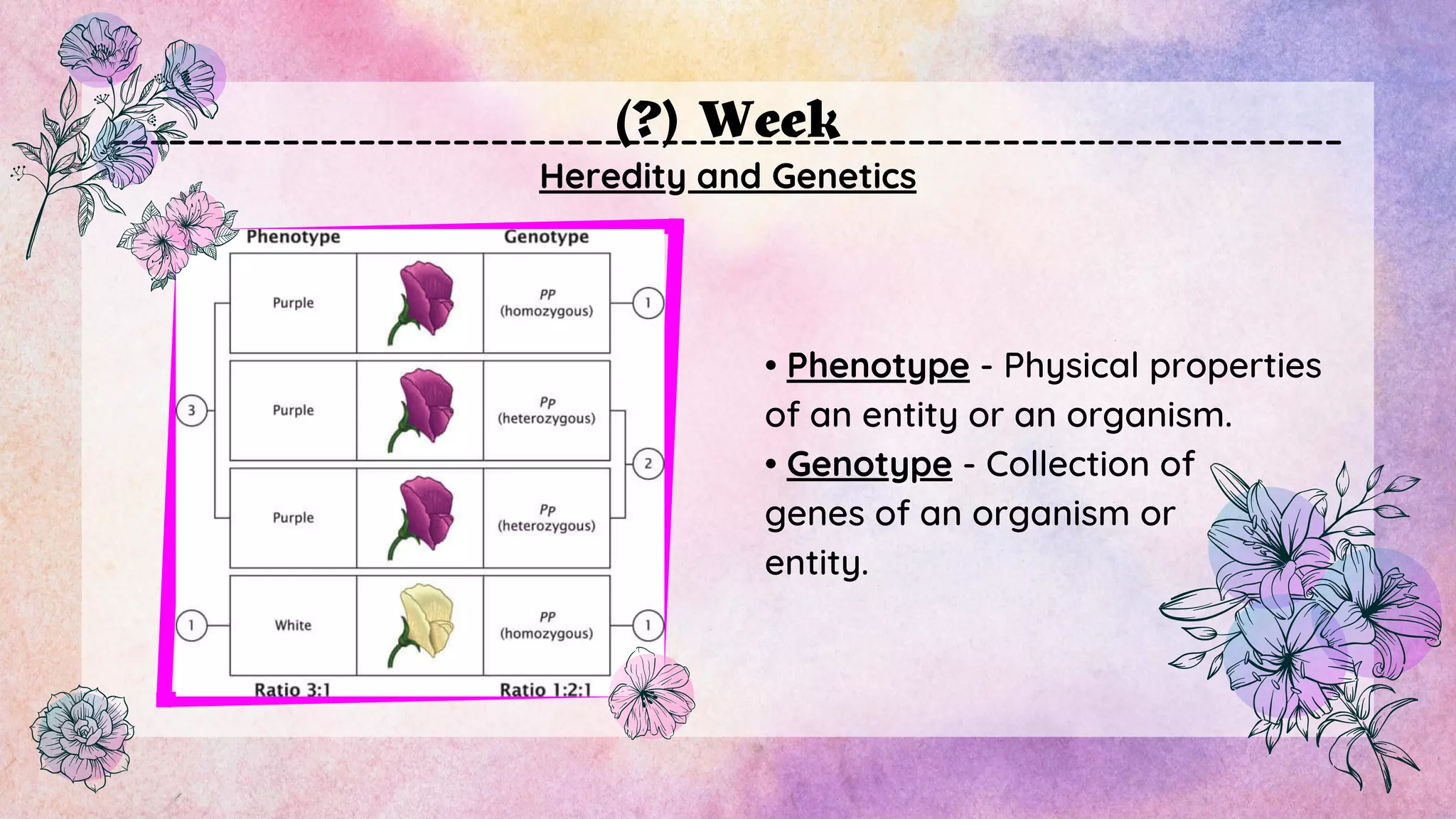
• Phenotype - Physical properties
of an entity or an organism.
• Genotype - Collection of
genes of an organism or
entity.
(?) Week
Heredity and Genetics
• Genetics - Genetics is the study of how different qualities, called traits, are
passed down from parents to child. When we trace the paths of these qualities,
we are following packages of information called genes. Genes are instructions
for building the parts of your body and doing the work that keeps you alive. Your
mix of genes is unique to you, from carrying oxygen to digesting your food
and everything else we do. These are grouped into
collections called chromosomes and most humans have
23 pairs of chromosomes.
Gene is essentially the main physical and working unit of heredity. Genes are
also made up of the hereditary material called DNA.
(?) Week
Heredity and Genetics
• DNA (Deoxyribonucleic acid) - The genetical material in humans and
nearly all other organisms. For humans, mostly all of the cells in their
system have the same DNA. DNA's stored as code that contains 4
chemical bases, Adenine, Guanine, Cytosine, and Thymine.
When this is located in the cell nucleus, it's called Nuclear DNA;
when DNA is in the Mitochondria, which is a limited amount of DNA,
it's called Mitochondrial DNA. This also reside in 46 chromosomes.
(?) Week
Heredity and Genetics
• Allele - Alternative version of a particular gene.
• Phenotype - Physical attributes of an organism.
• Genotype - Genetic makeup of an organism.
Dominant vs. Recessive
• Dominant [Allele] - Will always be present in the phenotype of the maternal entity unless it's
absent within the genotype of the organism.
• Recessive [Allele] - Will always be present in the phenotype of the maternal entity unless
the Dominant Allele of the organism is present.
• Homozygous (Dominant) - AA
• Heterozygous - Aa
• Homozygous (Recessive) - aa
(?) Week
Heredity and Genetics
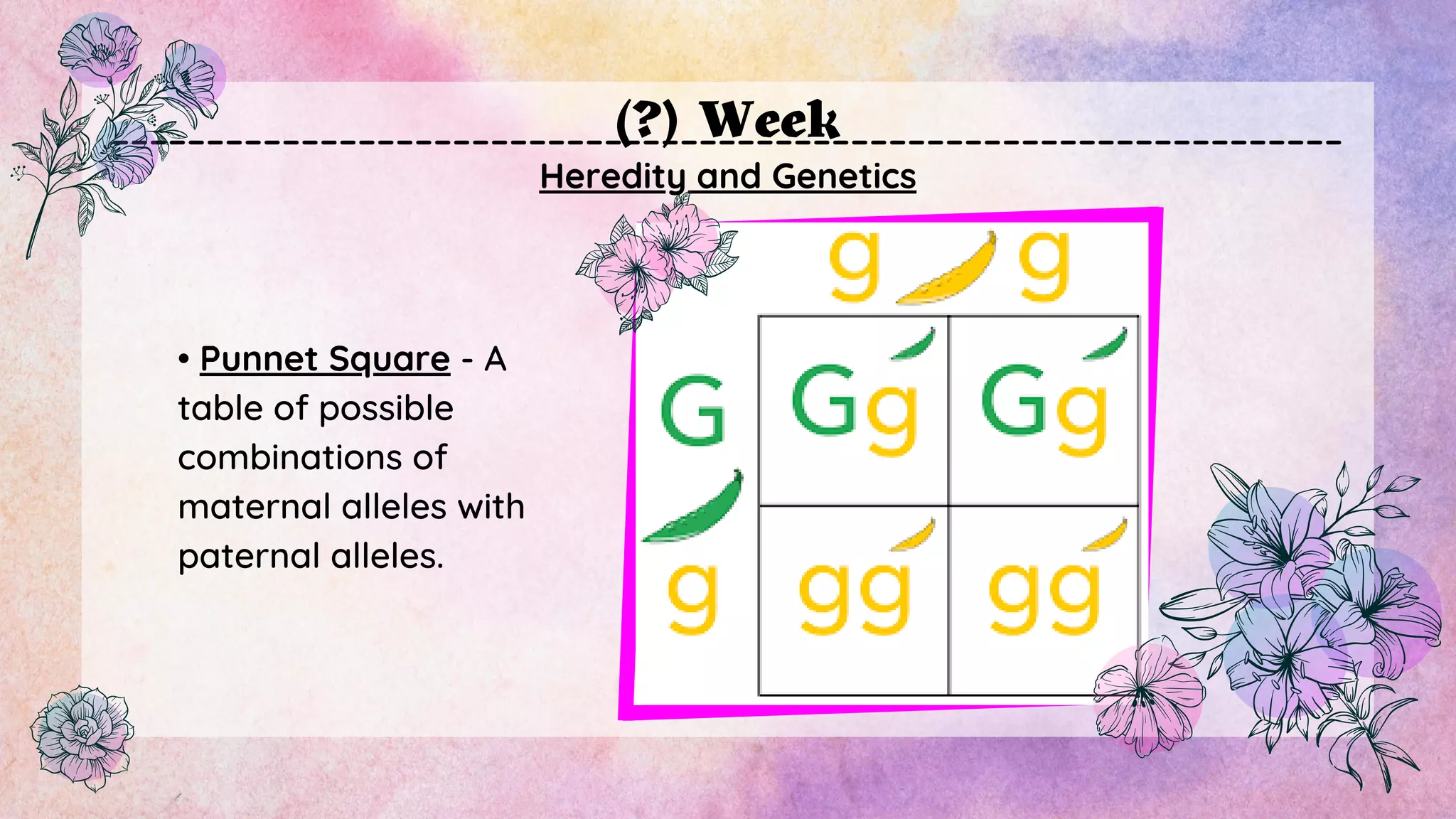
• Punnet Square - A
table of possible
combinations of
maternal alleles with
paternal alleles.
(?) Week
Heredity and Genetics
(?) Week
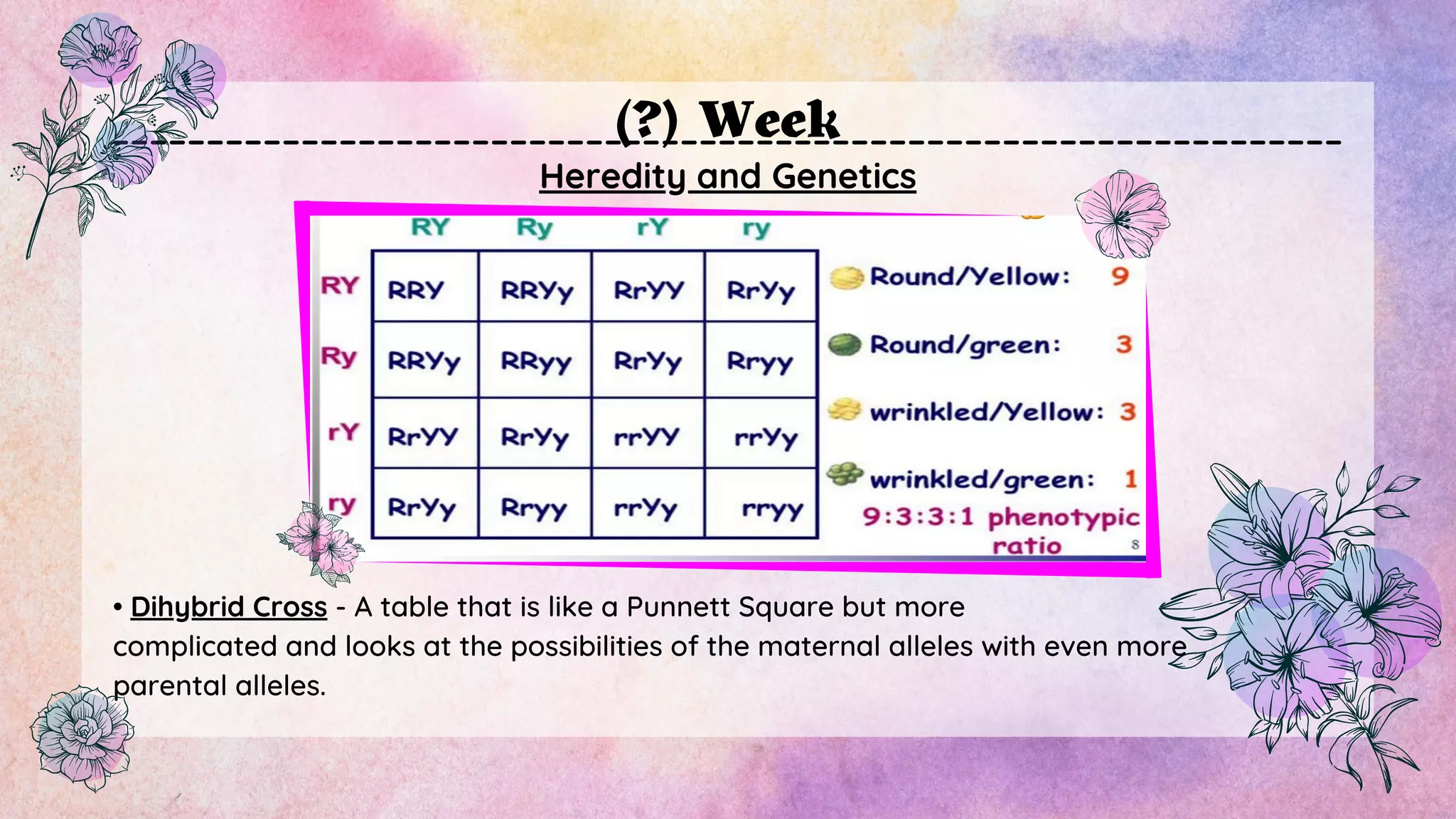
• Dihybrid Cross - A table that is like a Punnett Square but more
complicated and looks at the possibilities of the maternal alleles with even more
parental alleles.
Heredity and Genetics
Non-Mendelian Inheritance
Type of inheritance wherein the patterns of phenotypes doesn't coincide with the pattern
presented according to the Mendelian Law of Inheritance.
(?) Week
Heredity and Genetics
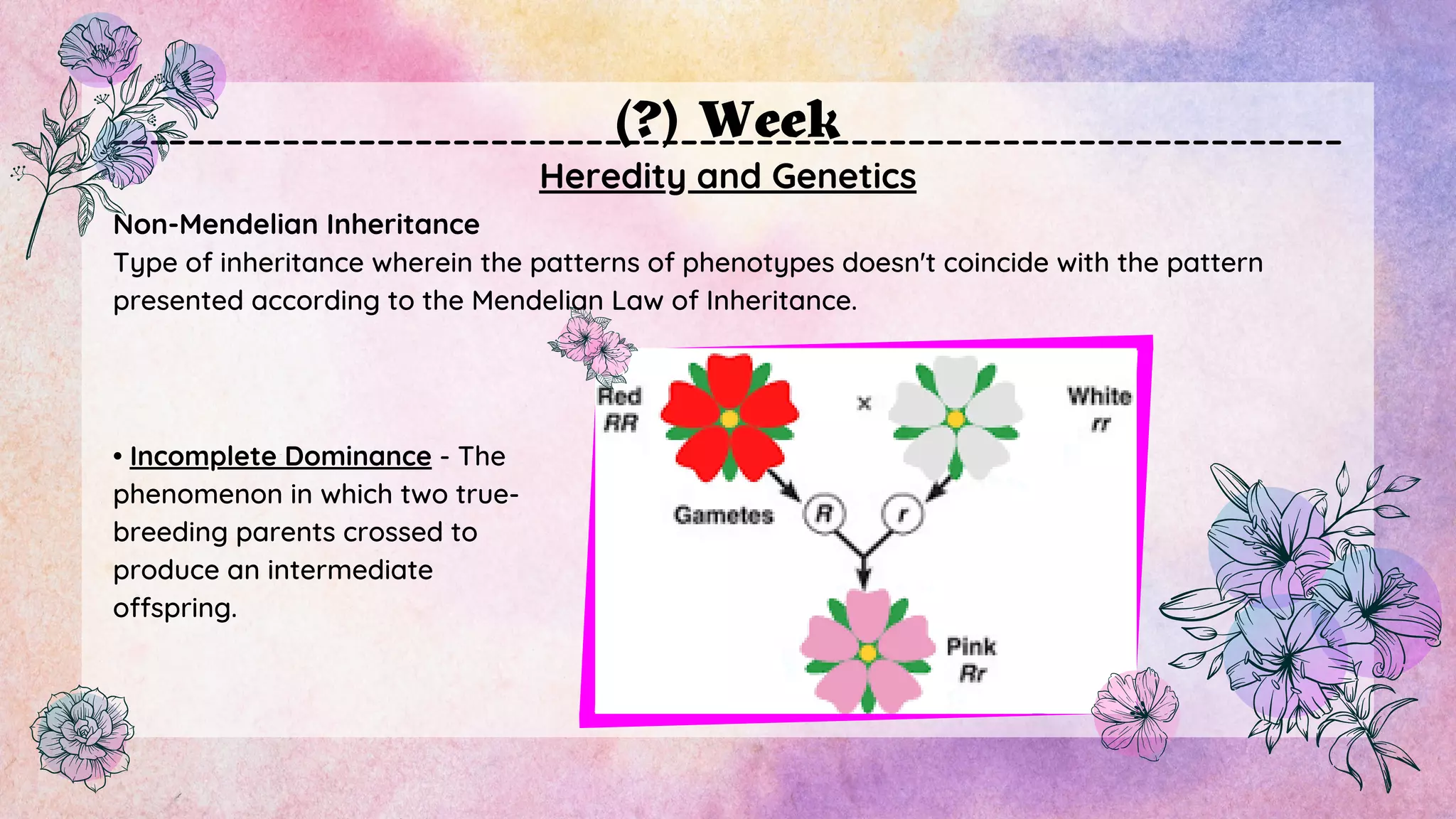
• Incomplete Dominance - The
phenomenon in which two true-
breeding parents crossed to
produce an intermediate
offspring.
• Codominance - This can create three distinct
phenotypes using just two alleles. For a
codominant trait, a heterozygous organism will
actually express both alleles or the distinct
phenotypes produced by each allele can
be observed.
(?) Week
Heredity and Genetics
Multiple Alleles
Mendel's work suggested that just two alleles existed for each gene. Today, we know that
doesn't usually happen. Although individual humans and all diploid organisms can only have
two alleles for a given gene, multiple alleles may exist in a population level, and different
individuals in the population may have different pairs of these alleles.
(?) Week
Heredity and Genetics
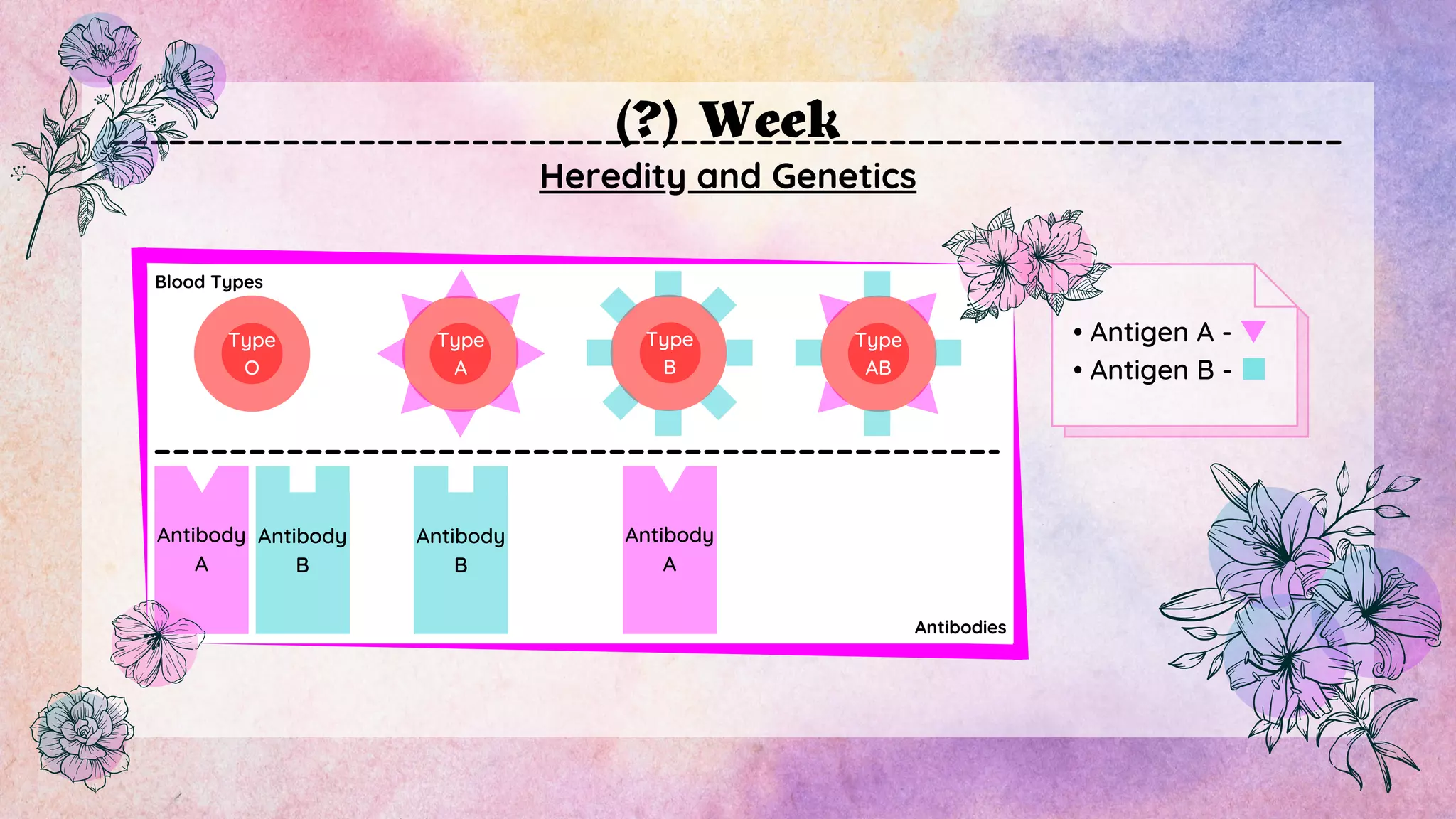
• Multiple allelism is best depicted through the ABO Blood Group System in people.
• 3 Allelic forms:
• I
• I
• I or i
A
B
O
Type
O
Type
AB
Type
A
Type
B
(?) Week
Heredity and Genetics
Antibody
A
Antibody
A
Antibody
B
Antibody
B
• Antigen A - ▼
• Antigen B - ■
Blood Types
Antibodies
(?) Week
Heredity and Genetics
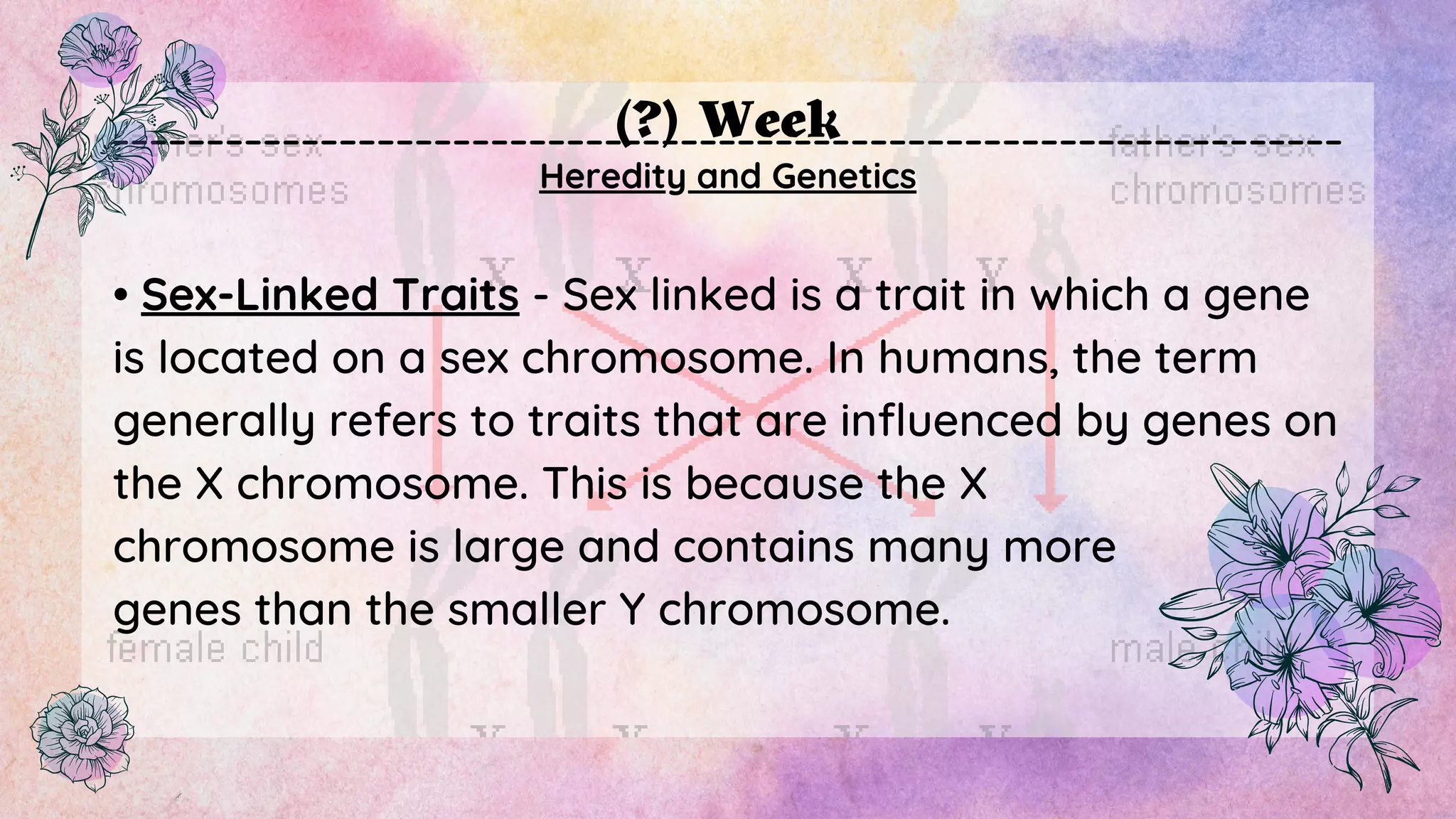
• Sex-Linked Traits - Sex linked is a trait in which a gene
is located on a sex chromosome. In humans, the term
generally refers to traits that are influenced by genes on
the X chromosome. This is because the X
chromosome is large and contains many more
genes than the smaller Y chromosome.
(?) Week
Heredity and Genetics
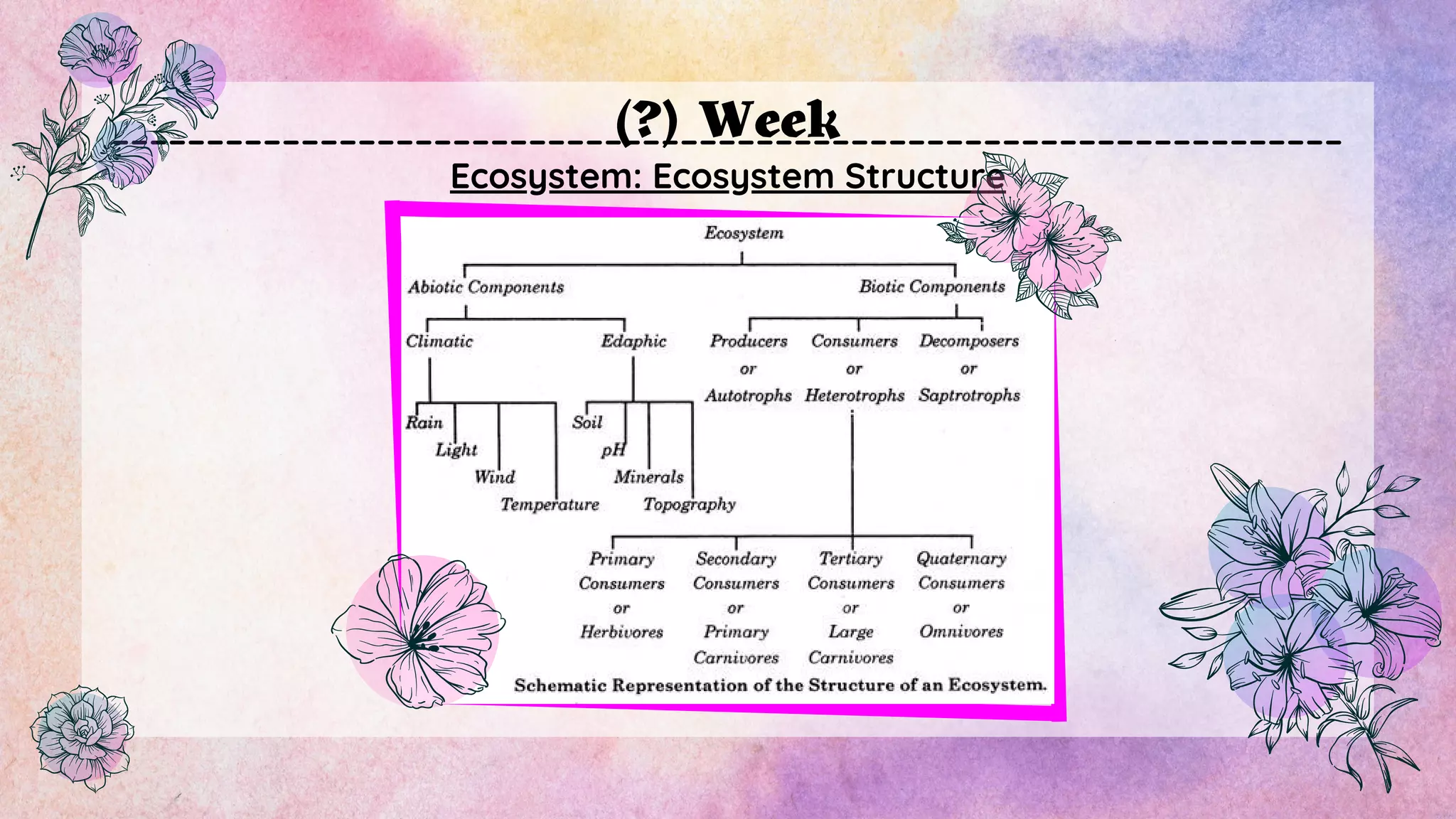
• Ecosystem - Geographic area where plants, animals,
and other organisms, as well as weather and landscape,
work together to form a bubble of life. Ecosystems
contain biotic or living, parts, as well as abiotic factors, or
nonliving parts. Abiotic factors include rocks,
temperature, and humidity.
(?) Week
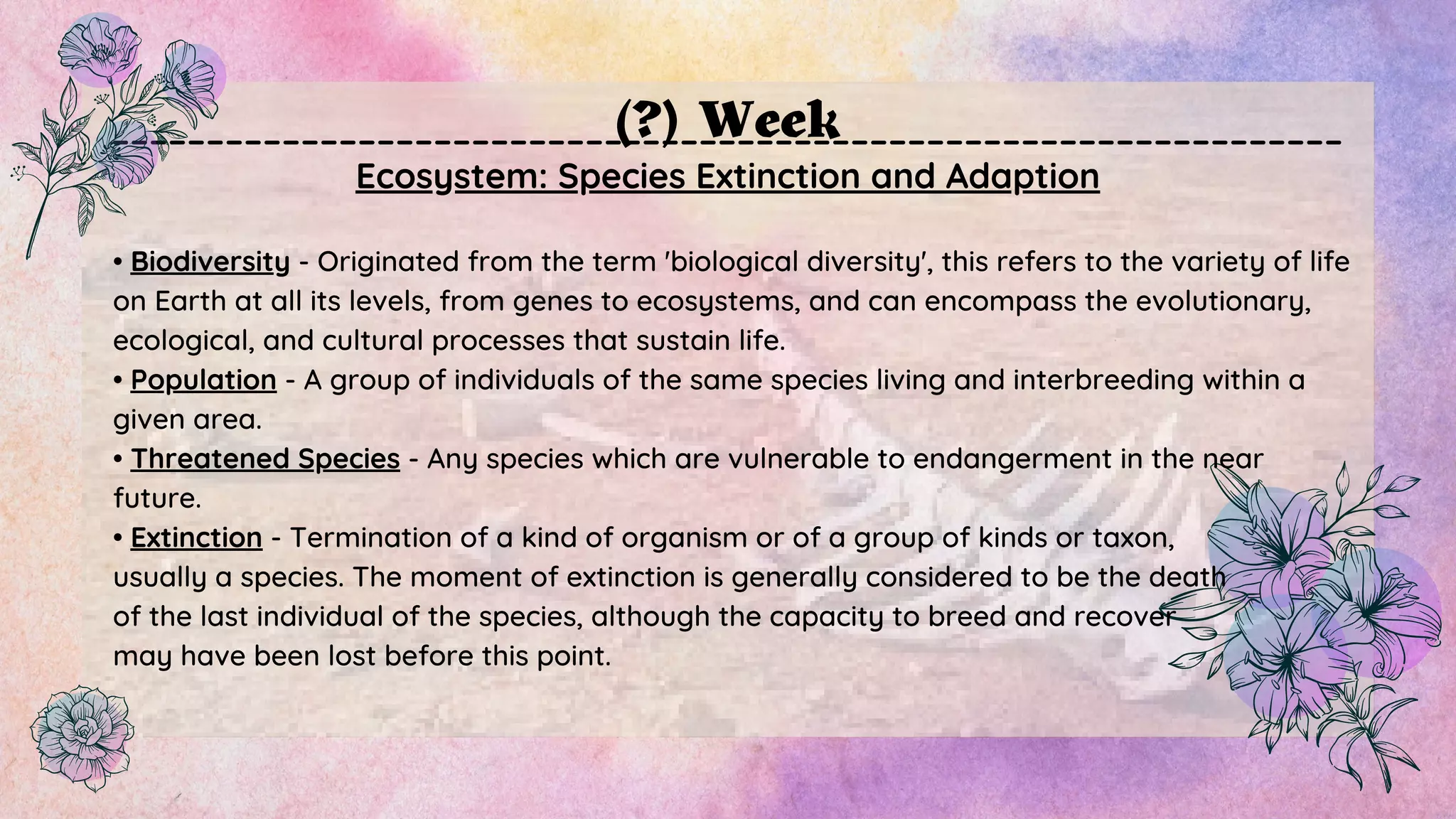
Ecosystem: Species Extinction and Adaption
• Biodiversity - Originated from the term 'biological diversity', this refers to the variety of life
on Earth at all its levels, from genes to ecosystems, and can encompass the evolutionary,
ecological, and cultural processes that sustain life.
• Population - A group of individuals of the same species living and interbreeding within a
given area.
• Threatened Species - Any species which are vulnerable to endangerment in the near
future.
• Extinction - Termination of a kind of organism or of a group of kinds or taxon,
usually a species. The moment of extinction is generally considered to be the death
of the last individual of the species, although the capacity to breed and recover
may have been lost before this point.
(?) Week
Ecosystem: Species Extinction and Adaption
• Some Causes of Extinction:
• Habitat Loss - The process in which natural habitat is rendered unable to support the species
present.
• Introduced Species - When a new and aggressive species is introduced into an ecosystem, it
may not have any natural predators or controls. It can breed and spread quickly, taking over
an area. Invasive species can change the food web in an ecosystem by destroying or replacing
native food sources.
• Pollution - Pollution continues to rise as a threat with severe weather, changing ecosystems,
and rising temperatures responsible for 37 extinctions and counting.
• Population Growth - As the human population grows, we destroy more habitat, kill
more animals for food, release more pollution into the atmosphere, soil, and water supply, all
of which increase the rate of extinction of species.
• Over-Consumption - is a situation where resource use has outpaced the sustainable
capacity of the ecosystem. Considering the patterns of consumption, it will inevitably lead
to environmental degradation which will result in the depletion of resources, and a massive
extinction of species.
(?) Week
Ecosystem: Species Extinction and Adaption
• Species - The basic unit of classification and a taxonomic rank of
an organism, as well as a unit of biodiversity.
• Community - Group or association of populations of two or more
different species occupying the same geographical area at the
same time, also known as a biocoenosis, biotic community,
biological community, ecological community, or life
assemblage.
(?) Week
Ecosystem: Biodiversity and Evolution
(?) Week
Ecosystem: Ecosystem Structure
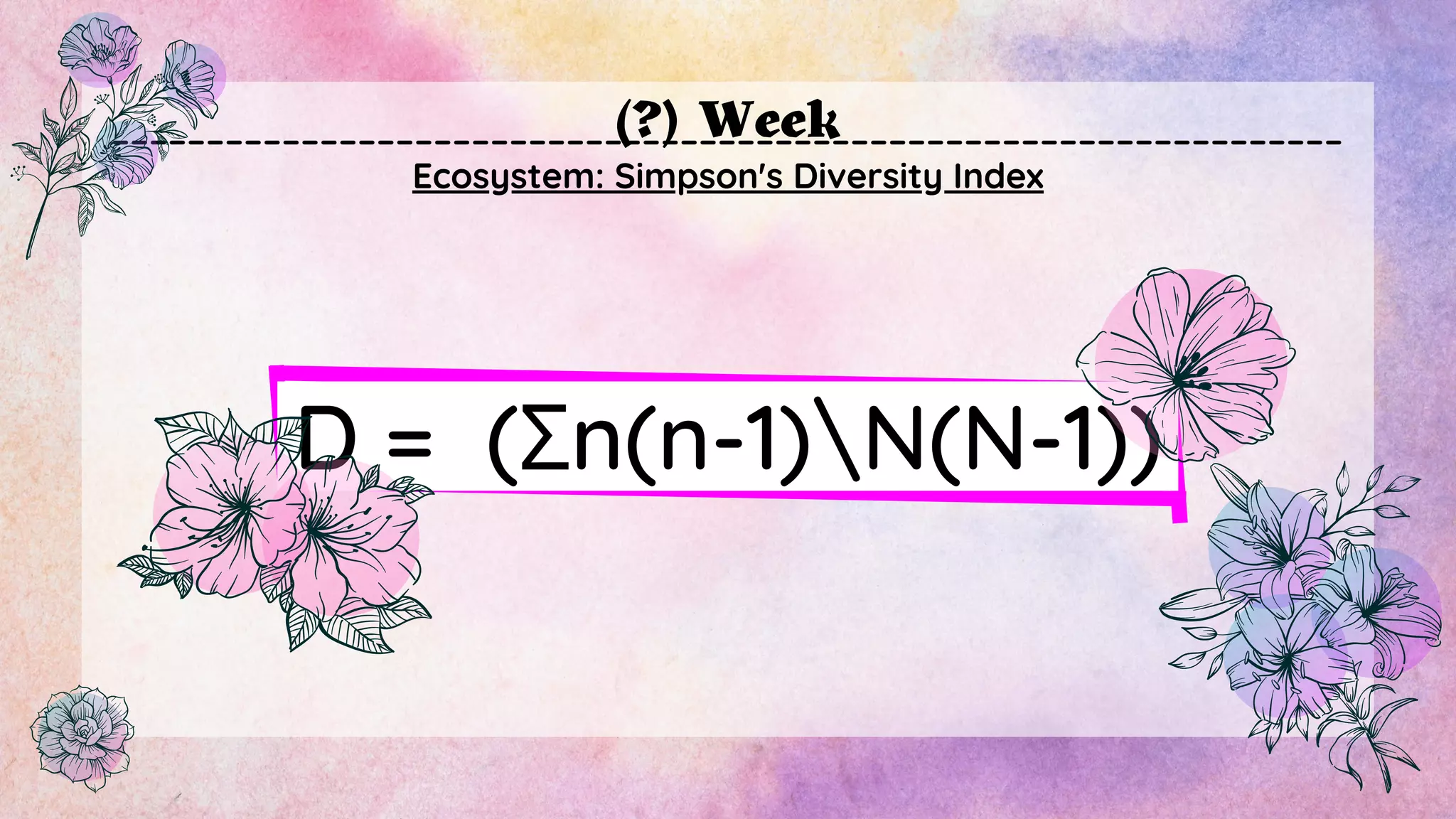
D = (Σn(n-1)N(N-1))
(?) Week
Ecosystem: Simpson's Diversity Index

Science | Grade 9 - 1st Quarter

  • 1.
  • 2.
    1st Week Atom ->Molecule -> Cell Organelles -> Cell -> Tissue -> Organ -> System of Organs -> Organism -> Population -> Ecosystem -> Bioma -> Biospere The respiratory system is made up of networks of organs and tissues that facilitate your breathing. It includes your airways, lungs, and blood vessels. The muscles that power your lungs also are parts of the system. These parts work together to maneuver oxygen throughout the body and clean out waste gases like CO². Levels of Organization: Respiratory System: Function
  • 3.
    • Nasal Cavity- One of the two entrances, the start, and end of the process. The airway enters the Nares (Nostrils) that are separated by a nasal septum and the air is filtered by the Cilia (Nose Hair) that traps the dust and others then turns it into boogers. • Pharynx - This has three parts (Nasopharynx, Oropharynx, and Hypopharynx) and a passage from the Nasal Cavity to Larynx. • Epiglottis - The function of this is to cover the wind pipe to not let food go through to be accidentally inhaled and make the body choke. • Larynx - Another name for this is the Voice Box. This is the route for air and food that contains the Epiglottis, also contains vocal chords and the Glottis. • Trachea - Connection or the bridge of the Larynx and the Bronchi. Mucus with dirt and germs are pushed out of the lungs because of this. It also transports air into and out of the lungs. 1st Week Respiratory System: Parts • Bronchi - Root-like divisions of the Trachea and subdivides into smaller and smaller branches. This carries air to and from your lungs. This moisturizes the air that gois into the system and takes out the particles that aren't needed. • Alveoli - The location where the Lungs and blood exchange oxygen and CO2 during the method of inhaling and exhaling. Oxygen breathed in from the air passes through the Alveoli, into the blood, then travels through the tissues throughout the body.
  • 4.
    1st Week • Diaphragm- Located at the underside of the chest, a skinny musculus that separates the abdomen from the chest. The Diaphragm helps the process by creating a vacuum effect. This also helps in Respiration by contracting and expanding. It flattens when the Lungs expand to inhale and this enlarges when the Lungs flatten to exhale. • Intercostal Muscles - Intercostal Muscles are many alternating groups of muscles that run between the ribs, and help form and move the chest wall. The Intercostal Muscles are mainly involved within the mechanical aspect of breathing by helping expand and shrink the scale of the Chest Cavity. Respiratory System: Accessory Organs • Pleura - This is an important element of the tract whose role is to cushion the Lungs and reduce any friction which develops between the Lungs, Rib Cage, and the Chest Cavity. A two- layered membrane covers each lung because of the Pleura. • Rib Cage - The skeletal structure consists of 24 ribs, which are attached to the sternum that is within the center of the chest. This helps by protecting the organs within the chest from damage.
  • 5.
  • 6.
    1st Week • Asthma- This affects people of all ages and sometimes starts during childhood. Certain things can depart or worsen asthma symptoms, like cold air. These are called asthma triggers. Asthma is a chronic condition that affects the airways within the lungs. The airways are tubes that carry air in and out of your lungs. If you've got got asthma, the airways can become inflamed and narrowed from time to time. • Emphysema - In people with emphysema, the air sacs within the lungs (alveoli) are damaged. Over time, the inner walls of the alveoli weaken and rupture, creating larger air spaces instead of many small ones. This reduces the extent of the lungs and, in turn, the quantity of oxygen that reaches your bloodstream. When you exhale, the damaged alveoli don't work properly and old air becomes trapped, leaving no room for fresh, oxygen-rich air to enter. • Chronic Obstructive Pulmonary Disease (COPD) - A group of diseases which are the cause breathing-related problems and airflow blockages, making the person that have COPD have a hard time breathing. There are two types of COPD being Chronic bronchitis, which involves a long-term cough with mucus; and Emphysema, which involves damage to the lungs over time. Mostly all of the people diagnosed with COPD have a combination of both conditions. Respiratory System: Examples of Frequent Illnesses
  • 7.
    • Heart -Your heart is a vital organ mandatory for our survival. It is a muscle that is about the size of a clenched fist and weighs between 300g and 450g that pumps blood throughout all the parts of your body. The blood pumped by your heart provides your body with the oxygen and nutrients it needs to function. • Blood Vessels - Arteries, veins, and capillaries are the three types of blood cells and each of these play a very specific role in the Circulatory System. Arteries carry oxygenated blood away from the heart while veins carry deoxygenated blood into the heart. Capillaries are very tiny blood vessels and they help to connect your arteries and veins in addition to facilitating the exchange of certain elements between your blood and tissues. They're tough on the outside but they contain a smooth interior layer of epithelial cells that allows blood to flow easily. • Blood - Blood is a constantly circulating fluid providing the body with nutrition, oxygen, and waste removal. Blood is mostly liquid, with numerous cells and proteins suspended in it, making blood "thicker" than pure water. The average person has about 5 liters of blood. 2nd Week (?) Circulatory System: Main Parts
  • 8.
    2nd Week (?) •Cardiac fat. • Chambers of heart. Left atrium and auricle. • Valves of heart. Tricuspid valve. • Aorta. • Ligamentum arteriosum. • Pulmonary trunk. • Coronary vessels. (Imma not copy-paste definitions into this for I'm actually cramming as evident to the deteriorating quality of my notes. Plus, these accessory organs weren't touched on for me to give my attention to them and attempt to paraphrase them while I forget and get distracted by playing Dank Memer but wanting to play COD or just draw my life away. ~v~) Circulatory System: Accessory Organs
  • 9.
    2nd Week (?) CirculatorySystem: Process
  • 10.
    2nd Week (?) •Heart Attack -This happens when a part of the heart muscle doesn't get enough blood. The damage to the heart muscle becomes more apparent and greater when more time passes when it goes without treatment to restore blood flow and vice versa. Another term for a Heart Attack is called Myocardial Infarction. • Arrhythmia (Without Rythm) and Dysrhythmia (Bad Rythm) - Arrhythmia and Dysrhythmia is an abnormality with the rate or rhythm of your heartbeat caused by electrical impulses that aren't functioning properly. The heart can beat too quickly (tachycardia), or too slowly (bradycardia), or with an irregular pattern. • Cardiac Arrest - Sometimes called sudden cardiac arrest, is an emergency and is lethal if not treated immediately. This is the sudden stop of your heartbeat. This cuts off blood flow to the brain and other organs. Circulatory System: Examples of Frequent Illnesses
  • 11.
    • Phenotype -Physical properties of an entity or an organism. • Genotype - Collection of genes of an organism or entity. (?) Week Heredity and Genetics
  • 12.
    • Genetics -Genetics is the study of how different qualities, called traits, are passed down from parents to child. When we trace the paths of these qualities, we are following packages of information called genes. Genes are instructions for building the parts of your body and doing the work that keeps you alive. Your mix of genes is unique to you, from carrying oxygen to digesting your food and everything else we do. These are grouped into collections called chromosomes and most humans have 23 pairs of chromosomes. Gene is essentially the main physical and working unit of heredity. Genes are also made up of the hereditary material called DNA. (?) Week Heredity and Genetics
  • 13.
    • DNA (Deoxyribonucleicacid) - The genetical material in humans and nearly all other organisms. For humans, mostly all of the cells in their system have the same DNA. DNA's stored as code that contains 4 chemical bases, Adenine, Guanine, Cytosine, and Thymine. When this is located in the cell nucleus, it's called Nuclear DNA; when DNA is in the Mitochondria, which is a limited amount of DNA, it's called Mitochondrial DNA. This also reside in 46 chromosomes. (?) Week Heredity and Genetics
  • 14.
    • Allele -Alternative version of a particular gene. • Phenotype - Physical attributes of an organism. • Genotype - Genetic makeup of an organism. Dominant vs. Recessive • Dominant [Allele] - Will always be present in the phenotype of the maternal entity unless it's absent within the genotype of the organism. • Recessive [Allele] - Will always be present in the phenotype of the maternal entity unless the Dominant Allele of the organism is present. • Homozygous (Dominant) - AA • Heterozygous - Aa • Homozygous (Recessive) - aa (?) Week Heredity and Genetics
  • 15.
    • Punnet Square- A table of possible combinations of maternal alleles with paternal alleles. (?) Week Heredity and Genetics
  • 16.
    (?) Week • DihybridCross - A table that is like a Punnett Square but more complicated and looks at the possibilities of the maternal alleles with even more parental alleles. Heredity and Genetics
  • 17.
    Non-Mendelian Inheritance Type ofinheritance wherein the patterns of phenotypes doesn't coincide with the pattern presented according to the Mendelian Law of Inheritance. (?) Week Heredity and Genetics • Incomplete Dominance - The phenomenon in which two true- breeding parents crossed to produce an intermediate offspring.
  • 18.
    • Codominance -This can create three distinct phenotypes using just two alleles. For a codominant trait, a heterozygous organism will actually express both alleles or the distinct phenotypes produced by each allele can be observed. (?) Week Heredity and Genetics
  • 19.
    Multiple Alleles Mendel's worksuggested that just two alleles existed for each gene. Today, we know that doesn't usually happen. Although individual humans and all diploid organisms can only have two alleles for a given gene, multiple alleles may exist in a population level, and different individuals in the population may have different pairs of these alleles. (?) Week Heredity and Genetics • Multiple allelism is best depicted through the ABO Blood Group System in people. • 3 Allelic forms: • I • I • I or i A B O
  • 20.
    Type O Type AB Type A Type B (?) Week Heredity andGenetics Antibody A Antibody A Antibody B Antibody B • Antigen A - ▼ • Antigen B - ■ Blood Types Antibodies
  • 21.
  • 22.
    • Sex-Linked Traits- Sex linked is a trait in which a gene is located on a sex chromosome. In humans, the term generally refers to traits that are influenced by genes on the X chromosome. This is because the X chromosome is large and contains many more genes than the smaller Y chromosome. (?) Week Heredity and Genetics
  • 23.
    • Ecosystem -Geographic area where plants, animals, and other organisms, as well as weather and landscape, work together to form a bubble of life. Ecosystems contain biotic or living, parts, as well as abiotic factors, or nonliving parts. Abiotic factors include rocks, temperature, and humidity. (?) Week Ecosystem: Species Extinction and Adaption
  • 24.
    • Biodiversity -Originated from the term 'biological diversity', this refers to the variety of life on Earth at all its levels, from genes to ecosystems, and can encompass the evolutionary, ecological, and cultural processes that sustain life. • Population - A group of individuals of the same species living and interbreeding within a given area. • Threatened Species - Any species which are vulnerable to endangerment in the near future. • Extinction - Termination of a kind of organism or of a group of kinds or taxon, usually a species. The moment of extinction is generally considered to be the death of the last individual of the species, although the capacity to breed and recover may have been lost before this point. (?) Week Ecosystem: Species Extinction and Adaption
  • 25.
    • Some Causesof Extinction: • Habitat Loss - The process in which natural habitat is rendered unable to support the species present. • Introduced Species - When a new and aggressive species is introduced into an ecosystem, it may not have any natural predators or controls. It can breed and spread quickly, taking over an area. Invasive species can change the food web in an ecosystem by destroying or replacing native food sources. • Pollution - Pollution continues to rise as a threat with severe weather, changing ecosystems, and rising temperatures responsible for 37 extinctions and counting. • Population Growth - As the human population grows, we destroy more habitat, kill more animals for food, release more pollution into the atmosphere, soil, and water supply, all of which increase the rate of extinction of species. • Over-Consumption - is a situation where resource use has outpaced the sustainable capacity of the ecosystem. Considering the patterns of consumption, it will inevitably lead to environmental degradation which will result in the depletion of resources, and a massive extinction of species. (?) Week Ecosystem: Species Extinction and Adaption
  • 26.
    • Species -The basic unit of classification and a taxonomic rank of an organism, as well as a unit of biodiversity. • Community - Group or association of populations of two or more different species occupying the same geographical area at the same time, also known as a biocoenosis, biotic community, biological community, ecological community, or life assemblage. (?) Week Ecosystem: Biodiversity and Evolution
  • 27.
  • 28.
    D = (Σn(n-1)N(N-1)) (?)Week Ecosystem: Simpson's Diversity Index