SCIENCE SUMMATIVE
    ASSESSMENT
SCIENCE SUMMATIVE
    ASSESSMENT
     What’s my food for?
SCIENCE SUMMATIVE
    ASSESSMENT
     What’s my food for?
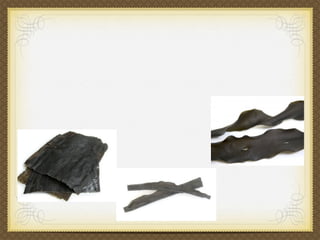
      My food: Kombu

      By George Wood
NUTRITIONAL INFO

Serving Size: 1

Calories: 10

Fat: 0 Grams

Carbohydrates: 2 Grams

Protein: A tiny amount that did show on our test, but didn’t show on a website on
the internet.
HOW I DID THE TEST

STEP. 1 To test for Glucose: I put kombu in a test tube and then I added water.
Then I put Benedict Solution. Then, I put it into a hot water bath. If it turns blue,
that means it has Benedict Solution.

STEP. 2 To test for Starch: Put kombu into test tube, and add some water. Then
add iodine, and if the food turns black, this means it contains Starch

STEP. 3 To test for Protein: Add 2 cm of Biuret A and 10 drops of Biuret B. If it
turns brown, then it will contain Protein.

STEP. 4 To test for Fat: Put kombu onto filter paper. Then, gently rub the food
into the paper, and then if grease appears, then there is fat in the food.
MOUTH


In the mouth, the amylase in the saliva
breaks down the kombu and
moisturises it, and breaks it down. The
kombu will turn into a green paste.
This will allow it to travel through the
digestive system. The starch in the
kombu is broken down, and glucose
comes out.
ESOPHAGUS


The esophagus will squeeze
the kombu with special
muscles. It does it to prevent
food from going back up.
Then, the food will go down
to the stomach.
THE STOMACH


In the stomach, acids are mixed
with the kombu breaking it
down and taking kills all
bacteria. The acid also breaks
down the protein.To make sure
the acid doesn’t leek out, the
stomach’s inside is covered in
mucus.
SMALL AND LARGE INTESTINE


      In the Small Intestine, the all the
      nutrients which had been previously
      broken down, are now absorbed into
      the bloodstream around the small
      intestine.

      In the Large Intestine, any leftover
      moisture including acids, are
      absorbed and decontaminated. Then,
      it is hardened and leaves the body in
      the form of excrement. This means it
      is now just poo and wee.
THE DIGESTION SYSTEM
OVERVIEW
 1. The kombu is first broken down
 by my teeth and saliva.

 2. Then it travels down the
 esophagus and into the stomach.

 3. In the stomach, the acids breaks
 apart certain nutrients. This helps
 them later be absorbed.

 4. The small intestine absorbs all
 the nutrients into the blood to use
 around the body.

 5. In the large intestine, all the
 moisture is taken, and the waste in
 ejected.

Science Experiment Project

  • 2.
  • 3.
    SCIENCE SUMMATIVE ASSESSMENT What’s my food for?
  • 4.
    SCIENCE SUMMATIVE ASSESSMENT What’s my food for? My food: Kombu By George Wood
  • 5.
    NUTRITIONAL INFO Serving Size:1 Calories: 10 Fat: 0 Grams Carbohydrates: 2 Grams Protein: A tiny amount that did show on our test, but didn’t show on a website on the internet.
  • 6.
    HOW I DIDTHE TEST STEP. 1 To test for Glucose: I put kombu in a test tube and then I added water. Then I put Benedict Solution. Then, I put it into a hot water bath. If it turns blue, that means it has Benedict Solution. STEP. 2 To test for Starch: Put kombu into test tube, and add some water. Then add iodine, and if the food turns black, this means it contains Starch STEP. 3 To test for Protein: Add 2 cm of Biuret A and 10 drops of Biuret B. If it turns brown, then it will contain Protein. STEP. 4 To test for Fat: Put kombu onto filter paper. Then, gently rub the food into the paper, and then if grease appears, then there is fat in the food.
  • 7.
    MOUTH In the mouth,the amylase in the saliva breaks down the kombu and moisturises it, and breaks it down. The kombu will turn into a green paste. This will allow it to travel through the digestive system. The starch in the kombu is broken down, and glucose comes out.
  • 8.
    ESOPHAGUS The esophagus willsqueeze the kombu with special muscles. It does it to prevent food from going back up. Then, the food will go down to the stomach.
  • 9.
    THE STOMACH In thestomach, acids are mixed with the kombu breaking it down and taking kills all bacteria. The acid also breaks down the protein.To make sure the acid doesn’t leek out, the stomach’s inside is covered in mucus.
  • 10.
    SMALL AND LARGEINTESTINE In the Small Intestine, the all the nutrients which had been previously broken down, are now absorbed into the bloodstream around the small intestine. In the Large Intestine, any leftover moisture including acids, are absorbed and decontaminated. Then, it is hardened and leaves the body in the form of excrement. This means it is now just poo and wee.
  • 11.
  • 12.
    OVERVIEW 1. Thekombu is first broken down by my teeth and saliva. 2. Then it travels down the esophagus and into the stomach. 3. In the stomach, the acids breaks apart certain nutrients. This helps them later be absorbed. 4. The small intestine absorbs all the nutrients into the blood to use around the body. 5. In the large intestine, all the moisture is taken, and the waste in ejected.

Editor's Notes