Science
Commercialization
By: Mahmoud Ramadan
2
3
Science and Technology, What’s the difference?
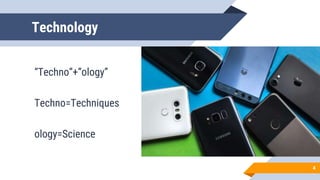
Technology
“Techno”+”ology”
Techno=Techniques
ology=Science
4
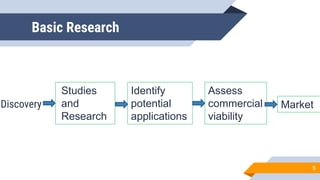
Basic Research
Discovery
5
Studies
and
Research
Identify
potential
applications
Assess
commercial
viability
Market
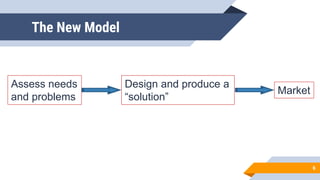
The New Model
6
Assess needs
and problems
Design and produce a
“solution”
Market
HIBAR
7
 Highly Integrative Basic And Responsive (HIBAR) Research
 Embraces the attainment of new knowledge coupled with the
solution of important problems
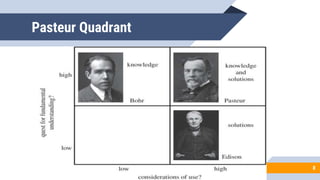
Pasteur Quadrant
8
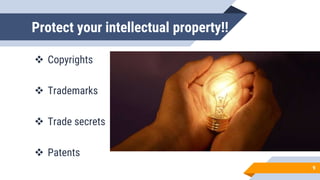
Protect your intellectual property!!
 Copyrights
 Trademarks
 Trade secrets
 Patents
9
Patents
 Patents are legal paperwork
 “Own” your idea
10
To patent something it has to be:
 Novel
 Non-obvious
 Useful
11
The difference between an idea, an invention and a
product?
 An idea is NOT an invention
 An invention is NOT a product
 Useful invention=Product (If marketed well)
12
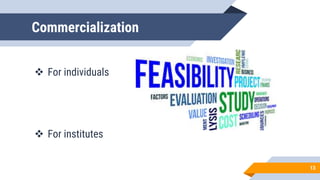
Commercialization
 For individuals
 For institutes
13
14
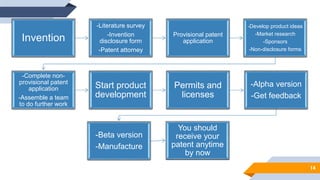
Invention
-Literature survey
-Invention
disclosure form
-Patent attorney
Provisional patent
application
-Develop product ideas
-Market research
-Sponsors
-Non-disclosure forms
-Complete non-
provisional patent
application
-Assemble a team
to do further work
Start product
development
Permits and
licenses
-Alpha version
-Get feedback
-Beta version
-Manufacture
You should
receive your
patent anytime
by now
15
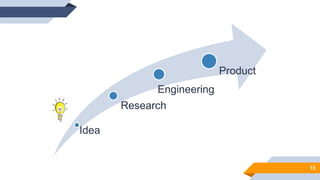
Idea
Research
Engineering
Product
16
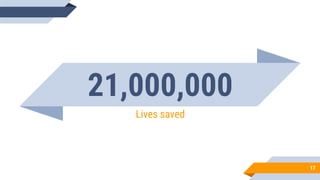
21,000,000
Lives saved
17
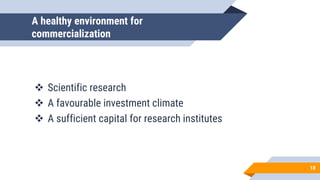
A healthy environment for
commercialization
 Scientific research
 A favourable investment climate
 A sufficient capital for research institutes
18
References
▰ https://www.pragmaticmarketing.com/resources/articles/what-are-
patents
▰ https://www.upcounsel.com/intellectual-property-protection
▰ http://www.aplu.org/projects-and-initiatives/research-science-and-
technology/hibar/index.html
▰ Pasteur’s Quadrant (a book by Donald E. Stokes)
19
20
21

Science commercialization