
SCHIZOPHRENIA
-By Dr TANUJA TATRARI
Introduction
Epidemiology
Etiology
Pathophysiology
Classification
Signs & symptoms
Complications
Diagnosis
Prognosis
Management
Introduction
Schizophrenia(Greek): Schizo= split + Phrene= mind
Term coined by: EUGEN BLEULER
There is splitting of psychic function(s) or disturbed harmony
between thought, emotions and behaviour.
Fundamental symptoms of Schizophrenia: (4As)
1) Ambivalence
2) Affective flattening
3) Association loss
4) Autism
Epidemiology
Prevalence: 0.5%
Lifetime morbid risk: 0.72%
Age of onset
- late adolescence
- early adulthood
- Peak:
~1st: 20years
~2nd: 33years
Male:Female = 1.4:1
Etiology
Biological factors
- Genetic predisposition
- Structural brain abnormalities
- Dysregulation of neurotransmitters(Dopamine, GABA,
Glutamate)
Psychological factors
- Diathesis-stress model
Social factors
- Role of family
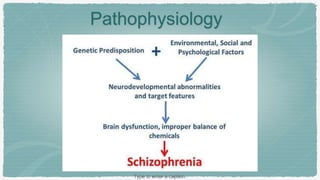
Pathophysiology
Type to enter a caption.
Classification of Schizophrenia
1. Paranoid
2. Hebephrenic
3. Catatonic
4. Simple
5. Residual
6. Undifferentiated
Signs and Symptoms
First rank symptoms:
- 3 Auditory phenomenon:
1) 1st person auditory hallucination
2) 2nd person auditory hallucination
3) 3rd person auditory hallucination
- 3 Made phenomenon:
1) Made impulse
2) Made volition or acts
3) Made Affect
- 3 Thought phenomenon:
1) Thought insertion
2) Thought broadcast
3) Thought withdrawal
- 2 Additional symptoms:
1) Somatic passivity
2) Delusional perception
Positive symptoms:
- Delusion
- Hallucination
- Disorganised thoughts
Negative symptoms:
- Alogia
- Affective flattening
- Avolition
- Anhedonia
- Social withdrawal
Cognitive symptoms (memory, attention)
Emotional symptoms
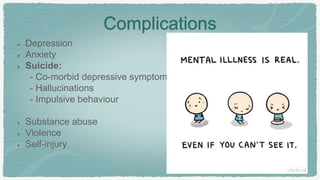
Complications
Depression
Anxiety
Suicide:
- Co-morbid depressive symptoms
- Hallucinations
- Impulsive behaviour
Substance abuse
Violence
Self-injury
Diagnosis
Diagnostic criteria for Schizophrenia
As per ICD-10: F20
a) Thought echo, thought insertion or withdrawal and thought
broadcasting
b) Delusions of control, influence, or passivity
c) 1st, 2nd or 3rd person hallucination
d) Persistent delusions
e) Persistent hallucinations
f) Breaks or interpolations in the train of thought, resulting in
incoherence or irrelevant speech, or neologisms
g) Catatonic behaviour
h) Negative symptoms
i) A significant & consistent change in the overall quality of some aspects of
personal behaviour, manifested as loss of interest, aimlessness & social
withdrawal.
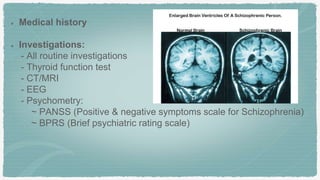
Medical history
Investigations:
- All routine investigations
- Thyroid function test
- CT/MRI
- EEG
- Psychometry:
~ PANSS (Positive & negative symptoms scale for Schizophrenia)
~ BPRS (Brief psychiatric rating scale)
Prognosis & prognostic factors
- Late onset
- Acute onset
- Positive symptoms
- Affective symptoms — Better prognosis
- Good family support
- Compliant with treatment
- Females
- Family history of Schizophrenia
- Substance use (alcohol, cannabis) —- Poor prognosis
- Premorbid personality
- Males
Treatment
1. Pharmacological:
Anti-psychotics:
a) Typical Anti-psychotics (1st generation)
- Haloperidol
- Chlorpromazine
b) Atypical Anti-psychotics (2nd generation)
- Risperidone
- Olanzepine
- Clozapine
- Quetiapine
c) 3rd generation
- Aripiprazole
Adverse effects
1. Sedation
2. Autonomic side effects
3. Extrapyramidal side effects
a) Akathisia (motor restlessness)
b) Dystonia (sudden muscle spasm)
c) Pseudoparkinsonism (tremors, rigidity, hypokinesia, mask-like
facies)
d) Tardive dyskinesia (abnormal involuntary movements)
4. Neuroleptic Malignant Syndrome (NMS)
5. Hormonal effects & sexual dysfunction
4. Miscellaneous
- Weight gain
- Jaundice
2. E.C.T. (Electro-convulsive Therapy)
- In adult patients, not responding to drug therapy.
- Indications:
~ Acute exacerbation, not controlled with drugs
~ Risk of suicide, homicide
~ Catatonic stupor
3. C.B.T. (Cognitive Behavioural Therapy)
4. Non-pharmacological:
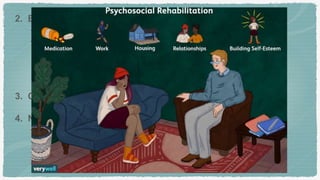
- Psycho-education (individual therapy)
- Family therapy
- Social skills training
- Rehabilitation and supported employment
5. Need for Hospitalisation:
- Neglect of food & water intake
- Significant neglect of self-care
- Danger to self or others
- Poor treatment adherence
- Lack of social support with evidence of above mentioned risks.
Type to enter a caption.
THANKYOU

Schizophrenia.ppt psy od d/h

  • 1.
  • 2.
  • 3.
    Introduction Schizophrenia(Greek): Schizo= split+ Phrene= mind Term coined by: EUGEN BLEULER There is splitting of psychic function(s) or disturbed harmony between thought, emotions and behaviour. Fundamental symptoms of Schizophrenia: (4As) 1) Ambivalence 2) Affective flattening 3) Association loss 4) Autism
  • 4.
    Epidemiology Prevalence: 0.5% Lifetime morbidrisk: 0.72% Age of onset - late adolescence - early adulthood - Peak: ~1st: 20years ~2nd: 33years Male:Female = 1.4:1
  • 5.
    Etiology Biological factors - Geneticpredisposition - Structural brain abnormalities - Dysregulation of neurotransmitters(Dopamine, GABA, Glutamate) Psychological factors - Diathesis-stress model Social factors - Role of family
  • 6.
  • 7.
    Classification of Schizophrenia 1.Paranoid 2. Hebephrenic 3. Catatonic 4. Simple 5. Residual 6. Undifferentiated
  • 8.
    Signs and Symptoms Firstrank symptoms: - 3 Auditory phenomenon: 1) 1st person auditory hallucination 2) 2nd person auditory hallucination 3) 3rd person auditory hallucination - 3 Made phenomenon: 1) Made impulse 2) Made volition or acts 3) Made Affect
  • 9.
    - 3 Thoughtphenomenon: 1) Thought insertion 2) Thought broadcast 3) Thought withdrawal - 2 Additional symptoms: 1) Somatic passivity 2) Delusional perception
  • 10.
    Positive symptoms: - Delusion -Hallucination - Disorganised thoughts Negative symptoms: - Alogia - Affective flattening - Avolition - Anhedonia - Social withdrawal Cognitive symptoms (memory, attention) Emotional symptoms
  • 11.
    Complications Depression Anxiety Suicide: - Co-morbid depressivesymptoms - Hallucinations - Impulsive behaviour Substance abuse Violence Self-injury
  • 12.
    Diagnosis Diagnostic criteria forSchizophrenia As per ICD-10: F20 a) Thought echo, thought insertion or withdrawal and thought broadcasting b) Delusions of control, influence, or passivity c) 1st, 2nd or 3rd person hallucination d) Persistent delusions e) Persistent hallucinations f) Breaks or interpolations in the train of thought, resulting in incoherence or irrelevant speech, or neologisms g) Catatonic behaviour h) Negative symptoms i) A significant & consistent change in the overall quality of some aspects of personal behaviour, manifested as loss of interest, aimlessness & social withdrawal.
  • 13.
    Medical history Investigations: - Allroutine investigations - Thyroid function test - CT/MRI - EEG - Psychometry: ~ PANSS (Positive & negative symptoms scale for Schizophrenia) ~ BPRS (Brief psychiatric rating scale)
  • 14.
    Prognosis & prognosticfactors - Late onset - Acute onset - Positive symptoms - Affective symptoms — Better prognosis - Good family support - Compliant with treatment - Females - Family history of Schizophrenia - Substance use (alcohol, cannabis) —- Poor prognosis - Premorbid personality - Males
  • 15.
    Treatment 1. Pharmacological: Anti-psychotics: a) TypicalAnti-psychotics (1st generation) - Haloperidol - Chlorpromazine b) Atypical Anti-psychotics (2nd generation) - Risperidone - Olanzepine - Clozapine - Quetiapine c) 3rd generation - Aripiprazole
  • 16.
    Adverse effects 1. Sedation 2.Autonomic side effects 3. Extrapyramidal side effects a) Akathisia (motor restlessness) b) Dystonia (sudden muscle spasm) c) Pseudoparkinsonism (tremors, rigidity, hypokinesia, mask-like facies) d) Tardive dyskinesia (abnormal involuntary movements) 4. Neuroleptic Malignant Syndrome (NMS) 5. Hormonal effects & sexual dysfunction 4. Miscellaneous - Weight gain - Jaundice
  • 17.
    2. E.C.T. (Electro-convulsiveTherapy) - In adult patients, not responding to drug therapy. - Indications: ~ Acute exacerbation, not controlled with drugs ~ Risk of suicide, homicide ~ Catatonic stupor 3. C.B.T. (Cognitive Behavioural Therapy) 4. Non-pharmacological: - Psycho-education (individual therapy) - Family therapy - Social skills training - Rehabilitation and supported employment
  • 18.
    5. Need forHospitalisation: - Neglect of food & water intake - Significant neglect of self-care - Danger to self or others - Poor treatment adherence - Lack of social support with evidence of above mentioned risks.
  • 19.
    Type to entera caption.
  • 20.