schizophrenia
• characterized by positive and negative
symptoms
– positive symptoms – those that can be
observed; ex. hallucinations
– negative symptoms – absence of normal
behaviors – lack of affect – “anhedonia”,
treatment options
• positive symptoms
– majority of traditional “neuroleptics” reduce positive
symptoms
• negative symptoms
– majority of traditional “neuroleptics” have no effect on
negative symptoms
– originally thought that negative symptoms were
simply an indicator of brain damage
– new thought: atypical neuroleptics also appear to
reduce negative symptoms
traditional neuroleptics
• traditional neuroleptics – chlorpromazine
(Thorazine), haloperidol (Haldol)
– ability to block “positive” symptoms – linked to
high well the drug binds to and blocks D2
receptors
• DA theory for schizophrenia
– too much DA activity responsible for +
symptoms
– reduce DA activity, reduce positive symptoms
DA pathways
• mesolimbic –
– emotion, reward, may be responsible for +
symptoms
• nigrostriatal –
– motor movement, extrapyramidal motor
system
• degeneration associated with Parkinsons disease
problems with traditional
neuroleptics
• parkinson like side effects
– early on; see symptoms in virtually all schizophrenics that were
similar to PD
• extrapyramidal motor side effects
– motor induced akinesias – paucity of movement
– akathesia – uncontrolled restlessness, constant compulsive
movements
– tardive dyskinesia –
• avoid it by periodically changing meds; atypical neuroleptics?
• relatively safe- therapeutic index is as high as 1000
• malignant neuroleptic syndrome
• reduces sexual interest and ability
atypical neuroleptics
• clozapine (Clozaril)
– works on positive and negative symptoms
– reduced motor side effects
– more selective at binding to DA R (and does
not bind as potently)
– also blocks ACh, histamine, 5HT
problems with clozapine
• risk of agranulocytosis (1%)
• requires weekly blood testing
• only used for treatment resistant
schizophrenia or those nontolerant to
conventional antipsychotics (ie motor side
effects)
some other atypicals
• risperidone (Risperdal)
• olanzapine (Zyprexa)
– potential increased risk for diabetes
• quietiapine (Seroquel)
• aripiprazole (Abilify)
other atypical neuroleptics
• do not produce agranulocytosis
• block 5HT2 receptors and ACh receptors
• less motor side effects than traditional neuroleptics (?)
• appear able to reduce negative symptoms;
• appear to be somewhat less sedating (?)
• at lower risk for producing tardive dyskinesia (?)
• improvement can be more rapid
• not all are generic yet
reduction in
noncompliance
negative side of the atypicals
• weight gain-
20 – 40 lbs average but can be much more!
• still have anticholinergic side effects
– dry mouth, memory problems, urinary
retention
• tachycardia
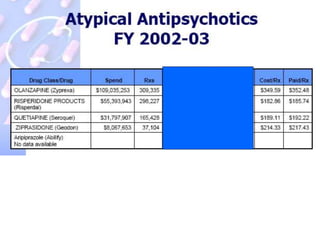
• direct costs can be up to 100X greater
than typical neuroleptics
tolerance, dependence, wd, animal
self administration?
• no (except to parkinson like symptoms
maybe), no, no and no

schizophrenia.ppt

  • 1.
    schizophrenia • characterized bypositive and negative symptoms – positive symptoms – those that can be observed; ex. hallucinations – negative symptoms – absence of normal behaviors – lack of affect – “anhedonia”,
  • 2.
    treatment options • positivesymptoms – majority of traditional “neuroleptics” reduce positive symptoms • negative symptoms – majority of traditional “neuroleptics” have no effect on negative symptoms – originally thought that negative symptoms were simply an indicator of brain damage – new thought: atypical neuroleptics also appear to reduce negative symptoms
  • 3.
    traditional neuroleptics • traditionalneuroleptics – chlorpromazine (Thorazine), haloperidol (Haldol) – ability to block “positive” symptoms – linked to high well the drug binds to and blocks D2 receptors • DA theory for schizophrenia – too much DA activity responsible for + symptoms – reduce DA activity, reduce positive symptoms
  • 4.
    DA pathways • mesolimbic– – emotion, reward, may be responsible for + symptoms • nigrostriatal – – motor movement, extrapyramidal motor system • degeneration associated with Parkinsons disease
  • 5.
    problems with traditional neuroleptics •parkinson like side effects – early on; see symptoms in virtually all schizophrenics that were similar to PD • extrapyramidal motor side effects – motor induced akinesias – paucity of movement – akathesia – uncontrolled restlessness, constant compulsive movements – tardive dyskinesia – • avoid it by periodically changing meds; atypical neuroleptics? • relatively safe- therapeutic index is as high as 1000 • malignant neuroleptic syndrome • reduces sexual interest and ability
  • 6.
    atypical neuroleptics • clozapine(Clozaril) – works on positive and negative symptoms – reduced motor side effects – more selective at binding to DA R (and does not bind as potently) – also blocks ACh, histamine, 5HT
  • 7.
    problems with clozapine •risk of agranulocytosis (1%) • requires weekly blood testing • only used for treatment resistant schizophrenia or those nontolerant to conventional antipsychotics (ie motor side effects)
  • 8.
    some other atypicals •risperidone (Risperdal) • olanzapine (Zyprexa) – potential increased risk for diabetes • quietiapine (Seroquel) • aripiprazole (Abilify)
  • 9.
    other atypical neuroleptics •do not produce agranulocytosis • block 5HT2 receptors and ACh receptors • less motor side effects than traditional neuroleptics (?) • appear able to reduce negative symptoms; • appear to be somewhat less sedating (?) • at lower risk for producing tardive dyskinesia (?) • improvement can be more rapid • not all are generic yet reduction in noncompliance
  • 10.
    negative side ofthe atypicals • weight gain- 20 – 40 lbs average but can be much more! • still have anticholinergic side effects – dry mouth, memory problems, urinary retention • tachycardia • direct costs can be up to 100X greater than typical neuroleptics
  • 12.
    tolerance, dependence, wd,animal self administration? • no (except to parkinson like symptoms maybe), no, no and no