Big Data Challenges in Building a Global
Earth Observation System of Systems
(GEOSS)
Big Data in Secure Societies Workshop
Brussels, Belgium
18 October 2016
Barbara J. Ryan
Director, GEO Secretariat
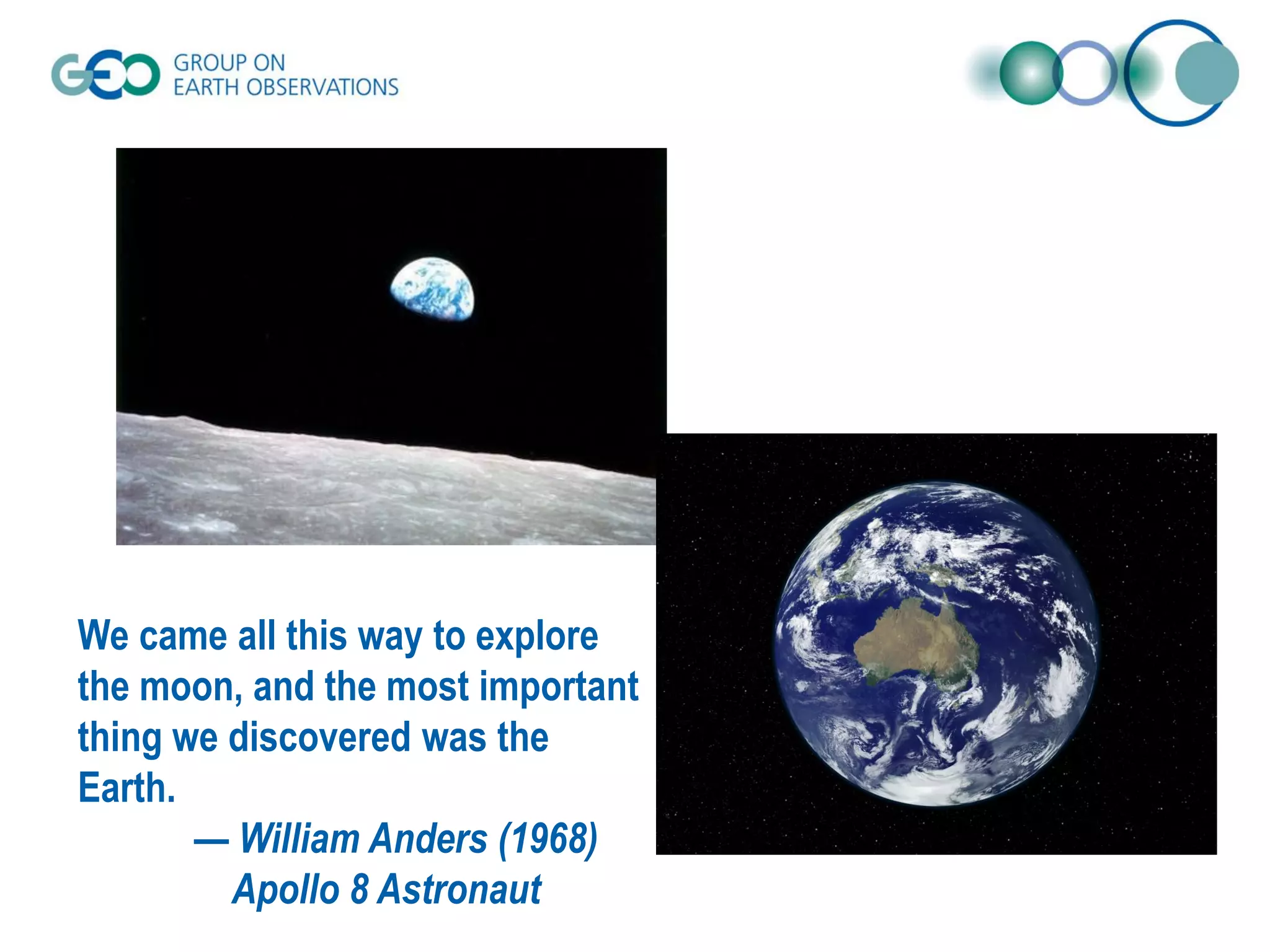
We came all this way to explore
the moon, and the most important
thing we discovered was the
Earth.
— William Anders (1968)
Apollo 8 Astronaut
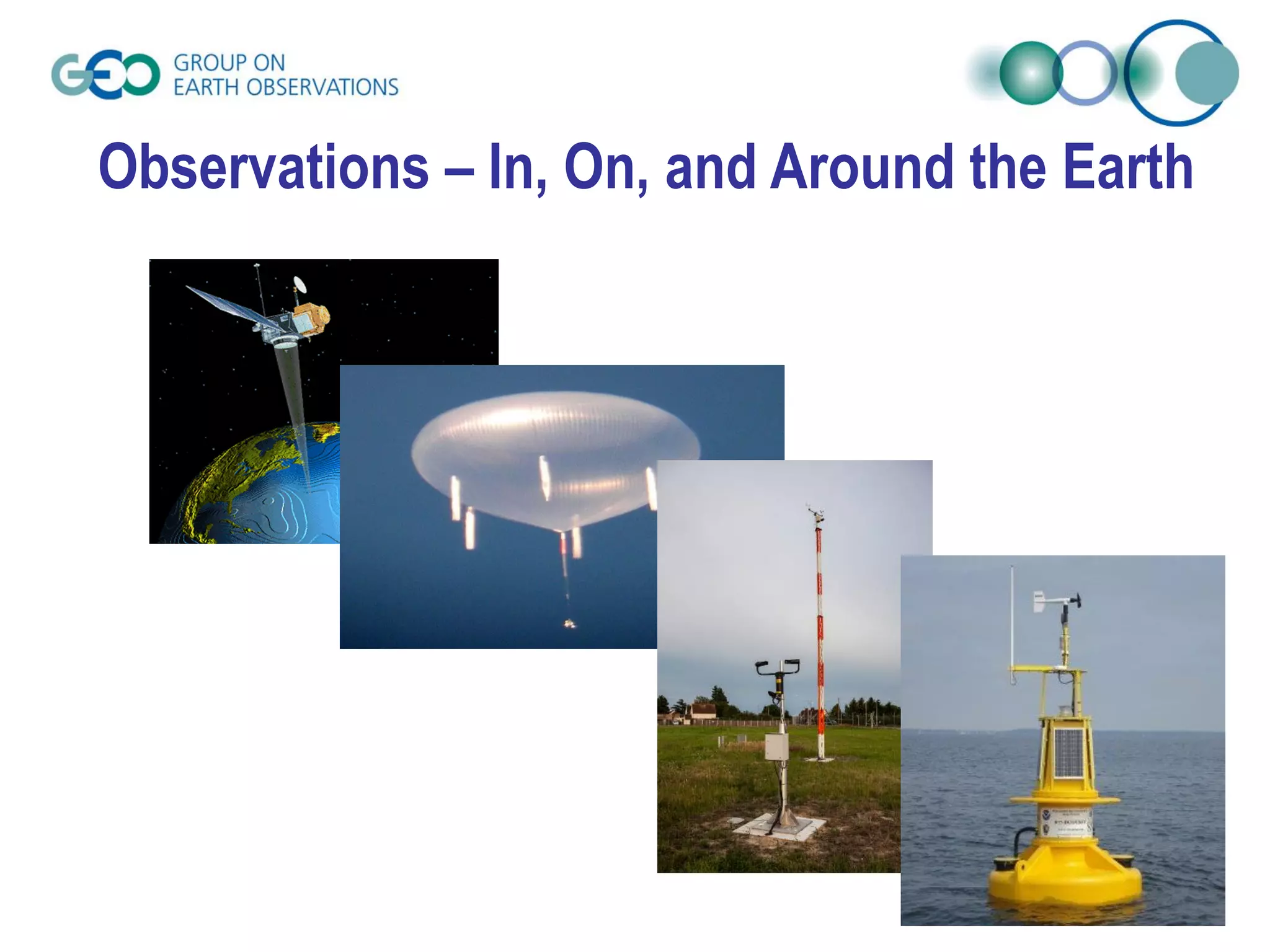
Observations – In, On, and Around the Earth
To realize a future
wherein decisions and actions,
for the benefit of humankind,
are informed by
coordinated, comprehensive & sustained
Earth observations & information.
GEO Vision
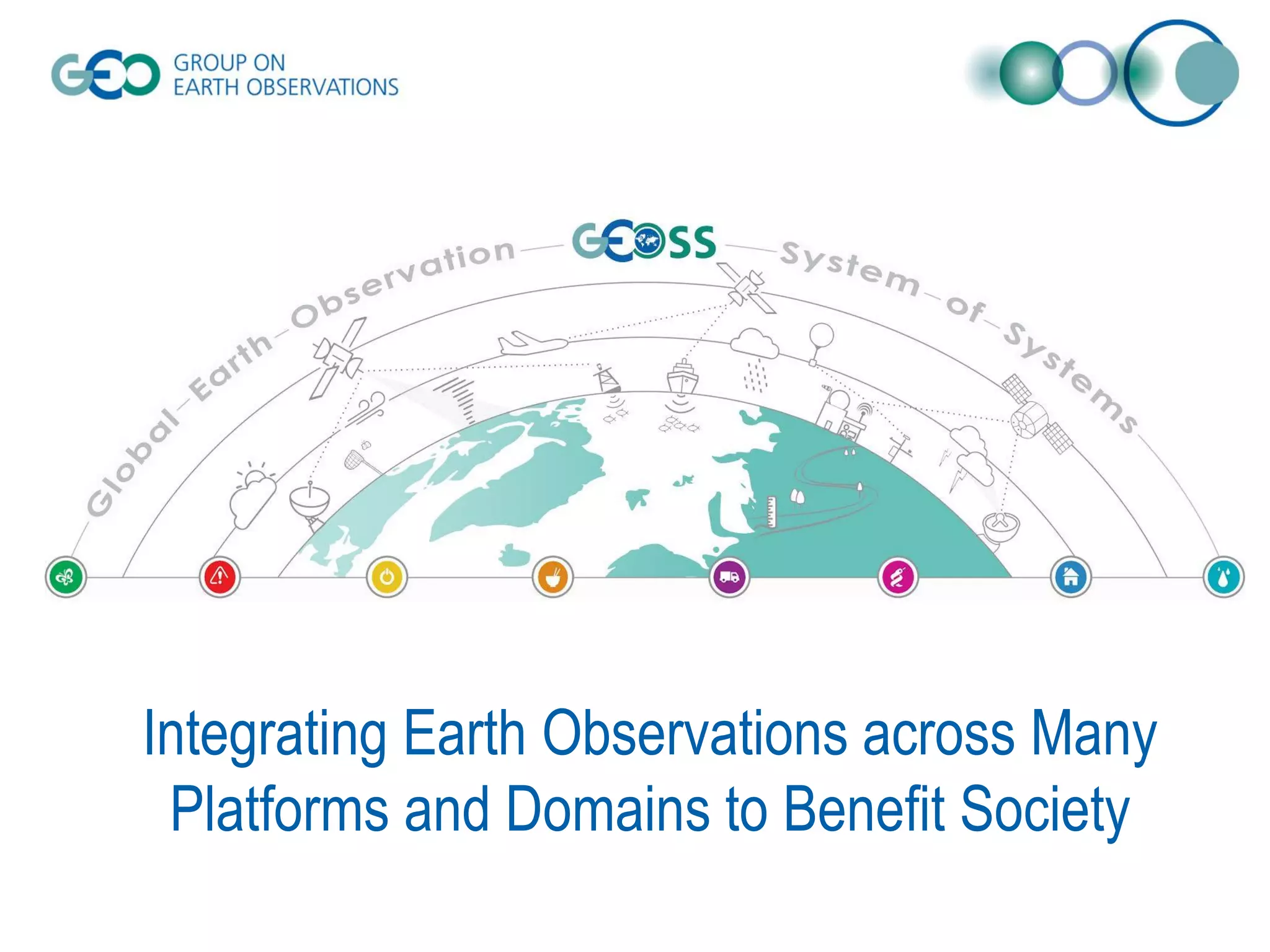
Integrating Earth Observations across Many
Platforms and Domains to Benefit Society
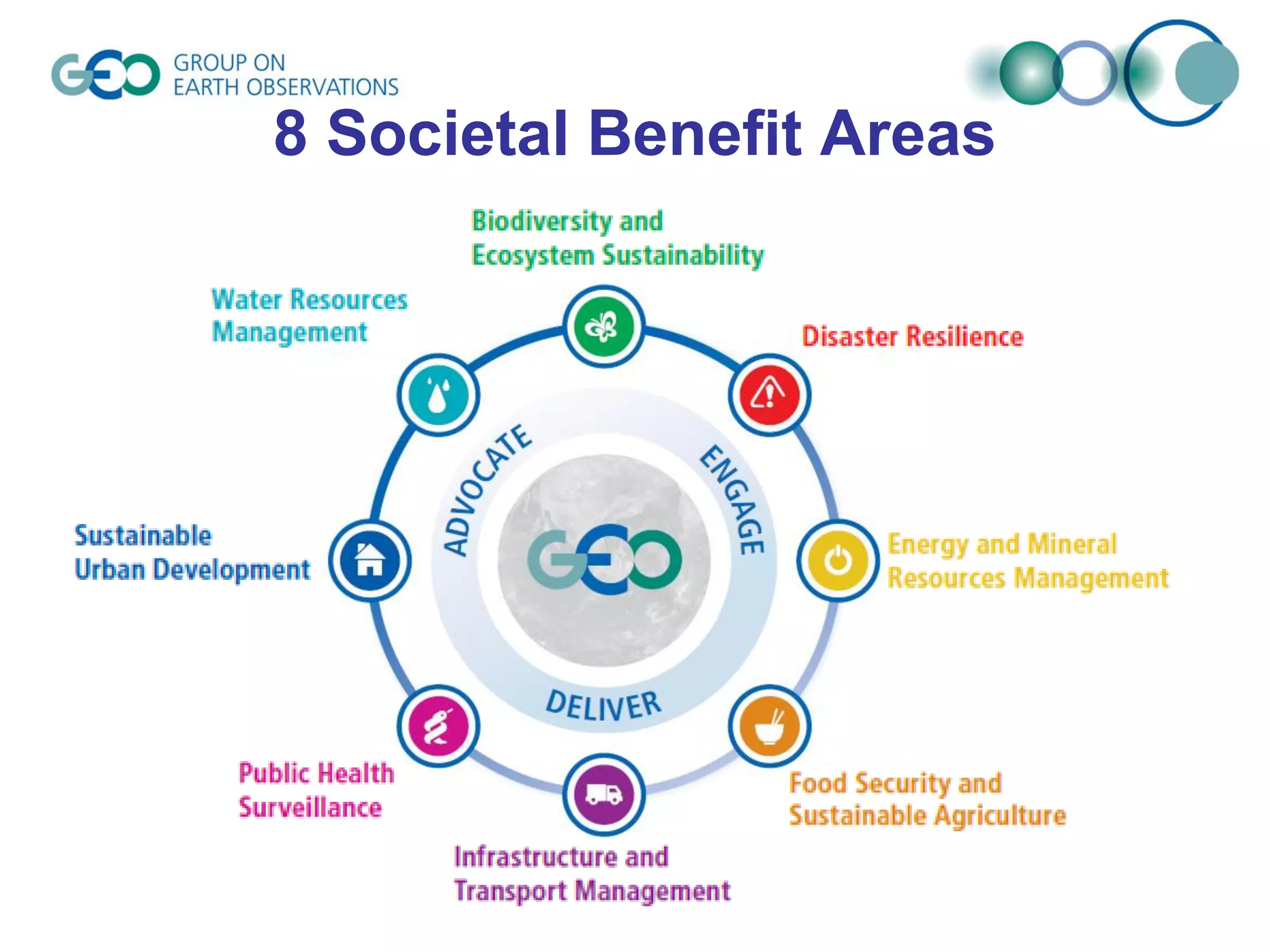
8 Societal Benefit Areas
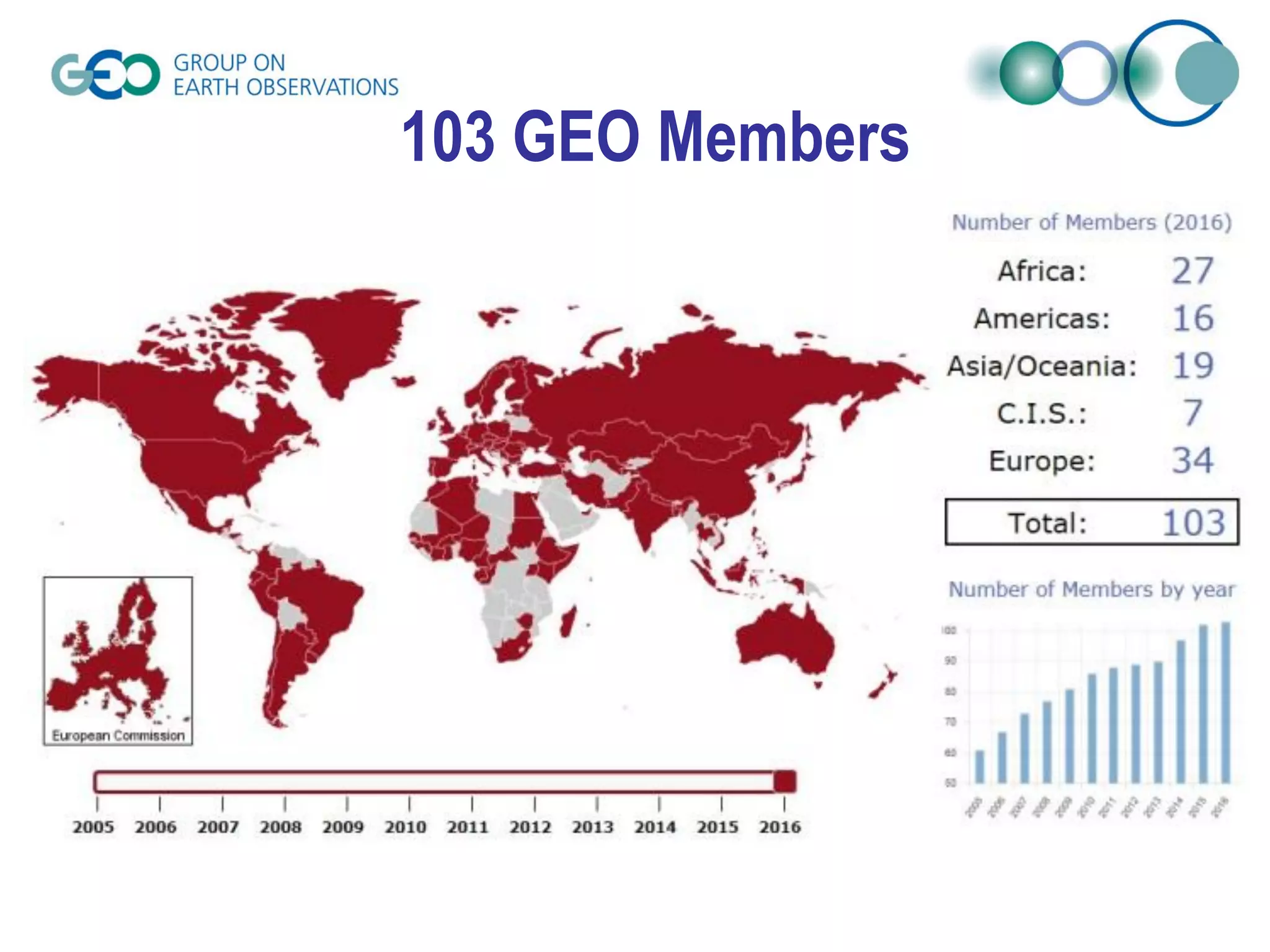
103 GEO Members
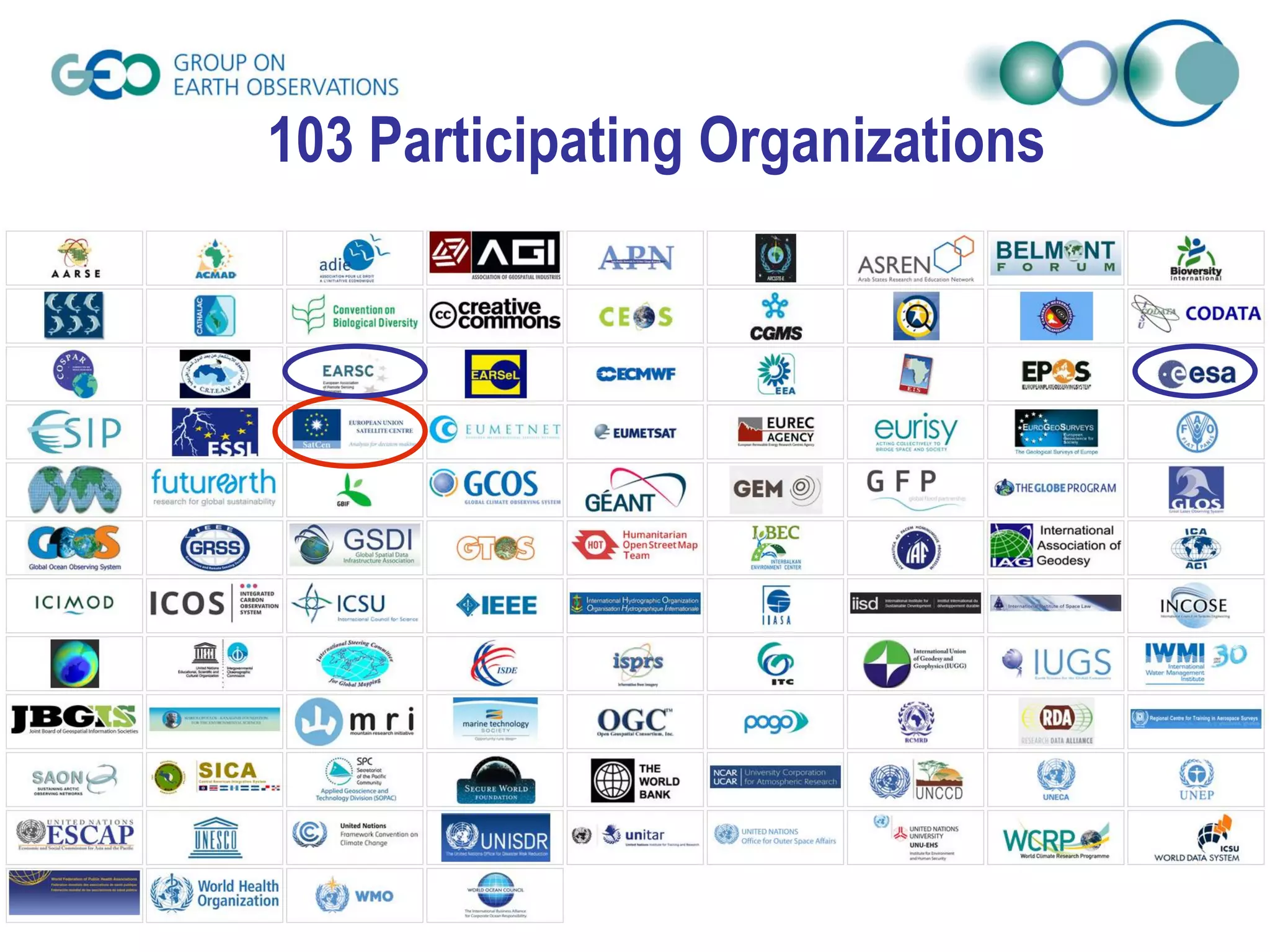
103 Participating Organizations
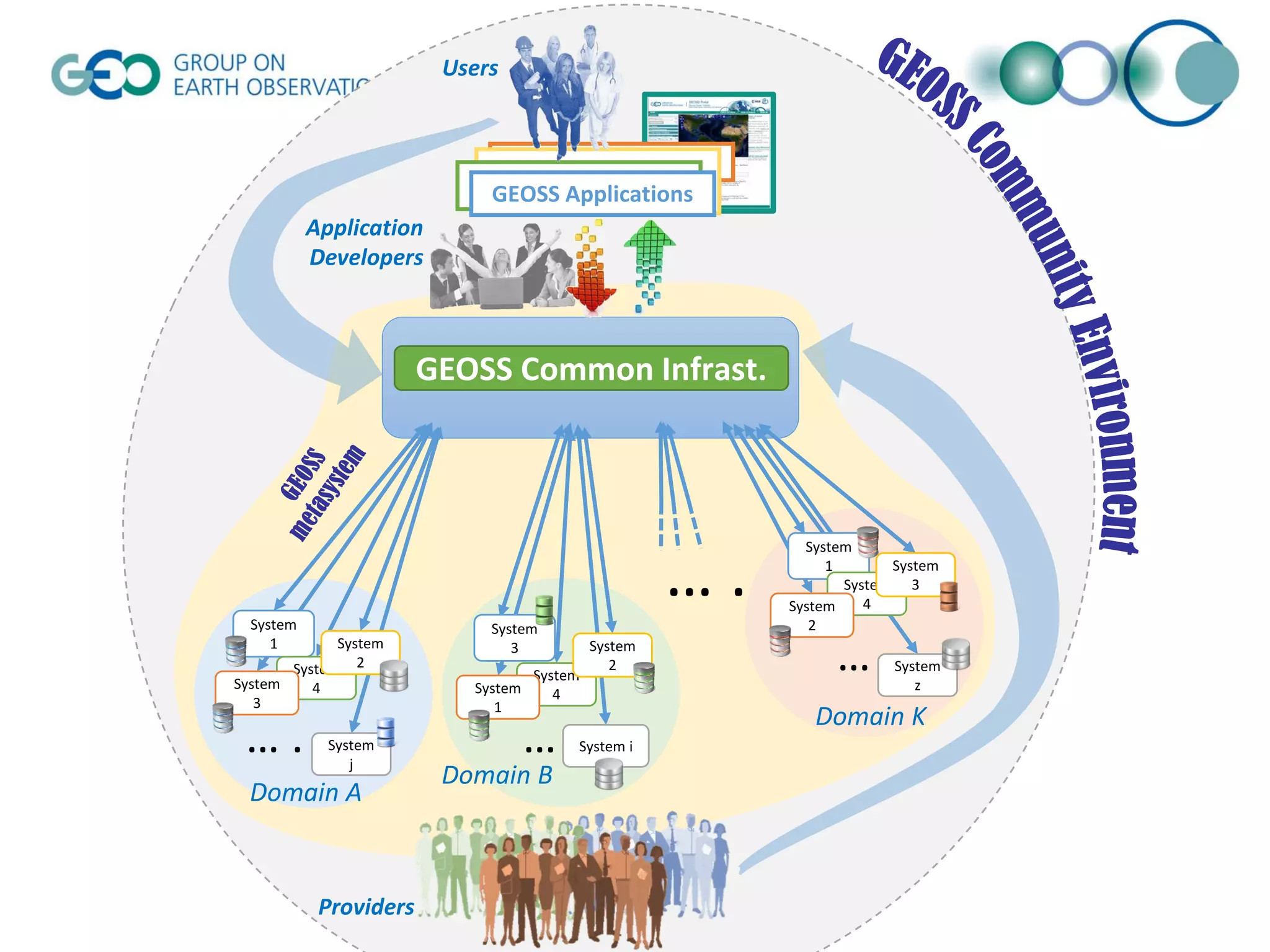
Providers
Application
Developers
Users
GEOSS Common Infrast.
GEOSS Applications
GEOSS ApplicationsGEOSS Applications
GEOSS Applications
… .
Domain A
Domain B
Domain K
… .System i
System
3
System
4System
1
System
2
System
j
… .
System
1
System
4System
3
System
2 … .System
z
System
1
System
4System
2
System
3
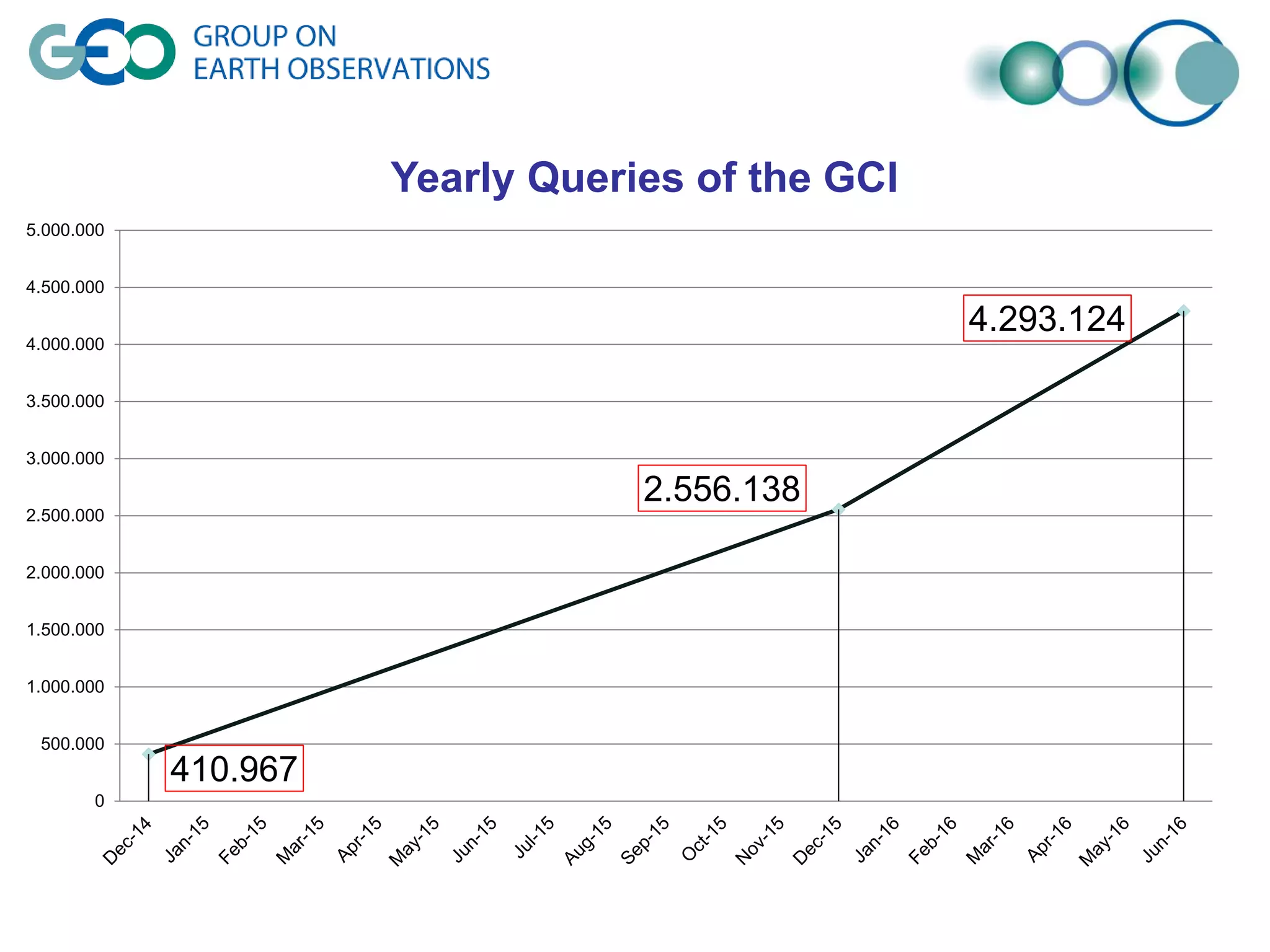
Yearly Queries of the GCI
410.967
2.556.138
4.293.124
0
500.000
1.000.000
1.500.000
2.000.000
2.500.000
3.000.000
3.500.000
4.000.000
4.500.000
5.000.000
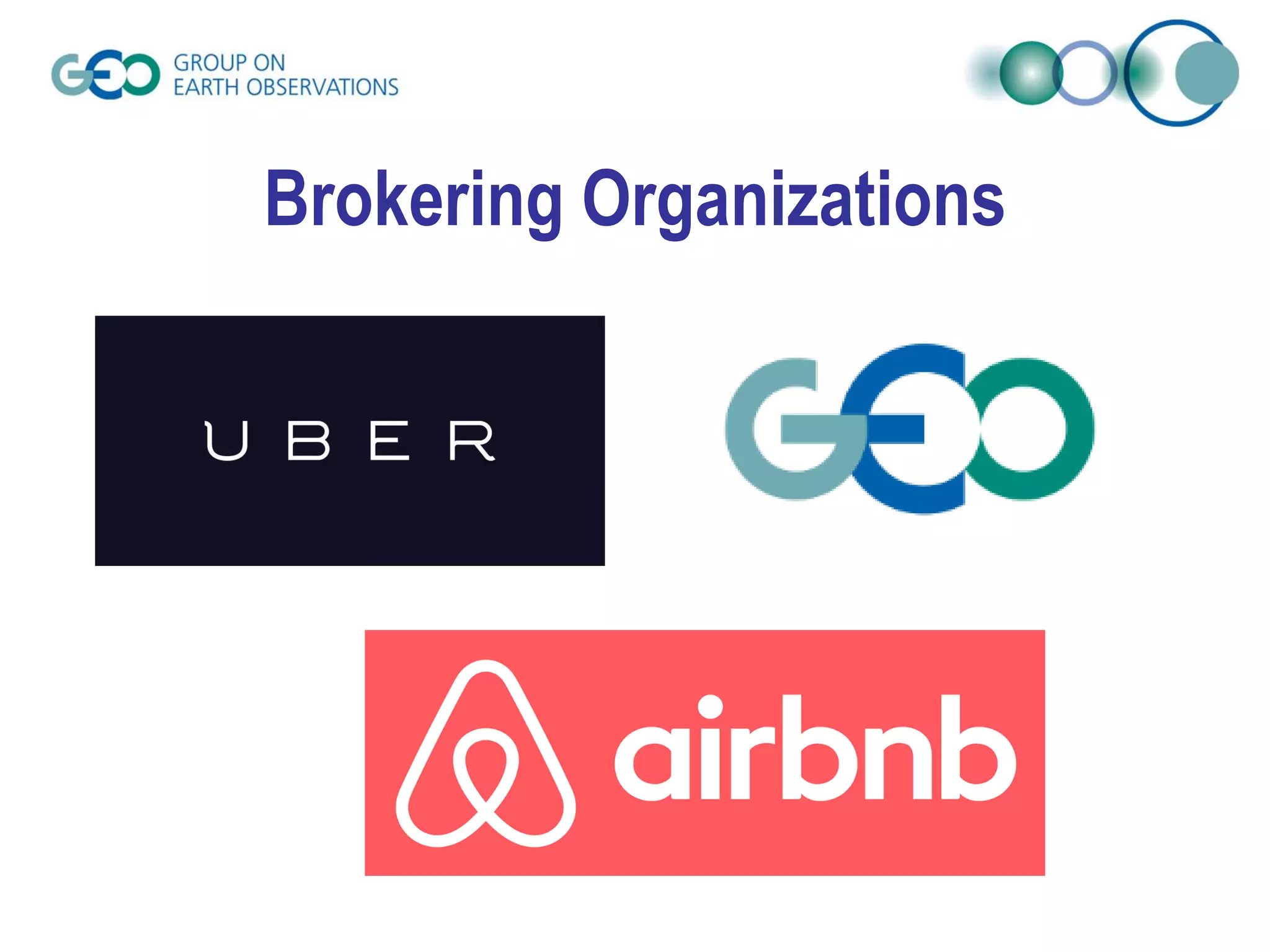
Brokering Organizations
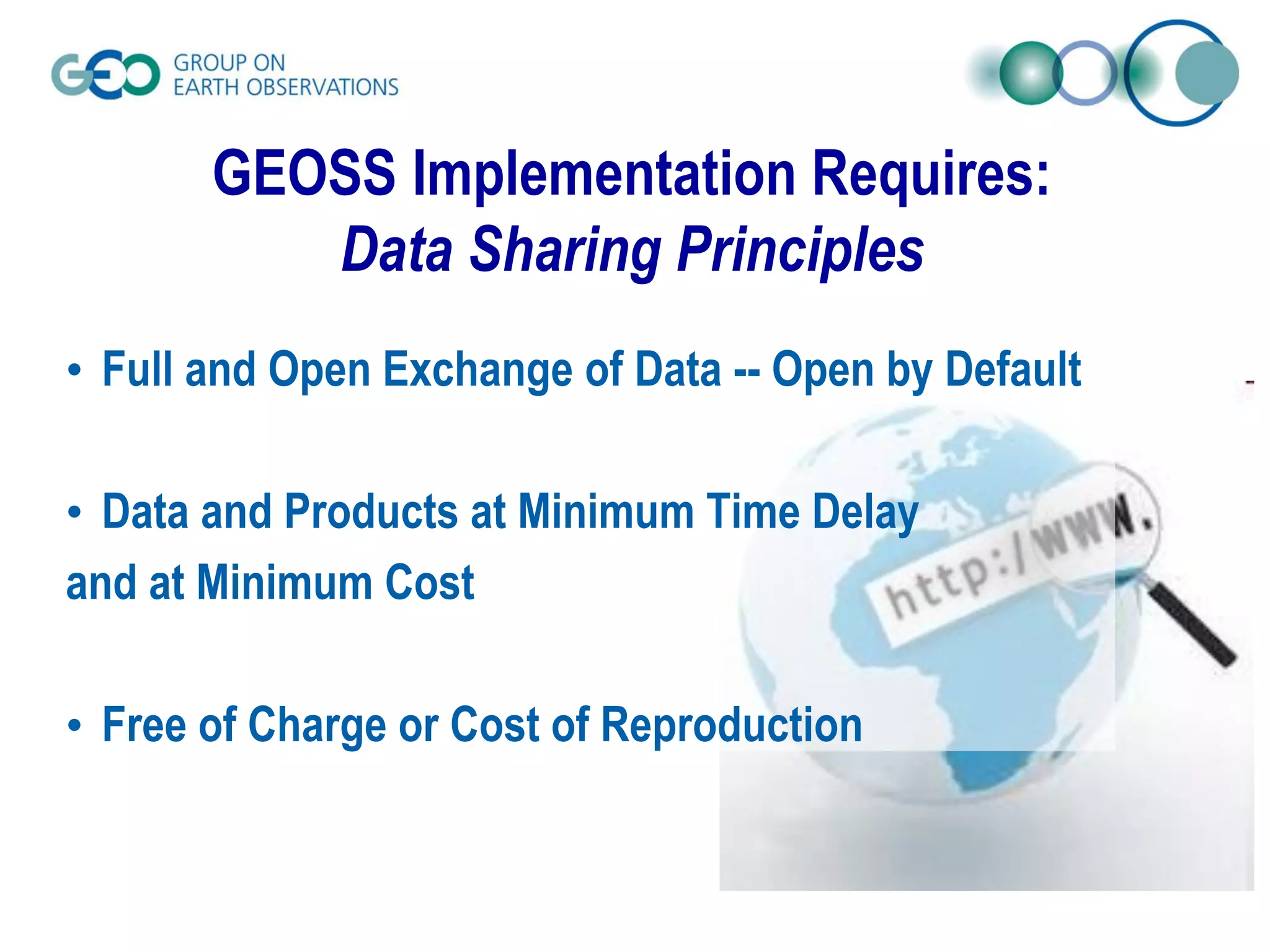
GEOSS Implementation Requires:
Data Sharing Principles
• Full and Open Exchange of Data -- Open by Default
• Data and Products at Minimum Time Delay
and at Minimum Cost
• Free of Charge or Cost of Reproduction
.
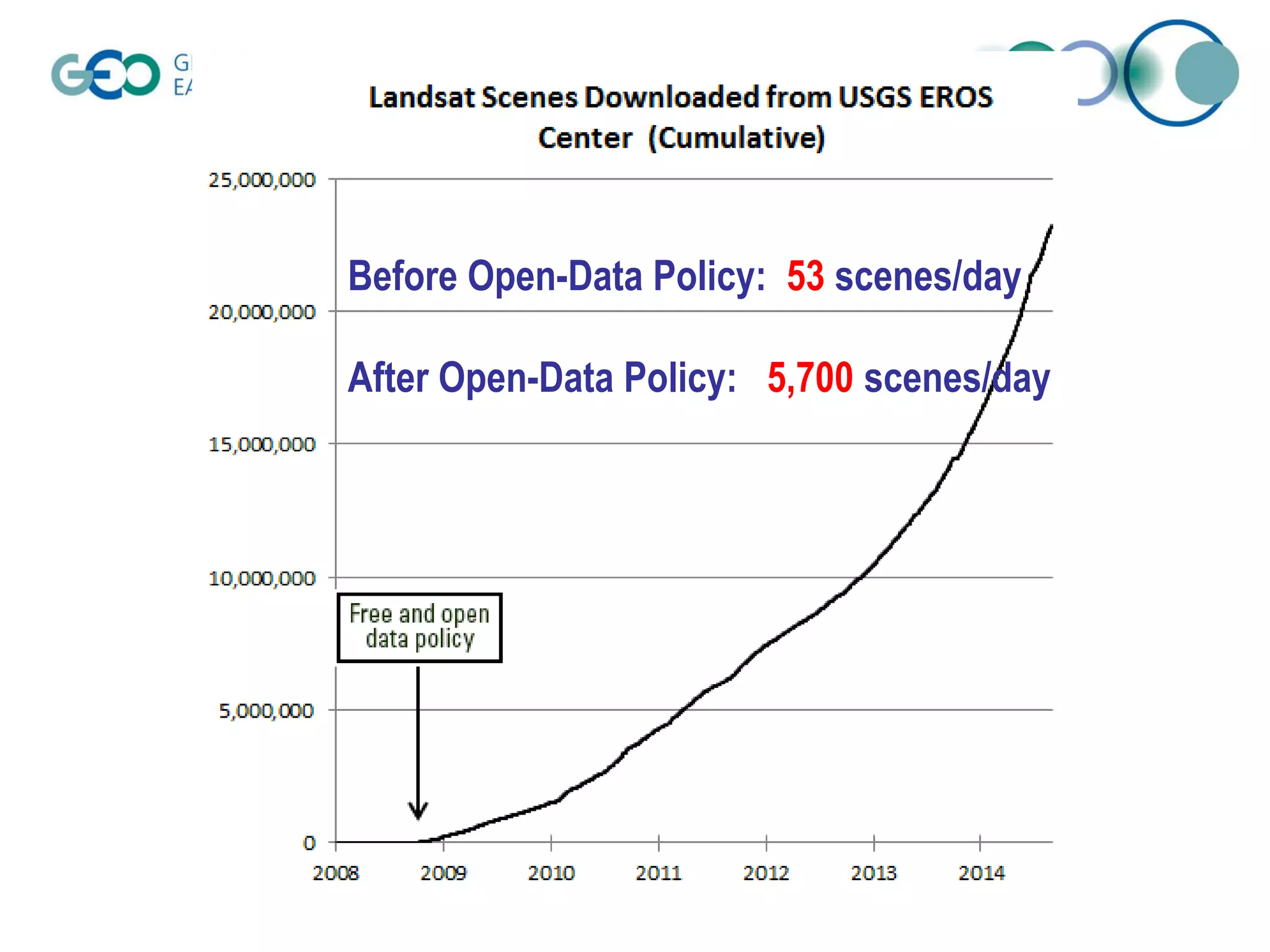
Before Open-Data Policy: 53 scenes/day
After Open-Data Policy: 5,700 scenes/day
.
Annual Economic Benefit
USA $1.70 B
International $400 M
Global Total $2.1 B
Source: Geoscience Australia
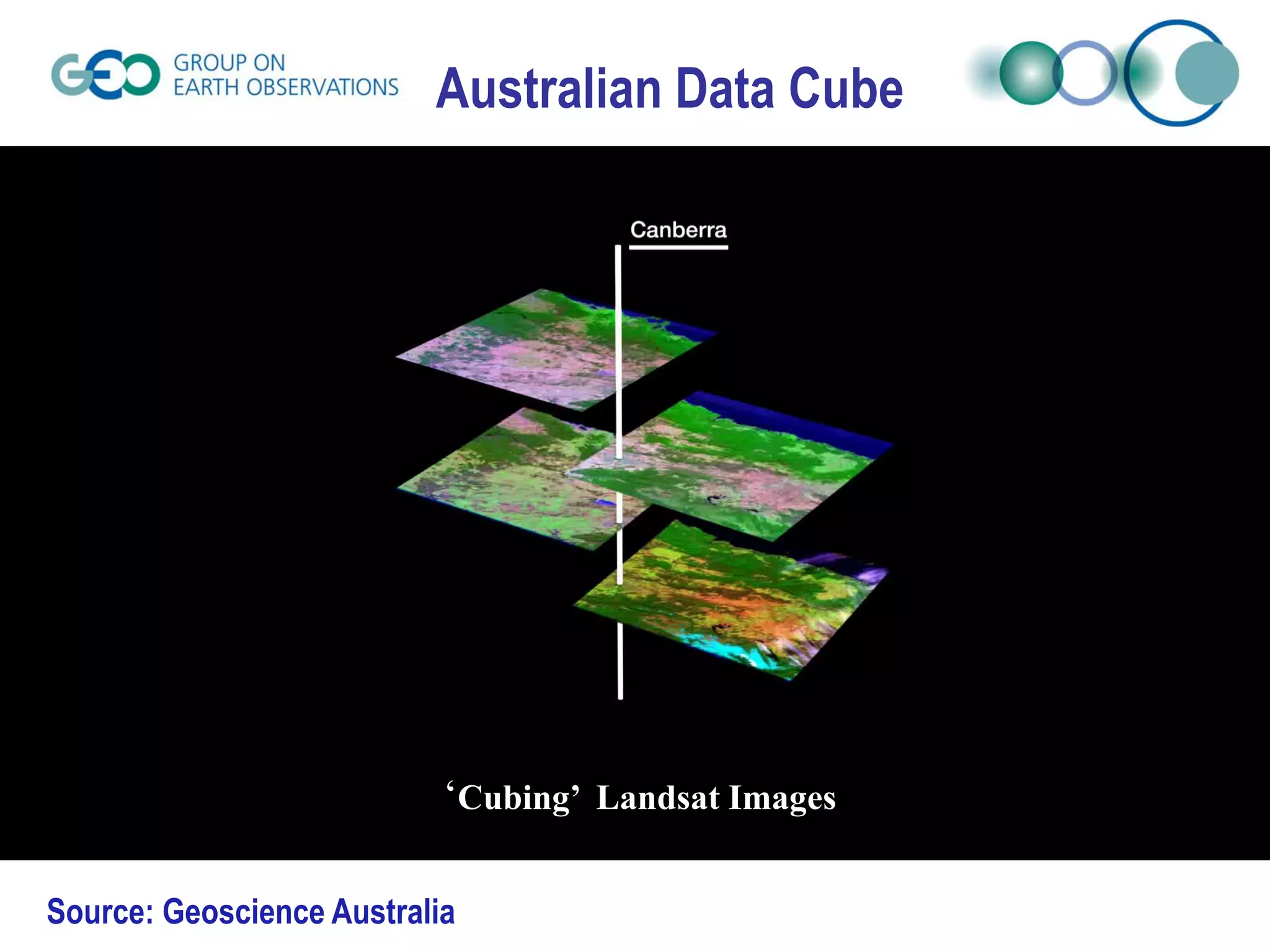
Australian Data Cube
‘Cubing’ Landsat Images
Source: Geoscience Australia
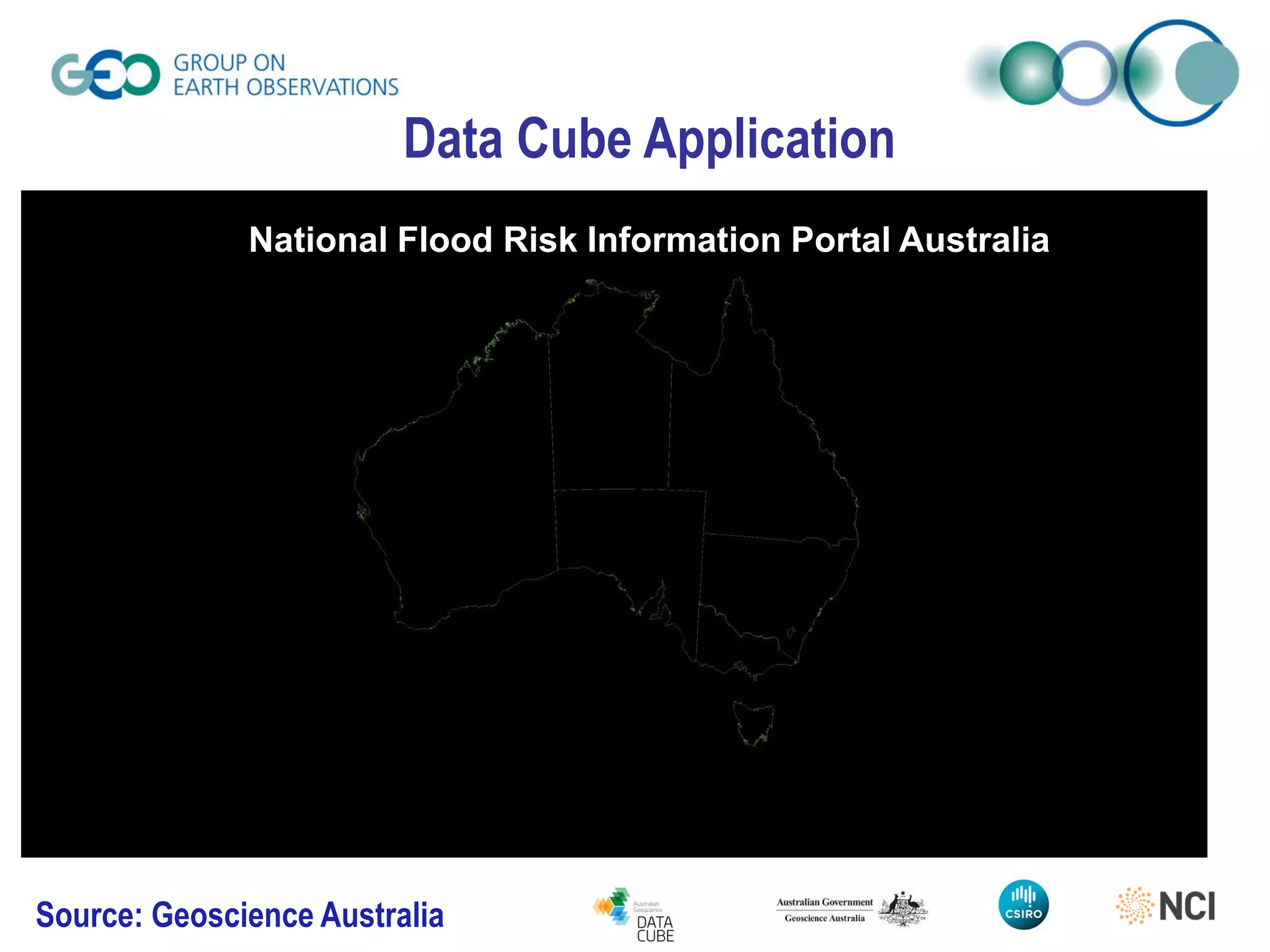
Data Cube Application
National Flood Risk Information Portal Australia
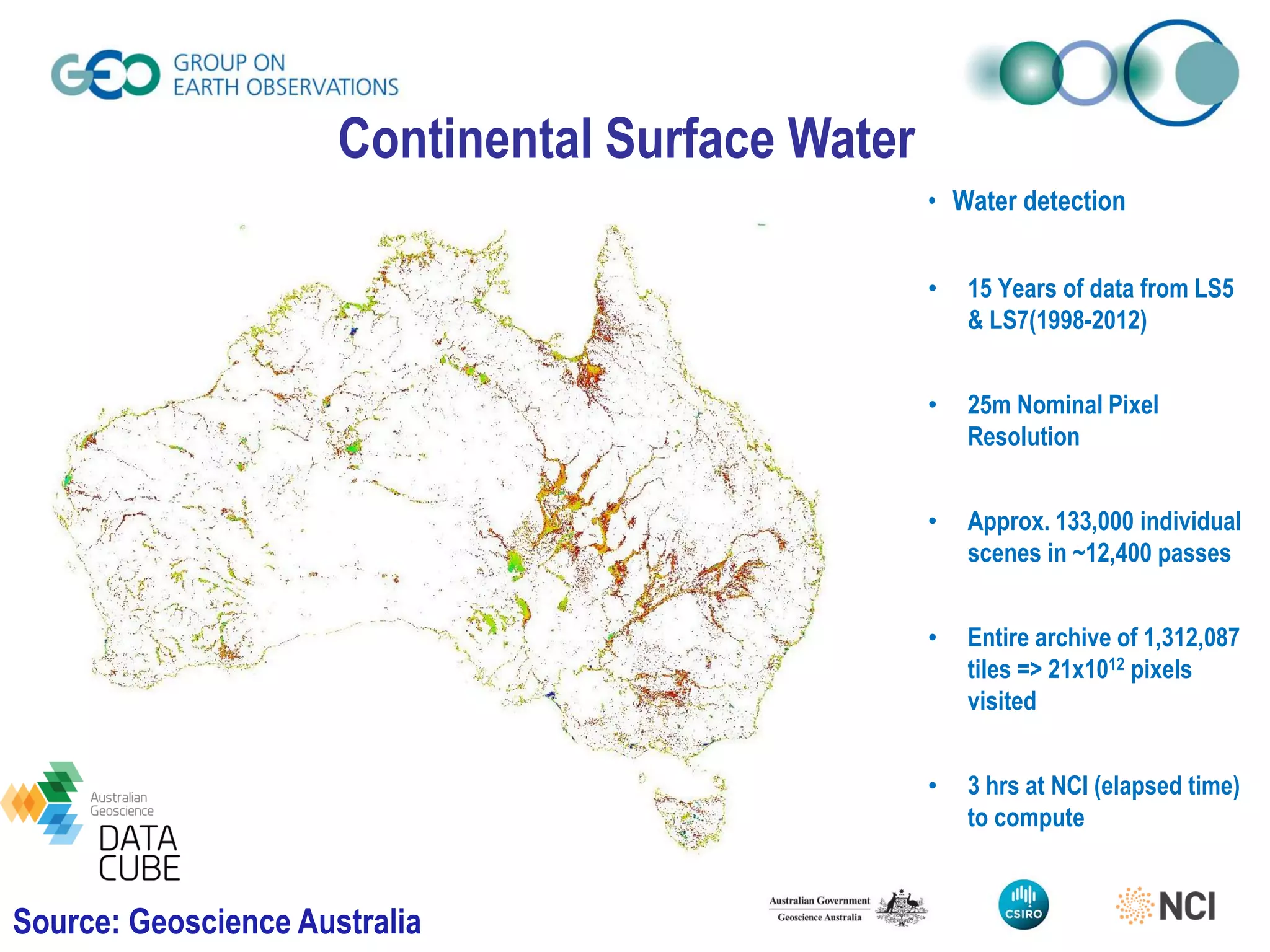
• Water detection
• 15 Years of data from LS5
& LS7(1998-2012)
• 25m Nominal Pixel
Resolution
• Approx. 133,000 individual
scenes in ~12,400 passes
• Entire archive of 1,312,087
tiles => 21x1012 pixels
visited
• 3 hrs at NCI (elapsed time)
to compute
Source: Geoscience Australia
Data Access and Analysis
Continental Surface Water
Development of capabilities and solutions to enhance:
– The resilience of society against natural and human-
induced disasters;
– The protection of critical infrastructures; and
– The efficiency in tasks related to border and maritime
surveillance as well as to civil protection and
humanitarian aid.
GEO Space and Security Community Activity
Progress in 2016
• Announced the Space and Security Community Activity (CA):
– ESA-SatCen-JRC Big Data from Space Conference;
– ESA Living Planet Symposium;
– ESA EO Open Science Conference;
– SatCen Big Data in Secure Societies Workshop); and
– A number of other events (e.g. the SatCen Expert User
Forum).
• Explored synergies with H2020 projects (e.g. BigDataEurope
and EVER-EST) and ensured SatCen participation in the
H2020 NextGEOSS project (which will start at the end of
2016).
Plans for 2017
• Early 2017 - Organisation of a limited event with participation from EU
Member States and other key entities;
• Early-mid 2017 - Identification of preliminary user requirements and
needs in the Space and Security domain;
• Mid-late 2017 – Assessment of technical solutions in the framework
of relevant H2020 projects; and
• Late 2017 - Organisation of an open event with the participation of key
stakeholders in the Space and Security domain.
Countries have borders;
Earth observations don’t.
Barbara J. Ryan
Director, GEO Secretariat
Adapted from NY Times
September 2015
GEO-XIII Plenary
St. Petersburg, Russia
9-10 November 2016
http://www.earthobservations.org
Twitter: @geosec2025 @barbararyangeo
Facebook: Group on Earth Observations

SC7 Workshop 2: Big Data Challenges in building GEOSS

  • 1.
    Big Data Challengesin Building a Global Earth Observation System of Systems (GEOSS) Big Data in Secure Societies Workshop Brussels, Belgium 18 October 2016 Barbara J. Ryan Director, GEO Secretariat
  • 2.
    We came allthis way to explore the moon, and the most important thing we discovered was the Earth. — William Anders (1968) Apollo 8 Astronaut
  • 3.
    Observations – In,On, and Around the Earth
  • 4.
    To realize afuture wherein decisions and actions, for the benefit of humankind, are informed by coordinated, comprehensive & sustained Earth observations & information. GEO Vision
  • 5.
    Integrating Earth Observationsacross Many Platforms and Domains to Benefit Society
  • 6.
  • 7.
  • 8.
  • 9.
    Providers Application Developers Users GEOSS Common Infrast. GEOSSApplications GEOSS ApplicationsGEOSS Applications GEOSS Applications … . Domain A Domain B Domain K … .System i System 3 System 4System 1 System 2 System j … . System 1 System 4System 3 System 2 … .System z System 1 System 4System 2 System 3
  • 11.
    Yearly Queries ofthe GCI 410.967 2.556.138 4.293.124 0 500.000 1.000.000 1.500.000 2.000.000 2.500.000 3.000.000 3.500.000 4.000.000 4.500.000 5.000.000
  • 12.
  • 13.
    GEOSS Implementation Requires: DataSharing Principles • Full and Open Exchange of Data -- Open by Default • Data and Products at Minimum Time Delay and at Minimum Cost • Free of Charge or Cost of Reproduction
  • 14.
    . Before Open-Data Policy:53 scenes/day After Open-Data Policy: 5,700 scenes/day
  • 15.
    . Annual Economic Benefit USA$1.70 B International $400 M Global Total $2.1 B
  • 16.
    Source: Geoscience Australia AustralianData Cube ‘Cubing’ Landsat Images
  • 17.
    Source: Geoscience Australia DataCube Application National Flood Risk Information Portal Australia
  • 18.
    • Water detection •15 Years of data from LS5 & LS7(1998-2012) • 25m Nominal Pixel Resolution • Approx. 133,000 individual scenes in ~12,400 passes • Entire archive of 1,312,087 tiles => 21x1012 pixels visited • 3 hrs at NCI (elapsed time) to compute Source: Geoscience Australia Data Access and Analysis Continental Surface Water
  • 19.
    Development of capabilitiesand solutions to enhance: – The resilience of society against natural and human- induced disasters; – The protection of critical infrastructures; and – The efficiency in tasks related to border and maritime surveillance as well as to civil protection and humanitarian aid. GEO Space and Security Community Activity
  • 20.
    Progress in 2016 •Announced the Space and Security Community Activity (CA): – ESA-SatCen-JRC Big Data from Space Conference; – ESA Living Planet Symposium; – ESA EO Open Science Conference; – SatCen Big Data in Secure Societies Workshop); and – A number of other events (e.g. the SatCen Expert User Forum). • Explored synergies with H2020 projects (e.g. BigDataEurope and EVER-EST) and ensured SatCen participation in the H2020 NextGEOSS project (which will start at the end of 2016).
  • 21.
    Plans for 2017 •Early 2017 - Organisation of a limited event with participation from EU Member States and other key entities; • Early-mid 2017 - Identification of preliminary user requirements and needs in the Space and Security domain; • Mid-late 2017 – Assessment of technical solutions in the framework of relevant H2020 projects; and • Late 2017 - Organisation of an open event with the participation of key stakeholders in the Space and Security domain.
  • 22.
    Countries have borders; Earthobservations don’t. Barbara J. Ryan Director, GEO Secretariat Adapted from NY Times September 2015
  • 23.
    GEO-XIII Plenary St. Petersburg,Russia 9-10 November 2016 http://www.earthobservations.org Twitter: @geosec2025 @barbararyangeo Facebook: Group on Earth Observations