Energy Efficiency in Buildings Challenge.
Data related challenges and
opportunities
Jens Laustsen
Coordinator of CA EPBD
Executive Director of 2peach
Brussels, 4th October 2016
A new Concerted Action EPBD IV
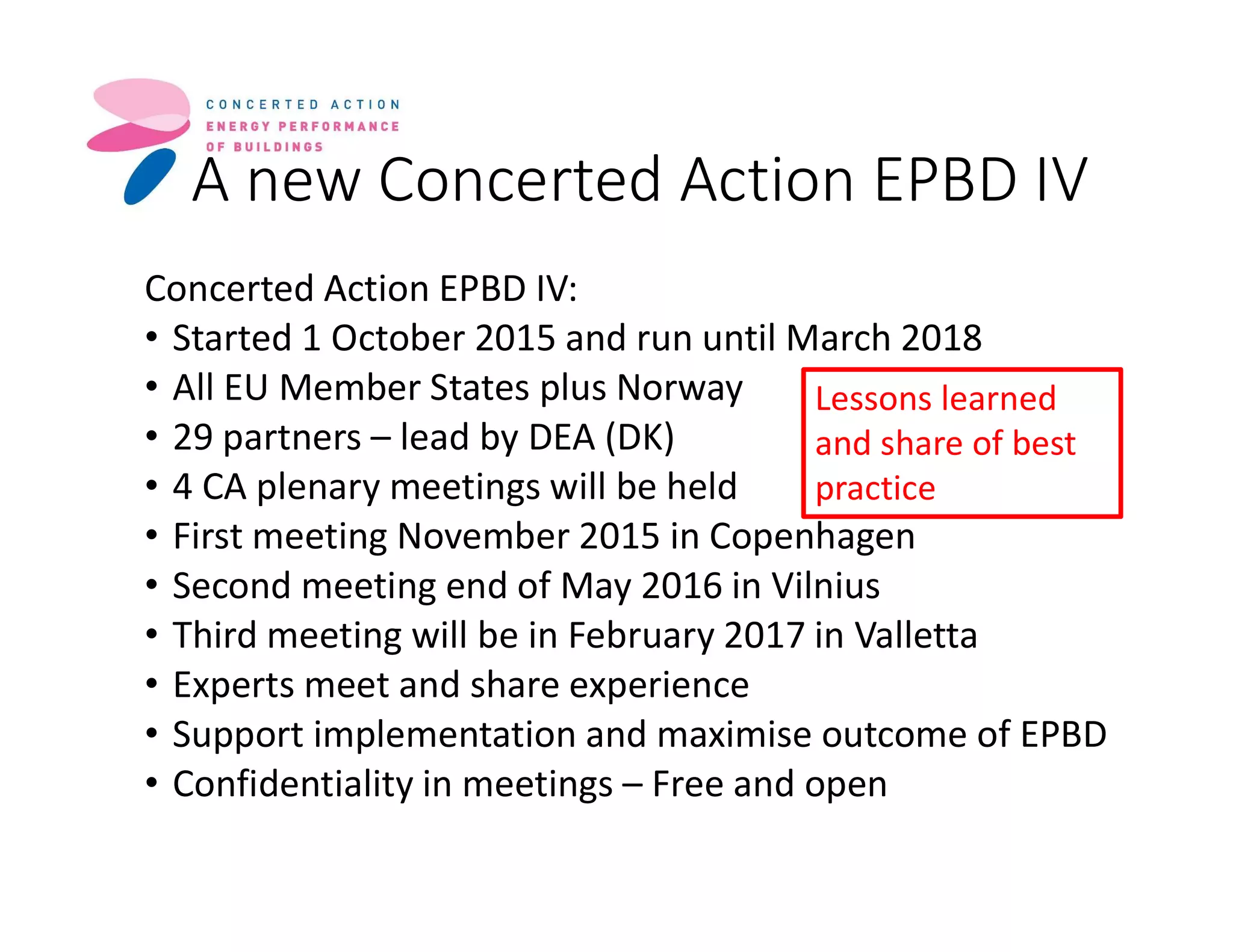
Concerted Action EPBD IV:
• Started 1 October 2015 and run until March 2018
• All EU Member States plus Norway
• 29 partners – lead by DEA (DK)
• 4 CA plenary meetings will be held
• First meeting November 2015 in Copenhagen
• Second meeting end of May 2016 in Vilnius
• Third meeting will be in February 2017 in Valletta
• Experts meet and share experience
• Support implementation and maximise outcome of EPBD
• Confidentiality in meetings – Free and open
Lessons learned
and share of best
practice
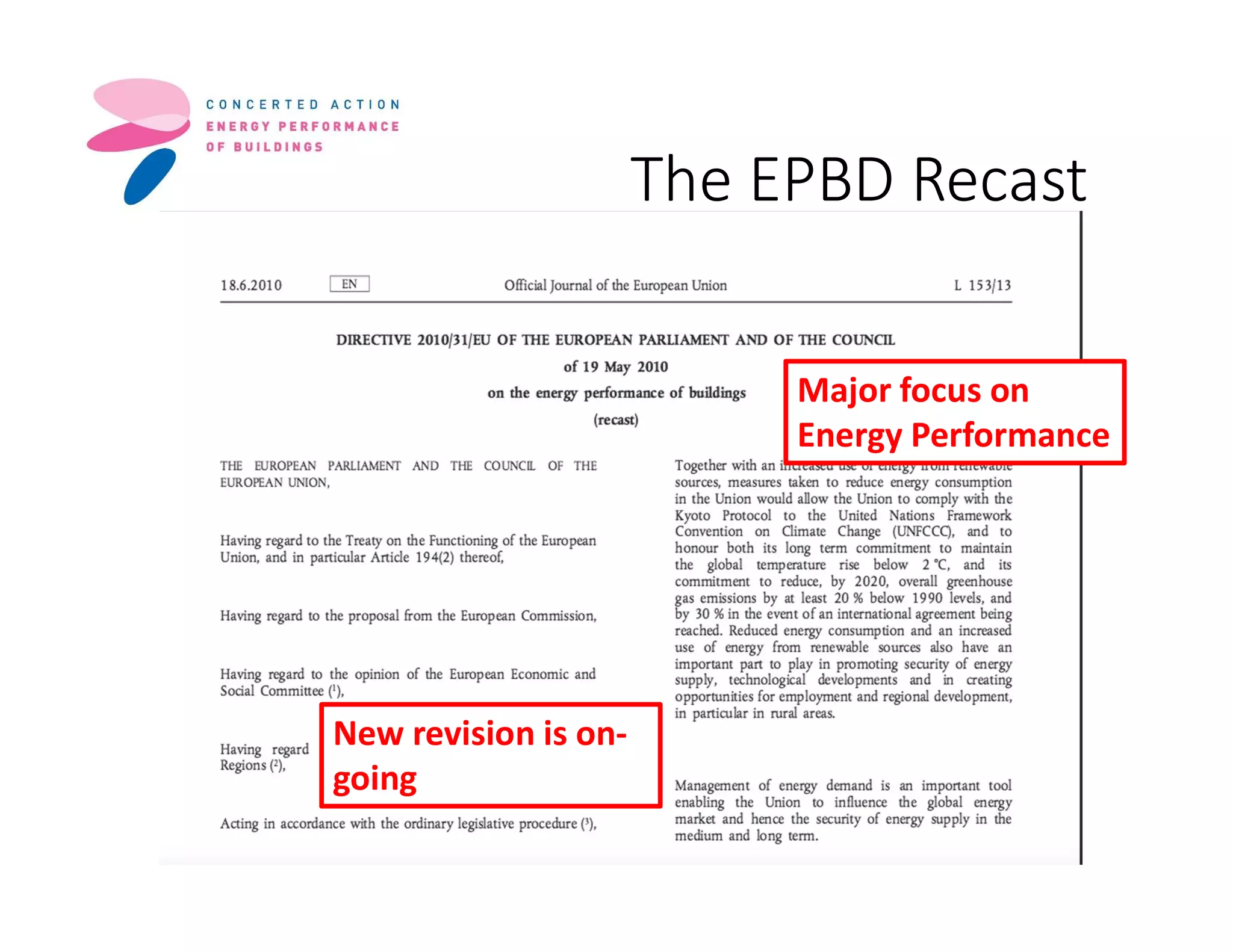
The EPBD Recast
Major focus on
Energy Performance
New revision is on-
going
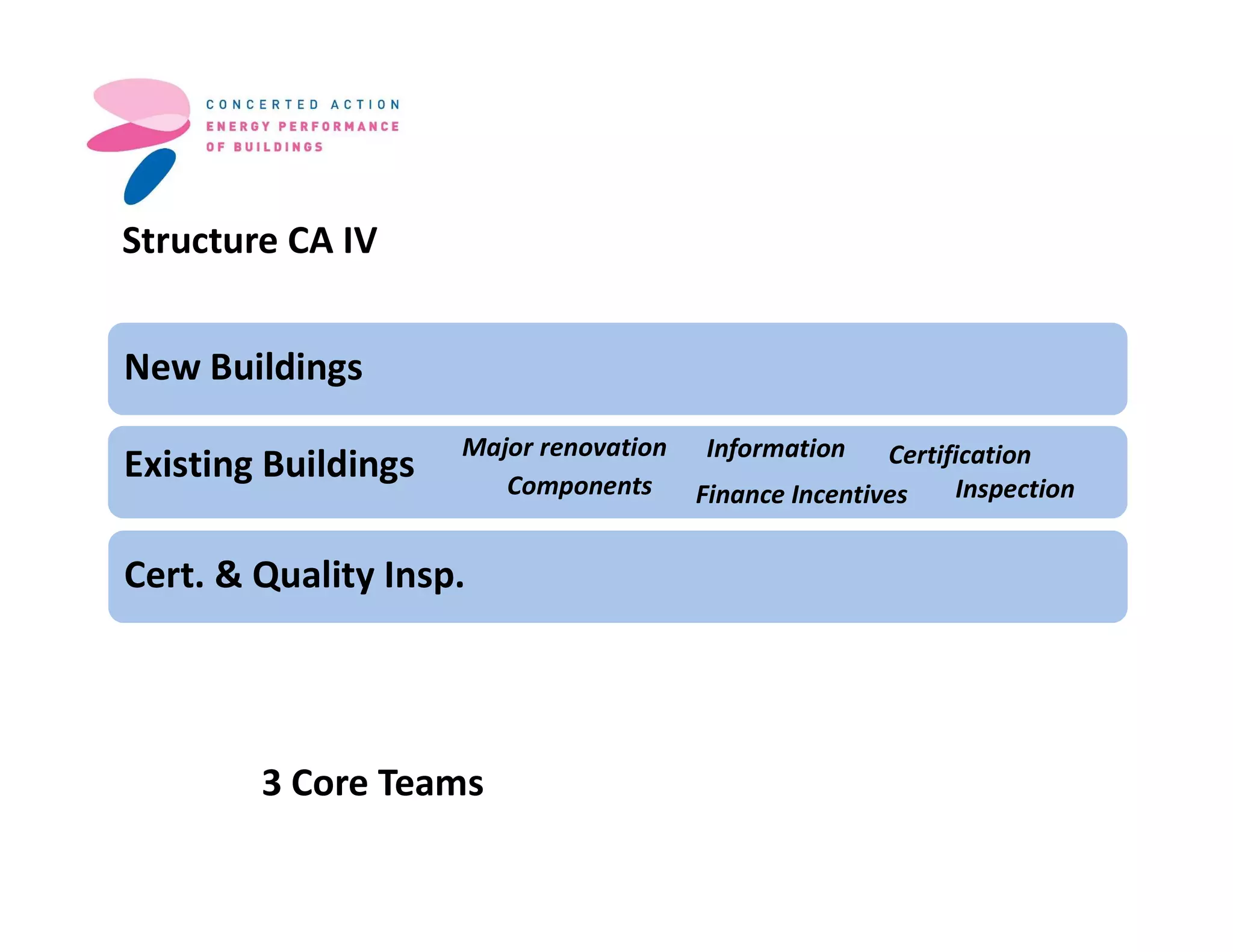
Existing Buildings
New Buildings
Cert. & Quality Insp.
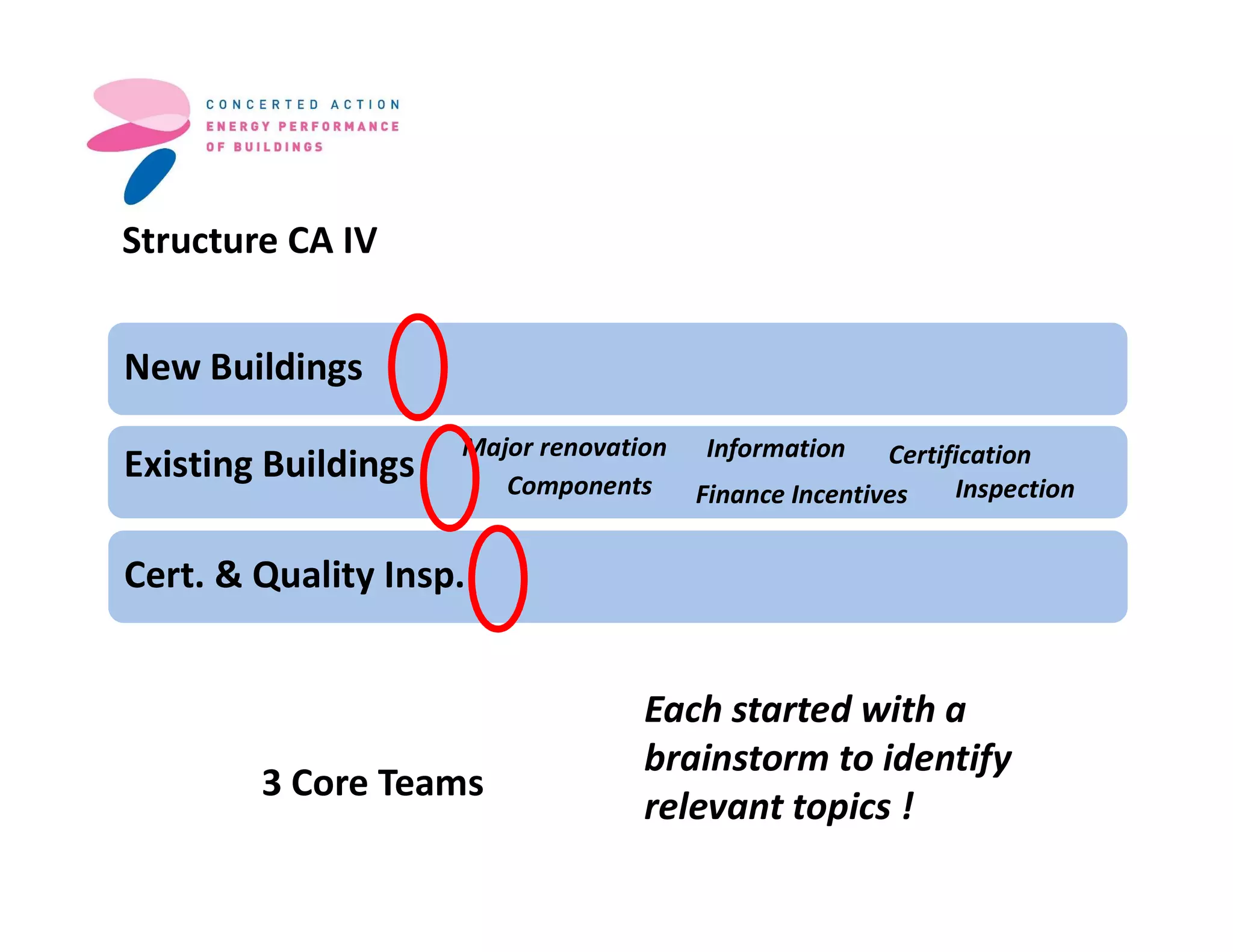
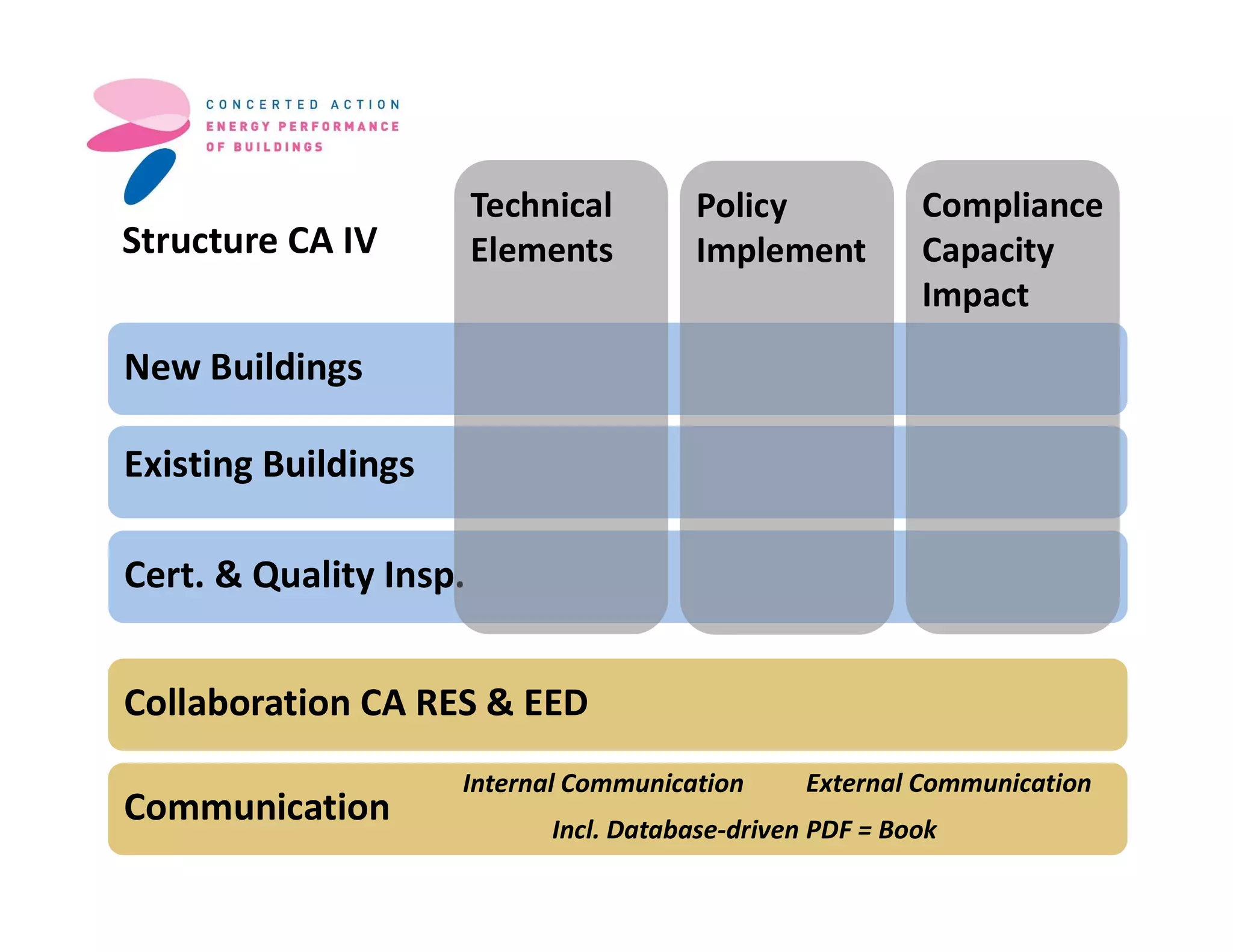
Structure CA IV
3 Core Teams
Major renovation
Components
Information
Finance Incentives
Certification
Inspection
Existing Buildings
New Buildings
Cert. & Quality Insp.
Structure CA IV
3 Core Teams
Major renovation
Components
Information
Finance Incentives
Certification
Inspection
Each started with a
brainstorm to identify
relevant topics !
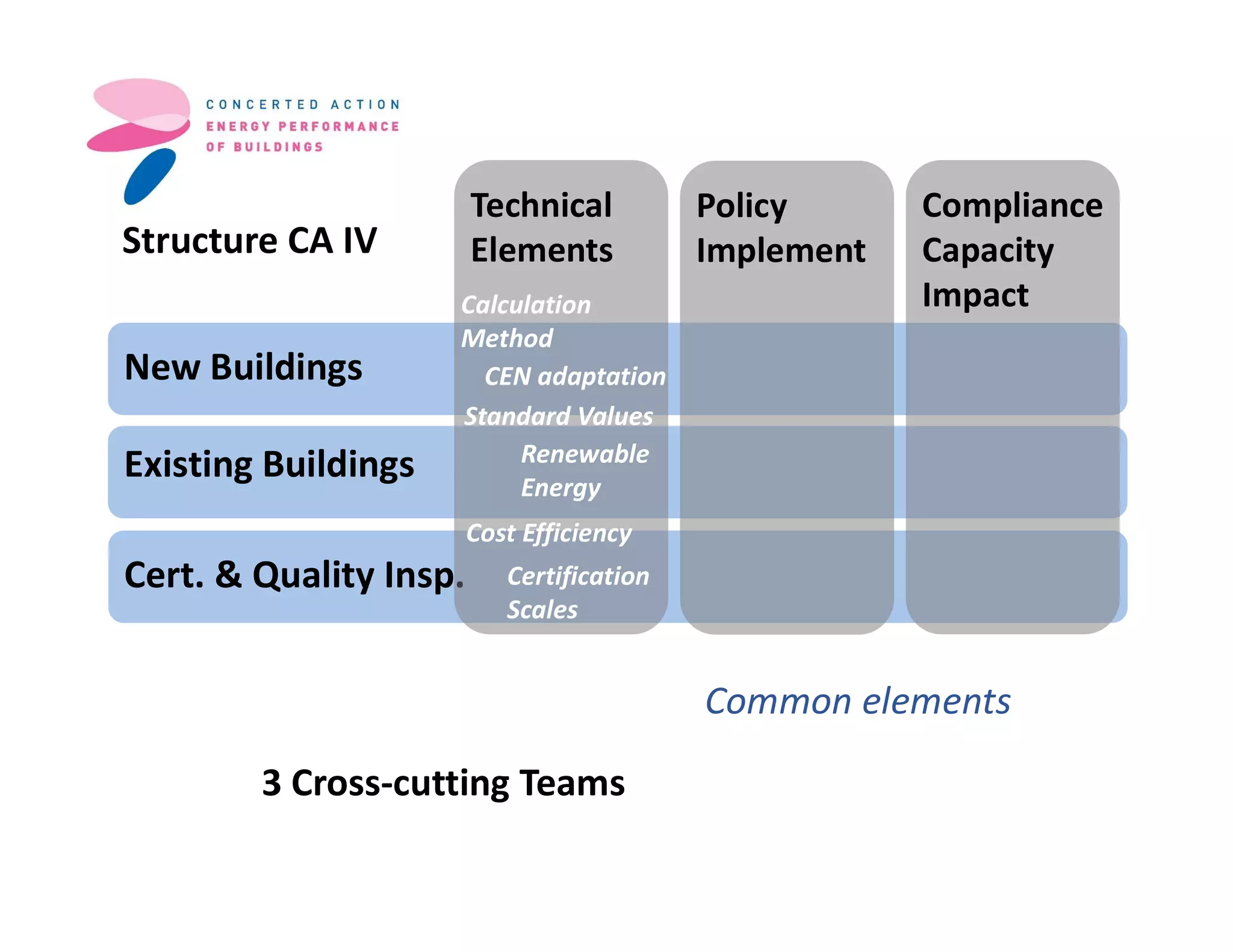
Existing Buildings
New Buildings
Cert. & Quality Insp.
Policy
Implement
Technical
Elements
Compliance
Capacity
Impact
Structure CA IV
Calculation
Method
CEN adaptation
Standard Values
Renewable
Energy
Certification
Scales
Cost Efficiency
3 Cross-cutting Teams
Common elements
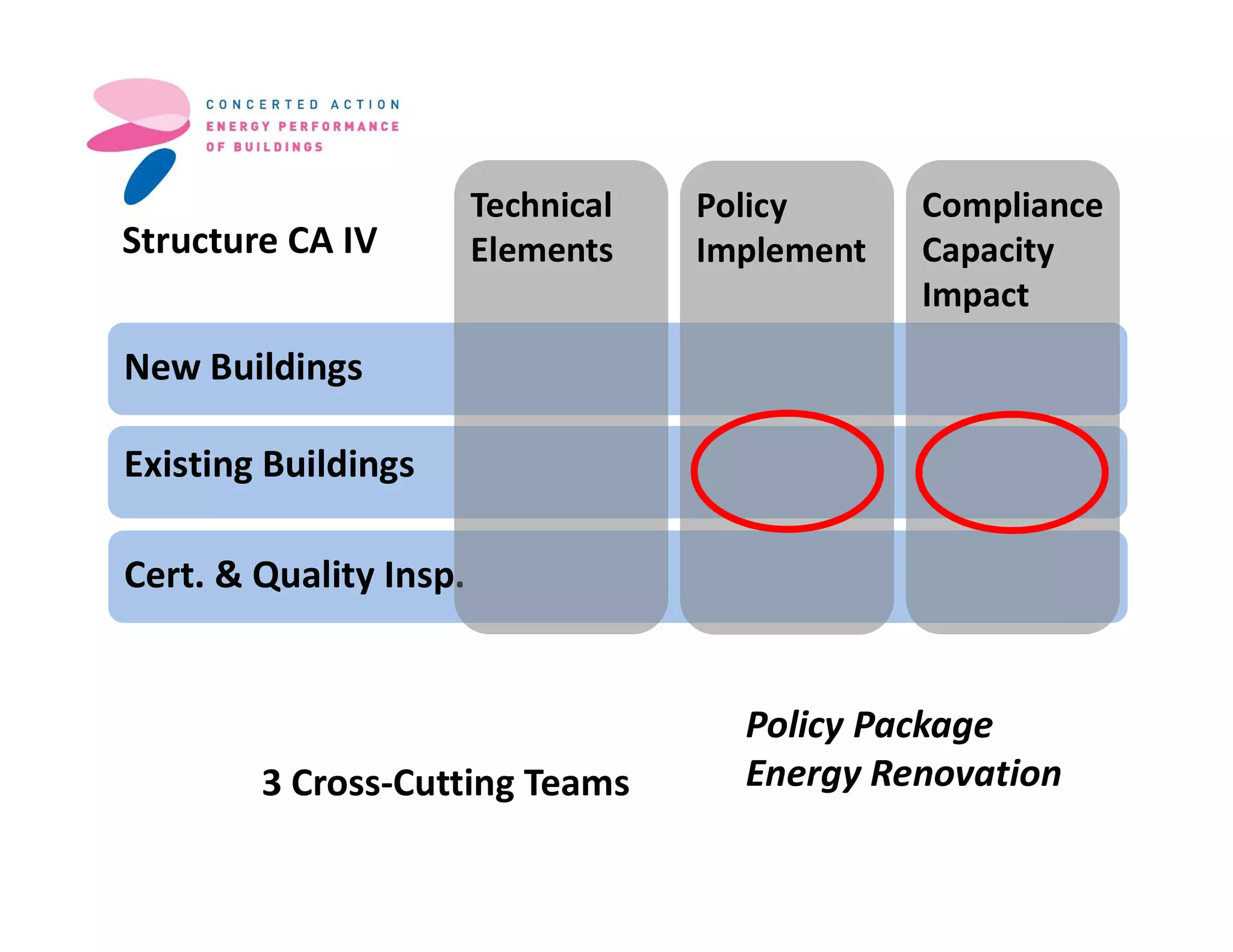
Existing Buildings
New Buildings
Cert. & Quality Insp.
Policy
Implement
Technical
Elements
Compliance
Capacity
Impact
Structure CA IV
3 Cross-Cutting Teams
Policy Package
Energy Renovation
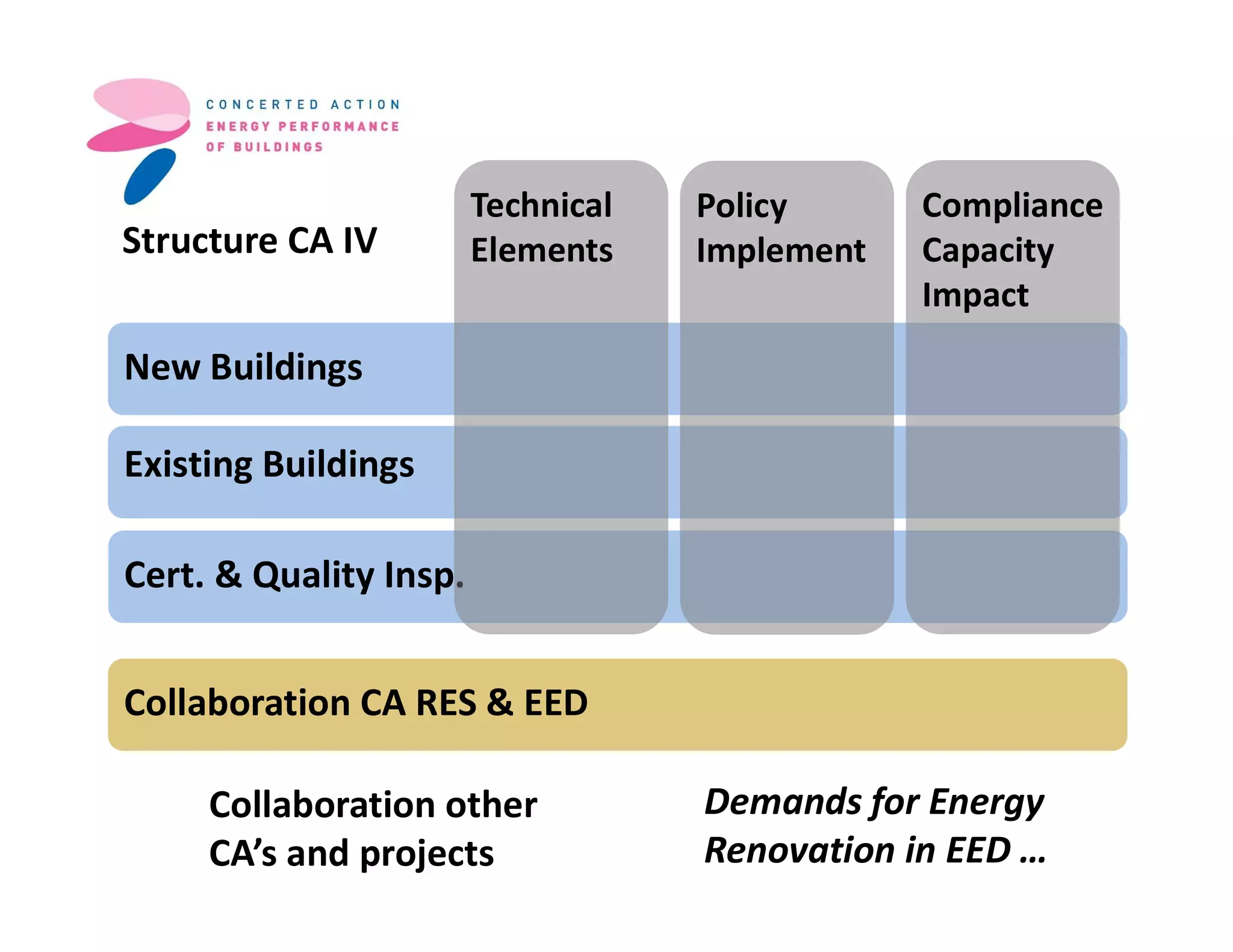
Existing Buildings
New Buildings
Cert. & Quality Insp.
Collaboration CA RES & EED
Policy
Implement
Technical
Elements
Compliance
Capacity
Impact
Structure CA IV
Collaboration other
CA’s and projects
Demands for Energy
Renovation in EED …
Existing Buildings
New Buildings
Cert. & Quality Insp.
Collaboration CA RES & EED
Communication
Policy
Implement
Technical
Elements
Compliance
Capacity
Impact
Structure CA IV
Internal Communication External Communication
Incl. Database-driven PDF = Book
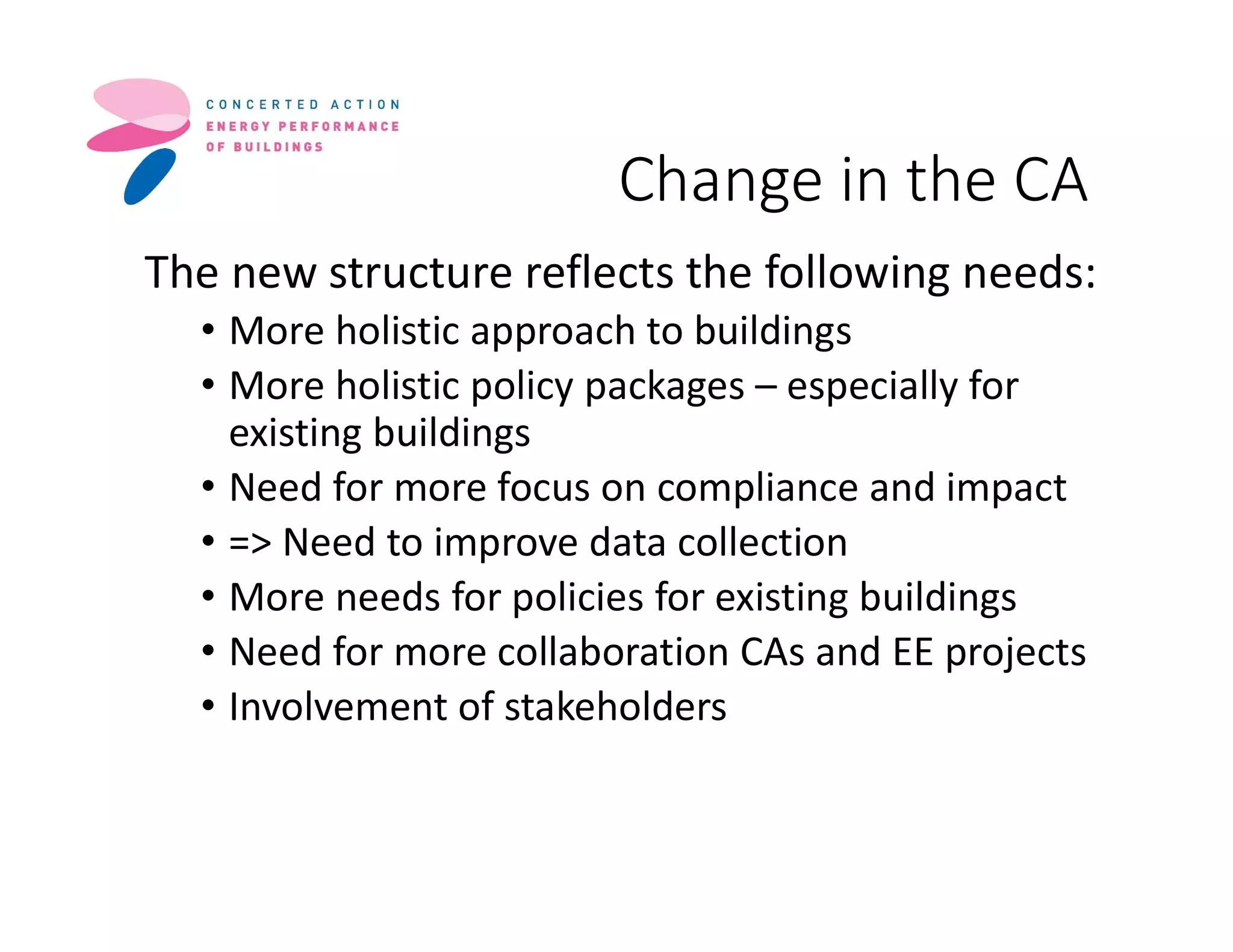
Change in the CA
The new structure reflects the following needs:
• More holistic approach to buildings
• More holistic policy packages – especially for
existing buildings
• Need for more focus on compliance and impact
• => Need to improve data collection
• More needs for policies for existing buildings
• Need for more collaboration CAs and EE projects
• Involvement of stakeholders
EPBD Policies
• Implementation of EPBD policies request a
large amount of data
• But they could potentially also deliver very
large amount of data at low costs
NZEB and Cost Optimality
• Some key elements in EPBD and European policy
development are:
• Nearly zero energy requirements for all buildings in
2020 and for public buildings in 2018
• Cost optimality as guidance for NZEBs both in new
and existing buildings
• Request very large sets of data !
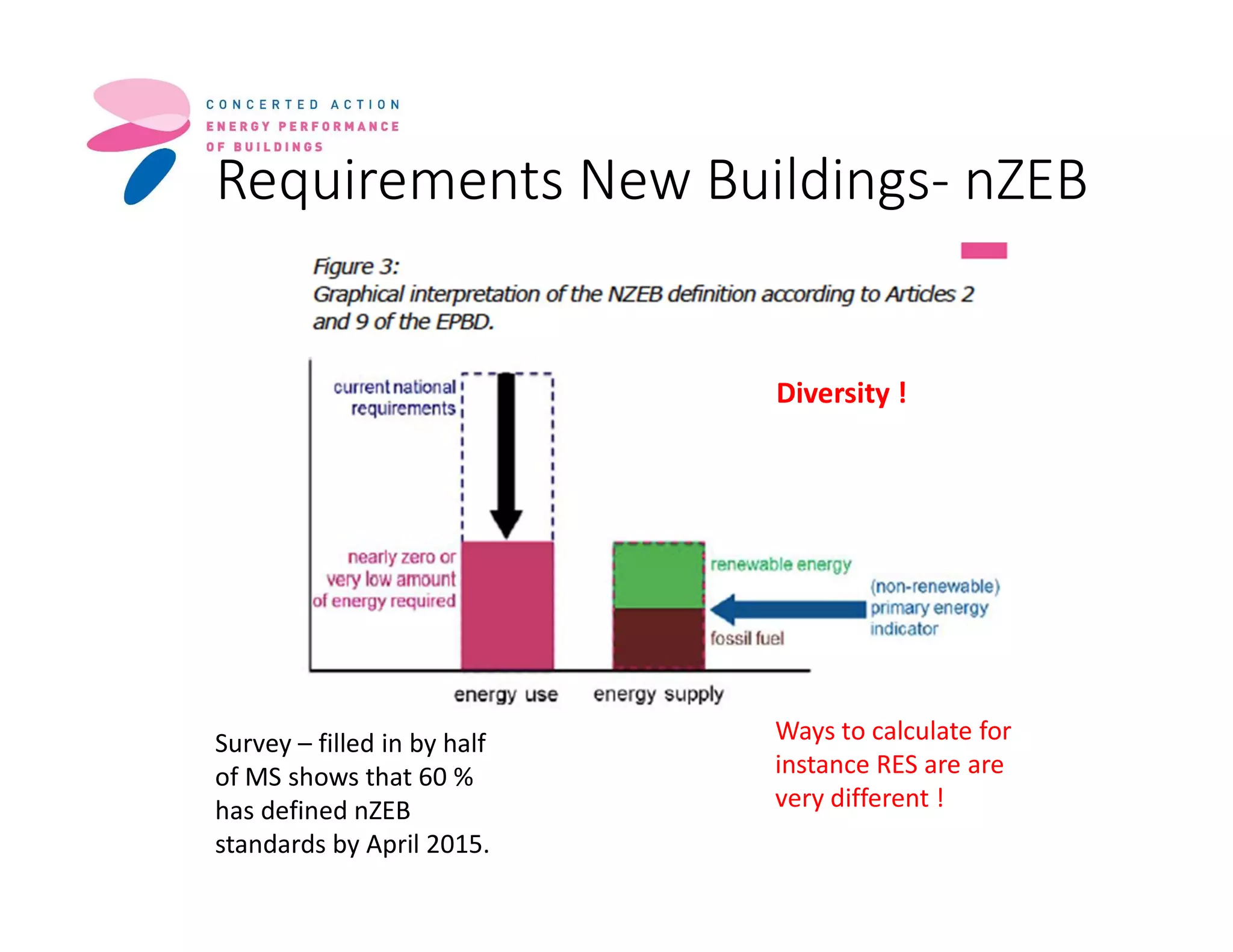
Requirements New Buildings- nZEB
Survey – filled in by half
of MS shows that 60 %
has defined nZEB
standards by April 2015.
Ways to calculate for
instance RES are are
very different !
Diversity !
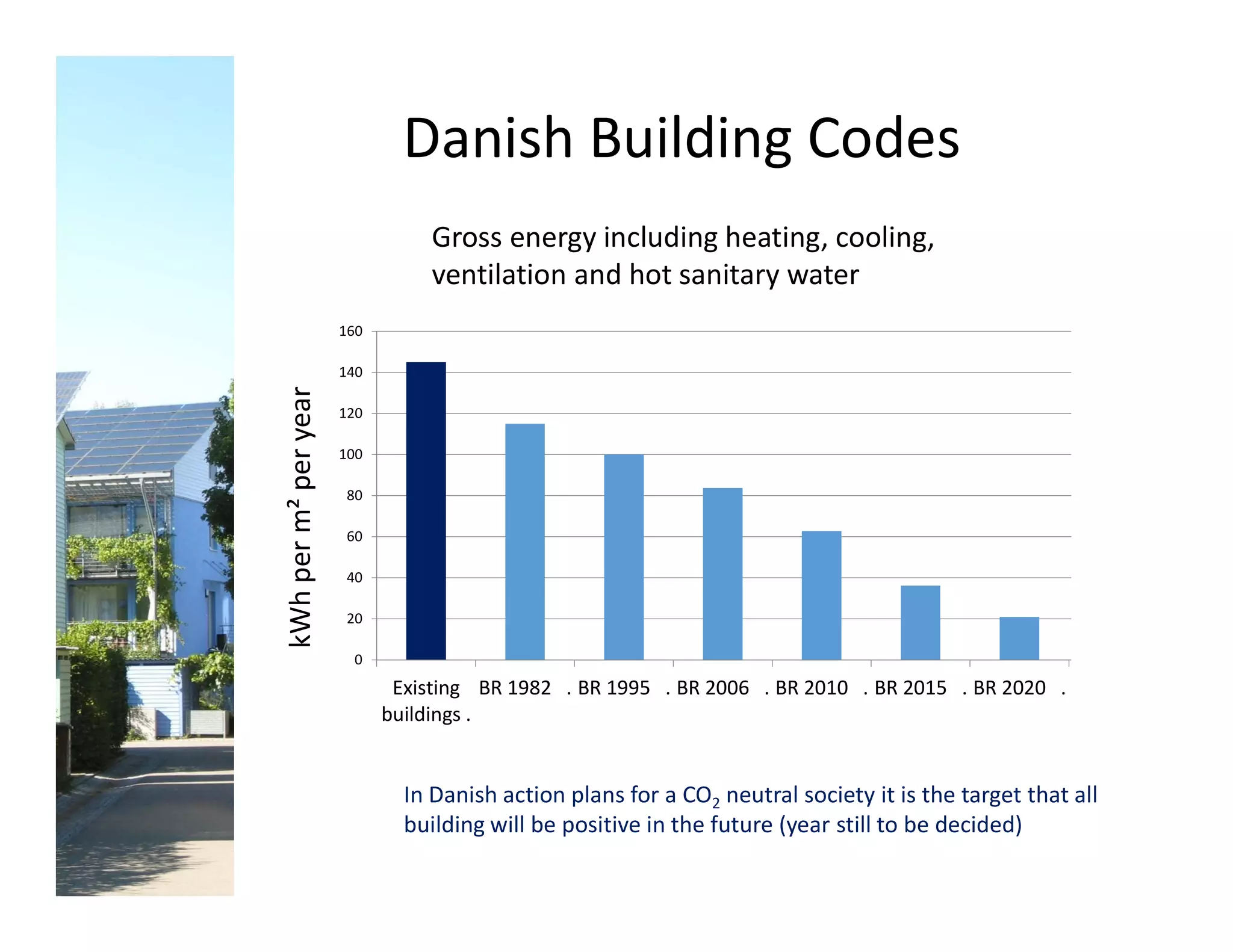
Danish Building Codes
kWhperm²peryear
In Danish action plans for a CO2 neutral society it is the target that all
building will be positive in the future (year still to be decided)
Gross energy including heating, cooling,
ventilation and hot sanitary water
0
20
40
60
80
100
120
140
160
Existing
buildings .
BR 1982 . BR 1995 . BR 2006 . BR 2010 . BR 2015 . BR 2020 . BR 2025 ?
.
BR ??
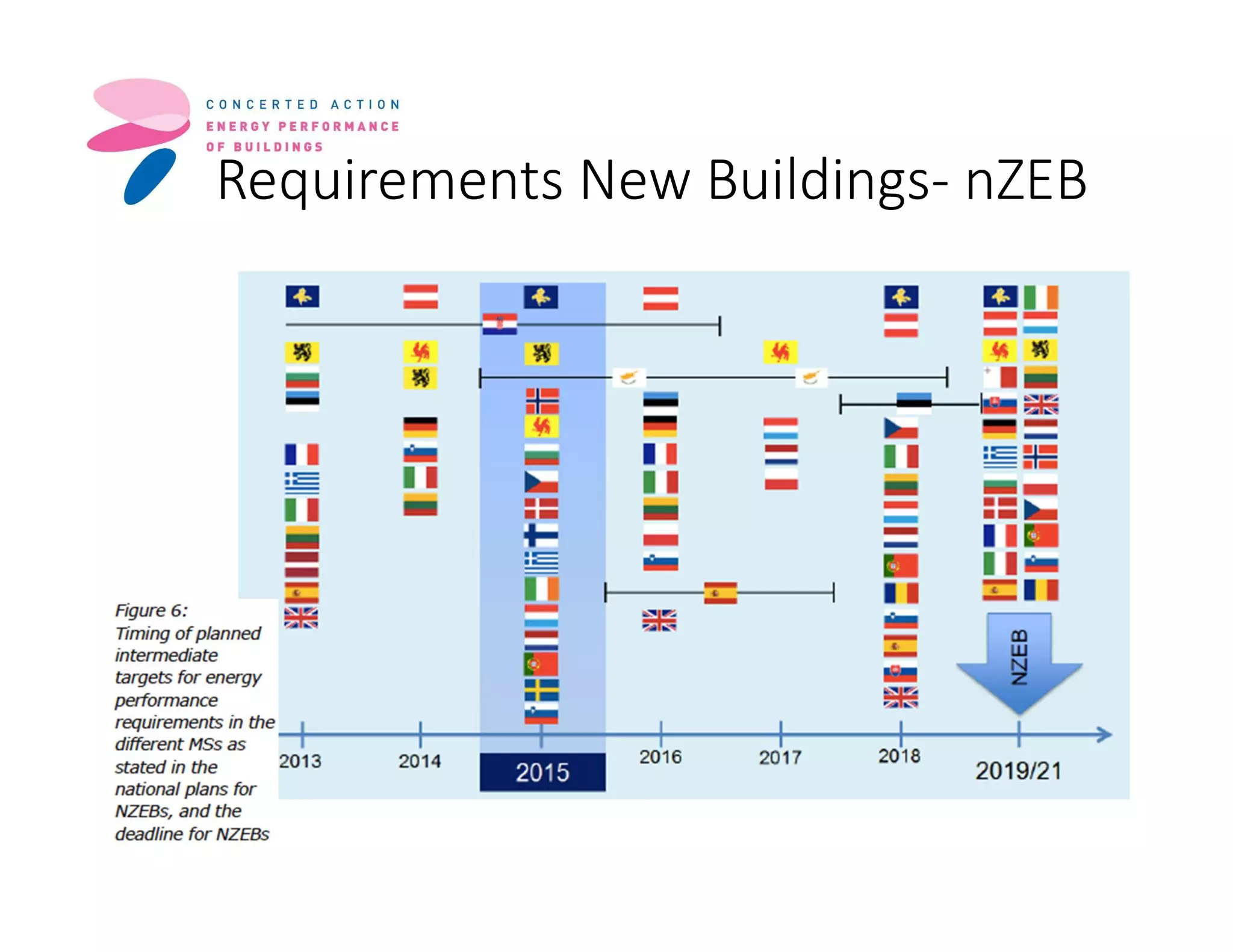
Requirements New Buildings- nZEB
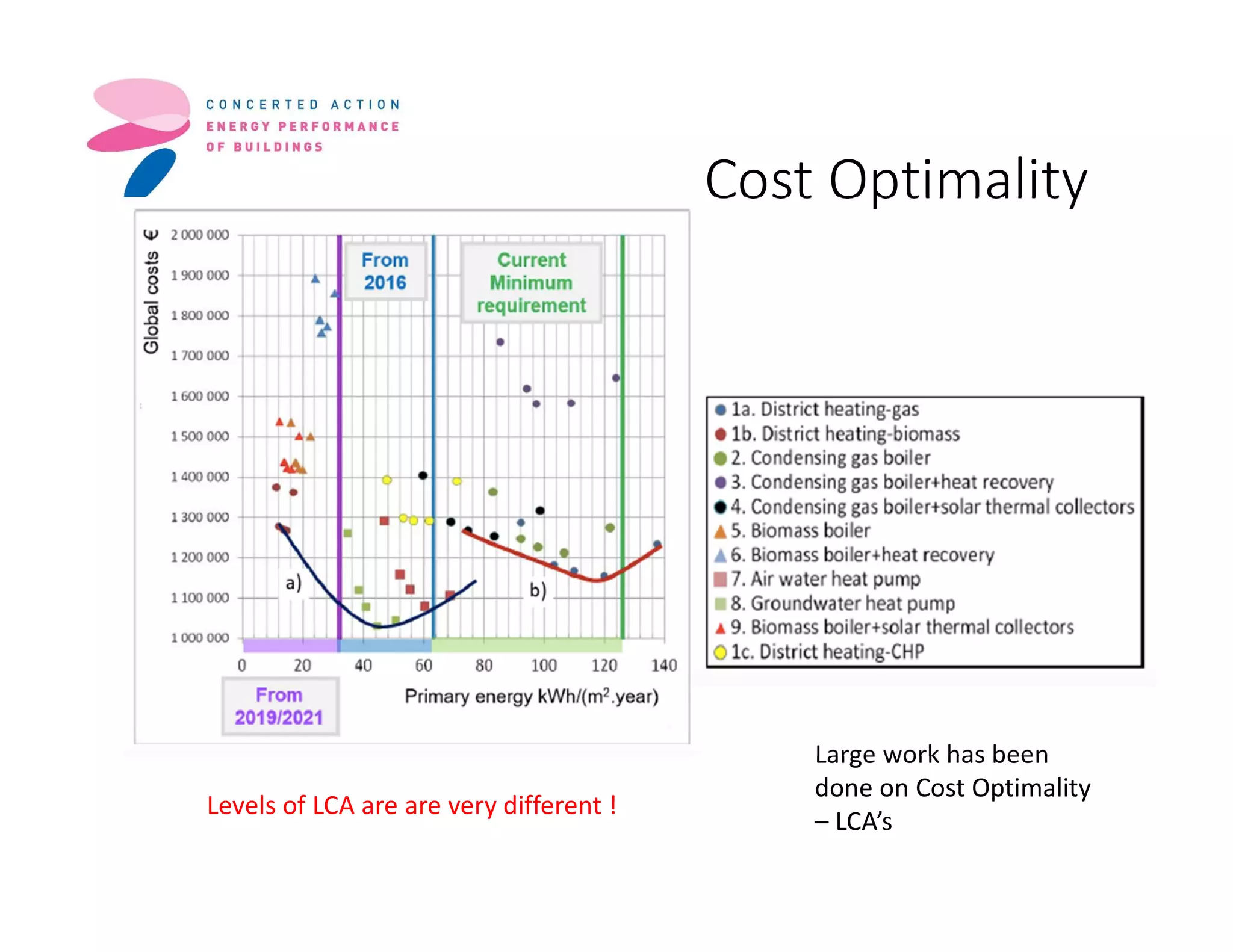
Cost Optimality
Large work has been
done on Cost Optimality
– LCA’s
Levels of LCA are are very different !
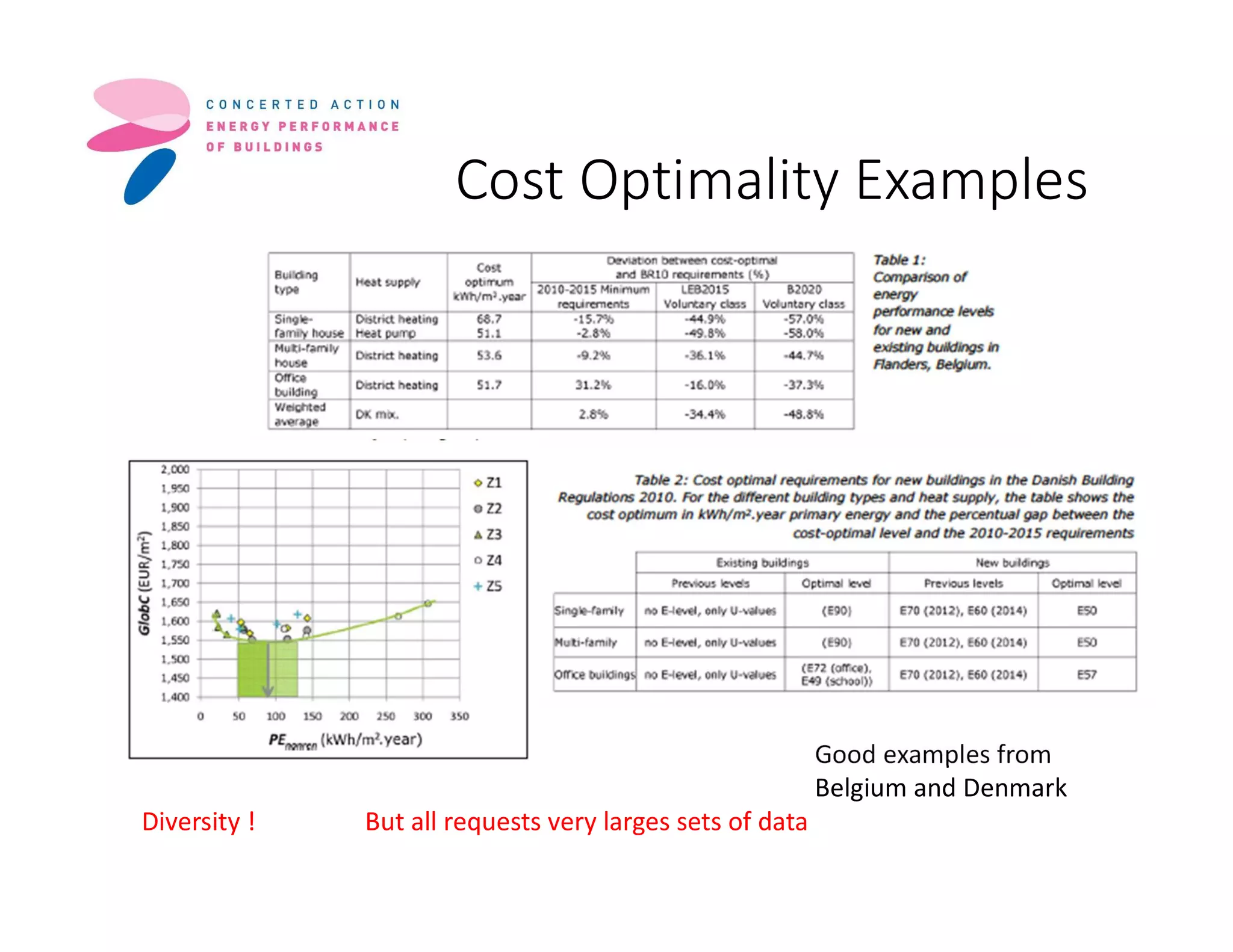
Cost Optimality Examples
Good examples from
Belgium and Denmark
Diversity ! But all requests very larges sets of data
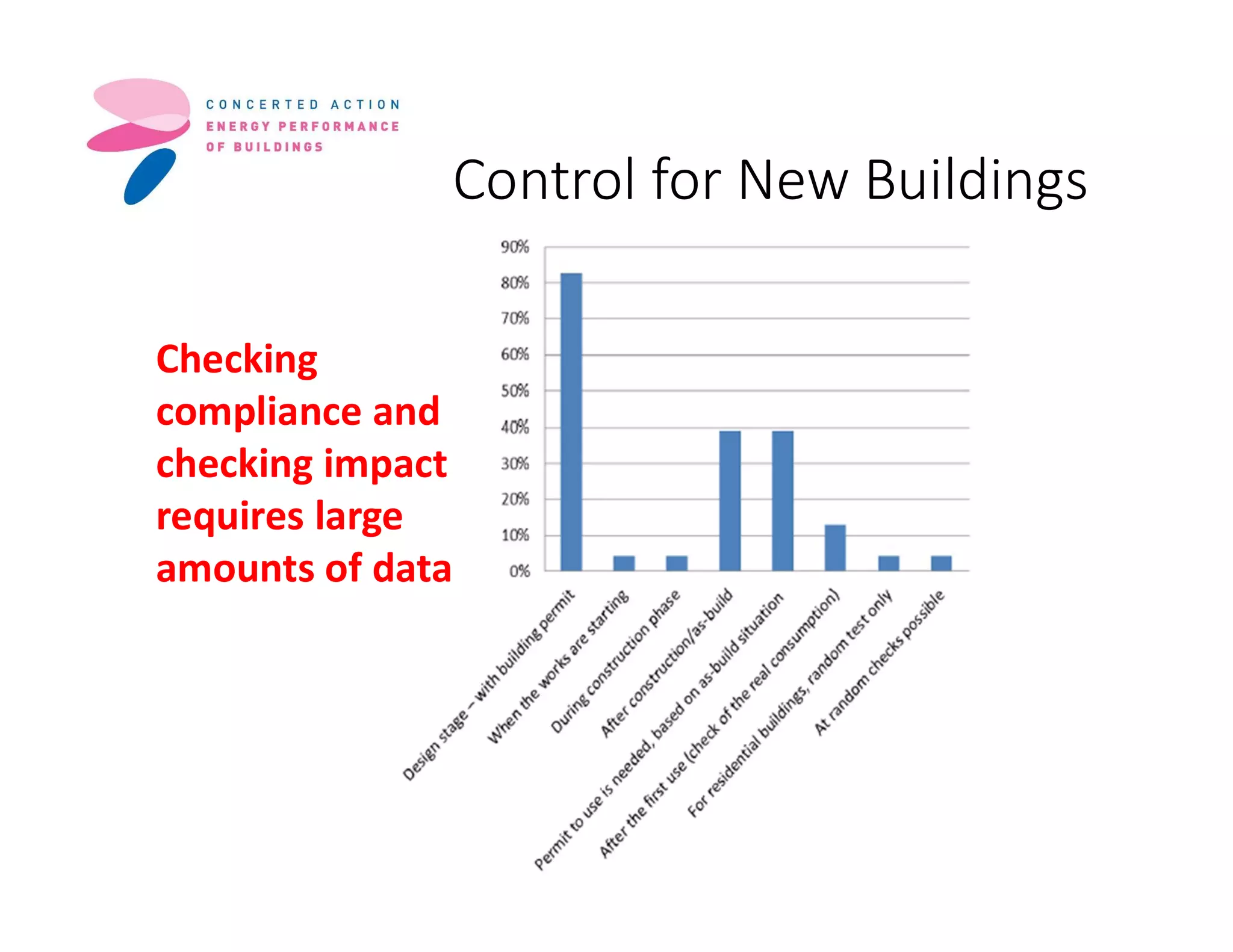
Control for New Buildings
Checking
compliance and
checking impact
requires large
amounts of data
Lack of consistent data
• In my past post we tried to check the true costs of
these building codes
• Wanting to compare the impact on real prices
• But it was not possible to get consistent data for
the same group of buildings:
• On real savings
• Nor on real additional costs
• Special problems with energy and building
physics
• Metered versus calculated
Existing Buildings
• Every existing building is different
• Different construction
• Different history
• Improvements can bring them to different
stages
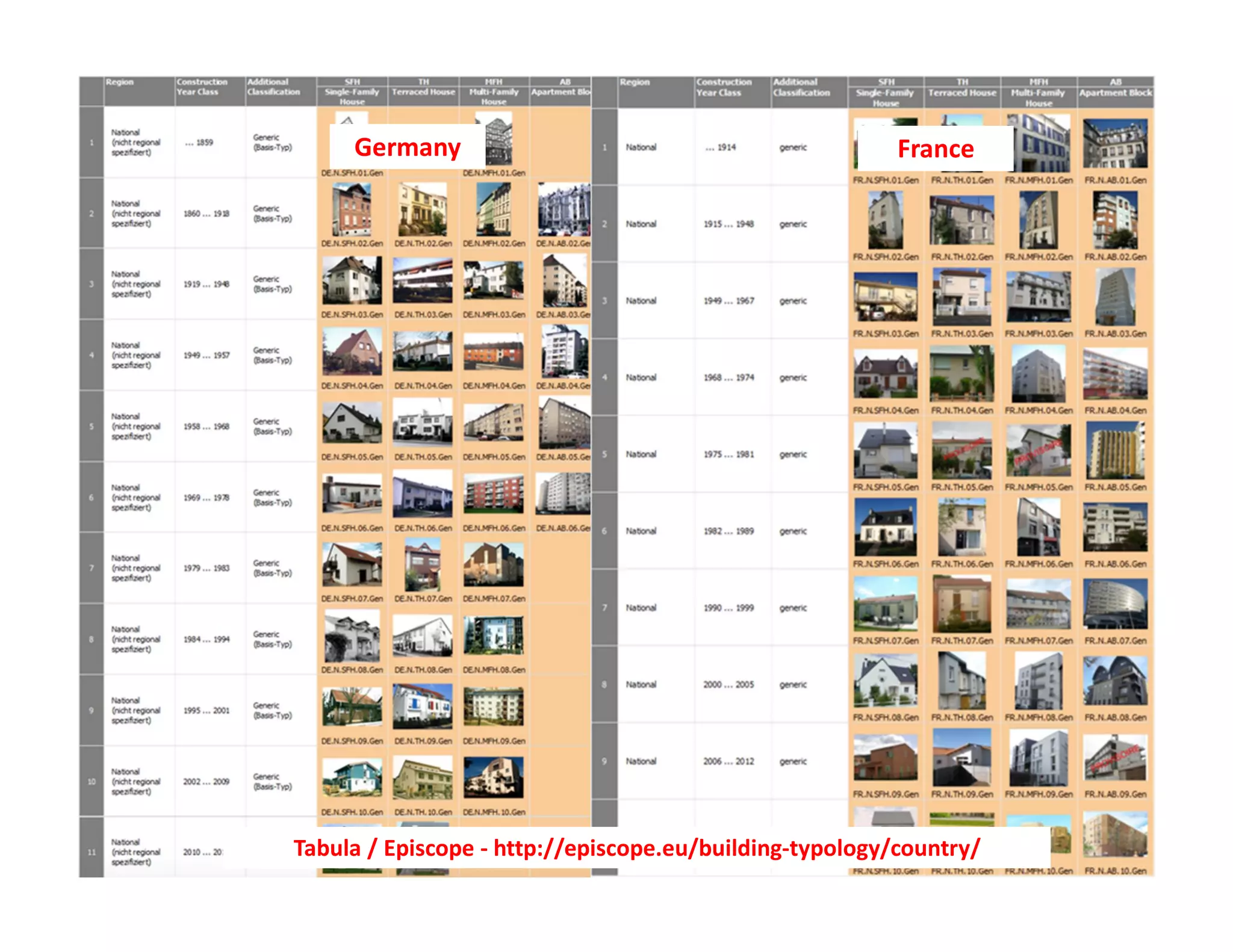
Building Typology
Germany France
Tabula / Episcope - http://episcope.eu/building-typology/country/
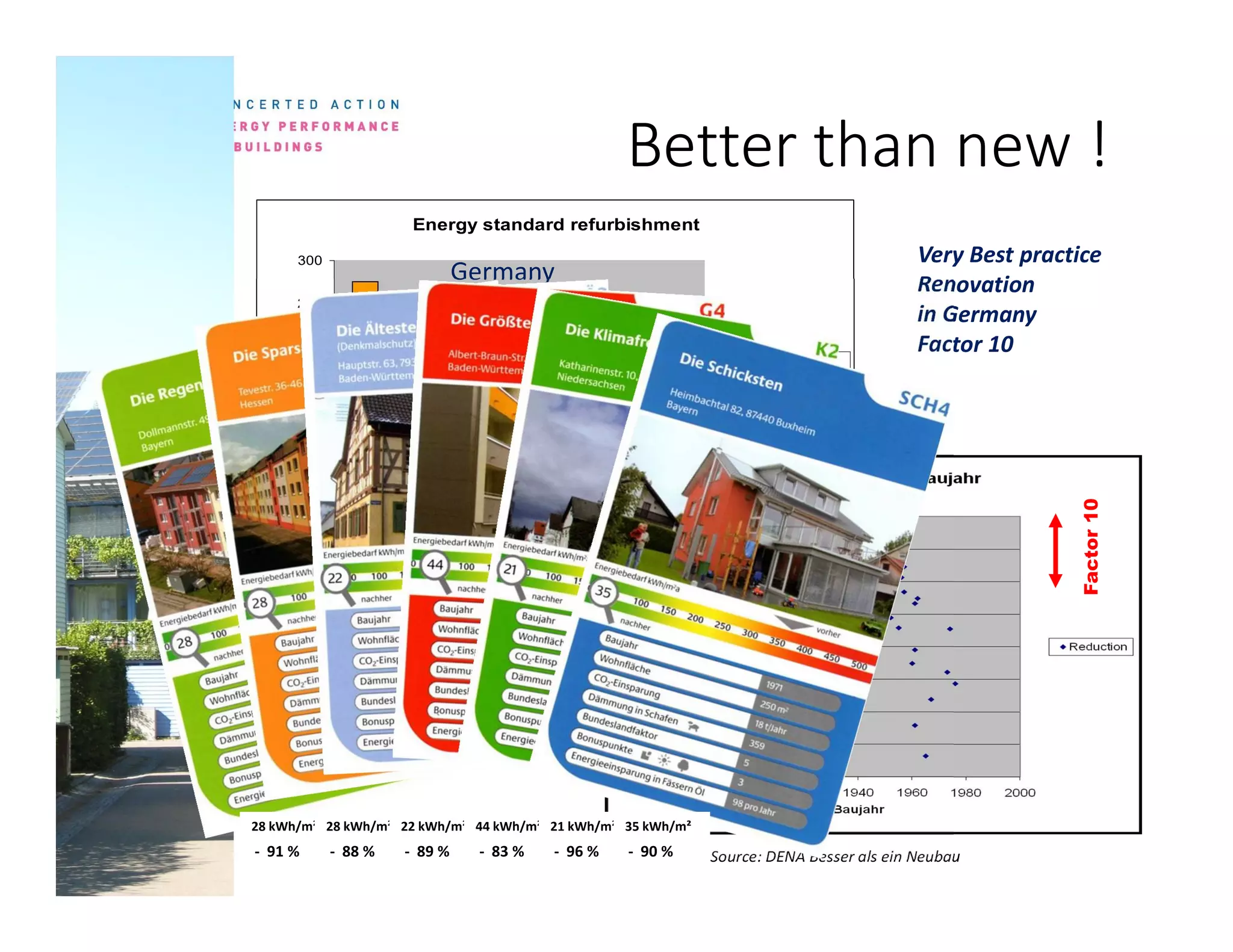
Very Best practice
Renovation
in Germany
Factor 10
Better than new !
Energy standard refurbishment
0
50
100
150
200
250
300
E
xisting
buildingsE
nEV
S
anierung
E
vEV
N
ew
B
uildings
E
nEV
m
inus
30%E
nEV
m
inus
50%
P
assive
house
kWh7(m²a)
Primary losses
Losses in system
Hot sanitory water
Energy demand
Source: DENA Besser als ein Neubau
St. Petersburg, Russia
Germany
Factor10
28 kWh/m²
- 91 %
28 kWh/m²
- 88 %
22 kWh/m²
- 89 %
44 kWh/m²
- 83 %
21 kWh/m²
- 96 %
35 kWh/m²
- 90 %
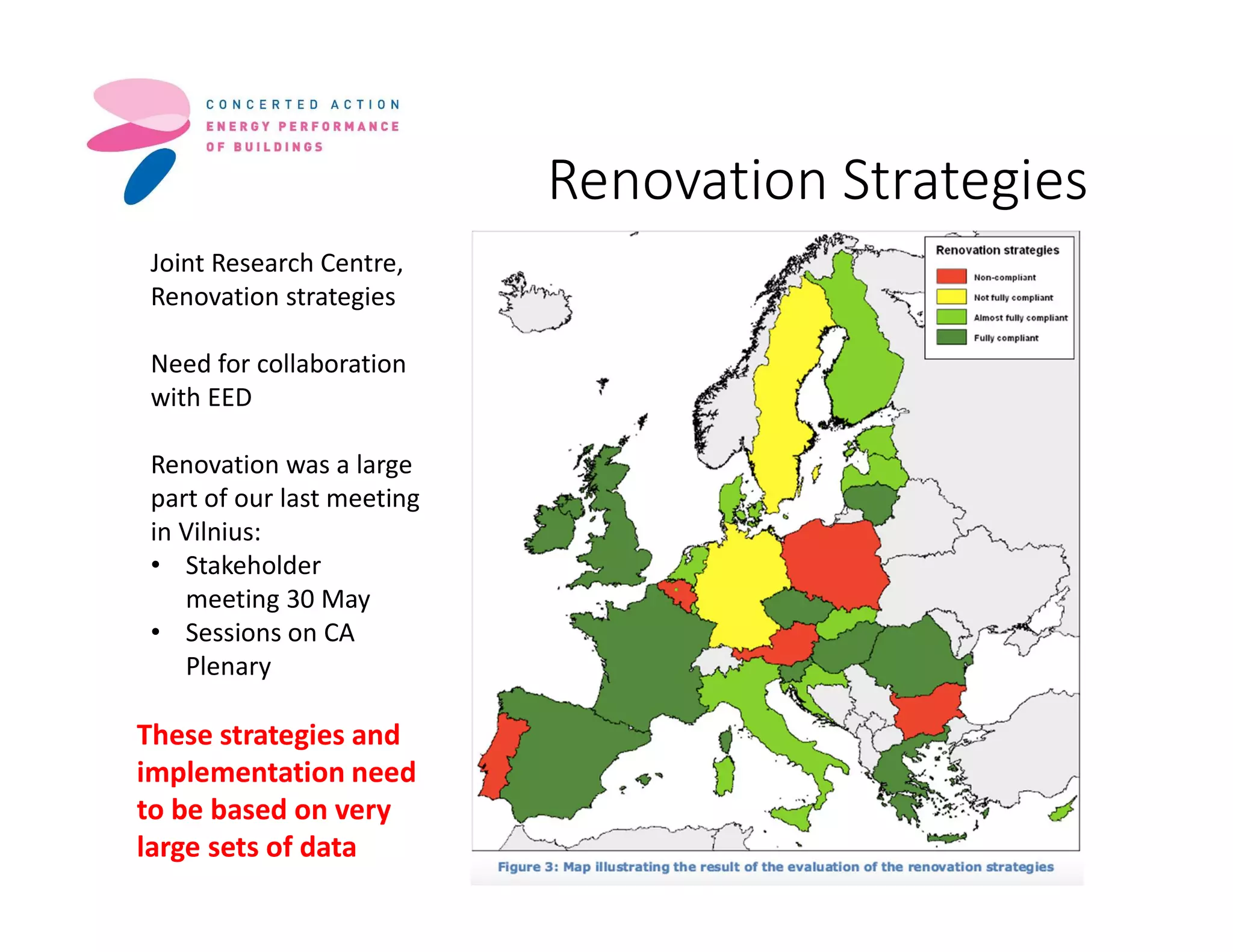
Renovation Strategies
Joint Research Centre,
Renovation strategies
Need for collaboration
with EED
Renovation was a large
part of our last meeting
in Vilnius:
• Stakeholder
meeting 30 May
• Sessions on CA
Plenary
These strategies and
implementation need
to be based on very
large sets of data
EPBD Policies
• Implementation of EPBD policies request a
large amount of data
• But they could potentially also deliver very
large amount of data at low costs
• Especially the EPCs has a very large potential
Certification, EPC
• EPBD requires certification of buildings:
• By construction
• By sale
• By rental
• Regular for large public buildings
• Every year 10.000’s or even 100.000’s of certificates
are made in every European country
Certification, EPC
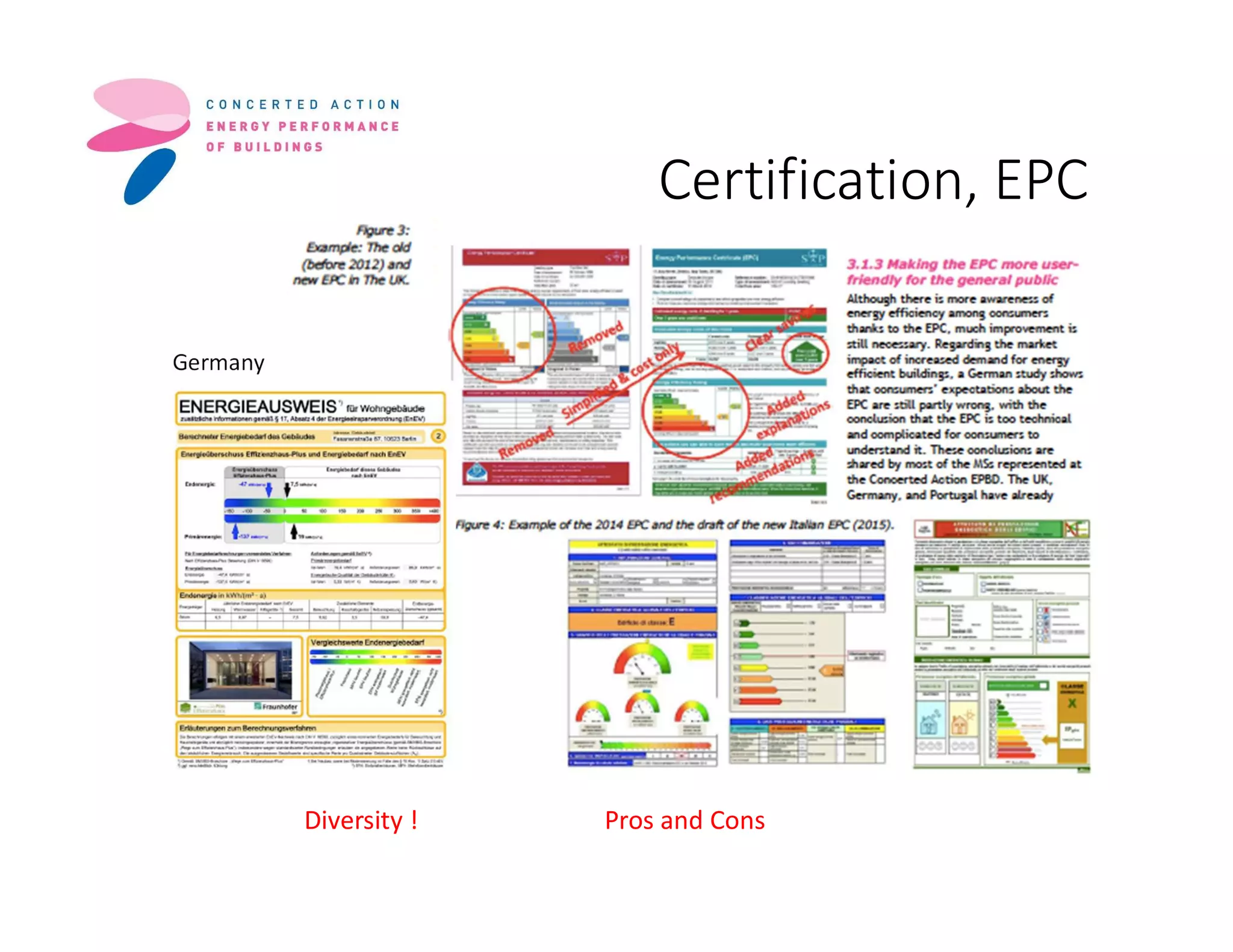
Germany
Diversity ! Pros and Cons
Collection of Data
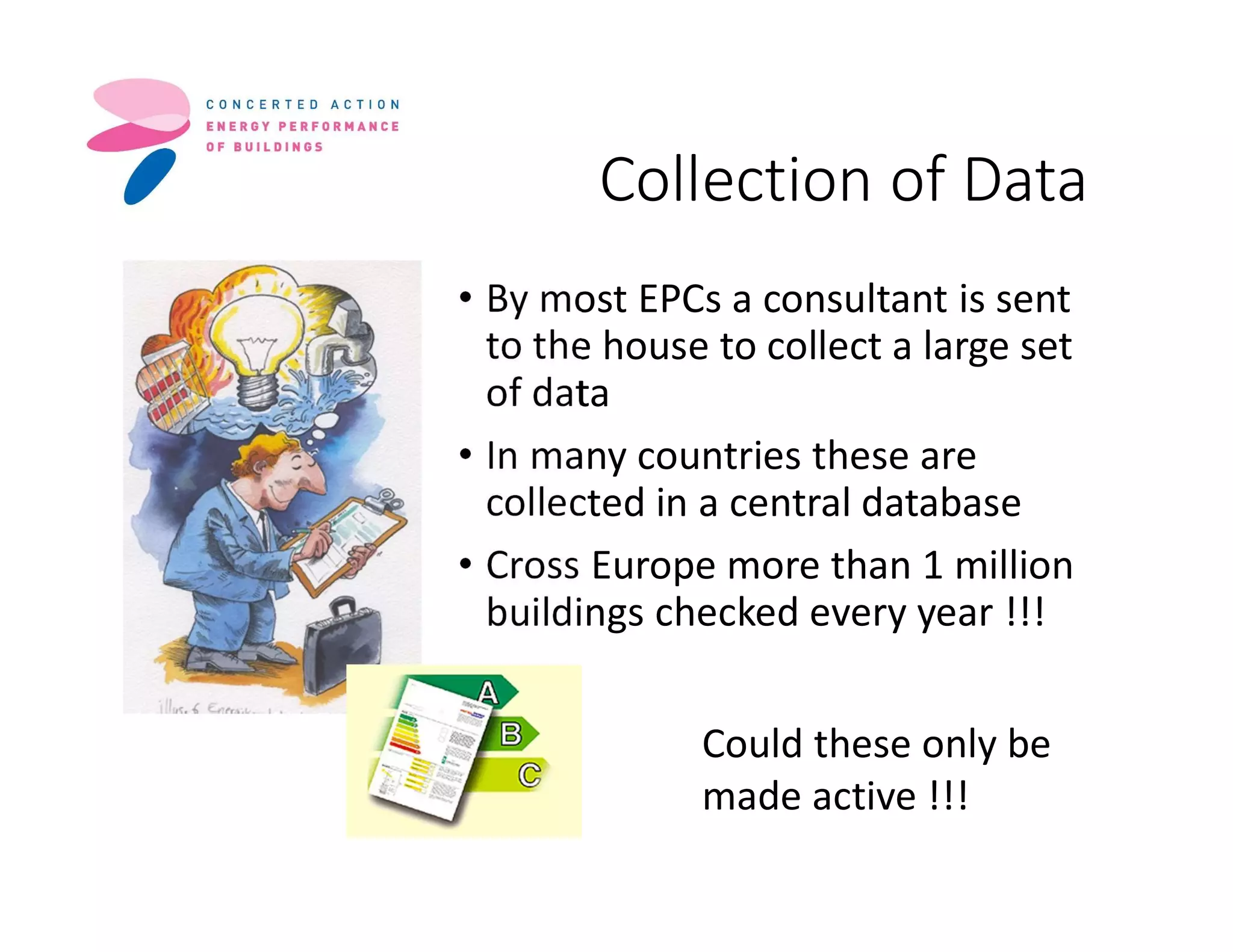
• By most EPCs a consultant is sent
to the house to collect a large set
of data
• In many countries these are
collected in a central database
• Cross Europe more than 1 million
buildings checked every year !!!
Could these only be
made active !!!
Some Gaps
Some gaps to be closed:
• Better combination / connection between data on
buildings and on energy use
• Better data on results of change – before and after
• Better connection between measured and
calculated energy use
• More data on consumer influence on consumption
Thank you for your attention
Jens Laustsen
CA EPBD Coordinator
Executive Director @ 2peach Aps
Jens.Laustsen@live.com

Bde sc3 2nd_workshop_2016_10_04_p07_laustsen_jens

  • 1.
    Energy Efficiency inBuildings Challenge. Data related challenges and opportunities Jens Laustsen Coordinator of CA EPBD Executive Director of 2peach Brussels, 4th October 2016
  • 2.
    A new ConcertedAction EPBD IV Concerted Action EPBD IV: • Started 1 October 2015 and run until March 2018 • All EU Member States plus Norway • 29 partners – lead by DEA (DK) • 4 CA plenary meetings will be held • First meeting November 2015 in Copenhagen • Second meeting end of May 2016 in Vilnius • Third meeting will be in February 2017 in Valletta • Experts meet and share experience • Support implementation and maximise outcome of EPBD • Confidentiality in meetings – Free and open Lessons learned and share of best practice
  • 3.
    The EPBD Recast Majorfocus on Energy Performance New revision is on- going
  • 4.
    Existing Buildings New Buildings Cert.& Quality Insp. Structure CA IV 3 Core Teams Major renovation Components Information Finance Incentives Certification Inspection
  • 5.
    Existing Buildings New Buildings Cert.& Quality Insp. Structure CA IV 3 Core Teams Major renovation Components Information Finance Incentives Certification Inspection Each started with a brainstorm to identify relevant topics !
  • 6.
    Existing Buildings New Buildings Cert.& Quality Insp. Policy Implement Technical Elements Compliance Capacity Impact Structure CA IV Calculation Method CEN adaptation Standard Values Renewable Energy Certification Scales Cost Efficiency 3 Cross-cutting Teams Common elements
  • 7.
    Existing Buildings New Buildings Cert.& Quality Insp. Policy Implement Technical Elements Compliance Capacity Impact Structure CA IV 3 Cross-Cutting Teams Policy Package Energy Renovation
  • 8.
    Existing Buildings New Buildings Cert.& Quality Insp. Collaboration CA RES & EED Policy Implement Technical Elements Compliance Capacity Impact Structure CA IV Collaboration other CA’s and projects Demands for Energy Renovation in EED …
  • 9.
    Existing Buildings New Buildings Cert.& Quality Insp. Collaboration CA RES & EED Communication Policy Implement Technical Elements Compliance Capacity Impact Structure CA IV Internal Communication External Communication Incl. Database-driven PDF = Book
  • 10.
    Change in theCA The new structure reflects the following needs: • More holistic approach to buildings • More holistic policy packages – especially for existing buildings • Need for more focus on compliance and impact • => Need to improve data collection • More needs for policies for existing buildings • Need for more collaboration CAs and EE projects • Involvement of stakeholders
  • 11.
    EPBD Policies • Implementationof EPBD policies request a large amount of data • But they could potentially also deliver very large amount of data at low costs
  • 12.
    NZEB and CostOptimality • Some key elements in EPBD and European policy development are: • Nearly zero energy requirements for all buildings in 2020 and for public buildings in 2018 • Cost optimality as guidance for NZEBs both in new and existing buildings • Request very large sets of data !
  • 13.
    Requirements New Buildings-nZEB Survey – filled in by half of MS shows that 60 % has defined nZEB standards by April 2015. Ways to calculate for instance RES are are very different ! Diversity !
  • 14.
    Danish Building Codes kWhperm²peryear InDanish action plans for a CO2 neutral society it is the target that all building will be positive in the future (year still to be decided) Gross energy including heating, cooling, ventilation and hot sanitary water 0 20 40 60 80 100 120 140 160 Existing buildings . BR 1982 . BR 1995 . BR 2006 . BR 2010 . BR 2015 . BR 2020 . BR 2025 ? . BR ??
  • 15.
  • 16.
    Cost Optimality Large workhas been done on Cost Optimality – LCA’s Levels of LCA are are very different !
  • 17.
    Cost Optimality Examples Goodexamples from Belgium and Denmark Diversity ! But all requests very larges sets of data
  • 18.
    Control for NewBuildings Checking compliance and checking impact requires large amounts of data
  • 19.
    Lack of consistentdata • In my past post we tried to check the true costs of these building codes • Wanting to compare the impact on real prices • But it was not possible to get consistent data for the same group of buildings: • On real savings • Nor on real additional costs • Special problems with energy and building physics • Metered versus calculated
  • 20.
    Existing Buildings • Everyexisting building is different • Different construction • Different history • Improvements can bring them to different stages
  • 21.
    Building Typology Germany France Tabula/ Episcope - http://episcope.eu/building-typology/country/
  • 22.
    Very Best practice Renovation inGermany Factor 10 Better than new ! Energy standard refurbishment 0 50 100 150 200 250 300 E xisting buildingsE nEV S anierung E vEV N ew B uildings E nEV m inus 30%E nEV m inus 50% P assive house kWh7(m²a) Primary losses Losses in system Hot sanitory water Energy demand Source: DENA Besser als ein Neubau St. Petersburg, Russia Germany Factor10 28 kWh/m² - 91 % 28 kWh/m² - 88 % 22 kWh/m² - 89 % 44 kWh/m² - 83 % 21 kWh/m² - 96 % 35 kWh/m² - 90 %
  • 23.
    Renovation Strategies Joint ResearchCentre, Renovation strategies Need for collaboration with EED Renovation was a large part of our last meeting in Vilnius: • Stakeholder meeting 30 May • Sessions on CA Plenary These strategies and implementation need to be based on very large sets of data
  • 24.
    EPBD Policies • Implementationof EPBD policies request a large amount of data • But they could potentially also deliver very large amount of data at low costs • Especially the EPCs has a very large potential
  • 25.
    Certification, EPC • EPBDrequires certification of buildings: • By construction • By sale • By rental • Regular for large public buildings • Every year 10.000’s or even 100.000’s of certificates are made in every European country
  • 26.
  • 27.
    Collection of Data •By most EPCs a consultant is sent to the house to collect a large set of data • In many countries these are collected in a central database • Cross Europe more than 1 million buildings checked every year !!! Could these only be made active !!!
  • 28.
    Some Gaps Some gapsto be closed: • Better combination / connection between data on buildings and on energy use • Better data on results of change – before and after • Better connection between measured and calculated energy use • More data on consumer influence on consumption
  • 30.
    Thank you foryour attention Jens Laustsen CA EPBD Coordinator Executive Director @ 2peach Aps Jens.Laustsen@live.com