SP 2020 . FA 111.01. Sarah Morrell
Chapter 11, page 276
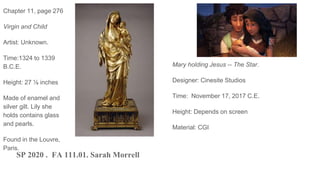
Virgin and Child
Artist: Unknown.
Time:1324 to 1339
B.C.E.
Height: 27 ⅛ inches
Made of enamel and
silver gilt. Lily she
holds contains glass
and pearls.
Found in the Louvre,
Paris.
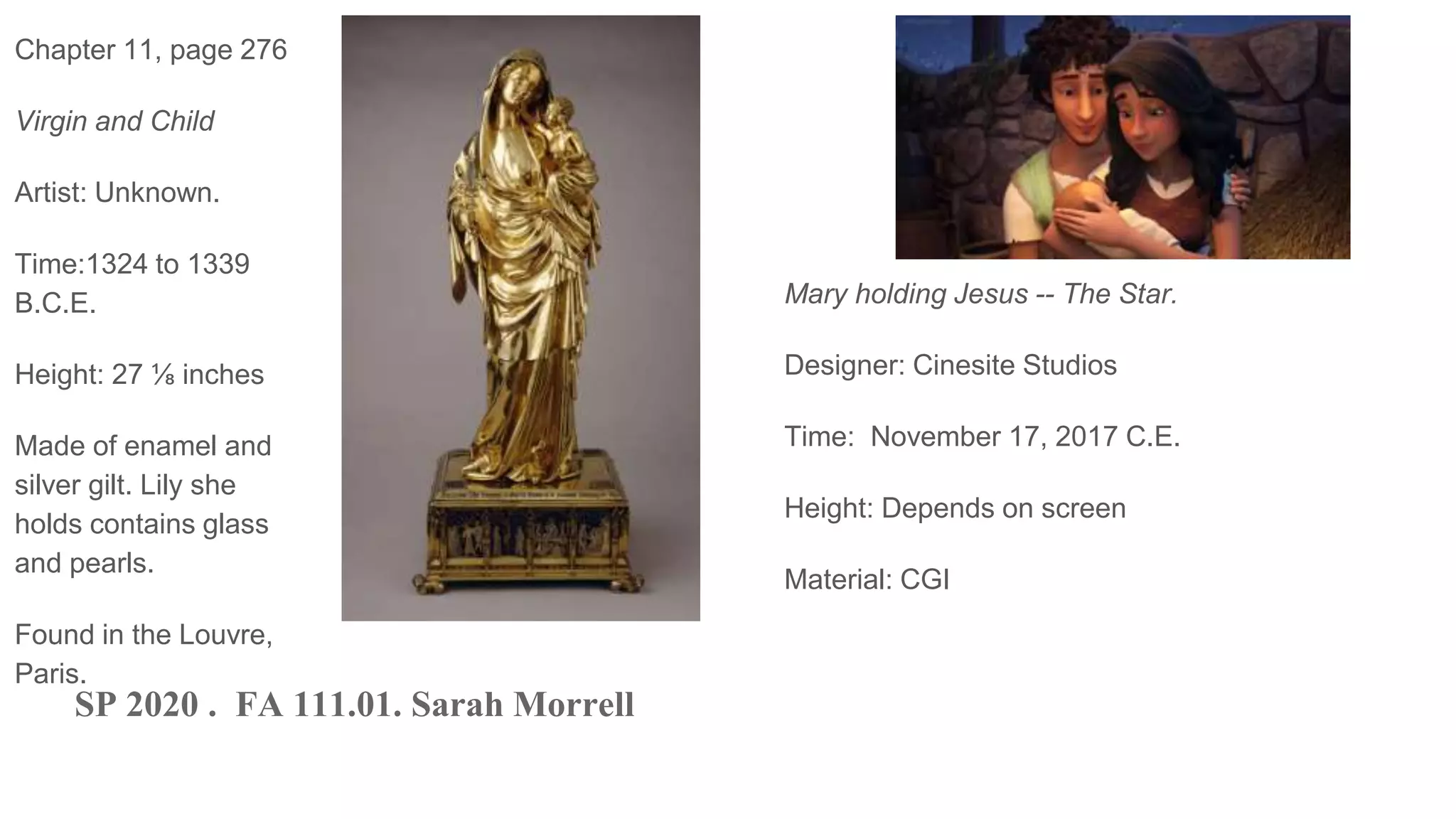
Mary holding Jesus -- The Star.
Designer: Cinesite Studios
Time: November 17, 2017 C.E.
Height: Depends on screen
Material: CGI
Texture- surface quality of shape
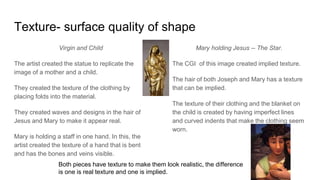
Virgin and Child
The artist created the statue to replicate the
image of a mother and a child.
They created the texture of the clothing by
placing folds into the material.
They created waves and designs in the hair of
Jesus and Mary to make it appear real.
Mary is holding a staff in one hand. In this, the
artist created the texture of a hand that is bent
and has the bones and veins visible.
Mary holding Jesus -- The Star.
The CGI of this image created implied texture.
The hair of both Joseph and Mary has a texture
that can be implied.
The texture of their clothing and the blanket on
the child is created by having imperfect lines
and curved indents that make the clothing seem
worn.
Both pieces have texture to make them look realistic, the difference
is one is real texture and one is implied.
Shape- defined, contained area.
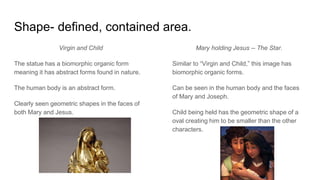
Virgin and Child
The statue has a biomorphic organic form
meaning it has abstract forms found in nature.
The human body is an abstract form.
Clearly seen geometric shapes in the faces of
both Mary and Jesus.
Mary holding Jesus -- The Star.
Similar to “Virgin and Child,” this image has
biomorphic organic forms.
Can be seen in the human body and the faces
of Mary and Joseph.
Child being held has the geometric shape of a
oval creating him to be smaller than the other
characters.
Balance- use of other elements to create stability.
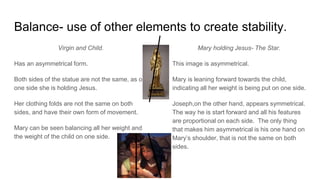
Virgin and Child.
Has an asymmetrical form.
Both sides of the statue are not the same, as on
one side she is holding Jesus.
Her clothing folds are not the same on both
sides, and have their own form of movement.
Mary can be seen balancing all her weight and
the weight of the child on one side.
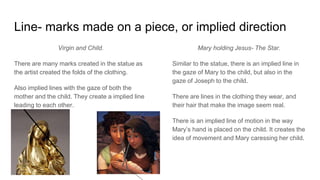
Mary holding Jesus- The Star.
This image is asymmetrical.
Mary is leaning forward towards the child,
indicating all her weight is being put on one side.
Joseph,on the other hand, appears symmetrical.
The way he is start forward and all his features
are proportional on each side. The only thing
that makes him asymmetrical is his one hand on
Mary’s shoulder, that is not the same on both
sides.
Line- marks made on a piece, or implied direction
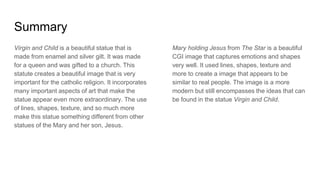
Virgin and Child.
There are many marks created in the statue as
the artist created the folds of the clothing.
Also implied lines with the gaze of both the
mother and the child. They create a implied line
leading to each other.
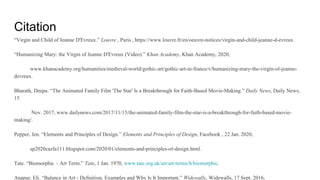
Mary holding Jesus- The Star.
Similar to the statue, there is an implied line in
the gaze of Mary to the child, but also in the
gaze of Joseph to the child.
There are lines in the clothing they wear, and
their hair that make the image seem real.
There is an implied line of motion in the way
Mary’s hand is placed on the child. It creates the
idea of movement and Mary caressing her child.
Summary
Virgin and Child is a beautiful statue that is
made from enamel and silver gilt. It was made
for a queen and was gifted to a church. This
statute creates a beautiful image that is very
important for the catholic religion. It incorporates
many important aspects of art that make the
statue appear even more extraordinary. The use
of lines, shapes, texture, and so much more
make this statue something different from other
statues of the Mary and her son, Jesus.
Mary holding Jesus from The Star is a beautiful
CGI image that captures emotions and shapes
very well. It used lines, shapes, texture and
more to create a image that appears to be
similar to real people. The image is a more
modern but still encompasses the ideas that can
be found in the statue Virgin and Child.
Citation
“Virgin and Child of Jeanne D'Evreux.” Louvre , Paris , https://www.louvre.fr/en/oeuvre-notices/virgin-and-child-jeanne-d-evreux.
“Humanizing Mary: the Virgin of Jeanne D'Evreux (Video).” Khan Academy, Khan Academy, 2020,
www.khanacademy.org/humanities/medieval-world/gothic-art/gothic-art-in-france/v/humanizing-mary-the-virgin-of-jeanne-
devreux.
Bharath, Deepa. “The Animated Family Film 'The Star' Is a Breakthrough for Faith-Based Movie-Making.” Daily News, Daily News,
15
Nov. 2017, www.dailynews.com/2017/11/15/the-animated-family-film-the-star-is-a-breakthrough-for-faith-based-movie-
making/.
Pepper, Jen. “Elements and Principles of Design.” Elements and Principles of Design, Facebook , 22 Jan. 2020,
sp2020cazfa111.blogspot.com/2020/01/elements-and-principles-of-design.html.
Tate. “Biomorphic – Art Term.” Tate, 1 Jan. 1970, www.tate.org.uk/art/art-terms/b/biomorphic.
Anapur, Eli. “Balance in Art - Definition, Examples and Why Is It Important.” Widewalls, Widewalls, 17 Sept. 2016,

SarahMorrell_ComparativeAnalysis_FA111_SP2020

  • 1.
    SP 2020 .FA 111.01. Sarah Morrell Chapter 11, page 276 Virgin and Child Artist: Unknown. Time:1324 to 1339 B.C.E. Height: 27 ⅛ inches Made of enamel and silver gilt. Lily she holds contains glass and pearls. Found in the Louvre, Paris. Mary holding Jesus -- The Star. Designer: Cinesite Studios Time: November 17, 2017 C.E. Height: Depends on screen Material: CGI
  • 2.
    Texture- surface qualityof shape Virgin and Child The artist created the statue to replicate the image of a mother and a child. They created the texture of the clothing by placing folds into the material. They created waves and designs in the hair of Jesus and Mary to make it appear real. Mary is holding a staff in one hand. In this, the artist created the texture of a hand that is bent and has the bones and veins visible. Mary holding Jesus -- The Star. The CGI of this image created implied texture. The hair of both Joseph and Mary has a texture that can be implied. The texture of their clothing and the blanket on the child is created by having imperfect lines and curved indents that make the clothing seem worn. Both pieces have texture to make them look realistic, the difference is one is real texture and one is implied.
  • 3.
    Shape- defined, containedarea. Virgin and Child The statue has a biomorphic organic form meaning it has abstract forms found in nature. The human body is an abstract form. Clearly seen geometric shapes in the faces of both Mary and Jesus. Mary holding Jesus -- The Star. Similar to “Virgin and Child,” this image has biomorphic organic forms. Can be seen in the human body and the faces of Mary and Joseph. Child being held has the geometric shape of a oval creating him to be smaller than the other characters.
  • 4.
    Balance- use ofother elements to create stability. Virgin and Child. Has an asymmetrical form. Both sides of the statue are not the same, as on one side she is holding Jesus. Her clothing folds are not the same on both sides, and have their own form of movement. Mary can be seen balancing all her weight and the weight of the child on one side. Mary holding Jesus- The Star. This image is asymmetrical. Mary is leaning forward towards the child, indicating all her weight is being put on one side. Joseph,on the other hand, appears symmetrical. The way he is start forward and all his features are proportional on each side. The only thing that makes him asymmetrical is his one hand on Mary’s shoulder, that is not the same on both sides.
  • 5.
    Line- marks madeon a piece, or implied direction Virgin and Child. There are many marks created in the statue as the artist created the folds of the clothing. Also implied lines with the gaze of both the mother and the child. They create a implied line leading to each other. Mary holding Jesus- The Star. Similar to the statue, there is an implied line in the gaze of Mary to the child, but also in the gaze of Joseph to the child. There are lines in the clothing they wear, and their hair that make the image seem real. There is an implied line of motion in the way Mary’s hand is placed on the child. It creates the idea of movement and Mary caressing her child.
  • 6.
    Summary Virgin and Childis a beautiful statue that is made from enamel and silver gilt. It was made for a queen and was gifted to a church. This statute creates a beautiful image that is very important for the catholic religion. It incorporates many important aspects of art that make the statue appear even more extraordinary. The use of lines, shapes, texture, and so much more make this statue something different from other statues of the Mary and her son, Jesus. Mary holding Jesus from The Star is a beautiful CGI image that captures emotions and shapes very well. It used lines, shapes, texture and more to create a image that appears to be similar to real people. The image is a more modern but still encompasses the ideas that can be found in the statue Virgin and Child.
  • 7.
    Citation “Virgin and Childof Jeanne D'Evreux.” Louvre , Paris , https://www.louvre.fr/en/oeuvre-notices/virgin-and-child-jeanne-d-evreux. “Humanizing Mary: the Virgin of Jeanne D'Evreux (Video).” Khan Academy, Khan Academy, 2020, www.khanacademy.org/humanities/medieval-world/gothic-art/gothic-art-in-france/v/humanizing-mary-the-virgin-of-jeanne- devreux. Bharath, Deepa. “The Animated Family Film 'The Star' Is a Breakthrough for Faith-Based Movie-Making.” Daily News, Daily News, 15 Nov. 2017, www.dailynews.com/2017/11/15/the-animated-family-film-the-star-is-a-breakthrough-for-faith-based-movie- making/. Pepper, Jen. “Elements and Principles of Design.” Elements and Principles of Design, Facebook , 22 Jan. 2020, sp2020cazfa111.blogspot.com/2020/01/elements-and-principles-of-design.html. Tate. “Biomorphic – Art Term.” Tate, 1 Jan. 1970, www.tate.org.uk/art/art-terms/b/biomorphic. Anapur, Eli. “Balance in Art - Definition, Examples and Why Is It Important.” Widewalls, Widewalls, 17 Sept. 2016,