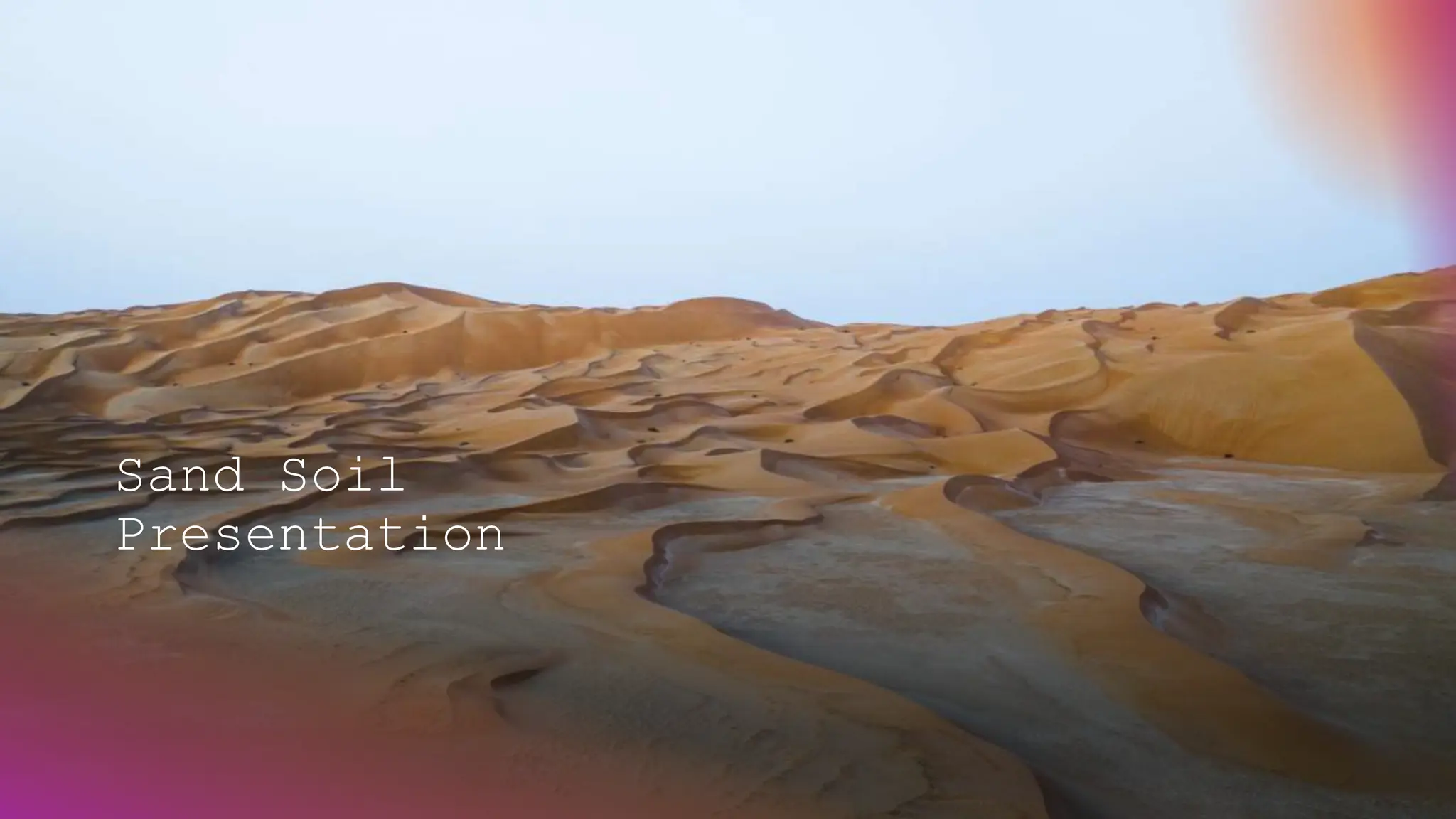
Sand Soil
Presentation
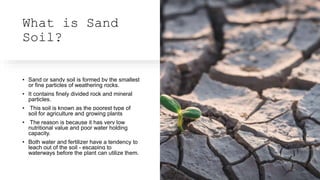
What is Sand
Soil?
• Sand or sandy soil is formed by the smallest
or fine particles of weathering rocks.
• It contains finely divided rock and mineral
particles.
• This soil is known as the poorest type of
soil for agriculture and growing plants
• The reason is because it has very low
nutritional value and poor water holding
capacity.
• Both water and fertilizer have a tendency to
leach out of the soil - escaping to
waterways before the plant can utilize them.
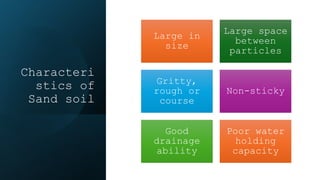
Characteri
stics of
Sand soil
Large in
size
Large space
between
particles
Gritty,
rough or
course
Non-sticky
Good
drainage
ability
Poor water
holding
capacity
Crops
grown in
sand soil
and why
Sandy soils are good for growing a
wide range of crops.
The crops that grow well in sandy
soil include carrot, beetroot,
cucumber, muskmelon, watermelon,
fenugreek, radish etc
Importantly, sands allow the majority
of the stored water to be accessed by
crops, and 95% of soil water can be
extracted by a healthy cereal crop.
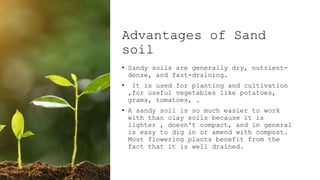
Advantages of Sand
soil
• Sandy soils are generally dry, nutrient-
dense, and fast-draining.
• It is used for planting and cultivation
,for useful vegetables like potatoes,
grams, tomatoes, .
• A sandy soil is so much easier to work
with than clay soils because it is
lighter , doesn't compact, and in general
is easy to dig in or amend with compost.
Most flowering plants benefit from the
fact that it is well drained.
Disadvantages of Sand
soil
low water retention
high water infiltration
low fertiliser and carbon storage
high susceptibility to erosion.
This makes the ecosystem naturally unstable. ( By this l mean
sandy soils have a restricted capacity for natural production as a
result of restricting soil characteristics ).
Sand Soil Presentation by MAKARURAMA.pptx

Sand Soil Presentation by MAKARURAMA.pptx

  • 1.
  • 2.
    What is Sand Soil? •Sand or sandy soil is formed by the smallest or fine particles of weathering rocks. • It contains finely divided rock and mineral particles. • This soil is known as the poorest type of soil for agriculture and growing plants • The reason is because it has very low nutritional value and poor water holding capacity. • Both water and fertilizer have a tendency to leach out of the soil - escaping to waterways before the plant can utilize them.
  • 3.
    Characteri stics of Sand soil Largein size Large space between particles Gritty, rough or course Non-sticky Good drainage ability Poor water holding capacity
  • 4.
    Crops grown in sand soil andwhy Sandy soils are good for growing a wide range of crops. The crops that grow well in sandy soil include carrot, beetroot, cucumber, muskmelon, watermelon, fenugreek, radish etc Importantly, sands allow the majority of the stored water to be accessed by crops, and 95% of soil water can be extracted by a healthy cereal crop.
  • 5.
    Advantages of Sand soil •Sandy soils are generally dry, nutrient- dense, and fast-draining. • It is used for planting and cultivation ,for useful vegetables like potatoes, grams, tomatoes, . • A sandy soil is so much easier to work with than clay soils because it is lighter , doesn't compact, and in general is easy to dig in or amend with compost. Most flowering plants benefit from the fact that it is well drained.
  • 6.
    Disadvantages of Sand soil lowwater retention high water infiltration low fertiliser and carbon storage high susceptibility to erosion. This makes the ecosystem naturally unstable. ( By this l mean sandy soils have a restricted capacity for natural production as a result of restricting soil characteristics ).