17/05/2017
1
SAFETY WHO
SAFETY LEADERSHIP DIFFERENTLY...
17/05/2017
2
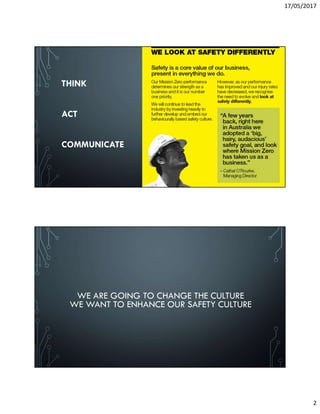
THINK
ACT
COMMUNICATE
WE ARE GOING TO CHANGE THE CULTURE
WE WANT TO ENHANCE OUR SAFETY CULTURE
17/05/2017
3
(HUDSON, 2001)
LEADERS
ACTIONS
SHAPE
PERCEPTIONS
(SCHEIN, 1992)
PERCEPTIONS
REFLECT
SAFETY
CLIMATE
(SCHNEIDER ET AL, 1996)
LEADERS
INFLUENCE
SAFETY
CLIMATE
(BLUFF, 2011)
+ =
17/05/2017
4
‘The relationship between board
members and senior executives
provides the structure through which the
vision and commitment to safety is set’
(FERGUSON, 2015)
SYSTEMS ARE
ABLE TO
SUCCEED UNDER
VARYING
CONDITIONS
(HOLLNAGEL, 2014)
AN INVESTMENT
IN SAFETY
IS
AN INVESTMENT
IN PRODUCTIVITY
(HUDSON, 2001)
17/05/2017
5
A Safety Leadership Quest began….
17/05/2017
6
‘What are the actions that you would
expect to see from the leaders in your
work area, and across the organisation
that would demonstrate to you that they
are committed to your health and safety
at work?’
17/05/2017
7
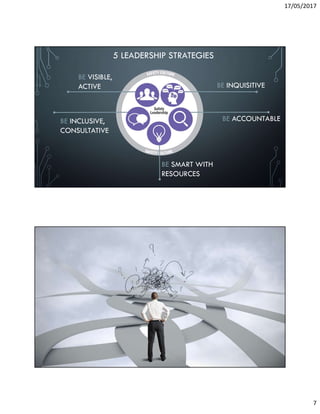
BE ACCOUNTABLE
BE VISIBLE,
ACTIVE
BE INCLUSIVE,
CONSULTATIVE
BE SMART WITH
RESOURCES
BE INQUISITIVE
5 LEADERSHIP STRATEGIES
17/05/2017
8
17/05/2017
9
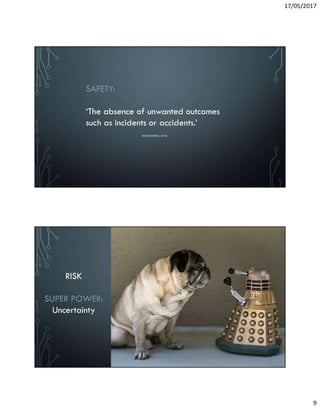
SAFETY:
‘The absence of unwanted outcomes
such as incidents or accidents.’
(EUROCONTROL, 2013)
RISK
SUPER POWER:
Uncertainty
17/05/2017
10
VARIABILITY
SUPER POWER:
Uncertainty
Ability to make
risk more powerful
SAFETY 2.0
17/05/2017
11
Dr Who are you?
Dr Who are you?
BE VISIBLE,
ACTIVE
BE INCLUSIVE,
CONSULTATIVE
BE SMART WITH
RESOURCES
BE ACCOUNTABLE
BE INQUISITIVE
17/05/2017
12
‘Build their belief in their capacity to execute
behaviour necessary to produce specific
performance result.’
(BANDURA, 1977).
Level 1 2 3 4 5
Monitoring
and
Intervention
Rituals and
Coaching
Conversation
and
Consultation
Empathy
and
Innovation
LEADERSHIP IN ACTION
17/05/2017
13
Level 1 2 3 4 5
Monitoring
and
Intervention
Complete Risk
Factor Protocol
(1/week)
Complete Risk
Factor Protocols
(3/week)
Complete scheduled
/ target for Risk
Factor Protocols
Call to Action
Structured follow-up
of deviations/ non-
conformity observed
during risk factor
protocols
Complete Risk
Factor Control Check
or Formal Review
(2/yr)
Rituals and
Coaching
Monthly
workplace/floor
walk
Attend a Quarterly
debrief session
Weekly
workplace/floor
walk
Attend a Monthly
debrief session
Weekly
workplace/floor
walk
Attend a weekly
debrief session
Annual coaching
session by Leaders /
Supervisors
Host annual wellness
event
Bi-annual coaching
session by Leaders /
Supervisors
Host bi-annual
wellness event
Conversation
and
Consultation
70% weekly team
meetings conducted
& documented
90% weekly team
meetings conducted
& documented
Team Call to Action
based on safety
debrief / protocol
feedback
Leaders /
Supervisors
participation in team
meetings (1
team/yr)
Leaders /
Supervisors
participation in team
meetings (2
teams/yr)
Empathy
and
Innovation
Quarterly
Appreciative Inquiry
with support
resource (OHSD)
Theme: Difficulties
Monthly
Appreciative Inquiry
with OHS Manager
Theme: Difficulties /
Success
Share/present
learnings from
Appreciative Inquiry
(Annual)
Share/present
learnings from
Appreciative Inquiry
(Biannual)
Support an
Appreciative Inquiry
in an external
organisational unit
(1/yr)
LEADERSHIP IN ACTION
GOALS
RULES
FEEDBACK
(FOX, 2014)
PURPOSE
MASTERY
AUTONOMY
(DECI & RYAN, 2000)
~
~
~
17/05/2017
14
What are the work conditions you feel
you just have to tolerate around here?
fine
earn
eam-up
ct

Safety Who

  • 1.
  • 2.
    17/05/2017 2 THINK ACT COMMUNICATE WE ARE GOINGTO CHANGE THE CULTURE WE WANT TO ENHANCE OUR SAFETY CULTURE
  • 3.
  • 4.
    17/05/2017 4 ‘The relationship betweenboard members and senior executives provides the structure through which the vision and commitment to safety is set’ (FERGUSON, 2015) SYSTEMS ARE ABLE TO SUCCEED UNDER VARYING CONDITIONS (HOLLNAGEL, 2014) AN INVESTMENT IN SAFETY IS AN INVESTMENT IN PRODUCTIVITY (HUDSON, 2001)
  • 5.
  • 6.
    17/05/2017 6 ‘What are theactions that you would expect to see from the leaders in your work area, and across the organisation that would demonstrate to you that they are committed to your health and safety at work?’
  • 7.
    17/05/2017 7 BE ACCOUNTABLE BE VISIBLE, ACTIVE BEINCLUSIVE, CONSULTATIVE BE SMART WITH RESOURCES BE INQUISITIVE 5 LEADERSHIP STRATEGIES
  • 8.
  • 9.
    17/05/2017 9 SAFETY: ‘The absence ofunwanted outcomes such as incidents or accidents.’ (EUROCONTROL, 2013) RISK SUPER POWER: Uncertainty
  • 10.
  • 11.
    17/05/2017 11 Dr Who areyou? Dr Who are you? BE VISIBLE, ACTIVE BE INCLUSIVE, CONSULTATIVE BE SMART WITH RESOURCES BE ACCOUNTABLE BE INQUISITIVE
  • 12.
    17/05/2017 12 ‘Build their beliefin their capacity to execute behaviour necessary to produce specific performance result.’ (BANDURA, 1977). Level 1 2 3 4 5 Monitoring and Intervention Rituals and Coaching Conversation and Consultation Empathy and Innovation LEADERSHIP IN ACTION
  • 13.
    17/05/2017 13 Level 1 23 4 5 Monitoring and Intervention Complete Risk Factor Protocol (1/week) Complete Risk Factor Protocols (3/week) Complete scheduled / target for Risk Factor Protocols Call to Action Structured follow-up of deviations/ non- conformity observed during risk factor protocols Complete Risk Factor Control Check or Formal Review (2/yr) Rituals and Coaching Monthly workplace/floor walk Attend a Quarterly debrief session Weekly workplace/floor walk Attend a Monthly debrief session Weekly workplace/floor walk Attend a weekly debrief session Annual coaching session by Leaders / Supervisors Host annual wellness event Bi-annual coaching session by Leaders / Supervisors Host bi-annual wellness event Conversation and Consultation 70% weekly team meetings conducted & documented 90% weekly team meetings conducted & documented Team Call to Action based on safety debrief / protocol feedback Leaders / Supervisors participation in team meetings (1 team/yr) Leaders / Supervisors participation in team meetings (2 teams/yr) Empathy and Innovation Quarterly Appreciative Inquiry with support resource (OHSD) Theme: Difficulties Monthly Appreciative Inquiry with OHS Manager Theme: Difficulties / Success Share/present learnings from Appreciative Inquiry (Annual) Share/present learnings from Appreciative Inquiry (Biannual) Support an Appreciative Inquiry in an external organisational unit (1/yr) LEADERSHIP IN ACTION GOALS RULES FEEDBACK (FOX, 2014) PURPOSE MASTERY AUTONOMY (DECI & RYAN, 2000) ~ ~ ~
  • 14.
    17/05/2017 14 What are thework conditions you feel you just have to tolerate around here? fine earn eam-up ct