


SAE Aero designForKjsceHusein Bhinderwala
is an annual design competition which takes place in Forth Worth Texas every year in the month of March. This is an international event and attracts aerospace enthusiasts from around the world.
Video
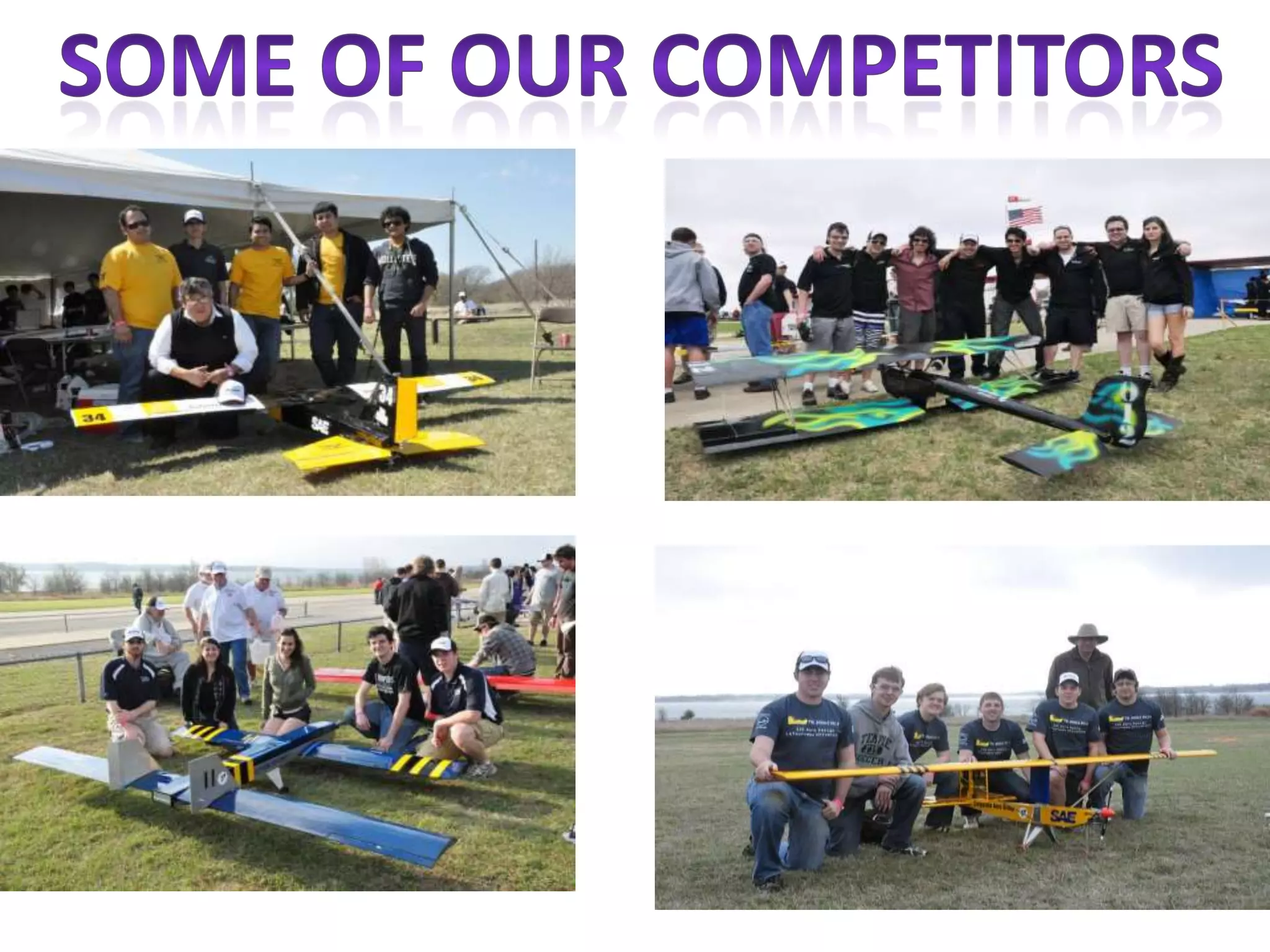
Some of our competitors
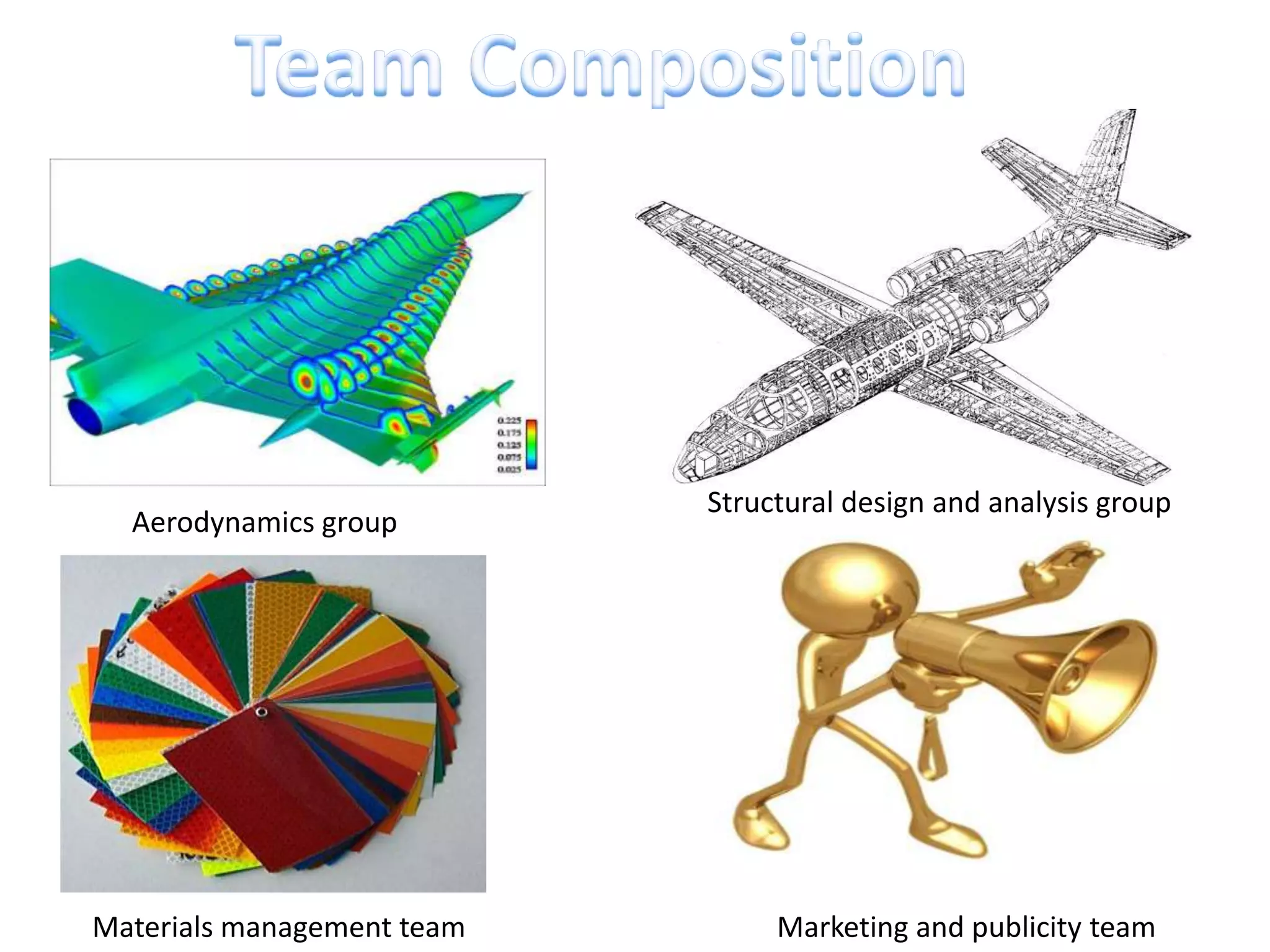
Team CompositionStructural design and analysis groupAerodynamics group Materials management teamMarketing and publicity team
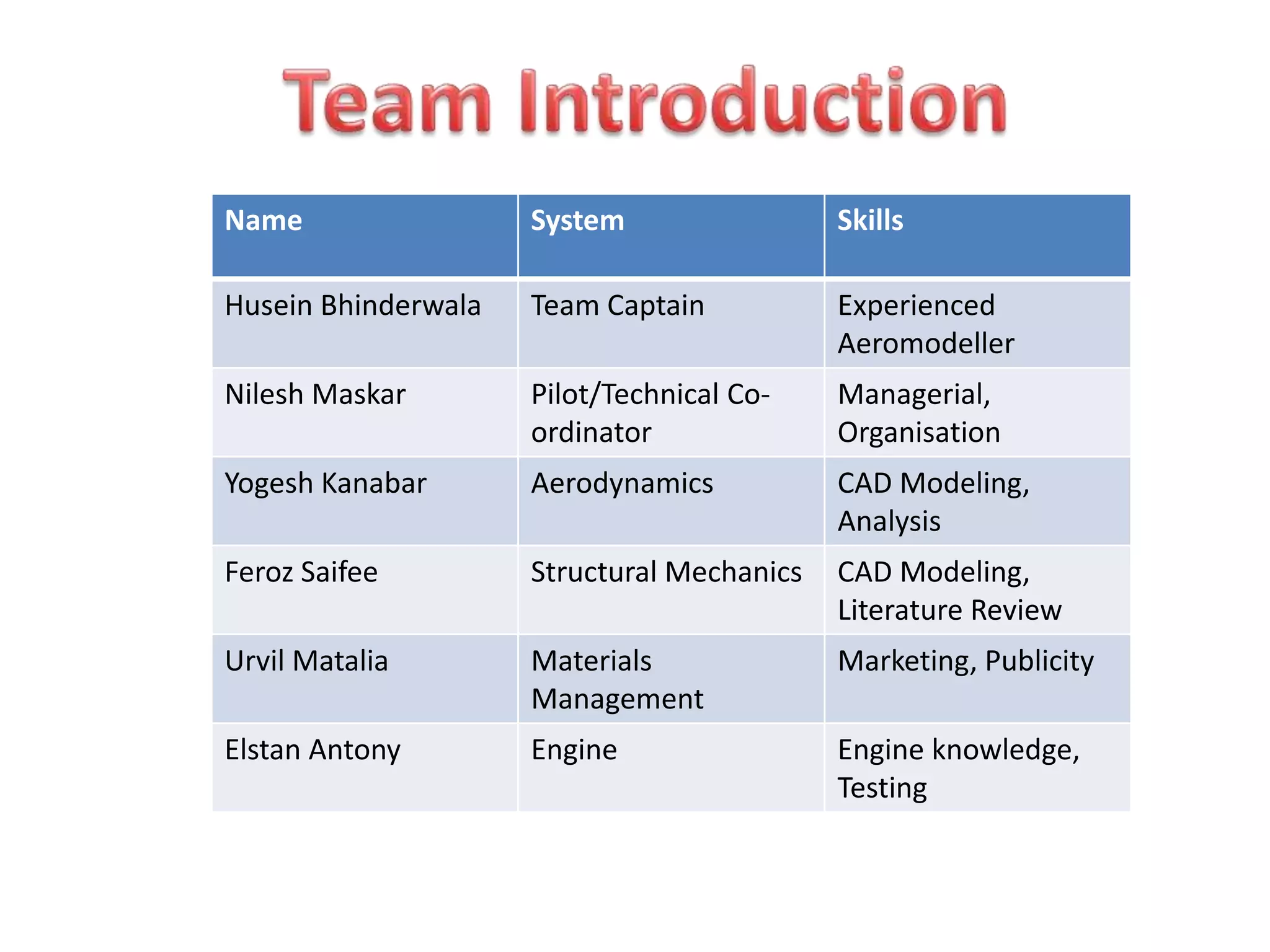
Team Introduction
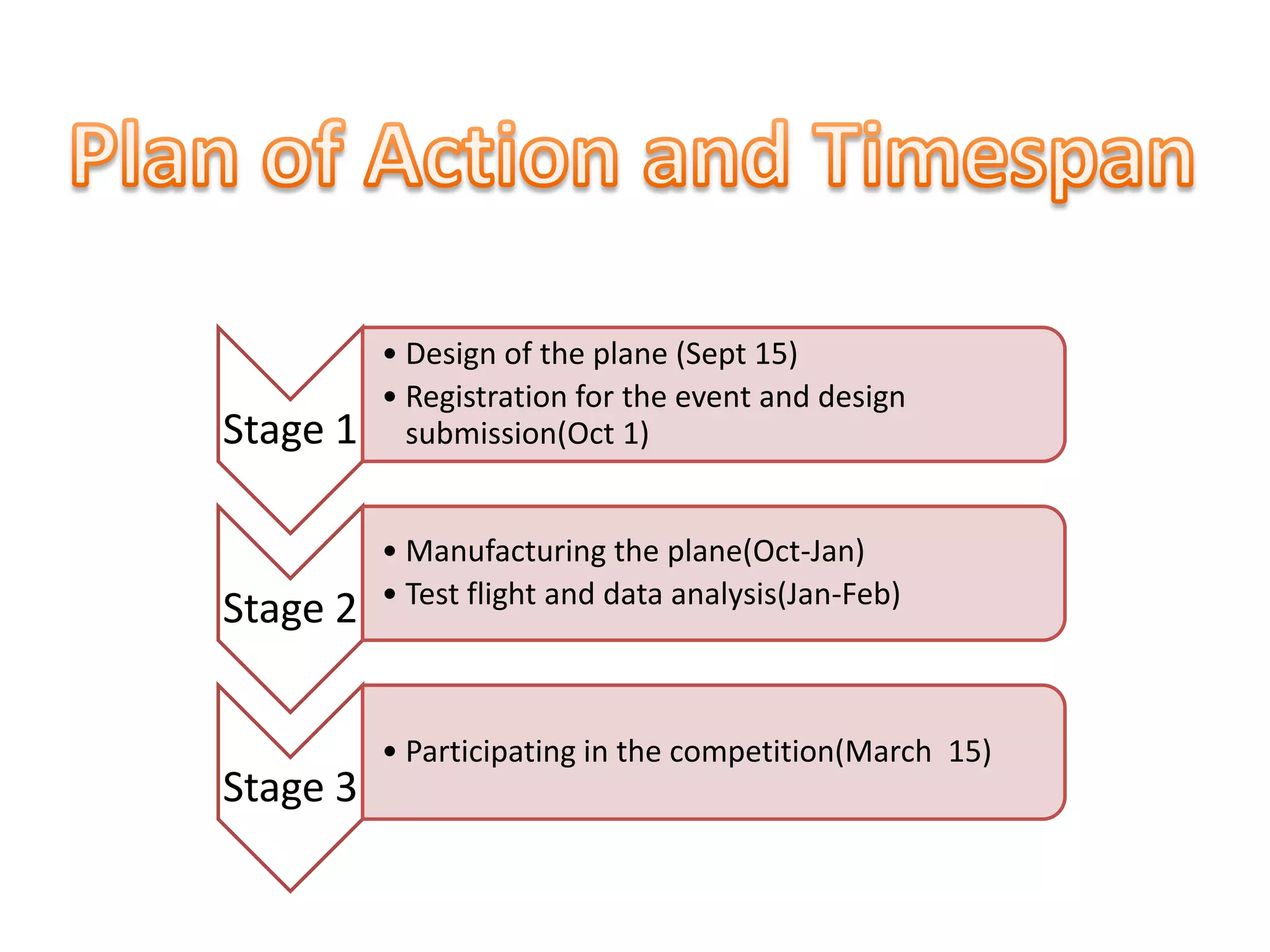
Plan of Action and Timespan
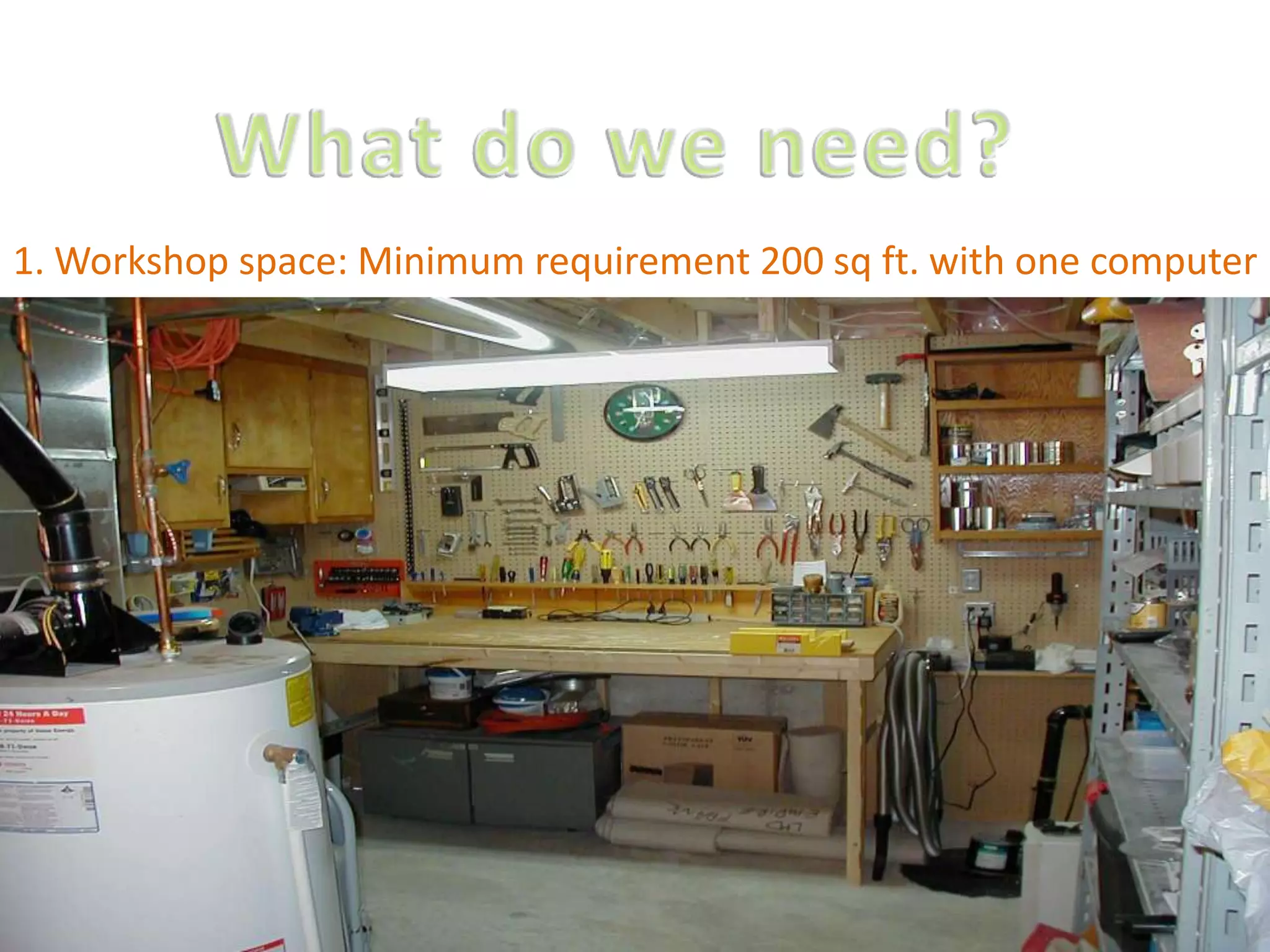
What do we need?1. Workshop space: Minimum requirement 200 sq ft. with one computer
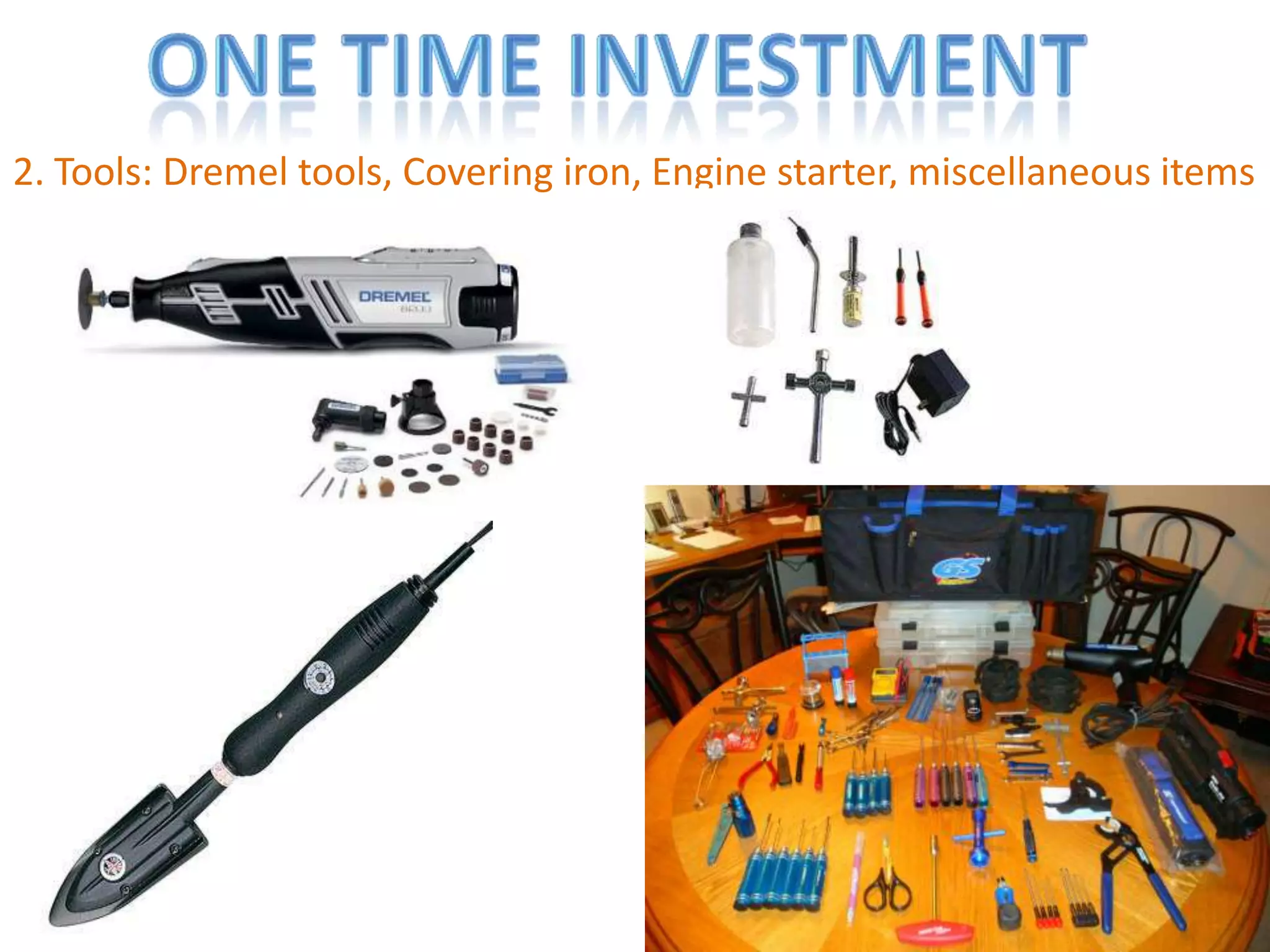
One time investment2. Tools: Dremel tools, Covering iron, Engine starter, miscellaneous items
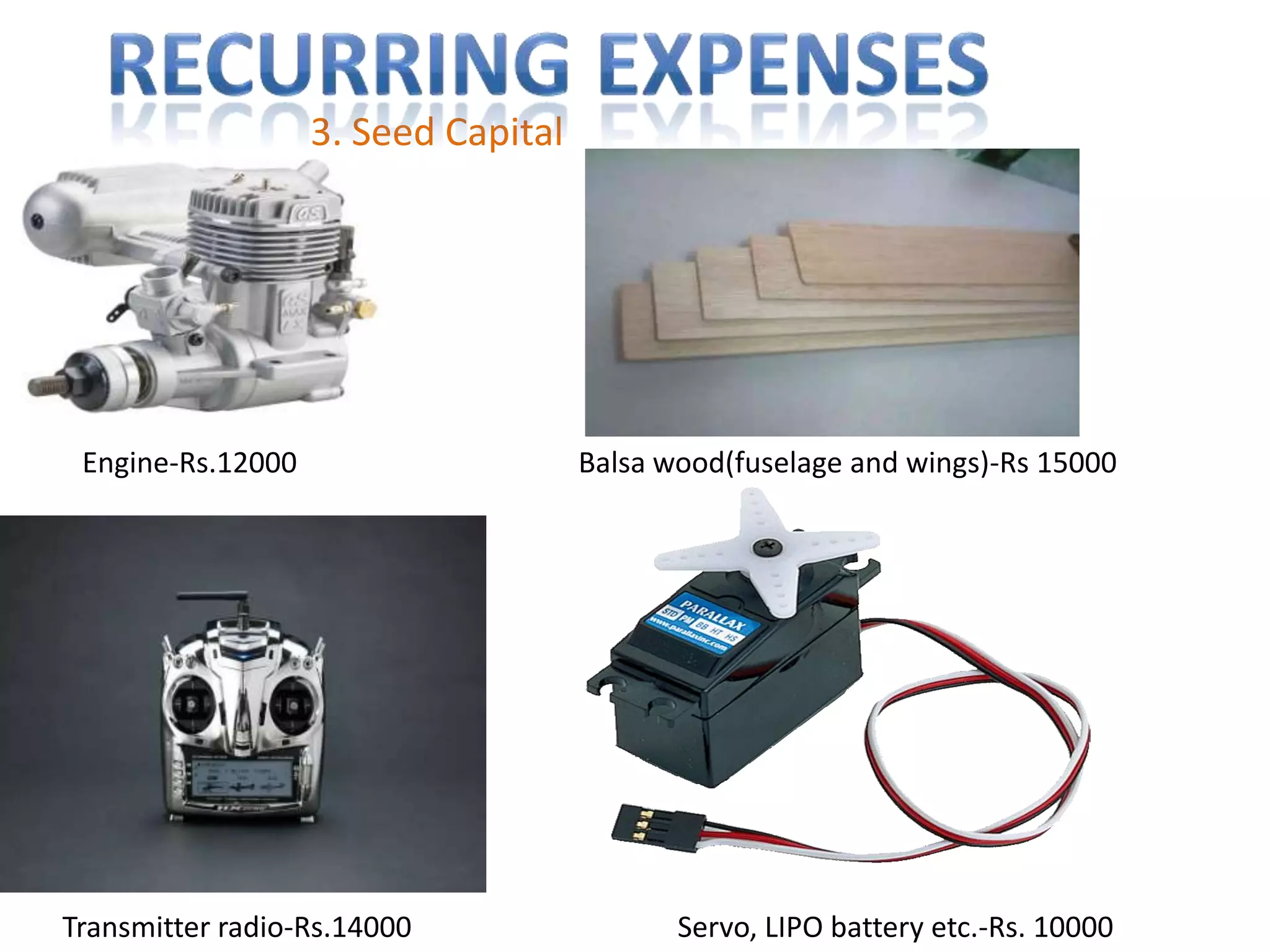
Recurring Expenses3. Seed CapitalEngine-Rs.12000Balsa wood(fuselage and wings)-Rs 15000Transmitter radio-Rs.14000Servo, LIPO battery etc.-Rs. 10000
SAE Aero
SAE Aero

SAE Aero

Editor's Notes

  • #3 The Aero Design competition is intended to provide undergraduate and graduate engineering students with a real-life engineering challenge. The competition has been designed to provide exposure to the kinds of situations that engineers face in their real-life work environment. First and foremost a design competition, students will find themselves performing trade studies and making compromises to arrive at a design solution that will optimally meet the mission requirements while still conforming to the configuration limitations.The importance of interpersonal communication skills is sometimes overlooked, yet both written and oral communication skills are vital in the engineering workplace. To help teams develop these skills, a high percentage of a team's score is devoted to the design report and the oral presentation required in the competition.Aero Design features three classes of competition—Regular, Advance, and Micro. Regular Class continues to be the class with the purpose to develop the fundamental understanding of flight. We recommended for first year teams interested in competing. Advance Class requires teams to have a systems approach to the design while integrating several engineering disciplines: aeronautical, mechanical, electrical, and computer engineers. The ultimate end goal for this class is autonomous flight with a "purpose" decided every year by rules committee members. Micro Class teams are required to make trades between two potentially conflicting requirements, carrying the highest payload fraction possible, while simultaneously pursuing the lowest empty weight possible. Starting in 2011, Micro Class is going all electric.