WORSHIP THE CREATOR
Lesson 6 for August 10, 2019
Adopted from www.fustero.es
www.gmahktanjungpinang.org
“ ‘Is this not the fast that I have chosen: to loose
the bonds of wickedness, to undo the heavy
burdens, to let the oppressed go free, and that you
break every yoke? Is it not to share your bread
with the hungry, and that you bring to your house
the poor who are cast out; when you see the
naked, that you cover him, and not hide yourself
from your own flesh?’ ” (Isaiah 58:6, 7, NKJV).”
Whom should we worship?
Worshipping idols
Worshipping the Creator
How should we worship?
External worship
A life of worship
Whom should we worship? And how?
The prophets expressed God's
complaint about those who don't
worship Him and those who just
pretend to worship Him.
Worship is not an act but an attitude.
Our worship is a manifestation of
serving God and living close to Him,
the only One worthy to be
worshipped (Psalm 96:4).
WORSHIPPING IDOLS
“Their idols are silver and gold, the work of men’s
hands […] Those who make them are like them; so is
everyone who trusts in them.” (Psalm 115:4, 8)
God's commandments were clear, “You shall
have no other gods” and “You shall not make
for yourself a carved image” (Exodus 20:3-4).
However, the people of Israel made an image
of a calf and worshipped it
(Ex. 32:4; 1K. 12:28).
After some time, they also worshipped other
gods and became like them: capricious,
bloodthirsty, immoral…
They began to treat others unfairly instead of
sowing justice. This was a natural
consequence of them worshipping unfair gods.
Why should we worship God (Dt. 10:17-22;
Ps. 146:5-10; Is. 61:11)?
He is great, powerful and fearsome
He has respect of persons
He doesn't accept bribery
He is fair to the orphans and widows
He loves the stranger and provides bread and clothes
He made heavens and Earth
He gives bread to the hungry
He sets the captives free
He opens the eyes of the blind
He raises the fallen
He loves the righteous
He makes justice and praise flow
God is just and
merciful. He has
always cared for
His people and
for the poor and
oppressed
especially.
WORSHIPPING
THE CREATOR
“He is your praise, and He is your God, who has
done for you these great and awesome things
which your eyes have seen.” (Deuteronomy 10:21)
Isaiah 1:10-17 harshly condemns the
worship in the Temple at that time:
“I have had enough of burnt
offerings… even though you make
many prayers, I will not hear.”
God doesn't accept the external worship of
those who don't do justice and don't care
about the suffering and oppression of
others.
Which sacrifice can please God? A burnt
offering, a thousand or ten thousand? Maybe
a human sacrifice?
God is pleased with the sacrifice of acting
with justice and mercy (Micah 6:6-7).
EXTERNAL WORSHIP (1)
“I hate, I despise your feast days, and I do not
savor your sacred assemblies […] But let justice
run down like water, and righteousness like a
mighty stream.” (Amos 5:21, 24)
Why was God rejecting their worship?
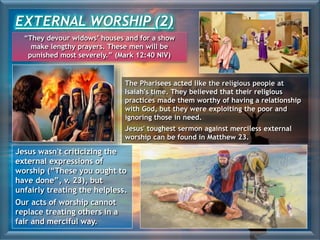
The Pharisees acted like the religious people at
Isaiah's time. They believed that their religious
practices made them worthy of having a relationship
with God, but they were exploiting the poor and
ignoring those in need.
Jesus' toughest sermon against merciless external
worship can be found in Matthew 23.
Jesus wasn't criticizing the
external expressions of
worship (“These you ought to
have done”, v. 23), but
unfairly treating the helpless.
Our acts of worship cannot
replace treating others in a
fair and merciful way.
EXTERNAL WORSHIP (2)
“They devour widows’ houses and for a show
make lengthy prayers. These men will be
punished most severely.” (Mark 12:40 NIV)
The people couldn't understand why God wasn't
listening when they fasted.
After all, they were humiliating themselves, bowing
their heads, dressing in sackcloth and laying on ashes.
However, they were seeking their own benefit by
oppressing their workers (Isaiah 58:1-5).
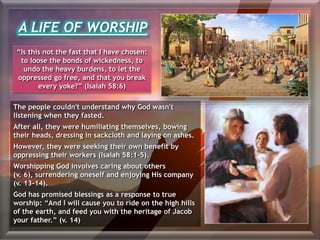
Worshipping God involves caring about others
(v. 6), surrendering oneself and enjoying His company
(v. 13-14).
God has promised blessings as a response to true
worship: “And I will cause you to ride on the high hills
of the earth, and feed you with the heritage of Jacob
your father.” (v. 14)
A LIFE OF WORSHIP
“Is this not the fast that I have chosen:
to loose the bonds of wickedness, to
undo the heavy burdens, to let the
oppressed go free, and that you break
every yoke?” (Isaiah 58:6)
“As the word of God is meditated upon and
practiced, the whole man will be ennobled. In
righteous and merciful dealing, the hands will
reveal, as a signet, the principles of God’s law.
They will be kept clean from bribes, and from
all that is corrupt and deceptive. They will be
active in works of love and compassion. The
eyes, directed toward a noble purpose, will be
clear and true. The expressive countenance,
the speaking eye, will testify to the blameless
character of him who loves and honors the
word of God.”
E.G.W. (The Desire of Ages, cp. 67, p. 612)

Sabbath school lesson 6, 3rd quarter 2019

  • 1.
    WORSHIP THE CREATOR Lesson6 for August 10, 2019 Adopted from www.fustero.es www.gmahktanjungpinang.org “ ‘Is this not the fast that I have chosen: to loose the bonds of wickedness, to undo the heavy burdens, to let the oppressed go free, and that you break every yoke? Is it not to share your bread with the hungry, and that you bring to your house the poor who are cast out; when you see the naked, that you cover him, and not hide yourself from your own flesh?’ ” (Isaiah 58:6, 7, NKJV).”
  • 2.
    Whom should weworship? Worshipping idols Worshipping the Creator How should we worship? External worship A life of worship Whom should we worship? And how? The prophets expressed God's complaint about those who don't worship Him and those who just pretend to worship Him. Worship is not an act but an attitude. Our worship is a manifestation of serving God and living close to Him, the only One worthy to be worshipped (Psalm 96:4).
  • 3.
    WORSHIPPING IDOLS “Their idolsare silver and gold, the work of men’s hands […] Those who make them are like them; so is everyone who trusts in them.” (Psalm 115:4, 8) God's commandments were clear, “You shall have no other gods” and “You shall not make for yourself a carved image” (Exodus 20:3-4). However, the people of Israel made an image of a calf and worshipped it (Ex. 32:4; 1K. 12:28). After some time, they also worshipped other gods and became like them: capricious, bloodthirsty, immoral… They began to treat others unfairly instead of sowing justice. This was a natural consequence of them worshipping unfair gods.
  • 4.
    Why should weworship God (Dt. 10:17-22; Ps. 146:5-10; Is. 61:11)? He is great, powerful and fearsome He has respect of persons He doesn't accept bribery He is fair to the orphans and widows He loves the stranger and provides bread and clothes He made heavens and Earth He gives bread to the hungry He sets the captives free He opens the eyes of the blind He raises the fallen He loves the righteous He makes justice and praise flow God is just and merciful. He has always cared for His people and for the poor and oppressed especially. WORSHIPPING THE CREATOR “He is your praise, and He is your God, who has done for you these great and awesome things which your eyes have seen.” (Deuteronomy 10:21)
  • 5.
    Isaiah 1:10-17 harshlycondemns the worship in the Temple at that time: “I have had enough of burnt offerings… even though you make many prayers, I will not hear.” God doesn't accept the external worship of those who don't do justice and don't care about the suffering and oppression of others. Which sacrifice can please God? A burnt offering, a thousand or ten thousand? Maybe a human sacrifice? God is pleased with the sacrifice of acting with justice and mercy (Micah 6:6-7). EXTERNAL WORSHIP (1) “I hate, I despise your feast days, and I do not savor your sacred assemblies […] But let justice run down like water, and righteousness like a mighty stream.” (Amos 5:21, 24) Why was God rejecting their worship?
  • 6.
    The Pharisees actedlike the religious people at Isaiah's time. They believed that their religious practices made them worthy of having a relationship with God, but they were exploiting the poor and ignoring those in need. Jesus' toughest sermon against merciless external worship can be found in Matthew 23. Jesus wasn't criticizing the external expressions of worship (“These you ought to have done”, v. 23), but unfairly treating the helpless. Our acts of worship cannot replace treating others in a fair and merciful way. EXTERNAL WORSHIP (2) “They devour widows’ houses and for a show make lengthy prayers. These men will be punished most severely.” (Mark 12:40 NIV)
  • 7.
    The people couldn'tunderstand why God wasn't listening when they fasted. After all, they were humiliating themselves, bowing their heads, dressing in sackcloth and laying on ashes. However, they were seeking their own benefit by oppressing their workers (Isaiah 58:1-5). Worshipping God involves caring about others (v. 6), surrendering oneself and enjoying His company (v. 13-14). God has promised blessings as a response to true worship: “And I will cause you to ride on the high hills of the earth, and feed you with the heritage of Jacob your father.” (v. 14) A LIFE OF WORSHIP “Is this not the fast that I have chosen: to loose the bonds of wickedness, to undo the heavy burdens, to let the oppressed go free, and that you break every yoke?” (Isaiah 58:6)
  • 8.
    “As the wordof God is meditated upon and practiced, the whole man will be ennobled. In righteous and merciful dealing, the hands will reveal, as a signet, the principles of God’s law. They will be kept clean from bribes, and from all that is corrupt and deceptive. They will be active in works of love and compassion. The eyes, directed toward a noble purpose, will be clear and true. The expressive countenance, the speaking eye, will testify to the blameless character of him who loves and honors the word of God.” E.G.W. (The Desire of Ages, cp. 67, p. 612)