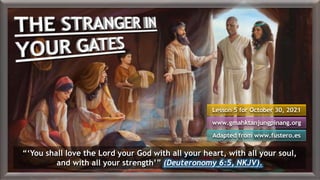
“‘You shall love the Lord your God with all your heart, with all your soul,
and with all your strength’” (Deuteronomy 6:5, NKJV).
Lesson 5 for October 30, 2021
Adapted from www.fustero.es
www.gmahktanjungpinang.org
 What do we need to love the stranger?
 Why should we love the stranger?
 Because God loves them
 Because we are strangers too
 How should we treat the stranger?
 Treating them fairly
 Caring for them
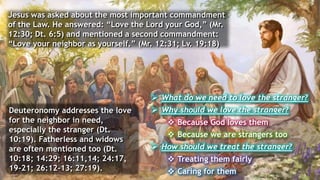
Jesus was asked about the most important commandment
of the Law. He answered: “Love the Lord your God,” (Mr.
12:30; Dt. 6:5) and mentioned a second commandment:
“Love your neighbor as yourself.” (Mr. 12:31; Lv. 19:18)
Deuteronomy addresses the love
for the neighbor in need,
especially the stranger (Dt.
10:19). Fatherless and widows
are often mentioned too (Dt.
10:18; 14:29; 16:11,14; 24:17,
19-21; 26:12-13; 27:19).
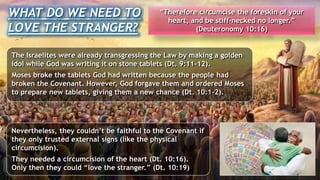
The Israelites were already transgressing the Law by making a golden
idol while God was writing it on stone tablets (Dt. 9:11-12).
Moses broke the tablets God had written because the people had
broken the Covenant. However, God forgave them and ordered Moses
to prepare new tablets, giving them a new chance (Dt. 10:1-2).
WHAT DO WE NEED TO
LOVE THE STRANGER?
“Therefore circumcise the foreskin of your
heart, and be stiff-necked no longer.”
(Deuteronomy 10:16)
Nevertheless, they couldn’t be faithful to the Covenant if
they only trusted external signs (like the physical
circumcision).
They needed a circumcision of the heart (Dt. 10:16).
Only then they could “love the stranger.” (Dt. 10:19)
GOD LOVES THE
STRANGER
Deuteronomy 10:17-18 enumerates the reasons why we should love the stranger:
Because God is God of gods and Lord of lords
Because He is great, mighty, and awesome
Because He is not biased and
does not accept bribes
Because He defends the fatherless
and the widow
Because He loves the stranger,
giving them food and clothing
“He administers justice for the fatherless and
the widow, and loves the stranger, giving him
food and clothing.” (Deuteronomy 10:18)
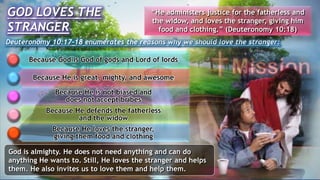
God is almighty. He does not need anything and can do
anything He wants to. Still, He loves the stranger and helps
them. He also invites us to love them and help them.
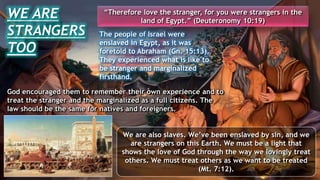
God encouraged them to remember their own experience and to
treat the stranger and the marginalized as a full citizens. The
law should be the same for natives and foreigners.
WE ARE
STRANGERS
TOO
The people of Israel were
enslaved in Egypt, as it was
foretold to Abraham (Gn. 15:13).
They experienced what is like to
be stranger and marginalized
firsthand.
“Therefore love the stranger, for you were strangers in the
land of Egypt.” (Deuteronomy 10:19)
We are also slaves. We’ve been enslaved by sin, and we
are strangers on this Earth. We must be a light that
shows the love of God through the way we lovingly treat
others. We must treat others as we want to be treated
(Mt. 7:12).
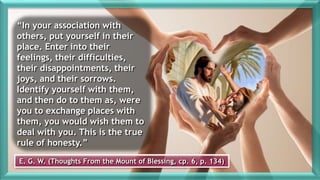
E. G. W. (Thoughts From the Mount of Blessing, cp. 6, p. 134)
“In your association with
others, put yourself in their
place. Enter into their
feelings, their difficulties,
their disappointments, their
joys, and their sorrows.
Identify yourself with them,
and then do to them as, were
you to exchange places with
them, you would wish them to
deal with you. This is the true
rule of honesty.”
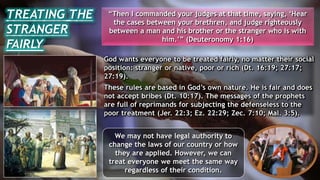
God wants everyone to be treated fairly, no matter their social
position: stranger or native, poor or rich (Dt. 16:19; 27:17;
27:19).
These rules are based in God’s own nature. He is fair and does
not accept bribes (Dt. 10:17). The messages of the prophets
are full of reprimands for subjecting the defenseless to the
poor treatment (Jer. 22:3; Ez. 22:29; Zec. 7:10; Mal. 3:5).
TREATING THE
STRANGER
FAIRLY
“Then I commanded your judges at that time, saying, ‘Hear
the cases between your brethren, and judge righteously
between a man and his brother or the stranger who is with
him.’” (Deuteronomy 1:16)
We may not have legal authority to
change the laws of our country or how
they are applied. However, we can
treat everyone we meet the same way
regardless of their condition.
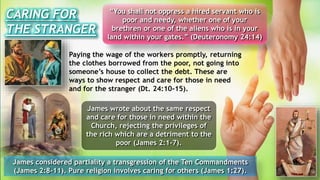
Paying the wage of the workers promptly, returning
the clothes borrowed from the poor, not going into
someone’s house to collect the debt. These are
ways to show respect and care for those in need
and for the stranger (Dt. 24:10-15).
James considered partiality a transgression of the Ten Commandments
(James 2:8-11). Pure religion involves caring for others (James 1:27).
CARING FOR
THE STRANGER
“You shall not oppress a hired servant who is
poor and needy, whether one of your
brethren or one of the aliens who is in your
land within your gates.” (Deuteronomy 24:14)
James wrote about the same respect
and care for those in need within the
Church, rejecting the privileges of
the rich which are a detriment to the
poor (James 2:1-7).
“Christ recognized no distinction of
nationality or rank or creed. The scribes
and Pharisees desired to make a local and
a national benefit of the gifts of heaven
and to exclude the rest of God’s family in
the world. But Christ came to break down
every wall of partition. He came to show
that His gift of mercy and love is as
unconfined as the air, the light, or the
showers of rain that refresh the earth.”
E. G. W. (The Ministry of Healing, cp. 1, p. 25)

Sabbath school lesson 5, 4th quarter 2021

  • 1.
    “‘You shall lovethe Lord your God with all your heart, with all your soul, and with all your strength’” (Deuteronomy 6:5, NKJV). Lesson 5 for October 30, 2021 Adapted from www.fustero.es www.gmahktanjungpinang.org
  • 2.
     What dowe need to love the stranger?  Why should we love the stranger?  Because God loves them  Because we are strangers too  How should we treat the stranger?  Treating them fairly  Caring for them Jesus was asked about the most important commandment of the Law. He answered: “Love the Lord your God,” (Mr. 12:30; Dt. 6:5) and mentioned a second commandment: “Love your neighbor as yourself.” (Mr. 12:31; Lv. 19:18) Deuteronomy addresses the love for the neighbor in need, especially the stranger (Dt. 10:19). Fatherless and widows are often mentioned too (Dt. 10:18; 14:29; 16:11,14; 24:17, 19-21; 26:12-13; 27:19).
  • 3.
    The Israelites werealready transgressing the Law by making a golden idol while God was writing it on stone tablets (Dt. 9:11-12). Moses broke the tablets God had written because the people had broken the Covenant. However, God forgave them and ordered Moses to prepare new tablets, giving them a new chance (Dt. 10:1-2). WHAT DO WE NEED TO LOVE THE STRANGER? “Therefore circumcise the foreskin of your heart, and be stiff-necked no longer.” (Deuteronomy 10:16) Nevertheless, they couldn’t be faithful to the Covenant if they only trusted external signs (like the physical circumcision). They needed a circumcision of the heart (Dt. 10:16). Only then they could “love the stranger.” (Dt. 10:19)
  • 4.
    GOD LOVES THE STRANGER Deuteronomy10:17-18 enumerates the reasons why we should love the stranger: Because God is God of gods and Lord of lords Because He is great, mighty, and awesome Because He is not biased and does not accept bribes Because He defends the fatherless and the widow Because He loves the stranger, giving them food and clothing “He administers justice for the fatherless and the widow, and loves the stranger, giving him food and clothing.” (Deuteronomy 10:18) God is almighty. He does not need anything and can do anything He wants to. Still, He loves the stranger and helps them. He also invites us to love them and help them.
  • 5.
    God encouraged themto remember their own experience and to treat the stranger and the marginalized as a full citizens. The law should be the same for natives and foreigners. WE ARE STRANGERS TOO The people of Israel were enslaved in Egypt, as it was foretold to Abraham (Gn. 15:13). They experienced what is like to be stranger and marginalized firsthand. “Therefore love the stranger, for you were strangers in the land of Egypt.” (Deuteronomy 10:19) We are also slaves. We’ve been enslaved by sin, and we are strangers on this Earth. We must be a light that shows the love of God through the way we lovingly treat others. We must treat others as we want to be treated (Mt. 7:12).
  • 6.
    E. G. W.(Thoughts From the Mount of Blessing, cp. 6, p. 134) “In your association with others, put yourself in their place. Enter into their feelings, their difficulties, their disappointments, their joys, and their sorrows. Identify yourself with them, and then do to them as, were you to exchange places with them, you would wish them to deal with you. This is the true rule of honesty.”
  • 7.
    God wants everyoneto be treated fairly, no matter their social position: stranger or native, poor or rich (Dt. 16:19; 27:17; 27:19). These rules are based in God’s own nature. He is fair and does not accept bribes (Dt. 10:17). The messages of the prophets are full of reprimands for subjecting the defenseless to the poor treatment (Jer. 22:3; Ez. 22:29; Zec. 7:10; Mal. 3:5). TREATING THE STRANGER FAIRLY “Then I commanded your judges at that time, saying, ‘Hear the cases between your brethren, and judge righteously between a man and his brother or the stranger who is with him.’” (Deuteronomy 1:16) We may not have legal authority to change the laws of our country or how they are applied. However, we can treat everyone we meet the same way regardless of their condition.
  • 8.
    Paying the wageof the workers promptly, returning the clothes borrowed from the poor, not going into someone’s house to collect the debt. These are ways to show respect and care for those in need and for the stranger (Dt. 24:10-15). James considered partiality a transgression of the Ten Commandments (James 2:8-11). Pure religion involves caring for others (James 1:27). CARING FOR THE STRANGER “You shall not oppress a hired servant who is poor and needy, whether one of your brethren or one of the aliens who is in your land within your gates.” (Deuteronomy 24:14) James wrote about the same respect and care for those in need within the Church, rejecting the privileges of the rich which are a detriment to the poor (James 2:1-7).
  • 9.
    “Christ recognized nodistinction of nationality or rank or creed. The scribes and Pharisees desired to make a local and a national benefit of the gifts of heaven and to exclude the rest of God’s family in the world. But Christ came to break down every wall of partition. He came to show that His gift of mercy and love is as unconfined as the air, the light, or the showers of rain that refresh the earth.” E. G. W. (The Ministry of Healing, cp. 1, p. 25)