Rural Marketing
PRESENTED BY
MANISHA
MBA FM Student
Definition
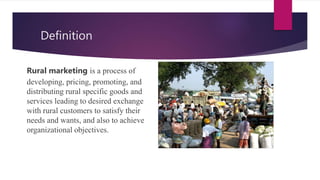
Rural marketing is a process of
developing, pricing, promoting, and
distributing rural specific goods and
services leading to desired exchange
with rural customers to satisfy their
needs and wants, and also to achieve
organizational objectives.
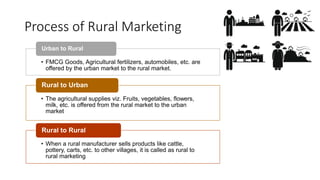
Process of Rural Marketing
• FMCG Goods, Agricultural fertilizers, automobiles, etc. are
offered by the urban market to the rural market.
Urban to Rural
• The agricultural supplies viz. Fruits, vegetables, flowers,
milk, etc. is offered from the rural market to the urban
market
Rural to Urban
• When a rural manufacturer sells products like cattle,
pottery, carts, etc. to other villages, it is called as rural to
rural marketing
Rural to Rural
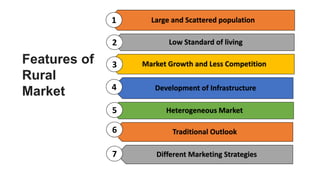
Large and Scattered population
Low Standard of living
Market Growth and Less Competition
Development of Infrastructure
Heterogeneous Market
Traditional Outlook
Different Marketing Strategies
Features of
Rural
Market
1
3
4
5
6
7
2
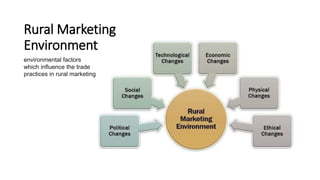
Rural Marketing Environment
• Dynamic rural market environment forms the basis
for consumer decisions ,also for marketers actions.
• Demographics, Physical, socio –cultural, political,
technological, economical, factors of rural market
environment and use it for strategic marketing plans
in rural markets
• When marketing activities are done in the rural
areas, it is necessary to know the conditions of rural
markets in terms of environment which is ever
changing.
Rural Marketing
Environment
environmental factors
which influence the trade
practices in rural marketing
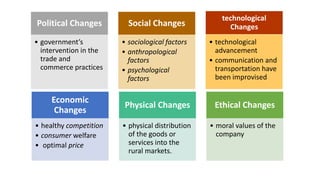
Political Changes
• government’s
intervention in the
trade and
commerce practices
Social Changes
• sociological factors
• anthropological
factors
• psychological
factors
technological
Changes
• technological
advancement
• communication and
transportation have
been improvised
Economic
Changes
• healthy competition
• consumer welfare
• optimal price
Physical Changes
• physical distribution
of the goods or
services into the
rural markets.
Ethical Changes
• moral values of the
company
Employment
opportunities
Overcrowding
of Urban
Market
Potential
of rural
Markets
Rural
Consuming
Rate
The Large
Population
Huge
Uncaptured
Market
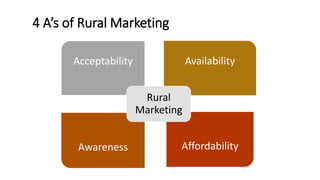
Acceptability Availability
Awareness Affordability
Rural
Marketing
4 A’s of Rural Marketing
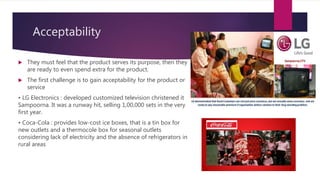
Acceptability
 They must feel that the product serves its purpose, then they
are ready to even spend extra for the product.
 The first challenge is to gain acceptability for the product or
service
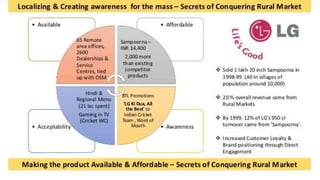
• LG Electronics : developed customized television christened it
Sampoorna. It was a runway hit, selling 1,00,000 sets in the very
first year.
• Coca-Cola : provides low-cost ice boxes, that is a tin box for
new outlets and a thermocole box for seasonal outlets
considering lack of electricity and the absence of refrigerators in
rural areas
Availability
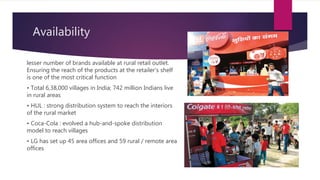
lesser number of brands available at rural retail outlet.
Ensuring the reach of the products at the retailer’s shelf
is one of the most critical function
• Total 6,38,000 villages in India; 742 million Indians live
in rural areas
• HUL : strong distribution system to reach the interiors
of the rural market
• Coca-Cola : evolved a hub-and-spoke distribution
model to reach villages
• LG has set up 45 area offices and 59 rural / remote area
offices
Affordability
 Cheaper product, designing products which
match the needs of rural consumers, at a price
that they feel.
 Low disposable income, daily wage earners
attract small unit packs.
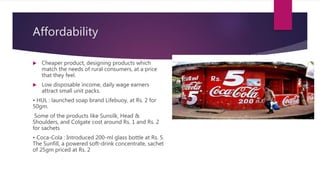
• HUL : launched soap brand Lifebuoy, at Rs. 2 for
50gm.
Some of the products like Sunsilk, Head &
Shoulders, and Colgate cost around Rs. 1 and Rs. 2
for sachets
• Coca-Cola : Introduced 200-ml glass bottle at Rs. 5.
The Sunfill, a powered soft-drink concentrate, sachet
of 25gm priced at Rs. 2
Awareness
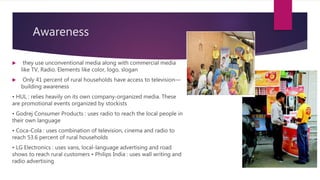
 they use unconventional media along with commercial media
like TV, Radio. Elements like color, logo, slogan
 Only 41 percent of rural households have access to television—
building awareness
• HUL : relies heavily on its own company-organized media. These
are promotional events organized by stockists
• Godrej Consumer Products : uses radio to reach the local people in
their own language
• Coca-Cola : uses combination of television, cinema and radio to
reach 53.6 percent of rural households
• LG Electronics : uses vans, local-language advertising and road
shows to reach rural customers • Philips India : uses wall writing and
radio advertising
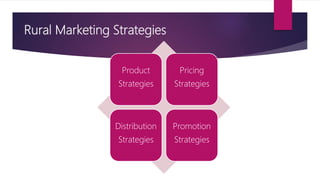
Rural Marketing Strategies
Product
Strategies
Pricing
Strategies
Distribution
Strategies
Promotion
Strategies
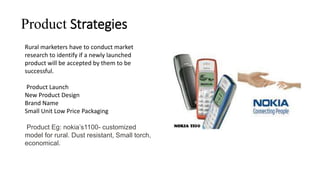
Product Strategies
Rural marketers have to conduct market
research to identify if a newly launched
product will be accepted by them to be
successful.
Product Launch
New Product Design
Brand Name
Small Unit Low Price Packaging
Product Eg: nokia’s1100- customized
model for rural. Dust resistant, Small torch,
economical.
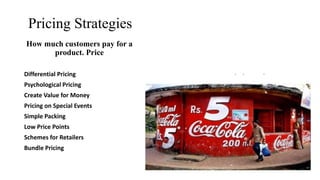
Pricing Strategies
How much customers pay for a
product. Price
Differential Pricing
Psychological Pricing
Create Value for Money
Pricing on Special Events
Simple Packing
Low Price Points
Schemes for Retailers
Bundle Pricing
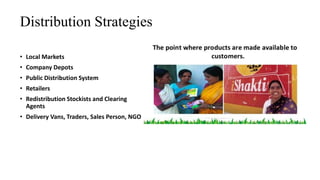
Distribution Strategies
• Local Markets
• Company Depots
• Public Distribution System
• Retailers
• Redistribution Stockists and Clearing
Agents
• Delivery Vans, Traders, Sales Person, NGO
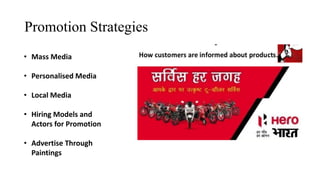
Promotion Strategies
• Mass Media
• Personalised Media
• Local Media
• Hiring Models and
Actors for Promotion
• Advertise Through
Paintings
Rural marketing by manisha

Rural marketing by manisha

  • 1.
  • 2.
    Definition Rural marketing isa process of developing, pricing, promoting, and distributing rural specific goods and services leading to desired exchange with rural customers to satisfy their needs and wants, and also to achieve organizational objectives.
  • 3.
    Process of RuralMarketing • FMCG Goods, Agricultural fertilizers, automobiles, etc. are offered by the urban market to the rural market. Urban to Rural • The agricultural supplies viz. Fruits, vegetables, flowers, milk, etc. is offered from the rural market to the urban market Rural to Urban • When a rural manufacturer sells products like cattle, pottery, carts, etc. to other villages, it is called as rural to rural marketing Rural to Rural
  • 4.
    Large and Scatteredpopulation Low Standard of living Market Growth and Less Competition Development of Infrastructure Heterogeneous Market Traditional Outlook Different Marketing Strategies Features of Rural Market 1 3 4 5 6 7 2
  • 5.
    Rural Marketing Environment •Dynamic rural market environment forms the basis for consumer decisions ,also for marketers actions. • Demographics, Physical, socio –cultural, political, technological, economical, factors of rural market environment and use it for strategic marketing plans in rural markets • When marketing activities are done in the rural areas, it is necessary to know the conditions of rural markets in terms of environment which is ever changing.
  • 6.
    Rural Marketing Environment environmental factors whichinfluence the trade practices in rural marketing
  • 7.
    Political Changes • government’s interventionin the trade and commerce practices Social Changes • sociological factors • anthropological factors • psychological factors technological Changes • technological advancement • communication and transportation have been improvised Economic Changes • healthy competition • consumer welfare • optimal price Physical Changes • physical distribution of the goods or services into the rural markets. Ethical Changes • moral values of the company
  • 8.
  • 9.
  • 10.
    Acceptability  They mustfeel that the product serves its purpose, then they are ready to even spend extra for the product.  The first challenge is to gain acceptability for the product or service • LG Electronics : developed customized television christened it Sampoorna. It was a runway hit, selling 1,00,000 sets in the very first year. • Coca-Cola : provides low-cost ice boxes, that is a tin box for new outlets and a thermocole box for seasonal outlets considering lack of electricity and the absence of refrigerators in rural areas
  • 11.
    Availability lesser number ofbrands available at rural retail outlet. Ensuring the reach of the products at the retailer’s shelf is one of the most critical function • Total 6,38,000 villages in India; 742 million Indians live in rural areas • HUL : strong distribution system to reach the interiors of the rural market • Coca-Cola : evolved a hub-and-spoke distribution model to reach villages • LG has set up 45 area offices and 59 rural / remote area offices
  • 12.
    Affordability  Cheaper product,designing products which match the needs of rural consumers, at a price that they feel.  Low disposable income, daily wage earners attract small unit packs. • HUL : launched soap brand Lifebuoy, at Rs. 2 for 50gm. Some of the products like Sunsilk, Head & Shoulders, and Colgate cost around Rs. 1 and Rs. 2 for sachets • Coca-Cola : Introduced 200-ml glass bottle at Rs. 5. The Sunfill, a powered soft-drink concentrate, sachet of 25gm priced at Rs. 2
  • 13.
    Awareness  they useunconventional media along with commercial media like TV, Radio. Elements like color, logo, slogan  Only 41 percent of rural households have access to television— building awareness • HUL : relies heavily on its own company-organized media. These are promotional events organized by stockists • Godrej Consumer Products : uses radio to reach the local people in their own language • Coca-Cola : uses combination of television, cinema and radio to reach 53.6 percent of rural households • LG Electronics : uses vans, local-language advertising and road shows to reach rural customers • Philips India : uses wall writing and radio advertising
  • 15.
  • 16.
    Product Strategies Rural marketershave to conduct market research to identify if a newly launched product will be accepted by them to be successful. Product Launch New Product Design Brand Name Small Unit Low Price Packaging Product Eg: nokia’s1100- customized model for rural. Dust resistant, Small torch, economical.
  • 17.
    Pricing Strategies How muchcustomers pay for a product. Price Differential Pricing Psychological Pricing Create Value for Money Pricing on Special Events Simple Packing Low Price Points Schemes for Retailers Bundle Pricing
  • 18.
    Distribution Strategies • LocalMarkets • Company Depots • Public Distribution System • Retailers • Redistribution Stockists and Clearing Agents • Delivery Vans, Traders, Sales Person, NGO
  • 19.
    Promotion Strategies • MassMedia • Personalised Media • Local Media • Hiring Models and Actors for Promotion • Advertise Through Paintings