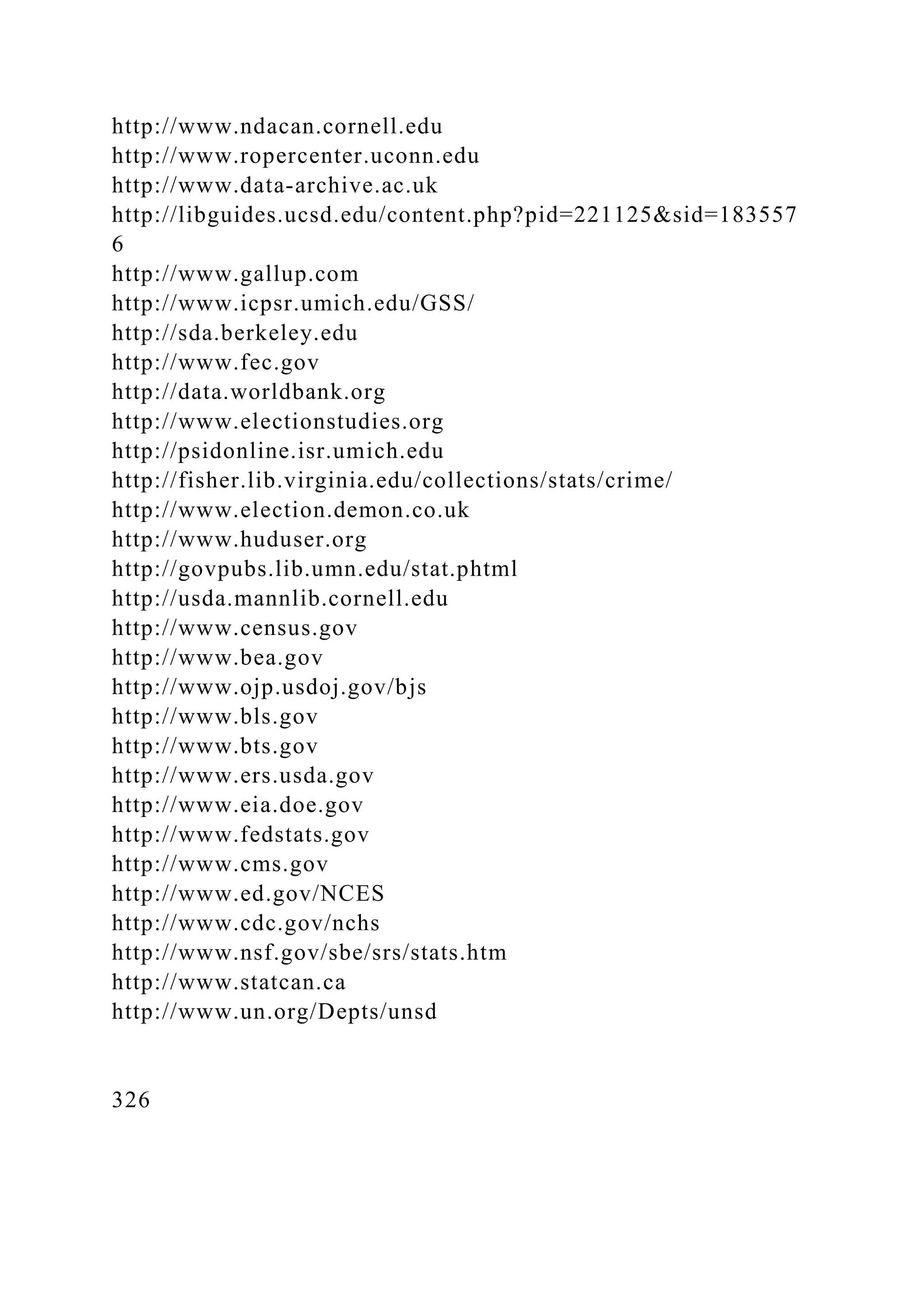
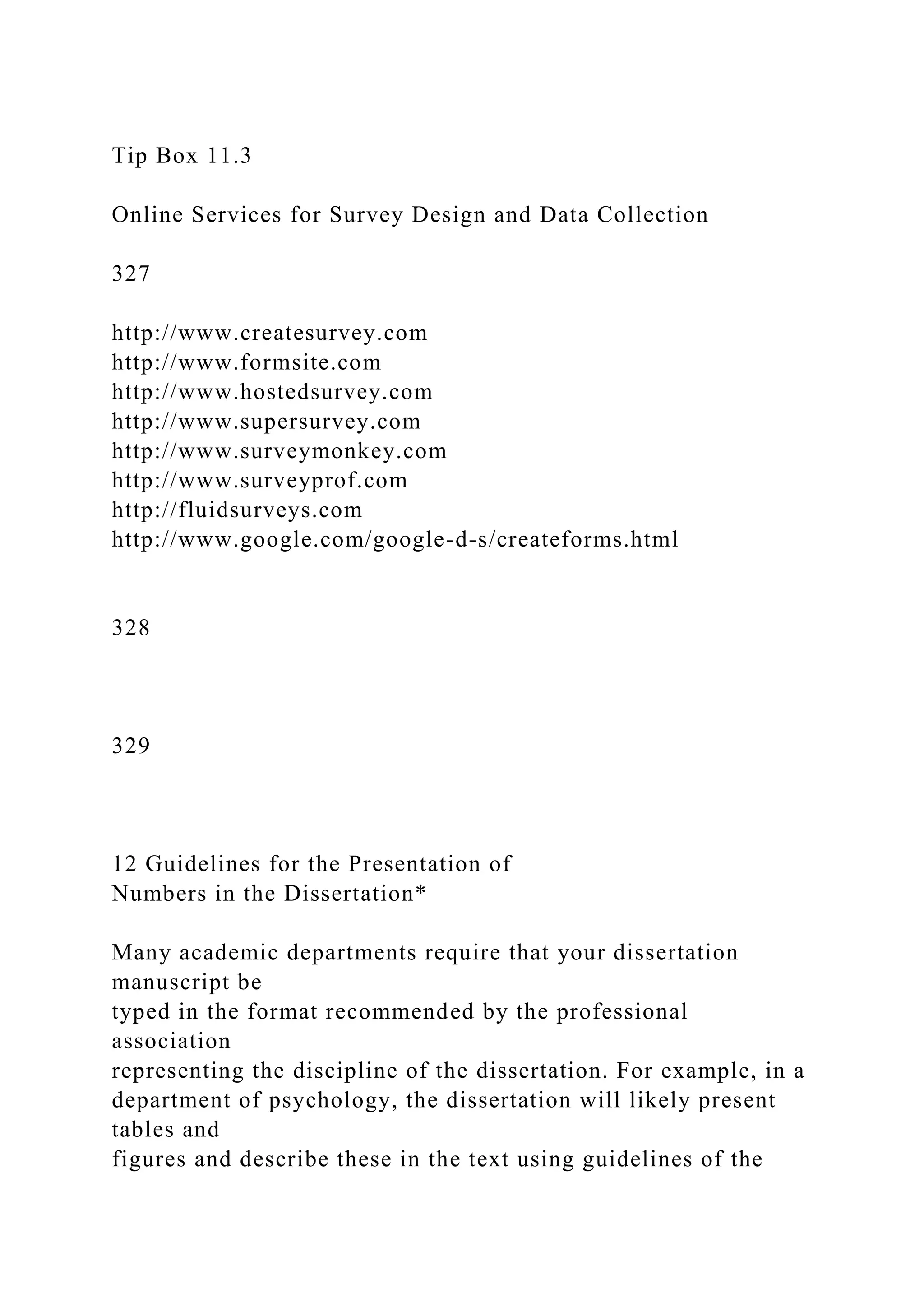
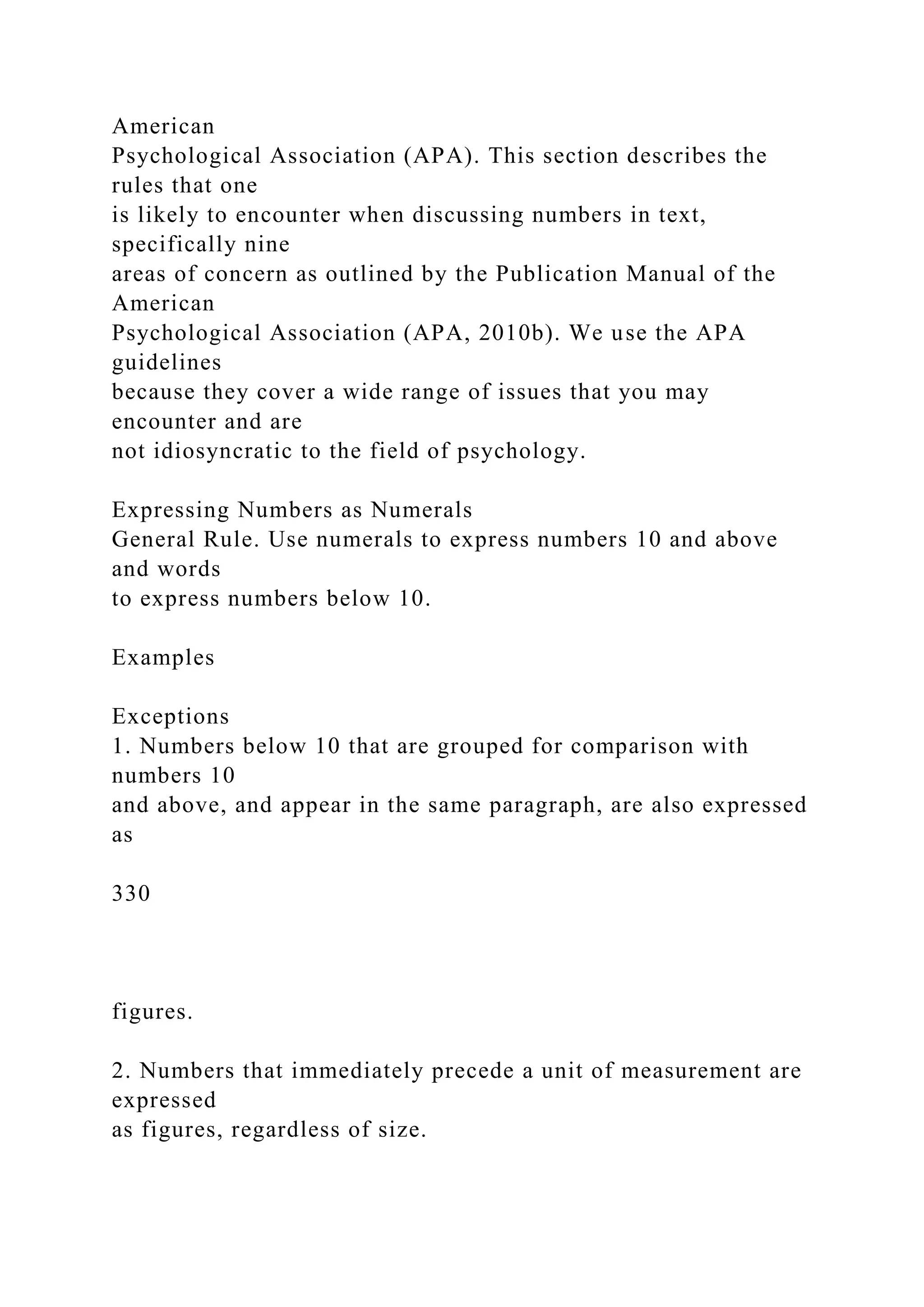
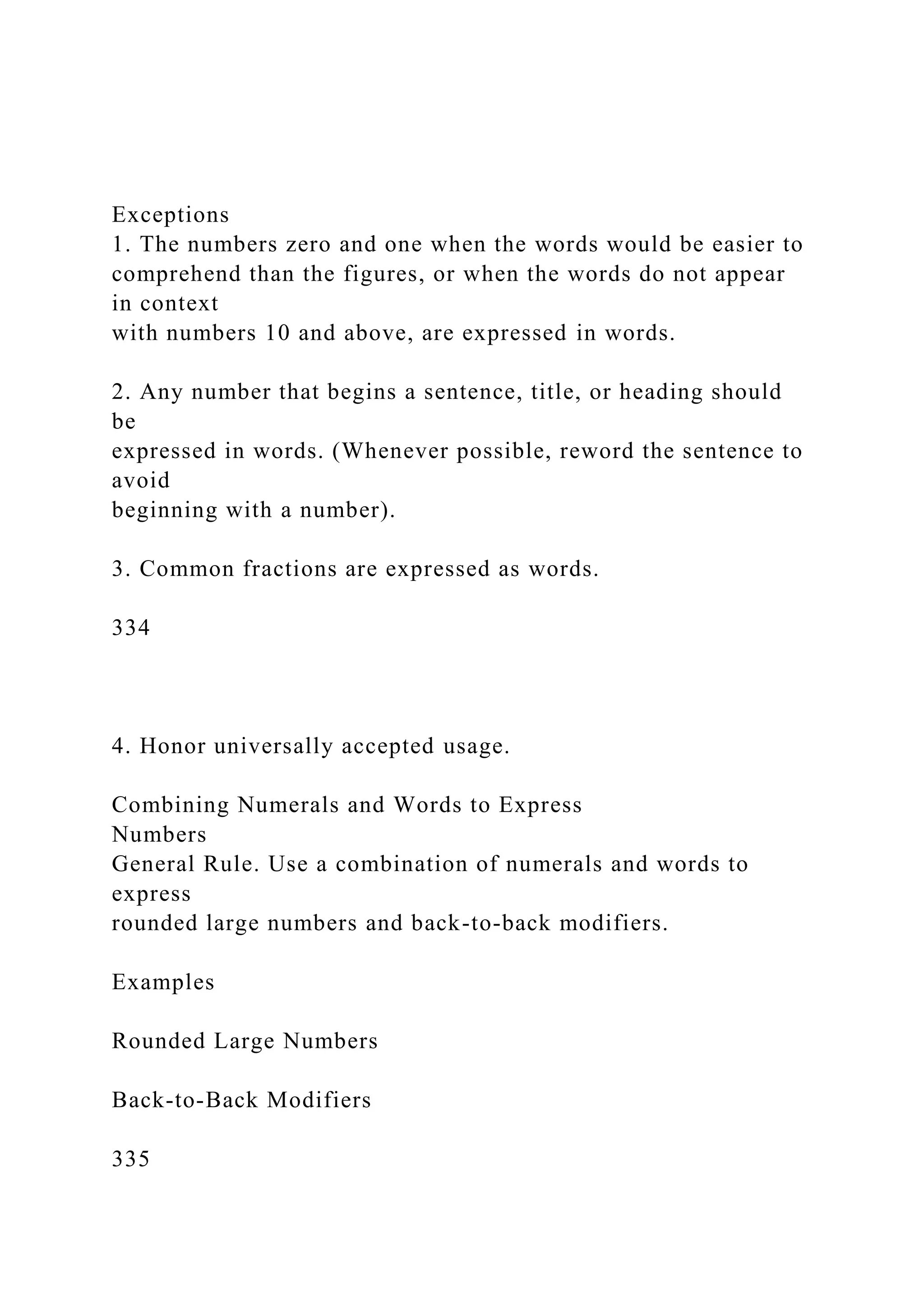
Running head: THE EFFECTIVENESS OF
ENROLLMENT/ACADEMIA IN PUBLIC SCHOOLS VS
CHARTER SCHOOLS 1
THE EFFECTIVENESS OF ENROLLMENT/ACADEMIA IN
PUBLIC SCHOOLS VS CHARTER SCHOOLS 3
The Effectiveness of Enrollment/Academia in Public Schools vs
Charter Schools.
Student’s Name
Institutional Affiliation
Date
The Effectiveness of Enrollment/Academia in Public Schools vs
Charter Schools.
Introduction
Public charter schools are those schools that operate under a
performance contract hence that renders them free from a lot of
regulations created for traditional public schools whereas
making them accountable for financial and academic results.
Such schools are more autonomous in school size, staff, choice
of curriculum, budget, lengths of the school day and they stand
accountable for charter review, and result in production.
Therefore, it is important to have the study that compared the
effectiveness of the two different school systems so as to
establish which if the two is suitable for the American child and
society.
Research questions
1. What is the financial performance doe Charter Schools
exhibit among as compared to Traditional schools?
2. What academic impacts do Public Charter Schools exhibit
among students as compared to Traditional schools?
3. What staffing differences do the Charter Schools exhibit as
compared to Traditional schools?
Statement of the problem
Up to date, charter schools are run in 40 states with about 5000
charter schools in the entire US where more than 1.5 million
students learn. The number of this kind of schools is increasing
with time but they are selectively within states and mostly in
the urban regions. Sometimes these schools are closed for
lacing funds or posting poor performance. A debate on the
reliability and effectiveness of Public charter schools in
comparison with traditional schools has been there for a while.
Innovation Ohio (2013) claim that charter schools tend to have
unfair funding as compared to traditional schools. According to
Silvernail & Johnson (2014) even though certain researchers
have claimed that charter schools are better than traditional
ones in terms of performance, the diversity of context, designs,
financial capacity, and many other factors make it difficult to
have universal results about it. Furthermore, Jefferson County
Public Schools (2010) opine that since the opponents or
advocates of charter schools are the ones who report about it,
research studies on the effectiveness of such schools has been
biasedly reported. Therefore, such as topic requires objective
study of a party who has no interest in anything apart from
acquiring the truth about the society.
References
Innovation Ohio (2013). Unfair funding: how charter schools
win & traditional schools lose. Retrieved from
http://innovationohio.org/wp‐content/uploads/2013/02/Unfair‐F
unding‐IO‐ charter‐schools‐report‐1.pdf
Jefferson County Public Schools. (2010). Charter schools:
impact on student achievement. department of accountability,
research, and planning. Retrieved from
http://www.jefferson.k12.ky.us/Superintendent/
Charter_Schools_Impact_Achievement.pdf.
(n.d.).
Silvernail, D. & Johnson, A.F.. (2014). The impacts of public
charter schools on students and traditional public schools: what
does the empirical evidence tell us? 1-26. Retrieved from
https://files.eric.ed.gov/fulltext/ED561362.pdf
Overview of Topic:.The Effectiveness of Enrollment/Academia
in Public Schools vs Charter Schools.
1. After reading Chapters 1–3 in Surviving Your
Dissertation: A Comprehensive Guide to Content and Process,
comment on the theory or conceptual framework that will be the
backbone of your Professional Administrative Study. Is there a
model you will use or test? (Note: If you have not yet identified
a theory, model, or concept, spend the week searching for
relevant information and post what you have found thus far.)
1. What is the working title of your PAS?The Effectiveness
of Enrollment/Academia in Public Schools vs Charter Schools.
2. What is your Problem Statement?
3. What are your research questions?
1
Surviving Your Dissertation
4
2
Surviving Your Dissertation
A Comprehensive Guide to Content and Process
4
Kjell Erik Rudestam
Fielding Graduate University
Rae R. Newton
Fielding Graduate University
3
FOR INFORMATION:
SAGE Publications, Inc.
2455 Teller Road
Thousand Oaks, California 91320
E-mail: [email protected]
SAGE Publications Ltd.
1 Oliver’s Yard
55 City Road
London EC1Y 1SP
United Kingdom
SAGE Publications India Pvt. Ltd.
B 1/I 1 Mohan Cooperative Industrial Area
Mathura Road, New Delhi 110 044
India
SAGE Publications Asia-Pacific Pte. Ltd.
3 Church Street
#10-04 Samsung Hub
Singapore 049483
4
Copyright © 2015 by SAGE Publications, Inc.
All rights reserved. No part of this book may be reproduced or
utilized in
any form or by any means, electronic or mechanical, including
photocopying, recording, or by any information storage and
retrieval
system, without permission in writing from the publisher.
Printed in the United States of America
Library of Congress Cataloging-in-Publication Data
Rudestam, Kjell Erik.
Surviving your dissertation : a comprehensive guide to content
and process / Kjell Erik
Rudestam, Fielding Graduate University, Rae R. Newton,
Fielding Graduate University.
—Fourth edition.
pages cm.
Includes bibliographical references.
ISBN 978-1-4522-6097-6 (pbk. : alk. paper)
1. Dissertations, Academic—United States. 2. Report writing. 3.
Research—United
States. I. Newton, Rae R. II. Title.
LB2369.R83 2015
378.2—dc23 2014002905
This book is printed on acid-free paper.
14 15 16 17 18 10 9 8 7 6 5 4 3 2 1
Acquisitions Editor: Vicki Knight
Editorial Assistant: Yvonne McDuffee
Production Editors: Laura Barrett, David C. Felts
Copy Editor: Paula L. Fleming
Typesetter: C&M Digitals (P) Ltd.
Proofreader: Sarah J. Duffy
Indexer: Joan Shapiro
5
Cover Designer: Rose Storey
Marketing Manager: Nicole Elliott
6
Contents
Preface
About the Authors
Part I: Getting Started
1. The Research Process
2. Selecting a Suitable Topic
3. Methods of Inquiry: Quantitative and Qualitative Approaches
Part II: Working With Content: The Dissertation Chapters
4. Literature Review and Statement of the Problem
5. The Method Chapter: Describing Your Research Plan
6. Presenting the Results of Quantitative Research
7. Presenting the Results of Qualitative Research
8. Discussion
Part III: Working With Process: What You Need to Know to
Make the Dissertation Easier
9. Overcoming Barriers: Becoming an Expert While Controlling
Your Own Destiny
10. Writing
11. How to Complete Your Dissertation Using Online Data
Access and Collection
12. Guidelines for the Presentation of Numbers in the
Dissertation
13. Informed Consent and Other Ethical Concerns
References
Name Index
Subject Index
7
Preface
We are pleased to present the fourth edition of Surviving Your
Dissertation. As with previous editions, we have sought to
answer
questions that students and faculty have at every stage of the
dissertation
process. In past editions, we have illustrated the challenge of
engaging in
such a notable project with book covers that depict a bridge
leading into an
impenetrable jungle and life buoys close at hand to negotiate
the stormy
seas. The cover of this edition offers a different, but equally
relevant
image: the pride of victory achieved by scaling a lofty peak.
In many ways, these images also reflect our own experience in
writing the
book. The field of research in the social and behavioral sciences
has
expanded rapidly over the past several years, and we have
frequently felt
as if we are scrambling to keep up. This edition reflects our
experience.
We have maintained the overall structure of the book, which has
been well
received so far, while updating content on those topics that are
indispensable to the dissertation process: the selection of an
appropriate
research topic; the review of the literature; the description of
the
methodology and research design; the collection and analysis of
data; and
the interpretation, presentation, and discussion of the results
and
implications of the study. Within this updated material, we have
once
again attempted to provide sufficient detail to enable the reader
to know
exactly what goes into each section and chapter of the
dissertation and how
to format that information. In addition, we continue to include
topics that
are not always present in sources of this kind: the many types of
quantitative and qualitative research models and approaches that
are
available to the student, the principles of good scholarly and
academic
writing, suggestions for how to select and work with
committees, and tips
for overcoming task and emotional blocks that may impede
progress.
Throughout, we have replaced older references with newer,
more
contemporary ones, including many new dissertation examples
taken from
our students and colleagues.
We have also added significant new content to the fourth
edition. We note
that the traditional null hypothesis significance-testing model is
being
challenged and augmented by an emphasis on clinical or
practical
significance and a corresponding use of measures of effect size
and
8
confidence intervals. We have explained and illustrated this new
approach
to the presentation of statistical results. Similarly, we have
acknowledged
an emerging emphasis on theoretical “models” and the influence
of model
building on the design and presentation of research. We provide
several
examples of studies that incorporate this approach. We are
increasingly
impressed by the implications of the Internet for the entire
research
enterprise. We have expanded our discussion of the Internet as a
source of
data, an opportunity for data collection, and a vehicle for data
analysis, as
well as providing recommendations of potentially helpful
websites and
software programs that may be unfamiliar to the average reader.
We also
acknowledge the parallel expansion of available data sources in
all their
varied forms, including data archives, social media, and what is
currently
known as “big data.” Finally, we have expanded the sections on
qualitative
and multimodal methods of research, which have an inductive,
theory-
building focus. With respect to all these topics, we have tried to
explain
the concepts, illustrate them with new tables and figures, and,
in many
cases, provide very specific details about how to incorporate
them into a
research study.
We believe that this book is suitable for a large academic and
professional
audience. Of course, it is primarily directed at the graduate
student who
envisions or is involved in writing a research dissertation. Thus,
there is
significant focus on material that is best suited for the
beginning doctoral
student—for example, how to develop a research question, how
to
construct a table or figure, how to report a statistical finding,
how to use
American Psychological Association formatting conventions,
and so on.
However, there is also content directed at the more advanced
student—for
example, how to conceptualize and illustrate a mediation model,
how to
report multiple regression findings, and how to code text for a
grounded
theory study. Moreover, we have become increasingly aware
that
Surviving Your Dissertation serves also as a resource for
researchers and
practitioners who have either forgotten important details or are
motivated
to keep abreast of evolving research practices in their fields.
Perhaps more
important, we view the book as a convenient source of
information for
faculty who are currently supervising graduate students’
dissertations or
research projects.
We remain deeply indebted to our own students, who continue
to thrill us
with their creativity and force us to keep learning in order to
stay a step
ahead. We hope that they, and you, find this volume a helpful
and steady
9
companion in your research and writing endeavors.
A large number of individuals have contributed to the
completion of this
project. We called upon many faculty colleagues to nominate
student
dissertations that exemplify high levels of scholarship and have
sprinkled
references to these dissertations throughout the book to
illustrate important
principles and recommendations. We are very appreciative of
these
relatively recent graduates for allowing us to share their first
major
research endeavors in this venue. We also benefitted from the
critical
reflections and insight of the following reviewers of the third
edition of
Surviving Your Dissertation: Anne J. Hacker, Bernie Kerr,
Karin Klenke,
Kaye Pepper, and Udaya R. Wagle. Their observations and
suggestions
were both reinforcing and helpful in crystallizing changes for
this edition.
We are also grateful to be part of the SAGE family, a
collaborative,
dedicated group of professionals who have facilitated our
writing careers
in so many ways. The following individuals were notable
contributors:
Vicki Knight, publisher and senior editor, has always provided
us with a
balance of inspiring leadership and nurturing support. Her
editorial
assistant, Jessica Miller, has been consistently responsive to our
frequent
requests for assistance. Laura Barrett and David Felts, project
editors, have
gracefully guided the editorial process from start to finish. And
Paula
Fleming, our copy editor, is truly a paragon in her craft. Her
grammatical
acuity, common sense, and work ethic cannot be overestimated.
Thank you
all.
Finally, we must thank our partners in life, Jan and Kathy, for
their
continuing patience and support as we have devoted our energy
and
attention to four editions of this volume.
10
About the Authors
Kjell Erik Rudestam
is Professor of Psychology at Fielding Graduate University,
Santa
Barbara, California, where he served as Associate Dean of
Academic
Affairs for many years. He was previously a psychology
professor at
York University, Toronto, and Miami University, Oxford, Ohio,
after
receiving his PhD in Psychology (Clinical) from the University
of
Oregon. He is the author of Your Statistical Consultant:
Answers to
Your Data Analysis Questions, 2nd edition (also with Rae R.
Newton), Handbook of Online Learning, 2nd edition (with
Judith
Schoenholtz-Read), and eight other books, as well as numerous
articles in professional journals on topics including suicide,
psychotherapy, and family and organizational systems. He is a
Fellow
of the American Psychological Association (Division 12), a
Diplomate of the American Board of Examiners in Professional
Psychology (Clinical), a Diplomate of the American Academy
of
Experts in Traumatic Stress, and holds an Honorary Doctorate
of
Science from The Professional School of Psychology.
Rae R. Newton
is Professor of Sociology Emeritus at California State
University,
Fullerton. He recently joined the faculty of the School of
Psychology
at Fielding Graduate University where he serves as a research
consultant and statistical advisor to doctoral students and
faculty. He
received his PhD in sociology from the University of California,
Santa Barbara, and completed postdoctoral training in mental
health
measurement at Indiana University. His primary interests
include
longitudinal modeling of outcomes for high risk youth and
foster care
populations, family violence and statistics education. He is
author,
with Kjell Erik Rudestam, of Your Statistical Consultant:
Answers to
Your Data Analysis Questions, now in its second edition and
numerous articles in professional journals on topics including
family
violence, child maltreatment, and measurement. In semi-
retirement he
enjoys traveling with his wife in their RV and surfing
throughout
Mexico and Central America.
11
Part I Getting Started
The Research Process
Selecting a Suitable Topic
Methods of Inquiry: Quantitative and Qualitative Approaches
12
1 The Research Process
There is a story about a Zen Buddhist who took a group of
monks into the
forest. The group soon lost its way. Presently one of the monks
asked the
leader where they were going. The wise man answered, “To the
deepest,
darkest part of the forest so that we can all find our way out
together.”
Doctoral research for the graduate student in the social sciences
is often
just such an experience—trekking into a forest of impenetrable
density and
making many wrong turns. Over the years, our students have
used various
metaphors to describe the dissertation process, metaphors that
convey the
feeling of being lost in the wilderness. One student compared
the process
to the Sisyphean struggle of reaching the top of a hill, only to
discover the
presence of an even higher mountain behind it. Another student
experienced the task as learning a Martian language, known to
the natives
who composed her committee but entirely foreign to her. A
third student
offered perhaps the best description when she suggested that it
was like
waiting patiently in a seemingly interminable line to gain
admission to a
desirable event, then finally reaching the front only to be told to
return to
the rear of the line.
One reason that students become more exasperated than
necessary on the
dissertation journey is that they fail to understand the
procedures and
practices that form the foundation for contemporary social
science
research. Many students who are attracted to their field of
interest out of an
applied concern are apprehensive about making the leap from
application
to theory, an indispensable part of the research enterprise. What
may not
be so evident is that many of the skills that go into being a
consummate
practitioner are the same ones demanded of a capable
researcher. It is well
known that curiosity and hypothesis testing are the bedrock of
empirical
research. In a similar fashion, experienced psychotherapists, to
take an
example from clinical psychology, are sensitive and keen
observers of
client behavior. They are persistent hypothesis testers. They are
curious
about the relationship between family history variables and
current
functioning. They draw on theory and experience to help select
a particular
intervention for a particular client problem or moment in
therapy.
Dispassionate logic and clear and organized thinking are as
necessary for
effectiveness in the field as they are for success in research. In
fact, the
13
bridge between research and just plain living is much shorter
than most
people think. All of us gather data about the world around us,
wonder what
will happen if we or others behave in particular ways, and test
our pet
hunches through deliberate action. To a large extent, the formal
research
enterprise consists of thinking systematically about these same
issues.
The procedures outlined in this book are intended to assist the
doctoral
student in planning and writing a research dissertation, but the
suggestions
are equally applicable to writing a master’s thesis. In fact, there
is
considerable overlap between these two challenging activities.
For most
students, the master’s thesis is the first rigorous research
project they
attempt. This means that, in the absence of strong, supportive
faculty
consultation, the student often concludes the thesis with
considerable relief
and an awareness of how not to do the study the next time! With
a doctoral
dissertation, it is generally expected, sometimes as an act of
faith, that the
student is a more seasoned and sophisticated researcher. The
consensus
opinion is that dissertations are generally longer than theses,
that they are
more original, that they rely more heavily on theoretically based
arguments, and that they make a greater contribution to the
field.
In most graduate programs, the prelude to conducting a
dissertation study
is presenting a dissertation proposal. A research proposal is an
action plan
that justifies and describes the proposed study. The completion
of a
comprehensive proposal is a very important step in the
dissertation
process. The proposal serves as a contract between the student
and his or
her dissertation or thesis committee that, when approved by all
parties,
constitutes an agreement that data may be collected and the
study may be
completed. As long as the student follows the steps outlined in
the
proposal, committee members should be discouraged from
demanding
significant changes to the study after the proposal has been
approved.
Naturally, it is not uncommon to expect small changes,
additions, or
deletions as the study progresses because one can never totally
envision
the unpredictable turns that research can take.
There is no universally agreed-on format for the research
proposal. To our
way of thinking, a good proposal contains a review of the
relevant
literature, a statement of the problem and the associated
hypotheses, and a
clear delineation of the proposed method and plan for data
analysis. In our
experience, an approved proposal means that a significant
percentage of
the work on the dissertation has been completed. As such, this
book is
14
intended to help students construct research proposals as well as
complete
dissertations.
The Research Wheel
One way to think about the phases of the research process is
with reference
to the so-called research wheel (see Figure 1.1). The wheel
metaphor
suggests that research is not linear but is rather a recursive
cycle of steps.
The most common entry point is some form of empirical
observation. In
other words, the researcher selects a topic from the infinite
array of
possible topics. The next step is a process of inductive logic
that
culminates in a proposition. The inductive process serves to
relate the
specific topic to a broader context and begins with some
hunches in the
form “I wonder if . . . .” These hunches typically are guided by
the values,
assumptions, and goals of the researcher, which need to be
explicated.
Figure 1.1 The Research Wheel
Stage 2 of the research wheel is a developed proposition, which
is
expressed as a statement of an established relationship (e.g.,
“the early bird
is more likely than the late bird to catch the worm”). The
proposition exists
within a conceptual or theoretical framework. The role of the
researcher is
to clarify the relationship between a particular proposition and
the broader
context of theory and previous research. This is probably the
most
challenging and creative aspect of the dissertation process.
Theories and conceptual frameworks are developed to account
for or
describe abstract phenomena that occur under similar
conditions. A theory
15
is the language that allows researchers to move from
observation to
observation and make sense of similarities and differences. A
conceptual
framework, which is simply a less-developed form of a theory,
consists of
statements that link abstract concepts (e.g., motivation, role) to
empirical
data. If not placed within such a context, the proposed study has
a “So
what?” quality. This is one of the main objections to the
research proposals
of novice researchers: The research question may be inherently
interesting
but ultimately meaningless. For instance, the question “Are
there more
women than men in graduate school today?” is entirely banal as
a research
question unless the answer has conceptual or theoretical
implications that
are developed within the study.
Although a study may be worthwhile primarily for its practical
implications (e.g., “Should we start recruiting more men into
graduate
schools?”), a purely applied study may not be acceptable as a
dissertation.
Kerlinger and Lee (1999), authors of a highly respected text on
research
methodology, noted that “the basic purpose of scientific
research is
theory” (p. 5). Generally speaking, a research dissertation is
expected to
contribute to the scholarly literature in a field and not merely
solve an
applied problem. Thus, developing a proposition for one’s
dissertation
typically involves immersing oneself in the research and
theoretical
literature of the field to identify a conceptual framework for the
study.
Having stated our position on the role of theory in dissertation
research,
we now need to take a step back. As a psychologist and a
sociologist,
respectively, we are most familiar with research conventions
within these
two disciplines. Other branches of the social sciences have their
own
standards of what constitutes an acceptable dissertation topic.
We have
attempted to keep this book as generalizable as possible and to
infuse it
with examples from other fields. Ultimately, of course, you will
need to
follow the rules and conventions that pertain to your discipline
as well as
to your university and department.
For example, a few major universities allow a doctoral student
to submit
one or more published articles as the equivalent of a
dissertation. Many
others encourage studies that consist of secondary data analyses
derived
from national databases, such as U.S. Census data or the
General Social
Survey, or data obtained from a larger study. Some fields—
notably social
work, education, policy evaluation, and professional
psychology—may
encourage dissertations that solve applied problems rather than
make
16
distinct theoretical contributions. Studies that evaluate the
effectiveness of
programs or interventions are a case in point because they
sometimes
contribute little to validating a theory. Political science and
economics are
examples of fields that are diverse enough to accommodate both
theoretically based studies and purely applied studies. Within
the
subspecialty of international relations, for instance, one could
imagine a
survey and analysis of security agreements of European nations
after the
unraveling of the North Atlantic Treaty Organization (NATO)
that rely on
interviews with foreign policy makers and are largely
descriptive and
applied. In contrast, a study of the role of a commitment to
ideology in the
success of political parties in the United States, based on an
analysis of
historical documents and voting records, might be grounded in a
theory of
how ideology attracts or alienates the voting public.
Moving forward along the research wheel, the researcher uses
deductive
reasoning to move from the larger context of theory to generate
a specific
research question. The research question is the precisely stated
form of the
researcher’s intent and may be accompanied by one or more
specific
hypotheses. The first loop is completed as the researcher seeks
to discover
or collect the data that will serve to answer the research
question. The data
collection process is essentially another task of empirical
observation,
which then initiates another round of the research wheel.
Generalizations
are made on the basis of the particular data that have been
observed
(inductive process), and the generalizations are tied to a
conceptual
framework, which then leads to the elucidation of further
research
questions and implications for additional study.
The kinds of skills called for at the various points of the
research wheel are
reminiscent of the thoughts about learning presented by
Bertrand Russell
many years ago. Russell noted that there are two primary kinds
of
knowledge acquisition: knowledge by description and
knowledge by
acquaintance. Knowledge by description is learning in a passive
mode,
such as by reading a book on how to change the oil in one’s car
or hearing
a lecture on Adam Smith’s theory of economics. This type of
learning is
especially well suited to mastering abstract information; in
other words, it
is better for learning about economics than about changing the
oil.
Knowledge by acquaintance, on the other hand, is learning by
doing—the
kind of skill training that comes from practicing a tennis serve,
driving an
automobile, and playing with a computer. This is concrete
knowledge
acquisition, oriented to solving problems.
17
The research process demands both skills. First, the researcher
needs to
apply clear, logical thinking to working with concepts and ideas
and
building theories. It is our impression that many graduate
students,
particularly those who have experience as practitioners in their
fields, are
weaker in this abstract conceptualization, and honing this skill
may be the
major challenge of the dissertation. Second, the researcher must
engage in
the practical application of ideas, including by systematically
planning a
study and then collecting and analyzing data. The ability to
focus, problem
solve, and make decisions will help bring the study to
completion.
18
2 Selecting a Suitable Topic
The selection of an appropriate topic is the first major challenge
in
conducting research. In many academic settings, this task is
simplified by
working with a faculty mentor who is already familiar with an
interesting
area of study, may have an extensive program of research in
that area, and
may even have defined one or more researchable questions. It is
quite
common for students interested in a particular area of research
to not only
select their doctoral institution but also select their dissertation
chair, with
the goal of joining the research program of a noted scholar in
that field.
On the other hand, you may not be blessed with a faculty role
model who
is actively engaged in research in an area of interest to you.
There are no
simple rules for selecting a topic of interest, but there are some
considerations with respect to appropriateness. It is generally
unwise to
define something as important as a dissertation topic without
first
obtaining a broad familiarity with the field. This implies a large
amount of
exploring the literature and studying the experts. Without this
initial
exploration, you can neither know the range of possibilities of
interesting
topics nor have a clear idea of what is already known. Most
students obtain
their research topics from the loose ends they discover in
reading within an
area, from an interesting observation they have made (“I notice
that men
shut up when a beautiful woman enters the room; I wonder what
the effect
of physical attractiveness is on group process?”), or from an
applied focus
in their lives or professional work (“I have a difficult time
treating these
alcoholics and want to discover how best to work with them”).
In short,
there is no substitute for immersing oneself in a field of study
by having
conversations with leading scholars, advisers, and peers;
critically reading
the existing literature; and reflecting upon the implications of
professional
and personal experiences.
Some Guidelines for Topic Selection
Here are some guidelines for deciding whether a topic is
appropriate as a
dissertation subject.
1. A topic needs to sustain your interest over a long period of
time. A
19
study on learning nonsense syllables under two sets of
environmental
conditions may sound appealing in its simplicity, but remember
Finagle’s
first law of research: If something can go wrong, it will go
wrong!
Dissertations usually take at least twice as much time as
anticipated, and
there are few worse fates than slaving for hour after hour on a
project that
you abhor. Remember, too, that all dissertations are recorded
and
published by the Library of Congress, and you will always be
associated
with your particular study.
2. At the other extreme, it is wise to avoid a topic that is overly
ambitious
and overly challenging. Most students want to graduate,
preferably within
a reasonable period of time. Grandiose dissertations have a way
of never
being completed, and even the best dissertations end up being
compromises among your own ambition, the wishes of your
committee,
and practical circumstances. It is not realistic for a dissertation
to say
everything there is to say about a particular topic (e.g., the
European
Union), and you need to temper your enthusiasm with
pragmatism. As one
student put it, “There are two types of dissertations: the great
ones and
those that are completed!” Sometimes it makes sense to select a
research
topic on the basis of convenience or workability and use the
luxury of the
postgraduate years to pursue more esoteric topics of personal
interest.
3. We suggest that you avoid topics that may be linked too
closely with
emotional issues in your own life. It always makes sense to
choose a topic
that is interesting and personally meaningful. Some students,
however, try
to use a dissertation to resolve an emotional issue or solve a
personal
problem. For example, even if you think you have successfully
overcome
the personal impact of the death of your child, this is a topic to
be avoided.
It will necessarily stir up emotional issues that may get in the
way of
completing the dissertation.
4. A related issue is selecting a topic in which you have a
personal ax to
grind. Remember that conducting research demands ruthless
honesty and
objectivity. If you initiate a study to demonstrate that men are
no damned
good, you will be able neither to allow yourself the sober
reflections of
good research nor to acknowledge the possibility that your
conclusions
may contradict your expectations. It is much better to begin
with a hunch
(“I’ve noticed that men don’t do very well with housekeeping; I
wonder if
that has something to do with being pampered as children”) and
to regard
the research as an adventurous exploration to shed light on this
topic rather
20
than as a polemical exercise to substantiate your point of view.
5. Finally, you need to select a topic that has the potential to
make an
original contribution to the field and allow you to demonstrate
your
independent mastery of subject and method. In other words, the
topic must
be worth pursuing. At the very least, the study must generate or
help
validate theoretical understanding in an area or, in those fields
where
applied dissertations are permissible, contribute to the
development of
professional practice. Some students are put off when they
discover that a
literature review contains contradictory or puzzling results or
explanations
for a phenomenon. However, such contradictions should be
taken not as
reasons to steer away from a topic but rather as opportunities to
resolve a
mystery. When people disagree or when existing explanations
seem
inadequate, there is often room for a critical study to be
conducted. An
opportunity to design a study that resolves theoretical
contradictions
within a discipline should not be overlooked.
From Interesting Idea to Research Question
Let us assume that you have identified a general area of
research and that
your choice is based on curiosity and may involve resolving a
problem,
explaining a phenomenon, uncovering a process by which
something
occurs, demonstrating the truth of a hidden fact, building on or
reevaluating other studies, or testing some theory in your field.
To know
whether or not the topic is important (significant), you must be
familiar
with the literature in the area. In Chapter 4, we present a
number of
suggestions for conducting a good review and assessment of the
literature.
In the meantime, we have noticed that many students have
difficulty
transforming an interesting idea into a researchable question,
and we have
designed a simple exercise to help in that endeavor.
Researchable questions almost invariably involve a relationship
between
two or more variables, phenomena, concepts, or ideas. The
nature of that
relationship may vary. Research studies generally consist of
methods to
explicate the nature of the relationship. Research in the social
sciences
rarely consists of explicating a single construct (e.g., “I will
look at
everything there is to know about the ‘imposter phenomenon’”)
or a single
variable (e.g., voting rates in presidential elections).1 Even the
presence of
two variables is apt to be limiting, and oftentimes it is only
when a third
21
“connecting” variable is invoked that an idea becomes
researchable. As a
caveat, however, we acknowledge that research questions that
are
qualitative rather than quantitative in nature might not be as
focused on the
relationship between variables as on “how” processes develop
or are
experienced. We will have more to say about this distinction in
forthcoming chapters.
An example might help to demonstrate how the introduction of
an
additional variable can lead to the birth of a promising study.
Let us
assume that I am interested in how members of a younger
generation
perceive the elderly. At this level, a study would be rather
mundane and
likely to lead to a “So what?” response. So far, it implies asking
people
what they think of the elderly, perhaps using interviews or tests
or even
behavioral observations. But we really won’t learn much of
value about
the nature of perceptions of the elderly in contemporary society
and what
influences those perceptions. Introducing a second variable,
however, can
lead to a set of questions that have promising theoretical (as
well as
practical) implications: I wonder what the role of the media is
in shaping
social perceptions of the elderly? I wonder if living with a
grandparent
makes any difference in how the elderly are viewed? I wonder
how
specific legislation designed to benefit the elderly has changed
our
perception of them? I wonder if there is a relationship between
how
middle-aged adults deal with their aging parents and how they
view the
elderly? The new variables introduced in these potential
research questions
are, respectively, the slant of the media, presence or absence of
a
grandparent, type of legislation, and treatment of one’s own
parents. These
variables impart meaning to the research because they offer
suggestions as
to what accounts for variability in perceptions of the elderly.
As an example of generating a research question using three
primary
variables, let’s say that you have inferred that many women lose
interest in
sexual relations with their husbands after the birth of a child. At
this level,
the proposed study would consist of checking out this hunch by
assessing
the sexual interest of women (Variable 1) before and after
childbirth
(Variable 2). But what would this finding mean? The
introduction of a
third variable or construct could lead to a much more
sophisticated and
conceptually meaningful study. An investigator might ask, “I
wonder if the
partner’s involvement in parenting makes a difference? What’s
the role of
his sexual initiative? How about childbirth complications?
Father’s
involvement in the birthing? The length of time they have been
married?
22
Presence of other children in the home? Mother’s level of
fatigue? Her
body image?” There is no end to the number of interesting
questions that
can be raised simply by introducing another variable into the
proposed
study. This variable would then help to explain the nature of the
relationship between the primary variables. In fact, one could
brainstorm a
whole list of third variables that could contribute to a better
understanding
of the relationship between childbirth and sexuality.
Note that the precise function of the third, or connecting,
variable depends
on the logic of the conceptual model or theory underlying the
study. In this
regard, a distinction can be made between two terms, mediator
and
moderator, which play important roles in research questions. A
moderator
variable pinpoints the conditions under which an independent
variable
exerts its effects on a dependent variable. Strictly speaking, a
moderator
effect is an interaction effect in which the influence of one
variable
depends upon the level of another variable (Frazier, Tix, &
Barron, 2004).
One commonly employed moderator variable is gender, which
has two
levels, male and female. The relationship between provocation
and
aggression, for example, may be very different for men and
women. The
role of context can also be conceptualized as a moderator
variable. The
famous Kinsey report on sexual behavior would certainly have
generated
very different results if the interviews with participants about
their sex
lives had taken place in the presence of family members.
Identification of
relevant contextual variables has important implications for the
design of a
study because such variables will affect the generalizability of
research
findings.
A mediating variable, on the other hand, tries to describe how
or why
rather than when or for whom effects will occur by accounting
for the
relationship between the independent variable (the predictor)
and the
dependent variable (the criterion). The mediator is the
mechanism through
which the predictor affects the outcome.2 As such, one can
think of
mediators as process variables. For example, in the counseling
psychology
field, maladaptive perfectionism can be regarded as either a
moderating
variable or a mediating variable (Wei, Mallinckrodt, Russell, &
Abraham,
2004). Conceptualized as a moderator, attachment anxiety could
be seen to
exert negative effects on depressive mood only under conditions
of high
maladaptive perfectionism (i.e., there is a statistical interaction
between
maladaptive perfectionism and attachment anxiety).
Conceptualized as a
mediator, maladaptive perfectionism acts as an intervening
variable
23
between attachment anxiety and depressive mood (i.e., there is
an indirect
relationship between anxiety and depression). As Wei et al.
stated,
It is possible for maladaptive perfectionism to serve as both an
intermediate link in the causal chain leading from attachment
insecurity to depressive mood (i.e., as a mediator) and as a
variable that alters the strength of association between
attachment insecurity and depressive mood (i.e., as a
moderator).
(p. 203)
The diagram in Figure 2.1 captures the distinction between
moderating and
mediating variables in a theoretical model. In the case of
mediation, the
mediating variable (maladaptive perfectionism) is placed
between
attachment anxiety and depressed mood. In the case of
moderation, the
arrow from maladaptive perfectionism points to another arrow,
that from
attachment anxiety to depressed mood, indicating that the
relationship
between attachment anxiety and depressed mood depends on the
level of
maladaptive perfectionism.
Figure 2.1 The Distinction Between Moderator and Mediator
Variables, Represented in a Causal Diagram
24
Figure 2.2 Classification Plot Representing Moderation of
Relationship Between Attachment Anxiety and Depressed
Mood,
Moderated by Maladaptive Perfectionism
25
Source: Author created using data from Wei, W., Mallinckrodt,
B.,
Russell, D., & Abraham, W. T. (2004). Maladaptive
perfectionism as
a mediator and moderator between adult attachment and
depressive
mood. Journal of Counseling Psychology, 51(2), 201–212.
We have illustrated one potential moderated outcome in the
classification
plot shown in Figure 2.2. Note that under conditions of low
maladaptive
perfectionism, there is only a small difference in depression
between those
with low and high attachment anxiety; however, under
conditions of high
maladaptive perfectionism, those with high levels of attachment
anxiety
are more likely to be depressed than those with low levels. In
other words,
maladaptive perfectionism moderates the relationship between
attachment
anxiety and depression, or, put another way, maladaptive
perfectionism
and attachment anxiety interact.
One research study is not likely to establish and verify all of the
important
elements of a complex conceptual model. As one of our
colleagues puts it,
you would need a video camera to capture the entire Grand
Canyon on
film, whereas the dissertation is more like a snapshot, perhaps
of a mule
26
and rider descending one small section of one canyon trail. Yet
the
proposed model can provide a useful context for current and
future
research studies. Most ambitious research studies rely heavily
on just such
theoretical models.
As you might imagine, a researcher is in no position to test a
model of this
scope in a single study. For example, Gerald Patterson and his
colleagues
(Patterson, DeBaryshe, & Ramsey, 1989) spent many years
developing
and testing a model to explain aggressive and deviant behavior
among
young males. The model hypothesizes that such antisocial
behavior can be
causally linked to disrupted parental discipline and poor family
management skills. Moreover, the relationship between these
two sets of
variables is not direct but is mediated by a network of other
variables. The
process is thought to begin with parents “training” a child to
behave
aggressively by relying on aversive behaviors in both
punishment and
negative reinforcement contingencies. The inability of the
parents to
control coercive exchanges among family members constitutes
“training
for fighting,” which leads, in turn, to aggressive behavior and
poor peer
relationships. This lack of social skills generalizes to antisocial
behavior in
the classroom, which makes it next to impossible for the youth
to obtain
basic academic skills, thus preparing him poorly to cope with
life outside
school. Ultimately, this set of factors leads to high rates of
delinquent
behavior. An abbreviated summary of one version of the model
is shown
in Figure 2.3.
Figure 2.3 A Model of Antisocial Behavior
27
Source: From Patterson, G. R., DeBaryshe, B. D., & Ramsey, E.
A
developmental perspective on antisocial behavior. American
Psychologist, 44. Copyright © 1989, American Psychological
Association. Reprinted with permission.
Over the years that Patterson and his colleagues (Patterson et
al., 1989)
spent elaborating the nature of these relationships, they
conducted
numerous studies that each constituted a “snapshot” of one
aspect of this
complex model, perhaps focusing on a particular set of
relationships. For
instance, the investigator might ask whether a relationship
exists between
physical fighting and poor peer relationships. Each variable
would have to
be operationalized, probably by obtaining more than one
measure of both
fighting and peer relationships. In Patterson’s work, he asked
mothers,
peers, and teachers to rate levels of physical fighting because
their
perspectives might differ. Likewise, peers, teachers, and self-
reports are
used to obtain measures of peer relations. The objective of the
study—that
is, to determine the nature and form of the relationship between
the
primary variables—determines the research method that is
employed. In
the early years of his career, Patterson focused on the
relationships among
contextual variables, parental beliefs, parenting practices, and
child
outcomes. He concluded that parenting practices—such as
discipline,
monitoring, problem solving, involvement, and positive
reinforcement—
serve as mediating variables between parenting beliefs and
attitudes and
the child’s behavior. Once this model was supported by
sufficient data,
Patterson proceeded to establish links between children’s
behavior
problems and subsequent chronic juvenile and adult offending
(Reid,
Patterson, & Snyder, 2002).
Whether or not a particular dissertation is designed to test a
theory or
model derived from the research literature, we believe that the
creation of
a visual model, which shows how the network of relevant
variables and
constructs may be related to one another, can serve as a
powerful tool for
guiding the study. Arranging your ideas spatially helps to
organize your
thinking, which in turn helps position your proposed study
within a larger
framework.
Research models are developed to account for the relationships
among
variables at a conceptual level and then used to guide the
construction of
research designs by which the relationships will be tested,
usually, but not
always, using contemporary statistics. The process is iterative
so that the
28
models are modified on the basis of data and then reevaluated in
further
studies. Two primary types of relationships can be identified
and explored
within a causal model (Jaccard & Jacoby, 2010): predictive
relationships
and causal relationships. A predictive relationship implies that
an
association or correlation exists between two (or more)
variables without
assuming that one causes the other. For example, we may
determine that
traveling frequently as a child is related to (predicts) being
more proficient
in languages as an adult, without knowing whether travel
actually causes
improvement in language skills. Above, we used the terms
independent
variables and predictor variables more or less interchangeably.
Strictly
speaking, however, when the issue is prediction, the
relationship is
between one or more predictor variables and a criterion variable
(Jaccard
& Jacoby, 2010).
Causal relationships imply that one variable “causes” another;
that is,
changes in the primary variable, usually referred to as the
independent
variable, elicit changes in the second variable, the dependent
variable or
outcome variable. Although the principle of causation is the
foundational
bedrock for the experimental method in social science research,
philosophers of science have argued for centuries whether
causality can
ever be truly demonstrated. Jaccard and Jacoby (2010) made a
persuasive
argument that the concept of causality is ultimately a heuristic
that enables
us to maintain an organized view of our world and of human
behavior. By
inferring causality, we can identify systematic relationships
between
variables and produce socially significant changes by
manipulating some
variables to influence others. Whether or not causality can be
definitively
demonstrated, much of contemporary research is conducted to
give us
confidence in theoretical models that purport causal
relationships.
There are several types of causal relationships, and each type
can play a
role in developing a causal model. How causal models can be
employed
and evaluated in dissertations is a subject for a later chapter
(Chapter 6).
How to think about and construct causal models as a way of
describing
research ideas constitutes much of Jaccard and Jacoby’s (2010)
very useful
book, and the following discussion is stimulated by their work.
Jaccard
and Jacoby observed that most researchers begin by identifying
an
outcome variable that they want to understand better. An
example might
be the level of concern people express for the environment,
including by
engaging in behaviors that are environmentally sensitive, such
as recycling
waste or reducing pollution. The next challenge is to identify
some
29
variables that could potentially influence or relate to
environmentally
sensitive behavior. One could imagine a study, for example, that
seeks to
determine which interventions would increase the motivation to
recycle
trash (or, more modestly, just to understand differences between
those who
readily recycle and those who do not). Perhaps we predict that
having a
neighborhood trash collection system that mandates sorting
trash into
recyclable and nonrecyclable categories will directly affect
environmentally pro-social behavior. Of course, not all studies
begin by
identifying a dependent variable; it is also possible to choose an
independent variable and speculate about its effects. For
instance, a study
might address the implications of working in a highly polluting
industry
for health, socioeconomic status, and social relationships.
Indirect causal relationships have an effect through the
influence of an
intermediary variable, which we have referred to above as a
mediating
variable. Moderated causal relationships are a third type of
causal
relationship, again defined earlier in the chapter. Most causal
models
contain a combination of the various types of relationships.
Models can get
very complex because of the number of variables and their
subtle
relationships with one another. Thus, simple path diagrams
evolve into
sophisticated theoretical networks. Many of these models have
been
developed over the course of a career by dedicated researchers,
such as
Gerald Patterson, who started with studies that explored subsets
of
variables within a model that then evolved in complexity.
Because
computer software allows for the manipulation of multiple
variables
simultaneously and relatively effortlessly, researchers usually
begin by
proposing one or more theoretical models and evaluating them
empirically.
One example of a research model comes from the dissertation of
Bill
MacNulty (2004), one of our doctoral students. MacNulty
generated this
model from existing research literature and then tested it
empirically using
a number of well-validated self-report scales. The study
employed the
schema-polarity model of psychological functioning to assess
how self-
schemas (cognitive representations of self and others) influence
the
experience of gratitude and forgiveness and whether these
variables
mediate relationships between self-schemas and physical health
and well-
being. The model is summarized in Figure 2.4. The plus and
minus signs
refer to the direction of the hypothesized relationships among
the
variables. Although the results supported most of the initial
hypotheses,
the proposed model needed to be amended to accommodate the
data. This
30
is typical of the research enterprise, in which theories and
conceptual
models are continually tested and refined to serve as
increasingly
sophisticated representations of real-life phenomena.
Another dissertation example comes from Jenny Knetig’s (2012)
study of
active duty military personnel who are at risk of experiencing
symptoms of
posttraumatic stress disorder (PTSD). Knetig speculated that
being
psychologically minded (a component of what is referred to as
having a
mentalizing capacity) allows some soldiers to perceive and
interpret
cognitive and affective states of themselves and others in a way
that might
facilitate resilience and help-seeking behaviors, which, in turn,
mitigate
how they are affected by severe stress. At the outset of her
study, on the
basis of the available literature and her own experience, Knetig
postulated
that the relationships among these variables might look
something like the
diagram in Figure 2.5.
Figure 2.4 A Theoretical Framework Presented as a Causal
Diagram
Source: From Self-Schemas, Forgiveness, Gratitude, Physical
Health,
and Subjective Well-Being, by W. MacNulty, 2004, unpublished
doctoral dissertation, Fielding Graduate University, Santa
Barbara,
CA. Copyright 2004 by W. MacNulty. Reprinted with
permission of
the author.
At the conclusion of the study, after collecting her data and
performing a
number of statistical analyses (canonical correlation analysis),
Knetig
amended her proposed model, as shown in Figure 2.6, to reflect
the
experiences of her participants more accurately.
31
Figure 2.5 Proposed Mediational Model Relating Psychological
Mindedness to PTSD
Source: Knetig, 2012, p. 52. Reprinted with permission of the
author.
In short, the data suggested that soldiers who are more
psychologically
minded are less apt to conceal their thoughts and feelings. It
also suggested
that the relationship between psychological mindedness and
symptoms is
mediated by self-concealment.
Figure 2.6 Final Mediation Model Relating Psychological
Mindedness to PTSD
Source: Knetig, 2012, p. 54. Reprinted with permission of the
author.
Generating Researchable Questions
To help students generate researchable questions from their
interesting
ideas, we use a brainstorming exercise that begins with labeling
one or two
variables and generating a second or third. Brainstorming
consists of
32
openly and noncritically listing all possible ideas in a given
period of time.
Later you can return to a more critical analysis of each idea and
delete
those that are uninteresting, not meaningful, or impractical.
Ultimately, of
course, it is contact with the literature that determines whether
or not a
research question is viable, because the literature houses the
scholarly
inquiry that goes beyond the limits of your own knowledge.
We suggest that you do this brainstorming exercise in a small
group so that
the person receiving the consultation merely serves as a scribe
to record
the ideas thrown out by the other group members (see Box 2.1).
After 5 or
10 minutes, move on to the next person’s partially formed
research topic.
We generally use this exercise in groups of three or four so that
group
members can frequently shift groups and draw on the
spontaneous
reactions of a larger number of peers, uncontaminated by prior
ideas or a
particular mind-set.
The exercise involves suspending critical thinking and allowing
new ideas
to percolate. It should especially suit divergent thinkers, who
will find the
demand to be expansive in their thinking exciting and creative.
Convergent
thinkers may experience the exercise as a bit overwhelming, but
they will
find fulfillment in other stages of the research process that
demand
compulsivity, care, and precision. Every chapter of a
dissertation contains
both divergent and convergent elements.
Note that not all worthwhile research studies focus on three (or
more)
primary variables. Many studies look at the relationship
between two
variables or concepts, and a few descriptive studies make do
with one
variable or construct. The latter generally occurs in the early
stages of
research in an area, when little is known about a topic. Some
investigators
are pathfinders in terms of opening up new topics of research by
trying to
understand as much as possible about a phenomenon and
generating more
informed hypotheses for others to test in the future.
Nevertheless, we
believe that most students underestimate what is currently
known about
most topics and that the most interesting, practical, and
theoretically
meaningful studies are likely to consider relationships among
several
variables.
Our exercise for generating research questions is only one
option. Jaccard
and Jacoby (2010) have listed 26 different heuristics for how to
think
creatively about questions or phenomena that may be of interest
to you.
Items on their list include analyzing your own experiences,
using case
33
studies, interviewing experts in the field, role-playing, and
conducting
thought experiments. The adoption of thought experiments
might be
particularly helpful. Jaccard and Jacoby viewed these as
experiments that
you conduct in your mind as if you are really obtaining the data
and
analyzing the results. You can then play with the possibilities of
adding
new variables or introducing different contingencies into the
situation. One
contingency is the introduction of so-called counterfactuals into
the
thought experiment (Tetlock & Belkin, 1996). Counterfactuals
refer to
“what-might-have-been” scenarios, such as what might happen
if parents
rather than administrators ran the public schools. Researchers
can use this
strategy to address theoretical alternatives that might otherwise
not be
raised or appreciated.
We conclude this chapter with the outline in Box 2.2, which
asks you to
look at the kinds of issues that need to be considered and
responded to
during the course of developing the research proposal. By and
large, your
dissertation committee will need to be convinced of three things
to be
comfortable with your proposal:
1. Is the question clear and researchable, and will the answer to
the
question extend knowledge in your field of study?
2. Have you located your question within the context of
previous study
such that you have demonstrated a mastery and consideration of
the
relevant background literature?
3. Is the proposed method suitable for exploring your question?
Box 2.1 Brainstorming Exercise
Begin by defining one or two variables (or constructs) of
interest. Then generate a list of additional variables (or
constructs) that in some way amplify the original variables or
illuminate the relationship between them. The new
variables you list may be independent variables, dependent
variables, moderating variables, or mediating
variables in the research questions you eventually select. After
brainstorming this list, go back and eliminate
those variables that do not interest you or do not seem
promising to pursue. Finally, see if you can now define
one or more research questions that speak to the relationship
among the two or three variables (or constructs) you
have specified. Ultimately, each of these variables will need to
be operationally defined as you develop your
research study.
Here are some examples of the application of this brainstorming
exercise to topics from different disciplines.
Political Science
Begin with an interest in citizen participation in city council
meetings. List variables or phenomena that might
influence, be influenced by, or be related to this variable. A
sample research question is “What is the impact of
citizen participation in city council meetings on legislative
decision making?”
34
Education
Begin with an interest in single mothers who return to school
while receiving Aid to Families with Dependent
Children (AFDC). List variables or phenomena that might
influence, be influenced by, or be related to this
variable. A sample research question is “What is the effect of
the availability of child care on whether single
mothers receiving AFDC return to school?”
Criminal Justice
Begin with an interest in the relationship between neighborhood
crime watch programs and robbery rates. List
variables that might influence or amplify the relationship
between these two variables. A sample research
question is “What is the effect of neighborhood crime watch
programs, in both urban and rural environments, on
the rate of burglaries?”
Psychology
Begin with an interest in the relationship between physical
attractiveness and self-esteem. List variables that
might amplify or influence the relationship between these two
variables. A sample research question is “What is
the role of body image and physical attractiveness in self-
esteem?” Another sample research question is “What is
the role of body image in mediating the relationship between
physical attractiveness and self-esteem?”
Selecting a Suitable Topic: Student Suggestions
35
Over the years, our students have provided many useful
suggestions for completing a dissertation. Here are some
of the suggestions they have offered to one another that pertain
to the earliest stages of developing a dissertation.
Other suggestions are noted at the appropriate places in
subsequent chapters.
1. Start a computer file where you can store good ideas for
future reference. Use the file for noting books
and articles to get from the library, good quotations,
inspirations for future studies, half-baked notions
that might be useful in the future, and so on.
2. Think of your topic as a large jigsaw puzzle with a piece
missing. That piece is what you want to
research to fill in the gap in your field. To discover which piece
is missing, you must read as much of the
literature as possible in your field.
3. Before you begin, read several well-written dissertations
recommended by your chairperson.
4. As you progress through the dissertation process and your
question shrinks due to the necessity of
maintaining a manageable project for one person, don’t lose
heart. Even very small questions can serve
much larger purposes.
5. To keep the perspective of meaningfulness throughout, keep
imagining an audience of individuals who
would want to know the results of your work. Even if you can
imagine only 25 people in the world who
would care, keep that group alive in front of your eyes.
6. A few students and I have found that beginning dissertation
work early on and setting “mile marker
dates” is very helpful. This has helped us keep each other
accountable by regular “check-ins” with each
other. Sharing these dates with friends and family as well as
posting them in a conspicuous place so you
see them pretty much daily has helped as well.
7. Make contact with researchers who may be of interest to you.
It cannot hurt, and it might be quite
helpful.
8. Travel to at least one professional meeting where research in
your area of interest is being presented. I
went to a paper presentation in my area of family violence. I
realized that I knew more about my topic
than I thought and shared my research ideas with one of the
presenters. I came home reinvigorated and
anxious to complete my dissertation.
36
Box 2.2 Outline of Issues for a Student Researcher to Complete
in the
Development of the Research Proposal
Review of the Literature
The classic, definitive, or most influential pieces of research in
this area are . . .
The journals that specialize in the kind of research in which I
propose to engage are . . .
The body(ies) of research to which I wish to add is (are) . . .
The experts in the field of my research are . . .
Statement of the Problem
The intellectual problem(s) I may help solve through this
research is (are) . . .
The moral, political, social, or practical problem(s) I may help
alleviate through this research is (are) . . .
Method
The method I propose to use to answer my question, prove my
point, or gain more detailed and
substantive knowledge is . . .
An alternative way to do this study would be . . .
Three important research studies that have been carried out
using the method I propose are . . .
The reason(s) this method is a good one for my question,
proposition, or subject is (are) . . .
Possible weaknesses of this method are . . .
The skills I will need to use this method are . . .
Of these skills, I still need to acquire . . .
I propose to acquire these skills by . . .
Notes
1. A construct is a concept used for scientific purposes in
building
theories. Constructs (e.g., self-esteem), like concepts, are
abstractions
formed by generalizing from specific behaviors or
manipulations. When
constructs are operationalized in such a way that they can be
“scored” to
take on different numerical values, they are referred to as
variables.
2. There has been extensive discussion in recent literature
regarding the
definition of, appropriate statistical analyses for, and
interpretation of
moderating and mediating effects. We recommend the following
discussions: Frazier, Tix, and Barron, 2004; Hayes, 2009;
Jaccard and
Jacoby, 2010; Kazdin, 2007; Kim, Kaye, and Wright, 2001; and
Preacher
and Hayes, 2008.
37
3 Methods of Inquiry Quantitative and
Qualitative Approaches
The principal characteristic of scholarly and scientific inquiry—
as opposed
to informal, intuitive kinds of inquiry—is the use of rationally
grounded
procedures to extend knowledge that a community of scholars
regards as
reliable and valid. The dissertation process is a ritual of
socialization into
that community of scholars, so it is necessary for you, as a
student, to
master the scholarly procedures within your discipline. The
specific
methods chosen to attack a problem will depend on your
discipline and the
nature of the specific problem. There is no universally accepted
approach
within the social sciences, although there are rich research
traditions that
cannot be ignored, as well as a common understanding that
chosen
methods of inquiry must rest on rational justification. This
means that
scientific methods differ from more informal methods of inquiry
by their
reliance on validated public procedures that have been
determined to
produce reliable knowledge.
Currently, there are many disagreements in the social sciences
regarding
what constitutes knowledge and the procedures for gaining it.
One way to
think about how research generally contributes to the knowledge
base of a
discipline is in terms of the following three-level hierarchy of
knowledge,
suggested by our colleague Marilyn Freimuth.
Axiologic/Epistemic Level.
This is the underlying level of basic world hypotheses that form
the
foundation for content and method within a field of inquiry.
Epistemology
refers to the study of the nature of knowledge, whereas axiology
refers to
the study of ethics, values, and aesthetics. Examples of
constructs at this
level include the explanatory principle of cause and effect and
the notion
of open systems.
Theoretical Level.
This is the level of models and theories. Theories are premises
to account
for data or, more informally, explanations of how things work
based on
38
data. Examples are the theory of loss aversion in economics
(Tversky &
Kahneman, 1991) and the five-factor theory of personality in
psychology
(McCrae & Costa, 2003). The distinction between theories and
models is
murky because these terms are often used interchangeably
within the
social sciences. At the most basic level, both theories and
models refer to
relationships between concepts. For our purposes, the term
model refers to
a higher-order theory, that is, a representational system at a
higher level of
abstraction that can inform and be informed by alternative
theories. (This
concept is similar to the framework or worldview that guides
researchers,
identified as a “paradigm” by Thomas Kuhn [1996].) Thus,
psychoanalysis
could be seen as a model, a wide lens with which to view and
understand
the mysteries of human behavior. Each model carries with it
certain sets of
assumptions. In the case of psychoanalysis, these assumptions
include the
unifying importance of causal determinism and unconscious
motivation.
Note that this use of the term model differs somewhat from that
in the
discussion of working models in Chapter 2.
Empirical Level.
In the field of epistemology, empiricism refers to a commitment
to
obtaining knowledge through sense experience (literally, “based
on
experience” in Greek). Empiricism is frequently contrasted with
rationalism, which refers to knowledge derived purely through
thought
and reason, and to more natural philosophical and religious
traditions of
reaching conclusions. In the present context, the empirical level
includes
hypotheses and methods and data of scientific research.
Hypotheses are
tentative answers to questions, generally based on theory.
The primary role of research within this three-level schema is to
link the
theoretical and the empirical. Theories need the support of data
to remain
viable, whereas methods carry assumptions that are theoretical
in nature.
Note that research findings do not contribute directly to the
axiologic/epistemic level or even to basic models. Those levels
reflect
fundamental value commitments and personal preferences that
are rarely
modified on the basis of additional data, especially the kind of
data
generated by scholarly research. It is hard to imagine a
psychoanalyst
becoming a behaviorist or a Republican joining the Democrats
without a
significant shift in values unlikely to be compelled by the
accumulated
wisdom imparted by a series of research studies. Because most
researchers
strongly identify with particular values and carry many personal
39
preferences into their work, it becomes especially important to
learn to
discriminate between beliefs and opinions, on the one hand, and
verifiable,
data-inspired support for ideas, on the other hand.
A brief look at the history of science is a humbling experience
that should
put to rest the misguided notion that research discovers truth.
Drilling
holes in the skull (trephining) used to be an acceptable way to
dismiss the
demons responsible for mental illness, and it wasn’t that long
ago that the
sun was thought to circle the earth. One wonders what remnants
of
contemporary scientific truth will be regarded as equally
ludicrous
tomorrow. Instead, what research contributes is a series of
thoughtful
observations that support or question the validity of theories,
which are in
turn based on a set of largely untestable beliefs and
assumptions. Every
once in a while, at opportunistic moments of scholarly
upheaval, a new
paradigm appears that seems to do a better job of explaining the
available
data and guiding further inquiry.
Each social science discipline and set of investigators seems to
have its
own favored approach to generating knowledge. For instance,
public
opinion studies usually rely on survey research methods,
psychoanalytic
studies of infants make use of observational techniques, studies
of
organizational effectiveness may employ action research
methods and case
studies, historical investigations of political and social events
rely on
archival records and content analysis, and laboratory studies of
perceptual
processes stress experimental manipulation and hypothesis
testing. Within
your chosen field, it is important to ask how a piece of research
acquires
legitimacy as reliable knowledge. No doubt part of the answer
comes
down to underlying epistemological assumptions and values.
Certainly
research strategies will differ in terms of the problems they
address and the
outcomes they produce. As we later show, one important
distinction in the
choice of method seems to be the nature of the relationship
between the
researcher and the topic of study.
We would argue that researchers in the social sciences have
generally been
myopic in defining the kinds of studies that might legitimately
lend
themselves to research dissertations. Most students in the social
sciences
are taught early on about the difference between independent
and
dependent variables and how experimental research implies
active
manipulation of independent variables to observe a subsequent
impact on
dependent variables. This basic and time-honored strategy has
an earthy
40
history in the systematic evaluation of fertilizers for
agricultural
productivity (Cowles, 2000). It remains a cornerstone in
conducting social
science research with human subjects. Yet it is certainly not the
only way
to conduct research.
The only universal in scientific knowledge is a general
commitment to
using logical argument and evidence to arrive at conclusions
that are
recognized as tentative and subject to further amendment. Good
scientists
in action often deviate from an “official” philosophy of science
and a
prescribed methodology. William Bevan (1991), former
president of the
American Psychological Association, noted,
If you want to understand what effective science making is
about, don’t listen to what creative scientists say about their
formal belief systems. Watch what they do. When they engage
in
good, effective science making they don’t, as a rule, reflect on
their presuppositions; they engage in a practical art form in
which their decisions are motivated by the requirements of
particular problem solving. (p. 478)
The key to evaluating a completed study is to assess whether the
selected
method is sufficiently rigorous and appropriate to the research
question
and whether the study is conceptually and theoretically
grounded. The
more familiar you are with the full range of alternative research
strategies,
the more enlightened and appropriate your choice of a particular
method is
apt to be. Too often, students become so enamored with an
approach to
research that they choose the method before determining the
question.
Unless the dissertation is designed to illustrate the use of a
promising and
innovative methodology, this is putting the cart before the
horse. In
general, the method needs to evolve out of the research question
and be
determined by it.
Quantitative Methods
The epistemological foundation of most social science inquiry
throughout
the 20th century was logical positivism, a school of thought that
maintains
that all knowledge is derived from direct observation and
logical
inferences based on direct observation. To a great extent, the
notion of
41
objectively studying human beings is derived from a love affair
that social
scientists have had with the natural sciences, which sought to
understand
nature by isolating phenomena, observing them, and formulating
mathematical laws to describe patterns in nature. Current
research in the
social sciences is deeply steeped in the empirical and
quantitative
traditions.
Statistical methods are especially useful for looking at
relationships and
patterns and expressing these patterns with numbers.
Descriptive statistics
describe these patterns of behavior, whereas inferential
statistics draw on
probabilistic arguments to generalize findings from samples to
populations
of interest. Kerlinger (1977) focused on the inferential process
when he
defined statistics as
the theory and method of analyzing quantitative data obtained
from samples of observations in order to study and compare
sources of variance of phenomena, to help make decisions to
accept or reject hypothesized relations between the phenomena,
and to aid in making reliable inferences from empirical
observations. (p. 185)
Note that the focus in the natural science model of research is
the study of
average or group effects, not of individual differences. The
kinds of
inferential statements that derive from this model of research
refer to
groups of people or groups of events; that is, they are
probabilistic (e.g.,
“Surveys find that most people believe that police officers use
excessive
force in dealing with criminals,” or “Emotional expressiveness
is related to
coping effectively with natural disasters”).
In experimental research, quantitative research designs are used
to
determine aggregate differences between groups or classes of
subjects.
Emphasis is placed on precise measurement and controlling for
extraneous
sources of error. The purpose, therefore, is to isolate a variable
of interest
(the independent variable) and manipulate it to observe the
impact of the
manipulation on a second, or dependent, variable. This
procedure is
facilitated by the “control” of extraneous variables, thus
allowing the
researcher to infer a causal relationship between the two (or
more)
variables of interest.
42
Methodological control is generally accomplished by two
procedures that
rely on the principle of randomness. One is random sampling,
which uses
subjects that have randomly been drawn from the potential pool
of subjects
so that each member of the population has an equal chance or
known
probability of being selected. Random selection of subjects
permits the
researcher to generalize the results of the study from the sample
to the
population in question. The second procedure is randomization,
which
assigns subjects to groups or experimental conditions in such a
way that
each subject has an equal chance of being selected for each
condition.
Subject characteristics are thus randomly distributed in every
respect other
than the experimental manipulation or treatment, allowing the
researcher
to infer that resultant differences between the groups must be
the result of
the isolated variable in question.
Unfortunately, these efforts at experimental control are often
impractical in
social science research with human subjects. Psychology, for
instance, has
an honorable tradition of laboratory research using tight
experimental
designs, but research in the clinical or social arena may not
permit the kind
of control stipulated by the experimental method. This dilemma
is equally
prominent in field studies in disciplines such as sociology,
education, and
political science. Jared Diamond (2005), Pulitzer Prize–winning
geographer and biologist, for example, conducted quantitative
“natural
experiments” to investigate the problem of deforestation on
Pacific islands.
He and his colleague Barry Rolett numerically graded the extent
of
deforestation on 81 Pacific islands and statistically predicted
this outcome
from a combination of nine input variables, such as the amount
of rainfall,
isolation from human populations, and restoration of soil
fertility. In a
different context, one cannot practically conspire to rear
children using
two distinct parenting styles, nor can one ethically inflict child
abuse to
study its immediate impact in a controlled fashion. Researchers
can,
however, study analogs of these variables using pure
experimental designs
(e.g., one can ask parents to use specific interventions at the
onset of
particular child behaviors). Change studies, in which a
treatment or
program is being evaluated for its effectiveness, may also lend
themselves
well to experimental designs. Even so, it may not be possible to
randomize
subjects into groups that receive a treatment or intervention and
those that
do not. A number of ingenious solutions have been proposed to
deal with
the ethics of denying treatment to those who need it, including
the use of
placebos and waiting-list controls (Kazdin, 2002).
43
More typically, the research method of choice in the social
sciences seems
to be a quasi-experimental design that compromises some of the
rigor of
the controlled experiment but maintains the argument and logic
of
experimental research (Kline, 2009; Shadish, Cook, &
Campbell, 2001).
This kind of research uses a systematic, empirical approach in
which the
investigator does not employ a control group or does not
randomly assign
subjects to conditions because events have already occurred or
cannot be
sufficiently manipulated. So-called causal statements become
correlational
statements in quasi-experimental research, although it is often
possible to
infer a sequence of events in causal form. That is one reason
why it is
crucial to have a theoretical model as a foundation for an
empirical study.
The model itself informs your attempt to meaningfully interpret
the results
of the study. However, because it is difficult to ascribe
causality with
confidence from quasi-experimental designs that lack true
experimental
manipulation, independent variables are often termed
“predictor” variables
in these studies (Kline, 2009).
Caution is also needed in interpreting the meaning of results
whenever
subjects assign themselves to groups. A colorful example is the
apparent
negative correlation that exists between the numbers of mules
found in the
various states and the number of PhDs living there. The fact
that states that
have a lot of mules don’t have so many PhDs, and vice versa, is
an
empirical observation that can be statistically expressed in the
form of a
correlation coefficient. A researcher would be hard-pressed to
argue a
causal relationship between these two variables unless he or she
drew on
an underlying theoretical model that links the two variables
through a third
(mediating) variable, such as the degree of urbanization. Note
that this
simple correlational study could, at least theoretically, be
transformed into
an experimental study by, for example, flooding some states
with mules to
see if the PhDs leave or wooing the PhDs across state lines to
see if the
number of mules in the new state of residence decreases.
This is not a book on research design, but the adoption of a
particular
research strategy will affect the final form of your dissertation.
Whether a
study employs a true experimental design, a quasi-experimental
design, or
a cross-sectional survey design, the most popular strategy in the
social
sciences is a comparison between groups. That is, independent
(randomly
assigned) groups of subjects are used for each experimental or
control
condition. The best-known variant of this strategy, the pretest-
posttest
control group design, uses two equivalent groups of subjects
that both
44
receive pretests and posttests and differ only in the
experimental treatment
that is given to one group (see Table 3.1).
In this design, it becomes possible to evaluate the impact of an
intervention because the control group offers a baseline for
comparison.
One could use this design to evaluate, for example, whether the
inclusion
of spouses in an aftercare program for heart bypass surgery
patients
encourages greater compliance with medical regimens. Or one
could
design a study to evaluate the effect of introducing air bags in
automobiles
on the rate of physical injury to passengers. Some automobiles
of a given
make would receive air bags, some would not, and the change in
types and
rates of injuries would be the dependent measure.
The straightforward pretest–posttest–control group design
makes it
possible to attribute the effect of experimental interventions to
those
interventions rather than to some extraneous variable. The
interpretation of
results of studies using this design may be compromised,
however, if the
subjects have not been assigned to conditions in a truly random
manner. In
the proposed air bag study, for example, if automobiles and
drivers are not
randomly assigned to conditions, inherently safer drivers may
well choose
automobiles with better safety features. Because randomization
is not
always possible, it becomes crucial to argue for the
“equivalence” of the
two groups, even if they do not derive from the identical
population of
subjects. One way in which researchers attempt to make this
argument is
by matching the groups on key variables that are critical to the
understanding of the study, such as age, sex, symptomatology,
or, in the
current example, the previous driving records of the
participants.
The basic pretest–posttest–control group design does not
adequately
control for any effect that the pretest evaluations might have on
the
subjects. Some assessments can sensitize subjects by making
them aware
that they are now participating in a study or by providing a
practice
45
experience that contaminates the validity of posttest results. A
simple
posttest-only design may get around this difficulty and is
probably
underused (Campbell & Stanley, 2005). In any case, choosing a
basic
research design does not eliminate the need for you to think
carefully and
creatively about potential sources of error and alternative
explanations to
account for findings.
Most experimental designs are variants of the treatment and
control group
format described earlier.1 Such designs permit the researcher to
make
causal inferences regarding relationships among the variables.
In contrast,
correlational (or observational) studies do not generally enable
the
researcher to demonstrate causal relationships among variables.
Any
conclusions regarding causality must be inferred from the
underlying
theory rather than from the results of the study.
Studies built around experimental or correlational designs
generate data
that are subsequently analyzed using appropriate inferential
statistics.
Statistical techniques that are used to evaluate the effectiveness
of an
intervention or a difference between groups, such as an analysis
of
variance (ANOVA) or t test, compare the size of between-group
differences (e.g., the treatment effect) with the size of within-
group
differences due to individual variability. These techniques
express the
experimental tradition. The logic of the correlational paradigm
is quite
different (Cronbach, 1975). Correlations depend on comparing
two
distributions of scores that are broadly dispersed along two
dimensions,
such as longevity and alcohol use. Statistical techniques that
emerged from
this tradition, such as multiple regression, are especially
popular in social
science research that relies on questionnaires, surveys, or scales
and the
relationship between continuous variables. Because
correlational studies
typically cannot randomly assign subjects to groups, we have a
second
major type of control in social science research—statistical
control.
Statistical control attempts to use complex statistical procedures
to remove
variability from measures of group difference or relationship
that could be
attributed to variables other than the major independent
variables of
interest. Be aware, however, that it is the design of the study
and not the
choice of statistical method that principally governs the types of
statements
that can be made about the relationships among variables.
Both experimental and correlational traditions have a rightful
place in the
evaluation of quantitative data, and a detailed comparison of
them goes
46
beyond the scope of this book. It is important to remember that
although
statistics is an indispensable tool for scientific inference, the
appropriate
application of statistics cannot make up for a faulty research
design. In
many instances, statistical methods drawn from both the
experimental and
correlational paradigms are equally legitimate choices. In fact,
the same
data usually can be analyzed in multiple ways. If you are
looking at the
relationship between locus of control and frequency of medical
visits for
preventive health, for example, you could express this
relationship using a
correlation coefficient or by dividing your sample into two or
more
subgroups on the basis of the personality construct of locus of
control and
comparing the resulting groups on medical visits. Generally
speaking, it is
not a good idea to “throw away” data (you are throwing away
data if you
arbitrarily reduce a continuum of locus of control scores to two
or more
discrete values, such as internal or external categories), but
these kinds of
decisions require statistical expertise and theoretical grounding.
Table 3.2 summarizes the methodological and statistical
methods of
controlling for extraneous factors in a research design.
We wish to make two additional points regarding the use of
quantitative
research. One is that there is a tendency in the social sciences to
overemphasize the importance of statistically significant
findings and to
underemphasize the importance of clinically or socially
significant
findings. In other words, simply because a difference is
significant at a
certain probability level (typically,.05 or.01) does not mean that
the
difference is meaningful in practical terms. For instance, a
difference of 5
points on a depression scale might be statistically meaningful
but may not
be meaningful clinically. Too often, students assume that the
object of
research is to achieve statistical significance rather than to
make
meaningful inferences about behavior. The primary reason that
Jacob
Cohen (1990), the father of power analysis, was drawn to
correlational
analyses is that they yield an r, a measure of effect size. That is,
unlike
probability (p) values, correlation coefficients can
straightforwardly
indicate the magnitude of the relationship between variables,
which may
be far more informative than the presence or absence of
statistical
significance. Cohen went on to note that researchers sometimes
learn more
from what they see than from what they compute, and he argued
for an
increased use of the graphic display of data, using simple
scatter plots and
so-called stem-and-leaf diagrams before or instead of
performing
complicated statistical analyses. (We have more to say about
this topic in
47
Chapter 6, our discussion of strategies for presenting results.)
48
Second, as you consider the kinds of designs and controls that
are
available to the social science researcher, we urge you to be
aware of a
fundamental dilemma. Good research is a constant balancing act
between
control and meaningfulness. At one extreme is an emphasis on
controlling
the observation and measurement of a variable by eliminating
the
influence of as many confounding variables as possible. What
results
might be a tight laboratory study in which the findings inspire
confidence
but are not particularly interesting. At the other extreme is the
observation
of complex human behavior in the field, without invoking any
controls, so
that the results seem fascinating but are highly unreliable and
difficult to
replicate. The fashion in social science research has moved back
and forth
between these poles of emphasizing precision of measurement
and
generalizability of findings versus emphasizing depth of
coverage and
description of context. Today the pendulum seems to be
swinging in the
direction of meaningfulness, hastened by the availability of a
greater
number of permissible research strategies together with a
reevaluation of
49
research epistemology.
Qualitative Methods
The researcher who employs experimental and quasi-
experimental designs
attempts to control the playing field of the study as much as
possible,
restrict the focus of attention to a relatively narrow band of
behavior (often
manipulating experimental conditions to further narrow the
object of study
to a single variable), and do no harm as a detached and
objective observer
of the action. A countervailing trend in social science research
calls for
sidestepping the artificiality and narrowness of experimental
studies by
promoting methods of inquiry that allow researchers to be more
spontaneous and flexible in exploring phenomena in their
natural
environment. Some of these methods of inquiry challenge the
epistemological and philosophical foundations of traditional
social science
research, which is more compatible with a research culture that
maintains a
belief in a knowable world, universal properties of social
behavior, and the
attainment of truth through method (K. J. Gergen, 2001). The
commitment
to a logical empirical approach to research is not necessarily
seamless with
a postmodern worldview, which challenges the sanctity of the
scientific
method as a vehicle for attaining truth and promotes an
awareness that
beliefs and apparent “realities” are socially constituted rather
than given
and, therefore, can show up differently in different cultures,
times, and
circumstances (Neimeyer, 1993). The term constructivism is a
name for
the epistemology associated with the view that what people may
consider
objective knowledge and truth are a result of perspective. For
the
constructivist, knowledge is not “found” or “discovered” from
existing
facts but constructed as the invention of an active, engaging
mind.
There are many flavors of constructivism,2 but they all focus on
how
humans create systems of meaning to understand their world
and their
experience. The term social constructionism is usually used to
refer to the
fact that meaning is typically created not by individual
cognitive processes
but within human relationships as part of a social exchange
process. Thus,
a focus on the isolated knower is replaced by an emphasis on
how
knowledge is situated within, and is dependent upon, historical
factors,
cultural factors, and contextual factors. Describing a person or
an event is
not mirroring “what is out there” but understanding how
meaning is
socially constructed and mediated by language and values.
50
Qualitative methods are usually linked to a constructivist theory
of
knowledge because qualitative methods tend to focus on
understanding
experiences from the point of view of those who live them. But
that is not
necessarily the case. The world of qualitative research is rich
with
alternative perspectives. At one extreme are those who, in their
questioning of the validity of a logical positivistic science
applied to
human behavior and social systems, take issue with the ideal or
even the
possibility of having a neutral, disengaged investigator (see
Feyerabend,
1981; Popper, 1965; Toulmin, 1972). Taking their hint from
modern
physics, they suggest that the presence of an observer inevitably
alters that
which is being observed—that, in fact, one cannot separate the
investigator
from the object of inquiry. Feminist theorists have other reasons
for
criticizing the traditional experimental method, claiming that it
creates a
hierarchy of power in which the omnipotent researcher, often a
male,
instructs, observes, records, and sometimes deceives the
subjects (Peplau
& Conrad, 1989). It should be noted, however, that whether a
study uses
experimental or nonexperimental methods does not necessarily
imply
anything about the researcher’s commitment to nonsexist
research.
The impact of these developments in the philosophy of science
on method
has been profound, especially within the last 20 years or so. A
host of
alternative research paradigms have evolved and are now being
applied to
dissertation research in the social sciences. The labels given to
these
approaches include “phenomenological,” “hermeneutic,”
“naturalistic,”
“experiential,” “dialectical,” and so on. The generic label most
commonly
used to incorporate these diverse research strategies is
“qualitative
research.” Crotty (1998) maintained that the fundamental
distinction
between quantitative research and qualitative research is seen at
the level
of method, rather than the level of theory or epistemology.
Moreover,
qualitative researchers do not possess a distinct set of methods
that are all
their own (Denzin & Lincoln, 2011). They can make use of
interviews,
text analysis, surveys, participant observation, and even
statistics. Over
time, different research traditions have evolved that bring to
bear particular
perspectives from which to investigate particular topics, such as
psychoanalytic studies of children and ethnographic studies of
cultures.
Within these domains, the researcher may draw on many
specific methods;
an example is the ethnographer who employs both interviews
and
observational descriptions. In general, qualitative research
implies an
emphasis on processes and meanings over measures of quantity,
intensity,
and frequency (Denzin & Lincoln, 2011). As suggested earlier,
the newer
51
generation of qualitative researchers emphasizes the socially
constructed
nature of reality, a close relationship between the researcher
and the object
of study, and the context that influences the inquiry.
The boundaries between quantitative research and qualitative
research
have become increasingly fuzzy as various disciplines have
adopted their
own perspectives on adapting methodologies to serve their
needs. At the
risk of overgeneralization, we are listing eight distinctions
between
quantitative and qualitative research that are often highlighted.
These
distinctions are also summarized in Table 3.3.
1. The most obvious distinction is that data in quantitative
studies are
expressed in numbers, where numbers are a metric for
measuring,
describing, testing, and generalizing about variables of interest
to the
researcher. In qualitative research, the currency of choice is
words.
However, in some qualitative (or hybrid) studies, those words
may be
coded, categorized, expressed in numerical form, and analyzed
quantitatively.
2. Quantitative research tends to use the hypothetico-deductive
approach to
research design, which prescribes specification of variables and
hypotheses before data collection. Counterexamples include
survey
research methods and factor analytic studies that are more
exploratory and
rely on inductive rather than deductive procedures to interpret
findings. In
contrast, qualitative research begins with specific observations
and moves
toward the identification of general patterns that emerge from
the cases
under study. The researcher does not impose much of an
organizing
structure or make assumptions about the interrelationships
among the data
prior to making the observations. This is not to imply, however,
that the
study is not thoroughly planned.
52
3. The quantitative researcher usually tries to control the site
and context
of the study to focus on a limited number of variables. This is
particularly
true in experimental laboratory research and, to a lesser extent,
quasi-
experimental studies. The qualitative researcher, on the other
hand, is
intent on understanding phenomena in their naturally occurring
context
with all of its inherent complexity. Just because a study is
conducted in the
field, however, does not mean that it is necessarily qualitative
in form.
4. Quantitative research seeks to define a narrow set of
variables
operationally and isolate them for observation and study. This
contrasts
with qualitative research, which is more holistic and aims for a
psychologically rich, in-depth understanding of a person,
program, or
situation by exploring a phenomenon in its entirety.
5. Quantitative research seeks objectivity and pursues this ideal
by
standardizing procedures and measures as much as possible and
by
distancing the researcher from the participants. The qualitative
researcher
values the subjectivity of the participants and sees their unique
characteristics not as “error” to be removed or minimized but as
valued
aspects of the research situation.
53
6. The aim of quantitative studies is prediction, control, or
explanation/theory testing, or all three. Predicting under what
circumstances events lead to other events or variables are
associated with
other variables helps to explain important phenomena in the
social
sciences. In qualitative studies, the goal is more likely to focus
on
description, exploration, search for meaning, or theory building.
Qualitative research tends to be a discovery-oriented approach.
7. The stance of the researcher is different in qualitative
research than in
quantitative research. The quantitative researcher drives the
study by
manipulating and controlling the conditions of the study as well
as the
information provided to the research participants. The
qualitative
researcher usually invites the subject to participate, sometimes
as a formal
collaborator, by contributing knowledge about unobservable
aspects of his
or her experience that are not accessible to the researcher in
other ways.
8. Quantitative research relies on statistical analysis to analyze
data. This
includes the use of descriptive and inferential statistics to
determine the
relationship between variables or the significance of group
differences or
the effect of an intervention. In qualitative research, some kind
of text
analysis is employed to categorize responses and identify
themes, which
are then evaluated subjectively to shed light on a phenomenon
of interest.
Although individual differences may be explored to further
understand the
phenomenon, those differences between individuals or groups
are usually
not the focus of the study. Instead, they are used to build theory
or add to
theory development.
The appropriate selection of methods of inquiry is contextual
and depends
to a large extent on learning the standards used in your own
discipline. For
example, qualitative methods have an especially comfortable
home in the
ethnographic and field study traditions of anthropology and
sociology that
emerged in the 19th century. Psychologists and psychiatrists
also
developed detailed case histories of their patients at about that
time.
Today, qualitative dissertations are widespread, although any
classification
of qualitative methods is apt to be a simplification. The
following
approaches are frequently adopted in contemporary social
science
dissertations: phenomenological research, ethnographic inquiry,
grounded
theory, and narrative research. They are described in more
detail
throughout the book.
As Crotty (1998) clarified, all methodologies and methods
(methodologies
54
can be regarded as the strategies, action plans, or designs that
inform the
choice of specific methods, that is, procedures and techniques
for data
collection and analysis) flow from philosophical positions that
provide a
theoretical context for the choice of methodology. Theories and
methods
need to be logically linked. However, it is also possible for
different
theoretical perspectives to employ very similar methods. For
instance, case
studies have a rich tradition in the literature as a method of
collecting data.
But there are big differences between observing a well-known
political
figure to learn about campaign tactics, interviewing the Dalai
Lama about
the role of spirituality in world affairs, and measuring the social
behavior
of an autistic child before and after a treatment intervention. All
of these
examples can formally be described as case studies, but they
emanate from
different perspectives on research. We remind you to be tolerant
of
overlapping categorizations because there is considerable
inbreeding
among research paradigms. And we urge you again to select
methods,
regardless of their source, based on their sensitivity and
application to the
research questions you are asking.
Phenomenology
Phenomenologists take issue with positivist science and
maintain that the
scientific world is not the “lived” world that we experience on a
daily
basis. Edmund Husserl (1970), the reputed founder of
phenomenology,
argued that traditional science distances people from the world
of everyday
experiences. By setting aside theories, conceptualizations, and
hypotheses,
one could begin with a direct and unbiased appreciation of pure
human
experience. As such, the phenomenological movement was
inspired by
Husserl’s well-known dictum, “[Back] to the things
themselves!”
The reader who seeks a historical perspective of the
philosophical basis of
phenomenology is referred to analyses by Crotty (1998), Giorgi
(2009),
and Gubrium and Holstein (1997). Crotty, in particular,
maintained that
the practice of phenomenological research, especially in North
America,
has evolved to the point that the everyday experiences of
participants are
accepted much more subjectively and uncritically than the
theory of
phenomenology would suggest. Gubrium and Holstein discussed
how
phenomenology has become a philosophical basis for
interpretive research
strategies that include ethnomethodology (the study of the
meaning of
ordinary talk and social interactions) and conversational
analysis (the
study of the structure of such talk and interactions).
55
As it is most commonly understood, the focus of
phenomenological
research is on what the person experiences and its expression in
language
that is as loyal to the lived experience as possible. Thus,
phenomenological
inquiry attempts to describe and elucidate the meanings of
human
experience. More than other forms of inquiry, phenomenology
attempts to
get beneath how people describe their experience to the
structures that
underlie consciousness, that is, to the essential nature of ideas.
Phenomenologically oriented researchers typically use
interviews or
extended conversations as the source of their data. Important
skills for the
researcher include listening, observing, and forming an
empathic alliance
with the subject. The investigator remains watchful for themes
that are
presented but resists any temptation to structure or analyze the
meanings
of an observation prematurely. Once the basic observations are
recorded,
the data may be reduced, reconstructed, and analyzed as a
public
document.
Most writers distinguish between at least two strains of
phenomenological
research (Polkinghorne, 2010). One, called “empirical”
phenomenological
research, is directly descended from Husserl’s philosophical
position. It is
represented by a tradition of studies from Duquesne University,
starting
with van Kaam’s (1966) study of “feeling understood.” Giorgi’s
(2009)
ongoing work is illustrative: The researcher collects naïve
descriptions of a
phenomenon from open-ended questions and dialogue with a
participant
and then uses reflective analysis and interpretation of the
participant’s
story to describe the structure of the experience. This is in line
with
Husserl’s observation that the mind identifies objects as
indicators of
categories rather than as raw sensory data.
The second primary type of phenomenological research is
“existential” or
“interpretive” phenomenological research (Polkinghorne, 2010).
This
increasingly popular approach within the research community
draws upon
the existential contributions of Heidegger, a student of Husserl.
Heidegger
was interested in the uniqueness of individuals rather than the
classification schemes found across people. Interpretive
phenomenology
refers to how different individuals understand and give meaning
to similar
life events. An example might be how different participants in a
study
understand and relate to the experience of returning home from
military
service.
Clark Moustakas (1994), one of the founding fathers of
phenomenological
56
research, referred to his own version of phenomenological
inquiry as
heuristic research, meaning “to discover” or “to find.” The
process begins
with a question or a problem that is personally meaningful to
the
researcher in terms of understanding the relationship between
oneself and
world. Moustakas’s early study of loneliness serves as an
example.
According to Moustakas, heuristic research has a somewhat
different
flavor than does the Duquesne approach: The process maintains
closer
contact with the individual stories of the participants than does
structural
analysis. At the same time, it is broader in scope than a single
situation in
the life of a participant and may go beyond narrative description
to include
stories, self-dialogues, journals, diaries, and artwork as sources
of data.
Several of our doctoral students have developed dissertations
based on
phenomenologically oriented qualitative interviews. As one
example,
Lauri Francis (2012), for her dissertation in educational
leadership, used
interviews and a writing activity to determine which
pedagogical
experiences impact the ability of teaching leaders to nurture the
implementation of academic rigor in the classroom. Another
student
explored how people make meaning from experiences of
unanticipated
mortal danger. Veronica Clark (1997) conducted open-ended
interviews
with 10 participants who had experienced life-threatening
events in the
arena of sports. Her analysis of and reflection on these
interviews,
presented in both prose and prose trope (a form of narrative
poetry),
revealed how the events had forced participants to experience
multiple
realities and get to a deeper understanding of the layered human
experience. Finally, Sharon Sherman (1995) completed a largely
phenomenological dissertation on the meaning of living with
asthma. Her
interviews with asthmatic adults led to the development of a
conceptual
model by which to understand this experience.
Ethnographic Inquiry
The ethnographic paradigm includes anthropological
descriptions,
naturalistic research, field research, and participant
observations.
Ethnographers attempt to capture and understand specific
aspects of the
life of a particular group by observing their patterns of
behavior, customs,
and lifestyles. The focus is on obtaining full and detailed
descriptions from
informants about ordinary behavior within naturally occurring
settings.
There is a strong emphasis on exploring the nature of a specific
social
phenomenon rather than testing hypotheses (Atkinson &
Hammersley,
57
1994). Ethnographers tend to work with uncoded, unstructured
data to
produce explicit interpretations of the meanings of human
actions.
Ethnography is a prominent research method within the fields of
cultural
anthropology and sociology.
Ethnographic inquiry can be found on a continuum ranging from
relatively
pure description to more theoretically guided explanations of
cultural,
social, and organizational life. On the more inductive end of the
continuum, the researcher develops theory out of the descriptive
and
interpretive process; on the deductive end of the continuum, the
researcher
builds a study out of an established theoretical framework.
Typically, the
ethnographer initiates prolonged contact and immersion in a
setting of
interest while maintaining as much detachment as possible from
the
subject matter. The naturalistic setting could be the mental
hospital
explored in the work of Erving Goffman (1961) over 50 years
ago or the
street corner populated by unemployed Black men in a classic
study by
Liebow (1968/2003). More traditional anthropological examples
would be
a study of health practices among Native Americans living on a
reservation or the immersion in non-Western cultures by Mead,
Malinowski, or Franz Boas, the renowned ethnographer who
advanced
social relativism as the prevailing form of American
anthropology. The
investigator might obtain some preliminary understanding of the
history of
the culture by referring to archival records and artifacts in
preparation for
living among the informants for several months. During the time
in the
field, the researcher would keep field notes of all observations
and
interactions and perhaps follow up the observations with
intensive,
qualitative interviews. The data are recorded verbatim, if
possible, using
the language of the participant, and then reduced for analysis
and
presentation. More detailed overviews of ethnographic research
can be
found in contemporary texts such as Schensul, Schensul, and
LeCompte
(2013) and Fetterman (2010).
When conducting ethnographic studies, there is a fundamental
tension
between being an objective, detached observer and an
emotionally
involved participant. The researcher simultaneously adopts two
distinct
roles while trying to understand the actions, beliefs, and
knowledge of a
particular group of people (the insider perspective is called
emic, and the
outsider perspective is called etic). George Herbert Mead
(1934), a social
psychologist and philosopher from the late 19th and early 20th
centuries,
argued that to “enter the attitudes of the community” one must
“take the
58
role of others,” and this adoption of the perspective of others
found its way
into ethnographic inquiry. Today, ethnography is being
transformed by an
infusion of critical inquiry, which means going beyond trying to
understand a culture to addressing political dimensions within it
(Crotty,
1998). Thus, whereas traditional ethnography positions the
researcher in
the background of the study as an objective recorder of facts
(i.e., the
“realist” position), some contemporary ethnographers take a
position of
advocacy toward their subjects, who often represent
marginalized groups
in society. The latter is known as the “critical” perspective
(Madison,
2012). Another extension of ethnographic inquiry is called
autoethnography, whereby the researcher becomes the object of
study.
Stacy Holman Jones (2005) showed how a qualitative researcher
might
subject his or her own gender, class, and cultural beliefs and
behaviors to
the same study as those of other participants.
Ethnographic inquiry was the basis of Sarah MacDougall’s
(2005) creative
dissertation on the transformational capacity of a contemporary
group
process called PeerSpirit circling. MacDougall drew on
evidence from
ancient and contemporary indigenous cultures indicating the
efficacy of
circle council as a means of effective problem solving, and used
focus
groups, participant observation, interviews, and
autoethnography to
demonstrate how the practice fosters personal transformative
experiences
that lead to collaborative social action. In an excellent
dissertation in
sociology at the University of California at Santa Cruz, Rebecca
Scott
(2007) attempted to understand how the culture of West
Virginia coalfields
contributes to endorsement of mountaintop-removal coal
mining, which
leads to both environmental and social destruction. Her study
involved
spending time in the coal-mining culture and interviewing the
stakeholders.
Grounded Theory
One of the more prominent types of qualitative research is
referred to as
grounded theory. In Crotty’s (1998) opinion, grounded theory is
a form of
ethnographic inquiry that relies on a clearly formulated series of
procedures for developing theory. When researchers use the
term
grounded theory, they are usually referring to those analytical
steps
(described in Chapter 7), but the term can also apply to a
method of
inquiry itself. As such, grounded theory has its roots in the
theory of
symbolic interactionism, which also influenced ethnographic
inquiry
59
(Crotty, 1998). Symbolic interactionism evolved as a pragmatic
approach
to the study of social interactions through the original
contributions of
George Herbert Mead. The theory argues that every person is a
social
construction; that is, people become persons through their
interactions with
society, using the vehicles of language, communication, and
community.
From the social interactionist perspective, the researcher must
put himself
or herself in the role of the other person to view the world from
that
person’s perspective and understand the meaning of his or her
actions
(Crotty, 1998).
As a research methodology, the grounded theory approach is a
way of
conceptualizing the similarities of experience of an aggregate of
individuals. It is a discovery-oriented approach to research that
offers a set
of procedures for collecting data and building theory. The
researcher has a
research question but rarely a set of theoretical propositions or
hypotheses
to color the interpretation of findings that emerge from the
study.
Grounded theory became popular as a research methodology
through a
successful 1967 book by Glaser and Strauss. A few years
thereafter, the
authors ended their collaboration and published independently,
Strauss
with his colleague Juliette Corbin (Strauss & Corbin, 1998) and
Glaser
(1998) on his own. The differences between their approaches
make for
interesting reading (see, e.g., Rennie, 1998). One of the key
differences is
the extent to which theory is truly discovered, without the
preconceptions
of the researcher, as opposed to verified, as is more the case in
the
traditional hypothetico-deductive paradigm. Thus, some
grounded theorists
became concerned that Strauss and Corbin, among others,
became overly
prescriptive in developing elaborate coding procedures for
analyzing
qualitative data. These coding procedures were seen as adding a
deductive
element to the research process because the categories
themselves may
reflect the researcher’s interests and biases. The antidote, from
the
traditional grounded theory perspective, was to immerse oneself
in the
lived experience of the participants (i.e., the data) in a more
direct but
flexible way.
To make matters even more complicated, whereas most
authorities view
Strauss and especially Glaser as quite positivistic and objective
in their
orientations to research, recent writers are more explicitly
constructivist
and postmodern. Willig (2013), for example, has noted that the
term
discovery implies that the researcher is seeking to find meaning
that is
60
already extant within the data, whereas meaning does not
emerge from a
phenomenon but is always constructed by the researcher in an
interaction
with the data. Thus, one cannot completely avoid the influence
of the
researcher on the interpretation of the data, no matter how
disciplined
one’s attempt to do so. This social constructivist wing of
contemporary
grounded theory research is well illustrated by the work of
Charmaz (2005,
2014), who very clearly focuses on interpreting a phenomenon
rather than
reporting it or verifying it. She insists that theory that is
generated in
grounded theory research is shaped by the researcher and
derived through
deliberate interaction with the data. The resulting theory, then,
is
inevitably only one slice of the pie, so to speak, rather than the
only
“truth.” Charmaz (2005) also made the point that, in contrast to
her
orientation, grounded theory methodology originally gave
researchers a
way of doing qualitative studies with positivist approval.
As a student, it may not matter so much which approach to
grounded
theory methodology you adopt, as long as you have a good
understanding
of what you are doing, why you are doing it, and that you are
doing it
consistently. The procedures for conducting a grounded theory
study are
presented in more detail in Chapter 5.
A good example of the classic grounded theory approach
espoused by
Glaser and Strauss (1967) is Victor Chears’s (2009) dissertation
Taking a
Stand for Others. The author allowed the theory to emerge from
the data
rather than attempting to verify any preconceived concepts in
his
exploration of “standers,” individuals who assume leadership
roles with
respect to other individuals or organizations explicitly to help
facilitate
important transitions in others’ lives. The theory comes from
the strategies
adopted by the standers as they built these relationships and
were present
and available to help develop the capacities of their clients. A
dissertation
by Virginia Hedges (2003) used a grounded theory approach to
examine
the journeys of Latino students who were unusually successful
in
navigating the public school system. Data from one-on-one,
open-ended
interviews were analyzed using the constant comparative
method (see
Chapter 7). A grounded theory consisting of the conceptual
categories of
encouragement, familia, meaningful relationships, and goal
orientation
emerged that described a process by which Latino students
enhance their
cultural identity. Another example of a grounded theory
dissertation is
Candice Knight’s (2005) exploration of significant training
experiences
that contributed to the perceived competency development of
exceptional
61
humanistic psychotherapists. Transcribed data from videotaped
interviews
with 14 participants from throughout the United States and
Canada led to
the emergence of a multivariate theoretical training model.
Narrative Inquiry
We have added narrative inquiry as a fourth major qualitative
methodology, in part because of its increasing visibility in the
research
literature and because many of our students seem to be
employing this
model for their dissertations. Simply put, narrative inquiry can
be regarded
as a qualitative methodology that deals with biographic
experiences as
narrated by the person who has lived them (Chase, 2012).
Forerunners of
narrative inquiry include the life history method espoused by
sociologists
and anthropologists early in the 20th century. Life histories are
often based
on extensive autobiographies from noteworthy cultures or
subgroups.
Lewis’s (1961) well-known study of a Mexican family,
published as The
Children of Sanchez, introduced the “culture of poverty” as a
concept.
Other influences on the development of narrative inquiry
include
sociolinguists who have studied oral narratives of everyday
experience and
feminists who have addressed the distinctiveness of women’s
narratives.
An example of the latter is Belenky, Clinchy, Goldberger, and
Tarule’s
(1986) honored study Women’s Ways of Knowing.
According to Chase (2012), a narrative may be oral or written
and derived
from naturally occurring conversation, an interview, or
fieldwork. It can be
a story that refers to a specific event, such as a job interview or
a romantic
liaison; it can be a story that reflects on an important life issue,
such as
athletics or dying; it can even be a story about one’s entire life.
What is
distinct about the contemporary narrative approach to research
is the focus
on meaning making, as opposed to merely documenting a
history or an
experience. Narrative researchers need considerable training in
interviewing skills because they must draw out and listen to the
thoughts,
feelings, and interpretations of the narrator as he or she
constructs and
organizes previous life experiences. Each person’s narrative is
unique, not
only because of the uniqueness of that person’s thought
processes but also
because of the uniqueness of the setting in which it is produced.
Chase
(2005, p. 657) referred to narratives as “socially situated
interactive
performances” to capture the notion that narratives are a
product of a
narrator and the listener coming together at a specific time and
place for a
specific purpose.
62
In the final stages of narrative inquiry, researchers also become
narrators,
as they interpret and make sense of the narratives they have
elicited. In this
endeavor, the subjectivity of the researcher and of those who
are studied is
part of the research process. The researcher’s reflections,
including how he
or she makes interpretations and judgments, become part of the
data pool
and are also documented. This turning back and reflecting on
oneself is
known as reflexivity (Josselson & Lieblich, 2003) and has
become a
fundamental construct in contemporary narrative research.
Specific approaches to narrative research may differ somewhat
depending
on the academic discipline (Chase, 2012). Psychologists tend to
emphasize
the content of stories and may be interested in the relationship
between life
stories and the process of identity development (i.e., the life
and the story
differ from, but may impact, one another). For example, a
dissertation by
Denise Humphrey (2003) used a narrative approach to explore
the intricate
relationships of women who had been adopted in a closed
adoption system
with their adoptive mothers, birth mothers, and biological
children.
Humphrey interpreted the interview narratives of these women
through the
lens of Kohut’s (1978–1991) concepts of self-object needs and
functions.
Humphrey concluded that becoming a mother serves a
restorative function
for the adoptee that helps overcome deficiencies in the adoptive
process. A
second student, Ellen Schecter (2004), observed that little is
known about
how women in general, and lesbians in particular, negotiate
sexual fluidity
in terms of their sexual identity. Through in-depth, qualitative
interviews,
she examined the experience of long-time lesbians who, in
midlife,
became intimately partnered with a man. Common themes in the
narratives
were found, leading to a new conceptual model that shows how
social and
personal constructions are used to create idiosyncratic sexual
identities that
fit the individual.
In contrast to these psychological studies, sociologists may
focus on how
participants construct their experience within specific
institutional or
organizational contexts (i.e., narratives as lived experience) or
how they
understand certain aspects of their lives. An example is
Catherine
Riessman’s (1990) classic study of men’s and women’s divorce
stories.
The link between narrative inquiry and ethnography has been
captured best
by anthropologists who become involved with one or more
members of a
community over time and construct narratives about those
encounters.
Dissertation Implications of Qualitative Research
63
The distinctiveness of qualitative research has implications for
the write-
up of the research proposal and dissertation. Qualitative
research designs
typically are not intended to prove or test a theory, and it is
more likely
that the theory will emerge once the data are collected (an
inductive
approach rather than a traditional deductive approach). This
does not mean
that the researcher can ignore the theoretical perspectives of
previous work
cited in the literature review. Note, however, that some
qualitative
researchers discourage the consideration of any theoretical
knowledge
based on inferences from existing research before analyzing
data from the
proposed study. We are in general agreement with Miles and
Huberman
(1994), who take a moderate position on the role of theory in
naturalistic
studies. They view a conceptual framework as the “current
version of the
researcher’s map of the territory being investigated” (p. 20).
This means
that the framework may change as the study evolves. The
amount of
prestructuring depends on what is known from the literature
about the
phenomenon being studied, the measures or instruments that are
available,
and the time allotted for the study. Very loose designs imply the
collection
of great amounts of data that may initially look important but
turn out to be
tangential or irrelevant, along with great amounts of time to sift
through
these data. At the very least, a conceptual framework allows
different
investigators who are exploring a similar phenomenon to
communicate
with one another and compare experiences and results.
Adopting a tentative conceptual framework allows the
researcher to focus
and bound the study with regard to whom and what will and will
not be
studied. Miles and Huberman (1994) chose to express their
conceptual
frameworks in terms of graphic “bins” that consist of labels for
events,
settings, processes, and theoretical constructs. They reasoned
that the
researcher will come to the study with some ideas about the
content of
these bins. For instance, a qualitative study on prison behavior
could
reflect working decisions focusing on current behavior rather
than prior
history (events), high-security prisons (settings), interactions
among
prisoners and between prisoners and guards (processes), and
authority
relations and organizational norms (theoretical constructs).
These choices
and distinctions are, of course, informed by the theoretical and
empirical
literature.
Research questions can then be formulated as a way of
explicating any
theoretical assumptions and orienting the investigator (and the
student’s
committee) to the primary goals and tasks of the study without
dampening
64
the process of curiosity and discovery. For example, one cannot
study
every aspect of prison life. Furthermore, the issues adopted by
the
researcher and expressed as research questions have direct
implications for
the choice of methodology. A focus such as “how prisoners and
guards
negotiate conflict and express power in relationships” has
implications for
the behavioral events that will be sampled and the research
tools that will
be used to obtain information (e.g., field notes, interview
transcripts,
diaries, prison documents). Research questions in qualitative
research can
be revised or reformulated as the study proceeds.
Students selecting a qualitative design need to convince their
committees
that they understand the role of the qualitative researcher. This
includes
experience with the sensitive kind of interviewing found in
naturalistic
studies, whereby the investigator enters the world of the
participant subject
without a fixed agenda and maintains sufficient scientific rigor
in the
process. Because the researcher is regarded as a person who
comes to the
scene with his or her own operative reality, rather than as a
totally
detached scientific observer, it becomes vital to understand,
acknowledge,
and share one’s own underlying values, assumptions, and
expectations.
This perspective should become clear in the Review of the
Literature and
Method chapters of the dissertation. Moreover, researcher
subjectivity can
be reduced by a variety of data-handling procedures. Will there
be audio-
or videotaping to augment written field notes? How will these
materials be
reduced in scope? Will process notes be included that describe
the
researcher’s reactions at various points of the study? Will pilot
studies be
used to test the suitability of procedures? Will conclusions be
provided to
informants for verification prior to publication (member
checking)?
Specification of these ingredients can be convincing
documentation of the
rigor of the proposed study that do not compromise the
necessary open
contract of the proposal.
Because qualitative data may consist of detailed descriptions of
events,
situations, and behaviors, as well as direct quotations from
people about
their experiences and beliefs, the Results chapter of the
dissertation will be
directly influenced as well. We have found that students often
mistakenly
believe that a qualitative study might be easier to conduct
because there
are no specific hypotheses and no statistical tests to perform.
However, the
sifting and resifting of transcripts with huge amounts of open-
ended
responses into a coherent pattern generally takes as much effort
and leads
to as much frustration as the statistics that were being avoided.
Good
65
research is always taxing in some way.
Other Possible Approaches to the Dissertation
Hermeneutics
Hermeneutics has been described as the interpretation of texts
or
transcribed meanings (Polkinghorne, 2000). One engages in a
hermeneutic
approach to data to derive a better understanding of the context
that gives
it meaning. Hermeneutics, as a specialized field of study, was
pioneered by
biblical scholars in the 17th century who used textual analysis
and
interpretation to elicit the meanings of religious text. More
recently,
researchers in the social sciences, as well as scholars in the
field of literary
criticism, have extended the application of hermeneutics to the
interpretation of secular texts.
There is ongoing debate within the field of hermeneutics
between
objectivists, who consider the text to contain meaning
independent of the
interpreter, and others, who view active interpretation as
primary to all
understanding. The latter position is quite similar to modern
constructivist
thinking in the philosophy of science (Winograd & Flores,
1986). From
this orientation, understanding is the fusion of the perspective
of the
phenomenon and the perspective of the interpreter. Everyone
brings life
experiences and expectations to the task of interpretation, but
because even
people’s self-understanding is limited and only partially
expressible,
interaction with the meaning of the text can produce a deeper
understanding of both the observer and the observed. As
Mahoney (1990)
put it, “New or changed meanings arise from the active
encounter of the
text and its reader” (p. 93).
Texts from ancient cultures, for instance, may be analyzed in
their
historical context with the goal of applying their meanings to
current
issues. This understanding, which must show the meaning of a
phenomenon in a way that is both comprehensible to the
research
consumer and loyal to the frame of reference of the subject,
may then lead
to more formal research questions. In hermeneutics, the data are
given to
the researcher, whereas in a standard phenomenological study,
the
researcher helps to create the transcribed narrative, which has
usually been
obtained by interviewing the participant(s) (Hoshmand, 1989).
As we have
66
seen, phenomenological research can have a hermeneutic basis
that is
more interpretive than descriptive. A good example of a
dissertation taking
this approach is Smith’s (1998) study of how family/divorce
mediators can
remain internally balanced and focused while trying to resolve
challenging
disputes between separating partners. Smith conducted three in-
depth
interviews with seven nationally recognized mediators and
performed an
inductive analysis of the interview transcripts that revealed
layers of voices
existing within the mediators’ consciousness. Hermeneutic
phenomenology, as a research method, can also make use of
data sources
such as literature, poetry, visual arts, and video while retaining
the
participants’ oral or written descriptions of their experiences
(Hein &
Austin, 2001). At the dissertation level, this kind of
hermeneutic approach
is exemplified by J. M. Elliott’s (1997) study of five Renewal of
Canada
conferences, in which the materials that were studied included
videotapes,
formal and informal papers and reports, press releases, and
media coverage
of the conference workshops and meetings. The outcome is an
understanding of the conditions that contribute to or hinder the
quality of
the communicative interaction in a discursive attempt to bridge
differences.
A hermeneutically informed approach to research is quite
complex.
Because language is regarded as the core of understanding, the
researcher
needs to return repeatedly to the source of data, setting up a
dialogue with
it, so to speak. The investigator asks what the data mean to their
creator
and tries to integrate that meaning with their meaning to the
researcher.
This kind of inquiry is sometimes referred to as the
“hermeneutic circle
method,” originally proposed by Wilhelm Dilthey (1996) in the
19th
century as a series of steps to educe how the meaning of an
entire text
informs the meaning of segments of the text and how the
meaning of
segments of the text elucidate the meaning of the entire text.
Whereas
Dilthey took an objectivist stance in trying to create a “science
of
subjectivity” that could be used to reconstruct the meaning of
texts,
subsequent hermeneuticists such as Gadamer (2013) and
Habermas
(Habermas & McCarthy, 1985) amended these ideas to
acknowledge that
we can never really get into the mind of the writer of a text. Our
interpretation must be grounded in understanding our own
situational
circumstances because no single correct interpretation or
objective
meaning exists (Packer, 2010). Although we are all
hermeneutically
inclined whenever we seek to learn the contexts of things, ideas,
and
feelings, hermeneutic inquiry is relatively rare as a formal
approach to
67
research in the social sciences. Ambitious, well-known
examples of
hermeneutic studies are psychodynamically guided biographies,
such as
Erik Erikson’s Young Man Luther, and the work of Carl Jung,
who used an
archetypal, mythic perspective to describe contemporary
problems.
It can be argued that hermeneutics is more of a theoretical
perspective than
a particular research methodology. According to Martin Packer
(1985,
2010), the hermeneutic approach is applicable to the study of all
human
action, where the action is treated as though it has a textual
structure. The
investigator studies what people do when they are engaged in
everyday,
practical activities. What sets hermeneutics apart from more
empirical or
rational orientations to the study of human behavior is the belief
that a
particular activity can be understood only in conjunction with
understanding the context in which it occurs rather than as an
abstraction
or a set of causal relationships. As Packer (1985) put it,
The difference between a rationalist or empiricist explanation
and a hermeneutic interpretation is a little like the difference
between a map of a city and an account of that city by someone
who lives in it and walks its streets. (p. 1091)
The mapmaker’s product is formal and abstract; the inhabitant’s
map is
personal and biased.
David Rennie (2012), moreover, recently proposed that all
qualitative
research can be seen from the perspective of “methodical
hermeneutics.”
Rennie divided qualitative research into three kinds of
approaches: (a)
“experiential” methods, which conceptualize the meaning of
experiences
into structures, narratives, categories, or themes and include
phenomenology, narrative analysis, and the grounded theory
method; (b)
“discursive” methods, which are used to study pragmatics or
function of
language and include conversation analysis and discourse
analysis; and (c)
“experiential/discursive” methods, which include thematic
analysis and the
case-study method. Rennie argued that the hermeneutic circle,
originally
proposed as a method of analysis by Dilthey (1996), pertains to
all
discovery-oriented analyses of verbal text and such analyses
characterize
almost all contemporary qualitative research.
68
Case Studies
The term case studies usually refers to studies that focus on a
single
individual, organization, event, program, or process or what
Stake (2000,
p. 436) called a “specific, unique bounded system.” Many
academic
departments are wary of supporting case studies as dissertations
because
departments are dubious of the likelihood of learning much of
conceptual
value from a single instance or example. On the other hand,
case studies
are frequently found in practice-oriented disciplines—such as
education,
social work, management science, urban planning, and public
administration—in addition to some traditional social science
disciplines
(Yin, 2013). Indeed, there are many ways of thinking about case
studies
from both quantitative and qualitative perspectives. A
quantitative
approach in the classic experimental tradition could include
what has been
called a single-subject or N = 1 design. This empirical approach
is
associated with specific statistical procedures (see Gast &
Ledford, 2009;
S. B. Richards, Taylor, Ramasamy, & Richards, 2013). Single-
subject
quantitative studies can be used to assess changes in a
phenomenon over
time through the use of repeated measures or to assess the
impact of a
particular treatment by removing or reversing the intervention
and then
evaluating differences in the dependent variable. Single-subject
research
strategies are especially appropriate for developing or refining
novel
interventions and for closely examining the behavior of
individual
subjects.
Case studies, however, are more commonly associated with
qualitative
designs, in which there is an intensive effort to understand a
single unit of
study within a complex context. Research questions vary, but
the goal is
always to obtain a comprehensive understanding of the case. As
Stake
(2005) advised, “Place your best intellect into the thick of what
is going
on” (p. 449) and use your observational and reflective skills to
excavate
meanings.
How important is generalizing to a larger population? It
depends. Stake
(2000) described the intrinsic case study as one in which
generalization is
irrelevant because the attraction is understanding the unique (or
even
typical) person, group, or event. He described the instrumental
case study
as one that is intended to shed light on an issue or test a
generalization
rather than focus on the case per se. In our opinion, a purely
descriptive or
exploratory case study does not fulfill the expectations of a
doctoral
69
dissertation unless it includes an explanatory element with
theoretical
implications. This means that the researcher needs to generalize
to the
world of theory as opposed to other possible cases. It also
means that the
research question is more apt to be of the “how” or “why”
category than
the descriptive “who,” “what,” and “where” questions that
pertain, for
example, to survey research and many other applied endeavors.
However,
we are aware that this is not a universal standard. The interested
reader is
referred to authors on case studies such as Stake (2000) and Yin
(2013),
who discuss these and related issues from somewhat different
perspectives.
It should be said that any number of specific data collection
methods might
be included in a good case study. These would include
interviews,
behavioral observations, participant observation (as in
ethnographic
research), documentation, and the examination of archival
records. Classic
case studies include the sociological description of Middletown,
a small
Midwestern town (Lynd & Lynd, 1929); W. F. Whyte’s (1955)
Street
Corner Society; and Freud’s (1905–1909/1997) Dora: An
Analysis of a
Case of Hysteria. Thus, it is better not to think of your potential
dissertation as using the case study method but rather to think
of applying
a method to a single case. Among case study dissertations at our
own
institution is a psychobiography of Richard Price, cofounder of
the Esalen
Institute. This study used the theoretical perspective of
intersubjectivity
theory and drew from archival documents, personal histories,
and
interviews with colleagues, friends, and family members to
identify the
recurring themes and patterns in Price’s subjective world so as
to
illuminate their influence on his contributions to Gestalt theory
and
practice and the evolution of Esalen (Erickson, 2003). A very
different
case study dissertation comes from Paula Holtz (2003), who
conducted an
ex post facto study of three brief psychodynamic
psychotherapies that
investigated the self- and interactive regulation and
coordination of the
timing of vocal behaviors of therapist and patient throughout
the course of
each therapy session. The study used a repeated single-case
design,
computerized scoring of the vocal behaviors, and time-series
analyses.
Among other findings, the analyses provided substantial
evidence in
support of the psychoanalytic dyadic systems view that each
therapist or
patient self-regulates the timing of his or her vocal behaviors
with those of
the partner. Finally, Cristina Balboa (2009), a graduate of Yale
University,
received a prestigious dissertation award (the Gabriel G.
Rudney Memorial
Award) for her qualitative comparative case study research on
environmental nongovernmental organizations (NGOs) and their
70
governance operations. She studied and assessed the
accountability of
three private conservation networks in Papua New Guinea,
Palau, and the
Philippines while drawing upon contemporary theories of
organizational
structure and ethos.
Mixed Model: Quantitative and Qualitative Study
An increasingly popular approach to designing a dissertation is
to use a
combination of quantitative and qualitative methodologies. This
approach
combines the rigor and precision of experimental, quasi-
experimental, or
correlational designs and quantitative data with the depth
understanding of
qualitative methods and data. Thus, the methods can inform one
another or
deal with different levels of analysis. There are many ways of
mixing
models. Teddlie and Tashakkori (2009) have enumerated several
possible
designs, including mixed methodology studies that combine
aspects of
both paradigms throughout the study. Theirs is a pragmatic
approach in
which questions of method are secondary to the adoption of an
overriding
paradigm or worldview to guide the investigation. Thus, it
might be
possible to mix research hypotheses of a confirmatory nature
with general
questions of an exploratory nature, structured interviews and
scales that
are quantitative with open-ended interviews and observations
that are
qualitative, and methods of analysis that draw on both traditions
to expand
the meaningfulness of the findings. An early example of an
innovative
mixed methodology was employed by Mary Gergen (1988) to
study the
way in which women think about menopause. Gergen held a
research
event by inviting several women to her home to complete
questionnaires
that addressed attitudes toward menopause, followed by a group
discussion
on the topic. The research report combined a quantitative
analysis of the
responses to the questionnaire with a qualitative analysis of
themes
generated by the discussion. An example from another field
would be an
analysis of the effect of timber dislocation on a logging
community by
quantitatively assessing the economic impact and qualitatively
assessing
the emotional impact on workers in the industry and their
families.
The mixing of methods within the mixed model dissertation
occurs in the
data collection phase, the data analysis phase, and the data
interpretation
phase of the study. A simplified summary might include two
main options:
(a) whether the quantitative and qualitative elements of the
study are
sequential or concurrent and (b) whether one method is nested
within the
other or is used to confirm the findings obtained by the other. In
a
71
sequential strategy, a researcher might begin with one approach
and
subsequently use the other approach to elaborate on or expand
those
findings. One variation is to add a qualitative component to a
fundamentally quantitative study to help explain or extend the
findings.
Another option is to begin with a qualitative phase and add
quantitative
data collection at a later point. This design makes it possible to
submit an
emergent theory from a qualitative study to quantitative
validation
(Morgan, 1998). It may also be the method of choice when a
researcher is
designing an assessment instrument using largely rational or
qualitative
methods for constructing and choosing items and then validating
the
instrument statistically.
In a concurrent (or “parallel”) design, the researcher collects or
analyzes
both forms of data at the same time. In the most common
variation, the
quantitative and qualitative approaches are used to supplement
one another
in the same study, with each method seeking to confirm or
validate the
findings from the other and strengthen the outcomes of the
study. The
researcher hopes that advantages of one approach compensate
for
weaknesses of the other.
In an embedded design (Bazeley, 2009), there is one
predominant method,
and the other method is nested within it to enable the researcher
to obtain a
richer perspective on the phenomenon being studied. The
researcher may
use the embedded method to look at a different question than
explored
with the dominant method. A common application is assessing a
larger
group quantitatively and then interviewing a subsample of that
group
qualitatively to procure further information. Another application
is the
collection of quantitative data in a predominantly qualitative
study to learn
more about the participants. Both Bazeley and Teddlie and
Tashakkori
have enumerated the various kinds of mixed methods designs
that have
recently found their way into the research literature.
Mixed model studies present many logistical challenges, one of
which is
simply the burden of collecting data using two very different
methodologies. Another is that students choosing this approach
must
become knowledgeable about and conversant with two different
research
paradigms. Nonetheless, we find that an increasing number of
students are
electing this approach to dissertation projects in spite of the
increased task
demands.
Perhaps the most common application of mixed methodology is
to assess a
72
large number of participants using standardized scales and
measures in a
field study or an experimental study and then conduct open-
ended
interviews with a subset of the original sample to derive a richer
understanding of the phenomenon in question. A good example
is a study
by one of our doctoral students who sought to understand what
makes
“extreme” athletes (e.g., those who scale vertical cliffs without
supporting
ropes) engage in what laypeople view as self-destructive
behavior
(Slanger, 1991). The resulting dissertation combined validated
measures of
sensation seeking and perceived competence, for objective data,
with
open-ended interviews conducted with a random subsample of
the total
group, to obtain a qualitative perspective. Slanger discovered
that the
methods complemented one another: Data from the quantitative
scales
revealed how the key predictive variables discriminated among
extreme-
risk, high-risk, and recreational athletes, and the qualitative
interviews
introduced the concepts of spirituality and flow
(Csikszentmihalyi, 1991).
Another graduate (Christensen, 2005) adopted a mixed method
design to
study conflict at the governance level within Friends schools,
which
educate children from a Quaker perspective. Christensen
gathered
intensive data from interviews with trustees and a focus group
with
consultants who worked with Friends school boards and
supplemented
those stories with quantitative data from an electronic survey
sent to a
larger number of school representatives. The combined data
enabled her to
identify predictors of growth in organizational dynamics and
then design a
module-based program for board preparation and education.
Similarly, Hardy (2011) studied the experience of boundary
crossings and
violations in supervisory relationships among graduate students
in
counseling and clinical psychology. Data collection was
performed using a
web-based questionnaire that included case vignettes. Three
hypotheses
relating to the incidence of boundary violations and how they
are defined
and perceived were tested statistically. Participants also
provided narrative
accounts of their own experiences with supervisory boundary
crossings
and violations and the personal and professional impact of these
experiences. The qualitative component of the study was a
hermeneutic
analysis of these narratives.
Finally, David Nobles (2002) took a very different mixed model
approach
to his dissertation on speech acts of President George W. Bush
related to
drug control policy implementation. Nobles analyzed 33
rhetorical
73
artifacts consisting of speeches, exchanges with the media, and
other
public remarks from the perspective of three research models:
dramatism
and metaphorical analysis, both approaches to rhetorical
criticism, and
communication theory, in the form of coordinated management
of
meaning (CMM) and social constructionism. The findings
describe the
impact of the war on drugs metaphor on drug use and drug
control
policies.
Students who decide to take a mixed model path to their
dissertations have
a number of decisions to make, including which method, if any,
receives
priority; how to decide on a data collection sequence; how to
explain and
integrate findings that may not be congruent; and whether a
larger,
theoretical perspective should frame the entire research design.
Creswell
and Plano Clark (2011) is a helpful reference for those seeking
criteria for
making these strategic choices.
A major reluctance to adopt the mixed model approach comes
from
scholars with strong epistemological commitments to either
quantitative or
qualitative research. They often view the underlying
assumptions of the
approaches as fundamentally incompatible. At the risk of
repetition and
oversimplification, quantitative studies generally rest on an
objectivist
epistemological tradition, which seeks to validate knowledge by
matching
the knowledge claims of the researcher with phenomena in the
real world
(the correspondence theory of truth). In this tradition, theories
are
proposed as universal hypotheses to be tested empirically.
Qualitative
studies, on the other hand, tend to derive from the constructivist
tradition
associated with the postmodern movement. Here knowledge is
not
discovered but invented. Moreover, it is situated within a
specific context
heavily determined by local practices and validated through
internal
consistency and social consensus. In practice, this means that
the
researcher maintains an open curiosity about a phenomenon and
the theory
emerges from the data; there is no one true reality against which
one can
validate theories deductively.
Morgan (2007) has discussed the navigation of this dilemma as
a paradigm
shift within the research community, arguing that a pragmatic
approach to
research design outweighs the merits of adhering to a rigid
epistemological
position. She has recommended that a pragmatic approach
would
substitute
abductive reasoning for connecting theory to data for the purely
74
inductive reasoning associated with qualitative research or the
purely
deductive reasoning associated with quantitative research;
intersubjectivity with regard to the research process for
qualitative
subjectivity or quantitative objectivity; and
transferability when making inferences from data for solely
emphasizing the context (qualitative) or generalizing from
samples to
populations (quantitative).
In this context, abduction refers to going back and forth
between induction
and deduction, such that observations lead to theories, which
then lead to
actions in the real world. Intersubjectivity refers to emphasizing
shared
meanings within specific groups rather than either seeking
“truth” or
relying entirely on the subjectivity of knowledge.
Transferability, in terms
of making inferences from data, refers to emphasizing how
things that are
learned in one context can be applied to another context; this
meaning is in
contrast to either generalizing from a sample to a population or
being
restricted by the contextual limitations of knowledge gained in
the study.
We recognize that not everyone will agree with Morgan’s
assumptions, but
we appreciate her efforts to find a pragmatic way to improve
communication and understanding between what are frequently
regarded
as irreconcilably polarized research paradigms.
Our own position is that both quantitative and qualitative
studies can be
approached from a myriad of philosophical perspectives. We
encourage
students to think clearly about a research topic and then apply
the methods
that make the most sense for answering their questions of
interest and that
are consistent with their values. We suggest that you begin your
research
by asking an essential question and then asking what you must
do to
convince yourself and others of the validity of the evidence
supporting it.
Along the journey, be wary of rigid methodological rules and
draw on any
method with a clear understanding of its advantages, its
limitations, and
whether it compromises assumptions about the phenomena you
are
researching.
Theoretical Dissertations
Another possible approach to writing a dissertation is to write a
theoretical
dissertation and bypass the need for data collection entirely.
This is by no
means an easy alternative. Making an original theoretical
contribution is a
profound intellectual challenge. One way to consider the
difference
75
between the knowledge of the literature required for a standard
quantitative or qualitative study and the knowledge required for
a
theoretical study is to think about the difference between being
a native of
a country and a tourist in that country. As a tourist in a foreign
environment, you might learn as much as possible about the
country by
studying maps, reviewing the customs, and learning the
language, but
chances are you will never master the country as well as the
native. It’s the
same with research. To make a genuinely original theoretical
contribution,
you need to know an area of inquiry inside out and be
intimately familiar
with the issues and controversies in the field. If you are
beginning to
review an area of interest to formulate a study, you are probably
better off
adopting an empirical design. Of course, most doctoral
dissertations need
to be derived from theory and have theoretical implications, and
the data
you gather and analyze may create the opening for a brand-new
way of
thinking in your field. That, however, is quite different from
starting with
the expectation of creating, let’s say, a new theory of
consciousness or, a
bit more modestly, a revised theory of short-term memory.
If you choose to pursue a theoretical dissertation, you will be
expected to
argue from the literature that there is a different way of
understanding a
phenomenon than has heretofore been acknowledged. Some of
the more
viable theoretical dissertations in the social sciences are those
that bring
together or integrate two previously distinct areas. For instance,
one of our
graduate students believed that there was a significant breach
between the
theory of psychotherapy and the practice of psychotherapy, and
this view
led to an ambitious, high-quality theoretical dissertation on the
relevance
of personal theory in psychotherapy (Glover, 1994). Another
student
completed a very scholarly, book-length theoretical dissertation
titled
Organic Constructionism and Living Process Theory: A Unified
Constructionist Epistemology and Theory of Knowledge (Krebs,
2005). On
a less abstract level, Rainaldi (2004) developed a new theory of
incorporative female sexuality informed by psychoanalytic drive
theory
and recent advances in the biological sciences.
Meta-Analysis
Meta-analysis is a form of secondary analysis of preexisting
data that aims
to summarize and compare results from different studies on the
same topic.
Meta-analyses have become increasingly common in the social
science
literature because they pool the individual studies of an entire
research
76
community, thus providing the reader with a richer
understanding of the
status of a phenomenon than any single study can offer.
The term meta-analysis has been attributed to Glass (1976), who
used it to
mean an “analysis of analyses.” A more complete description of
the
various meta-analytic methods is available in Newton and
Rudestam
(2013). Meta-analyses differ in terms of the units of analysis
they use (e.g.,
a complete study, a finding within a study) and the statistical
techniques
they use to integrate the results from separate studies to draw
conclusions
about the entire body of research.
The first step in conducting a meta-analysis is to screen and
select existent
studies for their methodological rigor. Then statistical
techniques are used
to convert the findings of all the studies to a common metric.
Finally, the
summary analysis yields information about the strength of
relationships
among variables (the effect size) across studies, using the newly
expanded
sample.
All dissertations, of course, involve a critical review of the
literature on the
topic in question. In a meta-analysis, it is this review of the
literature,
including a finely tuned statistical analysis, that constitutes the
study. In
our opinion, there is no reason why a carefully conducted meta-
analysis
could not serve as a suitable dissertation. For further
information about
conducting a scholarly meta-analysis, we recommend an
introductory text
by Borenstein, Hedges, Higgins, and Rothstein (2009).
Action Research
Action research provides another possible approach to
completing a
doctoral dissertation, although it may be too prodigious a
challenge for
most graduate students. Action research has been defined as “a
form of
research that generates knowledge claims for the express
purpose of taking
action to promote social change and social analysis”
(Greenwood & Levin,
2006, p. 6). Because action research is generally stimulated by a
wish to
address a particular problematic situation within an identifiable
organization or community, it is distinct from theoretical
research that is
carried out as a purely academic exercise. Another
distinguishing feature is
that action research is never done “to” someone but is done by
or in
collaboration with insiders from the organization or community.
This
systematically undertaken, reflective process includes creating
theory
77
within a practice context and testing the theory using specific
experimental
interventions (Herr & Anderson, 2005; Stringer, 2013).
Most action researchers acknowledge the seminal contributions
of Kurt
Lewin (1948) and his commitment to social change. Action
research can
be either quantitative or qualitative in nature, drawing on such
diverse
techniques as surveys, interviews, focus groups, ethnographies,
life
histories, and statistics. In the early days of action research, the
researcher
tried to initiate change in a particular direction; more recently,
the goals
and targets of change are determined by the group members
through
participatory problem solving. Members of an organization or
community
that constitutes the focus of the research become coresearchers
in the
process. Thus, the researcher is a facilitator who needs to
possess good
group process skills to effectively mobilize a group of
participants to study
their own behavior, including their own defensive reactions to
change.
A good action research project proceeds according to a cycle of
steps,
introduced by Lewin (1948), known as the plan-act-observe-
reflect cycle.
1. The planning stage involves the identification of a problem
and the
formulation of hypotheses and procedures for achieving one or
more
goals.
2. The action stage consists of implementing the intervention(s).
3. The observe stage consists of recording the actions and their
impact
on achieving the goal(s).
4. Finally, the reflection stage allows for reviewing the data and
the
action plan and developing new inferences. These lead to a new
cycle
of research, and research is a continuous learning process.
Herr and Anderson (2005) advised that to serve as a
dissertation, an action
research study should contribute generalizable, transferable
knowledge as
well as knowledge that is useful to those in the setting of the
study, and we
endorse this point. Action research may, for instance, generate
new theory
that is applicable to similar problems in other contexts, as well
as new
tools or products that are recommended for broader use. Herr
and
Anderson also noted that students who envision conducting an
action
research study for their dissertations should be conscious of
certain
potential complications. One is that action research studies can
be
“messy,” in the sense that procedures and outcomes are difficult
to predict.
Thus, committee members may need to stay flexible regarding
potential
outcomes and understand that the methods and procedure may
need to be
78
revised as one goes along. Second, students need to realize that
they may
be walking a tightrope as they serve the multiple roles of
student,
researcher, and participant in the research and maybe even
employee in the
organization. Students must be prepared to make choices with a
full
awareness of the possible consequences and their ethical
implications.
Finally, it is important to identify the contributions of the
author of the
dissertation in spite of the fact that several other individuals
may have
served as coresearchers.
Within our institution, most action research dissertations have
taken place
in the fields of education and organization development,
although the
fields of social work, nursing, and criminology also attract this
approach.
The action research cycle was used by Judy Witt in her
dissertation to
explore a community college’s use of collaborative
organizational learning
in its planning and decision-making processes (Witt, 1997). The
student
worked as a coresearcher with members of the college
administration,
faculty, and staff. Each member of the team brought specific
skills to the
project. The dissertation student, of course, provided her
expertise in
action research. The team analyzed archival data, as well as
data from
meetings, journals, interviews, and participant observation field
notes, to
evaluate the effectiveness of the institution’s learning
processes.
Notes
1. Numerous other statistical models control for extraneous
variables; only
two of the most common are presented here.
2. See Holstein and Gubrium (2008) for an overview of many
approaches
to constructionism.
79
Part II Working With Content The
Dissertation Chapters
Literature Review and Statement of the Problem
The Method Chapter: Describing Your Research Plan
Presenting the Results of Quantitative Research
Presenting the Results of Qualitative Research
Discussion
80
4 Literature Review and Statement of the
Problem
The previous chapters provided an orientation to research in the
social
sciences and offered suggestions on how to develop an
appropriate topic.
In this chapter, the research question begins to take shape using
the vehicle
of the Review of the Literature.
The Introduction
The Review of the Literature is generally preceded by a brief
introductory
chapter. The Introduction consists of an overview of the
research problem
and some indication of why the problem is worth exploring or
what
contribution the proposed study is apt to make to theory or
practice, or
both. The Introduction is usually a few pages. Although it may
begin by
offering a broad context for the study, it quickly comes to the
point with a
narrowly focused definition of the problem. The form of the
Introduction
is the same for both the research proposal and the dissertation,
although
the understanding of the research problem will likely undergo
some
changes after the study is completed. Ironically, it is usually
impossible to
write a final Introduction chapter before completing the Review
of the
Literature and Method chapters because those chapters will
inform the
problem and its operationalization.
The wording of the research problem should be sufficiently
explicit to
orient the most inattentive reader. One might, for example,
begin the
chapter with a sentence such as “In this study, I attempted to
evaluate the
impact of environmental protection legislation on atmospheric
pollutants
in the chemical industry.” The chapter would proceed to
stipulate the
assumptions and hypotheses of the study, identify the key
variables, and
explain the procedures used to explore the questions. It should
include a
synopsis of the arguments that explain the rationale for the
research
question and the study. It is perfectly acceptable to cite one or
more studies
that are directly relevant to the proposed investigation and may
have
inspired it or lent it empirical or theoretical justification.
However, this is
not the place to conduct a literature review. Avoid technical
details and
81
keep the Introduction short.
Review of the Literature
Often the lengthiest section of the research proposal, the
Review of the
Literature is placed just after the introductory overview of the
study. This
chapter of the dissertation provides a context for the proposed
study and
demonstrates why it is important and timely. Thus, this chapter
needs to
clarify the relationship between the proposed study and
previous work
conducted on the topic. The reader will need to be convinced
not only that
the proposed study is distinctive and different from previous
research but
also that it is worthwhile. This is also the place where the
student’s critical
abilities as a scholar become evident. Many students
erroneously believe
that the purpose of the literature review is to convince the
reader that the
writer is knowledgeable about the work of others. Based on this
misunderstanding, the literature review may read like a laundry
list of
previous studies, with sentences or paragraphs beginning with
the words
“Smith found . . . ,” “Jones concluded . . . ,” “Anderson stated .
. . ,” and so
on. This not only is poor writing but also misses the whole point
of an
effective Review of the Literature.
A colleague of ours, Jeremy Shapiro, noted that much of the
labor that
goes into writing is often wasted effort because it is not based
on a clear
understanding of the purpose of an essay or thesis (Shapiro &
Nicholsen,
1986). As a general rule, if you have difficulties in your basic
writing
skills—that is, in constructing grammatical sentences, using
appropriate
transitions, and staying focused and concise—a research
dissertation will
glaringly reveal these weaknesses, and the logic and
persuasiveness of
your arguments will be diminished. Grammar does not receive
nearly as
much attention in our educational system as it did in the past.
Perhaps the
best justification for learning good grammar is some sage
advice
forwarded by Lynne Truss (2006): “Punctuation is a courtesy
designed to
help readers to understand a story without stumbling” (p. 7).
Thus,
punctuation marks serve as traffic signals to let the reader know
when to
pause, pay attention, take a detour, or stop. Consider the
following popular
example of two sentences with the same words and different
punctuation.
Notice the different meanings.
A woman, without her man, is nothing.
82
A woman: without her, man is nothing. (Truss, 2006, p. 9)
Effective academic writing is an acquired skill. One suggestion
is to obtain
remedial help in strengthening basic writing skills. Furthermore,
be aware
that the style of writing that is appropriate to research papers is
different
from the style of writing associated with literary prose.
Scientific writing
tends to be more direct and to the point and less flowery and
evocative.
Writing style and process are taken up in depth in Chapter 10.
A good way to formulate a question that is appropriate to a
research study
is to determine what concerns you, bothers you, or tweaks your
curiosity.
As you consider one or more possible questions and draw on the
observations and ideas of others who are interested in the same
and related
questions, you are in fact formulating the argument. The forum
for the
argument is the literature review, which is played out in the
form of a
dialogue between you and the reader. To dialogue effectively,
the writer
must anticipate the kinds of questions and apprehensions that
the reader
might have when critically examining your argument. It is
common for
critical evaluations of academic papers to be peppered with
comments
such as “What is your point here?” “What makes you think so?”
“What is
your evidence?” and “So what?” The more you can anticipate a
reader’s
questions, the easier it will be to formulate your arguments in a
way that
produces mutual understanding. Dissertations go through many
drafts, and
the revision process consists of asking and responding to
questions from
the point of view of a circumspect and knowledgeable reader.
The literature review is not a compilation of facts and feelings
but a
coherent argument that leads to the description of a proposed
study. There
should be no mystery about the direction in which you are
going. (“Where
are you going with this?” is a good question to ask yourself
repeatedly
when writing the Review of the Literature.) You always need to
state
explicitly, at the outset, the goal of the paper and the structure
of the
evolving argument. By the end of the literature review, the
reader should
be able to conclude, “Yes, of course, this is the exact study that
needs to be
done at this time to move knowledge in this field a little further
along.”
The review attempts to convince the reader of the legitimacy of
your
assertions by providing sufficient logical and empirical support
along the
way. You will continually need to determine which assertions
the reader
can accept as common understanding and which assertions
require data as
support. For instance, if you were to assert that survivors of
suicide
83
attempts need professional help, a peer reader probably would
want to
know the basis of your assertion and request some evidence
about the
needs of those who attempt suicide and why professionals (as
opposed to
nonprofessionals) are necessary. Avoid statements based on
“common
knowledge” that can easily be verified as false. For example,
someone
might make the statement that the divorce rate has skyrocketed
in recent
years. Not only is this statement false, but also the time frame
represented
by “recent years” is unclear. On the other hand, the claim that
Freud was
the father of psychoanalysis is likely to be well established as a
fact in the
professional psychological community and thus not require
further
backing.
It is perfectly permissible to draw on the thoughtful arguments
of others
and incorporate them into your research project. This is very
much in
keeping with researchers’ understanding of the incremental,
cumulative
process that characterizes the development of most science
(Kuhn, 1996).1
On the other hand, a skillful researcher draws on original source
material
rather than relying on review articles and secondary sources.
We advise
great caution when reporting summaries of statistical findings
from
secondary sources because these can often be both incomplete
and
misleading. For any study whose results are critical to your
central
arguments, we recommend careful inspection of the design,
analysis, and
results from the primary source material.
Becker (1986) described this process with the metaphor of a
jigsaw puzzle:
Imagine that you design some of the pieces and borrow others in
their
prefabricated form from the contributions of other scholars. In
addition, it
is worth noting that becoming overly preoccupied with the
literature can
deform your argument so that you lose your privileged place at
the center
of the study. Do not let your anxiety about one missing
reference delay
your forward momentum; you can always insert missing or new
material
into the review later. In any case, do not neglect to give proper
credit to the
source of ideas by citing complete references in your writing.
Common Problems
A principal failing of novice researchers at every stage of a
project, which
is especially evident in the Review of the Literature, is that they
give away
their own power and authority. As a researcher, you need to
accept that
you are in charge of this study and that, in the case of
dissertations, you
84
will likely be the world’s leading expert on the narrow topic
you address.
One way of giving away authority is to defer to the authority of
others in
the review, assuming, for instance, that because Émile
Durkheim or John
Dewey said something, it is necessarily valid. You need to
adopt a critical
perspective in reading and relating the work of others. The main
reason
why sentences beginning with “Jones found . . .” are best kept
to a
minimum is that they shift the focus of the review from your
own
argument to the work of others. A preferable strategy is to
develop a theme
and then cite the work of relevant authors to buttress the
argument you are
making or to provide noteworthy examples of your point or
counterexamples that need to be considered. Consider the
following
fictional examples:
Illuminatus (2010) conducted a study on the effects of seasonal
light on major depression by comparing the rates of depressive
illness among residents of Seattle and San Diego during
different
times of the year. He hypothesized that there would be more
depression in the northern city than the southern city and more
depression during winter than during summer. His findings
confirmed his hypotheses.
This presentation turns the focus of the review toward the
opinions of
another researcher.
There is reason to believe that differences in seasonal light can
affect the extent of depressive illness. For instance, residents of
Seattle, a northern city, are reported to have higher rates of
depression than residents of San Diego, a southern city, and
these differences are accentuated during the winter (Illuminatus,
2010), suggesting that relative darkness may exacerbate mood
disorders.
This presentation keeps the focus on the phenomenon and uses
the finding
of the cited research as empirical support.
Another way to limit your own authority is by using quotations
in excess.
The overuse of quotations tends to deflect the argument away
from the
85
control of the author. Restrict the use of quotations to those
with particular
impact or those that are stated in a unique way that is difficult
to capture
through paraphrasing. Besides, using your own words to present
difficult
concepts will help convince you (and others) that you really
understand the
material.
Once you have read the literature in an area, it may be tempting
to report
everything you now know. Do not succumb to this temptation!
A good
literature review needs to be selective, and it is taken for
granted that the
majority of source material you have read will not make it
directly into the
literature review. That does not mean that it wasn’t necessary to
read all
those books and articles; they provide the expertise required to
make your
contribution. But remember, in the dissertation itself your task
is to build
an argument, not a library. One of our colleagues likens the
process to a
courtroom trial, where all admissible testimony by the witnesses
must be
relevant to the case and question at hand. Consistently ask
yourself, “Why
am I including this study or reference?” Similarly, each
sentence in the
dissertation needs to be there for a purpose—sometimes to
provide
relevant content and sometimes to facilitate communication to
the reader,
but never as filler.
Although the primary task is to build an argument and you are
expected to
present your own point of view, it is not fair to exclude
references that
contradict or question your case. You must be objective enough
to present
both sides of an argument and acknowledge where the weight of
the
evidence falls. Some of the most important and most cited
dissertations are
those that noted conflicting empirical findings, addressed the
findings from
differing theoretical perspectives, and reconciled the differences
with a
new, more comprehensive design.
Throughout the review, leave enough signposts along the way to
help
orient the reader. One way to do this is to inform the reader of
what you
have done and what conclusions you have drawn on the basis of
the
available evidence. You also need to convince the reader that
your
knowledge of the existing literature is sufficiently extensive and
intensive
to justify your proposed study. That a study on your topic or
question does
not yet exist is never sufficient justification: Many things are
simply not
worth studying.
Part of the purpose of the literature review is to enable you (and
the reader)
to theorize and generate hypotheses. As such, almost all
doctoral
86
dissertations need to be theoretically grounded. That does not
mean simply
reviewing a number of theories that might be applicable to your
study. It
means taking a position regarding a theoretical orientation that
supports
the proposed study. Finally, students sometimes believe that
academic
writing needs to be pedantic, dry, or just plain boring, probably
because
that’s what they learned from their professors and from reading
much of
the research literature. We take issue with this recommendation
and have
more to say about it in Chapter 10. Certainly the first objective
is to write
clearly and accurately, but if you can do so with style and
without jargon,
so much the better. After all, the literature review tells a story,
and that
story can be told in an interesting manner. A good example of a
well-
written literature review that builds the reader’s interest can be
found in a
journal article by D. T. Gilbert, Pinel, Wilson, Blumberg, and
Wheatley
(1998). Their review exemplifies the goal of directing a
literature review to
a reasonably intelligent audience so that readers will
comprehend the gist
of what you are saying even without having specialized
knowledge in your
area of focus.
Critiquing a Research Article
The relevant studies need to be critiqued rather than reported.
The critique
serves to inform the reader about the status of reliable
knowledge in the
field and to identify errors to avoid in future research. As you
read the
available research in an area, you need to maintain a critical
perspective,
evaluating the study on its own merits and in comparison with
other
studies on the same or a similar problem. A critique does not
imply that
you must discover and identify a major flaw or weakness in
every study
you read. Sometimes students offer critiques that read like a list
of
“weaknesses” of a particular method cited from a research
methods text.
These are seldom of value.
You are evaluating the content for its application to your
research. That
means paying particular attention to the following three
elements of all
empirical studies:
1. How was the problem defined? Is this definition similar to or
different from the way in which you are conceptualizing and
defining
the problem and the associated concepts and variables?
2. What measures were used to operationalize the variables and
assess
the differences between groups or effects of interventions? Are
these
87
measures similar to or different from those you intend to
employ?
3. What population was studied, and how was the sample
chosen? Is the
population similar to or different from the one you intend to
address?
Was the sample chosen randomly, out of convenience, or in a
biased
manner?
Answers to these questions will help you evaluate the relevance
and limits
of generalizability of the study you are reviewing in relation to
your
proposed study. In addition to these major points, it is always a
good idea
to ask what the author of the study can properly conclude based
on the
design. Does the study, for instance, enable you to conclude that
there is a
cause-and-effect relationship between the study variables or
merely that
they correlate with one another?
The outline in Box 4.1 consists of a comprehensive set of
recommendations for critiquing a research article. Not all of
these items
will apply to any given citation within the literature review. The
amount of
attention a study receives will depend on its direct relevance to
the
proposed research question and should not detract from the flow
of the
argument. Nevertheless, this list can serve as a reminder of how
to read
and evaluate critically a research article’s contribution to a
proposed study.
Box 4.1 Recommendations for Critiquing a Research Article
1. Conceptualization
a. What is the major problem or issue being investigated?
b. How clearly are the major concepts defined/explained?
2. Theoretical Framework and Hypotheses
a. Is there a clearly stated research question?
b. Are there hypotheses? Are they clearly stated?
c. Are the relationships between the main variables explicit and
reasonable?
d. Are the hypotheses stated in a way that makes them testable?
3. Research Design
a. Does the research design adequately control for extraneous
variables?
b. Could the design be improved? How?
c. Are the variables clearly and reasonably operationalized?
d. Is the choice of categories or cutting points defensible?
e. Are the reliability and validity of the measures discussed?
f. Is the choice of measures appropriate?
g. Is the population appropriate for the research question being
studied?
h. Is the sample specified and appropriate?
i. Can the results reasonably be generalized on the basis of this
sample, and to what population?
4. Results and Discussion
a. Are the data appropriate for the study?
b. Are the statistical techniques appropriate and adequately
described?
c. Are the control variables adequately handled in the data
analysis?
d. Are there other control variables that were not considered but
should have been?
e. Are the conclusions of the study consistent with the results of
the statistical analyses?
f. Are alternative conclusions that are consistent with the data
discussed and accounted for?
g. Are the theoretical and practical implications of the results
adequately discussed?
h. Are the limitations of the study noted?
88
5. Summary
a. What is your overall assessment of the adequacy of the study
for exploring the research
problem?
b. What is your overall assessment of the contribution of the
study to this area of research?
Long Shots and Close-Ups
Our colleague Joseph Handlon drew an analogy between doing a
literature
review and making a movie. In filmmaking there are, depending
on the
distance between the camera and the subject matter, long shots,
medium
shots, and close-ups. As a metaphor, a long shot suggests that
the material
is background for a particular topic. Background material needs
to be
acknowledged but not treated with the same detail as foreground
material;
it is not psychologically figural. A study on the stressful impact
of
relocation, for instance, might begin with the following
observation:
There have been three basic ways of approaching the topic of
stress empirically. One is by regarding stress as an independent
variable and focusing on the nature and strength of the stressor,
exemplified by the empirical contributions of Holmes and Rahe
(1967). A second approach is to view stress as a dependent
variable, focusing on the physiological and psychological
impact
of stressful events, illustrated by the seminal work of Hans
Selye
(1956). An alternative approach is to view stress as a
transaction
between a stimulus and a response, which is moderated by a set
of cognitive variables. This approach, elaborated in the work of
Lazarus and his colleagues (Lazarus & Folkman, 1984), forms
the conceptual foundation for this study.
The references cited in this example above are quite dated.
However, they
are regarded as classic studies and, therefore, deserve citation
in this
context.
Here is another example of a long-shot approach that briefly
cites
representative studies that do not need to be examined in greater
detail
because they are not directly relevant to the proposed research
question.
They are taken from a dissertation proposal on the MMPI and
sex
offenders by Peter Ellsworth (2013):
89
Several studies utilizing MMPI/MMPI-2 scores have been
conducted with the sexual offender population (Craig, 2005).
Studies have compared MMPI/MMPI-2 scores for sexual
offenders and non-offenders (Davis & Archer, 2008); recidivist
and non-recidivist sex offenders (Erickson, 1987; McCreary,
1975); high-risk and low-risk sex offenders as measured by
static factors (Coxe & Holmes, 2009); clergy sex offenders and
other offenders (Langevin et al., 2000); clergy child molesters
and a national norm (Plante & Aldridge, 2005); and clergy child
molesters in treatment centers and a variety of other groups
(Terry et al., 2011).
The medium shot is somewhere between the long and the short
focus and
requires a bit more descriptive material than does the long shot.
As an
example, let us assume that a researcher wishes to explore the
effect of
social protest and threats of violence on the well-being of
workers in
abortion clinics. It would be appropriate to obtain a good
overview of the
impact of potentially violent social protest in other contexts as
well as a
good understanding of the emotional demands of working in a
clinic
serving women with unwanted pregnancies. Studies that bear on
these
relevant issues may not need to be presented in critical detail,
but they
certainly need to be summarized sufficiently to give the reader a
clear
indication of the status of the research as it pertains to the
orientation of
the proposed study.
Finally, the close-up requires a careful examination of the
research and is
reserved for those studies that have the most direct relevance to
the
proposed research question. In some cases, one or two studies
are being
modified or amended in some critical way to form the basis for
the current
study. More frequently, a collection of work on a relatively
narrow topic is
clearly central to the proposal. In either case, these studies are
not merely
referenced but critically examined so that the reader obtains a
clear sense
of what is already known about the phenomenon, how reliable
and valid
the conclusions based on that work are apt to be, and how the
proposed
study will deal with previous limitations and move the field
ahead. The
researcher who is interested in exploring the impact of
infertility
treatments on communication between husbands and wives
might present
the following close-up statement after having carefully
described the
samples, measures, and procedures of the two most relevant
(fictitious)
90
studies in that literature.
Of the two studies that bear directly on the proposed question,
Sterile (2010) found that couples reported improved
communication after experiencing prolonged infertility
treatment, whereas Ripe and Fertile (2012) concluded that
behavioral exchanges between infertile couples more frequently
escalated into arguments the longer that medical interventions
continued. Of particular concern in Sterile’s study is the fact
that
because men and women were interviewed together, the couples
may not have been totally honest and responses by one member
of a couple may have been prejudiced by those of the other
member. Beyond this threat to validity, the conflicting findings
of the two studies suggest the need for a more definitive
investigation of the impact of infertility treatment on
communication patterns within couples.
A good strategy for reviewing the literature can be found by
referring to a
Venn diagram (see Figure 4.1) of three intersecting circles,
which is
derived from the previously discussed exercise on formulating
research
questions. The long shots, or those studies seen through wide-
angle lenses,
are represented by the portions of the three primary variables
that are
independent of the other two variables. The medium shot is
represented by
the intersections of any two variables. The close-up, or studies
viewed
through a narrow-angle lens, is represented by the joint
intersection of all
three variables. As a general rule, any studies in the existing
literature that
incorporate all of the major variables or constructs in the
proposed study
require very careful scrutiny because they are particularly
relevant. Studies
that relate some of the variables (e.g., two) also deserve a short
description. Studies that deal with only one of the selected
variables,
perhaps in conjunction with other, less relevant variables, are
merely
background. They are generally too numerous to examine in
detail and
include a great deal of content that does not pertain to the
current study.
Figure 4.1 Venn Diagram Guide to the Literature Review
91
As one more example, one certainly would not need to review
all studies
dealing with sexual dysfunction to focus on male impotence in
midlife.
Nor would one need to consider all previous work on men or
midlife. Yet
gender issues and midlife development issues may provide
important
background material and a theoretical foundation for the
proposed study.
Moreover, the researcher would not have to introduce every
study on
impotence but would probably need to be familiar with a broad
range of
previous work in the area.
Review of the Literature in Qualitative
Dissertations
Each research tradition has its own idiosyncratic approach to
writing the
dissertation. What you have just read constitutes the prevailing
model in
the social sciences. However, research studies that are
qualitative in nature
may have a different approach to the literature review. Because
many of
these studies are inductive or theory building, as opposed to
theory testing,
much of the formal literature review may be found in a
discussion chapter
toward the end of the dissertation, after a theory has emerged
and the
author is seeking to position it within the existing literature.
Ruthellen Josselson (Josselson & Lieblich, 2003), who comes
out of the
narrative inquiry tradition, sees the need for a review that
orients the
reader to the existing literature but is concerned about a review
that
restricts rather than opens the inquiry, fearing that an overly
92
comprehensive or overly focused review preempts the
researcher from
greeting his or her data with the appropriate level of openness,
curiosity,
and wonder. The review chapter she favors is more like a
research
proposal, which demonstrates sufficient sophistication with
respect to the
literature, including existing theory and relevant empirical
studies, but
focuses on orienting the reader to the boundaries of the
proposed study and
launching it. More informally, this background material would
say, in
effect, “Here’s a phenomenon that interests me, here is one or
more
theories that have been proposed to try to understand this
phenomenon,
here are some empirical ways in which previous researchers
have
attempted to understand the phenomenon, this is what they have
discovered so far, and this is what I, very tentatively and with
great
curiosity, think is important here.” The researcher is then
encouraged to
keep reading the literature as the study progresses and tie it in
to his or her
findings in a very thorough and evolved discussion chapter.
In another context, David Rennie (1998), a well-known
grounded theory
researcher who served as external examiner for the dissertation
of one of
our doctoral students, admonished the student to reduce
significantly the
100-page literature review in her proposal. Rennie viewed it as
overly
inclusive and inappropriate for a discovery-oriented qualitative
study and
encouraged her to reintroduce those topics in the literature
review that
were subsequently referred to by her interviewees once the data
were
collected and examined. Along this line, William Glaser (1992),
a classic
grounded theorist, took the position that
there is a need not to review any of the literature in the
substantive area under study. This dictum is brought about by
the concern to not contaminate, be constrained by, inhibit, stifle
or otherwise impede the researcher’s effort to generate
categories, their properties, and theoretical codes from the data
that truly fit. (p. 31)
As we have seen, however, even within the grounded theory
tradition,
there are those practitioners who take a less polarizing position
with regard
to the advisability of obtaining some exposure, if not mastery,
of the
relevant literature prior to conducting the study.
As one might imagine, the same inductive, discovery-oriented
mind-set
93
finds its way into the Statement of the Problem and Method
chapters of the
dissertation as well. These distinctions become apparent as we
tackle these
respective sections of the dissertation in the following chapters
of this
book. In any case, all students need to give priority to the
structural and
writing conventions promulgated by their respective disciplines
and
academic departments.
Statement of the Problem
At the conclusion of the literature review, the reader should
have obtained
a fairly clear idea of the study. By this time, you have carefully
crafted
your argument and moved the reader along as you built your
case. You
have convinced your reader of your mastery of the subject
matter by
having reviewed and critiqued the existent literature that
pertains to your
study and gives it a suitable context. The next immediate
challenge is to
form a transition between the literature review and the next
section of the
dissertation, the Statement of the Problem. One way to build
this
transition, so that the literature review chapter appears
connected to the
proposed study, is to write a summary of your review. This
summary
would highlight your main conclusions, reference the most
relevant
literature (which you have previously reviewed), and leave the
reader
anticipating the next steps.
The Statement of the Problem is sometimes written as a separate
chapter
and sometimes located at the very end of the Review of the
Literature.
Although you probably have offered a general statement of the
problem
early in the introductory chapter of the dissertation, this is the
place for a
more specific statement. The specificity of the problem
statement is very
important. A research problem consists of much more (and less)
than a
misunderstood collection of unidentified relationships. The
statement is
usually framed in the form of one or more research questions
and research
hypotheses. Although we recommend the inclusion of formal
hypotheses
as a general standard, whether or not to include them may
depend on the
type of study, what is known about the question, and the
conventions of
your discipline and department. Similarly, the statement of the
problem
may contain conceptual definitions of major concepts. This is
particularly
true when competing definitions of the concepts exist within the
field of
inquiry (e.g., it might be important to point out that the study
will focus on
trait anxiety as opposed to state anxiety or other
conceptualizations of the
94
construct of anxiety).
It is critical that a research question have an explanatory basis.
This means
that the Statement of the Problem contains a brief summary of
the
conceptual underpinnings for the proposed research. Dust bowl
empiricism
is the somewhat derogatory term used to refer to a shotgun
approach to
research, in which the investigator levels his or her sights to see
what is
out there without developing a convincing chain of
presuppositions and
arguments that leads to a prediction. There is no research
problem in
“wondering” how the variables of gender, voice quality, and
persuasion
intercorrelate. This will not serve as a suitable problem
statement.
Hypotheses, on the other hand, have the virtue of being
explanatory
expressions of research questions because they imply a
commitment to a
particular understanding of how variables relate.
An example of a research question without a specific hypothesis
is “What
is the role of male significant others on the criminal activities
of female
criminals?” This research question implies a study that obtains
information
from or about women who have been convicted of crimes
regarding the
influence of boyfriends and male acquaintances in their criminal
activities.
A study that poses this question without predictive hypotheses
(perhaps
because of a lack of available information about this topic)
might be
termed exploratory. Too often, we find, students pose their
dissertations as
exploratory to avoid the challenging tasks of thinking deeply
about
underlying concepts and rigorously linking their ideas with
previously
published work in related areas.
In most instances, it is possible to project hypotheses. Even in
those
instances where there is a relative lack of research in an area, it
is likely
that studies and theories exist on related topics that can inform
the
proposed study. In the previous example, the investigator may
have
developed some reasonable hunches about the research question
from his
or her knowledge of women’s developmental theory and the role
of the
peer group in criminal behavior. These hunches would be
reflected in one
or more hypotheses.
An example of a research hypothesis is “There is a negative
relationship
between positive body image and motivation for augmentation
mammoplasty.” A second example is “Couples in stable,
unhappy
marriages use more conflict avoidance methods than couples in
stable,
happy marriages.” The first hypothesis suggests a study in
which the
95
variables of body image and motivation for breast augmentation
will be
statistically correlated, whereas the second hypothesis suggests
a study
using two groups of couples who will be compared on how they
manage
conflict. In either case, the variables specified in the hypotheses
will need
to be operationalized, or clarified with regard to how they are to
be
measured. Such specification usually takes place in the Method
chapter. In
the first example, the researcher might predict a negative
relationship
between scores on a body image scale and the motivation to
seek
augmentation mammoplasty. In the second example, the terms
stable/unstable marriage and conflict avoidance methods would
need to be
conceptually defined and operationalized, and the two groups of
couples
will need to be identified.
It usually takes several rewritings to come up with research
questions and
hypotheses that are optimally clear, concise, and meaningful.
Note that
hypotheses typically are written as positive assertions in the
present tense.
They are not written as null hypotheses. The reader is probably
aware that
inferential statistics work on the assumption of rejecting null
hypotheses,
that is, hypotheses that assume there are no significant
differences between
or among groups or no significant relationships among
variables. Research
hypotheses, on the other hand, should be stated not as null
hypotheses but
as hypotheses that follow from the argument that has been
established in
the preceding chapter. As research hypotheses, null hypotheses
are
confusing because they reflect the opposite of the argument you
have been
proposing. If the logic behind the stated hypotheses is not
totally evident, it
is always a good idea to follow or precede each hypothesis with
a short
rationale that reminds the reader how it emerged from
theoretical
propositions established in the Review of the Literature. A
common failing
is to include hypotheses that seem to emerge full-blown without
building
an adequate foundation and referents for them in the literature
review.
Recommended criteria for a good hypothesis are that it be free
of
ambiguity, express the relationship(s) between two or more
variables, and
imply an empirical test (Locke, Spirduso, & Silverman, 2013).
A common
pitfall is to have more than one hypothesis embedded in a
single, complex
statement (e.g., “Women who earn more than their husbands
have more
self-confidence, have more friends, and receive more help with
household
tasks than women who earn less than their husbands”).
Some dissertations contain both research questions with
hypotheses and
96
research questions that stand alone. The hypotheses might cover
those
relationships that directly challenge previous work or test a
theory,
whereas research questions without hypotheses are more open-
ended
opportunities to satisfy one’s curiosity. For instance, a student
studying
self-disclosure patterns among psychotherapists might have
specific
hypotheses about the relationship between self-disclosure and
friendship
(e.g., “Therapists who are high in self-disclosure with their
patients have
fewer personal friends”) but no clear expectations about the
relationship
between self-disclosure and stages of therapy (e.g., “What is the
relationship between therapist self-disclosure with patients and
the stage of
psychotherapy?”).
A more popular way of combining research questions and
hypotheses is to
use research questions as more general investigatory themes and
then
follow up with specific hypotheses that make predictions in a
testable
form. An example of an experimental dissertation stating both
research
questions and hypotheses comes from Jennifer Mitchell’s (2012)
study of
the impact of yoga as an alternative intervention for mitigating
prenatal
depressive symptoms. Mitchell’s research questions and
hypotheses are
expressed in this straightforward manner:
Research Question 1: Does participation in a yoga treatment
regimen
lead to a significant decrease in depression?
H1: The treatment group receiving the yoga sessions will show
a
greater difference in pre- and post-treatment scores on the CES-
D summary scale than the treatment control group receiving
parenting education sessions.
Research Question 2: What type of depressive symptomatology
is
most impacted by a yoga treatment regimen?
H2: The treatment group receiving the yoga sessions will show
a
greater difference in pre- and post-treatment scores on the CES-
D depressed affect and somatic vegetative signs subscales than
the treatment control group receiving parenting education
sessions. (p. 12)
In another dissertation example, Ellen Goldberg (2003) began
with the
general research question “What are the parent and child factors
that
predict diabetes self-care behaviors, particularly around
prevention,
detection, and treatment of hypoglycemia at home and in the
school
environment?” In contrast to those in Mitchell’s two-group
experimental
97
design, the primary hypotheses of Goldberg’s study are written
to describe
relationships between variables and to suggest a correlational
analysis of
the results:
Hypothesis 1(a): Parental fear of hypoglycemia is inversely
related to
parental expectations for child responsibility for diabetes self-
care
autonomy in school.
Hypothesis 1(b): Parental fear of hypoglycemia is inversely
related to
parental expectations for child responsibility for diabetes self-
care at
home.
Hypothesis 2(a): Parental perception of the child’s
temperamental
regularity and task orientation are inversely related to parental
expectations for the child’s responsibility for diabetes self-care
autonomy in school.
Hypothesis 2(b): Parental perception of the child’s
temperamental
regularity and task orientation are inversely related to parental
expectations for the child’s responsibility for diabetes self-care
autonomy at home.
Hypothesis 3: Parental expectations for diabetes self-care
autonomy
are lower in the home environment as compared to the school
environment.
Hypothesis 4: Parental expectations for diabetes self-care
autonomy
are inversely related to metabolic control. (pp. 51–52)
The variables noted in the hypotheses also need to be
operationalized. In
this case, Ellen Goldberg (2003) tested the hypotheses using
measures
such as the Fear of Hypoglycemia Survey and the Diabetes
Family
Responsibility Questionnaire. The research questions and
hypotheses in
the previous example represent fairly straightforward research
designs
representing basic experimental and correlational paradigms.
We are now
witnessing an increasing number of dissertation studies that
include
moderating and mediating variables and more complex analyses.
Examples of these types of studies are included in our
discussion of the
presentation of results in Chapter 6.
Lack of clarity in the writing of hypotheses is one of the major
stumbling
blocks that our students face. Here we present a couple of
examples and
offer our suggestions for achieving a better hypothesis
statement.
Example 1.
98
Original hypothesis: Among adolescents, balanced self-views
will
correlate negatively with significant psychopathology.
Comments: There are two problems with this hypothesis as
stated. Here
the student is trying to indicate that as self-views become more
balanced,
psychopathology will decrease—hence the reference to a
negative
relationship. However, “balanced self-views” is a category of
the variable
“self-views,” which vary along a continuum from balanced to
unbalanced.
Therefore, the student is referencing not the variable but one
end of the
continuum of that variable. Second, it is not clear what the
student means
by “significant psychopathology.” Such a term is vague. Does
significant
suggest that the student believes the relationship will be
statistically
significant or that the measure exceeds some clinical cut point,
thus
becoming “significant”? We recommend a different sort of
statement:
“Among adolescents, as self-views improve, depression will
decrease.”
Another reasonable hypothesis that does not suggest a
longitudinal design
might be “Among adolescents, self-views will correlate
negatively with
depression.”
Example 2.
Original hypothesis: Early-onset chronically depressed
individuals will
function in the preoperational stages of cognitive development
as
measured by a score of 7 or below on the Arlin Test of Formal
Reasoning.
Comments: The reason this is not a hypothesis is that it does not
express a
relationship. It identifies a population (early-onset chronically
depressed
persons) and states how this population is expected to perform
on a
measure of cognitive development. To clarify the comparison
group and
restate the sentence as a formal hypothesis, the student might
say, “Early-
onset chronically depressed individuals will function in the
preoperational
stages of cognitive development as measured by a score of 7 or
below on
the Arlin Test of Formal Reasoning in comparison to
nondepressed
individuals, who are predicted to earn higher scores on that
measure.”
Here it becomes clear that there are two groups of individuals
involved,
those with early-onset chronic depression and those without
early-onset
clinical depression, and two possible outcomes, those who score
below 7
on the Arlin test, defined by that cutoff as being in the
preoperational
stage, and those who score above 7, who are not in that stage.
99
Some dissertation committees demand that students include the
name of
the measure used to operationalize a concept within their
hypothesis
statements, and some do not. We tend to fall in the latter group
but have no
issue with the former approach, other than that it may make the
hypotheses
long and difficult to follow. Thus, one might say, “There will be
a
significant difference in stage of development between those
who are
diagnosed as early-onset chronically depressed and those who
are not,” or
“Those diagnosed as early-onset clinically depressed by the
Beck
Depression Inventory will be significantly more likely to be in
the
preoperational stage of development than those who are not, as
measured
by the Arlin Test of Formal Reasoning.”
Problem Statements in Qualitative Research
The precise form of a good problem statement varies according
to the
discipline of the study and the research tradition it represents.
Qualitative
studies are more likely to support more open-ended questions.
Within the
phenomenological tradition, a dissertation on the exploration of
childbirth
might have as an overview question “What is the experience of
giving
birth to a child?” Taking the lead of Moustakas (1994), one
chooses a topic
rich with personal significance and social meaning, that is, a
topic that
reflects an experience that the researcher has had and in which
others are
passionately interested. The question should have the following
characteristics:
1. Seeks to reveal more fully the essences and meanings of
human
experience
2. Seeks to uncover the qualitative rather than the quantitative
factors in
behavior and experience
3. Engages the total self of the research participant and sustains
personal
and passionate involvement
4. Does not seek to predict or to determine causal relationships
5. Is illuminated through careful, comprehensive descriptions
and vivid
and accurate renderings of the experience rather than
measurements,
ratings, or scores (Moustakas, 1994, p. 105)
An example of this perspective is Otto Lee’s (2009)
phenomenological
dissertation exploring the “innovators’ dilemma” among
community
college leaders. This dilemma involves struggling with the
mandate to
innovate in the face of staff resistance, academic tradition, and
other
100
barriers. Lee’s central research question was “What do
community college
leaders experience when making a decision regarding
institutional
innovation?”
Whereas most qualitative studies have a single overarching
research
question, many researchers follow that central question with a
series of
subquestions or, in some instances, present more than one
primary
question. For example, one of our graduate students, Sara Katz
(1995),
completed a fundamentally phenomenological study on the
experience of
coping with chronic, recurrent vulvar pain, a relatively unusual
medical
condition that can be debilitating and extremely resistant to
treatment. The
primary research questions in her study were as follows:
1. How do women live with chronic vulvar pain?
2. In what ways do women with chronic vulvar pain construct
definitions of their illness, self, and situation?
3. How do a woman’s somatic perceptions of her vulvar pain
develop,
change, and give rise to consequences?
4. How do a woman’s emotional responses to her vulvar pain
develop,
change, and give rise to consequences?
5. How is shaping of the self related to the meanings the woman
with
chronic vulvar pain makes of the somatic sensations of the
conditions
and her emotional reactions to them?
Note that all of these questions follow up on the themes and
contexts that
define the experience of the phenomenon of chronic vulvar pain
and
provide a structure for holding the feelings and thoughts about
the
experience. The questions reflect the phenomenological
tradition of
inquiring about the meaning of an experience or phenomenon.
The wording of the primary research question in a grounded
theory study
is likely to be a process question, although, as the previous
examples
suggest, there is often some overlap in practice between the
grounded
theory and phenomenological research traditions. Adopting the
previous
childbirth theme, a typical research question using the grounded
theory
approach might be “How do women prepare for childbirth in a
managed
care health system?” This question is much too broad and open-
ended for a
quantitative study. Recall, however, that the primary purpose of
a
grounded theory study is to generate a theory that relates to the
phenomenon under investigation.
101
The primary question is usually followed by a series of further
questions or
prompts that have direct implications for data analysis:
How does the process develop over time?
What are the noteworthy events in the process?
What facilitates the process?
What hinders the process?
Who are the key participants in the process, and what are their
roles?
What are the outcomes?
Another student of ours, Lawrence Dong (2003), designed a
dissertation to
generate/develop a grounded theory of ethnic identity formation
for
Southeast and East Asian young offenders. His research was
based on the
following major research questions, which also guided his
study:
1. How does ethnic identity develop for Southeast and East
Asian young
offenders?
2. What patterns or commonalities exist in the process of ethnic
identity
formation for these adolescents?
3. What factors are influential in their ethnic identity
formation?
4. How has their ethnic identity formation influenced their risk
for
offending?
5. Are there ethnic cultural protective mechanisms that may
serve as
buffers against offending? (Dong, 2003, p. 68)
In an ethnographic study, the wording of the research question
is apt to
focus on a description of aspects of a culture, where culture is
understood
to have a broad meaning. Following through with the childbirth
example,
an overarching question might be “How can the culture of a
delivery room
in a major urban hospital be described and interpreted?” Such a
question
would imply describing the context where childbirth occurs,
analyzing the
main themes, and interpreting the behavior of patients and
medical staff. A
dissertation example of the ethnographic approach can be found
in
Julianne Lynch-Ransom’s (2003) study of the impact of the
Internet on the
organizational culture of a Midwestern company. The following
research
questions foreshadowed her study:
1. In what ways have the ideological inscriptions or domains of
values
that underlie this organization’s unique manufacturing of
authenticity
as culture emerged?
2. In what ways has the process of construction of meaning
through
102
symbols, beliefs, and patterns of action resulted in both unity
and
division of organizational members’ identity claims?
3. In what ways has the process of construction of meaning
through
symbols, beliefs, and patterns resulted in actions of leadership
as
culture in the Internet group?
4. In what ways has the process of identity and identification
through
symbols, beliefs, and patterns manifested in the merging of
culture
following the acquisition of this organization?
Narrative inquiry assumes that people construct their own
meanings of
their lives through the stories they tell and retell (McAdams,
Josselson, &
Lieblich, 2001). Within this tradition, a study on childbirth
might ask how
the experience of having and raising a child has contributed to a
woman’s
sense of self and her relationships with men and other women.
A
psychology dissertation adopting a narrative orientation to a
different
developmental topic asked the following research questions:
1. When women have grown up with a mother who earned as
much
money as their father, and received as much recognition for her
accomplishments, what role do these processes have in the
mother-
daughter relationship?
2. What is the impact on the daughters’ own experience of
agency?
3. How do they perceive the balance of power in their childhood
homes,
and how do those perceptions shape their understanding of their
own
possibilities and desires and their ideas of what it means to be
female?
4. How have these perceptions informed their own choices in
work and
relationships and their experience of having agency?
5. How do they construct the meaning of work, relationships,
financial
reward, and personal accomplishments?
6. What (if any) childhood experiences do they point to as
preparing
them for their adult lives? (Jersild, 2007, p. 65)
In another example of a dissertation using a narrative inquiry
approach,
Elke Schlager’s (2013) overarching research question was “How
does the
acculturating new mother’s relationship with her mother and
other early
caregivers affect her adjustment to the motherhood role?” The
following
were more specific subquestions within this frame:
1. How does an acculturating mother feel about herself, based
on the
support she either receives or does not receive from her own
mother?
2. Do depressive feelings during and following pregnancy relate
in any
103
way to a woman’s longings for mother or her culture of origin?
3. What types of mother-daughter relationships (or perceptions
of
relationships) appear to be more protective from PPD
[postpartum
depression]?
4. What mother-daughter relationships put women at greater
risk?
5. What are other resilience factors that protect some
acculturating
women from experiencing depression during the postpartum
period?
6. How do women make meaning out of having a baby in the
context of
the reason that brought them to the United States (e.g., school,
economic opportunity, professional advancement)?
Other research traditions have their own chosen formats for
presenting the
research question. In action research, for example, Stringer
(2013) does
not specify a research question following the Review of the
Literature.
Rather, the Statement of the Problem is embedded in the
introductory
chapter, which describes the following elements:
The issue or problem to which the study responds
The location of the study and its stakeholders
Organizations, policies, programs, and services that affect the
problem
The purposes of the research
The significance of the study
An overview of the content of each chapter of the report that
follows
The literature review includes both the academic literature and
official and
unofficial documents (governmental policies, organizational
procedural
manuals, reports, news articles, etc.) that have interpreted the
issue that is
being studied. According to Stringer (2013), these materials are
deconstructed to expose the underlying assumptions, concepts,
and
theories that buttress their claims and set the stage for the
methodology of
the research that is then described. The write-up of these
sections, as well
as the entire document, may be more narrative in style than,
say, that of an
experimental research study.
Hameed Williams (2006) completed a participative action
research
dissertation study to gain understanding of the social worlds of
gay men of
African descent living in the New York City metropolitan area.
His
primary research question reflects this goal: “What
understanding does a
group of black men who experience same-sex desire offer about
their
social world when they are engaged in an embodied,
Afrocentric,
104
collaborative inquiry process?”
The statement of the research problem, together with the precise
exposition of the research questions or hypotheses, or both,
serves as a
transition between the Review of the Literature and the
description of the
methods of the study. Chapter 5 of this book offers guidelines
and
suggestions for presenting the methods.
Managing All Those References
Managing one’s references is a task ideally suited for a
computer, and we
strongly recommend that any student attempting to locate,
organize, and
summarize a large amount of information in the form of books,
journal
articles, public documents, or any other form of written,
recorded, or
visual record use some form of bibliographic management
software. There
are at least 30 programs that will handle this task, with a variety
of
features. These fall into three general categories: open source,
retail, and
web based. Open-source software is generally free and available
with a
license by which the copyright holder provides the rights to
study, change,
and distribute the software to anyone and for any purpose (St.
Laurent,
2004, p. 4.). Retail software is for sale to the public; it is
distributed via
download or disk and requires a license. Our students rely on
Endnote
(http://endnote.com), but other options include Biblioscape
(www.biblioscape.com), Bookends for Mac OS X
(www.sonnysoftware.com/bookends/bookends.html) and Qiqqa
(www.qiqqa.com), which has a free version and premium
version that
compares well with Endnote. Web-based software is generally
installed on
a web server or centrally hosted website.
The most comprehensive review of the available bibliographic
management software is available at Wikipedia
(http://en.wikipedia.org/wiki/Comparison_of_reference_manage
ment_software
Before you choose one of the open-source programs, we
recommend that
you ask yourself the following questions: (1) Will the software
work with
my operating system? (2) Will the software import and export
data in the
file formats that I will use? (3) Will the software export
reference lists in
the citation style required for my dissertation? (4) What
software does my
library use and recommend? (5) Does the software integrate
with my word
processor? (6) Can the software import references from the
academic
databases and search engines I am likely to use? (7) Can I get
help from an
105
http://endnote.com
http://www.biblioscape.com
http://www.sonnysoftware.com/bookends/bookends.html
http://www.qiqqa.com
http://en.wikipedia.org/wiki/Comparison_of_reference_manage
ment_software
online support team? (8) Are there online tutorials? Answers to
these
questions and links to each of over 30 software programs are
available at
the Wikipedia page referenced above. We suggest that you
consider your
choice carefully, because you often get what you pay for.
In addition to programs that manage references, there are web-
based
programs that will proofread your dissertation, checking
grammar,
spelling, style, and punctuation. Two such programs are ErrNET
(www.errnet.net), a web-based application with a free trial and
a weekly,
monthly, or annual license, and WhiteSmoke
(www.whitesmoke.com), a
retail program with yearly and lifetime license options. These
programs
are likely to improve your writing and go beyond the grammar
and spell
checkers provided with most word-processing software.
Note
1. Kuhn also identified paradigm shifts as discontinuous, more
disruptive
changes in the evolution of scientific thinking.
Literature Review and Statement of the Problem: Student
Suggestions
106
http://www.errnet.net
http://www.whitesmoke.com
1. Use the APA style manual (Publication Manual of the
American Psychological Association; APA,
2010b) at the outset. It is much easier to get into the habit of
referencing articles and books correctly than
to go back and revise the format later. This is especially true for
direct quotations, where it is critical to
keep page numbers. A software program such as Endnote will
make it much easier to use APA format
conventions automatically in the text and for references.
2. You’ll know when to stop your literature review when the
articles you read become redundant and when
the authors and articles that are cited become familiar to you.
3. Develop a system for organizing and cataloging what you
read. For example, I began to note, in the
margins of the books and articles I read, numbers representing
the topic being covered. I simply started
numbering as I discovered topics, and I ended up with 38 topics
that included everything I wanted to be
able to retrieve. Later, I organized the references according to
the numbers in a computerized filing
program.
4. Read the original writings of the theorists you are studying,
not just what someone else says about their
theories. I have found that other people tend to misinterpret
original writings. Piaget, for instance, is
terribly misunderstood in America. Plus, the original source is
so much richer. Trust yourself before you
trust others. Take your time to pinpoint those parts that aren’t
completely clear to you because those are
usually higher-level thoughts that you need to struggle to
understand.
5. One of the problems that students will likely encounter is
tracking a given subject matter through
different disciplines, for example, social psychology, sociology,
anthropology, communications, and
cross-cultural studies. Often research in one discipline is
isolated from another, not by differences in
philosophical orientation but rather by the sociological barriers
of a fragmented academia. The subject
matter may even have a different name for the same basic
phenomenon.
6. It is much easier to record complete references for source
materials when you initially read them rather
than later on. It is very frustrating and time-consuming to
retrieve a publication date or page number after
an entire paper has been written.
7. Use an ample number of subheadings in your Review of the
Literature chapter to maintain organization
and flow. Make sure your headings convey enough information
to assist readers and orient them to the
material that follows.
Tips for Choosing and Reviewing the Literature
107
1. Know your databases (e.g., PsycINFO, Medline) and realize
that the articles you find in them depend on
the keywords you use in your search. Try as many alternative
terms as possible.
2. Start with more recent studies and review articles and books,
and work backward in time.
3. Identify “classic” studies and studies that others in the field
regard as especially important.
4. Don’t neglect studies that disagree with your point of view or
your hypotheses or that have obtained
negative outcomes.
5. Check for more recent studies even after you move on to the
later stages of your dissertation. Browse the
tables of contents in recent issues of the most germane
scientific journals.
6. Learn the skill of quick reading. There is too much out there
for you to read everything in detail. Start by
reading the abstract and skimming the beginning and conclusion
of each chapter; then move on unless
the article is particularly relevant.
7. Group your articles into themes and categories, look for how
studies are related to and differ from one
another, and check for gaps in the literature.
8. Don’t claim that “there are no studies” on a topic but rather
that nothing was found using your search
strategies. Moreover, be prepared to expand your search to other
areas that are related to or have
implications for your study.
Writing and Grammar Tips
The following advice reflects our experience of some persistent
problems with grammar in dissertations:
1. Summarize frequently and provide clear transitions between
sections.
2. Learn how to use apostrophes correctly (e.g., it’s vs. its).
3. Make certain pronouns agree in number (i.e., singular and
plural pronouns are used consistently in the
same sentence). For instance, the sentence “Whenever a member
of the military engages in combat, they
are at risk for posttraumatic stress disorder” contains a pronoun
(they) that does not agree with its related
noun (member). Alternatively, one could write, “Whenever
military personnel engage in combat, they
are at risk for posttraumatic stress disorder,” or “Members of
the military who engage in combat are at
risk for posttraumatic stress disorder.”
4. Learn to use present tense and past tense correctly. Past tense
should be used when an action took place
in the past, whereas present tense should be used to refer to
enduring findings. Generally speaking,
findings from a specific study deal with samples, whereas
generalizations from that study refer to
populations. For instance, one might write the following
statements when referring to a previous study:
“The grizzly bears were less aggressive when the campers
played music. This enabled the researcher to
conclude [or enables us to conclude] that music soothes the
savage beast.”
5. Learn the correct distinction between commas and
semicolons. Semicolons are used to join complete
clauses (i.e., each part generally contains its own subject and
verb) where there is no conjunction, such as
and, or, or but. The semicolon suggests to the reader that the
two halves are related or part of the same
idea, as in the following sentence: “Jones surveyed men and
women; Smith relied exclusively on men.”
6. Avoid slang and jargon.
7. Avoid plagiarism at all costs. Ideas and wording that are not
your own need citations.
Our colleague Judy Stevens Long offers the following sage (but
possibly exaggerated) advice for students who
want to improve their academic writing:
1. Never write a sentence that occupies more than three typed
lines (about 30 words). Longer sentences
tend to be harder to understand.
2. Never put more than three prepositional phrases or infinitive
phrases in a sentence. They divert the
reader’s attention from the main point of the sentence. A
prepositional phrase starts with a preposition,
such as in, through, or under. An infinitive phrase starts with
the word to and is followed by a verb, as in
to discover and to prepare.
3. Put the subject of the sentence first and the verb relatively
close to it. This makes it easier for the reader
to know your intention. Verbs tend to be the most underrated
part of a sentence in academic work, so try
to find lively alternatives for linking verbs such as is and was.
4. The adverb is the enemy of the verb. Adverbs such as very
and really and uniquely aren’t necessary.
Good verbs speak for themselves.
5. The adjective is the enemy of the noun. If you find the right
noun, you can reduce your use of adjectives.
The interested reader can find a wealth of additional writing
tips online in the “Fussy Professor Starbuck’s
Cookbook of Handy-Dandy Prescriptions for Ambitious
Academic Authors or Why I Hate Passive Verbs and
Love My Word Processor”
(http://pages.stern.nyu.edu/~wstarbuc/Writing/Fussy.htm).
Citing Studies in Text
APA style dictates how to cite studies correctly, both within the
text and in a bibliography. In text, the author of a
108
http://pages.stern.nyu.edu/~wstarbuc/Writing/Fussy.htm
study can be cited in at least two different ways. Note how
parentheses are used differently in the two examples
and note where the period is placed:
a. It has been determined that men are more reluctant than
women to ask for directions (Knowitall, 2004).
b. A study by Knowitall (2004) determined that men are more
reluctant than women to ask for directions.
There is another subtle but important difference in citing
multiple authors. Note the difference between the use of
the word and and the ampersand (&):
a. There is reason to believe that women enjoy shopping more
than men do (Bargain & Spend, 2005).
b. Bargain and Spend (2005) found that women enjoy shopping
more than men.
Learn to Use the Library
A critical piece of nearly all research activities, and most
certainly the dissertation process, is efficient and
effective exploration of the scholarly (or professional) literature
in your field of study and in related ones. Entire
books have been devoted to that subject, and we cannot begin,
in this text, to provide a sufficient presentation of
the important skills and techniques for conducting library
research. Two of our librarians, Stefan Kramer and
Margaret Connors, offered these pointers on conducting library
research:
1. Relying on freely accessible web search engines and
directories alone will not suffice for graduate-level
research.
2. A few hours or days spent honing library search skills and
learning effective search techniques may save
you weeks or months of frustrated, seemingly endless, time-
wasting searching.
3. If you are not already very comfortable with search skills
from prior research endeavors, contact a
reference librarian from your university who has been trained to
provide in-depth library research
instruction and one-to-one consultations. Your library website
will likely have tutorials, resource guides,
and short seminars based on the resources specifically available
at your library.
4. Find out what the library can offer you—your tuition already
pays for it!—for learning about the
following research concerns:
a. Selecting appropriate online databases and other information
resources for your subject area
b. Effectively searching across multiple online resources
c. Going from relevant citations/abstracts you may find to the
full text of those items
d. Using citation indexes to find other authors who cite a work
of interest or are cited by another
author
e. Using techniques to refine your subject searches or to expand
or reduce the number of citations
found. These include using nested Boolean searching [the (a OR
b) AND (x OR y OR z) type of
query structure], using truncation and wildcards to search for
variant word forms, and using
proximity operators (including phrase searching) for controlling
the relative distance and
sequence of the search terms in your query.
f. Using a thesaurus or controlled vocabularies, when available,
to achieve the most sophisticated
subject searches
g. Selecting specific fields/indexes of online databases for
focusing searches
h. Saving and organizing the results of your searches
i. Using style manuals and bibliographic management tools
j. Respecting copyright
109
5 The Method Chapter Describing Your
Research Plan
The Method chapter of a dissertation, article, or proposal
describes the
exact steps that will be undertaken to address your hypotheses
or research
questions. For this reason, the Method section follows logically
from the
Statement of the Problem in much the same way as research
questions
follow from the Review of the Literature. The goal of this
dissertation
chapter is to provide a clear and complete description of the
specific steps
to be followed. It is necessary to describe these steps in
sufficient detail to
enable a naïve reader to replicate your study.
In Chapter 3, we suggested that students identify a suitable
problem before
selecting the appropriate method with which to study that
problem. In
some dissertations, however, the method may in fact be the
topic of study.
A student may become excited about the possibilities of a
particular data
collection technique or method before generating a suitable
problem. In
most cases, though, the appropriate method of study is
generated by
careful consideration of the research questions and the
applicable method
by which those questions may be studied. The following
material is
divided into two major sections, one that focuses primarily on
the
quantitative dissertation and one that focuses on the qualitative
dissertation; we strongly recommend that you read both
sections. The
issues to be considered are not independent of each other, and
there is
considerable overlap in content regardless of the method being
employed.
The Method Chapter in a Quantitative
Dissertation
The Method chapter is where you will enumerate the exact steps
you will
follow to test your questions and hypotheses. The Method
chapter
typically contains the following three subsections: Subjects or
Participants,
Instrumentation or Measures, and Procedures. In addition, the
Method
chapter of a dissertation proposal often contains a Statistical
Analysis or
Data Analysis section, in which procedures for approaching the
data are
outlined. Descriptions of research that uses special equipment
frequently
110
contain an Apparatus section, in which the nature and type of
equipment
are described.
A frequent mistake in first drafts of Method chapters is an
overuse of the
opportunity to rehash material contained in the Review of the
Literature or
Statement of the Problem chapters (see Chapter 4). The Method
chapter
should be viewed primarily as a set of directions for conducting
a specific
piece of research. We follow this perspective in describing each
of the
subsections of a Method chapter.
How to Begin a Method Chapter
A reasonable way to begin a Method chapter is to develop an
introductory
paragraph that describes both the design of the study and the
organization
of the chapter. This prepares the reader for what is to follow
and provides
a framework within which to incorporate the materials. This
paragraph
says to the reader, “This is the Method chapter, this is how it is
organized,
and this is the type of design I used.” The most difficult
component of the
introductory paragraph may appear to be the design statement.
There are
dozens of books that take research design as their sole topic,
and our
purpose here is not to review this extensive material. In this
context, we
are suggesting only a short sentence or two that inform the
reader of the
general type of design and any suitable label that may be
applied to it. The
basic research designs are fairly simple. A design may be
experimental,
quasi-experimental, or correlational. A design is either cross-
sectional or
longitudinal. A longitudinal design may use the same
participants over
time, or it may not. It is important to make these basic
distinctions clear
from the beginning.
For example, imagine a cross-sectional design in which five
predictor
variables will be used as independent variables and two
outcome measures
will be used as dependent variables. An example of such a
design is
described in a dissertation by M. L. Gilbert (2007):
This study employed a quantitative cross-sectional research
design with five independent variables (attachment
organization,
negative affectivity, alexithymia, level of emotional awareness,
and body image disturbance) and two dependent variables
(frequency of binge eating and frequency of emotional
111
overeating). The main purpose of the study was to investigate
how the independent variables, both singly and in combination,
were related to levels of binge eating and of emotional
overeating. (p. 96)
Determining exactly which type of design best fits your study
can be
accomplished by referencing one of the many texts that describe
designs
(e.g., J. C. Goodwin, 2010; Shadish, Cook, & Campbell, 2001),
but a
specific label may not be as important as a clear explanation of
the
structure of your study. For example, Zachariades (2012)
described her
study of CBT self-management of insomnia among people with
chronic
pain as follows:
This study involved a randomized controlled, efficacy (RCT)
research design, with two groups (intervention group receiving
the self-help CBT manual for insomnia (see Appendix A) and a
wait-list control (WLC) group receiving standard care or
treatment as usual), and measures being administered at three
time periods (pre-treatment, post-treatment, and follow-up
assessment at three months post-treatment). Randomization was
conducted by the researcher by using a random number
generator (Hahr, 2010), prior to participants attending their
baseline screening. (p. 36)
Describing Your Sample
The Participants (Subjects) section of the Method chapter
describes the
source and number of participants you will be using (in a
proposal) or the
source and number of participants actually obtained (in a
completed
project). Note that the term participants has largely replaced the
term
subjects to refer to human beings, which was previously used
over many
decades to refer to the informants or participants in the
research. Of
course, the basic unit of analysis may not be a person;
organizations or
events, documents or segments of commercials edited from
television
programs, or even an entire society, as in the case of
anthropological
research, may be the object of study. One goal of this section of
the
Method chapter is to describe why and how the particular unit
of analysis
112
was selected.
A frequent problem we have observed is that students confound
a
description of the sampling of participants with the procedures
used to
collect data from these participants. While it is often difficult to
completely separate these aspects of sampling, the former
belongs in the
Participants section, whereas the latter belongs in the
Procedures section.
Of particular importance in the Participants section are the
specific
sampling procedures used, the rationale for selecting a given
number of
subjects, and the source of the subjects. Which type of sample
will you
draw: random? stratified? purposive? Where will your
participants be
located? How many participants are necessary for your
particular design?
Each of these questions is important and should be dealt with in
the
Participants section. We discuss each in turn in this section.
The Sampling Design.
As is the case with research design in general, the issue of
sampling is a
complex one. Your purpose as a researcher, however, is not to
discuss the
knotty problems of sampling. Your job is to describe how you
will
accomplish this task in your study, taking all the theoretical and
practical
issues into account. Knowledge of the various types of sampling
designs is
a prerequisite to developing an appropriate description of your
particular
sampling problem.
Two examples may be of assistance in developing your
approach. Here is
the first example:
Study participants were adult outpatients with chronic pain
recruited from The Ottawa Hospital Rehabilitation Centre and
The Pain Clinic, Department of Anesthesiology at The Ottawa
Hospital–General Campus, Ottawa, Canada. Patients were
diagnosed with chronic pain of either musculoskeletal and/or
neuropathic origin, were available to come to The Ottawa
Hospital for assessment and follow-up appointments, did not
have another major medical condition affecting sleep, were not
in a state of crisis or experiencing a concurrent major
psychiatric
disorder (i.e., psychosis or mania), were older than 18 years of
age but under the age of 65 years, and possessed a working
113
knowledge of English. If participants were prescribed
medications for sleep, this did not serve as an exclusion
criterion. (Zachariades, 2012, p. 36)
Here is the second example:
Approximately half of the participants (N = 410) were recruited
from the population of internet users by using the “multiple site
entry technique” (Reips, 2000). An announcement of the study
was distributed on the list-serves for the Clinical Psychology
and
Human and Organization Development programs of [Fielding
Graduate University]. Links to the study were also placed on
two
websites: “Psychology Research on the Web” and
“SpiritualityandHealth.com.” Finally, personal invitations were
sent by email to people who expressed an interest in the study.
Recipients of this email were invited to forward it to others.
Participants who completed the survey via the website were not
asked for any identifying information beyond demographic
questions, nor did they receive any incentives to participate.
They were informed of a date when the results of the study
would be posted on the website.
A potential threat to validity came from the fact that web-based
participants would self-select to participate in the study
(Buchanan, 2000). Relying exclusively on a voluntary approach
to recruiting participants would have been likely to severely
limit the range of responses. For this reason, the remaining
participants (N = 392) were recruited from a state university in
northern California. These participants were enrolled in an
undergraduate research methods course and received one unit of
academic credit for their participation in the study. (MacNulty,
2004, p. 84)
In many studies, it may not be practical to obtain a truly random
sample.
Even college sophomores, who constitute the classic population
of many
university-based studies, are a select group with their own
idiosyncrasies
that exert limitations on the ability to generalize findings to
people in
general. Students who choose to study relatively unusual
phenomena, such
114
as men who continue to live with their parents into and beyond
midlife or
adults who grew up in foster homes, may end up relying on a
snowball or
other nonrandom technique to obtain a sufficient number of
participants. A
nonrandom approach to sampling may or may not be suitable,
depending
on the tolerance of the study to the potential bias inherent in the
method.
One relevant example is Carol Crane’s (2005) dissertation,
which required
her to locate an adequate number of participants with
developmental
synesthesia, a rare neuropsychological condition. A snowball
technique for
identifying participants is more common in qualitative studies.
Take, for
example, Diane Armstrong’s (1995) fascinating dissertation on
the nature
of dreams of 18 congenitally and adventitiously blind men and
women or
Devon Jersild’s (2007) exploration of women who grew up with
particularly successful and accomplished mothers.
An increasingly popular way of identifying participants and
collecting data
is through the Internet. All of the questionnaires and measures
for the
study are made available on the website and presented in a
clear,
systematic way that enables eligible participants to complete
them on their
home computers at a time of their choosing. Each participant’s
responses
are downloaded into a database so that the results can easily be
manipulated and analyzed statistically. Sometimes the
participants are
recruited on the same website or via Internet discussion lists
that appeal to
individuals who have the required characteristics to qualify for
the study.
Our students have used two different approaches. One is to
design one’s
own website. Tracy Zemansky (2005) helped design a website to
complete
her dissertation on the recovery process of long-term members
of
Alcoholics Anonymous. She obtained 164 qualified participants
in a short
period of time. Designing one’s own website as a data
collection strategy
is time-consuming and probably not your best option. A
different approach
is to use an existing service that allows researchers to post their
measures
on a secure domain within a public website that is available
exclusively for
such survey and data-gathering activities. Potential participants
are
recruited by the researcher through emails, electronic discussion
lists,
letters, or personal contact and directed to the website. There
they are
invited to create a secure online identification code and
password and
asked to type in the appropriate survey number to access the
study. The
site also provides the necessary informed consent forms.
Corinne Goodwin
(2006) used such an online research service
(www.psychdata.com) to
complete her dissertation on the quality of the supervisory
relationship in
115
http://www.psychdata.com
the training of clinical psychologists. She, too, was gratified to
obtain more
participants than she anticipated within a very short period of
time using
this strategy.
What are the advantages and disadvantages of selecting
participants based
on their willingness to access an Internet website and complete
surveys
electronically? We do not yet know enough about the
comparability of
online versus offline samples, but what we do know is
encouraging, and
considerable research addresses this topic (c.f., Duarte Bonini
Campos,
Zucoloto, Sampaio Bonafé, Jordani, & Maroco, 2011; Gosling,
Vazire,
Srivastava, & John, 2004; Tourangeau, Conrad, & Couper,
2013; van den
Berg et al., 2011; Wright, 2005). For example, there is evidence
to suggest
that response rates for completing online questionnaires are
comparable to
the rates for completing paper-and-pencil questionnaires (Sue &
Ritter,
2007). Though there may be bias in terms of computer access
and
computer savvy, there is also the possibility of obtaining
geographically
heterogeneous samples that may not be available via traditional
data
collection strategies. Also, many participants seem to trust and
appreciate
the anonymity they have by addressing a machine rather than
the
researcher directly. Of course, the accompanying risk is that
participants
may be more likely to fudge their responses using this more
impersonal
format. It does seem clear that researchers can obtain a large
number of
responses very efficiently over the Internet and collect data in a
form that
allows for relatively painless analysis. The previous discussion
does not
exhaust the varieties of Internet-based data collection, and this
is so critical
for the dissertation process that we have devoted all of Chapter
11 to a
thorough discussion of the many sources of data and strategies
for data
collection through the Internet.
The Appropriate Number of Participants.
Determining the appropriate number of participants for a given
design is
one of the most difficult sampling problems. Generally, given
considerations of cost and time, students wish to obtain as few
participants
as their committee will allow; however, this decision is not
arbitrary. If
you underestimate the number of cases or subjects needed, your
study may
be “underpowered,” and you may miss important effects that
would have
supported your hypotheses. If you overestimate the number of
subjects, on
the other hand, you will spend needless time, money, and
energy collecting
data that you don’t really need. Most students tend to
underestimate the
116
number of participants necessary to draw meaningful
conclusions from
their data. For example, imagine a study from the field of
educational
psychology in which the researcher wishes to compare the level
of self-
esteem of students who are sent to public schools to that of
students who
receive homeschooling. If in fact there is a difference, the
researcher must
collect enough data to show a meaningful difference that is
statistically
significant. The smaller the difference, the more data the
student must
collect.
The best method to approximate the number of participants is a
power
analysis. A power analysis advises the researcher regarding how
many
subjects are necessary to detect any effects that result from the
independent variables given (a) the size of the effect of these
variables in
the population, (b) the type of statistical tests to be used, and
(c) the level
of significance (or alpha level) of the study. The level of power,
expressed
as a probability, lets the researcher know how likely he or she is
to avoid a
Type II error. A Type II error occurs when one fails to reject
the null
hypothesis even though it is false. Failing to reject a false null
hypothesis
means that an effect existed but was not detected by the study.
As the
probability of a Type II error increases, the power of the study
decreases.
In fact, power is equal to 1 minus the probability of a Type II
error. Thus,
if the probability of a Type II error is.15, power is.85 (1 –.15
=.85). Said
less technically, an underpowered study is likely to obtain
nonsignificant
findings.
Historically, power calculations have been difficult to conduct,
and
students and their committees frequently relied on general rules
of thumb
to determine the appropriate number of participants. Computer
programs
now simplify these calculations, and we strongly recommend
that they be
used in dissertation planning. Most power analysis software is
either
individually purchased or bought as an add-on to existing
software. An
example of an individually purchased program is nQuery
Advisor
(www.statistical-solutions-software.com). nQuery Advisor helps
researchers determine the effect sizes and sample sizes
necessary to
conduct a sufficiently powered study for a wide variety of
statistical
procedures and designs. An example of a program that is an
add-on to an
existing program is the SPSS module Sample Power. One
problem with
these programs is that they may be quite expensive; however,
cooperative
arrangements with the academic community often permit deep
discounts
for students. Check with your college or university software
vendor to
117
http://www.statistical-solutions-software.com
determine the exact pricing of this software. An alternative is to
utilize a
free software program called G*Power (www.psycho.uni-
duesseldorf.de/abteilungen/aap/gpower3/). G*Power has worked
well for
most of our students and is available for both Windows and Mac
environments.
Three sources that we recommend for further study of the
concept of
power are Cohen’s (1988) Statistical Power Analysis for the
Behavioral
Sciences; Murphy, Myors, and Wolach’s (2008) Statistical
Power
Analysis: A Simple and General Model of Traditional and
Modern
Hypothesis Tests; and Wilcox’s (2010) Fundamentals of Modern
Statistical Methods: Substantially Improving Power and
Accuracy.
Finally, for more detail on the concepts of power and effect
size, we
recommend Chapter 4 of our own text Your Statistical
Consultant:
Answers to Your Data Analysis Questions (Newton &
Rudestam, 2013).
This chapter contains an extended discussion of the issues
raised here and
alternative formulations of the logic of statistical hypothesis
testing.
In our earlier example of the student interested in comparing
homeschooled with traditionally schooled youth, a t test might
be used to
compare levels of creativity between these two groups. Table
5.1 gives an
example of a power analysis designed to answer the question
“How many
participants will I need to test the difference between the means
of two
groups, if I use a level of significance of.05 and desire a power
of.80?”
The table shows the number of participants necessary to obtain
the
specified power level of.80 (a standard level, generally
considered
acceptable) using an alpha level of.05 (also a generally
acceptable
criterion) if the size of the effects (i.e., the mean differences
relative to the
standard deviation) are small, medium, or large.
Table 5.1 shows that if medium effects were predicted, it would
require 64
participants per group to achieve a power of.80 when using an
alpha level
of.05. Even if the effects are large, the researcher would need at
least 26
participants per group to achieve the same power level (.80).
Another way
to say this is that even if the research hypothesis is true, the
researcher may
fail to support this hypothesis because of insufficient sample
size. As the
sample size increases, it becomes more likely that the statistical
tests will
detect any effects that exist in the data.
Finally, it is important to make three critical points about the
use of power
analysis.
118
http://www.psycho.uni-duesseldorf.de/abteilungen/aap/gpower3/
First, in many dissertations, the use of power analysis may be
unrealistic.
Sufficient participants to meet the requirements of a purely
mathematical
procedure may not exist in some cases, and qualitative
dissertations, case
studies, oral histories, and intensive interviews may rely more
on what the
student and committee deem reasonable to develop a convincing
argument,
independent of statistical testing.
Second, in cases where quantitative analysis is essential,
students often use
a multivariate framework with many variables. The number of
participants
necessary in these contexts is likely to be much higher than that
suggested
for a simple two-group t test.
Third, power analyses need to be informed by previous research
and a
consideration of the size of effects that might be meaningful
(clinically or
substantively important) in the context of the question under
study. Power
analyses based on the blind acceptance of, for example, a
“medium” effect
are not recommended. So what criteria should be used? We
offer two
suggestions.
1. Based upon your review of the literature, what effect sizes
were found
using variables identical to, or similar to, the ones you are
proposing
to use? These may serve as a basis for estimating effect sizes in
your
study. Although older studies may not report effect sizes, these
can
sometimes be calculated from the data that are provided. For
example, you might be able to calculate Cohen’s d from the
means
and standard deviations or explained variance from the sums of
squares.
2. Based upon your review of the literature, what effect sizes
are
deemed to be clinically significant, or substantively significant,
or
119
“important and meaningful”? This information may also provide
useful estimates.
Fourth, even in quantitative studies, the use of statistical
inference may not
be appropriate, and thus power analysis would also be
meaningless. In
these cases, it is unreasonable to critique the study for failure to
use
significance testing or for lack of power. Not all quantitative
studies rest
solely on finding statistical significance. Chapter 6 includes
more
information about reporting statistical results within the context
of current
criticisms of null hypothesis significance testing (NHST), which
has been
the dominant paradigm for evaluating quantitative data for many
years.
Instrumentation: Describing Your Research
Tools
The Instrumentation (or Measures) section of a Method chapter
describes
the particular measures you will employ and how they will
measure the
variables specified in your research questions and hypotheses.
This section
makes your case for why these measures are the best and most
appropriate
for your specific research environment.
If you are using instruments that have been used previously,
especially
standardized and widely recognized scales, then you should
consider the
following information as particularly relevant to your
description: the
appropriateness of the use of the instrument with the population
and
setting described in the proposal, the measurement
characteristics of the
instrument, and the administration and scoring of the scales.
Each of these
three areas is discussed separately.
Is the Measure Appropriate?
A number of scales may exist that measure the same
phenomenon. How is
the researcher to select the “best”? (Or how do you guard
against the claim
that you should have used something else?)
The first step is to support the use of a given instrument with
the
population selected for your study. Measures that work well
with adults
may not be effective with adolescents or children. Measures
designed for
use in one culture may work poorly in another. Your goal is to
locate
120
empirical studies that demonstrate the use of an instrument with
a
population as similar as possible to that in your study.
The second step is to demonstrate that the authors of the
measure you
select conceive of the phenomenon in terms similar to the
manner in which
you have conceptualized the same phenomenon. For example,
all measures
that assess depression are not the same, because those who
originally
designed the measures viewed depression from different
theoretical
positions and the contents of the measures reflect these different
positions.
Thus, it may be important to indicate that you have chosen a
particular
instrument because it reflects the conceptualization of the
phenomenon in
a manner consistent with your perspective.
What Are the Measurement Characteristics of the
Instrument?
By measurement characteristics, we mean the reliability,
validity, and
structure of the measure. Reliability refers to the ability of a
measure to
produce consistent results. Validity indicates that a measure in
fact
measures what it purports to measure. Structure refers to the
number and
meaning of subscales contained in a given instrument.
It is important to realize that in a proposal, the only information
likely to
be available regarding an instrument’s reliability and validity is
that
contained in the existing literature. After the student collects
data, it is
important to add to this body of literature by reporting the
reliability and
validity of the instrument as evidenced in the new sample. The
reliability
of an instrument depends in part on the population for which
that
instrument is used. Thus, an instrument that achieves high
reliability with
one sample will not necessarily attain that same level of
reliability in
another sample representing a different population.
How Does One Administer and Score the Measures?
It is important for the reader to understand how an instrument is
administered and scored. Some measures are self-administered
and may
simply be mailed or passed out with instructions to, for
example, “check
the box that most represents your feelings at the present time.”
Others,
such as the Rorschach, require extensive training to administer
and score.
For others, the scoring methods are a well-guarded secret, and
completed
121
protocols must be sent to a central location for computerized
scoring (for a
fee, of course). In any case, we recommend that you pilot test
any
instruments you use, whether you make them up yourself or
whether they
are standard research tools. It may help to ask your pilot
participants which
instructions and items they found difficult or confusing.
The following example, drawn from a recent doctoral
dissertation
(Szuromi, 2012), provides what we consider to be a clearly
written
description of an instrument to measure self-reported lower-
back pain. The
description contains information about the structure and scoring
of the
instrument as well as evidence of its reliability and validity. As
noted
earlier, it is important to include a brief assessment of
reliability and
validity of each measure, especially as it pertains to populations
as similar
as possible to those in the proposed study.
The Oswestry Low Back Pain Disability Questionnaire
(OLBPDQ; Fairbank, Davies, Couper, & O’Brien, 1980; Roland
& Morris, 1983) addresses 10 areas of activities of daily living
(ADLs) and the degree to which the patient’s low back pain
impacts these activities, allowing clinicians to assess disability
directly related to low back pain. It yields a single total score of
disability percentage. In each of the 10 sections, participants
mark one item that best describes their functioning. The total
score is divided by the total possible score of disability
percentage. The reliability of this self-report questionnaire is
high. Internal consistency (Cronbach’s alpha) has been reported
in the range of 0.71 to 0.87 (Fairbank et al., 1980). Test-retest
reliability was tested after 24 hours as N = 22, r = 0.99 and
after
1 week as N = 22, r =.83 (Fairbank et al., 1980). Construct
cross-
sectional validity shows convergent correlations with the
Quebec
Back Pain Scale (0.80) and the Rolan-Morris Questionnaire
(0.82; Finch, Brooks, Stratford, & Mayo, 2012). (Szuromi, p.
53)
A dissertation by M. L. Gilbert (2007) provides the following
description
of the Levels of Emotional Awareness Scale (LEAS):
The LEAS is a self-report instrument in which the respondent is
asked to imagine 20 scenes described in the form of brief
122
vignettes. A sample item is: “A neighbor asks you to repair a
piece of furniture. As the neighbor looks on, you begin
hammering the nail but then miss the nail and hit your finger.
How would you feel? How would the neighbor feel?” (Lane et
al., 1990, p. 101). Responses are scored separately for each
scene according to a Glossary and Scoring Manual and summed
to determine the total score.
The LEAS has demonstrated high interrater reliability (r(20)
=.84). Internal consistency is also high (Cronbach’s alpha =.81).
Construct validity has been established by comparing the LEAS
with scores on measures of emotion perception and of the
ability
to reason in terms of hypothetical emotions. The LEAS has been
found to correlate with measures of ego development and the
cognitive complexity of descriptions of parents.
If possible, include a copy of each instrument, with its
instructions to the
respondent, in an appendix to the dissertation. However,
including
copyrighted instruments is usually not appropriate, and
copyrighted scales
typically are not reproduced in a dissertation or research
publication. To
use copyrighted scales in a study, permission should be
obtained in writing
from the holder of the copyright.
What If I Design My Own Instruments?
In rare instances, you may not be able to locate any existing
measures that
tap the construct you want to measure. Our first
recommendation is to go
back to the library or the Internet with the instruction to “keep
looking.”
This advice reflects our strong belief that developing your own
instrument
is generally not a good idea. Research based on hastily thrown-
together
instruments that lack sufficient pretesting and are questionable
in terms of
reliability and validity is of little scientific value. If you are
unable to
locate a satisfactory instrument, you may wish to consider
changing the
focus of the research; instead of attempting to relate the
construct in
question to other constructs, you might design and assess a new
instrument. Such a project is a valid dissertation topic in and of
itself. In
this case, building the instrument becomes the central topic, and
examining
its relationships to other variables becomes part of the process
of
establishing the validity of the new instrument. Woodard (2001)
set out to
123
examine the relationship between the personality construct of
hardiness
and stress, coping, and physiological functioning. In his
dissertation, he
ended up constructing and validating a measure of courage,
which he
proposed to be an integral component of the existential concept
of
authenticity, which is postulated to include the three
components of
hardiness: control, commitment, and challenge.
Research that concentrates on instrument development is a
valuable
enterprise and often makes greater contributions than research
that
attempts to relate existing measures to each other in some new
and as yet
untried fashion. Nevertheless, such research requires large
numbers of
subjects, frequent retesting, and sophisticated statistical models.
Both the
student and his or her committee must carefully weigh the pros
and cons of
undertaking such an enterprise. The following six steps are
commonly
involved in the process of instrument design:
1. Identify suitable content for an initial pool of items to help
shape the
content validity and face validity of the instrument. This is
facilitated
by reading the theoretical and empirical literature and surveying
the
opinion of experts.
2. Create an initial pool of items, including items that may be
parts of
other instruments. This involves deciding on an item and
response
format (e.g., 7-point Likert scale) and writing a large pool of
logical,
unambiguous, understandable items that reflect some dimension
of
the underlying construct being measured.
3. Obtain a group of expert judges to rate the pool of items for
appropriateness (content validity) and clarity (wording).
Eliminate
poorly rated items based on systematic criteria.
4. Survey an initial pool of respondents with all of the
remaining items.
Perhaps include other measures to correlate with the items, such
as a
social desirability scale to control for the tendency to make a
positive
impression. The respondents should represent the population for
which the instrument is being designed.
5. Determine the structure and reliability of the instrument and
its
subscales. This includes assessing the internal consistency of
the
scale(s) (i.e., how the items correlate with one another, using a
reliability measure such as a coefficient alpha, and how each
item
correlates with the total score of the instrument or the
individual
subscales, or both) and may involve the use of exploratory and
confirmatory factor analytic procedures. Reduce the item pool
by
124
discarding items that do not correlate sufficiently (either
positively or
negatively) with the total score as well as items that do not
discriminate well (e.g., items that almost everyone endorses or
rejects).
6. Survey a new pool of suitable respondents to validate the new
measure. This includes correlating the responses to the scale
with
responses to other measures with which it is hypothesized to
correlate
(convergent validity) and not correlate (discriminant validity).
One
might also include some form of predictive validity measure by
testing to see whether the scale effectively predicts a relevant
criterion (e.g., Does a test of academic potential predict
subsequent
school grades?). Confirmatory factor analytic procedures are
also
likely to be used in this step.
What If I Modify an Established Instrument?
It is not uncommon for a student to modify questions or add
questions to a
validated instrument to facilitate its use. For example, when
using some
instruments with younger populations, it may be necessary to
reword or
eliminate questions regarding relations with the opposite sex.
Phrases such
as “My sex life is satisfactory” would not be appropriate for 7-
year-old
children.
Our position is that the modification of an existing instrument is
perfectly
acceptable but that such changes may make the norms invalid
and may
affect both the reliability and validity of the instrument. A close
examination of many instruments currently in use reveals
considerable
borrowing has taken place among various authors over a lengthy
time
period. When borrowing or modification occurs, the student is
responsible
for justifying such changes and make the case for the reliability
and
validity of the instrument in its revised form.
It is often advisable to use an existing instrument in conjunction
with a
new instrument of the student’s design. Even if the student feels
that his or
her instrument is better, the use of multiple measures of a single
concept
can be very useful when establishing the reliability and validity
of a new
instrument. In addition, when a new instrument fails, as it often
does, the
old standard can be used in its place. When Slanger (Slanger &
Rudestam,
1997) designed her dissertation on participants in extreme-risk
sports, she
knew that the application of the self-efficacy measurement to
new domains
125
was limited by the situational specificity of the measure. Thus,
she
supplemented a generalized self-efficacy scale with a new scale
of her own
design that focused on physical risk taking. To her surprise and
delight, her
previously invalidated scale was a better predictor of her
dependent
variable than previously existing measures.
Most dissertations contain some form of demographic data
sheet. This
sheet contains questions that assess gender, ethnicity, years of
employment, marital status, education, and the like. Although
such
questions need to be thought through carefully, we do not
consider adding
such questions to a battery of existing instruments as being of
the same
scope as scale development. We suggest examining surveys
from the
National Opinion Research Center General Social Survey (GSS)
for
examples of how to solicit demographic information. For GSS
survey
information, including the exact wording of hundreds of
demographic
questions, visit www.icpsr.umich.edu/icpsrweb/ICPSR/series/28
or
http://sda.berkeley.edu/archive.htm.
What If I Want to Use Archival Data?
Many fine dissertations have been conducted with data collected
by
someone else or data that exist for another purpose, referred to
as archival
data or secondary data. Such data include behavioral
observations,
extended interviews, magazine and newspaper articles, movies,
social
media of all types, and archival databases such as the U.S.
Census and
Uniform Crime Reports. All constitute valid sources of data for
dissertation research, and many excellent studies can be
designed using
data that have previously been collected and remain accessible
to other
researchers. Many large archives provide rich opportunities for
further
study, and there is probably no persuasive reason for re-
collecting data that
already exist. However, whereas some academic departments
and
disciplines may routinely gravitate toward existing data
archives, other
departments and disciplines may stipulate that dissertation
students collect
original data. In any case, students need to be cautioned about
the potential
problems of relying on archival data for their dissertations.
Here are three
issues that must be considered by the student and his or her
dissertation
committee:
1. In our experience, it is not uncommon for students to stumble
on or
be given a large data set prior to formulating a research
question—or
126
http://www.icpsr.umich.edu/icpsrweb/ICPSR/series/28
http://sda.berkeley.edu/archive.htm
even before developing a specific research interest. When this
happens, students are tempted to generate a suitable research
question
and set of hypotheses to conform to the available data. This is
putting
the cart before the horse: Whenever possible, the method should
follow from the question rather than precede it. Research
questions
need to be justified on their own merits.
2. Archival data sets often suffer from missing, incomplete, or
compromised data. These deficiencies can take the form of an
insufficient sample size, an absence of information on important
variables that were not included in the original data collection,
or a
reliance on flawed or out-of-date measures. The student is
responsible
for the adequacy of the data set, and blame for any deficiencies
in
design or data should not be passed off on other agents.
3. Archival data are usually owned or controlled by others.
Students
who use them for their dissertation research must ascertain that
they
will have uncompromised access to the data and authorship and
control over the resultant dissertation and, in most cases,
associated
publications.
In one telling example, a student we know who relied on
someone else’s
data discovered, in the middle of data analysis, that the owner
of the data
had moved out of the country and taken the data with him.
Although we have some misgivings about students relying on
archived
data, we are certainly aware of many excellent studies
emanating from
such data. For example, Janie Black’s (2011) dissertation tested
a clinical
model of the links among poor physical health, depression,
psychosocial
stress, interpersonal conflict, panic, and suicide by examining a
large
archival database containing the behavioral outcome
questionnaires of
12,188 adult males who had sought mental health treatment at
outpatient
community mental health clinics in the Northeastern United
States. The
student received permission to access the database, whose
contents had
been collected prior to treatment and had been used to validate
an
assessment instrument known as the Treatment Outcome
Package (Kraus,
Seligman, & Jordan, 2005). Of course, it would have been
impossible for
Black to collect comparable data on her own to test her complex
conceptual model.
Black’s dissertation is an example of a situation that merits
using archived
or secondary data because important and relevant data exist that
cannot
127
effectively be duplicated. Another example can be found in an
excellent
dissertation written by Aparna Rao (2010), who accessed a
longitudinal
data set (1997–2000) made available by the National Data
Archive on
Child Abuse and Neglect at Cornell University. The data
included test
scores on the Coopersmith Self-Esteem Inventories, the
California Q-Sort,
and the Children’s Depression Inventory for 263 low-income,
ethnically
diverse, urban children. The author created a powerful
predictive model
demonstrating the relationship between external ecological
stressors,
reflected in external self-esteem variability, and internal coping
responses,
such as emotional dysregulation, which can lead to depressive
symptoms
among preadolescents living in high-risk environments.
A final example is Michelle Ranson’s (2010) ambitious
dissertation
exploring the psychometric integrity of the Clinical Scales of
the MMPI-2
and developing alternatives to the so-called Restructured
Clinical (RC)
Scales developed by Tellegen and his associates (Tellegen et
al., 2003).
Ranson accessed 25 anonymous archival research samples
representing
MMPI-2 protocols of 78,159 individuals to determine suitable
empirical
markers for reconstructing these scales in her prodigious data
analyses.
There are times, of course, when archival data are absolutely
critical to the
completion of a study, such as if a student wishes to discover
how
romantic relations have been expressed through the decades by
analyzing
popular song lyrics over the past 50 years. Another situation
calling for the
use of secondary data occurs in academic departments or
research centers
when several (student) investigators collect or use the same
large data set
to ask and answer different research questions on the same
general topic.
In Chapter 11, we have more to say about specific web
resources that
facilitate access to appropriate online data sets, and we provide
a table
directing students to archives of secondary data.
Procedures: Describing How You Did (or Will
Do) It
The Procedures section provides a detailed description of the
exact steps
taken to contact your research participants, obtain their
cooperation, and
administer your instruments. After reading this section, one
should know
when, where, and how the data were collected. For example, if
you
conduct a mailed survey, you might describe the following
steps: (1) mail
128
precontact letter; (2) 1 week later, mail survey packet; (3) 2
weeks later,
mail follow-up survey for nonrespondents. Exact copies of the
precontact
letter and cover letters accompanying the survey measures
should be
provided in appendices. Note that the sampling procedures have
been
described in the Participants section and the measures described
in the
Instrumentation section. There is no need to repeat this
information in the
Procedures section. When procedures are complex and require
the
administration of multiple instruments over multiple time
periods, a
flowchart or table that presents the procedures visually is very
helpful.
It is important that any information that might potentially affect
the
number of participants or their characteristics be included in
this section.
For example, much social science research is conducted with
college
students. Were the students asked to volunteer? Were they given
extra
credit? Was participation a mandatory course requirement?
Similarly, if
surveys were administered by mail, such a simple factor as
whether the
addresses were handwritten or printed by computer can affect
response
rates. Such information is critical to replicating the research and
understanding the exact nature of the population sampled. The
dissertation
author must also describe the procedures undertaken to gain
access to the
population. For example, if you worked with high school
students, was it
necessary to obtain permission of the school board or the
principal, or did
you simply sample all sixth-period classes? Finally, the
procedures for
obtaining informed consent should be described in detail, and a
copy of the
informed consent statement, if any, should be provided in an
appendix.
This is particularly important when working with minors, who
are legally
not permitted to provide their own consent to participate in
research.
(Chapter 13 contains a more detailed discussion of informed
consent and
other ethical issues.)
Typically, instructions to participants, as well as ethical release
forms, are
included in the appendices. The ethical release forms are crucial
because
they inform participants about the potential hazards of
participating in the
study (e.g., emotional upset), limits to confidentiality, and use
of the data
and they make it clear that participation is voluntary. (In some
rare
instances, participation may not be voluntary.) The purpose of
the release
forms is to protect both you and those who participate in your
research.
Release forms also force you to think about the implications of
your study
for the physical and emotional well-being of humans or animals
employed
as subjects. Most universities have stringent procedures for
conducting
129
ethical research, which generally include passing proposals
through an
institutional review board or human subjects committee. A
sample copy of
a typical human subjects release form can be found in Chapter
13, Box
13.2. Your form should include a description of the study,
information
about the right of refusal, an explanation of risks and potential
discomfort,
an opportunity to withdraw without penalty, and a means to
provide
feedback.
Data Analysis: How to Justify and Describe an
Analysis
A research proposal often includes description of the statistical
tests that
will be used to address the hypotheses and research questions.
Writing this
statement may be particularly difficult, as you may be testing
multiple
hypotheses with different instruments using numerous statistical
analyses.
This section is usually the one that scares students the most
(because
students usually learn statistics in the abstract, not as applied to
specific
research questions). This material must be well organized and
explained
clearly in the Method section, before you collect any data or
conduct any
analyses. The great benefit of writing this statement is that it
forces you to
think through how you will treat the data from your dissertation
when you
generate the proposal rather than after the data are collected.
Thinking
about these issues at the proposal stage saves considerable time
and pain
later. In this way, one can avoid spending countless hours
collecting data
that ultimately are not analyzable because they are not in the
correct
format. In the next chapter, we describe in detail how to present
the results
of a study once the data have been analyzed. In this section, we
discuss
how to propose a particular sort of analysis before having
actually
undertaken it.
This section can be difficult for reasons beyond the fact that
students may
not be prepared to apply statistics to their own research. First,
statistical
analysis is virtually never a one-shot affair. Data may be
analyzed and
reanalyzed many times before researchers are satisfied that the
data have
been given the correct treatment. A technique that initially
seemed
perfectly reasonable will later seem inappropriate because of
the number
of cases or distributions presented by the completed sample.
Second,
interesting questions often arise after initial analyses are
completed. If a
hypothesis is not supported, one may search for alternative
variables that
130
might help explain the lack of support. For example, a
hypothesis may be
supported only among highly educated study participants. A
large number
of non–college graduates in the sample may obscure the
relationship until
the college graduates are analyzed separately from the non–
college
graduates (i.e., education becomes a moderator variable).
What, then, is the student to do? First, we strongly recommend
that, in
consultation with your advisers, you describe which technique
seems most
appropriate given the nature of your hypothesis, the number of
independent and dependent variables, and the level of
measurement of
each of the variables. The following chapter contains
recommendations
regarding the use of statistical techniques. Computer programs
also can
assist with the selection of statistical techniques, and many
statistics texts
present flowcharts directing students to appropriate statistical
methods.
But do not turn your data analysis section into a treatise on a
particular
technique paraphrased from a statistics text; instead, present a
short,
reasoned statement that a particular technique seems most
appropriate. For
straightforward data analyses, it should be sufficient to state
each
hypothesis, how the variables will be operationalized, and the
recommended statistical test for evaluating the results.
We often ask students to prepare a table presenting their major
constructs
and the instruments selected to measure them. The example in
Table 5.2 is
based on Tara Collins Samples’s (2012) dissertation, The
Protective
Effects of Resilience Against Suicide Behaviors Among Trauma
Exposed
Low-Income African American Women: A Moderated Mediation
Study.
Note that each of the six major constructs are listed across the
top of the
table, forming columns, and the name of the instrument, the
type of data
produced, and the number of items and type of scores produced
form the
rows. While all of the information contained in Table 5.2 is
available in
text in the Instruments section of the Method chapter, the table
provides an
easy-to-read summary. This is especially useful if all that is
available later
in the text is an abbreviated scale mnemonic.
131
Once we have an understanding of the measures, it is also
important to
understand how these will be utilized to test each hypothesis
and what
statistics will be used to do so. Thus, we often request a table
that
summarizes this information. Table 5.3, again derived from the
work of
Samples (2012), is an example. Each hypothesis forms one row
of the
table, and the abbreviations representing each of the six
instruments
described in Table 5.2 form six columns, with an additional
column
labeled “Statistical Analysis.” Even if you are not asked to
produce tables
similar to the two represented here, you may want to do so. As
one of our
students commented, “Dr. Newton asked me to add tables to my
Methods
section showing my instruments and how each hypothesis would
be tested.
I didn’t want to do this, but after I did, I realized that this really
helped me
understand my own study and explain it to others.”
Yet another method to help you understand your own thinking
and to
represent it to others is to draw a picture of it. Such pictures,
referred to as
path diagrams, can be used to illustrate both your theoretical
framework
and the structure of your statistical analyses. For example, if we
reexamine
Samples’s (2012) hypotheses presented in Table 5.3, we note
that in the
first hypothesis, she predicts a relationship between childhood
maltreatment and suicide behaviors. In path-analytic form, with
a single-
headed arrow used to represent the direction of influence from
independent
variable to dependent variable, we have the “path diagram”
(also referred
to as a “path model”) shown in Figure 5.1.
Figure 5.1 A Path Model Showing Direct Effects
132
Source: Adapted from Samples, 2012. Adapted with permission
of
the author.
Source: Adapted from Samples, 2012. Adapted with permission
of the author.
Note: Childhood Trauma Questionnaire (CTQ); Beck
Depression Inventory–II(BDI-2); Connor-Davidson Resilience
Inventory (CDRISC); Traumatic Events Inventory (TEI);
Modified PTSD Symptom Scale (MPSS); Suicide Behaviors
Interview (SBI); IV = Independent Variable; DV = Dependent
Variable; Med. = Mediating Variable; Cov. = Covariate.
133
Now, if we examine the second hypothesis, we see that Samples
(2012)
has also predicted that “depression and trauma symptoms will
comediate
the association between childhood maltreatment and suicidal
behavior.”
Elaborating our model to include this second hypothesis creates
the path
diagram in Figure 5.2.
Figure 5.2 A Path Model Showing Direct and Mediated Effects
Source: Adapted from Samples, 2012. Adapted with permission
of
the author.
There is great value in utilizing the above approach to illustrate
your
hypotheses. First, it moves you away from thinking about your
study as a
set of independent hypotheses testing individual relationships to
thinking
in broader terms about the complex interrelationships among
many co-
occurring variables that predict behavioral outcomes. Second, it
greatly
expands your possibilities for statistical analyses. Thus, as
opposed to
simply examining the six possible correlations among the above
four
variables, you could use a more sophisticated modeling
approach to
examine each of the five paths represented by the five arrows in
Figure
5.2, the two additional coefficients representing the mediated
effects from
CTQ to SBI through BDI-2 and MPSS, and examine the overall
“fit” of
the model representing the sum total of direct and indirect
effects in terms
of its ability to predict suicidal behavior (SBI). In this way, you
arrive at a
much more interesting, more sophisticated, and more
publishable approach
to conceptualizing your study.
Should You Discuss the Limitations of Your
134
Research?
A final section of the Method chapter that we encourage
students to
include in a dissertation proposal is a statement on limitations
and
delimitations of the study. Delimitations are limitations on the
research
design that you have imposed deliberately, and they usually
restrict the
populations to which the results of the study can be generalized.
For
example, you may decide to study only males, either because
the theory on
which your hypotheses are based has not been studied in
females or
because you have a readily accessible population of males but
not females.
Limitations, on the other hand, are restrictions in the study over
which you
have no control. For example, you may be limited to only a
narrow
segment of the total population you wish to study, or you may
be limited
by the method you elect to use.
The Method Chapter in a Qualitative
Dissertation
Too often, students view the relatively unstructured nature of
qualitative
research designs as a license to omit clarity and specificity in
the Method
chapter of their dissertations. Qualitative studies should not be
considered
opportunities to ignore the planning process in research. Issues
of
identifying and soliciting participants, selecting and preparing
research
materials and data collection tools, and formulating procedures
pertain
here as in all other studies. The reader needs to understand what
you did
and how you thought about it in order to appreciate the links
among the
research problem, the method, and the results.
The organization of the Method chapter, as well as the content
that goes
into it, may depend on your research model as well as the
conventions of
your discipline and preferences of your committee members.
Josselson and
Lieblich (2003) prefer the term Plan of Inquiry to Method
because the
word method seems to focus on the procedure rather than on
how one
thinks about the question. We find that students who conduct
qualitative
studies are prone to spend an inordinate amount of space
explaining the
philosophy of science supporting the design. Such long-winded
explanations seem unnecessarily apologetic; after all, a
quantitative
dissertation doesn’t require a treatise on logical positivism.
Basically, the
135
reader needs to know about your research strategy and how your
data will
be generated with as much specificity as you are able to offer at
this stage
of the project.
Qualitative research adopts views of sampling, instrumentation,
and data
analysis that are often directly contrary to views held by those
conducting
more traditional “rationalistic” inquiry. Lincoln and Guba
(1985) called
this “the paradox of designing a naturalistic inquiry” and argued
that “the
design specifications of the conventional paradigm form a
procrustean bed
of such a nature as to make it impossible for the naturalist to lie
in it—not
only uncomfortably, but at all” (p. 225). Nonetheless, certain
practical
distinctions between these issues in quantitative and qualitative
studies are
worthy of consideration.
Sampling and Sample Size in Qualitative Studies
Determining where and from whom data will be collected is
directly
analogous to our consideration of sampling. Quantitative studies
generally
rely on random or representative sampling to generalize
findings from the
sample to the population, but random sampling does not usually
serve the
qualitative researcher well. One reason, pointed out by Morse
(2007), is
that qualitative inquiry is “inherently biased,” because
qualitative
researchers deliberately seek knowledgeable respondents who
can
contribute significantly to enriching the understanding of a
phenomenon.
Thus, randomization may impede the investigation by
introducing cases
that do not serve that purpose. The qualitative researcher is
more apt to
elect purposive or theoretical sampling to increase the scope or
range of
data exposed as well as to uncover a full array of perspectives
from the
sample of participants. In other words, the qualitative
researcher is
deliberate and purposeful in seeking participants who are likely
to
contribute to a deeper understanding of the questions or topics
posed by
the study. For Patton (2002), the term purposive sampling
implies seeking
“information-rich cases” that can significantly contribute to
learning about
the central issues identified with the research project. Morever,
Polkinghorne (2005) has noted that the term sampling may not
be very
appropriate in qualitative research because of its roots in
statistical
inference. Selection might be a better term in this context.
A phenomenological study usually involves identifying and
locating
participants who have experienced or are experiencing the
phenomenon
136
that is being explored. Sampling in the phenomenological
tradition focuses
on the selection of individual cases, and there is no attempt to
generalize to
a particular population. The participants, if you will, are the
experiential
experts on the phenomenon being studied. This means that the
sample
probably would not be randomly drawn from a group of college
sophomores or any other “convenience” sample. Rather, the
researcher
uses criterion sampling, selecting participants who closely
match the
criteria of the study. Katz’s (1995) participants, for instance,
had to meet
both inclusionary and exclusionary criteria: They had to
comprise a
deliberately diverse and representational sample of women who
had
experienced “ongoing, intractable symptoms of discomfort in
the skin of
the vulva and/or the vaginal vestibule, which may be diffuse or
in specific
loci, and either persistent or episodic” (p. 91) for a period of 1
year or
more. Referral of participants came directly from medical
providers.
Moreover, most phenomenological studies engage a relatively
small
number of participants (10 or fewer might be appropriate) for a
relatively
long period of time (at least 2 hours). These factors should be
carefully
noted in the Method chapter.
Because the grounded theory study is inductive and theory
evolves as the
data are collected and explored, establishing the precise sample
size
beforehand may be neither possible nor advisable. In early
writings,
Strauss and Corbin (1998) stressed that several forms of
sampling are
appropriate at various stages of the study. The trick is to choose
participants who can contribute to an evolving theory, that is,
participants
whose main credential is experiential relevance. Thus, at the
outset,
convenience sampling might be most appropriate (Morse, 2007).
This
means selecting participants or observations without prejudice
because no
concepts have yet proven to be theoretically meaningful,
although the
chosen participants will presumably be familiar with or have
experienced
the phenomenon under question. In practice, the researcher
might
systematically choose every nth name on a list and stay
maximally flexible
and open to discovery. Researchers who support this approach
might
regard 20 to 30 participants as a reasonable sample (e.g.,
Creswell, 2013).
Other representatives of the grounded theory approach are leery
of
processing the amount of data accumulated from that many
respondents.
They recommend beginning with perhaps five or six participants
who have
been selected because they seem to have the phenomenon of
interest in
common. Participants who are different from the initial sample
are added
only if they represent some quality that emerges as significant
for
137
understanding (and perhaps generalizing) the phenomenon under
study.
As the study proceeds, the chief criterion for sampling moves
toward
theoretical relevance. At this point, the researcher has begun to
assimilate
some early theoretical hunches and wishes to identify examples
that
demonstrate the range or variation of a concept in different
situations and
in relation to other concepts. This is referred to as theoretical
sampling
(Corbin & Strauss, 2014): The concepts that are relevant to the
evolving
theory drive the sampling, so to speak, allowing the researcher
to collect
more and more data to achieve a cumulative and progressively
deeper
understanding of their significance. The sampling is done to
saturate a
concept, that is, to comprehensively explore it and its
relationship to other
concepts so that it becomes theoretically meaningful. Because
the theory
emerges from the data, there is no viable way to determine these
sampling
dimensions beforehand. Instead, the researcher becomes
increasingly
selective in collecting a sample by adding to it based on the
core variables
that emerge as important to the theoretical understanding of the
phenomenon under study. This process—choosing persons,
sites, and
documents that enhance the possibility of comparative analysis
to saturate
categories and complete the study—is sometimes known as
discriminate
sampling. This might mean returning to previous interviews or
sources of
data as well as drawing on new ones. The study proceeds until
there is
theoretical saturation—gathering data until no new relevant data
are
discovered regarding a category and until the categories are
well
developed and validated. For the interested reader, Corbin and
Strauss
(2014) and Morse (2007) go into significant detail in describing
the
varieties of sampling relevant to grounded theory research.
Within the narrative tradition, Josselson and Lieblich (2003)
agree that
saturation—that is, stopping data collection when the results
start to
become redundant—is the key determinant of sample size. They
cautioned, however, that real saturation never occurs because
each new
respondent has something unique to contribute to the study.
They noted
that it is usually the researcher who becomes saturated: It is
important to
collect sufficient data to represent the breadth and depth of the
phenomenon without becoming overwhelmed. Generally
speaking, the
longer, more detailed, and intensive the transcripts, the fewer
the number
of participants. In practice, this may mean specifying a range of
5 to 30
participants. Again, the goal in narrative research is not to
generalize
findings but to obtain a deep understanding and appreciation of
the
138
interrelationships among various features of life experiences
and, possibly,
to apply that understanding to related situations (Wertz,
Charmaz,
McMullen, Josselson, & Andersen, 2011).
The ethnographer has different challenges to anticipate. The
researcher’s
relationship with the group to be studied must be fully
acknowledged and
described. In some ethnographic studies, the researcher may
already have
membership status. More frequently, there is a gatekeeper or
conduit that
controls access to the group. Once contact has been established,
will
everyone be approached to participate? Will sampling take place
according
to some thoughtful criteria? Will participants be selected
opportunistically,
according to convenience or eagerness to participate? The same
rules
apply in describing the use of artifacts and other sources of data
that the
ethnographer observes and records. In this regard, Guest,
Namey, and
Mitchell (2013) stressed the importance of getting to know and
keeping
informed local stakeholders and collaborators before initiating
data
collection because these individuals have the power to facilitate
or impede
research projects in their home settings. Guest et al. offer a
number of
possible methods for recruiting study samples.
Elizabeth Moore’s (1995) ethnographic study of organizational
culture
includes her list of 11 criteria for choosing an appropriate
company to
study, including issues of size, age, and tenure of employees;
opportunities
for observation; and access to company documents and
employees. She
received entry into a chemical company that met her criteria and
gave her
unlimited access to the organization. She offered all 29
employees the
opportunity to participate in confidential interviews and ended
up
interviewing a majority of the employees as well as the
founders and their
spouses. The interviews were of four types:
1. Critical event interviews, which focused on critical periods in
the
evolution of the organization
2. Ethnographic interviews, which dealt with the artifacts and
values
within the organization
3. Spousal interviews
4. A customer interview
Moore also relied on a month of participant observation
activities and
analysis of organizational documents. The sampling procedures,
interviews, observation activities, and documents were
described in the
Method chapter, and the interview protocols were placed in
appendices to
139
the dissertation.
A different kind of culture was accessed in an ethnographic
dissertation by
Ronnie Boseman (2010). Boseman studied the culture of “street
hawkers,”
freelance newspaper vendors working the downtown streets of
major
metropolitan cities. He gathered stories from these individuals
from his
role of participant observer on the street corners for 2,880 hours
over 4
months. The stories addressed motivations for choosing to be a
hawker,
the dangers and excitement of participating in this role, and how
hawkers
viewed their present circumstances and future prospects. By
developing a
high level of trust with these individuals, Boseman was able to
observe
and interview them (with authorization from the participants to
transcribe
their comments) and obtain an understanding and appreciation
of their
lifestyle. His results, conveyed in a few noteworthy themes,
showed how
street hawkers, in spite of the significant social and economic
challenges
they face on a daily basis, develop a form of self-actualized
leadership in
taking control of their lives.
Instrumentation (or Measures) in Qualitative
Studies
The instrument of choice for the qualitative researcher is the
human
observer. Thus, qualitative researchers place particular
emphasis on
improving human observation and make no claims for the
reliability and
validity of the instrument in the rationalistic sense. (A
discussion of
reliability and validity in qualitative studies follows later in this
chapter.)
The task for the student proposing an observational study is to
place
considerable emphasis on the training and practice of the
observer(s).
Qualitative researchers also recognize the use of other, more
traditional
sorts of instrumentation, provided they are grounded in the
central focus of
the research and axioms underlying the method. Typically, our
students
have used interviews to generate discussion surrounding the
major
research questions. In these instances, the task of the
instrumentation
section is to describe the interview and demonstrate how the
interview
serves as a sufficient device to focus discussion on the research
questions
of the study.
Although the interview itself may be quite loosely structured
and flexible,
140
phenomenological researchers generally prepare some questions
in
advance, preferring to alter them if doing so seems appropriate
as the
interview progresses. Although the precise wording of questions
may vary,
certain types of questions are pro forma. Think of the questions
as tools to
draw out the participant to reflect on the experience and its
implications
for his or her life. Thus, one might request that a participant
relax and
focus on the incident or the phenomenon and “describe the
experience,
how you felt, what you did, what you said, what thoughts you
have about
it.” Further questions serve as probes to encourage the
interviewee to dig
deeper and reflect on the meaning of the experience:
What aspects of the experience stand out for you?
How has the experience affected you?
What changes have you made in your life since the experience?
Grounded theory studies generally make primary use of
interview
techniques as well, although journals and other written records,
as well as
participant observation methods, may also be employed.
Interviews may
be either individual or group based; group-based interviews may
be what
are popularly known as focus groups. In classic grounded theory
studies, it
is not uncommon for the interviewer to begin with an open-
ended, “grand
tour” question, such as the one used by Victor Chears (2009) in
his
dissertation on mentoring African American men and boys as
they face
transitions in their lives. In beginning his interviews with
participants who
undertook these leadership roles, Chears stated simply, “Tell me
about
your work,” and allowed that request to open up the topic of his
inquiry.
LaPelle’s (1997) grounded theory dissertation provides another
good
example of a prepared opening statement to the interviewees:
I would like you to think about performance review experiences
that significantly affected your interest, motivation, or
performance in your job or subsequent career decision. Please
describe, in as much detail as you can remember, the
circumstances surrounding these experiences. (p. 37)
Subsequent probes included inquiries about work
responsibilities,
interactions with the supervisor, rewards for or recognition of
work, skill
development as a function of the review, and personal meaning
of the
141
review, among other possible circumstances. More objective
questions
were included to obtain clarification of work history and work
environment after the narrative portion of the interview was
completed.
Note that the initial question is a question of discovery,
intended to
identify what is common among the experiences of an aggregate
of
individuals. In this light, David Rennie (1998), a well-known
grounded
theory researcher, cautioned researchers not to begin with a set
of
questions that are really categories for coding. If this advice is
not heeded,
the categories are not allowed to emerge from the data and the
data
analysis becomes content analysis.
Whereas survey researchers typically insist on preparing a
specific set of
questions that need to be asked precisely and in a particular
order, most
qualitative interviewers start with a general plan of inquiry but
not a
formal set of questions. The Method chapter would include at
least one
opening question and then some detailed follow-up questions
that the
researcher may or may not use depending on the subsequent
flow of the
interview. These follow-up questions often serve as “prompts”
rather than
as elements within a structured interrogation.
Jennifer Fleming’s (2007) creative dissertation on the
developing
relationship between mothers and their infants is a good
example of a
narrative study that uses a semistructured interview format. It is
also a
good illustration of how qualitative studies may make use of
data sources
other than interviews. Fleming’s study was driven by the
underlying
question “How can I be a better mother than my mother was if I
am what I
don’t want to repeat?” To begin, Fleming, a videographer as
well as an
aspiring psychologist, videotaped naturalistic interactions
between eight
first-time mothers and their infants. Subsequently, she
interviewed the
mothers on two occasions 1 year apart about their relationship
with their
infant, their perception of their infant’s relationship with them,
and their
relationship with their own mother. The interview guide for the
first
interview included the following questions (p. 57):
1. What is your first memory of your child?
2. How was your relationship with your child before becoming
pregnant? During conception? During pregnancy? During birth?
During the first couple of weeks? Three months? Currently?
3. What do you do when difficult emotions arise in the
relationship with
your child? What emotions are you aware of in your child? How
do
142
you calm them? Excite them? Know what state they are in?
4. Could you describe the first separation from your child?
What has
been the longest time you have been separated from your child?
5. What is your main function as a mother of a child who is
(specific
age) right now? What do you feel is your orientation to
parenting?
Where did this come from?
6. What is the most surprising part of being a mom? About your
child?
7. What do you think your child feels about you as a mother?
What is
your child going to say about your mothering when s/he is your
age?
8. Can you give me five adjectives to describe your relationship
with
your mother? What memories or experiences led you to choose
each
one?
9. How are you parenting compared to your own mother?
Similarly?
Differently?
10. What do you understand now about your mother that you
couldn’t or
didn’t understand before you became a mother? How has your
relationship with your mother changed over your lifetime?
The second interview, a year later, focused further on the
developing
mother-infant relationship, the mother’s own childhood and
emerging
parenting style, and the challenges of being a parent. By
integrating these
multiple sources of data, Fleming was able to achieve an
understanding of
the role of repetition, reaction, and change in the mother-infant
relationship and how interpersonal relationship dynamics are
perpetuated
and transmitted intergenerationally.
A student who intends to use qualitative interviewing to
generate data
needs to obtain ample training in conducting qualitative
interviews before
embarking on a dissertation. In-depth interviews can be
phenomenological,
focused on historical events (sometimes referred to as “oral
histories”), or
case studies (Guest et al., 2013). In all these approaches, people
construct
meaning out of life events, and good interviewers learn to
appreciate the
importance of listening patiently and sensitively and inviting
these stories
by the way they frame their opening questions and follow-up
interventions. In this spirit, some of our colleagues insist that
students
conduct a demonstration interview and include the analysis of it
in a
qualitative dissertation proposal (Josselson & Lieblich, 2003).
Several excellent texts are available for guidance in preparing
and
conducting qualitative research interviews. Among the more
popular ones
143
are Josselson (2013), Kvale (2012), Rubin and Rubin (2011),
and Weiss
(2008). Because these authors take somewhat different
perspectives, it is a
good idea to become familiar with more than one approach and
then
determine what best suits your own style and orientation.
Data Collection in Qualitative Studies
Issues of determining the successive phases of a study and
planning data
collection and logistics are subsumed under what we have
described as
Procedures. Regardless of the sort of study one is conducting,
attention
always must be paid to how the data are to be collected,
independent of the
form the data might take. Data recording may be described
along two
dimensions: fidelity and structure. An open-ended interview,
when
properly recorded, has high fidelity and little structure, whereas
a
standardized paper-and-pencil test has both high fidelity and
high
structure. We recommend the use of tape recorders to record
interviews
and place little reliance on the use of field notes (i.e., low
fidelity and low
structure). A diary or journal to record impressions, reactions,
and other
significant events that may occur during the data collection
phase of
research, however, is recommended as a useful source of
supplementary
information.
Data Analysis in Qualitative Dissertations
Describing the data analysis in the Method chapter of the
dissertation may
be more problematic for those considering qualitative research
than it is
for those undertaking conventional quantitative research. One
perspective
comes from Lincoln and Guba (1985), who stated, “Not very
much can be
said about data analysis in advance of the study” (p. 241). This
leaves the
student in a difficult position, particularly if a committee is
clamoring for a
data analysis section in the proposal. Quite a bit has been said
about data
analysis within the context of qualitative studies, starting with
an entire
chapter of Lincoln and Guba’s Naturalistic Inquiry, which
considers the
issue of processing naturalistically obtained data in
considerable detail.
Several recent books, including Gibbs (2012), Grbich (2012),
and Miles,
Huberman, and Saldana (2013), are devoted entirely to the issue
of
qualitative data analysis and provide their own perspectives. We
consider
some of these works in more detail in Chapter 7. The main point
is that
even though you may not be able to refer to specific statistical
procedures,
144
we believe that the general framework of an analysis can be
specified in
advance. You should expect that both qualitative and
quantitative
dissertations are likely to involve multiple phases of data
analysis.
Validity and Reliability in Qualitative
Dissertations
In traditional empirical research, we are mindful of the
importance of
reliability, internal validity, and external validity of measures
and
procedures. Many qualitative researchers, on the other hand,
forgo the use
of the terms validity and reliability because of their historical
link to
objectivist research and the argument that they are inappropriate
to
naturalistic inquiry. Nonetheless, all research carries the
responsibility of
convincing oneself and one’s audience that the findings are
based on
critical investigation. The possibility that the results of a
qualitative study
rest on a few well-chosen examples has been pejoratively
described as
anecdotalism (Silverman, 2013). In contrast, the trustworthiness
of a
design becomes the standard on which it is likely to be judged,
and the
Method chapter is the place where evidence for methodological
rigor is
introduced.
Validating an argument or research process basically means
showing that
it is well founded and sound, whether or not the results
generalize to a
larger group. On the other hand, when a procedure or result is
reliable, it
means that we can depend on it (i.e., rely on it). As L. Richards
(2009)
pointed out, reliability is not the same as total consistency, any
more than
the regularity of train schedules implies perfect predictability.
She went on
to note that the goal of employing standardized measures in a
controlled
setting is likely to be incompatible with naturalistic research.
It may not be necessary to use the traditional terms reliability,
internal
validity, and external validity in writing a qualitative
dissertation. Lincoln
and Guba (1985), for example, recommended the alternative
constructs of
credibility, transferability, dependability, and confirmability,
and the
interested reader is referred to their classic text for a more
complete
understanding of these terms. More recently, Denzin (2011) has
decried
the attempt to force the qualitative research paradigm into a
limited,
traditional interpretation of the nature of scientific evidence.
Whereas
some of the debate between qualitative and quantitative
standards of
145
evidence may be politically motivated (Morse, 2008), it does
seem clear
that all researchers need to justify their claims and be able to
assure
readers that their methods and conclusions can be trusted to
convey
meaningful and accurate accounts of the phenomena they study
(Altheide
& Johnson, 2011). Consequently, the Method chapter needs to
attend to
these issues in some convincing way. Within the context of
specifying how
information will be obtained, organized, and interpreted, the
following
approaches deserve consideration.
Reliability concerns the replicability of the study under similar
circumstances. It pertains to issues such as training interviewers
and
systematically recording and transcribing data. The naturalistic
investigator derives consistency through coding the raw data in
ways so
that another person can understand the themes and arrive at
similar
conclusions. The researcher’s coding scheme needs to be
introduced in the
Method chapter, with the understanding that the analysis is
likely to be
modified both during and after data collection.
Internal validity refers to the validity of a causal inference.
From a social
constructivist perspective, validation is the process of
evaluating “the
‘trustworthiness’ of reported observations, interpretations, and
generalizations” (Mishler, 1990, p. 419). In qualitative research,
we ask
about the extent to which the investigator’s constructions are
empirically
grounded in those of the participants who are the focus of study
(Flick,
2009). The credibility or truth value of findings might be
ascertained by
spending sufficient time with participants to check for
distortions;
exploring participants’ experiences in sufficient detail;
videotaping
interviews for comparison with the recorded data; clarifying
tentative
findings with the participants; revising working hypotheses as
more data
become available; and checking multiple sources of data such as
other
investigators, written records, diaries, field notes, and so on.
These
procedures for adding to the credibility of the study need to be
noted in the
Method chapter, with the understanding that they might be
amended as the
study evolves.
External validity refers to the generalizability of the findings of
the study.
The qualitative study emphasizes the “thick description” of a
relatively
small number of participants within the context of a specific
setting. Thick
description implies the description of behavior as well as the
context that
gives it meaning (Hennink, Hutter, & Bailey, 2011). Thus, the
descriptions
146
of the participants or setting under study are sufficiently
detailed to allow
for transferability to other settings. Samples can change as the
study
proceeds, but generalizations to other participants and situations
are
always modest and mindful of the context of individual lives.
Moreover,
generalization is the task of the reader rather than the author of
qualitative
studies.
Part of the challenge of completing a dissertation proposal using
qualitative methods is to master the language of the qualitative
paradigm
of inquiry. The following procedures can be employed to
enhance the
trustworthiness of a qualitative research project. No study needs
to include
all of them, but whatever procedures are adopted should be
described in
the Procedure section of the Method chapter.
Criteria of Adequacy and Appropriateness of Data
(Morse, 1998).
Adequacy pertains to the amount of data collected in a
qualitative study; it
is analogous to ensuring sufficient power by insisting on an
adequate
number of participants in a quantitative study. Adequacy is
achieved when
you have obtained enough data that the previously collected
data are
confirmed (saturation) and understood. Appropriateness means
that
information has been sampled and chosen purposefully to meet
the
theoretical needs of the study rather than randomly. Multiple
sources of
data are used to provide saturation and confirmation of the
emerging
model.
Deviant Case Analysis.
The constant comparative method implies that the researcher
continues to
build and test the completeness of a theory by reaching across
participants
to determine how the findings apply to cases that appear to be
exceptions
to the rule. By deliberately searching for these “deviant” cases,
the
researcher can test a provisional hypothesis and amend it to
incorporate
new and different data.
The Audit Trail.
An audit trail is a meticulous record of the process of the study
that others
could use to recapture steps and reach the same conclusions. An
audit trail
147
includes not only the raw data but also evidence of how the data
were
reduced, analyzed, and synthesized, as well as process notes
that reflect the
ongoing inner thoughts, hunches, and reactions of the
researcher. It is not
uncommon for qualitative researchers to keep an ongoing diary
for
recording personal observations about the study as it proceeds,
including
how the data affect the researcher and vice versa. This critical
self-
reflection component (previously described as reflexivity)
illuminates the
researcher’s potential biases and assumptions and how they
might
influence the research process. A further possible step, called an
external
audit, involves asking an external consultant who has no
relationship to the
study to review the materials and assess the findings and
interpretations for
consistency.
Member Checks.
It is common in the qualitative literature for researchers to
return to
informants and present the entire written narrative, as well as
interpretations derived from the information, with the intention
of
confirming the accuracy and credibility of the findings. For
some
researchers, this is consistent with elevating the informant from
the role of
a participant in the study to the role of coresearcher. Others,
such as
Silverman (2013), advise caution when putting respondents in a
“privileged” position by asking them to verify or validate the
research
findings.
Triangulation.
Soliciting data from multiple and different sources as a means
of cross-
checking and corroborating evidence and illuminating a theme
or a theory
is known as triangulation. The different sources may include
additional
participants, other methodologies, or previously conducted
studies. Of
course, it is possible and not necessarily problematic with
qualitative
studies that different kinds of data will yield different
interpretations.
Peer Review or Debriefing.
Many qualitative researchers ask peers or colleagues to play the
role of
devil’s advocate, asking tough questions about data collection,
data
analysis, and data interpretation to keep the researcher honest.
The other
role of the peer reviewer is to provide professional and
emotional support
148
by being an empathic listener to the researcher along the way.
Both the
researcher and the debriefer typically keep written accounts of
their
sessions together.
This concludes the presentation of the basic elements of a
Method chapter
for a thesis or dissertation. When the study is completed and the
Results
and Discussion chapters have been added to the document, it is
necessary
to go back to the Method chapter and change the verb tense
from future to
past. We also recommend removing any detailed sections on
data analysis
from the Method chapter and incorporating that material into
the Results
chapter.
The Method Chapter: Student Suggestions
1. Pilot test any instruments you use, whether you make them up
yourself or they are standard research
tools. Every person can misread or misunderstand something. It
also helps to ask your pilot participants
specific questions, such as inquiring if a section was interesting
or difficult.
2. I was amazed by the vague and ambiguous items often
present in well-known instruments. You can’t
trust that other researchers have constructed scales that will be
appropriate for your use. If you want to
compare your results to scores reported in the literature,
however, you can’t tamper with the instrument.
3. If you decide to construct your own instrument, never start
with demographic items. Most researchers
put them at the end. They are boring. Be sure your questionnaire
looks nice and aesthetic. It must be
149
clear and easy to understand. Put your response alternatives in
columns rather than rows; they will be
easier for the eye to follow.
4. Try to obtain an accurate estimate of a return rate before
sending out surveys or other instruments
through the mail or the Internet. It’s very easy to overestimate
how many people you think will find your
study worth their time and effort. It’s usually helpful to narrow
your potential pool through personal
contacts or personal exposure to you and your study.
5. One relatively inexpensive way to encourage people to
participate is to offer a lottery or drawing for
money, a gift certificate, or some other item of value as an
incentive. It won’t cost you an arm and a leg
to pay every participant but will provide a worthwhile reward
for one or a few participants.
150
6 Presenting the Results of Quantitative
Research
The purpose of a Results section is to present the findings as
clearly as
possible. To do this, it is necessary to plan the presentation
before writing
it. One major difficulty students have is that they do not begin
with a plan
for ordering the results. Thus, the first stumbling block we
address is
appropriate organization. A second problem is students’
inexperience.
Presenting results requires a unique type of writing, much
different from
the style used in writing a literature review or a typical seminar
paper. It is
likely that this will be your first experience with writing a
complete and
extensive Results section. the insecurity generated by this
inexperience
tends to result in including too much information. So the second
issue we
address is content. In most dissertations, the Results chapter
contains
simply the facts: tables, figures, analysis summaries, and the
author’s
description of what is important and noteworthy about these
items.
Extended discussion of the implications of the results, although
very
important, belongs in the Discussion chapter. Additional
literature
summaries and a rehash of the conceptual framework or
methods are
unnecessary and detract from the purpose of the Results
chapter.
Of course, there are counterexamples to the general organizing
principles
we offer throughout this chapter, particularly in the case of
qualitative
dissertations, which may combine Results and Discussion
chapters, and
some departments may encourage students to present the results
and
discussion as a single interconnected chapter. We are aware of
these
alternative formats and agree that, in some cases, they may
improve the
readability and flow of the dissertation. Nevertheless, we base
the
organization of this chapter on the assumption that the student’s
dissertation will contain separate Results and Discussion
chapters.
How should the results be organized? No single standard answer
applies to
every case, and it may not matter, particularly if the chapter has
an
organizational logic that can be described to readers and if one
does a good
job of leading the reader through the results. Here are a few
suggestions:
1. Begin with a simple statement that describes the structure of
the
151
Results chapter. Usually, this is a short paragraph that
essentially
states, “This is the Results chapter, and this is how it is
organized.”
With this in place, the reader begins with an understanding of
the
logic behind the organization of the Results chapter and a sense
of
what the chapter contains. Results chapters that immediately
launch
into a discussion of statistical analyses leave the reader
immediately
confused.
2. The results should be organized so as not to confront the
reader with a
large mass (i.e., mess) of data. Although it is true that computer
printouts provide extensive information, not all of it should
appear in
your dissertation. Remember this simple fact: The longer the
Results
chapter and the more numbers it contains, the less likely it is
that
anyone will read it. With regard to the structure of your Results
chapter, “more” does not necessarily mean “better.” In our
many
decades of dissertation consulting, we have been more prone to
suggest making the chapter shorter than making it longer.
3. Avoid rehashing all of the information in your tables. Your
task is to
give a simple, clear, and complete account of the results. Take
the
reader carefully through the findings, making sure that the
reader
knows what you consider to be the important observations.
4. Forgo engaging in a discussion of the meaning of the
findings; these
thoughts belong in the Discussion chapter.
Where to Begin?
Most Results chapters can be divided into four sections: a
description of
the sample, a presentation of basic information describing the
variables
used in statistical analyses that follow, the examination of
research
questions or testing of hypotheses (or both), and the
examination of
additional questions generated by earlier analyses or further
exploratory
investigation.
Note that you have three basic choices for the presentation of
your results:
tables, figures, and text. Before starting, consider which choice
works best
for each of the analyses you wish to present. As a general rule
of thumb,
more numbers, especially in the form of inferential statistics,
suggest the
use of a table. However, too many numbers may obscure the
larger trends
and patterns that might best be exhibited via a figure.
The Results chapter typically begins with a description of the
sample.
152
Descriptive data, including descriptive statistics, are primary
evidence.
Simple demographics (sex, marital status, age, etc.) can be
presented in
written or tabular form. If the unit of analysis is not a person,
then
variables that describe the characteristics of the unit being
studied should
be presented. For example, if the unit of analysis were a city, it
might be
appropriate to describe population density, ethnic composition,
median
house price, and so on. This gives the reader a picture of the
basic unit or
units in the study. Such information may be presented in a table
or a figure
or simply discussed in the text—whichever provides the reader
with the
best overall picture of the results. It is not necessary to supply
the raw data,
but one must make sense of the data for the reader. (In some
cases, the raw
data might be presented. For example, a small sample or single
case study
design might present a table containing the demographic
information and
summary statistics for every case.) The basic goal of this first
section is to
give the reader a snapshot of your sample.
Table 6.1 represents a demographic table. It is taken directly
from Todd’s
(2011) dissertation examining the process of becoming a strong
gay,
lesbian, bisexual, or transsexual family. There are three things
to note
about this presentation. First, it provides a large amount of
information in a
single table. There is no need, and it is not advisable, to present
this much
detail either within the text or in separate tables, one for each
variable.
Second, it contains summaries of both categorical variables
(gender,
race/ethnicity), using percentages, and continuous variables,
using the
mean and range (age, length of relationship). Third, while well
structured
and easy to follow, it is not in APA format. This may be
because APA
format was not required or simply because Ms. Todd’s
committee found
the table acceptable as is.
After describing the sample, you need to provide adequate
statistics to
support the analyses that follow. What information you include
may vary
as a function of the analyses being performed; however, the
goal is to set
the stage for upcoming analyses. As noted by the American
Psychological
Association, “The methods used must support their analytic
burdens,
including robustness to violations of the assumptions that
underlie them,
and they must provide clear unequivocal insights into the data”
(APA,
2010b, p. 33). As a general rule, include means, standard
deviations, and
cell sizes for continuous variables at the univariate level and
percentages
for categorical variables. When analyses are based on multiple
groups,
such as experimental and control groups, these statistics may be
presented
153
for each group and the entire sample. When hypothesis testing
will include
regression-based statistical methods, it is always recommended
that you
include the correlation (and in some cases the covariance)
matrix as well.
Thus, in addition to providing basic descriptive demographic
information,
the beginning of the Results chapter typically includes statistics
describing
the variables involved in the hypotheses, such as scale scores
from the
major instruments, and information describing the nature of
their
distributions.
154
Table 6.2 is an example of the type of table that might be
included in this
155
part of the Results chapter. It is taken from Conklin’s (2011)
study of
behavior problems of adolescents who were referred to an
outpatient
clinic. Note that this table is in APA format and provides
detailed
information about each of the measures used in Conklin’s
dissertation.
156
It is rare that in any complete research study, all analyses will
be based on
the same sample size (N for the entire sample, n for subgroups).
There are
virtually always missing data. The reasons are varied:
Respondents might
leave questionnaire items blank, provide invalid answers to
tasks, or
misunderstand what you, the researcher, believe are clear
instructions.
Data loss is particularly problematic for longitudinal studies,
even those
based on experiments of short duration. Posttests, for a variety
of reasons,
almost always end up with fewer cases than pretests. Thus, it is
important
that the reader understand the nature of lost data and the flow of
cases
throughout the analyses. The researcher needs to describe the
number of
cases originally solicited to participate, the number actually
recruited, the
number failing to meet criteria for inclusion, the number
excluded due to
high percentages of missing data, and so on.
157
To accomplish the first two goals, some degree of preanalysis
data
screening (also called exploratory data analysis, or EDA) is
necessary.
There are generally four main purposes for this potentially
highly complex
process: (1) assessing the accuracy of the data, (2) dealing with
missing
data, (3) assessing the effects of outliers, and (4) assessing the
adequacy of
the fit between data characteristics and the assumptions of a
statistical
procedure. It is unlikely that you will need to describe every
data-
screening technique in great detail. For example, you may
simply state that
the data were checked for accuracy and all responses were
within range.
On the other hand, if missing data are dealt with using a
complex
imputation technique, the technique must be described in detail.
We
recommend our own text (Newton & Rudestam, 2013, Chapters
8 and 9)
for a more detailed discussion of this topic.
We also suggest that you avoid redundancy; it is not necessary
to present
the same information twice. Much of this type of information,
particularly
regarding issues related to sampling and the flow of cases
through the
study, may have been presented earlier, in the Sample or
Participants
section of the Method chapter. If you have described the flow of
cases
throughout your study in the Method chapter, mention it only
briefly in the
Results chapter. However, information that has not been
presented earlier
should be presented early in the Results chapter, not at the end.
Addressing Research Questions and
Hypotheses
After describing the sample and summary statistical
information, the next
step is to address research questions and hypotheses. It may be
appropriate
to address one at a time under separate subheadings, but
subheadings such
as “Hypothesis 1” tend not to work because more than one
hypothesis is
often addressed by a single analysis. Also, use of a hypothesis
number as a
section heading provides insufficient information. It is much
more
effective to create subheadings that describe the content of the
hypothesis
being addressed. For example, “The Relationship Between
Anxiety and
Employee Performance” makes a better heading than
“Hypothesis 2.” It
may be awkward as well to use subheadings that isolate a single
statistical
procedure, such as “Results of Analysis of Variance.” A number
of
different statistical procedures may be needed to address a
single question,
such as the relationship between performance and anxiety
suggested
158
earlier. One effective approach is to address one research
question at a
time. This may involve discussing the results of several
different statistical
analyses and the testing of several different hypotheses in one
section.
Every situation is different, so remember the main goal: a clear
and well-
organized presentation.
For example, suppose you are interested in susceptibility to
group
influence. One research question (there probably would be more
than one)
might ask about the specific relationship between gender and
conformity
(conformity is one indicator of group influence). One research
hypothesis
(there may be more than one) might be that females are more
conforming
than males. The specific statistical hypotheses might be that (1)
the mean
conformity rate for females will be equal to or less than the
mean
conformity rate for males (the one-tailed null hypothesis) and
(2) the mean
conformity rate for females will be higher than that of males
(the one-
tailed alternative hypothesis, suggesting a specific direction of
influence to
be examined by a one-tailed statistical test). In this design, if
the
conformity rate were a normally distributed dependent variable,
a one-
tailed t test probably would be used. Then if the null hypothesis
were
rejected, the alternative hypothesis would be supported, thus
providing
support for the research hypothesis. Note that though we have
described
the null and alternative hypotheses here, we want to discourage
the
expression of hypotheses in this form. It is the research
hypothesis that
describes the relationship to be tested; a statement of the
statistical null and
alternative hypothesis is implicit in the research hypothesis and
in the
inferential statistical test ultimately conducted.
One popular approach is to organize the results so as to answer
the
research question(s). For example, the earlier question
concerning the
relationship between gender and conformity would comprise
one section
of the Results chapter. Remember that there may be a number of
statistical
analyses that bear on a specific research question or hypothesis.
For
example, with regard to the question of gender differences in
conformity
behavior, there may be two indicators of conformity. Thus, the
researcher
would examine gender differences for each measure, resulting
in two
statistical tests. One or more paragraphs in this section would
present these
analyses. Each analysis would specifically address one (or in
some cases
more than one) alternative hypothesis (i.e., the statistical
hypotheses).
When all analyses relating to this research question have been
presented
and explained, the analyses relating to the next research
question begin,
159
typically starting a new section. Thus, again, a heading of “The
Relationship Between Gender and Group Influence” would be
more
meaningful than either “Hypothesis 1” or “t Test Results.”
Try to avoid presenting copious amounts of data. We realize
that this is not
always possible. Complex studies, with many measures, may
leave the
author no choice but to present a large amount of information.
However,
the more data that must be presented, the greater the burden on
both the
author and the reader. Later in this chapter, we present some
hints for
reducing large amounts of data. Sometimes it is appropriate to
note that
certain findings were not significant without actually presenting
the
findings, but this is usually not appropriate if the findings
confront major
hypotheses. It is also likely that the same analysis may have
been
conducted more than once, for example, using transformed and
untransformed variables. If these analyses produced nearly
identical
results, the researcher may conclude that the analyses using the
untransformed variables should be presented. In these
situations, it is
sufficient to note the fact that analyses with transformed
variables were
conducted and led to the same conclusion. Finally, in some
cases it may be
appropriate to relegate additional analyses to appendices.
The key to a good Results section is that the writer guides the
reader
carefully through the findings, making the reader aware of those
that are
important. Accept that, as an author, you are in a better position
to judge
the importance of specific findings than anyone else. Take on
the
responsibility of organizing the results to emphasize these
important
findings. It is reasonable to ignore or give passing reference to
what is
unimportant, but remember that there is a difference between
what is
unimportant and what fails to support your hypotheses. The
material that
follows is directed primarily at dissertations relying on
quantitative
analysis. We address the issue of qualitative analysis in the
following
chapter. Regardless of your planned analytical orientation, we
suggest that
you read both chapters.
The Nuts and Bolts of Describing Quantitative
Results
There has been a considerable evolution in thinking about what
represents
an appropriate set of statistics for the presentation of
quantitative findings.
160
We conceptualize this evolution as having two main trends. The
first
involves the extensive criticism of null hypothesis significance
testing
(NHST). Critics range from those who wish to condemn the
entire
tradition to those who recommend relatively modest changes in
the way
that results of hypothesis-testing research studies are presented.
The
arguments behind these positions are summarized in Newton
and
Rudestam (2013) and fortified by critics such as Kline (2013).
The primary
implication for students who continue to draw on the
hypothesis-testing
tradition of quantitative research is to be aware of the limited
information
conveyed by only reporting whether or not group differences or
relationships between variables are statistically significant at
some
predetermined level of significance (alpha level). Statistical
significance is
merely a statement about the likelihood of the observed result,
under an
assumption about the true state of affairs in the population
(typically that
there is in fact no relationship [hence, the term “null”
hypothesis]). In
research terms, this refers to maintaining reasonable control
over Type I
error.
Much of the criticism of NHST is based on what it does not do,
leading to
the second trend regarding the presentation of appropriate
statistical
summaries. NHST does not deal with the size or strength of
relationships
between variables (called the effect size), the power of the
study to detect
substantively important effects, or the precision of the estimates
of
population parameters. The clearest demonstration of these
ideas is to note
that many findings that are not statistically significant at the .05
level
would be statistically significant at the .05 level if a greater
number of
subjects had been included in the study (i.e., if the study had
greater
power). For instance, a simple product-moment correlation of
.179 is not
statistically significant at the .05 level with a sample size of
120. To
achieve a significant finding, one would need a sample size of
193.
One implication of this phenomenon is the wisdom of including
a
sufficient number of participants in a quantitative study to give
yourself a
fair chance of obtaining statistically significant results. This is
directly
related to reducing Type II error, as opposed to managing Type
I error.
The probability of a Type II error in the first case (N = 120) is
.38, but in
the second (N = 193), it is .20. Another implication particularly
relevant to
this book is that you should augment your presentation of data
to include
enough useful information that the reader (as well as the
researcher) can
learn more about your empirical findings than merely whether
or not they
161
are statistically significant. The types of information to be
considered
include precise p values, effect sizes, and confidence intervals.
We
wholeheartedly endorse this focus. To facilitate understanding
of the true
meaning of statistical findings, an emphasis on confidence
intervals and
effect size measures is long overdue.
Statements That Describe Statistical Test Results
The Results section usually presents the outcome of multiple
analyses,
each of which can be broken down into a series of different
statements.
These statements present the major findings, some of which may
also be
presented in tabular or graphic form (i.e., tables and figures).
The major
focus, however, remains the text. A table or figure is never
presented
without an accompanying textual summary, which includes the
presentation of important findings with test statistics. The text,
if you will,
alerts the reader to what to look for in each table. Here we
suggest four
types of statements.
First, you need to tell the reader what figure, table, or specific
analysis you
are preparing to discuss. Begin with a topic sentence that
presents this
information. We refer to these below as statements of Type 1.
Statement Type 1.
Refers the reader to a table or a figure and describes what is
being
measured or presented. This typically becomes the topic
sentence of a
paragraph describing results.
Example 1—Description of a table of correlations
The correlations between student ratings and final examination
marks are given in Table 1.
Example 2—Description of a table of percentages
Table 1 presents the percentage of responses for each of the five
possible categories.
162
Example 3—Description of a table of means
Table 1 presents the means and standard deviations by drug
category.
Second, it is important to provide the reader with the “big
picture.” This
involves describing the pattern of results, as opposed to
focusing entirely
on individual numbers or tests of significance. It can be
described as an
attempt to see the forest, not just the individual trees. This
perspective is
often missing from drafts of Results chapters. Sometimes big-
picture
discussions may reference numbers, but this is not necessary
when the
numbers exist in tables. We refer to these summaries as
statements of Type
2.
Statement Type 2.
Describes the major findings shown in a table or figure. This
may include
comparisons of means, standard deviations, frequencies, and
correlations
between the various measures or conditions.
Example 1—Description of correlational table or figure
Of the 10 correlations, it can be seen that 9 are positive and 8
are
above r = .32.
Example 2—Description of an experiment
Males rated applicants who wore cologne as lower in
intelligence and friendliness. In contrast, females rated the
applicants who wore cologne higher in intelligence and
friendliness.
Example 3—Description of a figure
As shown in Figure 2, the rate of typing increased from a
163
baseline of about 0.7 words per minute to about 1.5 words per
minute during the treatment period.
Third, whereas Type 1 and Type 2 statements represent
introductory and
summary statements, the third type of statement refers to a
specific
statistical test. These statements almost always need to include
a
confidence interval, measure of effect size, or both. It is never
sufficient to
assert, “The results were statistically significant (p < .05).”
Statement Type 3.
Presents the results of a statistical (inferential) test, such as an
F test or a t
test, along with confidence interval and effect size.
We strongly recommend that you make a habit of citing the
exact
probability levels observed in your analyses, except when
summarizing a
number of analyses simultaneously. When findings are not
statistically
significant, we recommend that you also report the probability
level. For
example, you would report p = .024 rather than p < .05 for a
statistically
significant finding, and you would report p = .324 rather than ns
for a non–
statistically significant finding. This also means that a computer
printout
reporting a p value (or Sig.) as .000, should be reported in text
and tables
as < .001. This is consistent with the Publication Manual of the
American
Psychological Association (APA, 2010b), which states, “When
reporting p
values, report exact p values (e.g., p = .031) to two or three
decimal places.
However, report p values less than .001 as < .001.”
There are numerous reasons for following these suggestions.
First,
reporting the exact probability level provides more information
than
simply reporting that a value is or is not statistically significant
at some
predetermined level. For example, probability levels of .051 and
.859
could both be reported as ns, but clearly these values are quite
different.
Reporting exact probability levels helps avoid terms such as
marginally
significant or almost significant, which are discouraged by all
authors
discussing good practice in this area. Second, the information
contained in
probability (p) values is beneficial to those who may wish to
conduct a
meta-analysis of your dissertation findings. The difference
between a p
value of .051 and one of .859 would be extremely valuable for
such an
analysis, but a report of ns would make reconstructing these
values
164
difficult, if not impossible, particularly in the absence of an
effect size
indicator. The practice of reporting p values as not significant
or as less
than some predetermined level (e.g., p < .05) is based on
conventions
developed before the ready availability of exact probability
levels from
computer printouts. Using these earlier conventions, one would
calculate a
test statistic by hand and look up a critical value in a table.
These two
values (the calculated and the critical) would be compared, and
the
comparison would provide the basis for the decision to reject or
fail to
reject the null hypothesis. Our argument is that these procedures
are no
longer necessary and reporting values as though they were
excludes
valuable information from your presentation of findings.
We further strongly recommend that your statements reporting
the results
of a significance test include the confidence interval. A
confidence interval
is a boundary placed around an estimate of a population
parameter
indicating the range within which a population parameter is
likely to fall,
described by Ellis (2010) as a “range of plausible values for the
index or
parameter being estimated” (p. 17). A confidence interval is
always
expressed relative to a given confidence level. This confidence
level is
typically expressed as a percentage and gives the probability
associated
with the confidence interval estimate. Thus, a 95% confidence
interval
expresses the range within which 95% of the sample estimates
are likely to
fall. Less technically, we generally take this to mean that the
interval will
contain the true value of the population parameter 95% of the
time, or is
95% accurate; however, there are strong objections to the use of
this more
colloquial interpretation. Most people are familiar with
confidence
intervals because of their use in political polling. For example,
if Gallup
estimates that 40% of likely voters will approve a ballot
initiative, Gallup
also provides the likely accuracy, or margin of error, of that
estimate,
typically +/–3% or +/–5%. A confidence interval with a +/–5%
margin of
error would be referred to as a 95% confidence interval. These
are usually
reported in the form —% CI[LL, UL], where LL and UL
represent the
lower and upper level of the interval.
Confidence intervals represent inferential statistical procedures
that are
directly analogous to statistical hypothesis testing and are often
constructed around measures of effect size, or strength of
relationship,
such as mean differences and correlation coefficients. In this
context,
confidence intervals act in lieu of hypothesis tests. While some
researchers
prefer this method of estimating population parameters because
it provides
165
additional information not available from examination of a
hypothesis test,
we recommend the presentation of both the hypothesis testing
results (the
point estimate) and the confidence interval.
Thus, based on the t test shown in the SPSS printout in Table
6.3, which
tests the significance of the difference in age at first marriage
by sex, you
would report the results as follows:
t[1159] = 7.88, p < .001, 95% CI [2.083, 3.465].
A few points about the analysis in Table 6.3 can be made. First,
note the
large sample size (N = 1,161), which leads to N – 2, or 1,159
degrees of
freedom (df). This large sample size results in a relatively small
95%
confidence interval, indicating, with 95% certainty, that the true
value of
the sex difference in age at marriage is between 2.1 years and
3.5 years
(approximately). Second, note that the p value [Sig. (2-tailed)]
is reported
as .000. The proper expression within the text, however, is <
.001. Third,
no measure of effect size is shown. While we can argue that the
effect size
is reflected in the mean difference, 2.77 years, this is not a
standardized
effect that takes into consideration the variability in marriage
ages. In this
case, variability is indicated by the standard deviation in age at
marriage
across the entire sample. Effect size can easily be calculated
using Cohen’s
d statistic, represented as the difference in means (2.77) divided
by the
common standard deviation (6.1). Thus, the value of d is .46,
described by
Cohen as representing a medium effect size (Cohen, 1988).
To further illustrate the importance of including confidence
intervals and
effect sizes in the presentation of statistical tests, we have
recomputed the
above t test taking an approximate 10% subsample from the
total sample
of 1,161 cases, resulting in a new sample of 105. These results,
shown in
Table 6.4, would be reported within a textual presentation as
t[103] = 2.10,
p = .038, 95% CI [0.119, 4.115].
Note that the results are not particularly different. The mean
difference is
2.11 years, compared to 2.77 years with the larger sample. The
results in
both cases are statistically significant, and the effect size,
calculated as
2.13/5.25 = 0.41, is slightly smaller, but still representative of
an
approximately medium effect. The major difference is in the
larger 95%
confidence interval around the mean difference (95% CI [0.119,
4.115]).
166
This reflects the fact that with a larger sample, our estimates
gain more
precision. This information should be provided to readers in all
statistical
analyses. As the APA (2010b) manual states, “Because
confidence
intervals combine information on location and precision and can
often be
directly used to infer significance levels, they are, in general,
the best
reporting strategy” (p. 34). Note that because both 95%
confidence
intervals exclude the value 0 it can be inferred that both t tests
are
significant at < .05; however, the exact probability estimate
(.038) cannot
be directly derived from the 95% CI; thus, reporting the exact
value is
advisable.
167
Here are some examples of how to make appropriate Type 3
statements:
Example 1—Description of a t test (Table 6.4)
As shown in Table 6.4, males averaged about 2 years older than
females when first married (t[103] = 2.10, p = .038, 95% CI
[0.119, 4.115], d = .41).
168
Note: The actual means (24.19 and 22.08) are not given in the
text. We
assume here that the reader will refer to the referenced table or
that these
values were mentioned earlier.
Example 2—Description of a correlation
The correlation between age at first marriage and number of
children was negative and moderate (r[100] = –.446, p < .001,
95% CI [0.27, 0.59].
Note: In this example, the correlation is the effect size, and the
confidence
interval is calculated around this effect.
Example 3—Description of a 2 × 2 ANOVA
A 2(sex, male/female) × 2(college degree, no/yes) ANOVA
showed no significant main effect for sex (F [1, 419] = 1.59, p =
.437, partial ƞ2 = .001); however, both the main effect of
education (F [1, 419] = 21.46, p = .005, partial ƞ2= .019) and
the
interaction of education and sex (F [1, 419] = 5.50, p = .019,
partial ƞ2= .013) were statistically significant.
Note: The above analysis presents only the ANOVA results and
effect size
measure eta squared. Not shown or discussed is the direction of
these
effects. Thus, even though we know that two of the three effects
were
statistically significant and that the effect sizes were quite
small, we do not
know which education group had more children or the nature of
the
interaction between sex and education. These findings would
most likely
be presented in a table showing the means, standard deviations,
and Ns of
the four groups and a figure illustrating the interaction (see
Figure 6.1).
Figure 6.1 shows that females with a college education have
fewer
children than those who do not have a college education. The
relationship
is similar for males, but much smaller, resulting in a significant
interaction.
Said another way, the relationship between education and the
number of
children depends on the sex of the subject. Note that we have
not worded
the above statement to imply that having more education causes
or directly
169
affects the number of children one chooses to have. It could
very well be
that those with fewer children seek out more education. Because
the
survey upon which the above analysis is based was cross-
sectional, we
have avoided the implication that any of these relationships are
causal in
nature.
Figure 6.1 Relationship Among Education, Sex, and Number of
Children
170
Source: Author created using data from the 2010 National
Opinion
Research Center General Social Survey.
Fourth, statistical statements can be difficult to follow. The
more of them
there are, the more difficult it becomes to understand the bigger
picture,
particularly for a reader not familiar with the topic. Therefore,
it is
advisable to end a paragraph, or paragraphs, containing many
numbers,
with a summary statement. We label these statements Type 4.
Statement Type 4.
Provides a summary statement of the major findings or
conclusions. This
type of statement typically ends a paragraph.
Example 1—
The results suggest that students who reported very heavy drug
use had significantly higher maladjustment scores than did other
171
students.
Example 2—
In sum, these analyses suggest that educational achievement
among those raised in single-parent families is consistently
lower than among those raised in two-parent families, even
when
controlling for parents’ education and income.
These statements provide sample descriptions of the results of
an empirical
study. When describing results, try to avoid editorializing.
Statements such
as “Unfortunately, the findings were not significant” or “This
result was
quite surprising” do little to enhance the reader’s understanding
and violate
the norm of objectively reporting the outcomes of the study
within the
Results chapter.
The examples presented in the previous section were intended to
provide
guidance for summarizing the results of statistical tests, or tests
of
statistical significance, correctly. Here we present a few
examples of
statements that were also intended to describe the results of
statistical tests
but reflect errors often made by graduate students (and others).
These
examples are all taken from an exercise in which students were
asked to
write a Results section that clarified an analysis of variance of
the
differences in recorded number of behavior problems among
foster
children. The three independent variables were ethnicity (Black,
Hispanic,
or White), gender (male or female), and placement type
(placement with a
relative or nonrelative).
Statement 1
The Black males show a slightly higher number of problems
when placed in foster care but not of enough significance.
Comment: The author is trying to indicate that the results were
not
statistically significant, but as written, the statement makes
little sense and
the comparison group is unclear. We avoided the use of specific
statistical
values; however, these could also be included in statements
similar to the
172
one below.
Better: When placed in foster care, the Black males showed a
slightly higher number of problems than did Hispanic or White
males, but these differences were not statistically significant.
Statement 2
The main effects are only statistically significant for type of
placement, which has a higher effect than any other factor with
p
< .01.
Comment: The author confounds significance level with size of
effect by
assuming that because the p value for type of placement was
smaller than
the p value for the other factors in an analysis of variance, the
effect of
placement was larger or stronger. This is not necessarily true.
Better: Of the main effects for type of placement, race/ethnicity,
and gender, only the main effect of type of placement was
statistically significant, F(1, 60) = 7.34, p = .003, partial ƞ2=
.15.
Statement 3
Hispanic females and Black males also show a slight effect of
the type of placement, the mean scores of behavioral problems
being significantly lower for the relative placement.
Comment: When there are multiple independent variables, it is
important
to make clear which categories of which variables are being
compared. In
this statement, it is not clear if the comparison is being made
across
gender, ethnicity, or placement type. It is also not clear what a
“slight
effect” is.
173
Better: Within the relative placement group, the mean number
of
behavioral problems for Hispanic males is slightly larger than
that for Hispanic females (Hispanic males, 36.3; Hispanic
females, 33.5).
Statement 4
The effect of ethnicity by itself is slightly significant, as shown
in Table 1.
Comment: Avoid statements such as “slightly significant,”
“highly
significant,” and “marginally significant.” These are
statistically incorrect.
An effect either is significant at some preset level of
significance or it is
not.
Better: The main effect of ethnicity was statistically significant,
F(2, 80) = 3.45, p = .026, partial ƞ2 = .079.
Statement 5
Apparently, the analysis of variance sheet listed the significance
of F ratio to be .000. Therefore, one can say that the probability
of random error that may have produced this effect will be at
the
p < .000 significance level.
Comment: Often students think that they need to explain the
meaning of a
statistical test; however, it is generally acceptable to assume
that this is
within the realm of the reader’s knowledge. Thus, unless your
statistical
analysis is novel or unique, avoid language like that in this
example. If you
sound like your statistics textbook, you probably are on the
wrong track.
Note also that the specific effect being evaluated is not stated
and that it is
not possible to have a p value that is less than zero.
Better: The analysis of variance in Table 1 shows the main
effect
174
of type of placement to be statistically significant with a
moderate effect size, F(1, 66) = 34.45, p < .001, partial ƞ2 =
.215.
Following the guidelines presented earlier, one would most
likely address
the issue of mean differences in behavior problems using a
combination of
statement Types 1, 2, and 3, as follows:
Table 1 presents the mean differences in behavior problems by
gender, ethnicity, and type of placement. As can be seen in
Table
1, for every gender by race/ethnicity comparison, children
placed
in relative foster care evidence fewer behavior problems than
children placed in nonrelative foster care. An analysis of
variance of these results is presented in Table 2. The results
reveal that of the three main effects, only placement setting (the
home of a relative vs. the home of a nonrelative) had a
significant effect on children’s behavior problems with a
moderate effect size, F(1, 66) = 34.45, p < .001, partial ƞ2 =
.215.
Four Steps in Reporting Results of Research
Hypotheses Tested With Statistical Analyses
The process of reporting the results of statistical tests can be
summarized
in four main steps: (1) Clearly state the hypothesis, (2) identify
the
statistical test used to evaluate the hypothesis, (3) provide the
results of the
statistical test, and (4) clearly state the results of the test. Here
is an
example based on a dissertation by Deborah Bower (2006):
Hypothesis 1 predicted that overt narcissism, self-concept
clarity, and the interaction of narcissism and self-concept
clarity
would be significant predictors of overt aggression. The overall
regression was significant (F[3, 99] = 3.99, p < .01), yielding a
small effect size (R = .33, R squared = .11, adjusted R squared
=
.08). The hypothesis was partially supported. Only self-concept
clarity is a significant predictor of overt aggression (beta = .31,
t
175
= 3.25, p = .008 , 95% CI [.19, .43]). (p. 101)
Presenting Tables and Graphs
Nearly all dissertations contain one or more tables or graphs
designed to
organize the results of statistical analyses. This section and the
sections
that follow present the basic principles and logic of presenting
statistical
analyses via these methods. The first question an author should
ask is
“Should these results be presented in a table, in a figure, or as
part of the
text?”
A simple example might help with this decision. Imagine that
you have a
study with 330 participants with the sex distribution shown in
Table 6.5.
Table 6.6 presents these results using APA format, and a figure
displaying
these results might look like the one in Figure 6.2.
Both of these strategies for presentation of the data are
unnecessary and ill
advised. Moreover, the figure distorts the size of the gender
difference in
the sample by stretching the vertical axis, and neither the
vertical nor the
horizontal axis is fully labeled. A better method would be to
describe the
gender distribution in the text as follows: “Of the 330
participants in the
sample, 52.7% were female.”
176
Figure 6.2 Figure Showing Distribution of Respondents’ Gender
Source: Author created using data from the 2010 National
Opinion
Research Center General Social Survey.
Generally, a table containing only a few numbers is
unnecessary. As
illustrated in Table 6.6, a table showing the sex distribution in a
sample is
unnecessary because this information can be covered adequately
in the text
by simply stating the percentage of males or females. In a study
with many
groups, however, where the sex distribution within each group
is
important, it probably would be more efficient to present this
information
in tabular form. On the other hand, tables containing hundreds
of numbers
may be overwhelming and difficult to decipher and thus obscure
the
177
findings. In these cases, it may be more appropriate to present
the
information in a figure that illustrates the big picture and
relegate the detail
to an appendix.
The APA (2010b) publication manual provides the following
three general
guidelines, which we endorse:
1. If you have 3 or fewer numbers, use a sentence.
2. If you have 4 to 20 numbers, use a table.
3. If you have more than 20 numbers, consider using a graph or
figure
instead of a table.
We add a fourth guideline:
4. Remember, there are always exceptions.
Many dissertations contain graphic presentations of data, or
figures. A
figure may be a chart, graph, photograph, line drawing, or just
about
anything else that is not a table. The decision to use a figure is
an
important one and should be thought through carefully. Students
may
become enthusiastic about their ability to produce bar and pie
charts with
computer programs; however, the tendency to fill a dissertation
with such
charts should be avoided. Too many figures consume
considerable space
and clutter a dissertation with unnecessary graphics rather than
increase
accessibility and understanding. For example, there is little
value in using
bar charts to present information that can be displayed easily
and
economically in a table unless the presentation dramatically
illustrates a
comparison that is not readily apparent from a table. For
example, see our
presentation in Figure 6.1 illustrating the interaction between
gender and
education as they predict number of children.
Considerable planning should precede the construction of tables
and
figures. Think carefully about the optimal number of tables and
their
content, as well as how to design each table to most effectively
illustrate
the important aspects of the analyses you wish to emphasize. In
addition,
you may be required to meet the formatting demands of your
university or
style requirements of an organization such as the APA. In this
chapter, we
follow many of the guidelines and recommendations of the APA
for
constructing tables and figures. You should check both your
department’s
and your library’s requirements before assuming that the format
presented
in this chapter, or by the APA, is appropriate for your needs.
178
The following guidelines can greatly improve the look and
readability of
tables, regardless of the specific requirements of your
university:
Even though computer analyses produce values with many
decimal
places, a rounded value often conveys information more clearly
than
a value with many decimal places. Is there a defensible reason
to
report that 36.92273% of the sample was single, when you can
simply
report that 37% was single? (It is generally important to report
correlations or covariances to three decimal places to facilitate
the
reproduction of analyses based on these values. Otherwise, keep
it
simple and round to a reasonable number of decimal places.)
Values can be compared both down columns and across rows.
There
is some debate over which format better lends itself to making
visual
comparisons. The following two sections suggest that
percentages in
univariate (one-variable) and bivariate (two-variable) tables be
calculated within columns to facilitate comparisons across rows;
however, it may be necessary to do the opposite when
attempting to
include many comparisons within one table. Whichever format
you
use, try to be consistent.
Column and row averages and totals can provide additional
information without cluttering the table. When excluding these
values, make certain that the base number and direction for
calculating percentages (i.e., within rows or columns) are clear.
It is unnecessary, and undesirable, to cram every number on a
computer printout into a table. Select the information to be
included
carefully, organize it to make the information visually
appealing, and
use plenty of white space to improve visual organization.
The tables and figures in a Results section should relate to one
another and to the text. This relationship should be represented
in
both the structure of the tables and the use of language. Tables
and
figures should use similar formats, and results should be
organized
similarly. If a table refers to a measure or scale using a
particular
designation, the same designation should be used in all other
tables
and figures as well as in the text. Most readers will not share
the
author’s familiarity with the scales and measures used in a
dissertation. If something is referred to as an “inventory,” it
should be
referred to as an inventory throughout, not as a scale, battery, or
subscale. If one refers to “reaction time” in the text, it should
not
become “response latency” in a table.
Finally, avoid the use of computer-based variable names. Tables
that
179
contain labels such as CHTOT or ABANY are obtuse.
Sometimes it is
necessary to use shortened labels in a table to save space in
columns,
but try to create labels that describe the variable. For example,
CHTOT stands for “Child’s Health Total Score.” Although this
is a
long label, it could be represented in a table with a label such as
Child’s Health.
Parts of a Table
Tables typically contain five major parts: number, title,
headings, body,
and notes. Each of these is described briefly in this section.
More detailed
discussions of specific types of tables—such as frequency
distributions,
cross-tabulations, and analysis of variance—are presented in the
following
sections.
Table Numbers
Every table must be numbered. The APA suggests that all tables
be
numbered with Arabic numerals in the order in which they are
first
mentioned in the text. Begin with Table 1 and continue
throughout. Do not
use Table A, Table B, and so forth and do not use Roman
numerals (Table
I, Table II, etc.). Do not number tables with respect to
dissertation chapters
(Table 3.1, Table 3.2, etc.) and do not number tables containing
related or
similar information with letters (Table 5a, Table 5b, etc.);
instead, consider
combining such tables. The only exception to these rules
concerns the
numbering of tables within appendices. The third table in
Appendix B is
Table B-3, and the first table in Appendix A is Table A-1.
Table Titles
Every table must have a title. Generally, a good title presents
the name of
the major variable or variables and the type of analysis but is
not longer
than it needs to be. Information that can be presented in table
headings
does not have to be in the title. Good table titles often take
considerable
trial and error to construct. The following sections, which
highlight
specific types of analysis, provide many examples of clear table
titles, as
well as completed tables to use as guidelines or templates. The
APA
suggests that all table titles be left-justified and italicized and
that major
words be capitalized.
180
Table Headings
Headings tell the reader which variables and statistics are being
presented
and establish the organization of the table. It is considered
legitimate to
use abbreviations for headings, including f for frequency and %
for
percent, but the meaning of the abbreviation should be obvious.
Do not use
computer mnemonics or variable names, and do not use scale
acronyms
without including a note as to their meaning. For example, a
mnemonic
used with the National Opinion Research Center General Social
Survey is
XMARSEX, but most people would not realize that this refers
to the
respondent’s attitude regarding extramarital sex. Similarly,
some might
recognize that BDI refers to the Beck Depression Inventory, but
most will
not, even if that meaning has been noted in the text. Thus, a
note to this
effect must be included in a table that uses BDI as a heading.
Table Body
The table body contains the numbers, or data. As indicated
earlier, do not
clutter the table with unnecessary numbers and round numbers
to improve
readability. When cells of the table are empty, it is customary to
enter a
dash (–) to indicate that no data are contained within the cell.
This prevents
the reader from wondering whether a number was excluded
inadvertently.
Table Notes
There are three kinds of table notes: general notes, specific
notes, and
notes indicating the statistical significance of findings, or
probability
notes. A general note is indicated as follows: Note. APA format
requires
that the word note be italicized and followed by a period.
General notes are
used to provide information referring to the table as a whole,
including the
meaning of symbols or abbreviations. For example, one would
use a
general note to indicate that BDI referred to the Beck
Depression
Inventory. Notes are relevant to only one table. Thus, just
because you
used a note to define BDI in one table, do not assume you can
omit this
definition in future tables. Specific notes are used to refer to the
content of
a specific cell and are given superscript lowercase letters,
beginning with
the letter a. Specific notes should begin in the upper left of a
table and be
lettered from left to right across table rows. Probability notes
indicate the
outcome of significance tests. Asterisks are used to indicate the
probability
181
levels, with one asterisk being used for the lowest level, two for
next
lowest, and so on. Probability notes usually appear at the
bottom of tables
as follows:
*p < .05.
**p < .01.
***p < .001.
A one-tailed test may be distinguished from a two-tailed test by
using an
alternative symbol in the probability notes:
*p < .05, two tailed. +p < .05, one tailed.
Note that we recommend you do not use probability notes in
favor of
providing the exact probability level (i.e., p value) available
from a
computer printout. It is reasonable to ask your committee
whether it
prefers the use of probability notes or the presentation of exact
probability
values as a separate row or column in a table. If you do choose
to use
probability notes, remember that these notes should be
consistent across all
tables. Thus, if one asterisk indicates p < .05 in one table, it
should also
indicate p < .05 in the next, not p < .01 or some other level.
Preparing the Data for Analysis
The first type of results information likely to be presented in a
dissertation
is a description of the sample. The researcher is likely to
present a number
of one-variable (or univariate) frequency distributions, often
combined in a
single table presenting the summary demographic information.
Some
standard guidelines for the presentation of frequency
distributions are
discussed later. The first consideration, however, is to guarantee
that the
data have been tabulated correctly. Whether you are working by
hand or
with a computer, correct tabulation of the results is a necessity.
The
following steps outline a process that produces both meaningful
tables and
reasonable statistical analyses.
Step 1: Formatting the Variable
All statistical programs deal with variables as the basic unit.
Thus, even
182
before thinking about the types of statistical analysis you will
use, you
should think about the types of variables you will include. You
might ask
yourself two questions: (1) What type of data will I be
collecting? (2) How
will these data be represented as “variables” within a statistical
program?
Here are a few basic guidelines.
Mutually Exclusive Categories.
A variable must be constructed so that each observation (i.e.,
each case or
unit of analysis) may be placed in only one category. For
example,
demographic descriptions often include an item labeled “Marital
Status,”
which includes the categories single, married, divorced, and
widowed. It is
possible that a person could check both the single and divorced
categories.
This pattern may be reduced or eliminated by wording the
question to read
as follows: “Are you currently never married, divorced,” and so
on.
When questions assume the “Check all that apply” character,
each
response must become a separate variable. For example, when
assessing a
respondent’s feelings, behavior, and experience related to a
parent’s
alcohol use, a checklist of items might be presented with
instructions to
“Check all that occurred in your family.” Responses might
include “Lost
sleep because of a parent drinking,” “Heard parents fight when
one was
drunk,” and “Wish parent would stop drinking.” Items in the
checklist
each become a separate variable, with a “Yes” and “No” value.
When the
Yes values are assigned or coded as 1 and the No values are
coded as 0,
the sum of the Yes codes becomes a new variable, which can be
used to
assess the extent of the damage from alcoholism within the
family.
However, this sum should be computed after the data are
collected and
entered into a statistical software program, not before. Thus,
each question
(item in the checklist) will be represented in your database as a
variable.
There are many reasons for letting the computer do the
calculations
beyond the fact that the computer is faster and more accurate.
Our general
rule of thumb is to enter data at the lowest level possible. Never
place a
variable, such as “age,” into categories prior to data entry. If
you wish to
have categories such as 20–29, 30–39, and so on, let the
computer create
these (or any other) groupings from the exact age data.
Exhaustive Categories.
183
Every item in a questionnaire, scale, or instrument must have a
response
for every case, even if the response is “Not Applicable” or left
blank.
Thus, frequency distributions and their tables must include the
percentage
of valid responses (those for which meaningful answers were
obtained)
and the number of invalid responses, often called missing
values (those for
which irrelevant or meaningless answers occurred). When
working with
frequency distributions, check to make sure that you can
account for (i.e.,
exhaust) the entire sample for every distribution. (This prevents
having to
figure out after the fact where some of your data went.)
Missing Values.
Observations that do not fit logically into a variable’s
meaningful
categories also must be accounted for to produce a set of
exhaustive
categories. Those that do not fit into these “meaningful”
categories are
called missing values. Missing values may occur for a variety of
reasons.
1. Not applicable (The question does not apply to the
respondent.)
2. No response, no answer
3. Uncodable responses
4. Incorrect measurements or broken equipment
5. Lost data, subjects who cannot be located
Most computer programs permit special codes, called missing-
value codes,
to allow the program to separate meaningful responses from
missing
values. The number of missing values is usually reported in a
table note.
When the number of missing values is added to the number of
valid
responses, the entire sample should be accounted for, thus
enumerating the
entire sample. Therefore, every variable in your computer file
will be
representable via a list of mutually exclusive and exhaustive
categories,
even if some of those categories represent “missing” data.
(When
frequency distributions are presented, percentages are typically
calculated
and reported after excluding the missing cases.)
Step 2: Grouping the Data
The second step is to place the data for each observation (i.e.,
each case or
subject) into one of the variable’s categories. Although this is
often done
with a computer, it may also be done by hand tally of the
frequencies in
each category of the variable in question. Some examples are
presented at
184
the end of this section.
Step 3: Creating a Correctly Labeled Table
Creating a frequency distribution does not complete the process
of making
the distribution presentable and easily understood. The table
that you
create must be correctly labeled and identified. In addition, you
may need
to satisfy the requirements of the library or publication that will
receive the
information. Some general rules, consistent with APA
guidelines, are
presented in the next section.
Guidelines for Creating Correctly Constructed
and Labeled Tables
The Contents of a Complete Table
1. A table number
2. A table name or title that includes the name of the variable
and some
information about the sample or population
3. The set of mutually exclusive and exhaustive categories you
have
developed (the headings)
4. Frequencies, percentages, and totals (the body)
5. Notes, including the source, if the data are not original
Dealing With Missing Values
Sometimes missing data may create a problem when
constructing tables.
These problems may be dealt with in a number of ways:
1. Create a category to contain the missing data.
2. Create a note delineating the number of missing values.
3. Create a residual category for all unimportant values.
Line Spacing in Tables
APA guidelines require that every line in a table be double-
spaced;
however, we have never seen a dissertation that follows this
requirement to
185
the letter. In fact, the requirement is primarily for journal
articles being
submitted for publication. We recommend that our students use
spacing
that makes the tables readable, and we follow that guideline in
the
materials presented in this chapter. However, we do follow the
APA
recommendation that tables not contain vertical lines or color.
Models for the Tabular Presentation of Common
Descriptive and Inferential Statistical Analyses
The next several pages provide examples of correctly labeled
tables using
the data from computer printouts of different statistical analyses
likely to
appear in dissertations. We present univariate (one-variable),
bivariate
(two-variable), and some multivariate examples. These
examples may be
used as guidelines or templates for your own analyses. For each
type of
example, we begin with a table that displays the options, based
on whether
the independent variables are discrete or continuously
distributed. In
addition, we consider the presentation of both the descriptive
and
inferential statistical material, often working directly from
computer
printouts. Although the number and variations of such tables are
far too
numerous for us to include all situations, the set of tables here
covers the
vast majority of dissertation presentations. Remember, it is
never
appropriate to cut and paste computer printouts into a
dissertation. Rather,
computer printouts contain the raw data that you will use for
table
construction.
Constructing One-Variable (Univariate)
Tables and Statements That Describe Them
From Computer Printouts
The two examples that follow are both taken from the 2010
National
Opinion Research Center General Social Survey (GSS). The
GSS draws
data from a national sample of all noninstitutionalized adults in
the United
States, 18 years of age or older. The data were processed using
the
Statistical Package for the Social Sciences (SPSS) Release
20.0.0
(September 2011). Two variables are considered. The first
assesses how
frequently the respondent attends religious services. This
variable was
given the name Attend by those who developed the survey. The
second
186
variable, given the name Age, assesses the respondent’s age.
The computer
printout for Attend is presented in Table 6.7, and the correctly
labeled
table with frequencies and percentages is presented in Table
6.8.
Note that Table 6.7 contains two sections, the first showing the
number of
valid and missing cases and the second showing the variable’s
categories,
frequency, percent, valid percent, and cumulative percent. The
difference
between the Percent and Valid Percent columns is that the
Percent column
contains all cases, including the missing values, and the Valid
Percent
column excludes the missing values. In this example, the
missing values
include 0.4% or 8 of the total of 2,044 cases. The Cumulative
Percent
column sums the valid percentages down the column. Table 6.8
presents
the correctly labeled table based on the data in the computer
printout
(Table 6.7).
Note the differences between the computer printout and the
table. First, a
table number, title, and note indicating the data source have
been added to
the table. Second, only the frequency and percent columns have
been
included. Third, the full labels have been written out. Within
computer
programs, category labels are often abbreviated, such as “More
Thn Once
Wk” for “More Than Once a Week.” When space permits in the
table, as it
187
does in this case because there are only two columns of
numbers, writing
out the category labels makes the table easier to read. With
many columns
of numbers or very long labels, you will often need to think of
new labels
or provide notes about the meaning of variable names and
category labels.
The data do not speak for themselves, so you, the data analyst,
are required
to provide a meaningful summary of the table. The following
statement
might be used to describe Table 6.8:
Table 6.8 presents the distribution of attendance at religious
services. Approximately 25.5% of the sample stated that they
attend church once a week or more, whereas almost 44% stated
they attend once a year or less.
188
Note that the summary percentages cited here were obtained by
adding and
slightly rounding the first three (23.0 + 7.0 + 14.0) and last two
(18.7 +
6.8) nonmissing categories of Table 6.7. Note also that many
numbers
have been left out. It is not the goal to restate every number. If
you did so,
why would you need a table? The goal is to point out the data
perceived as
notable, which is in part a matter of judgment on the part of the
data
analyst. In this case, the point was that about one fourth of the
sample
attends religious services at least every week, but that another
44% almost
never attend.
Distributions of continuous variables—such as scale scores,
measurements, age, and so forth—can be quite large, and a table
containing every possible value may not help the reader obtain a
visual
understanding of the data. For example, in Tables 6.9 and 6.10,
we present
two computer printouts of the same variable, the age of the
respondent
when his or her first child was born; the difference is that Table
6.10 has
been recoded to reduce the large number of variable categories
likely to
exist with ratio-level variables (39 in this example, if we
include the “98
[dk]” code). Note that Table 6.10 becomes the basis for Table
6.11, the
189
correctly labeled table of a continuously distributed variable,
the
respondents’ age when their first child was born.
The method of presentation of Table 6.11 is different from that
of Table
6.8 in a number of ways. Some of these differences are optional,
and some
result from the fact that one variable is continuous (Age at Birth
of First
Child) and the other discrete but ordinal (Church Attendance).
First, note
that Table 6.8 includes the missing values, whereas Table 6.11
does not
(but indicates these in a table note). This decision can be made
by the
researcher; however, we generally recommend exclusion and a
note as in
Table 6.11. When missing values are excluded, always use the
Valid
Percent column, as this is based on the total, excluding the
missing values.
This is particularly important for a variable such as Age of
Birth of First
Child because of the large number of “not applicable” (IAP)
responses,
those who never had children.
Second, Table 6.8 also includes a column of cumulative
percentages not
contained in Table 6.11. This is also up to the researcher, but
cumulative
percentages should never be included with nominal-level data.
(Church
Attendance is ordinal; Age When First Child Born is a ratio
variable.)
Cumulative percentages help divide the distribution into
meaningful
categories, or intervals, and are generally useful when there are
a large
number of categories.
190
191
192
Third, note that the Value column of the printout for age in
Table 6.10
contains only the numbers 1 through 5. These were replaced by
age
categories in Table 6.11. When recoding the age categories,
which
originally ranged from 12 to 55, into a smaller number of
increments, we
had to supply the computer with a number (code) to represent
each class
interval. Then to present the information to a reader, we used
descriptive
labels. The number of categories is up to the researcher, but
remember
these six general principles:
1. The larger the width of the categories, the more information
is lost. In
other words, more information is lost in an age category of 26–
45
years than in the two categories 26–35 and 36–45 years.
2. Remember to label your tables with the range of values, not
the code
value used to represent that range. In other words, use “Under
20,”
“20–24,” and so on (not 1, 2, and such).
3. Means, standard deviations, and other descriptive statistics
for
interval and ratio variables generally are based on the
unrecoded data,
which contain the most information.
4. Do not destroy the original (i.e., unrecoded) data. You may
want to
code the data differently at some other point in your analysis.
5. Always compare the recoded and unrecoded data to make sure
that no
mistakes were made and that the missing values were not
included in
193
one of the valid groupings (an extremely common error).
6. Try to keep each class interval (e.g., 20–24) the same width.
Exceptions typically are made for the first or last categories, as
illustrated in Table 6.11. Graphs based on recoded or grouped
distributions containing unequal class intervals can be highly
misleading and should be avoided.
The reader may wonder why we have spent this much time
discussing
simple univariate tables. The answer is that the table
construction
principles discussed here apply across many types of table and
improperly
constructed and misleading tabular presentation is almost
always a
problem with early dissertation drafts.
How to Construct and Interpret Two-Variable
(Bivariate) Tables
Bivariate distributions, usually presented in the form of tables,
are the
basic ingredients of many dissertations in the social sciences,
education,
and business. It is therefore important to understand clearly the
information these tables contain and how to construct the tables
so as to
extract information correctly. This section concentrates on the
general
principles involved in constructing bivariate tables and
interpreting
bivariate relationships. We discuss three types of bivariate
distribution in
194
this section. We begin with tables in which both the
independent and
dependent variables are categorical and contain a small number
of
categories. These distributions are usually summarized with
percentages,
and the tables are called cross-tabulations. Second, we discuss
tables of
means and standard deviations that summarize bivariate
relationships in
which the independent variable is categorical and the dependent
variable a
score or interval/ratio variable. For example, consider gender
differences
in depression or differences between an experimental group and
a control
group on a measure of performance. Finally, we discuss tables
showing the
relationship between two variables that are both continuously
distributed,
such as the relationship between the frequency of family
violence and
depression in children.
The General Form of a Bivariate Table I: Cross-
Tabulations
A bivariate table (also called a cross-tabulation or contingency
table)
contains the joint distribution of two categorical variables. The
categories
of each variable are laid out in the form of a square or rectangle
containing
rows (representing the categories of one variable) and columns
(representing the categories of the other variable). The general
form of a
bivariate table containing two variables is presented in Table
6.12 for two
variables X and Y.
In this example, the letter X represents the variable whose
categories form
the columns, and the letter Y refers to the variable whose
categories
represent rows. Thus, if X represents the response to a question
indicating
whether or not the respondent has ever had children and Y
represents
attitude toward abortion, our table might appear as in Table
6.13.
Cell Entries and Marginal Totals
The entries in each cell will be the frequencies, or number of
times, that
each pair of values (one from each variable) occurs in the
sample. These
are called cell frequencies. The entries that occur at the end of
each row or
column, called marginal frequencies, represent the total number
of times
the category of the row variable or column variable occurred.
By adding
either the row marginal frequencies or the column marginal
frequencies,
you obtain the total N (total sample size).
195
How to Determine the Row Variable and the
Column Variable
The conventional way to construct a table is with the
independent variable
at the top and the dependent variable at the side of the table.
Thus, as in
Table 6.12, the letter X is used to identify the independent
variable and the
letter Y the dependent variable. An independent variable is
presumed to
cause or determine a dependent variable. If we discover that
attitude
toward abortion is partly a function of parenthood (i.e., parents
are more
opposed to abortion than nonparents), then parenthood is the
independent
variable and attitude toward abortion is the dependent variable.
A
dependent variable is assumed to depend on or be caused by the
independent variable. For example, if you believe that income is
partly a
function of amount of education, income is being treated as a
dependent
variable.
Summarizing the Information in a Bivariate
Table
196
Table 6.14 includes frequencies for the Attitude Toward
Abortion by
Parenthood table described earlier. What we want to do is
summarize the
information in Table 6.13 meaningfully and explore the
hypothesis that
parenthood influences attitude toward abortion. Notice,
however, that we
have a different number of parent (Yes) and nonparent (No)
respondents.
Thus, we cannot compare the Yes with the No distributions
(across the
different columns) unless we standardize these distributions.
The most
frequently used standardizing measure is the percentage, but
what is the
most sensible way to form percentages from this table?
To calculate percentages, we may work within columns, within
rows, or
with the total sample of 1,000 observations (i.e., total N). Thus,
Table 6.14
may be presented in three different ways. Depending on how a
table is
constructed, only one of these ways provides meaningful
answers to the
question of the relationship between the two variables. Given
our
recommendation to make the independent variable the column
variable,
the appropriate way to calculate percentages is within the
columns (i.e., up
and down each column).
When percentages are calculated within columns, the column
marginal
total becomes the base number used for the total. For example,
to find the
percentage of “Always Wrong” answers among those with
children, we
divide the number of “Always Wrong” responses in that column
by the
total number in that column and then multiply the total by 100:
(330/600 ×
100 = 55%). Some texts and dissertation manuals may
recommend placing
the independent variable in the rows of the table. If you follow
this
guideline, remember to calculate percentages within the rows
(i.e., across
each row). Table 6.15 presents the data from Table 6.14 with
percentages
calculated and labels applied correctly.
197
The Concept of Association Based on Subgroup
Comparisons
The final step is to compare the conditional distributions with
one another
after the percentages are computed within each column. This
allows us to
compare the percentage responding “Always Wrong,” “Almost
Always
Wrong,” and “Never Wrong” across the Yes and No, or Parent
and
Nonparent, categories. Notice that in doing this, we have a
definite routine
in mind: We calculate percentages in one direction and make
our
comparisons in another direction. Because we compute
percentages up and
down the columns, we compare across the columns.
To examine the hypothesis that parenthood influences attitude
toward
abortion, we can use a few simple rules. If each conditional
distribution is
identical to each other conditional distribution, then we say that
the two
variables involved are independent of each other or are not
related to each
other. If the conditional distributions are different, then the two
variables
are said to be related. To make this clearer, examine Table 6.15.
One easy
way to make a statement about the degree or amount of
relationship in a
table is to compare the percentages in the conditional
distributions. This
measure, called a percentage difference, is most appropriate for
small
tables such as Table 6.15. As an example of how this measure
might be
calculated and used, compare the 55% of the parents who
believe that
abortion is always wrong with the 45% of nonparents who
believe that
abortion is always wrong. The difference is 10%. You can now
state that
10% more parents than nonparents believe that abortion is
always wrong.
198
A similar comparison can be made between the parents and
nonparents
with regard to the belief that abortion is never wrong. The
percentage
difference in this comparison is also 10%. An appropriate
statement would
be “Ten percent more parents than nonparents believe that
abortion is
always wrong.” Note that we have not tested the statistical
significance of
this difference.
General Form of a Bivariate Table II: Presenting
Tables of Group Means and Other Statistics
Describing Groups
In addition to the presentation of tables containing frequency
counts and
percentages, many analyses examine group differences on
continuous
variables. Continuous variables are those that can be scaled
along a
continuum from highest to lowest, most favorable to least
favorable,
healthy to unhealthy, and the like. These are generally described
as
interval/ratio variables, but ordinal variables with many
categories might
also be considered continuous. Most psychological,
sociological, political,
and educational measures can be considered continuous
variables.
Examples are self-efficacy, alienation, political
conservatism/liberalism,
verbal reasoning ability, grade point average, and a host of
attitudes
representing agreement-disagreement or approval-disapproval
on a variety
of issues. We have already discussed how to present the
univariate
distribution of such variables by recoding, as shown in Tables
6.9, 6.10,
and 6.11. Although some may argue that many of these
variables
constitute ordinal measurement, and thus pose problems for the
computation of means and inferential statistics requiring at least
interval
measurement, standard practice is to use the techniques we
suggest in this
section. This topic is discussed further in Newton and Rudestam
(2013).
The logic underlying our position is that these variables are
continuous at
the latent level and, thus, when other assumptions are met, do
not pose
serious problems for the social sciences.
When your goal is to compare groups on these variables, the
first task is to
present the group descriptive statistics in tabular form. For
example,
Flanagan (2013) examined the role of viewer orientation and
consumption
level on smoking cue reactivity. The means and standard
deviations for
affect ratings by person orientation and consumption level are
presented in
Table 6.16.
199
Note that Table 6.16 is simple and easy to understand. The
independent
variables are Orientation and Consumption Level; the dependent
variable
is Affect as measured on a 10-point scale. There is no column
labeled n
because all ratings are based on an N of 46. This strategy for
presenting
group means may be extended to a larger number of groups and
a larger
number of dependent variables. For example, in Neophytou’s
(2013)
dissertation, 31 variables believed to discriminate three
different latent
profiles representing trait, situational, and behavioral aspects of
narcissism
are examined. For each latent profile, the mean is presented (see
Table
6.17).
General Form of a Bivariate Table III: Presenting
Tables of Continuously Distributed Variables
When both the independent and dependent variable are
continuously
distributed and there is only one such relationship, a correlation
coefficient
or other measure of association, presented in the text, would
typically
suffice. If a visual presentation is used, then rather than a table,
a scatter
plot—which is a graph, not a table—would most likely be the
best way to
display the joint distribution of the continuous variables.
200
Such relationships can be described in the text by statements
such as “The
relationship between age of youngest child and number of hours
worked
by all women in the sample was negative and statistically
significant,
r(143) = –.216, p = .009, 95% CI [–.397, –.056].” The statistical
statement
indicates both the strength of the relationship (–.216, a weak to
moderate
negative relationship) and its significance (.009, a statistically
significant
finding). The 143 in parentheses following the italicized r is the
degrees of
freedom (df) associated with the statistical test and is 1 less
than the
sample size (i.e., N – 1). The 95% confidence interval shows
that the likely
value of the true population correlation (Greek letter ρ) is
between –.397
and –.056.
When a large number of relationships are examined
simultaneously, it may
be necessary to present the correlation matrix in a table. We
give two
examples here. The first, Table 6.18, represents a hypothetical
analysis
examining the relationship among three variables, X, Y, and Z.
Note that it
is standard to present the means, standard deviations, and
sample sizes of
all variables in an analysis along with their correlations. Note
also that
Table 6.18 contains only the correlations below the diagonal of
1.00s. This
is because correlations are symmetrical—that is, the correlation
of X with
Z is identical to the correlation of Z with X. Thus, there is no
need to
present both the lower and upper diagonal. The 1.00s on the
main diagonal
each represent the correlation of a variable with itself.
201
A second example is derived from a dissertation by Milicevic
(2012), who
examined the relationship between child maltreatment and
externalizing
behaviors. She presented the correlation matrix of 8 variables
(56 unique
correlations) in a single table, as shown in Table 6.19.
202
You may encounter a number of variations of Tables 6.18 and
6.19 when
reading the literature. First, the decimal points may be
eliminated, as they
are usually assumed to exist with correlation coefficients.
Second, the
main diagonal of 1.0s is sometimes used to present the standard
deviations,
as opposed to presenting these in a separate row below the
correlations as
has been shown here. Third, the correlations may be noted with
asterisks
and probability notes may be used, as in the tables above, or the
confidence intervals and p values may be included within the
table. Fourth,
the number of cases may be included in a note, or, when there is
much
variation from value to value, may be placed in parentheses
below each
correlation in a row below the mean and standard deviation or
above the
main diagonal, showing the n for each bivariate relationship.
Tabular Presentation of the Results of Inferential
203
Statistics
The earlier materials refer primarily to descriptions of results
contained in
contingency tables and tables containing means or other
descriptive
statistics. They have not focused on statistical inference. A
discussion of
whether or not results are statistically significant usually
follows tables
describing results, or is contained within them, but generally
does not
precede descriptive summaries. For example, in the bivariate
table (Table
6.15), the results seem to indicate that parents are more opposed
to
abortion than are nonparents; however, this table does not show
whether or
not these results are statistically significant. This question
would be
addressed with a chi-square test. The results of this test would
be added to
Table 6.15 as a note and included within the text. Note that in
this table,
the percent difference represents the effect size, although many
other
measures of effect size could be used.
To facilitate our understanding of tests of statistical
significance and how
to present them in tabular form, we follow Newton and
Rudestam (2013)
and conceptualize most dissertations as fitting one of four major
types of
research question. Each of the four questions leads directly to a
choice of a
descriptive and inferential statistical technique, which in turn
leads to a
particular type of tabular display. We recommend Newton and
Rudestam,
Chapter 7, for a detailed discussion of how to select from
among the
available statistical techniques and models for doing so. In this
section, we
present each question, followed by our recommendations for
appropriate
descriptive and inferential statistics and tabular display.
Research Question 1.
What is the degree or strength of relationship between the
independent
variable(s) and dependent variable(s)?
Independent variable: Continuously distributed
Dependent variable: Continuously distributed
Descriptive statistics: Means and standard deviations for all
variables,
possibly assessments of normality of distributions. Bivariate
relationships are expressed as Pearson or Spearman correlation
coefficients. Multivariate relationships are expressed as
multiple R
and R2 and standardized regression coefficients. Canonical
correlation is less typically used to express relationships
between
204
many independent and dependent variables simultaneously.
Inferential statistics: Bivariate regression analysis and multiple
regression analysis. Canonical correlation analysis is less
typically
used. Analyses may include both statistical tests and confidence
intervals.
Tabular displays: Present univariate and bivariate statistics in a
correlation matrix table (see Tables 6.18, 6.19, and 6.27)
followed by
multiple regression analysis summary table (see Table 6.28 and
accompanying explanation).
Research Question 2.
Are there significant group differences between the groups
formed by the
independent variable(s) and scores on the dependent
variable(s)?
Independent variables: Categorical
Dependent variables: Continuously distributed
Descriptive statistics: Means, standard deviations, and sample
size for
all variables, within categories of independent variables(s).
Bivariate
relationships are expressed as mean differences and measures of
effect size, including eta, eta2, and Cohen’s d. Confidence
intervals
are included where appropriate.
Inferential statistics: t tests and one-way analysis of variance
(ANOVA). Factorial design ANOVA is used for multiple
independent variables. Factorial MANOVA is used for multiple
independent and dependent variables. ANCOVA and
MANCOVA
are used to include continuously distributed covariates.
Tabular displays: Present descriptive statistics within
independent
variable categories (see Tables 6.16, 6.17, 6.19, 6.23, and 6.25
and
section above on presenting tables of group means) followed by
analysis of variance summary table (see Table 6.26 and
accompanying explanation). When many analyses exist, present
descriptive statistics and ANOVA summary in the same table
(see
Table 6.30).
Research Question 3.
Are the scores on the independent variable(s) significantly
related to the
categories formed by the dependent variable(s)?
205
Independent variable: Continuously distributed
Dependent variable: Categorical
Descriptive statistics: Means and standard deviations for
independent
variables and possibly assessments of normality of
distributions.
Bivariate and multivariate relationships are expressed as odds
ratios.
Other multivariate relationships include statistics associated
with
logistic regression.
Inferential statistics: Logistic regression. Analyses may include
both
statistical tests and confidence intervals, particularly around
odds
ratios.
Tabular displays: Present table of means and standard
deviations of
continuously distributed independent variables within categories
of
dependent variable followed by logistic regression summary
table.
For example, Table 6.20 contains an example logistic regression
summary from Freece’s (2011) study Memory and Attention
Deficits
in Individuals Diagnosed With Posttraumatic Stress Disorder.
206
Research Question 4.
Are differences in the frequency of occurrence of the
independent
variable(s) related to differences in the frequency of occurrence
of the
dependent variable(s)?
Independent variable: Categorical
Dependent variable: Categorical
Descriptive statistics: Measures of association for nominal- and
ordinal-level variables: percent difference, phi, contingency
coefficient, Cramer’s V, Somer’s D, uncertainty coefficient, and
others
Inferential statistics: Chi-square test and other nonparametric
measures as conditions dictate
Tabular displays: Cross-tabulation tables (See Table 6.15 and
accompanying section on cross-tabulation tables.)
207
Of course, there are other types of research questions, but the
purpose here
is to address analyses that are likely to examine relationships or
the
comparison of groups. For example, research that tests the
hypothesis that
“the greater the amount of academic self-esteem, the higher
one’s grade
point average” would constitute an examination of
relationships, whereas
research that examines the hypothesis that “dropouts have lower
academic
self-esteem than those who complete their education” would
constitute a
comparison of group differences. It is likely that both
hypotheses would be
examined within the same dissertation, and each hypothesis
would be
addressed using a different statistical procedure and presented
using a
different tabular structure.
As indicated earlier, for each research question, a general class
of analyses
or analytic strategy is typically used. For Research Question 1,
correlation
and regression are used; for Research Question 2, analysis of
variance and
its many extensions are typically used; for Research Question 3,
logistic
regression analysis is typical; and for Research Question 4,
cross-
tabulation or multiway contingency table analysis is typical. For
each type
of analysis, a table or set of tables usually is required, and
sometimes a
single table will contain a number of such analyses. In the
following
sections, we present additional examples directed to specific
types of
analyses not illustrated earlier.
Below we exhibit three tables, each presenting the results of a
two-tailed t
test. What are the differences among these three tables, and
which would
be most appropriate to include in your dissertation? Although
all present
the means and standard deviations of the two groups and all
present the
results of an inferential procedure, the tables represent different
strategies
for presenting conclusions based on inferential statistics, and
each contains
successively more information. Table 6.21 presents the t test
results via a
probability note indicating that the result is significant at less
than the .01
level of probability. Table 6.22 provides additional information
by
indicating the exact level of probability (.004).
208
Finally, in Table 6.23, a 99% confidence interval has been
placed around
the mean difference, and an effect size measure, Cohen’s d, has
been
added. Presented in APA format, Table 6.23 is an example of
the table we
recommend. By examining the confidence interval, the reader
knows that a
hypothesis test at the .01 level of significance would be
significant because
the interval excludes the value of zero. (The null hypothesis in a
t test
indicates that the mean difference is zero; because the
confidence interval
excludes this value, we can reject this hypothesis.) Second, the
confidence
interval indicates that the difference in the population could be
as small as
4 or as large as 14, thus giving the reader additional information
about the
nature of the effects of the study. Using a confidence interval
shifts the
emphasis from finding statistical significance to additionally
considering
the probable range of mean differences in the population. Third,
presenting
209
the value of Cohen’s d indicates that the size of the effects
observed in the
study are extremely large (this is contrived data; real data will
seldom
produce an effect size this large). Finally, as mentioned earlier,
the actual
point estimate, represented as a test of statistical significance,
is presented
in a note. Most readers will agree that Table 6.23 provides the
most
information and would be the table you would want to place in
your
dissertation; however, older journal articles are likely to contain
tables
similar to Table 6.21.
How to Interpret and Present the Results of an
Analysis of Variance (ANOVA)
A frequently presented type of statistical analysis is the analysis
of
variance, or ANOVA, which is typically used when the
independent
variable or variables form categories and the dependent variable
is
continuously distributed. Such variables fall under Research
Question 2:
Are there significant group differences between the groups
formed by the
independent variable(s) and scores on the dependent
variable(s)? This
section presents an example of an ANOVA performed by SPSS.
The
printout is reviewed and converted to dissertation-ready tables,
and we
provide an example of how this information might be presented
and
discussed in a Results section. This is particularly important
because the
tables are intended to elaborate on the text, not act as a
substitute for it.
The text needs to stand on its own in summarizing the results of
the
research for the reader. We use the sample statement types
discussed
earlier in the section “The Nuts and Bolts of Describing
Quantitative
Results” to describe Tables 6.24 and 6.25.
Table 6.24, in its multiple parts, presents the results of an
ANOVA with
two independent variables, Intervention Group and Education,
and one
dependent variable, a measure of Depression. The Intervention
Group
variable represents a dichotomy, with one group receiving an
intervention
and the second group (the control group) not receiving the
intervention.
The Education variable contains three categories, No High
School
Diploma, High School Graduation or GED, and Some College.
In
ANOVA language, the design can be described as a 2 × 3
factorial design.
In such a design, three effects can be examined for statistical
significance:
the main effect of the Intervention, the main effect of
Education, and the
interaction of Intervention with Education. The dependent
variable, labeled
210
BLCESD TOTAL, represents the Center for Epidemiological
Studies
Depression Scale.
211
212
The SPSS printout shown in Table 6.24 contains three parts:
The first part
shows the distribution of the number of cases in each category
of each
variable (“Between-Subjects Factors”), the second part presents
the
descriptive statistics for each Intervention by Education
combination
(“Descriptive Statistics”), and the third part presents the
ANOVA
summary table (“Tests of Between-Subjects Effects”). As an
example of
dissertation-ready tables, we have chosen a two-table approach,
beginning
with a table of descriptive statistics (Table 6.25) and following
with the
ANOVA Summary Table (Table 6.26). With only one analysis,
this
approach works well. In a later section, we present a single
table of
multiple analyses that combines both descriptive and inferential
information (Table 6.31).
What would one say about Table 6.25? First, note that we have
reorganized the data shown in the SPSS printout of Table 6.24
to better
allow comparison of the Comparison group with the
Intervention group.
There is no rule that one has to present a table exactly as the
statistical
software does, so organize your tables to facilitate your main
comparisons.
Clearly, many numbers are presented, but what is meaningful
about these
numbers? The numbers are very similar, particularly in the light
of an
overall standard deviation (SD) of nearly 10 (i.e., 9.93) with the
smallest
213
mean value being 14.54 (High School Grads in the Comparison
Group)
and the largest being 20.40 (those with Some College in the
Intervention
Group). Both these numbers are about 3 points from the average
depression level for all 488 cases (17.14). A short and
reasonable summary
of these findings might be written as follows:
Table 6.25 presents the means and standard deviations for level
of Depression by Intervention group and Education levels. The
mean differences in these tables are quite small, varying by only
1 or 2 points from the grand mean of 17.14 (N = 488, SD =
9.93).
Statements summarizing tabular results do not need to be as
brief or
general as those presented here. However, the table, in and of
itself, shows
no discernible effects. In these cases, reciting all the numbers
and the small
differences is a waste of time and space.
What might we observe from Table 6.26? First, there are two
significant
effects, one for the Intervention and one for the interaction of
the
Intervention with Education. Second, the effect sizes are
extremely small,
as demonstrated by both the partial eta2 and the overall R2.
Third, the
nature of the two significant effects is difficult to interpret,
which suggests
that the use of a figure to illustrate these effects might be
necessary. Figure
6.3 provides that illustration.
214
The classification plot (called a profile plot by SPSS and a line
plot by
Excel) illustrates why there is an interaction and the nature of
the
significant (albeit small) effect of the Intervention. For those
with no High
School Diploma, differences in depression are small, though the
comparison group is slightly higher (16.18 vs. 17.40). For those
with a
High School Diploma or Some College, the Intervention Group
is more
depressed (14.54 vs. 18.28 and 16.92 vs. 20.40, respectively).
Figure 6.4
presents the plot in Figure 6.3 in APA format.
In sum, we have presented two tables and one figure to
illustrate the
analysis of the relationship between Intervention Group,
Education Level,
and Depression. There are many ways to discuss these analyses
in a single
paragraph of text. We offer the following as one possibility.
Figure 6.3 Profile Plot Illustrating the Interaction Between
Intervention Group and Education Level
215
Figure 6.4 Profile Plot Illustrating the Interaction Between
Intervention Group and Education Level
216
We were interested in how Education Level and Intervention
Group influence level of depression. Table 6.25 presents the
means and standard deviations for level of depression by
Intervention Group and Education Levels. The mean differences
in these tables are quite small, varying by only 1 or 2 points
from
the grand mean of 17.14 (N = 488, SD = 9.93). Table 6.26
presents the results of a 2 × 3 ANOVA evaluating these effects.
There are two significant effects, one for the Intervention and
one for the interaction of the Intervention with Education.
Overall, the effect sizes are extremely small, as demonstrated
by
both the partial eta2 and the overall R2 values. The interaction
between Intervention and Education is presented in Figure 6.4.
For those with no High School Diploma, differences in
depression are small, though the Comparison group is slightly
higher than the Intervention Group (17.40 vs. 16.18). For those
with a High School Diploma or Some College, the Intervention
Group is more depressed (14.54 vs. 18.28 and 16.92 vs. 20.40,
respectively). These findings suggest that overall, for the
Intervention Group, but not the Comparison Group, higher
217
education is associated weakly with greater depression.
Presenting the Results of Multiple Regression
Analysis
Multiple regression analysis (MRA) is a multivariate statistical
technique
that, in its most basic form, examines the relationship between
two or more
continuously distributed independent variables and one
continuously
distributed dependent variable. As such, you may recognize this
as a
technique appropriate for the examination of questions of
category
Research Question 1 presented earlier: What is the degree or
strength of
relationship between the independent variable(s) and dependent
variable(s)? In contrast to ANOVA presentations, there appears
to be no
standard, universally agreed-on format in which to present the
results of
MRA. This is not particularly surprising, given the many
variations of
MRA available and the complexity of the models being tested.
Many of
our students have used MRA in recent dissertations, and most
have
struggled with both the interpretation and the presentation of
the results. In
this section, we make some suggestions and present a few
examples that
may be used as guides.
A wide variety of output may be generated by multiple
regression analysis
programs. This includes, but is not limited to, unstandardized
and
standardized regression coefficients (also known as beta
weights), multiple
correlations and their square (R squared or R2), and changes in
the values
of R and R2 in stepwise and hierarchical regression procedures.
A large
amount of output may also be generated with which one can
examine the
assumptions underlying the regression procedure and address
issues of
multicollinearity, homoscedasticity, and multivariate normality.
In
addition to these statistics, there will usually be t and F
statistics indicating
the statistical significance of these various coefficients. As a
starting point,
we offer Table 6.27 as a model to be used in describing the
results of
MRA.
Table 6.27 presents the independent variables in the rows and
the
regression coefficients (unstandardized [B], standardized [beta
or β]), the
standard error of B, and its 95% confidence interval) in the
columns. The t
and p values associated with the regression coefficients are also
presented
218
in the columns. The R2 value is presented at the bottom of the
column,
with its associated F ratio. The t values and F value are
accompanied by
their associated p values.
An Example of Multiple Regression Analysis
Imagine a study examining the effects of education, age, and
frequency of
church attendance on attitudes toward premarital sex. (Clearly,
other
variables could also influence these attitudes, but we want to
keep this
example simple.) Table 6.28 presents the results of a number of
SPSS
procedures that might accompany a multiple regression analysis
and the
results of an MRA examining the effect of these variables. The
results are
based on data from the 2010 National Opinion Research Center
GSS.
(These data may be downloaded from http://sda.berkeley.edu or
www.icpsr.umich.edu/icpsrweb/ICPSR/series/00028. This
analysis can
also be replicated while online at either site.)
Table 6.28 is composed of the following parts of the SPSS
printout:
I. Descriptive statistics: This section presents the means,
standard
deviations, and number of cases for each independent and
dependent
variable.
A. Note that the number of cases is identical for the different
variables because cases are deleted “listwise,” meaning that if a
data point is missing on any one of the four variables, that case
will be eliminated for all analyses.
B. Note that there are 1,392 cases in the data file that have valid
(nonmissing) data for all variables.

II. Correlations: This section contains the correlation matrix of
all
219
http://sda.berkeley.edu
http://www.icpsr.umich.edu/icpsrweb/ICPSR/series/00028
variables, with significance level and number of cases each
presented
in a separate row.
III. Model summary: Provides the R, R2, adjusted R2, and
standard error
for the overall regression model.
A. The R2 indicates that 26.5% of the variance in attitude
toward
premarital sex can be explained by the combined influence of
the
three independent variables.
B. The adjusted R2 adjusts for the number of cases relative to
the
number of variables in the equation. The adjustment is small
because the number of cases is large.
IV. ANOVA: This section presents the ANOVA summary table.
This
table indicates that the amount of variance explained by the
regression equation is statistically significant, as shown by an F
value
and its associated p value. The null hypothesis being tested is
that the
R2 value in the population is zero. The p value, sometimes
called Sig.
(for significance), is .000. This does not mean no significance.
It
means that if the null hypothesis were true, the probability that
the
results are due to chance (i.e., random) is less than .001 or 1 in

1,000.
V. Coefficients: This section presents the standardized and
unstandardized regression coefficients and their accompanying t
values and level of significance, as well as the 95% confidence
intervals for B (the unstandardized regression coefficients).
220
221
A. Note that, as indicated by the probability notes, all t values
are
statistically significant at p = .001 or less.
B. The beta weights provide an indication of the relative
contribution of
the variables to the prediction of attitude toward premarital sex,
when
the other variables are controlled. Clearly, church attendance
has the
greatest influence, followed by age and education.
C. The negative sign on the B and beta for church attendance
indicate
that as church attendance increases, approval of premarital sex
becomes less likely. The same is true for the negative values of
B and
beta for age.
As researchers, we now face the question of how to present
these data. It
would not be appropriate to simply attach a table number to
each of the
five parts of the printout shown in Table 6.28 and insert these in
your
dissertation. As with analysis of variance, we suggest a two-
table
approach. (Note that if the information in the first of these
tables were
presented in the first section of the Results chapter, it would not
need to be
repeated here.) The first table (Table 6.29) presents the
correlation matrix
and descriptive statistics. The second (Table 6.30) presents the
multiple
regression analysis results.
Before providing a sample interpretation of these two tables, we
return to
the printout to examine how and where the information from the
printout
was included in the two tables. Both of the tables include
descriptive and
inferential statistics; however, the first provides only univariate
and
bivariate descriptive statistics and notes the significance of the
correlation
coefficients. This information provides the foundation on which
a multiple
regression analysis is based and should always be included. The
second
table contains the MRA results that relate to the full regression
equation.
Note that exact probability values are not presented because
these are
extremely small and displayed as .000 by SPSS. Under these
conditions,
use p < .001, not p = .000, which implies a zero probability.
Space does
not permit discussion of the complexities or variations of MRA.
For a
more complete discussion of this technique and the major issues
surrounding its use, we suggest consulting Newton and
Rudestam (2013).
For a more detailed statistical treatment, we suggest Tabachnick
and Fidell
(2013) and Field (2013).
How might you summarize Table 6.29 in the text of your
dissertation? We
suggest the following as a reasonable, but not the only,
approach:
222
Table 6.29 presents the correlation matrix and descriptive
statistics for the regression of attitude toward premarital sex on
education, age, and church attendance. Note that the
correlations
for both age and church attendance with attitude toward
premarital sex are negative (–.199 and –.472, respectively).
Thus, as both age and church attendance increase, respondents
are more likely to oppose premarital sex. As education
increases,
people become more favorably disposed toward premarital sex,
but this relationship is small.
223
Note that this is a summary, not a reconstruction of the table.
Dissertations
that repeat every number in a table are tedious and suggest that
the writer
has no idea how to interpret the findings. Also, note that the
table greatly
reduces the information presented in the first two printouts of
Table 6.28.
This has been done primarily by eliminating redundancy and
restructuring
the information, not by throwing away important information.
How might
you summarize Table 6.30?
Table 6.30 presents the results of the MRA. Although all
variables are statistically significant due to the large sample
size,
it is clearly church attendance that plays a major role in
predicting attitude: beta = –.450, t(1391) = –19.36, p < .001.
Almost 27% of the variability in attitude toward premarital sex
can be explained by reference to age, education, and church
attendance (R2 = .265, F(3, 1,388) = 166.5, p < .001.).
224
Streamlining Your Results: Presenting
Multiple Analyses in a Single Table
Frequently, many similar analyses need to be presented in a
Results
section. For example, if the study using analysis of variance
described in
the previous section had also examined the relationship of
treatment group
and education to locus of control and four dimensions of life
satisfaction,
each of these analyses would also need to be presented in
tabular form. If
each set of means and each ANOVA summary were presented in
separate
tables, an additional 10 tables would be necessary. When such a
situation
arises, we strongly recommend that you attempt to combine the
results into
a single table. For example, a student of ours (Ferguson, 2006)
examined
race/ethnic differences in the Zimbardo Time Perspective
Inventory
(ZTPI), the Consideration of Future Consequences Scale (CFC),
and the
Barratt Impulsiveness Scale (BIS). In this study, one-way
analysis of
variance was used to examine the differences between two
ethnic groups
on the subscales of the ZTPI and the CFC and the subscales of
the BIS.
Rather than present each of the analyses in a separate table,
Ferguson
decided to combine them into a single table, as shown in Table
6.31.
225
226
Some Guidelines for the Presentation of
Figures in a Dissertation
Much of what we have said in this chapter also applies to
figures;
however, figures are much broader in scope because they
encompass
anything not put in a table. Thus, a figure might be a causal
diagram, a
photograph, an organizational chart, a map, a line drawing, a
flowchart, a
timeline, or any number of other things. Figures can be
particularly helpful
in presenting an overall pattern. In this sense, they might be
used to
illustrate a relationship in a table that isn’t obvious from simply
examining
the tabulated numbers. Therefore, figures are often used to
augment tables,
but because figures require the reader to estimate values, they
generally
should not be used in place of a table. Figures that augment
tables are
particularly helpful when interaction effects or nonlinear
relationships
need clarification. For example, we have used figures in this
chapter to
illustrate the nature of the interaction among education, sex, and
number of
children (Figure 6.1) and between intervention group and
education level
(Figure 6.4).
The APA (2010b) lists seven general principles underlying a
good figure.
A good figure
augments rather than duplicates the text;
conveys only essential facts;
omits visually distracting detail;
is easy to read—its elements (type, lines, labels, symbols, etc.)
are
large enough to be read with ease in the printed form;
is easy to understand—its purpose is readily apparent;
is consistent with and is prepared in the same style as similar
figures
in the same article; that is, the lettering is of the same size and
typeface, lines are of the same weight, and so forth; and
is carefully planned and prepared. (p. 152)
Figures can also be used to illustrate the researcher’s theoretical
framework. Particularly helpful in this context is the use of path
diagrams
demonstrating the predicted relationships suggested by that
theoretical
framework. For example, Samples (2012) used a figure to
illustrate her
moderated mediation model of resilience against suicide
behaviors among
trauma-exposed low-income African American women (Figure
6.5), and
227
Mazurowski (2001) utilized a figure to illustrate her model of
cognitive
flexibility and personality as predictors of interpersonal
perspective taking
in the aged (Figure 6.6).
A theoretical framework can also be represented by a more
general visual
representation, as in Mewborn’s (2005) representation of D. W.
Sue et.
al’s (1982) multicultural competency model (Figure 6.7).
Figure 6.5 A Moderated Mediation Model of Resistance to
Suicide
Source: Samples, 2012, p. 49. Reprinted with permission of the
author.
Figure 6.6 Model of Perspective Taking Among the Aged
228
Source: Mazurowski, 2001, p. 90. Reprinted with permission of
the
author.
In addition to illustrating the proposed model or theoretical
framework,
figures also do an excellent job of presenting the results of
analyses arising
from model-based thinking. For example, Figure 6.8 presents
Zachariades’s (2012) mediation analysis for pain-related
disability as a
mediator in the relationship between group membership and
insomnia
severity, and Figure 6.9 presents Mazurowski’s (2001) final
model of
interpersonal perspective taking.
Figure 6.7 Theory of Experienced School Psychologists’
Responding
in Diverse School Settings
229
Source: Mewborn, 2005, p. 108. Reprinted with permission of
the
author.
Figure 6.8 Mediation Analysis for Pain-Related Disability
230
Source: Zachariades, 2012, p. 76. Reprinted with permission of
the
author.
Finally, a figure can be useful for tracking the flow of
participants over a
period of time. For example, Newton, Litrownik, Lewis,
Thompson, and
English (2011) used a figure to illustrate household transitions
from age 4
to age 8 for high-risk children living in homes with only their
biological
mother. Figure 6.10 shows that when these children were age 4,
the study
contained 662 cases but the final sample at age 8 contained 417
cases, and
it illustrates the reasons for the separation of the child from his
or her
biological mother.
Figure 6.9 A Model of Analytic Interpersonal Perspective
Taking
231
Source: Mazurowski, 2001, p. 104. Reprinted with permission
of the
author.
Figure 6.10 A Figure Demonstrating the Flow of Cases
Throughout a
Longitudinal Study
232
Source: Newton, Litrownik, Lewis, Thompson, & English, 2011,
p. 8.
233
7 Presenting the Results of Qualitative
Research
Writing an informative Results chapter of a research
dissertation consists
of two interrelated skills: choosing and describing the data
analysis
methods and presenting the results of the analyses. Generally
accepted
guidelines exist for how to display data and summarize the
results of
statistical analyses in quantitative studies. This is not the case
with
qualitative studies. Although some sources (Gibbs, 2012;
Grbich, 2012;
Miles, Huberman, & Saldana, 2013; Silverman, 2013) offer very
specific
advice on how to conduct and report qualitative data analyses,
we have
found no clear agreement in the literature and our students have,
in fact,
used a variety of formats and approaches. As with all research,
the first
priority is to adopt a well-organized strategy that makes sense
of your data
and presents them clearly and comprehensively.
Qualitative studies are likely to produce large quantities of data
that
represent words and ideas rather than numbers and statistics.
These
include, but are not limited to, interview transcripts and field
notes, a wide
variety of records, documents, video and audio recordings,
social media
and unobtrusive measures. The researcher may be the victim of
data
overload, with no idea of what to present or where to begin.
Statistical
program packages, such as SPSS, present quantitative data in
standardized
ways that permit immediate comparisons both within and across
groups.
Qualitative data analysis programs also exist and have become
increasingly sophisticated. The explosion of qualitative
dissertations has
been accompanied by the development and refinement of a
group of
excellent programs for qualitative data analysis. Five of the
most popular
computer-assisted qualitative data analysis software (CAQDAS)
programs
are shown in Table 7.1, along with links to websites and
downloads of trial
versions. Some of these primarily focus on the analysis of text
and
transcript data, whereas others use a broad net designed to
capture photo-
and video-based data. We recommend these programs because
they have a
long history, excellent websites, and provide trial versions,
training and
support. All of these programs are proprietary, meaning that
they are not
free programs. There are many free (open source) programs with
names
such as Aquad, Coding Analysis Toolkit, and Compendium.
These purport
234
http://www.atlasti.com
http://www.atlasti.com/demo.html
http://www.qualisresearch.com
http://www.researchware.com/products.html
http://www.researchware.com/downloads.html
http://www.qsrinternational.com
http://www.qsrinternational.com/products_free-trial-
software.aspx
http://www.maxqda.com
http://www.maxqda.com/downloads/
to do the same thing as the proprietary versions and the student
may wish
to save money by using one of these programs. We have not
evaluated
these programs and make no recommendation as to their ease of
use or
reliability. For information regarding these programs the reader
is referred
to Wikipedia, which provides a list and links to a variety of
proprietary,
free (open-source), and cloud-based CAQDAS:
http://en.wikipedia.org/wiki/Computer-
assisted_qualitative_data_analysis_software.
With regard to the selection of CAQDAS we make the following
recommendations. First, as with statistical software, we suggest
that you
utilize what your institution, department, or dissertation advisor
uses and
recommends. Second, we suggest that you consider the amount
of time it
will take you to master the software. The CAQDAS we
recommend below
all have detailed web-based manuals, training videos, and
support.
Utilizing a free program may seem like a good idea, but without
the
support behind it you may end up spending so much time
mastering the
program and trying to overcome software problems that, in the
long run,
the savings are not worth the lost time. Thus, consider the
following
characteristics of any CAQDAS you might choose: (1) Is
customer support
readily available? (2) Is the documentation of high quality? (3)
Is the user
interface easy to learn and use? (4) Does the software work well
on your
system (Windows, Mac, Linux)? (5) Will the software easily
import data
and export data and analyses in a format that you want (i.e.,
Word files,
Excel spreadsheets, HTML, PDF, etc.)?
Please keep in mind that all computer-based qualitative data
analysis
programs are data organizers. As such, they can be tremendous
time savers
for storing, coding, and manipulating text and other data. It
certainly
makes sense to transfer large amounts of written text or other
material into
a computer and the programs listed in Table 7.1 will greatly
facilitate this
process. If you are doing complex coding, the software program
acts as a
personal assistant to help you locate key passages with the click
of your
mouse. It becomes easy to assign codes to the text, including
assigning a
unit of analysis to more than one category, and move the
segments around
for easy categorization, search, and retrieval. It will even help
you sort and
connect data on the basis of common words and phrases. For
that matter,
the software can help you test your hunches and hypotheses and
present
data in the form of content analyses, descriptive statistics, and
graphic
displays. However, there are also some serious concerns being
raised by
235
http://en.wikipedia.org/wiki/Computer-
assisted_qualitative_data_analysis_software
qualitative analysts. As stated by St. John and Johnson (2000),
Concerns include increasingly deterministic and rigid processes,
privileging of coding and retrieval methods, reification of data,
increased pressure on researchers to focus on volume and
breadth rather than on depth and meaning, time and energy
spent
learning to use computer packages, increased commercialism,
and distraction from the real work of analysis. (p. 393)
For readers interested in pursuing these issues further, we
recommend the
CAQDAS Networking Project at the University of Surrey
(www.surrey.ac.uk/sociology/research/researchcentres/caqdas/)
and Text
Analysis Info (http://textanalysis.info), an information source
dealing with
“the analysis of content of human communication.” This site
contains
detailed information describing CAQDAS for specific purposes;
for
example, Anvil 5.0 is described as “a free video annotation tool
. . .
offer[ing] frame-accurate, hierarchical multi-layered annotation
driven by
user-defined annotation schemes”
(http://textanalysis.info/pages/text-
analysis-software-classified/transcribing-software-
audiovideo.php).
In sum, whereas there is ample new software available that is
designed to
facilitate the qualitative data analysis process, there is also a
limitation to
these programs. The limitation is that the software cannot read
meaning
into the organization of the text or other qualitative materials
that
constitute the foundation of your project. That responsibility
falls to you,
the researcher, and if you are not careful, you may end up
relying too
much on the computer and neglecting the creative meaning
making and
theory building that is the hallmark of all good qualitative
research. We
strongly encourage you to read and reflect on your data, take
primary
responsibility for creating your categories, and draw your own
conclusions. Use the software to support your scholarly activity
if you
wish, but don’t rely on it to “do” your data analysis.
236
http://www.surrey.ac.uk/sociology/research/researchcentres/caq
das/
http://textanalysis.info
http://textanalysis.info/pages/text-analysis-software-
classified/transcribing-software-audiovideo.php
There is considerable latitude in analyzing qualitative data, and
each
qualitative analysis still requires the researcher to devise his or
her own
method for presenting the results. Most qualitative researchers
begin their
data analysis by reading and rereading in its entirety all the
information
they have collected, including interview transcripts and field
notes, to get a
feel for the whole. They may also summarize the information in
the form
of memos and reflective notes. Because of the tendency for text
data to be
overwhelming in scope and quantity, there is almost always a
need to
reduce the data by developing categories or codes for sorting
and refining
them. L. Richards (2009) clarified the important distinctions
between
237
qualitative coding and quantitative coding, which is more
frequently
associated with survey research. An edited summary of these
distinctions
can be found in Table 7.2. Richards also recommended a fairly
straightforward approach to coding qualitative data: (1)
descriptive coding,
much like quantitative coding, involves storing and
summarizing the
attributes that describe each case (age, origin, etc.); (2) topic
coding, or
labeling text (as categories) with regard to its subject, takes
time but can be
automated; and (3) analytical coding, or creating new categories
based on
ideas that emerge as you reflect on the data. This last step is at
the heart of
qualitative theory building.
Each major qualitative research tradition has its own approach
to analyzing
textual data. There is even more latitude in how to present the
data and the
conclusions within the written document. Moustakas (1994),
one of the
leading representatives of the phenomenological tradition,
described two
approaches to analysis. The first is a modification of van
Kaam’s (1966)
method. The second is a variation of methods suggested by
Stevick (1971),
Colaizzi (1973), and Keen (1975). The following steps, adapted
from
Moustakas (p. 122), are taken with the entire transcript from
every
research participant. Begin with a full description of your own
experience
of the phenomenon. Then, from this transcript, take the
following steps:
1. Review each statement for how well it describes the
experience.
238
2. Record all relevant statements.
3. Remove all statements that are redundant or overlap with
others,
leaving the key meaning units of the experience.
4. Organize the invariant meaning units into themes.
5. Coalesce the themes into a description of the textures of the
experience and augment the description with quotations from
the text.
6. Using your imagination and taking multiple perspectives to
find
possible meanings in the text, construct a description of the
structures
of your experience.
7. Create a textual-structural description of the meanings and
essences
of your experience.
Go through these seven steps with the complete narrative
transcript of each
participant of the study. Then integrate the individual textual-
structural
descriptions into a composite description of the meanings and
essences of
the experience of the entire group. A “textural” description
refers to the
“what” of experience, whereas a “structural” description refers
to the
“how” of experience (Moustakas, 1994). Francis (2012), whose
dissertation on teacher leadership and academic rigor was
briefly
introduced in Chapter 3, described how she used the two
processes to help
her identify themes in her data and, aided by personal
reflection, to
appreciate the “essence” of the experience beyond the responses
on any
single participant.
Students who select a phenomenological dissertation need to
obtain
familiarity with these kinds of data reduction procedures. One
of our
students, Diane Armstrong (1995), conducted, some years ago, a
fascinating phenomenological dissertation exploring the dreams
of the
blind. She relied on data from 36 interviews with adults who
were
congenitally blind (blind from birth) and adventitiously blind
(developed
blindness after a period of sight). Her approach to data
reduction was
based on the naturalistic methods of Giorgi (2009) and led to
descriptions
of the sensory input, the dream setting, the dominant emotional
qualities,
and the content structure of the dreams. Armstrong began her
Results
chapter by providing a brief overview of each of her
participants (a typical
approach in qualitative studies) and then presented the themes
that
emerged from her interview data across participants, amply
illustrated and
supported by examples and quotations from the participants.
The results of ethnographic studies include the detailed
description of
239
persons and settings. Wolcott (1994) recommended that the
results chapter
include (1) a description of the culture and what is occurring
with it; (2) an
analysis of the findings, including the identification of patterns
and
comparison of cases, a critique of the fieldwork procedures, and
placement
of the information within a larger analytic framework; and (3)
an
interpretation of the culture-sharing group, which includes both
theoretical
implications and personal experience. As described by Creswell
(2013),
the description might highlight a day in the life of the group or
an
individual, focus on a critical event, adopt an analytical
framework, or
report different perspectives through the eyes of the informants.
The
analysis might include the use of tables, diagrams, and figures
to help
clarify and evaluate the written information. The interpretation
phase goes
beyond the data to the implications of the study to the larger
research
question. The write-up of results in ethnographic studies can
range from
taking a highly impersonal and objective approach to favoring a
more
personal, impressionistic style. If you are conducting an
ethnographic
study for your dissertation, you need to consult with your
dissertation
committee to gauge the appropriate approach within your
discipline and
program.
Anissa Butler’s (2006) ambitious ethnographic study about the
experiences
of people of color living and working in a predominantly White
college
town took a personal approach to the topic, abetted by
significant data
collection and intellectual rigor. Butler conducted an
autoethnography,
which, in contrast to the more objective orientation of most
purely
ethnographic studies, included her own experiences and
observations as a
knowledgeable participant-observer in the town of Boulder,
Colorado. The
Results section of the dissertation opened with her own lengthy
story of
being a person of color in this setting. This was followed by a
summary of
in-depth interviews with 23 other people of color connected
with the
community, another section dealing with the results of a
structured survey,
and a section describing the results of a series of focus groups
she
conducted. The subsequent chapters of her dissertation
maintained the
autobiographical blend of moving back and forth between the
personal and
the cultural. She used a triangulation of her data to offer a
series of themes,
including a description of the acculturation process for people
of color
living or working in the town, and concluded with a chapter on
analyses
and implications of the study.
Proponents of grounded theory have a somewhat different way
of thinking
240
about and expressing what takes place in the Results chapter of
a
dissertation. Making sense of naturalistic data means processing
the data
through a technique of inductive analysis. Grounded theory
offers perhaps
the most structured and unified procedure for developing
categories of
information and moving from these categories to construct a
narrative to
connect them and generate a set of theoretical propositions.
Data are
systematically coded into as many themes and meaning
categories as
possible. As the categories emerge and are refined, the
researcher begins to
consider how they relate to one another and what the theoretical
implications are. Gradually the theoretical properties of the
meaning
categories crystallize and form a pattern. The pattern that
emerges is called
grounded theory.
The grounded theory approach involves two essential
subprocesses that
compose the basis of inductive analysis: unitizing and
categorizing.
Unitizing is a coding operation in which information units are
isolated
from the text. In the second subprocess, categorizing,
information units
derived from the unitizing phase are organized into categories
on the basis
of similarity in meaning. As the number of categories reaches a
saturation
point, the researcher attempts to write rules that define which
units of
information may be included or excluded from the category.
This process
was called the constant comparative method by Glaser and
Strauss (1967).
The constant comparative method requires continual revision,
modification, and amendment until all new units can be placed
into an
appropriate category and the inclusion of additional units into a
category
provides no new information.
Different grounded theorists use different terminology and
somewhat
different steps in the analysis of qualitative data. That can lead
to great
confusion for students and researchers who are attempting to
use a
grounded theory approach in conducting doctoral level research.
The
following discussion is based on an amalgamation of the central
tenets
found in the contemporary grounded theory literature. As you
know by
now, Barney Glaser and Anselm Strauss came from different
intellectual
traditions, Glaser from a positivist, quantitative background and
Strauss
from a symbolic interactionist, field research background. Their
initial
collaboration set the stage for the development of what may be
the
dominant approach to qualitative data analyis. Yet over the
years the
differences between their respective approaches have magnified,
contributing to the current confusion as well as to inspiring the
publication
241
of many alternative approaches to grounded theory analysis.
It is safe to say that the first step to grounded theory data
analysis is to
prepare verbatim transcripts of interviews (or other source
materials) and
then to familiarize yourself with their content by carefully
reading the
transcripts from beginning to end and immersing yourself in the
reflections
of the participants. Then it is time to develop codes to help
organize the
material. Coding refers to reducing the text into smaller
categories by
devising labels that reflect the topics or ideas found within the
words (or
images) representing the data. Sometimes codes are
interchangeably
referred to as categories, themes, or indices (Gibbs, 2012). The
word
codebook is used to designate the list of codes and their
descriptions,
typically catalogued by the researcher in a book or online file.
It is an
evolving list in which codes are added or altered as the analysis
proceeds.
The first stage of coding is usually referred to as open coding,
the term
used by both Glaser and Strauss (although Charmaz [2014] and
others call
it initial coding). As described by Corbin and Strauss (2014),
open coding
involves reviewing the entire text for descriptive categories.
The word
open is intended to encourage coding the text without
foreclosing any
categories that might emerge and become theoretically relevant.
Charmaz
suggested posing four questions in addressing the transcripts,
the first three
of which were obtained from Glaser (1978):
1. What are these data a study of?
2. What category does this incident indicate?
3. What is actually happening in the data?
4. From whose point of view?
Most grounded theorists recommend reviewing each and every
line of a
transcript for descriptive categories. However, some current
researchers
are more selective in their coding (e.g., Hennink, Hutter, &
Bailey, 2011).
As an illustration, Todd’s (2011) grounded theory approach to
open coding
provides the examples shown in Figure 7.1.
The next step in coding has been referred to as axial coding by
Strauss and
his colleagues (Strauss & Corbin, 1998; Strauss, 1987) and
involves
relating categories to their subcategories according to their
properties and
dimensions. Here the data are assessed for how major categories
relate to
each other and to their subcategories. Axial coding is sometimes
folded
into the next stage of coding, which is often referred to as
selective coding.
242
For Glaser, selective coding was restricted to categories that
relate to the
core theme or category (Urquhart, 2013). For Corbin and
Strauss (2014),
selective coding involved integrating and refining the theory
emanating
from the data. Here the single category is chosen as central, and
a
theoretical model is generated to relate the other categories to
the central
category according to how they influence it, are caused by it,
provide a
context for it, or mediate it. One can also think of this as
theoretical
coding, a term favored by Glaser (1978) to focus on how the
codes that
have now developed relate to one another and to the emerging
theory.
Figure 7.1 Examples of Open Coding From a Grounded Theory
Perspective
243
Source: Todd, 2011, p. 78. Reprinted with permission of the
author.
No matter how the coding steps are defined, rigid adherence to
the steps is
less important than gradually moving from a descriptive,
personalized
view of the text to an increasingly conceptual and theoretical
understanding of the participants’ experiences. The resulting
theory can be
presented in the dissertation as hypotheses generated by the data
or
proposed as a comprehensive model (or both), perhaps abetted
by figures
or tables, to understand the phenomenon in terms of both the
context of the
study and previous research and practice. Once the theory is
written, the
research literature is referred to for supplemental validation.
The constant comparative method can be seen in many
qualitative studies
in the social sciences. Fundamentally, it involves checking and
revising an
emerging theory against additional data, whether the new data
come from
244
inspecting all data fragments within the same case or from
examining data
across cases. This method can be used to refine each coding
category by
seeking examples of it until no new information yields
additional meaning.
This point of redundancy is called saturation. Throughout this
process, the
qualitative researcher is encouraged to look for other cases
through which
to evaluate provisional hypotheses. Deviant case analysis is the
term used
to extend the search for meaning to discrepant data or cases that
help to
clarify or delimit the conceptual conclusions of the study.
Many qualitative researchers have adopted other coding
procedures that
deviate somewhat from the early work of Strauss and Glaser.
For different
perspectives on the art and science of grounded theory coding,
consider
recent works by Corbin and Strauss (2014), Charmaz (2014),
and Urquhart
(2013).
An example of a dissertation that uses the grounded theory
approach to
work with qualitative data is Todd’s previously mentioned 2011
study of
the process of becoming a strong GLBT family. Twenty-one
couples who
identified as gay, lesbian, bisexual, and/or transgender (GLBT)
from
across the United States were interviewed, both face-to-face and
via
phone. The following comments from Todd reflect her attempts
to cope
with the tremendous amount of data she collected:
All data were transcribed and coded very soon after the
conclusion of each interview by the researcher. This also
allowed for memoing, diagramming and shifts in the direction
of
the research as the data collection process unfolded. All data
were transcribed from digital recordings to text transcripts,
yielding 278 single-spaced pages of data (with the median
length
of text per interview at 14 pages). All transcriptions were
conducted by the researcher. (p. 58)
Todd described her data analysis process as follows:
Data analysis was based on immersion in the data, repeated
memos, codes, sorting of the data and comparisons across
participants. The analysis began with open coding, which is the
analytic process in which the researcher identifies concepts and
245
their properties and dimensions are discovered in the data
(Strauss & Corbin, 2008). In the next step in the data analysis
process, axial coding, the researcher relates categories to their
subcategories (concepts that relate to a category, further
specifying and clarifying it). This way, the data are assembled
in
a new way and the researcher identifies the central phenomenon,
specifies strategies, context and intervening conditions
(Creswell, 2007). Selective coding is the final coding process
that integrates and refines the theory and finds the story that
can
integrate what has been identified in open and axial coding. The
researcher repeated this process until theoretical saturation had
occurred and no new properties, dimensions or relationships
emerged in the data. The computer data analysis software
MAXqda2 aided in data analysis (maxqda.com). (p. 64)
Here is another take on qualitative data analysis from Laura
Tugman-
Gabriel’s (2011) ethnographic study, which was designed to
produce a
grounded theory of ethnic identity development of the
Melungeons, a
small, multiethnic group in the Appalachian Mountains of the
Southeastern
United States. Tugman-Gabriel spent 5 months visiting and
being absorbed
into the Melungeon community, attending community events,
observing
social customs, and systematically interviewing residents to
collect the
data that served as the basis of her theory-generating study of
this
neglected and misunderstood cultural group. Regarding the
initial round of
data analysis, she wrote:
From the first interview through the last, I engaged in a circular
process of data collection through individual interviews,
reflection through memos and entries in my field diary, and data
analysis ultimately resulting in the integration of the results of
this process into the interview protocol. The primary goal of the
initial data analysis was to create a record of my immediate
impressions and questions and to capture the evolution of my
thought process and conceptualization of the data. Immediately
following an individual interview, I did a rudimentary analysis
by writing memos in my field diary while listening to the
recording of the interview. (p. 65)
246
Thereafter, her in-depth analysis of the data continued to follow
the
grounded theory procedures of Strauss and Corbin (1998):
Initially, coding is a common sense process called open coding
that consists of deconstructing the data by identifying and
assigning labels to the concepts and constructs that overtly
present in the data. I used several methods to accomplish the
task
of open coding. First, I listened to the recordings of the
interviews and made code notes in my field diary. In order to
ensure the accuracy of the transcripts, I listened to the
recording
while reading along with the transcript. For the second step, I
printed hard copies of the transcripts. I highlighted important
words and passages and also made code notes in the margins. To
further organize the data, I entered the transcripts and coding
into NVivo 8 edition by QSR. NVivo 8 is a computer program
designed to assist in organizing and analyzing qualitative data. I
used the program to further organize and diagram the coding
and
themes that were emerging from the data. (p. 66)
The next stage of data analysis was to reassemble the data using
axial
coding, including the creation of diagrams to represent visual
relationships
among the evolving concepts. Then came selective coding, the
inductive
process of further refining the emerging theory. In this stage,
Tugman-
Gabriel, following Strauss and Corbin’s (1998) advice,
proceeded to write
a storyline to capture an answer to the question “What is going
on here?”
as completely as possible.
According to Polkinghorne (2005), narrative research, as a
subset of
qualitative research, employs a narrative mode to interpret
interview-based
data (or written biographical data) and in this way constructs a
story with a
beginning-middle-end structure. The events and experiences
that are
disclosed by the participants eventuate in a “plot,” which
becomes
attributed with meaning within the insightful exploration of the
researcher.
As such, the interpretive process in narrative research is
different from the
traditional theme-centered approach to analyzing qualitative
content
(Chase, 2005). The analysis starts with absorbing the voices and
stories of
the participants, not deciphering their narratives as if they were
responses
to questions posted by the interviewer. Put another way, the
researcher
first looks for voices within each interview rather than for
themes across
247
interviews. Thus, it becomes possible to find relationships
between
different stories from the same narrative. The experience of
grief or letting
go, for example, may never be expressed explicitly but may
serve as a
bridge between a story about a parent’s crippling disease and
another story
about not joining the family business. The narrative researcher
needs to
read the same text many times from different perspectives to
obtain an
understanding of the overall structure of the narrative, the
emotional tone,
the developmental trajectory of the narrator, and the conceptual
network
underlying the themes and events.
Hoshmand (2005) has provided a helpful analysis of some of the
analytic
procedures used by narrative researchers. For examples of
narrative
analyses, we recommend the American Psychological
Association’s
Narrative Study of Lives series, particularly the most recent
volume
entitled Identity and Story: Creative Self in Narrative
(McAdams et al.,
2006). In terms of dissertations, Ilana Tal’s (2004) psychology
dissertation
explores the meaning of becoming a woman in a non-Western
culture
through a narrative analysis of first-menstruation stories of 27
Ethiopian
Jewish women. Tal collected her data through a combination of
individual
and group interviews, read and reread her transcripts, and
extrapolated
seven themes as she viewed the narratives as reconstructions of
past
experiences in the context of the meaning the participants made
of them in
the present. Tal introduced her Results chapter in this way:
In this chapter I would like to present the Ethiopian women’s
stories of first menstruation. I begin with a three-generational
story of the Raffi family which introduces the main themes that
appear in most of the other stories. This interview, like the rest
of my data, was translated from the Hebrew transcripts in a way
that closely represents the language of the teller. Further, I omit
my questions in order to let the story unfold following the order
in which information was provided and the way in which it was
described. Following the Raffi interview, I will identify the
main
themes as they appear in this and other stories that are part of
this project. Although I have organized the material according
to
these themes, I let the women speak for themselves in a way
that
makes each story comprehensible. My interpretations and
discussion will be presented in the following chapter. (p. 89)
248
A particularly ambitious narrative dissertation is Susan
Goldberg’s (2007)
account of the social construction of bipolar disorder. Goldberg
conducted
in-depth interviews with five women and one man diagnosed
with bipolar
disorder. Her approach to the data was mindful of the “dance”
that
narrative researchers perform in representing the voices of
participants as
accurately as possible (referred to as the “hermeneutics of faith”
by
Josselson [2004]) while interpreting the meanings that lay
outside of the
participants’ awareness (referred to as the “hermeneutics of
suspicion”
[Josselson, 2004]). From a careful analysis of the interview
transcripts, as
well as from Goldberg’s own copious notes and reflections,
themes
emerged that could be organized into four categories: how
participants
made sense of their experiences and behaviors before being
diagnosed as
bipolar, how they initially reacted to the diagnosis, how they
incorporated
and made meaning of the experience, and how they came to
construct their
own explanatory frameworks for bipolar disorder. Each of these
categories
was presented and explored in a separate Results chapter of the
dissertation, drawing upon quotations from individual
participants and
themes addressed across participants.
The written organization of the Results chapter(s) in qualitative
studies
varies widely. Usually there is a section that introduces or
provides some
descriptive overview of the participants or the setting, or both.
Although
Tal (2004) elected to introduce her themes through the
experiences of each
respective participant, most qualitative researchers organize the
Results
chapter(s) around the themes or, as in the following example,
organize the
chapters into themes derived from an analysis of the data.
Description and
clarification of the themes are usually highlighted by ample
examples from
the data and quotations from the participants, although much
more is left
on the cutting-room floor. Sociologists, for instance, are known
for
offering liberal quotes with interspersed quotations, whereas
psychologists
tend to provide long summaries of interviewee responses
followed by
interpretations (Chase, 2005). Qualitative researchers also differ
in terms
of how authoritative their own voice is in the rendering of the
results
versus how visible and privileged the voice of the participants
is.
The typical approach of first introducing the participants; then
clarifying
themes and illustrating them with quotations drawn from the
participants;
and, finally, pulling the themes together (usually in a discussion
chapter) at
a higher conceptual level, linking them theoretically, and
relating them to
existing literature is exemplified by Beverly Anderson’s (2009)
249
dissertation on the use of deadly force by police officers, where
deadly
force refers to serious injury or death to suspects, citizens,
and/or other
police. The themes Anderson extracted from long,
semistructured
interviews with 16 police officers who had directly participated
in a
situation in which they had exerted deadly force were labeled as
follows:
shattering the belief in a just world, policing is reactionary,
traumatic
exposure is cumulative, responsibility for people/weight of the
badge,
female officers are held to a different standard, and finding
meaning and
peace. These themes were highlighted by the experiences and
reflections
of her respondents and pulled together to further the
understanding of a
phenomenon called police trauma syndrome.
Edwina Haring’s (2006) grounded theory dissertation on how
business
expatriates make sense of their experience of returning to their
home
culture is noteworthy in several ways. Haring was aware of the
criticism
by some researchers who claim that grounded theory data
analysis can be
too structured and rule bound. However, Haring appreciated the
elements
of structured creativity within these rules. The write-up of her
Results
chapter is heavily oriented toward an impressive amount of
theory
building. She reserved three separate chapters for describing
and exploring
the three core concepts in her theory of repatriate sense making:
decisioning, escalation-incoherence, and attenuation. These
three concepts
are key elements that support her core theoretical variable,
Between-
Worlds Tension. The resulting model, which is generated and
linked to
existing literature in the Results and Discussion sections of her
dissertation, can be found in Figure 7.2.
In another qualitative dissertation, Yabome Gilpin-Jackson
(2012) studied
the postwar narratives of African immigrants and refugees.
Taking a
narrative approach, she conducted 12 lengthy interviews and
examined 6
biographical texts from survivors of countries ravaged by war.
Six themes
emerged, which were tied together by the theoretical models of
posttraumatic growth and transformational learning. The pivotal
element
in the posttraumatic growth model was having an “affective
resonance
experience.” Gilpin-Jackson’s results were presented through
themes,
quotations, and narrative descriptions, culminating in a
theoretical model
represented by the relatively complex graph in Figure 7.3.
Figure 7.2 Haring’s Grounded Theory of Repatriate Sense
Making
250
Source: Haring, 2006, p. 172. Reprinted with permission of the
author.
Gilpin-Jackson’s (2012) dissertation illustrates how figures can
be used in
the Results chapter to encapsulate the emerging concepts of a
qualitative
study. Although some authors take the position that case study
reports
must be primarily narrative in form, others, such as Miles and
colleagues
(2013), have suggested that the use of a wide variety of
displays—
presenting one’s conceptual framework, context of analysis, and
results—
greatly facilitates the analysis of qualitative data. They
provided advice on
constructing scatter plots, organizational charts, causal
networks, and
causal models. As such, our students generally choose to use a
251
combination of techniques to present their results, including
written,
graphic, and tabular displays.
Figure 7.3 A Model of Parallel Cognitive and Resonance
Process of
Postwar Transformation and Posttraumatic Growth
252
Source: Gilpin-Jackson, 2012, p. 188. Reprinted with
permission of
the author.
253
8 Discussion
By the time data have been collected and analyzed and the
Results chapter
of the dissertation has been completed, proceeding to write the
remainder
of the dissertation may seem anticlimactic. Consequently, many
students
do not do justice to the Discussion chapter, and it ends up being
less
thoughtful and comprehensive than it should be.
The Discussion chapter is an opportunity to move beyond the
data and
integrate, creatively, the results of your study into existing
theory and
research. Whereas clear guidelines exist for preparing a Method
chapter
and Results chapter in terms of content and format, no such
formal
guidelines exist for writing the Discussion chapter. However, a
good
Discussion chapter typically contains the following elements:
1. An overview of the significant findings of the study
2. A consideration of the findings in the light of existing
research
studies (with particular attention to how your study replicates or
fails
to replicate existing research and extends or clarifies the
findings of
this research)
3. Implications of the study for current theory (except in purely
applied
studies)
4. A careful examination of findings that fail to support or only
partially
support the hypotheses
5. Limitations of the study that may affect the validity or the
generalizability of the results
6. Recommendations for further research
7. Implications of the study for professional practice or applied
settings
(optional)
Reflect again on the research wheel introduced in Chapter 1,
which
describes how writing a dissertation is an evolving and iterative
process
that shifts between deductive and inductive modes of reasoning,
from the
general to the specific and back again to the general. The
Discussion
chapter is largely an exercise in inductive thinking, grappling
with the
specific results of your study and drawing inferences to the
world of theory
by linking your results with the existing literature. This chapter
takes over
where the Introduction and Review of the Literature leave off
and may be
254
quite similar to them in style and content. Here, however, you
put forward
your conceptual argument on the basis of the obtained data,
exploring the
meaning of the relationships that have emerged among the
variables of
your study. You evaluate the extent to which your study
answered the
questions you posed at the outset, basing your reasoning as
much as
possible on the data. Look for patterns in the data and see if you
can
identify multiple lines of evidence that suggest the same
conclusion. As
you marshal your own interpretation of the findings, consider
the strengths
and weaknesses of alternative interpretations from the
literature, along
with the points of agreement and disagreement between your
data and
conclusions and the contributions of others. A good Discussion
chapter
openly acknowledges and evaluates rival explanations of the
results.
It is not sufficient to reiterate the findings of your study,
although this is a
good place to begin. Of course, it is important to remind the
reader of the
purpose of your study at the outset of the chapter. Kline (2009)
has
proposed addressing any limitations of the study that might
affect the
credibility and applicability of the findings right away so that
the findings
can be understood within that context. His recommendation has
merit, but
it is more common to present the study’s limitations after its
results have
been discussed. One popular way of proceeding is by reviewing,
in turn,
the status of each of the hypotheses and research questions of
the study
now that the data have been collected and examined. Stay
focused on a
straightforward exposition of what you determined, taking the
principal
ideas one at a time. In so doing, avoid terminology that is
meaningless
outside the context of your study; that is, avoid referring to
“Hypothesis 1”
or noting that “the A group scored significantly higher than the
B group.”
Instead, use plain English and refer to the variables by name so
that
readers unfamiliar with the specific terminology of your study
will be able
to comprehend the meaning of the results. For example, the
following
sentence is an accurate restatement of a finding that may have
been
expressed more technically in the Results chapter: “The
teachers who
received intensive training in conflict resolution skills were
significantly
more successful in defusing classroom conflicts than teachers
without such
training.” This statement contains no numerical values, such as
means and
standard deviations, and no formal statistical presentation
containing p
values and F ratios and so on, yet it conveys the main point of
these values
and tests. Often students clutter their Discussion with too many
numbers.
Remember that the reader can always return to your Results
chapter to
obtain the specifics.
255
Perhaps the most common oversight made in writing the
Discussion
chapter is a failure to return to the literature to integrate results
of the study
with other empirical studies examining the same phenomenon.
A good
discussion embeds each result within the theoretical context that
was
presented in the literature review. Thus, you need to cite some
of the
relevant studies that were discussed previously, as well as
return to the
literature to seek additional ways of understanding your results
and to look
for confirmatory or disconfirmatory evidence. The kinds of
statements that
are often found in Discussion chapters are of the following
form:
The results of this study are consistent with Jones’s (2011)
findings of a negative relationship between learned helplessness
and efforts to seek employment and extend his findings to a
nonhandicapped population.
Unlike Smith (2012), who relied on self-report to look for
evidence of dissimulation, the current study found behavioral
evidence that teenagers drink more alcohol than they admit to
family members that they drink.
Here are some other suggestions for writing an appropriate
Discussion
chapter, in response to common student misunderstandings:
1. The data analyses should have been thoroughly presented in
the
Results chapter. In the same way that the interpretation of
findings is
not discussed in the Results chapter, secondary analyses of data
are
not presented in the Discussion chapter. In fact, do not
introduce data
in this chapter that were not mentioned in the Results chapter.
2. Do not repeat and reformulate points that have already been
made.
This chapter is frequently written as though it is a summary of
specific findings. Instead, discuss the findings rather than
describe
them again. Focus on explaining how your data can be used to
infer
broader conceptual and theoretical statements by analyzing the
relationships among your specific variables. The following is an
example of such a generalized statement: “On the basis of these
findings, it appears that the loss of a parent leads to an
increased risk
of adolescent suicidal behavior only in those families that fail
to
communicate openly about their grief.” Avoid speculation that
is not
related to empirical data or theory.
256
3. Do not include trivial details or ramble aimlessly around the
topic.
You have an opportunity to think creatively here, but like all
other
chapters of the dissertation, the Discussion chapter should be
logical
and focused. There is nothing wrong with being excited and
pleased
about obtaining results that are consistent with your hypotheses
and
discussing their implications for the field. However, be cautious
about
overstating the significance of your (single) study within a
larger
literature of related studies on a topic. One specific way to
maintain
the balanced perspective of the scientific investigator is to
avoid
melodramatic or intemperate language, such as the terms
amazing or
even interesting or important. Trust the reader to judge your
data and
conclusions on their own merits without amplification.
4. A common tendency among students is to list all possible
criticisms
of a study and to do so with an apologetic tone. It is much
better to
accept the study for what it is. If there are fundamental
criticisms,
such as attributing negative findings to a major flaw in the
design of
the study, it is reasonable to question why the study was
conducted.
At the same time, it is not unreasonable to identify flaws that
were
unintended or were delimitations in the study. Do so only in the
context of evaluating the relative trustworthiness of your
conclusions.
If you utilized a specific method of data collection, such as a
survey,
avoid the tendency to refer to your research methods text for a
list of
“limitations of survey research.” Including such information
clutters
your discussion with unnecessary material and suggests that you
have
not thought carefully about the limitations specific to your
study.
5. A parallel tendency is to offer a long list of recommendations
for
future research. This is inadvisable. It is much better to focus
on one
or two major recommendations. For example, to suggest that a
study
be extended to males, to brunettes, to 13- to 16-year-olds, and
so on is
a waste of space. It is preferable to suggest only the next
reasonable
step in forwarding a program of research in a given area of
study. In
other words, be specific about your suggestions but do not end
the
chapter with a banal appeal indicating that “more research is
needed.”
6. Be careful not to offer suggestions for future research that
could have
been addressed easily within your own study. These indicate
that you
have not done a thorough job of examining your own data.
The mandate to present and discuss significant findings is clear.
What do
you do, however, when results are not statistically significant or
“nearly”
significant? One cannot pretend that a nonsignificant finding is
significant,
257
and, strictly speaking, it should not be treated as such. As the
researcher,
you set the significance criterion for the rejection of the null
hypothesis,
and now you must live with it. On the other hand, as we have
seen,
conventions regarding significance levels (e.g.,.05,.01) are
somewhat
arbitrary, and each field seems to have its own prevailing
standards for
acknowledging or ignoring trends that do not quite live up to
these a priori
levels. Our own position is that the size of a finding (e.g., the
effect size)—
expressed, for example, in the percentage of variance accounted
for
between two variables or the size of a measure of association,
such as a
correlation coefficient—ultimately is more informative than the
presence
or absence of a statistically significant effect. This is another
reason not to
be blinded by statistics, in terms of either overestimating or
underestimating the meaning of a particular result. We also
believe that it
is inappropriate to “justify” your lack of significant effects by
arguing that
a larger sample size would have produced a significant effect.
That may or
may not be true; however, arguing that your study lacked
sufficient power
to show the effects that “must” be there only suggests poor
planning on
your part.
Students may become particularly disheartened about
statistically
nonsignificant results when hypotheses are not validated. But
nonsignificant results need not imply an inferior study. The
research
enterprise is a treasure hunt with an unknown outcome, and if a
study is
performed according to acceptable standards, negative results
ought not to
invalidate the legitimacy of the research. It is important to
anticipate,
before collecting data, how to explain the full range of
empirical outcomes
so that no result will be a bad result. Any result should be
conceptually
informative, in the sense of forwarding knowledge in a field.
Negative
results should, however, signal the need for a complete inquiry.
Such
results typically can be attributed to methodological or
theoretical
shortcomings. Methodological shortcomings may be more
difficult to
handle because it is presumed that they should have been
attended to in
designing the study. Nevertheless, there is usually some
disparity between
the best-laid plans and real-world events. Even the most
meticulous
researcher may not correctly anticipate mailings that go awry,
research
assistants who quit, participants who refuse to complete a
posttest, and
equipment that malfunctions. However, nonsignificant results
may be seen
as an opportunity to challenge commonly understood theory and
thus can
serve as a major research contribution. For example, many
studies that
produce significant effects rely on cross-sectional data and thus
fail to take
258
into account preexisting conditions. If you design a longitudinal
study that
incorporates a wide range of preexisting conditions, it may well
be that the
findings based on cross-sectional data are proved spurious. Such
results,
based on the finding of a lack of relationship (i.e.,
nonsignificance in the
presence of controls) may represent an important contribution.
A Discussion chapter in a qualitative dissertation performs a
similar
function: drawing implications from the results of the study to
the worlds
of theory and practice. As previously discussed, some
researchers or some
disciplines may choose to incorporate the discussion into the
Results
chapter or even into a series of Results chapters. Most
qualitative
dissertations we have seen, regardless of the particular
methodological
orientation, have a separate chapter that is referred to as the
Discussion
chapter. It could be argued that a discussion of the implications
of the
findings is even more important in qualitative studies than in
quantitative
ones. The hypotheses within an experimental or quasi-
experimental study
are always introduced as emerging from theory and the relevant
empirical
literature. In most qualitative studies, there are no hypotheses
as such, and
the link between the research questions and the theoretical and
research
literature is not always as evident. The theory emerges
inductively, after
the data have been collected and explored. Thus, there is a
compelling
need to discuss the implications of new theoretical propositions
and place
them within the context of existent empirical and theoretical
literature at
the conclusion of the study. This, as we indicated, is the precise
function of
the Discussion chapter.
Dissertations do not typically contain a Summary section,
although a
subheading titled “Conclusions” is not unusual.1 This is the
place to
summarize concisely the principal implications of your findings
in a few
paragraphs. Resist the temptation to use the final pages of the
dissertation
as a pulpit to lament the sorry state of affairs in your area of
study, your
discipline, or the world at large or, conversely, to rhapsodize
about the
terrific opportunities afforded to anyone willing or able to
capitalize on the
significance of your study. An inspired quotation or eloquent
turn of
phrase can add a nice touch to the Conclusion, but there is a
difference
between forceful writing and gratuitous clichés. While it is
important to
avoid the pitfalls suggested above, it is also important that your
final
paragraph carry a positive tone. We have seen too many
conclusions that
apologize for what the study did not accomplish rather than
emphasizing
what it did yield. We encourage you to think about why you
started this
259
project in the first place and what you learned that you want to
leave with
others. Ultimately, of course, time will determine the impact of
your
research on the literature in your field.
Abstract
Every dissertation requires an Abstract, which is essentially a
brief
summary of the project placed before the introductory chapter.
The clarity
of the Abstract should not be overlooked, because it is this
section of the
dissertation that is generally reproduced in computerized
databases as well
as in Dissertation Abstracts. It is also the section of the
dissertation that is
usually read first, and it may be the only section that is read.
The Abstract,
therefore, should accurately reflect the content of the
dissertation and be
written in a way that makes the study seem articulate and
scholarly.
It is relatively easy to put together a good Abstract after a
dissertation is
completed. You can almost lift two or three key sentences from
each
chapter of the dissertation to assemble the Abstract because the
Abstract
provides an overview of the study’s purpose, method, results,
and
implications. It is important to be precise and specific and to
include only
content that is present in the dissertation.
Dissertation abstracts are generally about 150 words in length
(note that
the APA limit for abstracts in published research studies is 120
words) and
include short statements summarizing the research problem, the
participants, the method and procedures (avoiding abbreviations
and
idiosyncratic terms), the results, and the conclusions and
implications.
Write in the past tense to report specific manipulations and
procedures you
employed in the study and the present tense to describe
conclusions based
on the findings. Here is a sample abstract adapted from a
quantitative
dissertation (Samples, 2012):
Low-income African American women are exposed to a
disproportionate number of potentially traumatizing events, and
have been demonstrated to experience high levels of childhood
maltreatment and subsequently develop symptoms of depression
and posttraumatic stress disorder. Previous studies have also
demonstrated that Major Depression (MDD) and Posttraumatic
Stress Disorder (PTSD) symptoms mediate suicidal behavior
260
among adults exposed to childhood maltreatment. The current
study sought to explore the moderating role of psychological
resilience on ameliorating this mediation. A logistic-regression
based path-analysis framework was used to investigate the
moderation of resilience through the mediation of PTSD and
MDD on the relationship between child maltreatment and adult
suicidal behavior. The results from this study suggest that
resilience may be a protective factor mitigating the risk of
suicidal behavior associated with childhood maltreatment in the
presence of PTSD but that resilience does not ameliorate the
impact of MDD on suicidal behavior associated with childhood
maltreatment. Results further demonstrate that the resilience is
most effective for individuals exposed to one and two types of
childhood maltreatment, but is less protective at higher levels of
maltreatment. (p. x)
Here is another example, this one based on a qualitative
dissertation (Tal,
2004):
This narrative research explored the meaning making of first
menstruation experiences reconstructed by Ethiopian Jewish
women in Israel. Narratives of 19 women, aged 19–64, were
collected in individual and group interviews. Psychoanalytic
and
developmental theories, as well as feminist and anthropological
research, were used to examine various ways of understanding
the place of first menstruation in the transition from girlhood to
womanhood. This study made clear that female identity formed
at the time of puberty is connected to the meaning made of
menarche. An analysis of coming of age in a pre-industrial non-
Western culture such as the Beta Israel, demonstrates that the
radical (biological) changes a girl goes through at menarche
receive much of their meaning from the script offered to her by
her culture. In this culture, there is a close association between
first menstruation and motherhood; thus, womanhood and
motherhood are conflated. Sexuality was expressed indirectly as
dangers and fears of violation. It is recommended that a similar
approach be used to collect girls’ and women’s stories about
their personal experiences in order to see how they make
meaning of becoming and being a woman. (p. 3)
261
Title
It may seem strange that we are putting our discussion of
writing the title
of the dissertation in the last section of this chapter.
Dissertations often
have working titles that are amended once the study is
complete. We are
frequently amazed at how little attention students give to
composing a
clear and accurate title—despite the fact that the title is the
vehicle that
carries the meaning of the dissertation into the professional
community. In
constructing a title, follow these steps:
1. Include all necessary keywords to correctly and fully convey
the
content of the study.
2. Delete all words that are redundant or do not contribute to the
essential meaning.
3. Order the words to reflect accurately the meaning you intend.
Here are some examples of titles that are problematic:
A Study of Information-Processing Deficits of the Authoritarian
Personality
The phrase “A study of” is redundant and unnecessary.
Better: Information Processing Deficits of the Authoritarian
Personality
The Effect of Sexually Abused Children Testifying in Court
The word order makes it unclear who is being affected by the
testimony.
Better: The Effect of Testifying in Court on Sexually Abused
Children
An Exploratory Study of the Interrelationship of Loneliness,
Obesity, and Other Selected Variables Within Two of Bruch’s
262
Obesity Subgroups and a Control Group
Much too long and cumbersome. Try to reduce your title to no
more than
about 12 keywords that summarize the main idea.
Better: The Role of Loneliness in Bruch’s Obesity Subgroups
Predicting Acting-Out Behavior From the Achromatic-
Chromatic HTP
Do not use abbreviations in the title. Accurate indexing of the
dissertation
depends on all variables being written out.
Better: Predicting Acting-Out Behavior From the Achromatic-
Chromatic House-Tree-Person Test
Note
1. In some settings, the last chapter of the dissertation is titled
Conclusions, although this has not been our personal
experience. This
chapter would be devoted to summarizing the findings and their
implications for theory and to practice.
Discussion: Student Suggestions
263
1. You can’t always rely on standard manuscript and publication
guides to give you the exact format
needed for your dissertation. Because dissertations are
submitted to your graduate school, and not to a
journal, you need to consult your program’s requirements for
preparing the final manuscript. There seem
to be departmental differences, for example, about whether or
not to include a Summary, whether or not
to include applications in the Discussion chapter, and how to
format references.
2. It was tempting to think of my dissertation as finished when
the data were collected and analyzed. I had
to get my second wind to write the Discussion chapter. I
recommend allotting sufficient time and energy
to think about the meaning and implication of your results.
Don’t set unrealistic deadlines for completing
this chapter! In many ways, it becomes the most important
chapter of the dissertation.
3. I used a private journal to process my frustrations,
discoveries, and annoyances, and I kept a dated log
for each conversation I had with my chair and others on my
committee assisting with the process. This
empowered me, especially when I needed to get past emotions
impeding the process. Sometimes I would
jot down things to remember to do later when I had more time.
Because anything about my dissertation
always went into my journal, I always had a central location
where I could find insights when trying to
determine my next step.
4. I was curious to discover that after completing my
dissertation, I had both a feeling of accomplishment
and a significant letdown, almost like a case of postpartum
blues. Don’t be surprised if you experience a
noteworthy sense of loss after having invested so much time and
effort in giving birth to this creature.
264
PART III Working With Process What
You Need to Know to Make the
Dissertation Easier
Overcoming Barriers: Becoming an Expert While Controlling
Your Own Destiny
Writing
How to Complete Your Dissertation Using Online Data Access
and Collection
Guidelines for the Presentation of Numbers in the Dissertation
Informed Consent and Other Ethical Concerns
265
9 Overcoming Barriers Becoming an
Expert While Controlling Your Own
Destiny
Throughout this book, we intersperse firsthand suggestions from
some of
our students to streamline the task of completing the
dissertation
successfully. In this chapter, we take up five specific issues
that, when
unattended, can lead to complications in the dissertation
process:
working with your committee
emotional blocks
task blocks
depending on others for data collection and data analysis
dissertation oral defenses
Awareness of these issues can go a long way toward preventing
subsequent trouble.
Working With Your Committee
Each dissertation committee becomes its own social system.
Under the
best circumstances, all committee members work together
smoothly,
communicate frequently, and support the student through the
dissertation
process. That’s the ideal scenario. In real life, things rarely
happen so
fortuitously. Committee members disagree and squabble, each
member has
his or her personal axe to grind, and at least one recalcitrant or
neglectful
member holds up the completion of the dissertation in an
inexcusable
fashion.
Students in most graduate programs have the opportunity to
choose most,
if not all, of their committee members. Certainly the rumor mill
in most
academic departments provides plenty of data about this
selection process.
It may be tempting for you to choose “easy” committee
members, that is,
faculty who may let you get away with an inferior product and
not offer
much in the way of feedback—helpful or not. In our experience,
there is
little advantage in avoiding difficult committee members, if by
difficult
266
one means not obstinate or unreasonable but giving rigorous
feedback and
demanding the highest-quality product. We have found that
students who
are willing to invite, insist on, and manage thorough, sometimes
critical
feedback early in the dissertation process end up not only with
superior
studies but also with proposals that glide smoothly through
almost any
knowledgeable reader’s hands in the later stages. The way to get
through
many challenging educational hurdles, as well as situations in
life, is to
manage negative feedback with grace and nondefensiveness. It
is a skill
worth cultivating.
We would be remiss, however, if we did not note that one can
cogently
argue for choosing a very competent and supportive chair,
working closely
with that person, and selecting additional committee members
who are not
likely to provide much substantive input, which would slow
down the
dissertation process. With this cynical but possibly pragmatic
strategy, you
would be encouraged to circulate drafts of the dissertation to
committee
members as infrequently as possible and rely on the wisdom and
support
of your chairperson for major input and guidance. Whether or
not this
strategy seems appropriate should depend in part on your
assessment of
the political climate of your department.
When managing feedback, you may need to deal with committee
members
who differ in opinion and make contradictory recommendations.
Certainly
faculty members have their own tastes and preferences and their
own
vested interests. One committee member suggests using a
particular scale,
whereas a second committee member nominates another scale;
one person
says to delete a section, whereas another person says to expand
it. This is
to be expected, and no committee will ever be in total
agreement. You
need to stay in charge of your own project and negotiate with
each faculty
member. It is vital to know which suggestions are critical and
which are
window dressing. There is no point in being obstinate about
making minor
changes to please someone who possesses a vote on your
academic future.
At the same time, you need to maintain your integrity on
important issues
and argue them persuasively, based on facts and logic, not
emotional
resistance. When committee members have divergent opinions
that seem
nonnegotiable, it is time to appeal to your chairperson for
support and
perhaps to turn the dilemma over to the faculty to resolve.
Never, however,
play faculty members against one another.
The constitution of the committee is significant. Always begin
by selecting
267
a chairperson and then consult with that individual before
inviting the
other members. All faculty members have a “short list” of
colleagues they
either enjoy working with or abhor working with. In a general
sense, you
want committee members who will promote rather than hinder
your
progress. Beyond this universal guideline, one way to think
about the
composition of a dissertation or thesis committee is in terms of
the roles
the participants play. If your study concerns the fears of Asian
immigrant
children, it makes sense to have at least one committee member
representing expertise in each of the major variables: fears,
phobias, or
anxieties; Asian culture and immigration; and children or
developmental
issues. If you are fortunate, all of these characteristics may be
wrapped up
in one or two persons (such as when a study is derived from a
faculty
mentor’s ongoing research program), but you may require three
distinct
individuals. Be sure to include at least one committee member
who has
sufficient expertise in the kind of methodology and analysis
procedures
you anticipate using. Finally, do not forget the important need
for social
support in the dissertation process. We suggest including a
committee
member who can provide some emotional sustenance during
inevitable
periods of frustration.
Be mindful of typical committee procedures. Remember that
faculty
members are inevitably busy, so you must provide sufficient
lead time for
them to respond to drafts and inquiries. It is very reasonable to
ask when a
response might be forthcoming. Furthermore, you cannot
assume that
faculty will guard your proposal or dissertation drafts with the
same
vigilance that you would. Make copies of all documents under
all
circumstances, including backups of computer files. Our
experience,
exemplified by a student who lost all existing copies of her
dissertation
materials in a fire, suggests that backup copies should be stored
in a
different location. It is truly tragic whenever a manuscript or
data are
“lost” and there is no surviving record. You might consider
using an online
backup service (i.e., cloud storage) such as iCloud or Carbonite
(www.carbonite.com) that backs up and encrypts files
automatically.
There are now at least 100 such services; however, we
recommend you
evaluate speed, reliability, and security as well as selecting a
service with a
sustainable business model, as a company that fails has no
obligation to
save your data. For an easy-to-understand and well-designed
overview of
the cloud storage industry with user reviews, see
www.thetop10bestonlinebackup.com.
268
http://www.carbonite.com
http://www.thetop10bestonlinebackup.com
Emotional Blocks
We have discovered that technical supervision of and
consultation with
graduate students is not the only kind of support that facilitates
completion
of the dissertation. The task itself also has a way of stimulating
emotional
issues that can, if overlooked, stymie success. It is not unusual
for the
dissertation process to elicit all kinds of blows to self-esteem.
Along the
way, students frequently feel that they will never reach the end
of the trail.
Some students don’t know when to give up on a dead-end idea
and don’t
choose another topic when they should, whereas other students
fail to stick
with a topic long enough to negotiate the inevitable snags. It is
not unusual
to question a choice of topic or method and to torture oneself
about it. If
you are overly compulsive, you will inevitably think that you
have left
something out, and the dissertation will never feel finished.
Students need
to maintain a perspective that allows them to know that
frustration is
predictable and that this too will end. One way to maintain this
perspective
is to do the dissertation in small steps: Select definable
milestones that
seem doable and call on others for emotional support when
feelings of
failure loom large.
The challenge of completing an acceptable dissertation may also
invoke
deeply felt beliefs about incompetence and the inability to
master this task.
In our experience, the dissertation process more often than not
stirs up a
student’s most basic behavioral patterns and emotional
vulnerabilities.
Here is a sample of the kinds of issues that have been presented
by
students we know:
The belief that completing the dissertation and obtaining the
doctoral
degree will be an act of disloyalty to parents and family
members
who never came nearly as far in their own educational pursuits
The belief that completing the dissertation and obtaining the
doctoral
degree will force one to shoulder a greater sense of
responsibility and
promise future achievements that seem scary and unattainable
The belief that completing the dissertation and obtaining the
doctoral
degree will cost a marriage or relationship due to the threat that
living
with a “doctor” may pose to the significant other’s ego,
especially if
one is a woman
The belief that the intelligence it takes to complete a
dissertation is
way beyond one’s capacities
The belief that one is an impostor, only “pretending” to be
capable of
269
completing a dissertation
The belief that there is no end in sight—that the dissertation
will
never be accepted as complete
The belief that one will have to give up moral ideals and sell
one’s
soul to complete the dissertation
This list of beliefs may seem trivial or inappropriate for
students at the
doctoral level of graduate education. On the contrary, we are
convinced
that these feelings and attitudes are more common than we
usually admit
and that they frequently stand in the way of progress on the
dissertation. In
our program, we use supervision groups that encourage students
to share
not only their substantive research ideas with one another and
with faculty
but also their fears and doubts about themselves. We have found
that
sensitive exploration of these blocks can often forward the
process as
much as technical support. We have also been gratified to
discover that
students can generally identify and access significant coping
skills that
they may never have realized they possessed.
Task Blocks
Writing a dissertation is a time-consuming, fundamentally
lonely act that
generally takes about 2 years from start to finish. No matter
how secure
your social support system, you need to generate great
persistence to
complete it. Some compulsivity helps, but so does preparatory
organization of space and time.
A block that is part emotional and part cognitive is the inability
to manage
time. It should come as no surprise that our universities are full
of ABDs—
that is, students who have satisfactorily completed all
requirements for the
doctoral degree other than the dissertation (All But
Dissertation). One of
the most common reasons for this state of affairs is the inability
to deal
with time constraints adequately. To be sure, the dissertation is
the
singularly most time-consuming graduate requirement. Because
the
completion of courses generally relies on the structure of a
graduate
program, the indeterminate freedom of the dissertation may be
cause for
alarm and paralysis. Here are some tips for arranging your life
to conform
to the task of completing the dissertation:
1. Give yourself privacy and quiet. Arrange a space or area of
your
house or office or the library that is identified with studying
and only
270
studying. This is particularly important in the dissertation
process.
Make this space sacred so that you engage in other tasks, such
as
paying bills and talking on the telephone, in other areas. This is
a
straightforward application of the behavioral principle of
stimulus
control.
2. Use the principle of successive approximations to divide the
task into
manageable slices. Taken as a whole, a dissertation can seem
like a
forbidding and overwhelming challenge. Tackle the dissertation
one
step at a time—the Review of the Literature; the research
question
and Statement of the Problem; and the Method, Results, and
Discussion chapters. Within the chapters themselves, set
smaller,
achievable goals on a daily or weekly basis.
3. Get your thoughts on paper. Don’t allow yourself to obsess
and mull
over ideas too long without putting those ideas into writing.
Seeing
words on a page or on a computer screen has a way of
generating
momentum. Don’t worry at the outset if your words aren’t
polished.
The important thing is to develop a pattern of producing some
output
on a regular basis.
4. Talk your ideas over with others. Some people, especially
extroverted
individuals, seem to do their best thinking through discussing
ideas
with others. Other people prefer to get away by themselves and
listen
to their own inner voice. In either case, discussing your ideas
with
friends and colleagues can help you view your work from a
fresh
perspective and keep you motivated.
5. Establish a regular weekly schedule that allows for several
hours of
concentrated dissertation time. Many of our students
recommend
reserving some time each day for the dissertation. Your own
schedule
will, of course, be influenced by your other commitments, but
the
important thing is the structure and the regularity. A firm
schedule
will help guide you through the inevitable periods when ideas
are not
forthcoming, obstacles arise, or temptations lure you to greener
pastures. Be sure to select a time of day that is geared for
optimal
performance. One way to think about this is to remember that
your
early graduate education most likely involved regular
attendance at 3-
to 4-hour graduate seminars. You would not have considered
missing
one of these seminars. Think of your dissertation project as
attending
a “dissertation-writing seminar” that you also cannot miss.
6. Recognize that even the most productive plow horse needs a
break
now and then. Give yourself some time off for enjoyable
distractions
and do so in a way that reinforces progress. If you find yourself
271
violating your schedule and taking a brief vacation from your
dissertation, be gentle and forgiving. Be aware that it’s not
enough to
schedule time for the dissertation; making effective use of that
time
requires that you do not schedule it when you are preoccupied
with
other matters such as deadlines, problems, or television
programs.
Inevitably, many ordinary life activities will be put on hold
during the
dissertation. It is crucial to be sensitive to family members
because you
will no doubt have to negotiate time off from normal
responsibilities and
contact with them. In our experience, when students graduate
with their
doctoral degrees, they are most appreciative of the support and
tolerance of
their family members. Moreover, a negative, impatient spouse
can
sabotage your progress. One way to encourage ongoing support
is to keep
one’s partner fully informed about the status and content of the
dissertation. Otherwise, it is too easy for that person to feel left
out and
neglected when you are engaged in a scholarly project that may
seem
arcane, trivial, or simply interminable.
Depending on Others for Data Collection and
Data Analysis
It is one thing to control your own behavior and quite something
else to
manage the behavior of others. Helpers or consultants
predictably may
become involved in the dissertation on at least two occasions.
One is
setting up the study and collecting the data; the other is
analyzing the data.
Many dissertations require the cooperation of agencies and
institutions,
particularly to access pools of available and suitable
participants.
As we noted previously, sometimes it is possible to graft a
dissertation
onto an ongoing research project of greater scope and
magnitude. There is
much to be said for this strategy. Much of the best research in
any field is
collaborative, accomplished by a team of professionals. If
someone is
currently engaged in a large research project, particularly one
with grant
funding and institutional support, that can be a great advantage.
A pool of
participants is available, and it is often possible to add some
additional
measures or interventions to those that already constitute the
focus of the
study. If you choose and have the opportunity to go this route, a
number of
considerations should be kept in mind:
272
1. Remember that a doctoral dissertation must be your own
project, both
in concept and in design, and that you need to retain ownership
over
it. This means that the data must be available to you to analyze
as you
see fit and that you must be free to describe whatever
conclusions you
reach, regardless of anyone else’s special interest or investment
in the
project as a whole. Do not rely on vague promises made in
passing,
particularly by those not in a position to guarantee you the use
of a
data set or population. Make your needs explicit and elicit
promises
regarding your involvement in the project and your use of the
data
from those authorized to make such promises. You also need to
have
the freedom to publish the results in your own name.
2. Sometimes the scheduling of someone else’s study may not
conform
to your own needs. We have found that students who collect
dissertation or thesis data before having a completed, approved
proposal do so at considerable risk. Method and procedures
need to
be in place and agreed on before data collection begins. This
may be
difficult if you are joining a larger study. It can also be tricky if
your
need for collecting data is governed by external considerations,
such
as the availability of schoolchildren at the beginning of the
academic
year or the established start date of a program or group that you
will
evaluate. The antidote to this problem is to plan ahead and
assume
that it will take longer to establish procedures than you
imagine.
Some very good research studies capitalize on unanticipated
events
that are ripe for data collection (e.g., a political revolution, an
ecological disaster), but they rarely result in doctoral
dissertations.
3. It should go without saying that you and your committee are
the final
arbiters of the research questions and procedures of your study.
It is
not unusual for other people’s large-scale projects to use
measures or
procedures that do not exactly measure what you intend to
measure.
Be certain that you have the freedom to make whatever
methodological changes are critical to ensuring the quality of
your
study. If you determine, for example, that the only measure of
weight
loss available to you is not a sufficient indicator of fitness, the
setting
for your proposed study may not be right.
A different issue concerns the employment of peers to collect or
code data.
Many students have had the experience of serving in this role as
research
assistants. When graduate students use research assistants,
however, they
may not hold the same authority over them as do professors. In
our
experience, raters and other assistants often quit or do not
reliably follow
273
through on their commitments. It pays to be careful and
conscientious in
hiring assistants and have backup strategies available if plans
go awry. It is
also important to train and supervise assistants thoroughly at
every step of
the process. What seems obvious to you, being totally immersed
in your
study, may not be so obvious to someone else. A frequent
problem is
obtaining low interrater reliability on coding data because the
raters have
not been trained sufficiently.
Finally, whenever you collaborate with faculty or consultants,
remember
to take and maintain responsibility for your own dissertation
project. We
have witnessed many instances in which students, either
unwittingly or
manipulatively, attempted to shift responsibility to others for
problems for
which they were responsible. In one prime example, a student
had a fixed
deadline for completing her dissertation proposal so that she
could receive
committee authorization to collect data that could only be
obtained within
a 1-week period to avoid a 6-month wait for another data
collection
opportunity. She promised her committee that she would
complete her
proposal 3 weeks in advance of this date. As the deadline rolled
by, she
made panicked telephone calls to her committee to move the
deadline
forward. The committee agreed to extend the deadline by a
week. After
expressing the need for “just a few more days,” the student
submitted her
proposal 10 days before the collection date. Subsequently, one
committee
member believed that the student needed to make some changes
in her data
collection procedures, but there wasn’t enough time to make the
revisions
within her window of opportunity. Rather than respecting the
extra effort
the committee member had made to read the draft of her
proposal, she
summarized the situation by claiming, “Dr. X wouldn’t let me
collect
data.” We urge you to avoid this distortion of responsibility
attribution in
all its numerous forms.
Students also shift blame to consultants, particularly statistical
consultants,
when things go wrong. Although it is sometimes helpful to rely
on an
experienced statistician to “crunch your numbers,” you should
never lose
control of your analysis to this person. Despite the appeal of
discharging
this responsibility to someone else, doing so does not make that
person
accountable for the result. You are responsible. At times, it may
be proper
to use statistical consultants to conduct analyses and assist with
the
interpretation of results, but this should not be seen as a means
of avoiding
the need to learn and apply statistics. Take direct responsibility
for all
phases of the data collection and analysis process and never
place yourself
274
in the position of confessing, “I don’t know. My consultant was
in
charge.”
Dissertation Oral Defenses
The long-standing tradition of the final oral defense of the
doctoral
dissertation engenders some anxiety in most doctoral students.
The defense
ranges from a congenial ritual in which the student publicly
presents his or
her findings to an assemblage of receptive “colleagues” to a
more
excruciating examination of the quality of the dissertation and
grilling of
the candidate by an unsympathetic faculty committee. In our
view, no
student should be allowed to schedule a final dissertation oral
defense if
the committee does not regard the dissertation as complete.
Consequently,
part of the function of the defense is a formal “coming out” of
the student
into the community of scholars, a celebration of the completion
of a major
scholarly achievement, and a symbolic rite of passage in the
awarding of
the doctorate. In the best of cases, the oral defense is an
opportunity to
think about and articulate the implications of your study to your
own
discipline and to be challenged by your committee to claim your
right to
sit among them as an acknowledged expert in your field of
study.
You can make a number of reasonable preparations to make the
experience
a positive one. Certainly, being fully familiar with your study is
crucial. It
is likely that, by the time of the oral defense, you will be a
leading
authority on your particular topic. The more familiar you are
with the
details of your study, including the relevant literature in the
area, the more
expert you will appear. The role that the committee can rightly
play is to
provide some new lenses through which to view your work,
because by
this time, you have likely become so close to your study that it
may be
difficult to appreciate it from other vantage points.
In the best of circumstances, your committee will be aligned
with your
own goals of presenting your study as a colleague-to-be.
Sometimes,
unfortunately, the orals become an opportunity for faculty to
build up their
own egos at your expense. One recommendation for meeting
this
challenge is to take control of the situation as much as possible.
One
student we know recounted her attempt to manage her anxiety:
In order to deal with my anxiety about my dissertation oral
exam
275
I decided to become proactive rather than reactive. I arrived at
the room for the orals early and rearranged the furniture to suit
me. Then I greeted my committee one by one when they entered
the room. I started to feel like I had invited them to an event
that
I was hosting! It really worked in terms of minimizing my
anxiety and taking me out of the “victim” position.
Typically, students are asked to spend anywhere from 10 to 45
minutes
providing an overview of their study at the outset of the orals.
Think
carefully about this task beforehand. Try to boil your
presentation down to
the essentials so that you do not overwhelm your audience with
minutiae.
Audiovisual tools such as PowerPoint are almost imperative as
aids to
organizing and illustrating a presentation. But keep in mind that
PowerPoint is there to augment your presentation, not to enable
you to
avoid adequate preparation or shift the focus of your audience
from you to
the screen. PowerPoint can definitely be a help or a hindrance,
so it pays to
develop some expertise in how to prepare and use slides and
other visual
aids effectively. Paradi (2013) conducts regular surveys of
audiences of
PowerPoint presentations and then publishes what those
audiences find
most annoying. His most recent list can be found in Table 9.1.
The most
frequently cited annoyance is speakers who read the slides to
the audience,
followed by slides in which the text is too small for easy
reading and using
full sentences rather than bullet points. In any case, do not plan
to chew up
your allotted time with a long, drawn-out oral presentation in
the hope that
there will be no time for questions. Your committee will be
suspicious of a
presentation that details endless tables and results without
focusing on the
theoretical foundation and contribution of the dissertation to the
field.
Your committee is too smart for time-wasting presentations and
will
assume that you are insufficiently knowledgeable to engage in
meaningful
discussion of your work.
276
The presentation of a summary of the study is followed by
questions and
comments, which can be benign or intimidating, from the
various
committee members. On the basis of your response to these
comments, the
committee will determine its recommendations. In the best of
circumstances, these rounds of questions can generate a lively
and
enjoyable discussion about the study and the topic that will
further
establish your credibility as a professional. The more you can
frame the
final oral defense of the dissertation as an opportunity to
present your
research publicly, the better the experience is likely to be. The
more you
take a proactive, nondefensive position, the less likely it is that
your
committee will humiliate you. Count on being asked a few
questions you
will not be able to answer. That does not mean the end of the
world. It may
even be wise to “save something for the committee” so that they
can make
an acknowledged contribution to the completion of the project.
The most likely outcome of any dissertation orals is a pass with
the request
for minor revisions. Minor revisions are changes to the
dissertation that do
not impugn the central thesis—perhaps some additions to the
bibliography,
some further analyses, or some elaborated discussion. Major
changes are
more substantive alterations to theory and method and thus are
more
troublesome. The general antidote to the request for major
changes is to
keep your committee fully informed about the dissertation
throughout the
process by inviting them to read every chapter as it comes off
the press.
The more you request feedback during the 2 years or so of
dissertation
work, the less likely it is that a committee member will
sabotage the entire
dissertation at the orals stage. Keep a detailed record of when
you send
277
each chapter, to whom you sent it, and when and if that person
responded.
It is not impolite to remind a faculty member that you have not
received a
response, but allow sufficient time and don’t bug your
committee members
with daily mundane questions and requests. Be wary of the
committee
member who remains on the fringe of your project and does not
have time
to read your dissertation. This person is likely to ask questions
about
statistics or methodology because asking these sorts of
questions does not
require knowledge of your field or even the content of your
dissertation.
Have a good understanding of why you used each statistic for
each
analysis. Then you will be prepared for questions such as “Well,
Mr.
Jones, why did you use an analysis of variance to assess
Hypothesis 3?”
Students tend to feel a significant letdown after successfully
defending
their dissertations. Often this emotional letdown includes not
wanting to
see the dissertation ever again. We encourage you to respond to
any
request for changes as soon as possible. Otherwise, completion
of the
dissertation may drag on interminably.
The doctoral dissertation is likely to be the single most
ambitious research
project of most social scientists’ careers. As such, it not only
has the
potential for providing entrée into a field of professional
practice and
scholarship but also serves as an ongoing source of self-esteem
and
intellectual achievement. It is a transformative experience.
Paradoxically,
whereas most students look back on their dissertation
experience as
grueling, overwhelming, and even aversive, many students also
evaluate
the experience as confirming and life changing and as an
important
transition into the world of the professional scholar.
Will You Publish Your Doctoral Dissertation?
Most doctoral dissertations are never published. This is
unfortunate
because a dissertation is likely to be the single most exhaustive
piece of
research a young scholar will ever complete. At some
universities, it is
expected that students will publish their dissertation work as
part of the
process of professional socialization and integration into an
academically
based research career; however, for many others, the completion
of the
degree is a stepping-stone into professional practice, in which
publication
is not required for recognition and advancement. Publications
are the most
valuable coinage in the realm of academic career progression,
so that
should be sufficient motivation for many graduates to seek to
publish their
278
dissertations. Furthermore, we maintain that you have an
obligation to
your discipline to disseminate your findings, which are usually
a function
of the voluntary participation and collaboration of others, to a
larger
professional and academic audience whenever possible. As
such, we
encourage you to publish your work, even if this is the only
publication
that you ever achieve.
We have found that if a student does not make a concerted
effort to publish
the results of the dissertation in either book or journal form
shortly after
the oral defense, publication is unlikely to ever happen. For all
those
graduate students who have quickly forgotten their dissertations
on the
way home from orals, others have launched their careers by
distilling the
dissertation into one or more promising publications. The more
quickly
you muster the energy and motivation to prepare your
dissertation for
publication, the greater the chance you will do so. Although not
all
dissertations are publishable, your key committee members
should be good
guides to assessing the worthiness of your work for that
purpose. Your
chair, in particular, will probably have a strong investment in
encouraging
you to prepare and submit your dissertation for publication. We
encourage
you to think about the dissertation as part of a collegial process
that should
be managed jointly and that has a life beyond the final oral
defense. In our
experience, the following norms govern the attribution of
authorship of
publications derived from a dissertation in most academic
departments:
1. Your chair, in particular, has most likely put a tremendous
amount of
work into your career and success. It is only right that any
publication
or presentation arising from that dissertation include his or her
name.
2. In academic circles, the order of authors on a publication can
be very
important. If you want to publish your dissertation after it is
complete, then you should be the first author if and only if you
take
responsibility for rewriting the dissertation in article form,
sending
the article to the appropriate journal(s), responding to
reviewers’
comments, and resubmitting the article as many times as
necessary. In
other words, you should perform as first author.
3. If you complete the dissertation and then abandon further
work
toward publication, your chair should have the right to publish
the
dissertation. Under those circumstances, the order of authorship
is
determined by who does the work. The faculty member who
does the
work should be first author and you, the student, should be
second or
third, depending on your involvement, if any.
279
4. Even if you do nothing further after completing the
dissertation, your
name should be on any publication regarding it.
Before you begin to prepare your dissertation for publication,
we
recommend that you think carefully about where to submit it.
By now you
should be familiar with the most relevant journals in your area
because you
will have included studies from those journals in your
references. Be sure
to consult the journals for guidelines on how to prepare and
submit a paper
for consideration. These instructions differ among journals,
both in
formatting and in allowable length. Follow the submission
instructions
meticulously. It is also commonly understood that you may
submit a paper
to only one journal at a time, so be prepared to have a backup
journal in
mind in case your first submission is rejected. The backup
should probably
be somewhat less competitive than the original journal. One
likely
outcome of a review of your paper is a request for resubmission
with
revisions. Give yourself enough time to digest the review
completely.
Then, preferably in consultation with your coauthors, decide
how to make
the appropriate changes. Provide a thorough response to each of
the
comments, including a rationale for not following any
recommendations
that you dispute. If you receive a negative review, don’t take
the rejection
personally. All academic writers, including the most famous and
noteworthy researchers, have had their papers and studies
rejected for
publication. Journal editors are usually very helpful in pointing
out
deficiencies in the study and in the presentation. You may very
well be
able to draw on their feedback and suggestions to improve the
paper, either
for resubmission as a revised manuscript to the same journal or
as a new
submission to a different journal. We strongly recommend that
you revise
the paper before you submit it to a different publication. After
all, the
chances are decent that the new publication will use one of the
reviewers
who previously read your manuscript.
Some academic departments allow or encourage students to
write
dissertations in a format that is more or less publication ready.
In most
cases, however, you need to edit and reorganize the dissertation
before you
submit it for publication. Dissertations tend to be much longer
than journal
articles. That is especially true for the Review of the Literature.
Whereas
dissertations generally include fairly comprehensive literature
reviews,
published studies usually contain focused reviews that serve as
short (at
most a few pages) introductions to the study itself. You can
obtain a good
sense of what to include and what to exclude by skimming your
literature
280
review and concentrating on your summary statements and the
most
essential studies and references.
Daryl Bem (2004) differentiated between the article you plan to
write
when you design your study and the article that makes sense
when you
have looked at the results. He strongly advised that you choose
the second
option and prepare your paper for publication on the basis of the
findings
that you have now obtained. Many journal articles do not
mention specific
hypotheses, but they do include one or more clear research
questions and a
brief overview of the research design prior to a description of
the
methodology. Most of the material from the Method chapter
needs to be
included in a published paper; the reader still needs to know
exactly what
you did to obtain your results. On the other hand, you may not
need to
include all of the results from your dissertation in a single
publication.
What is necessary is to examine your data carefully for clear
and
compelling insights. As Bem reminded us, no one cares whether
you
predicted these results or not. The findings are much more
relevant and
important than your prognostications. As long as you do not
omit findings
that would contradict, minimize, or clarify the findings you cite,
you are
not obligated to include uninteresting or irrelevant results or to
put all of
your findings in one article. Finally, you will no doubt need to
trim the
Discussion chapter of your dissertation to accommodate the
journal
format. Just include a clear and thorough accounting of your
results and
the most pertinent implications and limitations of the study.
You may have written your dissertation for a much more
specialized
audience than that for the typical journal article. Thus, Bem
(2004)
recommended reducing the level of your writing to address the
reasonably
well-educated person who may not have a sophisticated
background in
your field of study. Throughout the article, try to write in clear,
engaging,
and economical prose rather than academic jargon. The reader
who wants
a more thorough understanding of how to write an empirical
journal article
is referred to Bem’s wealth of good suggestions for preparing
studies for
publication. His recommendations, although oriented to the
field of
psychology, are relevant for preparing research articles in all
social science
disciplines.
Finally, we offer some specific suggestions about preparing
qualitative
dissertations, as opposed to quantitative dissertations, for
publication. Due
to their lengthy narrative structure, qualitative dissertations may
not lend
281
themselves readily to a severely condensed journal article
format. As it
turns out, our students who have completed qualitative
dissertations are as
likely to publish them as book chapters or books as they are to
transform
them into journal articles. Nonetheless, professional journals in
the social
sciences have become increasingly receptive to the publication
of
qualitative studies, and more journals exclusively devoted to
qualitative
studies are emerging. To meet stringent publication limitations,
the newly
minted graduate will no doubt have to eliminate much of the
textual
content and many of the longer quotations from the dissertation.
It should
still be possible, however, to focus on the research question and
maintain
the spirit of the dissertation in a significantly shorter form.
A recent article by Hunt (2011) has summarized helpful advice
on how to
frame and organize qualitative studies for submission to
research journals.
Two of Hunt’s recommendations with which we particularly
resonate are
not to apologize for taking a qualitative approach by trying to
rationalize
or overexplain its merits and to use qualitative research
terminology (e.g.,
trustworthiness) rather than retaining traditional quantitative
research
terms and concepts (e.g., generalization). A flavor of the
difference
between terms taken from the two research paradigms can be
found in an
article by Elliott, Fischer, and Rennie (1999), which was
originally written
as a set of guidelines for assessing published qualitative studies.
These
recommendations are summarized in Table 9.2. At the time, the
authors
cautioned that this was a tentative list of guidelines that were
sure to
evolve over time, and they urged readers not to apply them
rigidly. To a
great extent, these guidelines are still relevant as suggestions
for increasing
the likelihood of publishing a qualitative dissertation in a
worthy academic
or professional journal.
282
The second list of guidelines found in the table merits some
elaboration.
Owning one’s perspective refers to disclosing your values and
assumptions
that are relevant to the research topic in order to help the reader
interpret
and understand your conclusions. Situating the sample implies
including
sufficient descriptive data about your participants and the
context of your
study. Grounding in examples means including enough
examples of
themes from the data to convey a good understanding of the
confluence
between the data and their meaning. Providing credibility
checks suggests
including methods of demonstrating the credibility of
categories, themes,
and interpretations. These might include using multiple
qualitative
analysts, checking your understanding with the respondents,
using two or
more qualitative approaches, triangulating the interpretation of
the data
with external sources, and so on. Coherence refers to providing
an
integration (story, narrative, “map,” framework) of the disparate
strands of
textual data. If the purpose of the study is to form a general
understanding
of a phenomenon, then the conclusions must be based on an
appropriate
range of participants or situations; if the purpose is to
understand a specific
instance or case, then there needs to be enough information to
warrant that
283
understanding. Finally, resonating with readers means that your
presentation is sufficiently persuasive for the reader to feel that
you have
represented the topic accurately and have enriched his or her
appreciation
of it.
Overcoming Barriers: Student Suggestions
1. Don’t waste time trying to get everything perfect. Chances
are there will be revisions at most, if not all,
stages, so put together a reasonable product and submit it. I
probably wasted more time dithering about
whether I was doing things right than I actually spent writing.
Just send it in.
2. Working in small steps has been extremely helpful in that it
makes the process seem less overwhelming
and more doable. For example, start with a topic, develop an
outline, create a brief overview of the
outline, then expand it.
3. One thing that really helped me stay on track and make
progress was a weekly meeting known as
“Dissertation Support Group.” Knowing I have to explain to my
peers what I have (or have not)
completed helps keep me accountable! Also having peers and a
faculty member to run questions by is
very helpful.
4. Although you cannot anticipate every obstacle, make
contingency plans up front and as often as needed
for known or anticipated challenges. Identify and utilize
resources from a variety of life areas: academic,
professional, personal. Accept help when it’s offered.
5. Write down ideas that come to your mind right away; you
don’t have to figure out where they go or
develop them before you write them down somewhere. Write
large sections when you are motivated; you
can always edit them later when you don’t have the motivation
or creativity to write new material. Write
even when you are not at your best; you may be surprised by
some of the gems you find among the
roughest writing.
6. My best advice looking back was that I gained perspective
and direction every time I outlined my study
284
to someone who was unfamiliar with it. Each time I did this I
(a) realized I knew what I was talking
about and (b) was challenged to answer questions, some of
which illuminated new holes I needed to
address in the study or in my own knowledge base.
7. Students need to pick professors who are helpful in their
topic but also commit to responding in adequate
time and giving constructive feedback. Also, students need to
make an effort to meet with their
committee members as much as possible. That’s not always
possible, but writing up some sort of
contract that reinforces commitment to adequate response times
would have made a huge difference for
me.
285
10 Writing*
Knowing how to express ideas in written form is an essential
skill for the
researcher. From the beginning of any research project to its
final report,
most researchers spend more time writing about their ideas;
their
understandings of previous theory and research; and their own
procedures,
findings, and conclusions than they spend actually conducting
experiments
or performing statistical analyses. It is easy to ignore how much
of
“science” depends on the communication of ideas in written
form. It is
also easy to ignore how much the ability to write clear and
interesting
prose contributes to the success of any research you may
undertake. Well-
written proposals are more likely to be received positively by
funding
agencies or dissertation committees, accepted for publication in
professional journals, and understood and appreciated by the
audiences
they reach. Thus, the ultimate impact of any research you
undertake is
likely to be much enhanced if you can write well about your
work.
You can learn a good deal about how to write a research report
by
referring to books and articles explicitly focused on this topic.
These
references will teach you conventional approaches to organizing
and
formatting your work and will help you mirror the characteristic
logic and
development of research writing. You can also study the writing
style and
organization of articles in professional journals that publish
research
reports in areas related to your topic. Modeling these probably
will ensure
that your report complies sufficiently with that journal’s
requirements for
acceptance.
Unfortunately, many models available in professional journals
are
masterpieces of indirection, obfuscation, and sheer boredom.
Some
existing models support the suspicion that the writer has
specifically aimed
to make the report impossible for the average reader to
understand,
intending to speak only to an elite audience whose existing
understanding
of the topic is complete enough to permit them to interpret and
translate
what has been written. Indeed, this approach to writing about
research is so
prevalent that one might give it the label “gobbledygook.” If
you use such
writing as your model, you may convince some readers that
your work is
important and profound because they cannot understand
anything you have
written, but you will also lose the opportunity to inform and
communicate
286
with a readership that is not already in the inner circle.
Most of us at some point have been deeply affected by a
scientific article
because it helped us understand something we previously could
not
understand or because it engaged our own thinking and
emotions in a way
that stimulated our thinking about the topic. If you wish your
writing to
affect readers in this way, it is important to pay attention to
your writing
style and to learn to express your ideas with clarity, with
energy, and
perhaps even with grace. To do this, you need to learn the
following skills:
Write what you mean.
Choose words and ways of putting them together that convey
your
understandings directly.
Avoid scientific jargon and stylistic “gobbledygook.”
Identify with your potential readers and try to imagine their
process
of understanding what you have written.
Learning how to write this way is no different from learning
how to write
for any other purpose. Because, for many of us, something
about both the
realities and myths of “scientific writing” turns our minds to
stone or slush
and makes us feel awkward, stupid, and convoluted in our very
thinking
process, it may be easier to learn how to improve our writing in
general
than to begin with the specific demands of research writing.
Past Experiences With Writing
One way to demystify the process of writing is to retrace your
history as “a
writer.” Remembering your own experiences may help you
understand
current pleasures you have as a writer as well as negative
feelings and
writing problems. Although the joys and sorrows of your own
past
experiences with writing undoubtedly are unique, there are
commonalities
in human development and similarities in the educational
structures that
typically influence the way most of us learn to write. A brief
review of
these may help you retrieve some of your own past experiences
and may
help you understand current feelings you have about writing.
Remembering and reappraising these experiences may also
suggest ways
to change your feelings and take steps to remedy any
difficulties you may
have.
287
Learning to Distance Yourself From Writing
Your writing career probably began at a tender age when you
learned how
to write your name. This is a triumphant accomplishment even
when the
process is laborious and painful and the final product misshapen
and
awkward. Writing your name may not seem like “real writing”
because it
only involves shaping letters, but it is the beginning of being
able to
express yourself on paper—the first stage of a new way to
communicate
with others about your thoughts and feelings. Unfortunately,
subsequent
education can encourage you to put more distance between your
writing
and yourself so that you learn to devalue your own voice and
may even
conclude that it is an inappropriate presence in your writing.
You may
learn to ignore personal ownership of your writing or any real
connection
between what you write and who you are or what you think or
feel.
This distancing of the self from writing is perhaps inevitable,
given the
predictable lag between conceptual abilities and the skills
required to
render thoughts on paper or, more commonly these days, on the
computer
screen. Stubby little fingers can rarely keep up with the
complex ideas that
young children may want to express; the spoken vocabularies
they
command usually are far more extensive and sophisticated than
the reading
or writing vocabularies they master in the first few years of
school.
Learning to write “Run, run, run” or “See Betty catch the ball”
may be a
significant achievement for a first-grade child but one that is
essentially
mechanical, having little connection with a child’s thoughts or
the way he
or she talks about the world.
Distancing writing from the self may also be a consequence of
typical
educational priorities, which tend to focus on the development
of essential
skills, such as penmanship, spelling, and grammar. Children do,
of course,
need to master these skills before they can use writing to
communicate
their ideas, but there is considerable risk that the disconnection
between
such skill learning and the child’s ongoing experience will teach
him or
her that writing does not have much to do with the self and the
things the
child might like to say on paper. Even when writing skills are
essentially in
place, later school experience may continue to reinforce a
separation
between the child’s thoughts and feelings and the process of
writing.
Writing projects are often geared toward teaching children how
to use
libraries and reference materials and requiring them to
demonstrate the
facts learned from their “research.”
288
Learning to Think of Writing as a Boring Activity
Using writing projects to augment standard classroom learning
or to assess
whether children have mastered the skills required to collect
information
about a topic is a reasonable way to teach children important
academic
skills. A regrettable conclusion that children may draw,
however, is that
the purpose of writing is to write down someone else’s
information about a
subject that is not very interesting. Part of their learning may be
that
writing is a tedious and unrewarding activity to be put off as
long as
possible. The experience of understanding more about a topic by
writing
about it and the pleasure of writing about something of personal
interest
and importance can be rare and unusual for the average child
going
through school. It is not surprising, then, that so many of us
grow up to
view writing as burdensome.
Learning to Feel Inadequate as a Writer
In the later years of grade school and on through high school
and college,
teachers become increasingly evaluative of their students’
writing and are
particularly alert to errors in grammar, punctuation, and
spelling,
sometimes to the exclusion of attention to the content or the
way ideas
have been developed. Most of us can remember the sinking
sensation we
experienced when writing assignments were returned, covered
with red ink
and graphically showing how many errors we had made on
every page.
We searched in vain for any evidence that the teacher liked
what we said
or the way we said it and found instead that the comments in the
margins
informed us only of where we had been unclear, illogical, or
awkward.
Whatever pleasure or excitement we might have felt about the
original
writing assignment was usually diluted and tarnished. Some of
us may
remember feeling so stupid and unskilled that we began to be
afraid to
write papers. Although students with a “natural” gift for writing
well and
those with more compassionate teachers may escape such
aversive
experiences, many people respond to less affirming school
experiences by
learning to be afraid to write. As teachers, especially at the
college level,
become more concerned about the inability of many students to
write at
even a minimally acceptable level, they are likely to redouble
their efforts
to point out errors and will be less inclined to notice or reward
the ideas
the student has expressed.
289
This review of common educational experiences around writing
has
focused on those that foster the following beliefs:
It is not quite appropriate to write about your own ideas.
Writing is primarily a boring rehash of other people’s ideas.
What has been written will be read vigilantly by evaluators
seeking
primarily to find mistakes.
For those of us whose experience was tilted in this way, the
surprising
thing is that we did not give up on writing altogether once we
finished high
school or college. It is not surprising if we learned to be afraid
to write or
have difficulty getting ourselves to sit down and write—or
believe that we
cannot write. Yet most of us continue to write. We write lists of
things to
do today; we write directions to the babysitter or the plumber;
we write
business letters, letters of complaint, letters of explanation,
letters of
sympathy and condolence, and occasional letters of thanks.
Although the
writing of friendly letters is mourned by some as a dying art,
some of us
still write to our mothers or our children or our friends who live
in distant
places. If our work requires it, we write progress reports,
project proposals,
memos, and instructions, all without crippling anxiety or
resistance. We
may write updates for our friends on Facebook and blog entries
about our
lives or interests and probably have fun doing so. The old
aversive feelings
about writing emerge most dramatically when we must write
something
that someone else will receive and evaluate as “serious”
writing. Writing
about theory or research may provoke the most intense concern;
not only
are there conventions and myths about this kind of writing that
limit our
freedom of expression, but also writing about more abstract
topics is
generally difficult, especially if we do not fully understand the
ideas we
are writing about. Although the very process of struggling to
write about
ideas is often clarifying and can promote deeper comprehension,
it is
tempting to circumvent this struggle by stringing words,
phrases, and
clauses together in a way that is sufficiently obscure that no one
will be
able to detect our gaps in understanding.
If you are burdened with anxiety about your writing, or by a
perpetual
reluctance to begin to write, or by a conviction that the demands
of writing
well require a gift that you do not have, do not despair. If you
can think
and if you can speak about what you think, it is almost
guaranteed that you
can learn to write. You are even a good candidate for learning
to enjoy
writing. The major obstacles that you need to overcome are (a)
fear,
290
engendered by past unpleasant experiences associated with
writing; (b)
boredom, resulting from not caring enough about what you are
writing
about; (c) perfectionism, which makes you labor too hard over
each word
you use, worry too much about evaluation, or try to report in
full detail
everything that has ever been said about your topic; (d)
disenfranchisement
from your own voice and your own ideas, which makes you feel
unentitled
to express your ideas in a form that others can examine and
evaluate; (e)
impatience, which allows you to imagine that writing should be
effortless,
an activity that doesn’t require the time and effort ordinarily
required to
learn to do anything well; and (f) excessive pride, which makes
you
believe that your public expressions should be wonderful, thus
making you
unwilling to reveal that sometimes they are not. Additional
obstacles may
reside in difficulties with spelling, grammar, and sentence
structure, but
these obstacles usually can be overcome by learning the rules of
the
grammatical structure of English, by enlisting an editor or a
proofreader,
by employing word-processing programs designed to pick up
such errors,
or by using a dictionary and a guide to common grammatical
and spelling
errors.
Overcoming Obstacles
Overcoming the obstacles created by negative experiences and
unrealistic
expectations sounds like a formidable challenge that might
require a
substantial therapeutic intervention to achieve. It is not always
easy to lay
anxiety to rest or to give up perfectionism or concern about
evaluation.
Reflections of successful writers on their work suggest that
these problems
continue to haunt even the best of writers, many of whom suffer
from
writer’s block for extended periods and often struggle on a daily
basis to
keep themselves writing. Most writers emphasize the
importance of
regular writing and describe strategies they employ to make
sure they do
this. Many would agree that it is often easier not to begin to
write, just as it
might be easier not to do the dishes or go jogging or practice
the piano.
But all skills require regular practice, and most of us are
accustomed to
imposing sufficient discipline in our lives to attend to the things
we
consider important. Writers often schedule daily blocks of time
they will
spend writing or set goals for the number of pages they will
complete each
day. They take their work as writers seriously enough to
organize their
lives so that their writing time is at least as sacred as the time
they allot to
other activities. If you want to learn to write, it is essential to
make writing
291
a regular and routine activity that is at least as important to you
as brushing
your teeth or reading the newspaper. There will be no better
way to
increase your skill and your comfort.
Getting Started
Making Lists
Resolving to write as a part of your daily routine may not
necessarily
protect you from the depressing circumstance of staring at a
pristine
yellow legal pad or the blinking cursor on your computer
screen,
wondering how in the world to begin. Even when you urgently
need to
complete a writing project, you may find yourself quite literally
at a loss
for words. Sometimes it helps to fall back on the kinds of
writing most of
us do every day. You might, for example, begin by making a list
of ideas
that seem important to address in your paper. List making is a
familiar and
comfortable activity that does not have to be any more profound
and
meaningful than writing a shopping list or a list of things to do
today. Yet
just as these prosaic lists help to organize your thoughts and
priorities, a
list of ideas that seem important can begin to organize the shape
of the
piece you want to write. A good list can be played with. You
can put the
items in order of importance so that your list reminds you of
what to make
sure to include, just as a list of things to do today reminds you
to pay the
electric bill before the lights are turned off. You can also
organize a list by
establishing which things should be first and last and
somewhere in the
middle, just as a list of errands might remind you to take the
casserole out
of the freezer first and buy the ice cream last. A list can help
you take into
account the way some ideas are related to others and need to be
clustered
together, just as a useful shopping list groups lettuce, apples,
and potatoes
together, separate from butter, eggs, and milk. Playing with
your list of
ideas in this way can give you a structure for your writing
project that will
allow you to get started and to know where you are going.
Clustering
If the linearity of lists stultifies you and you have never been
able to make
an outline until you have written your piece, a different way of
beginning
may be more in tune with your thinking style. In her book
Writing the
292
Natural Way, Gabriele Rico (2000) described a method she
believes helps
writers to access the natural structuring tendencies of the human
brain. She
called this method clustering. It begins with a free-associative
task that
involves writing your topic somewhere in the middle of a piece
of paper
and then writing words and phrases that come to mind around
that central
topic, with no conscious attention to their spatial placement. As
more
apparently random associations are recorded, you can begin to
draw lines
between ideas that seem connected and gradually fill in the
“map” of
associated thoughts. Rico contended that at some point, a
structure will
emerge that will allow you to write a reasonably well-formed
paragraph
that represents your current understanding of your topic, linking
and
organizing your ideas in a coherent form. When used in writing
workshops, this exercise does seem to allow most participants
to produce a
meaningful paragraph in very little time. If you are stuck and
cannot get
yourself to begin to write, you will risk little by trying this
method, and
you may be fortunate and discover that it is compatible with
your way of
thinking.
Writing a Letter to a Friend
Another way to trick yourself into beginning is to pretend you
are writing
to a friend to share what you have learned about your topic.
Suppose you
are interested in exploring whether or not men and women go
through
different processes when deciding to run for political office. If
you were
writing about this interest to a friend, you probably would want
to explain
why you were interested in this topic, why you thought it is
important, and
what hunches you had about differences that might exist.
Imagining what
you would need to write to help your friend understand your
ideas may
help you begin to write and organize your thoughts about the
topic without
feeling as intimidated as if you were imagining your reader to
be your
dissertation chair or the review committee of a funding agency.
Because
you may know already what your friend thinks and knows about
gender
differences or running for political office, you will be able to
imagine how
your friend might receive and react to what you have written.
You can
foresee some of the arguments you may have to present to
convince your
friend that this is an important issue to study.
Beginning as if you were writing to a friend highlights the
communicative
aspect of writing and reminds you of the importance of your self
in the
communicative relationship that is created by writing. It
encourages you to
293
write about your ideas in simple, direct, and nontechnical
language. It also
may allow you to make a connection with why you care about
your topic.
If your “letter to a friend” instead adds fuel to your fear that
your topic is
so boring that no one could possibly want to read about it,
perhaps the
exercise will help you decide to find a better topic.
Journalistic Devices
Introductory classes in journalism suggest another trick that
may help you
get started. Fledgling reporters are instructed to begin every
news story
with a paragraph that tells the reader who, what, why, when,
and where.
(An additional query—how?—is useful in writing about
research.)
Reporters learn to put this essential, bare-bones information in
the lead
paragraph so that a coherent account of the news event will
remain if the
editor decides to cut the remainder of the story. This
journalistic device is
useful for getting started on any writing project, even when you
have no
reason to fear that your audience will not read beyond your first
paragraph.
This strategy may help you get started because it describes a
small and
delimited task that will help organize your writing and remind
you to
include the information necessary to tell your reader what your
article will
be about. It can often become the introductory paragraph of
your paper. If
you wish, for example, to write about the problem of inner-city
violence in
adolescents, a good introduction might be this:
(what?) Escalating violence among inner-city adolescents is
becoming a major social problem (why?) that exacts an
enormous toll in young lives and crime control costs.
Understanding the causes of this escalation is, thus, an
imperative research agenda. (where?) This study will survey
(who?) a sample of 15- to 19-year-old adolescents attending
school in Detroit, Michigan, (when?) in the fall of 2014, (how?)
using attitude questionnaires to identify their perceptions of the
causes of violence in school.
The relatively simple task of answering the journalistic
questions results in
an introduction that states the purpose and approach of the
study clearly
and directly and prepares the reader for the elaborations that
will follow.
Your reader can then decide whether or not he or she is
sufficiently
294
interested in your topic and your approach to read further.
Writing Stories
If you are a person who likes to tell stories, you might find it
useful to
write about your topic in story form. The story of how you came
to be
interested in your topic might be a natural way to begin. Or you
might tell
the story of how you learned more about your topic. Most of us
learned the
basic structure of a story when we were very young and know
by heart the
convention that begins with “Once upon a time” and ends with
“and they
lived happily ever after.” We know that, between the beginning
that sets
the stage and the ending that brings things to a satisfying
conclusion,
characters must be introduced and a problem must be posed that
leads to
an action that allows for the “happy ending,” with enough
tension and
suspense built in so that the reader cares to keep reading.
You may find it a bit odd to think of writing a research report as
if it were
a story, but some of the most engaging and interesting examples
of
scientific writing have qualities similar to a good detective
story. The
writer describes the “mystery” and tells you how he or she
followed
“clues,” collected evidence, and ruled out various “wrong”
solutions on the
way to discovering a convincing answer to the mystery. This
device is
especially useful in writing about research findings and theories
in social
science, where the phenomena under consideration are often
complex and
potential “causes” are both multiple and interactive.
Researchers and
theorists often begin with a relatively simple hypothesis, such
as that
increased stress will be associated with illness. The plot soon
thickens, and
researchers must attend to other factors that influence this
relationship,
eventually constructing a “cast of characters” that play a role in
how stress
affects well-being. Writing the “story” that describes the
hunches that have
been followed up, the “red herrings” in the case, the new clues
that
emerge, and the new evidence that must be collected would be
an
engrossing way to present the literature relevant to this topic,
and it might
in itself generate new insights.
At least one of these devices for getting started should allow
you to put
some words on your pristine piece of paper or your blank
computer screen.
You may also be able to see where the rest of your writing
project will go
and the kind of structure it will have, because each of these
writing
strategies incorporates a purpose for writing:
295
To order your ideas
To recognize the connections between ideas
To make sense of your ideas in ordinary language
To persuade someone to follow your way of thinking
To provide your reader with essential information
To tell the story of the development of your ideas
If your writing does not initially seem to have a purpose beyond
satisfying
the requirements of an assignment, these devices may help you
generate
other purposes that will facilitate the writing process and make
it more
interesting.
Topic and Passion
If you have any choice at all about what topic you will write
about, which,
of course, you do with respect to your thesis or dissertation, one
of the
most important things you can do to facilitate your writing is to
choose a
topic that you care about and are interested in. Although some
advisers
warn against choosing topics with high personal relevance on
the grounds
that your appropriate objectivity will be impaired, this danger is
small
compared to the problems that arise when you try to write about
something
entirely divorced from your personal experience, concern, or
interest. The
energy required to sustain effort, to endure frustration, and to
think
creatively flows most readily from passion for your topic. This
may be a
passionate desire to find answers to puzzling questions or a
passionate
curiosity to learn as much as possible about a topic of interest
or a passion
to communicate to others the important things you have
discovered and
learned. Passion not only provides energy that will propel your
writing
project onward but also helps guarantee that you will interact
with the
materials you are writing about, testing the ideas and
information of others
against your own thoughts and ideas and experiences. Thus,
what you
write will be both more integrative and more likely to generate
new
insights for yourself and for your readers. Your evident
investment in your
topic will almost inevitably make what you write interesting to
others. The
energy derived from your passion and interest will be evident in
your
writing and will make it exciting for almost any reader.
Evidence of growing interest or even passion for a topic exists
if you begin
to wonder about something you have read or want to argue with
its author
or become eager to pursue the topic in greater depth. These are
exciting
296
moments in intellectual development, and you should not
eliminate such
possibilities in your search for a topic. Doing some general
reading
relevant to the content area before you select a topic, giving
special
attention to ideas that stimulate questions or connections or
curiosity, will
be useful in identifying a topic sufficiently interesting to
sustain your
writing momentum.
Even when you care about your topic, you may not be able to
generate the
kind of passion we have been describing if you limit yourself to
reporting
what is already known. Such writing often becomes a kind of
laundry list
of what others have discovered or said about the subject and
just as often is
both boring to write and boring to read. This admonition,
previously
offered in Chapter 4 in the context of writing a literature
review, applies
not only to your dissertation but to academic writing in general.
The
“detective mode” usually is more effective for communicating
the
excitement you feel about your topic. By this we mean that you
organize
your writing around questions that you have sought to answer
and the
possible answers that have presented themselves. The difference
between
writing about a topic and writing about questions could be
described as the
difference between reviewing what is known about a topic and
identifying
the relevance of what is known to the questions at hand.
Although both
approaches communicate essentially the same information, the
detective
mode engages the writer in interacting with available
information and is
likely to engage the reader to interact similarly. Whenever you
find
yourself wondering why something is the way it is or how it
works, or who
might be affected, or whether it always happens this way or
instead
depends on something else to set it off, you have more than
likely
identified a good topic for both research and writing. Your
questions will
make you care about finding answers and will make it easier for
you to
write a well-organized and interesting paper.
Authorship and Voice
Much of what we have said about caring and passion is directly
related to
another important attribute of good writing called “claiming
your
authorship.” Excluding your self from your writing is a good
way to make
your writing boring to yourself and to others. The unfortunate
tendency to
exclude oneself as knower, scholar, interpreter, and discoverer
from one’s
writing is often learned very early, in ways we already
described.
297
Educators, in their eagerness to educate, often emphasize the
need for
children to demonstrate what they have learned. Children take
tests or
write papers to demonstrate that they have the requisite
knowledge of
literature, geography, history, science, and all the other things
they might
not know if they were not taught. Less often do educators
encourage
students to think about what they have learned, to share those
thoughts, or
to write about what they may know from experience or from
sources other
than standard textbooks and reference materials. It is easy for
children to
conclude that “received knowledge” (see Belenky et al., 1986)
is more
true, more valuable, and more rewarded than any other kind of
knowing.
Received knowledge, by definition, comes from the authority of
others.
When the measurement of children’s learning is their ability to
recite the
knowledge they have received, it is difficult for them to
perceive
themselves as entitled to be authors of knowledge.
Scholarly writing about theory and research generally requires
the writer to
go beyond recording received knowledge. Authors of such
writing have
almost always thought about issues, reached conclusions on the
basis of
available evidence, and interacted with their information to
organize and
integrate it. Yet many theorists and researchers persist in using
a style that
suggests that it is inappropriate for writers to acknowledge their
authorship
or involvement with what they have written. Conventions of
referring to
the self in the third person, never using the word I, and
predominantly
using the passive voice suggest that even a writer who is
discussing his or
her own discoveries or theories must pretend it was someone
else who
thought or discovered or concluded. Of course, when writers say
“It was
discovered that . . . ” or “It is reasonable to conclude that . . . ,”
we all
know that they mean “I discovered this” and “I conclude that,”
but the
language suggests that they received this knowledge from
somewhere else
and are merely recording it. This kind of depersonalization is
motivated
not only by a reluctance to claim authority but apparently also
by an
attempt to demonstrate objectivity by underplaying that a real
and
potentially fallible person is writing about his or her own ideas
and
conclusions. A perception that this is the only appropriate style
for writing
about research reinforces the fears of many that they are not
entitled to
have ideas or to think about topics or to draw their own
conclusions.
Claiming authorship requires taking responsibility for what you
write;
although this may be intimidating, it is also empowering.
Although the stylistic rules of your publisher may require you
eventually
298
to disembody yourself in your writing, there is no rule that says
you can’t
begin by openly acknowledging that “I wondered about this, I
think these
ideas are unsupported by evidence, I surveyed the literature, I
designed a
study, and I concluded that . . . .” To do so will make you very
aware that
you are the author of what you write, responsible for what you
say, and
entitled to communicate your own ideas and understandings. If
you must
remove the I from your writing to satisfy the demands of others,
it will be
easy enough to do this in ways that do not deny your authorship
if you
have first written more personally. The Publication Manual of
the
American Psychological Association (APA, 2010b) makes the
following
observation: “Inappropriately or illogically attributing action in
the name
of objectivity can be misleading. Examples of undesirable
attribution
include use of the third person, anthropomorphism, and use of
the editorial
we” (p. 69). The Manual proceeds to give examples of how
referring to
yourself as “the author” or “the experimenter” is cumbersome
and
ambiguous and may give the impression that you did not take
part in your
own study. Although some journals and advisers continue to
insist on the
disembodied voice, these observations by a major arbiter of
style have
already influenced changes in the requirements imposed by
journal editors.
Developing a “voice” as a writer depends on a strong sense of
self as the
possessor of knowledge and ideas who is entitled to speak about
these to
others. The voices of writers such as Ernest Hemingway, Marcel
Proust,
Mark Twain, and Sigmund Freud are easily recognized (and can
be easily
parodied) by readers familiar with their work. If you claim
authorship in
your writing and practice doing so, your voice will become
distinctive in
much the same way as your fingerprint or your way of walking.
In this
sense, developing your voice not only lends authority to your
writing but
also tends to make writing a more “natural” process, such that
constructing
sentences to express ideas flows more easily without requiring
as much
conscious and deliberate effort.
No one develops a writing voice overnight, and the steps that
might hasten
the process are not easy to describe. Peter Elbow (1998)
struggled to
describe voice through a whole chapter in his book Writing
With Power,
expressing dissatisfaction with people who see it as similar to
authenticity,
sincerity, or authority:
Voice is what most people have in their speech but lack in their
writing—namely, a sound or texture—the sound of “them.” We
299
recognize most of our friends on the phone before they say who
they are. A few people get their voice into their writing. When
you read a letter or something else they’ve written, it has the
sound of them. (p. 288)
Elbow (1998) contended that conscious work on voice and help
from
someone else in distinguishing between passages in writing that
have voice
and those that do not encourages students to experiment more
with their
writing and to include more about themselves in what they
write. In
addition to requiring you to attend to your own thoughts,
feelings, and
characteristic modes of expression, acquisition of a writing
voice also
depends on you developing your sense of entitlement to have
ideas and to
write about them. Perhaps, however, the development of a sense
of
entitlement of this sort could be equated with the development
of voice.
A part of your voice resides in the kind of words you like to
use, the
rhythm of your “natural” speech or writing, the way you use
metaphor and
images to convey your ideas, and the very organization that
seems most
natural in structuring your thoughts. Sometimes, you can
become aware of
the absence of your voice by reading aloud what you have
written. It is
often easier to hear than to see the false notes, the awkward
expressions
you would never use when speaking, as well as the absence of
rhythm and
flow. By listening to what you have written, you observe your
writing with
an outsider’s perspective, and you may become more aware of
the
dissonance between what you have written and what you
intended to
communicate.
An exercise that may be useful in alerting you to elements of
your voice
involves writing about a randomly chosen topic for several
minutes with
the explicit goal of writing whatever comes to mind and not
allowing
yourself to stop writing. Such freewriting, unmediated by
conscious
attention to content or “proper” form, can provide helpful
insights about
your natural style of expression on paper.
An entertaining way to further explore issues of voice is to
write about a
given situation from several perspectives. For example,
rewriting a
research report of a psychological experiment could be
illuminating. In the
characteristic mode of objective science, the report is most
likely be
written from the perspective of a disembodied, anonymous third
person
who presumably aims to report the facts about the experiment.
Try writing
300
about the experiment from the perspective of one of the subjects
of the
experiment, usually referred to as “S.” Then write about the
experiment
from the perspective of the experimenter, trying to imagine his
or her
thoughts and feelings while conducting the experiment. Finally,
write a
description of the experiment from your own perspective as a
reader. The
differences among your resulting descriptions reflect different
voices and
can help liberate your own voice. A fringe benefit of this
exercise may be
new insights about what really happened during the experiment
and what
interpretations you may want to draw from it.
Concern About Audience and Evaluation
We have stressed the importance of recognizing that writing is a
form of
communication that involves not only the writer but also the
potential
reader. It is important to write with some awareness of your
potential
readers so that you can foresee what they will need to know to
understand
your ideas. Imagining the needs and interpretive skills of your
readers is a
way to make sure that your writing communicates what you
want to say in
the clearest possible fashion. Writing with awareness of your
potential
readers is also a good way to retain the kind of liveliness and
energy that
often characterizes conversation.
There is, however, another kind of awareness of your potential
readers that
can be a serious obstacle to writing. When you allow yourself to
become
preoccupied with how the readers of your work will evaluate
what you
have written, you are likely to stifle the flow of your writing,
sometimes to
the point of suffocation. If you try to guess what your reader
expects or
wants you to say, it will be difficult to feel free enough to say
what you
want to say in a way that honestly reflects your own thinking
and ideas. If
you focus on trying to impress your readers with how much you
know or
how elegantly you can write about what you know, you will
have lost sight
of the real purpose of your writing, which presumably had
something to do
with ideas you wanted to express. A preoccupying focus on how
your
writing will be evaluated by its readers may be one cause of
writer’s block
because it encourages you to strive for a “perfect” piece of
writing.
Because it is impossible to foresee what someone else will see
as perfect,
you have set yourself an impossible task, and it is not surprising
that you
cannot go forward. For the extreme perfectionist, no sentence
put on paper
is quite good enough, and no choice of words exactly captures
the idea the
301
writer has in mind. Whenever you find yourself stuck on the
first
paragraph of a writing project, writing and rewriting your
introduction, it
may be helpful to ask yourself whose expectations you are
trying to meet.
Turning off the “editor in your head” may provide you with
enough
freedom to begin and even to complete a first draft, which will
be a more
useful basis for corrections and revisions than a page full of
false starts.
Sometimes it is difficult to turn off the “editor in your head.”
The need to
do so is signaled when you find yourself struggling for a long
time to think
of the best way to express an idea or when you realize that you
have been
working and reworking a passage endlessly without achieving
any sense of
progress. At such times, it may help to resort temporarily to one
or another
of the “getting started” strategies described earlier. Sketching in
a passage
by listing key ideas that you will return to on another day may
allow you
to move on. Shifting the focus of your attention from an
evaluative
audience by pretending you are writing to a friend or are writing
a story
may reduce your anxiety sufficiently to quiet your concern
about all the
potential editors out there. Another useful strategy is to conjure
up an
alternative audience who may benefit in some way if only they
have a
chance to learn what you know and think about your topic.
These tricks
will probably afford only partial relief for a severe case of
“editor
anxiety,” but they may get you past a state of total paralysis.
Revision
Despite all of our cautions about not striving for perfection in
your writing,
we do want to stress the importance of rereading and revising
what you
have written. It is unlikely that any one of us can execute a first
draft of a
writing project that
says exactly what we want to say;
provides all of the information our readers need to understand
what
we have written;
does not contain awkward sentences or grammatical
constructions;
and
cannot be significantly improved upon reconsideration.
Reading aloud what you have written is an excellent way to hear
the
awkward phrases and grammatical errors that inevitably creep
into any
piece of writing. Once you have committed your ideas to paper,
they are
302
apt to seem complete and logical. Therefore, asking someone
else to read
what you have written may be a way to get help in identifying
places
where your development of ideas is confusing or insufficiently
supported
by evidence, even though it makes sense to you. It is easy to
leave out
crucial steps in an argument; we count on readers to follow our
thought
processes even when these have not been fully stated, and
sometimes we
expect them to be able to read our minds. A friendly reader can
help us see
when we are expecting our audience to know more than they do.
At the
other extreme, problems arise from beating an argument to
death by
repeating essentially the same point in slightly different form.
Someone
coming fresh to the writing piece is almost always more
sensitive than the
author to problems of either omission or redundancy.
Douglas Flemons (2001) provided a gold mine of examples of
how to
improve sentences and paragraphs by thoughtful editing and
revising in the
chapter “Social Science Papers” (pp. 30–77) in his Writing
Between the
Lines. This chapter is also extremely valuable because it clearly
defines the
essential parts of a social science paper while at the same time
stressing
that writers should adapt standard procedures to fit their own
intentions.
This is a liberating message and should be encouraging to
students who
find themselves trying to adapt their ideas, methodologies, and
interpretations to a mold that doesn’t quite fit.
In the days before word processing, writing successive drafts of
a paper
was a time-consuming and laborious task. Writers’ wastebaskets
overflowed with crumpled sheets of paper containing false
starts and
discarded passages. Each draft usually involved extensive
retyping of the
previous draft, and only the most persistent and committed
writers could
discipline themselves to undertake the multiple drafts that might
lead to a
final version they found fully acceptable. Composing papers
from the start
on the computer allows for continuous revision and for
freewriting of
sections that may ultimately fit best many pages later (or that
may be
deleted with the stroke of a key). This is an extraordinary boon
to
contemporary writers.
Twelve Strategies to Keep You Going When
You Write
There are many steps between the beginning stages of getting
started,
303
choosing a topic, and developing passion and voice and the final
stages of
revising drafts and completing the writing project. These are
shaped by
your writing purpose, your topic, and your audience and cannot
easily be
addressed in a single chapter about writing. The following list
of strategies
that recap what has gone before may help you maintain your
momentum
from considering research questions to submitting a well-
received
dissertation.
1. At least in your first draft, use the first person singular to
keep in
touch with your ideas, your reactions, your beliefs, and your
understandings of what other people have written. Enjoy your
voice
as author. Speak as straightforwardly as you can. Avoid the
passive
voice whenever possible. If the requirements for publication or
whatever dictate some other form, you can always revise later.
2. If it makes you nervous to assert your own position, qualify it
as often
as possible in your first draft. Brave statements seem less
dangerous
with lots of phrases such as “in my opinion,” “I think,” and “it
seems
to me,” as well as “probably,” “not infrequently,” “perhaps,”
and “in
some instances.” It is better to get your words on paper than to
get
hung up by anxiety about whether you have the right or
sufficient
knowledge or adequate proof to make strong statements. You
can edit
out these expressions of tentative authority later.
3. In the beginning, try to forget how your audience might
evaluate what
you write or how you write it. There will be plenty of time later
on to
worry about the feedback that editors, publishers, or faculty
advisers
inevitably will give you. In the beginning, worrying about
pleasing
critical audiences is likely to lead to obsessing about each word
you
write, and you will often end up trying to impress your
evaluators
with your erudition, intellect, or elegance of phrase. This wastes
a lot
of time and energy.
4. Try to write in short sentences, especially in your first draft,
so that
you don’t get tangled up in long, convoluted sentences that can
obscure your meaning. Much writing time is wasted trying to
straighten out grammatical absurdities that will never exist in
the first
place if you try to put just one idea in one sentence.
5. Try to find your own comfortable writing style and way of
developing ideas. Be respectful of your style. If it is easy and
useful
for you to outline your ideas and then develop the outline into
an
essay, do that. If you are spending more time making an outline
than
it would take to write the whole piece, don’t let anyone
convince you
304
that you should make an outline. If you like to write in the
middle of
the night, do it. If you need to write around your topic until you
finally get to the center of it, do it.
6. Do not be afraid to use the writing of others as a model. This
is not a
fraudulent act but rather one that acknowledges how much we
can
learn from master craftspeople. When you come across a piece
of
writing that seems especially clear, forceful, and enjoyable to
read,
pay attention to how that writer organizes and communicates
ideas.
7. Introduce discipline into your writing task by committing
yourself to
spend a given number of hours (or minutes) writing or to
produce a
given amount of written text every day. If it is hard to do this,
set
your goals low and don’t allow yourself to exceed them in the
beginning. Set an alarm clock, if necessary, and even if you are
in the
midst of an interesting idea, stop when the alarm goes off. You
will
soon find yourself more and more frustrated by having to
interrupt
your work and more and more eager to extend your writing time
just
a few more minutes. It is safe to do this, but feel free to go back
to
your time limits if you find yourself staring at your paper or out
the
window very long. If you write only a few paragraphs a day,
you will
probably have six or seven pages to show for your effort at the
end of
a week. This is much more encouraging to most of us than
spending 4
or 5 hours a day with nothing to show for our time but aimless
jottings or a virtual wastebasket full of deleted files.
Later, When Your First Draft Is Finished and
You Are Ready to Revise Your Work
8. Remove all the adverbs and adjectives you so joyously put in
your
first draft and restore only those that are absolutely necessary to
your
meaning. When possible, use a more precise or vivid verb or
noun in
place of a less interesting verb or noun with a modifier. If you
have
been outrageously emotional or have put yourself far out on a
limb
with your assertions, weed out some of the color and make sure
you
can defend with evidence what you have said. We are reminded
of
our colleague Judy Stevens Long’s admonition to students that a
good
way to identify what you are trying to say is to eliminate all
adverbs,
adjectives, and prepositional phrases in order to boil a sentence
down
to its roots.
9. Eliminate all your qualifying statements and restore only
those that
305
are necessary to be honest and to retain your meaning. Now that
you
are at the end of your project, you will feel braver about what
you
have written and will not need so much to hide behind
disclaimers.
10. If your series of short sentences sounds choppy and
telegraphic,
combine some of your sentences so that they flow better. Be
careful
when you do this. If you can’t combine two sentences without
making
a ponderous and incomprehensible whole, leave your short
sentences
alone. It is preferable for your reader to suffer a little
choppiness than
to be perplexed. The rhythm that results from varying the length
of
your sentences can contribute variety and momentum to your
writing
that will make it more exciting to read.
11. Don’t accept any of the foregoing rules or any other rule of
writing that can’t be broken or doesn’t work for you. To
paraphrase
Julia Child’s immortal words about making bread, remember
that you
are the boss of your writing.
Dissertation Implications
The bulk of this chapter has focused on the writing problems
frequently
experienced by graduate students and other scholars, and it has
gone
beyond the goal of completing a research dissertation. As we
mentioned
earlier, several resources are available to help you develop
academic
writing skills. Douglas Flemons’s (2001) Writing Between the
Lines offers
a wealth of information for writing social science papers, and a
chapter in
Rex Kline’s (2009) Becoming a Behavioral Science Researcher
offers
many good suggestions for writing for academic audiences.
Wallace and
Wray’s (2011) Critical Reading and Writing for Postgraduates is
a highly
regarded source for critical thinking strategies and academic
writing skills.
We offered some tips on improving writing and grammar in
Chapter 4 of
this book. An engaging and thorough treatment of grammar is
Lynne
Truss’s (2006) Eats, Shoots & Leaves. You should also know by
now that
writing successful dissertations and research papers, especially
for
publication, is likely to call for some compromise in terms of
the demand
for shorter, more concise, and more focused writing. One of us
(K. R.)
fondly recalls submitting the first draft of his dissertation and
being told by
his dissertation chair that it read beautifully as a prospective
article for the
Evergreen Review (a literary magazine), with the implication
that it was
crafted inappropriately for an academic research project.
306
Most universities today provide remedial instruction in writing
as well as
structured opportunities to polish academic writing. In recent
years, our
colleagues at Fielding Graduate University have created a
Virtual Writing
Center for our graduate students to improve their writing skills.
The
exercises they use online (and in face-to-face seminars) include
freewriting
and self-assessment (daily writing on a topic of interest that is
shared with
peers via an online forum), thesis statement–writing exercises,
critical
thinking and argumentation, critical summaries of research
articles,
literature reviews, meaningful question asking, effective
expression of
ideas, and academic style and grammar. The computer-based
learning
environment allows for editorial peer review and faculty review
and
feedback. Our colleague, Sam Osherson (2006), made the savvy
point that
scientific writing does not need to be dry and boring. As he put
it, many
students maintain the “writer-as-cadaver” belief that to be a
successful
academic scholar and researcher, one must strip papers of all
liveliness and
personal enjoyment. In our opinion, the very best research
articles (and
dissertations) hold the readers’ attention through a writing style
that
reflects the author’s interest and attraction to the subject.
* Most of the ideas presented in this chapter, as well their
expression, were
originally contributed by our late colleague Jody Veroff. We are
deeply
indebted to this warm and generous woman, who was both a
dear friend
and an exceptional academic writer.
307
11 How to Complete Your Dissertation
Using Online Data Access and
Collection
In the first edition of this book, we extolled the virtues of the
personal
computer as a time-saving tool for data analysis, writing,
literature
searching, and organization but suggested that it might be
possible for
someone to complete a dissertation without using a personal
computer. In
the second edition, we suggested that no one attempt to
complete a
dissertation without a personal computer, a host of software,
and Internet
access. In addition, we described the various software options
available for
literature review and bibliographic management, as well as
quantitative
and qualitative analyses, and discussed the need for and
functions of
utilities to safeguard your computer. We have now moved much
of this
information to tables and tip boxes that contain references and
links to
relevant software and database sites. Today’s students are
sophisticated
computer users with experience that typically begins in grade
school, and
the computer has revolutionized not only how they conduct
research but
also how they conduct their daily lives. Every stage of the
research process
is now routinely conducted via web-based applications. Web-
based survey
design and analysis are rapidly replacing the traditional
methods of mail,
phone, and face-to-face survey administration, and qualitative
research is
as likely to be derived from online contact with participants as
from face-
to-face contact. We have reserved this chapter to discuss
methods of online
data access, analysis, and collection.
To begin, recall the difference between primary and secondary
data
analysis. Primary data analysis refers to the analysis of data
collected by
the researcher or by the researcher’s trained observers or
interviewers.
Secondary analysis draws upon data collected by other
researchers, often
for other purposes, or data created by nonresearchers outside
the specific
context of research. For example, data from the U.S. Census;
data
collected by the Gallup, Roper, or Field Polling organizations;
data
collected by federally funded research grants; and data from
numerous
other sources frequently are made available on the Internet for
the explicit
purpose of allowing researchers access to them. The first
section below
308
describes strategies for obtaining access to secondary data via
the Internet
and offers some advice regarding the use of secondary data.
The Pros and Cons of Accessing Secondary
Data via the Internet
Conducting secondary analyses of data downloaded from a
website is
becoming commonplace for all researchers, not just students
engaged in
dissertation research. The typical process involves the following
steps:
1. Locate the site containing the desired data.
2. Obtain the necessary passwords, if any.
3. Master the download format or data extraction system.
4. Download the data.
5. Access the downloaded data with statistical software.
Secondary data analysis is not a new idea. What is new is the
amount of
data available and the ease of access to these data. The world’s
largest
archive of computerized social science data is available from
the Inter-
university Consortium for Political and Social Research
(ICPSR), located
within the Institute for Social Research at the University of
Michigan
(www.icpsr.umich.edu). Here you will find information about
how to join
the ICPSR and download data from its vast database holdings,
as well as a
list of member institutions, training in quantitative methods to
facilitate
effective data use, and other data archive material. Hundreds, if
not
thousands, of dissertations have been completed using data
accessed from
the ICPSR holdings. Tip Box 11.1 provides information about
the ICPSR.
The creation of large archives of data such as the ICPSR
resulted in the
coining of a new word, dataverse. A dataverse is an archive of
research
studies. In addition to exploring the ICPSR, the interested
reader should
visit the Harvard Dataverse Network
(http://thedata.harvard.edu/dvn/),
which hosts over 53,000 studies representing data from all
disciplines
worldwide, including “the world’s largest collection of social
science
research data.”
The holdings of the U.S. Census Bureau can be found at
www.census.gov/main/www/access.html. Here you will find a
wealth of
information, including “Interactive Internet Data Tools” and a
link to
“Direct File Access” that will allow you to download Census
2000 data
309
http://www.icpsr.umich.edu
http://thedata.harvard.edu/dvn/
http://www.census.gov/main/www/access.html
sets. We also recommend the IPUMS (Integrated Public Use
Microdata
Series) at the University of Minnesota Population Center
(www.ipums.org). Here you will find a national census database
dating
from 1850 and an international database containing census data
from
around the world. Along with this ready availability of
preexisting data
come both great advantages and some serious risks. We first
describe our
perspective on the advantages of accessing secondary data, and
then we
add some caveats that should be considered when using
secondary data.
First and foremost, secondary data are likely to be of much
better quality
than any graduate student could independently collect. Research
is
expensive, large-scale survey research is extremely expensive,
and large-
scale longitudinal survey research is both exorbitantly
expensive and
impossibly time prohibitive for a graduate student. Yet such
data are easily
accessible from the Internet. For example, the National
Longitudinal
Survey of Youth 1997 (NLSY97) is part of the National
Longitudinal
Surveys (NLS) program, a set of surveys sponsored by the U.S.
Department of Labor, Bureau of Labor Statistics (BLS). These
surveys
have gathered information at multiple points in time on the
labor market
experiences of diverse groups of men and women. Each of the
NLS
samples consists of several thousand individuals, some of whom
have been
surveyed over several decades. These surveys are available from
the
National Archive of Criminal Justice Data, accessed through
ICPSR
(www.icpsr.umich.edu/NACJD/). Thus, one of the first
advantages of
using secondary data is that at virtually every point of the
research process,
the data are of better quality than an individual graduate student
could
collect. Tip Box 11.2 provides an extensive list of links to data
archives
and sites that contain links to other data archives.
A second reason to make use of secondary data sources is the
fact that the
costs of collecting primary data are often greater than the
resources of
most graduate students, even those with substantial funding.
Collecting
high-quality quantitative data is both expensive and time-
consuming. This
is why many doctoral dissertations are based on cross-sectional
data with
small, nonrandom samples. This severely limits the ability of
these studies
to make causal inferences, to generalize to a known population,
or to
achieve sufficient statistical power. Unfortunately, unless these
studies are
unique in some other way, they are often not publishable in
peer-reviewed
journals.
310
http://www.ipums.org
http://www.icpsr.umich.edu/NACJD/
Given the above two glowing recommendations for accessing
secondary
data via the Internet, why wouldn’t everyone want to do so? The
first
reason is that the data may not contain the measures the
researcher needs
to directly address the primary research questions of interest.
This results
in either changing the questions to “fit” the available
instrumentation or
trying to create an instrument from parts of someone else’s
instruments.
These “derived measures” do not have the history of reliability
and
validity studies that support an established measure.
The second reason one might not want to use a secondary data
source is
that working with one can be difficult and frustrating. Despite
the fact that
most archive sites attempt to make data easy to locate and
provide
extensive documentation, the downloading process is not
necessarily
simple. Be prepared to encounter difficulties. Not all archive
sites use the
same process for downloading or documenting data, and it
might be
necessary to learn several methods for doing so. In addition to
the potential
frustration involved in downloading and accessing a database
with your
own software, you may also need to struggle with inadequate or
inaccurate
documentation. You must have access to a complete description
of the
sampling design, accurate and complete codebooks must be
available, and
when all else fails, you must have a resource to contact for help
when you
encounter flaws in the available documentation.
A third reason to avoid secondary data is that your dissertation
committee
may not approve its use. We find that the reasons for this are
twofold.
First, the dissertation process is designed to be many things. In
addition to
representing a new contribution to a field of inquiry, the
dissertation is a
valuable training vehicle for researchers. Your committee may
feel that
completing a dissertation should involve full participation in all
phases of
the research process, including phases that are likely to be
skipped if you
use secondary data. These include developing a sampling
design;
designing an instrument; collecting, entering, and cleaning data;
and
building a database. We would hope, incidentally, that students
who do
pursue secondary data analyses for their dissertation have
previously
learned these important skills elsewhere in their graduate
student
programs. Second, some dissertation advisers have had bad
experiences
with students who have attempted to use secondary data. These
derive
primarily from the first two reasons for avoiding secondary data
cited
above: a lack of a match between the questions the student
wants to ask
and the questions the data can answer and difficulties with
downloading
311
and using the data.
We believe that under the right circumstances, using secondary
data is a
reasonable and acceptable approach; however, the student must
do his or
her homework first. You cannot assume that the perfect
database will be
easy to find and waiting for you. You must search databases at
multiple
sites for the perfect match between your interests and research
questions
and the available data. Tip Boxes 11.1 and 11.2 list some of the
largest
archives of social science data, but no list can be comprehensive
because
new archives appear on a regular basis. You might find your
ideal database
on a site that contains only a few unique holdings. For example,
in 1921–
1922, during the waning of the eugenics movement and its
hereditarian
interests, psychologist Lewis Terman launched a study to
investigate the
maintenance of early intellectual superiority over a 10-year
period. This
objective was soon extended into the adult years for the purpose
of
determining the life paths of gifted Californians. So far, 13
waves of data
collection have been carried out, beginning in 1921–1922 with
interviews
of parents and the study children and an array of tests and
inventories. The
first 1922 and 1928 data collections focused on family life and
school
experience, and they included interviews and questionnaires
administered
to mothers of children in the study. (At that time, fathers were
not thought
to be particularly important in child rearing, so fathers were not
included
among the respondents.) Various life changes within the Terman
sample
and new leadership from Robert Sears, Lee Cronbach, Pauline
Sears, and
Albert Hastorf brought fresh attention to issues of aging, work
life and
retirement, family, and life evaluation, which were explored in
follow-ups
in 1972, 1977, 1982, 1986, and 1991–1992 (Lewis Terman
Study, n.d.).
For a more detailed description of this study and access to the
Terman data
files, see http://dataserv.libs.uga.edu/icpsr/8092/8092.html.
A more thorough treatment of secondary analysis, including
web-based
data downloads, can be found in Research Methods in the Social
Sciences
by Chava Frankfort-Nachmias and David Nachmias (2008,
Chapter 13). If
you would like to give web-based data collection serious
consideration as
a primary research approach, we recommend starting with the
ICPSR. You
might also consider the University of Georgia Libraries list of
data
archives (http://dataserv.libs.uga.edu/datasite.html) or the
University of
California–San Diego Intro to Data and Statistics Research site
(http://libguides.ucsd.edu/content.php?pid=221125&sid=183557
6), which
contains numerous links to frequently used statistics tools,
databases, and
312
http://dataserv.libs.uga.edu/icpsr/8092/8092.html
http://dataserv.libs.uga.edu/datasite.html
http://libguides.ucsd.edu/content.php?pid=221125&sid=183557
6
recommendations regarding statistical software. Finally, you
might access
Data on the Net (http://3stages.org/idata/), a site with links to
156 other
sites that have numeric data ready to download; 54 data
libraries and data
archives from around the world; 53 catalogs and lists of data
from data
libraries, archives, and vendors; and 20 organizations that sell
and
distribute data for a fee.
Tip Box 11.1
The ICPSR Data Archive (Inter-university Consortium for
Political
and Social Research)
ICPSR maintains and provides access to a vast archive of social
science data for research and
instruction and offers training in quantitative methods to
facilitate effective data use. ICPSR provides
a searchable database of its archival holdings as well as direct
downloading of data for member
institutions. More than 500,000 data files are available from
this site.
Main Site: www.icpsr.umich.edu
ICPSR also cosponsors the following special topics archives:
Health and Medical Care Archive (HMCA):
www.icpsr.umich.edu/HMCA
National Archive of Computerized Data on Aging (NACDA):
www.icpsr.umich.edu/NACDA
313
http://3stages.org/idata/
http://www.icpsr.umich.eduICPSR
http://www.icpsr.umich.edu/HMCANational
http://www.icpsr.umich.edu/NACDANational
National Archive of Criminal Justice Data (NACJD):
www.icpsr.umich.edu/NACJD
Substance Abuse and Mental Health Data Archive (SAMHDA):
www.icpsr.umich.edu/SAMHDA
The Internet as a Primary Data Collection
Resource for Quantitative and Qualitative
Data
One can use the Internet as a primary data collection resource in
a number
of ways. First, the Internet can be accessed as a source of
archived records
and information. For example, you may wish to obtain articles
from the
New York Times that mention a certain key event. For this
purpose, the
ProQuest database contains the New York Times data archive,
searchable
by topic or keywords. One of our students used this database to
search for
articles describing deaths during the Vietnam War period
(Huston-Warren,
2006). Second, the Internet can be accessed to monitor
unobtrusively
online communications that occur in chat rooms, web logs
(blogs), online
dating services, and other sources of online communications.
For example,
Stephanie MacKay (2012) examined the discourses of
femininity
circulating on a female skateboarding blog produced by the
Skirtboarders
(a group of women skateboarders based in Montréal, Canada).
Third, you may wish to design and publish your own data
collection
instrument on the Web. Only a few years ago this was a major
task, best
undertaken only by an experienced webpage designer. However,
a large
number of Internet-based survey design and data-archiving
services are
now available to assist researchers with constructing Internet-
based
surveys and obtaining complete databases in return. This type of
service
reduces much of the drudgery of having to enter data into a
database, as
well as the costs of mailing, printing, and entering data. In
addition, many
sites facilitate online design to make the process of creating a
survey
simple, fast, and intuitive. Tip Box 11.3 provides links to online
survey
research companies with information, pricing, and services.
Note that the
selection of an appropriate service should not be based solely
on price. We
recommend that you explore the WebSM (Web Survey
Methodology) site
www.websm.org. WebSM is dedicated to the methodological
issues of
web surveys. It covers the broad area of interaction between
modern
technologies and the survey data collection process. Here you
will find a
314
http://www.icpsr.umich.edu/NACJDSubstance
http://www.icpsr.umich.edu/SAMHDA
http://www.websm.org
web survey bibliography containing the most recent
publications exploring
web survey methodology and links to survey software and
companies that
provide web survey services. There are many factors to consider
when
designing a web-based survey that affect both response rate and
data
quality. Among these are the sponsor of the survey, the topic,
time to
completion, and the web-based presentation (Casey & Poropat,
2014; Fan
& Yan, 2010; Sánchez-Fernández, Muñoz-Leiva, & Montoro-
Ríos, 2012).
Of particular importance, according to Fan and Yan, is that any
service
you select needs to support different browsers.
Often, the same web questionnaire could be displayed
differently
to respondents in different computer configurations, different
web browsers, different Internet services, and different Internet
transmission capabilities. Because of these variations, some
respondents may not be able to browse the questionnaires
normally, submit their answers successfully, or even quit the
surveys eventually. In addition, it is also important that survey
software programs support diverse formats such as XLS and
SPSS for effective data importation and data exportation. (p.
137)
Our students have had some experience with the use of online
services for
survey design and data collection. If you do use a website
service for
collecting and/or analyzing your data, we caution you to
vigilantly monitor
the process yourself and not rely on the website proprietor to do
so. For
instance, one of our dissertation students was seeking a sample
size of 200
to complete a survey. To reach a broad audience, she contracted
with a
web-based research company to host her survey so that
participants could
complete the scales online. To optimize the likelihood of
obtaining her
required sample size within a reasonable period of time, she
offered a $20
fee to any qualified respondent (young women with eating
disorders) who
completed the survey. One day after she offered the financial
inducement,
the website proprietor informed her that she had 576 completed
surveys
and several hundred more in process. Both aghast and delighted,
she shut
down the site immediately, realizing that she now had a terrific
sample of
participants but owed them almost $12,000 out of her own
pocket! She
was, of course, ethically obligated to pay all legitimate
respondents who
completed the task. Her mistake was in not setting a limit on the
sample
size beforehand, an understandable but costly error.
315
Based on our experience with the above and similar problems
encountered
by our students, we offer the following recommendations:
1. Research the available online survey companies carefully.
Services
and pricing vary widely. The more expensive sites may offer no
more
than less expensive ones, or they may offer more than you need.
2. Once your survey instrument is online, check every word of
every
question and all response choice categories against your
original
instrument. Errors and omissions are common, and it is your
responsibility to locate them or suffer the consequences.
3. Do a trial run with any online survey or experiment because
once it is
connected to the Internet, small errors can have large
ramifications. If
possible, obtain a small “trail” data set to make sure that the
download includes everything. Before going “live,” have a few
friends and your committee complete the online survey and
make
recommendations.
4. Use a “stop order” to avoid being overwhelmed with data
unless
collecting additional data is free. After all, there are advantages
to
having larger sample sizes.
5. Include numerous checks to make certain that those who
complete
your survey are actually part of your desired population. For
example,
if you only want to study males, then include instructions at the
beginning indicating that only males are eligible to complete the
survey and then also ask for respondents’ gender later in the
survey.
6. Any incentive, monetary or otherwise, is likely to result in
multiple
responses from the same respondent or responses from
ineligible
respondents. Discuss options for preventing this potential
problem
with the service provider and insert design elements in your
survey
designed to detect cheaters.
7. Remember that a proposal calling for a given number of
responses
typically does not take into consideration ineligible respondents
or
incomplete data. Plan to eliminate at least 20% of your cases
due to
incomplete data or unusable responses.
8. If possible, restrict access to only those truly eligible, or
highly likely
to be eligible, to complete your survey. Do this by providing an
access code or password so that only those you have contacted
and
determined to be eligible in advance can complete the survey.
There are some important questions to ask before deciding to
collect data
316
through the Internet. First, are you comfortable enough with
your
computer skills to work through the inevitable difficulties that
will arise?
Second, do you have a clear idea of the population to be
sampled and how
you can reach this sample through your computer? Third, is
your
dissertation committee accepting and supportive of your
proposed data
collection strategy? Given positive answers to these questions,
you may
wish to consider data collection via the Internet.
Useful books include Best and Krueger’s Internet Data
Collection (2004);
Dillman, Smyth, and Christian’s Internet, Mail, and Mixed-
Mode Surveys:
The Tailored Design Method (2009); and Birnbaum’s
Introduction to
Behavioral Research on the Internet (2001). The last resource
provides
helpful guidance for setting up online experiments as well as
surveys.
More advanced references include Gosling and Johnson’s
Advanced
Methods for Conducting Online Behavioral Research (2010), an
edited
volume with many examples of Internet-based research,
including a
chapter on collecting data from social-networking websites and
blogs, a
chapter on using automated field notes to observe behavior of
online
participants, and an entire section describing strategies for
transporting
traditional methodologies to the Web. Finally, the reader may
wish to
consider the SAGE Handbook of Online Research Methods
(Fielding, Lee,
& Blank, 2008), an edited volume that contains a section titled
“Virtual
Ethnography,” which describes topics such as Internet-based
interviewing,
online focus groups, and distributed video analysis.
But what about the reliability and validity of web-based
surveys, and what
about the skepticism of committee members wary of this
approach? Can
web-based surveys be trusted? These questions have been the
focus of
considerable research, and answers are beginning to emerge
(c.f. Duarte
Bonini Campos et al., 2011; van den Berg et al., 2011). Gosling,
Vazire,
Srivastava, and John (2004) conducted a comparative analysis
of a large
Internet-based sample (N = 361,703) with 510 published
traditional
samples to address six preconceptions about Internet
questionnaires. Table
11.1 summarizes their findings.
Services that offer web-based surveys are aware of the
possibility that
some respondents may complete multiple surveys to receive
rewards or
incentives for participation and that some respondents may not
be fully
engaged in the survey. Thus, some services are able to monitor
who
completes the survey and their level of commitment. One of our
students,
317
Jennifer Johnston (2013), described the procedures involved in
launching
her survey on Zoomerang (now merged with SurveyMonkey) as
follows:
A computerized version of the questionnaire was launched on
Zoomerang.com. Respondents first encountered a welcome
letter, followed by an informed consent page that required their
endorsement of a radio button acknowledging comprehension of
their eligibility and rights as a participant, before they could
begin. Confidentiality was assured by Zoomerang.com and no
personally identifying information such as name, home address
or state, including URL origination, was released to this
researcher. Then the respondents entered the survey itself and if
quotas had not yet been filled, they were allowed to continue
beyond the initial demographic questions. If quotas were filled,
the respondent was informed that participation in the survey
was
no longer needed. A percent completion indicator was visible on
each page of the questionnaire. At the end of the survey,
respondents were directed to the debriefing page which again
included researcher, faculty chair, and IRB contact information.
The questionnaire took about 25 minutes to complete.
Zoom panel members received the customary 50 “zoompoints”
for completing the questionnaire. Zoompoints cumulate so that
panel members can purchase music, books, electronics,
cookware, and so on. Fifty Zoompoints is equivalent to about
$1.00 toward a purchase. This level of compensation generally
motivates panel members to complete surveys in their free time,
but is not significant enough to create coercion. The Zoom
panel
is managed and maintained by Market Research Tools, the
research firm that owns Zoomerang.com. They maintain and
monitor the “health,” accuracy, and usefulness of the panel
using
some traditional panel management techniques, such as tracking
representativeness, panelist frequency of activity, and boosting
recruitment when panel members leave, but also their own
patented technological solution to panel fraud, employing
algorithms which detect whether each respondent is unique,
purportedly real, and engaged—called “true sample
technology.”
Furthermore, although the panel is predominantly recruited for
market/product research, the members are never solicited or
318
marketed to buy products or services (MarketTools, February
2009). (p. 54)
319
The Internet can also support the implementation of true
experimental
designs. For example, Sánchez-Fernández et al. (2012)
examined factors
that affect response rates to web-based surveys by
systematically varying
the frequency of email reminders, personalizing emails sent to
potential
respondents, and using an incentive to create a balanced 2 × 2 ×
2 factorial
design. Thus, with a little creative thinking, a researcher can
utilize the
Internet not only to conduct a cross-sectional survey but also to
implement
longitudinal studies and perform experimental and quasi-
experimental
research.
Finally, we wish to mention a more recent technology known as
crowdsourcing. Crowdsourcing refers to “obtaining needed
services, ideas,
320
or content by soliciting contributions from a large group of
people, and
especially from an online community” (www.wikipedia.com).
Amazon
Mechanical Turk (MTurk, www.mturk.com) allows individuals,
businesses, or any other group that needs a task performed over
the
Internet to solicit “workers” to perform that task for a set fee.
In MTurk,
the tasks are referred to as Human Intelligence Tasks, or HITs.
If you wish
to have your questionnaire completed, you first enroll as a
“Requestor”
and subsequently ask “Workers” to do so for a set fee. Through
the use of
MTurk, the requestor can specify the exact qualifications that a
respondent
must fulfill before accepting the HIT and may accept or reject
the result.
You can set the price you are willing to pay for each completed
HIT, a
penny or a dollar, or more, but you will be required to pay 10%
of the
price of successfully completed HITs to Amazon. The use of
MTurk as a
source of participants in social science research has not gone
unnoticed,
and some unique and interesting research has been conducted,
including
into the characteristics of the samples obtained through this
method.
Buhrmester, Kwang, and Gosling (2011) concluded that
(a) MTurk participants are slightly more demographically
diverse than are standard Internet samples and are significantly
more diverse than typical American college samples; (b)
participation is affected by compensation rate and task length,
but participants can still be recruited rapidly and inexpensively;
(c) realistic compensation rates do not affect data quality, and
(d)
the data obtained are at least as reliable as those obtained via
traditional methods. (p. 3)
One of our students, Lauren White (2013), utilized MTurk to
explore
video game play and verbal reasoning. By assigning participants
randomly
to hyperlinks directing participants to a randomly assigned
video game,
she was able to develop a mixed factorial design with verbal
reasoning
accuracy as the dependent measure. All survey materials were
stored at
SurveyMonkey, with a hyperlink to the survey given at MTurk.
White
described her experience as having both benefits and
drawbacks.
The most prominent benefit was the rapid response rate
gathered
to reach the target N for each study. Data collection lasted for
approximately 10 days for each study, with almost 200 complete
321
http://www.wikipedia.com
http://www.mturk.com
survey materials for each study; conducting this type of data
collection in person would have taken much longer to complete.
(p. 79)
She added:
Participants were compensated $0.10 for completed test
materials. The survey materials were estimated to take
approximately 30 minutes to complete. AMT estimated average
wages for duration of participation; based on this, $0.10
compensation for a 30-minute survey was a low cost. This may
have deterred quality participants from completing the survey
materials and instead caused participation fatigue and reduced
motivation. Furthermore, towards the end of the survey (i.e., the
post-test verbal reasoning questions), there was an increase in
randomly-guessed responses. Study 1 contained 6AFC, with
16% indicating random guessing; study 2 contained 5AFC, with
20% indicating random guessing. (p. 79)
White (personal communication) offers the following
suggestions
regarding the use of Amazon Mechanical Turk, some of which
represent
advice all users of Internet surveys should consider:
1. Keep survey materials as clear and easy to manage as
possible. The
harder the materials, the more complex the tasks for AMT users.
If
tasks are too hard or unclear, you’ll get poor results or missing
data
from your survey.
2. Monitor the rate at which the survey is completed. Most
responses
start coming in within several hours of the survey being posted.
If you
notice there are not many responses, repost the survey or change
some of the qualification criteria.
3. When setting up an AMT survey, AMT will provide an
estimate of
how much you should be paying people for completing your
survey
materials. Try to pay as much as possible, but not too much.
4. AMT has great FAQs and guidelines on its site—very helpful
info
there too!
322
Big Data: What Is It, and Does It Make Sense
as a Source of Dissertation Data?
Our discussion of the availability of secondary databases and
Internet-
based research would be incomplete without some mention of
“big data.”
The Internet makes it possible to collect, organize, and share
large
amounts of information in a way that has never been possible
before.
According to Cukier and Mayer-Schoenberger (2013),
As recently as the year 2000, only one-quarter of all the world’s
stored information was digital. The rest was preserved on paper,
film, and other analog media. But because the amount of digital
data expands so quickly—doubling around every three years—
that situation was swiftly inverted. Today, less than two percent
of all stored information is nondigital. (p. 28)
This trend, referred to as “datafication” by Cukier and Mayer-
Schoenberger, has created new opportunities for research in
both the
natural and social sciences, but it has also raised some
interesting
questions about how researchers approach their craft. One of
these is to
challenge the notion of “sampling.” Our undergraduate research
courses
taught us that we sample because it is either impossible or
excessively
expensive to use the entire population. Our undergraduate
statistics courses
also taught us to use null hypothesis significance testing to
enable
“scientific” generalization from samples to populations.
However, with big
data we are much less constrained by the limits of small
samples and the
statistics of generalization. For example, most of the U.S.
Census can be
downloaded by anyone with a computer large enough to store it.
Moreover, in databases with millions of cases, virtually any
relationship
will be statistically significant. New statistical approaches may
make more
sense when the limits of size and cost no longer exert
constraints on our
ability to collect, store, organize, and analyze data.
Data mining, the science and art of discovering patterns and
extracting
relationships hidden in big data, as opposed to testing causal
hypotheses,
has recently become a popular topic (c.f. Han, Kamber, & Pei,
2011; Tan,
Steinbach, & Kuman, 2013). Of particular interest is Russell’s
(2013)
Mining the Social Web: Data Mining Facebook, Twitter,
LinkedIn,
323
Google+, GitHub, and More. Of course, such “blind
empiricism” has not
been without its critics, and in the absence of a sound
theoretical
framework, blindly searching a large database for potential
patterns may
be unsuitable for most dissertations. One critic, Huba (2013),
stated:
Big data this, big data that. Wow. At the end we will have better
ways to sell underwear, automobiles, and “next day” pills
(although in the latter case politics and religion might actually
trump Amazon and Google). Blind empiricism. Every time you
click a key on the Internet it goes into some big database.
“Little data”—lovingly crafted to test theories and collected and
analyzed with great care by highly trained professionals—has
built our theories of personality, social interactions, the cosmos,
and the behavioral economics of buying or saving. (paras. 1–2)
The data and how they are used depend on the goals, ingenuity,
and skill
of the researcher. Thus, we encourage you to consider all
options for data
sources as you pursue your research interests.
Internet-Based Data Analysis
A more recent advance in the use of online data archives
involves
bypassing the downloading process altogether and analyzing
data while
online. A number of data archive sites now offer this option.
For example,
at both www.icpsr.umich.edu/icpsrweb/ and
http://sda.berkeley.edu, the
user may choose to either select and download many types of
data or
conduct a wide range of data management and statistical
procedures while
online. These procedures include recoding and computing
variables, cross-
tabulation, mean comparisons, and multiple regression analysis.
A particularly interesting approach to online data analysis has
been
developed by the American Institutes for Research (AIR). AIR
Lighthouse
(http://lighthouse.air.org/timss/) empowers users to ask their
own
questions of complex data sets without specialized research or
statistical
skills. Users can create custom-run tables, graphs, and other
statistical
presentations over the Internet. Lighthouse integrates multiple
complex
surveys, assessments, and other data collections and captures
the
324
http://www.icpsr.umich.edu/icpsrweb/
http://sda.berkeley.edu
http://lighthouse.air.org/timss/
knowledge of expert statistical analysts. This knowledge
database is stored
along with the data themselves. To the user, the system seems to
“know
the data” and to choose the right analytic procedures. This
knowledge
enables the system to hide the technical details and
sophisticated statistical
procedures from the user, who sees only perfectly tailored
answers to his
or her queries. Anyone interested in online data analysis should
explore
this creative approach to statistical analysis. Of course, the
“wisdom”
inherent in the Lighthouse system does not alleviate you of the
responsibility of being familiar with the statistical methods that
were
employed in analyzing your data.
Tip Box 11.2
Data Archives and Libraries
325
http://www.ssc.wisc.edu/cde/
http://www.ciser.cornell.edu/ASPs/datasource.asp?CATEGORY
=2
http://www.ciesin.org
http://www.cessda.org
http://www.disc.wisc.edu
http://thedata.harvard.edu/dvn/
http://www.irss.unc.edu/odum/home2.jsp
http://www.issp.org
http://www.archives.gov/research/
http://www.ndacan.cornell.edu
http://www.ropercenter.uconn.edu
http://www.data-archive.ac.uk
http://libguides.ucsd.edu/content.php?pid=221125&sid=183557
6
http://www.gallup.com
http://www.icpsr.umich.edu/GSS/
http://sda.berkeley.edu
http://www.fec.gov
http://data.worldbank.org
http://www.electionstudies.org
http://psidonline.isr.umich.edu
http://fisher.lib.virginia.edu/collections/stats/crime/
http://www.election.demon.co.uk
http://www.huduser.org
http://govpubs.lib.umn.edu/stat.phtml
http://usda.mannlib.cornell.edu
http://www.census.gov
http://www.bea.gov
http://www.ojp.usdoj.gov/bjs
http://www.bls.gov
http://www.bts.gov
http://www.ers.usda.gov
http://www.eia.doe.gov
http://www.fedstats.gov
http://www.cms.gov
http://www.ed.gov/NCES
http://www.cdc.gov/nchs
http://www.nsf.gov/sbe/srs/stats.htm
http://www.statcan.ca
http://www.un.org/Depts/unsd
326
Tip Box 11.3
Online Services for Survey Design and Data Collection
327
http://www.createsurvey.com
http://www.formsite.com
http://www.hostedsurvey.com
http://www.supersurvey.com
http://www.surveymonkey.com
http://www.surveyprof.com
http://fluidsurveys.com
http://www.google.com/google-d-s/createforms.html
328
329
12 Guidelines for the Presentation of
Numbers in the Dissertation*
Many academic departments require that your dissertation
manuscript be
typed in the format recommended by the professional
association
representing the discipline of the dissertation. For example, in a
department of psychology, the dissertation will likely present
tables and
figures and describe these in the text using guidelines of the
American
Psychological Association (APA). This section describes the
rules that one
is likely to encounter when discussing numbers in text,
specifically nine
areas of concern as outlined by the Publication Manual of the
American
Psychological Association (APA, 2010b). We use the APA
guidelines
because they cover a wide range of issues that you may
encounter and are
not idiosyncratic to the field of psychology.
Expressing Numbers as Numerals
General Rule. Use numerals to express numbers 10 and above
and words
to express numbers below 10.
Examples
Exceptions
1. Numbers below 10 that are grouped for comparison with
numbers 10
and above, and appear in the same paragraph, are also expressed
as
330
figures.
2. Numbers that immediately precede a unit of measurement are
expressed
as figures, regardless of size.
3. Numbers that represent statistical or mathematical functions,
fractional
or decimal quantities, percentages, ratios, and percentiles and
quartiles are
expressed as figures, regardless of size.
331
4. Numbers that represent time, dates, ages, sample or
population size,
scores and points on a scale, exact sums of money, and
numerals as
numerals are expressed as figures, regardless of size.
332
5. Numbers that denote a specific place in a numbered series,
parts of
books and tables, and each number in a list of four or more
numbers are
expressed as figures, regardless of size.
Expressing Numbers as Words
General Rule. Use words to express numbers below 10 that do
not
represent precise measurements and that are not grouped for
comparison
with numbers 10 and above.
Examples
333
Exceptions
1. The numbers zero and one when the words would be easier to
comprehend than the figures, or when the words do not appear
in context
with numbers 10 and above, are expressed in words.
2. Any number that begins a sentence, title, or heading should
be
expressed in words. (Whenever possible, reword the sentence to
avoid
beginning with a number).
3. Common fractions are expressed as words.
334
4. Honor universally accepted usage.
Combining Numerals and Words to Express
Numbers
General Rule. Use a combination of numerals and words to
express
rounded large numbers and back-to-back modifiers.
Examples
Rounded Large Numbers
Back-to-Back Modifiers
335
Ordinal Numbers
General Rule. Treat ordinal numbers (except percentiles and
quartiles) as
you would cardinal numbers.
Examples
Decimal Fractions
General Rule. Use a zero before the decimal point when
numbers are less
than 1.
Examples
336
Exception: Do not use a zero before a decimal fraction when the
number
cannot be greater than 1, as in correlations, probability values,
proportions,
and levels of statistical significance.
Arabic or Roman Numerals
General Rule. Use Arabic, not Roman, numerals whenever
possible.
Exception: If Roman numerals are part of an established
terminology, do
not change to Arabic numbers (e.g., “Type II error”).
Commas
General Rule. Use commas between groups of three digits in
most figures
of 1,000 or more.
Exceptions
337
Plurals of Numbers
General Rule. To form the plurals of numbers, whether
expressed as
figures or as words, add s or es alone, without an apostrophe.
Examples
Apa Requirements for Statistical and
Mathematical Copy
1. What am I responsible for?
You are responsible for selecting the correct statistical method
and
ensuring the accuracy of all supporting data. Raw data should
be
retained for 5 years following publication.
2. Should references for statistical analyses be presented?
Statistics in common use are not referenced. Statistics not
commonly
338
found in textbooks should be accompanied by a reference. When
a
statistic is used in a unique or controversial manner, or when
the
statistic is itself the focus of the research, references should be
given.
3. How should I present inferential statistics in text?
Much has been written about the use and misuse of statistical
tests
and the lack of legitimate information they provide, leading
some to
suggest that they be abandoned altogether or, at a minimum,
that their
use be severely curtailed (e.g., Kline, 2013). We believe that
reports
of inferential statistical tests in text should include, at a
minimum, the
symbol, degrees of freedom, value, and probability level of the
test
statistic; confidence interval; and effect size. When effect sizes
and
confidence intervals are not available within a statistical
program, the
student should calculate them.
Examples
t Test
Chi-Square Test
4. Should symbols or word terms be used in the text?
Use the term, not the symbol.
Examples
339
5. How do I express the number of subjects?
Use an uppercase N to designate the number of members in the
total
sample and a lowercase n to designate the number of members
in a
limited portion of the total sample.
Examples
6. How do I express percentages?
Use the symbol for percent only when it is preceded by a
numeral.
Use the word percentage when a number is not given.
Examples
21% of the sample
the percentage of the sample
Exception: In table and figure headings and legends, use the %
symbol to
conserve space.
This completes our discussion of the presentation of numbers in
text,
which is just one topic of many encompassed by APA style and
other
professional formats. The American Psychological Association
has an
excellent guide to assist students with the use of the APA
publication
manual, Mastering APA Style: Student’s Workbook and
Training Guide
(APA, 2010a). This reference includes instruction and exercises
covering
references and citations, tables, statistical and mathematical
copy, and
other topics.
Finally, it is advisable to begin using your discipline’s style at
the very
beginning of the dissertation process. This gives you
considerable time to
master the intricacies of the style and prevents you from having
to amend
hundreds of pages of text at the very end.
* The contents of this chapter are adapted from the American
Psychological Association’s (2010b) Publication Manual of the
American
340
Psychological Association.
341
13 Informed Consent and Other Ethical
Concerns
As a graduate student and budding professional, one of your
primary
responsibilities is always to act in an ethical manner, which
includes
having an independent review committee review your research
for its
adherence to ethical standards. All universities have ethical
standards for
conducting research with human beings, and most have formally
established research ethics committees and institutionalized
procedures to
guarantee that informed consent is obtained prior to initiating
all research.
It is the student’s responsibility to become knowledgeable about
the
university’s requirements, obtain the necessary documentation,
and follow
the university’s guidelines. This should be done before
collecting data; in
fact, it should be done as soon as possible after the research
procedures are
established. One important reason for meeting these
expectations in a
timely fashion is that you will be required to obtain an
authorizing
signature from the institutional review board (IRB) at your
university and
quite possibly from the review board(s) at the site(s) where you
will
conduct your research. This must be completed before
conducting your
research and may take many months.
The criteria commonly proposed for determining whether or not
a specific
research study is ethical are grounded in norms and values
reinforced by
the scientific community. The following five norms are
particularly
noteworthy (Sieber & Tolich, 2012):
1. Validity of Research. It is disrespectful to use people for
invalid
research. Invalid research yields knowledge that is apt to be
erroneous, misleading, and socially harmful.
2. Competency of the Researcher. It is disrespectful to use
people for
research conducted by incompetent investigators. Such research
does
not produce beneficial outcomes.
3. Beneficence of Research. It is disrespectful of people to put
them in
situations associated with unusual or unnecessary risk or to
conduct
research on a population that will not benefit from the
knowledge
derived from the research. Although research may involve risks,
beneficence implies maximizing benefits over risks.
342
4. Special Populations. It is disrespectful to subject vulnerable
people to
conditions to which they cannot object.
5. Informed Consent. It is disrespectful to compromise people’s
autonomy by not allowing them to decide for themselves
whether
they see value in participating in a research study and whether
they
are willing to tolerate the associated risks.
The two main ethical issues that pertain to using subjects in
social science
research are the need to obtain participants’ fully informed
consent and to
ensure that participants emerge from the experience unharmed.
Ultimately,
the value of a study is determined by balancing the potential
benefits, in
terms of generalizable knowledge, with the costs and potential
risks. A
recurrent problem is the failure of students to reflect
conscientiously on
how particular participants are likely to experience the study.
One cannot
cavalierly assume that experimental manipulations, interviews,
questionnaires, or even feedback of results will not be
upsetting,
distressing, or in some other way costly to some participants. It
is
permissible for research to carry some risk, but it is imperative
to
anticipate such risks beforehand.
Not all studies may require written informed consent
agreements;
however, the researcher does not make this determination
independently.
All studies should be reviewed, regardless of whether the
researcher
believes a study lacks the potential to harm. Examples of
methodologies
that typically do not require informed consent include
secondary analyses
of data; archival research; and the systematic observation of
publicly
observable data, such as shoppers in a suburban mall. In these
cases, an
institutional review may permit, and a researcher may request,
an
“expedited review” given the likelihood that the study will be
determined
as representing “minimal risk.” There is some lack of clarity
and need for
judgment about the standard of minimal risk. For example, the
criterion of
minimal risk could pertain to research involving brief
questionnaires that
do not address questions likely to be disturbing to the
participants.
Questions regarding favored sports or preferred television
programs are
probably not disturbing; questions regarding childhood
victimization,
current mental status, and alcohol or drug abuse probably are.
One way to
think through the potential impact of your research procedures
is to reverse
roles and imagine what it would be like to be a participant in
your study.
What concerns would you have regarding confidentiality? What
information about the study would be important for you to
know? Would
343
you feel free to decline to participate if others in your selected
group did
participate?
Perhaps the most controversial type of research design is one
that employs
concealment or deception. Famous representatives include
Solomon
Asch’s (1955) conformity studies and Stanley Milgram’s (1963)
studies of
obedience to authority. One question that must be answered is
whether
more straightforward, alternative procedures are available.
Another is
whether the deception is justified by the theoretical or applied
value of the
study. Full disclosure also needs to be made to participants as
soon as
possible after the data have been obtained (see “Inform the
Participant
About Debriefing” below). Over time, the biggest drawback to
the use of
concealment or deception is probably the gradual erosion of
public trust in
the research enterprise.
Field studies may also raise important ethical concerns when the
investigator deviously manipulates variables in the environment
or when a
research component is covertly introduced into an everyday
situation, such
as by gathering data from unwitting employees in the course of
their work.
An often-cited body of work is Piliavin and Piliavin’s early
studies of
bystander intervention. In one 1972 study, the behavior of
passengers was
observed when an experimenter, posing as a “victim” with a
cane,
“collapsed” in a moving subway car. To experimentally
manipulate the
“cost” of helping, in half of the conditions the victim “bled”
from the
mouth, and in half he did not bleed. The researchers assumed
that the
presence of blood would increase the cost of helping by
arousing feelings
of fear and revulsion in the typical bystander. The researchers
staged
approximately 42 of these incidents, each lasting approximately
3 minutes
(the time between station stops). Problems encountered during
the
experiment included discovery and harassment by transit
authority police,
potentially dangerous actions on the part of real bystanders
(e.g.,
attempting to pull the emergency cord to stop the train), and
passenger
panic during some of the blood trials. Clearly, such a study
would not be
permitted today; however, these studies illustrate the extent to
which
researchers are likely to go without some outside guidance from
disinterested parties.
The point here is to seek informed consent whenever there is
more than
minimal risk of harm to the participants. Informed consent is an
active
process. As the researcher, you must be convinced that the
participants
344
fully understand the project and the risks (and potential
benefits) involved.
Thus, in cases when participants are not fully informed, written
consent
may not be sufficient.
The American Psychological Association (APA) has a clearly
stated set of
guidelines for research with human participants. These
guidelines are
predicated on achieving three basic goals: “(a) to ensure the
accuracy of
scientific knowledge; (b) to protect the rights and welfare of
research
participants, and (c) to protect intellectual property rights”
(APA, 2010b,
p. 11). The National Institutes of Health also provides an
excellent
description of research ethics guidelines, available online at
http://grants.nih.gov/grants/policy/hs/ethical_guidelines.htm.
We
reproduce the APA guidelines pertaining to research and
publication in
their entirety in Box 13.5 at the end of this chapter. Other
disciplines may
operate with somewhat different standards, but this list
represents well the
ethical concerns voiced by researchers in the social sciences.
The APA
guidelines are the basis for the 11 points regarding obtaining
informed
consent discussed in the next section.
Note that conducting research on the Internet, either by
soliciting
participants via the Internet and/or collecting data from
participants via the
Internet, presents additional challenges to obtaining informed
consent. An
article by Colvin and Lanigan (2005) considers these challenges
and offers
recommendations for best practices in this area. Probably the
most
daunting challenge is how to assure participants of
confidentiality of
information and anonymity. These conditions include the secure
storage
and transmission of data as well as cognizance of jurisdictional
differences
vis-à-vis a researcher’s legal obligations. It may be advisable to
consult
with an information technology expert who can help implement
a method
of encrypting or coding data and communications so that they
are
meaningful only to the researcher. Moreover, it is important to
try to
remove all traces of the study and recruitment materials from
the Web to
the greatest extent possible when the data collection is
completed.
Researchers also need to be mindful of the degree of privacy, or
lack
thereof, that exists in various online discussion groups and how
to provide
sufficient information to potential participants about the details
of a study
and its risks. As Denissen, Neumann, and van Zalk (2010)
pointed out,
many participants on social-networking sites and other public
domain
websites may not be aware that their potentially embarrassing
disclosures
are not private. We are truly entering a new era of data
collection, and we
345
http://grants.nih.gov/grants/policy/hs/ethical_guidelines.htm
have only scratched the surface of its ethical and legal
implications.
The Elements of Informed Consent
Tell the participant who is conducting the study
This is usually the student; however, other persons—such as
friends,
spouses, or paid employees—may also be used to collect data.
Include the
institutional affiliation of the researcher and the name of the
supervisor of
the dissertation or thesis and contact information.
Why was the particular person singled out for
participation?
Answer the “Why me?” question. For example, “You have been
selected
to participate in this project because you have recently
experienced the
birth of your first child. We are particularly interested in your
experience
of . . . .” Sometimes not all potential participants are chosen to
be included
in the study. If this is the case, you need to sensitively
communicate
inclusion and exclusion criteria to those who were not selected.
What is the time commitment?
Let the participant know about how long it will take to complete
his or her
involvement. For example, “Pretesting with these instruments
indicates
that completing all the forms takes approximately 45 minutes.”
Are there any benefits to be expected?
Be reasonable, but don’t oversell the study. Typically, there are
few or no
advantages to participating in most research, although greater
self-
awareness, monetary remuneration, or an enhanced sense of
altruism
might apply. The researcher can hope that a potential
participant will feel
good about helping someone collect data or learn more about
himself or
herself, but this is not a particular benefit.
346
Are there any potential risks, and how have these
been managed?
Let the participants know what the potential risks are. This
includes any
possible emotional, psychological, physical, social, economic,
or political
difficulties or harm that might ensue from participating. What
will you
offer participants who experience difficulties attributable to
participating
in your study? For example, “Some people may experience
negative
emotions when discussing parental alcoholism. If you would
like to
discuss these with someone, please feel free to call the study
director (or
resource) listed below.” In the case of studies with no
foreseeable risks,
state, “There are no known risks associated with participation in
this
research.”
Explain the study and offer to answer questions
This should be done in lay language that is easily understood by
your
participant population. If you cannot share the purpose of the
study fully
because it would compromise the integrity of the research,
describe what
the participant is expected to do and provide the purpose during
the
debriefing, a discussion following the completion of the study
during
which the purpose of the research is fully disclosed. Offer to
answer
questions about the study at that time.
Explain That Participation is always voluntary
Although you have a right to use procedures that research has
shown to
improve response rates, potential research participants should
not be subtly
pressured to participate by your assumption of social status or
the
scientific establishment to lend more authority to the project.
Moreover,
the participant has a right to withdraw from the study at any
time with or
without a reason.
When conducting research in any setting where the participant
is likely to
experience pressure to participate, it is important to make this
point
explicit. For example, “Your participation in this research is not
required
and will have no effect on your grade in this course. You may
choose to
withdraw from the research at any time without penalty.” In
some settings,
347
a person may be apprehensive that his or her social standing,
job security,
or friendships would be affected by participating or by not
participating. In
these situations, it is of particular importance that decisions to
participate,
to decline to participate, and to withdraw be confidential. If an
agreement
has been made to provide data from your study to a sponsoring
agency
from which participants are selected, it is important to include
this
information in your informed consent letter and to guarantee
that
demographic information that might lead to identification of a
participant,
such as birth date, will not be included.
Provide the participant With a copy of the
informed consent form
The participant should be given a copy of the “informed consent
form” (if
relevant) and asked to sign another copy for the researcher. For
example,
“If you would like to participate in this study, please sign one
copy of the
attached consent form and return it in the enclosed envelope.
Keep the
other copy for your records.”
Advise the participant of payment
Will the subject receive compensation for participation? Let the
subject
know what payment he or she can expect, if any. Payment or
incentives
cannot be so great as to be coercive in the sense that the
participant is
induced into the project by the payment.
Explain the limits of confidentiality to the
participant
Confidentiality refers to the treatment of information that a
participant has
disclosed in a relationship of trust, with the expectation that it
will not be
divulged to others without permission in ways that are
inconsistent with
the understanding of the original disclosure. Confidentiality is
different
from anonymity. Anonymity means that no one, including the
researcher,
will know the participant’s identity, whereas confidentiality
means that the
participant’s identity will be preserved, at all costs, by the
researcher. For
example, if the data will be transcribed or analyzed by a third
party, how
can you guarantee confidentiality? If local laws require
disclosure of
348
specific events (e.g., abuse), this exception must be noted in the
informed
consent document. In addition, Health Insurance Portability and
Accountability Act (HIPAA) requirements allow for the
disclosure of
information that in the past may have been kept confidential.
This
exception must also be noted. (The official central
governmental hub for
all HIPAA issues, including rules, standards, and
implementation, is
www.hhs.gov/ocr/hipaa/.) Typically, summary statistics based
on data will
be public. In funded research, the data may also be public, but
identifying
information is removed and too little relevant information is
available to
enable the identification of specific individuals.
Inform the participant About debriefing
If there is to be a debriefing, let the participant know how you
will do it.
Typically, all participants deserve the opportunity to learn about
the results
of the study. You may choose to describe the purpose of the
study in more
detail at the end, as in a study that involves deception, or you
may offer to
send a summary of the results to those who wish to receive it.
For
example, “If you would like to receive a summary of the results
of this
research, please write your name and address in the space
provided at the
end of the questionnaire.” (In this case, the respondent would
yield
anonymity, but his or her confidentiality may be preserved.)
Feedback in
the debriefing should be in lay language and general enough to
be
informative without being harmful. In general, summarized,
aggregate data
rather than individualized test results should be given to
participants.
We have included in this chapter a sample letter of invitation
(see Box
13.1) to participate in a dissertation study and a sample
informed consent
form from Joe Ferguson’s dissertation proposal (see Box 13.2).
We have
also included a more generic informed consent form that allows
you to fill
in the blanks, that is, if the form meets the requirements of your
particular
institutional IRB (see Box 13.3). Note that certain individuals
are simply
not able to provide informed consent on their own. These
include (but are
not limited to) persons less than 18 years of age, those with
mental
challenges, and those with psychological disabilities. In these
situations,
the participant’s parent or legal guardian should sign the
informed consent
form. Finally, Box 13.4 presents a list of questions to guide you
in
determining whether or not you have attended to all relevant
ethics
principles in administering your study.
349
http://www.hhs.gov/ocr/hipaa/
Plagiarism and Bias-Free Writing
We conclude this chapter with a brief discussion of ethical
issues in
scholarly writing. We would be remiss if we did not highlight
the
importance of avoiding plagiarism at all costs. Most graduate
students are
aware that it is unethical to represent someone else’s scholarly
work as
their own (see APA Ethics Code Standard 8.11 in Box 13.5). At
the most
basic level, this means that quotation marks must be used to
reference
someone else’s exact words. As we noted in Chapter 4, direct
quotations
should be used sparingly throughout a dissertation except,
perhaps, when
reporting narrative data in a qualitative study. There is a similar
obligation
to acknowledge authors for their ideas even when the wording
has been
significantly altered. Sometimes it may be difficult to know
where
information or an idea came from, but in most instances, it is
quite
possible to determine the source, such as a book, article,
website, or
personal communication. You must cite and credit the source
within your
dissertation.
A related challenge is how to paraphrase someone else’s words
effectively.
Students often become so enamored of another author’s
phrasing that they
do not alter the wording sufficiently and, even worse, in some
cases do not
cite the original source at all. In our experience, this tendency
has been
accentuated by computers and the Internet because it is so easy
and thus
tempting to copy and paste material from other sources into
one’s own
document. Our colleague Judy Long recommends taking a page
of text
and, in your own hand, rewriting and condensing it. Doing this
by hand
increases the likelihood that the end product will be a short
paraphrase of
the original material rather than a direct quote. Moreover,
online programs
such as Turnitin (www.turnitin.com) are available to promote
academic
integrity for students and faculty. Turnitin compares a written
passage to
possible source material based on a search of content on the
Internet. This
comparison yields a percentage measure of overlap that
indicates the
passage’s level of originality. The program can be used to
detect
plagiarism as well as to help students hone their academic
writing skills.
Throughout the dissertation process, it is important to avoid
language and
materials that are oppressive toward or discriminatory against
any group of
people. Questionnaires and measures should be checked
scrupulously to be
certain that they do not imply that it is “normal” or “right” to
belong to a
specific ethnic group, have a particular sexual preference, or
engage in a
350
http://www.turnitin.com
particular lifestyle. Writers need to stay current with language
that is
sensitive to diverse groups because what was acceptable
terminology
yesterday may not be acceptable today.
Here are a few guidelines to keep in mind to eliminate bias:
1. Substitute gender-neutral words and phrases for gender-
biased words.
A common mistake is the inadvertent use of sexist terms that
are
deeply entrenched in our culture, such as chairman instead of
chairperson, mothering instead of parenting, and mankind
instead of
humankind.
2. Use designations in parallel fashion to refer to men and
women
equally: “5 men and 14 women,” not “5 men and 14 females.”
3. Do not assume that certain professions are gender related
(e.g., “the
scientist . . . he”) and avoid sexual stereotyping (e.g., “a bright
and
beautiful female professor”).
4. Avoid gender-biased pronouns (e.g., “A consultant may not
always be
able to see his clients”). Here are a few nonsexist alternatives to
this
pervasive problem:
a. Add the other gender: “his or her clients.” This alternative
should be used sparingly because it can become cumbersome. It
is, however, preferable to awkward constructions such as s/he,
him/her, or he(she).
b. Use the plural form: “Consultants . . . their clients.”
c. Delete the adjective: “to see clients.”
d. Rephrase the sentence to eliminate the pronoun: “Clients may
not always be seen by their consultants.”
e. Replace the masculine or feminine pronouns with one or you.
5. Do not identify people by race or ethnic group unless that
information
is relevant. If it is relevant, try to ascertain the currently most
acceptable terms and use them.
6. Avoid language that suggests evaluation or reinforces
stereotypes.
For example, referring to a group as “culturally deprived” is
evaluative, and remarking that the “Afro-American students, not
surprisingly, won the athletic events” reinforces a stereotype.
7. Don’t make unsupported assumptions about various age
groups (e.g.,
that the elderly are less intellectually able or are “remarkable”
for
continuing to work energetically).
351
Box 13.1 Sample Letter of Invitation to Participate in a
Research
Project
Childhood Trauma And Personality
I am currently involved in a research project addressing clinical
issues related to childhood trauma and
personality. The project examines the relationship of certain
childhood experiences to specific heightened
abilities. The study is performed as a partial fulfillment of the
requirements for my PhD degree in clinical
psychology at the University of the North Pole under the
supervision of Dr. Chilly Scholar.
Your participation in this project will provide useful
information on this topic. You qualify for participation if
you are between the ages of 18 and 65 years. You will be asked
to complete five (5) brief true-false instruments
that will take about 30 minutes. You will also be asked to fill
out a background questionnaire and a childhood
history survey that will take approximately 20 to 30 minutes.
Participation in this study is strictly voluntary. You may
withdraw from the study at any point without penalty.
Participation is not associated with your class grade. All data
from this project are confidential and will be used
for research purposes only. Data from questionnaires and
instruments are anonymous. Names of participants will
not be connected to information and scores.
Although there are no foreseeable risks to the participant, the
childhood history survey contains detailed
questions regarding family violence and abuse. If you feel
questions of this type would upset you, please feel free
to decline from participation at any point in this project.
Thank you for your assistance.
(Signature)
Name of researcher
Telephone number
Box 13.2 Informed Consent to Participate in Research
This study is concerned with the way in which men enrolled in
the Domestic Abuse Counseling Center (DACC)
treatment program think about the future. The results of this
research may help to improve programs like the one
you are enrolled in. This study is being conducted by Joe
Ferguson, under the supervision of Anthony Greene,
PhD, in partial fulfillment of his requirements for the PhD in
clinical psychology from Fielding Graduate
University.
Please read this form carefully and sign it if you choose to
participate in this research study. Your
participation is entirely voluntary and you should feel free NOT
to complete this form or the enclosed
materials if you do not want to. You may withdraw from the
study at any time even if you choose to participate.
If you do not participate, there will be no pen alty of any kind,
and it will not affect your status in the DACC
program. If you do not want to participate in this study, please
read the enclosed article while others
complete their surveys and then return the forms in the envelope
that they came in, keeping the article and
one unsigned copy of the informed consent for yourself .
The study involves the completion of 4 short questionnaires
plus a short form indicating your age, ethnicity,
marital status, number of children, education, employment,
family income, and number of weeks completed in
the DACC program so far. It should take 20 to 30 minutes to
complete all study materials. The information you
provide will be kept strictly confidential and anonymous. The
questionnaires will not include your name and no
personally identifying information will be recorded anywhere
except on this informed consent form. This
informed consent form will be separated from the other study
materials immediately following this group session
and stored for a period of 3 years, after which they will be
destroyed. The only use that will be made of the
personal information on this form will be to select a winner of
the optional $100 lottery for research participants,
and to mail a summary of results when this research project is
completed if you request one. No individual results
will be recorded or reported. The $100 lottery prize will be
mailed to a participant selected at random after the
study is completed at the address you may choose to provide
below. There is no other financial reward for
participation in this study.
There is no risk to you perceived in this research study and you
may develop some personal awareness as a result
352
of your participation in this research. If you become
uncomfortable at any time you are free to withdraw from the
study, and you can call the DACC hotline for support any time
at XX. The results of this research will be
published in the researcher’s dissertation and possibly in
journals or books.
If you have any questions about any aspect of this study, please
speak to Joe Ferguson before signing this
form. Feel free to contact Joe Ferguson at any time by phone at
XX, or by mail at XX. You may also contact Dr.
Anthony Greene at XX or Dr. Kjell Rudestam at XX.
Two copies of this informed consent form have been provided.
If you choose to participate in this study, please
sign both, indicating you have read, understood, and agreed to
participate in this research. Whether you choose to
participate or not, please return one copy of the informed
consent in the envelope along with the other research
materials and keep the other copy for yourself.
The Institutional Review Board of Fielding Graduate University
retains access to all signed informed consent
forms.
I certify that I am over 18 years of age, and that I agree to the
terms and conditions above.
___________________________________________
NAME OF PARTICIPANT (please print)
________________________________
__________________________
SIGNATURE OF PARTICIPANT DATE
Provide your mailing address below only if you want to enter
the $100 participant lottery or if you want to
receive a summary of the results from this study after it is
completed.
__ Check here to enter the optional $100 lottery for participants
__ Check here to receive a summary of research results
___________________________________________
Street Address
___________________________________________
City, State, Zip
Source: Ferguson, 2006. Reprinted with permission of the
author.
Box 13.3 Sample Informed Consent Form
Include the words “Informed Consent” (Letter, Form, etc.) at
the top.
Everything in italics would be deleted from a final version.
You have been asked to participate in a research study
conducted by _____________, a doctoral student in the
School of ________________ at ______________. This study is
supervised by ________________. This
research involves the study of
__________________________________ and is part of
_____________’s
doctoral dissertation. You are being asked to participate in this
study because you _____________________.
(Note: If someone has given you this person’s name, explain
that here. Indicate that the nominator will not be
advised whether or not the nominee chooses or does not choose
to participate.)
The study involves __________________________, to be
arranged at your convenience. This will last
approximately ____________ minutes. (Note: If you are asking
the participant to do several things, include each
of them in this way.) The total time involved in participation
will be approximately _______________.
The information you provide will be kept strictly confidential.
The informed consent forms and other identifying
information will be kept separate from the data. All materials
will be kept _________________ (state where and
how). (Note: If using recordings, add) “The tape recordings will
be listened to only by the researcher (and
include anyone else, such as the dissertation chair) and possibly
a confidential research assistant, who has signed
the attached Professional Assistance Confidentiality
Agreement.” (Note: If using any kind of assistant, include a
statement here.) Any records that would identify you as a
participant in this study, such as informed consent
forms, will be destroyed by _________ approximately
_________ years after the study is completed.
353
The results of this research will be published in my dissertation
and possibly in subsequent journals or books.
You may develop greater personal awareness of
_____________________ as a result of your participation in
this
research. The risks to you are considered (minimal, moderate,
significant); there is (no likelihood, a small
chance, a possible chance, a probability) that you may
experience some emotional discomfort during or after
your participation. Should you experience such discomfort,
please contact _________.
You may withdraw from this study at any time, either during or
after your participation, without negative
consequences. Should you withdraw, your data will be
eliminated from the study and will be destroyed. (Note:
Sometimes it is impossible to do this, e.g., for focus group
participants. If that is so, make sure to say so.)
No compensation will be provided for participation. (Note: If
you are providing compensation or an incentive,
describe it in this section along with how and when it will be
provided.)
You may request a copy of the summary of the final results by
indicating your interest at the end of this form.
If you have any questions about any aspect of this study or your
involvement, please tell the Researcher before
signing this form. You may also contact the supervising faculty
if you have questions or concerns about your
participation in this study. The supervising faculty has provided
contact information at the bottom of this form.
If you have questions or concerns about your rights as a
research participant, contact the ________ IRB by email
at _____ or by telephone at _____________.
Two copies of this informed consent form have been provided.
Please sign both, indicating you have read,
understood, and agree to participate in this research. Return one
to the researcher and keep the other for your
files. The Institutional Review Board of _________________
retains access to all signed informed consent
forms.
___________________________________________
NAME OF PARTICIPANT (please print)
___________________________________________
SIGNATURE OF PARTICIPANT
___________________________________________
DATE
FACULTY ADVISER’S NAME HERE RESEARCHER’S
NAME HERE
RESEARCHER’S ADDRESS HERE
RESEARCHER’S TELEPHONE HERE
Yes, please send a summary of the study results to:
___________________________________________
NAME (please print)
___________________________________________
STREET ADDRESS
___________________________________________
CITY, STATE, ZIP
Source: Reprinted with permission from Fielding Graduate
University.
Box 13.4 The Five Cs of Research Ethics Principles
1. Confidentiality
How are you going to keep the identities of your participants,
organizations, and other named
entities confidential? Will you use numbers, codes, or
pseudonyms? How will you disguise the
354
location and types of organizations?
How will you prevent other members of a group or organization
from knowing who was a
participant and who was not? If you use referrals or
nominations, will you identify the
nominators? Why?
How will you keep the names of anyone or any organizations
mentioned in an interview or
journal or focus group confidential?
If you are using groups, how will you keep the information
discussed in the group confidential?
Will it matter if the group members are able to identify each
other?
How will you store the data, and when will they be destroyed?
2. Coercion
How will you contact volunteers and obtain their consent?
How will your position or personal relationship with them affect
their participation, and how
will you guard against feelings of coercion?
How will you make sure that the supervisors/teachers/therapists
of your participants (if relevant)
do not exert any pressure on them to participate?
How will you ensure that the supervisors/teachers/therapists
will not know who participated and
who did not (if this is a consideration)?
How will you make it clear that participants can withdraw from
the study or withdraw all or
some of the data they have generated?
3. Consent
Do you tell your participants everything about what is expected
of them, including what they
must do, what the time commitment is, what the procedures are,
and so forth? If not, why not?
Do you tell the participants what the study is about? If not, why
not?
Do you identify yourself, the name of your faculty supervisor,
and your institution on the
informed consent form?
Do you tell members of any group who may be excluded why
their data or their participation is
unnecessary?
Do you make clear that participants have the right to withdraw
any or all of the data they have
generated without adverse consequences for any employment,
therapy, educational services, etc.
to which they are entitled?
Do you make clear what the risks and benefits of the research
are for the participant?
4. Care
Do you describe the risks and benefits of your research fairly?
What will you do if someone experiences distress as a result of
participating in your research?
Do you make it clear that you will be available to answer
questions?
Have you considered the effects of any personal questions you
intend to ask, and do you warn
your participants that there will be personal information
involved in the research?
5. Communication
How will you check out the accuracy of your transcripts and
quotes (if applicable)?
How will you inform your participants about the outcome of
your study?
Did you make a copy of the informed consent form available to
the participant?
Source: “The Five Cs: Principles to Keep in Mind,” in Research
Ethics Committee, Fielding Graduate
University, Fielding Institute Research Ethics Procedures
(1999). Reprinted with permission from Fielding
Graduate University.
Box 13.5 Ethical Principles of Psychologists and Code of
Conduct
8. Research and Publication
8.01 Institutional Approval
When institutional approval is required, psychologists provide
accurate information about their research
proposals and obtain approval prior to conducting the research.
They conduct the research in accordance with the
approved research protocol.
8.02 Informed Consent to Research
(a) When obtaining informed consent as required in Standard
3.10, Informed Consent, psychologists inform
participants about (1) the purpose of the research, expected
duration, and procedures; (2) their right to decline to
participate and to withdraw from the research once participation
has begun; (3) the foreseeable consequences of
declining or withdrawing; (4) reasonably foreseeable factors
that may be expected to influence their willingness
355
to participate such as potential risks, discomfort, or adverse
effects; (5) any prospective research benefits; (6)
limits of confidentiality; (7) incentives for participation; and (8)
whom to contact for questions about the research
and research participants’ rights. They provide opportunity for
the prospective participants to ask questions and
receive answers. (See also Standards 8.03, Informed Consent for
Recording Voices and Images in Research;
8.05, Dispensing With Informed Consent for Research; and
8.07, Deception in Research.)
(b) Psychologists conducting intervention research involving
the use of experimental treatments clarify to
participants at the outset of the research (1) the experimental
nature of the treatment; (2) the services that will or
will not be available to the control group(s) if appropriate; (3)
the means by which assignment to treatment and
control groups will be made; (4) available treatment alternatives
if an individual does not wish to participate in
the research or wishes to withdraw once a study has begun; and
(5) compensation for or monetary costs of
participating including, if appropriate, whether reimbursement
from the participant or a third-party payor will be
sought. (See also Standard 8.02a, Informed Consent to
Research.)
8.03 Informed Consent for Recording Voices and Images in
Research
Psychologists obtain informed consent from research
participants prior to recording their voices or images for
data collection unless (1) the research consists solely of
naturalistic observations in public places, and it is not
anticipated that the recording will be used in a manner that
could cause personal identification or harm, or (2) the
research design includes deception, and consent for the use of
the recording is obtained during debriefing. (See
also Standard 8.07, Deception in Research.)
8.04 Client/Patient, Student, and Subordinate Research
Participants
(a) When psychologists conduct research with clients/patients,
students, or subordinates as participants,
psychologists take steps to protect the prospective participants
from adverse consequences of declining or
withdrawing from participation.
(b) When research participation is a course requirement or an
opportunity for extra credit, the prospective
participant is given the choice of equitable alternative
activities.
8.05 Dispensing With Informed Consent for Research
Psychologists may dispense with informed consent only (1)
where research would not reasonably be assumed to
create distress or harm and involves (a) the study of normal
educational practices, curricula, or classroom
management methods conducted in educational settings; (b)
only anonymous questionnaires, naturalistic
observations, or archival research for which disclosure of
responses would not place participants at risk of
criminal or civil liability or damage their financial standing,
employability, or reputation, and confidentiality is
protected; or (c) the study of factors related to job or
organization effectiveness conducted in organizational
settings for which there is no risk to participants’
employability, and confidentiality is protected or (2) where
otherwise permitted by law or federal or institutional
regulations.
8.06 Offering Inducements for Research Participation
(a) Psychologists make reasonable efforts to avoid offering
excessive or inappropriate financial or other
inducements for research participation when such inducements
are likely to coerce participation.
(b) When offering professional services as an inducement for
research participation, psychologists clarify the
nature of the services, as well as the risks, obligations, and
limitations. (See also Standard 6.05, Barter With
Clients/Patients.)
8.07 Deception in Research
(a) Psychologists do not conduct a study involving deception
unless they have determined that the use of
deceptive techniques is justified by the study’s significant
prospective scientific, educational, or applied value
and that effective nondeceptive alternative procedures are not
feasible.
(b) Psychologists do not deceive prospective participants about
research that is reasonably expected to cause
physical pain or severe emotional distress.
(c) Psychologists explain any deception that is an integral
feature of the design and conduct of an experiment to
participants as early as is feasible, preferably at the conclusion
of their participation, but no later than at the
conclusion of the data collection, and permit participants to
withdraw their data. (See also Standard 8.08,
Debriefing.)
356
8.08 Debriefing
(a) Psychologists provide a prompt opportunity for participants
to obtain appropriate information about the
nature, results, and conclusions of the research, and they take
reasonable steps to correct any misconceptions that
participants may have of which the psychologists are aware.
(b) If scientific or humane values justify delaying or
withholding this information, psychologists take reasonable
measures to reduce the risk of harm.
(c) When psychologists become aware that research procedures
have harmed a participant, they take reasonable
steps to minimize the harm.
8.09 Humane Care and Use of Animals in Research
(a) Psychologists acquire, care for, use, and dispose of animals
in compliance with current federal, state, and
local laws and regulations, and with professional standards.
(b) Psychologists trained in research methods and experienced
in the care of laboratory animals supervise all
procedures involving animals and are responsible for ensuring
appropriate consideration of their comfort, health,
and humane treatment.
(c) Psychologists ensure that all individuals under their
supervision who are using animals have received
instruction in research methods and in the care, maintenance,
and handling of the species being used, to the
extent appropriate to their role. (See also Standard 2.05,
Delegation of Work to Others.)
(d) Psychologists make reasonable efforts to minimize the
discomfort, infection, illness, and pain of animal
subjects.
(e) Psychologists use a procedure subjecting animals to pain,
stress, or privation only when an alternative
procedure is unavailable and the goal is justified by its
prospective scientific, educational, or applied value.
(f) Psychologists perform surgical procedures under appropriate
anesthesia and follow techniques to avoid
infection and minimize pain during and after surgery.
(g) When it is appropriate that an animal’s life be terminated,
psychologists proceed rapidly, with an effort to
minimize pain and in accordance with accepted procedures.
8.10 Reporting Research Results
(a) Psychologists do not fabricate data. (See also Standard
5.01a, Avoidance of False or Deceptive Statements.)
(b) If psychologists discover significant errors in their
published data, they take reasonable steps to correct such
errors in a correction, retraction, erratum, or other appropriate
publication means.
8.11 Plagiarism
Psychologists do not present portions of another’s work or data
as their own, even if the other work or data
source is cited occasionally.
8.12 Publication Credit
(a) Psychologists take responsibility and credit, including
authorship credit, only for work they have actually
performed or to which they have substantially contributed. (See
also Standard 8.12b, Publication Credit.)
(b) Principal authorship and other publication credits accurately
reflect the relative scientific or professional
contributions of the individuals involved, regardless of their
relative status. Mere possession of an institutional
position, such as department chair, does not justify authorship
credit. Minor contributions to the research or to the
writing for publications are acknowledged appropriately, such
as in footnotes or in an introductory statement.
(c) Except under exceptional circumstances, a student is listed
as principal author on any multiple-authored
article that is substantially based on the student’s doctoral
dissertation. Faculty advisors discuss publication credit
with students as early as feasible and throughout the research
and publication process as appropriate. (See also
Standard 8.12b, Publication Credit.)
8.13 Duplicate Publication of Data
357
Psychologists do not publish, as original data, data that have
been previously published. This does not preclude
republishing data when they are accompanied by proper
acknowledgment.
8.14 Sharing Research Data for Verification
(a) After research results are published, psychologists do not
withhold the data on which their conclusions are
based from other competent professionals who seek to verify the
substantive claims through reanalysis and who
intend to use such data only for that purpose, provided that the
confidentiality of the participants can be protected
and unless legal rights concerning proprietary data preclude
their release. This does not preclude psychologists
from requiring that such individuals or groups be responsible
for costs associated with the provision of such
information.
(b) Psychologists who request data from other psychologists to
verify the substantive claims through reanalysis
may use shared data only for the declared purpose. Requesting
psychologists obtain prior written agreement for
all other uses of the data.
8.15 Reviewers
Psychologists who review material submitted for presentation,
publication, grant, or research proposal review
respect the confidentiality of and the proprietary rights in such
information of those who submitted it.
Source: Copyright © 2010 by the American Psychological
Association. Adapted with permission. Ethical
Principles of Psychologists and Code of Conduct, 2010. No
further reproduction or distribution is permitted
without written permission from the American Psychological
Association.
358
References
Altheide, D. I., & Johnson, J. M. (2011). Reflections of
interpretive
adequacy in qualitative research. In N. K. Denzin & Y. S.
Lincoln, The
SAGE handbook of qualitative research (pp. 645–658).
Thousand Oaks,
CA: Sage.
American Psychological Association. (2010a). Mastering APA
style:
Student’s workbook and training guide (6th ed.). Washington,
DC:
American Psychological Association.
American Psychological Association. (2010b). Publication
manual of the
American Psychological Association (6th ed.). Washington, DC:
American Psychological Association.
Anderson, B. J. (2009). A qualitative study on the impact of
police post-
shooting trauma (Order No. 3351802, Fielding Graduate
University).
ProQuest Dissertations and Theses, 223. Retrieved from
http://search.proquest.com/docview/305169755?accountid=1086
8
(305169755)
Armstrong, D. G. (1995). The dreams of the blind and their
implications
for contemporary theories of dreaming (Order No. 9528409,
Fielding
Graduate University). ProQuest Dissertations and Theses, 270.
Retrieved from http://search.proquest.com/docview/304249068?
accountid=10868 (304249068)
Asch, S. E. (1955, November). Opinions and social pressure.
Scientific
American, 31–35.
Atkinson, P., & Hammersley, M. (1994). Ethnography and
participant
observation. In N. K. Denzin & Y. S. Lincoln (Eds.), The SAGE
handbook of qualitative research (pp. 249–261). Thousand
Oaks, CA:
359
http://search.proquest.com/docview/305169755?accountid=1086
8
http://search.proquest.com/docview/304249068?accountid=1086
8
Sage.
Balboa, C. M. (2009). When non-governmental organizations
govern:
Accountability in private conservation networks (Order No.
3395753,
Yale University). ProQuest Dissertations and Theses, 302.
Retrieved
from
http://search.proquest.com/docview/305040657?accountid=1086
8
(305040657)
Bazeley, P. (2009). Integrating data analysis in mixed methods
research.
Journal of Mixed Methods Research, 3(3), 203–207.
Becker, C. (1986). Interviewing in human science research.
Methods, 1,
101–124.
Belenky, M., Clinchy, B., Goldberger, N., & Tarule, J. (1986).
Women’s
ways of knowing: The development of self, voice and mind.
New York,
NY: Basic Books.
Bem, D. J. (2004). Writing the empirical journal article. In J.
M. Darley,
M. P. Zanna, & H. L. Roediger III (Eds.), The compleat
academic: A
career guide (2nd ed., pp. 185–219). Washington, DC: American
Psychological Association.
Best, S., & Krueger, B. S. (2004). Internet data collection.
Thousand Oaks,
CA: Sage.
Bevan, W. (1991). Contemporary psychology: A tour inside the
onion.
American Psychologist, 46, 475–483.
Birnbaum, M. H. (2001). Introduction to behavioral research on
the
Internet. Upper Saddle River, NJ: Prentice Hall.
Black, J. E. (2011). Test of a clinical model of poor physical
health and
360
http://search.proquest.com/docview/305040657?accountid=1086
8
suicide: The role of depression, psychosocial stress,
interpersonal
conflict, and panic (Order No. 3478921, Fielding Graduate
University).
ProQuest Dissertations and Theses, 125. Retrieved from
http://search.proquest.com/docview/902965875?accountid=1086
8
(902965875)
Borenstein, M., Hedges, L. V., Higgins, J. P. T., & Rothstein,
H. R.
(2009). Introduction to meta-analysis. New York, NY: John
Wiley &
Sons.
Boseman, R. (2010). Hawkers: An ethnographic study of
strategies of
survival (Order No. 3426928, Fielding Graduate University).
ProQuest
Dissertations and Theses, 76. Retrieved from
http://search.proquest.com/docview/763615294?accountid=1086
8
(763615294)
Bower, D. L. (2006). Overt narcissism, covert narcissism, and
self-concept
clarity: Predictors of juvenile aggression (Order No. 3249868,
Fielding
Graduate University). ProQuest Dissertations and Theses, 150.
Retrieved from http://search.proquest.com/docview/304915014?
accountid=10868 (304915014)
Buhrmester, M., Kwang, T., & Gosling, S. D. (2011). Amazon’s
mechanical Turk: A new source of inexpensive, yet high-
quality, data?
Perspectives on Psychological Science, 6(1), 3–5.
Butler, A. R. (2006). Voices from the valley: People of color
discuss the
intersection of race, class and privilege in a predominantly
white college
town (Order No. 3208841, Fielding Graduate University).
ProQuest
Dissertations and Theses, 423. Retrieved from
http://search.proquest.com/docview/304914675?accountid=1086
8
(304914675)
Campbell, D. T., & Stanley, J. T. (2005). Experimental and
quasi-
experimental designs for research. Boston, MA: Houghton
Mifflin.
361
http://search.proquest.com/docview/902965875?accountid=1086
8
http://search.proquest.com/docview/763615294?accountid=1086
8
http://search.proquest.com/docview/304915014?accountid=1086
8
http://search.proquest.com/docview/304914675?accountid=1086
8
Casey, T. W., & Poropat, A. (2014). Beauty is more than screen
deep:
Improving the web survey respondent experience through
socially-
present and aesthetically-pleasing user interfaces. Computers in
Human
Behaviour, 30, 153–163.
Charmaz, K. (2005). Grounded theory in the 21st century:
Applications for
advancing social justice studies. In N. K. Denzin & Y. S.
Lincoln (Eds.),
The SAGE handbook of qualitative research (3rd ed., pp. 507–
535).
Thousand Oaks, CA: Sage.
Charmaz, K. (2014). Constructing grounded theory (2nd ed.).
Thousand
Oaks, CA: Sage.
Chase, S. E. (2005). Narrative inquiry: Multiple lenses,
approaches,
voices. In N. K. Denzin & Y. S. Lincoln (Eds.), The SAGE
handbook of
qualitative research (3rd ed., pp. 651–679). Thousand Oaks,
CA: Sage.
Chase, S. E. (2012). Narrative inquiry: Still a field in the
making. In N. K.
Denzin & Y. S. Lincoln (Eds.), Collecting and interpreting
qualitative
materials (pp. 55–84). Thousand Oaks, CA: Sage.
Chears, V. E. (2009). Taking a stand for others: A grounded
theory (Order
No. 3363822, Fielding Graduate University). ProQuest
Dissertations
and Theses, 155. Retrieved from
http://search.proquest.com/docview/305169625?accountid=1086
8
(305169625)
Christensen, G. (2005). Conflict at the governance level at
Friends’
schools: Discovering the potential for growth (Order No.
3199626,
Fielding Graduate University). ProQuest Dissertations and
Theses, 246.
Retrieved from
http://search.proquest.com.fgul.idm.oclc.org/pqdtlocal1006242/
docview/305349748/540AD7D4C1684F79PQ/1?
accountid=10868
362
http://search.proquest.com/docview/305169625?accountid=1086
8
http://search.proquest.com.fgul.idm.oclc.org/pqdtlocal1006242/
docview/305349748/540AD7D4C1684F79PQ/1?accountid=1086
8
Clark, V. A. (1997). Hidden textures: Memories of
unanticipated mortal
danger (Order No. 9804758, Fielding Institute). ProQuest
Dissertations
and Theses, 148. Retrieved from
http://search.proquest.com/docview/304381963?accountid=1086
8
(304381963)
Cohen, J. (1988). Statistical power analysis for the behavioral
sciences
(2nd ed.). Hillsdale, NJ: Lawrence Erlbaum.
Cohen, J. (1990). Things I have learned so far. American
Psychologist, 45,
1304–1312.
Colaizzi, P. R. (1973). Reflections and research in psychology.
Dubuque,
IA: Kendall/Hunt.
Colvin, J., & Lanigan, J. (2005). Ethical issues and best
practices for
Internet research. Scholarship, 70(3), 34–39.
Conklin, D. Y. (2011). An exploratory study of variables related
to
behavior problems and parent/peer relationship problems for
adolescents referred to an outpatient clinic (Order No. 3489430,
Fielding Graduate University). ProQuest Dissertations and
Theses, 152.
Retrieved from http://search.proquest.com/docview/915643540?
accountid=10868 (915643540)
Corbin, J., & Strauss, A. (2014). Basics of qualitative research:
Techniques
and procedures for developing grounded theory (4th ed.).
Thousand
Oaks, CA: Sage.
Cowles, M. (2000). Statistics in psychology: An historical
perspective
(2nd ed.). Mahwah, NJ: Lawrence Erlbaum.
Crane, C. A. (2005). A neuropsychological and familial study of
developmental synesthesia (Order No. 3184797, Fielding
Graduate
363
http://search.proquest.com/docview/304381963?accountid=1086
8
http://search.proquest.com/docview/915643540?accountid=1086
8
University). ProQuest Dissertations and Theses, 131. Retrieved
from
http://search.proquest.com/docview/305342304?accountid=1086
8
(305342304)
Creswell, J. W. (2013). Qualitative inquiry and research design:
Choosing
among five approaches (3rd ed.). Thousand Oaks, CA: Sage.
Creswell, J. W., & Plano Clark, V. L. (2011). Designing and
conducting
mixed methods research. Thousand Oaks, CA: Sage.
Cronbach, L. J. (1975). Beyond the two disciplines of scientific
psychology. American Psychologist, 30, 116–127.
Crotty, M. J. (1998). The foundations of social research:
Meaning and
perspective in the research process. Thousand Oaks, CA: Sage.
Csikszentmihalyi, M. (1991). Flow: The psychology of optimal
experience. New York, NY: Harper.
Cukier, K. N., & Mayer-Schoenberger, V. (2013, May/June).
The rise of
big data: How it’s changing the way we think about the world.
Foreign
Affairs, 28–40.
Denissen, J. J. A., Neumann, L., & van Zalk, M. H. W. (2010).
How the
Internet is changing the implementation of traditional research
methods,
people’s daily lives, and the way in which developmental
scientists
conduct research. International Journal of Behavioral
Development, 34,
564–575.
Denzin, N. K. (2011). The politics of evidence. In N. K. Denzin
& Y. S.
Lincoln, The SAGE handbook of qualitative research (4th ed.,
pp.
645–658). Thousand Oaks, CA: Sage.
364
http://search.proquest.com/docview/305342304?accountid=1086
8
Denzin, N. K., & Lincoln, Y. S. (2011). The SAGE handbook of
qualitative research (4th ed.). Thousand Oaks, CA: Sage.
Diamond, J. (2005). Collapse: How societies choose to fail or
succeed.
New York, NY: Viking Books.
Dillman, D. A., Smyth, J. D., & Christian, L. M. (2009).
Internet, mail,
and mixed-mode surveys: The tailored design method (3rd ed.).
New
York, NY: John Wiley & Sons.
Dilthey, W. (1996). Wilhelm Dilthey: Selected works: Vol. V.
Poetry and
experience (R. A. Makkreel & R. Frithjof, Eds.). Princeton, NJ:
Princeton University Press.
Dong, L. T. (2003). Ethnic identity formation in Southeast and
East Asian
young offenders (Order No. 3082495, Fielding Graduate
Institute).
ProQuest Dissertations and Theses, 209. Retrieved from
http://search.proquest.com/docview/304551845?accountid=1086
8
(304551845)
Duarte Bonini Campos, J. A., Zucoloto, M. L., Sampaio Bonafé,
F. S.,
Jordani, P. C., & Maroco, J. (2011). Reliability and validity of
self-
reported burnout in college students: A cross randomized
comparison of
paper-and-pencil vs. online administration. Computers in
Human
Behavior, 27(5), 1875–1883.
Elbow, P. (1998). Writing with power: Techniques for
mastering the
writing process (2nd ed.). New York, NY: Oxford University
Press.
Elliott, J. M. (1997). Bridging of differences in dialogic
democracy (Order
No. 9811586, Fielding Institute). ProQuest Dissertations and
Theses,
272. Retrieved from
http://search.proquest.com/docview/304415695?
accountid=10868 (304415695)
365
http://search.proquest.com/docview/304551845?accountid=1086
8
http://search.proquest.com/docview/304415695?accountid=1086
8
Elliott, R., Fischer, C. T., & Rennie, D. L. (1999). Evolving
guidelines for
publication of qualitative research studies in psychology and
related
fields. British Journal of Clinical Psychology, 38, 215–229.
Ellis, P. D. (2010). The essential guide to effect sizes:
Statistical power,
meta-analysis, and the interpretation of research results.
Cambridge,
England: Cambridge University Press.
Ellsworth, P. (2013). Identifying psychologically meaningful
risk factors
for clergy sexual offenders of children: A comparison of the
MMPI/MMPI-2 scores of recidivists and non-recidivists
(Unpublished
doctoral dissertation proposal). Fielding Graduate University,
Santa
Barbara, CA.
Erickson, B. J. (2003). A psychobiography of Richard Price:
Co-founder
of Esalen Institute (Order No. 3106741, Fielding Graduate
Institute).
ProQuest Dissertations and Theses, 345. Retrieved from
http://search.proquest.com/docview/305215056?accountid=1086
8
(305215056)
Erikson, E. (1962). Young man Luther. Mangolia, MA: Peter
Smith.
Fan, W., & Yan, Z. (2010). Factors affecting response rates of
the Web
survey: A systematic review. Computers in Human Behavior,
26(2),
132–139.
Ferguson, J. G. (2006). Time perspective and impulsivity among
intimate
partner violence offenders (Order No. 3230488, Fielding
Graduate
University). ProQuest Dissertations and Theses, 116. Retrieved
from
http://search.proquest.com/docview/304913611?accountid=1086
8
(304913611)
Fetterman, D. M. (2010). Ethnography: Step-by-step (3rd ed.).
Thousand
Oaks, CA: Sage.
366
http://search.proquest.com/docview/305215056?accountid=1086
8
http://search.proquest.com/docview/304913611?accountid=1086
8
Feyerabend, P. K. (1981). Philosophical papers: Vol. 2.
Problems of
empiricism. Cambridge, England: Cambridge University Press.
Field, A. P. (2013). Discovering statistics using IBM SPSS
statistics (4th
ed.). Thousand Oaks, CA: Sage.
Fielding, N. G., Lee, R. M., & Blank, G. (Eds.). (2008). The
SAGE
handbook of online research methods. Thousand Oaks, CA:
Sage.
Flanagan, C. Y. (2013). The role of viewer orientation and
consumption
level in smoking cue reactivity (Order No. 3593575, Fielding
Graduate
University). ProQuest Dissertations and Theses, 81. Retrieved
from
http://search.proquest.com/docview/1442476244?accountid=108
68
(1442476244)
Fleming, J. W. (2007). Repetition (and change) in the maternal-
infant
relationship: An exploration of intergenerational intention
(Order No.
3255522, Fielding Graduate University). ProQuest Dissertations
and
Theses, 201. Retrieved from
http://search.proquest.com/docview/304704269?accountid=1086
8
(304704269)
Flemons, D. (2001). Writing between the lines. New York, NY:
W. W.
Norton.
Flick, U. (2009). An introduction to qualitative research (4th
ed.).
Thousand Oaks, CA: Sage.
Francis, L. A. (2012). Teacher leadership for the 21st century:
Teacher
leaders’ experiences in supporting the pedagogical practice of
academic
rigor (Order No. 3539905, Fielding Graduate University).
ProQuest
Dissertations and Theses, 237. Retrieved from
http://search.proquest.com/docview/1095703735?accountid=108
68
(1095703735)
367
http://search.proquest.com/docview/1442476244?accountid=108
68
http://search.proquest.com/docview/304704269?accountid=1086
8
http://search.proquest.com/docview/1095703735?accountid=108
68
Frankfort-Nachmias, C., & Nachmias, D. (2008). Research
methods in the
social sciences (7th ed.). New York, NY: Worth.
Frazier, P., Tix, A., & Barron, K. (2004). Testing moderator and
mediator
effects in counseling psychology research. Journal of
Counseling
Psychology, 51(1), 115–134.
Freece, K. L. (2011). Cognitive sequelae of trauma: Memory
and attention
deficits in individuals diagnosed with posttraumatic stress
disorder, mild
traumatic brain injury, and comorbid posttraumatic stress
disorder/mild
traumatic brain injury (Order No. 3443916, Fielding Graduate
University). ProQuest Dissertations and Theses, 142. Retrieved
from
http://search.proquest.com/docview/857080106?accountid=1086
8
(857080106)
Freud, S. (1997). Dora: An analysis of a case of hysteria. New
York, NY:
Touchstone. (Originally published 1905–1909)
Gadamer, H.-G. (2013). Truth and method: The Bloomsbury
revelations
(2nd ed.; J. Weinsheimer & D. G. Marshall, Trans.). London,
England:
Bloomsbury Academic Press.
Gast, D. L., & Ledford, J. (Eds.). (2009). Single subject
research
methodology in behavioral sciences. New York, NY: Routledge.
Gergen, K. J. (2001). Psychological science in a postmodern
context.
American Psychologist, 56, 803–813.
Gergen, M. M. (1988). Toward a feminist metatheory and
methodology in
the social sciences. In M. M. Gergen (Ed.), Feminist thought
and the
structure of knowledge. New York, NY: New York University
Press.
Gibbs, G. (2012). Analyzing qualitative data (2nd ed.).
Thousand Oaks,
CA: Sage.
368
http://search.proquest.com/docview/857080106?accountid=1086
8
Gilbert, D. T., Pinel, E. C., Wilson, T. D., Blumberg, S. J., &
Wheatley, T.
P. (1998). Immune neglect: A source of durability bias in
affective
forecasting. Journal of Personality and Social Psychology, 75,
617–638.
Gilbert, M. L. (2007). Insecure attachment, negative affectivity,
alexithymia, level of emotional awareness, and body image
disturbance
as predictors of binge eating severity in women who binge
(Order No.
3255523, Fielding Graduate University). ProQuest Dissertations
and
Theses, 234. Retrieved from
http://search.proquest.com/docview/304705449?accountid=1086
8
(304705449)
Gilpin-Jackson, Y.(2012). Becoming gold: Understanding the
post-war
narratives of transformation of African immigrants and refugees
(Order
No. 3498622, Fielding Graduate University). ProQuest
Dissertations
and Theses, 262. Retrieved from
http://search.proquest.com.fgul.idm.oclc.org/pqdtlocal1006242/
docview/927602835/B896988A1CED4D96PQ/1?
accountid=10868
Giorgi, A. (2009). The descriptive phenomenological method in
psychology: A modified Huessrlian approach. Pittsburgh, PA:
Duquesne
University Press.
Glaser, B. G. (1978). Theoretical sensitivity. Mill Valley, CA:
Sociology
Press.
Glaser, B. G. (1998). Doing grounded theory: Issues and
discussions. Mill
Valley, CA: Sociology Press.
Glaser, B. G., & Strauss, A. L. (1967). The discovery of
grounded theory:
Strategies for qualitative research. Chicago, IL:
Aldine/Atherton.
Glaser, W. (1992). Basics of grounded theory analysis. Mill
Valley, CA:
Sociology Press.
369
http://search.proquest.com/docview/304705449?accountid=1086
8
http://search.proquest.com.fgul.idm.oclc.org/pqdtlocal1006242/
docview/927602835/B896988A1CED4D96PQ/1?accountid=1086
8
Glass, G. V. (1976). Primary, secondary, and meta-analysis of
research.
Educational Researcher, 5(10), 3–8.
Glover, L. G. (1994). The relevance of personal theory in
psychotherapy
(Order No. 9501609, Fielding Institute). ProQuest Dissertations
and
Theses, 240. Retrieved from
http://search.proquest.com/docview/304137689?accountid=1086
8
(304137680)
Goffman, E. (1961). Asylums. Garden City, NY: Doubleday.
Goldberg, E. S. (2003). A study of diabetes self-care autonomy
in young
children within the home and school environments (Order No.
3077547,
Fielding Graduate Institute). ProQuest Dissertations and Theses,
99.
Retrieved from http://search.proquest.com/docview/305215780?
accountid=10868 (305215780)
Goldberg, S. G. (2007). The social construction of bipolar
disorder: The
interrelationship between societal and individual meanings
(Order No.
3296060, Fielding Graduate University). ProQuest Dissertations
and
Theses, 343. Retrieved from
http://search.proquest.com/docview/304705338?accountid=1086
8
(304705338)
Goodwin, C. S. (2006). The impact of disclosure on the
supervisory
relationship (Order No. 3218176, Fielding Graduate
University).
ProQuest Dissertations and Theses, 126. Retrieved from
http://search.proquest.com/docview/304914596?accountid=1086
8
(304914596)
Goodwin, J. C. (2010). Research in psychology: Methods and
design (6th.
ed.). New York, NY: John Wiley & Sons.
Gosling, S. D., & Johnson, J. A. (Eds.). (2010). Advanced
methods for
conducting online behavioral research. Washington, DC:
American
370
http://search.proquest.com/docview/304137689?accountid=1086
8
http://search.proquest.com/docview/305215780?accountid=1086
8
http://search.proquest.com/docview/304705338?accountid=1086
8
http://search.proquest.com/docview/304914596?accountid=1086
8
Psychological Association.
Gosling, S. D., Vazire, S., Srivastava, S., & John, O. P. (2004).
Should we
trust web-based studies? A comparative analysis of six
preconceptions
about internet questionnaires. American Psychologist, 59(2),
93–104.
Grbich, C. (2012). Qualitative data analysis: An introduction
(2nd ed.).
Thousand Oaks, CA: Sage.
Greenwood, D., & Levin, M. (2006). Introduction to action
research:
Social research for social change (2nd. ed.). Thousand Oaks,
CA: Sage.
Gubrium, J. F., & Holstein, J. A. (1997). The new language of
qualitative
method. New York, NY: Oxford University Press.
Guest, G., Namey, E. E., & Mitchell, M. L. (2013). Collecting
qualitative
data: A field manual for applied research. Thousand Oaks, CA:
Sage.
Habermas, J., & McCarthy, T. (1985). The theory of
communicative
action: Vol. 1. Reason and the rationalization of society.
Boston, MA:
Beacon Press.
Han, J., Kamber, M., & Pei, J. (2011). Data mining: Concepts
and
techniques (3rd ed.). Amsterdam, The Netherlands: Elsevier.
Hardy, E. A. (2011). Clinical and counseling psychology
graduate student
and postdoctorate supervisees’ perceptions and experiences of
boundary
crossings and boundary violations in the supervisory
relationship (Order
No. 3454654, Fielding Graduate University). ProQuest
Dissertations
and Theses, 282. Retrieved from
http://search.proquest.com/docview/871097201?accountid=1086
8
(871097201)
371
http://search.proquest.com/docview/871097201?accountid=1086
8
Haring, E. R. (2006). Between-worlds tension: A grounded
theory of
repatriate sensemaking (Order No. 3205505, Fielding Graduate
University). ProQuest Dissertations and Theses, 217. Retrieved
from
http://search.proquest.com/docview/304914149?accountid=1086
8
(304914149)
Hayes, A. F. (2009). Beyond Baron and Kenny: Statistical
mediation
analysis in the new millennium. Communication Monographs,
76(4),
408–420.
Hedges, V. G. (2003). Latinos surviving the educational system:
A
grounded theory study on enhancing identity (Order No.
3103585,
Fielding Graduate Institute). ProQuest Dissertations and Theses,
138.
Retrieved from http://search.proquest.com/docview/305215030?
accountid=10868 (305215030)
Hein, S. F., & Austin, W. J. (2001). Empirical and hermeneutic
approaches
to phenomenological research in psychology: A comparison.
Psychological Methods, 6(1), 3–17.
Hennink, M., Hutter, I., & Bailey, A. (2011). Qualitative
research
methods. Thousand Oaks, CA: Sage.
Herr, K. G., & Anderson, G. L. (2005). The action research
dissertation: A
guide for students and faculty. Thousand Oaks, CA: Sage.
Holmes, T., & Rahe, R. (1967). The Social Readjustment Rating
Scale.
Journal of Psychosomatic Research, 11, 213–218.
Holstein, J., & Gubrium, J. F. (2008). Handbook of
constructionist
research. New York, NY: Guilford Press.
Holtz, P. J. (2003). The self- and interactive regulation and
coordination of
vocal rhythms, interpretive accuracy, and progress in brief
372
http://search.proquest.com/docview/304914149?accountid=1086
8
http://search.proquest.com/docview/305215030?accountid=1086
8
psychodynamic psychotherapy (Order No. 3099387, Fielding
Graduate
Institute). ProQuest Dissertations and Theses, 268. Retrieved
from
http://search.proquest.com/docview/305215485?accountid=1086
8
(305215485)
Hoshmand, L. T. (1989). Alternate research paradigms: A
review and
teaching proposal. Counseling Psychologist, 17, 3–79.
Hoshmand, L. T. (2005). Culture, psychotherapy, and
counseling: Critical
and integrative perspectives. Thousand Oaks, CA: Sage.
Huba, G. J. (2013, April 13). In praise of “little” data [web log
post].
Retrieved from http://hubaisms.com/2013/04/13/in-praise-of-
little-data/
Humphrey, D. T. (2003). Adopted women who give birth: Loss,
reparation
and the self-object functions (Order No. 3077248, Fielding
Graduate
University). ProQuest Dissertations and Theses, 148. Retrieved
from
http://search.proquest.com/docview/305215931?accountid=1086
8
(305215931)
Hunt, B. (2011). Publishing qualitative research in counseling
journals.
Journal of Counseling and Development, 89(3), 296–300.
Husserl, E. (1970). Crisis of European sciences and
transcendental
phenomenology. Evanston, IL: Northwestern University Press.
Huston-Warren, M. (2006). Content analysis of coverage of
body count in
the Iraq and Vietnam wars (Unpublished master’s thesis).
California
State University–Fullerton.
Jaccard, J., & Jacoby, J. (2010). Theory construction and
model-building
skills: A practical guide for social scientists. New York, NY:
Guilford
Press.
373
http://search.proquest.com/docview/305215485?accountid=1086
8
http://hubaisms.com/2013/04/13/in-praise-of-little-data/
http://search.proquest.com/docview/305215931?accountid=1086
8
Jersild, D. (2007). The experience of agency in women:
Narratives of
women whose mothers achieved professional success and
recognition
(Order No. 3269176, Fielding Graduate University). ProQuest
Dissertations and Theses, 220. Retrieved from
http://search.proquest.com/docview/304705483?accountid=1086
8
(304705483)
Johnston, J. B. (2013). Early exposure to pornography: Indirect
and direct
effects on sexual satisfaction in adulthood (Order No. 3553937,
Fielding
Graduate University). ProQuest Dissertations and Theses, 158.
Retrieved from
http://search.proquest.com/docview/1315240536?
accountid=10868 (1315240536)
Jones, S. H. (2005). Autoethnography: Making the personal
political. In N.
K. Denzin & Y. S. Lincoln (Eds.), The SAGE handbook of
qualitative
research (3rd ed., pp. 763–792). Thousand Oaks, CA: Sage.
Josselson, R. (2004). The hermeneutics of faith and the
hermeneutics of
suspicion. Narrative Inquiry, 14(1), 1–28.
Josselson, R. (2013). Interviewing for qualitative inquiry: A
relational
approach. New York, NY: Guilford Press.
Josselson, R., & Lieblich, A. (2003). A framework for narrative
research
proposals in psychology. In R. Josselson, A. Lieblich, & D. P.
McAdams (Eds.), Up close and personal: The teaching and
learning of
narrative research (pp. 259–274). Washington, DC: American
Psychological Association.
Katz, S. R. (1995). The experience of chronic vulvar pain:
Psychosocial
dimensions and the sense of self (Order No. 9610566, Fielding
Institute). ProQuest Dissertations and Theses, 246. Retrieved
from
http://search.proquest.com/docview/304260795?accountid=1086
8
(304260795)
374
http://search.proquest.com/docview/304705483?accountid=1086
8
http://search.proquest.com/docview/1315240536?accountid=108
68
http://search.proquest.com/docview/304260795?accountid=1086
8
Kazdin, A. E. (2002). Research design in clinical psychology
(4th ed.).
New York, NY: Pearson.
Kazdin, A. E. (2007). Mediators and mechanisms of change in
psychotherapy research. Annual Review of Clinical Psychology,
3,
1–27.
Keen, E. (1975). A primer in phenomenological psychology.
Lanham,
MD: University Press of America.
Kerlinger, F. N. (1977). Foundations of behavioral research (3rd
ed.). New
York, NY: Holt, Rinehart & Winston.
Kerlinger, F. N., & Lee, H. B. (1999). Behavioral research: A
conceptual
approach. New York, NY: Holt, Rinehart & Winston.
Kim, J., Kaye, J., & Wright, L. K. (2001). Moderating and
mediating
effects in causal models. Issues in Mental Health Nursing, 22,
63–75.
Kline, R. B. (2009). Becoming a behavioral science researcher:
A guide to
producing research that matters. New York, NY: Guilford Press.
Kline, R. B. (2013). Beyond significance testing: Statistics
reform in the
behavioral sciences (2nd ed.). Washington, DC: American
Psychological Association.
Knight, C. (2005). Humanistic psychotherapy training:
Significant
experiences contributing to the perceived competency
development of
exceptional humanistic psychotherapists (Order No. 3160513,
Fielding
Graduate University). ProQuest Dissertations and Theses, 269.
Retrieved from http://search.proquest.com/docview/305377459?
accountid=10868 (305377459)
375
http://search.proquest.com/docview/305377459?accountid=1086
8
Knetig, J. A. (2012). Mentalization, social competence and the
use of
social support in a military population: The impact on post-
traumatic
stress (Order No. 3526008, Fielding Graduate University).
ProQuest
Dissertations and Theses, 99. Retrieved from
http://search.proquest.com/docview/1080823988?accountid=108
68
(1080823988)
Kohut, H. (1978–1991). The search for the self: Selected
writings of Heinz
Kohut (P. H. Ornstein, Ed.). New York, NY: International
Universities
Press.
Kraus, D. R., Seligman, D. A., & Jordan, J. R. (2005).
Validation of a
behavioral health treatment outcome and assessment tool
designed for
naturalistic settings: The treatment outcome package. Journal of
Clinical
Psychology, 61(3), 285–314.
Krebs, C. (2005). Organic constructionism and living process
theory: A
unified constructionist epistemology and theory of knowledge
(Order
No. 3184799, Fielding Graduate University). ProQuest
Dissertations
and Theses, 534. Retrieved from
http://search.proquest.com/docview/305350628?accountid=1086
8
(305350628)
Kuhn, T. (1996). The structure of scientific revolutions (3rd
ed.). Chicago,
IL: University of Chicago Press.
Kvale, S. (2012). Doing interviews. Thousand Oaks, CA: Sage.
LaPelle, N. R. (1997). Thriving on performance evaluation in
organizations (Order No. 9815934, Fielding Institute). ProQuest
Dissertations and Theses, 321. Retrieved from
http://search.proquest.com/docview/304384224?accountid=1086
8
(304384224)
Lazarus, R. S., & Folkman, S. (1984). Stress, appraisal and
coping. New
376
http://search.proquest.com/docview/1080823988?accountid=108
68
http://search.proquest.com/docview/305350628?accountid=1086
8
http://search.proquest.com/docview/304384224?accountid=1086
8
York, NY: Springer.
Lee, O. W. K. (2009). The “Innovator’s Dilemma” and the
experience of
community college leaders: A phenomenological inquiry (Order
No.
3376888, Fielding Graduate University). ProQuest Dissertations
and
Theses, 154. Retrieved from
http://search.proquest.com/docview/305169633?accountid=1086
8
(305169633)
Lewin, K. (1948). Resolving social conflict. New York, NY:
Harper.
Lewis, O. (1961). The children of Sanchez: Autobiography of a
Mexican
family. New York, NY: Random House.
Lewis Terman Study at Stanford University. (n.d.). Retrieved
from
http://lifecourse.web.unc.edu/research_projects/terman/
Liebow, E. (2003). Tally’s Corner: A study of Negro
streetcorner men
(2nd. ed.) Boston, MA: Rowman & Littlefield. (First edition
published
1968)
Lincoln, Y. S., & Guba, E. G. (1985). Naturalistic inquiry.
Beverly Hills,
CA: Sage.
Locke, L. F., Spirduso, W. W., & Silverman, S. J. (2013).
Proposals that
work: A guide for planning dissertations and grant proposals
(2nd ed.).
Newbury Park, CA: Sage.
Lynch-Ransom, J. (2003). Bricks and cliques: Unity and
division as
internet organizational culture in an established company; An
ethnographic study (Order No. 3117870, Fielding Graduate
Institute).
ProQuest Dissertations and Theses, 308. Retrieved from
http://search.proquest.com/docview/305215753?accountid=1086
8
(305215753)
377
http://search.proquest.com/docview/305169633?accountid=1086
8
http://lifecourse.web.unc.edu/research_projects/terman/
http://search.proquest.com/docview/305215753?accountid=1086
8
Lynd, R. S., & Lynd, H. M. (1929). Middletown: A study in
modern
American culture. New York, NY: Harcourt Brace Jovanovich.
MacDougall, S. N. (2005). Calling on spirit: An interpretive
ethnography
of PeerSpirit circles as transformative process (Order No.
3178997,
Fielding Graduate University). ProQuest Dissertations and
Theses, 233.
Retrieved from http://search.proquest.com/docview/305349949?
accountid=10868 (305349949)
MacKay, S. (2012). Skirtboarder net-a-narratives: A socio-
cultural
analysis of a women’s skateboarding blog (Order No. NR98128,
University of Ottawa, Canada). ProQuest Dissertations and
Theses, 305.
Retrieved from
http://search.proquest.com/docview/1357135259?
accountid=10868 (1357135259)
MacNulty, W. K. (2004). Self-schemas, forgiveness, gratitude,
physical
health, and subjective well-being (Order No. 3130241, Fielding
Graduate Institute). ProQuest Dissertations and Theses, 149.
Retrieved
from
http://search.proquest.com/docview/305049362?accountid=1086
8
(305049362)
Madison, D. S. (2012). Critical ethnography: Methods, ethics,
and
performance (2nd ed.). Thousand Oaks, CA: Sage.
Mahoney, M. J. (1990). Human change processes: The scientific
foundations of psychotherapy. New York, NY: Basic Books.
Mazurowski, C. A. (2001). Cognitive flexibility and personality
as
predictors of interpersonal perspective taking in the aging
(Order No.
3022122, Fielding Graduate Institute). ProQuest Dissertations
and
Theses, 148. Retrieved from
http://search.proquest.com/docview/251130455?accountid=1086
8
(251130455)
McAdams, D. P., Josselson, R., & Lieblich, A. (Eds.). (2001).
Turns in the
378
http://search.proquest.com/docview/305349949?accountid=1086
8
http://search.proquest.com/docview/1357135259?accountid=108
68
http://search.proquest.com/docview/305049362?accountid=1086
8
http://search.proquest.com/docview/251130455?accountid=1086
8
road: Narrative studies of lives in transition. Washington, DC:
American
Psychological Association.
McAdams, D. P., Josselson, R., & Lieblich, A. (Eds.). (2006).
Identity and
story: Creating self in narrative. Washington, DC: American
Psychological Association.
McCrae, R. R., & Costa, P. T. (2003) Personality in adulthood:
A five-
factor theory perspective (2nd ed.). New York, NY: Guilford
Press.
Mead, G. H. (1934). Mind, self and society. Chicago, IL:
Chicago
University Press.
Mewborn, K. N. (2005). A grounded theory study of the
multicultural
experiences of school psychologists (Unpublished doctoral
dissertation).
University of Maryland, College Park.
Miles, M. B., & Huberman, A. M. (1994). Qualitative data
analysis: A
sourcebook of new methods. Thousand Oaks, CA: Sage.
Miles, M. B., Huberman, A. M., & Saldana, J. (2013).
Qualitative data
analysis: A methods sourcebook (3rd ed.). Thousand Oaks, CA:
Sage.
Milgram, S. (1963). Behavioral study of obedience. Journal of
Abnormal
and Social Psychology, 67, 371–378.
Milicevic, B. (2012). Connecting to God, parents, and self: The
effect of
moderators on the relationship between child maltreatment and
externalizing behaviors (Order No. 3526757, Fielding Graduate
University). ProQuest Dissertations and Theses, 126. Retrieved
from
http://search.proquest.com/docview/1080978564?accountid=108
68
(1080978564)
379
http://search.proquest.com/docview/1080978564?accountid=108
68
Mishler, E. G. (1990). Validation in inquiry-guided research:
The role of
exemplars in narrative studies. Harvard Educational Review, 60,
415–442.
Mitchell, J. L. (2012). Yoga effects on prenatal depression
(Order No.
3518833, Fielding Graduate University). ProQuest Dissertations
and
Theses, 73. Retrieved from
http://search.proquest.com/docview/1034568615?accountid=108
68
(1034568615)
Moore, E. R. (1995). Creating organizational cultures: An
ethnographic
study (Order No. 9620962, Fielding Institute). ProQuest
Dissertations
and Theses, 437. Retrieved from
http://search.proquest.com/docview/304260821?accountid=1086
8
(304260821)
Morgan, D. L. (1998). Practical strategies for combining
qualitative and
quantitative methods: Applications to health research.
Qualitative
Health Research, 8(3), 362–376.
Morgan, D. L. (2007). Paradigms lost and pragmatism regained:
Methodological implications of combining qualitative and
quantitative
methods. Journal of Mixed Methods Research, 1(1), 48–76.
Morse, J. M. (1998). Designing funded qualitative research. In
N. K.
Denzin & Y. S. Lincoln (Eds.), Strategies of qualitative inquiry
(2nd
ed., pp. 56–85). Thousand Oaks, CA: Sage.
Morse, J. M. (2007). Sampling in grounded theory. In A. Bryant
& K.
Charmaz (Eds.), The SAGE handbook of grounded theory (pp.
229–244). Thousand Oaks, CA: Sage.
Morse, J. M. (2008). The politics of evidence. In J. M. Morse
(Ed.),
Qualitative inquiry and the conservative challenge (pp. 79–92).
Walnut
Creek, CA: Left Coast Press.
380
http://search.proquest.com/docview/1034568615?accountid=108
68
http://search.proquest.com/docview/304260821?accountid=1086
8
Moustakas, C. (1994). Phenomenological research methods.
Thousand
Oaks, CA: Sage.
Murphy, K., Myors, B., & Wolach, A. (2008). Statistical power
analysis:
A simple and general model of traditional and modern
hypothesis tests
(3rd ed.). New York, NY: Routledge.
Neimeyer, R. A. (1993). An appraisal of constructivist
psychotherapies.
Journal of Consulting and Clinical Psychology, 61, 221–234.
Neophytou, L. F. (2013). Narcissism: Delineating subtypes
through
measures in the personality trait, situational, and behavioral
domains
(Order No. 3562415, Fielding Graduate University). ProQuest
Dissertations and Theses, 117. Retrieved from
http://search.proquest.com/docview/1369473813?accountid=108
68
(1369473813)
Newton, R. R., Litrownik, A., Lewis, T., Thompson, R., &
English, D.
(2011, March). Maltreatment allegations among high-risk
single-mother
families: A longitudinal look at family composition and change.
Paper
presented at the 2011 Biennial Meeting of the Society for
Research in
Child Development, Montreal, Canada.
Newton, R. R., & Rudestam, K. E. (2013). Your statistical
consultant:
Answers to your data analysis questions (2nd. ed.). Thousand
Oaks, CA:
Sage.
Nobles, D. M. (2002). The war on drugs: Metaphor and public
policy
implementation (Order No. 3072263, Fielding Graduate
Institute).
ProQuest Dissertations and Theses, 192. Retrieved from
http://search.proquest.com/docview/305493634?accountid=1086
8
(305493634)
Osherson, S. (2006). Strengthening your writing voice while
enjoying it
more: On teaching writing in graduate school (Unpublished
paper).
381
http://search.proquest.com/docview/1369473813?accountid=108
68
http://search.proquest.com/docview/305493634?accountid=1086
8
Fielding Graduate University, Santa Barbara, CA.
Packer, M. J. (1985). Hermeneutic inquiry in the study of
human conduct.
American Psychologist, 40, 1081–1093.
Packer, M. J. (2010). The science of qualitative research.
Cambridge,
England: Cambridge University Press.
Paradi, D. (2013). Latest annoying Powerpoint survey results.
Retrieved
from http://www.thinkoutsidetheslide.com/free-resources/latest-
annoying-powerpoint-survey-results/
Patterson, G. R., DeBaryshe, B. D., & Ramsey, E. (1989). A
developmental perspective on antisocial behavior. American
Psychologist, 44, 329–335.
Patton, M. Q. (2002). Qualitative research and evaluation
methods (3rd
ed.). Thousand Oaks, CA: Sage.
Peplau, L. A., & Conrad, E. (1989). Beyond nonsexist research:
The perils
of feminist methods in psychology. Psychology of Women
Quarterly,
13, 379–400.
Piliavin, J. A., & Piliavin, I. M. (1972). Effect of blood on
reactions to a
victim. Journal of Personality and Social Psychology, 23, 353–
361.
Polkinghorne, D. E. (2000). Psychological inquiry and the
pragmatic and
hermeneutic traditions. Theory and Psychology, 10, 453–479.
Polkinghorne, D. E. (2005). Language and meaning: Data
collection in
qualitative research. Journal of Counseling Psychology, 52(2),
137–145.
Polkinghorne, D. E. (2010). Qualitative research. In J. Thomas
& M.
382
http://www.thinkoutsidetheslide.com/free-resources/latest-
annoying-powerpoint-survey-results/
Hersen (Eds.), Handbook of clinical psychology competencies
(pp.
425–457). New York, NY: Springer.
Popper, K. (1965). Conjectures and refutations: The growth of
scientific
knowledge. New York, NY: Harper & Row.
Preacher, K. J., & Hayes, A. F. (2008). Contemporary
approaches to
assessing mediation in communication research. In A. R. Hayes,
M. D.
Slater, & L. B. Snyder (Eds.), The SAGE sourcebook of
advanced data
analysis methods for communication research (pp. 13–54).
Thousand
Oaks, CA: Sage.
Rainaldi, L. A. (2004). Incorporating women: A theory of
female sexuality
informed by psychoanalysis and biological science (Order No.
3143964,
Fielding Graduate Institute). ProQuest Dissertations and Theses,
195.
Retrieved from http://search.proquest.com/docview/305049902?
accountid=10868 (305049902)
Ranson, M. B. (2010). Improving MMPI-2 clinical scale
independence: A
critique of the theoretically informed “Restructured Clinical
(RC)
Scales” and an investigation into empirical markers for
reconstruction
(Unpublished doctoral dissertation). Fielding Graduate
University, Santa
Barbara, CA.
Rao, A. (2010). Contextual self-esteem variability during pre-
adolescence:
Relation to mental flexibility, emotional dysregulation, and
depressive
symptoms in a low-income, urban environment (Order No.
3410511,
Fielding Graduate University). ProQuest Dissertations and
Theses, 153.
Retrieved from http://search.proquest.com/docview/503367023?
accountid=10868 (503367023)
Reid, S. B., Patterson, G. R., & Snyder, J. (2002). The early
development
of coercive family process. In S. B. Reid, G. R. Patterson, & J.
Snyder
(Eds.), Antisocial behavior in children and adolescents: A
developmental analysis and model for intervention (pp. 273–
283).
Washington, DC: American Psychological Association.
383
http://search.proquest.com/docview/305049902?accountid=1086
8
http://search.proquest.com/docview/503367023?accountid=1086
8
Rennie, D. L. (1998). Grounded theory methodology: The
pressing need
for a coherent logic of justification. Theory and Psychology, 8,
101–119.
Rennie, D. L. (2012). Qualitative research as methodical
hermeneutics.
Psychological Methods, 17(3), 385–398.
Richards, L. (2009). Handling qualitative data: A practical
guide (2nd ed.).
Thousand Oaks, CA: Sage.
Richards, S. B., Taylor, R. L., Ramasamy, R., & Richards, R. Y.
(2013).
Single subject research: Applications in educational and clinical
settings
(2nd ed.). Belmont, CA: Wadsworth.
Rico, G. L. (2000). Writing the natural way. Los Angeles, CA:
J. P.
Tarcher.
Riessman, C. K. (1990). Divorce talk: Women and men make
sense of
personal relationships. New Brunswick, NJ: Rutgers University
Press.
Rubin, H. J., & Rubin, I. S. (2011). Qualitative interviewing:
The art of
hearing data (3rd. ed.). Thousand Oaks, CA: Sage.
Russell, M. (2013). Mining the social web: Data mining
Facebook,
Twitter, LinkedIn, Google+, GitHub, and more (2nd ed.).
Sebastopol,
CA: O’Reilly Media.
Samples, T. C. (2012). The protective effects of resilience
against suicide
behaviors among trauma exposed low-income African American
women: A moderated mediation study (Order No. 3539024,
Fielding
Graduate University). ProQuest Dissertations and Theses, 111.
Retrieved from
http://search.proquest.com/docview/1095411719?
accountid=10868 (1095411719)
384
http://search.proquest.com/docview/1095411719?accountid=108
68
Sánchez-Fernández, J., Muñoz-Leiva, F., & Montoro-Ríos, F. J.
(2012).
Improving retention rate and response quality in web-based
surveys.
Computers in Human Behavior, 28(2), 507–514.
Schecter, E. (2004). Women-loving-women loving men: Sexual
fluidity
and sexual identity in midlife lesbians (Order No. 3117878,
Fielding
Graduate Institute). ProQuest Dissertations and Theses, 205.
Retrieved
from
http://search.proquest.com/docview/305049176?accountid=1086
8
(305049176)
Schensul, S. L., Schensul, J. J., & LeCompte, M. D. (2013).
Initiating
ethnographic research: A mixed methods approach (2nd ed.).
Blue
Ridge Summit, PA: Alta Mira Press.
Schlager Andrews, E. (2013). Resilience and vulnerability to
post-partum
depression in acculturating new mothers (Order No. 3601168,
Fielding
Graduate University). ProQuest Dissertations and Theses, 243.
Retrieved from
http://search.proquest.com.fgul.idm.oclc.org/pqdtlocal1006242/
docview/1466272780/1B303BB859C24FA9PQ/1?
accountid=10868
Scott, R. R. (2007). Making sense of mountaintop removal: The
logic of
extraction in the southern West Virginia coalfields (Order No.
3265735,
University of California–Santa Cruz). ProQuest Dissertations
and
Theses, 293. Retrieved from
http://search.proquest.com/docview/304882169?accountid=1086
8
(304882169)
Selye, H. (1956). The stress of life. New York, NY: McGraw-
Hill.
Shadish, W. R., Cook, T. D., & Campbell, D. T. (2001).
Experimental and
quasi-experimental designs for generalized causal inference
(2nd. ed.).
Independence, KY: Cengage Learning.
385
http://search.proquest.com/docview/305049176?accountid=1086
8
http://search.proquest.com.fgul.idm.oclc.org/pqdtlocal1006242/
docview/1466272780/1B303BB859C24FA9PQ/1?accountid=108
68
http://search.proquest.com/docview/304882169?accountid=1086
8
Shapiro, J. J., & Nicholsen, S. (1986). Guidelines for writing
papers. Santa
Barbara, CA: Fielding Graduate University.
Sherman, S. B. (1995). Living with asthma: An exploration of
meaning
(Order No. 9536819, Fielding Institute). ProQuest Dissertations
and
Theses, 283. Retrieved from
http://search.proquest.com/docview/304211383?accountid=1086
8
(304211383)
Sieber, J. E., & Tolich, M. B. (2012). Planning ethically
responsible
research (2nd ed.). Thousand Oaks, CA: Sage.
Silverman, D. (2013). Doing qualitative research: A practical
handbook
(4th. ed.). Thousand Oaks, CA: Sage.
Slanger, E. L. (1991). A model of physical risk-taking (Order
No.
9212390, Fielding Institute). ProQuest Dissertations and
Theses, 218.
Retrieved from http://search.proquest.com/docview/303980666?
accountid=10868 (303980666)
Slanger, E. L., & Rudestam, K. E. (1997). Motivation and
disinhibition in
high risk sports: Sensation-seeking and self-efficacy. Journal of
Research in Personality, 31, 355–374.
Smith, P. R. (1998). Centeredness and the lived experience of
family/divorce mediators as facilitators of dispute resolution
and as
leader/advocates (Order No. 9907672, Fielding Institute).
ProQuest
Dissertations and Theses, 287. Retrieved from
http://search.proquest.com/docview/304475055?accountid=1086
8
(304475055)
Stake, R. E. (2000). Case studies. In N. K. Denzin & Y. S.
Lincoln (Eds.),
The SAGE handbook of qualitative research (2nd ed., pp. 435-
454).
Thousand Oaks, CA: Sage.
386
http://search.proquest.com/docview/304211383?accountid=1086
8
http://search.proquest.com/docview/303980666?accountid=1086
8
http://search.proquest.com/docview/304475055?accountid=1086
8
Stake, R. E. (2005). Qualitative case studies. In N. K. Denzin &
Y. S.
Lincoln (Eds.), The SAGE handbook of qualitative research (3rd
ed.,
pp. 443–466). Thousand Oaks, CA: Sage.
Stevick, E. L. (1971). An empirical investigation of the
experience of
anger. In A. Giorgi, W. F. Fischer, & E. Von Eckartsberg
(Eds.),
Duquesne studies in phenomenological psychology (Vol. 1, pp.
132–148). Pittsburgh, PA: Duquesne University Press.
St. John, W., & Johnson, P. (2000). The pros and cons of data
analysis
software for qualitative research. Journal of Nursing
Scholarship, 32(4),
393–397.
St. Laurent, A. M. (2004). Understanding open source and free
software
licensing. Sebastopol, CA: O’Reilly Media.
Strauss, A. (1987). Qualitative data analysis for social
scientists. New
York, NY: Cambridge University Press.
Strauss, A., & Corbin, J. (1998). Basics of qualitative research:
Grounded
theory procedures and techniques (2nd ed.). Thousand Oaks,
CA: Sage.
Stringer, E. T. (2013). Action research: A handbook for
practitioners (3rd
ed.). Thousand Oaks, CA: Sage.
Sue, D. W., Bernier, J. E., Durran, A., Feinberg, L., Pedersen,
P., Smith, E.
J., & Vasquez-Nuttall, E. (1982). Position paper: Cross-cultural
counseling competencies. The Counseling Psychologist, 10, 45–
52.
Sue, V. M., & Ritter, L. M. (2007). Conducting online surveys.
Thousand
Oaks, CA: Sage.
Szuromi, I. (2012). Trauma, attachment, and disability within
the model of
387
a complex adaptive system of chronic low back pain (Order No.
3499639, Fielding Graduate University). ProQuest Dissertations
and
Theses, 131. Retrieved from
http://search.proquest.com/docview/944131234?accountid=1086
8
(944131234)
Tabachnick, B. G., & Fidell, L. S. (2013). Using multivariate
statistics (6th
ed.). Boston, MA: Pearson.
Tal, I. (2004). Exploring the meaning of becoming a woman in a
non-
Western culture: A narrative analysis of first menstruation
stories of
Ethiopian Jewish women (Order No. 3140191, Fielding
Graduate
Institute). ProQuest Dissertations and Theses, 219. Retrieved
from
http://search.proquest.com/docview/305048976?accountid=1086
8
(305048976)
Tan, P., Steinbach, M., & Kuman, V. (2013). Introduction to
data mining
(2nd ed.). Boston, MA: Addison-Wesley.
Teddlie, C., & Tashakkori, A. (2009). Foundations of mixed
methods
research: Integrating quantitative and qualitative approaches in
the
social and behavioral sciences. Thousand Oaks, CA: Sage.
Tellegen, A., Ben-Porath, Y. S., McNulty, J. L., Aribisi, P. A.,
Graham, J.
R., & Kaemmer, B. (2003). MMPI-2 Restructured Clinical (RC)
Scales:
Development, interpretation, and validation. Minneapolis:
University of
Minnesota Press.
Tetlock, P. E., & Belkin, A. (1996). Counterfactual thought
experiments in
world politics. Princeton, NJ: Princeton University Press.
Todd, M. E. (2011). The process of becoming a strong GLBT
family: A
grounded theory. Open Access Theses and Dissertations from
the
College of Education and Human Sciences, Paper 96. Retrieved
from
http://digitalcommons.unl.edu/cehsdiss/96
388
http://search.proquest.com/docview/944131234?accountid=1086
8
http://search.proquest.com/docview/305048976?accountid=1086
8
http://digitalcommons.unl.edu/cehsdiss/96
Toulmin, S. (1972). Human understanding: The collective use
and
evolution of concepts. Princeton, NJ: Princeton University
Press.
Tourangeau, R., Conrad, F., & Couper, M. (2013). The science
of web
surveys. Oxford, England: Oxford University Press.
Truss, L. T. (2006). Eats, shoots and leaves. New York, NY:
Penguin.
Tugman-Gabriel, L. (2011). Seeking roots in shifting ground:
Ethnic
identity development and Melungeons of southern Appalachia
(Order
No. 3469684, Fielding Graduate University). ProQuest
Dissertations
and Theses, 211. Retrieved from
http://search.proquest.com/docview/893802400?accountid=1086
8
(893802400)
Tversky, A., & Kahneman, D. (1991). Loss aversion in riskless
choice: A
reference-dependent model. Quarterly Journal of Economics,
106(4),
1039–1061.
Urquhart, C. (2013). Grounded theory for qualitative research:
A practical
guide. Thousand Oaks, CA: Sage.
van den Berg, M. H., Overbeek, A., van der Pal, H. J., Versluys,
A. B.,
Bresters, D., van Leeuwen, F. E., . . . van Dulmen-den Broeder,
E.
(2011). Using web-based and paper-based questionnaires for
collecting
data on fertility issues among female childhood cancer
survivors:
Differences in response characteristics. Journal of Medical
Internet
Research, 13(3).
van Kaam, A. (1966). Application of the phenomenological
method. In A.
van Kaam (Ed.), Existential foundations of psychology (pp.
294–329).
Lanham, MD: University Press of America.
Wallace, M., & Wray, A. (2011). Critical reading and writing
for
389
http://search.proquest.com/docview/893802400?accountid=1086
8
postgraduates (2nd ed.). Thousand Oaks, CA: Sage.
Wei, W., Mallinckrodt, B., Russell, D. W., & Abraham, W. T.
(2004).
Maladaptive perfectionism as a mediator and moderator between
adult
attachment and depressive mood. Journal of Counseling
Psychology,
51(2), 201–212.
Weiss, R. S. (2008). Learning from strangers: The art and
method of
qualitative interview studies. New York, NY: Free Press.
Wertz, F. J., Charmaz, K., McMullen, L. M., Josselson, R., &
Andersen,
R. (2011). Five ways of doing qualitative analysis:
Phenomenological
psychology, grounded theory, discourse analysis, narrative
research, and
intuitive inquiry. New York, NY: Guilford Press.
White, L. N. (2013). Puzzle video gameplay and verbal
reasoning:
Leveling up in the real world (Order No. 3560452, Fielding
Graduate
University). ProQuest Dissertations and Theses, 140. Retrieved
from
http://search.proquest.com/docview/1356698971?accountid=108
68
(1356698971)
Whyte, W. F. (1955). Street corner society: The social structure
of an
Italian slum. Chicago, IL: University of Chicago Press.
Wilcox, R. (2010). Fundamentals of modern statistical methods:
Substantially improving power and accuracy. New York, NY:
Springer.
Williams, H. (2006). Our bodies, our wisdom: Engaging Black
men who
experience same-sex desire in Afrocentric ritual, embodied
epistemology, and collaborative inquiry (Order No. 3208854,
Fielding
Graduate University). ProQuest Dissertations and Theses, 155.
Retrieved from
http://search.proquest.com.fgul.idm.oclc.org/pqdtlocal1006242/
docview/304914005/9380BD91143447F4PQ/16?
accountid=10868
390
http://search.proquest.com/docview/1356698971?accountid=108
68
http://search.proquest.com.fgul.idm.oclc.org/pqdtlocal1006242/
docview/304914005/9380BD91143447F4PQ/16?accountid=1086
8
Willig, C. (2013). Introducing qualitative research in
psychology (3rd ed.).
London, England: Open University Press.
Winograd, T., & Flores, F. (1986). Understanding computers
and
cognition: A new foundation for design. Norwood, NJ: Ablex.
Witt, J. V. P. (1997). Learning to learn: Action research in
community
college administration (Order No. 9722240, Fielding Institute).
ProQuest Dissertations and Theses, 184. Retrieved from
http://search.proquest.com/docview/304384341?accountid=1086
8
(304384341)
Wolcott, H. F. (1994). Transforming qualitative data:
Description,
analysis, and interpretation. Thousand Oaks, CA: Sage.
Woodard, C. R. (2001). Hardiness and the concept of courage
(Order No.
3022127, Fielding Graduate Institute). ProQuest Dissertations
and
Theses, 93. Retrieved from
http://search.proquest.com/docview/251114287?accountid=1086
8
(251114287)
Wright, K. B. (2005). Researching Internet-based populations:
Advantages
and disadvantages of online survey research, online
questionnaire
authoring packages, and Web survey services. Journal of
Computer-
Mediated Communication, 10(3).
Yin, R. K. (2013). Case study research: Design and methods
(5th ed.).
Thousand Oaks, CA: Sage.
Zachariades, F. (2012). A CBT self-management approach for
insomnia
among people with chronic pain: A randomized controlled trial
(Order
No. 3511176, Fielding Graduate University). ProQuest
Dissertations
and Theses, 285. Retrieved from
http://search.proquest.com/docview/1022493059?accountid=108
68
(1022493059)
391
http://search.proquest.com/docview/304384341?accountid=1086
8
http://search.proquest.com/docview/251114287?accountid=1086
8
http://search.proquest.com/docview/1022493059?accountid=108
68
Zemansky, T. R. (2005). The risen Phoenix: Psychological
transformation
within the context of long-term sobriety in Alcoholics
Anonymous
(Order No. 3184801, Fielding Graduate University). ProQuest
Dissertations and Theses, 198. Retrieved from
http://search.proquest.com/docview/305350801?accountid=1086
8
(305350801)
392
http://search.proquest.com/docview/305350801?accountid=1086
8
This service can't be reached.
Please try again later!
More information
393
Subject Index
Pages referring to boxes, figures, and tables are identified as
(box), (fig.),
and (table), respectively.
“ABD” (All But Dissertation), 245
Abduction, 60–61
Abstract, 234–236
Action research
defined, 63–65
literature review and, 91
Adequacy, 133
Advanced Methods for Conducting Online Behavioral Research
(Gosling, Johnson), 289
Amazon, 292–293
American Institutes for Research (AIR), 295
Analysis, of qualitative data. See Coding techniques (qualitative
research)
Analysis of variance (ANOVA), 183, 187–193, 188–189 (table),
190
(table), 191 (table)
Anonymity, 319
APA Style. See Publication Manual of the American
Psychological
Association (American Psychological Association)
Apparatus section, 100
Applied studies, 7
Arabic numerals, 309
Archival data, 65, 113–115, 297
Association, subgroup comparison and, 177–178, 177 (table)
Audience, writing for, 273–275
Audit trail, 133–134
Authorship, 270–273
Axial coding, 218–219, 222
Axiology, 27–28
Backup files, 243
Becoming a Behavioral Science Researcher (Kline), 278
Bias-free writing, 320–332
Bibliographic management software, 92
394
“Big data,” 294–295
Bivariate (two-variable) tables, 174–182, 175 (tables), 176
(table),
177 (table), 179 (table), 180 (table)
Brainstorming, 21
Bureau of Labor Statistics (BLS), 283
CAQDAS Networking Project, University of Surrey, 211
Case studies, 55–57
Categorizing, 217, 218
Causal models, 17–18, 226
Causal relationships, 18–19
Causal statements, 32
Children of Sanchez, The (Lewis), 48–49
Chi-square test, 182, 310
Citations
APA style on, 96
finding, 97
importance of, 72, 78, 320–322
See also References
Classification plot, 192, 193 (table)
Close-up approach, to literature review, 77–79
Clustering method, for writing, 266
Coding techniques (qualitative research)
codebooks, 218
computer-assisted qualitative data analysis software
(CAQDAS),
209–211, 212–213 (table)
devising method for, 214–215
for ethnographic research, 216–217, 221
for grounded theory research, 217–222, 219 (fig.), 224–225, 225
(fig.)
for narrative research, 215, 222–224, 227 (fig.)
for phenomenological research, 215–216
quantitative and qualitative modes of, compared, 214 (table)
(See
also Quantitative methods/dissertation)
Committees
on hypothesis statements, 86–87
working with, 241–244
Computer-assisted qualitative data analysis software
(CAQDAS),
209–211, 212–213 (table)
Concept, 26, 28
395
Conceptual frameworks, 6
Conclusion (Results statement Type 4), 153–154
Conclusion section, 234
Concurrent study design, 58
Confidence intervals, 145, 148–152, 151 (table), 186, 186
(tables)
Confidentiality, 319. See also Ethical concerns
Constant comparative method, 217, 220
Constructivism, 38
Constructs
defined, 26n1
overview example, 118 (table)
Contingency tables, 174–178, 175 (tables), 176 (table), 177
(table)
Continuously distributed variables (tabular presentation), 179–
182,
180 (table), 181 (tables)
Convenience sampling, 124
Copyright, obtaining permissions, 110
Correlation coefficient, 33, 35, 36, 148, 179, 182, 199, 233
Correlation matrix, 180
Correlational design, 34–35
Counterfactuals, 24
Criterion sampling, 123
Criterion variables, 18
Critical Reading and Writing for Postgraduates (Wallace,
Wray), 278
Critique
criticism of study in Discussion chapter, 232
of research articles, 75–77
Cross-tabulation, 174–178, 175 (tables), 176 (table), 177 (table)
Crowdsourcing, 292
Data analysis
depending on others for, 247–249
Discussion chapter and, 231
Internet-based, 295 (See also Online data)
preanalysis data screening, 142
primary vs secondary, 282
qualitative dissertation, 130–131
quantitative dissertation, 116–121, 118 (table), 119 (fig.), 120
(table), 121 (fig.)
Data collection
data archives and libraries, 282–286, 296–299 (box)
396
depending on others for, 247–249
online services, 300–301 (box)
qualitative dissertation, 130
“Datafication,” 294
Data on the Net, 286
Dataverse, 283
Debriefing, 134, 319–320
Deception, 315, 320, 329, 330
Decimal fractions, 308–309
Deductive reasoning, 5 (fig.), 7, 39
Demographic data, sources for, 113
Dependent variables, 183
Descriptive statistics, 31, 139, 178, 183 - 185
Deviant case analysis, 133, 220
Discovery, 47
Discriminate sampling, 125
Discussion chapter, 229–234
avoiding oversight, 230–232
Conclusion section, 234
elements of, 229
negative results and, 233
for qualitative dissertations, 233–234
significant findings emphasized in, 232–233
tips for, 237–238
Dissertation barriers, 241–258
authority of writer, 73–74
data collection and data analysis, 247–249
emotional blocks, 244–245
oral defense, 249–252, 251 (table)
organization of Results chapter, 137–138
publishing dissertation, 252–257, 256 (table)
task blocks, 245–247
tips for, 257–258
working with committee, 241–244
writing as obstacle, 262–265
Dissertation types. See Qualitative methods/dissertation;
Quantitative
methods/dissertation
Dora: An Analysis of a Case of Hysteria (Freud), 56
Duquesne University approach, to research, 43
397
Eats, Shoots & Leaves (Truss), 278
Editing, 275–276
Effect size, 145
Embedded study design, 58
Emotional blocks, overcoming, 244–245
Empirical observation, 5, 5 (fig.)
Empirical phenomenological research, 43
Empiricism, defined, 28
Epistemology, 27–30
ErrNET, 92
Ethical concerns, 313–332
elements of informed consent, 317–320
Ethical Principles of Psychologists and Code of Conduct (APA),
328–332 (box)
“five Cs” of ethics principles, 327–328 (box)
generally, 116, 313–317
informed consent form (sample), 325–326 (box)
informed consent to participate in research project (example),
322–323 (box)
invitation to participate in research project (example), 321–322
(box)
plagiarism and bias-free writing, 320–332
Ethnographic inquiry
coding techniques for Results, 216–217, 221
defined, 44–46
literature review and, 89
Method chapter and, 125–126
See also Qualitative methods/dissertation
Ethnomethodology, 42
Evaluation, writing and, 273–275
Existential phenomenological research, 43
Experimental design, 32–34, 33 (table)
Exploratory data analysis (EDA), 142
External audit, 134
External validity, 132–133
Field study, 41, 59
Fielding Graduate University, 279
Figures, guidelines for presentation, 203–206, 204 (fig.), 205
(fig.),
206 (fig.), 207 (fig.)
398
“Five Cs” of ethics principles, 327–328 (box)
Frequency distribution, 160 - 165
Fundamentals of Modern Statistical Methods: Substantially
Improving Power and Accuracy (Wilcox), 106
Future research, recommendations for, 232
Grammar, importance of, 70–71, 94–96. See also Writing
“Grand tour” questions, 127–128
Graphs, presenting, 156–162. See also Tables
Grounded theory
coding techniques for Results, 217–222, 219 (fig.), 224–225,
225 (fig.)
defined, 46–48
literature review and, 81, 88–89
Method chapter and, 124, 127–128
See also Qualitative methods/dissertation
Group means (tabular presentation), 178–179, 179 (table)
Harvard Dataverse Network, 283
Health Insurance Portability and Accountability Act (HIPAA),
319
Hermeneutics, 52–55
Hierarchical regression, 194
Heuristic research, 18, 43–44
Hierarchy of knowledge, 27–30
Human subjects committee, 116
Hypotheses
Discussion chapter and, 230–231
hypothetico-deductive approach to research design, 39
Method chapter examples, 119–120, 119 (fig.), 121 (fig.)
null hypothesis significance testing (NHST), 145
publication of dissertation and, 255
Results chapter, quantitative dissertations, 142–144, 156
Statement of Problem in literature review, 81–87
testing (See Method chapter)
Identity and Story: Creative Self in Narrative (McAdams), 222
Independent variables
defined, 18
tabular presentation, 183
Indices, coding and, 218
399
Indirect causal relationships, 19
Inductive reasoning, 5, 5 (fig.), 80–81
Inferential statistics, tables of, 182–187, 184 (table), 186
(tables),
188–189 (table)
Informed consent, 313–332
elements of, 317–320
ethical research guidelines, 116
form (example), 325–326 (box)
generally, 313–317
request to participate in research project (example), 322–323
(box)
Initial coding, 218
“Innovators’ dilemma,” 87
Institute for Social Research, University of Michigan, 282
Institutional Research Board (IRB), 320, 325–326 (box)
Instrumentation (measures) section
qualitative dissertation, 127–130
quantitative dissertation, 108–115
Integrated Public Use Microdata Series (IPUMS), 283
Internal validity, 132
Internet. See Online data
Internet surveys, 293
Internet, Mail, and Mixed-Mode Surveys: The Tailored Design
Method (Dillman, Smyth, Christian), 289
Internet Data Collection (Best, Krueger), 289
Interrater reliability, 248
Interpretive phenomenological research, 43
Intersubjectivity, 60–61
Interuniversity Consortium for Political and Social Research
(ICPSR), 282, 283 (box), 284
Interviewing, instrumentation in qualitative studies, 127–130.
See
also Narrative inquiry
Introduction, to dissertation, 69–70
Intro to Data and Statistics Research (University of California-
San
Diego), 286
Journal articles, in lieu of dissertation, 7
Journalistic devices, for writing, 267
Knowledge acquisition, 7–8
400
Labeling, of tables, 165–166
Letter writing exercise, 266–267
Levels of Emotional Awareness Scale (LEAS), 110
Libraries, using, 96–97
Life history, 48, 63
Lighthouse (American Institutes for Research), 295
Line plot, 192, 193 (table)
Lists, for writing, 265
Literature review, 69–97
common problems of, 72–75
critiquing research articles, 75–77, 76–77 (box)
Discussion chapter and, 231
introduction and, 69–70
long-shot and close-up approaches, 77–79
problem statements in qualitative research, 87–91
publication of dissertation, 254
in qualitative dissertations, 80–81
references, 91–92
statement of problem, 81–87
tips for, 93–97
Venn diagram guide to, 79, 79 (fig.)
writing skill for, 70–72
Logical positivism, 30
Logistic regression table, example, 184, 184 (table)
Long-shot approach, to literature review, 77–79
Marginal frequencies, 175
Matching, 34, 36
Mathematical copy, expressing numbers for, 310–311
Measurement. See Instrumentation (measures) section
Mechanical Turk (MTurk) (Amazon), 292–293
Mediating/moderating variables, 13–21, 14 (fig.), 15 (fig.), 16
(fig.),
21 (fig.)
Medium shots, 71-79
Member checks, 134
Meta-analysis, 62–63
Method chapter, 99–135
discussing limitations of research in, 121–122
generally, 99
qualitative dissertation, 122–126
401
qualitative dissertation, data analysis, 130–131
qualitative dissertation, data collection, 130
qualitative dissertation, instrumentation (measures) section,
127–130
qualitative dissertation, validity and reliability, 131–134
quantitative dissertation, 100–108, 107 (table)
quantitative dissertation, data analysis, 116–121, 118 (table),
119
(fig.) 120 (table), 121 (fig.)
quantitative dissertation, instrumentation (measures) section,
108–115
quantitative dissertation, Procedures section, 115–116
tips for, 135
Methodical hermeneutics, 54–55
Methods of inquiry. See Qualitative methods/dissertation;
Quantitative methods/dissertation; Research design
Middletown (sociological case study), 56
Mining the Social Web: Data Mining, Facebook, Twitter,
LinkedIn,
Google+, GitHub, and More (Russell), 294
Missing values, 164-166
Mixed model studies (quantitative and qualitative research), 57–
61
Models, 182, 194, 225, 260
Moderated causal relationships, 19
Multiple correlation, 194
Multiple regression analysis (MRA)
tables of, 193–201, 194 (table), 196–198 (table), 200 (table),
201
(table)
tabular presentation, 193–201, 194 (table), 196–198 (table), 200
(table), 201 (table)
Narrative inquiry
coding techniques for Results, 215, 222–224, 227 (fig.)
defined, 48–50
literature review and, 81, 89–90
Method chapter and, 125, 128–129
See also Qualitative methods/dissertation
Narrative Study of Lives series (American Psychological
Association), 222
National Archive of Criminal Justice Data, 284
National Institutes of Health, 316
National Longitudinal Survey of Youth 1997 (NLSY97), 283
402
National Opinion Research Center General Social Survey
(GSS), 113,
160, 195
nQuery Advisor, 105
null hypothesis, 83
Null hypothesis significance testing (NHST), 145
Numbers, 303–311
Arabic or Roman numerals, 309
combining numerals and words to express numbers, 307–308
decimal fractions, 308–309
expressing numbers as numerals, 303–306
expressing numbers as words, 306–307
ordinal numbers, 308
plurals of numbers, 309
statistical or mathematical copy, 310–311
Observational study, 127
Objectivity, 40–41
One-tailed test, 162
Online data, 281–301
“big data,” 294–295
data archives and libraries, 282–286, 296–299 (box)
Internet-based data analysis, 295
primary data, defined, 282
primary data via Internet, for quantitative and qualitative data,
287–293, 291 (table)
secondary data, defined, 282
secondary data via Internet, pros and cons, 282–286, 283 (box)
survey design and data collection services, 300–301 (box)
Open coding, 218
Operationalization, 17, 26, 83
Oral defense, 249–252, 251 (table)
Ordinal numbers, 308
Outcome variables, 18
p values, 145, 147, 148, 182, 194, 231
Paradigm, 28
Participants (subjects)
discussed in Methods chapter, 101–108
sufficient number of participants, 145 (See also Sample)
voluntary nature of participation, 318 (See also Ethical
concerns)
403
Path analysis, 235
Payment, to participants, 319
Peer review, 134
Phenomenology
coding techniques for phenomenological dissertations, 215–216
defined, 42–44
qualitative research sampling, 123–124
Pilot test, 109, 135
Plagiarism, 320–332
Plan-act-observe-reflect cycle, of action research, 64
Plan of Inquiry, 122
Plurals of numbers, expressing, 309
Power analyses, 105–108, 107 (table)
PowerPoint presentations, 250–251, 251 (table)
Pragmatic approach, to research design, 60–61
Prediction, in quantitative research, 41
Predictor variables, 18
Pretest, posttest, control group design, 32–34, 33 (table)
Primary data
defined, 282
via Internet, for quantitative and qualitative data, 287–293, 291
(table)
See also Online data
Probability value, 162, 199, 309
Procedures section, quantitative dissertation, 115–116
Proposals, as contract, 4–5
Proposition, 6
Publication, of dissertation, 252–257, 256 (table)
Publication Manual of the American Psychological Association
(American Psychological Association), 93
abstracts, 235
figures, 203
presentation of numbers, 303–311
Results section of dissertation, 139, 142, 147, 158 (See also
Tables)
Purposive sampling, 123
Qualitative methods/dissertation, 37–52
constructivism, 38
Discussion chapter of, 233–234, 235–236
404
dissertation implications of, 50–52
ethnographic inquiry, defined, 44–46
generally, 37–39
grounded theory, defined, 46–48
literature review and problem statements, 87–91
literature review in qualitative dissertations, 80–81
Method chapter, 122–126
Method chapter, data analysis, 130–131
Method chapter, data collection, 130
Method chapter, instrumentation (measures) section, 127–130
mixed model, quantitative and qualitative, 57–61
narrative inquiry, defined, 48–50
phenomenology, defined, 42–44
primary data via Internet, 287–293, 291 (table)
publication of, 256
quantitative methods compared to, 39–42, 40 (table)
Quantitative methods/dissertation, 30–42
correlational design, 34–35
Discussion chapter of, 235
epistemology and, 27–30
experimental design, 32–34, 33 (table)
meaningful inferences from, 35–36
measurement and, 37
Method chapter, 100–108, 107 (table)
Method chapter, data analysis, 116–121, 118 (table), 119 (fig.),
120 (table), 121 (fig.)
Method chapter, discussing limitations of research, 121–122
Method chapter, instrumentation (measures) section, 108–115
Method chapter, Procedures section, 115–116
methods of “control,” 36 (table)
mixed model, quantitative and qualitative, 57–61
pretest, posttest, control group design, 33–34, 33 (table)
primary data via Internet, 287–293, 291 (table)
qualitative methods compared to, 39–42, 40 (table)
statistics, defined, 31
Random sampling, 31
Randomization, 31, 34, 36, 123
Rationalism, 28
References
405
citing, 72, 78, 96, 97, 320–322
Publication Manual of the American Psychological Association
(American Psychological Association), 93, 96
software for, 91–92
Reflexivity, 49, 134
Reliability, in qualitative dissertation, 131–134
Research articles, critiquing, 75–77, 76–77 (box)
Research design
action research, 63–65
case studies, 55–57
delimitations of, 121–122
explaining, in Method chapter, 100–101
hermeneutics, 52–55
instrument design and, 110–112
limitations of, discussing in dissertation, 121–122
meta-analysis, 62–63
mixed model, quantitative and qualitative, 57–61
qualitative, 37–52, 40 (table) (See also Qualitative
methods/dissertation)
quantitative, 30–42, 33 (table), 36 (table) (See also Quantitative
methods/dissertation)
research process and, 3–8
research wheel, 5–8, 5 (fig.)
theoretical dissertations and, 61–62
Research Methods in the Social Sciences (Frankfort-Nachmias,
Nachmias), 286
Research questions
Discussion chapter and, 230–231
Statement of problem in literature review, 81–87
topic selection and, 21–26, 22–23 (box)
Research skills, improving, 96–97
Research wheel
Discussion chapter and, 230
research design and, 5–8, 5 (fig.)
Results chapter, qualitative dissertations, 209–227
computer-assisted qualitative data analysis software
(CAQDAS),
209–211, 212–213 (table)
qualitative data analysis coding techniques, 214–226, 219 (fig.),
225 (fig.), 227 (fig.)
quantitative and qualitative coding, compared, 214 (table)
406
Results chapter, quantitative dissertations, 137–207
addressing research questions and hypotheses in, 142–144
effect size, 145
figures, guidelines for presentation, 203–206, 204 (fig.), 205
(fig.), 206 (fig.), 207 (fig.)
null hypothesis significance testing (NHST), 145
organization of, 138–142, 140 (table), 141 (table)
preparing data for analysis, 162–165
purpose of Results, 137–138
reporting results of research hypotheses, 156
statements used to describe statistical test results, 146–156, 150
(table), 151 (table), 153 (fig.)
tables, constructing and interpreting two-variable (bivariate)
tables, 174–182, 175 (tables), 176 (table), 177 (table), 179
(table), 180 (table), 181 (tables)
tables, correct construction and labeling, 165–174, 167 (table),
168 (table), 170–171 (table), 172 (table), 173 (table)
tables, presenting multiple analyses in single table, 201, 202
(table)
tables, results of inferential statistics, 182–187, 184 (table), 186
(tables), 188–189 (table), 190 (table), 191 (table), 192 (table),
193 (table)
tables, results of multiple regression analysis, 193–201, 194
(table), 196–198 (table), 200 (table), 201 (table)
tables and graphs, presenting, 156–162, 157 (table), 158 (fig.)
Review of Literature. See Literature review
Revision, of writing, 275–276
Roman numerals, 309
SAGE Handbook of Online Research Methods (Fielding, Lee,
Blank),
290
Sample
Participants (Subjects) section, of Method chapter, 101–108
qualitative research and, 123–126
sample size, 104–108, 123
sampling and “big data,” 294
sampling design, 102–104
Saturation, 124, 220
Scatter plot, 36, 179
Secondary data
407
analyzing, in lieu of dissertation, 7
defined, 282
via Internet, pros and cons, 282–286, 283 (box)
See also Online data
Selective coding, 219, 222
Social constructivism, 38
Software
for bibliographic management, 92
computer-assisted qualitative data analysis software
(CAQDAS),
209–211, 212–213 (table)
PowerPoint presentations, 250–251, 251 (table)
for references, 91–92
for statistical calculations, 105–106, 149, 166, 187, 190–192,
195, 199, 209
for survey and data collection, 288–290 (See also Online data)
for website design, 287–288
Snowball technique, 103
Statement of Problem, in literature review, 81–87
hypothesis development and, 81–87
in qualitative research, 87–91
Statements, used to describe statistical test results, 146–156,
150
(table), 151 (table), 153 (fig.)
conclusion (statement Type 4), 153–154
examples, 154–156
statistical (inferential) tests (statement Type 3), 147–153
summary (Statement Type 2), 146–147
topic sentence (Statement Type 1), 146
Statistical inference
statistical tests (Results statement Type 3), 147–153
tabular presentation, 182–187, 184 (table), 186 (tables)
Statistical Power Analysis: A Simple and General Model of
Traditional and Modern Hypothesis Tests (Murphy, Myors,
Wolach),
106
Statistical Power Analysis for the Behavioral Sciences (Cohen),
106
Statistics
analysis of variance (ANOVA), 183, 187–193, 188–189 (table),
190 (table), 191 (table)
chi-square test, 182, 310
computer programs for statistical techniques, 117
confidence intervals, 145, 148–152, 151 (table), 186, 186
408
(tables)
defined, 31
emphasis on, in quantitative research, 41
expressing numbers for statistical copy, 310–311
methods of “control,” 36 (table)
multiple regression analysis, 193
Results chapter organization, 139–142, 140 (table), 141 (table)
significant findings emphasized in Discussion chapter, 232–233
statements used to describe statistical test results, 146–156, 150
(table), 151 (table), 153 (fig.)
statistical analysis (See Data analysis)
statistical inference, appropriateness, 107–108
Type I errors, 145
Type II errors, 105
See also Sample; Tables
Stem-and-leaf diagram, 36
Story writing exercise, 268–269
Street Corner Society (Whyte), 56
Subjects. See Participants
Summary (Results Statement Type 2), 146–147
Survey design services, online, 300–301 (box)
SurveyMonkey, 290
Symbolic interactionism, 46
Tables
constructing and interpreting two-variable (bivariate) tables,
174–182, 175 (tables), 176 (table), 177 (table), 179 (table), 180
(table)
of inferential statistics, 182–187, 184 (table), 186 (tables),
188–189 (table)
Method chapter examples, 118 (table), 119 (fig.), 120 (table)
of multiple regression analysis, 193–201, 194 (table), 196–198
(table), 200 (table), 201 (table)
parts of, 160–162
preparing data for analysis, 162–165
presenting, 156–162, 157 (table), 158 (fig.)
presenting multiple analyses in single table, 201, 202 (table)
Taking a Stand for Others (Chears), 48
Task blocks, overcoming, 245–247
Themes, coding and, 218
409
Theoretical coding, 219
Theoretical dissertations, 61–62
Theoretical sampling, 124–125
Theories, on research wheel, 5 (fig.), 6
Thick description, 132–133
Time management
for completing dissertation, 245–247
depending on others and, 248–249
Title, 236
Topic selection, 9–26
brainstorming exercise, 22–23 (box)
development of ideas, 11–13
Discussion chapter and, 232
guidelines, 10–11
importance of, 9–10
mediating and moderating variables for, 13–21, 14 (fig.), 15
(fig.), 16 (fig.), 21 (fig.)
researchable questions generated from, 21–26
writing skill and, 269–270
Topic sentence (Results Statement Type 1), 146
Transferability, 60–61
Triangulation, 134
Two-tailed test, 162
t tests, 183, 186 (table)
Type I errors, 145
Type II errors, 105
Unitizing, 217
Univariate (one-variable) tables, constructing, 166–174, 167
(table),
168 (table), 170–172 (table), 173 (table)
University of California-San Diego, 286
University of Georgia, 286
University of Michigan, 282
University of Minnesota Population Center, 283
University of Surrey, 211
U.S. Census Bureau, 283
U.S. Department of Labor, Bureau of Labor Statistics (BLS),
283
Validity
ethical considerations, 313
410
in qualitative dissertation, 131–134
Variables
continuously distributed variables, presenting in tables, 179–
182,
180 (table), 181 (tables)
criterion variables, 18
defined, 26n1
developing topic idea and, 11–13
formatting, for tables, 163–164
independent variables, 18
mediating/moderating variables compared, 13–21 (fig.), 14
(fig.), 15 (fig.), 16 (fig.), 21 (fig.)
predictor variables, 18
quantitative research compared to qualitative research, 40
Venn diagram, of literature review, 79, 79 (fig.)
Virtual Writing Center, Fielding Graduate University, 279
Voice, writing skill and, 270–273
WebSM, 287
WhiteSmoke, 92
Wikipedia, bibliographic management software review, 92
Women’s Ways of Knowing (Belenky, Clinchy, Goldberger,
Tarule),
49
Writing, 259–279
audience and evaluation, 273–275
dissertation implications, 278–279
importance of writing skill, 70–72, 94–96, 259–260
overcoming obstacles, 262–265
past experience with, 260–264
plagiarism and bias-free writing, 320–332
process of, 265–273
revision, 275–276
strategies for, 276–278
writer’s block, 264
Writing Between the Lines (Flemons), 275, 278
Writing the Natural Way (Rico), 266
Writing With Power (Elbow), 272
Young Man Luther (Erickson), 54
Your Statistical Consultant: Answers to Your Data Analysis
Questions (Newton, Rudestam), 106
411
412
Table of Contents
Cover 1
Title Page 3
Copyright 4
Contents 7
Preface 8
About the Authors 11
Part I: Getting Started 12
1. The Research Process 13
2. Selecting a Suitable Topic 19
3. Methods of Inquiry: Quantitative and Qualitative
Approaches
38
Part II: Working With Content: The Dissertation
Chapters
80
4. Literature Review and Statement of the Problem 81
5. The Method Chapter: Describing Your Research Plan 110
6. Presenting the Results of Quantitative Research 151
7. Presenting the Results of Qualitative Research 234
8. Discussion 254
Part III: Working With Process: What You Need to
Know to Make the Dissertation Easier
265
9. Overcoming Barriers: Becoming an Expert While
Controlling Your Own Destiny
266
10. Writing 286
11. How to Complete Your Dissertation Using Online
Data Access and Collection
308
12. Guidelines for the Presentation of Numbers in the
Dissertation
330
13. Informed Consent and Other Ethical Concerns 342
413
References 359
Name Index 393
Subject Index 394
414
CoverTitle PageCopyrightContentsPrefaceAbout the
AuthorsPart I: Getting Started1. The Research Process2.
Selecting a Suitable Topic3. Methods of Inquiry: Quantitative
and Qualitative ApproachesPart II: Working With Content: The
Dissertation Chapters4. Literature Review and Statement of the
Problem5. The Method Chapter: Describing Your Research
Plan6. Presenting the Results of Quantitative Research7.
Presenting the Results of Qualitative Research8. DiscussionPart
III: Working With Process: What You Need to Know to Make
the Dissertation Easier9. Overcoming Barriers: Becoming an
Expert While Controlling Your Own Destiny10. Writing11. How
to Complete Your Dissertation Using Online Data Access and
Collection12. Guidelines for the Presentation of Numbers in the
Dissertation13. Informed Consent and Other Ethical
ConcernsReferencesName IndexSubject Index

Running head THE EFFECTIVENESS OF ENROLLMENTACADEMIA IN PUBLIC S.docx

  • 1.
    Running head: THEEFFECTIVENESS OF ENROLLMENT/ACADEMIA IN PUBLIC SCHOOLS VS CHARTER SCHOOLS 1 THE EFFECTIVENESS OF ENROLLMENT/ACADEMIA IN PUBLIC SCHOOLS VS CHARTER SCHOOLS 3 The Effectiveness of Enrollment/Academia in Public Schools vs Charter Schools. Student’s Name Institutional Affiliation Date The Effectiveness of Enrollment/Academia in Public Schools vs Charter Schools. Introduction Public charter schools are those schools that operate under a performance contract hence that renders them free from a lot of regulations created for traditional public schools whereas making them accountable for financial and academic results.
  • 2.
    Such schools aremore autonomous in school size, staff, choice of curriculum, budget, lengths of the school day and they stand accountable for charter review, and result in production. Therefore, it is important to have the study that compared the effectiveness of the two different school systems so as to establish which if the two is suitable for the American child and society. Research questions 1. What is the financial performance doe Charter Schools exhibit among as compared to Traditional schools? 2. What academic impacts do Public Charter Schools exhibit among students as compared to Traditional schools? 3. What staffing differences do the Charter Schools exhibit as compared to Traditional schools? Statement of the problem Up to date, charter schools are run in 40 states with about 5000 charter schools in the entire US where more than 1.5 million students learn. The number of this kind of schools is increasing with time but they are selectively within states and mostly in the urban regions. Sometimes these schools are closed for lacing funds or posting poor performance. A debate on the reliability and effectiveness of Public charter schools in comparison with traditional schools has been there for a while. Innovation Ohio (2013) claim that charter schools tend to have unfair funding as compared to traditional schools. According to Silvernail & Johnson (2014) even though certain researchers have claimed that charter schools are better than traditional ones in terms of performance, the diversity of context, designs, financial capacity, and many other factors make it difficult to have universal results about it. Furthermore, Jefferson County Public Schools (2010) opine that since the opponents or advocates of charter schools are the ones who report about it, research studies on the effectiveness of such schools has been biasedly reported. Therefore, such as topic requires objective study of a party who has no interest in anything apart from acquiring the truth about the society.
  • 3.
    References Innovation Ohio (2013).Unfair funding: how charter schools win & traditional schools lose. Retrieved from http://innovationohio.org/wp‐content/uploads/2013/02/Unfair‐F unding‐IO‐ charter‐schools‐report‐1.pdf Jefferson County Public Schools. (2010). Charter schools: impact on student achievement. department of accountability, research, and planning. Retrieved from http://www.jefferson.k12.ky.us/Superintendent/ Charter_Schools_Impact_Achievement.pdf. (n.d.). Silvernail, D. & Johnson, A.F.. (2014). The impacts of public charter schools on students and traditional public schools: what does the empirical evidence tell us? 1-26. Retrieved from https://files.eric.ed.gov/fulltext/ED561362.pdf Overview of Topic:.The Effectiveness of Enrollment/Academia in Public Schools vs Charter Schools. 1. After reading Chapters 1–3 in Surviving Your
  • 4.
    Dissertation: A ComprehensiveGuide to Content and Process, comment on the theory or conceptual framework that will be the backbone of your Professional Administrative Study. Is there a model you will use or test? (Note: If you have not yet identified a theory, model, or concept, spend the week searching for relevant information and post what you have found thus far.) 1. What is the working title of your PAS?The Effectiveness of Enrollment/Academia in Public Schools vs Charter Schools. 2. What is your Problem Statement? 3. What are your research questions? 1 Surviving Your Dissertation 4 2 Surviving Your Dissertation A Comprehensive Guide to Content and Process 4 Kjell Erik Rudestam Fielding Graduate University Rae R. Newton
  • 5.
    Fielding Graduate University 3 FORINFORMATION: SAGE Publications, Inc. 2455 Teller Road Thousand Oaks, California 91320 E-mail: [email protected] SAGE Publications Ltd. 1 Oliver’s Yard 55 City Road London EC1Y 1SP United Kingdom SAGE Publications India Pvt. Ltd. B 1/I 1 Mohan Cooperative Industrial Area Mathura Road, New Delhi 110 044 India SAGE Publications Asia-Pacific Pte. Ltd. 3 Church Street
  • 6.
    #10-04 Samsung Hub Singapore049483 4 Copyright © 2015 by SAGE Publications, Inc. All rights reserved. No part of this book may be reproduced or utilized in any form or by any means, electronic or mechanical, including photocopying, recording, or by any information storage and retrieval system, without permission in writing from the publisher. Printed in the United States of America Library of Congress Cataloging-in-Publication Data Rudestam, Kjell Erik. Surviving your dissertation : a comprehensive guide to content and process / Kjell Erik Rudestam, Fielding Graduate University, Rae R. Newton, Fielding Graduate University. —Fourth edition. pages cm. Includes bibliographical references. ISBN 978-1-4522-6097-6 (pbk. : alk. paper)
  • 7.
    1. Dissertations, Academic—UnitedStates. 2. Report writing. 3. Research—United States. I. Newton, Rae R. II. Title. LB2369.R83 2015 378.2—dc23 2014002905 This book is printed on acid-free paper. 14 15 16 17 18 10 9 8 7 6 5 4 3 2 1 Acquisitions Editor: Vicki Knight Editorial Assistant: Yvonne McDuffee Production Editors: Laura Barrett, David C. Felts Copy Editor: Paula L. Fleming Typesetter: C&M Digitals (P) Ltd. Proofreader: Sarah J. Duffy Indexer: Joan Shapiro 5 Cover Designer: Rose Storey Marketing Manager: Nicole Elliott 6
  • 8.
    Contents Preface About the Authors PartI: Getting Started 1. The Research Process 2. Selecting a Suitable Topic 3. Methods of Inquiry: Quantitative and Qualitative Approaches Part II: Working With Content: The Dissertation Chapters 4. Literature Review and Statement of the Problem 5. The Method Chapter: Describing Your Research Plan 6. Presenting the Results of Quantitative Research 7. Presenting the Results of Qualitative Research 8. Discussion Part III: Working With Process: What You Need to Know to Make the Dissertation Easier 9. Overcoming Barriers: Becoming an Expert While Controlling Your Own Destiny 10. Writing 11. How to Complete Your Dissertation Using Online Data Access and Collection 12. Guidelines for the Presentation of Numbers in the Dissertation 13. Informed Consent and Other Ethical Concerns References Name Index Subject Index 7
  • 9.
    Preface We are pleasedto present the fourth edition of Surviving Your Dissertation. As with previous editions, we have sought to answer questions that students and faculty have at every stage of the dissertation process. In past editions, we have illustrated the challenge of engaging in such a notable project with book covers that depict a bridge leading into an impenetrable jungle and life buoys close at hand to negotiate the stormy seas. The cover of this edition offers a different, but equally relevant image: the pride of victory achieved by scaling a lofty peak. In many ways, these images also reflect our own experience in writing the book. The field of research in the social and behavioral sciences has expanded rapidly over the past several years, and we have frequently felt as if we are scrambling to keep up. This edition reflects our experience. We have maintained the overall structure of the book, which has been well received so far, while updating content on those topics that are indispensable to the dissertation process: the selection of an appropriate research topic; the review of the literature; the description of the methodology and research design; the collection and analysis of data; and
  • 10.
    the interpretation, presentation,and discussion of the results and implications of the study. Within this updated material, we have once again attempted to provide sufficient detail to enable the reader to know exactly what goes into each section and chapter of the dissertation and how to format that information. In addition, we continue to include topics that are not always present in sources of this kind: the many types of quantitative and qualitative research models and approaches that are available to the student, the principles of good scholarly and academic writing, suggestions for how to select and work with committees, and tips for overcoming task and emotional blocks that may impede progress. Throughout, we have replaced older references with newer, more contemporary ones, including many new dissertation examples taken from our students and colleagues. We have also added significant new content to the fourth edition. We note that the traditional null hypothesis significance-testing model is being challenged and augmented by an emphasis on clinical or practical significance and a corresponding use of measures of effect size and 8
  • 11.
    confidence intervals. Wehave explained and illustrated this new approach to the presentation of statistical results. Similarly, we have acknowledged an emerging emphasis on theoretical “models” and the influence of model building on the design and presentation of research. We provide several examples of studies that incorporate this approach. We are increasingly impressed by the implications of the Internet for the entire research enterprise. We have expanded our discussion of the Internet as a source of data, an opportunity for data collection, and a vehicle for data analysis, as well as providing recommendations of potentially helpful websites and software programs that may be unfamiliar to the average reader. We also acknowledge the parallel expansion of available data sources in all their varied forms, including data archives, social media, and what is currently known as “big data.” Finally, we have expanded the sections on qualitative and multimodal methods of research, which have an inductive, theory- building focus. With respect to all these topics, we have tried to explain the concepts, illustrate them with new tables and figures, and, in many cases, provide very specific details about how to incorporate them into a
  • 12.
    research study. We believethat this book is suitable for a large academic and professional audience. Of course, it is primarily directed at the graduate student who envisions or is involved in writing a research dissertation. Thus, there is significant focus on material that is best suited for the beginning doctoral student—for example, how to develop a research question, how to construct a table or figure, how to report a statistical finding, how to use American Psychological Association formatting conventions, and so on. However, there is also content directed at the more advanced student—for example, how to conceptualize and illustrate a mediation model, how to report multiple regression findings, and how to code text for a grounded theory study. Moreover, we have become increasingly aware that Surviving Your Dissertation serves also as a resource for researchers and practitioners who have either forgotten important details or are motivated to keep abreast of evolving research practices in their fields. Perhaps more important, we view the book as a convenient source of information for faculty who are currently supervising graduate students’ dissertations or research projects.
  • 13.
    We remain deeplyindebted to our own students, who continue to thrill us with their creativity and force us to keep learning in order to stay a step ahead. We hope that they, and you, find this volume a helpful and steady 9 companion in your research and writing endeavors. A large number of individuals have contributed to the completion of this project. We called upon many faculty colleagues to nominate student dissertations that exemplify high levels of scholarship and have sprinkled references to these dissertations throughout the book to illustrate important principles and recommendations. We are very appreciative of these relatively recent graduates for allowing us to share their first major research endeavors in this venue. We also benefitted from the critical reflections and insight of the following reviewers of the third edition of Surviving Your Dissertation: Anne J. Hacker, Bernie Kerr, Karin Klenke, Kaye Pepper, and Udaya R. Wagle. Their observations and suggestions were both reinforcing and helpful in crystallizing changes for this edition.
  • 14.
    We are alsograteful to be part of the SAGE family, a collaborative, dedicated group of professionals who have facilitated our writing careers in so many ways. The following individuals were notable contributors: Vicki Knight, publisher and senior editor, has always provided us with a balance of inspiring leadership and nurturing support. Her editorial assistant, Jessica Miller, has been consistently responsive to our frequent requests for assistance. Laura Barrett and David Felts, project editors, have gracefully guided the editorial process from start to finish. And Paula Fleming, our copy editor, is truly a paragon in her craft. Her grammatical acuity, common sense, and work ethic cannot be overestimated. Thank you all. Finally, we must thank our partners in life, Jan and Kathy, for their continuing patience and support as we have devoted our energy and attention to four editions of this volume. 10 About the Authors Kjell Erik Rudestam is Professor of Psychology at Fielding Graduate University,
  • 15.
    Santa Barbara, California, wherehe served as Associate Dean of Academic Affairs for many years. He was previously a psychology professor at York University, Toronto, and Miami University, Oxford, Ohio, after receiving his PhD in Psychology (Clinical) from the University of Oregon. He is the author of Your Statistical Consultant: Answers to Your Data Analysis Questions, 2nd edition (also with Rae R. Newton), Handbook of Online Learning, 2nd edition (with Judith Schoenholtz-Read), and eight other books, as well as numerous articles in professional journals on topics including suicide, psychotherapy, and family and organizational systems. He is a Fellow of the American Psychological Association (Division 12), a Diplomate of the American Board of Examiners in Professional Psychology (Clinical), a Diplomate of the American Academy of Experts in Traumatic Stress, and holds an Honorary Doctorate of Science from The Professional School of Psychology. Rae R. Newton is Professor of Sociology Emeritus at California State University, Fullerton. He recently joined the faculty of the School of Psychology at Fielding Graduate University where he serves as a research consultant and statistical advisor to doctoral students and faculty. He received his PhD in sociology from the University of California, Santa Barbara, and completed postdoctoral training in mental
  • 16.
    health measurement at IndianaUniversity. His primary interests include longitudinal modeling of outcomes for high risk youth and foster care populations, family violence and statistics education. He is author, with Kjell Erik Rudestam, of Your Statistical Consultant: Answers to Your Data Analysis Questions, now in its second edition and numerous articles in professional journals on topics including family violence, child maltreatment, and measurement. In semi- retirement he enjoys traveling with his wife in their RV and surfing throughout Mexico and Central America. 11 Part I Getting Started The Research Process Selecting a Suitable Topic Methods of Inquiry: Quantitative and Qualitative Approaches 12 1 The Research Process There is a story about a Zen Buddhist who took a group of monks into the
  • 17.
    forest. The groupsoon lost its way. Presently one of the monks asked the leader where they were going. The wise man answered, “To the deepest, darkest part of the forest so that we can all find our way out together.” Doctoral research for the graduate student in the social sciences is often just such an experience—trekking into a forest of impenetrable density and making many wrong turns. Over the years, our students have used various metaphors to describe the dissertation process, metaphors that convey the feeling of being lost in the wilderness. One student compared the process to the Sisyphean struggle of reaching the top of a hill, only to discover the presence of an even higher mountain behind it. Another student experienced the task as learning a Martian language, known to the natives who composed her committee but entirely foreign to her. A third student offered perhaps the best description when she suggested that it was like waiting patiently in a seemingly interminable line to gain admission to a desirable event, then finally reaching the front only to be told to return to the rear of the line. One reason that students become more exasperated than necessary on the dissertation journey is that they fail to understand the procedures and practices that form the foundation for contemporary social
  • 18.
    science research. Many studentswho are attracted to their field of interest out of an applied concern are apprehensive about making the leap from application to theory, an indispensable part of the research enterprise. What may not be so evident is that many of the skills that go into being a consummate practitioner are the same ones demanded of a capable researcher. It is well known that curiosity and hypothesis testing are the bedrock of empirical research. In a similar fashion, experienced psychotherapists, to take an example from clinical psychology, are sensitive and keen observers of client behavior. They are persistent hypothesis testers. They are curious about the relationship between family history variables and current functioning. They draw on theory and experience to help select a particular intervention for a particular client problem or moment in therapy. Dispassionate logic and clear and organized thinking are as necessary for effectiveness in the field as they are for success in research. In fact, the 13 bridge between research and just plain living is much shorter
  • 19.
    than most people think.All of us gather data about the world around us, wonder what will happen if we or others behave in particular ways, and test our pet hunches through deliberate action. To a large extent, the formal research enterprise consists of thinking systematically about these same issues. The procedures outlined in this book are intended to assist the doctoral student in planning and writing a research dissertation, but the suggestions are equally applicable to writing a master’s thesis. In fact, there is considerable overlap between these two challenging activities. For most students, the master’s thesis is the first rigorous research project they attempt. This means that, in the absence of strong, supportive faculty consultation, the student often concludes the thesis with considerable relief and an awareness of how not to do the study the next time! With a doctoral dissertation, it is generally expected, sometimes as an act of faith, that the student is a more seasoned and sophisticated researcher. The consensus opinion is that dissertations are generally longer than theses, that they are more original, that they rely more heavily on theoretically based arguments, and that they make a greater contribution to the field.
  • 20.
    In most graduateprograms, the prelude to conducting a dissertation study is presenting a dissertation proposal. A research proposal is an action plan that justifies and describes the proposed study. The completion of a comprehensive proposal is a very important step in the dissertation process. The proposal serves as a contract between the student and his or her dissertation or thesis committee that, when approved by all parties, constitutes an agreement that data may be collected and the study may be completed. As long as the student follows the steps outlined in the proposal, committee members should be discouraged from demanding significant changes to the study after the proposal has been approved. Naturally, it is not uncommon to expect small changes, additions, or deletions as the study progresses because one can never totally envision the unpredictable turns that research can take. There is no universally agreed-on format for the research proposal. To our way of thinking, a good proposal contains a review of the relevant literature, a statement of the problem and the associated hypotheses, and a clear delineation of the proposed method and plan for data analysis. In our experience, an approved proposal means that a significant percentage of
  • 21.
    the work onthe dissertation has been completed. As such, this book is 14 intended to help students construct research proposals as well as complete dissertations. The Research Wheel One way to think about the phases of the research process is with reference to the so-called research wheel (see Figure 1.1). The wheel metaphor suggests that research is not linear but is rather a recursive cycle of steps. The most common entry point is some form of empirical observation. In other words, the researcher selects a topic from the infinite array of possible topics. The next step is a process of inductive logic that culminates in a proposition. The inductive process serves to relate the specific topic to a broader context and begins with some hunches in the form “I wonder if . . . .” These hunches typically are guided by the values, assumptions, and goals of the researcher, which need to be explicated. Figure 1.1 The Research Wheel Stage 2 of the research wheel is a developed proposition, which
  • 22.
    is expressed as astatement of an established relationship (e.g., “the early bird is more likely than the late bird to catch the worm”). The proposition exists within a conceptual or theoretical framework. The role of the researcher is to clarify the relationship between a particular proposition and the broader context of theory and previous research. This is probably the most challenging and creative aspect of the dissertation process. Theories and conceptual frameworks are developed to account for or describe abstract phenomena that occur under similar conditions. A theory 15 is the language that allows researchers to move from observation to observation and make sense of similarities and differences. A conceptual framework, which is simply a less-developed form of a theory, consists of statements that link abstract concepts (e.g., motivation, role) to empirical data. If not placed within such a context, the proposed study has a “So what?” quality. This is one of the main objections to the research proposals of novice researchers: The research question may be inherently interesting
  • 23.
    but ultimately meaningless.For instance, the question “Are there more women than men in graduate school today?” is entirely banal as a research question unless the answer has conceptual or theoretical implications that are developed within the study. Although a study may be worthwhile primarily for its practical implications (e.g., “Should we start recruiting more men into graduate schools?”), a purely applied study may not be acceptable as a dissertation. Kerlinger and Lee (1999), authors of a highly respected text on research methodology, noted that “the basic purpose of scientific research is theory” (p. 5). Generally speaking, a research dissertation is expected to contribute to the scholarly literature in a field and not merely solve an applied problem. Thus, developing a proposition for one’s dissertation typically involves immersing oneself in the research and theoretical literature of the field to identify a conceptual framework for the study. Having stated our position on the role of theory in dissertation research, we now need to take a step back. As a psychologist and a sociologist, respectively, we are most familiar with research conventions within these two disciplines. Other branches of the social sciences have their own
  • 24.
    standards of whatconstitutes an acceptable dissertation topic. We have attempted to keep this book as generalizable as possible and to infuse it with examples from other fields. Ultimately, of course, you will need to follow the rules and conventions that pertain to your discipline as well as to your university and department. For example, a few major universities allow a doctoral student to submit one or more published articles as the equivalent of a dissertation. Many others encourage studies that consist of secondary data analyses derived from national databases, such as U.S. Census data or the General Social Survey, or data obtained from a larger study. Some fields— notably social work, education, policy evaluation, and professional psychology—may encourage dissertations that solve applied problems rather than make 16 distinct theoretical contributions. Studies that evaluate the effectiveness of programs or interventions are a case in point because they sometimes contribute little to validating a theory. Political science and economics are examples of fields that are diverse enough to accommodate both
  • 25.
    theoretically based studiesand purely applied studies. Within the subspecialty of international relations, for instance, one could imagine a survey and analysis of security agreements of European nations after the unraveling of the North Atlantic Treaty Organization (NATO) that rely on interviews with foreign policy makers and are largely descriptive and applied. In contrast, a study of the role of a commitment to ideology in the success of political parties in the United States, based on an analysis of historical documents and voting records, might be grounded in a theory of how ideology attracts or alienates the voting public. Moving forward along the research wheel, the researcher uses deductive reasoning to move from the larger context of theory to generate a specific research question. The research question is the precisely stated form of the researcher’s intent and may be accompanied by one or more specific hypotheses. The first loop is completed as the researcher seeks to discover or collect the data that will serve to answer the research question. The data collection process is essentially another task of empirical observation, which then initiates another round of the research wheel. Generalizations are made on the basis of the particular data that have been observed
  • 26.
    (inductive process), andthe generalizations are tied to a conceptual framework, which then leads to the elucidation of further research questions and implications for additional study. The kinds of skills called for at the various points of the research wheel are reminiscent of the thoughts about learning presented by Bertrand Russell many years ago. Russell noted that there are two primary kinds of knowledge acquisition: knowledge by description and knowledge by acquaintance. Knowledge by description is learning in a passive mode, such as by reading a book on how to change the oil in one’s car or hearing a lecture on Adam Smith’s theory of economics. This type of learning is especially well suited to mastering abstract information; in other words, it is better for learning about economics than about changing the oil. Knowledge by acquaintance, on the other hand, is learning by doing—the kind of skill training that comes from practicing a tennis serve, driving an automobile, and playing with a computer. This is concrete knowledge acquisition, oriented to solving problems. 17
  • 27.
    The research processdemands both skills. First, the researcher needs to apply clear, logical thinking to working with concepts and ideas and building theories. It is our impression that many graduate students, particularly those who have experience as practitioners in their fields, are weaker in this abstract conceptualization, and honing this skill may be the major challenge of the dissertation. Second, the researcher must engage in the practical application of ideas, including by systematically planning a study and then collecting and analyzing data. The ability to focus, problem solve, and make decisions will help bring the study to completion. 18 2 Selecting a Suitable Topic The selection of an appropriate topic is the first major challenge in conducting research. In many academic settings, this task is simplified by working with a faculty mentor who is already familiar with an interesting area of study, may have an extensive program of research in that area, and may even have defined one or more researchable questions. It is quite common for students interested in a particular area of research
  • 28.
    to not only selecttheir doctoral institution but also select their dissertation chair, with the goal of joining the research program of a noted scholar in that field. On the other hand, you may not be blessed with a faculty role model who is actively engaged in research in an area of interest to you. There are no simple rules for selecting a topic of interest, but there are some considerations with respect to appropriateness. It is generally unwise to define something as important as a dissertation topic without first obtaining a broad familiarity with the field. This implies a large amount of exploring the literature and studying the experts. Without this initial exploration, you can neither know the range of possibilities of interesting topics nor have a clear idea of what is already known. Most students obtain their research topics from the loose ends they discover in reading within an area, from an interesting observation they have made (“I notice that men shut up when a beautiful woman enters the room; I wonder what the effect of physical attractiveness is on group process?”), or from an applied focus in their lives or professional work (“I have a difficult time treating these alcoholics and want to discover how best to work with them”). In short, there is no substitute for immersing oneself in a field of study
  • 29.
    by having conversations withleading scholars, advisers, and peers; critically reading the existing literature; and reflecting upon the implications of professional and personal experiences. Some Guidelines for Topic Selection Here are some guidelines for deciding whether a topic is appropriate as a dissertation subject. 1. A topic needs to sustain your interest over a long period of time. A 19 study on learning nonsense syllables under two sets of environmental conditions may sound appealing in its simplicity, but remember Finagle’s first law of research: If something can go wrong, it will go wrong! Dissertations usually take at least twice as much time as anticipated, and there are few worse fates than slaving for hour after hour on a project that you abhor. Remember, too, that all dissertations are recorded and published by the Library of Congress, and you will always be associated with your particular study. 2. At the other extreme, it is wise to avoid a topic that is overly
  • 30.
    ambitious and overly challenging.Most students want to graduate, preferably within a reasonable period of time. Grandiose dissertations have a way of never being completed, and even the best dissertations end up being compromises among your own ambition, the wishes of your committee, and practical circumstances. It is not realistic for a dissertation to say everything there is to say about a particular topic (e.g., the European Union), and you need to temper your enthusiasm with pragmatism. As one student put it, “There are two types of dissertations: the great ones and those that are completed!” Sometimes it makes sense to select a research topic on the basis of convenience or workability and use the luxury of the postgraduate years to pursue more esoteric topics of personal interest. 3. We suggest that you avoid topics that may be linked too closely with emotional issues in your own life. It always makes sense to choose a topic that is interesting and personally meaningful. Some students, however, try to use a dissertation to resolve an emotional issue or solve a personal problem. For example, even if you think you have successfully overcome the personal impact of the death of your child, this is a topic to be avoided. It will necessarily stir up emotional issues that may get in the
  • 31.
    way of completing thedissertation. 4. A related issue is selecting a topic in which you have a personal ax to grind. Remember that conducting research demands ruthless honesty and objectivity. If you initiate a study to demonstrate that men are no damned good, you will be able neither to allow yourself the sober reflections of good research nor to acknowledge the possibility that your conclusions may contradict your expectations. It is much better to begin with a hunch (“I’ve noticed that men don’t do very well with housekeeping; I wonder if that has something to do with being pampered as children”) and to regard the research as an adventurous exploration to shed light on this topic rather 20 than as a polemical exercise to substantiate your point of view. 5. Finally, you need to select a topic that has the potential to make an original contribution to the field and allow you to demonstrate your independent mastery of subject and method. In other words, the topic must be worth pursuing. At the very least, the study must generate or help
  • 32.
    validate theoretical understandingin an area or, in those fields where applied dissertations are permissible, contribute to the development of professional practice. Some students are put off when they discover that a literature review contains contradictory or puzzling results or explanations for a phenomenon. However, such contradictions should be taken not as reasons to steer away from a topic but rather as opportunities to resolve a mystery. When people disagree or when existing explanations seem inadequate, there is often room for a critical study to be conducted. An opportunity to design a study that resolves theoretical contradictions within a discipline should not be overlooked. From Interesting Idea to Research Question Let us assume that you have identified a general area of research and that your choice is based on curiosity and may involve resolving a problem, explaining a phenomenon, uncovering a process by which something occurs, demonstrating the truth of a hidden fact, building on or reevaluating other studies, or testing some theory in your field. To know whether or not the topic is important (significant), you must be familiar with the literature in the area. In Chapter 4, we present a number of suggestions for conducting a good review and assessment of the literature.
  • 33.
    In the meantime,we have noticed that many students have difficulty transforming an interesting idea into a researchable question, and we have designed a simple exercise to help in that endeavor. Researchable questions almost invariably involve a relationship between two or more variables, phenomena, concepts, or ideas. The nature of that relationship may vary. Research studies generally consist of methods to explicate the nature of the relationship. Research in the social sciences rarely consists of explicating a single construct (e.g., “I will look at everything there is to know about the ‘imposter phenomenon’”) or a single variable (e.g., voting rates in presidential elections).1 Even the presence of two variables is apt to be limiting, and oftentimes it is only when a third 21 “connecting” variable is invoked that an idea becomes researchable. As a caveat, however, we acknowledge that research questions that are qualitative rather than quantitative in nature might not be as focused on the relationship between variables as on “how” processes develop or are experienced. We will have more to say about this distinction in
  • 34.
    forthcoming chapters. An examplemight help to demonstrate how the introduction of an additional variable can lead to the birth of a promising study. Let us assume that I am interested in how members of a younger generation perceive the elderly. At this level, a study would be rather mundane and likely to lead to a “So what?” response. So far, it implies asking people what they think of the elderly, perhaps using interviews or tests or even behavioral observations. But we really won’t learn much of value about the nature of perceptions of the elderly in contemporary society and what influences those perceptions. Introducing a second variable, however, can lead to a set of questions that have promising theoretical (as well as practical) implications: I wonder what the role of the media is in shaping social perceptions of the elderly? I wonder if living with a grandparent makes any difference in how the elderly are viewed? I wonder how specific legislation designed to benefit the elderly has changed our perception of them? I wonder if there is a relationship between how middle-aged adults deal with their aging parents and how they view the elderly? The new variables introduced in these potential research questions
  • 35.
    are, respectively, theslant of the media, presence or absence of a grandparent, type of legislation, and treatment of one’s own parents. These variables impart meaning to the research because they offer suggestions as to what accounts for variability in perceptions of the elderly. As an example of generating a research question using three primary variables, let’s say that you have inferred that many women lose interest in sexual relations with their husbands after the birth of a child. At this level, the proposed study would consist of checking out this hunch by assessing the sexual interest of women (Variable 1) before and after childbirth (Variable 2). But what would this finding mean? The introduction of a third variable or construct could lead to a much more sophisticated and conceptually meaningful study. An investigator might ask, “I wonder if the partner’s involvement in parenting makes a difference? What’s the role of his sexual initiative? How about childbirth complications? Father’s involvement in the birthing? The length of time they have been married? 22 Presence of other children in the home? Mother’s level of
  • 36.
    fatigue? Her body image?”There is no end to the number of interesting questions that can be raised simply by introducing another variable into the proposed study. This variable would then help to explain the nature of the relationship between the primary variables. In fact, one could brainstorm a whole list of third variables that could contribute to a better understanding of the relationship between childbirth and sexuality. Note that the precise function of the third, or connecting, variable depends on the logic of the conceptual model or theory underlying the study. In this regard, a distinction can be made between two terms, mediator and moderator, which play important roles in research questions. A moderator variable pinpoints the conditions under which an independent variable exerts its effects on a dependent variable. Strictly speaking, a moderator effect is an interaction effect in which the influence of one variable depends upon the level of another variable (Frazier, Tix, & Barron, 2004). One commonly employed moderator variable is gender, which has two levels, male and female. The relationship between provocation and aggression, for example, may be very different for men and women. The role of context can also be conceptualized as a moderator variable. The
  • 37.
    famous Kinsey reporton sexual behavior would certainly have generated very different results if the interviews with participants about their sex lives had taken place in the presence of family members. Identification of relevant contextual variables has important implications for the design of a study because such variables will affect the generalizability of research findings. A mediating variable, on the other hand, tries to describe how or why rather than when or for whom effects will occur by accounting for the relationship between the independent variable (the predictor) and the dependent variable (the criterion). The mediator is the mechanism through which the predictor affects the outcome.2 As such, one can think of mediators as process variables. For example, in the counseling psychology field, maladaptive perfectionism can be regarded as either a moderating variable or a mediating variable (Wei, Mallinckrodt, Russell, & Abraham, 2004). Conceptualized as a moderator, attachment anxiety could be seen to exert negative effects on depressive mood only under conditions of high maladaptive perfectionism (i.e., there is a statistical interaction between maladaptive perfectionism and attachment anxiety). Conceptualized as a
  • 38.
    mediator, maladaptive perfectionismacts as an intervening variable 23 between attachment anxiety and depressive mood (i.e., there is an indirect relationship between anxiety and depression). As Wei et al. stated, It is possible for maladaptive perfectionism to serve as both an intermediate link in the causal chain leading from attachment insecurity to depressive mood (i.e., as a mediator) and as a variable that alters the strength of association between attachment insecurity and depressive mood (i.e., as a moderator). (p. 203) The diagram in Figure 2.1 captures the distinction between moderating and mediating variables in a theoretical model. In the case of mediation, the mediating variable (maladaptive perfectionism) is placed between attachment anxiety and depressed mood. In the case of moderation, the arrow from maladaptive perfectionism points to another arrow, that from attachment anxiety to depressed mood, indicating that the relationship between attachment anxiety and depressed mood depends on the level of maladaptive perfectionism.
  • 39.
    Figure 2.1 TheDistinction Between Moderator and Mediator Variables, Represented in a Causal Diagram 24 Figure 2.2 Classification Plot Representing Moderation of Relationship Between Attachment Anxiety and Depressed Mood, Moderated by Maladaptive Perfectionism 25 Source: Author created using data from Wei, W., Mallinckrodt, B., Russell, D., & Abraham, W. T. (2004). Maladaptive perfectionism as a mediator and moderator between adult attachment and depressive mood. Journal of Counseling Psychology, 51(2), 201–212. We have illustrated one potential moderated outcome in the classification plot shown in Figure 2.2. Note that under conditions of low maladaptive perfectionism, there is only a small difference in depression between those with low and high attachment anxiety; however, under conditions of high maladaptive perfectionism, those with high levels of attachment anxiety are more likely to be depressed than those with low levels. In other words,
  • 40.
    maladaptive perfectionism moderatesthe relationship between attachment anxiety and depression, or, put another way, maladaptive perfectionism and attachment anxiety interact. One research study is not likely to establish and verify all of the important elements of a complex conceptual model. As one of our colleagues puts it, you would need a video camera to capture the entire Grand Canyon on film, whereas the dissertation is more like a snapshot, perhaps of a mule 26 and rider descending one small section of one canyon trail. Yet the proposed model can provide a useful context for current and future research studies. Most ambitious research studies rely heavily on just such theoretical models. As you might imagine, a researcher is in no position to test a model of this scope in a single study. For example, Gerald Patterson and his colleagues (Patterson, DeBaryshe, & Ramsey, 1989) spent many years developing and testing a model to explain aggressive and deviant behavior among young males. The model hypothesizes that such antisocial
  • 41.
    behavior can be causallylinked to disrupted parental discipline and poor family management skills. Moreover, the relationship between these two sets of variables is not direct but is mediated by a network of other variables. The process is thought to begin with parents “training” a child to behave aggressively by relying on aversive behaviors in both punishment and negative reinforcement contingencies. The inability of the parents to control coercive exchanges among family members constitutes “training for fighting,” which leads, in turn, to aggressive behavior and poor peer relationships. This lack of social skills generalizes to antisocial behavior in the classroom, which makes it next to impossible for the youth to obtain basic academic skills, thus preparing him poorly to cope with life outside school. Ultimately, this set of factors leads to high rates of delinquent behavior. An abbreviated summary of one version of the model is shown in Figure 2.3. Figure 2.3 A Model of Antisocial Behavior 27 Source: From Patterson, G. R., DeBaryshe, B. D., & Ramsey, E. A
  • 42.
    developmental perspective onantisocial behavior. American Psychologist, 44. Copyright © 1989, American Psychological Association. Reprinted with permission. Over the years that Patterson and his colleagues (Patterson et al., 1989) spent elaborating the nature of these relationships, they conducted numerous studies that each constituted a “snapshot” of one aspect of this complex model, perhaps focusing on a particular set of relationships. For instance, the investigator might ask whether a relationship exists between physical fighting and poor peer relationships. Each variable would have to be operationalized, probably by obtaining more than one measure of both fighting and peer relationships. In Patterson’s work, he asked mothers, peers, and teachers to rate levels of physical fighting because their perspectives might differ. Likewise, peers, teachers, and self- reports are used to obtain measures of peer relations. The objective of the study—that is, to determine the nature and form of the relationship between the primary variables—determines the research method that is employed. In the early years of his career, Patterson focused on the relationships among contextual variables, parental beliefs, parenting practices, and child outcomes. He concluded that parenting practices—such as discipline,
  • 43.
    monitoring, problem solving,involvement, and positive reinforcement— serve as mediating variables between parenting beliefs and attitudes and the child’s behavior. Once this model was supported by sufficient data, Patterson proceeded to establish links between children’s behavior problems and subsequent chronic juvenile and adult offending (Reid, Patterson, & Snyder, 2002). Whether or not a particular dissertation is designed to test a theory or model derived from the research literature, we believe that the creation of a visual model, which shows how the network of relevant variables and constructs may be related to one another, can serve as a powerful tool for guiding the study. Arranging your ideas spatially helps to organize your thinking, which in turn helps position your proposed study within a larger framework. Research models are developed to account for the relationships among variables at a conceptual level and then used to guide the construction of research designs by which the relationships will be tested, usually, but not always, using contemporary statistics. The process is iterative so that the 28
  • 44.
    models are modifiedon the basis of data and then reevaluated in further studies. Two primary types of relationships can be identified and explored within a causal model (Jaccard & Jacoby, 2010): predictive relationships and causal relationships. A predictive relationship implies that an association or correlation exists between two (or more) variables without assuming that one causes the other. For example, we may determine that traveling frequently as a child is related to (predicts) being more proficient in languages as an adult, without knowing whether travel actually causes improvement in language skills. Above, we used the terms independent variables and predictor variables more or less interchangeably. Strictly speaking, however, when the issue is prediction, the relationship is between one or more predictor variables and a criterion variable (Jaccard & Jacoby, 2010). Causal relationships imply that one variable “causes” another; that is, changes in the primary variable, usually referred to as the independent variable, elicit changes in the second variable, the dependent variable or outcome variable. Although the principle of causation is the
  • 45.
    foundational bedrock for theexperimental method in social science research, philosophers of science have argued for centuries whether causality can ever be truly demonstrated. Jaccard and Jacoby (2010) made a persuasive argument that the concept of causality is ultimately a heuristic that enables us to maintain an organized view of our world and of human behavior. By inferring causality, we can identify systematic relationships between variables and produce socially significant changes by manipulating some variables to influence others. Whether or not causality can be definitively demonstrated, much of contemporary research is conducted to give us confidence in theoretical models that purport causal relationships. There are several types of causal relationships, and each type can play a role in developing a causal model. How causal models can be employed and evaluated in dissertations is a subject for a later chapter (Chapter 6). How to think about and construct causal models as a way of describing research ideas constitutes much of Jaccard and Jacoby’s (2010) very useful book, and the following discussion is stimulated by their work. Jaccard and Jacoby observed that most researchers begin by identifying an outcome variable that they want to understand better. An
  • 46.
    example might be thelevel of concern people express for the environment, including by engaging in behaviors that are environmentally sensitive, such as recycling waste or reducing pollution. The next challenge is to identify some 29 variables that could potentially influence or relate to environmentally sensitive behavior. One could imagine a study, for example, that seeks to determine which interventions would increase the motivation to recycle trash (or, more modestly, just to understand differences between those who readily recycle and those who do not). Perhaps we predict that having a neighborhood trash collection system that mandates sorting trash into recyclable and nonrecyclable categories will directly affect environmentally pro-social behavior. Of course, not all studies begin by identifying a dependent variable; it is also possible to choose an independent variable and speculate about its effects. For instance, a study might address the implications of working in a highly polluting industry for health, socioeconomic status, and social relationships. Indirect causal relationships have an effect through the influence of an
  • 47.
    intermediary variable, whichwe have referred to above as a mediating variable. Moderated causal relationships are a third type of causal relationship, again defined earlier in the chapter. Most causal models contain a combination of the various types of relationships. Models can get very complex because of the number of variables and their subtle relationships with one another. Thus, simple path diagrams evolve into sophisticated theoretical networks. Many of these models have been developed over the course of a career by dedicated researchers, such as Gerald Patterson, who started with studies that explored subsets of variables within a model that then evolved in complexity. Because computer software allows for the manipulation of multiple variables simultaneously and relatively effortlessly, researchers usually begin by proposing one or more theoretical models and evaluating them empirically. One example of a research model comes from the dissertation of Bill MacNulty (2004), one of our doctoral students. MacNulty generated this model from existing research literature and then tested it empirically using a number of well-validated self-report scales. The study employed the schema-polarity model of psychological functioning to assess
  • 48.
    how self- schemas (cognitiverepresentations of self and others) influence the experience of gratitude and forgiveness and whether these variables mediate relationships between self-schemas and physical health and well- being. The model is summarized in Figure 2.4. The plus and minus signs refer to the direction of the hypothesized relationships among the variables. Although the results supported most of the initial hypotheses, the proposed model needed to be amended to accommodate the data. This 30 is typical of the research enterprise, in which theories and conceptual models are continually tested and refined to serve as increasingly sophisticated representations of real-life phenomena. Another dissertation example comes from Jenny Knetig’s (2012) study of active duty military personnel who are at risk of experiencing symptoms of posttraumatic stress disorder (PTSD). Knetig speculated that being psychologically minded (a component of what is referred to as having a mentalizing capacity) allows some soldiers to perceive and interpret
  • 49.
    cognitive and affectivestates of themselves and others in a way that might facilitate resilience and help-seeking behaviors, which, in turn, mitigate how they are affected by severe stress. At the outset of her study, on the basis of the available literature and her own experience, Knetig postulated that the relationships among these variables might look something like the diagram in Figure 2.5. Figure 2.4 A Theoretical Framework Presented as a Causal Diagram Source: From Self-Schemas, Forgiveness, Gratitude, Physical Health, and Subjective Well-Being, by W. MacNulty, 2004, unpublished doctoral dissertation, Fielding Graduate University, Santa Barbara, CA. Copyright 2004 by W. MacNulty. Reprinted with permission of the author. At the conclusion of the study, after collecting her data and performing a number of statistical analyses (canonical correlation analysis), Knetig amended her proposed model, as shown in Figure 2.6, to reflect the experiences of her participants more accurately. 31
  • 50.
    Figure 2.5 ProposedMediational Model Relating Psychological Mindedness to PTSD Source: Knetig, 2012, p. 52. Reprinted with permission of the author. In short, the data suggested that soldiers who are more psychologically minded are less apt to conceal their thoughts and feelings. It also suggested that the relationship between psychological mindedness and symptoms is mediated by self-concealment. Figure 2.6 Final Mediation Model Relating Psychological Mindedness to PTSD Source: Knetig, 2012, p. 54. Reprinted with permission of the author. Generating Researchable Questions To help students generate researchable questions from their interesting ideas, we use a brainstorming exercise that begins with labeling one or two variables and generating a second or third. Brainstorming consists of 32 openly and noncritically listing all possible ideas in a given period of time. Later you can return to a more critical analysis of each idea and delete
  • 51.
    those that areuninteresting, not meaningful, or impractical. Ultimately, of course, it is contact with the literature that determines whether or not a research question is viable, because the literature houses the scholarly inquiry that goes beyond the limits of your own knowledge. We suggest that you do this brainstorming exercise in a small group so that the person receiving the consultation merely serves as a scribe to record the ideas thrown out by the other group members (see Box 2.1). After 5 or 10 minutes, move on to the next person’s partially formed research topic. We generally use this exercise in groups of three or four so that group members can frequently shift groups and draw on the spontaneous reactions of a larger number of peers, uncontaminated by prior ideas or a particular mind-set. The exercise involves suspending critical thinking and allowing new ideas to percolate. It should especially suit divergent thinkers, who will find the demand to be expansive in their thinking exciting and creative. Convergent thinkers may experience the exercise as a bit overwhelming, but they will find fulfillment in other stages of the research process that demand compulsivity, care, and precision. Every chapter of a dissertation contains
  • 52.
    both divergent andconvergent elements. Note that not all worthwhile research studies focus on three (or more) primary variables. Many studies look at the relationship between two variables or concepts, and a few descriptive studies make do with one variable or construct. The latter generally occurs in the early stages of research in an area, when little is known about a topic. Some investigators are pathfinders in terms of opening up new topics of research by trying to understand as much as possible about a phenomenon and generating more informed hypotheses for others to test in the future. Nevertheless, we believe that most students underestimate what is currently known about most topics and that the most interesting, practical, and theoretically meaningful studies are likely to consider relationships among several variables. Our exercise for generating research questions is only one option. Jaccard and Jacoby (2010) have listed 26 different heuristics for how to think creatively about questions or phenomena that may be of interest to you. Items on their list include analyzing your own experiences, using case 33
  • 53.
    studies, interviewing expertsin the field, role-playing, and conducting thought experiments. The adoption of thought experiments might be particularly helpful. Jaccard and Jacoby viewed these as experiments that you conduct in your mind as if you are really obtaining the data and analyzing the results. You can then play with the possibilities of adding new variables or introducing different contingencies into the situation. One contingency is the introduction of so-called counterfactuals into the thought experiment (Tetlock & Belkin, 1996). Counterfactuals refer to “what-might-have-been” scenarios, such as what might happen if parents rather than administrators ran the public schools. Researchers can use this strategy to address theoretical alternatives that might otherwise not be raised or appreciated. We conclude this chapter with the outline in Box 2.2, which asks you to look at the kinds of issues that need to be considered and responded to during the course of developing the research proposal. By and large, your dissertation committee will need to be convinced of three things to be comfortable with your proposal:
  • 54.
    1. Is thequestion clear and researchable, and will the answer to the question extend knowledge in your field of study? 2. Have you located your question within the context of previous study such that you have demonstrated a mastery and consideration of the relevant background literature? 3. Is the proposed method suitable for exploring your question? Box 2.1 Brainstorming Exercise Begin by defining one or two variables (or constructs) of interest. Then generate a list of additional variables (or constructs) that in some way amplify the original variables or illuminate the relationship between them. The new variables you list may be independent variables, dependent variables, moderating variables, or mediating variables in the research questions you eventually select. After brainstorming this list, go back and eliminate those variables that do not interest you or do not seem promising to pursue. Finally, see if you can now define one or more research questions that speak to the relationship among the two or three variables (or constructs) you have specified. Ultimately, each of these variables will need to be operationally defined as you develop your research study. Here are some examples of the application of this brainstorming exercise to topics from different disciplines. Political Science Begin with an interest in citizen participation in city council meetings. List variables or phenomena that might
  • 55.
    influence, be influencedby, or be related to this variable. A sample research question is “What is the impact of citizen participation in city council meetings on legislative decision making?” 34 Education Begin with an interest in single mothers who return to school while receiving Aid to Families with Dependent Children (AFDC). List variables or phenomena that might influence, be influenced by, or be related to this variable. A sample research question is “What is the effect of the availability of child care on whether single mothers receiving AFDC return to school?” Criminal Justice Begin with an interest in the relationship between neighborhood crime watch programs and robbery rates. List variables that might influence or amplify the relationship between these two variables. A sample research question is “What is the effect of neighborhood crime watch programs, in both urban and rural environments, on the rate of burglaries?” Psychology Begin with an interest in the relationship between physical attractiveness and self-esteem. List variables that might amplify or influence the relationship between these two variables. A sample research question is “What is the role of body image and physical attractiveness in self- esteem?” Another sample research question is “What is the role of body image in mediating the relationship between physical attractiveness and self-esteem?”
  • 56.
    Selecting a SuitableTopic: Student Suggestions 35 Over the years, our students have provided many useful suggestions for completing a dissertation. Here are some of the suggestions they have offered to one another that pertain to the earliest stages of developing a dissertation. Other suggestions are noted at the appropriate places in subsequent chapters. 1. Start a computer file where you can store good ideas for future reference. Use the file for noting books and articles to get from the library, good quotations, inspirations for future studies, half-baked notions that might be useful in the future, and so on. 2. Think of your topic as a large jigsaw puzzle with a piece missing. That piece is what you want to research to fill in the gap in your field. To discover which piece is missing, you must read as much of the literature as possible in your field. 3. Before you begin, read several well-written dissertations recommended by your chairperson. 4. As you progress through the dissertation process and your question shrinks due to the necessity of maintaining a manageable project for one person, don’t lose heart. Even very small questions can serve much larger purposes. 5. To keep the perspective of meaningfulness throughout, keep
  • 57.
    imagining an audienceof individuals who would want to know the results of your work. Even if you can imagine only 25 people in the world who would care, keep that group alive in front of your eyes. 6. A few students and I have found that beginning dissertation work early on and setting “mile marker dates” is very helpful. This has helped us keep each other accountable by regular “check-ins” with each other. Sharing these dates with friends and family as well as posting them in a conspicuous place so you see them pretty much daily has helped as well. 7. Make contact with researchers who may be of interest to you. It cannot hurt, and it might be quite helpful. 8. Travel to at least one professional meeting where research in your area of interest is being presented. I went to a paper presentation in my area of family violence. I realized that I knew more about my topic than I thought and shared my research ideas with one of the presenters. I came home reinvigorated and anxious to complete my dissertation. 36 Box 2.2 Outline of Issues for a Student Researcher to Complete in the Development of the Research Proposal Review of the Literature The classic, definitive, or most influential pieces of research in this area are . . .
  • 58.
    The journals thatspecialize in the kind of research in which I propose to engage are . . . The body(ies) of research to which I wish to add is (are) . . . The experts in the field of my research are . . . Statement of the Problem The intellectual problem(s) I may help solve through this research is (are) . . . The moral, political, social, or practical problem(s) I may help alleviate through this research is (are) . . . Method The method I propose to use to answer my question, prove my point, or gain more detailed and substantive knowledge is . . . An alternative way to do this study would be . . . Three important research studies that have been carried out using the method I propose are . . . The reason(s) this method is a good one for my question, proposition, or subject is (are) . . . Possible weaknesses of this method are . . . The skills I will need to use this method are . . . Of these skills, I still need to acquire . . . I propose to acquire these skills by . . . Notes 1. A construct is a concept used for scientific purposes in building theories. Constructs (e.g., self-esteem), like concepts, are abstractions formed by generalizing from specific behaviors or manipulations. When constructs are operationalized in such a way that they can be “scored” to take on different numerical values, they are referred to as variables.
  • 59.
    2. There hasbeen extensive discussion in recent literature regarding the definition of, appropriate statistical analyses for, and interpretation of moderating and mediating effects. We recommend the following discussions: Frazier, Tix, and Barron, 2004; Hayes, 2009; Jaccard and Jacoby, 2010; Kazdin, 2007; Kim, Kaye, and Wright, 2001; and Preacher and Hayes, 2008. 37 3 Methods of Inquiry Quantitative and Qualitative Approaches The principal characteristic of scholarly and scientific inquiry— as opposed to informal, intuitive kinds of inquiry—is the use of rationally grounded procedures to extend knowledge that a community of scholars regards as reliable and valid. The dissertation process is a ritual of socialization into that community of scholars, so it is necessary for you, as a student, to master the scholarly procedures within your discipline. The specific methods chosen to attack a problem will depend on your discipline and the nature of the specific problem. There is no universally accepted approach within the social sciences, although there are rich research
  • 60.
    traditions that cannot beignored, as well as a common understanding that chosen methods of inquiry must rest on rational justification. This means that scientific methods differ from more informal methods of inquiry by their reliance on validated public procedures that have been determined to produce reliable knowledge. Currently, there are many disagreements in the social sciences regarding what constitutes knowledge and the procedures for gaining it. One way to think about how research generally contributes to the knowledge base of a discipline is in terms of the following three-level hierarchy of knowledge, suggested by our colleague Marilyn Freimuth. Axiologic/Epistemic Level. This is the underlying level of basic world hypotheses that form the foundation for content and method within a field of inquiry. Epistemology refers to the study of the nature of knowledge, whereas axiology refers to the study of ethics, values, and aesthetics. Examples of constructs at this level include the explanatory principle of cause and effect and the notion of open systems. Theoretical Level.
  • 61.
    This is thelevel of models and theories. Theories are premises to account for data or, more informally, explanations of how things work based on 38 data. Examples are the theory of loss aversion in economics (Tversky & Kahneman, 1991) and the five-factor theory of personality in psychology (McCrae & Costa, 2003). The distinction between theories and models is murky because these terms are often used interchangeably within the social sciences. At the most basic level, both theories and models refer to relationships between concepts. For our purposes, the term model refers to a higher-order theory, that is, a representational system at a higher level of abstraction that can inform and be informed by alternative theories. (This concept is similar to the framework or worldview that guides researchers, identified as a “paradigm” by Thomas Kuhn [1996].) Thus, psychoanalysis could be seen as a model, a wide lens with which to view and understand the mysteries of human behavior. Each model carries with it certain sets of assumptions. In the case of psychoanalysis, these assumptions include the
  • 62.
    unifying importance ofcausal determinism and unconscious motivation. Note that this use of the term model differs somewhat from that in the discussion of working models in Chapter 2. Empirical Level. In the field of epistemology, empiricism refers to a commitment to obtaining knowledge through sense experience (literally, “based on experience” in Greek). Empiricism is frequently contrasted with rationalism, which refers to knowledge derived purely through thought and reason, and to more natural philosophical and religious traditions of reaching conclusions. In the present context, the empirical level includes hypotheses and methods and data of scientific research. Hypotheses are tentative answers to questions, generally based on theory. The primary role of research within this three-level schema is to link the theoretical and the empirical. Theories need the support of data to remain viable, whereas methods carry assumptions that are theoretical in nature. Note that research findings do not contribute directly to the axiologic/epistemic level or even to basic models. Those levels reflect fundamental value commitments and personal preferences that are rarely modified on the basis of additional data, especially the kind of data
  • 63.
    generated by scholarlyresearch. It is hard to imagine a psychoanalyst becoming a behaviorist or a Republican joining the Democrats without a significant shift in values unlikely to be compelled by the accumulated wisdom imparted by a series of research studies. Because most researchers strongly identify with particular values and carry many personal 39 preferences into their work, it becomes especially important to learn to discriminate between beliefs and opinions, on the one hand, and verifiable, data-inspired support for ideas, on the other hand. A brief look at the history of science is a humbling experience that should put to rest the misguided notion that research discovers truth. Drilling holes in the skull (trephining) used to be an acceptable way to dismiss the demons responsible for mental illness, and it wasn’t that long ago that the sun was thought to circle the earth. One wonders what remnants of contemporary scientific truth will be regarded as equally ludicrous tomorrow. Instead, what research contributes is a series of thoughtful observations that support or question the validity of theories, which are in
  • 64.
    turn based ona set of largely untestable beliefs and assumptions. Every once in a while, at opportunistic moments of scholarly upheaval, a new paradigm appears that seems to do a better job of explaining the available data and guiding further inquiry. Each social science discipline and set of investigators seems to have its own favored approach to generating knowledge. For instance, public opinion studies usually rely on survey research methods, psychoanalytic studies of infants make use of observational techniques, studies of organizational effectiveness may employ action research methods and case studies, historical investigations of political and social events rely on archival records and content analysis, and laboratory studies of perceptual processes stress experimental manipulation and hypothesis testing. Within your chosen field, it is important to ask how a piece of research acquires legitimacy as reliable knowledge. No doubt part of the answer comes down to underlying epistemological assumptions and values. Certainly research strategies will differ in terms of the problems they address and the outcomes they produce. As we later show, one important distinction in the choice of method seems to be the nature of the relationship between the
  • 65.
    researcher and thetopic of study. We would argue that researchers in the social sciences have generally been myopic in defining the kinds of studies that might legitimately lend themselves to research dissertations. Most students in the social sciences are taught early on about the difference between independent and dependent variables and how experimental research implies active manipulation of independent variables to observe a subsequent impact on dependent variables. This basic and time-honored strategy has an earthy 40 history in the systematic evaluation of fertilizers for agricultural productivity (Cowles, 2000). It remains a cornerstone in conducting social science research with human subjects. Yet it is certainly not the only way to conduct research. The only universal in scientific knowledge is a general commitment to using logical argument and evidence to arrive at conclusions that are recognized as tentative and subject to further amendment. Good scientists in action often deviate from an “official” philosophy of science
  • 66.
    and a prescribed methodology.William Bevan (1991), former president of the American Psychological Association, noted, If you want to understand what effective science making is about, don’t listen to what creative scientists say about their formal belief systems. Watch what they do. When they engage in good, effective science making they don’t, as a rule, reflect on their presuppositions; they engage in a practical art form in which their decisions are motivated by the requirements of particular problem solving. (p. 478) The key to evaluating a completed study is to assess whether the selected method is sufficiently rigorous and appropriate to the research question and whether the study is conceptually and theoretically grounded. The more familiar you are with the full range of alternative research strategies, the more enlightened and appropriate your choice of a particular method is apt to be. Too often, students become so enamored with an approach to research that they choose the method before determining the question. Unless the dissertation is designed to illustrate the use of a promising and innovative methodology, this is putting the cart before the horse. In general, the method needs to evolve out of the research question and be determined by it.
  • 67.
    Quantitative Methods The epistemologicalfoundation of most social science inquiry throughout the 20th century was logical positivism, a school of thought that maintains that all knowledge is derived from direct observation and logical inferences based on direct observation. To a great extent, the notion of 41 objectively studying human beings is derived from a love affair that social scientists have had with the natural sciences, which sought to understand nature by isolating phenomena, observing them, and formulating mathematical laws to describe patterns in nature. Current research in the social sciences is deeply steeped in the empirical and quantitative traditions. Statistical methods are especially useful for looking at relationships and patterns and expressing these patterns with numbers. Descriptive statistics describe these patterns of behavior, whereas inferential statistics draw on probabilistic arguments to generalize findings from samples to populations of interest. Kerlinger (1977) focused on the inferential process when he defined statistics as
  • 68.
    the theory andmethod of analyzing quantitative data obtained from samples of observations in order to study and compare sources of variance of phenomena, to help make decisions to accept or reject hypothesized relations between the phenomena, and to aid in making reliable inferences from empirical observations. (p. 185) Note that the focus in the natural science model of research is the study of average or group effects, not of individual differences. The kinds of inferential statements that derive from this model of research refer to groups of people or groups of events; that is, they are probabilistic (e.g., “Surveys find that most people believe that police officers use excessive force in dealing with criminals,” or “Emotional expressiveness is related to coping effectively with natural disasters”). In experimental research, quantitative research designs are used to determine aggregate differences between groups or classes of subjects. Emphasis is placed on precise measurement and controlling for extraneous sources of error. The purpose, therefore, is to isolate a variable of interest (the independent variable) and manipulate it to observe the impact of the manipulation on a second, or dependent, variable. This procedure is facilitated by the “control” of extraneous variables, thus allowing the
  • 69.
    researcher to infera causal relationship between the two (or more) variables of interest. 42 Methodological control is generally accomplished by two procedures that rely on the principle of randomness. One is random sampling, which uses subjects that have randomly been drawn from the potential pool of subjects so that each member of the population has an equal chance or known probability of being selected. Random selection of subjects permits the researcher to generalize the results of the study from the sample to the population in question. The second procedure is randomization, which assigns subjects to groups or experimental conditions in such a way that each subject has an equal chance of being selected for each condition. Subject characteristics are thus randomly distributed in every respect other than the experimental manipulation or treatment, allowing the researcher to infer that resultant differences between the groups must be the result of the isolated variable in question. Unfortunately, these efforts at experimental control are often impractical in
  • 70.
    social science researchwith human subjects. Psychology, for instance, has an honorable tradition of laboratory research using tight experimental designs, but research in the clinical or social arena may not permit the kind of control stipulated by the experimental method. This dilemma is equally prominent in field studies in disciplines such as sociology, education, and political science. Jared Diamond (2005), Pulitzer Prize–winning geographer and biologist, for example, conducted quantitative “natural experiments” to investigate the problem of deforestation on Pacific islands. He and his colleague Barry Rolett numerically graded the extent of deforestation on 81 Pacific islands and statistically predicted this outcome from a combination of nine input variables, such as the amount of rainfall, isolation from human populations, and restoration of soil fertility. In a different context, one cannot practically conspire to rear children using two distinct parenting styles, nor can one ethically inflict child abuse to study its immediate impact in a controlled fashion. Researchers can, however, study analogs of these variables using pure experimental designs (e.g., one can ask parents to use specific interventions at the onset of particular child behaviors). Change studies, in which a treatment or program is being evaluated for its effectiveness, may also lend
  • 71.
    themselves well to experimentaldesigns. Even so, it may not be possible to randomize subjects into groups that receive a treatment or intervention and those that do not. A number of ingenious solutions have been proposed to deal with the ethics of denying treatment to those who need it, including the use of placebos and waiting-list controls (Kazdin, 2002). 43 More typically, the research method of choice in the social sciences seems to be a quasi-experimental design that compromises some of the rigor of the controlled experiment but maintains the argument and logic of experimental research (Kline, 2009; Shadish, Cook, & Campbell, 2001). This kind of research uses a systematic, empirical approach in which the investigator does not employ a control group or does not randomly assign subjects to conditions because events have already occurred or cannot be sufficiently manipulated. So-called causal statements become correlational statements in quasi-experimental research, although it is often possible to infer a sequence of events in causal form. That is one reason why it is crucial to have a theoretical model as a foundation for an
  • 72.
    empirical study. The modelitself informs your attempt to meaningfully interpret the results of the study. However, because it is difficult to ascribe causality with confidence from quasi-experimental designs that lack true experimental manipulation, independent variables are often termed “predictor” variables in these studies (Kline, 2009). Caution is also needed in interpreting the meaning of results whenever subjects assign themselves to groups. A colorful example is the apparent negative correlation that exists between the numbers of mules found in the various states and the number of PhDs living there. The fact that states that have a lot of mules don’t have so many PhDs, and vice versa, is an empirical observation that can be statistically expressed in the form of a correlation coefficient. A researcher would be hard-pressed to argue a causal relationship between these two variables unless he or she drew on an underlying theoretical model that links the two variables through a third (mediating) variable, such as the degree of urbanization. Note that this simple correlational study could, at least theoretically, be transformed into an experimental study by, for example, flooding some states with mules to see if the PhDs leave or wooing the PhDs across state lines to
  • 73.
    see if the numberof mules in the new state of residence decreases. This is not a book on research design, but the adoption of a particular research strategy will affect the final form of your dissertation. Whether a study employs a true experimental design, a quasi-experimental design, or a cross-sectional survey design, the most popular strategy in the social sciences is a comparison between groups. That is, independent (randomly assigned) groups of subjects are used for each experimental or control condition. The best-known variant of this strategy, the pretest- posttest control group design, uses two equivalent groups of subjects that both 44 receive pretests and posttests and differ only in the experimental treatment that is given to one group (see Table 3.1). In this design, it becomes possible to evaluate the impact of an intervention because the control group offers a baseline for comparison. One could use this design to evaluate, for example, whether the inclusion of spouses in an aftercare program for heart bypass surgery patients encourages greater compliance with medical regimens. Or one
  • 74.
    could design a studyto evaluate the effect of introducing air bags in automobiles on the rate of physical injury to passengers. Some automobiles of a given make would receive air bags, some would not, and the change in types and rates of injuries would be the dependent measure. The straightforward pretest–posttest–control group design makes it possible to attribute the effect of experimental interventions to those interventions rather than to some extraneous variable. The interpretation of results of studies using this design may be compromised, however, if the subjects have not been assigned to conditions in a truly random manner. In the proposed air bag study, for example, if automobiles and drivers are not randomly assigned to conditions, inherently safer drivers may well choose automobiles with better safety features. Because randomization is not always possible, it becomes crucial to argue for the “equivalence” of the two groups, even if they do not derive from the identical population of subjects. One way in which researchers attempt to make this argument is by matching the groups on key variables that are critical to the understanding of the study, such as age, sex, symptomatology, or, in the current example, the previous driving records of the participants.
  • 75.
    The basic pretest–posttest–controlgroup design does not adequately control for any effect that the pretest evaluations might have on the subjects. Some assessments can sensitize subjects by making them aware that they are now participating in a study or by providing a practice 45 experience that contaminates the validity of posttest results. A simple posttest-only design may get around this difficulty and is probably underused (Campbell & Stanley, 2005). In any case, choosing a basic research design does not eliminate the need for you to think carefully and creatively about potential sources of error and alternative explanations to account for findings. Most experimental designs are variants of the treatment and control group format described earlier.1 Such designs permit the researcher to make causal inferences regarding relationships among the variables. In contrast, correlational (or observational) studies do not generally enable the researcher to demonstrate causal relationships among variables. Any
  • 76.
    conclusions regarding causalitymust be inferred from the underlying theory rather than from the results of the study. Studies built around experimental or correlational designs generate data that are subsequently analyzed using appropriate inferential statistics. Statistical techniques that are used to evaluate the effectiveness of an intervention or a difference between groups, such as an analysis of variance (ANOVA) or t test, compare the size of between-group differences (e.g., the treatment effect) with the size of within- group differences due to individual variability. These techniques express the experimental tradition. The logic of the correlational paradigm is quite different (Cronbach, 1975). Correlations depend on comparing two distributions of scores that are broadly dispersed along two dimensions, such as longevity and alcohol use. Statistical techniques that emerged from this tradition, such as multiple regression, are especially popular in social science research that relies on questionnaires, surveys, or scales and the relationship between continuous variables. Because correlational studies typically cannot randomly assign subjects to groups, we have a second major type of control in social science research—statistical control. Statistical control attempts to use complex statistical procedures
  • 77.
    to remove variability frommeasures of group difference or relationship that could be attributed to variables other than the major independent variables of interest. Be aware, however, that it is the design of the study and not the choice of statistical method that principally governs the types of statements that can be made about the relationships among variables. Both experimental and correlational traditions have a rightful place in the evaluation of quantitative data, and a detailed comparison of them goes 46 beyond the scope of this book. It is important to remember that although statistics is an indispensable tool for scientific inference, the appropriate application of statistics cannot make up for a faulty research design. In many instances, statistical methods drawn from both the experimental and correlational paradigms are equally legitimate choices. In fact, the same data usually can be analyzed in multiple ways. If you are looking at the relationship between locus of control and frequency of medical visits for preventive health, for example, you could express this relationship using a
  • 78.
    correlation coefficient orby dividing your sample into two or more subgroups on the basis of the personality construct of locus of control and comparing the resulting groups on medical visits. Generally speaking, it is not a good idea to “throw away” data (you are throwing away data if you arbitrarily reduce a continuum of locus of control scores to two or more discrete values, such as internal or external categories), but these kinds of decisions require statistical expertise and theoretical grounding. Table 3.2 summarizes the methodological and statistical methods of controlling for extraneous factors in a research design. We wish to make two additional points regarding the use of quantitative research. One is that there is a tendency in the social sciences to overemphasize the importance of statistically significant findings and to underemphasize the importance of clinically or socially significant findings. In other words, simply because a difference is significant at a certain probability level (typically,.05 or.01) does not mean that the difference is meaningful in practical terms. For instance, a difference of 5 points on a depression scale might be statistically meaningful but may not be meaningful clinically. Too often, students assume that the object of research is to achieve statistical significance rather than to
  • 79.
    make meaningful inferences aboutbehavior. The primary reason that Jacob Cohen (1990), the father of power analysis, was drawn to correlational analyses is that they yield an r, a measure of effect size. That is, unlike probability (p) values, correlation coefficients can straightforwardly indicate the magnitude of the relationship between variables, which may be far more informative than the presence or absence of statistical significance. Cohen went on to note that researchers sometimes learn more from what they see than from what they compute, and he argued for an increased use of the graphic display of data, using simple scatter plots and so-called stem-and-leaf diagrams before or instead of performing complicated statistical analyses. (We have more to say about this topic in 47 Chapter 6, our discussion of strategies for presenting results.) 48 Second, as you consider the kinds of designs and controls that are
  • 80.
    available to thesocial science researcher, we urge you to be aware of a fundamental dilemma. Good research is a constant balancing act between control and meaningfulness. At one extreme is an emphasis on controlling the observation and measurement of a variable by eliminating the influence of as many confounding variables as possible. What results might be a tight laboratory study in which the findings inspire confidence but are not particularly interesting. At the other extreme is the observation of complex human behavior in the field, without invoking any controls, so that the results seem fascinating but are highly unreliable and difficult to replicate. The fashion in social science research has moved back and forth between these poles of emphasizing precision of measurement and generalizability of findings versus emphasizing depth of coverage and description of context. Today the pendulum seems to be swinging in the direction of meaningfulness, hastened by the availability of a greater number of permissible research strategies together with a reevaluation of 49 research epistemology.
  • 81.
    Qualitative Methods The researcherwho employs experimental and quasi- experimental designs attempts to control the playing field of the study as much as possible, restrict the focus of attention to a relatively narrow band of behavior (often manipulating experimental conditions to further narrow the object of study to a single variable), and do no harm as a detached and objective observer of the action. A countervailing trend in social science research calls for sidestepping the artificiality and narrowness of experimental studies by promoting methods of inquiry that allow researchers to be more spontaneous and flexible in exploring phenomena in their natural environment. Some of these methods of inquiry challenge the epistemological and philosophical foundations of traditional social science research, which is more compatible with a research culture that maintains a belief in a knowable world, universal properties of social behavior, and the attainment of truth through method (K. J. Gergen, 2001). The commitment to a logical empirical approach to research is not necessarily seamless with a postmodern worldview, which challenges the sanctity of the scientific method as a vehicle for attaining truth and promotes an awareness that beliefs and apparent “realities” are socially constituted rather than given
  • 82.
    and, therefore, canshow up differently in different cultures, times, and circumstances (Neimeyer, 1993). The term constructivism is a name for the epistemology associated with the view that what people may consider objective knowledge and truth are a result of perspective. For the constructivist, knowledge is not “found” or “discovered” from existing facts but constructed as the invention of an active, engaging mind. There are many flavors of constructivism,2 but they all focus on how humans create systems of meaning to understand their world and their experience. The term social constructionism is usually used to refer to the fact that meaning is typically created not by individual cognitive processes but within human relationships as part of a social exchange process. Thus, a focus on the isolated knower is replaced by an emphasis on how knowledge is situated within, and is dependent upon, historical factors, cultural factors, and contextual factors. Describing a person or an event is not mirroring “what is out there” but understanding how meaning is socially constructed and mediated by language and values. 50
  • 83.
    Qualitative methods areusually linked to a constructivist theory of knowledge because qualitative methods tend to focus on understanding experiences from the point of view of those who live them. But that is not necessarily the case. The world of qualitative research is rich with alternative perspectives. At one extreme are those who, in their questioning of the validity of a logical positivistic science applied to human behavior and social systems, take issue with the ideal or even the possibility of having a neutral, disengaged investigator (see Feyerabend, 1981; Popper, 1965; Toulmin, 1972). Taking their hint from modern physics, they suggest that the presence of an observer inevitably alters that which is being observed—that, in fact, one cannot separate the investigator from the object of inquiry. Feminist theorists have other reasons for criticizing the traditional experimental method, claiming that it creates a hierarchy of power in which the omnipotent researcher, often a male, instructs, observes, records, and sometimes deceives the subjects (Peplau & Conrad, 1989). It should be noted, however, that whether a study uses experimental or nonexperimental methods does not necessarily imply anything about the researcher’s commitment to nonsexist research.
  • 84.
    The impact ofthese developments in the philosophy of science on method has been profound, especially within the last 20 years or so. A host of alternative research paradigms have evolved and are now being applied to dissertation research in the social sciences. The labels given to these approaches include “phenomenological,” “hermeneutic,” “naturalistic,” “experiential,” “dialectical,” and so on. The generic label most commonly used to incorporate these diverse research strategies is “qualitative research.” Crotty (1998) maintained that the fundamental distinction between quantitative research and qualitative research is seen at the level of method, rather than the level of theory or epistemology. Moreover, qualitative researchers do not possess a distinct set of methods that are all their own (Denzin & Lincoln, 2011). They can make use of interviews, text analysis, surveys, participant observation, and even statistics. Over time, different research traditions have evolved that bring to bear particular perspectives from which to investigate particular topics, such as psychoanalytic studies of children and ethnographic studies of cultures. Within these domains, the researcher may draw on many specific methods; an example is the ethnographer who employs both interviews and
  • 85.
    observational descriptions. Ingeneral, qualitative research implies an emphasis on processes and meanings over measures of quantity, intensity, and frequency (Denzin & Lincoln, 2011). As suggested earlier, the newer 51 generation of qualitative researchers emphasizes the socially constructed nature of reality, a close relationship between the researcher and the object of study, and the context that influences the inquiry. The boundaries between quantitative research and qualitative research have become increasingly fuzzy as various disciplines have adopted their own perspectives on adapting methodologies to serve their needs. At the risk of overgeneralization, we are listing eight distinctions between quantitative and qualitative research that are often highlighted. These distinctions are also summarized in Table 3.3. 1. The most obvious distinction is that data in quantitative studies are expressed in numbers, where numbers are a metric for measuring, describing, testing, and generalizing about variables of interest to the researcher. In qualitative research, the currency of choice is
  • 86.
    words. However, in somequalitative (or hybrid) studies, those words may be coded, categorized, expressed in numerical form, and analyzed quantitatively. 2. Quantitative research tends to use the hypothetico-deductive approach to research design, which prescribes specification of variables and hypotheses before data collection. Counterexamples include survey research methods and factor analytic studies that are more exploratory and rely on inductive rather than deductive procedures to interpret findings. In contrast, qualitative research begins with specific observations and moves toward the identification of general patterns that emerge from the cases under study. The researcher does not impose much of an organizing structure or make assumptions about the interrelationships among the data prior to making the observations. This is not to imply, however, that the study is not thoroughly planned. 52 3. The quantitative researcher usually tries to control the site and context of the study to focus on a limited number of variables. This is particularly true in experimental laboratory research and, to a lesser extent,
  • 87.
    quasi- experimental studies. Thequalitative researcher, on the other hand, is intent on understanding phenomena in their naturally occurring context with all of its inherent complexity. Just because a study is conducted in the field, however, does not mean that it is necessarily qualitative in form. 4. Quantitative research seeks to define a narrow set of variables operationally and isolate them for observation and study. This contrasts with qualitative research, which is more holistic and aims for a psychologically rich, in-depth understanding of a person, program, or situation by exploring a phenomenon in its entirety. 5. Quantitative research seeks objectivity and pursues this ideal by standardizing procedures and measures as much as possible and by distancing the researcher from the participants. The qualitative researcher values the subjectivity of the participants and sees their unique characteristics not as “error” to be removed or minimized but as valued aspects of the research situation. 53 6. The aim of quantitative studies is prediction, control, or explanation/theory testing, or all three. Predicting under what
  • 88.
    circumstances events leadto other events or variables are associated with other variables helps to explain important phenomena in the social sciences. In qualitative studies, the goal is more likely to focus on description, exploration, search for meaning, or theory building. Qualitative research tends to be a discovery-oriented approach. 7. The stance of the researcher is different in qualitative research than in quantitative research. The quantitative researcher drives the study by manipulating and controlling the conditions of the study as well as the information provided to the research participants. The qualitative researcher usually invites the subject to participate, sometimes as a formal collaborator, by contributing knowledge about unobservable aspects of his or her experience that are not accessible to the researcher in other ways. 8. Quantitative research relies on statistical analysis to analyze data. This includes the use of descriptive and inferential statistics to determine the relationship between variables or the significance of group differences or the effect of an intervention. In qualitative research, some kind of text analysis is employed to categorize responses and identify themes, which are then evaluated subjectively to shed light on a phenomenon of interest.
  • 89.
    Although individual differencesmay be explored to further understand the phenomenon, those differences between individuals or groups are usually not the focus of the study. Instead, they are used to build theory or add to theory development. The appropriate selection of methods of inquiry is contextual and depends to a large extent on learning the standards used in your own discipline. For example, qualitative methods have an especially comfortable home in the ethnographic and field study traditions of anthropology and sociology that emerged in the 19th century. Psychologists and psychiatrists also developed detailed case histories of their patients at about that time. Today, qualitative dissertations are widespread, although any classification of qualitative methods is apt to be a simplification. The following approaches are frequently adopted in contemporary social science dissertations: phenomenological research, ethnographic inquiry, grounded theory, and narrative research. They are described in more detail throughout the book. As Crotty (1998) clarified, all methodologies and methods (methodologies 54
  • 90.
    can be regardedas the strategies, action plans, or designs that inform the choice of specific methods, that is, procedures and techniques for data collection and analysis) flow from philosophical positions that provide a theoretical context for the choice of methodology. Theories and methods need to be logically linked. However, it is also possible for different theoretical perspectives to employ very similar methods. For instance, case studies have a rich tradition in the literature as a method of collecting data. But there are big differences between observing a well-known political figure to learn about campaign tactics, interviewing the Dalai Lama about the role of spirituality in world affairs, and measuring the social behavior of an autistic child before and after a treatment intervention. All of these examples can formally be described as case studies, but they emanate from different perspectives on research. We remind you to be tolerant of overlapping categorizations because there is considerable inbreeding among research paradigms. And we urge you again to select methods, regardless of their source, based on their sensitivity and application to the research questions you are asking.
  • 91.
    Phenomenology Phenomenologists take issuewith positivist science and maintain that the scientific world is not the “lived” world that we experience on a daily basis. Edmund Husserl (1970), the reputed founder of phenomenology, argued that traditional science distances people from the world of everyday experiences. By setting aside theories, conceptualizations, and hypotheses, one could begin with a direct and unbiased appreciation of pure human experience. As such, the phenomenological movement was inspired by Husserl’s well-known dictum, “[Back] to the things themselves!” The reader who seeks a historical perspective of the philosophical basis of phenomenology is referred to analyses by Crotty (1998), Giorgi (2009), and Gubrium and Holstein (1997). Crotty, in particular, maintained that the practice of phenomenological research, especially in North America, has evolved to the point that the everyday experiences of participants are accepted much more subjectively and uncritically than the theory of phenomenology would suggest. Gubrium and Holstein discussed how phenomenology has become a philosophical basis for interpretive research strategies that include ethnomethodology (the study of the
  • 92.
    meaning of ordinary talkand social interactions) and conversational analysis (the study of the structure of such talk and interactions). 55 As it is most commonly understood, the focus of phenomenological research is on what the person experiences and its expression in language that is as loyal to the lived experience as possible. Thus, phenomenological inquiry attempts to describe and elucidate the meanings of human experience. More than other forms of inquiry, phenomenology attempts to get beneath how people describe their experience to the structures that underlie consciousness, that is, to the essential nature of ideas. Phenomenologically oriented researchers typically use interviews or extended conversations as the source of their data. Important skills for the researcher include listening, observing, and forming an empathic alliance with the subject. The investigator remains watchful for themes that are presented but resists any temptation to structure or analyze the meanings of an observation prematurely. Once the basic observations are recorded, the data may be reduced, reconstructed, and analyzed as a public
  • 93.
    document. Most writers distinguishbetween at least two strains of phenomenological research (Polkinghorne, 2010). One, called “empirical” phenomenological research, is directly descended from Husserl’s philosophical position. It is represented by a tradition of studies from Duquesne University, starting with van Kaam’s (1966) study of “feeling understood.” Giorgi’s (2009) ongoing work is illustrative: The researcher collects naïve descriptions of a phenomenon from open-ended questions and dialogue with a participant and then uses reflective analysis and interpretation of the participant’s story to describe the structure of the experience. This is in line with Husserl’s observation that the mind identifies objects as indicators of categories rather than as raw sensory data. The second primary type of phenomenological research is “existential” or “interpretive” phenomenological research (Polkinghorne, 2010). This increasingly popular approach within the research community draws upon the existential contributions of Heidegger, a student of Husserl. Heidegger was interested in the uniqueness of individuals rather than the classification schemes found across people. Interpretive phenomenology refers to how different individuals understand and give meaning
  • 94.
    to similar life events.An example might be how different participants in a study understand and relate to the experience of returning home from military service. Clark Moustakas (1994), one of the founding fathers of phenomenological 56 research, referred to his own version of phenomenological inquiry as heuristic research, meaning “to discover” or “to find.” The process begins with a question or a problem that is personally meaningful to the researcher in terms of understanding the relationship between oneself and world. Moustakas’s early study of loneliness serves as an example. According to Moustakas, heuristic research has a somewhat different flavor than does the Duquesne approach: The process maintains closer contact with the individual stories of the participants than does structural analysis. At the same time, it is broader in scope than a single situation in the life of a participant and may go beyond narrative description to include stories, self-dialogues, journals, diaries, and artwork as sources of data.
  • 95.
    Several of ourdoctoral students have developed dissertations based on phenomenologically oriented qualitative interviews. As one example, Lauri Francis (2012), for her dissertation in educational leadership, used interviews and a writing activity to determine which pedagogical experiences impact the ability of teaching leaders to nurture the implementation of academic rigor in the classroom. Another student explored how people make meaning from experiences of unanticipated mortal danger. Veronica Clark (1997) conducted open-ended interviews with 10 participants who had experienced life-threatening events in the arena of sports. Her analysis of and reflection on these interviews, presented in both prose and prose trope (a form of narrative poetry), revealed how the events had forced participants to experience multiple realities and get to a deeper understanding of the layered human experience. Finally, Sharon Sherman (1995) completed a largely phenomenological dissertation on the meaning of living with asthma. Her interviews with asthmatic adults led to the development of a conceptual model by which to understand this experience. Ethnographic Inquiry The ethnographic paradigm includes anthropological descriptions, naturalistic research, field research, and participant
  • 96.
    observations. Ethnographers attempt tocapture and understand specific aspects of the life of a particular group by observing their patterns of behavior, customs, and lifestyles. The focus is on obtaining full and detailed descriptions from informants about ordinary behavior within naturally occurring settings. There is a strong emphasis on exploring the nature of a specific social phenomenon rather than testing hypotheses (Atkinson & Hammersley, 57 1994). Ethnographers tend to work with uncoded, unstructured data to produce explicit interpretations of the meanings of human actions. Ethnography is a prominent research method within the fields of cultural anthropology and sociology. Ethnographic inquiry can be found on a continuum ranging from relatively pure description to more theoretically guided explanations of cultural, social, and organizational life. On the more inductive end of the continuum, the researcher develops theory out of the descriptive and interpretive process; on the deductive end of the continuum, the researcher builds a study out of an established theoretical framework.
  • 97.
    Typically, the ethnographer initiatesprolonged contact and immersion in a setting of interest while maintaining as much detachment as possible from the subject matter. The naturalistic setting could be the mental hospital explored in the work of Erving Goffman (1961) over 50 years ago or the street corner populated by unemployed Black men in a classic study by Liebow (1968/2003). More traditional anthropological examples would be a study of health practices among Native Americans living on a reservation or the immersion in non-Western cultures by Mead, Malinowski, or Franz Boas, the renowned ethnographer who advanced social relativism as the prevailing form of American anthropology. The investigator might obtain some preliminary understanding of the history of the culture by referring to archival records and artifacts in preparation for living among the informants for several months. During the time in the field, the researcher would keep field notes of all observations and interactions and perhaps follow up the observations with intensive, qualitative interviews. The data are recorded verbatim, if possible, using the language of the participant, and then reduced for analysis and presentation. More detailed overviews of ethnographic research can be found in contemporary texts such as Schensul, Schensul, and
  • 98.
    LeCompte (2013) and Fetterman(2010). When conducting ethnographic studies, there is a fundamental tension between being an objective, detached observer and an emotionally involved participant. The researcher simultaneously adopts two distinct roles while trying to understand the actions, beliefs, and knowledge of a particular group of people (the insider perspective is called emic, and the outsider perspective is called etic). George Herbert Mead (1934), a social psychologist and philosopher from the late 19th and early 20th centuries, argued that to “enter the attitudes of the community” one must “take the 58 role of others,” and this adoption of the perspective of others found its way into ethnographic inquiry. Today, ethnography is being transformed by an infusion of critical inquiry, which means going beyond trying to understand a culture to addressing political dimensions within it (Crotty, 1998). Thus, whereas traditional ethnography positions the researcher in the background of the study as an objective recorder of facts (i.e., the “realist” position), some contemporary ethnographers take a
  • 99.
    position of advocacy towardtheir subjects, who often represent marginalized groups in society. The latter is known as the “critical” perspective (Madison, 2012). Another extension of ethnographic inquiry is called autoethnography, whereby the researcher becomes the object of study. Stacy Holman Jones (2005) showed how a qualitative researcher might subject his or her own gender, class, and cultural beliefs and behaviors to the same study as those of other participants. Ethnographic inquiry was the basis of Sarah MacDougall’s (2005) creative dissertation on the transformational capacity of a contemporary group process called PeerSpirit circling. MacDougall drew on evidence from ancient and contemporary indigenous cultures indicating the efficacy of circle council as a means of effective problem solving, and used focus groups, participant observation, interviews, and autoethnography to demonstrate how the practice fosters personal transformative experiences that lead to collaborative social action. In an excellent dissertation in sociology at the University of California at Santa Cruz, Rebecca Scott (2007) attempted to understand how the culture of West Virginia coalfields contributes to endorsement of mountaintop-removal coal mining, which
  • 100.
    leads to bothenvironmental and social destruction. Her study involved spending time in the coal-mining culture and interviewing the stakeholders. Grounded Theory One of the more prominent types of qualitative research is referred to as grounded theory. In Crotty’s (1998) opinion, grounded theory is a form of ethnographic inquiry that relies on a clearly formulated series of procedures for developing theory. When researchers use the term grounded theory, they are usually referring to those analytical steps (described in Chapter 7), but the term can also apply to a method of inquiry itself. As such, grounded theory has its roots in the theory of symbolic interactionism, which also influenced ethnographic inquiry 59 (Crotty, 1998). Symbolic interactionism evolved as a pragmatic approach to the study of social interactions through the original contributions of George Herbert Mead. The theory argues that every person is a social construction; that is, people become persons through their interactions with society, using the vehicles of language, communication, and community.
  • 101.
    From the socialinteractionist perspective, the researcher must put himself or herself in the role of the other person to view the world from that person’s perspective and understand the meaning of his or her actions (Crotty, 1998). As a research methodology, the grounded theory approach is a way of conceptualizing the similarities of experience of an aggregate of individuals. It is a discovery-oriented approach to research that offers a set of procedures for collecting data and building theory. The researcher has a research question but rarely a set of theoretical propositions or hypotheses to color the interpretation of findings that emerge from the study. Grounded theory became popular as a research methodology through a successful 1967 book by Glaser and Strauss. A few years thereafter, the authors ended their collaboration and published independently, Strauss with his colleague Juliette Corbin (Strauss & Corbin, 1998) and Glaser (1998) on his own. The differences between their approaches make for interesting reading (see, e.g., Rennie, 1998). One of the key differences is the extent to which theory is truly discovered, without the preconceptions of the researcher, as opposed to verified, as is more the case in the
  • 102.
    traditional hypothetico-deductive paradigm.Thus, some grounded theorists became concerned that Strauss and Corbin, among others, became overly prescriptive in developing elaborate coding procedures for analyzing qualitative data. These coding procedures were seen as adding a deductive element to the research process because the categories themselves may reflect the researcher’s interests and biases. The antidote, from the traditional grounded theory perspective, was to immerse oneself in the lived experience of the participants (i.e., the data) in a more direct but flexible way. To make matters even more complicated, whereas most authorities view Strauss and especially Glaser as quite positivistic and objective in their orientations to research, recent writers are more explicitly constructivist and postmodern. Willig (2013), for example, has noted that the term discovery implies that the researcher is seeking to find meaning that is 60 already extant within the data, whereas meaning does not emerge from a phenomenon but is always constructed by the researcher in an
  • 103.
    interaction with the data.Thus, one cannot completely avoid the influence of the researcher on the interpretation of the data, no matter how disciplined one’s attempt to do so. This social constructivist wing of contemporary grounded theory research is well illustrated by the work of Charmaz (2005, 2014), who very clearly focuses on interpreting a phenomenon rather than reporting it or verifying it. She insists that theory that is generated in grounded theory research is shaped by the researcher and derived through deliberate interaction with the data. The resulting theory, then, is inevitably only one slice of the pie, so to speak, rather than the only “truth.” Charmaz (2005) also made the point that, in contrast to her orientation, grounded theory methodology originally gave researchers a way of doing qualitative studies with positivist approval. As a student, it may not matter so much which approach to grounded theory methodology you adopt, as long as you have a good understanding of what you are doing, why you are doing it, and that you are doing it consistently. The procedures for conducting a grounded theory study are presented in more detail in Chapter 5. A good example of the classic grounded theory approach
  • 104.
    espoused by Glaser andStrauss (1967) is Victor Chears’s (2009) dissertation Taking a Stand for Others. The author allowed the theory to emerge from the data rather than attempting to verify any preconceived concepts in his exploration of “standers,” individuals who assume leadership roles with respect to other individuals or organizations explicitly to help facilitate important transitions in others’ lives. The theory comes from the strategies adopted by the standers as they built these relationships and were present and available to help develop the capacities of their clients. A dissertation by Virginia Hedges (2003) used a grounded theory approach to examine the journeys of Latino students who were unusually successful in navigating the public school system. Data from one-on-one, open-ended interviews were analyzed using the constant comparative method (see Chapter 7). A grounded theory consisting of the conceptual categories of encouragement, familia, meaningful relationships, and goal orientation emerged that described a process by which Latino students enhance their cultural identity. Another example of a grounded theory dissertation is Candice Knight’s (2005) exploration of significant training experiences that contributed to the perceived competency development of
  • 105.
    exceptional 61 humanistic psychotherapists. Transcribeddata from videotaped interviews with 14 participants from throughout the United States and Canada led to the emergence of a multivariate theoretical training model. Narrative Inquiry We have added narrative inquiry as a fourth major qualitative methodology, in part because of its increasing visibility in the research literature and because many of our students seem to be employing this model for their dissertations. Simply put, narrative inquiry can be regarded as a qualitative methodology that deals with biographic experiences as narrated by the person who has lived them (Chase, 2012). Forerunners of narrative inquiry include the life history method espoused by sociologists and anthropologists early in the 20th century. Life histories are often based on extensive autobiographies from noteworthy cultures or subgroups. Lewis’s (1961) well-known study of a Mexican family, published as The Children of Sanchez, introduced the “culture of poverty” as a concept. Other influences on the development of narrative inquiry include
  • 106.
    sociolinguists who havestudied oral narratives of everyday experience and feminists who have addressed the distinctiveness of women’s narratives. An example of the latter is Belenky, Clinchy, Goldberger, and Tarule’s (1986) honored study Women’s Ways of Knowing. According to Chase (2012), a narrative may be oral or written and derived from naturally occurring conversation, an interview, or fieldwork. It can be a story that refers to a specific event, such as a job interview or a romantic liaison; it can be a story that reflects on an important life issue, such as athletics or dying; it can even be a story about one’s entire life. What is distinct about the contemporary narrative approach to research is the focus on meaning making, as opposed to merely documenting a history or an experience. Narrative researchers need considerable training in interviewing skills because they must draw out and listen to the thoughts, feelings, and interpretations of the narrator as he or she constructs and organizes previous life experiences. Each person’s narrative is unique, not only because of the uniqueness of that person’s thought processes but also because of the uniqueness of the setting in which it is produced. Chase (2005, p. 657) referred to narratives as “socially situated interactive performances” to capture the notion that narratives are a
  • 107.
    product of a narratorand the listener coming together at a specific time and place for a specific purpose. 62 In the final stages of narrative inquiry, researchers also become narrators, as they interpret and make sense of the narratives they have elicited. In this endeavor, the subjectivity of the researcher and of those who are studied is part of the research process. The researcher’s reflections, including how he or she makes interpretations and judgments, become part of the data pool and are also documented. This turning back and reflecting on oneself is known as reflexivity (Josselson & Lieblich, 2003) and has become a fundamental construct in contemporary narrative research. Specific approaches to narrative research may differ somewhat depending on the academic discipline (Chase, 2012). Psychologists tend to emphasize the content of stories and may be interested in the relationship between life stories and the process of identity development (i.e., the life and the story differ from, but may impact, one another). For example, a dissertation by Denise Humphrey (2003) used a narrative approach to explore
  • 108.
    the intricate relationships ofwomen who had been adopted in a closed adoption system with their adoptive mothers, birth mothers, and biological children. Humphrey interpreted the interview narratives of these women through the lens of Kohut’s (1978–1991) concepts of self-object needs and functions. Humphrey concluded that becoming a mother serves a restorative function for the adoptee that helps overcome deficiencies in the adoptive process. A second student, Ellen Schecter (2004), observed that little is known about how women in general, and lesbians in particular, negotiate sexual fluidity in terms of their sexual identity. Through in-depth, qualitative interviews, she examined the experience of long-time lesbians who, in midlife, became intimately partnered with a man. Common themes in the narratives were found, leading to a new conceptual model that shows how social and personal constructions are used to create idiosyncratic sexual identities that fit the individual. In contrast to these psychological studies, sociologists may focus on how participants construct their experience within specific institutional or organizational contexts (i.e., narratives as lived experience) or how they understand certain aspects of their lives. An example is
  • 109.
    Catherine Riessman’s (1990) classicstudy of men’s and women’s divorce stories. The link between narrative inquiry and ethnography has been captured best by anthropologists who become involved with one or more members of a community over time and construct narratives about those encounters. Dissertation Implications of Qualitative Research 63 The distinctiveness of qualitative research has implications for the write- up of the research proposal and dissertation. Qualitative research designs typically are not intended to prove or test a theory, and it is more likely that the theory will emerge once the data are collected (an inductive approach rather than a traditional deductive approach). This does not mean that the researcher can ignore the theoretical perspectives of previous work cited in the literature review. Note, however, that some qualitative researchers discourage the consideration of any theoretical knowledge based on inferences from existing research before analyzing data from the proposed study. We are in general agreement with Miles and Huberman
  • 110.
    (1994), who takea moderate position on the role of theory in naturalistic studies. They view a conceptual framework as the “current version of the researcher’s map of the territory being investigated” (p. 20). This means that the framework may change as the study evolves. The amount of prestructuring depends on what is known from the literature about the phenomenon being studied, the measures or instruments that are available, and the time allotted for the study. Very loose designs imply the collection of great amounts of data that may initially look important but turn out to be tangential or irrelevant, along with great amounts of time to sift through these data. At the very least, a conceptual framework allows different investigators who are exploring a similar phenomenon to communicate with one another and compare experiences and results. Adopting a tentative conceptual framework allows the researcher to focus and bound the study with regard to whom and what will and will not be studied. Miles and Huberman (1994) chose to express their conceptual frameworks in terms of graphic “bins” that consist of labels for events, settings, processes, and theoretical constructs. They reasoned that the researcher will come to the study with some ideas about the content of
  • 111.
    these bins. Forinstance, a qualitative study on prison behavior could reflect working decisions focusing on current behavior rather than prior history (events), high-security prisons (settings), interactions among prisoners and between prisoners and guards (processes), and authority relations and organizational norms (theoretical constructs). These choices and distinctions are, of course, informed by the theoretical and empirical literature. Research questions can then be formulated as a way of explicating any theoretical assumptions and orienting the investigator (and the student’s committee) to the primary goals and tasks of the study without dampening 64 the process of curiosity and discovery. For example, one cannot study every aspect of prison life. Furthermore, the issues adopted by the researcher and expressed as research questions have direct implications for the choice of methodology. A focus such as “how prisoners and guards negotiate conflict and express power in relationships” has implications for the behavioral events that will be sampled and the research
  • 112.
    tools that will beused to obtain information (e.g., field notes, interview transcripts, diaries, prison documents). Research questions in qualitative research can be revised or reformulated as the study proceeds. Students selecting a qualitative design need to convince their committees that they understand the role of the qualitative researcher. This includes experience with the sensitive kind of interviewing found in naturalistic studies, whereby the investigator enters the world of the participant subject without a fixed agenda and maintains sufficient scientific rigor in the process. Because the researcher is regarded as a person who comes to the scene with his or her own operative reality, rather than as a totally detached scientific observer, it becomes vital to understand, acknowledge, and share one’s own underlying values, assumptions, and expectations. This perspective should become clear in the Review of the Literature and Method chapters of the dissertation. Moreover, researcher subjectivity can be reduced by a variety of data-handling procedures. Will there be audio- or videotaping to augment written field notes? How will these materials be reduced in scope? Will process notes be included that describe the researcher’s reactions at various points of the study? Will pilot
  • 113.
    studies be used totest the suitability of procedures? Will conclusions be provided to informants for verification prior to publication (member checking)? Specification of these ingredients can be convincing documentation of the rigor of the proposed study that do not compromise the necessary open contract of the proposal. Because qualitative data may consist of detailed descriptions of events, situations, and behaviors, as well as direct quotations from people about their experiences and beliefs, the Results chapter of the dissertation will be directly influenced as well. We have found that students often mistakenly believe that a qualitative study might be easier to conduct because there are no specific hypotheses and no statistical tests to perform. However, the sifting and resifting of transcripts with huge amounts of open- ended responses into a coherent pattern generally takes as much effort and leads to as much frustration as the statistics that were being avoided. Good 65 research is always taxing in some way.
  • 114.
    Other Possible Approachesto the Dissertation Hermeneutics Hermeneutics has been described as the interpretation of texts or transcribed meanings (Polkinghorne, 2000). One engages in a hermeneutic approach to data to derive a better understanding of the context that gives it meaning. Hermeneutics, as a specialized field of study, was pioneered by biblical scholars in the 17th century who used textual analysis and interpretation to elicit the meanings of religious text. More recently, researchers in the social sciences, as well as scholars in the field of literary criticism, have extended the application of hermeneutics to the interpretation of secular texts. There is ongoing debate within the field of hermeneutics between objectivists, who consider the text to contain meaning independent of the interpreter, and others, who view active interpretation as primary to all understanding. The latter position is quite similar to modern constructivist thinking in the philosophy of science (Winograd & Flores, 1986). From this orientation, understanding is the fusion of the perspective of the phenomenon and the perspective of the interpreter. Everyone brings life experiences and expectations to the task of interpretation, but because even
  • 115.
    people’s self-understanding islimited and only partially expressible, interaction with the meaning of the text can produce a deeper understanding of both the observer and the observed. As Mahoney (1990) put it, “New or changed meanings arise from the active encounter of the text and its reader” (p. 93). Texts from ancient cultures, for instance, may be analyzed in their historical context with the goal of applying their meanings to current issues. This understanding, which must show the meaning of a phenomenon in a way that is both comprehensible to the research consumer and loyal to the frame of reference of the subject, may then lead to more formal research questions. In hermeneutics, the data are given to the researcher, whereas in a standard phenomenological study, the researcher helps to create the transcribed narrative, which has usually been obtained by interviewing the participant(s) (Hoshmand, 1989). As we have 66 seen, phenomenological research can have a hermeneutic basis that is more interpretive than descriptive. A good example of a dissertation taking this approach is Smith’s (1998) study of how family/divorce
  • 116.
    mediators can remain internallybalanced and focused while trying to resolve challenging disputes between separating partners. Smith conducted three in- depth interviews with seven nationally recognized mediators and performed an inductive analysis of the interview transcripts that revealed layers of voices existing within the mediators’ consciousness. Hermeneutic phenomenology, as a research method, can also make use of data sources such as literature, poetry, visual arts, and video while retaining the participants’ oral or written descriptions of their experiences (Hein & Austin, 2001). At the dissertation level, this kind of hermeneutic approach is exemplified by J. M. Elliott’s (1997) study of five Renewal of Canada conferences, in which the materials that were studied included videotapes, formal and informal papers and reports, press releases, and media coverage of the conference workshops and meetings. The outcome is an understanding of the conditions that contribute to or hinder the quality of the communicative interaction in a discursive attempt to bridge differences. A hermeneutically informed approach to research is quite complex. Because language is regarded as the core of understanding, the researcher needs to return repeatedly to the source of data, setting up a dialogue with
  • 117.
    it, so tospeak. The investigator asks what the data mean to their creator and tries to integrate that meaning with their meaning to the researcher. This kind of inquiry is sometimes referred to as the “hermeneutic circle method,” originally proposed by Wilhelm Dilthey (1996) in the 19th century as a series of steps to educe how the meaning of an entire text informs the meaning of segments of the text and how the meaning of segments of the text elucidate the meaning of the entire text. Whereas Dilthey took an objectivist stance in trying to create a “science of subjectivity” that could be used to reconstruct the meaning of texts, subsequent hermeneuticists such as Gadamer (2013) and Habermas (Habermas & McCarthy, 1985) amended these ideas to acknowledge that we can never really get into the mind of the writer of a text. Our interpretation must be grounded in understanding our own situational circumstances because no single correct interpretation or objective meaning exists (Packer, 2010). Although we are all hermeneutically inclined whenever we seek to learn the contexts of things, ideas, and feelings, hermeneutic inquiry is relatively rare as a formal approach to 67
  • 118.
    research in thesocial sciences. Ambitious, well-known examples of hermeneutic studies are psychodynamically guided biographies, such as Erik Erikson’s Young Man Luther, and the work of Carl Jung, who used an archetypal, mythic perspective to describe contemporary problems. It can be argued that hermeneutics is more of a theoretical perspective than a particular research methodology. According to Martin Packer (1985, 2010), the hermeneutic approach is applicable to the study of all human action, where the action is treated as though it has a textual structure. The investigator studies what people do when they are engaged in everyday, practical activities. What sets hermeneutics apart from more empirical or rational orientations to the study of human behavior is the belief that a particular activity can be understood only in conjunction with understanding the context in which it occurs rather than as an abstraction or a set of causal relationships. As Packer (1985) put it, The difference between a rationalist or empiricist explanation and a hermeneutic interpretation is a little like the difference between a map of a city and an account of that city by someone who lives in it and walks its streets. (p. 1091) The mapmaker’s product is formal and abstract; the inhabitant’s
  • 119.
    map is personal andbiased. David Rennie (2012), moreover, recently proposed that all qualitative research can be seen from the perspective of “methodical hermeneutics.” Rennie divided qualitative research into three kinds of approaches: (a) “experiential” methods, which conceptualize the meaning of experiences into structures, narratives, categories, or themes and include phenomenology, narrative analysis, and the grounded theory method; (b) “discursive” methods, which are used to study pragmatics or function of language and include conversation analysis and discourse analysis; and (c) “experiential/discursive” methods, which include thematic analysis and the case-study method. Rennie argued that the hermeneutic circle, originally proposed as a method of analysis by Dilthey (1996), pertains to all discovery-oriented analyses of verbal text and such analyses characterize almost all contemporary qualitative research. 68 Case Studies The term case studies usually refers to studies that focus on a single individual, organization, event, program, or process or what
  • 120.
    Stake (2000, p. 436)called a “specific, unique bounded system.” Many academic departments are wary of supporting case studies as dissertations because departments are dubious of the likelihood of learning much of conceptual value from a single instance or example. On the other hand, case studies are frequently found in practice-oriented disciplines—such as education, social work, management science, urban planning, and public administration—in addition to some traditional social science disciplines (Yin, 2013). Indeed, there are many ways of thinking about case studies from both quantitative and qualitative perspectives. A quantitative approach in the classic experimental tradition could include what has been called a single-subject or N = 1 design. This empirical approach is associated with specific statistical procedures (see Gast & Ledford, 2009; S. B. Richards, Taylor, Ramasamy, & Richards, 2013). Single- subject quantitative studies can be used to assess changes in a phenomenon over time through the use of repeated measures or to assess the impact of a particular treatment by removing or reversing the intervention and then evaluating differences in the dependent variable. Single-subject research strategies are especially appropriate for developing or refining novel
  • 121.
    interventions and forclosely examining the behavior of individual subjects. Case studies, however, are more commonly associated with qualitative designs, in which there is an intensive effort to understand a single unit of study within a complex context. Research questions vary, but the goal is always to obtain a comprehensive understanding of the case. As Stake (2005) advised, “Place your best intellect into the thick of what is going on” (p. 449) and use your observational and reflective skills to excavate meanings. How important is generalizing to a larger population? It depends. Stake (2000) described the intrinsic case study as one in which generalization is irrelevant because the attraction is understanding the unique (or even typical) person, group, or event. He described the instrumental case study as one that is intended to shed light on an issue or test a generalization rather than focus on the case per se. In our opinion, a purely descriptive or exploratory case study does not fulfill the expectations of a doctoral 69
  • 122.
    dissertation unless itincludes an explanatory element with theoretical implications. This means that the researcher needs to generalize to the world of theory as opposed to other possible cases. It also means that the research question is more apt to be of the “how” or “why” category than the descriptive “who,” “what,” and “where” questions that pertain, for example, to survey research and many other applied endeavors. However, we are aware that this is not a universal standard. The interested reader is referred to authors on case studies such as Stake (2000) and Yin (2013), who discuss these and related issues from somewhat different perspectives. It should be said that any number of specific data collection methods might be included in a good case study. These would include interviews, behavioral observations, participant observation (as in ethnographic research), documentation, and the examination of archival records. Classic case studies include the sociological description of Middletown, a small Midwestern town (Lynd & Lynd, 1929); W. F. Whyte’s (1955) Street Corner Society; and Freud’s (1905–1909/1997) Dora: An Analysis of a Case of Hysteria. Thus, it is better not to think of your potential dissertation as using the case study method but rather to think
  • 123.
    of applying a methodto a single case. Among case study dissertations at our own institution is a psychobiography of Richard Price, cofounder of the Esalen Institute. This study used the theoretical perspective of intersubjectivity theory and drew from archival documents, personal histories, and interviews with colleagues, friends, and family members to identify the recurring themes and patterns in Price’s subjective world so as to illuminate their influence on his contributions to Gestalt theory and practice and the evolution of Esalen (Erickson, 2003). A very different case study dissertation comes from Paula Holtz (2003), who conducted an ex post facto study of three brief psychodynamic psychotherapies that investigated the self- and interactive regulation and coordination of the timing of vocal behaviors of therapist and patient throughout the course of each therapy session. The study used a repeated single-case design, computerized scoring of the vocal behaviors, and time-series analyses. Among other findings, the analyses provided substantial evidence in support of the psychoanalytic dyadic systems view that each therapist or patient self-regulates the timing of his or her vocal behaviors with those of the partner. Finally, Cristina Balboa (2009), a graduate of Yale
  • 124.
    University, received a prestigiousdissertation award (the Gabriel G. Rudney Memorial Award) for her qualitative comparative case study research on environmental nongovernmental organizations (NGOs) and their 70 governance operations. She studied and assessed the accountability of three private conservation networks in Papua New Guinea, Palau, and the Philippines while drawing upon contemporary theories of organizational structure and ethos. Mixed Model: Quantitative and Qualitative Study An increasingly popular approach to designing a dissertation is to use a combination of quantitative and qualitative methodologies. This approach combines the rigor and precision of experimental, quasi- experimental, or correlational designs and quantitative data with the depth understanding of qualitative methods and data. Thus, the methods can inform one another or deal with different levels of analysis. There are many ways of mixing models. Teddlie and Tashakkori (2009) have enumerated several possible designs, including mixed methodology studies that combine aspects of both paradigms throughout the study. Theirs is a pragmatic
  • 125.
    approach in which questionsof method are secondary to the adoption of an overriding paradigm or worldview to guide the investigation. Thus, it might be possible to mix research hypotheses of a confirmatory nature with general questions of an exploratory nature, structured interviews and scales that are quantitative with open-ended interviews and observations that are qualitative, and methods of analysis that draw on both traditions to expand the meaningfulness of the findings. An early example of an innovative mixed methodology was employed by Mary Gergen (1988) to study the way in which women think about menopause. Gergen held a research event by inviting several women to her home to complete questionnaires that addressed attitudes toward menopause, followed by a group discussion on the topic. The research report combined a quantitative analysis of the responses to the questionnaire with a qualitative analysis of themes generated by the discussion. An example from another field would be an analysis of the effect of timber dislocation on a logging community by quantitatively assessing the economic impact and qualitatively assessing the emotional impact on workers in the industry and their families.
  • 126.
    The mixing ofmethods within the mixed model dissertation occurs in the data collection phase, the data analysis phase, and the data interpretation phase of the study. A simplified summary might include two main options: (a) whether the quantitative and qualitative elements of the study are sequential or concurrent and (b) whether one method is nested within the other or is used to confirm the findings obtained by the other. In a 71 sequential strategy, a researcher might begin with one approach and subsequently use the other approach to elaborate on or expand those findings. One variation is to add a qualitative component to a fundamentally quantitative study to help explain or extend the findings. Another option is to begin with a qualitative phase and add quantitative data collection at a later point. This design makes it possible to submit an emergent theory from a qualitative study to quantitative validation (Morgan, 1998). It may also be the method of choice when a researcher is designing an assessment instrument using largely rational or qualitative methods for constructing and choosing items and then validating the
  • 127.
    instrument statistically. In aconcurrent (or “parallel”) design, the researcher collects or analyzes both forms of data at the same time. In the most common variation, the quantitative and qualitative approaches are used to supplement one another in the same study, with each method seeking to confirm or validate the findings from the other and strengthen the outcomes of the study. The researcher hopes that advantages of one approach compensate for weaknesses of the other. In an embedded design (Bazeley, 2009), there is one predominant method, and the other method is nested within it to enable the researcher to obtain a richer perspective on the phenomenon being studied. The researcher may use the embedded method to look at a different question than explored with the dominant method. A common application is assessing a larger group quantitatively and then interviewing a subsample of that group qualitatively to procure further information. Another application is the collection of quantitative data in a predominantly qualitative study to learn more about the participants. Both Bazeley and Teddlie and Tashakkori have enumerated the various kinds of mixed methods designs that have
  • 128.
    recently found theirway into the research literature. Mixed model studies present many logistical challenges, one of which is simply the burden of collecting data using two very different methodologies. Another is that students choosing this approach must become knowledgeable about and conversant with two different research paradigms. Nonetheless, we find that an increasing number of students are electing this approach to dissertation projects in spite of the increased task demands. Perhaps the most common application of mixed methodology is to assess a 72 large number of participants using standardized scales and measures in a field study or an experimental study and then conduct open- ended interviews with a subset of the original sample to derive a richer understanding of the phenomenon in question. A good example is a study by one of our doctoral students who sought to understand what makes “extreme” athletes (e.g., those who scale vertical cliffs without supporting ropes) engage in what laypeople view as self-destructive behavior (Slanger, 1991). The resulting dissertation combined validated
  • 129.
    measures of sensation seekingand perceived competence, for objective data, with open-ended interviews conducted with a random subsample of the total group, to obtain a qualitative perspective. Slanger discovered that the methods complemented one another: Data from the quantitative scales revealed how the key predictive variables discriminated among extreme- risk, high-risk, and recreational athletes, and the qualitative interviews introduced the concepts of spirituality and flow (Csikszentmihalyi, 1991). Another graduate (Christensen, 2005) adopted a mixed method design to study conflict at the governance level within Friends schools, which educate children from a Quaker perspective. Christensen gathered intensive data from interviews with trustees and a focus group with consultants who worked with Friends school boards and supplemented those stories with quantitative data from an electronic survey sent to a larger number of school representatives. The combined data enabled her to identify predictors of growth in organizational dynamics and then design a module-based program for board preparation and education. Similarly, Hardy (2011) studied the experience of boundary crossings and
  • 130.
    violations in supervisoryrelationships among graduate students in counseling and clinical psychology. Data collection was performed using a web-based questionnaire that included case vignettes. Three hypotheses relating to the incidence of boundary violations and how they are defined and perceived were tested statistically. Participants also provided narrative accounts of their own experiences with supervisory boundary crossings and violations and the personal and professional impact of these experiences. The qualitative component of the study was a hermeneutic analysis of these narratives. Finally, David Nobles (2002) took a very different mixed model approach to his dissertation on speech acts of President George W. Bush related to drug control policy implementation. Nobles analyzed 33 rhetorical 73 artifacts consisting of speeches, exchanges with the media, and other public remarks from the perspective of three research models: dramatism and metaphorical analysis, both approaches to rhetorical criticism, and communication theory, in the form of coordinated management of
  • 131.
    meaning (CMM) andsocial constructionism. The findings describe the impact of the war on drugs metaphor on drug use and drug control policies. Students who decide to take a mixed model path to their dissertations have a number of decisions to make, including which method, if any, receives priority; how to decide on a data collection sequence; how to explain and integrate findings that may not be congruent; and whether a larger, theoretical perspective should frame the entire research design. Creswell and Plano Clark (2011) is a helpful reference for those seeking criteria for making these strategic choices. A major reluctance to adopt the mixed model approach comes from scholars with strong epistemological commitments to either quantitative or qualitative research. They often view the underlying assumptions of the approaches as fundamentally incompatible. At the risk of repetition and oversimplification, quantitative studies generally rest on an objectivist epistemological tradition, which seeks to validate knowledge by matching the knowledge claims of the researcher with phenomena in the real world (the correspondence theory of truth). In this tradition, theories are
  • 132.
    proposed as universalhypotheses to be tested empirically. Qualitative studies, on the other hand, tend to derive from the constructivist tradition associated with the postmodern movement. Here knowledge is not discovered but invented. Moreover, it is situated within a specific context heavily determined by local practices and validated through internal consistency and social consensus. In practice, this means that the researcher maintains an open curiosity about a phenomenon and the theory emerges from the data; there is no one true reality against which one can validate theories deductively. Morgan (2007) has discussed the navigation of this dilemma as a paradigm shift within the research community, arguing that a pragmatic approach to research design outweighs the merits of adhering to a rigid epistemological position. She has recommended that a pragmatic approach would substitute abductive reasoning for connecting theory to data for the purely 74 inductive reasoning associated with qualitative research or the purely
  • 133.
    deductive reasoning associatedwith quantitative research; intersubjectivity with regard to the research process for qualitative subjectivity or quantitative objectivity; and transferability when making inferences from data for solely emphasizing the context (qualitative) or generalizing from samples to populations (quantitative). In this context, abduction refers to going back and forth between induction and deduction, such that observations lead to theories, which then lead to actions in the real world. Intersubjectivity refers to emphasizing shared meanings within specific groups rather than either seeking “truth” or relying entirely on the subjectivity of knowledge. Transferability, in terms of making inferences from data, refers to emphasizing how things that are learned in one context can be applied to another context; this meaning is in contrast to either generalizing from a sample to a population or being restricted by the contextual limitations of knowledge gained in the study. We recognize that not everyone will agree with Morgan’s assumptions, but we appreciate her efforts to find a pragmatic way to improve communication and understanding between what are frequently regarded as irreconcilably polarized research paradigms. Our own position is that both quantitative and qualitative studies can be
  • 134.
    approached from amyriad of philosophical perspectives. We encourage students to think clearly about a research topic and then apply the methods that make the most sense for answering their questions of interest and that are consistent with their values. We suggest that you begin your research by asking an essential question and then asking what you must do to convince yourself and others of the validity of the evidence supporting it. Along the journey, be wary of rigid methodological rules and draw on any method with a clear understanding of its advantages, its limitations, and whether it compromises assumptions about the phenomena you are researching. Theoretical Dissertations Another possible approach to writing a dissertation is to write a theoretical dissertation and bypass the need for data collection entirely. This is by no means an easy alternative. Making an original theoretical contribution is a profound intellectual challenge. One way to consider the difference 75 between the knowledge of the literature required for a standard quantitative or qualitative study and the knowledge required for
  • 135.
    a theoretical study isto think about the difference between being a native of a country and a tourist in that country. As a tourist in a foreign environment, you might learn as much as possible about the country by studying maps, reviewing the customs, and learning the language, but chances are you will never master the country as well as the native. It’s the same with research. To make a genuinely original theoretical contribution, you need to know an area of inquiry inside out and be intimately familiar with the issues and controversies in the field. If you are beginning to review an area of interest to formulate a study, you are probably better off adopting an empirical design. Of course, most doctoral dissertations need to be derived from theory and have theoretical implications, and the data you gather and analyze may create the opening for a brand-new way of thinking in your field. That, however, is quite different from starting with the expectation of creating, let’s say, a new theory of consciousness or, a bit more modestly, a revised theory of short-term memory. If you choose to pursue a theoretical dissertation, you will be expected to argue from the literature that there is a different way of understanding a phenomenon than has heretofore been acknowledged. Some of the more
  • 136.
    viable theoretical dissertationsin the social sciences are those that bring together or integrate two previously distinct areas. For instance, one of our graduate students believed that there was a significant breach between the theory of psychotherapy and the practice of psychotherapy, and this view led to an ambitious, high-quality theoretical dissertation on the relevance of personal theory in psychotherapy (Glover, 1994). Another student completed a very scholarly, book-length theoretical dissertation titled Organic Constructionism and Living Process Theory: A Unified Constructionist Epistemology and Theory of Knowledge (Krebs, 2005). On a less abstract level, Rainaldi (2004) developed a new theory of incorporative female sexuality informed by psychoanalytic drive theory and recent advances in the biological sciences. Meta-Analysis Meta-analysis is a form of secondary analysis of preexisting data that aims to summarize and compare results from different studies on the same topic. Meta-analyses have become increasingly common in the social science literature because they pool the individual studies of an entire research 76
  • 137.
    community, thus providingthe reader with a richer understanding of the status of a phenomenon than any single study can offer. The term meta-analysis has been attributed to Glass (1976), who used it to mean an “analysis of analyses.” A more complete description of the various meta-analytic methods is available in Newton and Rudestam (2013). Meta-analyses differ in terms of the units of analysis they use (e.g., a complete study, a finding within a study) and the statistical techniques they use to integrate the results from separate studies to draw conclusions about the entire body of research. The first step in conducting a meta-analysis is to screen and select existent studies for their methodological rigor. Then statistical techniques are used to convert the findings of all the studies to a common metric. Finally, the summary analysis yields information about the strength of relationships among variables (the effect size) across studies, using the newly expanded sample. All dissertations, of course, involve a critical review of the literature on the topic in question. In a meta-analysis, it is this review of the literature, including a finely tuned statistical analysis, that constitutes the study. In
  • 138.
    our opinion, thereis no reason why a carefully conducted meta- analysis could not serve as a suitable dissertation. For further information about conducting a scholarly meta-analysis, we recommend an introductory text by Borenstein, Hedges, Higgins, and Rothstein (2009). Action Research Action research provides another possible approach to completing a doctoral dissertation, although it may be too prodigious a challenge for most graduate students. Action research has been defined as “a form of research that generates knowledge claims for the express purpose of taking action to promote social change and social analysis” (Greenwood & Levin, 2006, p. 6). Because action research is generally stimulated by a wish to address a particular problematic situation within an identifiable organization or community, it is distinct from theoretical research that is carried out as a purely academic exercise. Another distinguishing feature is that action research is never done “to” someone but is done by or in collaboration with insiders from the organization or community. This systematically undertaken, reflective process includes creating theory 77
  • 139.
    within a practicecontext and testing the theory using specific experimental interventions (Herr & Anderson, 2005; Stringer, 2013). Most action researchers acknowledge the seminal contributions of Kurt Lewin (1948) and his commitment to social change. Action research can be either quantitative or qualitative in nature, drawing on such diverse techniques as surveys, interviews, focus groups, ethnographies, life histories, and statistics. In the early days of action research, the researcher tried to initiate change in a particular direction; more recently, the goals and targets of change are determined by the group members through participatory problem solving. Members of an organization or community that constitutes the focus of the research become coresearchers in the process. Thus, the researcher is a facilitator who needs to possess good group process skills to effectively mobilize a group of participants to study their own behavior, including their own defensive reactions to change. A good action research project proceeds according to a cycle of steps, introduced by Lewin (1948), known as the plan-act-observe- reflect cycle. 1. The planning stage involves the identification of a problem
  • 140.
    and the formulation ofhypotheses and procedures for achieving one or more goals. 2. The action stage consists of implementing the intervention(s). 3. The observe stage consists of recording the actions and their impact on achieving the goal(s). 4. Finally, the reflection stage allows for reviewing the data and the action plan and developing new inferences. These lead to a new cycle of research, and research is a continuous learning process. Herr and Anderson (2005) advised that to serve as a dissertation, an action research study should contribute generalizable, transferable knowledge as well as knowledge that is useful to those in the setting of the study, and we endorse this point. Action research may, for instance, generate new theory that is applicable to similar problems in other contexts, as well as new tools or products that are recommended for broader use. Herr and Anderson also noted that students who envision conducting an action research study for their dissertations should be conscious of certain potential complications. One is that action research studies can be “messy,” in the sense that procedures and outcomes are difficult
  • 141.
    to predict. Thus, committeemembers may need to stay flexible regarding potential outcomes and understand that the methods and procedure may need to be 78 revised as one goes along. Second, students need to realize that they may be walking a tightrope as they serve the multiple roles of student, researcher, and participant in the research and maybe even employee in the organization. Students must be prepared to make choices with a full awareness of the possible consequences and their ethical implications. Finally, it is important to identify the contributions of the author of the dissertation in spite of the fact that several other individuals may have served as coresearchers. Within our institution, most action research dissertations have taken place in the fields of education and organization development, although the fields of social work, nursing, and criminology also attract this approach. The action research cycle was used by Judy Witt in her dissertation to explore a community college’s use of collaborative organizational learning
  • 142.
    in its planningand decision-making processes (Witt, 1997). The student worked as a coresearcher with members of the college administration, faculty, and staff. Each member of the team brought specific skills to the project. The dissertation student, of course, provided her expertise in action research. The team analyzed archival data, as well as data from meetings, journals, interviews, and participant observation field notes, to evaluate the effectiveness of the institution’s learning processes. Notes 1. Numerous other statistical models control for extraneous variables; only two of the most common are presented here. 2. See Holstein and Gubrium (2008) for an overview of many approaches to constructionism. 79 Part II Working With Content The Dissertation Chapters Literature Review and Statement of the Problem The Method Chapter: Describing Your Research Plan Presenting the Results of Quantitative Research Presenting the Results of Qualitative Research Discussion
  • 143.
    80 4 Literature Reviewand Statement of the Problem The previous chapters provided an orientation to research in the social sciences and offered suggestions on how to develop an appropriate topic. In this chapter, the research question begins to take shape using the vehicle of the Review of the Literature. The Introduction The Review of the Literature is generally preceded by a brief introductory chapter. The Introduction consists of an overview of the research problem and some indication of why the problem is worth exploring or what contribution the proposed study is apt to make to theory or practice, or both. The Introduction is usually a few pages. Although it may begin by offering a broad context for the study, it quickly comes to the point with a narrowly focused definition of the problem. The form of the Introduction is the same for both the research proposal and the dissertation, although the understanding of the research problem will likely undergo some changes after the study is completed. Ironically, it is usually
  • 144.
    impossible to write afinal Introduction chapter before completing the Review of the Literature and Method chapters because those chapters will inform the problem and its operationalization. The wording of the research problem should be sufficiently explicit to orient the most inattentive reader. One might, for example, begin the chapter with a sentence such as “In this study, I attempted to evaluate the impact of environmental protection legislation on atmospheric pollutants in the chemical industry.” The chapter would proceed to stipulate the assumptions and hypotheses of the study, identify the key variables, and explain the procedures used to explore the questions. It should include a synopsis of the arguments that explain the rationale for the research question and the study. It is perfectly acceptable to cite one or more studies that are directly relevant to the proposed investigation and may have inspired it or lent it empirical or theoretical justification. However, this is not the place to conduct a literature review. Avoid technical details and 81
  • 145.
    keep the Introductionshort. Review of the Literature Often the lengthiest section of the research proposal, the Review of the Literature is placed just after the introductory overview of the study. This chapter of the dissertation provides a context for the proposed study and demonstrates why it is important and timely. Thus, this chapter needs to clarify the relationship between the proposed study and previous work conducted on the topic. The reader will need to be convinced not only that the proposed study is distinctive and different from previous research but also that it is worthwhile. This is also the place where the student’s critical abilities as a scholar become evident. Many students erroneously believe that the purpose of the literature review is to convince the reader that the writer is knowledgeable about the work of others. Based on this misunderstanding, the literature review may read like a laundry list of previous studies, with sentences or paragraphs beginning with the words “Smith found . . . ,” “Jones concluded . . . ,” “Anderson stated . . . ,” and so on. This not only is poor writing but also misses the whole point of an effective Review of the Literature. A colleague of ours, Jeremy Shapiro, noted that much of the labor that
  • 146.
    goes into writingis often wasted effort because it is not based on a clear understanding of the purpose of an essay or thesis (Shapiro & Nicholsen, 1986). As a general rule, if you have difficulties in your basic writing skills—that is, in constructing grammatical sentences, using appropriate transitions, and staying focused and concise—a research dissertation will glaringly reveal these weaknesses, and the logic and persuasiveness of your arguments will be diminished. Grammar does not receive nearly as much attention in our educational system as it did in the past. Perhaps the best justification for learning good grammar is some sage advice forwarded by Lynne Truss (2006): “Punctuation is a courtesy designed to help readers to understand a story without stumbling” (p. 7). Thus, punctuation marks serve as traffic signals to let the reader know when to pause, pay attention, take a detour, or stop. Consider the following popular example of two sentences with the same words and different punctuation. Notice the different meanings. A woman, without her man, is nothing. 82
  • 147.
    A woman: withouther, man is nothing. (Truss, 2006, p. 9) Effective academic writing is an acquired skill. One suggestion is to obtain remedial help in strengthening basic writing skills. Furthermore, be aware that the style of writing that is appropriate to research papers is different from the style of writing associated with literary prose. Scientific writing tends to be more direct and to the point and less flowery and evocative. Writing style and process are taken up in depth in Chapter 10. A good way to formulate a question that is appropriate to a research study is to determine what concerns you, bothers you, or tweaks your curiosity. As you consider one or more possible questions and draw on the observations and ideas of others who are interested in the same and related questions, you are in fact formulating the argument. The forum for the argument is the literature review, which is played out in the form of a dialogue between you and the reader. To dialogue effectively, the writer must anticipate the kinds of questions and apprehensions that the reader might have when critically examining your argument. It is common for critical evaluations of academic papers to be peppered with comments such as “What is your point here?” “What makes you think so?” “What is your evidence?” and “So what?” The more you can anticipate a
  • 148.
    reader’s questions, the easierit will be to formulate your arguments in a way that produces mutual understanding. Dissertations go through many drafts, and the revision process consists of asking and responding to questions from the point of view of a circumspect and knowledgeable reader. The literature review is not a compilation of facts and feelings but a coherent argument that leads to the description of a proposed study. There should be no mystery about the direction in which you are going. (“Where are you going with this?” is a good question to ask yourself repeatedly when writing the Review of the Literature.) You always need to state explicitly, at the outset, the goal of the paper and the structure of the evolving argument. By the end of the literature review, the reader should be able to conclude, “Yes, of course, this is the exact study that needs to be done at this time to move knowledge in this field a little further along.” The review attempts to convince the reader of the legitimacy of your assertions by providing sufficient logical and empirical support along the way. You will continually need to determine which assertions the reader can accept as common understanding and which assertions require data as support. For instance, if you were to assert that survivors of
  • 149.
    suicide 83 attempts need professionalhelp, a peer reader probably would want to know the basis of your assertion and request some evidence about the needs of those who attempt suicide and why professionals (as opposed to nonprofessionals) are necessary. Avoid statements based on “common knowledge” that can easily be verified as false. For example, someone might make the statement that the divorce rate has skyrocketed in recent years. Not only is this statement false, but also the time frame represented by “recent years” is unclear. On the other hand, the claim that Freud was the father of psychoanalysis is likely to be well established as a fact in the professional psychological community and thus not require further backing. It is perfectly permissible to draw on the thoughtful arguments of others and incorporate them into your research project. This is very much in keeping with researchers’ understanding of the incremental, cumulative process that characterizes the development of most science (Kuhn, 1996).1
  • 150.
    On the otherhand, a skillful researcher draws on original source material rather than relying on review articles and secondary sources. We advise great caution when reporting summaries of statistical findings from secondary sources because these can often be both incomplete and misleading. For any study whose results are critical to your central arguments, we recommend careful inspection of the design, analysis, and results from the primary source material. Becker (1986) described this process with the metaphor of a jigsaw puzzle: Imagine that you design some of the pieces and borrow others in their prefabricated form from the contributions of other scholars. In addition, it is worth noting that becoming overly preoccupied with the literature can deform your argument so that you lose your privileged place at the center of the study. Do not let your anxiety about one missing reference delay your forward momentum; you can always insert missing or new material into the review later. In any case, do not neglect to give proper credit to the source of ideas by citing complete references in your writing. Common Problems A principal failing of novice researchers at every stage of a project, which is especially evident in the Review of the Literature, is that they
  • 151.
    give away their ownpower and authority. As a researcher, you need to accept that you are in charge of this study and that, in the case of dissertations, you 84 will likely be the world’s leading expert on the narrow topic you address. One way of giving away authority is to defer to the authority of others in the review, assuming, for instance, that because Émile Durkheim or John Dewey said something, it is necessarily valid. You need to adopt a critical perspective in reading and relating the work of others. The main reason why sentences beginning with “Jones found . . .” are best kept to a minimum is that they shift the focus of the review from your own argument to the work of others. A preferable strategy is to develop a theme and then cite the work of relevant authors to buttress the argument you are making or to provide noteworthy examples of your point or counterexamples that need to be considered. Consider the following fictional examples: Illuminatus (2010) conducted a study on the effects of seasonal light on major depression by comparing the rates of depressive illness among residents of Seattle and San Diego during
  • 152.
    different times of theyear. He hypothesized that there would be more depression in the northern city than the southern city and more depression during winter than during summer. His findings confirmed his hypotheses. This presentation turns the focus of the review toward the opinions of another researcher. There is reason to believe that differences in seasonal light can affect the extent of depressive illness. For instance, residents of Seattle, a northern city, are reported to have higher rates of depression than residents of San Diego, a southern city, and these differences are accentuated during the winter (Illuminatus, 2010), suggesting that relative darkness may exacerbate mood disorders. This presentation keeps the focus on the phenomenon and uses the finding of the cited research as empirical support. Another way to limit your own authority is by using quotations in excess. The overuse of quotations tends to deflect the argument away from the 85 control of the author. Restrict the use of quotations to those with particular impact or those that are stated in a unique way that is difficult to capture through paraphrasing. Besides, using your own words to present
  • 153.
    difficult concepts will helpconvince you (and others) that you really understand the material. Once you have read the literature in an area, it may be tempting to report everything you now know. Do not succumb to this temptation! A good literature review needs to be selective, and it is taken for granted that the majority of source material you have read will not make it directly into the literature review. That does not mean that it wasn’t necessary to read all those books and articles; they provide the expertise required to make your contribution. But remember, in the dissertation itself your task is to build an argument, not a library. One of our colleagues likens the process to a courtroom trial, where all admissible testimony by the witnesses must be relevant to the case and question at hand. Consistently ask yourself, “Why am I including this study or reference?” Similarly, each sentence in the dissertation needs to be there for a purpose—sometimes to provide relevant content and sometimes to facilitate communication to the reader, but never as filler. Although the primary task is to build an argument and you are expected to present your own point of view, it is not fair to exclude
  • 154.
    references that contradict orquestion your case. You must be objective enough to present both sides of an argument and acknowledge where the weight of the evidence falls. Some of the most important and most cited dissertations are those that noted conflicting empirical findings, addressed the findings from differing theoretical perspectives, and reconciled the differences with a new, more comprehensive design. Throughout the review, leave enough signposts along the way to help orient the reader. One way to do this is to inform the reader of what you have done and what conclusions you have drawn on the basis of the available evidence. You also need to convince the reader that your knowledge of the existing literature is sufficiently extensive and intensive to justify your proposed study. That a study on your topic or question does not yet exist is never sufficient justification: Many things are simply not worth studying. Part of the purpose of the literature review is to enable you (and the reader) to theorize and generate hypotheses. As such, almost all doctoral 86
  • 155.
    dissertations need tobe theoretically grounded. That does not mean simply reviewing a number of theories that might be applicable to your study. It means taking a position regarding a theoretical orientation that supports the proposed study. Finally, students sometimes believe that academic writing needs to be pedantic, dry, or just plain boring, probably because that’s what they learned from their professors and from reading much of the research literature. We take issue with this recommendation and have more to say about it in Chapter 10. Certainly the first objective is to write clearly and accurately, but if you can do so with style and without jargon, so much the better. After all, the literature review tells a story, and that story can be told in an interesting manner. A good example of a well- written literature review that builds the reader’s interest can be found in a journal article by D. T. Gilbert, Pinel, Wilson, Blumberg, and Wheatley (1998). Their review exemplifies the goal of directing a literature review to a reasonably intelligent audience so that readers will comprehend the gist of what you are saying even without having specialized knowledge in your area of focus.
  • 156.
    Critiquing a ResearchArticle The relevant studies need to be critiqued rather than reported. The critique serves to inform the reader about the status of reliable knowledge in the field and to identify errors to avoid in future research. As you read the available research in an area, you need to maintain a critical perspective, evaluating the study on its own merits and in comparison with other studies on the same or a similar problem. A critique does not imply that you must discover and identify a major flaw or weakness in every study you read. Sometimes students offer critiques that read like a list of “weaknesses” of a particular method cited from a research methods text. These are seldom of value. You are evaluating the content for its application to your research. That means paying particular attention to the following three elements of all empirical studies: 1. How was the problem defined? Is this definition similar to or different from the way in which you are conceptualizing and defining the problem and the associated concepts and variables? 2. What measures were used to operationalize the variables and assess the differences between groups or effects of interventions? Are these
  • 157.
    87 measures similar toor different from those you intend to employ? 3. What population was studied, and how was the sample chosen? Is the population similar to or different from the one you intend to address? Was the sample chosen randomly, out of convenience, or in a biased manner? Answers to these questions will help you evaluate the relevance and limits of generalizability of the study you are reviewing in relation to your proposed study. In addition to these major points, it is always a good idea to ask what the author of the study can properly conclude based on the design. Does the study, for instance, enable you to conclude that there is a cause-and-effect relationship between the study variables or merely that they correlate with one another? The outline in Box 4.1 consists of a comprehensive set of recommendations for critiquing a research article. Not all of these items will apply to any given citation within the literature review. The amount of attention a study receives will depend on its direct relevance to
  • 158.
    the proposed research questionand should not detract from the flow of the argument. Nevertheless, this list can serve as a reminder of how to read and evaluate critically a research article’s contribution to a proposed study. Box 4.1 Recommendations for Critiquing a Research Article 1. Conceptualization a. What is the major problem or issue being investigated? b. How clearly are the major concepts defined/explained? 2. Theoretical Framework and Hypotheses a. Is there a clearly stated research question? b. Are there hypotheses? Are they clearly stated? c. Are the relationships between the main variables explicit and reasonable? d. Are the hypotheses stated in a way that makes them testable? 3. Research Design a. Does the research design adequately control for extraneous variables? b. Could the design be improved? How? c. Are the variables clearly and reasonably operationalized? d. Is the choice of categories or cutting points defensible? e. Are the reliability and validity of the measures discussed? f. Is the choice of measures appropriate? g. Is the population appropriate for the research question being studied? h. Is the sample specified and appropriate? i. Can the results reasonably be generalized on the basis of this sample, and to what population? 4. Results and Discussion
  • 159.
    a. Are thedata appropriate for the study? b. Are the statistical techniques appropriate and adequately described? c. Are the control variables adequately handled in the data analysis? d. Are there other control variables that were not considered but should have been? e. Are the conclusions of the study consistent with the results of the statistical analyses? f. Are alternative conclusions that are consistent with the data discussed and accounted for? g. Are the theoretical and practical implications of the results adequately discussed? h. Are the limitations of the study noted? 88 5. Summary a. What is your overall assessment of the adequacy of the study for exploring the research problem? b. What is your overall assessment of the contribution of the study to this area of research? Long Shots and Close-Ups Our colleague Joseph Handlon drew an analogy between doing a literature review and making a movie. In filmmaking there are, depending on the distance between the camera and the subject matter, long shots, medium shots, and close-ups. As a metaphor, a long shot suggests that the material
  • 160.
    is background fora particular topic. Background material needs to be acknowledged but not treated with the same detail as foreground material; it is not psychologically figural. A study on the stressful impact of relocation, for instance, might begin with the following observation: There have been three basic ways of approaching the topic of stress empirically. One is by regarding stress as an independent variable and focusing on the nature and strength of the stressor, exemplified by the empirical contributions of Holmes and Rahe (1967). A second approach is to view stress as a dependent variable, focusing on the physiological and psychological impact of stressful events, illustrated by the seminal work of Hans Selye (1956). An alternative approach is to view stress as a transaction between a stimulus and a response, which is moderated by a set of cognitive variables. This approach, elaborated in the work of Lazarus and his colleagues (Lazarus & Folkman, 1984), forms the conceptual foundation for this study. The references cited in this example above are quite dated. However, they are regarded as classic studies and, therefore, deserve citation in this context. Here is another example of a long-shot approach that briefly cites representative studies that do not need to be examined in greater detail because they are not directly relevant to the proposed research
  • 161.
    question. They are takenfrom a dissertation proposal on the MMPI and sex offenders by Peter Ellsworth (2013): 89 Several studies utilizing MMPI/MMPI-2 scores have been conducted with the sexual offender population (Craig, 2005). Studies have compared MMPI/MMPI-2 scores for sexual offenders and non-offenders (Davis & Archer, 2008); recidivist and non-recidivist sex offenders (Erickson, 1987; McCreary, 1975); high-risk and low-risk sex offenders as measured by static factors (Coxe & Holmes, 2009); clergy sex offenders and other offenders (Langevin et al., 2000); clergy child molesters and a national norm (Plante & Aldridge, 2005); and clergy child molesters in treatment centers and a variety of other groups (Terry et al., 2011). The medium shot is somewhere between the long and the short focus and requires a bit more descriptive material than does the long shot. As an example, let us assume that a researcher wishes to explore the effect of social protest and threats of violence on the well-being of workers in abortion clinics. It would be appropriate to obtain a good overview of the impact of potentially violent social protest in other contexts as well as a good understanding of the emotional demands of working in a clinic serving women with unwanted pregnancies. Studies that bear on
  • 162.
    these relevant issues maynot need to be presented in critical detail, but they certainly need to be summarized sufficiently to give the reader a clear indication of the status of the research as it pertains to the orientation of the proposed study. Finally, the close-up requires a careful examination of the research and is reserved for those studies that have the most direct relevance to the proposed research question. In some cases, one or two studies are being modified or amended in some critical way to form the basis for the current study. More frequently, a collection of work on a relatively narrow topic is clearly central to the proposal. In either case, these studies are not merely referenced but critically examined so that the reader obtains a clear sense of what is already known about the phenomenon, how reliable and valid the conclusions based on that work are apt to be, and how the proposed study will deal with previous limitations and move the field ahead. The researcher who is interested in exploring the impact of infertility treatments on communication between husbands and wives might present the following close-up statement after having carefully described the samples, measures, and procedures of the two most relevant
  • 163.
    (fictitious) 90 studies in thatliterature. Of the two studies that bear directly on the proposed question, Sterile (2010) found that couples reported improved communication after experiencing prolonged infertility treatment, whereas Ripe and Fertile (2012) concluded that behavioral exchanges between infertile couples more frequently escalated into arguments the longer that medical interventions continued. Of particular concern in Sterile’s study is the fact that because men and women were interviewed together, the couples may not have been totally honest and responses by one member of a couple may have been prejudiced by those of the other member. Beyond this threat to validity, the conflicting findings of the two studies suggest the need for a more definitive investigation of the impact of infertility treatment on communication patterns within couples. A good strategy for reviewing the literature can be found by referring to a Venn diagram (see Figure 4.1) of three intersecting circles, which is derived from the previously discussed exercise on formulating research questions. The long shots, or those studies seen through wide- angle lenses, are represented by the portions of the three primary variables that are independent of the other two variables. The medium shot is represented by
  • 164.
    the intersections ofany two variables. The close-up, or studies viewed through a narrow-angle lens, is represented by the joint intersection of all three variables. As a general rule, any studies in the existing literature that incorporate all of the major variables or constructs in the proposed study require very careful scrutiny because they are particularly relevant. Studies that relate some of the variables (e.g., two) also deserve a short description. Studies that deal with only one of the selected variables, perhaps in conjunction with other, less relevant variables, are merely background. They are generally too numerous to examine in detail and include a great deal of content that does not pertain to the current study. Figure 4.1 Venn Diagram Guide to the Literature Review 91 As one more example, one certainly would not need to review all studies dealing with sexual dysfunction to focus on male impotence in midlife. Nor would one need to consider all previous work on men or midlife. Yet gender issues and midlife development issues may provide important background material and a theoretical foundation for the proposed study.
  • 165.
    Moreover, the researcherwould not have to introduce every study on impotence but would probably need to be familiar with a broad range of previous work in the area. Review of the Literature in Qualitative Dissertations Each research tradition has its own idiosyncratic approach to writing the dissertation. What you have just read constitutes the prevailing model in the social sciences. However, research studies that are qualitative in nature may have a different approach to the literature review. Because many of these studies are inductive or theory building, as opposed to theory testing, much of the formal literature review may be found in a discussion chapter toward the end of the dissertation, after a theory has emerged and the author is seeking to position it within the existing literature. Ruthellen Josselson (Josselson & Lieblich, 2003), who comes out of the narrative inquiry tradition, sees the need for a review that orients the reader to the existing literature but is concerned about a review that restricts rather than opens the inquiry, fearing that an overly 92
  • 166.
    comprehensive or overlyfocused review preempts the researcher from greeting his or her data with the appropriate level of openness, curiosity, and wonder. The review chapter she favors is more like a research proposal, which demonstrates sufficient sophistication with respect to the literature, including existing theory and relevant empirical studies, but focuses on orienting the reader to the boundaries of the proposed study and launching it. More informally, this background material would say, in effect, “Here’s a phenomenon that interests me, here is one or more theories that have been proposed to try to understand this phenomenon, here are some empirical ways in which previous researchers have attempted to understand the phenomenon, this is what they have discovered so far, and this is what I, very tentatively and with great curiosity, think is important here.” The researcher is then encouraged to keep reading the literature as the study progresses and tie it in to his or her findings in a very thorough and evolved discussion chapter. In another context, David Rennie (1998), a well-known grounded theory researcher who served as external examiner for the dissertation of one of our doctoral students, admonished the student to reduce significantly the 100-page literature review in her proposal. Rennie viewed it as
  • 167.
    overly inclusive and inappropriatefor a discovery-oriented qualitative study and encouraged her to reintroduce those topics in the literature review that were subsequently referred to by her interviewees once the data were collected and examined. Along this line, William Glaser (1992), a classic grounded theorist, took the position that there is a need not to review any of the literature in the substantive area under study. This dictum is brought about by the concern to not contaminate, be constrained by, inhibit, stifle or otherwise impede the researcher’s effort to generate categories, their properties, and theoretical codes from the data that truly fit. (p. 31) As we have seen, however, even within the grounded theory tradition, there are those practitioners who take a less polarizing position with regard to the advisability of obtaining some exposure, if not mastery, of the relevant literature prior to conducting the study. As one might imagine, the same inductive, discovery-oriented mind-set 93 finds its way into the Statement of the Problem and Method chapters of the dissertation as well. These distinctions become apparent as we
  • 168.
    tackle these respective sectionsof the dissertation in the following chapters of this book. In any case, all students need to give priority to the structural and writing conventions promulgated by their respective disciplines and academic departments. Statement of the Problem At the conclusion of the literature review, the reader should have obtained a fairly clear idea of the study. By this time, you have carefully crafted your argument and moved the reader along as you built your case. You have convinced your reader of your mastery of the subject matter by having reviewed and critiqued the existent literature that pertains to your study and gives it a suitable context. The next immediate challenge is to form a transition between the literature review and the next section of the dissertation, the Statement of the Problem. One way to build this transition, so that the literature review chapter appears connected to the proposed study, is to write a summary of your review. This summary would highlight your main conclusions, reference the most relevant literature (which you have previously reviewed), and leave the reader anticipating the next steps.
  • 169.
    The Statement ofthe Problem is sometimes written as a separate chapter and sometimes located at the very end of the Review of the Literature. Although you probably have offered a general statement of the problem early in the introductory chapter of the dissertation, this is the place for a more specific statement. The specificity of the problem statement is very important. A research problem consists of much more (and less) than a misunderstood collection of unidentified relationships. The statement is usually framed in the form of one or more research questions and research hypotheses. Although we recommend the inclusion of formal hypotheses as a general standard, whether or not to include them may depend on the type of study, what is known about the question, and the conventions of your discipline and department. Similarly, the statement of the problem may contain conceptual definitions of major concepts. This is particularly true when competing definitions of the concepts exist within the field of inquiry (e.g., it might be important to point out that the study will focus on trait anxiety as opposed to state anxiety or other conceptualizations of the 94
  • 170.
    construct of anxiety). Itis critical that a research question have an explanatory basis. This means that the Statement of the Problem contains a brief summary of the conceptual underpinnings for the proposed research. Dust bowl empiricism is the somewhat derogatory term used to refer to a shotgun approach to research, in which the investigator levels his or her sights to see what is out there without developing a convincing chain of presuppositions and arguments that leads to a prediction. There is no research problem in “wondering” how the variables of gender, voice quality, and persuasion intercorrelate. This will not serve as a suitable problem statement. Hypotheses, on the other hand, have the virtue of being explanatory expressions of research questions because they imply a commitment to a particular understanding of how variables relate. An example of a research question without a specific hypothesis is “What is the role of male significant others on the criminal activities of female criminals?” This research question implies a study that obtains information from or about women who have been convicted of crimes regarding the influence of boyfriends and male acquaintances in their criminal
  • 171.
    activities. A study thatposes this question without predictive hypotheses (perhaps because of a lack of available information about this topic) might be termed exploratory. Too often, we find, students pose their dissertations as exploratory to avoid the challenging tasks of thinking deeply about underlying concepts and rigorously linking their ideas with previously published work in related areas. In most instances, it is possible to project hypotheses. Even in those instances where there is a relative lack of research in an area, it is likely that studies and theories exist on related topics that can inform the proposed study. In the previous example, the investigator may have developed some reasonable hunches about the research question from his or her knowledge of women’s developmental theory and the role of the peer group in criminal behavior. These hunches would be reflected in one or more hypotheses. An example of a research hypothesis is “There is a negative relationship between positive body image and motivation for augmentation mammoplasty.” A second example is “Couples in stable, unhappy marriages use more conflict avoidance methods than couples in stable,
  • 172.
    happy marriages.” Thefirst hypothesis suggests a study in which the 95 variables of body image and motivation for breast augmentation will be statistically correlated, whereas the second hypothesis suggests a study using two groups of couples who will be compared on how they manage conflict. In either case, the variables specified in the hypotheses will need to be operationalized, or clarified with regard to how they are to be measured. Such specification usually takes place in the Method chapter. In the first example, the researcher might predict a negative relationship between scores on a body image scale and the motivation to seek augmentation mammoplasty. In the second example, the terms stable/unstable marriage and conflict avoidance methods would need to be conceptually defined and operationalized, and the two groups of couples will need to be identified. It usually takes several rewritings to come up with research questions and hypotheses that are optimally clear, concise, and meaningful. Note that hypotheses typically are written as positive assertions in the present tense.
  • 173.
    They are notwritten as null hypotheses. The reader is probably aware that inferential statistics work on the assumption of rejecting null hypotheses, that is, hypotheses that assume there are no significant differences between or among groups or no significant relationships among variables. Research hypotheses, on the other hand, should be stated not as null hypotheses but as hypotheses that follow from the argument that has been established in the preceding chapter. As research hypotheses, null hypotheses are confusing because they reflect the opposite of the argument you have been proposing. If the logic behind the stated hypotheses is not totally evident, it is always a good idea to follow or precede each hypothesis with a short rationale that reminds the reader how it emerged from theoretical propositions established in the Review of the Literature. A common failing is to include hypotheses that seem to emerge full-blown without building an adequate foundation and referents for them in the literature review. Recommended criteria for a good hypothesis are that it be free of ambiguity, express the relationship(s) between two or more variables, and imply an empirical test (Locke, Spirduso, & Silverman, 2013). A common pitfall is to have more than one hypothesis embedded in a
  • 174.
    single, complex statement (e.g.,“Women who earn more than their husbands have more self-confidence, have more friends, and receive more help with household tasks than women who earn less than their husbands”). Some dissertations contain both research questions with hypotheses and 96 research questions that stand alone. The hypotheses might cover those relationships that directly challenge previous work or test a theory, whereas research questions without hypotheses are more open- ended opportunities to satisfy one’s curiosity. For instance, a student studying self-disclosure patterns among psychotherapists might have specific hypotheses about the relationship between self-disclosure and friendship (e.g., “Therapists who are high in self-disclosure with their patients have fewer personal friends”) but no clear expectations about the relationship between self-disclosure and stages of therapy (e.g., “What is the relationship between therapist self-disclosure with patients and the stage of psychotherapy?”). A more popular way of combining research questions and
  • 175.
    hypotheses is to useresearch questions as more general investigatory themes and then follow up with specific hypotheses that make predictions in a testable form. An example of an experimental dissertation stating both research questions and hypotheses comes from Jennifer Mitchell’s (2012) study of the impact of yoga as an alternative intervention for mitigating prenatal depressive symptoms. Mitchell’s research questions and hypotheses are expressed in this straightforward manner: Research Question 1: Does participation in a yoga treatment regimen lead to a significant decrease in depression? H1: The treatment group receiving the yoga sessions will show a greater difference in pre- and post-treatment scores on the CES- D summary scale than the treatment control group receiving parenting education sessions. Research Question 2: What type of depressive symptomatology is most impacted by a yoga treatment regimen? H2: The treatment group receiving the yoga sessions will show a greater difference in pre- and post-treatment scores on the CES- D depressed affect and somatic vegetative signs subscales than the treatment control group receiving parenting education sessions. (p. 12)
  • 176.
    In another dissertationexample, Ellen Goldberg (2003) began with the general research question “What are the parent and child factors that predict diabetes self-care behaviors, particularly around prevention, detection, and treatment of hypoglycemia at home and in the school environment?” In contrast to those in Mitchell’s two-group experimental 97 design, the primary hypotheses of Goldberg’s study are written to describe relationships between variables and to suggest a correlational analysis of the results: Hypothesis 1(a): Parental fear of hypoglycemia is inversely related to parental expectations for child responsibility for diabetes self- care autonomy in school. Hypothesis 1(b): Parental fear of hypoglycemia is inversely related to parental expectations for child responsibility for diabetes self- care at home. Hypothesis 2(a): Parental perception of the child’s temperamental regularity and task orientation are inversely related to parental expectations for the child’s responsibility for diabetes self-care autonomy in school.
  • 177.
    Hypothesis 2(b): Parentalperception of the child’s temperamental regularity and task orientation are inversely related to parental expectations for the child’s responsibility for diabetes self-care autonomy at home. Hypothesis 3: Parental expectations for diabetes self-care autonomy are lower in the home environment as compared to the school environment. Hypothesis 4: Parental expectations for diabetes self-care autonomy are inversely related to metabolic control. (pp. 51–52) The variables noted in the hypotheses also need to be operationalized. In this case, Ellen Goldberg (2003) tested the hypotheses using measures such as the Fear of Hypoglycemia Survey and the Diabetes Family Responsibility Questionnaire. The research questions and hypotheses in the previous example represent fairly straightforward research designs representing basic experimental and correlational paradigms. We are now witnessing an increasing number of dissertation studies that include moderating and mediating variables and more complex analyses. Examples of these types of studies are included in our discussion of the presentation of results in Chapter 6. Lack of clarity in the writing of hypotheses is one of the major stumbling blocks that our students face. Here we present a couple of examples and
  • 178.
    offer our suggestionsfor achieving a better hypothesis statement. Example 1. 98 Original hypothesis: Among adolescents, balanced self-views will correlate negatively with significant psychopathology. Comments: There are two problems with this hypothesis as stated. Here the student is trying to indicate that as self-views become more balanced, psychopathology will decrease—hence the reference to a negative relationship. However, “balanced self-views” is a category of the variable “self-views,” which vary along a continuum from balanced to unbalanced. Therefore, the student is referencing not the variable but one end of the continuum of that variable. Second, it is not clear what the student means by “significant psychopathology.” Such a term is vague. Does significant suggest that the student believes the relationship will be statistically significant or that the measure exceeds some clinical cut point, thus becoming “significant”? We recommend a different sort of statement: “Among adolescents, as self-views improve, depression will
  • 179.
    decrease.” Another reasonable hypothesisthat does not suggest a longitudinal design might be “Among adolescents, self-views will correlate negatively with depression.” Example 2. Original hypothesis: Early-onset chronically depressed individuals will function in the preoperational stages of cognitive development as measured by a score of 7 or below on the Arlin Test of Formal Reasoning. Comments: The reason this is not a hypothesis is that it does not express a relationship. It identifies a population (early-onset chronically depressed persons) and states how this population is expected to perform on a measure of cognitive development. To clarify the comparison group and restate the sentence as a formal hypothesis, the student might say, “Early- onset chronically depressed individuals will function in the preoperational stages of cognitive development as measured by a score of 7 or below on the Arlin Test of Formal Reasoning in comparison to nondepressed individuals, who are predicted to earn higher scores on that measure.” Here it becomes clear that there are two groups of individuals involved,
  • 180.
    those with early-onsetchronic depression and those without early-onset clinical depression, and two possible outcomes, those who score below 7 on the Arlin test, defined by that cutoff as being in the preoperational stage, and those who score above 7, who are not in that stage. 99 Some dissertation committees demand that students include the name of the measure used to operationalize a concept within their hypothesis statements, and some do not. We tend to fall in the latter group but have no issue with the former approach, other than that it may make the hypotheses long and difficult to follow. Thus, one might say, “There will be a significant difference in stage of development between those who are diagnosed as early-onset chronically depressed and those who are not,” or “Those diagnosed as early-onset clinically depressed by the Beck Depression Inventory will be significantly more likely to be in the preoperational stage of development than those who are not, as measured by the Arlin Test of Formal Reasoning.” Problem Statements in Qualitative Research The precise form of a good problem statement varies according
  • 181.
    to the discipline ofthe study and the research tradition it represents. Qualitative studies are more likely to support more open-ended questions. Within the phenomenological tradition, a dissertation on the exploration of childbirth might have as an overview question “What is the experience of giving birth to a child?” Taking the lead of Moustakas (1994), one chooses a topic rich with personal significance and social meaning, that is, a topic that reflects an experience that the researcher has had and in which others are passionately interested. The question should have the following characteristics: 1. Seeks to reveal more fully the essences and meanings of human experience 2. Seeks to uncover the qualitative rather than the quantitative factors in behavior and experience 3. Engages the total self of the research participant and sustains personal and passionate involvement 4. Does not seek to predict or to determine causal relationships 5. Is illuminated through careful, comprehensive descriptions and vivid and accurate renderings of the experience rather than measurements,
  • 182.
    ratings, or scores(Moustakas, 1994, p. 105) An example of this perspective is Otto Lee’s (2009) phenomenological dissertation exploring the “innovators’ dilemma” among community college leaders. This dilemma involves struggling with the mandate to innovate in the face of staff resistance, academic tradition, and other 100 barriers. Lee’s central research question was “What do community college leaders experience when making a decision regarding institutional innovation?” Whereas most qualitative studies have a single overarching research question, many researchers follow that central question with a series of subquestions or, in some instances, present more than one primary question. For example, one of our graduate students, Sara Katz (1995), completed a fundamentally phenomenological study on the experience of coping with chronic, recurrent vulvar pain, a relatively unusual medical condition that can be debilitating and extremely resistant to treatment. The primary research questions in her study were as follows:
  • 183.
    1. How dowomen live with chronic vulvar pain? 2. In what ways do women with chronic vulvar pain construct definitions of their illness, self, and situation? 3. How do a woman’s somatic perceptions of her vulvar pain develop, change, and give rise to consequences? 4. How do a woman’s emotional responses to her vulvar pain develop, change, and give rise to consequences? 5. How is shaping of the self related to the meanings the woman with chronic vulvar pain makes of the somatic sensations of the conditions and her emotional reactions to them? Note that all of these questions follow up on the themes and contexts that define the experience of the phenomenon of chronic vulvar pain and provide a structure for holding the feelings and thoughts about the experience. The questions reflect the phenomenological tradition of inquiring about the meaning of an experience or phenomenon. The wording of the primary research question in a grounded theory study is likely to be a process question, although, as the previous examples suggest, there is often some overlap in practice between the grounded
  • 184.
    theory and phenomenologicalresearch traditions. Adopting the previous childbirth theme, a typical research question using the grounded theory approach might be “How do women prepare for childbirth in a managed care health system?” This question is much too broad and open- ended for a quantitative study. Recall, however, that the primary purpose of a grounded theory study is to generate a theory that relates to the phenomenon under investigation. 101 The primary question is usually followed by a series of further questions or prompts that have direct implications for data analysis: How does the process develop over time? What are the noteworthy events in the process? What facilitates the process? What hinders the process? Who are the key participants in the process, and what are their roles? What are the outcomes? Another student of ours, Lawrence Dong (2003), designed a dissertation to generate/develop a grounded theory of ethnic identity formation for Southeast and East Asian young offenders. His research was based on the following major research questions, which also guided his
  • 185.
    study: 1. How doesethnic identity develop for Southeast and East Asian young offenders? 2. What patterns or commonalities exist in the process of ethnic identity formation for these adolescents? 3. What factors are influential in their ethnic identity formation? 4. How has their ethnic identity formation influenced their risk for offending? 5. Are there ethnic cultural protective mechanisms that may serve as buffers against offending? (Dong, 2003, p. 68) In an ethnographic study, the wording of the research question is apt to focus on a description of aspects of a culture, where culture is understood to have a broad meaning. Following through with the childbirth example, an overarching question might be “How can the culture of a delivery room in a major urban hospital be described and interpreted?” Such a question would imply describing the context where childbirth occurs, analyzing the main themes, and interpreting the behavior of patients and medical staff. A dissertation example of the ethnographic approach can be found
  • 186.
    in Julianne Lynch-Ransom’s (2003)study of the impact of the Internet on the organizational culture of a Midwestern company. The following research questions foreshadowed her study: 1. In what ways have the ideological inscriptions or domains of values that underlie this organization’s unique manufacturing of authenticity as culture emerged? 2. In what ways has the process of construction of meaning through 102 symbols, beliefs, and patterns of action resulted in both unity and division of organizational members’ identity claims? 3. In what ways has the process of construction of meaning through symbols, beliefs, and patterns resulted in actions of leadership as culture in the Internet group? 4. In what ways has the process of identity and identification through symbols, beliefs, and patterns manifested in the merging of culture following the acquisition of this organization?
  • 187.
    Narrative inquiry assumesthat people construct their own meanings of their lives through the stories they tell and retell (McAdams, Josselson, & Lieblich, 2001). Within this tradition, a study on childbirth might ask how the experience of having and raising a child has contributed to a woman’s sense of self and her relationships with men and other women. A psychology dissertation adopting a narrative orientation to a different developmental topic asked the following research questions: 1. When women have grown up with a mother who earned as much money as their father, and received as much recognition for her accomplishments, what role do these processes have in the mother- daughter relationship? 2. What is the impact on the daughters’ own experience of agency? 3. How do they perceive the balance of power in their childhood homes, and how do those perceptions shape their understanding of their own possibilities and desires and their ideas of what it means to be female? 4. How have these perceptions informed their own choices in work and relationships and their experience of having agency? 5. How do they construct the meaning of work, relationships,
  • 188.
    financial reward, and personalaccomplishments? 6. What (if any) childhood experiences do they point to as preparing them for their adult lives? (Jersild, 2007, p. 65) In another example of a dissertation using a narrative inquiry approach, Elke Schlager’s (2013) overarching research question was “How does the acculturating new mother’s relationship with her mother and other early caregivers affect her adjustment to the motherhood role?” The following were more specific subquestions within this frame: 1. How does an acculturating mother feel about herself, based on the support she either receives or does not receive from her own mother? 2. Do depressive feelings during and following pregnancy relate in any 103 way to a woman’s longings for mother or her culture of origin? 3. What types of mother-daughter relationships (or perceptions of relationships) appear to be more protective from PPD [postpartum depression]?
  • 189.
    4. What mother-daughterrelationships put women at greater risk? 5. What are other resilience factors that protect some acculturating women from experiencing depression during the postpartum period? 6. How do women make meaning out of having a baby in the context of the reason that brought them to the United States (e.g., school, economic opportunity, professional advancement)? Other research traditions have their own chosen formats for presenting the research question. In action research, for example, Stringer (2013) does not specify a research question following the Review of the Literature. Rather, the Statement of the Problem is embedded in the introductory chapter, which describes the following elements: The issue or problem to which the study responds The location of the study and its stakeholders Organizations, policies, programs, and services that affect the problem The purposes of the research The significance of the study An overview of the content of each chapter of the report that follows The literature review includes both the academic literature and official and unofficial documents (governmental policies, organizational
  • 190.
    procedural manuals, reports, newsarticles, etc.) that have interpreted the issue that is being studied. According to Stringer (2013), these materials are deconstructed to expose the underlying assumptions, concepts, and theories that buttress their claims and set the stage for the methodology of the research that is then described. The write-up of these sections, as well as the entire document, may be more narrative in style than, say, that of an experimental research study. Hameed Williams (2006) completed a participative action research dissertation study to gain understanding of the social worlds of gay men of African descent living in the New York City metropolitan area. His primary research question reflects this goal: “What understanding does a group of black men who experience same-sex desire offer about their social world when they are engaged in an embodied, Afrocentric, 104 collaborative inquiry process?” The statement of the research problem, together with the precise exposition of the research questions or hypotheses, or both, serves as a
  • 191.
    transition between theReview of the Literature and the description of the methods of the study. Chapter 5 of this book offers guidelines and suggestions for presenting the methods. Managing All Those References Managing one’s references is a task ideally suited for a computer, and we strongly recommend that any student attempting to locate, organize, and summarize a large amount of information in the form of books, journal articles, public documents, or any other form of written, recorded, or visual record use some form of bibliographic management software. There are at least 30 programs that will handle this task, with a variety of features. These fall into three general categories: open source, retail, and web based. Open-source software is generally free and available with a license by which the copyright holder provides the rights to study, change, and distribute the software to anyone and for any purpose (St. Laurent, 2004, p. 4.). Retail software is for sale to the public; it is distributed via download or disk and requires a license. Our students rely on Endnote (http://endnote.com), but other options include Biblioscape (www.biblioscape.com), Bookends for Mac OS X (www.sonnysoftware.com/bookends/bookends.html) and Qiqqa (www.qiqqa.com), which has a free version and premium version that
  • 192.
    compares well withEndnote. Web-based software is generally installed on a web server or centrally hosted website. The most comprehensive review of the available bibliographic management software is available at Wikipedia (http://en.wikipedia.org/wiki/Comparison_of_reference_manage ment_software Before you choose one of the open-source programs, we recommend that you ask yourself the following questions: (1) Will the software work with my operating system? (2) Will the software import and export data in the file formats that I will use? (3) Will the software export reference lists in the citation style required for my dissertation? (4) What software does my library use and recommend? (5) Does the software integrate with my word processor? (6) Can the software import references from the academic databases and search engines I am likely to use? (7) Can I get help from an 105 http://endnote.com http://www.biblioscape.com http://www.sonnysoftware.com/bookends/bookends.html http://www.qiqqa.com http://en.wikipedia.org/wiki/Comparison_of_reference_manage ment_software online support team? (8) Are there online tutorials? Answers to
  • 193.
    these questions and linksto each of over 30 software programs are available at the Wikipedia page referenced above. We suggest that you consider your choice carefully, because you often get what you pay for. In addition to programs that manage references, there are web- based programs that will proofread your dissertation, checking grammar, spelling, style, and punctuation. Two such programs are ErrNET (www.errnet.net), a web-based application with a free trial and a weekly, monthly, or annual license, and WhiteSmoke (www.whitesmoke.com), a retail program with yearly and lifetime license options. These programs are likely to improve your writing and go beyond the grammar and spell checkers provided with most word-processing software. Note 1. Kuhn also identified paradigm shifts as discontinuous, more disruptive changes in the evolution of scientific thinking. Literature Review and Statement of the Problem: Student Suggestions 106 http://www.errnet.net http://www.whitesmoke.com
  • 194.
    1. Use theAPA style manual (Publication Manual of the American Psychological Association; APA, 2010b) at the outset. It is much easier to get into the habit of referencing articles and books correctly than to go back and revise the format later. This is especially true for direct quotations, where it is critical to keep page numbers. A software program such as Endnote will make it much easier to use APA format conventions automatically in the text and for references. 2. You’ll know when to stop your literature review when the articles you read become redundant and when the authors and articles that are cited become familiar to you. 3. Develop a system for organizing and cataloging what you read. For example, I began to note, in the margins of the books and articles I read, numbers representing the topic being covered. I simply started numbering as I discovered topics, and I ended up with 38 topics that included everything I wanted to be able to retrieve. Later, I organized the references according to the numbers in a computerized filing program. 4. Read the original writings of the theorists you are studying, not just what someone else says about their theories. I have found that other people tend to misinterpret original writings. Piaget, for instance, is terribly misunderstood in America. Plus, the original source is so much richer. Trust yourself before you trust others. Take your time to pinpoint those parts that aren’t completely clear to you because those are usually higher-level thoughts that you need to struggle to understand. 5. One of the problems that students will likely encounter is
  • 195.
    tracking a givensubject matter through different disciplines, for example, social psychology, sociology, anthropology, communications, and cross-cultural studies. Often research in one discipline is isolated from another, not by differences in philosophical orientation but rather by the sociological barriers of a fragmented academia. The subject matter may even have a different name for the same basic phenomenon. 6. It is much easier to record complete references for source materials when you initially read them rather than later on. It is very frustrating and time-consuming to retrieve a publication date or page number after an entire paper has been written. 7. Use an ample number of subheadings in your Review of the Literature chapter to maintain organization and flow. Make sure your headings convey enough information to assist readers and orient them to the material that follows. Tips for Choosing and Reviewing the Literature 107 1. Know your databases (e.g., PsycINFO, Medline) and realize that the articles you find in them depend on the keywords you use in your search. Try as many alternative terms as possible. 2. Start with more recent studies and review articles and books, and work backward in time. 3. Identify “classic” studies and studies that others in the field
  • 196.
    regard as especiallyimportant. 4. Don’t neglect studies that disagree with your point of view or your hypotheses or that have obtained negative outcomes. 5. Check for more recent studies even after you move on to the later stages of your dissertation. Browse the tables of contents in recent issues of the most germane scientific journals. 6. Learn the skill of quick reading. There is too much out there for you to read everything in detail. Start by reading the abstract and skimming the beginning and conclusion of each chapter; then move on unless the article is particularly relevant. 7. Group your articles into themes and categories, look for how studies are related to and differ from one another, and check for gaps in the literature. 8. Don’t claim that “there are no studies” on a topic but rather that nothing was found using your search strategies. Moreover, be prepared to expand your search to other areas that are related to or have implications for your study. Writing and Grammar Tips The following advice reflects our experience of some persistent problems with grammar in dissertations: 1. Summarize frequently and provide clear transitions between sections. 2. Learn how to use apostrophes correctly (e.g., it’s vs. its). 3. Make certain pronouns agree in number (i.e., singular and plural pronouns are used consistently in the
  • 197.
    same sentence). Forinstance, the sentence “Whenever a member of the military engages in combat, they are at risk for posttraumatic stress disorder” contains a pronoun (they) that does not agree with its related noun (member). Alternatively, one could write, “Whenever military personnel engage in combat, they are at risk for posttraumatic stress disorder,” or “Members of the military who engage in combat are at risk for posttraumatic stress disorder.” 4. Learn to use present tense and past tense correctly. Past tense should be used when an action took place in the past, whereas present tense should be used to refer to enduring findings. Generally speaking, findings from a specific study deal with samples, whereas generalizations from that study refer to populations. For instance, one might write the following statements when referring to a previous study: “The grizzly bears were less aggressive when the campers played music. This enabled the researcher to conclude [or enables us to conclude] that music soothes the savage beast.” 5. Learn the correct distinction between commas and semicolons. Semicolons are used to join complete clauses (i.e., each part generally contains its own subject and verb) where there is no conjunction, such as and, or, or but. The semicolon suggests to the reader that the two halves are related or part of the same idea, as in the following sentence: “Jones surveyed men and women; Smith relied exclusively on men.” 6. Avoid slang and jargon. 7. Avoid plagiarism at all costs. Ideas and wording that are not your own need citations.
  • 198.
    Our colleague JudyStevens Long offers the following sage (but possibly exaggerated) advice for students who want to improve their academic writing: 1. Never write a sentence that occupies more than three typed lines (about 30 words). Longer sentences tend to be harder to understand. 2. Never put more than three prepositional phrases or infinitive phrases in a sentence. They divert the reader’s attention from the main point of the sentence. A prepositional phrase starts with a preposition, such as in, through, or under. An infinitive phrase starts with the word to and is followed by a verb, as in to discover and to prepare. 3. Put the subject of the sentence first and the verb relatively close to it. This makes it easier for the reader to know your intention. Verbs tend to be the most underrated part of a sentence in academic work, so try to find lively alternatives for linking verbs such as is and was. 4. The adverb is the enemy of the verb. Adverbs such as very and really and uniquely aren’t necessary. Good verbs speak for themselves. 5. The adjective is the enemy of the noun. If you find the right noun, you can reduce your use of adjectives. The interested reader can find a wealth of additional writing tips online in the “Fussy Professor Starbuck’s Cookbook of Handy-Dandy Prescriptions for Ambitious Academic Authors or Why I Hate Passive Verbs and Love My Word Processor” (http://pages.stern.nyu.edu/~wstarbuc/Writing/Fussy.htm).
  • 199.
    Citing Studies inText APA style dictates how to cite studies correctly, both within the text and in a bibliography. In text, the author of a 108 http://pages.stern.nyu.edu/~wstarbuc/Writing/Fussy.htm study can be cited in at least two different ways. Note how parentheses are used differently in the two examples and note where the period is placed: a. It has been determined that men are more reluctant than women to ask for directions (Knowitall, 2004). b. A study by Knowitall (2004) determined that men are more reluctant than women to ask for directions. There is another subtle but important difference in citing multiple authors. Note the difference between the use of the word and and the ampersand (&): a. There is reason to believe that women enjoy shopping more than men do (Bargain & Spend, 2005). b. Bargain and Spend (2005) found that women enjoy shopping more than men. Learn to Use the Library A critical piece of nearly all research activities, and most certainly the dissertation process, is efficient and effective exploration of the scholarly (or professional) literature in your field of study and in related ones. Entire books have been devoted to that subject, and we cannot begin, in this text, to provide a sufficient presentation of the important skills and techniques for conducting library
  • 200.
    research. Two ofour librarians, Stefan Kramer and Margaret Connors, offered these pointers on conducting library research: 1. Relying on freely accessible web search engines and directories alone will not suffice for graduate-level research. 2. A few hours or days spent honing library search skills and learning effective search techniques may save you weeks or months of frustrated, seemingly endless, time- wasting searching. 3. If you are not already very comfortable with search skills from prior research endeavors, contact a reference librarian from your university who has been trained to provide in-depth library research instruction and one-to-one consultations. Your library website will likely have tutorials, resource guides, and short seminars based on the resources specifically available at your library. 4. Find out what the library can offer you—your tuition already pays for it!—for learning about the following research concerns: a. Selecting appropriate online databases and other information resources for your subject area b. Effectively searching across multiple online resources c. Going from relevant citations/abstracts you may find to the full text of those items d. Using citation indexes to find other authors who cite a work of interest or are cited by another author e. Using techniques to refine your subject searches or to expand
  • 201.
    or reduce thenumber of citations found. These include using nested Boolean searching [the (a OR b) AND (x OR y OR z) type of query structure], using truncation and wildcards to search for variant word forms, and using proximity operators (including phrase searching) for controlling the relative distance and sequence of the search terms in your query. f. Using a thesaurus or controlled vocabularies, when available, to achieve the most sophisticated subject searches g. Selecting specific fields/indexes of online databases for focusing searches h. Saving and organizing the results of your searches i. Using style manuals and bibliographic management tools j. Respecting copyright 109 5 The Method Chapter Describing Your Research Plan The Method chapter of a dissertation, article, or proposal describes the exact steps that will be undertaken to address your hypotheses or research questions. For this reason, the Method section follows logically from the Statement of the Problem in much the same way as research questions follow from the Review of the Literature. The goal of this
  • 202.
    dissertation chapter is toprovide a clear and complete description of the specific steps to be followed. It is necessary to describe these steps in sufficient detail to enable a naïve reader to replicate your study. In Chapter 3, we suggested that students identify a suitable problem before selecting the appropriate method with which to study that problem. In some dissertations, however, the method may in fact be the topic of study. A student may become excited about the possibilities of a particular data collection technique or method before generating a suitable problem. In most cases, though, the appropriate method of study is generated by careful consideration of the research questions and the applicable method by which those questions may be studied. The following material is divided into two major sections, one that focuses primarily on the quantitative dissertation and one that focuses on the qualitative dissertation; we strongly recommend that you read both sections. The issues to be considered are not independent of each other, and there is considerable overlap in content regardless of the method being employed. The Method Chapter in a Quantitative Dissertation The Method chapter is where you will enumerate the exact steps
  • 203.
    you will follow totest your questions and hypotheses. The Method chapter typically contains the following three subsections: Subjects or Participants, Instrumentation or Measures, and Procedures. In addition, the Method chapter of a dissertation proposal often contains a Statistical Analysis or Data Analysis section, in which procedures for approaching the data are outlined. Descriptions of research that uses special equipment frequently 110 contain an Apparatus section, in which the nature and type of equipment are described. A frequent mistake in first drafts of Method chapters is an overuse of the opportunity to rehash material contained in the Review of the Literature or Statement of the Problem chapters (see Chapter 4). The Method chapter should be viewed primarily as a set of directions for conducting a specific piece of research. We follow this perspective in describing each of the subsections of a Method chapter. How to Begin a Method Chapter A reasonable way to begin a Method chapter is to develop an
  • 204.
    introductory paragraph that describesboth the design of the study and the organization of the chapter. This prepares the reader for what is to follow and provides a framework within which to incorporate the materials. This paragraph says to the reader, “This is the Method chapter, this is how it is organized, and this is the type of design I used.” The most difficult component of the introductory paragraph may appear to be the design statement. There are dozens of books that take research design as their sole topic, and our purpose here is not to review this extensive material. In this context, we are suggesting only a short sentence or two that inform the reader of the general type of design and any suitable label that may be applied to it. The basic research designs are fairly simple. A design may be experimental, quasi-experimental, or correlational. A design is either cross- sectional or longitudinal. A longitudinal design may use the same participants over time, or it may not. It is important to make these basic distinctions clear from the beginning. For example, imagine a cross-sectional design in which five predictor variables will be used as independent variables and two outcome measures will be used as dependent variables. An example of such a
  • 205.
    design is described ina dissertation by M. L. Gilbert (2007): This study employed a quantitative cross-sectional research design with five independent variables (attachment organization, negative affectivity, alexithymia, level of emotional awareness, and body image disturbance) and two dependent variables (frequency of binge eating and frequency of emotional 111 overeating). The main purpose of the study was to investigate how the independent variables, both singly and in combination, were related to levels of binge eating and of emotional overeating. (p. 96) Determining exactly which type of design best fits your study can be accomplished by referencing one of the many texts that describe designs (e.g., J. C. Goodwin, 2010; Shadish, Cook, & Campbell, 2001), but a specific label may not be as important as a clear explanation of the structure of your study. For example, Zachariades (2012) described her study of CBT self-management of insomnia among people with chronic pain as follows: This study involved a randomized controlled, efficacy (RCT) research design, with two groups (intervention group receiving the self-help CBT manual for insomnia (see Appendix A) and a
  • 206.
    wait-list control (WLC)group receiving standard care or treatment as usual), and measures being administered at three time periods (pre-treatment, post-treatment, and follow-up assessment at three months post-treatment). Randomization was conducted by the researcher by using a random number generator (Hahr, 2010), prior to participants attending their baseline screening. (p. 36) Describing Your Sample The Participants (Subjects) section of the Method chapter describes the source and number of participants you will be using (in a proposal) or the source and number of participants actually obtained (in a completed project). Note that the term participants has largely replaced the term subjects to refer to human beings, which was previously used over many decades to refer to the informants or participants in the research. Of course, the basic unit of analysis may not be a person; organizations or events, documents or segments of commercials edited from television programs, or even an entire society, as in the case of anthropological research, may be the object of study. One goal of this section of the Method chapter is to describe why and how the particular unit of analysis 112
  • 207.
    was selected. A frequentproblem we have observed is that students confound a description of the sampling of participants with the procedures used to collect data from these participants. While it is often difficult to completely separate these aspects of sampling, the former belongs in the Participants section, whereas the latter belongs in the Procedures section. Of particular importance in the Participants section are the specific sampling procedures used, the rationale for selecting a given number of subjects, and the source of the subjects. Which type of sample will you draw: random? stratified? purposive? Where will your participants be located? How many participants are necessary for your particular design? Each of these questions is important and should be dealt with in the Participants section. We discuss each in turn in this section. The Sampling Design. As is the case with research design in general, the issue of sampling is a complex one. Your purpose as a researcher, however, is not to discuss the knotty problems of sampling. Your job is to describe how you will accomplish this task in your study, taking all the theoretical and practical issues into account. Knowledge of the various types of sampling
  • 208.
    designs is a prerequisiteto developing an appropriate description of your particular sampling problem. Two examples may be of assistance in developing your approach. Here is the first example: Study participants were adult outpatients with chronic pain recruited from The Ottawa Hospital Rehabilitation Centre and The Pain Clinic, Department of Anesthesiology at The Ottawa Hospital–General Campus, Ottawa, Canada. Patients were diagnosed with chronic pain of either musculoskeletal and/or neuropathic origin, were available to come to The Ottawa Hospital for assessment and follow-up appointments, did not have another major medical condition affecting sleep, were not in a state of crisis or experiencing a concurrent major psychiatric disorder (i.e., psychosis or mania), were older than 18 years of age but under the age of 65 years, and possessed a working 113 knowledge of English. If participants were prescribed medications for sleep, this did not serve as an exclusion criterion. (Zachariades, 2012, p. 36) Here is the second example: Approximately half of the participants (N = 410) were recruited from the population of internet users by using the “multiple site entry technique” (Reips, 2000). An announcement of the study was distributed on the list-serves for the Clinical Psychology
  • 209.
    and Human and OrganizationDevelopment programs of [Fielding Graduate University]. Links to the study were also placed on two websites: “Psychology Research on the Web” and “SpiritualityandHealth.com.” Finally, personal invitations were sent by email to people who expressed an interest in the study. Recipients of this email were invited to forward it to others. Participants who completed the survey via the website were not asked for any identifying information beyond demographic questions, nor did they receive any incentives to participate. They were informed of a date when the results of the study would be posted on the website. A potential threat to validity came from the fact that web-based participants would self-select to participate in the study (Buchanan, 2000). Relying exclusively on a voluntary approach to recruiting participants would have been likely to severely limit the range of responses. For this reason, the remaining participants (N = 392) were recruited from a state university in northern California. These participants were enrolled in an undergraduate research methods course and received one unit of academic credit for their participation in the study. (MacNulty, 2004, p. 84) In many studies, it may not be practical to obtain a truly random sample. Even college sophomores, who constitute the classic population of many university-based studies, are a select group with their own idiosyncrasies that exert limitations on the ability to generalize findings to people in general. Students who choose to study relatively unusual phenomena, such
  • 210.
    114 as men whocontinue to live with their parents into and beyond midlife or adults who grew up in foster homes, may end up relying on a snowball or other nonrandom technique to obtain a sufficient number of participants. A nonrandom approach to sampling may or may not be suitable, depending on the tolerance of the study to the potential bias inherent in the method. One relevant example is Carol Crane’s (2005) dissertation, which required her to locate an adequate number of participants with developmental synesthesia, a rare neuropsychological condition. A snowball technique for identifying participants is more common in qualitative studies. Take, for example, Diane Armstrong’s (1995) fascinating dissertation on the nature of dreams of 18 congenitally and adventitiously blind men and women or Devon Jersild’s (2007) exploration of women who grew up with particularly successful and accomplished mothers. An increasingly popular way of identifying participants and collecting data is through the Internet. All of the questionnaires and measures for the study are made available on the website and presented in a clear, systematic way that enables eligible participants to complete
  • 211.
    them on their homecomputers at a time of their choosing. Each participant’s responses are downloaded into a database so that the results can easily be manipulated and analyzed statistically. Sometimes the participants are recruited on the same website or via Internet discussion lists that appeal to individuals who have the required characteristics to qualify for the study. Our students have used two different approaches. One is to design one’s own website. Tracy Zemansky (2005) helped design a website to complete her dissertation on the recovery process of long-term members of Alcoholics Anonymous. She obtained 164 qualified participants in a short period of time. Designing one’s own website as a data collection strategy is time-consuming and probably not your best option. A different approach is to use an existing service that allows researchers to post their measures on a secure domain within a public website that is available exclusively for such survey and data-gathering activities. Potential participants are recruited by the researcher through emails, electronic discussion lists, letters, or personal contact and directed to the website. There they are invited to create a secure online identification code and password and asked to type in the appropriate survey number to access the
  • 212.
    study. The site alsoprovides the necessary informed consent forms. Corinne Goodwin (2006) used such an online research service (www.psychdata.com) to complete her dissertation on the quality of the supervisory relationship in 115 http://www.psychdata.com the training of clinical psychologists. She, too, was gratified to obtain more participants than she anticipated within a very short period of time using this strategy. What are the advantages and disadvantages of selecting participants based on their willingness to access an Internet website and complete surveys electronically? We do not yet know enough about the comparability of online versus offline samples, but what we do know is encouraging, and considerable research addresses this topic (c.f., Duarte Bonini Campos, Zucoloto, Sampaio Bonafé, Jordani, & Maroco, 2011; Gosling, Vazire, Srivastava, & John, 2004; Tourangeau, Conrad, & Couper, 2013; van den Berg et al., 2011; Wright, 2005). For example, there is evidence to suggest that response rates for completing online questionnaires are
  • 213.
    comparable to the ratesfor completing paper-and-pencil questionnaires (Sue & Ritter, 2007). Though there may be bias in terms of computer access and computer savvy, there is also the possibility of obtaining geographically heterogeneous samples that may not be available via traditional data collection strategies. Also, many participants seem to trust and appreciate the anonymity they have by addressing a machine rather than the researcher directly. Of course, the accompanying risk is that participants may be more likely to fudge their responses using this more impersonal format. It does seem clear that researchers can obtain a large number of responses very efficiently over the Internet and collect data in a form that allows for relatively painless analysis. The previous discussion does not exhaust the varieties of Internet-based data collection, and this is so critical for the dissertation process that we have devoted all of Chapter 11 to a thorough discussion of the many sources of data and strategies for data collection through the Internet. The Appropriate Number of Participants. Determining the appropriate number of participants for a given design is one of the most difficult sampling problems. Generally, given
  • 214.
    considerations of costand time, students wish to obtain as few participants as their committee will allow; however, this decision is not arbitrary. If you underestimate the number of cases or subjects needed, your study may be “underpowered,” and you may miss important effects that would have supported your hypotheses. If you overestimate the number of subjects, on the other hand, you will spend needless time, money, and energy collecting data that you don’t really need. Most students tend to underestimate the 116 number of participants necessary to draw meaningful conclusions from their data. For example, imagine a study from the field of educational psychology in which the researcher wishes to compare the level of self- esteem of students who are sent to public schools to that of students who receive homeschooling. If in fact there is a difference, the researcher must collect enough data to show a meaningful difference that is statistically significant. The smaller the difference, the more data the student must collect. The best method to approximate the number of participants is a
  • 215.
    power analysis. A poweranalysis advises the researcher regarding how many subjects are necessary to detect any effects that result from the independent variables given (a) the size of the effect of these variables in the population, (b) the type of statistical tests to be used, and (c) the level of significance (or alpha level) of the study. The level of power, expressed as a probability, lets the researcher know how likely he or she is to avoid a Type II error. A Type II error occurs when one fails to reject the null hypothesis even though it is false. Failing to reject a false null hypothesis means that an effect existed but was not detected by the study. As the probability of a Type II error increases, the power of the study decreases. In fact, power is equal to 1 minus the probability of a Type II error. Thus, if the probability of a Type II error is.15, power is.85 (1 –.15 =.85). Said less technically, an underpowered study is likely to obtain nonsignificant findings. Historically, power calculations have been difficult to conduct, and students and their committees frequently relied on general rules of thumb to determine the appropriate number of participants. Computer programs now simplify these calculations, and we strongly recommend that they be
  • 216.
    used in dissertationplanning. Most power analysis software is either individually purchased or bought as an add-on to existing software. An example of an individually purchased program is nQuery Advisor (www.statistical-solutions-software.com). nQuery Advisor helps researchers determine the effect sizes and sample sizes necessary to conduct a sufficiently powered study for a wide variety of statistical procedures and designs. An example of a program that is an add-on to an existing program is the SPSS module Sample Power. One problem with these programs is that they may be quite expensive; however, cooperative arrangements with the academic community often permit deep discounts for students. Check with your college or university software vendor to 117 http://www.statistical-solutions-software.com determine the exact pricing of this software. An alternative is to utilize a free software program called G*Power (www.psycho.uni- duesseldorf.de/abteilungen/aap/gpower3/). G*Power has worked well for most of our students and is available for both Windows and Mac environments. Three sources that we recommend for further study of the
  • 217.
    concept of power areCohen’s (1988) Statistical Power Analysis for the Behavioral Sciences; Murphy, Myors, and Wolach’s (2008) Statistical Power Analysis: A Simple and General Model of Traditional and Modern Hypothesis Tests; and Wilcox’s (2010) Fundamentals of Modern Statistical Methods: Substantially Improving Power and Accuracy. Finally, for more detail on the concepts of power and effect size, we recommend Chapter 4 of our own text Your Statistical Consultant: Answers to Your Data Analysis Questions (Newton & Rudestam, 2013). This chapter contains an extended discussion of the issues raised here and alternative formulations of the logic of statistical hypothesis testing. In our earlier example of the student interested in comparing homeschooled with traditionally schooled youth, a t test might be used to compare levels of creativity between these two groups. Table 5.1 gives an example of a power analysis designed to answer the question “How many participants will I need to test the difference between the means of two groups, if I use a level of significance of.05 and desire a power of.80?” The table shows the number of participants necessary to obtain the specified power level of.80 (a standard level, generally considered
  • 218.
    acceptable) using analpha level of.05 (also a generally acceptable criterion) if the size of the effects (i.e., the mean differences relative to the standard deviation) are small, medium, or large. Table 5.1 shows that if medium effects were predicted, it would require 64 participants per group to achieve a power of.80 when using an alpha level of.05. Even if the effects are large, the researcher would need at least 26 participants per group to achieve the same power level (.80). Another way to say this is that even if the research hypothesis is true, the researcher may fail to support this hypothesis because of insufficient sample size. As the sample size increases, it becomes more likely that the statistical tests will detect any effects that exist in the data. Finally, it is important to make three critical points about the use of power analysis. 118 http://www.psycho.uni-duesseldorf.de/abteilungen/aap/gpower3/ First, in many dissertations, the use of power analysis may be unrealistic. Sufficient participants to meet the requirements of a purely mathematical procedure may not exist in some cases, and qualitative
  • 219.
    dissertations, case studies, oralhistories, and intensive interviews may rely more on what the student and committee deem reasonable to develop a convincing argument, independent of statistical testing. Second, in cases where quantitative analysis is essential, students often use a multivariate framework with many variables. The number of participants necessary in these contexts is likely to be much higher than that suggested for a simple two-group t test. Third, power analyses need to be informed by previous research and a consideration of the size of effects that might be meaningful (clinically or substantively important) in the context of the question under study. Power analyses based on the blind acceptance of, for example, a “medium” effect are not recommended. So what criteria should be used? We offer two suggestions. 1. Based upon your review of the literature, what effect sizes were found using variables identical to, or similar to, the ones you are proposing to use? These may serve as a basis for estimating effect sizes in your study. Although older studies may not report effect sizes, these can sometimes be calculated from the data that are provided. For
  • 220.
    example, you mightbe able to calculate Cohen’s d from the means and standard deviations or explained variance from the sums of squares. 2. Based upon your review of the literature, what effect sizes are deemed to be clinically significant, or substantively significant, or 119 “important and meaningful”? This information may also provide useful estimates. Fourth, even in quantitative studies, the use of statistical inference may not be appropriate, and thus power analysis would also be meaningless. In these cases, it is unreasonable to critique the study for failure to use significance testing or for lack of power. Not all quantitative studies rest solely on finding statistical significance. Chapter 6 includes more information about reporting statistical results within the context of current criticisms of null hypothesis significance testing (NHST), which has been the dominant paradigm for evaluating quantitative data for many years. Instrumentation: Describing Your Research Tools
  • 221.
    The Instrumentation (orMeasures) section of a Method chapter describes the particular measures you will employ and how they will measure the variables specified in your research questions and hypotheses. This section makes your case for why these measures are the best and most appropriate for your specific research environment. If you are using instruments that have been used previously, especially standardized and widely recognized scales, then you should consider the following information as particularly relevant to your description: the appropriateness of the use of the instrument with the population and setting described in the proposal, the measurement characteristics of the instrument, and the administration and scoring of the scales. Each of these three areas is discussed separately. Is the Measure Appropriate? A number of scales may exist that measure the same phenomenon. How is the researcher to select the “best”? (Or how do you guard against the claim that you should have used something else?) The first step is to support the use of a given instrument with the population selected for your study. Measures that work well with adults
  • 222.
    may not beeffective with adolescents or children. Measures designed for use in one culture may work poorly in another. Your goal is to locate 120 empirical studies that demonstrate the use of an instrument with a population as similar as possible to that in your study. The second step is to demonstrate that the authors of the measure you select conceive of the phenomenon in terms similar to the manner in which you have conceptualized the same phenomenon. For example, all measures that assess depression are not the same, because those who originally designed the measures viewed depression from different theoretical positions and the contents of the measures reflect these different positions. Thus, it may be important to indicate that you have chosen a particular instrument because it reflects the conceptualization of the phenomenon in a manner consistent with your perspective. What Are the Measurement Characteristics of the Instrument? By measurement characteristics, we mean the reliability, validity, and
  • 223.
    structure of themeasure. Reliability refers to the ability of a measure to produce consistent results. Validity indicates that a measure in fact measures what it purports to measure. Structure refers to the number and meaning of subscales contained in a given instrument. It is important to realize that in a proposal, the only information likely to be available regarding an instrument’s reliability and validity is that contained in the existing literature. After the student collects data, it is important to add to this body of literature by reporting the reliability and validity of the instrument as evidenced in the new sample. The reliability of an instrument depends in part on the population for which that instrument is used. Thus, an instrument that achieves high reliability with one sample will not necessarily attain that same level of reliability in another sample representing a different population. How Does One Administer and Score the Measures? It is important for the reader to understand how an instrument is administered and scored. Some measures are self-administered and may simply be mailed or passed out with instructions to, for example, “check the box that most represents your feelings at the present time.” Others, such as the Rorschach, require extensive training to administer
  • 224.
    and score. For others,the scoring methods are a well-guarded secret, and completed 121 protocols must be sent to a central location for computerized scoring (for a fee, of course). In any case, we recommend that you pilot test any instruments you use, whether you make them up yourself or whether they are standard research tools. It may help to ask your pilot participants which instructions and items they found difficult or confusing. The following example, drawn from a recent doctoral dissertation (Szuromi, 2012), provides what we consider to be a clearly written description of an instrument to measure self-reported lower- back pain. The description contains information about the structure and scoring of the instrument as well as evidence of its reliability and validity. As noted earlier, it is important to include a brief assessment of reliability and validity of each measure, especially as it pertains to populations as similar as possible to those in the proposed study. The Oswestry Low Back Pain Disability Questionnaire (OLBPDQ; Fairbank, Davies, Couper, & O’Brien, 1980; Roland
  • 225.
    & Morris, 1983)addresses 10 areas of activities of daily living (ADLs) and the degree to which the patient’s low back pain impacts these activities, allowing clinicians to assess disability directly related to low back pain. It yields a single total score of disability percentage. In each of the 10 sections, participants mark one item that best describes their functioning. The total score is divided by the total possible score of disability percentage. The reliability of this self-report questionnaire is high. Internal consistency (Cronbach’s alpha) has been reported in the range of 0.71 to 0.87 (Fairbank et al., 1980). Test-retest reliability was tested after 24 hours as N = 22, r = 0.99 and after 1 week as N = 22, r =.83 (Fairbank et al., 1980). Construct cross- sectional validity shows convergent correlations with the Quebec Back Pain Scale (0.80) and the Rolan-Morris Questionnaire (0.82; Finch, Brooks, Stratford, & Mayo, 2012). (Szuromi, p. 53) A dissertation by M. L. Gilbert (2007) provides the following description of the Levels of Emotional Awareness Scale (LEAS): The LEAS is a self-report instrument in which the respondent is asked to imagine 20 scenes described in the form of brief 122 vignettes. A sample item is: “A neighbor asks you to repair a piece of furniture. As the neighbor looks on, you begin hammering the nail but then miss the nail and hit your finger. How would you feel? How would the neighbor feel?” (Lane et al., 1990, p. 101). Responses are scored separately for each
  • 226.
    scene according toa Glossary and Scoring Manual and summed to determine the total score. The LEAS has demonstrated high interrater reliability (r(20) =.84). Internal consistency is also high (Cronbach’s alpha =.81). Construct validity has been established by comparing the LEAS with scores on measures of emotion perception and of the ability to reason in terms of hypothetical emotions. The LEAS has been found to correlate with measures of ego development and the cognitive complexity of descriptions of parents. If possible, include a copy of each instrument, with its instructions to the respondent, in an appendix to the dissertation. However, including copyrighted instruments is usually not appropriate, and copyrighted scales typically are not reproduced in a dissertation or research publication. To use copyrighted scales in a study, permission should be obtained in writing from the holder of the copyright. What If I Design My Own Instruments? In rare instances, you may not be able to locate any existing measures that tap the construct you want to measure. Our first recommendation is to go back to the library or the Internet with the instruction to “keep looking.” This advice reflects our strong belief that developing your own instrument is generally not a good idea. Research based on hastily thrown- together instruments that lack sufficient pretesting and are questionable
  • 227.
    in terms of reliabilityand validity is of little scientific value. If you are unable to locate a satisfactory instrument, you may wish to consider changing the focus of the research; instead of attempting to relate the construct in question to other constructs, you might design and assess a new instrument. Such a project is a valid dissertation topic in and of itself. In this case, building the instrument becomes the central topic, and examining its relationships to other variables becomes part of the process of establishing the validity of the new instrument. Woodard (2001) set out to 123 examine the relationship between the personality construct of hardiness and stress, coping, and physiological functioning. In his dissertation, he ended up constructing and validating a measure of courage, which he proposed to be an integral component of the existential concept of authenticity, which is postulated to include the three components of hardiness: control, commitment, and challenge. Research that concentrates on instrument development is a valuable enterprise and often makes greater contributions than research
  • 228.
    that attempts to relateexisting measures to each other in some new and as yet untried fashion. Nevertheless, such research requires large numbers of subjects, frequent retesting, and sophisticated statistical models. Both the student and his or her committee must carefully weigh the pros and cons of undertaking such an enterprise. The following six steps are commonly involved in the process of instrument design: 1. Identify suitable content for an initial pool of items to help shape the content validity and face validity of the instrument. This is facilitated by reading the theoretical and empirical literature and surveying the opinion of experts. 2. Create an initial pool of items, including items that may be parts of other instruments. This involves deciding on an item and response format (e.g., 7-point Likert scale) and writing a large pool of logical, unambiguous, understandable items that reflect some dimension of the underlying construct being measured. 3. Obtain a group of expert judges to rate the pool of items for appropriateness (content validity) and clarity (wording). Eliminate poorly rated items based on systematic criteria.
  • 229.
    4. Survey aninitial pool of respondents with all of the remaining items. Perhaps include other measures to correlate with the items, such as a social desirability scale to control for the tendency to make a positive impression. The respondents should represent the population for which the instrument is being designed. 5. Determine the structure and reliability of the instrument and its subscales. This includes assessing the internal consistency of the scale(s) (i.e., how the items correlate with one another, using a reliability measure such as a coefficient alpha, and how each item correlates with the total score of the instrument or the individual subscales, or both) and may involve the use of exploratory and confirmatory factor analytic procedures. Reduce the item pool by 124 discarding items that do not correlate sufficiently (either positively or negatively) with the total score as well as items that do not discriminate well (e.g., items that almost everyone endorses or rejects). 6. Survey a new pool of suitable respondents to validate the new measure. This includes correlating the responses to the scale with responses to other measures with which it is hypothesized to
  • 230.
    correlate (convergent validity) andnot correlate (discriminant validity). One might also include some form of predictive validity measure by testing to see whether the scale effectively predicts a relevant criterion (e.g., Does a test of academic potential predict subsequent school grades?). Confirmatory factor analytic procedures are also likely to be used in this step. What If I Modify an Established Instrument? It is not uncommon for a student to modify questions or add questions to a validated instrument to facilitate its use. For example, when using some instruments with younger populations, it may be necessary to reword or eliminate questions regarding relations with the opposite sex. Phrases such as “My sex life is satisfactory” would not be appropriate for 7- year-old children. Our position is that the modification of an existing instrument is perfectly acceptable but that such changes may make the norms invalid and may affect both the reliability and validity of the instrument. A close examination of many instruments currently in use reveals considerable borrowing has taken place among various authors over a lengthy time period. When borrowing or modification occurs, the student is responsible for justifying such changes and make the case for the reliability
  • 231.
    and validity of theinstrument in its revised form. It is often advisable to use an existing instrument in conjunction with a new instrument of the student’s design. Even if the student feels that his or her instrument is better, the use of multiple measures of a single concept can be very useful when establishing the reliability and validity of a new instrument. In addition, when a new instrument fails, as it often does, the old standard can be used in its place. When Slanger (Slanger & Rudestam, 1997) designed her dissertation on participants in extreme-risk sports, she knew that the application of the self-efficacy measurement to new domains 125 was limited by the situational specificity of the measure. Thus, she supplemented a generalized self-efficacy scale with a new scale of her own design that focused on physical risk taking. To her surprise and delight, her previously invalidated scale was a better predictor of her dependent variable than previously existing measures. Most dissertations contain some form of demographic data sheet. This
  • 232.
    sheet contains questionsthat assess gender, ethnicity, years of employment, marital status, education, and the like. Although such questions need to be thought through carefully, we do not consider adding such questions to a battery of existing instruments as being of the same scope as scale development. We suggest examining surveys from the National Opinion Research Center General Social Survey (GSS) for examples of how to solicit demographic information. For GSS survey information, including the exact wording of hundreds of demographic questions, visit www.icpsr.umich.edu/icpsrweb/ICPSR/series/28 or http://sda.berkeley.edu/archive.htm. What If I Want to Use Archival Data? Many fine dissertations have been conducted with data collected by someone else or data that exist for another purpose, referred to as archival data or secondary data. Such data include behavioral observations, extended interviews, magazine and newspaper articles, movies, social media of all types, and archival databases such as the U.S. Census and Uniform Crime Reports. All constitute valid sources of data for dissertation research, and many excellent studies can be designed using data that have previously been collected and remain accessible to other researchers. Many large archives provide rich opportunities for
  • 233.
    further study, and thereis probably no persuasive reason for re- collecting data that already exist. However, whereas some academic departments and disciplines may routinely gravitate toward existing data archives, other departments and disciplines may stipulate that dissertation students collect original data. In any case, students need to be cautioned about the potential problems of relying on archival data for their dissertations. Here are three issues that must be considered by the student and his or her dissertation committee: 1. In our experience, it is not uncommon for students to stumble on or be given a large data set prior to formulating a research question—or 126 http://www.icpsr.umich.edu/icpsrweb/ICPSR/series/28 http://sda.berkeley.edu/archive.htm even before developing a specific research interest. When this happens, students are tempted to generate a suitable research question and set of hypotheses to conform to the available data. This is putting the cart before the horse: Whenever possible, the method should follow from the question rather than precede it. Research questions
  • 234.
    need to bejustified on their own merits. 2. Archival data sets often suffer from missing, incomplete, or compromised data. These deficiencies can take the form of an insufficient sample size, an absence of information on important variables that were not included in the original data collection, or a reliance on flawed or out-of-date measures. The student is responsible for the adequacy of the data set, and blame for any deficiencies in design or data should not be passed off on other agents. 3. Archival data are usually owned or controlled by others. Students who use them for their dissertation research must ascertain that they will have uncompromised access to the data and authorship and control over the resultant dissertation and, in most cases, associated publications. In one telling example, a student we know who relied on someone else’s data discovered, in the middle of data analysis, that the owner of the data had moved out of the country and taken the data with him. Although we have some misgivings about students relying on archived data, we are certainly aware of many excellent studies emanating from such data. For example, Janie Black’s (2011) dissertation tested a clinical model of the links among poor physical health, depression, psychosocial
  • 235.
    stress, interpersonal conflict,panic, and suicide by examining a large archival database containing the behavioral outcome questionnaires of 12,188 adult males who had sought mental health treatment at outpatient community mental health clinics in the Northeastern United States. The student received permission to access the database, whose contents had been collected prior to treatment and had been used to validate an assessment instrument known as the Treatment Outcome Package (Kraus, Seligman, & Jordan, 2005). Of course, it would have been impossible for Black to collect comparable data on her own to test her complex conceptual model. Black’s dissertation is an example of a situation that merits using archived or secondary data because important and relevant data exist that cannot 127 effectively be duplicated. Another example can be found in an excellent dissertation written by Aparna Rao (2010), who accessed a longitudinal data set (1997–2000) made available by the National Data Archive on Child Abuse and Neglect at Cornell University. The data included test
  • 236.
    scores on theCoopersmith Self-Esteem Inventories, the California Q-Sort, and the Children’s Depression Inventory for 263 low-income, ethnically diverse, urban children. The author created a powerful predictive model demonstrating the relationship between external ecological stressors, reflected in external self-esteem variability, and internal coping responses, such as emotional dysregulation, which can lead to depressive symptoms among preadolescents living in high-risk environments. A final example is Michelle Ranson’s (2010) ambitious dissertation exploring the psychometric integrity of the Clinical Scales of the MMPI-2 and developing alternatives to the so-called Restructured Clinical (RC) Scales developed by Tellegen and his associates (Tellegen et al., 2003). Ranson accessed 25 anonymous archival research samples representing MMPI-2 protocols of 78,159 individuals to determine suitable empirical markers for reconstructing these scales in her prodigious data analyses. There are times, of course, when archival data are absolutely critical to the completion of a study, such as if a student wishes to discover how romantic relations have been expressed through the decades by analyzing popular song lyrics over the past 50 years. Another situation
  • 237.
    calling for the useof secondary data occurs in academic departments or research centers when several (student) investigators collect or use the same large data set to ask and answer different research questions on the same general topic. In Chapter 11, we have more to say about specific web resources that facilitate access to appropriate online data sets, and we provide a table directing students to archives of secondary data. Procedures: Describing How You Did (or Will Do) It The Procedures section provides a detailed description of the exact steps taken to contact your research participants, obtain their cooperation, and administer your instruments. After reading this section, one should know when, where, and how the data were collected. For example, if you conduct a mailed survey, you might describe the following steps: (1) mail 128 precontact letter; (2) 1 week later, mail survey packet; (3) 2 weeks later, mail follow-up survey for nonrespondents. Exact copies of the precontact letter and cover letters accompanying the survey measures should be
  • 238.
    provided in appendices.Note that the sampling procedures have been described in the Participants section and the measures described in the Instrumentation section. There is no need to repeat this information in the Procedures section. When procedures are complex and require the administration of multiple instruments over multiple time periods, a flowchart or table that presents the procedures visually is very helpful. It is important that any information that might potentially affect the number of participants or their characteristics be included in this section. For example, much social science research is conducted with college students. Were the students asked to volunteer? Were they given extra credit? Was participation a mandatory course requirement? Similarly, if surveys were administered by mail, such a simple factor as whether the addresses were handwritten or printed by computer can affect response rates. Such information is critical to replicating the research and understanding the exact nature of the population sampled. The dissertation author must also describe the procedures undertaken to gain access to the population. For example, if you worked with high school students, was it necessary to obtain permission of the school board or the principal, or did
  • 239.
    you simply sampleall sixth-period classes? Finally, the procedures for obtaining informed consent should be described in detail, and a copy of the informed consent statement, if any, should be provided in an appendix. This is particularly important when working with minors, who are legally not permitted to provide their own consent to participate in research. (Chapter 13 contains a more detailed discussion of informed consent and other ethical issues.) Typically, instructions to participants, as well as ethical release forms, are included in the appendices. The ethical release forms are crucial because they inform participants about the potential hazards of participating in the study (e.g., emotional upset), limits to confidentiality, and use of the data and they make it clear that participation is voluntary. (In some rare instances, participation may not be voluntary.) The purpose of the release forms is to protect both you and those who participate in your research. Release forms also force you to think about the implications of your study for the physical and emotional well-being of humans or animals employed as subjects. Most universities have stringent procedures for conducting 129
  • 240.
    ethical research, whichgenerally include passing proposals through an institutional review board or human subjects committee. A sample copy of a typical human subjects release form can be found in Chapter 13, Box 13.2. Your form should include a description of the study, information about the right of refusal, an explanation of risks and potential discomfort, an opportunity to withdraw without penalty, and a means to provide feedback. Data Analysis: How to Justify and Describe an Analysis A research proposal often includes description of the statistical tests that will be used to address the hypotheses and research questions. Writing this statement may be particularly difficult, as you may be testing multiple hypotheses with different instruments using numerous statistical analyses. This section is usually the one that scares students the most (because students usually learn statistics in the abstract, not as applied to specific research questions). This material must be well organized and explained clearly in the Method section, before you collect any data or conduct any analyses. The great benefit of writing this statement is that it
  • 241.
    forces you to thinkthrough how you will treat the data from your dissertation when you generate the proposal rather than after the data are collected. Thinking about these issues at the proposal stage saves considerable time and pain later. In this way, one can avoid spending countless hours collecting data that ultimately are not analyzable because they are not in the correct format. In the next chapter, we describe in detail how to present the results of a study once the data have been analyzed. In this section, we discuss how to propose a particular sort of analysis before having actually undertaken it. This section can be difficult for reasons beyond the fact that students may not be prepared to apply statistics to their own research. First, statistical analysis is virtually never a one-shot affair. Data may be analyzed and reanalyzed many times before researchers are satisfied that the data have been given the correct treatment. A technique that initially seemed perfectly reasonable will later seem inappropriate because of the number of cases or distributions presented by the completed sample. Second, interesting questions often arise after initial analyses are completed. If a hypothesis is not supported, one may search for alternative
  • 242.
    variables that 130 might helpexplain the lack of support. For example, a hypothesis may be supported only among highly educated study participants. A large number of non–college graduates in the sample may obscure the relationship until the college graduates are analyzed separately from the non– college graduates (i.e., education becomes a moderator variable). What, then, is the student to do? First, we strongly recommend that, in consultation with your advisers, you describe which technique seems most appropriate given the nature of your hypothesis, the number of independent and dependent variables, and the level of measurement of each of the variables. The following chapter contains recommendations regarding the use of statistical techniques. Computer programs also can assist with the selection of statistical techniques, and many statistics texts present flowcharts directing students to appropriate statistical methods. But do not turn your data analysis section into a treatise on a particular technique paraphrased from a statistics text; instead, present a short, reasoned statement that a particular technique seems most
  • 243.
    appropriate. For straightforward dataanalyses, it should be sufficient to state each hypothesis, how the variables will be operationalized, and the recommended statistical test for evaluating the results. We often ask students to prepare a table presenting their major constructs and the instruments selected to measure them. The example in Table 5.2 is based on Tara Collins Samples’s (2012) dissertation, The Protective Effects of Resilience Against Suicide Behaviors Among Trauma Exposed Low-Income African American Women: A Moderated Mediation Study. Note that each of the six major constructs are listed across the top of the table, forming columns, and the name of the instrument, the type of data produced, and the number of items and type of scores produced form the rows. While all of the information contained in Table 5.2 is available in text in the Instruments section of the Method chapter, the table provides an easy-to-read summary. This is especially useful if all that is available later in the text is an abbreviated scale mnemonic. 131 Once we have an understanding of the measures, it is also important to
  • 244.
    understand how thesewill be utilized to test each hypothesis and what statistics will be used to do so. Thus, we often request a table that summarizes this information. Table 5.3, again derived from the work of Samples (2012), is an example. Each hypothesis forms one row of the table, and the abbreviations representing each of the six instruments described in Table 5.2 form six columns, with an additional column labeled “Statistical Analysis.” Even if you are not asked to produce tables similar to the two represented here, you may want to do so. As one of our students commented, “Dr. Newton asked me to add tables to my Methods section showing my instruments and how each hypothesis would be tested. I didn’t want to do this, but after I did, I realized that this really helped me understand my own study and explain it to others.” Yet another method to help you understand your own thinking and to represent it to others is to draw a picture of it. Such pictures, referred to as path diagrams, can be used to illustrate both your theoretical framework and the structure of your statistical analyses. For example, if we reexamine Samples’s (2012) hypotheses presented in Table 5.3, we note that in the first hypothesis, she predicts a relationship between childhood maltreatment and suicide behaviors. In path-analytic form, with
  • 245.
    a single- headed arrowused to represent the direction of influence from independent variable to dependent variable, we have the “path diagram” (also referred to as a “path model”) shown in Figure 5.1. Figure 5.1 A Path Model Showing Direct Effects 132 Source: Adapted from Samples, 2012. Adapted with permission of the author. Source: Adapted from Samples, 2012. Adapted with permission of the author. Note: Childhood Trauma Questionnaire (CTQ); Beck Depression Inventory–II(BDI-2); Connor-Davidson Resilience Inventory (CDRISC); Traumatic Events Inventory (TEI); Modified PTSD Symptom Scale (MPSS); Suicide Behaviors Interview (SBI); IV = Independent Variable; DV = Dependent Variable; Med. = Mediating Variable; Cov. = Covariate. 133 Now, if we examine the second hypothesis, we see that Samples (2012) has also predicted that “depression and trauma symptoms will comediate the association between childhood maltreatment and suicidal
  • 246.
    behavior.” Elaborating our modelto include this second hypothesis creates the path diagram in Figure 5.2. Figure 5.2 A Path Model Showing Direct and Mediated Effects Source: Adapted from Samples, 2012. Adapted with permission of the author. There is great value in utilizing the above approach to illustrate your hypotheses. First, it moves you away from thinking about your study as a set of independent hypotheses testing individual relationships to thinking in broader terms about the complex interrelationships among many co- occurring variables that predict behavioral outcomes. Second, it greatly expands your possibilities for statistical analyses. Thus, as opposed to simply examining the six possible correlations among the above four variables, you could use a more sophisticated modeling approach to examine each of the five paths represented by the five arrows in Figure 5.2, the two additional coefficients representing the mediated effects from CTQ to SBI through BDI-2 and MPSS, and examine the overall “fit” of the model representing the sum total of direct and indirect effects in terms of its ability to predict suicidal behavior (SBI). In this way, you
  • 247.
    arrive at a muchmore interesting, more sophisticated, and more publishable approach to conceptualizing your study. Should You Discuss the Limitations of Your 134 Research? A final section of the Method chapter that we encourage students to include in a dissertation proposal is a statement on limitations and delimitations of the study. Delimitations are limitations on the research design that you have imposed deliberately, and they usually restrict the populations to which the results of the study can be generalized. For example, you may decide to study only males, either because the theory on which your hypotheses are based has not been studied in females or because you have a readily accessible population of males but not females. Limitations, on the other hand, are restrictions in the study over which you have no control. For example, you may be limited to only a narrow segment of the total population you wish to study, or you may be limited by the method you elect to use.
  • 248.
    The Method Chapterin a Qualitative Dissertation Too often, students view the relatively unstructured nature of qualitative research designs as a license to omit clarity and specificity in the Method chapter of their dissertations. Qualitative studies should not be considered opportunities to ignore the planning process in research. Issues of identifying and soliciting participants, selecting and preparing research materials and data collection tools, and formulating procedures pertain here as in all other studies. The reader needs to understand what you did and how you thought about it in order to appreciate the links among the research problem, the method, and the results. The organization of the Method chapter, as well as the content that goes into it, may depend on your research model as well as the conventions of your discipline and preferences of your committee members. Josselson and Lieblich (2003) prefer the term Plan of Inquiry to Method because the word method seems to focus on the procedure rather than on how one thinks about the question. We find that students who conduct qualitative studies are prone to spend an inordinate amount of space explaining the philosophy of science supporting the design. Such long-winded explanations seem unnecessarily apologetic; after all, a
  • 249.
    quantitative dissertation doesn’t requirea treatise on logical positivism. Basically, the 135 reader needs to know about your research strategy and how your data will be generated with as much specificity as you are able to offer at this stage of the project. Qualitative research adopts views of sampling, instrumentation, and data analysis that are often directly contrary to views held by those conducting more traditional “rationalistic” inquiry. Lincoln and Guba (1985) called this “the paradox of designing a naturalistic inquiry” and argued that “the design specifications of the conventional paradigm form a procrustean bed of such a nature as to make it impossible for the naturalist to lie in it—not only uncomfortably, but at all” (p. 225). Nonetheless, certain practical distinctions between these issues in quantitative and qualitative studies are worthy of consideration. Sampling and Sample Size in Qualitative Studies Determining where and from whom data will be collected is directly analogous to our consideration of sampling. Quantitative studies
  • 250.
    generally rely on randomor representative sampling to generalize findings from the sample to the population, but random sampling does not usually serve the qualitative researcher well. One reason, pointed out by Morse (2007), is that qualitative inquiry is “inherently biased,” because qualitative researchers deliberately seek knowledgeable respondents who can contribute significantly to enriching the understanding of a phenomenon. Thus, randomization may impede the investigation by introducing cases that do not serve that purpose. The qualitative researcher is more apt to elect purposive or theoretical sampling to increase the scope or range of data exposed as well as to uncover a full array of perspectives from the sample of participants. In other words, the qualitative researcher is deliberate and purposeful in seeking participants who are likely to contribute to a deeper understanding of the questions or topics posed by the study. For Patton (2002), the term purposive sampling implies seeking “information-rich cases” that can significantly contribute to learning about the central issues identified with the research project. Morever, Polkinghorne (2005) has noted that the term sampling may not be very appropriate in qualitative research because of its roots in statistical
  • 251.
    inference. Selection mightbe a better term in this context. A phenomenological study usually involves identifying and locating participants who have experienced or are experiencing the phenomenon 136 that is being explored. Sampling in the phenomenological tradition focuses on the selection of individual cases, and there is no attempt to generalize to a particular population. The participants, if you will, are the experiential experts on the phenomenon being studied. This means that the sample probably would not be randomly drawn from a group of college sophomores or any other “convenience” sample. Rather, the researcher uses criterion sampling, selecting participants who closely match the criteria of the study. Katz’s (1995) participants, for instance, had to meet both inclusionary and exclusionary criteria: They had to comprise a deliberately diverse and representational sample of women who had experienced “ongoing, intractable symptoms of discomfort in the skin of the vulva and/or the vaginal vestibule, which may be diffuse or in specific loci, and either persistent or episodic” (p. 91) for a period of 1 year or
  • 252.
    more. Referral ofparticipants came directly from medical providers. Moreover, most phenomenological studies engage a relatively small number of participants (10 or fewer might be appropriate) for a relatively long period of time (at least 2 hours). These factors should be carefully noted in the Method chapter. Because the grounded theory study is inductive and theory evolves as the data are collected and explored, establishing the precise sample size beforehand may be neither possible nor advisable. In early writings, Strauss and Corbin (1998) stressed that several forms of sampling are appropriate at various stages of the study. The trick is to choose participants who can contribute to an evolving theory, that is, participants whose main credential is experiential relevance. Thus, at the outset, convenience sampling might be most appropriate (Morse, 2007). This means selecting participants or observations without prejudice because no concepts have yet proven to be theoretically meaningful, although the chosen participants will presumably be familiar with or have experienced the phenomenon under question. In practice, the researcher might systematically choose every nth name on a list and stay maximally flexible and open to discovery. Researchers who support this approach
  • 253.
    might regard 20 to30 participants as a reasonable sample (e.g., Creswell, 2013). Other representatives of the grounded theory approach are leery of processing the amount of data accumulated from that many respondents. They recommend beginning with perhaps five or six participants who have been selected because they seem to have the phenomenon of interest in common. Participants who are different from the initial sample are added only if they represent some quality that emerges as significant for 137 understanding (and perhaps generalizing) the phenomenon under study. As the study proceeds, the chief criterion for sampling moves toward theoretical relevance. At this point, the researcher has begun to assimilate some early theoretical hunches and wishes to identify examples that demonstrate the range or variation of a concept in different situations and in relation to other concepts. This is referred to as theoretical sampling (Corbin & Strauss, 2014): The concepts that are relevant to the evolving theory drive the sampling, so to speak, allowing the researcher
  • 254.
    to collect more andmore data to achieve a cumulative and progressively deeper understanding of their significance. The sampling is done to saturate a concept, that is, to comprehensively explore it and its relationship to other concepts so that it becomes theoretically meaningful. Because the theory emerges from the data, there is no viable way to determine these sampling dimensions beforehand. Instead, the researcher becomes increasingly selective in collecting a sample by adding to it based on the core variables that emerge as important to the theoretical understanding of the phenomenon under study. This process—choosing persons, sites, and documents that enhance the possibility of comparative analysis to saturate categories and complete the study—is sometimes known as discriminate sampling. This might mean returning to previous interviews or sources of data as well as drawing on new ones. The study proceeds until there is theoretical saturation—gathering data until no new relevant data are discovered regarding a category and until the categories are well developed and validated. For the interested reader, Corbin and Strauss (2014) and Morse (2007) go into significant detail in describing the varieties of sampling relevant to grounded theory research.
  • 255.
    Within the narrativetradition, Josselson and Lieblich (2003) agree that saturation—that is, stopping data collection when the results start to become redundant—is the key determinant of sample size. They cautioned, however, that real saturation never occurs because each new respondent has something unique to contribute to the study. They noted that it is usually the researcher who becomes saturated: It is important to collect sufficient data to represent the breadth and depth of the phenomenon without becoming overwhelmed. Generally speaking, the longer, more detailed, and intensive the transcripts, the fewer the number of participants. In practice, this may mean specifying a range of 5 to 30 participants. Again, the goal in narrative research is not to generalize findings but to obtain a deep understanding and appreciation of the 138 interrelationships among various features of life experiences and, possibly, to apply that understanding to related situations (Wertz, Charmaz, McMullen, Josselson, & Andersen, 2011). The ethnographer has different challenges to anticipate. The researcher’s relationship with the group to be studied must be fully
  • 256.
    acknowledged and described. Insome ethnographic studies, the researcher may already have membership status. More frequently, there is a gatekeeper or conduit that controls access to the group. Once contact has been established, will everyone be approached to participate? Will sampling take place according to some thoughtful criteria? Will participants be selected opportunistically, according to convenience or eagerness to participate? The same rules apply in describing the use of artifacts and other sources of data that the ethnographer observes and records. In this regard, Guest, Namey, and Mitchell (2013) stressed the importance of getting to know and keeping informed local stakeholders and collaborators before initiating data collection because these individuals have the power to facilitate or impede research projects in their home settings. Guest et al. offer a number of possible methods for recruiting study samples. Elizabeth Moore’s (1995) ethnographic study of organizational culture includes her list of 11 criteria for choosing an appropriate company to study, including issues of size, age, and tenure of employees; opportunities for observation; and access to company documents and employees. She received entry into a chemical company that met her criteria and
  • 257.
    gave her unlimited accessto the organization. She offered all 29 employees the opportunity to participate in confidential interviews and ended up interviewing a majority of the employees as well as the founders and their spouses. The interviews were of four types: 1. Critical event interviews, which focused on critical periods in the evolution of the organization 2. Ethnographic interviews, which dealt with the artifacts and values within the organization 3. Spousal interviews 4. A customer interview Moore also relied on a month of participant observation activities and analysis of organizational documents. The sampling procedures, interviews, observation activities, and documents were described in the Method chapter, and the interview protocols were placed in appendices to 139 the dissertation. A different kind of culture was accessed in an ethnographic dissertation by
  • 258.
    Ronnie Boseman (2010).Boseman studied the culture of “street hawkers,” freelance newspaper vendors working the downtown streets of major metropolitan cities. He gathered stories from these individuals from his role of participant observer on the street corners for 2,880 hours over 4 months. The stories addressed motivations for choosing to be a hawker, the dangers and excitement of participating in this role, and how hawkers viewed their present circumstances and future prospects. By developing a high level of trust with these individuals, Boseman was able to observe and interview them (with authorization from the participants to transcribe their comments) and obtain an understanding and appreciation of their lifestyle. His results, conveyed in a few noteworthy themes, showed how street hawkers, in spite of the significant social and economic challenges they face on a daily basis, develop a form of self-actualized leadership in taking control of their lives. Instrumentation (or Measures) in Qualitative Studies The instrument of choice for the qualitative researcher is the human observer. Thus, qualitative researchers place particular emphasis on improving human observation and make no claims for the reliability and
  • 259.
    validity of theinstrument in the rationalistic sense. (A discussion of reliability and validity in qualitative studies follows later in this chapter.) The task for the student proposing an observational study is to place considerable emphasis on the training and practice of the observer(s). Qualitative researchers also recognize the use of other, more traditional sorts of instrumentation, provided they are grounded in the central focus of the research and axioms underlying the method. Typically, our students have used interviews to generate discussion surrounding the major research questions. In these instances, the task of the instrumentation section is to describe the interview and demonstrate how the interview serves as a sufficient device to focus discussion on the research questions of the study. Although the interview itself may be quite loosely structured and flexible, 140 phenomenological researchers generally prepare some questions in advance, preferring to alter them if doing so seems appropriate as the
  • 260.
    interview progresses. Althoughthe precise wording of questions may vary, certain types of questions are pro forma. Think of the questions as tools to draw out the participant to reflect on the experience and its implications for his or her life. Thus, one might request that a participant relax and focus on the incident or the phenomenon and “describe the experience, how you felt, what you did, what you said, what thoughts you have about it.” Further questions serve as probes to encourage the interviewee to dig deeper and reflect on the meaning of the experience: What aspects of the experience stand out for you? How has the experience affected you? What changes have you made in your life since the experience? Grounded theory studies generally make primary use of interview techniques as well, although journals and other written records, as well as participant observation methods, may also be employed. Interviews may be either individual or group based; group-based interviews may be what are popularly known as focus groups. In classic grounded theory studies, it is not uncommon for the interviewer to begin with an open- ended, “grand tour” question, such as the one used by Victor Chears (2009) in his dissertation on mentoring African American men and boys as they face
  • 261.
    transitions in theirlives. In beginning his interviews with participants who undertook these leadership roles, Chears stated simply, “Tell me about your work,” and allowed that request to open up the topic of his inquiry. LaPelle’s (1997) grounded theory dissertation provides another good example of a prepared opening statement to the interviewees: I would like you to think about performance review experiences that significantly affected your interest, motivation, or performance in your job or subsequent career decision. Please describe, in as much detail as you can remember, the circumstances surrounding these experiences. (p. 37) Subsequent probes included inquiries about work responsibilities, interactions with the supervisor, rewards for or recognition of work, skill development as a function of the review, and personal meaning of the 141 review, among other possible circumstances. More objective questions were included to obtain clarification of work history and work environment after the narrative portion of the interview was completed. Note that the initial question is a question of discovery, intended to identify what is common among the experiences of an aggregate
  • 262.
    of individuals. In thislight, David Rennie (1998), a well-known grounded theory researcher, cautioned researchers not to begin with a set of questions that are really categories for coding. If this advice is not heeded, the categories are not allowed to emerge from the data and the data analysis becomes content analysis. Whereas survey researchers typically insist on preparing a specific set of questions that need to be asked precisely and in a particular order, most qualitative interviewers start with a general plan of inquiry but not a formal set of questions. The Method chapter would include at least one opening question and then some detailed follow-up questions that the researcher may or may not use depending on the subsequent flow of the interview. These follow-up questions often serve as “prompts” rather than as elements within a structured interrogation. Jennifer Fleming’s (2007) creative dissertation on the developing relationship between mothers and their infants is a good example of a narrative study that uses a semistructured interview format. It is also a good illustration of how qualitative studies may make use of data sources other than interviews. Fleming’s study was driven by the
  • 263.
    underlying question “How canI be a better mother than my mother was if I am what I don’t want to repeat?” To begin, Fleming, a videographer as well as an aspiring psychologist, videotaped naturalistic interactions between eight first-time mothers and their infants. Subsequently, she interviewed the mothers on two occasions 1 year apart about their relationship with their infant, their perception of their infant’s relationship with them, and their relationship with their own mother. The interview guide for the first interview included the following questions (p. 57): 1. What is your first memory of your child? 2. How was your relationship with your child before becoming pregnant? During conception? During pregnancy? During birth? During the first couple of weeks? Three months? Currently? 3. What do you do when difficult emotions arise in the relationship with your child? What emotions are you aware of in your child? How do 142 you calm them? Excite them? Know what state they are in? 4. Could you describe the first separation from your child? What has
  • 264.
    been the longesttime you have been separated from your child? 5. What is your main function as a mother of a child who is (specific age) right now? What do you feel is your orientation to parenting? Where did this come from? 6. What is the most surprising part of being a mom? About your child? 7. What do you think your child feels about you as a mother? What is your child going to say about your mothering when s/he is your age? 8. Can you give me five adjectives to describe your relationship with your mother? What memories or experiences led you to choose each one? 9. How are you parenting compared to your own mother? Similarly? Differently? 10. What do you understand now about your mother that you couldn’t or didn’t understand before you became a mother? How has your relationship with your mother changed over your lifetime? The second interview, a year later, focused further on the developing mother-infant relationship, the mother’s own childhood and emerging parenting style, and the challenges of being a parent. By
  • 265.
    integrating these multiple sourcesof data, Fleming was able to achieve an understanding of the role of repetition, reaction, and change in the mother-infant relationship and how interpersonal relationship dynamics are perpetuated and transmitted intergenerationally. A student who intends to use qualitative interviewing to generate data needs to obtain ample training in conducting qualitative interviews before embarking on a dissertation. In-depth interviews can be phenomenological, focused on historical events (sometimes referred to as “oral histories”), or case studies (Guest et al., 2013). In all these approaches, people construct meaning out of life events, and good interviewers learn to appreciate the importance of listening patiently and sensitively and inviting these stories by the way they frame their opening questions and follow-up interventions. In this spirit, some of our colleagues insist that students conduct a demonstration interview and include the analysis of it in a qualitative dissertation proposal (Josselson & Lieblich, 2003). Several excellent texts are available for guidance in preparing and conducting qualitative research interviews. Among the more popular ones 143
  • 266.
    are Josselson (2013),Kvale (2012), Rubin and Rubin (2011), and Weiss (2008). Because these authors take somewhat different perspectives, it is a good idea to become familiar with more than one approach and then determine what best suits your own style and orientation. Data Collection in Qualitative Studies Issues of determining the successive phases of a study and planning data collection and logistics are subsumed under what we have described as Procedures. Regardless of the sort of study one is conducting, attention always must be paid to how the data are to be collected, independent of the form the data might take. Data recording may be described along two dimensions: fidelity and structure. An open-ended interview, when properly recorded, has high fidelity and little structure, whereas a standardized paper-and-pencil test has both high fidelity and high structure. We recommend the use of tape recorders to record interviews and place little reliance on the use of field notes (i.e., low fidelity and low structure). A diary or journal to record impressions, reactions, and other significant events that may occur during the data collection phase of research, however, is recommended as a useful source of
  • 267.
    supplementary information. Data Analysis inQualitative Dissertations Describing the data analysis in the Method chapter of the dissertation may be more problematic for those considering qualitative research than it is for those undertaking conventional quantitative research. One perspective comes from Lincoln and Guba (1985), who stated, “Not very much can be said about data analysis in advance of the study” (p. 241). This leaves the student in a difficult position, particularly if a committee is clamoring for a data analysis section in the proposal. Quite a bit has been said about data analysis within the context of qualitative studies, starting with an entire chapter of Lincoln and Guba’s Naturalistic Inquiry, which considers the issue of processing naturalistically obtained data in considerable detail. Several recent books, including Gibbs (2012), Grbich (2012), and Miles, Huberman, and Saldana (2013), are devoted entirely to the issue of qualitative data analysis and provide their own perspectives. We consider some of these works in more detail in Chapter 7. The main point is that even though you may not be able to refer to specific statistical procedures, 144
  • 268.
    we believe thatthe general framework of an analysis can be specified in advance. You should expect that both qualitative and quantitative dissertations are likely to involve multiple phases of data analysis. Validity and Reliability in Qualitative Dissertations In traditional empirical research, we are mindful of the importance of reliability, internal validity, and external validity of measures and procedures. Many qualitative researchers, on the other hand, forgo the use of the terms validity and reliability because of their historical link to objectivist research and the argument that they are inappropriate to naturalistic inquiry. Nonetheless, all research carries the responsibility of convincing oneself and one’s audience that the findings are based on critical investigation. The possibility that the results of a qualitative study rest on a few well-chosen examples has been pejoratively described as anecdotalism (Silverman, 2013). In contrast, the trustworthiness of a design becomes the standard on which it is likely to be judged, and the Method chapter is the place where evidence for methodological rigor is
  • 269.
    introduced. Validating an argumentor research process basically means showing that it is well founded and sound, whether or not the results generalize to a larger group. On the other hand, when a procedure or result is reliable, it means that we can depend on it (i.e., rely on it). As L. Richards (2009) pointed out, reliability is not the same as total consistency, any more than the regularity of train schedules implies perfect predictability. She went on to note that the goal of employing standardized measures in a controlled setting is likely to be incompatible with naturalistic research. It may not be necessary to use the traditional terms reliability, internal validity, and external validity in writing a qualitative dissertation. Lincoln and Guba (1985), for example, recommended the alternative constructs of credibility, transferability, dependability, and confirmability, and the interested reader is referred to their classic text for a more complete understanding of these terms. More recently, Denzin (2011) has decried the attempt to force the qualitative research paradigm into a limited, traditional interpretation of the nature of scientific evidence. Whereas some of the debate between qualitative and quantitative standards of
  • 270.
    145 evidence may bepolitically motivated (Morse, 2008), it does seem clear that all researchers need to justify their claims and be able to assure readers that their methods and conclusions can be trusted to convey meaningful and accurate accounts of the phenomena they study (Altheide & Johnson, 2011). Consequently, the Method chapter needs to attend to these issues in some convincing way. Within the context of specifying how information will be obtained, organized, and interpreted, the following approaches deserve consideration. Reliability concerns the replicability of the study under similar circumstances. It pertains to issues such as training interviewers and systematically recording and transcribing data. The naturalistic investigator derives consistency through coding the raw data in ways so that another person can understand the themes and arrive at similar conclusions. The researcher’s coding scheme needs to be introduced in the Method chapter, with the understanding that the analysis is likely to be modified both during and after data collection. Internal validity refers to the validity of a causal inference.
  • 271.
    From a social constructivistperspective, validation is the process of evaluating “the ‘trustworthiness’ of reported observations, interpretations, and generalizations” (Mishler, 1990, p. 419). In qualitative research, we ask about the extent to which the investigator’s constructions are empirically grounded in those of the participants who are the focus of study (Flick, 2009). The credibility or truth value of findings might be ascertained by spending sufficient time with participants to check for distortions; exploring participants’ experiences in sufficient detail; videotaping interviews for comparison with the recorded data; clarifying tentative findings with the participants; revising working hypotheses as more data become available; and checking multiple sources of data such as other investigators, written records, diaries, field notes, and so on. These procedures for adding to the credibility of the study need to be noted in the Method chapter, with the understanding that they might be amended as the study evolves. External validity refers to the generalizability of the findings of the study. The qualitative study emphasizes the “thick description” of a relatively small number of participants within the context of a specific setting. Thick
  • 272.
    description implies thedescription of behavior as well as the context that gives it meaning (Hennink, Hutter, & Bailey, 2011). Thus, the descriptions 146 of the participants or setting under study are sufficiently detailed to allow for transferability to other settings. Samples can change as the study proceeds, but generalizations to other participants and situations are always modest and mindful of the context of individual lives. Moreover, generalization is the task of the reader rather than the author of qualitative studies. Part of the challenge of completing a dissertation proposal using qualitative methods is to master the language of the qualitative paradigm of inquiry. The following procedures can be employed to enhance the trustworthiness of a qualitative research project. No study needs to include all of them, but whatever procedures are adopted should be described in the Procedure section of the Method chapter. Criteria of Adequacy and Appropriateness of Data (Morse, 1998). Adequacy pertains to the amount of data collected in a
  • 273.
    qualitative study; it isanalogous to ensuring sufficient power by insisting on an adequate number of participants in a quantitative study. Adequacy is achieved when you have obtained enough data that the previously collected data are confirmed (saturation) and understood. Appropriateness means that information has been sampled and chosen purposefully to meet the theoretical needs of the study rather than randomly. Multiple sources of data are used to provide saturation and confirmation of the emerging model. Deviant Case Analysis. The constant comparative method implies that the researcher continues to build and test the completeness of a theory by reaching across participants to determine how the findings apply to cases that appear to be exceptions to the rule. By deliberately searching for these “deviant” cases, the researcher can test a provisional hypothesis and amend it to incorporate new and different data. The Audit Trail. An audit trail is a meticulous record of the process of the study that others could use to recapture steps and reach the same conclusions. An
  • 274.
    audit trail 147 includes notonly the raw data but also evidence of how the data were reduced, analyzed, and synthesized, as well as process notes that reflect the ongoing inner thoughts, hunches, and reactions of the researcher. It is not uncommon for qualitative researchers to keep an ongoing diary for recording personal observations about the study as it proceeds, including how the data affect the researcher and vice versa. This critical self- reflection component (previously described as reflexivity) illuminates the researcher’s potential biases and assumptions and how they might influence the research process. A further possible step, called an external audit, involves asking an external consultant who has no relationship to the study to review the materials and assess the findings and interpretations for consistency. Member Checks. It is common in the qualitative literature for researchers to return to informants and present the entire written narrative, as well as interpretations derived from the information, with the intention
  • 275.
    of confirming the accuracyand credibility of the findings. For some researchers, this is consistent with elevating the informant from the role of a participant in the study to the role of coresearcher. Others, such as Silverman (2013), advise caution when putting respondents in a “privileged” position by asking them to verify or validate the research findings. Triangulation. Soliciting data from multiple and different sources as a means of cross- checking and corroborating evidence and illuminating a theme or a theory is known as triangulation. The different sources may include additional participants, other methodologies, or previously conducted studies. Of course, it is possible and not necessarily problematic with qualitative studies that different kinds of data will yield different interpretations. Peer Review or Debriefing. Many qualitative researchers ask peers or colleagues to play the role of devil’s advocate, asking tough questions about data collection, data analysis, and data interpretation to keep the researcher honest. The other role of the peer reviewer is to provide professional and
  • 276.
    emotional support 148 by beingan empathic listener to the researcher along the way. Both the researcher and the debriefer typically keep written accounts of their sessions together. This concludes the presentation of the basic elements of a Method chapter for a thesis or dissertation. When the study is completed and the Results and Discussion chapters have been added to the document, it is necessary to go back to the Method chapter and change the verb tense from future to past. We also recommend removing any detailed sections on data analysis from the Method chapter and incorporating that material into the Results chapter. The Method Chapter: Student Suggestions 1. Pilot test any instruments you use, whether you make them up yourself or they are standard research tools. Every person can misread or misunderstand something. It also helps to ask your pilot participants specific questions, such as inquiring if a section was interesting or difficult. 2. I was amazed by the vague and ambiguous items often
  • 277.
    present in well-knowninstruments. You can’t trust that other researchers have constructed scales that will be appropriate for your use. If you want to compare your results to scores reported in the literature, however, you can’t tamper with the instrument. 3. If you decide to construct your own instrument, never start with demographic items. Most researchers put them at the end. They are boring. Be sure your questionnaire looks nice and aesthetic. It must be 149 clear and easy to understand. Put your response alternatives in columns rather than rows; they will be easier for the eye to follow. 4. Try to obtain an accurate estimate of a return rate before sending out surveys or other instruments through the mail or the Internet. It’s very easy to overestimate how many people you think will find your study worth their time and effort. It’s usually helpful to narrow your potential pool through personal contacts or personal exposure to you and your study. 5. One relatively inexpensive way to encourage people to participate is to offer a lottery or drawing for money, a gift certificate, or some other item of value as an incentive. It won’t cost you an arm and a leg to pay every participant but will provide a worthwhile reward for one or a few participants. 150
  • 278.
    6 Presenting theResults of Quantitative Research The purpose of a Results section is to present the findings as clearly as possible. To do this, it is necessary to plan the presentation before writing it. One major difficulty students have is that they do not begin with a plan for ordering the results. Thus, the first stumbling block we address is appropriate organization. A second problem is students’ inexperience. Presenting results requires a unique type of writing, much different from the style used in writing a literature review or a typical seminar paper. It is likely that this will be your first experience with writing a complete and extensive Results section. the insecurity generated by this inexperience tends to result in including too much information. So the second issue we address is content. In most dissertations, the Results chapter contains simply the facts: tables, figures, analysis summaries, and the author’s description of what is important and noteworthy about these items. Extended discussion of the implications of the results, although very important, belongs in the Discussion chapter. Additional literature summaries and a rehash of the conceptual framework or
  • 279.
    methods are unnecessary anddetract from the purpose of the Results chapter. Of course, there are counterexamples to the general organizing principles we offer throughout this chapter, particularly in the case of qualitative dissertations, which may combine Results and Discussion chapters, and some departments may encourage students to present the results and discussion as a single interconnected chapter. We are aware of these alternative formats and agree that, in some cases, they may improve the readability and flow of the dissertation. Nevertheless, we base the organization of this chapter on the assumption that the student’s dissertation will contain separate Results and Discussion chapters. How should the results be organized? No single standard answer applies to every case, and it may not matter, particularly if the chapter has an organizational logic that can be described to readers and if one does a good job of leading the reader through the results. Here are a few suggestions: 1. Begin with a simple statement that describes the structure of the 151
  • 280.
    Results chapter. Usually,this is a short paragraph that essentially states, “This is the Results chapter, and this is how it is organized.” With this in place, the reader begins with an understanding of the logic behind the organization of the Results chapter and a sense of what the chapter contains. Results chapters that immediately launch into a discussion of statistical analyses leave the reader immediately confused. 2. The results should be organized so as not to confront the reader with a large mass (i.e., mess) of data. Although it is true that computer printouts provide extensive information, not all of it should appear in your dissertation. Remember this simple fact: The longer the Results chapter and the more numbers it contains, the less likely it is that anyone will read it. With regard to the structure of your Results chapter, “more” does not necessarily mean “better.” In our many decades of dissertation consulting, we have been more prone to suggest making the chapter shorter than making it longer. 3. Avoid rehashing all of the information in your tables. Your task is to give a simple, clear, and complete account of the results. Take the reader carefully through the findings, making sure that the
  • 281.
    reader knows what youconsider to be the important observations. 4. Forgo engaging in a discussion of the meaning of the findings; these thoughts belong in the Discussion chapter. Where to Begin? Most Results chapters can be divided into four sections: a description of the sample, a presentation of basic information describing the variables used in statistical analyses that follow, the examination of research questions or testing of hypotheses (or both), and the examination of additional questions generated by earlier analyses or further exploratory investigation. Note that you have three basic choices for the presentation of your results: tables, figures, and text. Before starting, consider which choice works best for each of the analyses you wish to present. As a general rule of thumb, more numbers, especially in the form of inferential statistics, suggest the use of a table. However, too many numbers may obscure the larger trends and patterns that might best be exhibited via a figure. The Results chapter typically begins with a description of the sample. 152
  • 282.
    Descriptive data, includingdescriptive statistics, are primary evidence. Simple demographics (sex, marital status, age, etc.) can be presented in written or tabular form. If the unit of analysis is not a person, then variables that describe the characteristics of the unit being studied should be presented. For example, if the unit of analysis were a city, it might be appropriate to describe population density, ethnic composition, median house price, and so on. This gives the reader a picture of the basic unit or units in the study. Such information may be presented in a table or a figure or simply discussed in the text—whichever provides the reader with the best overall picture of the results. It is not necessary to supply the raw data, but one must make sense of the data for the reader. (In some cases, the raw data might be presented. For example, a small sample or single case study design might present a table containing the demographic information and summary statistics for every case.) The basic goal of this first section is to give the reader a snapshot of your sample. Table 6.1 represents a demographic table. It is taken directly from Todd’s (2011) dissertation examining the process of becoming a strong
  • 283.
    gay, lesbian, bisexual, ortranssexual family. There are three things to note about this presentation. First, it provides a large amount of information in a single table. There is no need, and it is not advisable, to present this much detail either within the text or in separate tables, one for each variable. Second, it contains summaries of both categorical variables (gender, race/ethnicity), using percentages, and continuous variables, using the mean and range (age, length of relationship). Third, while well structured and easy to follow, it is not in APA format. This may be because APA format was not required or simply because Ms. Todd’s committee found the table acceptable as is. After describing the sample, you need to provide adequate statistics to support the analyses that follow. What information you include may vary as a function of the analyses being performed; however, the goal is to set the stage for upcoming analyses. As noted by the American Psychological Association, “The methods used must support their analytic burdens, including robustness to violations of the assumptions that underlie them, and they must provide clear unequivocal insights into the data” (APA, 2010b, p. 33). As a general rule, include means, standard
  • 284.
    deviations, and cell sizesfor continuous variables at the univariate level and percentages for categorical variables. When analyses are based on multiple groups, such as experimental and control groups, these statistics may be presented 153 for each group and the entire sample. When hypothesis testing will include regression-based statistical methods, it is always recommended that you include the correlation (and in some cases the covariance) matrix as well. Thus, in addition to providing basic descriptive demographic information, the beginning of the Results chapter typically includes statistics describing the variables involved in the hypotheses, such as scale scores from the major instruments, and information describing the nature of their distributions. 154 Table 6.2 is an example of the type of table that might be included in this 155
  • 285.
    part of theResults chapter. It is taken from Conklin’s (2011) study of behavior problems of adolescents who were referred to an outpatient clinic. Note that this table is in APA format and provides detailed information about each of the measures used in Conklin’s dissertation. 156 It is rare that in any complete research study, all analyses will be based on the same sample size (N for the entire sample, n for subgroups). There are virtually always missing data. The reasons are varied: Respondents might leave questionnaire items blank, provide invalid answers to tasks, or misunderstand what you, the researcher, believe are clear instructions. Data loss is particularly problematic for longitudinal studies, even those based on experiments of short duration. Posttests, for a variety of reasons, almost always end up with fewer cases than pretests. Thus, it is important that the reader understand the nature of lost data and the flow of cases throughout the analyses. The researcher needs to describe the number of
  • 286.
    cases originally solicitedto participate, the number actually recruited, the number failing to meet criteria for inclusion, the number excluded due to high percentages of missing data, and so on. 157 To accomplish the first two goals, some degree of preanalysis data screening (also called exploratory data analysis, or EDA) is necessary. There are generally four main purposes for this potentially highly complex process: (1) assessing the accuracy of the data, (2) dealing with missing data, (3) assessing the effects of outliers, and (4) assessing the adequacy of the fit between data characteristics and the assumptions of a statistical procedure. It is unlikely that you will need to describe every data- screening technique in great detail. For example, you may simply state that the data were checked for accuracy and all responses were within range. On the other hand, if missing data are dealt with using a complex imputation technique, the technique must be described in detail. We recommend our own text (Newton & Rudestam, 2013, Chapters 8 and 9) for a more detailed discussion of this topic.
  • 287.
    We also suggestthat you avoid redundancy; it is not necessary to present the same information twice. Much of this type of information, particularly regarding issues related to sampling and the flow of cases through the study, may have been presented earlier, in the Sample or Participants section of the Method chapter. If you have described the flow of cases throughout your study in the Method chapter, mention it only briefly in the Results chapter. However, information that has not been presented earlier should be presented early in the Results chapter, not at the end. Addressing Research Questions and Hypotheses After describing the sample and summary statistical information, the next step is to address research questions and hypotheses. It may be appropriate to address one at a time under separate subheadings, but subheadings such as “Hypothesis 1” tend not to work because more than one hypothesis is often addressed by a single analysis. Also, use of a hypothesis number as a section heading provides insufficient information. It is much more effective to create subheadings that describe the content of the hypothesis being addressed. For example, “The Relationship Between Anxiety and Employee Performance” makes a better heading than “Hypothesis 2.” It
  • 288.
    may be awkwardas well to use subheadings that isolate a single statistical procedure, such as “Results of Analysis of Variance.” A number of different statistical procedures may be needed to address a single question, such as the relationship between performance and anxiety suggested 158 earlier. One effective approach is to address one research question at a time. This may involve discussing the results of several different statistical analyses and the testing of several different hypotheses in one section. Every situation is different, so remember the main goal: a clear and well- organized presentation. For example, suppose you are interested in susceptibility to group influence. One research question (there probably would be more than one) might ask about the specific relationship between gender and conformity (conformity is one indicator of group influence). One research hypothesis (there may be more than one) might be that females are more conforming than males. The specific statistical hypotheses might be that (1) the mean conformity rate for females will be equal to or less than the
  • 289.
    mean conformity rate formales (the one-tailed null hypothesis) and (2) the mean conformity rate for females will be higher than that of males (the one- tailed alternative hypothesis, suggesting a specific direction of influence to be examined by a one-tailed statistical test). In this design, if the conformity rate were a normally distributed dependent variable, a one- tailed t test probably would be used. Then if the null hypothesis were rejected, the alternative hypothesis would be supported, thus providing support for the research hypothesis. Note that though we have described the null and alternative hypotheses here, we want to discourage the expression of hypotheses in this form. It is the research hypothesis that describes the relationship to be tested; a statement of the statistical null and alternative hypothesis is implicit in the research hypothesis and in the inferential statistical test ultimately conducted. One popular approach is to organize the results so as to answer the research question(s). For example, the earlier question concerning the relationship between gender and conformity would comprise one section of the Results chapter. Remember that there may be a number of statistical analyses that bear on a specific research question or hypothesis.
  • 290.
    For example, with regardto the question of gender differences in conformity behavior, there may be two indicators of conformity. Thus, the researcher would examine gender differences for each measure, resulting in two statistical tests. One or more paragraphs in this section would present these analyses. Each analysis would specifically address one (or in some cases more than one) alternative hypothesis (i.e., the statistical hypotheses). When all analyses relating to this research question have been presented and explained, the analyses relating to the next research question begin, 159 typically starting a new section. Thus, again, a heading of “The Relationship Between Gender and Group Influence” would be more meaningful than either “Hypothesis 1” or “t Test Results.” Try to avoid presenting copious amounts of data. We realize that this is not always possible. Complex studies, with many measures, may leave the author no choice but to present a large amount of information. However, the more data that must be presented, the greater the burden on both the author and the reader. Later in this chapter, we present some
  • 291.
    hints for reducing largeamounts of data. Sometimes it is appropriate to note that certain findings were not significant without actually presenting the findings, but this is usually not appropriate if the findings confront major hypotheses. It is also likely that the same analysis may have been conducted more than once, for example, using transformed and untransformed variables. If these analyses produced nearly identical results, the researcher may conclude that the analyses using the untransformed variables should be presented. In these situations, it is sufficient to note the fact that analyses with transformed variables were conducted and led to the same conclusion. Finally, in some cases it may be appropriate to relegate additional analyses to appendices. The key to a good Results section is that the writer guides the reader carefully through the findings, making the reader aware of those that are important. Accept that, as an author, you are in a better position to judge the importance of specific findings than anyone else. Take on the responsibility of organizing the results to emphasize these important findings. It is reasonable to ignore or give passing reference to what is unimportant, but remember that there is a difference between what is unimportant and what fails to support your hypotheses. The
  • 292.
    material that follows isdirected primarily at dissertations relying on quantitative analysis. We address the issue of qualitative analysis in the following chapter. Regardless of your planned analytical orientation, we suggest that you read both chapters. The Nuts and Bolts of Describing Quantitative Results There has been a considerable evolution in thinking about what represents an appropriate set of statistics for the presentation of quantitative findings. 160 We conceptualize this evolution as having two main trends. The first involves the extensive criticism of null hypothesis significance testing (NHST). Critics range from those who wish to condemn the entire tradition to those who recommend relatively modest changes in the way that results of hypothesis-testing research studies are presented. The arguments behind these positions are summarized in Newton and Rudestam (2013) and fortified by critics such as Kline (2013). The primary implication for students who continue to draw on the hypothesis-testing
  • 293.
    tradition of quantitativeresearch is to be aware of the limited information conveyed by only reporting whether or not group differences or relationships between variables are statistically significant at some predetermined level of significance (alpha level). Statistical significance is merely a statement about the likelihood of the observed result, under an assumption about the true state of affairs in the population (typically that there is in fact no relationship [hence, the term “null” hypothesis]). In research terms, this refers to maintaining reasonable control over Type I error. Much of the criticism of NHST is based on what it does not do, leading to the second trend regarding the presentation of appropriate statistical summaries. NHST does not deal with the size or strength of relationships between variables (called the effect size), the power of the study to detect substantively important effects, or the precision of the estimates of population parameters. The clearest demonstration of these ideas is to note that many findings that are not statistically significant at the .05 level would be statistically significant at the .05 level if a greater number of subjects had been included in the study (i.e., if the study had greater power). For instance, a simple product-moment correlation of
  • 294.
    .179 is not statisticallysignificant at the .05 level with a sample size of 120. To achieve a significant finding, one would need a sample size of 193. One implication of this phenomenon is the wisdom of including a sufficient number of participants in a quantitative study to give yourself a fair chance of obtaining statistically significant results. This is directly related to reducing Type II error, as opposed to managing Type I error. The probability of a Type II error in the first case (N = 120) is .38, but in the second (N = 193), it is .20. Another implication particularly relevant to this book is that you should augment your presentation of data to include enough useful information that the reader (as well as the researcher) can learn more about your empirical findings than merely whether or not they 161 are statistically significant. The types of information to be considered include precise p values, effect sizes, and confidence intervals. We wholeheartedly endorse this focus. To facilitate understanding of the true meaning of statistical findings, an emphasis on confidence
  • 295.
    intervals and effect sizemeasures is long overdue. Statements That Describe Statistical Test Results The Results section usually presents the outcome of multiple analyses, each of which can be broken down into a series of different statements. These statements present the major findings, some of which may also be presented in tabular or graphic form (i.e., tables and figures). The major focus, however, remains the text. A table or figure is never presented without an accompanying textual summary, which includes the presentation of important findings with test statistics. The text, if you will, alerts the reader to what to look for in each table. Here we suggest four types of statements. First, you need to tell the reader what figure, table, or specific analysis you are preparing to discuss. Begin with a topic sentence that presents this information. We refer to these below as statements of Type 1. Statement Type 1. Refers the reader to a table or a figure and describes what is being measured or presented. This typically becomes the topic sentence of a paragraph describing results. Example 1—Description of a table of correlations
  • 296.
    The correlations betweenstudent ratings and final examination marks are given in Table 1. Example 2—Description of a table of percentages Table 1 presents the percentage of responses for each of the five possible categories. 162 Example 3—Description of a table of means Table 1 presents the means and standard deviations by drug category. Second, it is important to provide the reader with the “big picture.” This involves describing the pattern of results, as opposed to focusing entirely on individual numbers or tests of significance. It can be described as an attempt to see the forest, not just the individual trees. This perspective is often missing from drafts of Results chapters. Sometimes big- picture discussions may reference numbers, but this is not necessary when the numbers exist in tables. We refer to these summaries as statements of Type 2. Statement Type 2.
  • 297.
    Describes the majorfindings shown in a table or figure. This may include comparisons of means, standard deviations, frequencies, and correlations between the various measures or conditions. Example 1—Description of correlational table or figure Of the 10 correlations, it can be seen that 9 are positive and 8 are above r = .32. Example 2—Description of an experiment Males rated applicants who wore cologne as lower in intelligence and friendliness. In contrast, females rated the applicants who wore cologne higher in intelligence and friendliness. Example 3—Description of a figure As shown in Figure 2, the rate of typing increased from a 163 baseline of about 0.7 words per minute to about 1.5 words per minute during the treatment period. Third, whereas Type 1 and Type 2 statements represent introductory and summary statements, the third type of statement refers to a specific statistical test. These statements almost always need to include a
  • 298.
    confidence interval, measureof effect size, or both. It is never sufficient to assert, “The results were statistically significant (p < .05).” Statement Type 3. Presents the results of a statistical (inferential) test, such as an F test or a t test, along with confidence interval and effect size. We strongly recommend that you make a habit of citing the exact probability levels observed in your analyses, except when summarizing a number of analyses simultaneously. When findings are not statistically significant, we recommend that you also report the probability level. For example, you would report p = .024 rather than p < .05 for a statistically significant finding, and you would report p = .324 rather than ns for a non– statistically significant finding. This also means that a computer printout reporting a p value (or Sig.) as .000, should be reported in text and tables as < .001. This is consistent with the Publication Manual of the American Psychological Association (APA, 2010b), which states, “When reporting p values, report exact p values (e.g., p = .031) to two or three decimal places. However, report p values less than .001 as < .001.” There are numerous reasons for following these suggestions. First,
  • 299.
    reporting the exactprobability level provides more information than simply reporting that a value is or is not statistically significant at some predetermined level. For example, probability levels of .051 and .859 could both be reported as ns, but clearly these values are quite different. Reporting exact probability levels helps avoid terms such as marginally significant or almost significant, which are discouraged by all authors discussing good practice in this area. Second, the information contained in probability (p) values is beneficial to those who may wish to conduct a meta-analysis of your dissertation findings. The difference between a p value of .051 and one of .859 would be extremely valuable for such an analysis, but a report of ns would make reconstructing these values 164 difficult, if not impossible, particularly in the absence of an effect size indicator. The practice of reporting p values as not significant or as less than some predetermined level (e.g., p < .05) is based on conventions developed before the ready availability of exact probability levels from computer printouts. Using these earlier conventions, one would
  • 300.
    calculate a test statisticby hand and look up a critical value in a table. These two values (the calculated and the critical) would be compared, and the comparison would provide the basis for the decision to reject or fail to reject the null hypothesis. Our argument is that these procedures are no longer necessary and reporting values as though they were excludes valuable information from your presentation of findings. We further strongly recommend that your statements reporting the results of a significance test include the confidence interval. A confidence interval is a boundary placed around an estimate of a population parameter indicating the range within which a population parameter is likely to fall, described by Ellis (2010) as a “range of plausible values for the index or parameter being estimated” (p. 17). A confidence interval is always expressed relative to a given confidence level. This confidence level is typically expressed as a percentage and gives the probability associated with the confidence interval estimate. Thus, a 95% confidence interval expresses the range within which 95% of the sample estimates are likely to fall. Less technically, we generally take this to mean that the interval will contain the true value of the population parameter 95% of the
  • 301.
    time, or is 95%accurate; however, there are strong objections to the use of this more colloquial interpretation. Most people are familiar with confidence intervals because of their use in political polling. For example, if Gallup estimates that 40% of likely voters will approve a ballot initiative, Gallup also provides the likely accuracy, or margin of error, of that estimate, typically +/–3% or +/–5%. A confidence interval with a +/–5% margin of error would be referred to as a 95% confidence interval. These are usually reported in the form —% CI[LL, UL], where LL and UL represent the lower and upper level of the interval. Confidence intervals represent inferential statistical procedures that are directly analogous to statistical hypothesis testing and are often constructed around measures of effect size, or strength of relationship, such as mean differences and correlation coefficients. In this context, confidence intervals act in lieu of hypothesis tests. While some researchers prefer this method of estimating population parameters because it provides 165 additional information not available from examination of a
  • 302.
    hypothesis test, we recommendthe presentation of both the hypothesis testing results (the point estimate) and the confidence interval. Thus, based on the t test shown in the SPSS printout in Table 6.3, which tests the significance of the difference in age at first marriage by sex, you would report the results as follows: t[1159] = 7.88, p < .001, 95% CI [2.083, 3.465]. A few points about the analysis in Table 6.3 can be made. First, note the large sample size (N = 1,161), which leads to N – 2, or 1,159 degrees of freedom (df). This large sample size results in a relatively small 95% confidence interval, indicating, with 95% certainty, that the true value of the sex difference in age at marriage is between 2.1 years and 3.5 years (approximately). Second, note that the p value [Sig. (2-tailed)] is reported as .000. The proper expression within the text, however, is < .001. Third, no measure of effect size is shown. While we can argue that the effect size is reflected in the mean difference, 2.77 years, this is not a standardized effect that takes into consideration the variability in marriage ages. In this case, variability is indicated by the standard deviation in age at marriage across the entire sample. Effect size can easily be calculated
  • 303.
    using Cohen’s d statistic,represented as the difference in means (2.77) divided by the common standard deviation (6.1). Thus, the value of d is .46, described by Cohen as representing a medium effect size (Cohen, 1988). To further illustrate the importance of including confidence intervals and effect sizes in the presentation of statistical tests, we have recomputed the above t test taking an approximate 10% subsample from the total sample of 1,161 cases, resulting in a new sample of 105. These results, shown in Table 6.4, would be reported within a textual presentation as t[103] = 2.10, p = .038, 95% CI [0.119, 4.115]. Note that the results are not particularly different. The mean difference is 2.11 years, compared to 2.77 years with the larger sample. The results in both cases are statistically significant, and the effect size, calculated as 2.13/5.25 = 0.41, is slightly smaller, but still representative of an approximately medium effect. The major difference is in the larger 95% confidence interval around the mean difference (95% CI [0.119, 4.115]). 166
  • 304.
    This reflects thefact that with a larger sample, our estimates gain more precision. This information should be provided to readers in all statistical analyses. As the APA (2010b) manual states, “Because confidence intervals combine information on location and precision and can often be directly used to infer significance levels, they are, in general, the best reporting strategy” (p. 34). Note that because both 95% confidence intervals exclude the value 0 it can be inferred that both t tests are significant at < .05; however, the exact probability estimate (.038) cannot be directly derived from the 95% CI; thus, reporting the exact value is advisable. 167 Here are some examples of how to make appropriate Type 3 statements: Example 1—Description of a t test (Table 6.4) As shown in Table 6.4, males averaged about 2 years older than females when first married (t[103] = 2.10, p = .038, 95% CI [0.119, 4.115], d = .41). 168
  • 305.
    Note: The actualmeans (24.19 and 22.08) are not given in the text. We assume here that the reader will refer to the referenced table or that these values were mentioned earlier. Example 2—Description of a correlation The correlation between age at first marriage and number of children was negative and moderate (r[100] = –.446, p < .001, 95% CI [0.27, 0.59]. Note: In this example, the correlation is the effect size, and the confidence interval is calculated around this effect. Example 3—Description of a 2 × 2 ANOVA A 2(sex, male/female) × 2(college degree, no/yes) ANOVA showed no significant main effect for sex (F [1, 419] = 1.59, p = .437, partial ƞ2 = .001); however, both the main effect of education (F [1, 419] = 21.46, p = .005, partial ƞ2= .019) and the interaction of education and sex (F [1, 419] = 5.50, p = .019, partial ƞ2= .013) were statistically significant. Note: The above analysis presents only the ANOVA results and effect size measure eta squared. Not shown or discussed is the direction of these effects. Thus, even though we know that two of the three effects were statistically significant and that the effect sizes were quite small, we do not know which education group had more children or the nature of
  • 306.
    the interaction between sexand education. These findings would most likely be presented in a table showing the means, standard deviations, and Ns of the four groups and a figure illustrating the interaction (see Figure 6.1). Figure 6.1 shows that females with a college education have fewer children than those who do not have a college education. The relationship is similar for males, but much smaller, resulting in a significant interaction. Said another way, the relationship between education and the number of children depends on the sex of the subject. Note that we have not worded the above statement to imply that having more education causes or directly 169 affects the number of children one chooses to have. It could very well be that those with fewer children seek out more education. Because the survey upon which the above analysis is based was cross- sectional, we have avoided the implication that any of these relationships are causal in nature. Figure 6.1 Relationship Among Education, Sex, and Number of
  • 307.
    Children 170 Source: Author createdusing data from the 2010 National Opinion Research Center General Social Survey. Fourth, statistical statements can be difficult to follow. The more of them there are, the more difficult it becomes to understand the bigger picture, particularly for a reader not familiar with the topic. Therefore, it is advisable to end a paragraph, or paragraphs, containing many numbers, with a summary statement. We label these statements Type 4. Statement Type 4. Provides a summary statement of the major findings or conclusions. This type of statement typically ends a paragraph. Example 1— The results suggest that students who reported very heavy drug use had significantly higher maladjustment scores than did other 171 students.
  • 308.
    Example 2— In sum,these analyses suggest that educational achievement among those raised in single-parent families is consistently lower than among those raised in two-parent families, even when controlling for parents’ education and income. These statements provide sample descriptions of the results of an empirical study. When describing results, try to avoid editorializing. Statements such as “Unfortunately, the findings were not significant” or “This result was quite surprising” do little to enhance the reader’s understanding and violate the norm of objectively reporting the outcomes of the study within the Results chapter. The examples presented in the previous section were intended to provide guidance for summarizing the results of statistical tests, or tests of statistical significance, correctly. Here we present a few examples of statements that were also intended to describe the results of statistical tests but reflect errors often made by graduate students (and others). These examples are all taken from an exercise in which students were asked to write a Results section that clarified an analysis of variance of the differences in recorded number of behavior problems among
  • 309.
    foster children. The threeindependent variables were ethnicity (Black, Hispanic, or White), gender (male or female), and placement type (placement with a relative or nonrelative). Statement 1 The Black males show a slightly higher number of problems when placed in foster care but not of enough significance. Comment: The author is trying to indicate that the results were not statistically significant, but as written, the statement makes little sense and the comparison group is unclear. We avoided the use of specific statistical values; however, these could also be included in statements similar to the 172 one below. Better: When placed in foster care, the Black males showed a slightly higher number of problems than did Hispanic or White males, but these differences were not statistically significant. Statement 2 The main effects are only statistically significant for type of placement, which has a higher effect than any other factor with p
  • 310.
    < .01. Comment: Theauthor confounds significance level with size of effect by assuming that because the p value for type of placement was smaller than the p value for the other factors in an analysis of variance, the effect of placement was larger or stronger. This is not necessarily true. Better: Of the main effects for type of placement, race/ethnicity, and gender, only the main effect of type of placement was statistically significant, F(1, 60) = 7.34, p = .003, partial ƞ2= .15. Statement 3 Hispanic females and Black males also show a slight effect of the type of placement, the mean scores of behavioral problems being significantly lower for the relative placement. Comment: When there are multiple independent variables, it is important to make clear which categories of which variables are being compared. In this statement, it is not clear if the comparison is being made across gender, ethnicity, or placement type. It is also not clear what a “slight effect” is. 173 Better: Within the relative placement group, the mean number
  • 311.
    of behavioral problems forHispanic males is slightly larger than that for Hispanic females (Hispanic males, 36.3; Hispanic females, 33.5). Statement 4 The effect of ethnicity by itself is slightly significant, as shown in Table 1. Comment: Avoid statements such as “slightly significant,” “highly significant,” and “marginally significant.” These are statistically incorrect. An effect either is significant at some preset level of significance or it is not. Better: The main effect of ethnicity was statistically significant, F(2, 80) = 3.45, p = .026, partial ƞ2 = .079. Statement 5 Apparently, the analysis of variance sheet listed the significance of F ratio to be .000. Therefore, one can say that the probability of random error that may have produced this effect will be at the p < .000 significance level. Comment: Often students think that they need to explain the meaning of a statistical test; however, it is generally acceptable to assume that this is within the realm of the reader’s knowledge. Thus, unless your statistical analysis is novel or unique, avoid language like that in this
  • 312.
    example. If you soundlike your statistics textbook, you probably are on the wrong track. Note also that the specific effect being evaluated is not stated and that it is not possible to have a p value that is less than zero. Better: The analysis of variance in Table 1 shows the main effect 174 of type of placement to be statistically significant with a moderate effect size, F(1, 66) = 34.45, p < .001, partial ƞ2 = .215. Following the guidelines presented earlier, one would most likely address the issue of mean differences in behavior problems using a combination of statement Types 1, 2, and 3, as follows: Table 1 presents the mean differences in behavior problems by gender, ethnicity, and type of placement. As can be seen in Table 1, for every gender by race/ethnicity comparison, children placed in relative foster care evidence fewer behavior problems than children placed in nonrelative foster care. An analysis of variance of these results is presented in Table 2. The results reveal that of the three main effects, only placement setting (the home of a relative vs. the home of a nonrelative) had a significant effect on children’s behavior problems with a moderate effect size, F(1, 66) = 34.45, p < .001, partial ƞ2 =
  • 313.
    .215. Four Steps inReporting Results of Research Hypotheses Tested With Statistical Analyses The process of reporting the results of statistical tests can be summarized in four main steps: (1) Clearly state the hypothesis, (2) identify the statistical test used to evaluate the hypothesis, (3) provide the results of the statistical test, and (4) clearly state the results of the test. Here is an example based on a dissertation by Deborah Bower (2006): Hypothesis 1 predicted that overt narcissism, self-concept clarity, and the interaction of narcissism and self-concept clarity would be significant predictors of overt aggression. The overall regression was significant (F[3, 99] = 3.99, p < .01), yielding a small effect size (R = .33, R squared = .11, adjusted R squared = .08). The hypothesis was partially supported. Only self-concept clarity is a significant predictor of overt aggression (beta = .31, t 175 = 3.25, p = .008 , 95% CI [.19, .43]). (p. 101) Presenting Tables and Graphs Nearly all dissertations contain one or more tables or graphs designed to organize the results of statistical analyses. This section and the sections
  • 314.
    that follow presentthe basic principles and logic of presenting statistical analyses via these methods. The first question an author should ask is “Should these results be presented in a table, in a figure, or as part of the text?” A simple example might help with this decision. Imagine that you have a study with 330 participants with the sex distribution shown in Table 6.5. Table 6.6 presents these results using APA format, and a figure displaying these results might look like the one in Figure 6.2. Both of these strategies for presentation of the data are unnecessary and ill advised. Moreover, the figure distorts the size of the gender difference in the sample by stretching the vertical axis, and neither the vertical nor the horizontal axis is fully labeled. A better method would be to describe the gender distribution in the text as follows: “Of the 330 participants in the sample, 52.7% were female.” 176 Figure 6.2 Figure Showing Distribution of Respondents’ Gender Source: Author created using data from the 2010 National Opinion
  • 315.
    Research Center GeneralSocial Survey. Generally, a table containing only a few numbers is unnecessary. As illustrated in Table 6.6, a table showing the sex distribution in a sample is unnecessary because this information can be covered adequately in the text by simply stating the percentage of males or females. In a study with many groups, however, where the sex distribution within each group is important, it probably would be more efficient to present this information in tabular form. On the other hand, tables containing hundreds of numbers may be overwhelming and difficult to decipher and thus obscure the 177 findings. In these cases, it may be more appropriate to present the information in a figure that illustrates the big picture and relegate the detail to an appendix. The APA (2010b) publication manual provides the following three general guidelines, which we endorse: 1. If you have 3 or fewer numbers, use a sentence. 2. If you have 4 to 20 numbers, use a table. 3. If you have more than 20 numbers, consider using a graph or
  • 316.
    figure instead of atable. We add a fourth guideline: 4. Remember, there are always exceptions. Many dissertations contain graphic presentations of data, or figures. A figure may be a chart, graph, photograph, line drawing, or just about anything else that is not a table. The decision to use a figure is an important one and should be thought through carefully. Students may become enthusiastic about their ability to produce bar and pie charts with computer programs; however, the tendency to fill a dissertation with such charts should be avoided. Too many figures consume considerable space and clutter a dissertation with unnecessary graphics rather than increase accessibility and understanding. For example, there is little value in using bar charts to present information that can be displayed easily and economically in a table unless the presentation dramatically illustrates a comparison that is not readily apparent from a table. For example, see our presentation in Figure 6.1 illustrating the interaction between gender and education as they predict number of children.
  • 317.
    Considerable planning shouldprecede the construction of tables and figures. Think carefully about the optimal number of tables and their content, as well as how to design each table to most effectively illustrate the important aspects of the analyses you wish to emphasize. In addition, you may be required to meet the formatting demands of your university or style requirements of an organization such as the APA. In this chapter, we follow many of the guidelines and recommendations of the APA for constructing tables and figures. You should check both your department’s and your library’s requirements before assuming that the format presented in this chapter, or by the APA, is appropriate for your needs. 178 The following guidelines can greatly improve the look and readability of tables, regardless of the specific requirements of your university: Even though computer analyses produce values with many decimal places, a rounded value often conveys information more clearly than a value with many decimal places. Is there a defensible reason to report that 36.92273% of the sample was single, when you can
  • 318.
    simply report that 37%was single? (It is generally important to report correlations or covariances to three decimal places to facilitate the reproduction of analyses based on these values. Otherwise, keep it simple and round to a reasonable number of decimal places.) Values can be compared both down columns and across rows. There is some debate over which format better lends itself to making visual comparisons. The following two sections suggest that percentages in univariate (one-variable) and bivariate (two-variable) tables be calculated within columns to facilitate comparisons across rows; however, it may be necessary to do the opposite when attempting to include many comparisons within one table. Whichever format you use, try to be consistent. Column and row averages and totals can provide additional information without cluttering the table. When excluding these values, make certain that the base number and direction for calculating percentages (i.e., within rows or columns) are clear. It is unnecessary, and undesirable, to cram every number on a computer printout into a table. Select the information to be included carefully, organize it to make the information visually appealing, and use plenty of white space to improve visual organization. The tables and figures in a Results section should relate to one another and to the text. This relationship should be represented in both the structure of the tables and the use of language. Tables and figures should use similar formats, and results should be
  • 319.
    organized similarly. If atable refers to a measure or scale using a particular designation, the same designation should be used in all other tables and figures as well as in the text. Most readers will not share the author’s familiarity with the scales and measures used in a dissertation. If something is referred to as an “inventory,” it should be referred to as an inventory throughout, not as a scale, battery, or subscale. If one refers to “reaction time” in the text, it should not become “response latency” in a table. Finally, avoid the use of computer-based variable names. Tables that 179 contain labels such as CHTOT or ABANY are obtuse. Sometimes it is necessary to use shortened labels in a table to save space in columns, but try to create labels that describe the variable. For example, CHTOT stands for “Child’s Health Total Score.” Although this is a long label, it could be represented in a table with a label such as Child’s Health. Parts of a Table Tables typically contain five major parts: number, title, headings, body, and notes. Each of these is described briefly in this section. More detailed
  • 320.
    discussions of specifictypes of tables—such as frequency distributions, cross-tabulations, and analysis of variance—are presented in the following sections. Table Numbers Every table must be numbered. The APA suggests that all tables be numbered with Arabic numerals in the order in which they are first mentioned in the text. Begin with Table 1 and continue throughout. Do not use Table A, Table B, and so forth and do not use Roman numerals (Table I, Table II, etc.). Do not number tables with respect to dissertation chapters (Table 3.1, Table 3.2, etc.) and do not number tables containing related or similar information with letters (Table 5a, Table 5b, etc.); instead, consider combining such tables. The only exception to these rules concerns the numbering of tables within appendices. The third table in Appendix B is Table B-3, and the first table in Appendix A is Table A-1. Table Titles Every table must have a title. Generally, a good title presents the name of the major variable or variables and the type of analysis but is not longer than it needs to be. Information that can be presented in table headings
  • 321.
    does not haveto be in the title. Good table titles often take considerable trial and error to construct. The following sections, which highlight specific types of analysis, provide many examples of clear table titles, as well as completed tables to use as guidelines or templates. The APA suggests that all table titles be left-justified and italicized and that major words be capitalized. 180 Table Headings Headings tell the reader which variables and statistics are being presented and establish the organization of the table. It is considered legitimate to use abbreviations for headings, including f for frequency and % for percent, but the meaning of the abbreviation should be obvious. Do not use computer mnemonics or variable names, and do not use scale acronyms without including a note as to their meaning. For example, a mnemonic used with the National Opinion Research Center General Social Survey is XMARSEX, but most people would not realize that this refers to the respondent’s attitude regarding extramarital sex. Similarly, some might
  • 322.
    recognize that BDIrefers to the Beck Depression Inventory, but most will not, even if that meaning has been noted in the text. Thus, a note to this effect must be included in a table that uses BDI as a heading. Table Body The table body contains the numbers, or data. As indicated earlier, do not clutter the table with unnecessary numbers and round numbers to improve readability. When cells of the table are empty, it is customary to enter a dash (–) to indicate that no data are contained within the cell. This prevents the reader from wondering whether a number was excluded inadvertently. Table Notes There are three kinds of table notes: general notes, specific notes, and notes indicating the statistical significance of findings, or probability notes. A general note is indicated as follows: Note. APA format requires that the word note be italicized and followed by a period. General notes are used to provide information referring to the table as a whole, including the meaning of symbols or abbreviations. For example, one would use a general note to indicate that BDI referred to the Beck Depression Inventory. Notes are relevant to only one table. Thus, just
  • 323.
    because you used anote to define BDI in one table, do not assume you can omit this definition in future tables. Specific notes are used to refer to the content of a specific cell and are given superscript lowercase letters, beginning with the letter a. Specific notes should begin in the upper left of a table and be lettered from left to right across table rows. Probability notes indicate the outcome of significance tests. Asterisks are used to indicate the probability 181 levels, with one asterisk being used for the lowest level, two for next lowest, and so on. Probability notes usually appear at the bottom of tables as follows: *p < .05. **p < .01. ***p < .001. A one-tailed test may be distinguished from a two-tailed test by using an alternative symbol in the probability notes: *p < .05, two tailed. +p < .05, one tailed.
  • 324.
    Note that werecommend you do not use probability notes in favor of providing the exact probability level (i.e., p value) available from a computer printout. It is reasonable to ask your committee whether it prefers the use of probability notes or the presentation of exact probability values as a separate row or column in a table. If you do choose to use probability notes, remember that these notes should be consistent across all tables. Thus, if one asterisk indicates p < .05 in one table, it should also indicate p < .05 in the next, not p < .01 or some other level. Preparing the Data for Analysis The first type of results information likely to be presented in a dissertation is a description of the sample. The researcher is likely to present a number of one-variable (or univariate) frequency distributions, often combined in a single table presenting the summary demographic information. Some standard guidelines for the presentation of frequency distributions are discussed later. The first consideration, however, is to guarantee that the data have been tabulated correctly. Whether you are working by hand or with a computer, correct tabulation of the results is a necessity. The following steps outline a process that produces both meaningful tables and reasonable statistical analyses.
  • 325.
    Step 1: Formattingthe Variable All statistical programs deal with variables as the basic unit. Thus, even 182 before thinking about the types of statistical analysis you will use, you should think about the types of variables you will include. You might ask yourself two questions: (1) What type of data will I be collecting? (2) How will these data be represented as “variables” within a statistical program? Here are a few basic guidelines. Mutually Exclusive Categories. A variable must be constructed so that each observation (i.e., each case or unit of analysis) may be placed in only one category. For example, demographic descriptions often include an item labeled “Marital Status,” which includes the categories single, married, divorced, and widowed. It is possible that a person could check both the single and divorced categories. This pattern may be reduced or eliminated by wording the question to read as follows: “Are you currently never married, divorced,” and so on.
  • 326.
    When questions assumethe “Check all that apply” character, each response must become a separate variable. For example, when assessing a respondent’s feelings, behavior, and experience related to a parent’s alcohol use, a checklist of items might be presented with instructions to “Check all that occurred in your family.” Responses might include “Lost sleep because of a parent drinking,” “Heard parents fight when one was drunk,” and “Wish parent would stop drinking.” Items in the checklist each become a separate variable, with a “Yes” and “No” value. When the Yes values are assigned or coded as 1 and the No values are coded as 0, the sum of the Yes codes becomes a new variable, which can be used to assess the extent of the damage from alcoholism within the family. However, this sum should be computed after the data are collected and entered into a statistical software program, not before. Thus, each question (item in the checklist) will be represented in your database as a variable. There are many reasons for letting the computer do the calculations beyond the fact that the computer is faster and more accurate. Our general rule of thumb is to enter data at the lowest level possible. Never place a variable, such as “age,” into categories prior to data entry. If
  • 327.
    you wish to havecategories such as 20–29, 30–39, and so on, let the computer create these (or any other) groupings from the exact age data. Exhaustive Categories. 183 Every item in a questionnaire, scale, or instrument must have a response for every case, even if the response is “Not Applicable” or left blank. Thus, frequency distributions and their tables must include the percentage of valid responses (those for which meaningful answers were obtained) and the number of invalid responses, often called missing values (those for which irrelevant or meaningless answers occurred). When working with frequency distributions, check to make sure that you can account for (i.e., exhaust) the entire sample for every distribution. (This prevents having to figure out after the fact where some of your data went.) Missing Values. Observations that do not fit logically into a variable’s meaningful categories also must be accounted for to produce a set of exhaustive categories. Those that do not fit into these “meaningful”
  • 328.
    categories are called missingvalues. Missing values may occur for a variety of reasons. 1. Not applicable (The question does not apply to the respondent.) 2. No response, no answer 3. Uncodable responses 4. Incorrect measurements or broken equipment 5. Lost data, subjects who cannot be located Most computer programs permit special codes, called missing- value codes, to allow the program to separate meaningful responses from missing values. The number of missing values is usually reported in a table note. When the number of missing values is added to the number of valid responses, the entire sample should be accounted for, thus enumerating the entire sample. Therefore, every variable in your computer file will be representable via a list of mutually exclusive and exhaustive categories, even if some of those categories represent “missing” data. (When frequency distributions are presented, percentages are typically calculated and reported after excluding the missing cases.) Step 2: Grouping the Data The second step is to place the data for each observation (i.e., each case or subject) into one of the variable’s categories. Although this is often done
  • 329.
    with a computer,it may also be done by hand tally of the frequencies in each category of the variable in question. Some examples are presented at 184 the end of this section. Step 3: Creating a Correctly Labeled Table Creating a frequency distribution does not complete the process of making the distribution presentable and easily understood. The table that you create must be correctly labeled and identified. In addition, you may need to satisfy the requirements of the library or publication that will receive the information. Some general rules, consistent with APA guidelines, are presented in the next section. Guidelines for Creating Correctly Constructed and Labeled Tables The Contents of a Complete Table 1. A table number 2. A table name or title that includes the name of the variable and some information about the sample or population 3. The set of mutually exclusive and exhaustive categories you have
  • 330.
    developed (the headings) 4.Frequencies, percentages, and totals (the body) 5. Notes, including the source, if the data are not original Dealing With Missing Values Sometimes missing data may create a problem when constructing tables. These problems may be dealt with in a number of ways: 1. Create a category to contain the missing data. 2. Create a note delineating the number of missing values. 3. Create a residual category for all unimportant values. Line Spacing in Tables APA guidelines require that every line in a table be double- spaced; however, we have never seen a dissertation that follows this requirement to 185 the letter. In fact, the requirement is primarily for journal articles being submitted for publication. We recommend that our students use spacing that makes the tables readable, and we follow that guideline in the materials presented in this chapter. However, we do follow the APA recommendation that tables not contain vertical lines or color. Models for the Tabular Presentation of Common Descriptive and Inferential Statistical Analyses The next several pages provide examples of correctly labeled
  • 331.
    tables using the datafrom computer printouts of different statistical analyses likely to appear in dissertations. We present univariate (one-variable), bivariate (two-variable), and some multivariate examples. These examples may be used as guidelines or templates for your own analyses. For each type of example, we begin with a table that displays the options, based on whether the independent variables are discrete or continuously distributed. In addition, we consider the presentation of both the descriptive and inferential statistical material, often working directly from computer printouts. Although the number and variations of such tables are far too numerous for us to include all situations, the set of tables here covers the vast majority of dissertation presentations. Remember, it is never appropriate to cut and paste computer printouts into a dissertation. Rather, computer printouts contain the raw data that you will use for table construction. Constructing One-Variable (Univariate) Tables and Statements That Describe Them From Computer Printouts The two examples that follow are both taken from the 2010 National Opinion Research Center General Social Survey (GSS). The GSS draws
  • 332.
    data from anational sample of all noninstitutionalized adults in the United States, 18 years of age or older. The data were processed using the Statistical Package for the Social Sciences (SPSS) Release 20.0.0 (September 2011). Two variables are considered. The first assesses how frequently the respondent attends religious services. This variable was given the name Attend by those who developed the survey. The second 186 variable, given the name Age, assesses the respondent’s age. The computer printout for Attend is presented in Table 6.7, and the correctly labeled table with frequencies and percentages is presented in Table 6.8. Note that Table 6.7 contains two sections, the first showing the number of valid and missing cases and the second showing the variable’s categories, frequency, percent, valid percent, and cumulative percent. The difference between the Percent and Valid Percent columns is that the Percent column contains all cases, including the missing values, and the Valid Percent column excludes the missing values. In this example, the missing values
  • 333.
    include 0.4% or8 of the total of 2,044 cases. The Cumulative Percent column sums the valid percentages down the column. Table 6.8 presents the correctly labeled table based on the data in the computer printout (Table 6.7). Note the differences between the computer printout and the table. First, a table number, title, and note indicating the data source have been added to the table. Second, only the frequency and percent columns have been included. Third, the full labels have been written out. Within computer programs, category labels are often abbreviated, such as “More Thn Once Wk” for “More Than Once a Week.” When space permits in the table, as it 187 does in this case because there are only two columns of numbers, writing out the category labels makes the table easier to read. With many columns of numbers or very long labels, you will often need to think of new labels or provide notes about the meaning of variable names and category labels. The data do not speak for themselves, so you, the data analyst, are required
  • 334.
    to provide ameaningful summary of the table. The following statement might be used to describe Table 6.8: Table 6.8 presents the distribution of attendance at religious services. Approximately 25.5% of the sample stated that they attend church once a week or more, whereas almost 44% stated they attend once a year or less. 188 Note that the summary percentages cited here were obtained by adding and slightly rounding the first three (23.0 + 7.0 + 14.0) and last two (18.7 + 6.8) nonmissing categories of Table 6.7. Note also that many numbers have been left out. It is not the goal to restate every number. If you did so, why would you need a table? The goal is to point out the data perceived as notable, which is in part a matter of judgment on the part of the data analyst. In this case, the point was that about one fourth of the sample attends religious services at least every week, but that another 44% almost never attend. Distributions of continuous variables—such as scale scores, measurements, age, and so forth—can be quite large, and a table containing every possible value may not help the reader obtain a visual understanding of the data. For example, in Tables 6.9 and 6.10,
  • 335.
    we present two computerprintouts of the same variable, the age of the respondent when his or her first child was born; the difference is that Table 6.10 has been recoded to reduce the large number of variable categories likely to exist with ratio-level variables (39 in this example, if we include the “98 [dk]” code). Note that Table 6.10 becomes the basis for Table 6.11, the 189 correctly labeled table of a continuously distributed variable, the respondents’ age when their first child was born. The method of presentation of Table 6.11 is different from that of Table 6.8 in a number of ways. Some of these differences are optional, and some result from the fact that one variable is continuous (Age at Birth of First Child) and the other discrete but ordinal (Church Attendance). First, note that Table 6.8 includes the missing values, whereas Table 6.11 does not (but indicates these in a table note). This decision can be made by the researcher; however, we generally recommend exclusion and a note as in Table 6.11. When missing values are excluded, always use the Valid
  • 336.
    Percent column, asthis is based on the total, excluding the missing values. This is particularly important for a variable such as Age of Birth of First Child because of the large number of “not applicable” (IAP) responses, those who never had children. Second, Table 6.8 also includes a column of cumulative percentages not contained in Table 6.11. This is also up to the researcher, but cumulative percentages should never be included with nominal-level data. (Church Attendance is ordinal; Age When First Child Born is a ratio variable.) Cumulative percentages help divide the distribution into meaningful categories, or intervals, and are generally useful when there are a large number of categories. 190 191 192 Third, note that the Value column of the printout for age in Table 6.10
  • 337.
    contains only thenumbers 1 through 5. These were replaced by age categories in Table 6.11. When recoding the age categories, which originally ranged from 12 to 55, into a smaller number of increments, we had to supply the computer with a number (code) to represent each class interval. Then to present the information to a reader, we used descriptive labels. The number of categories is up to the researcher, but remember these six general principles: 1. The larger the width of the categories, the more information is lost. In other words, more information is lost in an age category of 26– 45 years than in the two categories 26–35 and 36–45 years. 2. Remember to label your tables with the range of values, not the code value used to represent that range. In other words, use “Under 20,” “20–24,” and so on (not 1, 2, and such). 3. Means, standard deviations, and other descriptive statistics for interval and ratio variables generally are based on the unrecoded data, which contain the most information. 4. Do not destroy the original (i.e., unrecoded) data. You may want to code the data differently at some other point in your analysis.
  • 338.
    5. Always comparethe recoded and unrecoded data to make sure that no mistakes were made and that the missing values were not included in 193 one of the valid groupings (an extremely common error). 6. Try to keep each class interval (e.g., 20–24) the same width. Exceptions typically are made for the first or last categories, as illustrated in Table 6.11. Graphs based on recoded or grouped distributions containing unequal class intervals can be highly misleading and should be avoided. The reader may wonder why we have spent this much time discussing simple univariate tables. The answer is that the table construction principles discussed here apply across many types of table and improperly constructed and misleading tabular presentation is almost always a problem with early dissertation drafts. How to Construct and Interpret Two-Variable (Bivariate) Tables Bivariate distributions, usually presented in the form of tables, are the basic ingredients of many dissertations in the social sciences, education, and business. It is therefore important to understand clearly the information these tables contain and how to construct the tables so as to
  • 339.
    extract information correctly.This section concentrates on the general principles involved in constructing bivariate tables and interpreting bivariate relationships. We discuss three types of bivariate distribution in 194 this section. We begin with tables in which both the independent and dependent variables are categorical and contain a small number of categories. These distributions are usually summarized with percentages, and the tables are called cross-tabulations. Second, we discuss tables of means and standard deviations that summarize bivariate relationships in which the independent variable is categorical and the dependent variable a score or interval/ratio variable. For example, consider gender differences in depression or differences between an experimental group and a control group on a measure of performance. Finally, we discuss tables showing the relationship between two variables that are both continuously distributed, such as the relationship between the frequency of family violence and depression in children. The General Form of a Bivariate Table I: Cross-
  • 340.
    Tabulations A bivariate table(also called a cross-tabulation or contingency table) contains the joint distribution of two categorical variables. The categories of each variable are laid out in the form of a square or rectangle containing rows (representing the categories of one variable) and columns (representing the categories of the other variable). The general form of a bivariate table containing two variables is presented in Table 6.12 for two variables X and Y. In this example, the letter X represents the variable whose categories form the columns, and the letter Y refers to the variable whose categories represent rows. Thus, if X represents the response to a question indicating whether or not the respondent has ever had children and Y represents attitude toward abortion, our table might appear as in Table 6.13. Cell Entries and Marginal Totals The entries in each cell will be the frequencies, or number of times, that each pair of values (one from each variable) occurs in the sample. These are called cell frequencies. The entries that occur at the end of each row or column, called marginal frequencies, represent the total number of times the category of the row variable or column variable occurred. By adding
  • 341.
    either the rowmarginal frequencies or the column marginal frequencies, you obtain the total N (total sample size). 195 How to Determine the Row Variable and the Column Variable The conventional way to construct a table is with the independent variable at the top and the dependent variable at the side of the table. Thus, as in Table 6.12, the letter X is used to identify the independent variable and the letter Y the dependent variable. An independent variable is presumed to cause or determine a dependent variable. If we discover that attitude toward abortion is partly a function of parenthood (i.e., parents are more opposed to abortion than nonparents), then parenthood is the independent variable and attitude toward abortion is the dependent variable. A dependent variable is assumed to depend on or be caused by the independent variable. For example, if you believe that income is partly a function of amount of education, income is being treated as a dependent variable. Summarizing the Information in a Bivariate Table
  • 342.
    196 Table 6.14 includesfrequencies for the Attitude Toward Abortion by Parenthood table described earlier. What we want to do is summarize the information in Table 6.13 meaningfully and explore the hypothesis that parenthood influences attitude toward abortion. Notice, however, that we have a different number of parent (Yes) and nonparent (No) respondents. Thus, we cannot compare the Yes with the No distributions (across the different columns) unless we standardize these distributions. The most frequently used standardizing measure is the percentage, but what is the most sensible way to form percentages from this table? To calculate percentages, we may work within columns, within rows, or with the total sample of 1,000 observations (i.e., total N). Thus, Table 6.14 may be presented in three different ways. Depending on how a table is constructed, only one of these ways provides meaningful answers to the question of the relationship between the two variables. Given our recommendation to make the independent variable the column variable, the appropriate way to calculate percentages is within the columns (i.e., up
  • 343.
    and down eachcolumn). When percentages are calculated within columns, the column marginal total becomes the base number used for the total. For example, to find the percentage of “Always Wrong” answers among those with children, we divide the number of “Always Wrong” responses in that column by the total number in that column and then multiply the total by 100: (330/600 × 100 = 55%). Some texts and dissertation manuals may recommend placing the independent variable in the rows of the table. If you follow this guideline, remember to calculate percentages within the rows (i.e., across each row). Table 6.15 presents the data from Table 6.14 with percentages calculated and labels applied correctly. 197 The Concept of Association Based on Subgroup Comparisons The final step is to compare the conditional distributions with one another after the percentages are computed within each column. This allows us to compare the percentage responding “Always Wrong,” “Almost Always Wrong,” and “Never Wrong” across the Yes and No, or Parent and
  • 344.
    Nonparent, categories. Noticethat in doing this, we have a definite routine in mind: We calculate percentages in one direction and make our comparisons in another direction. Because we compute percentages up and down the columns, we compare across the columns. To examine the hypothesis that parenthood influences attitude toward abortion, we can use a few simple rules. If each conditional distribution is identical to each other conditional distribution, then we say that the two variables involved are independent of each other or are not related to each other. If the conditional distributions are different, then the two variables are said to be related. To make this clearer, examine Table 6.15. One easy way to make a statement about the degree or amount of relationship in a table is to compare the percentages in the conditional distributions. This measure, called a percentage difference, is most appropriate for small tables such as Table 6.15. As an example of how this measure might be calculated and used, compare the 55% of the parents who believe that abortion is always wrong with the 45% of nonparents who believe that abortion is always wrong. The difference is 10%. You can now state that 10% more parents than nonparents believe that abortion is always wrong.
  • 345.
    198 A similar comparisoncan be made between the parents and nonparents with regard to the belief that abortion is never wrong. The percentage difference in this comparison is also 10%. An appropriate statement would be “Ten percent more parents than nonparents believe that abortion is always wrong.” Note that we have not tested the statistical significance of this difference. General Form of a Bivariate Table II: Presenting Tables of Group Means and Other Statistics Describing Groups In addition to the presentation of tables containing frequency counts and percentages, many analyses examine group differences on continuous variables. Continuous variables are those that can be scaled along a continuum from highest to lowest, most favorable to least favorable, healthy to unhealthy, and the like. These are generally described as interval/ratio variables, but ordinal variables with many categories might also be considered continuous. Most psychological, sociological, political, and educational measures can be considered continuous variables.
  • 346.
    Examples are self-efficacy,alienation, political conservatism/liberalism, verbal reasoning ability, grade point average, and a host of attitudes representing agreement-disagreement or approval-disapproval on a variety of issues. We have already discussed how to present the univariate distribution of such variables by recoding, as shown in Tables 6.9, 6.10, and 6.11. Although some may argue that many of these variables constitute ordinal measurement, and thus pose problems for the computation of means and inferential statistics requiring at least interval measurement, standard practice is to use the techniques we suggest in this section. This topic is discussed further in Newton and Rudestam (2013). The logic underlying our position is that these variables are continuous at the latent level and, thus, when other assumptions are met, do not pose serious problems for the social sciences. When your goal is to compare groups on these variables, the first task is to present the group descriptive statistics in tabular form. For example, Flanagan (2013) examined the role of viewer orientation and consumption level on smoking cue reactivity. The means and standard deviations for affect ratings by person orientation and consumption level are presented in Table 6.16.
  • 347.
    199 Note that Table6.16 is simple and easy to understand. The independent variables are Orientation and Consumption Level; the dependent variable is Affect as measured on a 10-point scale. There is no column labeled n because all ratings are based on an N of 46. This strategy for presenting group means may be extended to a larger number of groups and a larger number of dependent variables. For example, in Neophytou’s (2013) dissertation, 31 variables believed to discriminate three different latent profiles representing trait, situational, and behavioral aspects of narcissism are examined. For each latent profile, the mean is presented (see Table 6.17). General Form of a Bivariate Table III: Presenting Tables of Continuously Distributed Variables When both the independent and dependent variable are continuously distributed and there is only one such relationship, a correlation coefficient or other measure of association, presented in the text, would typically suffice. If a visual presentation is used, then rather than a table, a scatter plot—which is a graph, not a table—would most likely be the
  • 348.
    best way to displaythe joint distribution of the continuous variables. 200 Such relationships can be described in the text by statements such as “The relationship between age of youngest child and number of hours worked by all women in the sample was negative and statistically significant, r(143) = –.216, p = .009, 95% CI [–.397, –.056].” The statistical statement indicates both the strength of the relationship (–.216, a weak to moderate negative relationship) and its significance (.009, a statistically significant finding). The 143 in parentheses following the italicized r is the degrees of freedom (df) associated with the statistical test and is 1 less than the sample size (i.e., N – 1). The 95% confidence interval shows that the likely value of the true population correlation (Greek letter ρ) is between –.397 and –.056. When a large number of relationships are examined simultaneously, it may be necessary to present the correlation matrix in a table. We give two examples here. The first, Table 6.18, represents a hypothetical analysis examining the relationship among three variables, X, Y, and Z.
  • 349.
    Note that it isstandard to present the means, standard deviations, and sample sizes of all variables in an analysis along with their correlations. Note also that Table 6.18 contains only the correlations below the diagonal of 1.00s. This is because correlations are symmetrical—that is, the correlation of X with Z is identical to the correlation of Z with X. Thus, there is no need to present both the lower and upper diagonal. The 1.00s on the main diagonal each represent the correlation of a variable with itself. 201 A second example is derived from a dissertation by Milicevic (2012), who examined the relationship between child maltreatment and externalizing behaviors. She presented the correlation matrix of 8 variables (56 unique correlations) in a single table, as shown in Table 6.19. 202 You may encounter a number of variations of Tables 6.18 and 6.19 when reading the literature. First, the decimal points may be eliminated, as they are usually assumed to exist with correlation coefficients.
  • 350.
    Second, the main diagonalof 1.0s is sometimes used to present the standard deviations, as opposed to presenting these in a separate row below the correlations as has been shown here. Third, the correlations may be noted with asterisks and probability notes may be used, as in the tables above, or the confidence intervals and p values may be included within the table. Fourth, the number of cases may be included in a note, or, when there is much variation from value to value, may be placed in parentheses below each correlation in a row below the mean and standard deviation or above the main diagonal, showing the n for each bivariate relationship. Tabular Presentation of the Results of Inferential 203 Statistics The earlier materials refer primarily to descriptions of results contained in contingency tables and tables containing means or other descriptive statistics. They have not focused on statistical inference. A discussion of whether or not results are statistically significant usually follows tables describing results, or is contained within them, but generally does not precede descriptive summaries. For example, in the bivariate
  • 351.
    table (Table 6.15), theresults seem to indicate that parents are more opposed to abortion than are nonparents; however, this table does not show whether or not these results are statistically significant. This question would be addressed with a chi-square test. The results of this test would be added to Table 6.15 as a note and included within the text. Note that in this table, the percent difference represents the effect size, although many other measures of effect size could be used. To facilitate our understanding of tests of statistical significance and how to present them in tabular form, we follow Newton and Rudestam (2013) and conceptualize most dissertations as fitting one of four major types of research question. Each of the four questions leads directly to a choice of a descriptive and inferential statistical technique, which in turn leads to a particular type of tabular display. We recommend Newton and Rudestam, Chapter 7, for a detailed discussion of how to select from among the available statistical techniques and models for doing so. In this section, we present each question, followed by our recommendations for appropriate descriptive and inferential statistics and tabular display. Research Question 1.
  • 352.
    What is thedegree or strength of relationship between the independent variable(s) and dependent variable(s)? Independent variable: Continuously distributed Dependent variable: Continuously distributed Descriptive statistics: Means and standard deviations for all variables, possibly assessments of normality of distributions. Bivariate relationships are expressed as Pearson or Spearman correlation coefficients. Multivariate relationships are expressed as multiple R and R2 and standardized regression coefficients. Canonical correlation is less typically used to express relationships between 204 many independent and dependent variables simultaneously. Inferential statistics: Bivariate regression analysis and multiple regression analysis. Canonical correlation analysis is less typically used. Analyses may include both statistical tests and confidence intervals. Tabular displays: Present univariate and bivariate statistics in a correlation matrix table (see Tables 6.18, 6.19, and 6.27) followed by multiple regression analysis summary table (see Table 6.28 and accompanying explanation). Research Question 2. Are there significant group differences between the groups
  • 353.
    formed by the independentvariable(s) and scores on the dependent variable(s)? Independent variables: Categorical Dependent variables: Continuously distributed Descriptive statistics: Means, standard deviations, and sample size for all variables, within categories of independent variables(s). Bivariate relationships are expressed as mean differences and measures of effect size, including eta, eta2, and Cohen’s d. Confidence intervals are included where appropriate. Inferential statistics: t tests and one-way analysis of variance (ANOVA). Factorial design ANOVA is used for multiple independent variables. Factorial MANOVA is used for multiple independent and dependent variables. ANCOVA and MANCOVA are used to include continuously distributed covariates. Tabular displays: Present descriptive statistics within independent variable categories (see Tables 6.16, 6.17, 6.19, 6.23, and 6.25 and section above on presenting tables of group means) followed by analysis of variance summary table (see Table 6.26 and accompanying explanation). When many analyses exist, present descriptive statistics and ANOVA summary in the same table (see Table 6.30). Research Question 3. Are the scores on the independent variable(s) significantly related to the categories formed by the dependent variable(s)?
  • 354.
    205 Independent variable: Continuouslydistributed Dependent variable: Categorical Descriptive statistics: Means and standard deviations for independent variables and possibly assessments of normality of distributions. Bivariate and multivariate relationships are expressed as odds ratios. Other multivariate relationships include statistics associated with logistic regression. Inferential statistics: Logistic regression. Analyses may include both statistical tests and confidence intervals, particularly around odds ratios. Tabular displays: Present table of means and standard deviations of continuously distributed independent variables within categories of dependent variable followed by logistic regression summary table. For example, Table 6.20 contains an example logistic regression summary from Freece’s (2011) study Memory and Attention Deficits in Individuals Diagnosed With Posttraumatic Stress Disorder. 206
  • 355.
    Research Question 4. Aredifferences in the frequency of occurrence of the independent variable(s) related to differences in the frequency of occurrence of the dependent variable(s)? Independent variable: Categorical Dependent variable: Categorical Descriptive statistics: Measures of association for nominal- and ordinal-level variables: percent difference, phi, contingency coefficient, Cramer’s V, Somer’s D, uncertainty coefficient, and others Inferential statistics: Chi-square test and other nonparametric measures as conditions dictate Tabular displays: Cross-tabulation tables (See Table 6.15 and accompanying section on cross-tabulation tables.) 207 Of course, there are other types of research questions, but the purpose here is to address analyses that are likely to examine relationships or the comparison of groups. For example, research that tests the hypothesis that “the greater the amount of academic self-esteem, the higher one’s grade point average” would constitute an examination of relationships, whereas research that examines the hypothesis that “dropouts have lower academic self-esteem than those who complete their education” would
  • 356.
    constitute a comparison ofgroup differences. It is likely that both hypotheses would be examined within the same dissertation, and each hypothesis would be addressed using a different statistical procedure and presented using a different tabular structure. As indicated earlier, for each research question, a general class of analyses or analytic strategy is typically used. For Research Question 1, correlation and regression are used; for Research Question 2, analysis of variance and its many extensions are typically used; for Research Question 3, logistic regression analysis is typical; and for Research Question 4, cross- tabulation or multiway contingency table analysis is typical. For each type of analysis, a table or set of tables usually is required, and sometimes a single table will contain a number of such analyses. In the following sections, we present additional examples directed to specific types of analyses not illustrated earlier. Below we exhibit three tables, each presenting the results of a two-tailed t test. What are the differences among these three tables, and which would be most appropriate to include in your dissertation? Although all present the means and standard deviations of the two groups and all
  • 357.
    present the results ofan inferential procedure, the tables represent different strategies for presenting conclusions based on inferential statistics, and each contains successively more information. Table 6.21 presents the t test results via a probability note indicating that the result is significant at less than the .01 level of probability. Table 6.22 provides additional information by indicating the exact level of probability (.004). 208 Finally, in Table 6.23, a 99% confidence interval has been placed around the mean difference, and an effect size measure, Cohen’s d, has been added. Presented in APA format, Table 6.23 is an example of the table we recommend. By examining the confidence interval, the reader knows that a hypothesis test at the .01 level of significance would be significant because the interval excludes the value of zero. (The null hypothesis in a t test indicates that the mean difference is zero; because the confidence interval excludes this value, we can reject this hypothesis.) Second, the confidence interval indicates that the difference in the population could be as small as 4 or as large as 14, thus giving the reader additional information
  • 358.
    about the nature ofthe effects of the study. Using a confidence interval shifts the emphasis from finding statistical significance to additionally considering the probable range of mean differences in the population. Third, presenting 209 the value of Cohen’s d indicates that the size of the effects observed in the study are extremely large (this is contrived data; real data will seldom produce an effect size this large). Finally, as mentioned earlier, the actual point estimate, represented as a test of statistical significance, is presented in a note. Most readers will agree that Table 6.23 provides the most information and would be the table you would want to place in your dissertation; however, older journal articles are likely to contain tables similar to Table 6.21. How to Interpret and Present the Results of an Analysis of Variance (ANOVA) A frequently presented type of statistical analysis is the analysis of variance, or ANOVA, which is typically used when the independent variable or variables form categories and the dependent variable is
  • 359.
    continuously distributed. Suchvariables fall under Research Question 2: Are there significant group differences between the groups formed by the independent variable(s) and scores on the dependent variable(s)? This section presents an example of an ANOVA performed by SPSS. The printout is reviewed and converted to dissertation-ready tables, and we provide an example of how this information might be presented and discussed in a Results section. This is particularly important because the tables are intended to elaborate on the text, not act as a substitute for it. The text needs to stand on its own in summarizing the results of the research for the reader. We use the sample statement types discussed earlier in the section “The Nuts and Bolts of Describing Quantitative Results” to describe Tables 6.24 and 6.25. Table 6.24, in its multiple parts, presents the results of an ANOVA with two independent variables, Intervention Group and Education, and one dependent variable, a measure of Depression. The Intervention Group variable represents a dichotomy, with one group receiving an intervention and the second group (the control group) not receiving the intervention. The Education variable contains three categories, No High School
  • 360.
    Diploma, High SchoolGraduation or GED, and Some College. In ANOVA language, the design can be described as a 2 × 3 factorial design. In such a design, three effects can be examined for statistical significance: the main effect of the Intervention, the main effect of Education, and the interaction of Intervention with Education. The dependent variable, labeled 210 BLCESD TOTAL, represents the Center for Epidemiological Studies Depression Scale. 211 212 The SPSS printout shown in Table 6.24 contains three parts: The first part shows the distribution of the number of cases in each category of each variable (“Between-Subjects Factors”), the second part presents the descriptive statistics for each Intervention by Education combination (“Descriptive Statistics”), and the third part presents the
  • 361.
    ANOVA summary table (“Testsof Between-Subjects Effects”). As an example of dissertation-ready tables, we have chosen a two-table approach, beginning with a table of descriptive statistics (Table 6.25) and following with the ANOVA Summary Table (Table 6.26). With only one analysis, this approach works well. In a later section, we present a single table of multiple analyses that combines both descriptive and inferential information (Table 6.31). What would one say about Table 6.25? First, note that we have reorganized the data shown in the SPSS printout of Table 6.24 to better allow comparison of the Comparison group with the Intervention group. There is no rule that one has to present a table exactly as the statistical software does, so organize your tables to facilitate your main comparisons. Clearly, many numbers are presented, but what is meaningful about these numbers? The numbers are very similar, particularly in the light of an overall standard deviation (SD) of nearly 10 (i.e., 9.93) with the smallest 213 mean value being 14.54 (High School Grads in the Comparison Group)
  • 362.
    and the largestbeing 20.40 (those with Some College in the Intervention Group). Both these numbers are about 3 points from the average depression level for all 488 cases (17.14). A short and reasonable summary of these findings might be written as follows: Table 6.25 presents the means and standard deviations for level of Depression by Intervention group and Education levels. The mean differences in these tables are quite small, varying by only 1 or 2 points from the grand mean of 17.14 (N = 488, SD = 9.93). Statements summarizing tabular results do not need to be as brief or general as those presented here. However, the table, in and of itself, shows no discernible effects. In these cases, reciting all the numbers and the small differences is a waste of time and space. What might we observe from Table 6.26? First, there are two significant effects, one for the Intervention and one for the interaction of the Intervention with Education. Second, the effect sizes are extremely small, as demonstrated by both the partial eta2 and the overall R2. Third, the nature of the two significant effects is difficult to interpret, which suggests that the use of a figure to illustrate these effects might be necessary. Figure 6.3 provides that illustration. 214
  • 363.
    The classification plot(called a profile plot by SPSS and a line plot by Excel) illustrates why there is an interaction and the nature of the significant (albeit small) effect of the Intervention. For those with no High School Diploma, differences in depression are small, though the comparison group is slightly higher (16.18 vs. 17.40). For those with a High School Diploma or Some College, the Intervention Group is more depressed (14.54 vs. 18.28 and 16.92 vs. 20.40, respectively). Figure 6.4 presents the plot in Figure 6.3 in APA format. In sum, we have presented two tables and one figure to illustrate the analysis of the relationship between Intervention Group, Education Level, and Depression. There are many ways to discuss these analyses in a single paragraph of text. We offer the following as one possibility. Figure 6.3 Profile Plot Illustrating the Interaction Between Intervention Group and Education Level 215 Figure 6.4 Profile Plot Illustrating the Interaction Between Intervention Group and Education Level
  • 364.
    216 We were interestedin how Education Level and Intervention Group influence level of depression. Table 6.25 presents the means and standard deviations for level of depression by Intervention Group and Education Levels. The mean differences in these tables are quite small, varying by only 1 or 2 points from the grand mean of 17.14 (N = 488, SD = 9.93). Table 6.26 presents the results of a 2 × 3 ANOVA evaluating these effects. There are two significant effects, one for the Intervention and one for the interaction of the Intervention with Education. Overall, the effect sizes are extremely small, as demonstrated by both the partial eta2 and the overall R2 values. The interaction between Intervention and Education is presented in Figure 6.4. For those with no High School Diploma, differences in depression are small, though the Comparison group is slightly higher than the Intervention Group (17.40 vs. 16.18). For those with a High School Diploma or Some College, the Intervention Group is more depressed (14.54 vs. 18.28 and 16.92 vs. 20.40, respectively). These findings suggest that overall, for the Intervention Group, but not the Comparison Group, higher 217 education is associated weakly with greater depression. Presenting the Results of Multiple Regression Analysis Multiple regression analysis (MRA) is a multivariate statistical technique
  • 365.
    that, in itsmost basic form, examines the relationship between two or more continuously distributed independent variables and one continuously distributed dependent variable. As such, you may recognize this as a technique appropriate for the examination of questions of category Research Question 1 presented earlier: What is the degree or strength of relationship between the independent variable(s) and dependent variable(s)? In contrast to ANOVA presentations, there appears to be no standard, universally agreed-on format in which to present the results of MRA. This is not particularly surprising, given the many variations of MRA available and the complexity of the models being tested. Many of our students have used MRA in recent dissertations, and most have struggled with both the interpretation and the presentation of the results. In this section, we make some suggestions and present a few examples that may be used as guides. A wide variety of output may be generated by multiple regression analysis programs. This includes, but is not limited to, unstandardized and standardized regression coefficients (also known as beta weights), multiple correlations and their square (R squared or R2), and changes in the values of R and R2 in stepwise and hierarchical regression procedures.
  • 366.
    A large amount ofoutput may also be generated with which one can examine the assumptions underlying the regression procedure and address issues of multicollinearity, homoscedasticity, and multivariate normality. In addition to these statistics, there will usually be t and F statistics indicating the statistical significance of these various coefficients. As a starting point, we offer Table 6.27 as a model to be used in describing the results of MRA. Table 6.27 presents the independent variables in the rows and the regression coefficients (unstandardized [B], standardized [beta or β]), the standard error of B, and its 95% confidence interval) in the columns. The t and p values associated with the regression coefficients are also presented 218 in the columns. The R2 value is presented at the bottom of the column, with its associated F ratio. The t values and F value are accompanied by their associated p values. An Example of Multiple Regression Analysis Imagine a study examining the effects of education, age, and
  • 367.
    frequency of church attendanceon attitudes toward premarital sex. (Clearly, other variables could also influence these attitudes, but we want to keep this example simple.) Table 6.28 presents the results of a number of SPSS procedures that might accompany a multiple regression analysis and the results of an MRA examining the effect of these variables. The results are based on data from the 2010 National Opinion Research Center GSS. (These data may be downloaded from http://sda.berkeley.edu or www.icpsr.umich.edu/icpsrweb/ICPSR/series/00028. This analysis can also be replicated while online at either site.) Table 6.28 is composed of the following parts of the SPSS printout: I. Descriptive statistics: This section presents the means, standard deviations, and number of cases for each independent and dependent variable. A. Note that the number of cases is identical for the different variables because cases are deleted “listwise,” meaning that if a data point is missing on any one of the four variables, that case will be eliminated for all analyses. B. Note that there are 1,392 cases in the data file that have valid (nonmissing) data for all variables. II. Correlations: This section contains the correlation matrix of
  • 368.
    all 219 http://sda.berkeley.edu http://www.icpsr.umich.edu/icpsrweb/ICPSR/series/00028 variables, with significancelevel and number of cases each presented in a separate row. III. Model summary: Provides the R, R2, adjusted R2, and standard error for the overall regression model. A. The R2 indicates that 26.5% of the variance in attitude toward premarital sex can be explained by the combined influence of the three independent variables. B. The adjusted R2 adjusts for the number of cases relative to the number of variables in the equation. The adjustment is small because the number of cases is large. IV. ANOVA: This section presents the ANOVA summary table. This table indicates that the amount of variance explained by the regression equation is statistically significant, as shown by an F value and its associated p value. The null hypothesis being tested is that the R2 value in the population is zero. The p value, sometimes called Sig.
  • 369.
    (for significance), is.000. This does not mean no significance. It means that if the null hypothesis were true, the probability that the results are due to chance (i.e., random) is less than .001 or 1 in 1,000. V. Coefficients: This section presents the standardized and unstandardized regression coefficients and their accompanying t values and level of significance, as well as the 95% confidence intervals for B (the unstandardized regression coefficients). 220 221 A. Note that, as indicated by the probability notes, all t values are statistically significant at p = .001 or less. B. The beta weights provide an indication of the relative contribution of the variables to the prediction of attitude toward premarital sex, when the other variables are controlled. Clearly, church attendance has the greatest influence, followed by age and education. C. The negative sign on the B and beta for church attendance indicate that as church attendance increases, approval of premarital sex becomes less likely. The same is true for the negative values of
  • 370.
    B and beta forage. As researchers, we now face the question of how to present these data. It would not be appropriate to simply attach a table number to each of the five parts of the printout shown in Table 6.28 and insert these in your dissertation. As with analysis of variance, we suggest a two- table approach. (Note that if the information in the first of these tables were presented in the first section of the Results chapter, it would not need to be repeated here.) The first table (Table 6.29) presents the correlation matrix and descriptive statistics. The second (Table 6.30) presents the multiple regression analysis results. Before providing a sample interpretation of these two tables, we return to the printout to examine how and where the information from the printout was included in the two tables. Both of the tables include descriptive and inferential statistics; however, the first provides only univariate and bivariate descriptive statistics and notes the significance of the correlation coefficients. This information provides the foundation on which a multiple regression analysis is based and should always be included. The second table contains the MRA results that relate to the full regression
  • 371.
    equation. Note that exactprobability values are not presented because these are extremely small and displayed as .000 by SPSS. Under these conditions, use p < .001, not p = .000, which implies a zero probability. Space does not permit discussion of the complexities or variations of MRA. For a more complete discussion of this technique and the major issues surrounding its use, we suggest consulting Newton and Rudestam (2013). For a more detailed statistical treatment, we suggest Tabachnick and Fidell (2013) and Field (2013). How might you summarize Table 6.29 in the text of your dissertation? We suggest the following as a reasonable, but not the only, approach: 222 Table 6.29 presents the correlation matrix and descriptive statistics for the regression of attitude toward premarital sex on education, age, and church attendance. Note that the correlations for both age and church attendance with attitude toward premarital sex are negative (–.199 and –.472, respectively). Thus, as both age and church attendance increase, respondents are more likely to oppose premarital sex. As education increases, people become more favorably disposed toward premarital sex, but this relationship is small.
  • 372.
    223 Note that thisis a summary, not a reconstruction of the table. Dissertations that repeat every number in a table are tedious and suggest that the writer has no idea how to interpret the findings. Also, note that the table greatly reduces the information presented in the first two printouts of Table 6.28. This has been done primarily by eliminating redundancy and restructuring the information, not by throwing away important information. How might you summarize Table 6.30? Table 6.30 presents the results of the MRA. Although all variables are statistically significant due to the large sample size, it is clearly church attendance that plays a major role in predicting attitude: beta = –.450, t(1391) = –19.36, p < .001. Almost 27% of the variability in attitude toward premarital sex can be explained by reference to age, education, and church attendance (R2 = .265, F(3, 1,388) = 166.5, p < .001.). 224 Streamlining Your Results: Presenting Multiple Analyses in a Single Table Frequently, many similar analyses need to be presented in a Results
  • 373.
    section. For example,if the study using analysis of variance described in the previous section had also examined the relationship of treatment group and education to locus of control and four dimensions of life satisfaction, each of these analyses would also need to be presented in tabular form. If each set of means and each ANOVA summary were presented in separate tables, an additional 10 tables would be necessary. When such a situation arises, we strongly recommend that you attempt to combine the results into a single table. For example, a student of ours (Ferguson, 2006) examined race/ethnic differences in the Zimbardo Time Perspective Inventory (ZTPI), the Consideration of Future Consequences Scale (CFC), and the Barratt Impulsiveness Scale (BIS). In this study, one-way analysis of variance was used to examine the differences between two ethnic groups on the subscales of the ZTPI and the CFC and the subscales of the BIS. Rather than present each of the analyses in a separate table, Ferguson decided to combine them into a single table, as shown in Table 6.31. 225 226
  • 374.
    Some Guidelines forthe Presentation of Figures in a Dissertation Much of what we have said in this chapter also applies to figures; however, figures are much broader in scope because they encompass anything not put in a table. Thus, a figure might be a causal diagram, a photograph, an organizational chart, a map, a line drawing, a flowchart, a timeline, or any number of other things. Figures can be particularly helpful in presenting an overall pattern. In this sense, they might be used to illustrate a relationship in a table that isn’t obvious from simply examining the tabulated numbers. Therefore, figures are often used to augment tables, but because figures require the reader to estimate values, they generally should not be used in place of a table. Figures that augment tables are particularly helpful when interaction effects or nonlinear relationships need clarification. For example, we have used figures in this chapter to illustrate the nature of the interaction among education, sex, and number of children (Figure 6.1) and between intervention group and education level (Figure 6.4). The APA (2010b) lists seven general principles underlying a
  • 375.
    good figure. A goodfigure augments rather than duplicates the text; conveys only essential facts; omits visually distracting detail; is easy to read—its elements (type, lines, labels, symbols, etc.) are large enough to be read with ease in the printed form; is easy to understand—its purpose is readily apparent; is consistent with and is prepared in the same style as similar figures in the same article; that is, the lettering is of the same size and typeface, lines are of the same weight, and so forth; and is carefully planned and prepared. (p. 152) Figures can also be used to illustrate the researcher’s theoretical framework. Particularly helpful in this context is the use of path diagrams demonstrating the predicted relationships suggested by that theoretical framework. For example, Samples (2012) used a figure to illustrate her moderated mediation model of resilience against suicide behaviors among trauma-exposed low-income African American women (Figure 6.5), and 227 Mazurowski (2001) utilized a figure to illustrate her model of cognitive flexibility and personality as predictors of interpersonal perspective taking
  • 376.
    in the aged(Figure 6.6). A theoretical framework can also be represented by a more general visual representation, as in Mewborn’s (2005) representation of D. W. Sue et. al’s (1982) multicultural competency model (Figure 6.7). Figure 6.5 A Moderated Mediation Model of Resistance to Suicide Source: Samples, 2012, p. 49. Reprinted with permission of the author. Figure 6.6 Model of Perspective Taking Among the Aged 228 Source: Mazurowski, 2001, p. 90. Reprinted with permission of the author. In addition to illustrating the proposed model or theoretical framework, figures also do an excellent job of presenting the results of analyses arising from model-based thinking. For example, Figure 6.8 presents Zachariades’s (2012) mediation analysis for pain-related disability as a mediator in the relationship between group membership and insomnia severity, and Figure 6.9 presents Mazurowski’s (2001) final model of interpersonal perspective taking.
  • 377.
    Figure 6.7 Theoryof Experienced School Psychologists’ Responding in Diverse School Settings 229 Source: Mewborn, 2005, p. 108. Reprinted with permission of the author. Figure 6.8 Mediation Analysis for Pain-Related Disability 230 Source: Zachariades, 2012, p. 76. Reprinted with permission of the author. Finally, a figure can be useful for tracking the flow of participants over a period of time. For example, Newton, Litrownik, Lewis, Thompson, and English (2011) used a figure to illustrate household transitions from age 4 to age 8 for high-risk children living in homes with only their biological mother. Figure 6.10 shows that when these children were age 4, the study contained 662 cases but the final sample at age 8 contained 417 cases, and it illustrates the reasons for the separation of the child from his
  • 378.
    or her biological mother. Figure6.9 A Model of Analytic Interpersonal Perspective Taking 231 Source: Mazurowski, 2001, p. 104. Reprinted with permission of the author. Figure 6.10 A Figure Demonstrating the Flow of Cases Throughout a Longitudinal Study 232 Source: Newton, Litrownik, Lewis, Thompson, & English, 2011, p. 8. 233 7 Presenting the Results of Qualitative Research Writing an informative Results chapter of a research dissertation consists of two interrelated skills: choosing and describing the data analysis
  • 379.
    methods and presentingthe results of the analyses. Generally accepted guidelines exist for how to display data and summarize the results of statistical analyses in quantitative studies. This is not the case with qualitative studies. Although some sources (Gibbs, 2012; Grbich, 2012; Miles, Huberman, & Saldana, 2013; Silverman, 2013) offer very specific advice on how to conduct and report qualitative data analyses, we have found no clear agreement in the literature and our students have, in fact, used a variety of formats and approaches. As with all research, the first priority is to adopt a well-organized strategy that makes sense of your data and presents them clearly and comprehensively. Qualitative studies are likely to produce large quantities of data that represent words and ideas rather than numbers and statistics. These include, but are not limited to, interview transcripts and field notes, a wide variety of records, documents, video and audio recordings, social media and unobtrusive measures. The researcher may be the victim of data overload, with no idea of what to present or where to begin. Statistical program packages, such as SPSS, present quantitative data in standardized ways that permit immediate comparisons both within and across groups.
  • 380.
    Qualitative data analysisprograms also exist and have become increasingly sophisticated. The explosion of qualitative dissertations has been accompanied by the development and refinement of a group of excellent programs for qualitative data analysis. Five of the most popular computer-assisted qualitative data analysis software (CAQDAS) programs are shown in Table 7.1, along with links to websites and downloads of trial versions. Some of these primarily focus on the analysis of text and transcript data, whereas others use a broad net designed to capture photo- and video-based data. We recommend these programs because they have a long history, excellent websites, and provide trial versions, training and support. All of these programs are proprietary, meaning that they are not free programs. There are many free (open source) programs with names such as Aquad, Coding Analysis Toolkit, and Compendium. These purport 234 http://www.atlasti.com http://www.atlasti.com/demo.html http://www.qualisresearch.com http://www.qualisresearch.com http://www.researchware.com/products.html http://www.researchware.com/downloads.html http://www.qsrinternational.com http://www.qsrinternational.com/products_free-trial-
  • 381.
    software.aspx http://www.maxqda.com http://www.maxqda.com/downloads/ to do thesame thing as the proprietary versions and the student may wish to save money by using one of these programs. We have not evaluated these programs and make no recommendation as to their ease of use or reliability. For information regarding these programs the reader is referred to Wikipedia, which provides a list and links to a variety of proprietary, free (open-source), and cloud-based CAQDAS: http://en.wikipedia.org/wiki/Computer- assisted_qualitative_data_analysis_software. With regard to the selection of CAQDAS we make the following recommendations. First, as with statistical software, we suggest that you utilize what your institution, department, or dissertation advisor uses and recommends. Second, we suggest that you consider the amount of time it will take you to master the software. The CAQDAS we recommend below all have detailed web-based manuals, training videos, and support. Utilizing a free program may seem like a good idea, but without the support behind it you may end up spending so much time mastering the program and trying to overcome software problems that, in the long run,
  • 382.
    the savings arenot worth the lost time. Thus, consider the following characteristics of any CAQDAS you might choose: (1) Is customer support readily available? (2) Is the documentation of high quality? (3) Is the user interface easy to learn and use? (4) Does the software work well on your system (Windows, Mac, Linux)? (5) Will the software easily import data and export data and analyses in a format that you want (i.e., Word files, Excel spreadsheets, HTML, PDF, etc.)? Please keep in mind that all computer-based qualitative data analysis programs are data organizers. As such, they can be tremendous time savers for storing, coding, and manipulating text and other data. It certainly makes sense to transfer large amounts of written text or other material into a computer and the programs listed in Table 7.1 will greatly facilitate this process. If you are doing complex coding, the software program acts as a personal assistant to help you locate key passages with the click of your mouse. It becomes easy to assign codes to the text, including assigning a unit of analysis to more than one category, and move the segments around for easy categorization, search, and retrieval. It will even help you sort and connect data on the basis of common words and phrases. For that matter,
  • 383.
    the software canhelp you test your hunches and hypotheses and present data in the form of content analyses, descriptive statistics, and graphic displays. However, there are also some serious concerns being raised by 235 http://en.wikipedia.org/wiki/Computer- assisted_qualitative_data_analysis_software qualitative analysts. As stated by St. John and Johnson (2000), Concerns include increasingly deterministic and rigid processes, privileging of coding and retrieval methods, reification of data, increased pressure on researchers to focus on volume and breadth rather than on depth and meaning, time and energy spent learning to use computer packages, increased commercialism, and distraction from the real work of analysis. (p. 393) For readers interested in pursuing these issues further, we recommend the CAQDAS Networking Project at the University of Surrey (www.surrey.ac.uk/sociology/research/researchcentres/caqdas/) and Text Analysis Info (http://textanalysis.info), an information source dealing with “the analysis of content of human communication.” This site contains detailed information describing CAQDAS for specific purposes; for example, Anvil 5.0 is described as “a free video annotation tool . . .
  • 384.
    offer[ing] frame-accurate, hierarchicalmulti-layered annotation driven by user-defined annotation schemes” (http://textanalysis.info/pages/text- analysis-software-classified/transcribing-software- audiovideo.php). In sum, whereas there is ample new software available that is designed to facilitate the qualitative data analysis process, there is also a limitation to these programs. The limitation is that the software cannot read meaning into the organization of the text or other qualitative materials that constitute the foundation of your project. That responsibility falls to you, the researcher, and if you are not careful, you may end up relying too much on the computer and neglecting the creative meaning making and theory building that is the hallmark of all good qualitative research. We strongly encourage you to read and reflect on your data, take primary responsibility for creating your categories, and draw your own conclusions. Use the software to support your scholarly activity if you wish, but don’t rely on it to “do” your data analysis. 236 http://www.surrey.ac.uk/sociology/research/researchcentres/caq das/ http://textanalysis.info http://textanalysis.info/pages/text-analysis-software-
  • 385.
    classified/transcribing-software-audiovideo.php There is considerablelatitude in analyzing qualitative data, and each qualitative analysis still requires the researcher to devise his or her own method for presenting the results. Most qualitative researchers begin their data analysis by reading and rereading in its entirety all the information they have collected, including interview transcripts and field notes, to get a feel for the whole. They may also summarize the information in the form of memos and reflective notes. Because of the tendency for text data to be overwhelming in scope and quantity, there is almost always a need to reduce the data by developing categories or codes for sorting and refining them. L. Richards (2009) clarified the important distinctions between 237 qualitative coding and quantitative coding, which is more frequently associated with survey research. An edited summary of these distinctions can be found in Table 7.2. Richards also recommended a fairly straightforward approach to coding qualitative data: (1) descriptive coding, much like quantitative coding, involves storing and
  • 386.
    summarizing the attributes thatdescribe each case (age, origin, etc.); (2) topic coding, or labeling text (as categories) with regard to its subject, takes time but can be automated; and (3) analytical coding, or creating new categories based on ideas that emerge as you reflect on the data. This last step is at the heart of qualitative theory building. Each major qualitative research tradition has its own approach to analyzing textual data. There is even more latitude in how to present the data and the conclusions within the written document. Moustakas (1994), one of the leading representatives of the phenomenological tradition, described two approaches to analysis. The first is a modification of van Kaam’s (1966) method. The second is a variation of methods suggested by Stevick (1971), Colaizzi (1973), and Keen (1975). The following steps, adapted from Moustakas (p. 122), are taken with the entire transcript from every research participant. Begin with a full description of your own experience of the phenomenon. Then, from this transcript, take the following steps: 1. Review each statement for how well it describes the experience. 238
  • 387.
    2. Record allrelevant statements. 3. Remove all statements that are redundant or overlap with others, leaving the key meaning units of the experience. 4. Organize the invariant meaning units into themes. 5. Coalesce the themes into a description of the textures of the experience and augment the description with quotations from the text. 6. Using your imagination and taking multiple perspectives to find possible meanings in the text, construct a description of the structures of your experience. 7. Create a textual-structural description of the meanings and essences of your experience. Go through these seven steps with the complete narrative transcript of each participant of the study. Then integrate the individual textual- structural descriptions into a composite description of the meanings and essences of the experience of the entire group. A “textural” description refers to the “what” of experience, whereas a “structural” description refers to the “how” of experience (Moustakas, 1994). Francis (2012), whose dissertation on teacher leadership and academic rigor was
  • 388.
    briefly introduced in Chapter3, described how she used the two processes to help her identify themes in her data and, aided by personal reflection, to appreciate the “essence” of the experience beyond the responses on any single participant. Students who select a phenomenological dissertation need to obtain familiarity with these kinds of data reduction procedures. One of our students, Diane Armstrong (1995), conducted, some years ago, a fascinating phenomenological dissertation exploring the dreams of the blind. She relied on data from 36 interviews with adults who were congenitally blind (blind from birth) and adventitiously blind (developed blindness after a period of sight). Her approach to data reduction was based on the naturalistic methods of Giorgi (2009) and led to descriptions of the sensory input, the dream setting, the dominant emotional qualities, and the content structure of the dreams. Armstrong began her Results chapter by providing a brief overview of each of her participants (a typical approach in qualitative studies) and then presented the themes that emerged from her interview data across participants, amply illustrated and supported by examples and quotations from the participants.
  • 389.
    The results ofethnographic studies include the detailed description of 239 persons and settings. Wolcott (1994) recommended that the results chapter include (1) a description of the culture and what is occurring with it; (2) an analysis of the findings, including the identification of patterns and comparison of cases, a critique of the fieldwork procedures, and placement of the information within a larger analytic framework; and (3) an interpretation of the culture-sharing group, which includes both theoretical implications and personal experience. As described by Creswell (2013), the description might highlight a day in the life of the group or an individual, focus on a critical event, adopt an analytical framework, or report different perspectives through the eyes of the informants. The analysis might include the use of tables, diagrams, and figures to help clarify and evaluate the written information. The interpretation phase goes beyond the data to the implications of the study to the larger research question. The write-up of results in ethnographic studies can range from taking a highly impersonal and objective approach to favoring a
  • 390.
    more personal, impressionistic style.If you are conducting an ethnographic study for your dissertation, you need to consult with your dissertation committee to gauge the appropriate approach within your discipline and program. Anissa Butler’s (2006) ambitious ethnographic study about the experiences of people of color living and working in a predominantly White college town took a personal approach to the topic, abetted by significant data collection and intellectual rigor. Butler conducted an autoethnography, which, in contrast to the more objective orientation of most purely ethnographic studies, included her own experiences and observations as a knowledgeable participant-observer in the town of Boulder, Colorado. The Results section of the dissertation opened with her own lengthy story of being a person of color in this setting. This was followed by a summary of in-depth interviews with 23 other people of color connected with the community, another section dealing with the results of a structured survey, and a section describing the results of a series of focus groups she conducted. The subsequent chapters of her dissertation maintained the autobiographical blend of moving back and forth between the
  • 391.
    personal and the cultural.She used a triangulation of her data to offer a series of themes, including a description of the acculturation process for people of color living or working in the town, and concluded with a chapter on analyses and implications of the study. Proponents of grounded theory have a somewhat different way of thinking 240 about and expressing what takes place in the Results chapter of a dissertation. Making sense of naturalistic data means processing the data through a technique of inductive analysis. Grounded theory offers perhaps the most structured and unified procedure for developing categories of information and moving from these categories to construct a narrative to connect them and generate a set of theoretical propositions. Data are systematically coded into as many themes and meaning categories as possible. As the categories emerge and are refined, the researcher begins to consider how they relate to one another and what the theoretical implications are. Gradually the theoretical properties of the meaning categories crystallize and form a pattern. The pattern that
  • 392.
    emerges is called groundedtheory. The grounded theory approach involves two essential subprocesses that compose the basis of inductive analysis: unitizing and categorizing. Unitizing is a coding operation in which information units are isolated from the text. In the second subprocess, categorizing, information units derived from the unitizing phase are organized into categories on the basis of similarity in meaning. As the number of categories reaches a saturation point, the researcher attempts to write rules that define which units of information may be included or excluded from the category. This process was called the constant comparative method by Glaser and Strauss (1967). The constant comparative method requires continual revision, modification, and amendment until all new units can be placed into an appropriate category and the inclusion of additional units into a category provides no new information. Different grounded theorists use different terminology and somewhat different steps in the analysis of qualitative data. That can lead to great confusion for students and researchers who are attempting to use a grounded theory approach in conducting doctoral level research. The
  • 393.
    following discussion isbased on an amalgamation of the central tenets found in the contemporary grounded theory literature. As you know by now, Barney Glaser and Anselm Strauss came from different intellectual traditions, Glaser from a positivist, quantitative background and Strauss from a symbolic interactionist, field research background. Their initial collaboration set the stage for the development of what may be the dominant approach to qualitative data analyis. Yet over the years the differences between their respective approaches have magnified, contributing to the current confusion as well as to inspiring the publication 241 of many alternative approaches to grounded theory analysis. It is safe to say that the first step to grounded theory data analysis is to prepare verbatim transcripts of interviews (or other source materials) and then to familiarize yourself with their content by carefully reading the transcripts from beginning to end and immersing yourself in the reflections of the participants. Then it is time to develop codes to help organize the material. Coding refers to reducing the text into smaller categories by
  • 394.
    devising labels thatreflect the topics or ideas found within the words (or images) representing the data. Sometimes codes are interchangeably referred to as categories, themes, or indices (Gibbs, 2012). The word codebook is used to designate the list of codes and their descriptions, typically catalogued by the researcher in a book or online file. It is an evolving list in which codes are added or altered as the analysis proceeds. The first stage of coding is usually referred to as open coding, the term used by both Glaser and Strauss (although Charmaz [2014] and others call it initial coding). As described by Corbin and Strauss (2014), open coding involves reviewing the entire text for descriptive categories. The word open is intended to encourage coding the text without foreclosing any categories that might emerge and become theoretically relevant. Charmaz suggested posing four questions in addressing the transcripts, the first three of which were obtained from Glaser (1978): 1. What are these data a study of? 2. What category does this incident indicate? 3. What is actually happening in the data? 4. From whose point of view? Most grounded theorists recommend reviewing each and every line of a
  • 395.
    transcript for descriptivecategories. However, some current researchers are more selective in their coding (e.g., Hennink, Hutter, & Bailey, 2011). As an illustration, Todd’s (2011) grounded theory approach to open coding provides the examples shown in Figure 7.1. The next step in coding has been referred to as axial coding by Strauss and his colleagues (Strauss & Corbin, 1998; Strauss, 1987) and involves relating categories to their subcategories according to their properties and dimensions. Here the data are assessed for how major categories relate to each other and to their subcategories. Axial coding is sometimes folded into the next stage of coding, which is often referred to as selective coding. 242 For Glaser, selective coding was restricted to categories that relate to the core theme or category (Urquhart, 2013). For Corbin and Strauss (2014), selective coding involved integrating and refining the theory emanating from the data. Here the single category is chosen as central, and a theoretical model is generated to relate the other categories to the central category according to how they influence it, are caused by it,
  • 396.
    provide a context forit, or mediate it. One can also think of this as theoretical coding, a term favored by Glaser (1978) to focus on how the codes that have now developed relate to one another and to the emerging theory. Figure 7.1 Examples of Open Coding From a Grounded Theory Perspective 243 Source: Todd, 2011, p. 78. Reprinted with permission of the author. No matter how the coding steps are defined, rigid adherence to the steps is less important than gradually moving from a descriptive, personalized view of the text to an increasingly conceptual and theoretical understanding of the participants’ experiences. The resulting theory can be presented in the dissertation as hypotheses generated by the data or proposed as a comprehensive model (or both), perhaps abetted by figures or tables, to understand the phenomenon in terms of both the context of the study and previous research and practice. Once the theory is written, the research literature is referred to for supplemental validation. The constant comparative method can be seen in many
  • 397.
    qualitative studies in thesocial sciences. Fundamentally, it involves checking and revising an emerging theory against additional data, whether the new data come from 244 inspecting all data fragments within the same case or from examining data across cases. This method can be used to refine each coding category by seeking examples of it until no new information yields additional meaning. This point of redundancy is called saturation. Throughout this process, the qualitative researcher is encouraged to look for other cases through which to evaluate provisional hypotheses. Deviant case analysis is the term used to extend the search for meaning to discrepant data or cases that help to clarify or delimit the conceptual conclusions of the study. Many qualitative researchers have adopted other coding procedures that deviate somewhat from the early work of Strauss and Glaser. For different perspectives on the art and science of grounded theory coding, consider recent works by Corbin and Strauss (2014), Charmaz (2014), and Urquhart (2013).
  • 398.
    An example ofa dissertation that uses the grounded theory approach to work with qualitative data is Todd’s previously mentioned 2011 study of the process of becoming a strong GLBT family. Twenty-one couples who identified as gay, lesbian, bisexual, and/or transgender (GLBT) from across the United States were interviewed, both face-to-face and via phone. The following comments from Todd reflect her attempts to cope with the tremendous amount of data she collected: All data were transcribed and coded very soon after the conclusion of each interview by the researcher. This also allowed for memoing, diagramming and shifts in the direction of the research as the data collection process unfolded. All data were transcribed from digital recordings to text transcripts, yielding 278 single-spaced pages of data (with the median length of text per interview at 14 pages). All transcriptions were conducted by the researcher. (p. 58) Todd described her data analysis process as follows: Data analysis was based on immersion in the data, repeated memos, codes, sorting of the data and comparisons across participants. The analysis began with open coding, which is the analytic process in which the researcher identifies concepts and 245
  • 399.
    their properties anddimensions are discovered in the data (Strauss & Corbin, 2008). In the next step in the data analysis process, axial coding, the researcher relates categories to their subcategories (concepts that relate to a category, further specifying and clarifying it). This way, the data are assembled in a new way and the researcher identifies the central phenomenon, specifies strategies, context and intervening conditions (Creswell, 2007). Selective coding is the final coding process that integrates and refines the theory and finds the story that can integrate what has been identified in open and axial coding. The researcher repeated this process until theoretical saturation had occurred and no new properties, dimensions or relationships emerged in the data. The computer data analysis software MAXqda2 aided in data analysis (maxqda.com). (p. 64) Here is another take on qualitative data analysis from Laura Tugman- Gabriel’s (2011) ethnographic study, which was designed to produce a grounded theory of ethnic identity development of the Melungeons, a small, multiethnic group in the Appalachian Mountains of the Southeastern United States. Tugman-Gabriel spent 5 months visiting and being absorbed into the Melungeon community, attending community events, observing social customs, and systematically interviewing residents to collect the data that served as the basis of her theory-generating study of this neglected and misunderstood cultural group. Regarding the initial round of data analysis, she wrote:
  • 400.
    From the firstinterview through the last, I engaged in a circular process of data collection through individual interviews, reflection through memos and entries in my field diary, and data analysis ultimately resulting in the integration of the results of this process into the interview protocol. The primary goal of the initial data analysis was to create a record of my immediate impressions and questions and to capture the evolution of my thought process and conceptualization of the data. Immediately following an individual interview, I did a rudimentary analysis by writing memos in my field diary while listening to the recording of the interview. (p. 65) 246 Thereafter, her in-depth analysis of the data continued to follow the grounded theory procedures of Strauss and Corbin (1998): Initially, coding is a common sense process called open coding that consists of deconstructing the data by identifying and assigning labels to the concepts and constructs that overtly present in the data. I used several methods to accomplish the task of open coding. First, I listened to the recordings of the interviews and made code notes in my field diary. In order to ensure the accuracy of the transcripts, I listened to the recording while reading along with the transcript. For the second step, I printed hard copies of the transcripts. I highlighted important words and passages and also made code notes in the margins. To further organize the data, I entered the transcripts and coding into NVivo 8 edition by QSR. NVivo 8 is a computer program designed to assist in organizing and analyzing qualitative data. I
  • 401.
    used the programto further organize and diagram the coding and themes that were emerging from the data. (p. 66) The next stage of data analysis was to reassemble the data using axial coding, including the creation of diagrams to represent visual relationships among the evolving concepts. Then came selective coding, the inductive process of further refining the emerging theory. In this stage, Tugman- Gabriel, following Strauss and Corbin’s (1998) advice, proceeded to write a storyline to capture an answer to the question “What is going on here?” as completely as possible. According to Polkinghorne (2005), narrative research, as a subset of qualitative research, employs a narrative mode to interpret interview-based data (or written biographical data) and in this way constructs a story with a beginning-middle-end structure. The events and experiences that are disclosed by the participants eventuate in a “plot,” which becomes attributed with meaning within the insightful exploration of the researcher. As such, the interpretive process in narrative research is different from the traditional theme-centered approach to analyzing qualitative content (Chase, 2005). The analysis starts with absorbing the voices and stories of
  • 402.
    the participants, notdeciphering their narratives as if they were responses to questions posted by the interviewer. Put another way, the researcher first looks for voices within each interview rather than for themes across 247 interviews. Thus, it becomes possible to find relationships between different stories from the same narrative. The experience of grief or letting go, for example, may never be expressed explicitly but may serve as a bridge between a story about a parent’s crippling disease and another story about not joining the family business. The narrative researcher needs to read the same text many times from different perspectives to obtain an understanding of the overall structure of the narrative, the emotional tone, the developmental trajectory of the narrator, and the conceptual network underlying the themes and events. Hoshmand (2005) has provided a helpful analysis of some of the analytic procedures used by narrative researchers. For examples of narrative analyses, we recommend the American Psychological Association’s Narrative Study of Lives series, particularly the most recent
  • 403.
    volume entitled Identity andStory: Creative Self in Narrative (McAdams et al., 2006). In terms of dissertations, Ilana Tal’s (2004) psychology dissertation explores the meaning of becoming a woman in a non-Western culture through a narrative analysis of first-menstruation stories of 27 Ethiopian Jewish women. Tal collected her data through a combination of individual and group interviews, read and reread her transcripts, and extrapolated seven themes as she viewed the narratives as reconstructions of past experiences in the context of the meaning the participants made of them in the present. Tal introduced her Results chapter in this way: In this chapter I would like to present the Ethiopian women’s stories of first menstruation. I begin with a three-generational story of the Raffi family which introduces the main themes that appear in most of the other stories. This interview, like the rest of my data, was translated from the Hebrew transcripts in a way that closely represents the language of the teller. Further, I omit my questions in order to let the story unfold following the order in which information was provided and the way in which it was described. Following the Raffi interview, I will identify the main themes as they appear in this and other stories that are part of this project. Although I have organized the material according to these themes, I let the women speak for themselves in a way that makes each story comprehensible. My interpretations and discussion will be presented in the following chapter. (p. 89)
  • 404.
    248 A particularly ambitiousnarrative dissertation is Susan Goldberg’s (2007) account of the social construction of bipolar disorder. Goldberg conducted in-depth interviews with five women and one man diagnosed with bipolar disorder. Her approach to the data was mindful of the “dance” that narrative researchers perform in representing the voices of participants as accurately as possible (referred to as the “hermeneutics of faith” by Josselson [2004]) while interpreting the meanings that lay outside of the participants’ awareness (referred to as the “hermeneutics of suspicion” [Josselson, 2004]). From a careful analysis of the interview transcripts, as well as from Goldberg’s own copious notes and reflections, themes emerged that could be organized into four categories: how participants made sense of their experiences and behaviors before being diagnosed as bipolar, how they initially reacted to the diagnosis, how they incorporated and made meaning of the experience, and how they came to construct their own explanatory frameworks for bipolar disorder. Each of these categories was presented and explored in a separate Results chapter of the
  • 405.
    dissertation, drawing uponquotations from individual participants and themes addressed across participants. The written organization of the Results chapter(s) in qualitative studies varies widely. Usually there is a section that introduces or provides some descriptive overview of the participants or the setting, or both. Although Tal (2004) elected to introduce her themes through the experiences of each respective participant, most qualitative researchers organize the Results chapter(s) around the themes or, as in the following example, organize the chapters into themes derived from an analysis of the data. Description and clarification of the themes are usually highlighted by ample examples from the data and quotations from the participants, although much more is left on the cutting-room floor. Sociologists, for instance, are known for offering liberal quotes with interspersed quotations, whereas psychologists tend to provide long summaries of interviewee responses followed by interpretations (Chase, 2005). Qualitative researchers also differ in terms of how authoritative their own voice is in the rendering of the results versus how visible and privileged the voice of the participants is. The typical approach of first introducing the participants; then
  • 406.
    clarifying themes and illustratingthem with quotations drawn from the participants; and, finally, pulling the themes together (usually in a discussion chapter) at a higher conceptual level, linking them theoretically, and relating them to existing literature is exemplified by Beverly Anderson’s (2009) 249 dissertation on the use of deadly force by police officers, where deadly force refers to serious injury or death to suspects, citizens, and/or other police. The themes Anderson extracted from long, semistructured interviews with 16 police officers who had directly participated in a situation in which they had exerted deadly force were labeled as follows: shattering the belief in a just world, policing is reactionary, traumatic exposure is cumulative, responsibility for people/weight of the badge, female officers are held to a different standard, and finding meaning and peace. These themes were highlighted by the experiences and reflections of her respondents and pulled together to further the understanding of a phenomenon called police trauma syndrome. Edwina Haring’s (2006) grounded theory dissertation on how
  • 407.
    business expatriates make senseof their experience of returning to their home culture is noteworthy in several ways. Haring was aware of the criticism by some researchers who claim that grounded theory data analysis can be too structured and rule bound. However, Haring appreciated the elements of structured creativity within these rules. The write-up of her Results chapter is heavily oriented toward an impressive amount of theory building. She reserved three separate chapters for describing and exploring the three core concepts in her theory of repatriate sense making: decisioning, escalation-incoherence, and attenuation. These three concepts are key elements that support her core theoretical variable, Between- Worlds Tension. The resulting model, which is generated and linked to existing literature in the Results and Discussion sections of her dissertation, can be found in Figure 7.2. In another qualitative dissertation, Yabome Gilpin-Jackson (2012) studied the postwar narratives of African immigrants and refugees. Taking a narrative approach, she conducted 12 lengthy interviews and examined 6 biographical texts from survivors of countries ravaged by war. Six themes emerged, which were tied together by the theoretical models of posttraumatic growth and transformational learning. The pivotal element
  • 408.
    in the posttraumaticgrowth model was having an “affective resonance experience.” Gilpin-Jackson’s results were presented through themes, quotations, and narrative descriptions, culminating in a theoretical model represented by the relatively complex graph in Figure 7.3. Figure 7.2 Haring’s Grounded Theory of Repatriate Sense Making 250 Source: Haring, 2006, p. 172. Reprinted with permission of the author. Gilpin-Jackson’s (2012) dissertation illustrates how figures can be used in the Results chapter to encapsulate the emerging concepts of a qualitative study. Although some authors take the position that case study reports must be primarily narrative in form, others, such as Miles and colleagues (2013), have suggested that the use of a wide variety of displays— presenting one’s conceptual framework, context of analysis, and results— greatly facilitates the analysis of qualitative data. They provided advice on constructing scatter plots, organizational charts, causal networks, and causal models. As such, our students generally choose to use a
  • 409.
    251 combination of techniquesto present their results, including written, graphic, and tabular displays. Figure 7.3 A Model of Parallel Cognitive and Resonance Process of Postwar Transformation and Posttraumatic Growth 252 Source: Gilpin-Jackson, 2012, p. 188. Reprinted with permission of the author. 253 8 Discussion By the time data have been collected and analyzed and the Results chapter of the dissertation has been completed, proceeding to write the remainder of the dissertation may seem anticlimactic. Consequently, many students do not do justice to the Discussion chapter, and it ends up being less thoughtful and comprehensive than it should be.
  • 410.
    The Discussion chapteris an opportunity to move beyond the data and integrate, creatively, the results of your study into existing theory and research. Whereas clear guidelines exist for preparing a Method chapter and Results chapter in terms of content and format, no such formal guidelines exist for writing the Discussion chapter. However, a good Discussion chapter typically contains the following elements: 1. An overview of the significant findings of the study 2. A consideration of the findings in the light of existing research studies (with particular attention to how your study replicates or fails to replicate existing research and extends or clarifies the findings of this research) 3. Implications of the study for current theory (except in purely applied studies) 4. A careful examination of findings that fail to support or only partially support the hypotheses 5. Limitations of the study that may affect the validity or the generalizability of the results 6. Recommendations for further research 7. Implications of the study for professional practice or applied settings
  • 411.
    (optional) Reflect again onthe research wheel introduced in Chapter 1, which describes how writing a dissertation is an evolving and iterative process that shifts between deductive and inductive modes of reasoning, from the general to the specific and back again to the general. The Discussion chapter is largely an exercise in inductive thinking, grappling with the specific results of your study and drawing inferences to the world of theory by linking your results with the existing literature. This chapter takes over where the Introduction and Review of the Literature leave off and may be 254 quite similar to them in style and content. Here, however, you put forward your conceptual argument on the basis of the obtained data, exploring the meaning of the relationships that have emerged among the variables of your study. You evaluate the extent to which your study answered the questions you posed at the outset, basing your reasoning as much as possible on the data. Look for patterns in the data and see if you can
  • 412.
    identify multiple linesof evidence that suggest the same conclusion. As you marshal your own interpretation of the findings, consider the strengths and weaknesses of alternative interpretations from the literature, along with the points of agreement and disagreement between your data and conclusions and the contributions of others. A good Discussion chapter openly acknowledges and evaluates rival explanations of the results. It is not sufficient to reiterate the findings of your study, although this is a good place to begin. Of course, it is important to remind the reader of the purpose of your study at the outset of the chapter. Kline (2009) has proposed addressing any limitations of the study that might affect the credibility and applicability of the findings right away so that the findings can be understood within that context. His recommendation has merit, but it is more common to present the study’s limitations after its results have been discussed. One popular way of proceeding is by reviewing, in turn, the status of each of the hypotheses and research questions of the study now that the data have been collected and examined. Stay focused on a straightforward exposition of what you determined, taking the principal ideas one at a time. In so doing, avoid terminology that is
  • 413.
    meaningless outside the contextof your study; that is, avoid referring to “Hypothesis 1” or noting that “the A group scored significantly higher than the B group.” Instead, use plain English and refer to the variables by name so that readers unfamiliar with the specific terminology of your study will be able to comprehend the meaning of the results. For example, the following sentence is an accurate restatement of a finding that may have been expressed more technically in the Results chapter: “The teachers who received intensive training in conflict resolution skills were significantly more successful in defusing classroom conflicts than teachers without such training.” This statement contains no numerical values, such as means and standard deviations, and no formal statistical presentation containing p values and F ratios and so on, yet it conveys the main point of these values and tests. Often students clutter their Discussion with too many numbers. Remember that the reader can always return to your Results chapter to obtain the specifics. 255 Perhaps the most common oversight made in writing the
  • 414.
    Discussion chapter is afailure to return to the literature to integrate results of the study with other empirical studies examining the same phenomenon. A good discussion embeds each result within the theoretical context that was presented in the literature review. Thus, you need to cite some of the relevant studies that were discussed previously, as well as return to the literature to seek additional ways of understanding your results and to look for confirmatory or disconfirmatory evidence. The kinds of statements that are often found in Discussion chapters are of the following form: The results of this study are consistent with Jones’s (2011) findings of a negative relationship between learned helplessness and efforts to seek employment and extend his findings to a nonhandicapped population. Unlike Smith (2012), who relied on self-report to look for evidence of dissimulation, the current study found behavioral evidence that teenagers drink more alcohol than they admit to family members that they drink. Here are some other suggestions for writing an appropriate Discussion chapter, in response to common student misunderstandings: 1. The data analyses should have been thoroughly presented in the Results chapter. In the same way that the interpretation of findings is
  • 415.
    not discussed inthe Results chapter, secondary analyses of data are not presented in the Discussion chapter. In fact, do not introduce data in this chapter that were not mentioned in the Results chapter. 2. Do not repeat and reformulate points that have already been made. This chapter is frequently written as though it is a summary of specific findings. Instead, discuss the findings rather than describe them again. Focus on explaining how your data can be used to infer broader conceptual and theoretical statements by analyzing the relationships among your specific variables. The following is an example of such a generalized statement: “On the basis of these findings, it appears that the loss of a parent leads to an increased risk of adolescent suicidal behavior only in those families that fail to communicate openly about their grief.” Avoid speculation that is not related to empirical data or theory. 256 3. Do not include trivial details or ramble aimlessly around the topic. You have an opportunity to think creatively here, but like all other chapters of the dissertation, the Discussion chapter should be logical and focused. There is nothing wrong with being excited and pleased
  • 416.
    about obtaining resultsthat are consistent with your hypotheses and discussing their implications for the field. However, be cautious about overstating the significance of your (single) study within a larger literature of related studies on a topic. One specific way to maintain the balanced perspective of the scientific investigator is to avoid melodramatic or intemperate language, such as the terms amazing or even interesting or important. Trust the reader to judge your data and conclusions on their own merits without amplification. 4. A common tendency among students is to list all possible criticisms of a study and to do so with an apologetic tone. It is much better to accept the study for what it is. If there are fundamental criticisms, such as attributing negative findings to a major flaw in the design of the study, it is reasonable to question why the study was conducted. At the same time, it is not unreasonable to identify flaws that were unintended or were delimitations in the study. Do so only in the context of evaluating the relative trustworthiness of your conclusions. If you utilized a specific method of data collection, such as a survey, avoid the tendency to refer to your research methods text for a list of “limitations of survey research.” Including such information
  • 417.
    clutters your discussion withunnecessary material and suggests that you have not thought carefully about the limitations specific to your study. 5. A parallel tendency is to offer a long list of recommendations for future research. This is inadvisable. It is much better to focus on one or two major recommendations. For example, to suggest that a study be extended to males, to brunettes, to 13- to 16-year-olds, and so on is a waste of space. It is preferable to suggest only the next reasonable step in forwarding a program of research in a given area of study. In other words, be specific about your suggestions but do not end the chapter with a banal appeal indicating that “more research is needed.” 6. Be careful not to offer suggestions for future research that could have been addressed easily within your own study. These indicate that you have not done a thorough job of examining your own data. The mandate to present and discuss significant findings is clear. What do you do, however, when results are not statistically significant or “nearly” significant? One cannot pretend that a nonsignificant finding is significant,
  • 418.
    257 and, strictly speaking,it should not be treated as such. As the researcher, you set the significance criterion for the rejection of the null hypothesis, and now you must live with it. On the other hand, as we have seen, conventions regarding significance levels (e.g.,.05,.01) are somewhat arbitrary, and each field seems to have its own prevailing standards for acknowledging or ignoring trends that do not quite live up to these a priori levels. Our own position is that the size of a finding (e.g., the effect size)— expressed, for example, in the percentage of variance accounted for between two variables or the size of a measure of association, such as a correlation coefficient—ultimately is more informative than the presence or absence of a statistically significant effect. This is another reason not to be blinded by statistics, in terms of either overestimating or underestimating the meaning of a particular result. We also believe that it is inappropriate to “justify” your lack of significant effects by arguing that a larger sample size would have produced a significant effect. That may or may not be true; however, arguing that your study lacked sufficient power to show the effects that “must” be there only suggests poor
  • 419.
    planning on your part. Studentsmay become particularly disheartened about statistically nonsignificant results when hypotheses are not validated. But nonsignificant results need not imply an inferior study. The research enterprise is a treasure hunt with an unknown outcome, and if a study is performed according to acceptable standards, negative results ought not to invalidate the legitimacy of the research. It is important to anticipate, before collecting data, how to explain the full range of empirical outcomes so that no result will be a bad result. Any result should be conceptually informative, in the sense of forwarding knowledge in a field. Negative results should, however, signal the need for a complete inquiry. Such results typically can be attributed to methodological or theoretical shortcomings. Methodological shortcomings may be more difficult to handle because it is presumed that they should have been attended to in designing the study. Nevertheless, there is usually some disparity between the best-laid plans and real-world events. Even the most meticulous researcher may not correctly anticipate mailings that go awry, research assistants who quit, participants who refuse to complete a posttest, and
  • 420.
    equipment that malfunctions.However, nonsignificant results may be seen as an opportunity to challenge commonly understood theory and thus can serve as a major research contribution. For example, many studies that produce significant effects rely on cross-sectional data and thus fail to take 258 into account preexisting conditions. If you design a longitudinal study that incorporates a wide range of preexisting conditions, it may well be that the findings based on cross-sectional data are proved spurious. Such results, based on the finding of a lack of relationship (i.e., nonsignificance in the presence of controls) may represent an important contribution. A Discussion chapter in a qualitative dissertation performs a similar function: drawing implications from the results of the study to the worlds of theory and practice. As previously discussed, some researchers or some disciplines may choose to incorporate the discussion into the Results chapter or even into a series of Results chapters. Most qualitative dissertations we have seen, regardless of the particular methodological orientation, have a separate chapter that is referred to as the
  • 421.
    Discussion chapter. It couldbe argued that a discussion of the implications of the findings is even more important in qualitative studies than in quantitative ones. The hypotheses within an experimental or quasi- experimental study are always introduced as emerging from theory and the relevant empirical literature. In most qualitative studies, there are no hypotheses as such, and the link between the research questions and the theoretical and research literature is not always as evident. The theory emerges inductively, after the data have been collected and explored. Thus, there is a compelling need to discuss the implications of new theoretical propositions and place them within the context of existent empirical and theoretical literature at the conclusion of the study. This, as we indicated, is the precise function of the Discussion chapter. Dissertations do not typically contain a Summary section, although a subheading titled “Conclusions” is not unusual.1 This is the place to summarize concisely the principal implications of your findings in a few paragraphs. Resist the temptation to use the final pages of the dissertation as a pulpit to lament the sorry state of affairs in your area of study, your discipline, or the world at large or, conversely, to rhapsodize
  • 422.
    about the terrific opportunitiesafforded to anyone willing or able to capitalize on the significance of your study. An inspired quotation or eloquent turn of phrase can add a nice touch to the Conclusion, but there is a difference between forceful writing and gratuitous clichés. While it is important to avoid the pitfalls suggested above, it is also important that your final paragraph carry a positive tone. We have seen too many conclusions that apologize for what the study did not accomplish rather than emphasizing what it did yield. We encourage you to think about why you started this 259 project in the first place and what you learned that you want to leave with others. Ultimately, of course, time will determine the impact of your research on the literature in your field. Abstract Every dissertation requires an Abstract, which is essentially a brief summary of the project placed before the introductory chapter. The clarity of the Abstract should not be overlooked, because it is this section of the dissertation that is generally reproduced in computerized
  • 423.
    databases as well asin Dissertation Abstracts. It is also the section of the dissertation that is usually read first, and it may be the only section that is read. The Abstract, therefore, should accurately reflect the content of the dissertation and be written in a way that makes the study seem articulate and scholarly. It is relatively easy to put together a good Abstract after a dissertation is completed. You can almost lift two or three key sentences from each chapter of the dissertation to assemble the Abstract because the Abstract provides an overview of the study’s purpose, method, results, and implications. It is important to be precise and specific and to include only content that is present in the dissertation. Dissertation abstracts are generally about 150 words in length (note that the APA limit for abstracts in published research studies is 120 words) and include short statements summarizing the research problem, the participants, the method and procedures (avoiding abbreviations and idiosyncratic terms), the results, and the conclusions and implications. Write in the past tense to report specific manipulations and procedures you employed in the study and the present tense to describe conclusions based on the findings. Here is a sample abstract adapted from a
  • 424.
    quantitative dissertation (Samples, 2012): Low-incomeAfrican American women are exposed to a disproportionate number of potentially traumatizing events, and have been demonstrated to experience high levels of childhood maltreatment and subsequently develop symptoms of depression and posttraumatic stress disorder. Previous studies have also demonstrated that Major Depression (MDD) and Posttraumatic Stress Disorder (PTSD) symptoms mediate suicidal behavior 260 among adults exposed to childhood maltreatment. The current study sought to explore the moderating role of psychological resilience on ameliorating this mediation. A logistic-regression based path-analysis framework was used to investigate the moderation of resilience through the mediation of PTSD and MDD on the relationship between child maltreatment and adult suicidal behavior. The results from this study suggest that resilience may be a protective factor mitigating the risk of suicidal behavior associated with childhood maltreatment in the presence of PTSD but that resilience does not ameliorate the impact of MDD on suicidal behavior associated with childhood maltreatment. Results further demonstrate that the resilience is most effective for individuals exposed to one and two types of childhood maltreatment, but is less protective at higher levels of maltreatment. (p. x) Here is another example, this one based on a qualitative dissertation (Tal, 2004): This narrative research explored the meaning making of first
  • 425.
    menstruation experiences reconstructedby Ethiopian Jewish women in Israel. Narratives of 19 women, aged 19–64, were collected in individual and group interviews. Psychoanalytic and developmental theories, as well as feminist and anthropological research, were used to examine various ways of understanding the place of first menstruation in the transition from girlhood to womanhood. This study made clear that female identity formed at the time of puberty is connected to the meaning made of menarche. An analysis of coming of age in a pre-industrial non- Western culture such as the Beta Israel, demonstrates that the radical (biological) changes a girl goes through at menarche receive much of their meaning from the script offered to her by her culture. In this culture, there is a close association between first menstruation and motherhood; thus, womanhood and motherhood are conflated. Sexuality was expressed indirectly as dangers and fears of violation. It is recommended that a similar approach be used to collect girls’ and women’s stories about their personal experiences in order to see how they make meaning of becoming and being a woman. (p. 3) 261 Title It may seem strange that we are putting our discussion of writing the title of the dissertation in the last section of this chapter. Dissertations often have working titles that are amended once the study is complete. We are frequently amazed at how little attention students give to composing a clear and accurate title—despite the fact that the title is the vehicle that
  • 426.
    carries the meaningof the dissertation into the professional community. In constructing a title, follow these steps: 1. Include all necessary keywords to correctly and fully convey the content of the study. 2. Delete all words that are redundant or do not contribute to the essential meaning. 3. Order the words to reflect accurately the meaning you intend. Here are some examples of titles that are problematic: A Study of Information-Processing Deficits of the Authoritarian Personality The phrase “A study of” is redundant and unnecessary. Better: Information Processing Deficits of the Authoritarian Personality The Effect of Sexually Abused Children Testifying in Court The word order makes it unclear who is being affected by the testimony. Better: The Effect of Testifying in Court on Sexually Abused Children An Exploratory Study of the Interrelationship of Loneliness, Obesity, and Other Selected Variables Within Two of Bruch’s 262
  • 427.
    Obesity Subgroups anda Control Group Much too long and cumbersome. Try to reduce your title to no more than about 12 keywords that summarize the main idea. Better: The Role of Loneliness in Bruch’s Obesity Subgroups Predicting Acting-Out Behavior From the Achromatic- Chromatic HTP Do not use abbreviations in the title. Accurate indexing of the dissertation depends on all variables being written out. Better: Predicting Acting-Out Behavior From the Achromatic- Chromatic House-Tree-Person Test Note 1. In some settings, the last chapter of the dissertation is titled Conclusions, although this has not been our personal experience. This chapter would be devoted to summarizing the findings and their implications for theory and to practice. Discussion: Student Suggestions 263 1. You can’t always rely on standard manuscript and publication guides to give you the exact format needed for your dissertation. Because dissertations are
  • 428.
    submitted to yourgraduate school, and not to a journal, you need to consult your program’s requirements for preparing the final manuscript. There seem to be departmental differences, for example, about whether or not to include a Summary, whether or not to include applications in the Discussion chapter, and how to format references. 2. It was tempting to think of my dissertation as finished when the data were collected and analyzed. I had to get my second wind to write the Discussion chapter. I recommend allotting sufficient time and energy to think about the meaning and implication of your results. Don’t set unrealistic deadlines for completing this chapter! In many ways, it becomes the most important chapter of the dissertation. 3. I used a private journal to process my frustrations, discoveries, and annoyances, and I kept a dated log for each conversation I had with my chair and others on my committee assisting with the process. This empowered me, especially when I needed to get past emotions impeding the process. Sometimes I would jot down things to remember to do later when I had more time. Because anything about my dissertation always went into my journal, I always had a central location where I could find insights when trying to determine my next step. 4. I was curious to discover that after completing my dissertation, I had both a feeling of accomplishment and a significant letdown, almost like a case of postpartum blues. Don’t be surprised if you experience a noteworthy sense of loss after having invested so much time and effort in giving birth to this creature.
  • 429.
    264 PART III WorkingWith Process What You Need to Know to Make the Dissertation Easier Overcoming Barriers: Becoming an Expert While Controlling Your Own Destiny Writing How to Complete Your Dissertation Using Online Data Access and Collection Guidelines for the Presentation of Numbers in the Dissertation Informed Consent and Other Ethical Concerns 265 9 Overcoming Barriers Becoming an Expert While Controlling Your Own Destiny Throughout this book, we intersperse firsthand suggestions from some of our students to streamline the task of completing the dissertation successfully. In this chapter, we take up five specific issues that, when unattended, can lead to complications in the dissertation process: working with your committee emotional blocks task blocks
  • 430.
    depending on othersfor data collection and data analysis dissertation oral defenses Awareness of these issues can go a long way toward preventing subsequent trouble. Working With Your Committee Each dissertation committee becomes its own social system. Under the best circumstances, all committee members work together smoothly, communicate frequently, and support the student through the dissertation process. That’s the ideal scenario. In real life, things rarely happen so fortuitously. Committee members disagree and squabble, each member has his or her personal axe to grind, and at least one recalcitrant or neglectful member holds up the completion of the dissertation in an inexcusable fashion. Students in most graduate programs have the opportunity to choose most, if not all, of their committee members. Certainly the rumor mill in most academic departments provides plenty of data about this selection process. It may be tempting for you to choose “easy” committee members, that is, faculty who may let you get away with an inferior product and not offer much in the way of feedback—helpful or not. In our experience, there is little advantage in avoiding difficult committee members, if by
  • 431.
    difficult 266 one means notobstinate or unreasonable but giving rigorous feedback and demanding the highest-quality product. We have found that students who are willing to invite, insist on, and manage thorough, sometimes critical feedback early in the dissertation process end up not only with superior studies but also with proposals that glide smoothly through almost any knowledgeable reader’s hands in the later stages. The way to get through many challenging educational hurdles, as well as situations in life, is to manage negative feedback with grace and nondefensiveness. It is a skill worth cultivating. We would be remiss, however, if we did not note that one can cogently argue for choosing a very competent and supportive chair, working closely with that person, and selecting additional committee members who are not likely to provide much substantive input, which would slow down the dissertation process. With this cynical but possibly pragmatic strategy, you would be encouraged to circulate drafts of the dissertation to committee
  • 432.
    members as infrequentlyas possible and rely on the wisdom and support of your chairperson for major input and guidance. Whether or not this strategy seems appropriate should depend in part on your assessment of the political climate of your department. When managing feedback, you may need to deal with committee members who differ in opinion and make contradictory recommendations. Certainly faculty members have their own tastes and preferences and their own vested interests. One committee member suggests using a particular scale, whereas a second committee member nominates another scale; one person says to delete a section, whereas another person says to expand it. This is to be expected, and no committee will ever be in total agreement. You need to stay in charge of your own project and negotiate with each faculty member. It is vital to know which suggestions are critical and which are window dressing. There is no point in being obstinate about making minor changes to please someone who possesses a vote on your academic future. At the same time, you need to maintain your integrity on important issues and argue them persuasively, based on facts and logic, not emotional resistance. When committee members have divergent opinions that seem
  • 433.
    nonnegotiable, it istime to appeal to your chairperson for support and perhaps to turn the dilemma over to the faculty to resolve. Never, however, play faculty members against one another. The constitution of the committee is significant. Always begin by selecting 267 a chairperson and then consult with that individual before inviting the other members. All faculty members have a “short list” of colleagues they either enjoy working with or abhor working with. In a general sense, you want committee members who will promote rather than hinder your progress. Beyond this universal guideline, one way to think about the composition of a dissertation or thesis committee is in terms of the roles the participants play. If your study concerns the fears of Asian immigrant children, it makes sense to have at least one committee member representing expertise in each of the major variables: fears, phobias, or anxieties; Asian culture and immigration; and children or developmental issues. If you are fortunate, all of these characteristics may be wrapped up in one or two persons (such as when a study is derived from a faculty
  • 434.
    mentor’s ongoing researchprogram), but you may require three distinct individuals. Be sure to include at least one committee member who has sufficient expertise in the kind of methodology and analysis procedures you anticipate using. Finally, do not forget the important need for social support in the dissertation process. We suggest including a committee member who can provide some emotional sustenance during inevitable periods of frustration. Be mindful of typical committee procedures. Remember that faculty members are inevitably busy, so you must provide sufficient lead time for them to respond to drafts and inquiries. It is very reasonable to ask when a response might be forthcoming. Furthermore, you cannot assume that faculty will guard your proposal or dissertation drafts with the same vigilance that you would. Make copies of all documents under all circumstances, including backups of computer files. Our experience, exemplified by a student who lost all existing copies of her dissertation materials in a fire, suggests that backup copies should be stored in a different location. It is truly tragic whenever a manuscript or data are “lost” and there is no surviving record. You might consider using an online
  • 435.
    backup service (i.e.,cloud storage) such as iCloud or Carbonite (www.carbonite.com) that backs up and encrypts files automatically. There are now at least 100 such services; however, we recommend you evaluate speed, reliability, and security as well as selecting a service with a sustainable business model, as a company that fails has no obligation to save your data. For an easy-to-understand and well-designed overview of the cloud storage industry with user reviews, see www.thetop10bestonlinebackup.com. 268 http://www.carbonite.com http://www.thetop10bestonlinebackup.com Emotional Blocks We have discovered that technical supervision of and consultation with graduate students is not the only kind of support that facilitates completion of the dissertation. The task itself also has a way of stimulating emotional issues that can, if overlooked, stymie success. It is not unusual for the dissertation process to elicit all kinds of blows to self-esteem. Along the way, students frequently feel that they will never reach the end of the trail. Some students don’t know when to give up on a dead-end idea and don’t choose another topic when they should, whereas other students
  • 436.
    fail to stick witha topic long enough to negotiate the inevitable snags. It is not unusual to question a choice of topic or method and to torture oneself about it. If you are overly compulsive, you will inevitably think that you have left something out, and the dissertation will never feel finished. Students need to maintain a perspective that allows them to know that frustration is predictable and that this too will end. One way to maintain this perspective is to do the dissertation in small steps: Select definable milestones that seem doable and call on others for emotional support when feelings of failure loom large. The challenge of completing an acceptable dissertation may also invoke deeply felt beliefs about incompetence and the inability to master this task. In our experience, the dissertation process more often than not stirs up a student’s most basic behavioral patterns and emotional vulnerabilities. Here is a sample of the kinds of issues that have been presented by students we know: The belief that completing the dissertation and obtaining the doctoral degree will be an act of disloyalty to parents and family members who never came nearly as far in their own educational pursuits
  • 437.
    The belief thatcompleting the dissertation and obtaining the doctoral degree will force one to shoulder a greater sense of responsibility and promise future achievements that seem scary and unattainable The belief that completing the dissertation and obtaining the doctoral degree will cost a marriage or relationship due to the threat that living with a “doctor” may pose to the significant other’s ego, especially if one is a woman The belief that the intelligence it takes to complete a dissertation is way beyond one’s capacities The belief that one is an impostor, only “pretending” to be capable of 269 completing a dissertation The belief that there is no end in sight—that the dissertation will never be accepted as complete The belief that one will have to give up moral ideals and sell one’s soul to complete the dissertation This list of beliefs may seem trivial or inappropriate for students at the doctoral level of graduate education. On the contrary, we are convinced that these feelings and attitudes are more common than we usually admit
  • 438.
    and that theyfrequently stand in the way of progress on the dissertation. In our program, we use supervision groups that encourage students to share not only their substantive research ideas with one another and with faculty but also their fears and doubts about themselves. We have found that sensitive exploration of these blocks can often forward the process as much as technical support. We have also been gratified to discover that students can generally identify and access significant coping skills that they may never have realized they possessed. Task Blocks Writing a dissertation is a time-consuming, fundamentally lonely act that generally takes about 2 years from start to finish. No matter how secure your social support system, you need to generate great persistence to complete it. Some compulsivity helps, but so does preparatory organization of space and time. A block that is part emotional and part cognitive is the inability to manage time. It should come as no surprise that our universities are full of ABDs— that is, students who have satisfactorily completed all requirements for the doctoral degree other than the dissertation (All But Dissertation). One of the most common reasons for this state of affairs is the inability to deal
  • 439.
    with time constraintsadequately. To be sure, the dissertation is the singularly most time-consuming graduate requirement. Because the completion of courses generally relies on the structure of a graduate program, the indeterminate freedom of the dissertation may be cause for alarm and paralysis. Here are some tips for arranging your life to conform to the task of completing the dissertation: 1. Give yourself privacy and quiet. Arrange a space or area of your house or office or the library that is identified with studying and only 270 studying. This is particularly important in the dissertation process. Make this space sacred so that you engage in other tasks, such as paying bills and talking on the telephone, in other areas. This is a straightforward application of the behavioral principle of stimulus control. 2. Use the principle of successive approximations to divide the task into manageable slices. Taken as a whole, a dissertation can seem like a forbidding and overwhelming challenge. Tackle the dissertation
  • 440.
    one step at atime—the Review of the Literature; the research question and Statement of the Problem; and the Method, Results, and Discussion chapters. Within the chapters themselves, set smaller, achievable goals on a daily or weekly basis. 3. Get your thoughts on paper. Don’t allow yourself to obsess and mull over ideas too long without putting those ideas into writing. Seeing words on a page or on a computer screen has a way of generating momentum. Don’t worry at the outset if your words aren’t polished. The important thing is to develop a pattern of producing some output on a regular basis. 4. Talk your ideas over with others. Some people, especially extroverted individuals, seem to do their best thinking through discussing ideas with others. Other people prefer to get away by themselves and listen to their own inner voice. In either case, discussing your ideas with friends and colleagues can help you view your work from a fresh perspective and keep you motivated. 5. Establish a regular weekly schedule that allows for several hours of concentrated dissertation time. Many of our students recommend
  • 441.
    reserving some timeeach day for the dissertation. Your own schedule will, of course, be influenced by your other commitments, but the important thing is the structure and the regularity. A firm schedule will help guide you through the inevitable periods when ideas are not forthcoming, obstacles arise, or temptations lure you to greener pastures. Be sure to select a time of day that is geared for optimal performance. One way to think about this is to remember that your early graduate education most likely involved regular attendance at 3- to 4-hour graduate seminars. You would not have considered missing one of these seminars. Think of your dissertation project as attending a “dissertation-writing seminar” that you also cannot miss. 6. Recognize that even the most productive plow horse needs a break now and then. Give yourself some time off for enjoyable distractions and do so in a way that reinforces progress. If you find yourself 271 violating your schedule and taking a brief vacation from your dissertation, be gentle and forgiving. Be aware that it’s not enough to schedule time for the dissertation; making effective use of that time
  • 442.
    requires that youdo not schedule it when you are preoccupied with other matters such as deadlines, problems, or television programs. Inevitably, many ordinary life activities will be put on hold during the dissertation. It is crucial to be sensitive to family members because you will no doubt have to negotiate time off from normal responsibilities and contact with them. In our experience, when students graduate with their doctoral degrees, they are most appreciative of the support and tolerance of their family members. Moreover, a negative, impatient spouse can sabotage your progress. One way to encourage ongoing support is to keep one’s partner fully informed about the status and content of the dissertation. Otherwise, it is too easy for that person to feel left out and neglected when you are engaged in a scholarly project that may seem arcane, trivial, or simply interminable. Depending on Others for Data Collection and Data Analysis It is one thing to control your own behavior and quite something else to manage the behavior of others. Helpers or consultants predictably may become involved in the dissertation on at least two occasions. One is setting up the study and collecting the data; the other is analyzing the data.
  • 443.
    Many dissertations requirethe cooperation of agencies and institutions, particularly to access pools of available and suitable participants. As we noted previously, sometimes it is possible to graft a dissertation onto an ongoing research project of greater scope and magnitude. There is much to be said for this strategy. Much of the best research in any field is collaborative, accomplished by a team of professionals. If someone is currently engaged in a large research project, particularly one with grant funding and institutional support, that can be a great advantage. A pool of participants is available, and it is often possible to add some additional measures or interventions to those that already constitute the focus of the study. If you choose and have the opportunity to go this route, a number of considerations should be kept in mind: 272 1. Remember that a doctoral dissertation must be your own project, both in concept and in design, and that you need to retain ownership over it. This means that the data must be available to you to analyze as you see fit and that you must be free to describe whatever
  • 444.
    conclusions you reach, regardlessof anyone else’s special interest or investment in the project as a whole. Do not rely on vague promises made in passing, particularly by those not in a position to guarantee you the use of a data set or population. Make your needs explicit and elicit promises regarding your involvement in the project and your use of the data from those authorized to make such promises. You also need to have the freedom to publish the results in your own name. 2. Sometimes the scheduling of someone else’s study may not conform to your own needs. We have found that students who collect dissertation or thesis data before having a completed, approved proposal do so at considerable risk. Method and procedures need to be in place and agreed on before data collection begins. This may be difficult if you are joining a larger study. It can also be tricky if your need for collecting data is governed by external considerations, such as the availability of schoolchildren at the beginning of the academic year or the established start date of a program or group that you will evaluate. The antidote to this problem is to plan ahead and assume that it will take longer to establish procedures than you imagine. Some very good research studies capitalize on unanticipated
  • 445.
    events that are ripefor data collection (e.g., a political revolution, an ecological disaster), but they rarely result in doctoral dissertations. 3. It should go without saying that you and your committee are the final arbiters of the research questions and procedures of your study. It is not unusual for other people’s large-scale projects to use measures or procedures that do not exactly measure what you intend to measure. Be certain that you have the freedom to make whatever methodological changes are critical to ensuring the quality of your study. If you determine, for example, that the only measure of weight loss available to you is not a sufficient indicator of fitness, the setting for your proposed study may not be right. A different issue concerns the employment of peers to collect or code data. Many students have had the experience of serving in this role as research assistants. When graduate students use research assistants, however, they may not hold the same authority over them as do professors. In our experience, raters and other assistants often quit or do not reliably follow 273
  • 446.
    through on theircommitments. It pays to be careful and conscientious in hiring assistants and have backup strategies available if plans go awry. It is also important to train and supervise assistants thoroughly at every step of the process. What seems obvious to you, being totally immersed in your study, may not be so obvious to someone else. A frequent problem is obtaining low interrater reliability on coding data because the raters have not been trained sufficiently. Finally, whenever you collaborate with faculty or consultants, remember to take and maintain responsibility for your own dissertation project. We have witnessed many instances in which students, either unwittingly or manipulatively, attempted to shift responsibility to others for problems for which they were responsible. In one prime example, a student had a fixed deadline for completing her dissertation proposal so that she could receive committee authorization to collect data that could only be obtained within a 1-week period to avoid a 6-month wait for another data collection opportunity. She promised her committee that she would complete her proposal 3 weeks in advance of this date. As the deadline rolled by, she made panicked telephone calls to her committee to move the
  • 447.
    deadline forward. The committeeagreed to extend the deadline by a week. After expressing the need for “just a few more days,” the student submitted her proposal 10 days before the collection date. Subsequently, one committee member believed that the student needed to make some changes in her data collection procedures, but there wasn’t enough time to make the revisions within her window of opportunity. Rather than respecting the extra effort the committee member had made to read the draft of her proposal, she summarized the situation by claiming, “Dr. X wouldn’t let me collect data.” We urge you to avoid this distortion of responsibility attribution in all its numerous forms. Students also shift blame to consultants, particularly statistical consultants, when things go wrong. Although it is sometimes helpful to rely on an experienced statistician to “crunch your numbers,” you should never lose control of your analysis to this person. Despite the appeal of discharging this responsibility to someone else, doing so does not make that person accountable for the result. You are responsible. At times, it may be proper to use statistical consultants to conduct analyses and assist with the interpretation of results, but this should not be seen as a means
  • 448.
    of avoiding the needto learn and apply statistics. Take direct responsibility for all phases of the data collection and analysis process and never place yourself 274 in the position of confessing, “I don’t know. My consultant was in charge.” Dissertation Oral Defenses The long-standing tradition of the final oral defense of the doctoral dissertation engenders some anxiety in most doctoral students. The defense ranges from a congenial ritual in which the student publicly presents his or her findings to an assemblage of receptive “colleagues” to a more excruciating examination of the quality of the dissertation and grilling of the candidate by an unsympathetic faculty committee. In our view, no student should be allowed to schedule a final dissertation oral defense if the committee does not regard the dissertation as complete. Consequently, part of the function of the defense is a formal “coming out” of the student into the community of scholars, a celebration of the completion of a major scholarly achievement, and a symbolic rite of passage in the
  • 449.
    awarding of the doctorate.In the best of cases, the oral defense is an opportunity to think about and articulate the implications of your study to your own discipline and to be challenged by your committee to claim your right to sit among them as an acknowledged expert in your field of study. You can make a number of reasonable preparations to make the experience a positive one. Certainly, being fully familiar with your study is crucial. It is likely that, by the time of the oral defense, you will be a leading authority on your particular topic. The more familiar you are with the details of your study, including the relevant literature in the area, the more expert you will appear. The role that the committee can rightly play is to provide some new lenses through which to view your work, because by this time, you have likely become so close to your study that it may be difficult to appreciate it from other vantage points. In the best of circumstances, your committee will be aligned with your own goals of presenting your study as a colleague-to-be. Sometimes, unfortunately, the orals become an opportunity for faculty to build up their own egos at your expense. One recommendation for meeting this
  • 450.
    challenge is totake control of the situation as much as possible. One student we know recounted her attempt to manage her anxiety: In order to deal with my anxiety about my dissertation oral exam 275 I decided to become proactive rather than reactive. I arrived at the room for the orals early and rearranged the furniture to suit me. Then I greeted my committee one by one when they entered the room. I started to feel like I had invited them to an event that I was hosting! It really worked in terms of minimizing my anxiety and taking me out of the “victim” position. Typically, students are asked to spend anywhere from 10 to 45 minutes providing an overview of their study at the outset of the orals. Think carefully about this task beforehand. Try to boil your presentation down to the essentials so that you do not overwhelm your audience with minutiae. Audiovisual tools such as PowerPoint are almost imperative as aids to organizing and illustrating a presentation. But keep in mind that PowerPoint is there to augment your presentation, not to enable you to avoid adequate preparation or shift the focus of your audience from you to the screen. PowerPoint can definitely be a help or a hindrance, so it pays to
  • 451.
    develop some expertisein how to prepare and use slides and other visual aids effectively. Paradi (2013) conducts regular surveys of audiences of PowerPoint presentations and then publishes what those audiences find most annoying. His most recent list can be found in Table 9.1. The most frequently cited annoyance is speakers who read the slides to the audience, followed by slides in which the text is too small for easy reading and using full sentences rather than bullet points. In any case, do not plan to chew up your allotted time with a long, drawn-out oral presentation in the hope that there will be no time for questions. Your committee will be suspicious of a presentation that details endless tables and results without focusing on the theoretical foundation and contribution of the dissertation to the field. Your committee is too smart for time-wasting presentations and will assume that you are insufficiently knowledgeable to engage in meaningful discussion of your work. 276 The presentation of a summary of the study is followed by questions and comments, which can be benign or intimidating, from the various
  • 452.
    committee members. Onthe basis of your response to these comments, the committee will determine its recommendations. In the best of circumstances, these rounds of questions can generate a lively and enjoyable discussion about the study and the topic that will further establish your credibility as a professional. The more you can frame the final oral defense of the dissertation as an opportunity to present your research publicly, the better the experience is likely to be. The more you take a proactive, nondefensive position, the less likely it is that your committee will humiliate you. Count on being asked a few questions you will not be able to answer. That does not mean the end of the world. It may even be wise to “save something for the committee” so that they can make an acknowledged contribution to the completion of the project. The most likely outcome of any dissertation orals is a pass with the request for minor revisions. Minor revisions are changes to the dissertation that do not impugn the central thesis—perhaps some additions to the bibliography, some further analyses, or some elaborated discussion. Major changes are more substantive alterations to theory and method and thus are more troublesome. The general antidote to the request for major changes is to keep your committee fully informed about the dissertation
  • 453.
    throughout the process byinviting them to read every chapter as it comes off the press. The more you request feedback during the 2 years or so of dissertation work, the less likely it is that a committee member will sabotage the entire dissertation at the orals stage. Keep a detailed record of when you send 277 each chapter, to whom you sent it, and when and if that person responded. It is not impolite to remind a faculty member that you have not received a response, but allow sufficient time and don’t bug your committee members with daily mundane questions and requests. Be wary of the committee member who remains on the fringe of your project and does not have time to read your dissertation. This person is likely to ask questions about statistics or methodology because asking these sorts of questions does not require knowledge of your field or even the content of your dissertation. Have a good understanding of why you used each statistic for each analysis. Then you will be prepared for questions such as “Well, Mr. Jones, why did you use an analysis of variance to assess Hypothesis 3?”
  • 454.
    Students tend tofeel a significant letdown after successfully defending their dissertations. Often this emotional letdown includes not wanting to see the dissertation ever again. We encourage you to respond to any request for changes as soon as possible. Otherwise, completion of the dissertation may drag on interminably. The doctoral dissertation is likely to be the single most ambitious research project of most social scientists’ careers. As such, it not only has the potential for providing entrée into a field of professional practice and scholarship but also serves as an ongoing source of self-esteem and intellectual achievement. It is a transformative experience. Paradoxically, whereas most students look back on their dissertation experience as grueling, overwhelming, and even aversive, many students also evaluate the experience as confirming and life changing and as an important transition into the world of the professional scholar. Will You Publish Your Doctoral Dissertation? Most doctoral dissertations are never published. This is unfortunate because a dissertation is likely to be the single most exhaustive piece of research a young scholar will ever complete. At some universities, it is
  • 455.
    expected that studentswill publish their dissertation work as part of the process of professional socialization and integration into an academically based research career; however, for many others, the completion of the degree is a stepping-stone into professional practice, in which publication is not required for recognition and advancement. Publications are the most valuable coinage in the realm of academic career progression, so that should be sufficient motivation for many graduates to seek to publish their 278 dissertations. Furthermore, we maintain that you have an obligation to your discipline to disseminate your findings, which are usually a function of the voluntary participation and collaboration of others, to a larger professional and academic audience whenever possible. As such, we encourage you to publish your work, even if this is the only publication that you ever achieve. We have found that if a student does not make a concerted effort to publish the results of the dissertation in either book or journal form shortly after the oral defense, publication is unlikely to ever happen. For all
  • 456.
    those graduate students whohave quickly forgotten their dissertations on the way home from orals, others have launched their careers by distilling the dissertation into one or more promising publications. The more quickly you muster the energy and motivation to prepare your dissertation for publication, the greater the chance you will do so. Although not all dissertations are publishable, your key committee members should be good guides to assessing the worthiness of your work for that purpose. Your chair, in particular, will probably have a strong investment in encouraging you to prepare and submit your dissertation for publication. We encourage you to think about the dissertation as part of a collegial process that should be managed jointly and that has a life beyond the final oral defense. In our experience, the following norms govern the attribution of authorship of publications derived from a dissertation in most academic departments: 1. Your chair, in particular, has most likely put a tremendous amount of work into your career and success. It is only right that any publication or presentation arising from that dissertation include his or her name. 2. In academic circles, the order of authors on a publication can
  • 457.
    be very important. Ifyou want to publish your dissertation after it is complete, then you should be the first author if and only if you take responsibility for rewriting the dissertation in article form, sending the article to the appropriate journal(s), responding to reviewers’ comments, and resubmitting the article as many times as necessary. In other words, you should perform as first author. 3. If you complete the dissertation and then abandon further work toward publication, your chair should have the right to publish the dissertation. Under those circumstances, the order of authorship is determined by who does the work. The faculty member who does the work should be first author and you, the student, should be second or third, depending on your involvement, if any. 279 4. Even if you do nothing further after completing the dissertation, your name should be on any publication regarding it. Before you begin to prepare your dissertation for publication, we recommend that you think carefully about where to submit it. By now you
  • 458.
    should be familiarwith the most relevant journals in your area because you will have included studies from those journals in your references. Be sure to consult the journals for guidelines on how to prepare and submit a paper for consideration. These instructions differ among journals, both in formatting and in allowable length. Follow the submission instructions meticulously. It is also commonly understood that you may submit a paper to only one journal at a time, so be prepared to have a backup journal in mind in case your first submission is rejected. The backup should probably be somewhat less competitive than the original journal. One likely outcome of a review of your paper is a request for resubmission with revisions. Give yourself enough time to digest the review completely. Then, preferably in consultation with your coauthors, decide how to make the appropriate changes. Provide a thorough response to each of the comments, including a rationale for not following any recommendations that you dispute. If you receive a negative review, don’t take the rejection personally. All academic writers, including the most famous and noteworthy researchers, have had their papers and studies rejected for publication. Journal editors are usually very helpful in pointing out deficiencies in the study and in the presentation. You may very
  • 459.
    well be able todraw on their feedback and suggestions to improve the paper, either for resubmission as a revised manuscript to the same journal or as a new submission to a different journal. We strongly recommend that you revise the paper before you submit it to a different publication. After all, the chances are decent that the new publication will use one of the reviewers who previously read your manuscript. Some academic departments allow or encourage students to write dissertations in a format that is more or less publication ready. In most cases, however, you need to edit and reorganize the dissertation before you submit it for publication. Dissertations tend to be much longer than journal articles. That is especially true for the Review of the Literature. Whereas dissertations generally include fairly comprehensive literature reviews, published studies usually contain focused reviews that serve as short (at most a few pages) introductions to the study itself. You can obtain a good sense of what to include and what to exclude by skimming your literature 280
  • 460.
    review and concentratingon your summary statements and the most essential studies and references. Daryl Bem (2004) differentiated between the article you plan to write when you design your study and the article that makes sense when you have looked at the results. He strongly advised that you choose the second option and prepare your paper for publication on the basis of the findings that you have now obtained. Many journal articles do not mention specific hypotheses, but they do include one or more clear research questions and a brief overview of the research design prior to a description of the methodology. Most of the material from the Method chapter needs to be included in a published paper; the reader still needs to know exactly what you did to obtain your results. On the other hand, you may not need to include all of the results from your dissertation in a single publication. What is necessary is to examine your data carefully for clear and compelling insights. As Bem reminded us, no one cares whether you predicted these results or not. The findings are much more relevant and important than your prognostications. As long as you do not omit findings that would contradict, minimize, or clarify the findings you cite, you are
  • 461.
    not obligated toinclude uninteresting or irrelevant results or to put all of your findings in one article. Finally, you will no doubt need to trim the Discussion chapter of your dissertation to accommodate the journal format. Just include a clear and thorough accounting of your results and the most pertinent implications and limitations of the study. You may have written your dissertation for a much more specialized audience than that for the typical journal article. Thus, Bem (2004) recommended reducing the level of your writing to address the reasonably well-educated person who may not have a sophisticated background in your field of study. Throughout the article, try to write in clear, engaging, and economical prose rather than academic jargon. The reader who wants a more thorough understanding of how to write an empirical journal article is referred to Bem’s wealth of good suggestions for preparing studies for publication. His recommendations, although oriented to the field of psychology, are relevant for preparing research articles in all social science disciplines. Finally, we offer some specific suggestions about preparing qualitative dissertations, as opposed to quantitative dissertations, for publication. Due
  • 462.
    to their lengthynarrative structure, qualitative dissertations may not lend 281 themselves readily to a severely condensed journal article format. As it turns out, our students who have completed qualitative dissertations are as likely to publish them as book chapters or books as they are to transform them into journal articles. Nonetheless, professional journals in the social sciences have become increasingly receptive to the publication of qualitative studies, and more journals exclusively devoted to qualitative studies are emerging. To meet stringent publication limitations, the newly minted graduate will no doubt have to eliminate much of the textual content and many of the longer quotations from the dissertation. It should still be possible, however, to focus on the research question and maintain the spirit of the dissertation in a significantly shorter form. A recent article by Hunt (2011) has summarized helpful advice on how to frame and organize qualitative studies for submission to research journals. Two of Hunt’s recommendations with which we particularly resonate are not to apologize for taking a qualitative approach by trying to
  • 463.
    rationalize or overexplain itsmerits and to use qualitative research terminology (e.g., trustworthiness) rather than retaining traditional quantitative research terms and concepts (e.g., generalization). A flavor of the difference between terms taken from the two research paradigms can be found in an article by Elliott, Fischer, and Rennie (1999), which was originally written as a set of guidelines for assessing published qualitative studies. These recommendations are summarized in Table 9.2. At the time, the authors cautioned that this was a tentative list of guidelines that were sure to evolve over time, and they urged readers not to apply them rigidly. To a great extent, these guidelines are still relevant as suggestions for increasing the likelihood of publishing a qualitative dissertation in a worthy academic or professional journal. 282 The second list of guidelines found in the table merits some elaboration. Owning one’s perspective refers to disclosing your values and assumptions that are relevant to the research topic in order to help the reader interpret and understand your conclusions. Situating the sample implies
  • 464.
    including sufficient descriptive dataabout your participants and the context of your study. Grounding in examples means including enough examples of themes from the data to convey a good understanding of the confluence between the data and their meaning. Providing credibility checks suggests including methods of demonstrating the credibility of categories, themes, and interpretations. These might include using multiple qualitative analysts, checking your understanding with the respondents, using two or more qualitative approaches, triangulating the interpretation of the data with external sources, and so on. Coherence refers to providing an integration (story, narrative, “map,” framework) of the disparate strands of textual data. If the purpose of the study is to form a general understanding of a phenomenon, then the conclusions must be based on an appropriate range of participants or situations; if the purpose is to understand a specific instance or case, then there needs to be enough information to warrant that 283 understanding. Finally, resonating with readers means that your presentation is sufficiently persuasive for the reader to feel that
  • 465.
    you have represented thetopic accurately and have enriched his or her appreciation of it. Overcoming Barriers: Student Suggestions 1. Don’t waste time trying to get everything perfect. Chances are there will be revisions at most, if not all, stages, so put together a reasonable product and submit it. I probably wasted more time dithering about whether I was doing things right than I actually spent writing. Just send it in. 2. Working in small steps has been extremely helpful in that it makes the process seem less overwhelming and more doable. For example, start with a topic, develop an outline, create a brief overview of the outline, then expand it. 3. One thing that really helped me stay on track and make progress was a weekly meeting known as “Dissertation Support Group.” Knowing I have to explain to my peers what I have (or have not) completed helps keep me accountable! Also having peers and a faculty member to run questions by is very helpful. 4. Although you cannot anticipate every obstacle, make contingency plans up front and as often as needed for known or anticipated challenges. Identify and utilize resources from a variety of life areas: academic, professional, personal. Accept help when it’s offered. 5. Write down ideas that come to your mind right away; you don’t have to figure out where they go or
  • 466.
    develop them beforeyou write them down somewhere. Write large sections when you are motivated; you can always edit them later when you don’t have the motivation or creativity to write new material. Write even when you are not at your best; you may be surprised by some of the gems you find among the roughest writing. 6. My best advice looking back was that I gained perspective and direction every time I outlined my study 284 to someone who was unfamiliar with it. Each time I did this I (a) realized I knew what I was talking about and (b) was challenged to answer questions, some of which illuminated new holes I needed to address in the study or in my own knowledge base. 7. Students need to pick professors who are helpful in their topic but also commit to responding in adequate time and giving constructive feedback. Also, students need to make an effort to meet with their committee members as much as possible. That’s not always possible, but writing up some sort of contract that reinforces commitment to adequate response times would have made a huge difference for me. 285 10 Writing*
  • 467.
    Knowing how toexpress ideas in written form is an essential skill for the researcher. From the beginning of any research project to its final report, most researchers spend more time writing about their ideas; their understandings of previous theory and research; and their own procedures, findings, and conclusions than they spend actually conducting experiments or performing statistical analyses. It is easy to ignore how much of “science” depends on the communication of ideas in written form. It is also easy to ignore how much the ability to write clear and interesting prose contributes to the success of any research you may undertake. Well- written proposals are more likely to be received positively by funding agencies or dissertation committees, accepted for publication in professional journals, and understood and appreciated by the audiences they reach. Thus, the ultimate impact of any research you undertake is likely to be much enhanced if you can write well about your work. You can learn a good deal about how to write a research report by referring to books and articles explicitly focused on this topic. These references will teach you conventional approaches to organizing and formatting your work and will help you mirror the characteristic
  • 468.
    logic and development ofresearch writing. You can also study the writing style and organization of articles in professional journals that publish research reports in areas related to your topic. Modeling these probably will ensure that your report complies sufficiently with that journal’s requirements for acceptance. Unfortunately, many models available in professional journals are masterpieces of indirection, obfuscation, and sheer boredom. Some existing models support the suspicion that the writer has specifically aimed to make the report impossible for the average reader to understand, intending to speak only to an elite audience whose existing understanding of the topic is complete enough to permit them to interpret and translate what has been written. Indeed, this approach to writing about research is so prevalent that one might give it the label “gobbledygook.” If you use such writing as your model, you may convince some readers that your work is important and profound because they cannot understand anything you have written, but you will also lose the opportunity to inform and communicate 286
  • 469.
    with a readershipthat is not already in the inner circle. Most of us at some point have been deeply affected by a scientific article because it helped us understand something we previously could not understand or because it engaged our own thinking and emotions in a way that stimulated our thinking about the topic. If you wish your writing to affect readers in this way, it is important to pay attention to your writing style and to learn to express your ideas with clarity, with energy, and perhaps even with grace. To do this, you need to learn the following skills: Write what you mean. Choose words and ways of putting them together that convey your understandings directly. Avoid scientific jargon and stylistic “gobbledygook.” Identify with your potential readers and try to imagine their process of understanding what you have written. Learning how to write this way is no different from learning how to write for any other purpose. Because, for many of us, something about both the realities and myths of “scientific writing” turns our minds to stone or slush and makes us feel awkward, stupid, and convoluted in our very thinking
  • 470.
    process, it maybe easier to learn how to improve our writing in general than to begin with the specific demands of research writing. Past Experiences With Writing One way to demystify the process of writing is to retrace your history as “a writer.” Remembering your own experiences may help you understand current pleasures you have as a writer as well as negative feelings and writing problems. Although the joys and sorrows of your own past experiences with writing undoubtedly are unique, there are commonalities in human development and similarities in the educational structures that typically influence the way most of us learn to write. A brief review of these may help you retrieve some of your own past experiences and may help you understand current feelings you have about writing. Remembering and reappraising these experiences may also suggest ways to change your feelings and take steps to remedy any difficulties you may have. 287 Learning to Distance Yourself From Writing Your writing career probably began at a tender age when you learned how to write your name. This is a triumphant accomplishment even
  • 471.
    when the process islaborious and painful and the final product misshapen and awkward. Writing your name may not seem like “real writing” because it only involves shaping letters, but it is the beginning of being able to express yourself on paper—the first stage of a new way to communicate with others about your thoughts and feelings. Unfortunately, subsequent education can encourage you to put more distance between your writing and yourself so that you learn to devalue your own voice and may even conclude that it is an inappropriate presence in your writing. You may learn to ignore personal ownership of your writing or any real connection between what you write and who you are or what you think or feel. This distancing of the self from writing is perhaps inevitable, given the predictable lag between conceptual abilities and the skills required to render thoughts on paper or, more commonly these days, on the computer screen. Stubby little fingers can rarely keep up with the complex ideas that young children may want to express; the spoken vocabularies they command usually are far more extensive and sophisticated than the reading or writing vocabularies they master in the first few years of school.
  • 472.
    Learning to write“Run, run, run” or “See Betty catch the ball” may be a significant achievement for a first-grade child but one that is essentially mechanical, having little connection with a child’s thoughts or the way he or she talks about the world. Distancing writing from the self may also be a consequence of typical educational priorities, which tend to focus on the development of essential skills, such as penmanship, spelling, and grammar. Children do, of course, need to master these skills before they can use writing to communicate their ideas, but there is considerable risk that the disconnection between such skill learning and the child’s ongoing experience will teach him or her that writing does not have much to do with the self and the things the child might like to say on paper. Even when writing skills are essentially in place, later school experience may continue to reinforce a separation between the child’s thoughts and feelings and the process of writing. Writing projects are often geared toward teaching children how to use libraries and reference materials and requiring them to demonstrate the facts learned from their “research.” 288
  • 473.
    Learning to Thinkof Writing as a Boring Activity Using writing projects to augment standard classroom learning or to assess whether children have mastered the skills required to collect information about a topic is a reasonable way to teach children important academic skills. A regrettable conclusion that children may draw, however, is that the purpose of writing is to write down someone else’s information about a subject that is not very interesting. Part of their learning may be that writing is a tedious and unrewarding activity to be put off as long as possible. The experience of understanding more about a topic by writing about it and the pleasure of writing about something of personal interest and importance can be rare and unusual for the average child going through school. It is not surprising, then, that so many of us grow up to view writing as burdensome. Learning to Feel Inadequate as a Writer In the later years of grade school and on through high school and college, teachers become increasingly evaluative of their students’ writing and are particularly alert to errors in grammar, punctuation, and spelling, sometimes to the exclusion of attention to the content or the way ideas
  • 474.
    have been developed.Most of us can remember the sinking sensation we experienced when writing assignments were returned, covered with red ink and graphically showing how many errors we had made on every page. We searched in vain for any evidence that the teacher liked what we said or the way we said it and found instead that the comments in the margins informed us only of where we had been unclear, illogical, or awkward. Whatever pleasure or excitement we might have felt about the original writing assignment was usually diluted and tarnished. Some of us may remember feeling so stupid and unskilled that we began to be afraid to write papers. Although students with a “natural” gift for writing well and those with more compassionate teachers may escape such aversive experiences, many people respond to less affirming school experiences by learning to be afraid to write. As teachers, especially at the college level, become more concerned about the inability of many students to write at even a minimally acceptable level, they are likely to redouble their efforts to point out errors and will be less inclined to notice or reward the ideas the student has expressed. 289
  • 475.
    This review ofcommon educational experiences around writing has focused on those that foster the following beliefs: It is not quite appropriate to write about your own ideas. Writing is primarily a boring rehash of other people’s ideas. What has been written will be read vigilantly by evaluators seeking primarily to find mistakes. For those of us whose experience was tilted in this way, the surprising thing is that we did not give up on writing altogether once we finished high school or college. It is not surprising if we learned to be afraid to write or have difficulty getting ourselves to sit down and write—or believe that we cannot write. Yet most of us continue to write. We write lists of things to do today; we write directions to the babysitter or the plumber; we write business letters, letters of complaint, letters of explanation, letters of sympathy and condolence, and occasional letters of thanks. Although the writing of friendly letters is mourned by some as a dying art, some of us still write to our mothers or our children or our friends who live in distant places. If our work requires it, we write progress reports, project proposals, memos, and instructions, all without crippling anxiety or resistance. We
  • 476.
    may write updatesfor our friends on Facebook and blog entries about our lives or interests and probably have fun doing so. The old aversive feelings about writing emerge most dramatically when we must write something that someone else will receive and evaluate as “serious” writing. Writing about theory or research may provoke the most intense concern; not only are there conventions and myths about this kind of writing that limit our freedom of expression, but also writing about more abstract topics is generally difficult, especially if we do not fully understand the ideas we are writing about. Although the very process of struggling to write about ideas is often clarifying and can promote deeper comprehension, it is tempting to circumvent this struggle by stringing words, phrases, and clauses together in a way that is sufficiently obscure that no one will be able to detect our gaps in understanding. If you are burdened with anxiety about your writing, or by a perpetual reluctance to begin to write, or by a conviction that the demands of writing well require a gift that you do not have, do not despair. If you can think and if you can speak about what you think, it is almost guaranteed that you can learn to write. You are even a good candidate for learning to enjoy
  • 477.
    writing. The majorobstacles that you need to overcome are (a) fear, 290 engendered by past unpleasant experiences associated with writing; (b) boredom, resulting from not caring enough about what you are writing about; (c) perfectionism, which makes you labor too hard over each word you use, worry too much about evaluation, or try to report in full detail everything that has ever been said about your topic; (d) disenfranchisement from your own voice and your own ideas, which makes you feel unentitled to express your ideas in a form that others can examine and evaluate; (e) impatience, which allows you to imagine that writing should be effortless, an activity that doesn’t require the time and effort ordinarily required to learn to do anything well; and (f) excessive pride, which makes you believe that your public expressions should be wonderful, thus making you unwilling to reveal that sometimes they are not. Additional obstacles may reside in difficulties with spelling, grammar, and sentence structure, but these obstacles usually can be overcome by learning the rules of the grammatical structure of English, by enlisting an editor or a
  • 478.
    proofreader, by employing word-processingprograms designed to pick up such errors, or by using a dictionary and a guide to common grammatical and spelling errors. Overcoming Obstacles Overcoming the obstacles created by negative experiences and unrealistic expectations sounds like a formidable challenge that might require a substantial therapeutic intervention to achieve. It is not always easy to lay anxiety to rest or to give up perfectionism or concern about evaluation. Reflections of successful writers on their work suggest that these problems continue to haunt even the best of writers, many of whom suffer from writer’s block for extended periods and often struggle on a daily basis to keep themselves writing. Most writers emphasize the importance of regular writing and describe strategies they employ to make sure they do this. Many would agree that it is often easier not to begin to write, just as it might be easier not to do the dishes or go jogging or practice the piano. But all skills require regular practice, and most of us are accustomed to imposing sufficient discipline in our lives to attend to the things we consider important. Writers often schedule daily blocks of time they will
  • 479.
    spend writing orset goals for the number of pages they will complete each day. They take their work as writers seriously enough to organize their lives so that their writing time is at least as sacred as the time they allot to other activities. If you want to learn to write, it is essential to make writing 291 a regular and routine activity that is at least as important to you as brushing your teeth or reading the newspaper. There will be no better way to increase your skill and your comfort. Getting Started Making Lists Resolving to write as a part of your daily routine may not necessarily protect you from the depressing circumstance of staring at a pristine yellow legal pad or the blinking cursor on your computer screen, wondering how in the world to begin. Even when you urgently need to complete a writing project, you may find yourself quite literally at a loss for words. Sometimes it helps to fall back on the kinds of writing most of us do every day. You might, for example, begin by making a list of ideas
  • 480.
    that seem importantto address in your paper. List making is a familiar and comfortable activity that does not have to be any more profound and meaningful than writing a shopping list or a list of things to do today. Yet just as these prosaic lists help to organize your thoughts and priorities, a list of ideas that seem important can begin to organize the shape of the piece you want to write. A good list can be played with. You can put the items in order of importance so that your list reminds you of what to make sure to include, just as a list of things to do today reminds you to pay the electric bill before the lights are turned off. You can also organize a list by establishing which things should be first and last and somewhere in the middle, just as a list of errands might remind you to take the casserole out of the freezer first and buy the ice cream last. A list can help you take into account the way some ideas are related to others and need to be clustered together, just as a useful shopping list groups lettuce, apples, and potatoes together, separate from butter, eggs, and milk. Playing with your list of ideas in this way can give you a structure for your writing project that will allow you to get started and to know where you are going. Clustering If the linearity of lists stultifies you and you have never been
  • 481.
    able to make anoutline until you have written your piece, a different way of beginning may be more in tune with your thinking style. In her book Writing the 292 Natural Way, Gabriele Rico (2000) described a method she believes helps writers to access the natural structuring tendencies of the human brain. She called this method clustering. It begins with a free-associative task that involves writing your topic somewhere in the middle of a piece of paper and then writing words and phrases that come to mind around that central topic, with no conscious attention to their spatial placement. As more apparently random associations are recorded, you can begin to draw lines between ideas that seem connected and gradually fill in the “map” of associated thoughts. Rico contended that at some point, a structure will emerge that will allow you to write a reasonably well-formed paragraph that represents your current understanding of your topic, linking and organizing your ideas in a coherent form. When used in writing workshops, this exercise does seem to allow most participants to produce a meaningful paragraph in very little time. If you are stuck and
  • 482.
    cannot get yourself tobegin to write, you will risk little by trying this method, and you may be fortunate and discover that it is compatible with your way of thinking. Writing a Letter to a Friend Another way to trick yourself into beginning is to pretend you are writing to a friend to share what you have learned about your topic. Suppose you are interested in exploring whether or not men and women go through different processes when deciding to run for political office. If you were writing about this interest to a friend, you probably would want to explain why you were interested in this topic, why you thought it is important, and what hunches you had about differences that might exist. Imagining what you would need to write to help your friend understand your ideas may help you begin to write and organize your thoughts about the topic without feeling as intimidated as if you were imagining your reader to be your dissertation chair or the review committee of a funding agency. Because you may know already what your friend thinks and knows about gender differences or running for political office, you will be able to imagine how your friend might receive and react to what you have written. You can
  • 483.
    foresee some ofthe arguments you may have to present to convince your friend that this is an important issue to study. Beginning as if you were writing to a friend highlights the communicative aspect of writing and reminds you of the importance of your self in the communicative relationship that is created by writing. It encourages you to 293 write about your ideas in simple, direct, and nontechnical language. It also may allow you to make a connection with why you care about your topic. If your “letter to a friend” instead adds fuel to your fear that your topic is so boring that no one could possibly want to read about it, perhaps the exercise will help you decide to find a better topic. Journalistic Devices Introductory classes in journalism suggest another trick that may help you get started. Fledgling reporters are instructed to begin every news story with a paragraph that tells the reader who, what, why, when, and where. (An additional query—how?—is useful in writing about research.) Reporters learn to put this essential, bare-bones information in the lead
  • 484.
    paragraph so thata coherent account of the news event will remain if the editor decides to cut the remainder of the story. This journalistic device is useful for getting started on any writing project, even when you have no reason to fear that your audience will not read beyond your first paragraph. This strategy may help you get started because it describes a small and delimited task that will help organize your writing and remind you to include the information necessary to tell your reader what your article will be about. It can often become the introductory paragraph of your paper. If you wish, for example, to write about the problem of inner-city violence in adolescents, a good introduction might be this: (what?) Escalating violence among inner-city adolescents is becoming a major social problem (why?) that exacts an enormous toll in young lives and crime control costs. Understanding the causes of this escalation is, thus, an imperative research agenda. (where?) This study will survey (who?) a sample of 15- to 19-year-old adolescents attending school in Detroit, Michigan, (when?) in the fall of 2014, (how?) using attitude questionnaires to identify their perceptions of the causes of violence in school. The relatively simple task of answering the journalistic questions results in an introduction that states the purpose and approach of the study clearly and directly and prepares the reader for the elaborations that will follow.
  • 485.
    Your reader canthen decide whether or not he or she is sufficiently 294 interested in your topic and your approach to read further. Writing Stories If you are a person who likes to tell stories, you might find it useful to write about your topic in story form. The story of how you came to be interested in your topic might be a natural way to begin. Or you might tell the story of how you learned more about your topic. Most of us learned the basic structure of a story when we were very young and know by heart the convention that begins with “Once upon a time” and ends with “and they lived happily ever after.” We know that, between the beginning that sets the stage and the ending that brings things to a satisfying conclusion, characters must be introduced and a problem must be posed that leads to an action that allows for the “happy ending,” with enough tension and suspense built in so that the reader cares to keep reading. You may find it a bit odd to think of writing a research report as if it were a story, but some of the most engaging and interesting examples of
  • 486.
    scientific writing havequalities similar to a good detective story. The writer describes the “mystery” and tells you how he or she followed “clues,” collected evidence, and ruled out various “wrong” solutions on the way to discovering a convincing answer to the mystery. This device is especially useful in writing about research findings and theories in social science, where the phenomena under consideration are often complex and potential “causes” are both multiple and interactive. Researchers and theorists often begin with a relatively simple hypothesis, such as that increased stress will be associated with illness. The plot soon thickens, and researchers must attend to other factors that influence this relationship, eventually constructing a “cast of characters” that play a role in how stress affects well-being. Writing the “story” that describes the hunches that have been followed up, the “red herrings” in the case, the new clues that emerge, and the new evidence that must be collected would be an engrossing way to present the literature relevant to this topic, and it might in itself generate new insights. At least one of these devices for getting started should allow you to put some words on your pristine piece of paper or your blank computer screen.
  • 487.
    You may alsobe able to see where the rest of your writing project will go and the kind of structure it will have, because each of these writing strategies incorporates a purpose for writing: 295 To order your ideas To recognize the connections between ideas To make sense of your ideas in ordinary language To persuade someone to follow your way of thinking To provide your reader with essential information To tell the story of the development of your ideas If your writing does not initially seem to have a purpose beyond satisfying the requirements of an assignment, these devices may help you generate other purposes that will facilitate the writing process and make it more interesting. Topic and Passion If you have any choice at all about what topic you will write about, which, of course, you do with respect to your thesis or dissertation, one of the most important things you can do to facilitate your writing is to choose a topic that you care about and are interested in. Although some advisers warn against choosing topics with high personal relevance on the grounds
  • 488.
    that your appropriateobjectivity will be impaired, this danger is small compared to the problems that arise when you try to write about something entirely divorced from your personal experience, concern, or interest. The energy required to sustain effort, to endure frustration, and to think creatively flows most readily from passion for your topic. This may be a passionate desire to find answers to puzzling questions or a passionate curiosity to learn as much as possible about a topic of interest or a passion to communicate to others the important things you have discovered and learned. Passion not only provides energy that will propel your writing project onward but also helps guarantee that you will interact with the materials you are writing about, testing the ideas and information of others against your own thoughts and ideas and experiences. Thus, what you write will be both more integrative and more likely to generate new insights for yourself and for your readers. Your evident investment in your topic will almost inevitably make what you write interesting to others. The energy derived from your passion and interest will be evident in your writing and will make it exciting for almost any reader. Evidence of growing interest or even passion for a topic exists if you begin
  • 489.
    to wonder aboutsomething you have read or want to argue with its author or become eager to pursue the topic in greater depth. These are exciting 296 moments in intellectual development, and you should not eliminate such possibilities in your search for a topic. Doing some general reading relevant to the content area before you select a topic, giving special attention to ideas that stimulate questions or connections or curiosity, will be useful in identifying a topic sufficiently interesting to sustain your writing momentum. Even when you care about your topic, you may not be able to generate the kind of passion we have been describing if you limit yourself to reporting what is already known. Such writing often becomes a kind of laundry list of what others have discovered or said about the subject and just as often is both boring to write and boring to read. This admonition, previously offered in Chapter 4 in the context of writing a literature review, applies not only to your dissertation but to academic writing in general. The “detective mode” usually is more effective for communicating
  • 490.
    the excitement you feelabout your topic. By this we mean that you organize your writing around questions that you have sought to answer and the possible answers that have presented themselves. The difference between writing about a topic and writing about questions could be described as the difference between reviewing what is known about a topic and identifying the relevance of what is known to the questions at hand. Although both approaches communicate essentially the same information, the detective mode engages the writer in interacting with available information and is likely to engage the reader to interact similarly. Whenever you find yourself wondering why something is the way it is or how it works, or who might be affected, or whether it always happens this way or instead depends on something else to set it off, you have more than likely identified a good topic for both research and writing. Your questions will make you care about finding answers and will make it easier for you to write a well-organized and interesting paper. Authorship and Voice Much of what we have said about caring and passion is directly related to another important attribute of good writing called “claiming your
  • 491.
    authorship.” Excluding yourself from your writing is a good way to make your writing boring to yourself and to others. The unfortunate tendency to exclude oneself as knower, scholar, interpreter, and discoverer from one’s writing is often learned very early, in ways we already described. 297 Educators, in their eagerness to educate, often emphasize the need for children to demonstrate what they have learned. Children take tests or write papers to demonstrate that they have the requisite knowledge of literature, geography, history, science, and all the other things they might not know if they were not taught. Less often do educators encourage students to think about what they have learned, to share those thoughts, or to write about what they may know from experience or from sources other than standard textbooks and reference materials. It is easy for children to conclude that “received knowledge” (see Belenky et al., 1986) is more true, more valuable, and more rewarded than any other kind of knowing. Received knowledge, by definition, comes from the authority of others. When the measurement of children’s learning is their ability to
  • 492.
    recite the knowledge theyhave received, it is difficult for them to perceive themselves as entitled to be authors of knowledge. Scholarly writing about theory and research generally requires the writer to go beyond recording received knowledge. Authors of such writing have almost always thought about issues, reached conclusions on the basis of available evidence, and interacted with their information to organize and integrate it. Yet many theorists and researchers persist in using a style that suggests that it is inappropriate for writers to acknowledge their authorship or involvement with what they have written. Conventions of referring to the self in the third person, never using the word I, and predominantly using the passive voice suggest that even a writer who is discussing his or her own discoveries or theories must pretend it was someone else who thought or discovered or concluded. Of course, when writers say “It was discovered that . . . ” or “It is reasonable to conclude that . . . ,” we all know that they mean “I discovered this” and “I conclude that,” but the language suggests that they received this knowledge from somewhere else and are merely recording it. This kind of depersonalization is motivated not only by a reluctance to claim authority but apparently also
  • 493.
    by an attempt todemonstrate objectivity by underplaying that a real and potentially fallible person is writing about his or her own ideas and conclusions. A perception that this is the only appropriate style for writing about research reinforces the fears of many that they are not entitled to have ideas or to think about topics or to draw their own conclusions. Claiming authorship requires taking responsibility for what you write; although this may be intimidating, it is also empowering. Although the stylistic rules of your publisher may require you eventually 298 to disembody yourself in your writing, there is no rule that says you can’t begin by openly acknowledging that “I wondered about this, I think these ideas are unsupported by evidence, I surveyed the literature, I designed a study, and I concluded that . . . .” To do so will make you very aware that you are the author of what you write, responsible for what you say, and entitled to communicate your own ideas and understandings. If you must remove the I from your writing to satisfy the demands of others, it will be
  • 494.
    easy enough todo this in ways that do not deny your authorship if you have first written more personally. The Publication Manual of the American Psychological Association (APA, 2010b) makes the following observation: “Inappropriately or illogically attributing action in the name of objectivity can be misleading. Examples of undesirable attribution include use of the third person, anthropomorphism, and use of the editorial we” (p. 69). The Manual proceeds to give examples of how referring to yourself as “the author” or “the experimenter” is cumbersome and ambiguous and may give the impression that you did not take part in your own study. Although some journals and advisers continue to insist on the disembodied voice, these observations by a major arbiter of style have already influenced changes in the requirements imposed by journal editors. Developing a “voice” as a writer depends on a strong sense of self as the possessor of knowledge and ideas who is entitled to speak about these to others. The voices of writers such as Ernest Hemingway, Marcel Proust, Mark Twain, and Sigmund Freud are easily recognized (and can be easily parodied) by readers familiar with their work. If you claim authorship in your writing and practice doing so, your voice will become
  • 495.
    distinctive in much thesame way as your fingerprint or your way of walking. In this sense, developing your voice not only lends authority to your writing but also tends to make writing a more “natural” process, such that constructing sentences to express ideas flows more easily without requiring as much conscious and deliberate effort. No one develops a writing voice overnight, and the steps that might hasten the process are not easy to describe. Peter Elbow (1998) struggled to describe voice through a whole chapter in his book Writing With Power, expressing dissatisfaction with people who see it as similar to authenticity, sincerity, or authority: Voice is what most people have in their speech but lack in their writing—namely, a sound or texture—the sound of “them.” We 299 recognize most of our friends on the phone before they say who they are. A few people get their voice into their writing. When you read a letter or something else they’ve written, it has the sound of them. (p. 288) Elbow (1998) contended that conscious work on voice and help from someone else in distinguishing between passages in writing that
  • 496.
    have voice and thosethat do not encourages students to experiment more with their writing and to include more about themselves in what they write. In addition to requiring you to attend to your own thoughts, feelings, and characteristic modes of expression, acquisition of a writing voice also depends on you developing your sense of entitlement to have ideas and to write about them. Perhaps, however, the development of a sense of entitlement of this sort could be equated with the development of voice. A part of your voice resides in the kind of words you like to use, the rhythm of your “natural” speech or writing, the way you use metaphor and images to convey your ideas, and the very organization that seems most natural in structuring your thoughts. Sometimes, you can become aware of the absence of your voice by reading aloud what you have written. It is often easier to hear than to see the false notes, the awkward expressions you would never use when speaking, as well as the absence of rhythm and flow. By listening to what you have written, you observe your writing with an outsider’s perspective, and you may become more aware of the dissonance between what you have written and what you intended to
  • 497.
    communicate. An exercise thatmay be useful in alerting you to elements of your voice involves writing about a randomly chosen topic for several minutes with the explicit goal of writing whatever comes to mind and not allowing yourself to stop writing. Such freewriting, unmediated by conscious attention to content or “proper” form, can provide helpful insights about your natural style of expression on paper. An entertaining way to further explore issues of voice is to write about a given situation from several perspectives. For example, rewriting a research report of a psychological experiment could be illuminating. In the characteristic mode of objective science, the report is most likely be written from the perspective of a disembodied, anonymous third person who presumably aims to report the facts about the experiment. Try writing 300 about the experiment from the perspective of one of the subjects of the experiment, usually referred to as “S.” Then write about the experiment from the perspective of the experimenter, trying to imagine his
  • 498.
    or her thoughts andfeelings while conducting the experiment. Finally, write a description of the experiment from your own perspective as a reader. The differences among your resulting descriptions reflect different voices and can help liberate your own voice. A fringe benefit of this exercise may be new insights about what really happened during the experiment and what interpretations you may want to draw from it. Concern About Audience and Evaluation We have stressed the importance of recognizing that writing is a form of communication that involves not only the writer but also the potential reader. It is important to write with some awareness of your potential readers so that you can foresee what they will need to know to understand your ideas. Imagining the needs and interpretive skills of your readers is a way to make sure that your writing communicates what you want to say in the clearest possible fashion. Writing with awareness of your potential readers is also a good way to retain the kind of liveliness and energy that often characterizes conversation. There is, however, another kind of awareness of your potential readers that can be a serious obstacle to writing. When you allow yourself to become
  • 499.
    preoccupied with howthe readers of your work will evaluate what you have written, you are likely to stifle the flow of your writing, sometimes to the point of suffocation. If you try to guess what your reader expects or wants you to say, it will be difficult to feel free enough to say what you want to say in a way that honestly reflects your own thinking and ideas. If you focus on trying to impress your readers with how much you know or how elegantly you can write about what you know, you will have lost sight of the real purpose of your writing, which presumably had something to do with ideas you wanted to express. A preoccupying focus on how your writing will be evaluated by its readers may be one cause of writer’s block because it encourages you to strive for a “perfect” piece of writing. Because it is impossible to foresee what someone else will see as perfect, you have set yourself an impossible task, and it is not surprising that you cannot go forward. For the extreme perfectionist, no sentence put on paper is quite good enough, and no choice of words exactly captures the idea the 301 writer has in mind. Whenever you find yourself stuck on the
  • 500.
    first paragraph of awriting project, writing and rewriting your introduction, it may be helpful to ask yourself whose expectations you are trying to meet. Turning off the “editor in your head” may provide you with enough freedom to begin and even to complete a first draft, which will be a more useful basis for corrections and revisions than a page full of false starts. Sometimes it is difficult to turn off the “editor in your head.” The need to do so is signaled when you find yourself struggling for a long time to think of the best way to express an idea or when you realize that you have been working and reworking a passage endlessly without achieving any sense of progress. At such times, it may help to resort temporarily to one or another of the “getting started” strategies described earlier. Sketching in a passage by listing key ideas that you will return to on another day may allow you to move on. Shifting the focus of your attention from an evaluative audience by pretending you are writing to a friend or are writing a story may reduce your anxiety sufficiently to quiet your concern about all the potential editors out there. Another useful strategy is to conjure up an alternative audience who may benefit in some way if only they have a
  • 501.
    chance to learnwhat you know and think about your topic. These tricks will probably afford only partial relief for a severe case of “editor anxiety,” but they may get you past a state of total paralysis. Revision Despite all of our cautions about not striving for perfection in your writing, we do want to stress the importance of rereading and revising what you have written. It is unlikely that any one of us can execute a first draft of a writing project that says exactly what we want to say; provides all of the information our readers need to understand what we have written; does not contain awkward sentences or grammatical constructions; and cannot be significantly improved upon reconsideration. Reading aloud what you have written is an excellent way to hear the awkward phrases and grammatical errors that inevitably creep into any piece of writing. Once you have committed your ideas to paper, they are 302 apt to seem complete and logical. Therefore, asking someone
  • 502.
    else to read whatyou have written may be a way to get help in identifying places where your development of ideas is confusing or insufficiently supported by evidence, even though it makes sense to you. It is easy to leave out crucial steps in an argument; we count on readers to follow our thought processes even when these have not been fully stated, and sometimes we expect them to be able to read our minds. A friendly reader can help us see when we are expecting our audience to know more than they do. At the other extreme, problems arise from beating an argument to death by repeating essentially the same point in slightly different form. Someone coming fresh to the writing piece is almost always more sensitive than the author to problems of either omission or redundancy. Douglas Flemons (2001) provided a gold mine of examples of how to improve sentences and paragraphs by thoughtful editing and revising in the chapter “Social Science Papers” (pp. 30–77) in his Writing Between the Lines. This chapter is also extremely valuable because it clearly defines the essential parts of a social science paper while at the same time stressing that writers should adapt standard procedures to fit their own intentions. This is a liberating message and should be encouraging to
  • 503.
    students who find themselvestrying to adapt their ideas, methodologies, and interpretations to a mold that doesn’t quite fit. In the days before word processing, writing successive drafts of a paper was a time-consuming and laborious task. Writers’ wastebaskets overflowed with crumpled sheets of paper containing false starts and discarded passages. Each draft usually involved extensive retyping of the previous draft, and only the most persistent and committed writers could discipline themselves to undertake the multiple drafts that might lead to a final version they found fully acceptable. Composing papers from the start on the computer allows for continuous revision and for freewriting of sections that may ultimately fit best many pages later (or that may be deleted with the stroke of a key). This is an extraordinary boon to contemporary writers. Twelve Strategies to Keep You Going When You Write There are many steps between the beginning stages of getting started, 303 choosing a topic, and developing passion and voice and the final stages of
  • 504.
    revising drafts andcompleting the writing project. These are shaped by your writing purpose, your topic, and your audience and cannot easily be addressed in a single chapter about writing. The following list of strategies that recap what has gone before may help you maintain your momentum from considering research questions to submitting a well- received dissertation. 1. At least in your first draft, use the first person singular to keep in touch with your ideas, your reactions, your beliefs, and your understandings of what other people have written. Enjoy your voice as author. Speak as straightforwardly as you can. Avoid the passive voice whenever possible. If the requirements for publication or whatever dictate some other form, you can always revise later. 2. If it makes you nervous to assert your own position, qualify it as often as possible in your first draft. Brave statements seem less dangerous with lots of phrases such as “in my opinion,” “I think,” and “it seems to me,” as well as “probably,” “not infrequently,” “perhaps,” and “in some instances.” It is better to get your words on paper than to get hung up by anxiety about whether you have the right or sufficient knowledge or adequate proof to make strong statements. You can edit
  • 505.
    out these expressionsof tentative authority later. 3. In the beginning, try to forget how your audience might evaluate what you write or how you write it. There will be plenty of time later on to worry about the feedback that editors, publishers, or faculty advisers inevitably will give you. In the beginning, worrying about pleasing critical audiences is likely to lead to obsessing about each word you write, and you will often end up trying to impress your evaluators with your erudition, intellect, or elegance of phrase. This wastes a lot of time and energy. 4. Try to write in short sentences, especially in your first draft, so that you don’t get tangled up in long, convoluted sentences that can obscure your meaning. Much writing time is wasted trying to straighten out grammatical absurdities that will never exist in the first place if you try to put just one idea in one sentence. 5. Try to find your own comfortable writing style and way of developing ideas. Be respectful of your style. If it is easy and useful for you to outline your ideas and then develop the outline into an essay, do that. If you are spending more time making an outline than it would take to write the whole piece, don’t let anyone convince you
  • 506.
    304 that you shouldmake an outline. If you like to write in the middle of the night, do it. If you need to write around your topic until you finally get to the center of it, do it. 6. Do not be afraid to use the writing of others as a model. This is not a fraudulent act but rather one that acknowledges how much we can learn from master craftspeople. When you come across a piece of writing that seems especially clear, forceful, and enjoyable to read, pay attention to how that writer organizes and communicates ideas. 7. Introduce discipline into your writing task by committing yourself to spend a given number of hours (or minutes) writing or to produce a given amount of written text every day. If it is hard to do this, set your goals low and don’t allow yourself to exceed them in the beginning. Set an alarm clock, if necessary, and even if you are in the midst of an interesting idea, stop when the alarm goes off. You will soon find yourself more and more frustrated by having to interrupt your work and more and more eager to extend your writing time just a few more minutes. It is safe to do this, but feel free to go back
  • 507.
    to your time limitsif you find yourself staring at your paper or out the window very long. If you write only a few paragraphs a day, you will probably have six or seven pages to show for your effort at the end of a week. This is much more encouraging to most of us than spending 4 or 5 hours a day with nothing to show for our time but aimless jottings or a virtual wastebasket full of deleted files. Later, When Your First Draft Is Finished and You Are Ready to Revise Your Work 8. Remove all the adverbs and adjectives you so joyously put in your first draft and restore only those that are absolutely necessary to your meaning. When possible, use a more precise or vivid verb or noun in place of a less interesting verb or noun with a modifier. If you have been outrageously emotional or have put yourself far out on a limb with your assertions, weed out some of the color and make sure you can defend with evidence what you have said. We are reminded of our colleague Judy Stevens Long’s admonition to students that a good way to identify what you are trying to say is to eliminate all adverbs, adjectives, and prepositional phrases in order to boil a sentence down to its roots.
  • 508.
    9. Eliminate allyour qualifying statements and restore only those that 305 are necessary to be honest and to retain your meaning. Now that you are at the end of your project, you will feel braver about what you have written and will not need so much to hide behind disclaimers. 10. If your series of short sentences sounds choppy and telegraphic, combine some of your sentences so that they flow better. Be careful when you do this. If you can’t combine two sentences without making a ponderous and incomprehensible whole, leave your short sentences alone. It is preferable for your reader to suffer a little choppiness than to be perplexed. The rhythm that results from varying the length of your sentences can contribute variety and momentum to your writing that will make it more exciting to read. 11. Don’t accept any of the foregoing rules or any other rule of writing that can’t be broken or doesn’t work for you. To paraphrase Julia Child’s immortal words about making bread, remember that you are the boss of your writing. Dissertation Implications
  • 509.
    The bulk ofthis chapter has focused on the writing problems frequently experienced by graduate students and other scholars, and it has gone beyond the goal of completing a research dissertation. As we mentioned earlier, several resources are available to help you develop academic writing skills. Douglas Flemons’s (2001) Writing Between the Lines offers a wealth of information for writing social science papers, and a chapter in Rex Kline’s (2009) Becoming a Behavioral Science Researcher offers many good suggestions for writing for academic audiences. Wallace and Wray’s (2011) Critical Reading and Writing for Postgraduates is a highly regarded source for critical thinking strategies and academic writing skills. We offered some tips on improving writing and grammar in Chapter 4 of this book. An engaging and thorough treatment of grammar is Lynne Truss’s (2006) Eats, Shoots & Leaves. You should also know by now that writing successful dissertations and research papers, especially for publication, is likely to call for some compromise in terms of the demand for shorter, more concise, and more focused writing. One of us (K. R.) fondly recalls submitting the first draft of his dissertation and being told by his dissertation chair that it read beautifully as a prospective article for the
  • 510.
    Evergreen Review (aliterary magazine), with the implication that it was crafted inappropriately for an academic research project. 306 Most universities today provide remedial instruction in writing as well as structured opportunities to polish academic writing. In recent years, our colleagues at Fielding Graduate University have created a Virtual Writing Center for our graduate students to improve their writing skills. The exercises they use online (and in face-to-face seminars) include freewriting and self-assessment (daily writing on a topic of interest that is shared with peers via an online forum), thesis statement–writing exercises, critical thinking and argumentation, critical summaries of research articles, literature reviews, meaningful question asking, effective expression of ideas, and academic style and grammar. The computer-based learning environment allows for editorial peer review and faculty review and feedback. Our colleague, Sam Osherson (2006), made the savvy point that scientific writing does not need to be dry and boring. As he put it, many students maintain the “writer-as-cadaver” belief that to be a successful
  • 511.
    academic scholar andresearcher, one must strip papers of all liveliness and personal enjoyment. In our opinion, the very best research articles (and dissertations) hold the readers’ attention through a writing style that reflects the author’s interest and attraction to the subject. * Most of the ideas presented in this chapter, as well their expression, were originally contributed by our late colleague Jody Veroff. We are deeply indebted to this warm and generous woman, who was both a dear friend and an exceptional academic writer. 307 11 How to Complete Your Dissertation Using Online Data Access and Collection In the first edition of this book, we extolled the virtues of the personal computer as a time-saving tool for data analysis, writing, literature searching, and organization but suggested that it might be possible for someone to complete a dissertation without using a personal computer. In the second edition, we suggested that no one attempt to complete a dissertation without a personal computer, a host of software, and Internet
  • 512.
    access. In addition,we described the various software options available for literature review and bibliographic management, as well as quantitative and qualitative analyses, and discussed the need for and functions of utilities to safeguard your computer. We have now moved much of this information to tables and tip boxes that contain references and links to relevant software and database sites. Today’s students are sophisticated computer users with experience that typically begins in grade school, and the computer has revolutionized not only how they conduct research but also how they conduct their daily lives. Every stage of the research process is now routinely conducted via web-based applications. Web- based survey design and analysis are rapidly replacing the traditional methods of mail, phone, and face-to-face survey administration, and qualitative research is as likely to be derived from online contact with participants as from face- to-face contact. We have reserved this chapter to discuss methods of online data access, analysis, and collection. To begin, recall the difference between primary and secondary data analysis. Primary data analysis refers to the analysis of data collected by the researcher or by the researcher’s trained observers or interviewers.
  • 513.
    Secondary analysis drawsupon data collected by other researchers, often for other purposes, or data created by nonresearchers outside the specific context of research. For example, data from the U.S. Census; data collected by the Gallup, Roper, or Field Polling organizations; data collected by federally funded research grants; and data from numerous other sources frequently are made available on the Internet for the explicit purpose of allowing researchers access to them. The first section below 308 describes strategies for obtaining access to secondary data via the Internet and offers some advice regarding the use of secondary data. The Pros and Cons of Accessing Secondary Data via the Internet Conducting secondary analyses of data downloaded from a website is becoming commonplace for all researchers, not just students engaged in dissertation research. The typical process involves the following steps: 1. Locate the site containing the desired data. 2. Obtain the necessary passwords, if any. 3. Master the download format or data extraction system. 4. Download the data.
  • 514.
    5. Access thedownloaded data with statistical software. Secondary data analysis is not a new idea. What is new is the amount of data available and the ease of access to these data. The world’s largest archive of computerized social science data is available from the Inter- university Consortium for Political and Social Research (ICPSR), located within the Institute for Social Research at the University of Michigan (www.icpsr.umich.edu). Here you will find information about how to join the ICPSR and download data from its vast database holdings, as well as a list of member institutions, training in quantitative methods to facilitate effective data use, and other data archive material. Hundreds, if not thousands, of dissertations have been completed using data accessed from the ICPSR holdings. Tip Box 11.1 provides information about the ICPSR. The creation of large archives of data such as the ICPSR resulted in the coining of a new word, dataverse. A dataverse is an archive of research studies. In addition to exploring the ICPSR, the interested reader should visit the Harvard Dataverse Network (http://thedata.harvard.edu/dvn/), which hosts over 53,000 studies representing data from all disciplines worldwide, including “the world’s largest collection of social science
  • 515.
    research data.” The holdingsof the U.S. Census Bureau can be found at www.census.gov/main/www/access.html. Here you will find a wealth of information, including “Interactive Internet Data Tools” and a link to “Direct File Access” that will allow you to download Census 2000 data 309 http://www.icpsr.umich.edu http://thedata.harvard.edu/dvn/ http://www.census.gov/main/www/access.html sets. We also recommend the IPUMS (Integrated Public Use Microdata Series) at the University of Minnesota Population Center (www.ipums.org). Here you will find a national census database dating from 1850 and an international database containing census data from around the world. Along with this ready availability of preexisting data come both great advantages and some serious risks. We first describe our perspective on the advantages of accessing secondary data, and then we add some caveats that should be considered when using secondary data. First and foremost, secondary data are likely to be of much better quality than any graduate student could independently collect. Research
  • 516.
    is expensive, large-scale surveyresearch is extremely expensive, and large- scale longitudinal survey research is both exorbitantly expensive and impossibly time prohibitive for a graduate student. Yet such data are easily accessible from the Internet. For example, the National Longitudinal Survey of Youth 1997 (NLSY97) is part of the National Longitudinal Surveys (NLS) program, a set of surveys sponsored by the U.S. Department of Labor, Bureau of Labor Statistics (BLS). These surveys have gathered information at multiple points in time on the labor market experiences of diverse groups of men and women. Each of the NLS samples consists of several thousand individuals, some of whom have been surveyed over several decades. These surveys are available from the National Archive of Criminal Justice Data, accessed through ICPSR (www.icpsr.umich.edu/NACJD/). Thus, one of the first advantages of using secondary data is that at virtually every point of the research process, the data are of better quality than an individual graduate student could collect. Tip Box 11.2 provides an extensive list of links to data archives and sites that contain links to other data archives. A second reason to make use of secondary data sources is the fact that the
  • 517.
    costs of collectingprimary data are often greater than the resources of most graduate students, even those with substantial funding. Collecting high-quality quantitative data is both expensive and time- consuming. This is why many doctoral dissertations are based on cross-sectional data with small, nonrandom samples. This severely limits the ability of these studies to make causal inferences, to generalize to a known population, or to achieve sufficient statistical power. Unfortunately, unless these studies are unique in some other way, they are often not publishable in peer-reviewed journals. 310 http://www.ipums.org http://www.icpsr.umich.edu/NACJD/ Given the above two glowing recommendations for accessing secondary data via the Internet, why wouldn’t everyone want to do so? The first reason is that the data may not contain the measures the researcher needs to directly address the primary research questions of interest. This results in either changing the questions to “fit” the available instrumentation or trying to create an instrument from parts of someone else’s instruments.
  • 518.
    These “derived measures”do not have the history of reliability and validity studies that support an established measure. The second reason one might not want to use a secondary data source is that working with one can be difficult and frustrating. Despite the fact that most archive sites attempt to make data easy to locate and provide extensive documentation, the downloading process is not necessarily simple. Be prepared to encounter difficulties. Not all archive sites use the same process for downloading or documenting data, and it might be necessary to learn several methods for doing so. In addition to the potential frustration involved in downloading and accessing a database with your own software, you may also need to struggle with inadequate or inaccurate documentation. You must have access to a complete description of the sampling design, accurate and complete codebooks must be available, and when all else fails, you must have a resource to contact for help when you encounter flaws in the available documentation. A third reason to avoid secondary data is that your dissertation committee may not approve its use. We find that the reasons for this are twofold. First, the dissertation process is designed to be many things. In addition to
  • 519.
    representing a newcontribution to a field of inquiry, the dissertation is a valuable training vehicle for researchers. Your committee may feel that completing a dissertation should involve full participation in all phases of the research process, including phases that are likely to be skipped if you use secondary data. These include developing a sampling design; designing an instrument; collecting, entering, and cleaning data; and building a database. We would hope, incidentally, that students who do pursue secondary data analyses for their dissertation have previously learned these important skills elsewhere in their graduate student programs. Second, some dissertation advisers have had bad experiences with students who have attempted to use secondary data. These derive primarily from the first two reasons for avoiding secondary data cited above: a lack of a match between the questions the student wants to ask and the questions the data can answer and difficulties with downloading 311 and using the data. We believe that under the right circumstances, using secondary
  • 520.
    data is a reasonableand acceptable approach; however, the student must do his or her homework first. You cannot assume that the perfect database will be easy to find and waiting for you. You must search databases at multiple sites for the perfect match between your interests and research questions and the available data. Tip Boxes 11.1 and 11.2 list some of the largest archives of social science data, but no list can be comprehensive because new archives appear on a regular basis. You might find your ideal database on a site that contains only a few unique holdings. For example, in 1921– 1922, during the waning of the eugenics movement and its hereditarian interests, psychologist Lewis Terman launched a study to investigate the maintenance of early intellectual superiority over a 10-year period. This objective was soon extended into the adult years for the purpose of determining the life paths of gifted Californians. So far, 13 waves of data collection have been carried out, beginning in 1921–1922 with interviews of parents and the study children and an array of tests and inventories. The first 1922 and 1928 data collections focused on family life and school experience, and they included interviews and questionnaires administered to mothers of children in the study. (At that time, fathers were
  • 521.
    not thought to beparticularly important in child rearing, so fathers were not included among the respondents.) Various life changes within the Terman sample and new leadership from Robert Sears, Lee Cronbach, Pauline Sears, and Albert Hastorf brought fresh attention to issues of aging, work life and retirement, family, and life evaluation, which were explored in follow-ups in 1972, 1977, 1982, 1986, and 1991–1992 (Lewis Terman Study, n.d.). For a more detailed description of this study and access to the Terman data files, see http://dataserv.libs.uga.edu/icpsr/8092/8092.html. A more thorough treatment of secondary analysis, including web-based data downloads, can be found in Research Methods in the Social Sciences by Chava Frankfort-Nachmias and David Nachmias (2008, Chapter 13). If you would like to give web-based data collection serious consideration as a primary research approach, we recommend starting with the ICPSR. You might also consider the University of Georgia Libraries list of data archives (http://dataserv.libs.uga.edu/datasite.html) or the University of California–San Diego Intro to Data and Statistics Research site (http://libguides.ucsd.edu/content.php?pid=221125&sid=183557 6), which contains numerous links to frequently used statistics tools, databases, and
  • 522.
    312 http://dataserv.libs.uga.edu/icpsr/8092/8092.html http://dataserv.libs.uga.edu/datasite.html http://libguides.ucsd.edu/content.php?pid=221125&sid=183557 6 recommendations regarding statisticalsoftware. Finally, you might access Data on the Net (http://3stages.org/idata/), a site with links to 156 other sites that have numeric data ready to download; 54 data libraries and data archives from around the world; 53 catalogs and lists of data from data libraries, archives, and vendors; and 20 organizations that sell and distribute data for a fee. Tip Box 11.1 The ICPSR Data Archive (Inter-university Consortium for Political and Social Research) ICPSR maintains and provides access to a vast archive of social science data for research and instruction and offers training in quantitative methods to facilitate effective data use. ICPSR provides a searchable database of its archival holdings as well as direct downloading of data for member institutions. More than 500,000 data files are available from this site.
  • 523.
    Main Site: www.icpsr.umich.edu ICPSRalso cosponsors the following special topics archives: Health and Medical Care Archive (HMCA): www.icpsr.umich.edu/HMCA National Archive of Computerized Data on Aging (NACDA): www.icpsr.umich.edu/NACDA 313 http://3stages.org/idata/ http://www.icpsr.umich.eduICPSR http://www.icpsr.umich.edu/HMCANational http://www.icpsr.umich.edu/NACDANational National Archive of Criminal Justice Data (NACJD): www.icpsr.umich.edu/NACJD Substance Abuse and Mental Health Data Archive (SAMHDA): www.icpsr.umich.edu/SAMHDA The Internet as a Primary Data Collection Resource for Quantitative and Qualitative Data One can use the Internet as a primary data collection resource in a number of ways. First, the Internet can be accessed as a source of archived records and information. For example, you may wish to obtain articles from the New York Times that mention a certain key event. For this purpose, the ProQuest database contains the New York Times data archive, searchable by topic or keywords. One of our students used this database to
  • 524.
    search for articles describingdeaths during the Vietnam War period (Huston-Warren, 2006). Second, the Internet can be accessed to monitor unobtrusively online communications that occur in chat rooms, web logs (blogs), online dating services, and other sources of online communications. For example, Stephanie MacKay (2012) examined the discourses of femininity circulating on a female skateboarding blog produced by the Skirtboarders (a group of women skateboarders based in Montréal, Canada). Third, you may wish to design and publish your own data collection instrument on the Web. Only a few years ago this was a major task, best undertaken only by an experienced webpage designer. However, a large number of Internet-based survey design and data-archiving services are now available to assist researchers with constructing Internet- based surveys and obtaining complete databases in return. This type of service reduces much of the drudgery of having to enter data into a database, as well as the costs of mailing, printing, and entering data. In addition, many sites facilitate online design to make the process of creating a survey simple, fast, and intuitive. Tip Box 11.3 provides links to online survey research companies with information, pricing, and services.
  • 525.
    Note that the selectionof an appropriate service should not be based solely on price. We recommend that you explore the WebSM (Web Survey Methodology) site www.websm.org. WebSM is dedicated to the methodological issues of web surveys. It covers the broad area of interaction between modern technologies and the survey data collection process. Here you will find a 314 http://www.icpsr.umich.edu/NACJDSubstance http://www.icpsr.umich.edu/SAMHDA http://www.websm.org web survey bibliography containing the most recent publications exploring web survey methodology and links to survey software and companies that provide web survey services. There are many factors to consider when designing a web-based survey that affect both response rate and data quality. Among these are the sponsor of the survey, the topic, time to completion, and the web-based presentation (Casey & Poropat, 2014; Fan & Yan, 2010; Sánchez-Fernández, Muñoz-Leiva, & Montoro- Ríos, 2012). Of particular importance, according to Fan and Yan, is that any service you select needs to support different browsers.
  • 526.
    Often, the sameweb questionnaire could be displayed differently to respondents in different computer configurations, different web browsers, different Internet services, and different Internet transmission capabilities. Because of these variations, some respondents may not be able to browse the questionnaires normally, submit their answers successfully, or even quit the surveys eventually. In addition, it is also important that survey software programs support diverse formats such as XLS and SPSS for effective data importation and data exportation. (p. 137) Our students have had some experience with the use of online services for survey design and data collection. If you do use a website service for collecting and/or analyzing your data, we caution you to vigilantly monitor the process yourself and not rely on the website proprietor to do so. For instance, one of our dissertation students was seeking a sample size of 200 to complete a survey. To reach a broad audience, she contracted with a web-based research company to host her survey so that participants could complete the scales online. To optimize the likelihood of obtaining her required sample size within a reasonable period of time, she offered a $20 fee to any qualified respondent (young women with eating disorders) who completed the survey. One day after she offered the financial inducement, the website proprietor informed her that she had 576 completed
  • 527.
    surveys and several hundredmore in process. Both aghast and delighted, she shut down the site immediately, realizing that she now had a terrific sample of participants but owed them almost $12,000 out of her own pocket! She was, of course, ethically obligated to pay all legitimate respondents who completed the task. Her mistake was in not setting a limit on the sample size beforehand, an understandable but costly error. 315 Based on our experience with the above and similar problems encountered by our students, we offer the following recommendations: 1. Research the available online survey companies carefully. Services and pricing vary widely. The more expensive sites may offer no more than less expensive ones, or they may offer more than you need. 2. Once your survey instrument is online, check every word of every question and all response choice categories against your original instrument. Errors and omissions are common, and it is your responsibility to locate them or suffer the consequences. 3. Do a trial run with any online survey or experiment because once it is
  • 528.
    connected to theInternet, small errors can have large ramifications. If possible, obtain a small “trail” data set to make sure that the download includes everything. Before going “live,” have a few friends and your committee complete the online survey and make recommendations. 4. Use a “stop order” to avoid being overwhelmed with data unless collecting additional data is free. After all, there are advantages to having larger sample sizes. 5. Include numerous checks to make certain that those who complete your survey are actually part of your desired population. For example, if you only want to study males, then include instructions at the beginning indicating that only males are eligible to complete the survey and then also ask for respondents’ gender later in the survey. 6. Any incentive, monetary or otherwise, is likely to result in multiple responses from the same respondent or responses from ineligible respondents. Discuss options for preventing this potential problem with the service provider and insert design elements in your survey designed to detect cheaters. 7. Remember that a proposal calling for a given number of responses typically does not take into consideration ineligible respondents
  • 529.
    or incomplete data. Planto eliminate at least 20% of your cases due to incomplete data or unusable responses. 8. If possible, restrict access to only those truly eligible, or highly likely to be eligible, to complete your survey. Do this by providing an access code or password so that only those you have contacted and determined to be eligible in advance can complete the survey. There are some important questions to ask before deciding to collect data 316 through the Internet. First, are you comfortable enough with your computer skills to work through the inevitable difficulties that will arise? Second, do you have a clear idea of the population to be sampled and how you can reach this sample through your computer? Third, is your dissertation committee accepting and supportive of your proposed data collection strategy? Given positive answers to these questions, you may wish to consider data collection via the Internet. Useful books include Best and Krueger’s Internet Data Collection (2004); Dillman, Smyth, and Christian’s Internet, Mail, and Mixed-
  • 530.
    Mode Surveys: The TailoredDesign Method (2009); and Birnbaum’s Introduction to Behavioral Research on the Internet (2001). The last resource provides helpful guidance for setting up online experiments as well as surveys. More advanced references include Gosling and Johnson’s Advanced Methods for Conducting Online Behavioral Research (2010), an edited volume with many examples of Internet-based research, including a chapter on collecting data from social-networking websites and blogs, a chapter on using automated field notes to observe behavior of online participants, and an entire section describing strategies for transporting traditional methodologies to the Web. Finally, the reader may wish to consider the SAGE Handbook of Online Research Methods (Fielding, Lee, & Blank, 2008), an edited volume that contains a section titled “Virtual Ethnography,” which describes topics such as Internet-based interviewing, online focus groups, and distributed video analysis. But what about the reliability and validity of web-based surveys, and what about the skepticism of committee members wary of this approach? Can web-based surveys be trusted? These questions have been the focus of considerable research, and answers are beginning to emerge
  • 531.
    (c.f. Duarte Bonini Camposet al., 2011; van den Berg et al., 2011). Gosling, Vazire, Srivastava, and John (2004) conducted a comparative analysis of a large Internet-based sample (N = 361,703) with 510 published traditional samples to address six preconceptions about Internet questionnaires. Table 11.1 summarizes their findings. Services that offer web-based surveys are aware of the possibility that some respondents may complete multiple surveys to receive rewards or incentives for participation and that some respondents may not be fully engaged in the survey. Thus, some services are able to monitor who completes the survey and their level of commitment. One of our students, 317 Jennifer Johnston (2013), described the procedures involved in launching her survey on Zoomerang (now merged with SurveyMonkey) as follows: A computerized version of the questionnaire was launched on Zoomerang.com. Respondents first encountered a welcome letter, followed by an informed consent page that required their endorsement of a radio button acknowledging comprehension of their eligibility and rights as a participant, before they could
  • 532.
    begin. Confidentiality wasassured by Zoomerang.com and no personally identifying information such as name, home address or state, including URL origination, was released to this researcher. Then the respondents entered the survey itself and if quotas had not yet been filled, they were allowed to continue beyond the initial demographic questions. If quotas were filled, the respondent was informed that participation in the survey was no longer needed. A percent completion indicator was visible on each page of the questionnaire. At the end of the survey, respondents were directed to the debriefing page which again included researcher, faculty chair, and IRB contact information. The questionnaire took about 25 minutes to complete. Zoom panel members received the customary 50 “zoompoints” for completing the questionnaire. Zoompoints cumulate so that panel members can purchase music, books, electronics, cookware, and so on. Fifty Zoompoints is equivalent to about $1.00 toward a purchase. This level of compensation generally motivates panel members to complete surveys in their free time, but is not significant enough to create coercion. The Zoom panel is managed and maintained by Market Research Tools, the research firm that owns Zoomerang.com. They maintain and monitor the “health,” accuracy, and usefulness of the panel using some traditional panel management techniques, such as tracking representativeness, panelist frequency of activity, and boosting recruitment when panel members leave, but also their own patented technological solution to panel fraud, employing algorithms which detect whether each respondent is unique, purportedly real, and engaged—called “true sample technology.” Furthermore, although the panel is predominantly recruited for market/product research, the members are never solicited or
  • 533.
    318 marketed to buyproducts or services (MarketTools, February 2009). (p. 54) 319 The Internet can also support the implementation of true experimental designs. For example, Sánchez-Fernández et al. (2012) examined factors that affect response rates to web-based surveys by systematically varying the frequency of email reminders, personalizing emails sent to potential respondents, and using an incentive to create a balanced 2 × 2 × 2 factorial design. Thus, with a little creative thinking, a researcher can utilize the Internet not only to conduct a cross-sectional survey but also to implement longitudinal studies and perform experimental and quasi- experimental research. Finally, we wish to mention a more recent technology known as crowdsourcing. Crowdsourcing refers to “obtaining needed services, ideas, 320
  • 534.
    or content bysoliciting contributions from a large group of people, and especially from an online community” (www.wikipedia.com). Amazon Mechanical Turk (MTurk, www.mturk.com) allows individuals, businesses, or any other group that needs a task performed over the Internet to solicit “workers” to perform that task for a set fee. In MTurk, the tasks are referred to as Human Intelligence Tasks, or HITs. If you wish to have your questionnaire completed, you first enroll as a “Requestor” and subsequently ask “Workers” to do so for a set fee. Through the use of MTurk, the requestor can specify the exact qualifications that a respondent must fulfill before accepting the HIT and may accept or reject the result. You can set the price you are willing to pay for each completed HIT, a penny or a dollar, or more, but you will be required to pay 10% of the price of successfully completed HITs to Amazon. The use of MTurk as a source of participants in social science research has not gone unnoticed, and some unique and interesting research has been conducted, including into the characteristics of the samples obtained through this method. Buhrmester, Kwang, and Gosling (2011) concluded that (a) MTurk participants are slightly more demographically diverse than are standard Internet samples and are significantly
  • 535.
    more diverse thantypical American college samples; (b) participation is affected by compensation rate and task length, but participants can still be recruited rapidly and inexpensively; (c) realistic compensation rates do not affect data quality, and (d) the data obtained are at least as reliable as those obtained via traditional methods. (p. 3) One of our students, Lauren White (2013), utilized MTurk to explore video game play and verbal reasoning. By assigning participants randomly to hyperlinks directing participants to a randomly assigned video game, she was able to develop a mixed factorial design with verbal reasoning accuracy as the dependent measure. All survey materials were stored at SurveyMonkey, with a hyperlink to the survey given at MTurk. White described her experience as having both benefits and drawbacks. The most prominent benefit was the rapid response rate gathered to reach the target N for each study. Data collection lasted for approximately 10 days for each study, with almost 200 complete 321 http://www.wikipedia.com http://www.mturk.com survey materials for each study; conducting this type of data collection in person would have taken much longer to complete.
  • 536.
    (p. 79) She added: Participantswere compensated $0.10 for completed test materials. The survey materials were estimated to take approximately 30 minutes to complete. AMT estimated average wages for duration of participation; based on this, $0.10 compensation for a 30-minute survey was a low cost. This may have deterred quality participants from completing the survey materials and instead caused participation fatigue and reduced motivation. Furthermore, towards the end of the survey (i.e., the post-test verbal reasoning questions), there was an increase in randomly-guessed responses. Study 1 contained 6AFC, with 16% indicating random guessing; study 2 contained 5AFC, with 20% indicating random guessing. (p. 79) White (personal communication) offers the following suggestions regarding the use of Amazon Mechanical Turk, some of which represent advice all users of Internet surveys should consider: 1. Keep survey materials as clear and easy to manage as possible. The harder the materials, the more complex the tasks for AMT users. If tasks are too hard or unclear, you’ll get poor results or missing data from your survey. 2. Monitor the rate at which the survey is completed. Most responses start coming in within several hours of the survey being posted. If you notice there are not many responses, repost the survey or change
  • 537.
    some of thequalification criteria. 3. When setting up an AMT survey, AMT will provide an estimate of how much you should be paying people for completing your survey materials. Try to pay as much as possible, but not too much. 4. AMT has great FAQs and guidelines on its site—very helpful info there too! 322 Big Data: What Is It, and Does It Make Sense as a Source of Dissertation Data? Our discussion of the availability of secondary databases and Internet- based research would be incomplete without some mention of “big data.” The Internet makes it possible to collect, organize, and share large amounts of information in a way that has never been possible before. According to Cukier and Mayer-Schoenberger (2013), As recently as the year 2000, only one-quarter of all the world’s stored information was digital. The rest was preserved on paper, film, and other analog media. But because the amount of digital data expands so quickly—doubling around every three years— that situation was swiftly inverted. Today, less than two percent of all stored information is nondigital. (p. 28) This trend, referred to as “datafication” by Cukier and Mayer-
  • 538.
    Schoenberger, has creatednew opportunities for research in both the natural and social sciences, but it has also raised some interesting questions about how researchers approach their craft. One of these is to challenge the notion of “sampling.” Our undergraduate research courses taught us that we sample because it is either impossible or excessively expensive to use the entire population. Our undergraduate statistics courses also taught us to use null hypothesis significance testing to enable “scientific” generalization from samples to populations. However, with big data we are much less constrained by the limits of small samples and the statistics of generalization. For example, most of the U.S. Census can be downloaded by anyone with a computer large enough to store it. Moreover, in databases with millions of cases, virtually any relationship will be statistically significant. New statistical approaches may make more sense when the limits of size and cost no longer exert constraints on our ability to collect, store, organize, and analyze data. Data mining, the science and art of discovering patterns and extracting relationships hidden in big data, as opposed to testing causal hypotheses, has recently become a popular topic (c.f. Han, Kamber, & Pei, 2011; Tan, Steinbach, & Kuman, 2013). Of particular interest is Russell’s
  • 539.
    (2013) Mining the SocialWeb: Data Mining Facebook, Twitter, LinkedIn, 323 Google+, GitHub, and More. Of course, such “blind empiricism” has not been without its critics, and in the absence of a sound theoretical framework, blindly searching a large database for potential patterns may be unsuitable for most dissertations. One critic, Huba (2013), stated: Big data this, big data that. Wow. At the end we will have better ways to sell underwear, automobiles, and “next day” pills (although in the latter case politics and religion might actually trump Amazon and Google). Blind empiricism. Every time you click a key on the Internet it goes into some big database. “Little data”—lovingly crafted to test theories and collected and analyzed with great care by highly trained professionals—has built our theories of personality, social interactions, the cosmos, and the behavioral economics of buying or saving. (paras. 1–2) The data and how they are used depend on the goals, ingenuity, and skill of the researcher. Thus, we encourage you to consider all options for data sources as you pursue your research interests. Internet-Based Data Analysis A more recent advance in the use of online data archives
  • 540.
    involves bypassing the downloadingprocess altogether and analyzing data while online. A number of data archive sites now offer this option. For example, at both www.icpsr.umich.edu/icpsrweb/ and http://sda.berkeley.edu, the user may choose to either select and download many types of data or conduct a wide range of data management and statistical procedures while online. These procedures include recoding and computing variables, cross- tabulation, mean comparisons, and multiple regression analysis. A particularly interesting approach to online data analysis has been developed by the American Institutes for Research (AIR). AIR Lighthouse (http://lighthouse.air.org/timss/) empowers users to ask their own questions of complex data sets without specialized research or statistical skills. Users can create custom-run tables, graphs, and other statistical presentations over the Internet. Lighthouse integrates multiple complex surveys, assessments, and other data collections and captures the 324 http://www.icpsr.umich.edu/icpsrweb/ http://sda.berkeley.edu http://lighthouse.air.org/timss/
  • 541.
    knowledge of expertstatistical analysts. This knowledge database is stored along with the data themselves. To the user, the system seems to “know the data” and to choose the right analytic procedures. This knowledge enables the system to hide the technical details and sophisticated statistical procedures from the user, who sees only perfectly tailored answers to his or her queries. Anyone interested in online data analysis should explore this creative approach to statistical analysis. Of course, the “wisdom” inherent in the Lighthouse system does not alleviate you of the responsibility of being familiar with the statistical methods that were employed in analyzing your data. Tip Box 11.2 Data Archives and Libraries 325 http://www.ssc.wisc.edu/cde/ http://www.ciser.cornell.edu/ASPs/datasource.asp?CATEGORY =2 http://www.ciesin.org http://www.cessda.org http://www.disc.wisc.edu http://thedata.harvard.edu/dvn/ http://www.irss.unc.edu/odum/home2.jsp http://www.issp.org http://www.archives.gov/research/
  • 542.
    http://www.ndacan.cornell.edu http://www.ropercenter.uconn.edu http://www.data-archive.ac.uk http://libguides.ucsd.edu/content.php?pid=221125&sid=183557 6 http://www.gallup.com http://www.icpsr.umich.edu/GSS/ http://sda.berkeley.edu http://www.fec.gov http://data.worldbank.org http://www.electionstudies.org http://psidonline.isr.umich.edu http://fisher.lib.virginia.edu/collections/stats/crime/ http://www.election.demon.co.uk http://www.huduser.org http://govpubs.lib.umn.edu/stat.phtml http://usda.mannlib.cornell.edu http://www.census.gov http://www.bea.gov http://www.ojp.usdoj.gov/bjs http://www.bls.gov http://www.bts.gov http://www.ers.usda.gov http://www.eia.doe.gov http://www.fedstats.gov http://www.cms.gov http://www.ed.gov/NCES http://www.cdc.gov/nchs http://www.nsf.gov/sbe/srs/stats.htm http://www.statcan.ca http://www.un.org/Depts/unsd 326
  • 543.
    Tip Box 11.3 OnlineServices for Survey Design and Data Collection 327 http://www.createsurvey.com http://www.formsite.com http://www.hostedsurvey.com http://www.supersurvey.com http://www.surveymonkey.com http://www.surveyprof.com http://fluidsurveys.com http://www.google.com/google-d-s/createforms.html 328 329 12 Guidelines for the Presentation of Numbers in the Dissertation* Many academic departments require that your dissertation manuscript be typed in the format recommended by the professional association representing the discipline of the dissertation. For example, in a department of psychology, the dissertation will likely present tables and figures and describe these in the text using guidelines of the
  • 544.
    American Psychological Association (APA).This section describes the rules that one is likely to encounter when discussing numbers in text, specifically nine areas of concern as outlined by the Publication Manual of the American Psychological Association (APA, 2010b). We use the APA guidelines because they cover a wide range of issues that you may encounter and are not idiosyncratic to the field of psychology. Expressing Numbers as Numerals General Rule. Use numerals to express numbers 10 and above and words to express numbers below 10. Examples Exceptions 1. Numbers below 10 that are grouped for comparison with numbers 10 and above, and appear in the same paragraph, are also expressed as 330 figures. 2. Numbers that immediately precede a unit of measurement are expressed as figures, regardless of size.
  • 545.
    3. Numbers thatrepresent statistical or mathematical functions, fractional or decimal quantities, percentages, ratios, and percentiles and quartiles are expressed as figures, regardless of size. 331 4. Numbers that represent time, dates, ages, sample or population size, scores and points on a scale, exact sums of money, and numerals as numerals are expressed as figures, regardless of size. 332 5. Numbers that denote a specific place in a numbered series, parts of books and tables, and each number in a list of four or more numbers are expressed as figures, regardless of size. Expressing Numbers as Words General Rule. Use words to express numbers below 10 that do not represent precise measurements and that are not grouped for comparison with numbers 10 and above. Examples 333
  • 546.
    Exceptions 1. The numberszero and one when the words would be easier to comprehend than the figures, or when the words do not appear in context with numbers 10 and above, are expressed in words. 2. Any number that begins a sentence, title, or heading should be expressed in words. (Whenever possible, reword the sentence to avoid beginning with a number). 3. Common fractions are expressed as words. 334 4. Honor universally accepted usage. Combining Numerals and Words to Express Numbers General Rule. Use a combination of numerals and words to express rounded large numbers and back-to-back modifiers. Examples Rounded Large Numbers Back-to-Back Modifiers 335
  • 547.
    Ordinal Numbers General Rule.Treat ordinal numbers (except percentiles and quartiles) as you would cardinal numbers. Examples Decimal Fractions General Rule. Use a zero before the decimal point when numbers are less than 1. Examples 336 Exception: Do not use a zero before a decimal fraction when the number cannot be greater than 1, as in correlations, probability values, proportions, and levels of statistical significance. Arabic or Roman Numerals General Rule. Use Arabic, not Roman, numerals whenever possible. Exception: If Roman numerals are part of an established terminology, do not change to Arabic numbers (e.g., “Type II error”). Commas
  • 548.
    General Rule. Usecommas between groups of three digits in most figures of 1,000 or more. Exceptions 337 Plurals of Numbers General Rule. To form the plurals of numbers, whether expressed as figures or as words, add s or es alone, without an apostrophe. Examples Apa Requirements for Statistical and Mathematical Copy 1. What am I responsible for? You are responsible for selecting the correct statistical method and ensuring the accuracy of all supporting data. Raw data should be retained for 5 years following publication. 2. Should references for statistical analyses be presented? Statistics in common use are not referenced. Statistics not commonly 338
  • 549.
    found in textbooksshould be accompanied by a reference. When a statistic is used in a unique or controversial manner, or when the statistic is itself the focus of the research, references should be given. 3. How should I present inferential statistics in text? Much has been written about the use and misuse of statistical tests and the lack of legitimate information they provide, leading some to suggest that they be abandoned altogether or, at a minimum, that their use be severely curtailed (e.g., Kline, 2013). We believe that reports of inferential statistical tests in text should include, at a minimum, the symbol, degrees of freedom, value, and probability level of the test statistic; confidence interval; and effect size. When effect sizes and confidence intervals are not available within a statistical program, the student should calculate them. Examples t Test Chi-Square Test 4. Should symbols or word terms be used in the text? Use the term, not the symbol.
  • 550.
    Examples 339 5. How doI express the number of subjects? Use an uppercase N to designate the number of members in the total sample and a lowercase n to designate the number of members in a limited portion of the total sample. Examples 6. How do I express percentages? Use the symbol for percent only when it is preceded by a numeral. Use the word percentage when a number is not given. Examples 21% of the sample the percentage of the sample Exception: In table and figure headings and legends, use the % symbol to conserve space. This completes our discussion of the presentation of numbers in text, which is just one topic of many encompassed by APA style and other professional formats. The American Psychological Association has an
  • 551.
    excellent guide toassist students with the use of the APA publication manual, Mastering APA Style: Student’s Workbook and Training Guide (APA, 2010a). This reference includes instruction and exercises covering references and citations, tables, statistical and mathematical copy, and other topics. Finally, it is advisable to begin using your discipline’s style at the very beginning of the dissertation process. This gives you considerable time to master the intricacies of the style and prevents you from having to amend hundreds of pages of text at the very end. * The contents of this chapter are adapted from the American Psychological Association’s (2010b) Publication Manual of the American 340 Psychological Association. 341 13 Informed Consent and Other Ethical Concerns As a graduate student and budding professional, one of your
  • 552.
    primary responsibilities is alwaysto act in an ethical manner, which includes having an independent review committee review your research for its adherence to ethical standards. All universities have ethical standards for conducting research with human beings, and most have formally established research ethics committees and institutionalized procedures to guarantee that informed consent is obtained prior to initiating all research. It is the student’s responsibility to become knowledgeable about the university’s requirements, obtain the necessary documentation, and follow the university’s guidelines. This should be done before collecting data; in fact, it should be done as soon as possible after the research procedures are established. One important reason for meeting these expectations in a timely fashion is that you will be required to obtain an authorizing signature from the institutional review board (IRB) at your university and quite possibly from the review board(s) at the site(s) where you will conduct your research. This must be completed before conducting your research and may take many months. The criteria commonly proposed for determining whether or not a specific research study is ethical are grounded in norms and values reinforced by
  • 553.
    the scientific community.The following five norms are particularly noteworthy (Sieber & Tolich, 2012): 1. Validity of Research. It is disrespectful to use people for invalid research. Invalid research yields knowledge that is apt to be erroneous, misleading, and socially harmful. 2. Competency of the Researcher. It is disrespectful to use people for research conducted by incompetent investigators. Such research does not produce beneficial outcomes. 3. Beneficence of Research. It is disrespectful of people to put them in situations associated with unusual or unnecessary risk or to conduct research on a population that will not benefit from the knowledge derived from the research. Although research may involve risks, beneficence implies maximizing benefits over risks. 342 4. Special Populations. It is disrespectful to subject vulnerable people to conditions to which they cannot object. 5. Informed Consent. It is disrespectful to compromise people’s autonomy by not allowing them to decide for themselves whether they see value in participating in a research study and whether
  • 554.
    they are willing totolerate the associated risks. The two main ethical issues that pertain to using subjects in social science research are the need to obtain participants’ fully informed consent and to ensure that participants emerge from the experience unharmed. Ultimately, the value of a study is determined by balancing the potential benefits, in terms of generalizable knowledge, with the costs and potential risks. A recurrent problem is the failure of students to reflect conscientiously on how particular participants are likely to experience the study. One cannot cavalierly assume that experimental manipulations, interviews, questionnaires, or even feedback of results will not be upsetting, distressing, or in some other way costly to some participants. It is permissible for research to carry some risk, but it is imperative to anticipate such risks beforehand. Not all studies may require written informed consent agreements; however, the researcher does not make this determination independently. All studies should be reviewed, regardless of whether the researcher believes a study lacks the potential to harm. Examples of methodologies that typically do not require informed consent include secondary analyses
  • 555.
    of data; archivalresearch; and the systematic observation of publicly observable data, such as shoppers in a suburban mall. In these cases, an institutional review may permit, and a researcher may request, an “expedited review” given the likelihood that the study will be determined as representing “minimal risk.” There is some lack of clarity and need for judgment about the standard of minimal risk. For example, the criterion of minimal risk could pertain to research involving brief questionnaires that do not address questions likely to be disturbing to the participants. Questions regarding favored sports or preferred television programs are probably not disturbing; questions regarding childhood victimization, current mental status, and alcohol or drug abuse probably are. One way to think through the potential impact of your research procedures is to reverse roles and imagine what it would be like to be a participant in your study. What concerns would you have regarding confidentiality? What information about the study would be important for you to know? Would 343 you feel free to decline to participate if others in your selected group did
  • 556.
    participate? Perhaps the mostcontroversial type of research design is one that employs concealment or deception. Famous representatives include Solomon Asch’s (1955) conformity studies and Stanley Milgram’s (1963) studies of obedience to authority. One question that must be answered is whether more straightforward, alternative procedures are available. Another is whether the deception is justified by the theoretical or applied value of the study. Full disclosure also needs to be made to participants as soon as possible after the data have been obtained (see “Inform the Participant About Debriefing” below). Over time, the biggest drawback to the use of concealment or deception is probably the gradual erosion of public trust in the research enterprise. Field studies may also raise important ethical concerns when the investigator deviously manipulates variables in the environment or when a research component is covertly introduced into an everyday situation, such as by gathering data from unwitting employees in the course of their work. An often-cited body of work is Piliavin and Piliavin’s early studies of bystander intervention. In one 1972 study, the behavior of passengers was observed when an experimenter, posing as a “victim” with a
  • 557.
    cane, “collapsed” in amoving subway car. To experimentally manipulate the “cost” of helping, in half of the conditions the victim “bled” from the mouth, and in half he did not bleed. The researchers assumed that the presence of blood would increase the cost of helping by arousing feelings of fear and revulsion in the typical bystander. The researchers staged approximately 42 of these incidents, each lasting approximately 3 minutes (the time between station stops). Problems encountered during the experiment included discovery and harassment by transit authority police, potentially dangerous actions on the part of real bystanders (e.g., attempting to pull the emergency cord to stop the train), and passenger panic during some of the blood trials. Clearly, such a study would not be permitted today; however, these studies illustrate the extent to which researchers are likely to go without some outside guidance from disinterested parties. The point here is to seek informed consent whenever there is more than minimal risk of harm to the participants. Informed consent is an active process. As the researcher, you must be convinced that the participants 344
  • 558.
    fully understand theproject and the risks (and potential benefits) involved. Thus, in cases when participants are not fully informed, written consent may not be sufficient. The American Psychological Association (APA) has a clearly stated set of guidelines for research with human participants. These guidelines are predicated on achieving three basic goals: “(a) to ensure the accuracy of scientific knowledge; (b) to protect the rights and welfare of research participants, and (c) to protect intellectual property rights” (APA, 2010b, p. 11). The National Institutes of Health also provides an excellent description of research ethics guidelines, available online at http://grants.nih.gov/grants/policy/hs/ethical_guidelines.htm. We reproduce the APA guidelines pertaining to research and publication in their entirety in Box 13.5 at the end of this chapter. Other disciplines may operate with somewhat different standards, but this list represents well the ethical concerns voiced by researchers in the social sciences. The APA guidelines are the basis for the 11 points regarding obtaining informed consent discussed in the next section.
  • 559.
    Note that conductingresearch on the Internet, either by soliciting participants via the Internet and/or collecting data from participants via the Internet, presents additional challenges to obtaining informed consent. An article by Colvin and Lanigan (2005) considers these challenges and offers recommendations for best practices in this area. Probably the most daunting challenge is how to assure participants of confidentiality of information and anonymity. These conditions include the secure storage and transmission of data as well as cognizance of jurisdictional differences vis-à-vis a researcher’s legal obligations. It may be advisable to consult with an information technology expert who can help implement a method of encrypting or coding data and communications so that they are meaningful only to the researcher. Moreover, it is important to try to remove all traces of the study and recruitment materials from the Web to the greatest extent possible when the data collection is completed. Researchers also need to be mindful of the degree of privacy, or lack thereof, that exists in various online discussion groups and how to provide sufficient information to potential participants about the details of a study and its risks. As Denissen, Neumann, and van Zalk (2010) pointed out,
  • 560.
    many participants onsocial-networking sites and other public domain websites may not be aware that their potentially embarrassing disclosures are not private. We are truly entering a new era of data collection, and we 345 http://grants.nih.gov/grants/policy/hs/ethical_guidelines.htm have only scratched the surface of its ethical and legal implications. The Elements of Informed Consent Tell the participant who is conducting the study This is usually the student; however, other persons—such as friends, spouses, or paid employees—may also be used to collect data. Include the institutional affiliation of the researcher and the name of the supervisor of the dissertation or thesis and contact information. Why was the particular person singled out for participation? Answer the “Why me?” question. For example, “You have been selected to participate in this project because you have recently experienced the birth of your first child. We are particularly interested in your experience of . . . .” Sometimes not all potential participants are chosen to be included
  • 561.
    in the study.If this is the case, you need to sensitively communicate inclusion and exclusion criteria to those who were not selected. What is the time commitment? Let the participant know about how long it will take to complete his or her involvement. For example, “Pretesting with these instruments indicates that completing all the forms takes approximately 45 minutes.” Are there any benefits to be expected? Be reasonable, but don’t oversell the study. Typically, there are few or no advantages to participating in most research, although greater self- awareness, monetary remuneration, or an enhanced sense of altruism might apply. The researcher can hope that a potential participant will feel good about helping someone collect data or learn more about himself or herself, but this is not a particular benefit. 346 Are there any potential risks, and how have these been managed? Let the participants know what the potential risks are. This includes any possible emotional, psychological, physical, social, economic, or political difficulties or harm that might ensue from participating. What will you
  • 562.
    offer participants whoexperience difficulties attributable to participating in your study? For example, “Some people may experience negative emotions when discussing parental alcoholism. If you would like to discuss these with someone, please feel free to call the study director (or resource) listed below.” In the case of studies with no foreseeable risks, state, “There are no known risks associated with participation in this research.” Explain the study and offer to answer questions This should be done in lay language that is easily understood by your participant population. If you cannot share the purpose of the study fully because it would compromise the integrity of the research, describe what the participant is expected to do and provide the purpose during the debriefing, a discussion following the completion of the study during which the purpose of the research is fully disclosed. Offer to answer questions about the study at that time. Explain That Participation is always voluntary Although you have a right to use procedures that research has shown to improve response rates, potential research participants should not be subtly pressured to participate by your assumption of social status or the
  • 563.
    scientific establishment tolend more authority to the project. Moreover, the participant has a right to withdraw from the study at any time with or without a reason. When conducting research in any setting where the participant is likely to experience pressure to participate, it is important to make this point explicit. For example, “Your participation in this research is not required and will have no effect on your grade in this course. You may choose to withdraw from the research at any time without penalty.” In some settings, 347 a person may be apprehensive that his or her social standing, job security, or friendships would be affected by participating or by not participating. In these situations, it is of particular importance that decisions to participate, to decline to participate, and to withdraw be confidential. If an agreement has been made to provide data from your study to a sponsoring agency from which participants are selected, it is important to include this information in your informed consent letter and to guarantee that demographic information that might lead to identification of a
  • 564.
    participant, such as birthdate, will not be included. Provide the participant With a copy of the informed consent form The participant should be given a copy of the “informed consent form” (if relevant) and asked to sign another copy for the researcher. For example, “If you would like to participate in this study, please sign one copy of the attached consent form and return it in the enclosed envelope. Keep the other copy for your records.” Advise the participant of payment Will the subject receive compensation for participation? Let the subject know what payment he or she can expect, if any. Payment or incentives cannot be so great as to be coercive in the sense that the participant is induced into the project by the payment. Explain the limits of confidentiality to the participant Confidentiality refers to the treatment of information that a participant has disclosed in a relationship of trust, with the expectation that it will not be divulged to others without permission in ways that are inconsistent with the understanding of the original disclosure. Confidentiality is different from anonymity. Anonymity means that no one, including the researcher,
  • 565.
    will know theparticipant’s identity, whereas confidentiality means that the participant’s identity will be preserved, at all costs, by the researcher. For example, if the data will be transcribed or analyzed by a third party, how can you guarantee confidentiality? If local laws require disclosure of 348 specific events (e.g., abuse), this exception must be noted in the informed consent document. In addition, Health Insurance Portability and Accountability Act (HIPAA) requirements allow for the disclosure of information that in the past may have been kept confidential. This exception must also be noted. (The official central governmental hub for all HIPAA issues, including rules, standards, and implementation, is www.hhs.gov/ocr/hipaa/.) Typically, summary statistics based on data will be public. In funded research, the data may also be public, but identifying information is removed and too little relevant information is available to enable the identification of specific individuals. Inform the participant About debriefing If there is to be a debriefing, let the participant know how you will do it. Typically, all participants deserve the opportunity to learn about
  • 566.
    the results of thestudy. You may choose to describe the purpose of the study in more detail at the end, as in a study that involves deception, or you may offer to send a summary of the results to those who wish to receive it. For example, “If you would like to receive a summary of the results of this research, please write your name and address in the space provided at the end of the questionnaire.” (In this case, the respondent would yield anonymity, but his or her confidentiality may be preserved.) Feedback in the debriefing should be in lay language and general enough to be informative without being harmful. In general, summarized, aggregate data rather than individualized test results should be given to participants. We have included in this chapter a sample letter of invitation (see Box 13.1) to participate in a dissertation study and a sample informed consent form from Joe Ferguson’s dissertation proposal (see Box 13.2). We have also included a more generic informed consent form that allows you to fill in the blanks, that is, if the form meets the requirements of your particular institutional IRB (see Box 13.3). Note that certain individuals are simply not able to provide informed consent on their own. These include (but are
  • 567.
    not limited to)persons less than 18 years of age, those with mental challenges, and those with psychological disabilities. In these situations, the participant’s parent or legal guardian should sign the informed consent form. Finally, Box 13.4 presents a list of questions to guide you in determining whether or not you have attended to all relevant ethics principles in administering your study. 349 http://www.hhs.gov/ocr/hipaa/ Plagiarism and Bias-Free Writing We conclude this chapter with a brief discussion of ethical issues in scholarly writing. We would be remiss if we did not highlight the importance of avoiding plagiarism at all costs. Most graduate students are aware that it is unethical to represent someone else’s scholarly work as their own (see APA Ethics Code Standard 8.11 in Box 13.5). At the most basic level, this means that quotation marks must be used to reference someone else’s exact words. As we noted in Chapter 4, direct quotations should be used sparingly throughout a dissertation except, perhaps, when reporting narrative data in a qualitative study. There is a similar obligation
  • 568.
    to acknowledge authorsfor their ideas even when the wording has been significantly altered. Sometimes it may be difficult to know where information or an idea came from, but in most instances, it is quite possible to determine the source, such as a book, article, website, or personal communication. You must cite and credit the source within your dissertation. A related challenge is how to paraphrase someone else’s words effectively. Students often become so enamored of another author’s phrasing that they do not alter the wording sufficiently and, even worse, in some cases do not cite the original source at all. In our experience, this tendency has been accentuated by computers and the Internet because it is so easy and thus tempting to copy and paste material from other sources into one’s own document. Our colleague Judy Long recommends taking a page of text and, in your own hand, rewriting and condensing it. Doing this by hand increases the likelihood that the end product will be a short paraphrase of the original material rather than a direct quote. Moreover, online programs such as Turnitin (www.turnitin.com) are available to promote academic integrity for students and faculty. Turnitin compares a written passage to
  • 569.
    possible source materialbased on a search of content on the Internet. This comparison yields a percentage measure of overlap that indicates the passage’s level of originality. The program can be used to detect plagiarism as well as to help students hone their academic writing skills. Throughout the dissertation process, it is important to avoid language and materials that are oppressive toward or discriminatory against any group of people. Questionnaires and measures should be checked scrupulously to be certain that they do not imply that it is “normal” or “right” to belong to a specific ethnic group, have a particular sexual preference, or engage in a 350 http://www.turnitin.com particular lifestyle. Writers need to stay current with language that is sensitive to diverse groups because what was acceptable terminology yesterday may not be acceptable today. Here are a few guidelines to keep in mind to eliminate bias: 1. Substitute gender-neutral words and phrases for gender- biased words. A common mistake is the inadvertent use of sexist terms that
  • 570.
    are deeply entrenched inour culture, such as chairman instead of chairperson, mothering instead of parenting, and mankind instead of humankind. 2. Use designations in parallel fashion to refer to men and women equally: “5 men and 14 women,” not “5 men and 14 females.” 3. Do not assume that certain professions are gender related (e.g., “the scientist . . . he”) and avoid sexual stereotyping (e.g., “a bright and beautiful female professor”). 4. Avoid gender-biased pronouns (e.g., “A consultant may not always be able to see his clients”). Here are a few nonsexist alternatives to this pervasive problem: a. Add the other gender: “his or her clients.” This alternative should be used sparingly because it can become cumbersome. It is, however, preferable to awkward constructions such as s/he, him/her, or he(she). b. Use the plural form: “Consultants . . . their clients.” c. Delete the adjective: “to see clients.” d. Rephrase the sentence to eliminate the pronoun: “Clients may not always be seen by their consultants.” e. Replace the masculine or feminine pronouns with one or you. 5. Do not identify people by race or ethnic group unless that information
  • 571.
    is relevant. Ifit is relevant, try to ascertain the currently most acceptable terms and use them. 6. Avoid language that suggests evaluation or reinforces stereotypes. For example, referring to a group as “culturally deprived” is evaluative, and remarking that the “Afro-American students, not surprisingly, won the athletic events” reinforces a stereotype. 7. Don’t make unsupported assumptions about various age groups (e.g., that the elderly are less intellectually able or are “remarkable” for continuing to work energetically). 351 Box 13.1 Sample Letter of Invitation to Participate in a Research Project Childhood Trauma And Personality I am currently involved in a research project addressing clinical issues related to childhood trauma and personality. The project examines the relationship of certain childhood experiences to specific heightened abilities. The study is performed as a partial fulfillment of the requirements for my PhD degree in clinical psychology at the University of the North Pole under the supervision of Dr. Chilly Scholar. Your participation in this project will provide useful information on this topic. You qualify for participation if you are between the ages of 18 and 65 years. You will be asked
  • 572.
    to complete five(5) brief true-false instruments that will take about 30 minutes. You will also be asked to fill out a background questionnaire and a childhood history survey that will take approximately 20 to 30 minutes. Participation in this study is strictly voluntary. You may withdraw from the study at any point without penalty. Participation is not associated with your class grade. All data from this project are confidential and will be used for research purposes only. Data from questionnaires and instruments are anonymous. Names of participants will not be connected to information and scores. Although there are no foreseeable risks to the participant, the childhood history survey contains detailed questions regarding family violence and abuse. If you feel questions of this type would upset you, please feel free to decline from participation at any point in this project. Thank you for your assistance. (Signature) Name of researcher Telephone number Box 13.2 Informed Consent to Participate in Research This study is concerned with the way in which men enrolled in the Domestic Abuse Counseling Center (DACC) treatment program think about the future. The results of this research may help to improve programs like the one you are enrolled in. This study is being conducted by Joe Ferguson, under the supervision of Anthony Greene, PhD, in partial fulfillment of his requirements for the PhD in clinical psychology from Fielding Graduate
  • 573.
    University. Please read thisform carefully and sign it if you choose to participate in this research study. Your participation is entirely voluntary and you should feel free NOT to complete this form or the enclosed materials if you do not want to. You may withdraw from the study at any time even if you choose to participate. If you do not participate, there will be no pen alty of any kind, and it will not affect your status in the DACC program. If you do not want to participate in this study, please read the enclosed article while others complete their surveys and then return the forms in the envelope that they came in, keeping the article and one unsigned copy of the informed consent for yourself . The study involves the completion of 4 short questionnaires plus a short form indicating your age, ethnicity, marital status, number of children, education, employment, family income, and number of weeks completed in the DACC program so far. It should take 20 to 30 minutes to complete all study materials. The information you provide will be kept strictly confidential and anonymous. The questionnaires will not include your name and no personally identifying information will be recorded anywhere except on this informed consent form. This informed consent form will be separated from the other study materials immediately following this group session and stored for a period of 3 years, after which they will be destroyed. The only use that will be made of the personal information on this form will be to select a winner of the optional $100 lottery for research participants, and to mail a summary of results when this research project is completed if you request one. No individual results will be recorded or reported. The $100 lottery prize will be mailed to a participant selected at random after the
  • 574.
    study is completedat the address you may choose to provide below. There is no other financial reward for participation in this study. There is no risk to you perceived in this research study and you may develop some personal awareness as a result 352 of your participation in this research. If you become uncomfortable at any time you are free to withdraw from the study, and you can call the DACC hotline for support any time at XX. The results of this research will be published in the researcher’s dissertation and possibly in journals or books. If you have any questions about any aspect of this study, please speak to Joe Ferguson before signing this form. Feel free to contact Joe Ferguson at any time by phone at XX, or by mail at XX. You may also contact Dr. Anthony Greene at XX or Dr. Kjell Rudestam at XX. Two copies of this informed consent form have been provided. If you choose to participate in this study, please sign both, indicating you have read, understood, and agreed to participate in this research. Whether you choose to participate or not, please return one copy of the informed consent in the envelope along with the other research materials and keep the other copy for yourself. The Institutional Review Board of Fielding Graduate University retains access to all signed informed consent forms.
  • 575.
    I certify thatI am over 18 years of age, and that I agree to the terms and conditions above. ___________________________________________ NAME OF PARTICIPANT (please print) ________________________________ __________________________ SIGNATURE OF PARTICIPANT DATE Provide your mailing address below only if you want to enter the $100 participant lottery or if you want to receive a summary of the results from this study after it is completed. __ Check here to enter the optional $100 lottery for participants __ Check here to receive a summary of research results ___________________________________________ Street Address ___________________________________________ City, State, Zip Source: Ferguson, 2006. Reprinted with permission of the author. Box 13.3 Sample Informed Consent Form Include the words “Informed Consent” (Letter, Form, etc.) at the top.
  • 576.
    Everything in italicswould be deleted from a final version. You have been asked to participate in a research study conducted by _____________, a doctoral student in the School of ________________ at ______________. This study is supervised by ________________. This research involves the study of __________________________________ and is part of _____________’s doctoral dissertation. You are being asked to participate in this study because you _____________________. (Note: If someone has given you this person’s name, explain that here. Indicate that the nominator will not be advised whether or not the nominee chooses or does not choose to participate.) The study involves __________________________, to be arranged at your convenience. This will last approximately ____________ minutes. (Note: If you are asking the participant to do several things, include each of them in this way.) The total time involved in participation will be approximately _______________. The information you provide will be kept strictly confidential. The informed consent forms and other identifying information will be kept separate from the data. All materials will be kept _________________ (state where and how). (Note: If using recordings, add) “The tape recordings will be listened to only by the researcher (and include anyone else, such as the dissertation chair) and possibly a confidential research assistant, who has signed the attached Professional Assistance Confidentiality Agreement.” (Note: If using any kind of assistant, include a statement here.) Any records that would identify you as a participant in this study, such as informed consent forms, will be destroyed by _________ approximately
  • 577.
    _________ years afterthe study is completed. 353 The results of this research will be published in my dissertation and possibly in subsequent journals or books. You may develop greater personal awareness of _____________________ as a result of your participation in this research. The risks to you are considered (minimal, moderate, significant); there is (no likelihood, a small chance, a possible chance, a probability) that you may experience some emotional discomfort during or after your participation. Should you experience such discomfort, please contact _________. You may withdraw from this study at any time, either during or after your participation, without negative consequences. Should you withdraw, your data will be eliminated from the study and will be destroyed. (Note: Sometimes it is impossible to do this, e.g., for focus group participants. If that is so, make sure to say so.) No compensation will be provided for participation. (Note: If you are providing compensation or an incentive, describe it in this section along with how and when it will be provided.) You may request a copy of the summary of the final results by indicating your interest at the end of this form. If you have any questions about any aspect of this study or your involvement, please tell the Researcher before
  • 578.
    signing this form.You may also contact the supervising faculty if you have questions or concerns about your participation in this study. The supervising faculty has provided contact information at the bottom of this form. If you have questions or concerns about your rights as a research participant, contact the ________ IRB by email at _____ or by telephone at _____________. Two copies of this informed consent form have been provided. Please sign both, indicating you have read, understood, and agree to participate in this research. Return one to the researcher and keep the other for your files. The Institutional Review Board of _________________ retains access to all signed informed consent forms. ___________________________________________ NAME OF PARTICIPANT (please print) ___________________________________________ SIGNATURE OF PARTICIPANT ___________________________________________ DATE FACULTY ADVISER’S NAME HERE RESEARCHER’S NAME HERE RESEARCHER’S ADDRESS HERE RESEARCHER’S TELEPHONE HERE
  • 579.
    Yes, please senda summary of the study results to: ___________________________________________ NAME (please print) ___________________________________________ STREET ADDRESS ___________________________________________ CITY, STATE, ZIP Source: Reprinted with permission from Fielding Graduate University. Box 13.4 The Five Cs of Research Ethics Principles 1. Confidentiality How are you going to keep the identities of your participants, organizations, and other named entities confidential? Will you use numbers, codes, or pseudonyms? How will you disguise the 354 location and types of organizations? How will you prevent other members of a group or organization from knowing who was a participant and who was not? If you use referrals or nominations, will you identify the nominators? Why? How will you keep the names of anyone or any organizations
  • 580.
    mentioned in aninterview or journal or focus group confidential? If you are using groups, how will you keep the information discussed in the group confidential? Will it matter if the group members are able to identify each other? How will you store the data, and when will they be destroyed? 2. Coercion How will you contact volunteers and obtain their consent? How will your position or personal relationship with them affect their participation, and how will you guard against feelings of coercion? How will you make sure that the supervisors/teachers/therapists of your participants (if relevant) do not exert any pressure on them to participate? How will you ensure that the supervisors/teachers/therapists will not know who participated and who did not (if this is a consideration)? How will you make it clear that participants can withdraw from the study or withdraw all or some of the data they have generated? 3. Consent Do you tell your participants everything about what is expected of them, including what they must do, what the time commitment is, what the procedures are, and so forth? If not, why not? Do you tell the participants what the study is about? If not, why not? Do you identify yourself, the name of your faculty supervisor, and your institution on the informed consent form? Do you tell members of any group who may be excluded why their data or their participation is unnecessary?
  • 581.
    Do you makeclear that participants have the right to withdraw any or all of the data they have generated without adverse consequences for any employment, therapy, educational services, etc. to which they are entitled? Do you make clear what the risks and benefits of the research are for the participant? 4. Care Do you describe the risks and benefits of your research fairly? What will you do if someone experiences distress as a result of participating in your research? Do you make it clear that you will be available to answer questions? Have you considered the effects of any personal questions you intend to ask, and do you warn your participants that there will be personal information involved in the research? 5. Communication How will you check out the accuracy of your transcripts and quotes (if applicable)? How will you inform your participants about the outcome of your study? Did you make a copy of the informed consent form available to the participant? Source: “The Five Cs: Principles to Keep in Mind,” in Research Ethics Committee, Fielding Graduate University, Fielding Institute Research Ethics Procedures (1999). Reprinted with permission from Fielding Graduate University. Box 13.5 Ethical Principles of Psychologists and Code of Conduct
  • 582.
    8. Research andPublication 8.01 Institutional Approval When institutional approval is required, psychologists provide accurate information about their research proposals and obtain approval prior to conducting the research. They conduct the research in accordance with the approved research protocol. 8.02 Informed Consent to Research (a) When obtaining informed consent as required in Standard 3.10, Informed Consent, psychologists inform participants about (1) the purpose of the research, expected duration, and procedures; (2) their right to decline to participate and to withdraw from the research once participation has begun; (3) the foreseeable consequences of declining or withdrawing; (4) reasonably foreseeable factors that may be expected to influence their willingness 355 to participate such as potential risks, discomfort, or adverse effects; (5) any prospective research benefits; (6) limits of confidentiality; (7) incentives for participation; and (8) whom to contact for questions about the research and research participants’ rights. They provide opportunity for the prospective participants to ask questions and receive answers. (See also Standards 8.03, Informed Consent for Recording Voices and Images in Research; 8.05, Dispensing With Informed Consent for Research; and 8.07, Deception in Research.)
  • 583.
    (b) Psychologists conductingintervention research involving the use of experimental treatments clarify to participants at the outset of the research (1) the experimental nature of the treatment; (2) the services that will or will not be available to the control group(s) if appropriate; (3) the means by which assignment to treatment and control groups will be made; (4) available treatment alternatives if an individual does not wish to participate in the research or wishes to withdraw once a study has begun; and (5) compensation for or monetary costs of participating including, if appropriate, whether reimbursement from the participant or a third-party payor will be sought. (See also Standard 8.02a, Informed Consent to Research.) 8.03 Informed Consent for Recording Voices and Images in Research Psychologists obtain informed consent from research participants prior to recording their voices or images for data collection unless (1) the research consists solely of naturalistic observations in public places, and it is not anticipated that the recording will be used in a manner that could cause personal identification or harm, or (2) the research design includes deception, and consent for the use of the recording is obtained during debriefing. (See also Standard 8.07, Deception in Research.) 8.04 Client/Patient, Student, and Subordinate Research Participants (a) When psychologists conduct research with clients/patients, students, or subordinates as participants, psychologists take steps to protect the prospective participants from adverse consequences of declining or withdrawing from participation.
  • 584.
    (b) When researchparticipation is a course requirement or an opportunity for extra credit, the prospective participant is given the choice of equitable alternative activities. 8.05 Dispensing With Informed Consent for Research Psychologists may dispense with informed consent only (1) where research would not reasonably be assumed to create distress or harm and involves (a) the study of normal educational practices, curricula, or classroom management methods conducted in educational settings; (b) only anonymous questionnaires, naturalistic observations, or archival research for which disclosure of responses would not place participants at risk of criminal or civil liability or damage their financial standing, employability, or reputation, and confidentiality is protected; or (c) the study of factors related to job or organization effectiveness conducted in organizational settings for which there is no risk to participants’ employability, and confidentiality is protected or (2) where otherwise permitted by law or federal or institutional regulations. 8.06 Offering Inducements for Research Participation (a) Psychologists make reasonable efforts to avoid offering excessive or inappropriate financial or other inducements for research participation when such inducements are likely to coerce participation. (b) When offering professional services as an inducement for research participation, psychologists clarify the nature of the services, as well as the risks, obligations, and limitations. (See also Standard 6.05, Barter With
  • 585.
    Clients/Patients.) 8.07 Deception inResearch (a) Psychologists do not conduct a study involving deception unless they have determined that the use of deceptive techniques is justified by the study’s significant prospective scientific, educational, or applied value and that effective nondeceptive alternative procedures are not feasible. (b) Psychologists do not deceive prospective participants about research that is reasonably expected to cause physical pain or severe emotional distress. (c) Psychologists explain any deception that is an integral feature of the design and conduct of an experiment to participants as early as is feasible, preferably at the conclusion of their participation, but no later than at the conclusion of the data collection, and permit participants to withdraw their data. (See also Standard 8.08, Debriefing.) 356 8.08 Debriefing (a) Psychologists provide a prompt opportunity for participants to obtain appropriate information about the nature, results, and conclusions of the research, and they take reasonable steps to correct any misconceptions that participants may have of which the psychologists are aware. (b) If scientific or humane values justify delaying or
  • 586.
    withholding this information,psychologists take reasonable measures to reduce the risk of harm. (c) When psychologists become aware that research procedures have harmed a participant, they take reasonable steps to minimize the harm. 8.09 Humane Care and Use of Animals in Research (a) Psychologists acquire, care for, use, and dispose of animals in compliance with current federal, state, and local laws and regulations, and with professional standards. (b) Psychologists trained in research methods and experienced in the care of laboratory animals supervise all procedures involving animals and are responsible for ensuring appropriate consideration of their comfort, health, and humane treatment. (c) Psychologists ensure that all individuals under their supervision who are using animals have received instruction in research methods and in the care, maintenance, and handling of the species being used, to the extent appropriate to their role. (See also Standard 2.05, Delegation of Work to Others.) (d) Psychologists make reasonable efforts to minimize the discomfort, infection, illness, and pain of animal subjects. (e) Psychologists use a procedure subjecting animals to pain, stress, or privation only when an alternative procedure is unavailable and the goal is justified by its prospective scientific, educational, or applied value. (f) Psychologists perform surgical procedures under appropriate
  • 587.
    anesthesia and followtechniques to avoid infection and minimize pain during and after surgery. (g) When it is appropriate that an animal’s life be terminated, psychologists proceed rapidly, with an effort to minimize pain and in accordance with accepted procedures. 8.10 Reporting Research Results (a) Psychologists do not fabricate data. (See also Standard 5.01a, Avoidance of False or Deceptive Statements.) (b) If psychologists discover significant errors in their published data, they take reasonable steps to correct such errors in a correction, retraction, erratum, or other appropriate publication means. 8.11 Plagiarism Psychologists do not present portions of another’s work or data as their own, even if the other work or data source is cited occasionally. 8.12 Publication Credit (a) Psychologists take responsibility and credit, including authorship credit, only for work they have actually performed or to which they have substantially contributed. (See also Standard 8.12b, Publication Credit.) (b) Principal authorship and other publication credits accurately reflect the relative scientific or professional contributions of the individuals involved, regardless of their relative status. Mere possession of an institutional position, such as department chair, does not justify authorship credit. Minor contributions to the research or to the
  • 588.
    writing for publicationsare acknowledged appropriately, such as in footnotes or in an introductory statement. (c) Except under exceptional circumstances, a student is listed as principal author on any multiple-authored article that is substantially based on the student’s doctoral dissertation. Faculty advisors discuss publication credit with students as early as feasible and throughout the research and publication process as appropriate. (See also Standard 8.12b, Publication Credit.) 8.13 Duplicate Publication of Data 357 Psychologists do not publish, as original data, data that have been previously published. This does not preclude republishing data when they are accompanied by proper acknowledgment. 8.14 Sharing Research Data for Verification (a) After research results are published, psychologists do not withhold the data on which their conclusions are based from other competent professionals who seek to verify the substantive claims through reanalysis and who intend to use such data only for that purpose, provided that the confidentiality of the participants can be protected and unless legal rights concerning proprietary data preclude their release. This does not preclude psychologists from requiring that such individuals or groups be responsible for costs associated with the provision of such information.
  • 589.
    (b) Psychologists whorequest data from other psychologists to verify the substantive claims through reanalysis may use shared data only for the declared purpose. Requesting psychologists obtain prior written agreement for all other uses of the data. 8.15 Reviewers Psychologists who review material submitted for presentation, publication, grant, or research proposal review respect the confidentiality of and the proprietary rights in such information of those who submitted it. Source: Copyright © 2010 by the American Psychological Association. Adapted with permission. Ethical Principles of Psychologists and Code of Conduct, 2010. No further reproduction or distribution is permitted without written permission from the American Psychological Association. 358 References Altheide, D. I., & Johnson, J. M. (2011). Reflections of interpretive adequacy in qualitative research. In N. K. Denzin & Y. S. Lincoln, The SAGE handbook of qualitative research (pp. 645–658). Thousand Oaks, CA: Sage. American Psychological Association. (2010a). Mastering APA style:
  • 590.
    Student’s workbook andtraining guide (6th ed.). Washington, DC: American Psychological Association. American Psychological Association. (2010b). Publication manual of the American Psychological Association (6th ed.). Washington, DC: American Psychological Association. Anderson, B. J. (2009). A qualitative study on the impact of police post- shooting trauma (Order No. 3351802, Fielding Graduate University). ProQuest Dissertations and Theses, 223. Retrieved from http://search.proquest.com/docview/305169755?accountid=1086 8 (305169755) Armstrong, D. G. (1995). The dreams of the blind and their implications for contemporary theories of dreaming (Order No. 9528409, Fielding Graduate University). ProQuest Dissertations and Theses, 270. Retrieved from http://search.proquest.com/docview/304249068? accountid=10868 (304249068) Asch, S. E. (1955, November). Opinions and social pressure. Scientific American, 31–35. Atkinson, P., & Hammersley, M. (1994). Ethnography and participant observation. In N. K. Denzin & Y. S. Lincoln (Eds.), The SAGE handbook of qualitative research (pp. 249–261). Thousand Oaks, CA:
  • 591.
    359 http://search.proquest.com/docview/305169755?accountid=1086 8 http://search.proquest.com/docview/304249068?accountid=1086 8 Sage. Balboa, C. M.(2009). When non-governmental organizations govern: Accountability in private conservation networks (Order No. 3395753, Yale University). ProQuest Dissertations and Theses, 302. Retrieved from http://search.proquest.com/docview/305040657?accountid=1086 8 (305040657) Bazeley, P. (2009). Integrating data analysis in mixed methods research. Journal of Mixed Methods Research, 3(3), 203–207. Becker, C. (1986). Interviewing in human science research. Methods, 1, 101–124. Belenky, M., Clinchy, B., Goldberger, N., & Tarule, J. (1986). Women’s ways of knowing: The development of self, voice and mind. New York, NY: Basic Books. Bem, D. J. (2004). Writing the empirical journal article. In J.
  • 592.
    M. Darley, M. P.Zanna, & H. L. Roediger III (Eds.), The compleat academic: A career guide (2nd ed., pp. 185–219). Washington, DC: American Psychological Association. Best, S., & Krueger, B. S. (2004). Internet data collection. Thousand Oaks, CA: Sage. Bevan, W. (1991). Contemporary psychology: A tour inside the onion. American Psychologist, 46, 475–483. Birnbaum, M. H. (2001). Introduction to behavioral research on the Internet. Upper Saddle River, NJ: Prentice Hall. Black, J. E. (2011). Test of a clinical model of poor physical health and 360 http://search.proquest.com/docview/305040657?accountid=1086 8 suicide: The role of depression, psychosocial stress, interpersonal conflict, and panic (Order No. 3478921, Fielding Graduate University). ProQuest Dissertations and Theses, 125. Retrieved from http://search.proquest.com/docview/902965875?accountid=1086 8 (902965875)
  • 593.
    Borenstein, M., Hedges,L. V., Higgins, J. P. T., & Rothstein, H. R. (2009). Introduction to meta-analysis. New York, NY: John Wiley & Sons. Boseman, R. (2010). Hawkers: An ethnographic study of strategies of survival (Order No. 3426928, Fielding Graduate University). ProQuest Dissertations and Theses, 76. Retrieved from http://search.proquest.com/docview/763615294?accountid=1086 8 (763615294) Bower, D. L. (2006). Overt narcissism, covert narcissism, and self-concept clarity: Predictors of juvenile aggression (Order No. 3249868, Fielding Graduate University). ProQuest Dissertations and Theses, 150. Retrieved from http://search.proquest.com/docview/304915014? accountid=10868 (304915014) Buhrmester, M., Kwang, T., & Gosling, S. D. (2011). Amazon’s mechanical Turk: A new source of inexpensive, yet high- quality, data? Perspectives on Psychological Science, 6(1), 3–5. Butler, A. R. (2006). Voices from the valley: People of color discuss the intersection of race, class and privilege in a predominantly white college town (Order No. 3208841, Fielding Graduate University). ProQuest Dissertations and Theses, 423. Retrieved from http://search.proquest.com/docview/304914675?accountid=1086
  • 594.
    8 (304914675) Campbell, D. T.,& Stanley, J. T. (2005). Experimental and quasi- experimental designs for research. Boston, MA: Houghton Mifflin. 361 http://search.proquest.com/docview/902965875?accountid=1086 8 http://search.proquest.com/docview/763615294?accountid=1086 8 http://search.proquest.com/docview/304915014?accountid=1086 8 http://search.proquest.com/docview/304914675?accountid=1086 8 Casey, T. W., & Poropat, A. (2014). Beauty is more than screen deep: Improving the web survey respondent experience through socially- present and aesthetically-pleasing user interfaces. Computers in Human Behaviour, 30, 153–163. Charmaz, K. (2005). Grounded theory in the 21st century: Applications for advancing social justice studies. In N. K. Denzin & Y. S. Lincoln (Eds.), The SAGE handbook of qualitative research (3rd ed., pp. 507– 535). Thousand Oaks, CA: Sage.
  • 595.
    Charmaz, K. (2014).Constructing grounded theory (2nd ed.). Thousand Oaks, CA: Sage. Chase, S. E. (2005). Narrative inquiry: Multiple lenses, approaches, voices. In N. K. Denzin & Y. S. Lincoln (Eds.), The SAGE handbook of qualitative research (3rd ed., pp. 651–679). Thousand Oaks, CA: Sage. Chase, S. E. (2012). Narrative inquiry: Still a field in the making. In N. K. Denzin & Y. S. Lincoln (Eds.), Collecting and interpreting qualitative materials (pp. 55–84). Thousand Oaks, CA: Sage. Chears, V. E. (2009). Taking a stand for others: A grounded theory (Order No. 3363822, Fielding Graduate University). ProQuest Dissertations and Theses, 155. Retrieved from http://search.proquest.com/docview/305169625?accountid=1086 8 (305169625) Christensen, G. (2005). Conflict at the governance level at Friends’ schools: Discovering the potential for growth (Order No. 3199626, Fielding Graduate University). ProQuest Dissertations and Theses, 246. Retrieved from http://search.proquest.com.fgul.idm.oclc.org/pqdtlocal1006242/ docview/305349748/540AD7D4C1684F79PQ/1? accountid=10868
  • 596.
    362 http://search.proquest.com/docview/305169625?accountid=1086 8 http://search.proquest.com.fgul.idm.oclc.org/pqdtlocal1006242/ docview/305349748/540AD7D4C1684F79PQ/1?accountid=1086 8 Clark, V. A.(1997). Hidden textures: Memories of unanticipated mortal danger (Order No. 9804758, Fielding Institute). ProQuest Dissertations and Theses, 148. Retrieved from http://search.proquest.com/docview/304381963?accountid=1086 8 (304381963) Cohen, J. (1988). Statistical power analysis for the behavioral sciences (2nd ed.). Hillsdale, NJ: Lawrence Erlbaum. Cohen, J. (1990). Things I have learned so far. American Psychologist, 45, 1304–1312. Colaizzi, P. R. (1973). Reflections and research in psychology. Dubuque, IA: Kendall/Hunt. Colvin, J., & Lanigan, J. (2005). Ethical issues and best practices for Internet research. Scholarship, 70(3), 34–39. Conklin, D. Y. (2011). An exploratory study of variables related
  • 597.
    to behavior problems andparent/peer relationship problems for adolescents referred to an outpatient clinic (Order No. 3489430, Fielding Graduate University). ProQuest Dissertations and Theses, 152. Retrieved from http://search.proquest.com/docview/915643540? accountid=10868 (915643540) Corbin, J., & Strauss, A. (2014). Basics of qualitative research: Techniques and procedures for developing grounded theory (4th ed.). Thousand Oaks, CA: Sage. Cowles, M. (2000). Statistics in psychology: An historical perspective (2nd ed.). Mahwah, NJ: Lawrence Erlbaum. Crane, C. A. (2005). A neuropsychological and familial study of developmental synesthesia (Order No. 3184797, Fielding Graduate 363 http://search.proquest.com/docview/304381963?accountid=1086 8 http://search.proquest.com/docview/915643540?accountid=1086 8 University). ProQuest Dissertations and Theses, 131. Retrieved from http://search.proquest.com/docview/305342304?accountid=1086 8 (305342304)
  • 598.
    Creswell, J. W.(2013). Qualitative inquiry and research design: Choosing among five approaches (3rd ed.). Thousand Oaks, CA: Sage. Creswell, J. W., & Plano Clark, V. L. (2011). Designing and conducting mixed methods research. Thousand Oaks, CA: Sage. Cronbach, L. J. (1975). Beyond the two disciplines of scientific psychology. American Psychologist, 30, 116–127. Crotty, M. J. (1998). The foundations of social research: Meaning and perspective in the research process. Thousand Oaks, CA: Sage. Csikszentmihalyi, M. (1991). Flow: The psychology of optimal experience. New York, NY: Harper. Cukier, K. N., & Mayer-Schoenberger, V. (2013, May/June). The rise of big data: How it’s changing the way we think about the world. Foreign Affairs, 28–40. Denissen, J. J. A., Neumann, L., & van Zalk, M. H. W. (2010). How the Internet is changing the implementation of traditional research methods, people’s daily lives, and the way in which developmental scientists conduct research. International Journal of Behavioral Development, 34, 564–575. Denzin, N. K. (2011). The politics of evidence. In N. K. Denzin & Y. S.
  • 599.
    Lincoln, The SAGEhandbook of qualitative research (4th ed., pp. 645–658). Thousand Oaks, CA: Sage. 364 http://search.proquest.com/docview/305342304?accountid=1086 8 Denzin, N. K., & Lincoln, Y. S. (2011). The SAGE handbook of qualitative research (4th ed.). Thousand Oaks, CA: Sage. Diamond, J. (2005). Collapse: How societies choose to fail or succeed. New York, NY: Viking Books. Dillman, D. A., Smyth, J. D., & Christian, L. M. (2009). Internet, mail, and mixed-mode surveys: The tailored design method (3rd ed.). New York, NY: John Wiley & Sons. Dilthey, W. (1996). Wilhelm Dilthey: Selected works: Vol. V. Poetry and experience (R. A. Makkreel & R. Frithjof, Eds.). Princeton, NJ: Princeton University Press. Dong, L. T. (2003). Ethnic identity formation in Southeast and East Asian young offenders (Order No. 3082495, Fielding Graduate Institute). ProQuest Dissertations and Theses, 209. Retrieved from http://search.proquest.com/docview/304551845?accountid=1086 8 (304551845)
  • 600.
    Duarte Bonini Campos,J. A., Zucoloto, M. L., Sampaio Bonafé, F. S., Jordani, P. C., & Maroco, J. (2011). Reliability and validity of self- reported burnout in college students: A cross randomized comparison of paper-and-pencil vs. online administration. Computers in Human Behavior, 27(5), 1875–1883. Elbow, P. (1998). Writing with power: Techniques for mastering the writing process (2nd ed.). New York, NY: Oxford University Press. Elliott, J. M. (1997). Bridging of differences in dialogic democracy (Order No. 9811586, Fielding Institute). ProQuest Dissertations and Theses, 272. Retrieved from http://search.proquest.com/docview/304415695? accountid=10868 (304415695) 365 http://search.proquest.com/docview/304551845?accountid=1086 8 http://search.proquest.com/docview/304415695?accountid=1086 8 Elliott, R., Fischer, C. T., & Rennie, D. L. (1999). Evolving guidelines for publication of qualitative research studies in psychology and related
  • 601.
    fields. British Journalof Clinical Psychology, 38, 215–229. Ellis, P. D. (2010). The essential guide to effect sizes: Statistical power, meta-analysis, and the interpretation of research results. Cambridge, England: Cambridge University Press. Ellsworth, P. (2013). Identifying psychologically meaningful risk factors for clergy sexual offenders of children: A comparison of the MMPI/MMPI-2 scores of recidivists and non-recidivists (Unpublished doctoral dissertation proposal). Fielding Graduate University, Santa Barbara, CA. Erickson, B. J. (2003). A psychobiography of Richard Price: Co-founder of Esalen Institute (Order No. 3106741, Fielding Graduate Institute). ProQuest Dissertations and Theses, 345. Retrieved from http://search.proquest.com/docview/305215056?accountid=1086 8 (305215056) Erikson, E. (1962). Young man Luther. Mangolia, MA: Peter Smith. Fan, W., & Yan, Z. (2010). Factors affecting response rates of the Web survey: A systematic review. Computers in Human Behavior, 26(2), 132–139. Ferguson, J. G. (2006). Time perspective and impulsivity among
  • 602.
    intimate partner violence offenders(Order No. 3230488, Fielding Graduate University). ProQuest Dissertations and Theses, 116. Retrieved from http://search.proquest.com/docview/304913611?accountid=1086 8 (304913611) Fetterman, D. M. (2010). Ethnography: Step-by-step (3rd ed.). Thousand Oaks, CA: Sage. 366 http://search.proquest.com/docview/305215056?accountid=1086 8 http://search.proquest.com/docview/304913611?accountid=1086 8 Feyerabend, P. K. (1981). Philosophical papers: Vol. 2. Problems of empiricism. Cambridge, England: Cambridge University Press. Field, A. P. (2013). Discovering statistics using IBM SPSS statistics (4th ed.). Thousand Oaks, CA: Sage. Fielding, N. G., Lee, R. M., & Blank, G. (Eds.). (2008). The SAGE handbook of online research methods. Thousand Oaks, CA: Sage. Flanagan, C. Y. (2013). The role of viewer orientation and consumption
  • 603.
    level in smokingcue reactivity (Order No. 3593575, Fielding Graduate University). ProQuest Dissertations and Theses, 81. Retrieved from http://search.proquest.com/docview/1442476244?accountid=108 68 (1442476244) Fleming, J. W. (2007). Repetition (and change) in the maternal- infant relationship: An exploration of intergenerational intention (Order No. 3255522, Fielding Graduate University). ProQuest Dissertations and Theses, 201. Retrieved from http://search.proquest.com/docview/304704269?accountid=1086 8 (304704269) Flemons, D. (2001). Writing between the lines. New York, NY: W. W. Norton. Flick, U. (2009). An introduction to qualitative research (4th ed.). Thousand Oaks, CA: Sage. Francis, L. A. (2012). Teacher leadership for the 21st century: Teacher leaders’ experiences in supporting the pedagogical practice of academic rigor (Order No. 3539905, Fielding Graduate University). ProQuest Dissertations and Theses, 237. Retrieved from http://search.proquest.com/docview/1095703735?accountid=108 68
  • 604.
    (1095703735) 367 http://search.proquest.com/docview/1442476244?accountid=108 68 http://search.proquest.com/docview/304704269?accountid=1086 8 http://search.proquest.com/docview/1095703735?accountid=108 68 Frankfort-Nachmias, C., &Nachmias, D. (2008). Research methods in the social sciences (7th ed.). New York, NY: Worth. Frazier, P., Tix, A., & Barron, K. (2004). Testing moderator and mediator effects in counseling psychology research. Journal of Counseling Psychology, 51(1), 115–134. Freece, K. L. (2011). Cognitive sequelae of trauma: Memory and attention deficits in individuals diagnosed with posttraumatic stress disorder, mild traumatic brain injury, and comorbid posttraumatic stress disorder/mild traumatic brain injury (Order No. 3443916, Fielding Graduate University). ProQuest Dissertations and Theses, 142. Retrieved from http://search.proquest.com/docview/857080106?accountid=1086 8 (857080106) Freud, S. (1997). Dora: An analysis of a case of hysteria. New
  • 605.
    York, NY: Touchstone. (Originallypublished 1905–1909) Gadamer, H.-G. (2013). Truth and method: The Bloomsbury revelations (2nd ed.; J. Weinsheimer & D. G. Marshall, Trans.). London, England: Bloomsbury Academic Press. Gast, D. L., & Ledford, J. (Eds.). (2009). Single subject research methodology in behavioral sciences. New York, NY: Routledge. Gergen, K. J. (2001). Psychological science in a postmodern context. American Psychologist, 56, 803–813. Gergen, M. M. (1988). Toward a feminist metatheory and methodology in the social sciences. In M. M. Gergen (Ed.), Feminist thought and the structure of knowledge. New York, NY: New York University Press. Gibbs, G. (2012). Analyzing qualitative data (2nd ed.). Thousand Oaks, CA: Sage. 368 http://search.proquest.com/docview/857080106?accountid=1086 8 Gilbert, D. T., Pinel, E. C., Wilson, T. D., Blumberg, S. J., & Wheatley, T.
  • 606.
    P. (1998). Immuneneglect: A source of durability bias in affective forecasting. Journal of Personality and Social Psychology, 75, 617–638. Gilbert, M. L. (2007). Insecure attachment, negative affectivity, alexithymia, level of emotional awareness, and body image disturbance as predictors of binge eating severity in women who binge (Order No. 3255523, Fielding Graduate University). ProQuest Dissertations and Theses, 234. Retrieved from http://search.proquest.com/docview/304705449?accountid=1086 8 (304705449) Gilpin-Jackson, Y.(2012). Becoming gold: Understanding the post-war narratives of transformation of African immigrants and refugees (Order No. 3498622, Fielding Graduate University). ProQuest Dissertations and Theses, 262. Retrieved from http://search.proquest.com.fgul.idm.oclc.org/pqdtlocal1006242/ docview/927602835/B896988A1CED4D96PQ/1? accountid=10868 Giorgi, A. (2009). The descriptive phenomenological method in psychology: A modified Huessrlian approach. Pittsburgh, PA: Duquesne University Press. Glaser, B. G. (1978). Theoretical sensitivity. Mill Valley, CA: Sociology Press.
  • 607.
    Glaser, B. G.(1998). Doing grounded theory: Issues and discussions. Mill Valley, CA: Sociology Press. Glaser, B. G., & Strauss, A. L. (1967). The discovery of grounded theory: Strategies for qualitative research. Chicago, IL: Aldine/Atherton. Glaser, W. (1992). Basics of grounded theory analysis. Mill Valley, CA: Sociology Press. 369 http://search.proquest.com/docview/304705449?accountid=1086 8 http://search.proquest.com.fgul.idm.oclc.org/pqdtlocal1006242/ docview/927602835/B896988A1CED4D96PQ/1?accountid=1086 8 Glass, G. V. (1976). Primary, secondary, and meta-analysis of research. Educational Researcher, 5(10), 3–8. Glover, L. G. (1994). The relevance of personal theory in psychotherapy (Order No. 9501609, Fielding Institute). ProQuest Dissertations and Theses, 240. Retrieved from http://search.proquest.com/docview/304137689?accountid=1086 8 (304137680)
  • 608.
    Goffman, E. (1961).Asylums. Garden City, NY: Doubleday. Goldberg, E. S. (2003). A study of diabetes self-care autonomy in young children within the home and school environments (Order No. 3077547, Fielding Graduate Institute). ProQuest Dissertations and Theses, 99. Retrieved from http://search.proquest.com/docview/305215780? accountid=10868 (305215780) Goldberg, S. G. (2007). The social construction of bipolar disorder: The interrelationship between societal and individual meanings (Order No. 3296060, Fielding Graduate University). ProQuest Dissertations and Theses, 343. Retrieved from http://search.proquest.com/docview/304705338?accountid=1086 8 (304705338) Goodwin, C. S. (2006). The impact of disclosure on the supervisory relationship (Order No. 3218176, Fielding Graduate University). ProQuest Dissertations and Theses, 126. Retrieved from http://search.proquest.com/docview/304914596?accountid=1086 8 (304914596) Goodwin, J. C. (2010). Research in psychology: Methods and design (6th. ed.). New York, NY: John Wiley & Sons. Gosling, S. D., & Johnson, J. A. (Eds.). (2010). Advanced
  • 609.
    methods for conducting onlinebehavioral research. Washington, DC: American 370 http://search.proquest.com/docview/304137689?accountid=1086 8 http://search.proquest.com/docview/305215780?accountid=1086 8 http://search.proquest.com/docview/304705338?accountid=1086 8 http://search.proquest.com/docview/304914596?accountid=1086 8 Psychological Association. Gosling, S. D., Vazire, S., Srivastava, S., & John, O. P. (2004). Should we trust web-based studies? A comparative analysis of six preconceptions about internet questionnaires. American Psychologist, 59(2), 93–104. Grbich, C. (2012). Qualitative data analysis: An introduction (2nd ed.). Thousand Oaks, CA: Sage. Greenwood, D., & Levin, M. (2006). Introduction to action research: Social research for social change (2nd. ed.). Thousand Oaks, CA: Sage. Gubrium, J. F., & Holstein, J. A. (1997). The new language of qualitative
  • 610.
    method. New York,NY: Oxford University Press. Guest, G., Namey, E. E., & Mitchell, M. L. (2013). Collecting qualitative data: A field manual for applied research. Thousand Oaks, CA: Sage. Habermas, J., & McCarthy, T. (1985). The theory of communicative action: Vol. 1. Reason and the rationalization of society. Boston, MA: Beacon Press. Han, J., Kamber, M., & Pei, J. (2011). Data mining: Concepts and techniques (3rd ed.). Amsterdam, The Netherlands: Elsevier. Hardy, E. A. (2011). Clinical and counseling psychology graduate student and postdoctorate supervisees’ perceptions and experiences of boundary crossings and boundary violations in the supervisory relationship (Order No. 3454654, Fielding Graduate University). ProQuest Dissertations and Theses, 282. Retrieved from http://search.proquest.com/docview/871097201?accountid=1086 8 (871097201) 371 http://search.proquest.com/docview/871097201?accountid=1086 8
  • 611.
    Haring, E. R.(2006). Between-worlds tension: A grounded theory of repatriate sensemaking (Order No. 3205505, Fielding Graduate University). ProQuest Dissertations and Theses, 217. Retrieved from http://search.proquest.com/docview/304914149?accountid=1086 8 (304914149) Hayes, A. F. (2009). Beyond Baron and Kenny: Statistical mediation analysis in the new millennium. Communication Monographs, 76(4), 408–420. Hedges, V. G. (2003). Latinos surviving the educational system: A grounded theory study on enhancing identity (Order No. 3103585, Fielding Graduate Institute). ProQuest Dissertations and Theses, 138. Retrieved from http://search.proquest.com/docview/305215030? accountid=10868 (305215030) Hein, S. F., & Austin, W. J. (2001). Empirical and hermeneutic approaches to phenomenological research in psychology: A comparison. Psychological Methods, 6(1), 3–17. Hennink, M., Hutter, I., & Bailey, A. (2011). Qualitative research methods. Thousand Oaks, CA: Sage. Herr, K. G., & Anderson, G. L. (2005). The action research dissertation: A guide for students and faculty. Thousand Oaks, CA: Sage.
  • 612.
    Holmes, T., &Rahe, R. (1967). The Social Readjustment Rating Scale. Journal of Psychosomatic Research, 11, 213–218. Holstein, J., & Gubrium, J. F. (2008). Handbook of constructionist research. New York, NY: Guilford Press. Holtz, P. J. (2003). The self- and interactive regulation and coordination of vocal rhythms, interpretive accuracy, and progress in brief 372 http://search.proquest.com/docview/304914149?accountid=1086 8 http://search.proquest.com/docview/305215030?accountid=1086 8 psychodynamic psychotherapy (Order No. 3099387, Fielding Graduate Institute). ProQuest Dissertations and Theses, 268. Retrieved from http://search.proquest.com/docview/305215485?accountid=1086 8 (305215485) Hoshmand, L. T. (1989). Alternate research paradigms: A review and teaching proposal. Counseling Psychologist, 17, 3–79. Hoshmand, L. T. (2005). Culture, psychotherapy, and counseling: Critical and integrative perspectives. Thousand Oaks, CA: Sage.
  • 613.
    Huba, G. J.(2013, April 13). In praise of “little” data [web log post]. Retrieved from http://hubaisms.com/2013/04/13/in-praise-of- little-data/ Humphrey, D. T. (2003). Adopted women who give birth: Loss, reparation and the self-object functions (Order No. 3077248, Fielding Graduate University). ProQuest Dissertations and Theses, 148. Retrieved from http://search.proquest.com/docview/305215931?accountid=1086 8 (305215931) Hunt, B. (2011). Publishing qualitative research in counseling journals. Journal of Counseling and Development, 89(3), 296–300. Husserl, E. (1970). Crisis of European sciences and transcendental phenomenology. Evanston, IL: Northwestern University Press. Huston-Warren, M. (2006). Content analysis of coverage of body count in the Iraq and Vietnam wars (Unpublished master’s thesis). California State University–Fullerton. Jaccard, J., & Jacoby, J. (2010). Theory construction and model-building skills: A practical guide for social scientists. New York, NY: Guilford Press.
  • 614.
    373 http://search.proquest.com/docview/305215485?accountid=1086 8 http://hubaisms.com/2013/04/13/in-praise-of-little-data/ http://search.proquest.com/docview/305215931?accountid=1086 8 Jersild, D. (2007).The experience of agency in women: Narratives of women whose mothers achieved professional success and recognition (Order No. 3269176, Fielding Graduate University). ProQuest Dissertations and Theses, 220. Retrieved from http://search.proquest.com/docview/304705483?accountid=1086 8 (304705483) Johnston, J. B. (2013). Early exposure to pornography: Indirect and direct effects on sexual satisfaction in adulthood (Order No. 3553937, Fielding Graduate University). ProQuest Dissertations and Theses, 158. Retrieved from http://search.proquest.com/docview/1315240536? accountid=10868 (1315240536) Jones, S. H. (2005). Autoethnography: Making the personal political. In N. K. Denzin & Y. S. Lincoln (Eds.), The SAGE handbook of qualitative research (3rd ed., pp. 763–792). Thousand Oaks, CA: Sage. Josselson, R. (2004). The hermeneutics of faith and the hermeneutics of
  • 615.
    suspicion. Narrative Inquiry,14(1), 1–28. Josselson, R. (2013). Interviewing for qualitative inquiry: A relational approach. New York, NY: Guilford Press. Josselson, R., & Lieblich, A. (2003). A framework for narrative research proposals in psychology. In R. Josselson, A. Lieblich, & D. P. McAdams (Eds.), Up close and personal: The teaching and learning of narrative research (pp. 259–274). Washington, DC: American Psychological Association. Katz, S. R. (1995). The experience of chronic vulvar pain: Psychosocial dimensions and the sense of self (Order No. 9610566, Fielding Institute). ProQuest Dissertations and Theses, 246. Retrieved from http://search.proquest.com/docview/304260795?accountid=1086 8 (304260795) 374 http://search.proquest.com/docview/304705483?accountid=1086 8 http://search.proquest.com/docview/1315240536?accountid=108 68 http://search.proquest.com/docview/304260795?accountid=1086 8 Kazdin, A. E. (2002). Research design in clinical psychology (4th ed.). New York, NY: Pearson.
  • 616.
    Kazdin, A. E.(2007). Mediators and mechanisms of change in psychotherapy research. Annual Review of Clinical Psychology, 3, 1–27. Keen, E. (1975). A primer in phenomenological psychology. Lanham, MD: University Press of America. Kerlinger, F. N. (1977). Foundations of behavioral research (3rd ed.). New York, NY: Holt, Rinehart & Winston. Kerlinger, F. N., & Lee, H. B. (1999). Behavioral research: A conceptual approach. New York, NY: Holt, Rinehart & Winston. Kim, J., Kaye, J., & Wright, L. K. (2001). Moderating and mediating effects in causal models. Issues in Mental Health Nursing, 22, 63–75. Kline, R. B. (2009). Becoming a behavioral science researcher: A guide to producing research that matters. New York, NY: Guilford Press. Kline, R. B. (2013). Beyond significance testing: Statistics reform in the behavioral sciences (2nd ed.). Washington, DC: American Psychological Association. Knight, C. (2005). Humanistic psychotherapy training: Significant experiences contributing to the perceived competency development of
  • 617.
    exceptional humanistic psychotherapists(Order No. 3160513, Fielding Graduate University). ProQuest Dissertations and Theses, 269. Retrieved from http://search.proquest.com/docview/305377459? accountid=10868 (305377459) 375 http://search.proquest.com/docview/305377459?accountid=1086 8 Knetig, J. A. (2012). Mentalization, social competence and the use of social support in a military population: The impact on post- traumatic stress (Order No. 3526008, Fielding Graduate University). ProQuest Dissertations and Theses, 99. Retrieved from http://search.proquest.com/docview/1080823988?accountid=108 68 (1080823988) Kohut, H. (1978–1991). The search for the self: Selected writings of Heinz Kohut (P. H. Ornstein, Ed.). New York, NY: International Universities Press. Kraus, D. R., Seligman, D. A., & Jordan, J. R. (2005). Validation of a behavioral health treatment outcome and assessment tool designed for naturalistic settings: The treatment outcome package. Journal of Clinical Psychology, 61(3), 285–314.
  • 618.
    Krebs, C. (2005).Organic constructionism and living process theory: A unified constructionist epistemology and theory of knowledge (Order No. 3184799, Fielding Graduate University). ProQuest Dissertations and Theses, 534. Retrieved from http://search.proquest.com/docview/305350628?accountid=1086 8 (305350628) Kuhn, T. (1996). The structure of scientific revolutions (3rd ed.). Chicago, IL: University of Chicago Press. Kvale, S. (2012). Doing interviews. Thousand Oaks, CA: Sage. LaPelle, N. R. (1997). Thriving on performance evaluation in organizations (Order No. 9815934, Fielding Institute). ProQuest Dissertations and Theses, 321. Retrieved from http://search.proquest.com/docview/304384224?accountid=1086 8 (304384224) Lazarus, R. S., & Folkman, S. (1984). Stress, appraisal and coping. New 376 http://search.proquest.com/docview/1080823988?accountid=108 68 http://search.proquest.com/docview/305350628?accountid=1086 8 http://search.proquest.com/docview/304384224?accountid=1086 8
  • 619.
    York, NY: Springer. Lee,O. W. K. (2009). The “Innovator’s Dilemma” and the experience of community college leaders: A phenomenological inquiry (Order No. 3376888, Fielding Graduate University). ProQuest Dissertations and Theses, 154. Retrieved from http://search.proquest.com/docview/305169633?accountid=1086 8 (305169633) Lewin, K. (1948). Resolving social conflict. New York, NY: Harper. Lewis, O. (1961). The children of Sanchez: Autobiography of a Mexican family. New York, NY: Random House. Lewis Terman Study at Stanford University. (n.d.). Retrieved from http://lifecourse.web.unc.edu/research_projects/terman/ Liebow, E. (2003). Tally’s Corner: A study of Negro streetcorner men (2nd. ed.) Boston, MA: Rowman & Littlefield. (First edition published 1968) Lincoln, Y. S., & Guba, E. G. (1985). Naturalistic inquiry. Beverly Hills, CA: Sage.
  • 620.
    Locke, L. F.,Spirduso, W. W., & Silverman, S. J. (2013). Proposals that work: A guide for planning dissertations and grant proposals (2nd ed.). Newbury Park, CA: Sage. Lynch-Ransom, J. (2003). Bricks and cliques: Unity and division as internet organizational culture in an established company; An ethnographic study (Order No. 3117870, Fielding Graduate Institute). ProQuest Dissertations and Theses, 308. Retrieved from http://search.proquest.com/docview/305215753?accountid=1086 8 (305215753) 377 http://search.proquest.com/docview/305169633?accountid=1086 8 http://lifecourse.web.unc.edu/research_projects/terman/ http://search.proquest.com/docview/305215753?accountid=1086 8 Lynd, R. S., & Lynd, H. M. (1929). Middletown: A study in modern American culture. New York, NY: Harcourt Brace Jovanovich. MacDougall, S. N. (2005). Calling on spirit: An interpretive ethnography of PeerSpirit circles as transformative process (Order No. 3178997, Fielding Graduate University). ProQuest Dissertations and Theses, 233. Retrieved from http://search.proquest.com/docview/305349949?
  • 621.
    accountid=10868 (305349949) MacKay, S.(2012). Skirtboarder net-a-narratives: A socio- cultural analysis of a women’s skateboarding blog (Order No. NR98128, University of Ottawa, Canada). ProQuest Dissertations and Theses, 305. Retrieved from http://search.proquest.com/docview/1357135259? accountid=10868 (1357135259) MacNulty, W. K. (2004). Self-schemas, forgiveness, gratitude, physical health, and subjective well-being (Order No. 3130241, Fielding Graduate Institute). ProQuest Dissertations and Theses, 149. Retrieved from http://search.proquest.com/docview/305049362?accountid=1086 8 (305049362) Madison, D. S. (2012). Critical ethnography: Methods, ethics, and performance (2nd ed.). Thousand Oaks, CA: Sage. Mahoney, M. J. (1990). Human change processes: The scientific foundations of psychotherapy. New York, NY: Basic Books. Mazurowski, C. A. (2001). Cognitive flexibility and personality as predictors of interpersonal perspective taking in the aging (Order No. 3022122, Fielding Graduate Institute). ProQuest Dissertations and Theses, 148. Retrieved from http://search.proquest.com/docview/251130455?accountid=1086
  • 622.
    8 (251130455) McAdams, D. P.,Josselson, R., & Lieblich, A. (Eds.). (2001). Turns in the 378 http://search.proquest.com/docview/305349949?accountid=1086 8 http://search.proquest.com/docview/1357135259?accountid=108 68 http://search.proquest.com/docview/305049362?accountid=1086 8 http://search.proquest.com/docview/251130455?accountid=1086 8 road: Narrative studies of lives in transition. Washington, DC: American Psychological Association. McAdams, D. P., Josselson, R., & Lieblich, A. (Eds.). (2006). Identity and story: Creating self in narrative. Washington, DC: American Psychological Association. McCrae, R. R., & Costa, P. T. (2003) Personality in adulthood: A five- factor theory perspective (2nd ed.). New York, NY: Guilford Press. Mead, G. H. (1934). Mind, self and society. Chicago, IL: Chicago University Press.
  • 623.
    Mewborn, K. N.(2005). A grounded theory study of the multicultural experiences of school psychologists (Unpublished doctoral dissertation). University of Maryland, College Park. Miles, M. B., & Huberman, A. M. (1994). Qualitative data analysis: A sourcebook of new methods. Thousand Oaks, CA: Sage. Miles, M. B., Huberman, A. M., & Saldana, J. (2013). Qualitative data analysis: A methods sourcebook (3rd ed.). Thousand Oaks, CA: Sage. Milgram, S. (1963). Behavioral study of obedience. Journal of Abnormal and Social Psychology, 67, 371–378. Milicevic, B. (2012). Connecting to God, parents, and self: The effect of moderators on the relationship between child maltreatment and externalizing behaviors (Order No. 3526757, Fielding Graduate University). ProQuest Dissertations and Theses, 126. Retrieved from http://search.proquest.com/docview/1080978564?accountid=108 68 (1080978564) 379 http://search.proquest.com/docview/1080978564?accountid=108 68 Mishler, E. G. (1990). Validation in inquiry-guided research:
  • 624.
    The role of exemplarsin narrative studies. Harvard Educational Review, 60, 415–442. Mitchell, J. L. (2012). Yoga effects on prenatal depression (Order No. 3518833, Fielding Graduate University). ProQuest Dissertations and Theses, 73. Retrieved from http://search.proquest.com/docview/1034568615?accountid=108 68 (1034568615) Moore, E. R. (1995). Creating organizational cultures: An ethnographic study (Order No. 9620962, Fielding Institute). ProQuest Dissertations and Theses, 437. Retrieved from http://search.proquest.com/docview/304260821?accountid=1086 8 (304260821) Morgan, D. L. (1998). Practical strategies for combining qualitative and quantitative methods: Applications to health research. Qualitative Health Research, 8(3), 362–376. Morgan, D. L. (2007). Paradigms lost and pragmatism regained: Methodological implications of combining qualitative and quantitative methods. Journal of Mixed Methods Research, 1(1), 48–76. Morse, J. M. (1998). Designing funded qualitative research. In N. K. Denzin & Y. S. Lincoln (Eds.), Strategies of qualitative inquiry
  • 625.
    (2nd ed., pp. 56–85).Thousand Oaks, CA: Sage. Morse, J. M. (2007). Sampling in grounded theory. In A. Bryant & K. Charmaz (Eds.), The SAGE handbook of grounded theory (pp. 229–244). Thousand Oaks, CA: Sage. Morse, J. M. (2008). The politics of evidence. In J. M. Morse (Ed.), Qualitative inquiry and the conservative challenge (pp. 79–92). Walnut Creek, CA: Left Coast Press. 380 http://search.proquest.com/docview/1034568615?accountid=108 68 http://search.proquest.com/docview/304260821?accountid=1086 8 Moustakas, C. (1994). Phenomenological research methods. Thousand Oaks, CA: Sage. Murphy, K., Myors, B., & Wolach, A. (2008). Statistical power analysis: A simple and general model of traditional and modern hypothesis tests (3rd ed.). New York, NY: Routledge. Neimeyer, R. A. (1993). An appraisal of constructivist psychotherapies. Journal of Consulting and Clinical Psychology, 61, 221–234.
  • 626.
    Neophytou, L. F.(2013). Narcissism: Delineating subtypes through measures in the personality trait, situational, and behavioral domains (Order No. 3562415, Fielding Graduate University). ProQuest Dissertations and Theses, 117. Retrieved from http://search.proquest.com/docview/1369473813?accountid=108 68 (1369473813) Newton, R. R., Litrownik, A., Lewis, T., Thompson, R., & English, D. (2011, March). Maltreatment allegations among high-risk single-mother families: A longitudinal look at family composition and change. Paper presented at the 2011 Biennial Meeting of the Society for Research in Child Development, Montreal, Canada. Newton, R. R., & Rudestam, K. E. (2013). Your statistical consultant: Answers to your data analysis questions (2nd. ed.). Thousand Oaks, CA: Sage. Nobles, D. M. (2002). The war on drugs: Metaphor and public policy implementation (Order No. 3072263, Fielding Graduate Institute). ProQuest Dissertations and Theses, 192. Retrieved from http://search.proquest.com/docview/305493634?accountid=1086 8 (305493634) Osherson, S. (2006). Strengthening your writing voice while
  • 627.
    enjoying it more: Onteaching writing in graduate school (Unpublished paper). 381 http://search.proquest.com/docview/1369473813?accountid=108 68 http://search.proquest.com/docview/305493634?accountid=1086 8 Fielding Graduate University, Santa Barbara, CA. Packer, M. J. (1985). Hermeneutic inquiry in the study of human conduct. American Psychologist, 40, 1081–1093. Packer, M. J. (2010). The science of qualitative research. Cambridge, England: Cambridge University Press. Paradi, D. (2013). Latest annoying Powerpoint survey results. Retrieved from http://www.thinkoutsidetheslide.com/free-resources/latest- annoying-powerpoint-survey-results/ Patterson, G. R., DeBaryshe, B. D., & Ramsey, E. (1989). A developmental perspective on antisocial behavior. American Psychologist, 44, 329–335. Patton, M. Q. (2002). Qualitative research and evaluation methods (3rd ed.). Thousand Oaks, CA: Sage. Peplau, L. A., & Conrad, E. (1989). Beyond nonsexist research:
  • 628.
    The perils of feministmethods in psychology. Psychology of Women Quarterly, 13, 379–400. Piliavin, J. A., & Piliavin, I. M. (1972). Effect of blood on reactions to a victim. Journal of Personality and Social Psychology, 23, 353– 361. Polkinghorne, D. E. (2000). Psychological inquiry and the pragmatic and hermeneutic traditions. Theory and Psychology, 10, 453–479. Polkinghorne, D. E. (2005). Language and meaning: Data collection in qualitative research. Journal of Counseling Psychology, 52(2), 137–145. Polkinghorne, D. E. (2010). Qualitative research. In J. Thomas & M. 382 http://www.thinkoutsidetheslide.com/free-resources/latest- annoying-powerpoint-survey-results/ Hersen (Eds.), Handbook of clinical psychology competencies (pp. 425–457). New York, NY: Springer. Popper, K. (1965). Conjectures and refutations: The growth of scientific knowledge. New York, NY: Harper & Row.
  • 629.
    Preacher, K. J.,& Hayes, A. F. (2008). Contemporary approaches to assessing mediation in communication research. In A. R. Hayes, M. D. Slater, & L. B. Snyder (Eds.), The SAGE sourcebook of advanced data analysis methods for communication research (pp. 13–54). Thousand Oaks, CA: Sage. Rainaldi, L. A. (2004). Incorporating women: A theory of female sexuality informed by psychoanalysis and biological science (Order No. 3143964, Fielding Graduate Institute). ProQuest Dissertations and Theses, 195. Retrieved from http://search.proquest.com/docview/305049902? accountid=10868 (305049902) Ranson, M. B. (2010). Improving MMPI-2 clinical scale independence: A critique of the theoretically informed “Restructured Clinical (RC) Scales” and an investigation into empirical markers for reconstruction (Unpublished doctoral dissertation). Fielding Graduate University, Santa Barbara, CA. Rao, A. (2010). Contextual self-esteem variability during pre- adolescence: Relation to mental flexibility, emotional dysregulation, and depressive symptoms in a low-income, urban environment (Order No. 3410511, Fielding Graduate University). ProQuest Dissertations and
  • 630.
    Theses, 153. Retrieved fromhttp://search.proquest.com/docview/503367023? accountid=10868 (503367023) Reid, S. B., Patterson, G. R., & Snyder, J. (2002). The early development of coercive family process. In S. B. Reid, G. R. Patterson, & J. Snyder (Eds.), Antisocial behavior in children and adolescents: A developmental analysis and model for intervention (pp. 273– 283). Washington, DC: American Psychological Association. 383 http://search.proquest.com/docview/305049902?accountid=1086 8 http://search.proquest.com/docview/503367023?accountid=1086 8 Rennie, D. L. (1998). Grounded theory methodology: The pressing need for a coherent logic of justification. Theory and Psychology, 8, 101–119. Rennie, D. L. (2012). Qualitative research as methodical hermeneutics. Psychological Methods, 17(3), 385–398. Richards, L. (2009). Handling qualitative data: A practical guide (2nd ed.). Thousand Oaks, CA: Sage. Richards, S. B., Taylor, R. L., Ramasamy, R., & Richards, R. Y. (2013).
  • 631.
    Single subject research:Applications in educational and clinical settings (2nd ed.). Belmont, CA: Wadsworth. Rico, G. L. (2000). Writing the natural way. Los Angeles, CA: J. P. Tarcher. Riessman, C. K. (1990). Divorce talk: Women and men make sense of personal relationships. New Brunswick, NJ: Rutgers University Press. Rubin, H. J., & Rubin, I. S. (2011). Qualitative interviewing: The art of hearing data (3rd. ed.). Thousand Oaks, CA: Sage. Russell, M. (2013). Mining the social web: Data mining Facebook, Twitter, LinkedIn, Google+, GitHub, and more (2nd ed.). Sebastopol, CA: O’Reilly Media. Samples, T. C. (2012). The protective effects of resilience against suicide behaviors among trauma exposed low-income African American women: A moderated mediation study (Order No. 3539024, Fielding Graduate University). ProQuest Dissertations and Theses, 111. Retrieved from http://search.proquest.com/docview/1095411719? accountid=10868 (1095411719) 384 http://search.proquest.com/docview/1095411719?accountid=108
  • 632.
    68 Sánchez-Fernández, J., Muñoz-Leiva,F., & Montoro-Ríos, F. J. (2012). Improving retention rate and response quality in web-based surveys. Computers in Human Behavior, 28(2), 507–514. Schecter, E. (2004). Women-loving-women loving men: Sexual fluidity and sexual identity in midlife lesbians (Order No. 3117878, Fielding Graduate Institute). ProQuest Dissertations and Theses, 205. Retrieved from http://search.proquest.com/docview/305049176?accountid=1086 8 (305049176) Schensul, S. L., Schensul, J. J., & LeCompte, M. D. (2013). Initiating ethnographic research: A mixed methods approach (2nd ed.). Blue Ridge Summit, PA: Alta Mira Press. Schlager Andrews, E. (2013). Resilience and vulnerability to post-partum depression in acculturating new mothers (Order No. 3601168, Fielding Graduate University). ProQuest Dissertations and Theses, 243. Retrieved from http://search.proquest.com.fgul.idm.oclc.org/pqdtlocal1006242/ docview/1466272780/1B303BB859C24FA9PQ/1? accountid=10868
  • 633.
    Scott, R. R.(2007). Making sense of mountaintop removal: The logic of extraction in the southern West Virginia coalfields (Order No. 3265735, University of California–Santa Cruz). ProQuest Dissertations and Theses, 293. Retrieved from http://search.proquest.com/docview/304882169?accountid=1086 8 (304882169) Selye, H. (1956). The stress of life. New York, NY: McGraw- Hill. Shadish, W. R., Cook, T. D., & Campbell, D. T. (2001). Experimental and quasi-experimental designs for generalized causal inference (2nd. ed.). Independence, KY: Cengage Learning. 385 http://search.proquest.com/docview/305049176?accountid=1086 8 http://search.proquest.com.fgul.idm.oclc.org/pqdtlocal1006242/ docview/1466272780/1B303BB859C24FA9PQ/1?accountid=108 68 http://search.proquest.com/docview/304882169?accountid=1086 8 Shapiro, J. J., & Nicholsen, S. (1986). Guidelines for writing papers. Santa Barbara, CA: Fielding Graduate University. Sherman, S. B. (1995). Living with asthma: An exploration of
  • 634.
    meaning (Order No. 9536819,Fielding Institute). ProQuest Dissertations and Theses, 283. Retrieved from http://search.proquest.com/docview/304211383?accountid=1086 8 (304211383) Sieber, J. E., & Tolich, M. B. (2012). Planning ethically responsible research (2nd ed.). Thousand Oaks, CA: Sage. Silverman, D. (2013). Doing qualitative research: A practical handbook (4th. ed.). Thousand Oaks, CA: Sage. Slanger, E. L. (1991). A model of physical risk-taking (Order No. 9212390, Fielding Institute). ProQuest Dissertations and Theses, 218. Retrieved from http://search.proquest.com/docview/303980666? accountid=10868 (303980666) Slanger, E. L., & Rudestam, K. E. (1997). Motivation and disinhibition in high risk sports: Sensation-seeking and self-efficacy. Journal of Research in Personality, 31, 355–374. Smith, P. R. (1998). Centeredness and the lived experience of family/divorce mediators as facilitators of dispute resolution and as leader/advocates (Order No. 9907672, Fielding Institute). ProQuest Dissertations and Theses, 287. Retrieved from http://search.proquest.com/docview/304475055?accountid=1086 8
  • 635.
    (304475055) Stake, R. E.(2000). Case studies. In N. K. Denzin & Y. S. Lincoln (Eds.), The SAGE handbook of qualitative research (2nd ed., pp. 435- 454). Thousand Oaks, CA: Sage. 386 http://search.proquest.com/docview/304211383?accountid=1086 8 http://search.proquest.com/docview/303980666?accountid=1086 8 http://search.proquest.com/docview/304475055?accountid=1086 8 Stake, R. E. (2005). Qualitative case studies. In N. K. Denzin & Y. S. Lincoln (Eds.), The SAGE handbook of qualitative research (3rd ed., pp. 443–466). Thousand Oaks, CA: Sage. Stevick, E. L. (1971). An empirical investigation of the experience of anger. In A. Giorgi, W. F. Fischer, & E. Von Eckartsberg (Eds.), Duquesne studies in phenomenological psychology (Vol. 1, pp. 132–148). Pittsburgh, PA: Duquesne University Press. St. John, W., & Johnson, P. (2000). The pros and cons of data analysis software for qualitative research. Journal of Nursing Scholarship, 32(4), 393–397.
  • 636.
    St. Laurent, A.M. (2004). Understanding open source and free software licensing. Sebastopol, CA: O’Reilly Media. Strauss, A. (1987). Qualitative data analysis for social scientists. New York, NY: Cambridge University Press. Strauss, A., & Corbin, J. (1998). Basics of qualitative research: Grounded theory procedures and techniques (2nd ed.). Thousand Oaks, CA: Sage. Stringer, E. T. (2013). Action research: A handbook for practitioners (3rd ed.). Thousand Oaks, CA: Sage. Sue, D. W., Bernier, J. E., Durran, A., Feinberg, L., Pedersen, P., Smith, E. J., & Vasquez-Nuttall, E. (1982). Position paper: Cross-cultural counseling competencies. The Counseling Psychologist, 10, 45– 52. Sue, V. M., & Ritter, L. M. (2007). Conducting online surveys. Thousand Oaks, CA: Sage. Szuromi, I. (2012). Trauma, attachment, and disability within the model of 387 a complex adaptive system of chronic low back pain (Order No.
  • 637.
    3499639, Fielding GraduateUniversity). ProQuest Dissertations and Theses, 131. Retrieved from http://search.proquest.com/docview/944131234?accountid=1086 8 (944131234) Tabachnick, B. G., & Fidell, L. S. (2013). Using multivariate statistics (6th ed.). Boston, MA: Pearson. Tal, I. (2004). Exploring the meaning of becoming a woman in a non- Western culture: A narrative analysis of first menstruation stories of Ethiopian Jewish women (Order No. 3140191, Fielding Graduate Institute). ProQuest Dissertations and Theses, 219. Retrieved from http://search.proquest.com/docview/305048976?accountid=1086 8 (305048976) Tan, P., Steinbach, M., & Kuman, V. (2013). Introduction to data mining (2nd ed.). Boston, MA: Addison-Wesley. Teddlie, C., & Tashakkori, A. (2009). Foundations of mixed methods research: Integrating quantitative and qualitative approaches in the social and behavioral sciences. Thousand Oaks, CA: Sage. Tellegen, A., Ben-Porath, Y. S., McNulty, J. L., Aribisi, P. A., Graham, J. R., & Kaemmer, B. (2003). MMPI-2 Restructured Clinical (RC)
  • 638.
    Scales: Development, interpretation, andvalidation. Minneapolis: University of Minnesota Press. Tetlock, P. E., & Belkin, A. (1996). Counterfactual thought experiments in world politics. Princeton, NJ: Princeton University Press. Todd, M. E. (2011). The process of becoming a strong GLBT family: A grounded theory. Open Access Theses and Dissertations from the College of Education and Human Sciences, Paper 96. Retrieved from http://digitalcommons.unl.edu/cehsdiss/96 388 http://search.proquest.com/docview/944131234?accountid=1086 8 http://search.proquest.com/docview/305048976?accountid=1086 8 http://digitalcommons.unl.edu/cehsdiss/96 Toulmin, S. (1972). Human understanding: The collective use and evolution of concepts. Princeton, NJ: Princeton University Press. Tourangeau, R., Conrad, F., & Couper, M. (2013). The science of web surveys. Oxford, England: Oxford University Press. Truss, L. T. (2006). Eats, shoots and leaves. New York, NY:
  • 639.
    Penguin. Tugman-Gabriel, L. (2011).Seeking roots in shifting ground: Ethnic identity development and Melungeons of southern Appalachia (Order No. 3469684, Fielding Graduate University). ProQuest Dissertations and Theses, 211. Retrieved from http://search.proquest.com/docview/893802400?accountid=1086 8 (893802400) Tversky, A., & Kahneman, D. (1991). Loss aversion in riskless choice: A reference-dependent model. Quarterly Journal of Economics, 106(4), 1039–1061. Urquhart, C. (2013). Grounded theory for qualitative research: A practical guide. Thousand Oaks, CA: Sage. van den Berg, M. H., Overbeek, A., van der Pal, H. J., Versluys, A. B., Bresters, D., van Leeuwen, F. E., . . . van Dulmen-den Broeder, E. (2011). Using web-based and paper-based questionnaires for collecting data on fertility issues among female childhood cancer survivors: Differences in response characteristics. Journal of Medical Internet Research, 13(3). van Kaam, A. (1966). Application of the phenomenological
  • 640.
    method. In A. vanKaam (Ed.), Existential foundations of psychology (pp. 294–329). Lanham, MD: University Press of America. Wallace, M., & Wray, A. (2011). Critical reading and writing for 389 http://search.proquest.com/docview/893802400?accountid=1086 8 postgraduates (2nd ed.). Thousand Oaks, CA: Sage. Wei, W., Mallinckrodt, B., Russell, D. W., & Abraham, W. T. (2004). Maladaptive perfectionism as a mediator and moderator between adult attachment and depressive mood. Journal of Counseling Psychology, 51(2), 201–212. Weiss, R. S. (2008). Learning from strangers: The art and method of qualitative interview studies. New York, NY: Free Press. Wertz, F. J., Charmaz, K., McMullen, L. M., Josselson, R., & Andersen, R. (2011). Five ways of doing qualitative analysis: Phenomenological psychology, grounded theory, discourse analysis, narrative research, and intuitive inquiry. New York, NY: Guilford Press.
  • 641.
    White, L. N.(2013). Puzzle video gameplay and verbal reasoning: Leveling up in the real world (Order No. 3560452, Fielding Graduate University). ProQuest Dissertations and Theses, 140. Retrieved from http://search.proquest.com/docview/1356698971?accountid=108 68 (1356698971) Whyte, W. F. (1955). Street corner society: The social structure of an Italian slum. Chicago, IL: University of Chicago Press. Wilcox, R. (2010). Fundamentals of modern statistical methods: Substantially improving power and accuracy. New York, NY: Springer. Williams, H. (2006). Our bodies, our wisdom: Engaging Black men who experience same-sex desire in Afrocentric ritual, embodied epistemology, and collaborative inquiry (Order No. 3208854, Fielding Graduate University). ProQuest Dissertations and Theses, 155. Retrieved from http://search.proquest.com.fgul.idm.oclc.org/pqdtlocal1006242/ docview/304914005/9380BD91143447F4PQ/16? accountid=10868 390 http://search.proquest.com/docview/1356698971?accountid=108 68 http://search.proquest.com.fgul.idm.oclc.org/pqdtlocal1006242/ docview/304914005/9380BD91143447F4PQ/16?accountid=1086 8
  • 642.
    Willig, C. (2013).Introducing qualitative research in psychology (3rd ed.). London, England: Open University Press. Winograd, T., & Flores, F. (1986). Understanding computers and cognition: A new foundation for design. Norwood, NJ: Ablex. Witt, J. V. P. (1997). Learning to learn: Action research in community college administration (Order No. 9722240, Fielding Institute). ProQuest Dissertations and Theses, 184. Retrieved from http://search.proquest.com/docview/304384341?accountid=1086 8 (304384341) Wolcott, H. F. (1994). Transforming qualitative data: Description, analysis, and interpretation. Thousand Oaks, CA: Sage. Woodard, C. R. (2001). Hardiness and the concept of courage (Order No. 3022127, Fielding Graduate Institute). ProQuest Dissertations and Theses, 93. Retrieved from http://search.proquest.com/docview/251114287?accountid=1086 8 (251114287) Wright, K. B. (2005). Researching Internet-based populations: Advantages and disadvantages of online survey research, online questionnaire authoring packages, and Web survey services. Journal of
  • 643.
    Computer- Mediated Communication, 10(3). Yin,R. K. (2013). Case study research: Design and methods (5th ed.). Thousand Oaks, CA: Sage. Zachariades, F. (2012). A CBT self-management approach for insomnia among people with chronic pain: A randomized controlled trial (Order No. 3511176, Fielding Graduate University). ProQuest Dissertations and Theses, 285. Retrieved from http://search.proquest.com/docview/1022493059?accountid=108 68 (1022493059) 391 http://search.proquest.com/docview/304384341?accountid=1086 8 http://search.proquest.com/docview/251114287?accountid=1086 8 http://search.proquest.com/docview/1022493059?accountid=108 68 Zemansky, T. R. (2005). The risen Phoenix: Psychological transformation within the context of long-term sobriety in Alcoholics Anonymous (Order No. 3184801, Fielding Graduate University). ProQuest Dissertations and Theses, 198. Retrieved from http://search.proquest.com/docview/305350801?accountid=1086 8
  • 644.
    (305350801) 392 http://search.proquest.com/docview/305350801?accountid=1086 8 This service can'tbe reached. Please try again later! More information 393 Subject Index Pages referring to boxes, figures, and tables are identified as (box), (fig.), and (table), respectively. “ABD” (All But Dissertation), 245 Abduction, 60–61 Abstract, 234–236 Action research defined, 63–65 literature review and, 91 Adequacy, 133 Advanced Methods for Conducting Online Behavioral Research (Gosling, Johnson), 289 Amazon, 292–293 American Institutes for Research (AIR), 295
  • 645.
    Analysis, of qualitativedata. See Coding techniques (qualitative research) Analysis of variance (ANOVA), 183, 187–193, 188–189 (table), 190 (table), 191 (table) Anonymity, 319 APA Style. See Publication Manual of the American Psychological Association (American Psychological Association) Apparatus section, 100 Applied studies, 7 Arabic numerals, 309 Archival data, 65, 113–115, 297 Association, subgroup comparison and, 177–178, 177 (table) Audience, writing for, 273–275 Audit trail, 133–134 Authorship, 270–273 Axial coding, 218–219, 222 Axiology, 27–28 Backup files, 243 Becoming a Behavioral Science Researcher (Kline), 278 Bias-free writing, 320–332 Bibliographic management software, 92 394 “Big data,” 294–295 Bivariate (two-variable) tables, 174–182, 175 (tables), 176 (table), 177 (table), 179 (table), 180 (table) Brainstorming, 21 Bureau of Labor Statistics (BLS), 283
  • 646.
    CAQDAS Networking Project,University of Surrey, 211 Case studies, 55–57 Categorizing, 217, 218 Causal models, 17–18, 226 Causal relationships, 18–19 Causal statements, 32 Children of Sanchez, The (Lewis), 48–49 Chi-square test, 182, 310 Citations APA style on, 96 finding, 97 importance of, 72, 78, 320–322 See also References Classification plot, 192, 193 (table) Close-up approach, to literature review, 77–79 Clustering method, for writing, 266 Coding techniques (qualitative research) codebooks, 218 computer-assisted qualitative data analysis software (CAQDAS), 209–211, 212–213 (table) devising method for, 214–215 for ethnographic research, 216–217, 221 for grounded theory research, 217–222, 219 (fig.), 224–225, 225 (fig.) for narrative research, 215, 222–224, 227 (fig.) for phenomenological research, 215–216 quantitative and qualitative modes of, compared, 214 (table) (See also Quantitative methods/dissertation) Committees on hypothesis statements, 86–87
  • 647.
    working with, 241–244 Computer-assistedqualitative data analysis software (CAQDAS), 209–211, 212–213 (table) Concept, 26, 28 395 Conceptual frameworks, 6 Conclusion (Results statement Type 4), 153–154 Conclusion section, 234 Concurrent study design, 58 Confidence intervals, 145, 148–152, 151 (table), 186, 186 (tables) Confidentiality, 319. See also Ethical concerns Constant comparative method, 217, 220 Constructivism, 38 Constructs defined, 26n1 overview example, 118 (table) Contingency tables, 174–178, 175 (tables), 176 (table), 177 (table) Continuously distributed variables (tabular presentation), 179– 182, 180 (table), 181 (tables) Convenience sampling, 124 Copyright, obtaining permissions, 110 Correlation coefficient, 33, 35, 36, 148, 179, 182, 199, 233 Correlation matrix, 180 Correlational design, 34–35 Counterfactuals, 24
  • 648.
    Criterion sampling, 123 Criterionvariables, 18 Critical Reading and Writing for Postgraduates (Wallace, Wray), 278 Critique criticism of study in Discussion chapter, 232 of research articles, 75–77 Cross-tabulation, 174–178, 175 (tables), 176 (table), 177 (table) Crowdsourcing, 292 Data analysis depending on others for, 247–249 Discussion chapter and, 231 Internet-based, 295 (See also Online data) preanalysis data screening, 142 primary vs secondary, 282 qualitative dissertation, 130–131 quantitative dissertation, 116–121, 118 (table), 119 (fig.), 120 (table), 121 (fig.) Data collection data archives and libraries, 282–286, 296–299 (box) 396 depending on others for, 247–249 online services, 300–301 (box) qualitative dissertation, 130 “Datafication,” 294 Data on the Net, 286 Dataverse, 283
  • 649.
    Debriefing, 134, 319–320 Deception,315, 320, 329, 330 Decimal fractions, 308–309 Deductive reasoning, 5 (fig.), 7, 39 Demographic data, sources for, 113 Dependent variables, 183 Descriptive statistics, 31, 139, 178, 183 - 185 Deviant case analysis, 133, 220 Discovery, 47 Discriminate sampling, 125 Discussion chapter, 229–234 avoiding oversight, 230–232 Conclusion section, 234 elements of, 229 negative results and, 233 for qualitative dissertations, 233–234 significant findings emphasized in, 232–233 tips for, 237–238 Dissertation barriers, 241–258 authority of writer, 73–74 data collection and data analysis, 247–249 emotional blocks, 244–245 oral defense, 249–252, 251 (table) organization of Results chapter, 137–138 publishing dissertation, 252–257, 256 (table) task blocks, 245–247 tips for, 257–258 working with committee, 241–244 writing as obstacle, 262–265 Dissertation types. See Qualitative methods/dissertation; Quantitative methods/dissertation Dora: An Analysis of a Case of Hysteria (Freud), 56
  • 650.
    Duquesne University approach,to research, 43 397 Eats, Shoots & Leaves (Truss), 278 Editing, 275–276 Effect size, 145 Embedded study design, 58 Emotional blocks, overcoming, 244–245 Empirical observation, 5, 5 (fig.) Empirical phenomenological research, 43 Empiricism, defined, 28 Epistemology, 27–30 ErrNET, 92 Ethical concerns, 313–332 elements of informed consent, 317–320 Ethical Principles of Psychologists and Code of Conduct (APA), 328–332 (box) “five Cs” of ethics principles, 327–328 (box) generally, 116, 313–317 informed consent form (sample), 325–326 (box) informed consent to participate in research project (example), 322–323 (box) invitation to participate in research project (example), 321–322 (box) plagiarism and bias-free writing, 320–332 Ethnographic inquiry coding techniques for Results, 216–217, 221 defined, 44–46 literature review and, 89 Method chapter and, 125–126 See also Qualitative methods/dissertation
  • 651.
    Ethnomethodology, 42 Evaluation, writingand, 273–275 Existential phenomenological research, 43 Experimental design, 32–34, 33 (table) Exploratory data analysis (EDA), 142 External audit, 134 External validity, 132–133 Field study, 41, 59 Fielding Graduate University, 279 Figures, guidelines for presentation, 203–206, 204 (fig.), 205 (fig.), 206 (fig.), 207 (fig.) 398 “Five Cs” of ethics principles, 327–328 (box) Frequency distribution, 160 - 165 Fundamentals of Modern Statistical Methods: Substantially Improving Power and Accuracy (Wilcox), 106 Future research, recommendations for, 232 Grammar, importance of, 70–71, 94–96. See also Writing “Grand tour” questions, 127–128 Graphs, presenting, 156–162. See also Tables Grounded theory coding techniques for Results, 217–222, 219 (fig.), 224–225, 225 (fig.) defined, 46–48 literature review and, 81, 88–89 Method chapter and, 124, 127–128 See also Qualitative methods/dissertation
  • 652.
    Group means (tabularpresentation), 178–179, 179 (table) Harvard Dataverse Network, 283 Health Insurance Portability and Accountability Act (HIPAA), 319 Hermeneutics, 52–55 Hierarchical regression, 194 Heuristic research, 18, 43–44 Hierarchy of knowledge, 27–30 Human subjects committee, 116 Hypotheses Discussion chapter and, 230–231 hypothetico-deductive approach to research design, 39 Method chapter examples, 119–120, 119 (fig.), 121 (fig.) null hypothesis significance testing (NHST), 145 publication of dissertation and, 255 Results chapter, quantitative dissertations, 142–144, 156 Statement of Problem in literature review, 81–87 testing (See Method chapter) Identity and Story: Creative Self in Narrative (McAdams), 222 Independent variables defined, 18 tabular presentation, 183 Indices, coding and, 218 399 Indirect causal relationships, 19 Inductive reasoning, 5, 5 (fig.), 80–81
  • 653.
    Inferential statistics, tablesof, 182–187, 184 (table), 186 (tables), 188–189 (table) Informed consent, 313–332 elements of, 317–320 ethical research guidelines, 116 form (example), 325–326 (box) generally, 313–317 request to participate in research project (example), 322–323 (box) Initial coding, 218 “Innovators’ dilemma,” 87 Institute for Social Research, University of Michigan, 282 Institutional Research Board (IRB), 320, 325–326 (box) Instrumentation (measures) section qualitative dissertation, 127–130 quantitative dissertation, 108–115 Integrated Public Use Microdata Series (IPUMS), 283 Internal validity, 132 Internet. See Online data Internet surveys, 293 Internet, Mail, and Mixed-Mode Surveys: The Tailored Design Method (Dillman, Smyth, Christian), 289 Internet Data Collection (Best, Krueger), 289 Interrater reliability, 248 Interpretive phenomenological research, 43 Intersubjectivity, 60–61 Interuniversity Consortium for Political and Social Research (ICPSR), 282, 283 (box), 284 Interviewing, instrumentation in qualitative studies, 127–130. See also Narrative inquiry
  • 654.
    Introduction, to dissertation,69–70 Intro to Data and Statistics Research (University of California- San Diego), 286 Journal articles, in lieu of dissertation, 7 Journalistic devices, for writing, 267 Knowledge acquisition, 7–8 400 Labeling, of tables, 165–166 Letter writing exercise, 266–267 Levels of Emotional Awareness Scale (LEAS), 110 Libraries, using, 96–97 Life history, 48, 63 Lighthouse (American Institutes for Research), 295 Line plot, 192, 193 (table) Lists, for writing, 265 Literature review, 69–97 common problems of, 72–75 critiquing research articles, 75–77, 76–77 (box) Discussion chapter and, 231 introduction and, 69–70 long-shot and close-up approaches, 77–79 problem statements in qualitative research, 87–91 publication of dissertation, 254 in qualitative dissertations, 80–81 references, 91–92 statement of problem, 81–87 tips for, 93–97 Venn diagram guide to, 79, 79 (fig.)
  • 655.
    writing skill for,70–72 Logical positivism, 30 Logistic regression table, example, 184, 184 (table) Long-shot approach, to literature review, 77–79 Marginal frequencies, 175 Matching, 34, 36 Mathematical copy, expressing numbers for, 310–311 Measurement. See Instrumentation (measures) section Mechanical Turk (MTurk) (Amazon), 292–293 Mediating/moderating variables, 13–21, 14 (fig.), 15 (fig.), 16 (fig.), 21 (fig.) Medium shots, 71-79 Member checks, 134 Meta-analysis, 62–63 Method chapter, 99–135 discussing limitations of research in, 121–122 generally, 99 qualitative dissertation, 122–126 401 qualitative dissertation, data analysis, 130–131 qualitative dissertation, data collection, 130 qualitative dissertation, instrumentation (measures) section, 127–130 qualitative dissertation, validity and reliability, 131–134 quantitative dissertation, 100–108, 107 (table) quantitative dissertation, data analysis, 116–121, 118 (table), 119 (fig.) 120 (table), 121 (fig.)
  • 656.
    quantitative dissertation, instrumentation(measures) section, 108–115 quantitative dissertation, Procedures section, 115–116 tips for, 135 Methodical hermeneutics, 54–55 Methods of inquiry. See Qualitative methods/dissertation; Quantitative methods/dissertation; Research design Middletown (sociological case study), 56 Mining the Social Web: Data Mining, Facebook, Twitter, LinkedIn, Google+, GitHub, and More (Russell), 294 Missing values, 164-166 Mixed model studies (quantitative and qualitative research), 57– 61 Models, 182, 194, 225, 260 Moderated causal relationships, 19 Multiple correlation, 194 Multiple regression analysis (MRA) tables of, 193–201, 194 (table), 196–198 (table), 200 (table), 201 (table) tabular presentation, 193–201, 194 (table), 196–198 (table), 200 (table), 201 (table) Narrative inquiry coding techniques for Results, 215, 222–224, 227 (fig.) defined, 48–50 literature review and, 81, 89–90 Method chapter and, 125, 128–129 See also Qualitative methods/dissertation Narrative Study of Lives series (American Psychological Association), 222 National Archive of Criminal Justice Data, 284
  • 657.
    National Institutes ofHealth, 316 National Longitudinal Survey of Youth 1997 (NLSY97), 283 402 National Opinion Research Center General Social Survey (GSS), 113, 160, 195 nQuery Advisor, 105 null hypothesis, 83 Null hypothesis significance testing (NHST), 145 Numbers, 303–311 Arabic or Roman numerals, 309 combining numerals and words to express numbers, 307–308 decimal fractions, 308–309 expressing numbers as numerals, 303–306 expressing numbers as words, 306–307 ordinal numbers, 308 plurals of numbers, 309 statistical or mathematical copy, 310–311 Observational study, 127 Objectivity, 40–41 One-tailed test, 162 Online data, 281–301 “big data,” 294–295 data archives and libraries, 282–286, 296–299 (box) Internet-based data analysis, 295 primary data, defined, 282 primary data via Internet, for quantitative and qualitative data, 287–293, 291 (table) secondary data, defined, 282
  • 658.
    secondary data viaInternet, pros and cons, 282–286, 283 (box) survey design and data collection services, 300–301 (box) Open coding, 218 Operationalization, 17, 26, 83 Oral defense, 249–252, 251 (table) Ordinal numbers, 308 Outcome variables, 18 p values, 145, 147, 148, 182, 194, 231 Paradigm, 28 Participants (subjects) discussed in Methods chapter, 101–108 sufficient number of participants, 145 (See also Sample) voluntary nature of participation, 318 (See also Ethical concerns) 403 Path analysis, 235 Payment, to participants, 319 Peer review, 134 Phenomenology coding techniques for phenomenological dissertations, 215–216 defined, 42–44 qualitative research sampling, 123–124 Pilot test, 109, 135 Plagiarism, 320–332 Plan-act-observe-reflect cycle, of action research, 64 Plan of Inquiry, 122 Plurals of numbers, expressing, 309
  • 659.
    Power analyses, 105–108,107 (table) PowerPoint presentations, 250–251, 251 (table) Pragmatic approach, to research design, 60–61 Prediction, in quantitative research, 41 Predictor variables, 18 Pretest, posttest, control group design, 32–34, 33 (table) Primary data defined, 282 via Internet, for quantitative and qualitative data, 287–293, 291 (table) See also Online data Probability value, 162, 199, 309 Procedures section, quantitative dissertation, 115–116 Proposals, as contract, 4–5 Proposition, 6 Publication, of dissertation, 252–257, 256 (table) Publication Manual of the American Psychological Association (American Psychological Association), 93 abstracts, 235 figures, 203 presentation of numbers, 303–311 Results section of dissertation, 139, 142, 147, 158 (See also Tables) Purposive sampling, 123 Qualitative methods/dissertation, 37–52 constructivism, 38 Discussion chapter of, 233–234, 235–236 404
  • 660.
    dissertation implications of,50–52 ethnographic inquiry, defined, 44–46 generally, 37–39 grounded theory, defined, 46–48 literature review and problem statements, 87–91 literature review in qualitative dissertations, 80–81 Method chapter, 122–126 Method chapter, data analysis, 130–131 Method chapter, data collection, 130 Method chapter, instrumentation (measures) section, 127–130 mixed model, quantitative and qualitative, 57–61 narrative inquiry, defined, 48–50 phenomenology, defined, 42–44 primary data via Internet, 287–293, 291 (table) publication of, 256 quantitative methods compared to, 39–42, 40 (table) Quantitative methods/dissertation, 30–42 correlational design, 34–35 Discussion chapter of, 235 epistemology and, 27–30 experimental design, 32–34, 33 (table) meaningful inferences from, 35–36 measurement and, 37 Method chapter, 100–108, 107 (table) Method chapter, data analysis, 116–121, 118 (table), 119 (fig.), 120 (table), 121 (fig.) Method chapter, discussing limitations of research, 121–122 Method chapter, instrumentation (measures) section, 108–115 Method chapter, Procedures section, 115–116 methods of “control,” 36 (table) mixed model, quantitative and qualitative, 57–61 pretest, posttest, control group design, 33–34, 33 (table) primary data via Internet, 287–293, 291 (table) qualitative methods compared to, 39–42, 40 (table)
  • 661.
    statistics, defined, 31 Randomsampling, 31 Randomization, 31, 34, 36, 123 Rationalism, 28 References 405 citing, 72, 78, 96, 97, 320–322 Publication Manual of the American Psychological Association (American Psychological Association), 93, 96 software for, 91–92 Reflexivity, 49, 134 Reliability, in qualitative dissertation, 131–134 Research articles, critiquing, 75–77, 76–77 (box) Research design action research, 63–65 case studies, 55–57 delimitations of, 121–122 explaining, in Method chapter, 100–101 hermeneutics, 52–55 instrument design and, 110–112 limitations of, discussing in dissertation, 121–122 meta-analysis, 62–63 mixed model, quantitative and qualitative, 57–61 qualitative, 37–52, 40 (table) (See also Qualitative methods/dissertation) quantitative, 30–42, 33 (table), 36 (table) (See also Quantitative methods/dissertation) research process and, 3–8 research wheel, 5–8, 5 (fig.)
  • 662.
    theoretical dissertations and,61–62 Research Methods in the Social Sciences (Frankfort-Nachmias, Nachmias), 286 Research questions Discussion chapter and, 230–231 Statement of problem in literature review, 81–87 topic selection and, 21–26, 22–23 (box) Research skills, improving, 96–97 Research wheel Discussion chapter and, 230 research design and, 5–8, 5 (fig.) Results chapter, qualitative dissertations, 209–227 computer-assisted qualitative data analysis software (CAQDAS), 209–211, 212–213 (table) qualitative data analysis coding techniques, 214–226, 219 (fig.), 225 (fig.), 227 (fig.) quantitative and qualitative coding, compared, 214 (table) 406 Results chapter, quantitative dissertations, 137–207 addressing research questions and hypotheses in, 142–144 effect size, 145 figures, guidelines for presentation, 203–206, 204 (fig.), 205 (fig.), 206 (fig.), 207 (fig.) null hypothesis significance testing (NHST), 145 organization of, 138–142, 140 (table), 141 (table) preparing data for analysis, 162–165
  • 663.
    purpose of Results,137–138 reporting results of research hypotheses, 156 statements used to describe statistical test results, 146–156, 150 (table), 151 (table), 153 (fig.) tables, constructing and interpreting two-variable (bivariate) tables, 174–182, 175 (tables), 176 (table), 177 (table), 179 (table), 180 (table), 181 (tables) tables, correct construction and labeling, 165–174, 167 (table), 168 (table), 170–171 (table), 172 (table), 173 (table) tables, presenting multiple analyses in single table, 201, 202 (table) tables, results of inferential statistics, 182–187, 184 (table), 186 (tables), 188–189 (table), 190 (table), 191 (table), 192 (table), 193 (table) tables, results of multiple regression analysis, 193–201, 194 (table), 196–198 (table), 200 (table), 201 (table) tables and graphs, presenting, 156–162, 157 (table), 158 (fig.) Review of Literature. See Literature review Revision, of writing, 275–276 Roman numerals, 309 SAGE Handbook of Online Research Methods (Fielding, Lee, Blank), 290 Sample Participants (Subjects) section, of Method chapter, 101–108 qualitative research and, 123–126 sample size, 104–108, 123 sampling and “big data,” 294 sampling design, 102–104 Saturation, 124, 220 Scatter plot, 36, 179 Secondary data
  • 664.
    407 analyzing, in lieuof dissertation, 7 defined, 282 via Internet, pros and cons, 282–286, 283 (box) See also Online data Selective coding, 219, 222 Social constructivism, 38 Software for bibliographic management, 92 computer-assisted qualitative data analysis software (CAQDAS), 209–211, 212–213 (table) PowerPoint presentations, 250–251, 251 (table) for references, 91–92 for statistical calculations, 105–106, 149, 166, 187, 190–192, 195, 199, 209 for survey and data collection, 288–290 (See also Online data) for website design, 287–288 Snowball technique, 103 Statement of Problem, in literature review, 81–87 hypothesis development and, 81–87 in qualitative research, 87–91 Statements, used to describe statistical test results, 146–156, 150 (table), 151 (table), 153 (fig.) conclusion (statement Type 4), 153–154
  • 665.
    examples, 154–156 statistical (inferential)tests (statement Type 3), 147–153 summary (Statement Type 2), 146–147 topic sentence (Statement Type 1), 146 Statistical inference statistical tests (Results statement Type 3), 147–153 tabular presentation, 182–187, 184 (table), 186 (tables) Statistical Power Analysis: A Simple and General Model of Traditional and Modern Hypothesis Tests (Murphy, Myors, Wolach), 106 Statistical Power Analysis for the Behavioral Sciences (Cohen), 106 Statistics analysis of variance (ANOVA), 183, 187–193, 188–189 (table), 190 (table), 191 (table) chi-square test, 182, 310 computer programs for statistical techniques, 117 confidence intervals, 145, 148–152, 151 (table), 186, 186 408 (tables) defined, 31 emphasis on, in quantitative research, 41 expressing numbers for statistical copy, 310–311 methods of “control,” 36 (table) multiple regression analysis, 193 Results chapter organization, 139–142, 140 (table), 141 (table) significant findings emphasized in Discussion chapter, 232–233 statements used to describe statistical test results, 146–156, 150
  • 666.
    (table), 151 (table),153 (fig.) statistical analysis (See Data analysis) statistical inference, appropriateness, 107–108 Type I errors, 145 Type II errors, 105 See also Sample; Tables Stem-and-leaf diagram, 36 Story writing exercise, 268–269 Street Corner Society (Whyte), 56 Subjects. See Participants Summary (Results Statement Type 2), 146–147 Survey design services, online, 300–301 (box) SurveyMonkey, 290 Symbolic interactionism, 46 Tables constructing and interpreting two-variable (bivariate) tables, 174–182, 175 (tables), 176 (table), 177 (table), 179 (table), 180 (table) of inferential statistics, 182–187, 184 (table), 186 (tables), 188–189 (table) Method chapter examples, 118 (table), 119 (fig.), 120 (table) of multiple regression analysis, 193–201, 194 (table), 196–198 (table), 200 (table), 201 (table) parts of, 160–162 preparing data for analysis, 162–165 presenting, 156–162, 157 (table), 158 (fig.) presenting multiple analyses in single table, 201, 202 (table) Taking a Stand for Others (Chears), 48 Task blocks, overcoming, 245–247 Themes, coding and, 218 409
  • 667.
    Theoretical coding, 219 Theoreticaldissertations, 61–62 Theoretical sampling, 124–125 Theories, on research wheel, 5 (fig.), 6 Thick description, 132–133 Time management for completing dissertation, 245–247 depending on others and, 248–249 Title, 236 Topic selection, 9–26 brainstorming exercise, 22–23 (box) development of ideas, 11–13 Discussion chapter and, 232 guidelines, 10–11 importance of, 9–10 mediating and moderating variables for, 13–21, 14 (fig.), 15 (fig.), 16 (fig.), 21 (fig.) researchable questions generated from, 21–26 writing skill and, 269–270 Topic sentence (Results Statement Type 1), 146 Transferability, 60–61 Triangulation, 134 Two-tailed test, 162 t tests, 183, 186 (table) Type I errors, 145 Type II errors, 105 Unitizing, 217 Univariate (one-variable) tables, constructing, 166–174, 167 (table),
  • 668.
    168 (table), 170–172(table), 173 (table) University of California-San Diego, 286 University of Georgia, 286 University of Michigan, 282 University of Minnesota Population Center, 283 University of Surrey, 211 U.S. Census Bureau, 283 U.S. Department of Labor, Bureau of Labor Statistics (BLS), 283 Validity ethical considerations, 313 410 in qualitative dissertation, 131–134 Variables continuously distributed variables, presenting in tables, 179– 182, 180 (table), 181 (tables) criterion variables, 18 defined, 26n1 developing topic idea and, 11–13 formatting, for tables, 163–164 independent variables, 18 mediating/moderating variables compared, 13–21 (fig.), 14 (fig.), 15 (fig.), 16 (fig.), 21 (fig.) predictor variables, 18 quantitative research compared to qualitative research, 40 Venn diagram, of literature review, 79, 79 (fig.) Virtual Writing Center, Fielding Graduate University, 279 Voice, writing skill and, 270–273
  • 669.
    WebSM, 287 WhiteSmoke, 92 Wikipedia,bibliographic management software review, 92 Women’s Ways of Knowing (Belenky, Clinchy, Goldberger, Tarule), 49 Writing, 259–279 audience and evaluation, 273–275 dissertation implications, 278–279 importance of writing skill, 70–72, 94–96, 259–260 overcoming obstacles, 262–265 past experience with, 260–264 plagiarism and bias-free writing, 320–332 process of, 265–273 revision, 275–276 strategies for, 276–278 writer’s block, 264 Writing Between the Lines (Flemons), 275, 278 Writing the Natural Way (Rico), 266 Writing With Power (Elbow), 272 Young Man Luther (Erickson), 54 Your Statistical Consultant: Answers to Your Data Analysis Questions (Newton, Rudestam), 106 411 412
  • 670.
    Table of Contents Cover1 Title Page 3 Copyright 4 Contents 7 Preface 8 About the Authors 11 Part I: Getting Started 12 1. The Research Process 13 2. Selecting a Suitable Topic 19 3. Methods of Inquiry: Quantitative and Qualitative Approaches 38 Part II: Working With Content: The Dissertation Chapters 80 4. Literature Review and Statement of the Problem 81 5. The Method Chapter: Describing Your Research Plan 110 6. Presenting the Results of Quantitative Research 151 7. Presenting the Results of Qualitative Research 234 8. Discussion 254 Part III: Working With Process: What You Need to Know to Make the Dissertation Easier 265 9. Overcoming Barriers: Becoming an Expert While Controlling Your Own Destiny 266
  • 671.
    10. Writing 286 11.How to Complete Your Dissertation Using Online Data Access and Collection 308 12. Guidelines for the Presentation of Numbers in the Dissertation 330 13. Informed Consent and Other Ethical Concerns 342 413 References 359 Name Index 393 Subject Index 394 414 CoverTitle PageCopyrightContentsPrefaceAbout the AuthorsPart I: Getting Started1. The Research Process2. Selecting a Suitable Topic3. Methods of Inquiry: Quantitative and Qualitative ApproachesPart II: Working With Content: The Dissertation Chapters4. Literature Review and Statement of the Problem5. The Method Chapter: Describing Your Research Plan6. Presenting the Results of Quantitative Research7. Presenting the Results of Qualitative Research8. DiscussionPart III: Working With Process: What You Need to Know to Make the Dissertation Easier9. Overcoming Barriers: Becoming an Expert While Controlling Your Own Destiny10. Writing11. How to Complete Your Dissertation Using Online Data Access and Collection12. Guidelines for the Presentation of Numbers in the
  • 672.
    Dissertation13. Informed Consentand Other Ethical ConcernsReferencesName IndexSubject Index