Running Head: Critical Evaluation on Note Taking
1
Critical Evaluation of Four Articles On Note Taking
Note taking is the process of recording information from
another source and is an integral part of university studies.
Comprehensive studies have been conducted to underline the
cognitive process of note taking. This essay aims to critique
four research articles pertaining to the study of note taking
namely by highlighting several pros and cons of certain
methodologies used, to improve future researches done on the
topic of note taking.
The first article aims to examine whether the use of laptops in
note taking impairs learning compared to people who were
using the longhand method (Mueller & Oppenheimer, 2014).
They conducted three experiments to investigate whether taking
notes on a laptop versus writing longhand would affect
academic performance, and to explore the potential mechanism
of verbatim overlap as a proxy for the depth of processing. They
used an experimental design in order to achieve a quantitative
result. Using five 15 minutes TED talks lectures, the use of
either laptop or longhand method for note taking as a
categorical variable, and 67 participant samples from different
university research subject pools, they concluded that
participants using laptops were more inclined to take verbatim
notes than participants using the longhand method. An
overlooked procedure of this methodology is that in their first
study, either one or two students were placed in an enclosed
room.Mueller & Oppenheimer (2014) unknowingly made this a
variable in their experiment. Additionally, typical university
lectures are done in an occupied lecture hall. Mueller and
Oppenheimer (2014) should have had his experiments in a
lecture hall with students while testing his participants,
emulating an environment similar to the real world. Doing so
would increase external validity without sacrificing internal
validity. Participants were taken randomly from a pool of
voluntary university students, which is a good representation of
the larger population for their hypothesis of the experiment.
Mueller and Oppenheimer (2014) did not account for how the
participants usually took notes in their classes. Instructing the
participants to take down notes in a medium they are not used to
could have affected their implicit processing of information,
affecting results. The experimenters should have divided the
participants into two separate groups based on which medium
they were more comfortable in using. A third control group
whereby participants did not take notes would have been
beneficial to this experiment, eliminating compromising factors
such as selection threats (Trochim, 2006).
The next article alleviates most of the previously stated
concerns. This experiment was conducted to determine whether
students’ note-taking and online chatting can influence their
recalls of lecture content and note quality (Wei , Wang & Fass,
2014). Wei et al. (2014) prepared the experimental study by
having two undergraduates individually rate the video lecture
and chatroom application. The two undergraduates rated the
experiment materials to be as close as 90% similar to real world
situations. This eliminates any researcher biases that may affect
the overall results and ensures high levels of external validity.
The experiment quantitatively concluded that students who
participated in online chatting while learning performed worse
in immediate recall test. Cognitive learning was measured by a
10 multiple-choice questionnaire based on the lecture. This
method of measurement does not go fully with the hypothesis of
the experiment. Recognition refers to our ability to correctly
identify a piece of presented information, while recall
designates the retrieval of related details from memory. The
multiple-choice questionnaire tests the participant’s cognitive
recognition instead of their recall. To alleviate this, the
experimenters could simply replace the multiple-choice
questions with a ‘fill-in-blank’ questions. Cognitive learning
based on recall then could be measured by the amount of correct
keywords used by the participants. The experiment also only
takes into account of short-term memory learning. Wei et al.
(2014) had completely disregarded long-term memory learning.
Certain university students are adept to cram lots of information
into their short-term memory, disregarding the actual process of
learning and instead ‘vomits’ the information back out during
examinations. Wei et al. could have had another questionnaire
after some time had passed, to confirm that actual cognitive
learning has occurred within the participants.
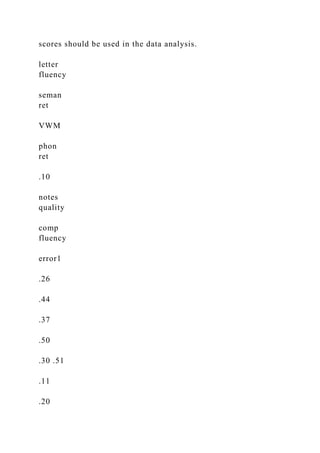
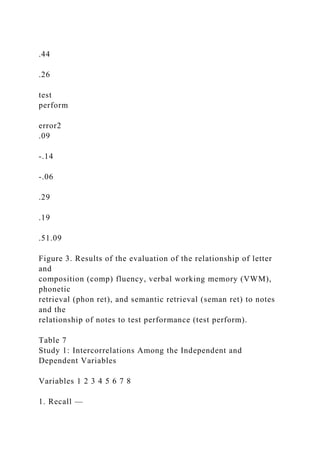
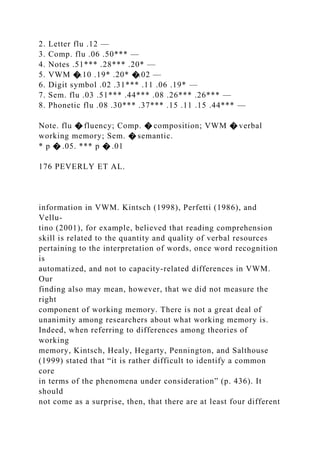
The purpose of the studies reported in this article is to evaluate
the hypothesis that transcription fluency, verbal working
memory capacity, and the ability to identify main ideas would
be related to the quality of notes (Peverly, Ramaswamy, Brown,
Sumowski & Alidoost, 2007). Peverly et al. (2007)
quantitatively concluded that transcription fluency is important
not only to writing essays but to record the ideas presented in
the lecture as well. The experiment was conducted by having 85
undergraduate participants watch a 20 minute videotape on the
psychology of problem solving. The participants were then told
to take notes as detailed as possible as they only had 10 minutes
to study their notes and were tasked to complete tests, such as
letter fluency. Participants were then tasked to write summary
of the videotape. A limitation of this correlational design study
is that while it proves that there is a relationship between
transcription fluency and note quality, it cannot determine if it
is a sole causation factor. A correlation coefficient is able to
numerically link the strength between the dependent variables
and independent variables, but does not factor in other variables
such as cognitive abilities (McLeod, 2008), or for example in
this case, interest in the videotape content. This makes the
experiment somewhat lack internal validity. On the other hand
when investigating relationships for the first time, correlational
studies provides a good starting position. It allows researchers
to determine the strength and direction of a relationship so that
later studies can narrow the findings down and, if possible,
determine causation experimentally. The experimenters also
intentionally introduced a positive bias onto the participants as
they were told that they had to write a summary of the
videotape. This would implicitly induce a mindset whereby the
participants would work harder to study the notes, though it
would be tedious to take into account each participants
cognitive ability to do so.
The final article examines whether research into student’s
conceptualisations can contribute to the understanding of taking
notes in lectures (Badger, White, Sutherland & Haggis, 2001).
A descriptive study based on survey research, Badger et al.
(2001) proceeded the experiment by administering a semi-
structured interview. 18 self-selected student participants were
interviewed by the members of the research team who were not
teaching them. Badger et al. (2001) qualitatively reached four
conclusions, most notably that understanding students’ views on
note taking and how the lectures were conceptualised by the
students, were necessary to complement future research in this
area. An advantage of a survey research is that it offers a
unique means of data collection. Badger et al. (2001) had access
to what the three other studies lacked, which was the personal
experience of their participants, in addition to statistical data.
Interviewers in semi-structured interviews also have the
flexibility to follow topical trajectories in the conversation, and
may stray from the guide whenever appropriate. This allows a
more natural flow of conversation between the interviewer and
interviewee. A limitation that this experiment has is that the
participants were self volunteers. The experiment would have
yielded a more representative result if the participants were
chosen at random. Social desirability bias is also a huge factor
of a survey research design. Social desirability bias refers to the
fact that in self-reports, people will often report inaccurately on
sensitive topics in order to present themselves in the best
possible light (Fisher, 1993). In this experiment, Badger et al.
(2001) had no way to deduce that what answers that were put
forward by the participants were actually true. The participants
could have either implicitly or explicitly produced answers that
projected themselves in a good manner. This may even be
reinforced by the fact that most of the participants have never
been taught by the researchers.
To summarise, the four articles have provided insight on how
research on note taking has been done. Generalisability, or
ecological validity, is one of the key factors of any study. It
refers to the more control psychologists exert in a study, the
less they may be able to generalise. Balance between internal
and external validity is therefore crucial, such as the sample
used.A quantitative conclusion should be strived as much as
possible, though conducting a qualitative pilot study would be
complementary. Quantitative methods ensure high amounts of
data while qualitative methods would result in a more in-depth
insight and information on how a certain phenomenon affects
the real world. If time and cost is adequate, conducting the two
methods would provide a comprehensive conclusion to any
hypothesis, which would be beneficial for avoiding pre-
judgements. That being said, study mediums are ever changing,
from the more traditional longhand method in the previous
century, to the more current culture of using the laptop. Future
researchers should take into consideration all the points that
were raised in this analysis for their studies, and in time, reach
our unified goal of understanding the human brain.
References
Badger, R., White, G., Sutherland, P., & Haggis, T., (2001)
Note perfect: an investigation of how students view taking notes
in lectures, System 29, 405-417
Fisher, R. J. (1993). Social desirability bias and the validity of
indirect questioning, Journal of Consumer Research, 20, 303-
315.
Flora, F.W., Wang, Y.K., & Fass, W. (2014). An experimental
study of online chatting and note taking techniques on college
students’ cognitive learning from a lecture, Computers in
Human Behaviour, 34, 148-156.
McLeod, S. A. (2008). Correlation. Retrieved from
www.simplypsychology.org/correlation.html
Mueller, P.A., & Oppenheimer, D.A. (2014).The Pen Is
Mightier Than the Keyboard: Advantages of Longhand Over
Laptop Note Taking, Psychological Science.
Peverly, S.T., Ramaswamy, V., Brown, C., Sumowski, J., &
Alidoost, M., (2007) What Predicts Skill in Lecture Note
Taking?, Journal of Educational Psychology, 99(1), 167-180
Trochim, W., (2006) Multiple group threats. Retrieved from
http://www.socialresearchmethods.net/kb/intmult.php
Psychological Science
1 –10
© The Author(s) 2014
Reprints and permissions:
sagepub.com/journalsPermissions.nav
DOI: 10.1177/0956797614524581
pss.sagepub.com
Research Article
The use of laptops in classrooms is controversial. Many
professors believe that computers (and the Internet)
serve as distractions, detracting from class discussion and
student learning (e.g., Yamamoto, 2007). Conversely, stu-
dents often self-report a belief that laptops in class are
beneficial (e.g., Barak, Lipson, & Lerman, 2006; Mitra &
Steffensmeier, 2000; Skolnick & Puzo, 2008). Even when
students admit that laptops are a distraction, they believe
the benefits outweigh the costs (Kay & Lauricella, 2011).
Empirical research tends to support the professors’ view,
finding that students using laptops are not on task during
lectures (Kay & Lauricella, 2011; Kraushaar & Novak,
2010; Skolnick & Puzo, 2008; Sovern, 2013), show
decreased academic performance (Fried, 2008; Grace-
Martin & Gay, 2001; Kraushaar & Novak, 2010), and are
actually less satisfied with their education than their peers
who do not use laptops in class (Wurst, Smarkola, &
Gaffney, 2008).
These correlational studies have focused on the capac-
ity of laptops to distract and to invite multitasking.
Experimental tests of immediate retention of class mate-
rial have also found that Internet browsing impairs per-
formance (Hembrooke & Gay, 2003). These findings are
important but relatively unsurprising, given the literature
on decrements in performance when multitasking or task
switching (e.g., Iqbal & Horvitz, 2007; Rubinstein, Meyer,
& Evans, 2001).
However, even when distractions are controlled for,
laptop use might impair performance by affecting the
manner and quality of in-class note taking. There is a
substantial literature on the general effectiveness of note
taking in educational settings, but it mostly predates lap-
top use in classrooms. Prior research has focused on two
ways in which note taking can affect learning: encoding
and external storage (see DiVesta & Gray, 1972; Kiewra,
1989). The encoding hypothesis suggests that the pro-
cessing that occurs during the act of note taking improves
learning and retention. The external-storage hypothesis
touts the benefits of the ability to review material (even
from notes taken by someone else). These two theories
are not incompatible; students who both take and review
524581PSSXXX10.1177/0956797614524581Mueller,
OppenheimerLonghand and Laptop Note Taking
research-article2014
Corresponding Author:
Pam A. Mueller, Princeton University, Psychology Department,
Princeton, NJ 08544
E-mail: [email protected]
The Pen Is Mightier Than the Keyboard:
Advantages of Longhand Over Laptop
Note Taking
Pam A. Mueller1 and Daniel M. Oppenheimer2
1Princeton University and 2University of California, Los
Angeles
Abstract
Taking notes on laptops rather than in longhand is increasingly
common. Many researchers have suggested that laptop
note taking is less effective than longhand note taking for
learning. Prior studies have primarily focused on students’
capacity for multitasking and distraction when using laptops.
The present research suggests that even when laptops
are used solely to take notes, they may still be impairing
learning because their use results in shallower processing.
In three studies, we found that students who took notes on
laptops performed worse on conceptual questions than
students who took notes longhand. We show that whereas taking
more notes can be beneficial, laptop note takers’
tendency to transcribe lectures verbatim rather than processing
information and reframing it in their own words is
detrimental to learning.
Keywords
academic achievement, cognitive processes, memory,
educational psychology
Received 5/11/13; Revision accepted 1/16/14
Psychological Science OnlineFirst, published on April 23, 2014
as doi:10.1177/0956797614524581
at James Cook University on March 9,
2016pss.sagepub.comDownloaded from
http://pss.sagepub.com/
2 Mueller, Oppenheimer
their notes (as most do) likely profit from both approaches
(Kiewra, 1985).
The beneficial external-storage effect of notes is robust
and uncontroversial (Kiewra, 1989). The encoding
hypothesis has been supported by studies finding posi-
tive effects of note taking in the absence of review (e.g.,
Aiken, Thomas, & Shennum, 1975; Bretzing & Kulhavy,
1981; Einstein, Morris, & Smith, 1985); however, other
results have been more mixed (see Kiewra, 1985;
Kobayashi, 2005, for reviews). This inconsistency may be
a result of moderating factors (Kobayashi, 2005), poten-
tially including one’s note-taking strategy.
Note taking can be generative (e.g., summarizing,
paraphrasing, concept mapping) or nongenerative (i.e.,
verbatim copying). Verbatim note taking has generally
been seen to indicate relatively shallow cognitive pro-
cessing (Craik & Lockhart, 1972; Kiewra, 1985; Van
Meter, Yokoi, & Pressley, 1994). The more deeply infor-
mation is processed during note taking, the greater the
encoding benefits (DiVesta & Gray, 1973; Kiewra, 1985).
Studies have shown both correlationally (Aiken et al.,
1975; Slotte & Lonka, 1999) and experimentally (Bretzing
& Kulhavy, 1979; Igo, Bruning, & McCrudden, 2005) that
verbatim note taking predicts poorer performance than
nonverbatim note taking, especially on integrative and
conceptual items.
Laptop use facilitates verbatim transcription of lecture
content because most students can type significantly
faster than they can write (Brown, 1988). Thus, typing
may impair the encoding benefits seen in past note-tak-
ing studies. However, the ability to transcribe might
improve external-storage benefits.
There has been little research directly addressing
potential differences in laptop versus longhand note tak-
ing, and the existing studies do not allow for natural
variation in the amount of verbatim overlap (i.e., the
amount of text in common between a lecture and stu-
dents’ notes on that lecture). For example, Bui, Myerson,
and Hale (2013) found an advantage for laptop over
longhand note taking. However, their results were driven
by a condition in which they explicitly instructed partici-
pants to transcribe content, rather than allowing them to
take notes as they would in class. Lin and Bigenho (2011)
used word lists as stimuli, which also ensured that all
note taking would be verbatim. Therefore, these studies
do not speak to real-world settings, where laptop and
longhand note taking might naturally elicit different
strategies regarding the extent of verbatim transcription.1
Moreover, these studies only tested immediate recall,
and exclusively measured factual (rather than concep-
tual) knowledge, which limits generalizability (see also
Bohay, Blakely, Tamplin, & Radvansky, 2011; Quade,
1996). Previous studies have shown that detriments
due to verbatim note taking are more prominent for
conceptual than for factual items (e.g., Bretzing &
Kulhavy, 1979).
Thus, we conducted three experiments to investigate
whether taking notes on a laptop versus writing long-
hand affects academic performance, and to explore the
potential mechanism of verbatim overlap as a proxy for
depth of processing.
Study 1
Participants
Participants were 67 students (33 male, 33 female, 1
unknown) from the Princeton University subject pool.
Two participants were excluded, 1 because he had seen
the lecture serving as the stimulus prior to participation,
and 1 because of a data-recording error.
Materials
We selected five TED Talks (https://www.ted.com/talks)
for length (slightly over 15 min) and to cover topics that
would be interesting but not common knowledge.2
Laptops had full-size (11-in. × 4-in.) keyboards and were
disconnected from the Internet.
Procedure
Students generally participated 2 at a time, though some
completed the study alone. The room was preset with
either laptops or notebooks, according to condition.
Lectures were projected onto a screen at the front of the
room. Participants were instructed to use their normal
classroom note-taking strategy, because experimenters
were interested in how information was actually recorded
in class lectures. The experimenter left the room while
the lecture played.
Next, participants were taken to a lab; they completed
two 5-min distractor tasks and engaged in a taxing work-
ing memory task (viz., a reading span task; Unsworth,
Heitz, Schrock, & Engle, 2005). At this point, approxi-
mately 30 min had elapsed since the end of the lecture.
Finally, participants responded to both factual-recall ques-
tions (e.g., “Approximately how many years ago did the
Indus civilization exist?”) and conceptual-application
questions (e.g., “How do Japan and Sweden differ in their
approaches to equality within their societies?”) about the
lecture and completed demographic measures.3
The first author scored all responses blind to condi-
tion. An independent rater, blind to the purpose of the
study and condition, also scored all open-ended ques-
tions. Initial interrater reliability was good (α = .89); score
disputes between raters were resolved by discussion.
Longhand notes were transcribed into text files.
at James Cook University on March 9,
2016pss.sagepub.comDownloaded from
http://pss.sagepub.com/
Longhand and Laptop Note Taking 3
Results and discussion
Laptop versus longhand performance. Mixed fixed-
and random-effects analyses of variance were used to
test differences, with note-taking medium (laptop vs.
longhand) as a fixed effect and lecture (which talk was
viewed) as a random effect. We converted the raw data
to z scores because the lecture assessments varied in dif-
ficulty and number of points available; however, results
did not differ when raw scores were analyzed.4 On fac-
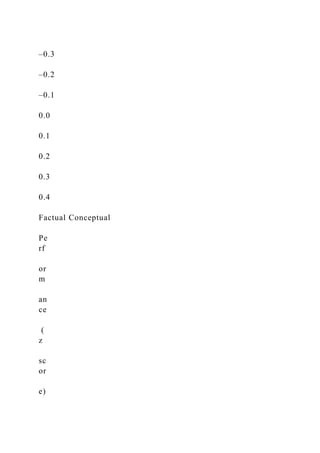
tual-recall questions, participants performed equally well
across conditions (laptop: M = 0.021, SD = 1.31; long-
hand: M = 0.009, SD = 1.02), F(1, 55) = 0.014, p = .91.
However, on conceptual-application questions, laptop
participants performed significantly worse (M = −0.156,
SD = 0.915) than longhand participants (M = 0.154, SD =
1.08), F(1, 55) = 9.99, p = .03, ηp
2 = .13 (see Fig. 1).5
Which lecture participants saw also affected performance
on conceptual-application questions, F(4, 55) = 12.52,
p = .02, ηp
2 = .16; however, there was no significant
interaction between lecture and note-taking medium,
F(4, 55) = 0.164, p = .96.
Content analysis. There were several qualitative dif-
ferences between laptop and longhand notes.6 Partici-
pants who took longhand notes wrote significantly
fewer words (M = 173.4, SD = 70.7) than those who
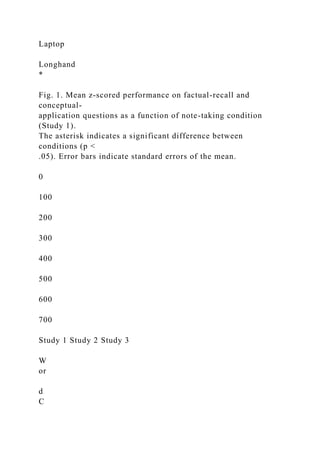
typed (M = 309.6, SD = 116.5), t(48.58) = −5.63, p < .001,
d = 1.4, corrected for unequal variances (see Fig. 2). A
simple n-gram program measured the extent of textual
overlap between student notes and lecture transcripts. It
compared each one-, two-, and three-word chunk of text
in the notes taken with each one-, two-, and three-word
chunk of text in the lecture transcript, and reported
a percentage of matches for each. Using three-word
chunks (3-grams) as the measure, we found that laptop
notes contained an average of 14.6% verbatim overlap
with the lecture (SD = 7.3%), whereas longhand notes
averaged only 8.8% (SD = 4.8%), t(63) = −3.77, p < .001,
d = 0.94 (see Fig. 3); 2-grams and 1-grams also showed
significant differences in the same direction.
Overall, participants who took more notes performed
better, β = 0.34, p = .023, partial R2 = .08. However, those
whose notes had less verbatim overlap with the lecture
also performed better, β = −0.43, p = .005, partial R2 = .12.
We tested a model using word count and verbatim over-
lap as mediators of the relationship between note-taking
medium and performance using Preacher and Hayes’s
(2004) bootstrapping procedure. The indirect effect is
significant if its 95% confidence intervals do not include
zero. The full model with note-taking medium as the
independent variable and both word count and verbatim
overlap as mediators was a significant predictor of per-
formance, F(3, 61) = 4.25, p = .009, R2 = .17. In the full
model, the direct effect of note-taking medium remained
a marginally significant predictor, b = 0.54 (β = 0.27),
p = .07, partial R2 = .05; both indirect effects were signifi-
cant. Longhand note taking negatively predicted word
count, and word count positively predicted performance,
indirect effect = −0.57, 95% confidence interval (CI) =
[−1.03, −0.20]. Longhand note taking also negatively pre-
dicted verbatim overlap, and verbatim overlap negatively
predicted performance, indirect effect = 0.34, 95% CI =
[0.14, 0.71]. Normal theory tests provided identical
conclusions.7
–0.4
–0.3
–0.2
–0.1
0.0
0.1
0.2
0.3
0.4
Factual Conceptual
Pe
rf
or
m
an
ce
(
z
sc
or
e)
Laptop
Longhand
*
Fig. 1. Mean z-scored performance on factual-recall and
conceptual-
application questions as a function of note-taking condition
(Study 1).
The asterisk indicates a significant difference between
conditions (p <
.05). Error bars indicate standard errors of the mean.
0
100
200
300
400
500
600
700
Study 1 Study 2 Study 3
W
or
d
C
ou
nt
Laptop
Longhand
***
***
***
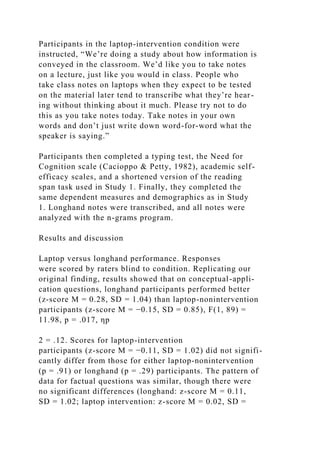
Fig. 2. Number of words written by students using laptops and
note-
books in Studies 1, 2, and 3. Asterisks indicate a significant
difference
between conditions (p < .001). Error bars indicate standard
errors of
the mean.
at James Cook University on March 9,
2016pss.sagepub.comDownloaded from
http://pss.sagepub.com/
4 Mueller, Oppenheimer
This study provides initial experimental evidence that
laptops may harm academic performance even when
used as intended. Participants using laptops are more
likely to take lengthier transcription-like notes with
greater verbatim overlap with the lecture. Although tak-
ing more notes, thereby having more information, is ben-
eficial, mindless transcription seems to offset the benefit
of the increased content, at least when there is no oppor-
tunity for review.
Study 2
Because the detrimental effects of laptop note taking
appear to be due to verbatim transcription, perhaps
instructing students not to take verbatim notes could ame-
liorate the problem. Study 2 aimed to replicate the findings
of Study 1 and to determine whether a simple instructional
intervention could reduce the negative effects of laptop
note taking. Moreover, we sought to show that the effects
generalize to a different student sample.
Participants
Participants were students (final N = 151; 35 male) from
the University of California, Los Angeles Anderson
Behavioral Lab subject pool. Two participants were
removed because of data-collection errors. Participants
were paid $10 for 1 hr of participation.
Procedure
Participants completed the study in groups. Each partici-
pant viewed one lecture on an individual monitor while
wearing headphones. Stimuli were the same as in Study
1. Participants in the laptop-nonintervention and long-
hand conditions were given a laptop or pen and paper,
respectively, and were instructed, “We’re doing a study
about how information is conveyed in the classroom.
We’d like you to take notes on a lecture, just like you
would in class. Please take whatever kind of notes you’d
take in a class where you expected to be tested on the
material later—don’t change anything just because you’re
in a lab.”
Participants in the laptop-intervention condition were
instructed, “We’re doing a study about how information is
conveyed in the classroom. We’d like you to take notes
on a lecture, just like you would in class. People who
take class notes on laptops when they expect to be tested
on the material later tend to transcribe what they’re hear-
ing without thinking about it much. Please try not to do
this as you take notes today. Take notes in your own
words and don’t just write down word-for-word what the
speaker is saying.”
Participants then completed a typing test, the Need for
Cognition scale (Cacioppo & Petty, 1982), academic self-
efficacy scales, and a shortened version of the reading
span task used in Study 1. Finally, they completed the
same dependent measures and demographics as in Study
1. Longhand notes were transcribed, and all notes were
analyzed with the n-grams program.
Results and discussion
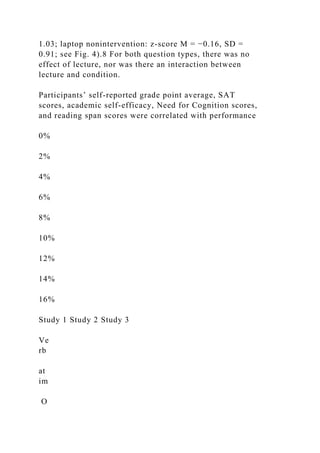
Laptop versus longhand performance. Responses
were scored by raters blind to condition. Replicating our
original finding, results showed that on conceptual-appli-
cation questions, longhand participants performed better
(z-score M = 0.28, SD = 1.04) than laptop-nonintervention
participants (z-score M = −0.15, SD = 0.85), F(1, 89) =
11.98, p = .017, ηp
2 = .12. Scores for laptop-intervention
participants (z-score M = −0.11, SD = 1.02) did not signifi-
cantly differ from those for either laptop-nonintervention
(p = .91) or longhand (p = .29) participants. The pattern of
data for factual questions was similar, though there were
no significant differences (longhand: z-score M = 0.11,
SD = 1.02; laptop intervention: z-score M = 0.02, SD =
1.03; laptop nonintervention: z-score M = −0.16, SD =
0.91; see Fig. 4).8 For both question types, there was no
effect of lecture, nor was there an interaction between
lecture and condition.
Participants’ self-reported grade point average, SAT
scores, academic self-efficacy, Need for Cognition scores,
and reading span scores were correlated with performance
0%
2%
4%
6%
8%
10%
12%
14%
16%
Study 1 Study 2 Study 3
Ve
rb
at
im
O
ve
rla
p
Laptop
Longhand
***
*** ***
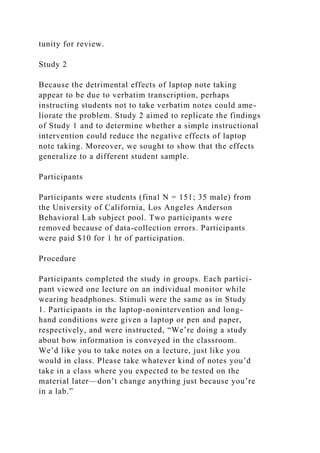
Fig. 3. Percentage of verbatim overlap between student notes
and lec-
ture transcripts in Studies 1, 2, and 3 as a function of note-
taking condi-
tion. Verbatim overlap was measured using 3-grams (i.e., by
comparing
three-word chunks of text in the student notes and lecture
transcripts).
Error bars indicate standard errors of the mean.
at James Cook University on March 9,
2016pss.sagepub.comDownloaded from
http://pss.sagepub.com/
Longhand and Laptop Note Taking 5
on conceptual items, but were not significant covariates
when included in the overall analysis, so we will not dis-
cuss them further.
Content analysis. Participants who took longhand
notes wrote significantly fewer words (M = 155.9, SD =
59.6) than those who took laptop notes without receiving
an intervention (M = 260.9, SD = 118.5), t(97) = −5.51,
p < .001, d = 1.11 (see Fig. 2), as well as less than those
who took laptop notes after the verbal intervention (M =
229.02, SD = 84.8), t(98) = −4.94, p < .001, d = 1.00. Long-
hand participants also had significantly less verbatim
overlap (M = 6.9%, SD = 4.2%) than laptop-noninterven-
tion participants (M = 12.11%, SD = 5.0%), t(97) = −5.58,
p < .001, d = 1.12 (see Fig. 3), or laptop-intervention
participants (M = 12.07%, SD = 6.0%), t(98) = −4.96, p <
.001, d = 0.99. The instruction to not take verbatim notes
was completely ineffective at reducing verbatim content
(p = .97).
Comparing longhand and laptop-nonintervention note
taking, we found that for conceptual questions, partici-
pants taking more notes performed better, β = 0.27, p =
.02, partial R2 = .05, but those whose notes had less ver-
batim overlap also performed better, β = −0.30, p = .01,
partial R2 = .06, which replicates the findings of Study 1.
We tested a model using word count and verbatim over-
lap as mediators of the relationship between note-taking
medium and performance; it was a good fit, F(3, 95) =
5.23, p = .002, R2 = .14. Again, both indirect effects were
significant: Longhand note taking negatively predicted
word count, and word count positively predicted perfor-
mance, indirect effect = −0.34, 95% CI = [−0.56, −0.14].
Longhand note taking also negatively predicted verbatim
overlap, and verbatim overlap negatively predicted per-
formance, indirect effect = 0.19, 95% CI = [0.01, 0.49]. The
direct effect of note-taking medium remained significant,
b = 0.58 (β = 0.30), p = .01, partial R2 = .06, so there is
likely more at play than the two opposing mechanisms
we identified here. When laptop (with intervention) was
included as an intermediate condition, the pattern of
effects remained the same, though the magnitude
decreased; indirect effect of word count = −0.18, 95%
CI = [−0.29, −0.08], indirect effect of verbatim overlap =
0.08, 95% CI = [0.01, 0.17].
The intervention did not improve memory perfor-
mance above that for the laptop-nonintervention condi-
tion, but it was also not statistically distinguishable from
memory in the longhand condition. However, the inter-
vention was completely ineffective at reducing verbatim
content, and the overall relationship between verbatim
content and negative performance held. Thus, whereas
the effect of the intervention on performance is ambigu-
ous, any potential impact is unrelated to the mechanisms
explored in this article.
Study 3
Whereas laptop users may not be encoding as much
information while taking notes as longhand writers are,
they record significantly more content. It is possible that
–0.4
–0.3
–0.2
–0.1
0
0.1
0.2
0.3
0.4
0.5
Factual Conceptual
Pe
rf
or
m
an
ce
(z
s
co
re
)
Laptop (No Intervention)
Longhand
Laptop (Intervention)
Fig. 4. Mean z-scored performance on factual-recall and
conceptual-application questions as a function
of note-taking condition (Study 2). Error bars indicate standard
errors of the mean.
at James Cook University on March 9,
2016pss.sagepub.comDownloaded from
http://pss.sagepub.com/
6 Mueller, Oppenheimer
this increased external-storage capacity could boost per-
formance on tests taken after an opportunity to study
one’s notes. Thus, in Study 3, we used a 2 (laptop, long-
hand) × 2 (study, no study) design to investigate whether
the disadvantages of laptop note taking for encoding are
potentially mitigated by enhanced external storage. We
also continued to investigate whether there were consis-
tent differences between responses to factual and con-
ceptual questions, and additionally explored whether the
note-taking medium affected transfer of learning of con-
ceptual information to other domains (e.g., Barnett &
Ceci, 2002).
Participants
Participants were students (final N = 109; 27 male) from
the University of California, Los Angeles Anderson
Behavioral Lab subject pool. One hundred forty-two par-
ticipants completed Session 1 (presentation), but only 118
returned for Session 2 (testing). Of those 118, 8 partici-
pants were removed for not having taken notes or failing
to respond to the test questions, and 1 was removed
because of a recording error. Participant loss did not differ
significantly across conditions. Participants were paid $6
for the first session and $7 for the second session.
Stimuli
Materials were adapted from Butler (2010). Four prose
passages—on bats, bread, vaccines, and respiration—were
read from a teleprompter by a graduate student acting as
a professor at a lectern; two “seductive details” (i.e.,
“interesting, but unimportant, information”; Garner,
Gillingham, & White, 1989, p. 41) were added to lectures
that did not have them. Each filmed lecture lasted approx-
imately 7 min.
Procedure
Participants completed the study in large groups. They
were given either a laptop or pen and paper and were
instructed to take notes on the lectures. They were told
they would be returning the following week to be tested
on the material. Each participant viewed all four lectures
on individual monitors while wearing headphones.
When participants returned, those in the study condi-
tion were given 10 min to study their notes before being
tested. Participants in the no-study condition immediately
took the test. This dependent measure consisted of 40
questions, 10 on each lecture—two questions in each of
five categories adapted from Butler (2010): facts, seduc-
tive details, concepts, same-domain inferences (infer-
ences), and new-domain inferences (applications). See
Table 1 for examples. Participants then answered demo-
graphic questions. All responses were scored by raters
blind to condition. Longhand notes were transcribed, and
all notes were analyzed using the n-grams program.
Results
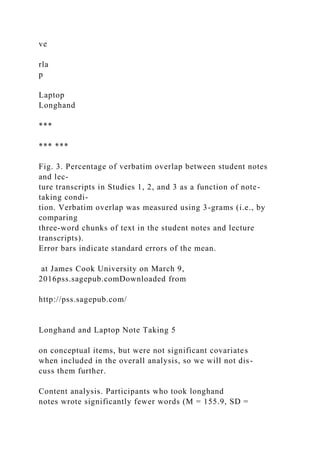
Laptop versus longhand performance. Across all
question types, there were no main effects of note-taking
medium or opportunity to study. However, there was a
significant interaction between these two variables, F(1,
105) = 5.63, p = .019, ηp
2 = .05. Participants who took
longhand notes and were able to study them performed
significantly better (z-score M = 0.19) than participants in
any of the other conditions (z-score Ms = −0.10, −0.02,
−0.08), t(105) = 3.11, p = .002, d = 0.64 (see Fig. 5).
Collapsing questions about facts and seductive details
into a general measure of “factual” performance, we
found a significant main effect of note-taking medium,
F(1, 105) = 5.91, p = .017, ηp
2 = .05, and of opportunity to
study, F(1, 105) = 13.23, p < .001, ηp
2 = .11, but this was
qualified by a significant interaction, F(1, 105) = 5.11,
p = .026, ηp
2 = .05. Again, participants in the longhand-
study condition (z-score M = 0.29) outperformed the
other participants (z-score Ms = −0.04, −0.14, −0.13),
t(105) = 4.85, p < .001, d = 0.97. Collapsing performance
on conceptual, inferential, and application questions into
a general “conceptual” measure revealed no significant
main effects, but again there was a significant interaction
between note-taking medium and studying, F(1, 105) = 4.27,
p = .04, ηp
2 = .04. Longhand-study participants (z-score
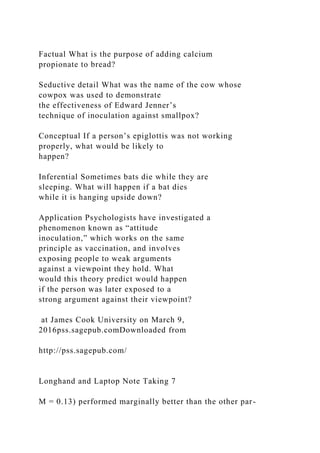
Table 1. Examples of Each Question Type Used in Study 3
Question type Example
Factual What is the purpose of adding calcium
propionate to bread?
Seductive detail What was the name of the cow whose
cowpox was used to demonstrate
the effectiveness of Edward Jenner’s
technique of inoculation against smallpox?
Conceptual If a person’s epiglottis was not working
properly, what would be likely to
happen?
Inferential Sometimes bats die while they are
sleeping. What will happen if a bat dies
while it is hanging upside down?
Application Psychologists have investigated a
phenomenon known as “attitude
inoculation,” which works on the same
principle as vaccination, and involves
exposing people to weak arguments
against a viewpoint they hold. What
would this theory predict would happen
if the person was later exposed to a
strong argument against their viewpoint?
at James Cook University on March 9,
2016pss.sagepub.comDownloaded from
http://pss.sagepub.com/
Longhand and Laptop Note Taking 7
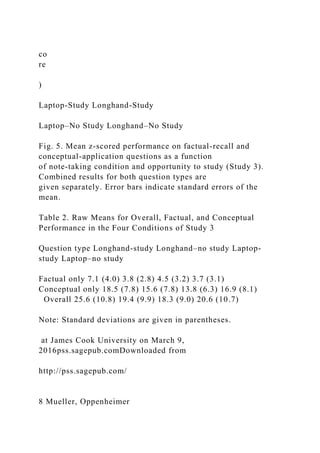
M = 0.13) performed marginally better than the other par-
ticipants (z-score Ms = −0.14, 0.04, −0.05), t(105) = 1.82,
p = .07, d = 0.4 (for raw means, see Table 2).
Content analysis of notes. Again, longhand note tak-
ers wrote significantly fewer words (M = 390.65, SD =
143.89) than those who typed (M = 548.73, SD = 252.68),
t(107) = 4.00, p < .001, d = 0.77 (see Fig. 2). As in the pre-
vious studies, there was a significant difference in verba-
tim overlap, with a mean of 11.6% overlap (SD = 5.7%) for
laptop note taking and only 4.2% (SD = 2.5%) for long-
hand, t(107) = 8.80, p < .001, d = 1.68 (see Fig. 3). There
were no significant differences in word count or verbatim
overlap between the study and no-study conditions.
The amount of notes taken positively predicted perfor-
mance for all participants, β = 0.35, p < .001, R2 = .12. The
extent of verbatim overlap did not significantly predict
performance for participants who did not study their
notes, β = 0.13. However, for participants who studied
their notes (and thus those who were most likely to be
affected by the contents), verbatim overlap negatively pre-
dicted overall performance, β = −0.27, p = .046, R2 = .07.
When looking at overall test performance, longhand note
taking negatively predicted word count, which positively
predicted performance, indirect effect = −0.15, 95% CI =
[−0.24, −0.08]. Longhand note taking also negatively pre-
dicted verbatim overlap, which negatively predicted per-
formance, indirect effect = 0.096, 95% CI = [0.004, 0.23].
However, a more nuanced story can be told; the indi-
rect effects differ for conceptual and factual questions.
For conceptual questions, there were significant indirect
effects on performance via both word count (−0.17, 95%
CI = [−0.29, −0.08]) and verbatim overlap (0.13, 95% CI =
[0.02, 0.15]). The indirect effect of word count for factual
questions was similar (−0.11, 95% CI = [−0.21, −0.06]), but
there was no significant indirect effect of verbatim overlap
(0.04, 95% CI = [−0.07, 0.16]). Indeed, for factual ques-
tions, there was no significant direct effect of overlap on
–0.3
–0.2
–0.1
0
0.1
0.2
0.3
0.4
0.5
Combined Factual Conceptual
Pe
rf
or
m
an
ce
(z
s
co
re
)
Laptop-Study Longhand-Study
Laptop–No Study Longhand–No Study
Fig. 5. Mean z-scored performance on factual-recall and
conceptual-application questions as a function
of note-taking condition and opportunity to study (Study 3).
Combined results for both question types are
given separately. Error bars indicate standard errors of the
mean.
Table 2. Raw Means for Overall, Factual, and Conceptual
Performance in the Four Conditions of Study 3
Question type Longhand-study Longhand–no study Laptop-
study Laptop–no study
Factual only 7.1 (4.0) 3.8 (2.8) 4.5 (3.2) 3.7 (3.1)
Conceptual only 18.5 (7.8) 15.6 (7.8) 13.8 (6.3) 16.9 (8.1)
Overall 25.6 (10.8) 19.4 (9.9) 18.3 (9.0) 20.6 (10.7)
Note: Standard deviations are given in parentheses.
at James Cook University on March 9,
2016pss.sagepub.comDownloaded from
http://pss.sagepub.com/
8 Mueller, Oppenheimer
performance (p = .52). As in Studies 1 and 2, the detri-
ments caused by verbatim overlap occurred primarily for
conceptual rather than for factual information, which
aligns with previous literature showing that verbatim
note taking is more problematic for conceptual items
(e.g., Bretzing & Kulhavy, 1979).
When participants were unable to study, we did not see
a difference between laptop and longhand note taking.
We believe this is due to the difficulty of test items after a
week’s delay and a subsequent floor effect; average scores
were about one-third of the total points available. However,
when participants had an opportunity to study, longhand
notes again led to superior performance. This is suggestive
evidence that longhand notes may have superior external-
storage as well as superior encoding functions, despite the
fact that the quantity of notes was a strong positive predic-
tor of performance. However, it is also possible that,
because of enhanced encoding, reviewing longhand notes
simply reminded participants of lecture information more
effectively than reviewing laptop notes did.
General Discussion
Laptop note taking has been rapidly increasing in preva-
lence across college campuses (e.g., Fried, 2008).
Whereas previous studies have shown that laptops (espe-
cially with access to the Internet) can distract students,
the present studies are the first to show detriments due to
differences in note-taking behavior. On multiple college
campuses, using both immediate and delayed testing
across several content areas, we found that participants
using laptops were more inclined to take verbatim notes
than participants who wrote longhand, thus hurting
learning. Moreover, we found that this pattern of results
was resistant to a simple verbal intervention: Telling stu-
dents not to take notes verbatim did not prevent this
deleterious behavior.
One might think that the detriments to encoding would
be partially offset by the fact that verbatim transcription
would leave a more complete record for external storage,
which would allow for better studying from those notes.
However, we found the opposite—even when allowed to
review notes after a week’s delay, participants who had
taken notes with laptops performed worse on tests of both
factual content and conceptual understanding, relative to
participants who had taken notes longhand.
We found no difference in performance on factual
questions in the first two studies, though we do not dis-
count the possibility that with greater power, differences
might be seen. In Study 3, it is unclear why longhand
note takers outperformed laptop note takers on factual
questions, as this difference was not related to the rela-
tive lack of verbatim overlap in longhand notes. It may be
that longhand note takers engage in more processing
than laptop note takers, thus selecting more important
information to include in their notes, which enables them
to study this content more efficiently. It is worth noting
that longhand note takers’ advantage on retention of fac-
tual content is limited to conditions in which there was a
delay between presentation and test, which may explain
the discrepancy between our studies and previous
research (Bui et al., 2013). The tasks they describe would
also fall under our factual-question category, and we
found no difference in performance on factual questions
in immediate testing. For conceptual items, however, our
findings strongly suggest the opposite conclusion.
Additionally, whereas Bui et al. (2013) argue that verba-
tim notes are superior, they did not report the extent of
verbatim overlap, merely the number of “idea units.” Our
findings concur with theirs in that more notes (and there-
fore more ideas) led to better performance.
The studies we report here show that laptop use can
negatively affect performance on educational assess-
ments, even—or perhaps especially—when the computer
is used for its intended function of easier note taking.
Although more notes are beneficial, at least to a point, if
the notes are taken indiscriminately or by mindlessly
transcribing content, as is more likely the case on a lap-
top than when notes are taken longhand, the benefit dis-
appears. Indeed, synthesizing and summarizing content
rather than verbatim transcription can serve as a desir-
able difficulty toward improved educational outcomes
(e.g., Diemand-Yauman, Oppenheimer, & Vaughan, 2011;
Richland, Bjork, Finley, & Linn, 2005). For that reason,
laptop use in classrooms should be viewed with a healthy
dose of caution; despite their growing popularity, laptops
may be doing more harm in classrooms than good.
Author Contributions
Both authors developed the study concept and design. Data
collection was supervised by both authors. P. A. Mueller ana-
lyzed the data under the supervision of D. M. Oppenheimer.
P. A. Mueller drafted the manuscript, and D. M. Oppenheimer
revised the manuscript. Both authors approved the final version
for submission.
Acknowledgments
Thanks to Jesse Chandler, David Mackenzie, Peter Mende-
Siedlecki, Daniel Ames, Izzy Gainsburg, Jill Hackett, Mariam
Hambarchyan, and Katelyn Wirtz for their assistance.
Declaration of Conflicting Interests
The authors declared that they had no conflicts of interest with
respect to their authorship or the publication of this article.
Supplemental Material
Additional supporting information may be found at http://pss
.sagepub.com/content/by/supplemental-data
at James Cook University on March 9,
2016pss.sagepub.comDownloaded from
http://pss.sagepub.com/
Longhand and Laptop Note Taking 9
Open Practices
All data and materials have been made publicly available via
Open Science Framework and can be accessed at http://osf.io/
crsiz. The complete Open Practices Disclosure for this article
can be found at
http://pss.sagepub.com/content/by/supplemental-
data. This article has received badges for Open Data and Open
Materials. More information about the Open Practices badges
can be found at https://osf.io/tvyxz/wiki/view/ and http://pss
.sagepub.com/content/25/1/3.full.
Notes
1. See Additional Analyses in the Supplemental Material avail-
able online for some findings regarding real-world data.
2. See Lecture Information in the Supplemental Material for
links to all five TED Talks used in Study 1 and the four prose
passages used in Study 2.
3. See Raw Means and Questions in the Supplemental Material
for full question lists from all three studies.
4. For factual questions, laptop participants’ raw mean score
was 5.58 (SD = 2.23), and longhand participants’ raw mean
score was 6.41 (SD = 2.84). For conceptual questions, the raw
mean scores for laptop and longhand participants were 3.77
(SD = 1.23) and 4.29 (SD = 1.49), respectively. See Raw Means
and Questions in the Supplemental Material for raw means
from Studies 1 and 2.
5. In all three studies, the results remained significant when we
controlled for measures of academic ability, such as self-ratings
of prior knowledge and scores on the SAT and reading span
task.
6. Linguistic Inquiry and Word Count (LIWC) software was
also used to analyze the notes on categories identified by
Pennebaker (2011) as correlating with improved college grades.
Although LIWC analysis indicated significant differences in the
predicted direction between laptop and longhand notes, none
of the differences predicted performance, so they will not be
discussed here.
7. For all three studies, we also analyzed the relation between
verbatim overlap and students’ preferences for longhand or
laptop note taking. Results of these analyses can be found in
Additional Analyses in the Supplemental Material.
8. For conceptual questions, laptop-nonintervention par-
ticipants had lower raw scores (M = 2.30, SD = 1.40) than
did longhand note takers (M = 2.94, SD = 1.73) and laptop-
intervention participants (M = 2.43, SD = 1.59). For factual
questions, laptop-nonintervention participants’ raw scores
(M = 4.92, SD = 2.62) were also lower than those of longhand
note takers (M = 5.11, SD = 3.05) or laptop-intervention par-
ticipants (M = 5.25, SD = 2.89).
References
Aiken, E. G., Thomas, G. S., & Shennum, W. A. (1975).
Memory
for a lecture: Effects of notes, lecture rate, and informational
density. Journal of Educational Psychology, 67, 439–444.
Barak, M., Lipson, A., & Lerman, S. (2006). Wireless laptops
as means for promoting active learning in large lecture
halls. Journal of Research on Technology in Education, 38,
245–263.
Barnett, S. M., & Ceci, S. J. (2002). When and where do we
apply
what we learn? A taxonomy for far transfer. Psychological
Bulletin, 128, 612–637.
Bohay, M., Blakely, D. P., Tamplin, A. K., & Radvansky, G. A.
(2011). Note taking, review, memory, and comprehension.
The American Journal of Psychology, 124, 63–73.
Bretzing, B. H., & Kulhavy, R. W. (1979). Notetaking and depth
of processing. Contemporary Educational Psychology, 4,
145–153.
Bretzing, B. H., & Kulhavy, R. W. (1981). Note-taking and pas-
sage style. Journal of Educational Psychology, 73, 242–250.
Brown, C. M. (1988). Comparison of typing and handwriting
in “two-finger typists.” Proceedings of the Human Factors
Society, 32, 381–385.
Bui, D. C., Myerson, J., & Hale, S. (2013). Note-taking with
com-
puters: Exploring alternative strategies for improved recall.
Journal of Educational Psychology, 105, 299–309.
Butler, A. C. (2010). Repeated testing produces superior trans-
fer of learning relative to repeated studying. Journal
of Experimental Psychology: Learning, Memory, and
Cognition, 36, 1118–1133.
Cacioppo, J. T., & Petty, R. E. (1982). The need for cognition.
Journal of Personality and Social Psychology, 42, 116–131.
Craik, F. I., & Lockhart, R. S. (1972). Levels of processing:
A framework for memory research. Journal of Verbal
Learning and Verbal Behavior, 11, 671–684.
Diemand-Yauman, C., Oppenheimer, D. M., & Vaughan, E. B.
(2011). Fortune favors the bold (and the italicized): Effects of
disfluency on educational outcomes. Cognition, 118, 111–115.
DiVesta, F. J., & Gray, G. S. (1972). Listening and note taking.
Journal of Educational Psychology, 63, 8–14.
DiVesta, F. J., & Gray, S. G. (1973). Listening and note taking:
II.
Immediate and delayed recall as functions of variations in the-
matic continuity, note taking, and length of listening-review
intervals. Journal of Educational Psychology, 64, 278–287.
Einstein, G. O., Morris, J., & Smith, S. (1985). Note-taking,
indi-
vidual differences, and memory for lecture information.
Journal of Educational Psychology, 77, 522–532.
Fried, C. B. (2008). In-class laptop use and its effects on
student
learning. Computers & Education, 50, 906–914.
Garner, R., Gillingham, M. G., & White, C. S. (1989). Effects
of
“seductive details” on macroprocessing and microprocessing
in adults and children. Cognition and Instruction, 6, 41–57.
Grace-Martin, M., & Gay, G. (2001). Web browsing, mobile
computing and academic performance. Educational
Technology & Society, 4, 95–107.
Hembrooke, H., & Gay, G. (2003). The laptop and the lec-
ture: The effects of multitasking in learning environments.
Journal of Computing in Higher Education, 15, 46–64.
Igo, L. B., Bruning, R., & McCrudden, M. T. (2005). Exploring
differences in students’ copy-and-paste decision mak-
ing and processing: A mixed-methods study. Journal of
Educational Psychology, 97, 103–116.
Iqbal, S. T., & Horvitz, E. (2007). Disruption and recov-
ery of computing tasks: Field study, analysis, and direc-
tions. In Proceedings of the SIGCHI Conference on
Human Factors in Computing Systems (pp. 677–686).
New York, NY: Association for Computing Machinery.
doi:10.1145/1240624.1240730
at James Cook University on March 9,
2016pss.sagepub.comDownloaded from
http://pss.sagepub.com/
10 Mueller, Oppenheimer
Kay, R., & Lauricella, S. (2011). Exploring the benefits and
chal-
lenges of using laptop computers in higher education class-
rooms: A formative analysis. Canadian Journal of Learning
and Technology, 37(1). Retrieved from http://www.cjlt.ca/
index.php/cjlt/article/view/565/299
Kiewra, K. A. (1985). Investigating notetaking and review: A
depth
of processing alternative. Educational Psychologist, 20, 23–32.
Kiewra, K. A. (1989). A review of note-taking: The encoding-
storage paradigm and beyond. Educational Psychology
Review, 1, 147–172.
Kobayashi, K. (2005). What limits the encoding effect of
note-taking? A meta-analytic examination. Contemporary
Educational Psychology, 30, 242–262.
Kraushaar, J. M., & Novak, D. C. (2010). Examining the affects
of student multitasking with laptops during the lecture.
Journal of Information Systems Education, 21, 241–251.
Lin, L., & Bigenho, C. (2011). Note-taking and memory in dif-
ferent media environments. Computers in the Schools, 28,
200–216.
Mitra, A., & Steffensmeier, T. (2000). Changes in student atti-
tudes and student computer use in a computer-enriched
environment. Journal of Research on Computing in
Education, 32, 417–432.
Pennebaker, J. W. (2011). The secret life of pronouns: What our
words say about us. New York, NY: Bloomsbury Press.
Preacher, K. J., & Hayes, A. F. (2004). SPSS and SAS
procedures
for estimating indirect effects in simple mediation models.
Behavior Research Methods, Instruments, and Computers,
36, 717–731.
Quade, A. Q. (1996). An assessment of retention and depth
of processing associated with notetaking using tradi-
tional pencil and paper and an on-line notepad dur-
ing computer-delivered instruction. In M. R. Simonson,
M. Hays, & S. Hall (Eds.), Proceedings of Selected Research
and Development Presentations at the 1996 Convention
of the Association for Educational Communications and
Technology (pp. 559–570). Retrieved from http://files.eric
.ed.gov/fulltext/ED397772.pdf
Richland, L. E., Bjork, R. A., Finley, J. R., & Linn, M. C.
(2005).
Linking cognitive science to education: Generation and
interleaving effects. In B. G. Bara, L. Barsalou, & M.
Bucciarelli (Eds.), Proceedings of the Twenty-Seventh
Annual Conference of the Cognitive Science Society (pp.
1850–1855). Mahwah, NJ: Erlbaum.
Rubinstein, J. S., Meyer, D. E., & Evans, J. E. (2001).
Executive
control of cognitive processes in task switching. Journal
of Experimental Psychology: Human Perception and
Performance, 27, 763–797.
Skolnick, R., & Puzo, M. (2008). Utilization of laptop com-
puters in the school of business classroom. Academy of
Educational Leadership Journal, 12, 1–10.
Slotte, V., & Lonka, K. (1999). Review and process effects
of spontaneous note-taking on text comprehensions.
Contemporary Educational Psychology, 24, 1–20.
Sovern, J. (2013). Law student laptop use during class for non-
class purposes: Temptation v. incentives. University of
Louisville Law Review, 51, 483–517.
Unsworth, N., Heitz, R. P., Schrock, J. C., & Engle, R. W.
(2005).
An automated version of the operation span task. Behavior
Research Methods, 37, 498–505.
Van Meter, P., Yokoi, L., & Pressley, M. (1994). College stu-
dents’ theory of note-taking derived from their percep-
tions of note-taking. Journal of Educational Psychology,
86, 325–338.
Wurst, C., Smarkola, C., & Gaffney, M. A. (2008). Ubiquitous
laptop usage in higher education: Effects on student
achievement, student satisfaction, and constructivist mea-
sures in honors and traditional classrooms. Computers &
Education, 51, 1766–1783.
Yamamoto, K. (2007). Banning laptops in the classroom:
Is it worth the hassle? Journal of Legal Education, 57,
477–520.
at James Cook University on March 9,
2016pss.sagepub.comDownloaded from
http://pss.sagepub.com/
What Predicts Skill in Lecture Note Taking?
Stephen T. Peverly, Vivek Ramaswamy,
Cindy Brown, James Sumowski, and
Moona Alidoost
Columbia University
Joanna Garner
Cognitive Learning Centers
Despite the importance of good lecture notes to test
performance, very little is known about the cognitive
processes that underlie effective lecture note taking. The
primary purpose of the 2 studies reported (a pilot
study and Study 1) was to investigate 3 processes hypothesized
to be significantly related to quality of
notes: transcription fluency, verbal working memory, and the
ability to identify main ideas. A 2nd
purpose was to replicate the findings from previous research
that notes and verbal working memory were
significantly related to test performance. Results indicated that
transcription fluency was the only
predictor of quality of notes and that quality of notes was the
only significant predictor of test
performance. The findings on transcription fluency extend those
of the children’s writing literature to
indicate that transcription fluency is related to a variety of
writing outcomes and suggest that interven-
tions directed at transcription fluency may enhance lecture note
taking.
Keywords: lecture note taking, study skills, transcription speed,
cognitive processing, expertise
Contemporary views of expertise and cognitive processing sug-
gest that performing a skill well usually depends on the parallel
execution of two or more skill-specific processes within a
limited-
capacity working memory system.1 First, domain- or skill-
specific
basic skills (e.g., the processes that underlie word recognition)
must be executed with an acceptable degree of fluency or auto-
maticity, so that most, if not all, of the available space in
working
memory can be used for the application of the higher level cog-
nitive skills (e.g., language ability) needed to produce
successful
outcomes (e.g., good comprehension). If basic skills are not au-
tomatized, the application of higher level cognitive skills can be
attenuated and prevent students from achieving their
educational
goal (e.g., Anderson, 1990; Baddeley, 1998, 2000; Ericsson &
Kintsch, 1995; Kintsch, 1998; Perfetti, 1986; Schneider &
Shiffrin,
1977; Shiffrin & Schneider, 1977). Second, individual
differences
in the capacity of working memory can lead to differences in
the
efficient execution of processes in working memory, which also
can lead to differences in skill outcomes (Baddeley, 2001; Just
&
Carpenter, 1992; Swanson & Siegel, 2001). In other words,
greater
capacity in working memory enables greater efficiency in the
processing and monitoring of higher order information (e.g., ap-
plication of the knowledge of the language to interpret words).
Finally, individual differences in higher level cognitive
resources
also can account for individual differences in task outcomes. In
reading, for example, if word recognition (a basic skill) is
autom-
atized, individual differences in reading comprehension are
highly
correlated with language ability (Rayner, Foorman, Perfetti, Pe-
setsky, & Seidenberg, 2001; Vellutino, Fletcher, Snowling, &
Scanlon, 2004).
Although we know a great deal about the development of
expertise in a number of domains (Anderson, 1982; Chi, Glaser,
&
Farr, 1988), we do not know much about the cognitive skills
that
underlie expertise in lecture note taking. Past elementary
school,
most teachers communicate information through lecture
(Putnam,
Deshler, & Schumaker, 1993), and lecture notes, a cryptic
written
record of important information presented in class (Piolat,
Olive,
& Kellogg, 2005), are an important part of academic studying
for
adolescents and young adults (Thomas, Iventosch, & Rohwer,
1987). Most college students, for example, rate lecture note
taking
as an important educational activity (Dunkel & Davy, 1989),
and
most take notes in classes (approximately 98%; Brobst, 1996;
Palmatier & Bennett, 1974). In addition, research has shown
that
recording (encoding) and reviewing notes from classes is
related to
good test performance (Bretzing & Kulhavy, 1981; Fisher &
Harris, 1973; Kiewra, 1985; Kiewra et al., 1991; Kiewra &
Fletcher, 1984; Peverly, Brobst, Graham, & Shaw, 2003;
Rickards
& Friedman, 1978; Titsworth & Kiewra, 2004).
Our and others’ analyses of note taking (Kiewra & Benton,
1988; Kiewra, Benton, & Lewis, 1987; Kobayashi, 2005;
Peverly,
2006; Piolat et al., 2005) suggest that it is a difficult and cogni-
tively demanding skill—students must hold lecture information
in
verbal working memory (VWM); select, construct, and/or trans-
form important thematic units before the information in working
memory is forgotten; quickly transcribe (via writing or typing)
the
information held in working memory, again before the
information
is forgotten; and maintain the continuity of the lecture (which
also
1 Working memory is defined by most as storage and processing
(e.g.,
Baddeley, 2001). There are a least four different categories of
working
memory theories, and each proposes a different explanation for
individual
differences in working memory. See Miyake and Shah (1999)
and Peverly
(2006) as well as the General Discussion of this article.
Stephen T. Peverly, Vivek Ramaswamy, Cindy Brown, James
Sumowski, and Moona Alidoost, Teachers College, Columbia
University;
Joanna Garner, who is now at the Department of Applied
Psychology, The
Pennsylvania State University—Berks.
Correspondence concerning this article should be addressed to
Stephen
T. Peverly, Teachers College, Columbia University, Box 120,
525 West
120th Street, New York, NY 10027. E-mail: [email protected]
Journal of Educational Psychology Copyright 2007 by the
American Psychological Association
2007, Vol. 99, No. 1, 167–180 0022-0663/07/$12.00 DOI:
10.1037/0022-0663.99.1.167
167
consumes working memory resources). Thus, expertise in note
taking may be related to three variables: transcription fluency,
working memory, and the higher level processes needed to
identify
important information in lecture. Hypothetically, inadequate
lec-
ture notes could result from a breakdown in any one of these
variables. For example, because of the substantial cognitive
load
typically present during lecture (Piolat et al., 2005), slow
transcrip-
tion speed could strain the capacity limitations of working
memory
and cause students to forget some of the information in working
memory (through decay or interference) and lose continuity of
the
lecture.
Transcription Fluency
We were not able to find any research on the relationship of
transcription fluency, the rate of written word production
(Ransdell
& Levy, 1996; Ransdell, Levy, & Kellogg, 2002), to the
quantity
or quality of lecture notes. However, there is indirect evidence
for
the importance of transcription fluency to writing outcomes
among
children and adults. Research on writing among elementary and
middle school students suggests that (a) students’ transcription
fluency (typically measured as the number of letters students
can
print or write in cursive in a minute) is related to the quality of
their written compositions (Graham, Berninger, Abbott, Abbott,
&
Whitaker, 1997; Jones & Christensen, 1999) and (b) instruction
in
transcription fluency (how to properly form letters) in
elementary
school is related to improvement in the amount (Berninger et
al.,
1997; Graham, Harris, & Fink, 2000; Jones & Christensen,
1999)
and quality of written products (Jones & Christensen, 1999).
Among adults, research has not typically focused on the rela-
tionship of individual differences in transcription fluency and
writing outcomes. Rather, research has focused on the effects of
experimental manipulations of transcription fluency (e.g.,
writing
in the way that one normally would vs. writing in uppercase
cursive), the influence of the difficulty of a concurrent task
(e.g.,
writing vs. copying an essay) on writing speed, and the ability
to
monitor processing in working memory (e.g., metacognitive
pro-
cesses, such as planning, revising). Results indicate that adults’
transcription fluency is faster under normal than under modified
conditions and that slower transcription fluency is associated
with
poorer monitoring of processing in working memory and more
errors in the recall of information from working memory (J. S.
Brown, McDonald, Brown, & Carr, 1988; Olive & Kellogg,
2002).
We know of two studies that have evaluated the relationship of
individual differences among adults in transcription fluency to
essay quality. Connelly, Dockrell, and Barnett (2005) evaluated
the relationship of transcription fluency to the quality of under-
graduate students’ essays under two conditions— unpressurized
and pressurized. In both conditions, all the students in a 2nd-
year
psychology class (n � 22) had an hour to write an essay. In the
former condition, all of the students wrote a practice essay in
preparation for a final exam. In the latter, the students wrote an
essay as part of an end-of-semester examination. It was
hypothe-
sized that the pressure of a real examination would increase
students’ cognitive load and thus create a stronger relationship
between transcription fluency and exam performance.
Transcrip-
tion fluency was measured by a modification of the alphabet
task,
a measure of handwriting fluency (Berninger, Mizokawa, &
Bragg, 1991). In this modification, students are told to write the
alphabet in lowercase letters as many times as they can in 1
min.
Students’ essays were scored in three different ways: scores
given
to the essays by course tutors, number of words written (for the
entire essay as well as for the introduction, main body, and
conclusion), and rubric assessment scores (the rubric “assessed
students’ skill at sectioning the essay clearly, ordering ideas,
linking ideas, showing sufficient support and expansion of ideas
and showing a sufficient sense of audience”; Connelly et al.,
2005,
p. 100). Results indicated that there were no significant correla-
tions between handwriting fluency and any of the essay scores
in
the unpressurized condition. In the pressurized condition,
however,
transcription fluency correlated positively and significantly
with
tutors’ marks, overall number of words written, and the overall
rubric score. These data, along with data from research on the
experimental manipulation of transcription fluency, suggest that
transcription fluency is related to working memory and to
writing
quantity and quality, especially in situations in which there is a
substantial degree of cognitive load.
Connelly, Campbell, MacLean, and Barnes (2006) evaluated the
effects of lower level writing skills (transcription fluency as
mea-
sured by the alphabet task and spelling skill), higher level
writing
skills (e.g., vocabulary; organization, unity and coherence), and
other cognitive variables (e.g., VWM) on essay writing among
three groups: college students with dyslexia, an age-matched
group
of college students without dyslexia, and a spelling skill control
group (ages 11 to 31; an average age of 18) whose spelling
skills
matched those of the dyslexic group. For our purposes, the
results
indicated that the essay writing skills of the nondyslexic college
students were superior to those of the other two groups, who
were
not different from each other, and that transcription fluency, as
measured by the alphabet task, was related to essay quality for
the
dyslexic and nondyslexic college students but not the spelling
skill
control group.
In the experiments reported in this article, we use two fluency
tasks to evaluate which might correlate better with lecture
notes:
the alphabet task and the Writing Fluency subtest of the
Woodcock–Johnson Psychoeducational Battery—Revised (Tests
of Achievement, Form A; Woodcock & Johnson, 1989). Both
have
been used in research to evaluate the transcription fluency of
children and adults. We included both in an attempt to isolate
the
factors related to transcription fluency. The alphabet task
allowed
us to measure students’ speed of forming the units (letters) that
are
the foundation of words unencumbered by other skills that
might
affect the speed of writing words (e.g., knowledge of
orthography
or syntax). The Writing Fluency subtest measures the speed of
writing short sentences of the type students might use in taking
notes.
Working Memory
Research indicates that interindividual differences in working
memory are positively and strongly related to a wide variety of
skills (e.g., reading and writing) and abilities (e.g., verbal
ability;
Baddeley, 2001; A. D. Baddeley, personal communication, De-
cember 9, 2004; Bayliss, Jarrold, Gunn, & Baddeley, 2003;
Dane-
man & Carpenter, 1983; Just & Carpenter, 1992; Kellogg, 2001,
2004; Swanson & Berninger, 1996; Swanson & Siegel, 2001)
and
that taking notes from lectures is very demanding of working
memory resources (Piolat et al., 2005). The relatively small
168 PEVERLY ET AL.
amount of research on the relationship of VWM to the quantity
and
quality of notes has produced mixed results, however. Kiewra
and
Benton (1988; Kiewra et al., 1987) and McIntyre (1992) found
that
working memory was related to the quantity and quality of
notes,
but Cohn, Cohn, and Bradley (1995) found that it was not.2
The lack of consistent outcomes between working memory and
notes may be due to differences among studies in the measures
used to evaluate it. Kiewra and Benton (1988; Kiewra et al.,
1987)
and McIntyre (1992) used tasks that required participants either
to
unscramble randomly ordered words to make a sentence (six
sentences in total) or to arrange randomly ordered sentences to
make a coherent paragraph. These tasks are different from the
complex span tests typically used to assess VWM.3 For
example,
one commonly used complex span task is Daneman and Carpen-
ter’s (1980) reading span test, which requires participants to
read
a set of unrelated sentences (two to five) one at a time. As soon
as
they have finished reading one sentence, the next sentence is
presented, and the procedure is repeated. Once the participants
come to the end of the set and all of the sentences have been
removed, they are asked to remember the last word of each
sentence. In the tasks used by Kiewra and Benton (1988; Kiewra
et al., 1987) and McIntyre (1992), participants had all of the
materials in full view during the entire task. Because these tasks
do
not require participants to remember and process information in
the same way as the complex span tasks, they may not
adequately
measure either span or processing as they are typically
conceived
in the working memory literature.
Cohn et al. (1995), who did not find a significant relationship
between working memory and notes, used three of the working
memory tasks used by Turner and Engle (1989) in their research
on working memory: operation–word, sentence–word, and word
span. All are complex span tests of the type used by Daneman
and
Carpenter (1980). Sentence–word, for example, is like reading
span except that participants must also judge whether the
sentences
make sense. In the two experiments reported in this article, we
used Daneman and Carpenter’s (1980) listening span task. It has
the advantage of being similar to the reading span task (with the
exception that participants listen to sentences rather than read
them
and make judgments about the meaningfulness of the sentences)
and to the other complex span tasks commonly used in research
on
working memory (e.g., Daneman & Carpenter, 1980, 1983;
Engle,
2001, 2002; Swanson & Siegel, 2001). Also, from an ecological
perspective, it is a better match to a listening-based task such as
taking lecture notes than is reading span.
Identification of Main Ideas
A well-organized macrostructure—that is, a summary of the
main themes and ideas in spoken or written discourse—is
crucial
to students’ demonstrations of learning and remembering of
what
they have heard or read (Kintsch, 1998). In the context of note
taking, students favor important over less important
propositions in
notes (Bretzing & Kulhavy, 1981; Kiewra & Fletcher, 1984;
Rickards & Friedman, 1978; Wade & Trathen, 1989), and the
amount and quality of information in notes are related to test
performance (Cohn et al. 1995; Kiewra & Benton, 1988; Peverly
et al., 2003). Peverly et al. (2003), for example, found that the
number of macropropositions in text notes (the logical or
rhetorical
relationships among propositions that describe the thematic
struc-
ture of discourse) was directly related to measures of students’
learning from text.
Finding a measure of students’ ability to identify main ideas
that
is correlated with notes is not straightforward, however. Kiewra
and Benton (1988) and Kiewra et al. (1987) found that
American
College Test Comprehension and English scores and grade point
average (GPA), measures that one might assume would be
related
to the ability to identify main ideas, were not significantly
corre-
lated with the contents of notes. In addition, Peverly, Brobst,
Shaw, and Graham (1998) found that vocabulary scores were
not
significantly correlated with notes. Vocabulary correlates highly
with reading comprehension (Kintsch, 1998) and verbal IQ
(Satt-
ler, 2001), and the latter correlates highly with text
comprehension
once word recognition is automatized (Rayner et al., 2001;
Vellu-
tino et al., 2004).
Kintsch (1998) argued that two of the more important skills
related to successful text comprehension are the deletion of
unim-
portant information (trivia and redundancy) and the
identification
or construction of main ideas. Given the lack of success with
other
measures of comprehension and verbal skill, we constructed a
task
to measure students’ ability to differentiate between important
and
unimportant information more directly. Students were asked to
read a four-page, double-spaced text on the rise and the fall of
the
Roman empire and to label each of 20 statements from the text
as
a main idea or a detail. This task is described in more detail in
the
Method section of the pilot study.
2 Other studies have been cited in the literature in support of
the
relationship between VWM and lecture note taking (e.g.,
DiVesta & Gray,
1973; Peters, 1972). However, from our vantage point, their
data are
difficult to interpret. First, DiVesta and Gray (1973) did not
provide much
of a description of their task other than to say that they used “a
memory
span test patterned after Peterson and Peterson’s (1959) short-
term memory
task” (p. 281). Peterson and Peterson (1959) gave participants
consonant–
consonant– consonant strings (e.g., DNT) and, to prevent
rehearsal after
presentation, required participants to count backward by 3s
from a number
they were given. The researchers varied the retention interval
(how much
time participants spent counting backward) before participants
were asked
to recall the string of letters. Their purpose was to evaluate the
rate of decay
in short-term memory not short-term memory itself. Also,
DiVesta and
Gray generated 64 correlations between their measure of short-
term mem-
ory and other variables in the experiment. Only 2 were
significant. They
stated, “Because of the number of correlations calculated these
may have
occurred by chance, and any conclusions can only be
suggestive” (p. 284).
In addition, Peters (1972) did not use a measure of short-term or
working
memory as they are typically defined (and did not use the words
short-term
or working memory to describe his task or results). He created
what he
called a learning efficiency measure. It was composed of two
lists of 20
items each. Each item consisted of a social psychological term
and a
definition. One list was recorded at 130 words per minute and
the other at
192 words per minute. Each list was presented followed by a
test during
which participants heard the definition and had to fill in the
term associated
with it. The difference between participants’ performance on
Lists A and
B was used as a measure of their learning efficiency. Although
one can
assume that working memory was involved in this task, other
factors also
must have played a role (e.g., long-term memory).
3 Some authors have referred to these tasks as information
processing
tasks (e.g., McIntyre, 1992), and others have referred to them as
both
working memory and information processing tasks (e.g., Kiewra
et al.,
1987).
169SKILL IN LECTURE NOTE TAKING
Purpose
We conducted a pilot study to replicate the finding that notes
are
a strong predictor of test performance but, most important, to
evaluate the relative contributions of transcription fluency,
VWM,
and the ability to identify main ideas to the quantity (the
number
of topics students mentioned in their notes) and quality (how
well
students explained each topic) of students’ lecture notes.
Relative
to the latter, we also included a measure of spelling skill to
evaluate whether it is related to the quantity or quality of
students’
notes, given the findings that skill in spelling is related to tran-
scription fluency in younger elementary grade students (Graham
et
al., 1997) and that instruction in spelling transfers to
improvement
in transcription fluency (Berninger et al., 1998).
Given the substantial amount of evidence on the relationship
between notes and test performance and the finding by Cohn et
al.
(1995) that notes and VWM were related to performance in an
economics course, we hypothesized that both would
independently
predict test performance. In addition, given the findings from
research on individual differences in writing speed and
experimen-
tal manipulations of writing speed on measures of quantity and
quality of essays among children and adults, we hypothesized
that
transcription fluency (including spelling) would be positively
re-
lated to the quality and quantity of notes. Also, despite the am-
biguous relationship between VWM and the quantity and quality
of notes, we predicted that VWM would account for a
significant
portion of the variance in the quantity and quality of notes inde-
pendent of that accounted for by transcription fluency, given its
strong relationship to other verbally based skills, such as
reading
and writing. In addition, because the ability to identify main
ideas
is strongly related to reading comprehension (Kintsch, 1998)
and
studying (A. L. Brown & Day, 1983; A. L. Brown, Day, &
Jones,
1983), we hypothesized that it would be related to the quantity
and
quality of lecture notes. The relationships evaluated in the pilot
study are summarized in Figure 1.
Pilot Study
Method
Participants
Participants were undergraduate students (N � 85) in an
introductory
psychology course at a large university in the northeastern
United States
who participated for course credit. Their mean age was 20.38
years (SD �
2.47), 75.3% were women, 65.9% spoke English as their first
language,
and 30.6% were psychology majors (74% reported that they had
taken two
or fewer college psychology courses). The race/ethnicity of the
sample was
diverse: White (42.4%), African American (5.9%), Asian
(14.1%),
Latino/a (16.5%), Native American (1.2%), and other (16.5%).
Materials and Scoring
The materials consisted of the lecture video, written summary,
two
measures of transcription fluency (the alphabet task and the
Writing
Fluency subtest of the Woodcock–Johnson Psychoeducational
Battery—
Revised; Woodcock & Johnson, 1989), a spelling test, the
listening span
task (VWM), and the main idea differentiation task. All
measures were
group administered. Interrater agreement in scoring (agreement/
agreement � disagreement � 100%) was established for all
measures.
Twenty protocols (approximately 25%) were randomly chosen,
and two
graduate students independently scored all of the measures in
each partic-
ipant’s protocol. Disagreements were settled by consensus.
Lecture
The lecture and the method used to score students’ lecture notes
were
taken from Brobst (1996). The videotaped lecture was 20 min
long and
summarized basic concepts and research in the psychology of
problem
solving. The lecture was read from a prepared text by Stephen
T. Peverly.
Participants were given two sheets of blank paper and told to
take notes.
They also were informed that they would be allowed 10 min to
study their
notes in preparation for an essay test sometime later in the
study.
The content of the lecture was adapted from a chapter by Voss
(1989)
titled “Problem Solving and the Educational Process.” The
lecture con-
sisted of six themes (e.g., functions of problem solving in
education), some
of which were subdivided into separate content areas. There was
a total of
15 content areas. The structure and content of the essay are
detailed in the
Appendix.
Participants’ notes were scored for quantity and quality.
Quantity scores
reflected the number of topics students mentioned in their notes.
Students’
quantity scores could range from 0 to 15. Quality scores
reflected the rating
(0 –3) given to each of the 15 items mentioned. A rating of 0
was given for
incorrect or missing information, a rating of 1 if a topic was
mentioned but
not elaborated, a rating of 2 for an incomplete explanation, and
a rating of
3 for a complete explanation. Quality scores could range from 0
to 45. The
quality ratings given to each of the 15 topics were item specific
and
specified in a manual created by Brobst (1996). Take, for
example, Content
1 in the Appendix, which is important to the subareas of
educational theory
and classroom practice. A participant would be given 1 point for
each
concept mentioned. If a participant wrote, “Problem solving is a
cognitive
activity,” the statement would receive a score of 1. If a
participant wrote,
“Problem solving is a cognitive activity that is important to
educational
theory and classroom practice,” the statement would receive a
score of 3.
Interrater agreement for the randomly chosen protocols,
collapsed across
quantity and quality scores, was .91.
Written Summary
Participants were instructed to write an organized summary of
the
videotaped lecture without referring to their notes. They were
allowed 10
min and given two sides of one sheet of paper for this task. The
same
method and criteria used for scoring notes were used for scoring
essays
(e.g., students’ quantity scores could range from 0 to 15, and
their quality
scores could range from 0 to 45). Interrater agreement was. 95.
Transcription Fluency
The alphabet task. This task is based on one used by Berninger
et al.
(1991) that asked children to write as many letters of the
alphabet as they
VWM
Notes
Transcription
Fluency
-Letter Fluency Test
Performance-Compositional
Fluency
Identification
of Main Ideas
Spelling
Figure 1. Pilot study: model of the relationship of transcription
fluency,
verbal working memory (VWM), and main idea identification to
notes and
the relationship of notes to test performance.
170 PEVERLY ET AL.
could in 30 s (hereafter referred to as letter fluency). In this
study,
participants were instructed to write the alphabet horizontally in
capital
letters on a blank sheet, starting with A. Once finished, they
were to begin
the alphabet again in lowercase letters and continue to alternate
between
lowercase and uppercase letters until the time expired. One
point was
awarded for each recognizable letter, and the points were
summated to
calculate participants’ total scores. Interrater agreement across
20 ran-
domly chosen protocols was 1.00.
Writing fluency. Participants were group administered the
Writing
Fluency subtest of the Woodcock–Johnson Psychoeducational
Battery—
Revised (Woodcock & Johnson, 1989), a test of the ability to
construct and
transcribe simple sentences quickly (hereafter referred to as
compositional
fluency). In this subtest, participants were shown sets of three
words
accompanied by a picture stimulus. They had to write complete,
semanti-
cally and syntactically appropriate sentences that related to the
picture and
included all three words (none of the words could be changed in
any way).
The number of sentences completed during the 7-min time limit
was
summated to yield each participant’s total score out of a
possible 40 points.
Each sentence received a score of 1 or 0. A score of 1 was given
if the
sentence met all of the criteria mentioned in the previous
sentences.
Otherwise a score of 0 was given. The test–retest reliability of
this subtest
is .77, with a standard error of measurement of 7.1 for the 18-
year-old age
group (the closest age group to the participants in the study).
Across 20
randomly chosen protocols, interrater agreement was .93.
Spelling
Participants’ spelling skills were assessed with the Spelling
subtest of
the Wide Range Achievement Test—Third Edition (Wilkinson,
1993). The
40 spelling words contained in the Blue Form of the subtest
were dictated
aloud and written by the participants in their test packet. There
is no
specified time limit for this test. (The other section of the
Spelling subtest,
Name/Letter Writing, was not administered.) One point was
given for each
word spelled correctly, and the points were summated for each
partici-
pant’s total score out of a possible 40 points. As reported in the
test manual,
the coefficient alpha is .93 for the 20 –24-year-old age group.
The test–
retest reliability, corrected for attenuation, is also .93. The
interrater agree-
ment for this measure was 1.00.
VWM (Listening Span)
The measure used to assess participants’ auditory VWM was the
listen-
ing span test (Daneman & Carpenter, 1980, Study 2).
Participants were
presented via audiotape with 60 unrelated sentences composed
of five
levels of three sentence sets each. The first level consisted of
three sets of
2 sentences each. The next consisted of three sets of 3
sentences, and so on
until the last set, which consisted of three sets of 6 sentences
each. As
participants listened to each sentence, they had to determine
whether each
sentence made sense and circle “yes” or “no” in their test
packet. After
each sentence set was completed, a beep prompted the
participants to recall
and write down the last word of each sentence in that set. After
20 s,
another beep sounded, signaling the beginning of the next
sentence set.
The scoring of the listening span task followed the procedures
laid out
in Daneman and Carpenter (1980). Scores on this measure were
based on
the highest level (2– 6) at which participants remembered all of
the words
for at least one of the three sentence sets. That is, if a
participant correctly
recalled all of the final words for two or all three of the
sentence sets at
Level 4 but none at Level 5 or 6, his or her score would be 4. If
a participant
correctly recalled all of the words for only one set at Level 4,
the score was
the number of sentences in that set minus 0.5 (3.5). Scores
could range
from 1.5 to 6 in increments of 0.5. Interrater agreement was .94.
Main Idea–Detail Differentiation Task
The text for this task was taken from Peverly et al. (2003).
Participants
were presented with a passage of approximately 1,000 words
(four double-
spaced pages) on the rise and fall of the ancient Roman empire
(readability
of Grade 13). The overall structure of the passage was primarily
chrono-
logical (ranging from B.C. to A.D.). The passage consisted of
10 cause–
effect sequences (e.g., Rome’s strategic location along the Tiber
River and
seven hills helped it control commerce and trade, which resulted
in a
wealthy and dynamic city) and one collection (one listing of
items; in our
text it was a listing of the legacies of the Roman empire; Meyer,
1985;
Meyer & Poon, 2000). The introductory paragraph provided a
general
introduction to the two themes of the passage: (a) Rome’s
shaping of the
ancient Mediterranean world, and (b) Rome’s legacies and
contributions to
contemporary Western society. All of the remaining paragraphs
but the last
one developed the first theme. The last paragraph developed the
second
theme. Information on the procedures used to verify the content
and
structure of the passages (e.g., what was a macroproposition and
what was
not) can be found in Peverly et al. (2003).
Along with the passage, participants were given 20 statements
relating to
the content of the essay. Ten of the statements were main ideas
(e.g., “The
beginning of Octavian’s reign marked the end of the Republic
and the
beginning of the Pax Romana”), and 10 were less important
information or
details (e.g., “The Etruscans built a center market place, the
Forum, which
ultimately became the seat of Roman government”). The order
of the
statements was randomized. Participants had 10 min to read the
passage
and answer the questions with the text in front of them (by
circling M for
main idea and D for detail at the end of each statement). The
number of
correct responses to the 20 items was summated to yield a total
score for
each participant. Interrater agreement across all 20 randomly
chosen pro-
tocols was 1.00.
Procedure
Potential participants were given a packet of materials, with a
consent
form describing the purpose (i.e., “You are invited to
participate in an
experiment designed to examine the skills related to taking
lecture notes”)
and the tasks and time involved in the study as a cover sheet. If
they signed
the consent form, they were asked to turn the page and complete
a short
demographics questionnaire. Subsequently, they were told that
they were
going to watch a 20-min videotape on the psychology of
problem solving
(Stephen T. Peverly read the lecture from a prepared text).
Participants
were told to take notes on two pieces of paper provided in the
packet of
materials. They were also told that they would have 10 min to
study their
notes sometime later in the study and that, because they would
have only
their notes to study from, it was important that their notes be as
complete
as possible. After the lecture was completed, the remaining
tasks of the
study were administered in the following order: letter fluency,
spelling,
VWM, 10-min study period, composition fluency, essay, and
main idea
task. The entire study took approximately 90 min.
Results
Although a path analysis is typically used to evaluate relation-
ships of the type depicted in Figure 1, the sample was too small
(Kline, 1998). Thus, the data from the pilot study were analyzed
with regression analyses. In the first regression, recall quality
was
the dependent variable, and transcription fluency (letter fluency,
composition fluency), spelling, VWM, notes’ quality, and
identi-
fication of main ideas were the independent variables. In the
second set of regression analyses, quality of notes was the
depen-
dent variable, and all of the other variables, with the exception
of
recall quality, were the independent variables.
Table 1 contains the means and standard deviations for the
independent and dependent variables. Table 2 contains the inter-
correlations among the independent and dependent variables.
The
correlations in Table 2 indicate that notes’ quality was the only
171SKILL IN LECTURE NOTE TAKING
independent variable to correlate significantly with quality of
written recall, main idea identification did not correlate signifi-
cantly with any of the other variables (we eliminated this
variable
from all further analyses), and all of the remaining independent
variables were significantly correlated with each other. The
reader
should note that notes’ quality and quantity were very highly
correlated (.93), as were recall quality and quantity (.94; these
are
not reported in Table 2). We chose notes’ quality and recall
quality
to include in the regression equations because the quality scores
had more variation and correlated a little better with the other
variables. Finally, all variables were tested for normality and
found
to be within acceptable limits.
First, using a stepwise regression, we regressed recall quality
on
our measures of notes’ quality, transcription fluency (letter
fluency
and compositional fluency), spelling, and VWM to determine
which of these variables was related to test performance. The
regression equation was significant (tolerance and variance
infla-
tion factor values were within acceptable limits; R � .37, R2 �
.14,
Radjusted
2 � .13), F(5, 81) � 12.83, p � .001 (the effect size, with
R2 used as an estimate of effect size, was small; Cohen, 1988).
The
only significant predictor was notes’ quality (�� .37, p �
.001).
See Table 3.
Next, using a stepwise regression, we regressed notes’ quality
on transcription fluency (letter fluency and compositional
fluency),
spelling, and VWM to evaluate which variables were related to
quality of notes. The regression equation was significant
(tolerance
and variance inflation factor values were within acceptable
limits;
R � .34, R2 � .11, Radjusted
2 � .10), F(4, 81) � 10.13, p � .002
(again, the effect size, according to Cohen, 1988, was small).
The
only significant predictor was letter fluency (b � .34, p �
.002).
See Table 4.
Discussion
Our hypothesis that notes and VWM would be related to test
performance was only partially confirmed. Notes but not VWM
were positively and significantly related to recall quality. The
relationship of notes to test performance (recall quality)
confirms
previous findings (Bretzing & Kulhavy, 1981; Fisher & Harris,
1973; Kiewra, 1985; Kiewra et al., 1991; Kiewra & Fletcher,
1984;
Peverly et al., 2003; Rickards & Friedman, 1978; Titsworth &
Kiewra, 2004). The lack of a significant correlation between
VWM and test performance, however, was not expected. Cohn
et
al. (1995), who used a VWM measure similar to ours, found a
significant relationship between VWM and test performance,
and
VWM has been found to correlate significantly and positively
with
a variety of measures of verbal ability (e.g., SAT; Daneman &
Hannon, 2001) and reading comprehension (e.g., Daneman &
Carpenter, 1983; Swanson & Siegel, 2001), which, in turn, are
usually correlated with test performance, although not as highly
as
notes (Kiewra & Benton, 1988; Kiewra et al., 1987). We explore
some of the possible reasons for our finding in the General
Discussion.
We also predicted that transcription fluency (letter fluency,
compositional fluency) and VWM would predict notes’ quality.
Again, our hypothesis received only moderate support; only
tran-
scription fluency, as represented by the letter fluency task, was
significant. VWM was not a significant predictor. The latter
may
be explained by the pattern of correlations among the variables.
VWM might have been too highly correlated with letter fluency
to
contribute a significant amount of additional variance in the re-
gression equation. Finally, contrary to our prediction, our
measure
of main idea identification did not correlate significantly with
any
of the dependent variables or other independent variables. There
may be two reasons for this. First, reading a four-page text and
answering 20 questions in 10 min might have been too difficult.
Although participants’ performance was significantly above
chance, t(82) � 6.72, p � .000, the mean score of 11.80 was
well
short of perfect performance (20), no one attained a perfect
score
(the highest was 18), and there was relatively little variation in
participants’ performance (SD � 2.43). The other reason might
have been fatigue. Some of the participants complained that
there
were too many tasks for one session, and the main idea task was
the last one the participants completed.
The finding that transcription fluency, operationalized as letter
fluency, was related to notes’ quality extends findings from the
children’s writing literature on the relationship of transcription
fluency to the amount and quality of what children write and,
along
with J. S. Brown et al. (1988), Connelly et al. (2005), Connelly
et
al. (2006), and Olive and Kellogg (2002), provides evidence of
the
importance of transcription fluency to writing among adults
both
Table 1
Pilot Study: Means and Standard Deviations
Statistic Recall Spelling Letter flu Notes Comp. fluency VWM
Main idea
M 3.55 28.99 62.12 13.45 26.92 4.54 11.80
SD 2.45 3.54 22.81 5.55 5.74 1.29 2.43
Note. Letter flu � letter fluency; Comp. � composition; VWM
� verbal working memory.
Table 2
Pilot Study: Intercorrelations Among the Independent and
Dependent Variables
Variable 1 2 3 4 5 6 7
1. Recall —
2. Spelling .02 —
3. Letter flu .20 .36** —
4. Comp. flu .21 .49** .53** —
5. Notes .37** .22* .34** .29** —
6. VWM .11 .37** .44** .28** .29** —
7. Main idea .00 .02 .14 .06 .15 .05 —
Note. flu � fluency; Comp. � composition; VWM � verbal
working
memory.
* p � .05. ** p � .01.
172 PEVERLY ET AL.
when they are generating ideas (e.g., writing essays) and when
they are recording them (e.g., lecture notes). If this finding is
replicated, it may have important implications for teaching and
remediating lecture note taking.
Interpretation of precisely why letter fluency was related to
notes’ quality is not straightforward, however. One possibility
is
that performance on this task is related to two variables: fine
motor
skills (planning and production of letter forms) and the speeded
access to verbal codes (phonetic units associated with letters of
the
alphabet). Certainly, there is evidence in this study to support
the
latter. Letter fluency was correlated with all of the other
indepen-
dent variables, which are all verbally loaded, with the exception
of
the main idea task, which did not correlate with anything.
In addition, there is evidence to support the relationship of fine
motor skills and the access of verbal codes to transcription
fluency
in the children’s writing literature (Abbott & Berninger, 1993;
Berninger et al., 2006; Berninger & Hooper, in press; Berninger
&
Richards, 2002). Abbott and Berninger (1993), for example, in a
cross-sectional study of the development of writing skill among
children in the first through sixth grades, found that fine motor
skill did not predict transcription fluency directly but was
mediated
by orthographic coding, which is highly verbally loaded. Relat-
edly, Berninger et al. (2006), in another developmental study,
found that graphomotor planning and orthographic coding were
related to cursive writing in the third grade and that
orthographic
coding and executive planning were related to cursive writing in
the fifth grade. Thus, at least in elementary and middle school
children, both fine motor skill and verbal codes are implicated
in
transcription fluency, although the strength of the latter is
greater
than the former. In an effort to evaluate these relationships
more
thoroughly in Study 1, we added a task that required
participants
to write nonalphabetic, nonverbally loaded symbols quickly to
determine whether a task that relied more on fine-motor speed
would be related to notes’ quality.
Finally, there were some problems with the sample. English was
not the first language for about one third of the sample, and
Dunkel, Mishra, and Berliner (1989) found that native speakers
of
English recalled more information from lectures than nonnative
speakers. Thus, we evaluated the differences between native and
nonnative English speakers on the independent and dependent
variables included in the analyses. The means and standard
devi-
ations are in Table 5. Although none of the effect sizes was
large,
significant differences in favor of native English speakers were
found on compositional fluency, F(1, 81) � 9.55, p � .003 (d �
0.11); VWM, F(1, 81) � 10.62, p � .002 (d � 0.12); and
spelling,
F(1, 81) � 4.47, p � .038 (d � 0.05). Also, approximately 31%
of the participants were psychology majors. There were no
signif-
icant differences between psychology and nonpsychology
majors
on any of the variables, with the exception of letter fluency. For
some curious reason, psychology majors (M � 70.88, SD �
24.29)
wrote letters of the alphabet faster than nonpsychology majors
(M � 58.19, SD � 21.17), F(1, 82) � 5.9, p � .017 (d � .07).
In
addition, knowledge of the topic of problem solving might have
confounded the outcomes. Although only 9 participants (10.5%)
indicated that they had taken a psychology course that covered
the
topic of problem solving, this might have been enough to
adversely
affect the outcomes. Unfortunately, however, our sample was
not
large enough to systematically evaluate the effects of first lan-
guage or major on the study’s outcomes.
Study 1
The purpose of this study is to replicate and extend the results
of
our pilot study, especially those related to the second
hypothesis,
Table 3
Pilot Study: Summary of the Regression Analysis Predicting
Test Performance
Variable B SE B � Partial r Tolerance VIF
Spelling �0.11 0.09 �.17 �.10 .93 1.08
Letter flu 1.55 0.01 .01 .03 .89 1.13
Notes 0.16 0.05 .37**** .37 1.00 1.00
Comp. flu 5.90 0.06 .14 .07 .92 1.09
VWM 6.66 0.23 .00 �.02 .92 1.09
Note. R � .37, R2 � .14, Radjusted
2 � .13. VIF � variance inflation factor; flu � fluency; Comp.
� composition;
VWM � verbal working memory.
**** p � .001.
Table 4
Pilot Study: Summary of the Regression Analysis Predicting
Notes’ Quality
Variable B SE B � Partial r Tolerance VIF
Spelling 0.16 0.20 .10 .18 .88 1.14
Letter flu 4.51 0.03 .18 .34*** 1.00 1.00
Comp. flu 0.11 0.13 .11 .15 .74 1.35
VWM 0.62 0.51 .15 .13 .17 1.23
Note. R � .40, R2 � .16, Radjusted
2 � .10. VIF � variance inflation factor; flu � fluency; Comp.
� composition;
VWM � verbal working memory.
*** p � .002.
173SKILL IN LECTURE NOTE TAKING
on the relationship of transcription fluency and VWM to notes’
quality, with a larger, more homogeneous sample of students (N
�
151) that included very few nonnative speakers of English and
very few psychology majors. We attempted to extend our results
by adding a measure of graphomotor fluency, the Symbol
Coding
subtest of the Wechsler Adult Intelligence Test—Third Edition
(WAIS–III; Wechsler, 1997). This test requires participants to
copy nonlinguistic shapes (e.g., �) as fast as they can. We
added
it to evaluate whether a measure of fine motor speed, not con-
founded by phonological knowledge, would be related to quality
of
notes. Also, we added a measure of verbal fluency to evaluate
participants’ speed of semantic access. Participants were given
two
tasks loosely modeled on those in the NEPSY (Developmental
Neuropsychological Assessment) (Korkman, Kirk, & Kemp,
1998)—they had 1 min to write as many words as they could
think
of for each of two letters (F and S) and two semantic categories
(animals and foods). McCutchen, Covill, Hoyne, and Mildes
(1994) found that better writers have faster and more accurate
access to words in their mental lexicon and thus may generate
more ideas than poorer writers. In Study 1, we evaluated
whether
speed of semantic access was positively related to notes’
quality.
In summary, in Study 1 we evaluated whether transcription
fluency (letter fluency, compositional fluency, digit symbol),
ver-
bal fluency (phonetic and semantic), and VWM were related to
quality of notes and again whether quality of notes was related
to
test performance. We did not include spelling or main idea iden-
tification because they did not uniquely predict variance
associated
with notes or recall in the pilot study. The model evaluated in
this
study is presented in Figure 2.
Method
Participants
Participants were undergraduate students in an introductory
psychology
course at a large, public university in central Pennsylvania (N �
151) who
participated for course credit. Their mean age was
approximately 20.07
years (SD � 2.22), and 86% (n � 130) of the participants were
women.
The sample was very homogeneous. Over 90% of the
participants de-
scribed their ethnicity as White, and only 6 participants (4%)
reported that
they were nonnative English speakers. The participants had a
limited
background in psychology, as only 10 of them (7%) described
themselves
as psychology majors or minors, and only 9 participants (6%)
reported
having taken more than three college psychology courses.
Materials
All of the materials and the administration of the materials were
the
same as in the pilot study, except as noted. Also, all materials
were scored
by three graduate students instead of two. One of the three
trained raters,
who was a rater in the pilot study, trained the other two. Thus,
we
calculated interrater agreements by comparing the trainer with
each of the
trainees on 25 protocols. Disagreements were settled by
consensus.
Lecture Notes, Written Recall, Letter Fluency, and VWM
The range of interrater agreement was .94 to .95 for lecture
notes (only
notes’ quality was scored), .94 to .96 for the written recall, and
.99 to 1.00
for letter fluency. Interrater agreement for VWM was 1.00.
Phonetic and Semantic Retrieval
The phonetic and semantic retrieval tasks were based on the
Verbal
Fluency subtest of the NEPSY (Korkman et al., 1998). These
tasks assess
individuals’ ability to fluently access words in memory on the
basis of
phonetic or semantic cues. For the two phonetic retrieval tasks,
participants
were given 1 min to write down as many words as they could
that began
with the letter S. The task was repeated with the letter F. For
the two
semantic retrieval tasks, participants were given 1 min each to
write down
as many words as possible that belonged to the categories
animals and food
and drink. The number of correct responses was evaluated on
the basis of
the scoring rules in the NEPSY manual (e.g., no repetitions,
proper names,
or different forms of the same word). The scores from the two
phonetic
retrieval tasks were combined, as were the scores from the two
semantic
retrieval tasks. Interrater agreement was .99 for phonetic
retrieval and .99
for semantic retrieval.
Letter
Fluency
VWM
Notes
Quality
Comp.
tseTlobmyS
PerformanceDigit
Semantic
Fluency
Fluency
Phonetic
Fluency
Figure 2. Experiment 1: model of the relationship of letter and
compo-
sition (Comp.) fluency, verbal working memory (VWM), and
phonetic and
semantic retrieval to notes and the relationship of notes to test
performance.
Table 5
Pilot Study: Means and Standard Deviations for Native and
Nonnative English Speakers
Participant
Notes Recall Comp. flu VWM Main idea Letter flu Spelling
M SD M SD M SD M SD M SD M SD M SD
Native English speaker (n � 56) 14.02 5.43 3.89 2.62 28.20
5.98 4.85 1.18 11.96 2.33 65.30 22.58 29.48 3.12
Nonnative English speaker (n � 27) 12.08 5.73 2.96 1.89 24.22
4.26 3.91 1.34 11.52 2.68 56.19 22.61 27.78 4.03
Note. Comp. � composition; flu � fluency; VWM � verbal
working memory.
174 PEVERLY ET AL.
Writing (Compositional) Fluency
Participants were administered the Writing Fluency subtest of
the
Woodcock–Johnson III (Tests of Achievement, Form A;
Woodcock,
McGrew, & Mather, 2001), not the Writing Fluency subtest of
the
Woodcock–Johnson Psychoeducational Battery—Revised, which
was used
in the pilot study. In the interim between the pilot study and
Study 1, the
Woodcock–Johnson III was published. The format and
administration of
the two versions of the Writing Fluency subtest are the same.
The internal
consistency reliability of the newer version, as assessed by a
Rasch
analysis, was .86, with a standard error of measurement of 7.19
in W-scale
units and 5.63 in standard score units. Interrater agreement
ranged from .98
to .99.
Digit Symbol Copy
To evaluate participants’ graphomotor speed on a task not
confounded
with phonologically loaded retrieval processes, we group
administered the
Digit Symbol Copy task from the WAIS–III (Wechsler, 1997).
The par-
ticipants were given 90 s to copy rows of simple symbols into
rows of
blank boxes immediately below them. The total score was
derived by the
number of clearly identifiable symbols out of 133 written before
the time
limit. As reported in the test manual, the test–retest reliability
coefficient is
.90. Interrater agreement was .99.
Procedure
The only difference between this and the pilot study, other than
the
changes in measures, was that this study took place over two
sessions
rather than one. As stated previously, some participants in the
pilot study
complained that there were too many tasks for one session.
In the first session, participants were told that they were going
to watch
a 20-min videotaped lecture on the psychology of problem
solving and to
take notes on the lecture using the two pieces of paper provided
in the
materials packet. They were also informed that they would have
time to
study their notes after viewing the lecture and told to make their
notes as
complete as possible. After the lecture was completed,
participants were
given 10 min to study their notes in preparation for the test.
Once they
finished studying, they were asked to complete the letter
fluency, Digit
Symbol Copy, and verbal fluency measures, in that order. The
last task of
the first session was the test. Participants were told they had 10
min to write
“an organized summary about the psychology of problem
solving.” In the
second session, which took place 2 days after the first,
participants com-
pleted the VWM and compositional fluency tasks. The entire
study took
approximately 90 min.
Results
Prior to the pilot study, we had hypothesized that notes’
quality and VWM would be related to test performance and that
transcription fluency, spelling, notes, and the identification of
main ideas would be related to quality of notes (see Figure 1).
The results of the pilot study suggest that notes’ quality might
directly mediate the relationship between the other independent
variables and test performance. We tested the revised model
(Figure 2), using a path analysis (AMOS 5, in SPSS, Release
11.0.1).
See Table 6 for the means and standard deviations of the
dependent and independent variables and Table 7 for their
intercorrelations. There was a ceiling effect with the Digit
Symbol Copy subtest, so it was not included in the analyses.
Parameter estimates for the model were generated via maximum
likelihood estimation. Several indexes of fit are reported. The
assumption of underlying bivariate normality was tested by the
root-mean-square error of approximation (RMSEA) fit index.
An RMSEA value lower than .05 indicates a close fit of the
model relative to the degrees of freedom and no serious effects
of nonnormality. The proportion of improvement in the fit of
the model over the null model was evaluated with the normed
fit index (NFI), the comparative fit index (CFI), and the
Tucker–Lewis index (TLI), which is sometimes referred to as
the nonnormed fit index. All three are interpreted in approxi-
mately the same way, although the CFI is less affected by
sample size than the NFI, and the TLI includes a correction for
model complexity (and is the only one of those listed that can
fall outside the range of .00 –1.00). All three should be greater
than .95, which indicates that the fit of the researcher’s model
is 95% better than the null model (in which the observed
variables are assumed to be uncorrelated).
The goodness of fit indexes were very good, �2(5, N � 151) �
1.51, p � .91 (CFI � 1.00, RMSEA � .000, NFI � .993, TLI �
1.11). Path significance was based on critical ratios (CRs). A
CR
greater than 1.96 is considered to be significant at p � .05. The
analysis indicated that notes’ quality predicted test performance
(CR � 7.115, p � .001) and letter fluency predicted notes’
quality
(CR � 2.96, p � .003). None of the other variables was signifi-
cant. The overall model is presented in Figure 3. The CRs and
other statistics are presented in Table 8.
Discussion
The results of Study 1 replicate the findings of the pilot study.
Quality of notes was the only significant predictor of test
perfor-
mance, and transcription fluency, as measured by letter fluency,
was the only significant predictor of quality of notes. Neither
verbal fluency nor VWM contributed a significant amount of
variance above that contributed by transcription fluency (as
mea-
sured by letter fluency). However, there was a ceiling effect
with
Table 6
Study 1: Means and Standard Deviations
Statistic Recall Letter flu Notes Comp. flu VWM Sem. flu Phon.
flu
M 7.45 57.32 20.94 27.51 4.70 33.00 28.10
SD 3.32 10.33 5.50 3.49 0.88 5.91 5.72
Note. flu � fluency; Comp. � composition; VWM � verbal
working memory; Sem. � semantic; Phon. �
phonetic.
175SKILL IN LECTURE NOTE TAKING
the Symbol Coding subtest of the WAIS–III4; thus, there was
not
enough variance to test whether a task that measures fine motor
speed for symbols that is not verbally loaded would
significantly
predict quality of notes.
General Discussion
The primary purpose of the studies reported in this article is to
evaluate the hypothesis that transcription fluency, VWM
capacity,
and the ability to identify main ideas would be related to the
quality of notes. We found that transcription fluency (especially
letter fluency) was a consistent predictor of notes’ quality.
VWM
was correlated with notes in the pilot study but not in Study 1
and
was not found to be a unique contributor to notes’ quality. The
ability to identify main ideas was not correlated with anything.
Thus, the results of both studies extend the findings of the chil-
dren’s and adult’s writing literature to suggest that transcription
fluency is important not only to writing essays but to recording
the
ideas presented in lecture as well.
Although letter fluency was found to be a good predictor of
notes’ quality, this finding is difficult to interpret, as discussed
previously. First, research indicates that at least two skills
contrib-
ute variance to letter fluency among young children: fine motor
speed and orthographic coding. Previous research suggests the
surprising finding that fluency is more strongly correlated with
the
latter than with the former (Abbott & Berninger, 1993;
Berninger
et al., 2006; Berninger & Hooper, in press; Berninger &
Richards,
2002). As discussed previously, we tried to measure both; the
Wide Range Achievement Test Spelling subtest was used to
mea-
sure orthographic coding in the pilot study, and the Digit
Symbol
Copy subtest of the WAIS–III was used to measure fine motor
speed in Study 1. The Spelling subtest was not a significant
predictor, and problems with the Digit Symbol Copy subtest
pre-
vented us from measuring fine motor speed. Future research on
the
cognitive processes related to note taking should attempt to
eval-
uate the contribution of these processes using other measures.
There may be two reasons why our prediction that VWM would
be related to notes’ quality was not upheld. First, VWM was
significantly correlated with letter fluency in both studies,
although
more strongly in the first (r � .44) than in the second (r � .19),
and letter fluency was more strongly correlated with notes in
both
studies than was VWM. In other words, VWM might not have
accounted for a sufficient amount of unique variance to predict
notes. This may indicate that letter fluency and VWM have a
common underlying construct—the speeded access of verbal
codes
from long-term memory. This would include the phonological
codes associated with letters in the letter fluency task and words
in
the VWM task. If so, this may indicate that differences among
learners in VWM are due not to structural differences in
capacity
but to the quantity and quality of resources needed to process
4 We chose the Symbol Coding subtest because the task
measured what
we wanted it to measure and because it is part of a very well-
standardized
measure of intelligence. Thus, we assumed that the subtest
would have the
appropriate psychometric properties (e.g., normal distribution of
scores).
Unfortunately, it does not. According to the manual, 50% of the
normative
group obtained a score of 130 out of a possible 133. In our
sample, 73.6%
scored between 130 and 133, and 46.4% had a perfect score
(133). Thus,
for this population, this test produced results that were highly
negatively
skewed. If this test is used in the future with a sample
comparable to the
one used in this study, test time should be reduced significantly,
and raw
scores should be used in the data analysis.
letter
fluency
seman
ret
VWM
phon
ret
.10
notes
quality
comp
fluency
error1
.26
.44
.37
.50
.30 .51
.11
.20
.44
.26
test
perform
error2
.09
-.14
-.06
.29
.19
.51.09
Figure 3. Results of the evaluation of the relationship of letter
and
composition (comp) fluency, verbal working memory (VWM),
phonetic
retrieval (phon ret), and semantic retrieval (seman ret) to notes
and the
relationship of notes to test performance (test perform).
Table 7
Study 1: Intercorrelations Among the Independent and
Dependent Variables
Variables 1 2 3 4 5 6 7 8
1. Recall —
2. Letter flu .12 —
3. Comp. flu .06 .50*** —
4. Notes .51*** .28*** .20* —
5. VWM �.10 .19* .20* �.02 —
6. Digit symbol .02 .31*** .11 .06 .19* —
7. Sem. flu .03 .51*** .44*** .08 .26*** .26*** —
8. Phonetic flu .08 .30*** .37*** .15 .11 .15 .44*** —
Note. flu � fluency; Comp. � composition; VWM � verbal
working memory; Sem. � semantic.
* p � .05. *** p � .01
176 PEVERLY ET AL.
information in VWM. Kintsch (1998), Perfetti (1986), and
Vellu-
tino (2001), for example, believed that reading comprehension
skill is related to the quantity and quality of verbal resources
pertaining to the interpretation of words, once word recognition
is
automatized, and not to capacity-related differences in VWM.
Our
finding also may mean, however, that we did not measure the
right
component of working memory. There is not a great deal of
unanimity among researchers about what working memory is.
Indeed, when referring to differences among theories of
working
memory, Kintsch, Healy, Hegarty, Pennington, and Salthouse
(1999) stated that “it is rather difficult to identify a common
core
in terms of the phenomena under consideration” (p. 436). It
should
not come as a surprise, then, that there are at least four different
categories of working memory theories (Miyake, 2001; Miyake
&
Shah, 1999; Peverly, 2006). In these theories, individual differ-
ences are hypothesized to be due to structural differences in
capacity (Just & Carpenter, 1992), the ability to attend (Engle,
2001, 2002), variation in the long-term memory resources
needed
to process information in VWM (Cowan, 1999; Ericsson &
Kintsch, 1995), or all of the above (Baddeley, 2001). Although
the
kind of task used in this study is very similar to those used in
other
studies to measure variations in capacity and resources, it might
not have been sensitive to variations in attention (Engle, 2001).
Thus, future research should include two types of working
memory
tasks—the type used in this study, and the type used in Engle’s
research on working memory as attention.
The second purpose of this study, to demonstrate that quality of
notes was significantly and positively related to test
performance,
was upheld in both studies, which supports the findings of
previous
research (Bretzing & Kulhavy, 1981; Fisher & Harris, 1973;
Kiewra, 1985; Kiewra et al., 1991; Kiewra & Fletcher, 1984;
Peverly et al., 2003; Rickards & Friedman, 1978; Titsworth &
Kiewra, 2004). Collectively, these data indicate that students’
representations of the structure and content of a lecture, as
incom-
plete as they often are (typically less than 40% of the
information
presented; e.g., Kiewra, DuBois, Christensen, Kim, & Lindberg,
1989), predict test performance better than variables that
typically
correlate quite well with overall school performance, such as
verbal ability (Kiewra & Benton, 1988; Kiewra et al., 1987;
Peverly et al. 1998) and GPA (Kiewra & Benton, 1988; Kiewra
et
al., 1987). In fact, research has found very few variables that
predict test outcomes when notes (quantity and/or quality) are
included among the predictor variables. The exceptions are
back-
ground knowledge (Peper & Mayer, 1986; Peverly et al., 2003)
and metacognitive judgments of learning, students’ judgments
of
how prepared they are to take a test or how well they did once
they
finished it (Peverly et al., 2003). What is also surprising is that
none of the aforementioned variables has been found to
correlate
significantly with notes (Kiewra & Benton, 1988; Kiewra et al.,
1987; Peverly et al. 1998, 2003). The exception, discussed
previ-
ously, is information processing ability (which some have
labeled
as VWM; Kiewra & Benton, 1988; Kiewra et al., 1987). Thus,
proximal variables, those related to the processing of
information
pertaining to test content (lecture notes, background knowledge,
and metacognitive judgments of how prepared students are to
take
a test), seem to be related more to test performance than are the
distal variables that predict overall performance in school (prior
GPA, SAT or Graduate Record Examination scores).
Conclusions and Implications
Contemporary views of cognitive processing and expertise (e.g.,
Anderson, 1990; Baddeley, 2000; Ericsson & Kintsch, 1995;
Kintsch, 1998; Schneider & Shiffrin, 1977; Shiffrin &
Schneider,
1977) argue that learning skills, including many school-based
tasks, such as reading and writing, depend on performing a hier-
archy of skills simultaneously (in parallel). In the execution of
these skills, at least three conditions must hold. First, domain-
specific basic skills must be executed with an acceptable degree
of
fluency or automaticity, so that most, if not all, of the space in
working memory can be used for the application of the higher
level
cognitive skills needed to produce successful outcomes. If basic
skills are not automatized, the application of higher level
cognitive
skills can be attenuated and prevent students from achieving
their
goal, even if their cognitive and metacognitive resources are
sub-
stantial. Second, as implied in the previous sentence,
individuals
must have the cognitive resources (knowledge, strategies,
execu-
tive monitoring) necessary to enable them to attend, interpret,
and
process the information in VWM once basic skills become
autom-
atized. Finally, individuals must have the VWM capacity neces-
sary to process information adequately.
Data from these studies suggest that the basic skill of transcrip-
tion fluency is related to quality of notes. Faster transcription
fluency enables students to record more and higher quality
infor-
mation from a lecture. These data also suggest that VWM is not
independently related to skill in note taking. However, this
should
be verified in future research with different complex span tasks,
given the lack of consensus among researchers about what such
tasks actually measure (Daneman, 2001). Also, future research
should measure note takers’ selective attention, as Engle (2002)
argued that capacity is related to the “ability to control attention
[and avoid distraction] to maintain information in an active,
quickly retrievable state” (p. 20). It may be the ability to attend,
not
the capacity of VWM, that partially accounts for skill in taking
notes. Finally, the main idea task (pilot study) did not
contribute to
the skill of note taking. Logically, some variable must be
related to
the ability to identify and construct important information
during a
lecture. Future researchers may want to use a listening rather
than
a reading comprehension task. Although both measure the same
higher level cognitive processes (Kintsch, 1998), the former is
not
confounded by differences in word recognition speed.
Table 8
Study 1: Summary of the Structural Equation Model
Structural path Estimate SE CR
Comp. flu 3 notes .09 .15 0.95
Sem. flu 3 notes �.14 .09 �1.36
VWM 3 notes �.06 .51 �0.76
Let. flu 3 notes .29 .05 2.96**
Phon. flu 3 notes .09 .09 1.04
Notes 3 essay .51 .04 7.12****
Note. CR � critical ratio; Comp. � composition; flu � fluency;
Sem. �
semantic; VWM � verbal working memory; Let. � letter; Phon.
�
phonetic.
** p � .01. **** p � .001.
177SKILL IN LECTURE NOTE TAKING
The findings from the pilot study and Study 1 on the
relationship
of transcription fluency to notes’ quality may have important
educational implications. First, systematic instruction in
handwrit-
ing in elementary school might have a positive effect not only
on
the quantity and quality of essays written by children in
elementary
and middle school (Berninger et al., 1997; Graham et al., 2000;
Jones & Christensen, 1999) but on the quality of notes taken by
high school and college students. Longitudinal research is
needed
to evaluate this conjecture. Second, a transcription fluency com-
ponent (among other components) should be included in instruc-
tion on lecture note taking to evaluate whether it can improve
older
(high school and college) students’ handwriting fluency and
whether improvements in fluency result in higher quality notes.
References
Abbott, R., & Berninger, V. (1993). Structural equation
modeling of
relationships among developmental skills and writing skills in
primary
and intermediate grade writers. Journal of Educational
Psychology, 85,
478 –508.
Anderson, J. R. (1982). Acquisition of cognitive skill.
Psychological Re-
view, 89, 369 – 406.
Anderson, J. R. (1990). The adaptive character of thought.
Hillsdale, NJ:
Erlbaum.
Baddeley, A. D. (1998). Human memory: Theory and practice.
Boston:
Allyn & Bacon.
Baddeley, A. D. (2000). The episodic buffer: A new component
of working
memory? Trends in Cognitive Sciences, 4, 417– 423.
Baddeley, A. D. (2001). Is working memory still working?
American
Psychologist, 56, 849 – 864.
Bayliss, D. M., Jarrold, C., Gunn, D. M., & Baddeley, A. D.
(2003). The
complexities of complex span: Explaining individual differences
in
working memory in children and adults. Journal of
Experimental Psy-
chology: General, 132, 71–92.
Berninger, V. W. Abbott, R. D., Jones, J., Wolf, B. J., Gould,
L., Anderson-
Youngstrom, M., et al. (2006). Early development of language
by hand:
Composing-, reading-, listening-, and speaking-connections,
three letter
writing modes, and fast mapping in spelling. Developmental
Neuropsy-
chology, 29, 61–92.
Berninger, V. W. & Hooper (in press). A developmental
perspective on
writing disabilities in children and youth. In D. Molfese & V.
Molfese
(Eds.), Handbook of child neuropsychology. Mahwah, NJ:
Erlbaum.
Berninger, V. W, Mizokawa, D., & Bragg, R. (1991). Theory
based
diagnosis of remediation of writing disabilities. Journal of
School Psy-
chology, 29, 57–79.
Berninger, V. W., & Richards, T. L. (2002). Brain literacy for
educators
and psychologists. San Diego, CA: Academic Press.
Berninger, V. W., Vaughan, K. B., Abbott, R. D., Abbott, S. P.,
Rogan,
L. W., Brooks, A., et al. (1997). Treatment of handwriting
problems in
beginning writers: Transfer from handwriting to composition.
Journal of
Educational Psychology, 89, 652– 666.
Berninger, V. W., Vaughan, K. B., Abbott, R. D., Brooks, A.,
Abbott, S. P.,
Rogan, L. W., et al. (1998). Early intervention for spelling
problems:
Teaching functional spelling units of varying size with a
multiple-
connections framework. Journal of Educational Psychology, 90,
587– 605.
Bretzing, B. H., Kulhavy, R. W. (1981). Notetaking and passage
style.
Journal of Educational Psychology, 73, 242–250.
Brobst, K. E. (1996). The process of integrating information
from two
sources, lecture and text. (Doctoral dissertation, Teachers
College, Co-
lumbia University, 1996). Dissertation Abstracts International,
57, 217.
Brown, A. L., & Day, J. D. (1983). Macrorules for summarizing
text: The
development of expertise. Journal of Verbal Learning and
Verbal Be-
havior, 22, 1–14.
Brown, A. L., Day, J. D., & Jones, R. S. (1983). The
development of plans
for summarizing texts. Child Development, 54, 968 –979.
Brown, J. S., McDonald, J. L., Brown, T. L., & Carr, T. H.
(1988).
Adapting to processing demands in discourse production: The
case of
handwriting. Journal of Experimental Psychology: Human
Perception
and Performance, 14, 45–59.
Chi, M. T. H., Glaser, R., & Farr, M. (Eds.). (1988). The nature
of
expertise. Hillsdale, NJ: Erlbaum.
Cohen, J. (1988). Statistical power analysis for the behavioral
sciences
(2nd ed.). Hillsdale, NJ: Erlbaum.
Cohn, E., Cohn, S., & Bradley, J. (1995). Notetaking, working
memory,
and learning in principles of economics. Research in Economic
Educa-
tion, 26, 291–307.
Connelly, V., Campbell, S., MacLean, M., & Barnes, J. (2006).
Contribution
of lower order skills to the written composition of college
students with and
without dyslexia. Developmental Neuropsychology, 29, 175–
196.
Connelly, V., Dockrell, J. E., & Barnett, J. (2005). The slow
handwriting
of undergraduate students constrains overall performance in
exam es-
says. Educational Psychology, 25, 97–105.
Cowan, N. (1999). The embedded-process model of working
memory. In
A. Miyake & P. Shah (Eds.), Models of working memory:
Mechanisms
of active maintenance and executive control (pp. 62–101). New
York:
Cambridge University Press.
Daneman, M. (2001). Learning disabled individuals show
deficits on working
memory tasks: The question is why? Issues in Education, 7, 79
– 85.
Daneman, M., & Carpenter, P. A. (1980). Individual differences
in working
memory and reading. Journal of Verbal Learning and Verbal
Behavior,
19, 450 – 466.
Daneman, M., & Carpenter, P. A. (1983). Individual differences
in inte-
grating information between and within sentences. Journal of
Experi-
mental Psychology: Learning, Memory, and Cognition, 9, 561–
583.
Daneman, M., & Hannon, B. (2001). Using working memory
theory to
investigate the construct validity of multiple-choice reading
comprehen-
sion tests such as the SAT. Journal of Experimental Psychology:
Gen-
eral, 130, 208 –223.
Di Vesta, F. J., & Gray, S. G. (1973). Listening and note taking:
II.
Immediate and delayed recall as functions of variations in
thematic
continuity, note taking, and length of listening-review intervals.
Journal
of Educational Psychology, 64, 278 –287.
Dunkel, P., & Davy, S. (1989). The heuristic of lecture
notetaking: Per-
ceptions of American and international students regarding the
value and
practice of notetaking. English for Specific Purposes, 33–50.
Dunkel, P., Mishra, S., & Berliner, D. (1989). Effects of note
taking,
memory, and language proficiency on lecture learning for native
and
non-native speakers of English. TESOL Quarterly, 23, 543–549.
Engle, R. W. (2001). What is working memory capacity? In H.
L. Roedi-
ger, J. S. Nairne, I. Neath, & A. M. Suprenant (Eds.), The
nature of
remembering: Essays in honor of Robert G. Crowder (pp. 297–
314).
Washington, DC: American Psychological Association.
Engle, R. W. (2002). Working memory capacity as executive
attention.
Current Directions in Psychological Science, 11, 19 –23.
Ericsson, K. A., & Kintsch, W. (1995). Long-term working
memory.
Psychological Review, 102, 211–245.
Fisher, J. L., & Harris, M. B. (1973). Effect of note-taking and
review on
recall. Journal of Educational Psychology, 65, 321–325.
Graham, S., Berninger, V. W., Abbott, R. D., Abbott, S. P., &
Whitaker, D.
(1997). Role of mechanics in composing of elementary school
students:
A new methodological approach. Journal of Educational
Psychology,
89, 170 –182.
Graham, S., Harris, K. R., & Fink, B. (2000). Is handwriting
causally
related to learning to write? Treatment of handwriting problems
in
beginning writers. Journal of Educational Psychology, 92, 620 –
633.
Jones, D., & Christensen, C. A. (1999). Relationship between
automaticity
178 PEVERLY ET AL.
in handwriting and students’ ability to generate text. Journal of
Educa-
tional Psychology, 91, 44 – 49.
Just, M. A., & Carpenter, P. A. (1992). A capacity theory of
comprehen-
sion: Individual differences in working memory. Psychological
Review,
99, 122–149.
Kellogg, R. T. (2001). Competition for working memory among
writing
processes. American Journal of Psychology, 114, 175–191.
Kellogg, R. T. (2004). Working memory components in written
sentence
generation. American Journal of Psychology, 117, 341–361.
Kiewra, K. A. (1985). Investigating notetaking and review: A
depth of
processing alternative. Educational Psychologist, 20, 23–32.
Kiewra, K. A., & Benton, S. L. (1988). The relationship
between infor-
mation processing ability and notetaking. Contemporary
Educational
Psychology, 13, 33– 44.
Kiewra, K. A., Benton, S. L., & Lewis, L. B. (1987). Qualitative
aspects of
notetaking and their relationship with information-processing
ability and
academic achievement. Journal of Instructional Psychology, 14,
110 –117.
Kiewra, K. A., DuBois, N. F., Christensen, M., Kim, S.-I., &
Lindberg, N.
(1989). A more equitable account of the note-taking functions
in learn-
ing from lecture and from text. Instructional Sciences, 18, 217–
232.
Kiewra, K. A., DuBois, N. F., Christian, D., McShane, A.,
Meyerhoffer,
M., & Roskelley, D. (1991). Note-taking functions and
techniques.
Journal of Educational Psychology, 83, 240 –245.
Kiewra, K. A., & Fletcher, H. J. (1984). The relationship
between levels of
note-taking and achievement. Human Learning: Journal of
Practical
Research & Applications, 3, 273–280.
Kintsch, W. (1998). Comprehension: A paradigm for cognition.
Cam-
bridge, England: Cambridge University Press.
Kintsch, W., Healy, A. F., Hegarty, M., Pennington, B. F., &
Salthouse, T. A.
(1999). Models of working memory: Eight questions and some
general
issues. In A. Miyake & P. Shah (Eds.), Models of working
memory (pp.
412– 441). Cambridge, England: Cambridge University Press.
Kline, R. (1998). Principles and practice of structural equation
modeling.
New York: Guilford Press.
Kobayashi, K. (2005). What limits the encoding effect of note-
taking? A
meta-analytic examination. Contemporary Educational
Psychology, 30,
242–262.
Korkman, M., Kirk, U., & Kemp, S. (1998). NEPSY: A
developmental
neuropsychological assessment. San Antonio, TX:
Psychological Cor-
poration.
McCutchen, D., Covill, A., Hoyne, S. H., & Mildes, K. (1994).
Individual
differences in writing: Implications of translating fluency.
Journal of
Educational Psychology, 86, 256 –266.
McIntyre, S. (1992). Lecture notetaking, information-
processing, and aca-
demic achievement. Journal of College Reading and Learning,
25, 7–17.
Meyer, B. J. F. (1985). Prose analysis: Purposes, procedures,
and problems.
In B. K. Britton & J. B. Black (Eds.), Understanding expository
text: A
theoretical and practical handbook for analyzing expository text
(pp.
11– 64). Hillsdale, NJ: Erlbaum.
Meyer, B. J. F., & Poon, L. W. (2000). Effects of structure
strategy training
and signaling on recall of text. Journal of Educational
Psychology, 93,
141–159.
Miyake, A. (2001). Individual differences in working memory:
Introduc-
tion to the special issue. Journal of Experimental Psychology:
General,
130, 163–168.
Miyake, A., & Shah, P. (Eds.). (1999). Models of working
memory.
Cambridge, England: Cambridge University Press.
Olive, T., & Kellogg, R. T. (2002). Concurrent activation of
high- and
low-level production processes in written composition. Memory
& Cog-
nition, 30, 594 – 600.
Palmatier, R. A., & Bennett, J. M. (1974). Notetaking habits of
college
students. Journal of Reading, 18, 215–218.
Peper, R. J., & Mayer, R. E. (1986). Generative effects of note-
taking
during science lectures. Journal of Educational Psychology, 78,
34 –38.
Perfetti, C. A. (1986). Cognitive and linguistic components of
reading
ability. In B. Foorman & A. W. Siegel (Eds.), Acquisition of
reading
skills: Cultural constraints and cognitive universals (pp. 11–
40). Hills-
dale, NJ: Erlbaum.
Peters, D. L. (1972). Effects of note taking and rate of
presentation on
short-term objective test performance. Journal of Educational
Psychol-
ogy, 63, 276 –280.
Peterson, L. R., & Peterson, M. J. (1959). Short-term retention
of individ-
ual verbal items. Journal of Experimental Psychology, 58, 193–
198.
Peverly, S. T. (2006). The importance of handwriting speed in
adult
writing. Developmental Neuropsychology, 29, 197–216.
Peverly, S. T., Brobst, K., Graham, M., & Shaw, R. (2003).
College adults
are not good at self-regulation: A study on the relationship of
self-
regulation, note-taking, and test-taking. Journal of Educational
Psychol-
ogy, 95, 335–346.
Peverly, S., Brobst, K. E., Shaw, R., & Graham, M. (1998,
May). Rela-
tionship of verbal ability, note-taking, test type, and monitoring
to test
performance. Poster session presented at the 10th Annual
Meeting of the
American Psychological Society, Washington, DC.
Piolat, A., Olive, T., & Kellogg, R. T. (2005). Cognitive effort
during note
taking. Applied Cognitive Psychology, 19, 291–312.
Putnam, M. L., Deshler, D. D., & Schumaker, J. B. (1993). The
investigation of setting demands: A missing link in learning
strategy
instruction. In L. S. Meltzer (Ed.), Strategy assessment and
instruc-
tion for students with learning disabilities (pp. 325–354).
Austin,
TX: PRO-ED.
Ransdell, S., & Levy, C. M. (1996). Working memory
constraints on
writing quality and fluency. In C. M. Levy & S. Ransdell (Eds.),
The
science of writing (pp. 93–105). Mahwah, NJ: Erlbaum.
Ransdell, S., Levy, C. M., & Kellogg, R. T. (2002). The
structure of writing
processes as revealed by secondary task demands. Educational
Studies
in Language and Literature, 2, 141–163.
Rayner, K., Foorman, B. R., Perfetti, C. A., Pesetsky, D., &
Seidenberg,
M. S. (2001). How psychological science informs the teaching
of read-
ing. Psychological Science in the Public Interest, 2, 31–74.
Rickards, J. P., & Friedman, F. (1978). The encoding versus the
external
storage hypothesis in note taking. Contemporary Educational
Psychol-
ogy, 3, 136 –143.
Sattler, J. M. (2001). Assessment of children: Cognitive
applications. La
Mesa, CA: Jerome M. Sattler.
Schneider, W., & Shiffrin, R. M. (1977). Controlled and
automatic human
information processing: I. Detection, search, and attention.
Psychologi-
cal Review, 84, 1– 66.
Shiffrin, R. M., & Schneider, W. (1977). Controlled and
automatic human
information processing: II. Perceptual learning, automatic
attending, and
a general theory. Psychological Review, 84, 127–190.
Swanson, H. L., & Berninger, V. (1996). Individual differences
in chil-
dren’s working memory and writing skills. Journal of
Experimental
Psychology, 63, 358 –385.
Swanson, H. L., & Siegel, L. (2001). Learning disabilities as a
working
memory deficit. Issues in Education, 7, 1– 48.
Thomas, J. W., Iventosch, L., & Rohwer, W. D. (1987).
Relationships
among student characteristics, study activities, and achievement
as a
function of course characteristics. Contemporary Educational
Psychol-
ogy, 12, 344 –364.
Titsworth, B. S., & Kiewra, K., A. (2004). Spoken
organizational lecture
cues and student notetaking as facilitators of student learning.
Contem-
porary Educational Psychology, 29, 447– 461.
Turner, M. L., & Engle, R. W. (1989). Is working memory
capacity task
dependent? Journal of Memory and Language, 28, 127–154.
Vellutino, F. R. (2001). Working memory deficits and learning
disabilities:
Reactions to Swanson and Siegel. Issues in Education, 7, 49 –
69.
179SKILL IN LECTURE NOTE TAKING
Vellutino, F. R., Fletcher, J. M., Snowling, M. J., & Scanlon, D.
M. (2004).
Specific reading disability (dyslexia): What have we learned in
the past
four decades? Journal of Child Psychology and Psychiatry, 45,
2– 40.
Voss, J. (1989). Problem solving and the educational process. In
A.
Lesgold & R. Glaser (Eds.), Foundations for a psychology of
education
(pp 251–294). Hillsdale, NJ: Erlbaum.
Wade, S. E., & Trathen, W. (1989). Effect of self-selected study
methods
on learning. Journal of Educational Psychology, 81, 40 – 47.
Wechsler, D. (1997). Wechsler Adult Intelligence Scale—Third
Edition.
San Antonio, TX: Psychological Corporation.
Wilkinson, G. S. (1993). Wide Range Achievement Test—
Revision 3.
Wilmington, DE: Jastak Associates.
Woodcock, R. W., & Johnson, M. B. (1989). Woodcock–
Johnson Psycho-
educational Battery—Revised. Itasca, IL: Riverside.
Woodcock, R. W., McGrew, K. S., & Mather, N. (2001). The
Woodcock–
Johnson III. Itasca, IL: Riverside.
Appendix
The Structure and Content of the Essay
I. Functions of problem solving in education
a. Problem solving is a cognitive activity important to
educational theory and classroom practice.a
b. Problem solving is considered part of learning subject
matter. It serves a testing and teaching function.a
II. Definition of a problem
a. A problem is said to exist when an individual has a
particular goal but is unable to obtain that goal.
b. It is frequently assumed that there is some type of
obstacle or barrier that prevents the solver from reaching
the goal.
c. These obstacles must, of necessity, be broadly defined
and include such factors as failure to remember and lack
of information.a
III. Information processing approach
a. Concepts
1. Problem representationa
2. Goal statesa
3. Constraintsa
4. Problem statesa
5. Operatorsa
6. Ill-structured problemsa
b. Example—Tower of Hanoia
IV. Research findings: Problem solving in particular domains
a. Chessa
b. Physicsa
V. Factors involved in problem solving
a. Understanding the problem representationa
b. Effective problem solving is related to abstract
knowledge structuresa
VI. Instructability of general problem solvinga
a Indicates separate content areas.
Received July 15, 2005
Revision received June 29, 2006
Accepted July 6, 2006 �
180 PEVERLY ET AL.
Computers in Human Behavior 34 (2014) 148–156
Contents lists available at ScienceDirect
Computers in Human Behavior
j o u r n a l h o m e p a g e : w w w . e l s e v i e r . c o m / l o c
a t e / c o m p h u m b e h
Research Report
An experimental study of online chatting and notetaking
techniques
on college students’ cognitive learning from a lecture
http://dx.doi.org/10.1016/j.chb.2014.01.019
0747-5632/� 2014 Elsevier Ltd. All rights reserved.
⇑ Corresponding author. Tel.: +1 9012991212.
E-mail address: [email protected] (F.-Y.F. Wei).
Fang-Yi Flora Wei ⇑ , Y. Ken Wang, Warren Fass
University of Pittsburgh, 300 Campus Drive, Bradford, PA
16701, United States
a r t i c l e i n f o
Article history:
Available online 22 February 2014
Keywords:
Cognitive learning
Multitasking
Online chatting
Notetaking
Recall
a b s t r a c t
This experimental study investigated the effects of college
students’ online chatting behavior and note-
taking techniques (handwritten vs. computer-mediated) on their
cognitive learning. The results showed
that regardless of notetaking technique, students who did not
participate in off-learning online chatting
during class, compared to those who did, demonstrated better
recall of lecture content and higher quality
of note. In terms of cognitive learning, students who used
laptops to take notes were least negatively
affected by online chatting during class than those who took
handwritten notes or took no notes during
the lecture. The findings suggest that task switching and
interruption result in reduced effectiveness of
learning and notetaking; moreover, switching from handwriting
on notepads to typing chat messages
on computer keyboards demonstrated a motor delay compared to
students who used the same devices
to multitask.
� 2014 Elsevier Ltd. All rights reserved.
1. Introduction
In March 2013, Google introduced a new notetaking service,
Google Keep, which allows users to quickly record notes on An-
droid devices (Covert, 2013). Similar products and services,
such
as Microsoft OneNote, Evernote, and Apple Notes, are being
adopted by an increasing number of college students for
classroom
notetaking. Affordable laptops, tablets, and mobile devices,
along
with ubiquitous wireless networks, have created a generation of
‘‘classroom multitaskers,’’ meaning that students can take notes
on electronic devices and, simultaneously, listen to a lecture,
chat
with friends on social networks, and engage in other online
activ-
ities. Thus, electronic devices have brought convenience and
effi-
ciency to students to the extent that ‘‘note-taking was reported
as
the largest benefit of using a laptop in class’’ (Kay &
Lauricella,
2011, p. 6).
Students’ use of laptops to take notes during lectures, however,
may have become a potential disturbance to teachers. For
example,
in 2011, Dr. Frank Rybicki was teaching a course on Law and
the
Ethics of Media at the Valdosta State University, when he
observed
a female student surfing the internet during the lecture and
closed
her laptop screen after urging the student not to engage in
irrele-
vant classroom activities (e.g., accessing Facebook; for details,
see
Johstono & Smith, 2011) because those activities may shift her
attention from his lecture. That situation leads to an important
re-
search question regarding the extent to which the use of
electronic
devices to take notes during class lectures influences students’
classroom learning (Junco, 2012; Karpinski, Kirschner, Ozer,
Mel-
lott, & Ochwo 2013; Young, 2006).
Notetaking during class has been an ignored communicative
behavior by teachers (Titsworth, 2001). That lack of attention is
unfortunate, as researchers have shown that notetaking can en-
hance students’ retention of information (e.g., Carter & Van
Matre,
1975; Kiewra, 1989), with the quantity (Nye, Crooks, Powley,
&
Tripp, 1984) and quality of notes (Fisher & Harris, 1974)
positively
related to students’ test performance. However, given the
popular
use of electronic devices during class, notetaking gradually has
transformed from a handwritten to a computer-mediated experi-
ence (e.g., typing on keyboards or touching screens). Whether
using computers to take notes facilitates students’ cognitive
learn-
ing as effectively as does handwritten notetaking, however, is
unclear.
Although computers routinely are used to take notes during
class, students, simultaneously, may use those computers during
class for other online activities, such as chatting with peers on
so-
cial networks or playing electronic games (Kay & Lauricella,
2011);
consequently, banning students from using laptops during class
has become common in classroom instruction (Fried, 2008).
Many
students ‘‘dislike the restrictions, arguing that people raised in
the
era of multitasking can balance Internet use and classroom
partic-
ipation’’ (Young, 2006, p. A27), and they believe that
multitasking
http://crossmark.crossref.org/dialog/?doi=10.1016/j.chb.2014.01
.019&domain=pdf
http://dx.doi.org/10.1016/j.chb.2014.01.019
mailto:[email protected]
http://dx.doi.org/10.1016/j.chb.2014.01.019
http://www.sciencedirect.com/science/journal/07475632
http://www.elsevier.com/locate/comphumbeh
F.-Y.F. Wei et al. / Computers in Human Behavior 34 (2014)
148–156 149
online activities do not negatively influence their notetaking
behavior, nor retention of lecture material.
Because off-learning multitasking behavior potentially can
interrupt students’ sustained attention and weaken their
cognitive
learning during class (Wei, Wang, & Klausner, 2012), the main
con-
cern is whether off-learning multitasking behavior (see Lindroth
&
Bergquist, 2010), such as chatting online during classroom
note-
taking, can interfere with the learning task and jeopardize
students’ learning outcomes.
To address this important issue, this experimental study inves-
tigated whether computer-mediated notetaking influences stu-
dents’ cognitive learning with respect to two dimensions. First,
we compared the effect of no notetaking, handwritten
notetaking,
and computer-mediated notetaking conditions on students’
cogni-
tive learning outcomes from a lecture. We then examined
whether
off-learning classroom behaviors, such as online chatting per-
formed simultaneously as students were taking handwritten and
computer-mediated notes, decreased the quality of students’
notes
and their cognitive learning.
2. Literature review
Research on student notetaking and cognitive learning can be
traced back to Crawford (1925a, 1925b), who first found a
positive
relationship between notetaking during lectures and academic
performance on pop quizzes, and then discovered that students
who took notes during class, compared to those who did not,
tended to demonstrate higher academic performance on both
immediate recall and delayed retention quizzes. A possible
reason
for this relationship has to do with the process vs. product func-
tions of notetaking.
2.1. Process vs. product functions of notetaking
Kiewra (1985) divided the functions of notetaking into two cat-
egories: process and product functions. The process function
has
been related to the encoding of information, whereas the
product
function, historically, is associated with the external storage of
note-
taking (see Di Vesta & Gray, 1972; Knight & McKelvie, 1986).
As
Kiewra (1985) explained, the process function emphasizes stu-
dents’ encoding practice as a unique way to select and
reconstruct
lecture content, and, therefore, it may reinforce students’
reflection
of important information presented in lectures. Thus, ideally,
note-
taking during lectures may cultivate deeper learning, compared
to
simply listening to lectures, because self-driven organization of
lecture notes may enhance students’ recall of information (Post-
man, 1972). As Di Vesta and Gray (1973) explained, ‘‘Note
taking
as an activity may function to direct the student’s attention to
cer-
tain parts of the material, perhaps at the expense of attention to
other parts, but in the process allowing the important points to
‘mature’’’ (p. 173). Consequently, notetaking may foster in
students
the practice of andragogical (independent) learning (Kiewra,
1989;
Kobayashi, 2006).
For most students, lecture notes serve as a rehearsal tool for
preparing for an examination (Fisher & Harris, 1973); indeed,
many
researchers (e.g., Hartley, 1983; Kiewra, 1989) have reported
that
students who review lecture notes prior to taking examinations,
compared to those who do not, demonstrate higher test scores.
As Carter and Van Matre (1975) pointed out, ‘‘It appears that it
is
not note taking, per se, but note having and reviewing which
facil-
itate performance’’ (p. 903). Hence, in contrast to the process
func-
tion, the product function focuses on students’ review of notes
as a
means to prevent memory loss or to increase familiarity with
lec-
ture content over time (Kiewra, 1985). Therefore, the product
func-
tion (reviewing notes) seems to be an extension of classroom
learning that is influenced by students’ private efforts, such as
preferable study strategies (Annis & Annis, 1982) and cognitive
styles (Annis & Davis, 1978), whereas the process function
(taking
notes) reflects processing information and executing attention
dur-
ing lectures.
Rickards and Friedman (1978) tested both functions simulta-
neously and suggested that the product function (external
storage)
affects students’ recall more than does the process function.
How-
ever, emphasizing the product function does not mean that the
encoding function should be neglected completely, because if
stu-
dents cannot initially encode information accurately, the value
of
having their notes for review, subsequently, might suffer.
Indeed,
Howe (1970) had students take notes as they listened to a 160-
word recorded passage and found that there was a higher
probabil-
ity (.340) of students recalling an item that appeared in their
notes,
compared to recalling an item that was not in their notes (.047).
Locke (1977) also observed that students in a classroom setting
took more notes about new information than about the content
pertaining to their existing knowledge, and that completion of
lec-
ture notes and course grades were positively correlated;
however,
a positive relationship existed only for verbally presented
lecture
content rather than a lecture that contained visual aids.
Addition-
ally, Kiewra and Fletcher (1984) found that words recorded by
stu-
dents in their notes were positively correlated with their
immediate recall performance. Moreover, notetaking efficiency
is
believed to be positively associated with students’ recall of the
pre-
sented information; for example, Kuznekoff and Titsworth
(2013)
found that if the disturbance of mobile phones (i.e., text
messag-
ing) was absent during class, students could write down 62%
more
information in their lecture notes, resulting in their ability to
recall
more details from the lecture content on a multiple-choice test.
However, as Peverly and Sumowski (2011) suggested, students’
notes are best used to predict their performance on essay and
mul-
tiple-choice tests (text-explicit items/recall of the stated
content),
but that their notes could not effectively predict students’ infer-
ences (problem solving skills).
3. Cognitive learning: Recall of content from encoding
information
Although information recall is considered to be a rudimentary
educational objective (Bloom, 1956; Bloom, Englehart, Furst,
Hill,
& Krathwohl, 1956), achieving such retention of knowledge is a
not a simple process. As Cappa (2001) described, ‘‘Memory
pro-
cessing can be subdivided into several phases: the encoding of
information from the external world through perceptual
analysis,
the storage of memory track, and, finally, the retrieval of the
stor-
age information in response to adequate cues’’ (p. 61). Thus,
whether students learn content and recall information
effectively
may begin with how well that content is encoded. Importantly,
encoding information (or creating enduring codes for long-term
memory; Dehn, 2008) depends, in part, on working memory
(Baddeley, 1986), in which people ‘‘have to hold and
manipulate
information in the mind over short periods of time’’ (Gathercole
& Alloway, 2008, p. 2). Due to a limited capacity of attention to
pro-
cess information (Cowan, 2005; Dehn, 2008), students’ working
memory has to simultaneously maintain access to relevant on-
task
information and block irrelevant interferences (Baddeley &
Hitch,
1974). Even though working memory processes do not guarantee
‘‘permanent learning’’ (p. 60), those processes may determine
how well information is encoded and retrieved (Cappa, 2001).
However, attention to information is selective (Broadbent,
1952); working memory processes not only perform an encoding
function during information processing but they also monitor
the
allocation of cognitive resources that are needed to perform
tasks
(Baddeley, 1996). As Dehn (2008) articulated, three of the five
core
150 F.-Y.F. Wei et al. / Computers in Human Behavior 34
(2014) 148–156
functions of the central executive (i.e., the allocator of
resources)
are
(a) Selective attention, which is the ability to focus attention on
relevant information while inhibiting the disruptive effects of
irrelevant information; (b) switching, which is the capacity to
coordinate multiple concurrent cognitive activity, such as time-
sharing during dual tasks; (c) selecting and executing plans and
flexible strategies (p. 23).
If working memory processes do influence selective attention
and switching, notetaking as an aid to encoding content might
sus-
tain students’ attention on the learning task and limit their
atten-
tion switching to irrelevant off-task behavior.
However, the confusion is that if the quality of performing a
sin-
gle task is better than simultaneously performing multiple tasks
(Rubinstein, Meyer, & Evans, 2001), it is not clear why
notetaking
is considered to be a coordinated dual task during class rather
than
an overloaded task that burdens students’ learning attention
(Gathercole & Alloway, 2008). To answer that interesting
question,
we examine studies of classroom multitasking behaviors.
3.1. Classroom multitasking
Bowman, Levine, Waite, and Gendron (2010), testing whether
multitasking behaviors could negatively influence college
students’
reading time, found that students who used instant messaging
(IM)
during their reading took longer to complete those reading tasks
than those students who did not use IM simultaneously. In terms
of classroom observations about laptop usage, Lindroth and
Berg-
quist (2010) pointed out that when students use IM during
lectures
to entertain themselves, their attention to the lecture content
might be lost due to the interference of the off-learning
multitask-
ing behavior with the primary learning task. As a result of
students’
responses to a questionnaire, Wood et al. (2012) found that stu-
dents who used Facebook and other IM tools as they were
typing
lecture notes demonstrated a poorer cognitive learning outcome
than did students who used pencil-and-paper to take notes. Kar-
pinski, Kirschner, Ozer, Mellott, and Ochwo (2013) found that
when U.S. college students access social networking websites
and
study, simultaneously, they tend to have a lower grade point
aver-
age compared to students who did not engage in both tasks at
the
same time. Kuznekoff and Titsworth (2013) also found that stu-
dents could earn higher scores on a multiple-choice test if they
limited their texting activities during notetaking. Furthermore,
the results from Hembrooke and Gay’s (2003) study showed that
regardless of whether online content was relevant to lectures,
allowing students to use laptops (e.g., to browse and search
infor-
mation) as a supplemental activity during lecture negatively
influ-
enced their immediate recall of the lecture material. Although
the
notion of insufficient sustained attention or the limited
processing
capacity supports the aforementioned research findings,
research-
ers (e.g., Baddeley, Chincotta, & Adlam, 2001; Rogers &
Monsell,
1995; Wickens & McCarley, 2008) never assertively deny the
pos-
sibility of performing a dual task or multitasks simultaneously;
in-
stead, study results imply that multitasking might influence the
quality of performance by increasing switch costs (i.e.,
prolonging
response time or task errors), especially when people shift their
attention back and forth between two types of tasks. Because
attention has a limited capacity to process information (Cowan,
2005), switching between learning and off-learning activities
dur-
ing lecture, potentially, may increase errors of recording lecture
notes.
Furthermore, Piolat, Oliver, and Kellogg (2005) stated that
effec-
tive notetaking from a lecture is a working memory resource
that
demands activity and requires working memory’s central
executive to generate rapid decisions about the appropriateness
of information from a lecture that is important to include in
one’s
notes. That is, multiple cognitive tasks must be performed
simulta-
neously during notetaking; the performance of those tasks
places
demands on students’ limited resources that are allocated to the
relevant information. Thus, if students use a laptop to take
notes,
and, simultaneously, perform additional off-learning attention-
demanding activities (e.g., IM or Facebook), they may not have
suf-
ficient cognitive resources to simultaneously listen to a lecture,
take notes effectively from that lecture using their laptops, and
perform additional off-task activities. More important, students
switching back and forth between learning and off-learning
tasks
during class tend to present a low level of sustained attention
(i.e., ‘‘focusing attention on a stimulus or activity for an
extended
period of time;’’ Schmeichel & Baumeister, 2010, p. 31),
resulting
in lower cognitive learning outcomes (Wei et al., 2012).
4. Rationale and hypotheses
Researchers (e.g., Di Vesta & Gray, 1973; Kiewra, 1985) have
de-
voted much attention to the effects of notetaking on students’
cog-
nitive learning, and their findings have shown that notetaking
by
hand is associated with positive cognitive learning outcomes
(e.g., Kiewra, 1989; Kobayashi, 2006). However, little
empirical
study (For exceptions, see e.g. Fried, 2008; Hembrooke & Gay,
2003; Wood et al., 2012) has examined whether computer-medi-
ated notetaking during a class lecture facilitates or interferes
with
cognitive learning. Thus, focusing on the process function of
note-
taking, we investigated potential effects of computer-mediated
notetaking during a lecture on whether performing multitasking
behavior, such as online chatting during notetaking, hampers
stu-
dents’ cognitive learning, as well as the quality of their notes.
Overall, researchers (e.g., Crawford, 1925a, 1925b; Di Vesta &
Gray, 1972, 1973) have found that college students who take
notes
during class demonstrate better cognitive learning outcomes
than
students who do not take notes. However, it is uncertain
whether
handwritten and computer-mediated notetaking would produce a
similar outcome on students’ cognitive learning.
Moreover, because researchers (e.g., Crawford, 1925a, 1925b;
Di
Vesta & Gray, 1972) have employed the recall of lecture notes
as
the most common method to assess cognitive learning outcomes,
we also used the immediate recall of lecture notes to
demonstrate
cognitive learning. Thus, the first hypothesis was posed to test
the
effect of notetaking conditions on cognitive learning:
H1. Students in no-notetaking, handwritten notetaking, and
com-
puter-mediated notetaking conditions demonstrate differential
levels of classroom cognitive learning.
Researchers (e.g., Bowman et al., 2010; Wood et al., 2012)
focusing on online chatting have found that multitasking
behaviors
may negatively influence learning outcomes. When students use
computers (laptops) to take lecture notes, they simultaneously
may engage in online activities, such as chatting with peers
about
irrelevant subject matter (Kay & Lauricella, 2011). Given the
poten-
tial interference of irrelevant content during information
process-
ing, multiple switching among tasks may increase demands on
limited resources (see Wickens & McCarley, 2008) that,
potentially,
might influence recall of lecture content. Thus, the second
hypoth-
esis tested the difference between off-learning online chatting
and
no online chatting on students’ cognitive learning:
H2. Students in online chatting conditions demonstrate a lower
level of classroom cognitive learning than those in no-online
chatting conditions.
F.-Y.F. Wei et al. / Computers in Human Behavior 34 (2014)
148–156 151
Peverly and Sumowski (2012) found that students’ note quality
had a positive impact on performance on multiple-choice tests.
Therefore, note quality should be assessed because that quality
might predict whether students persistently attended to the lec-
ture content when they take notes during class; specifically,
Howe
(1970), Kiewra and Fletcher (1984), and Locke (1977) found a
po-
sitive relationship between students’ note completion and their
re-
call of information. Thus, instead of using only immediate
recall of
lecture information, note quality (specifically, its accurate
comple-
tion; see Kuznekoff & Titsworth, 2013) in relation to lecture
con-
tent may be a crucial variable to examine the potential effects of
notetaking on students’ sustained attention. Thus, the third
hypothesis related to students’ note quality via handwritten and
computer-mediated notetaking:
H3. Students in handwritten notetaking conditions demonstrate
a
differential level of note quality than those in computer-
mediated
notetaking conditions.
Additionally, to encode lecture material accurately during note-
taking (Kiewra, 1985), students need to maintain their sustained
attention on the lecture content. As Wood et al. (2012)
indicated,
students may have limited resources to process information
during
notetaking if they access Facebook and other IM tools during
class;
switching attention between irrelevant online chatting and
listen-
ing to lectures, consequently, may negatively influence the
accu-
racy of their notes. Because irrelevant online chatting may
interrupt students’ information selection and increase the
chances
of making errors during note taking, there is a need to examine
whether irrelevant interference during notetaking affects
notetak-
ing quality. Therefore, the fourth hypothesis was posed:
H4. Students in the online chatting conditions demonstrate a
lower level of note quality than those in the no-online chatting
condition.
5. Methods
5.1. Participants
The volunteer sample consisted of 127 undergraduate college
students (male = 60, female = 67, Mage = 21.9%, 78.7% of
partici-
pants’ age range: 19–22 years) at a small-sized northeast U.S.
uni-
versity. Of those participants, 79.6% were Caucasian, 12.6%
were
African American, and the remaining were of other ethnicities.
Par-
ticipants had to identify that they had the ability to write lecture
notes by hand, as well as comfortably engage in typing
activities
on laptops or computers prior to participating in the experiment.
To avoid familiarity with the lectures being given, participants
who had taken the Survey of Broadcasting course (the employed
lecture content) were not eligible to participate in the study.
5.2. Experimental design
The experiment was a 3 (notetaking methods) � 2 (chatting
conditions) between subjects factorial design; the two
dependent
variables were cognitive learning (test scores) and notetaking
qual-
ity. The experiment involved two independent variables
(notetak-
ing methods and chatting conditions). Participants were
randomly
assigned to one of three notetaking methods (no-notetaking,
hand-
written notetaking, or computer-mediated notetaking), and one-
half of the participants from each of the notetaking conditions
were assigned to one of two chatting conditions (no chatting or
on-
line chatting), and their cognitive learning and notetaking
quality
were assessed. Prior to the experimental manipulations, all
participants in a group-administered setting were asked to com-
plete an online questionnaire containing questions related to
demographic information, their use of laptops during classroom
notetaking (i.e., the frequency of typing lecture notes via
comput-
ers), and sustained attention (i.e., focusing attention on the
learn-
ing task over time).
5.3. Materials
A 10-min scripted video lecture was recorded in the Survey of
Broadcasting course.
The video recorded lecture was saved on a DVD disk and dis-
played on a large projector screen in the experimental room.
Two
undergraduates, who never took the course and were blind to
the purpose of this study, individually watched the recorded lec-
ture and answered a list of questions, such as ‘‘In comparison to
a real classroom situation, how would you rate the presenter’s
pace
in the given lecture?’’ and ‘‘In comparison to a real classroom
situ-
ation, how would you rate the verbal expression?’’ Using a
percent-
age (1 = extremely poor, 100 = excellent) to score the lecturer’s
performance, all questions were rated above 90% by the two
stu-
dents, which suggests that the recorded lecture mirrored an
actual
classroom lecture.
A chatroom application was developed by the researchers for
online chatting tasks involved in this study. The application was
designed to simulate an online chatting environment similar to
other instant messengers. The chatting window remained on the
computer desktop alongside another text editor (for the
computer-
ized notetaking condition only) allowing participants to simulta-
neously chat with peers and take notes without having to close
each application window. The chat transcript was recorded in a
log file. The same undergraduate reviewers who evaluated the
re-
corded lecture were asked to rate their experiences with the use
of
this chatroom application by answering questions, such as
‘‘How
well did the chatroom function when you chatted with the other
reviewer?’’ using a 5-point Likert scale (1 = poorly, 2 = below
aver-
age, 3 = average, 4 = very good, and 5 = excellent). The two
under-
graduates rated their chat experiences as being 5 (excellent).
5.3.1. Preliminary test about content reliability
An online questionnaire was developed to collect participants’
demographic information, pretest their knowledge of the
material
covered in the lecture, and posttest their cognitive learning out-
comes. The two undergraduates who evaluated the recorded lec-
ture and chatroom experience also rated how well the pretest
and posttest questions reflected the lecture, using a percentage
(0 = absence of the tested content, 100 = excellent
correspondence)
after watching the lecture, and rated the lecture as a having
100% content agreement with the pretest and posttest questions.
5.3.2. Preliminary coding
A content-analytic coding sheet was developed to code stu-
dents’ original handwritten notes and their computer-mediated
notetaking printouts. The coding sheet was developed based on
the lecture script, with the content of questions determined from
the recall test. Three coders who were familiar with the
recorded
lecture content and who were experienced in qualitative content
analyses, examined and coded participants’ handwritten notes
and computerized notetaking printouts, respectively. Each
correct
recorded keyword or major theme on the notes was marked as
one point, whereas any absent content was given zero points,
with
10 being the highest available points for notetaking quality. The
initial intercoder reliability was 74%, which was satisfactory;
after
discussion, the three coders reached 100% agreement on all
items
and then finalized the cumulative points to represent each
partic-
Table 1
Dependent variable: cognitive learning.
Chat condition Notetaking condition n M SD
No chatting No notetaking 24 5.21 1.67
Hand notetaking 20 5.00 1.45
Computer-mediated notetaking 15 3.93 1.94
Chatting No note-taking 23 2.04 1.69
Hand note-taking 18 2.94 1.73
Computer-mediated Notetaking 27 3.74 1.85
152 F.-Y.F. Wei et al. / Computers in Human Behavior 34
(2014) 148–156
ipant’s notetaking quality. Notetaking quality scores were coded
into the SPSS after the completion of the content analysis.
5.4. Measurement
The questionnaire was designed to measure one dependent var-
iable (cognitive learning), two covariates (use of laptops during
classroom notetaking and sustained attention), and demographic
information (e.g., gender, age, and ethnicity). The independent
variables (notetaking methods and chatting conditions) were
embedded into the experimental procedure, and the other depen-
dent variable (notetaking quality) was coded quantitatively, as
pre-
viously explained.
5.4.1. Cognitive learning
Based on the lecture to which research participants were ex-
posed, 10 multiple-choice (text-explicit) questions listed at the
end of the questionnaire, discussed previously, were employed
to
test students’ recall of the lecture material presented about
radio,
such as ‘‘Which of the following is ranked as the top radio
format
for FM stations?’’ ‘‘Which of the following is the largest radio
group
owner? ‘‘How many radio stations do we have in the United
States?’’ ‘‘According to current market trend, what are the three
C’s of radio?’’ Participants selected one of the correct answers
from
a five-item list. The questions were used in the pretest (prior to
the
lecture) to determine participants’ knowledge about radio
history,
and then were presented in a random order immediately after the
completion of the lecture to test participants’ cognitive learning
of
the factual information presented. Each correct answer given
was
awarded one point, with the highest score being 10 points. To
re-
flect how much participants actually learned from the lecture,
cog-
nitive learning outcomes were calculated as the difference
between posttest and pretest scores (no notetaking without
online
chatting: n = 24, M = 5.21, SD = 1.67; no notetaking with
online
chatting: n = 23, M = 2.04, SD = 1.69; handwritten notetaking
with-
out online chatting: n = 20, M = 5.00, SD = 1.45; handwritten
note-
taking with online chatting: n = 18, M = 2.94, SD = 1.73;
computer-
mediated notetaking without online chatting: n = 15, M = 3.93,
SD = 1.94, and computer-mediated notetaking with online chat-
ting: n = 27, M = 3.74, SD = 1.85).
5.4.2. Use of laptops during classroom notetaking
Participants indicated their frequency of using laptops to take
notes during class by answering the question, ‘‘As a college stu-
dent, how frequently do you use computers to take notes during
class?’’ using a 6-point scale (0 = not at all, 1 = rarely, 2 =
occasion-
ally, 3 = often, 4 = frequently, 5 = almost every class). The
mean of
students’ laptop use during classroom notetaking was 1.80
(SD = 1.30). The scores from each participant were used as a
covar-
iate in one of the analyses.
5.4.3. Sustained attention
Participants’ self-reported sustained attention during a lecture
was measured based on the pre-established six-item Sustained
Attention (SA) scale (Wei et al., 2012). Participants used a 7-
point
Likert-type scale (1 = not at all true of me, 7 = very true of me)
to rate
six statements: ‘‘I pay full attention to that lecture during
class,’’ ‘‘I
pay my full attention to classroom discussions in that class,’’
‘‘My
attention to classroom lecture is more than other leisure
activity,’’
‘‘I never shift my attention to other non-task-oriented learning
activities in this class,’’ ‘‘I can sustain my attention to learning
throughout the class,’’ and ‘‘I have difficulty to sustain my
learning
attention during the lecture.’’ Reversed coding was applied to
one
item, and one item regarding classroom discussion was removed
after an item analysis procedure to increase the scale’s
reliability.
The five items represented students’ sustained attention during
class (M = 6.48, SD = 2.26, a = .85), and those scores were used
as
another covariate in the second analysis.
5.4.4. Demographic information
Participants identified their gender, ethnicity, and age.
5.5. Procedures
This study obtained Institutional Review Board approval in the
2011 Fall semester. Students then were recruited voluntarily by
their psychology professors to participate in the study via
Experim-
etrix (a laboratory registration system). Participants were ran-
domly assigned into one of the six conditions without any prior
notification (see Table 1). Group administration was adopted in
all data-collection conditions, and the experiment took place in
a
psychology laboratory. Participants first completed the online
questionnaire about their demographic information, use of
laptops,
and sustained attention. They also completed the online version
of
the pretest to assess their knowledge of radio history. The
experi-
menter then displayed the videotaped lecture on the large
projec-
tor screen.
In the no-notetaking conditions, participants were asked to
avoid any notetaking behavior as they viewed the recorded
video
lecture, whereas participants in the handwritten notetaking
condi-
tions were required to take notes via a pencil on a piece of
paper.
Participants in the computer-mediated notetaking conditions
were
asked to type notes using Microsoft Word and then to print out
their notes. Both handwritten and computer-mediated notes were
collected immediately by the experimenter at the end of viewing
the lecture. With no recall aids (student lecture notes) present,
all participants were given 10-min to complete the online
version
of posttest.
In comparison to the no-online chatting conditions, participants
who engaged in online chatting conditions, regardless of the
note-
taking condition, followed the same procedure mentioned in the
previous paragraph. However, those participants were asked to
chat online about what they did during spring break with other
participants in the laboratory as they, simultaneously, viewed
the
lecture that was displayed on the screen. All participants
chatted,
according to the chatting logs. On average, participants entered
15 lines (SD = 8.45) and 456.26 characters (SD = 229.32)
during
the 10-min lecture time across all chatting sections. The SPSS
was used to analyze the collected data set.
6. Results
A two-way ANCOVA was employed to test students’ cognitive
learning outcomes in the experimental conditions, with
students’
frequent use of laptop scores entered as the covariate. A
Levene’s
test was conducted to assure the equality of error variances
across
the conditions. The nonsignificant result of Levene’s test, F(5,
121) = .239, p > .05, suggested that acceptable homongeneity of
variances across the conditions was warranted.
Table 3
Dependent variable: note quality.
Chat condition Notetaking condition n M SD
No chatting Hand notetaking 20 8.15 1.60
Computer-mediated notetaking 12 8.58 1.51
Chatting Hand notetaking 18 5.22 1.59
Computer-mediated notetaking 26 5.19 1.83
Table 4
Interaction effect of notetaking and chatting conditions on
Notetaking Quality (NQ).
Group F P Partial g2
Between chat conditions 28.205 0.000* 0.284
Between notetaking conditions 0.684 0.411 0.010
Chat � notetaking 0.565 0.455 0.008
* p < .005.
F.-Y.F. Wei et al. / Computers in Human Behavior 34 (2014)
148–156 153
The ANCOVA results showed that students in the no-
notetaking,
handwritten notetaking, and computer-mediated notetaking
conditions did not demonstrate significant differences in
cognitive
learning, F(1, 120) = .309, p > .05. Thus, H1 was not supported.
However, students in the online chatting conditions
demonstrated
a lower level of cognitive learning than those in the no-online
chat-
ting conditions, F(1, 120) = 35.286, p < .001, g2 = .227. Thus,
H2 was
supported.
There was a significant interaction effect between the notetak-
ing conditions and the online chatting conditions, F(2, 120) =
5.938,
p < .05, g2 = .090 (see Table 2 and Fig. 1). Specifically,
students’ cog-
nitive learning in different notetaking conditions was affected
dif-
ferently by online chatting. Post hoc analyses revealed that for
students who did not take notes during the lecture, their
cognitive
learning was more negatively impacted by online chatting, F(1,
85) = 14.780, p < .001, compared to those who took notes using
a
computer. For students who took handwritten notes during the
lecture, their cognitive learning also was more negatively
affected
by online chatting, F(1, 76) = 5.408, p < .05, compared to those
who
took notes using a computer. However, there was no significant
difference due to online chatting on cognitive learning for
students
who did not take notes or who took handwritten notes, F(1,
81) = 6.453, p > .05. The results, thus, indicated that students
who
used computer-mediated notetaking were least affected by
online
chatting than students who did not take notes and those who
took
handwritten notes. The covariate, frequent use of laptops during
classroom notetaking, was significant, F(1, 120) = 7.249, p <
.05,
g2 = .057, suggesting that students’ use of laptops had a strong
influence on their classroom cognitive learning.
Another two-way ANCOVA was employed to determine if dif-
ferent notetaking methods and chatting conditions affected stu-
dents’ notetaking quality, with students’ sustained attention
entered as the covariate. The Levene’s test of equality of error
var-
iance was not significant F(3, 72) = 1.088, p > .05.
The ANCOVA results showed that regardless of whether
students used handwritten or computer-mediated notetaking
Table 2
Interaction effect between notetaking and chatting conditions on
cognitive learning.
Group F P Partial g2
Between chat conditions 35.286 0.000* 0.227
Between notetaking conditions 0.309 0.735 0.005
Chat � note-taking 5.938 0.003* 0.09
* p < .005.
Fig. 1. Significant interaction between notetaking and chatting
conditions on
classroom cognitive learning.
methods, the quality of their notes was not significantly
different,
F(1, 71) = .684, p > .05, whereas the online chatting condition
sig-
nificantly influenced students’ notetaking quality, F(1,
71) = 28.205, p < .001, g2 = .284. Thus, H3 was not supported
but
H4 was supported. Specifically, students who participated in the
online chatting conditions recorded significantly lower quality
of
lecture notes than those who did not participate in the online
chat-
ting condition. The interaction effect was not significant, F(1,
71) = .565, p > .05 (see Tables 3 and 4), but the covariate,
students’
sustained attention, was significant F(1, 71) = 7.517, p < .05,
g2 = .096, meaning that students’ sustained attention during
note-
taking had a strong influence on their notetaking quality.
7. Discussion
Researchers (e.g., Crawford, 1925a, 1925b; Di Vesta & Gray,
1972, 1973) have discovered that students who took notes
during
a lecture tend to perform better in an immediate recall test than
students who did not take notes. As a follow up, this study
exam-
ined the effect of notetaking methods on students’ recall perfor-
mance but failed to observe an overall statistically significant
difference in students’ immediate recall of lecture content as a
function of three notetaking conditions. Such an unexpected
result
can be accounted for via at least two possible explanations.
First, as
Cluskey, Elbeck, Hill, and Strupect (2011) suggested,
‘‘Students
have an attention span of around 15–20 min’’ (p. 4). When there
is no classroom interference to interrupt their attention, it is
possi-
ble that students easily can sustain their attention to lecture
con-
tent for a short period of time and maintain sufficient attention
to process that information. However, whether students can suc-
cessfully sustain their attention and still remember the lecture
materials over time is questionable. Second, with regard to the
lack
of difference between handwritten and computer-mediated notes
on students’ cognitive learning, as Connelly, Gee, and Walsh
(2007) pointed out, ‘‘as mechanical low level handwriting skills
be-
come fluent they have less impact on cognitive load and are less
likely to constrain the expression of ideas in written text’’ (p.
481). More important, even though handwriting requires more
motor process than does typing to form each character
(Connelly
et al., 2007), research (e.g., Connelly et al., 2007; Rogers &
Case-
Smith, 2002) has shown a positive relationship between
handwrit-
ing and keyboarding skills. When the undergraduate participants
in the present study could perform handwriting and keyboarding
skills fluently, taking notes either by hand or via a computer
pro-
duced little cognitive demands to sustain their attention as they,
154 F.-Y.F. Wei et al. / Computers in Human Behavior 34
(2014) 148–156
simultaneously, listened to the lecture. Although learning new
information does require students to devote sustained attention
to the content, both handwriting and typing behaviors seemed to
be performed by participants habitually, with minimum effort.
In
line with the perspective that minimum attention is paid to per-
forming such habitual motor skills (Shiffrin & Schneider,
1977),
the results showed that notetaking methods (handwriting vs.
typ-
ing), per se, did not influence note quality when off-learning
online
disturbance was absent during the lecture.
In examining the main effect of no-chatting versus online chat-
ting conditions, the results showed that students demonstrated a
lower level of immediate recall of lecture content and note
quality
in online- rather than no-chatting conditions. As Cowan (2005)
and
Dehn (2008) noted, attention has a limited information
processing
capacity; thus, when participants were engaged in off-learning
on-
line chatting and took lecture notes simultaneously, online chat-
ting, potentially, weakened their ability to sustain their
attention
on the content of the lecture. Repeated online chatting produced
several irrelevant interruptions that led students to either
experi-
ence ‘‘information loss’’ or resulted in errors (switch costs)
during
their notetaking. Not only did the overloaded operation in atten-
tion potentially lead to negative cognitive learning but off-
learning
content also increased the level of difficulty that students had
pro-
cessing two diverse data sets simultaneously (see Pashler,
1994).
Hence, despite different notetaking conditions, students who
were
not involved in online chatting during their notetaking demon-
strated a better classroom learning outcome and a higher level
of
note quality than did those students who engaged in online chat-
ting when they listened to the lecture. This negative impact of
off-learning chatting on students’ recall of lecture content was
con-
sistent with previous results (e.g., Kuznekoff & Titsworth,
2013;
Wood et al., 2012).
In addition to significant differences in recall scores between
students who chatted online and those who did not participate
in any off-learning activity, the most interesting finding
regarding
classroom cognitive learning was the interaction between the
type
of notetaking and online chatting. Specifically, for students who
did not take any notes during the lecture and chatted online
about
content unrelated to the lecture, their immediate recall of the
lec-
ture material demonstrated the smallest cognitive learning out-
come, compared to the other experimental groups. One
explanation for this finding is that notetaking might help
students
to sustain their attention to the content of lectures when their
attention during the lecture was diverted to the irrelevant online
activity. For students who did not take notes during the lecture,
apparently, they did not have preventive means to block the
irrel-
evant off-task online behaviors during class. Hence, across all
experimental groups in the online chatting condition, students
who took notes, regardless of the method, showed a higher
reten-
tion rate than did students who did not take notes. It is worth
not-
ing that even though notetaking did not reflect significant
encoding function when participants’ immediate recall scores
were
compared in the no-notetaking, handwritten notetaking, and
com-
puter-mediated notetaking conditions, when participants were
distracted by online chatting, notetaking seemed to become an
important strategy to remind students to sustain their learning
attention over off-learning activities.
Furthermore, given online chatting interference during notetak-
ing, one of the unanticipated interaction results was that
students
who took notes via computers demonstrated better recall than
did
those who took handwritten notes, meaning that students who
used computers to take notes were the least negatively affected
by online chatting interruptions, compared to students who
either
did not take or took handwritten notes. If online chatting condi-
tions already have increased participants’ switching costs (task
er-
rors) during notetaking and then lower their quality of notes and
retention of information, a potential explanation for this
unantici-
pated interaction finding also may be due to students’ engage-
ments in the rapid motor switches from handwriting on
notepads to typing their chatting messages on computer key-
boards. Indeed, students not only had to perform both learning
and off-learning tasks at the expense of increasing their
switching
costs (task errors), as most studies indicated (see Wickens &
McCarley, 2008), but they also may have had to physically
experi-
ence a motor delay between handwriting and typing, compared
to
students who used the same devices simply to perform both
learn-
ing and off-learning tasks. With respect to processing two
diverse
data sets (learning vs. off-learning content) simultaneously,
appar-
ently students’ off-learning multitask switching is disruptive to
sustained attention; however, using a different electronic device
to perform two motor processes (rapidly changing the physical
modes from handwriting to typing back and forth) with a re-
stricted time also may negatively influence cognitive learning
(see Kuznekoff & Titsworth, 2013).
Furthermore, even though handwritten and computer-medi-
ated notetaking conditions did not significantly influence
students’
note quality, the results revealed that online chatting (off-
learning
content interruption) was the major reason why students could
not accurately select (encode) and record the material presented
in the lecture. Moreover, sustained attention was an important
covariate that influenced notetaking quality in the present study,
suggesting that if students can sustain their attention on
lectures,
they might have a greater possibility of taking higher quality
notes.
Even though researchers have found a positive relationship be-
tween students taking notes and their better performance in
immediate recall tests (Crawford, 1925a, 1925b), little has been
re-
ported in the literature as to how students’ note quality is
associ-
ated with their learning performance. The results from the
present study suggest that a positive relationship may exist be-
tween note quality and cognitive learning, but that relationship
needs to be interpreted with caution. Kiewra’s (1985)
distinction
of the process function and product function of notetaking sug-
gested a gap between notetaking and students’ learning
outcome,
with the process function helping with the encoding of informa-
tion, which, in turn, may facilitate immediate recall of the pro-
cessed information. However, the extent to which immediate
recall may help with cognitive learning outcome over time is
sub-
ject to the product function, such as note reviewing (Carter &
Van
Matre, 1975), study strategies (Annis & Annis, 1982), and
cognitive
styles (Annis & Davis, 1978). Further research on possible
mediat-
ing roles of the product function may explain the chronological
effect of note quality on students’ cognitive learning outcome.
7.1. Implications
The results of this study showed that computer-mediated note-
taking did not necessarily lower immediate recall and note
quality;
however, chatting about off-learning content online did have a
negative effect on students’ information processing during
lecture.
If internet access is a persistent problem that interrupts
classroom
teaching, teachers may request network services to be
temporarily
disconnected in a specific location for a certain period of time.
However, if teachers seek to integrate students’ online access
via
electronic devices as a type of classroom activity in certain
courses
(e.g., social media), it is important to allow students to have
suffi-
cient time to switch between activities. Practically, it might be
too
difficult for students to concentrate on lectures and engage in
on-
line discussion simultaneously. Even though certain students
might be interested in using an electronic device to
communicate
with peers during class as they listen to lectures, multitasks that
consume more of the limited amount of attentional resources
may not produce the best learning outcomes.
F.-Y.F. Wei et al. / Computers in Human Behavior 34 (2014)
148–156 155
7.2. Limitation and future studies
Although important findings were obtained in this study, those
findings need to be interpreted in light of at least four
limitations.
First, the 10-min learning task employed in this experiment may
not be equivalent to students’ 50-min learning in a genuine
class-
room. However, our finding is similar to the result from
previous
researchers (e.g., Wood et al., 2012) who measured students’
note-
taking in a classroom setting. Second, in line with the process
ap-
proach of notetaking, this experimental study was not designed
to allow prediction of students’ recall of content over time;
hence,
it is important for future research to extend the theoretical and
methodological scopes by employing the product approach
using
a delayed recall test. Third, the chatting tasks assigned in the
study
tended to be specific off-learning topic. What remains unknown
is
whether assigned topic in relation to lecture content would
influ-
ence cognitive learning. Finally, notes are best used to predict
col-
lege students’ performance on essays and multiple-choice tests
(Peverly & Sumowski, 2012); the multiple-choice questions in
the present study were unable to assess higher levels of
cognitive
processing such as analytic and problem solving skills. Future
stud-
ies should examine whether notetaking strengthens college stu-
dents’ ability to develop a higher level of cognitive learning as
demonstrated in the writing of an essay.
8. Conclusion
This study was conducted to determine whether students’ note-
taking and online chatting can influence their recalls of lecture
content and note quality. Not surprisingly, students who did not
participate in off-learning online chatting during lecture demon-
strated better recall of lecture content and took higher quality
notes than did students who engaged in off-learning chatting.
Additionally, students who engaged in off-learning online
chatting
with an absence of notetaking behavior demonstrated the worst
cognitive learning outcomes. Even though notetaking may not
be
the only method that enhances students’ immediate recall of
infor-
mation, the experimental results revealed that notetaking, poten-
tially, helped college students to sustain their attention on the
lecture, especially when online interferences occurred to shift
stu-
dents’ attention away from the lecture.
Although laptops or tablets have become popular notetaking de-
vices used by millennial college students during lecture, the
dilem-
ma is that banning that technology might limit off-learning
activities during class; however, forcing students to restrict
their
dexterity of operating notetaking devices during class may limit
their opportunities to prepare for a ‘‘paperless’’ work
environment.
Thus, the findings from this study regarding the learning effects
of
using such devices does not deny the possibility of performing
mul-
titasking behaviors or lead to banning that technology for class-
room applications; instead, the findings imply that engaging in
off-learning online chatting and listening to lectures simulta-
neously can decrease the quality of students’ notes and, subse-
quently, their recall of lecture content. Therefore, to increase
the
possibility of encoding and recalling lecture content effectively,
stu-
dents should avoid engaging in off-learning online
communication.
Aside from the switching costs (errors or prolonged time during
multiple switches among different tasks), there might be an
under-
estimated cost of motor switching from handwriting mode to
typ-
ing via computers. The rapid change of motor modes within a
short
period of time also may force students to delay their responses
to
record the information accurately from the lecture. Hence,
reduc-
ing unnecessary rapid task switching, such as blocking off-
learning
chatting for hand notetakers during lecture, may enhance
students’
cognitive learning. Future research is necessary to examine the
impact from both switching costs and motor switching on the
quality of students’ handwritten notes. Researchers should also
consider students’ notetaking abilities (e.g., experienced and
inex-
perienced) as a factor that may influence switching costs and
mo-
tor switching, and, in turn, to have an impact on cognitive
learning.
Acknowledgements
The authors extend their appreciation to the anonymous
reviewers for their suggestions and thank Dr. Lawrence R.
Frey’s
assistance with proofreading the manuscript.
References
Annis, L. F., & Annis, D. B. (1982). A normative study of
students’ reported preferable
study techniques. Reading World, 18, 201–207.
Annis, L. F., & Davis, J. K. (1978). Study techniques and
cognitive style: Their effect
on recall and recognition. Journal of Educational Research, 71,
175–178.
Baddeley, A. D. (1986). Working memory. New York, NY:
Oxford University Press.
Baddeley, A. D. (1996). Exploring the central executive.
Quarterly Journal of
Experimental Psychology, 49A, 5–28. http://dx.doi.org/10.1080/
027249896392784.
Baddeley, A. D., Chincotta, D., & Adlam, A. (2001). Working
memory and the control
of action: Evidence from task switching. Journal of
Experimental Psychology:
General, 130, 641–657. http://dx.doi.org/10.1037//0096-
3445.130.4.641.
Baddeley, A. A., & Hitch, G. J. (1974). Working memory. In G.
H. Bower (Ed.). , The
psychology of learning and motivation: Advances in research
and theory (Vol. 8,
pp. 47–89). New York: Academic Press.
Bloom, B. S. (1956). A taxonomy of educational objectives.
New York, NY: Longmans,
Green.
Bloom, B. S., Englehart, M. D., Furst, E. J., Hill, W. H., &
Krathwohl, D. R. (1956).
Taxonomy of educational objectives: The classification of
educational goals.
Handbook 1 cognitive domain. New York, NY: McKay.
Bowman, L. L., Levine, L. E., Waite, B. M., & Gendron, M.
(2010). Can students really
multitask? An experimental study of instant messaging while
reading.
Computers & Education, 54, 927–931.
http://dx.doi.org/10.1061/
j.compedu.2009.09.024.
Broadbent, D. E. (1952). Failure of attention in selective
listening. Journal of
Experimental Psychology, 44, 428–433.
http://dx.doi.org/10.1037/h0057163.
Cappa, S. F. (2001). Cognitive neurology: An introduction.
London, United Kingdom:
Imperial College Press.
Carter, J. F., & Van Matre, N. H. (1975). Note taking versus
note having. Journal of
Educational Psychology, 67, 900–904.
Cluskey, B., Elbeck, M., Hill, K. L., & Strupeck, D. (2011).
How students learn:
Improving teaching techniques for business discipline courses.
Journal of
Instructional Pedagogies, 6, 1–11.
Connelly, V., Gee, D., & Walsh, E. (2007). A comparison of
keyboarded and
handwritten compositions and the relationship with
transcription speed. British
Journal of Educational Psychology, 77, 479–492.
http://dx.doi.org/10.1348/
000709906X116768.
Covert, A. (2013, March 22). Google Keep is a note-taking app
with great potential.
CNN Money. Retrieved
<http://money.cnn.com/2013/03/22/technology/mobile/
google-keep/index.html>.
Cowan, N. (2005). Working memory capacity. New York, NY:
Psychology Press.
Crawford, C. C. (1925a). The correlation between college
lecture notes and quiz
papers. Journal of Educational Research, 12, 282–291.
Crawford, C. C. (1925b). Some experimental studies of the
results of college note-
taking. Journal of Educational Research, 12, 379–386.
Dehn, M. J. (2008). Working memory and academic learning:
Assessment and
intervention. Hoboken, NJ: John Wiley & Sons.
Di Vesta, F. J., & Gray, G. S. (1972). Listening and note taking.
Journal of Educational
Psychology, 63, 8–11.
Di Vesta, F. J., & Gray, G. S. (1973). Listening and note-taking
II: Immediate and
delayed recall as functions of variations in thematic continuity,
note-taking, and
length of listening review intervals. Journal of Educational
Psychology, 64,
278–287.
Fisher, J. L., & Harris, M. B. (1973). Effect of note-taking and
review on recall. Journal
of Educational Psychology, 65, 321–325.
Fisher, J. L., & Harris, M. B. (1974). Note-taking and recall.
Journal of Educational
Research, 67, 291–292.
Fried, C. B. (2008). In-class laptop use and its effects on
student learning. Computers
& Education, 50, 906–914.
http://dx.doi.org/10.1016/jcompueu.2006.09.006.
Gathercole, S. E., & Alloway, T. P. (2008). Working memory &
learning: A practice
guide for teachers. Thousand Oaks, CA: Sage.
Hartley, J. (1983). Notetaking research: Resetting the
scoreboard. Bulletin of the
British Psychological Society, 36, 13–14.
Hembrooke, H., & Gay, G. (2003). The laptop and the lecture:
The effects of
multitasking in learning environments. Journal of Computing in
Higher Education,
15, 46–64.
Howe, M. J. (1970). Using students’ notes to examine the role
of the individual
learner in acquiring meaningful subject matter. Journal of
Educational Research,
64, 61–63.
http://refhub.elsevier.com/S0747-5632(14)00024-7/h0005
http://refhub.elsevier.com/S0747-5632(14)00024-7/h0010
http://refhub.elsevier.com/S0747-5632(14)00024-7/h0015
http://dx.doi.org/10.1080/027249896392784
http://dx.doi.org/10.1037//0096-3445.130.4.641
http://refhub.elsevier.com/S0747-5632(14)00024-7/h9000
http://refhub.elsevier.com/S0747-5632(14)00024-7/h0030
http://refhub.elsevier.com/S0747-5632(14)00024-7/h0280
http://dx.doi.org/10.1061/j.compedu.2009.09.024
http://dx.doi.org/10.1037/h0057163
http://refhub.elsevier.com/S0747-5632(14)00024-7/h0050
http://refhub.elsevier.com/S0747-5632(14)00024-7/h0055
http://refhub.elsevier.com/S0747-5632(14)00024-7/h0060
http://dx.doi.org/10.1348/000709906X116768
http://money.cnn.com/2013/03/22/technology/mobile/google-
keep/index.html
http://money.cnn.com/2013/03/22/technology/mobile/google-
keep/index.html
http://refhub.elsevier.com/S0747-5632(14)00024-7/h0075
http://refhub.elsevier.com/S0747-5632(14)00024-7/h0080
http://refhub.elsevier.com/S0747-5632(14)00024-7/h0085
http://refhub.elsevier.com/S0747-5632(14)00024-7/h0090
http://refhub.elsevier.com/S0747-5632(14)00024-7/h0095
http://refhub.elsevier.com/S0747-5632(14)00024-7/h0100
http://refhub.elsevier.com/S0747-5632(14)00024-7/h0105
http://refhub.elsevier.com/S0747-5632(14)00024-7/h0110
http://dx.doi.org/10.1016/jcompueu.2006.09.006
http://refhub.elsevier.com/S0747-5632(14)00024-7/h0120
http://refhub.elsevier.com/S0747-5632(14)00024-7/h0125
http://refhub.elsevier.com/S0747-5632(14)00024-7/h0130
http://refhub.elsevier.com/S0747-5632(14)00024-7/h0135
156 F.-Y.F. Wei et al. / Computers in Human Behavior 34
(2014) 148–156
Johstono, A., & Smith, T. (2011, March 31). Professor arrested
for battery. Spectator.
Retrieved <http://www.vsuspectator.com/2011/03/31/professor-
arrested-for-
battery>.
Junco, R. (2012). In-class multitasking and academic
performance. Computers in
Human Behavior, 26, 2236–2243.
http://dx.doi.org/10.1016/j.chb.2012.06.031.
Karpinski, A. C., Kirschner, P. A., Ozer, I., Mellott, J. A., &
Ochwo, P. (2013). An
exploration of social networking site use, multitasking, and
academic
performance among United States and European university
students.
Computers in Human Behavior, 29, 1182–1192.
Kay, R. H., & Lauricella, S. (2011). Exploring the benefits and
challenges of using
laptop computers in higher education classrooms: A formative
analysis.
Canadian Journal of Learning and Technology, 37(1), 1–18.
Kiewra, K. A. (1985). Investigating notetaking and review: A
depth of processing
alternative. Educational Psychologist, 20, 23–32.
Kiewra, K. A. (1989). A review of note-taking: The encoding-
storage paradigm and
beyond. Educational Psychology Review, 1, 147–172.
Kiewra, K. A., & Fletcher, H. J. (1984). The relationship
between notetaking variables
and achievement measures. Human Learning, 3, 273–280.
Knight, L. J., & McKelvie, S. J. (1986). Effects of attendance,
notetaking and review on
memory for a lecture: Encoding vs. external storage functions
of notes.
Canadian Journal of Behavioral Science, 18, 52–61.
Kobayashi, K. (2006). Combined effects of note-taking/-
reviewing on learning and
the enhancement through interventions: A meta-analytic review.
Educational
Psychology, 26, 459–477. 101080/01443410500342070.
Kuznekoff, J. H., & Titsworth, S. (2013). The impact of mobile
phone usage on
student learning. Communication Education, 62, 233–252.
http://dx.doi.org/
10.1080/03634523.2013.767917.
Lindroth, T., & Bergquist, M. (2010). Laptops in an educational
practice: Promoting
the personal learning situation. Computers & Education, 54,
311–320. http://
dx.doi.org/10.1016/j.compedu.2009.0 7.014.
Locke, E. (1977). An empirical study of lecture note taking
among college students.
Journal of Educational Research, 77, 93–99.
Nye, P. A., Crooks, T. J., Powley, M., & Tripp, G. (1984).
Student note-taking related to
university examination performance. Higher Education, 13, 85–
97.
Pashler, H. (1994). Dual-task interference in simple tasks: Data
and theory.
Psychological Bulletin, 116, 220–244.
http://dx.doi.org/10.1037/0033-
2909.116.2.220.
Peverly, S. T., & Sumowski, J. F. (2012). What variables
predict quality of text notes
and are text notes related to performance on different types of
tests? Applied
Cognitive Psychology, 26, 104–117.
http://dx.doi.org/10.1002/acp.1802.
Piolat, A., Oliver, T., & Kellogg, R. T. (2005). Cognitive effort
during note taking.
Applied Cognitive Psychology, 19, 291–312.
Postman, L. (1972). A pragmatic view of organization theory. In
E. Tulving & W.
Donaldston (Eds.), Organization of memory (pp. 3–48). New
York, NY: Academic
Press.
Rogers, J., & Case-Smith, J. (2002). Relationships between
handwriting and
keyboarding performance of sixth-grade students. American
Journal of
Occupational Therapy, 56, 34–39.
Rogers, R. D., & Monsell, S. (1995). Costs of a predictable
switch between simple
cognitive tasks. Journal of Experimental Psychology: General,
124, 207–231.
http://dx.doi.org/10.1037/0096-3445.124.2.207.
Rickards, J., & Friedman, F. (1978). The encoding versus the
external storage
hypothesis in note taking. Contemporary Educational
Psychology, 3, 136–143.
Rubinstein, J. S., Meyer, D. E., & Evans, J. E. (2001).
Executive control of cognitive
processes in task switching. Journal of Experimental
Psychology: Human
Perception and Performance, 27, 763–797.
http://dx.doi.org/10.1037//0096-
1523.27.4.763.
Schmeichel, B. J., & Baumeister, R. F. (2010). Effortful
attention control. In B. Bruya
(Ed.), Effortless attention: A new perspective in the cognitive
science of attention
and action (pp. 29–49). Cambridge, MA: MIT Press.
Shiffrin, R. M., & Schneider, W. (1977). Controlled and
automatic human
information processing: II. Perceptual learning, automatic
attending, and a
general theory. Psychological Review, 84, 127–190.
http://dx.doi.org/10.1037/
0033-295X.84.2.127.
Titsworth, B. S. (2001). The effects of teacher immediacy, use
of organizational
lecture cues, and students’ notetaking on cognitive learning.
Communication
Education, 50, 283–297.
Wei, F.-Y. F., Wang, Y. K., & Klausner, M. (2012). Rethinking
college students’ self-
regulation and sustained attention: Does text messaging during
class influence
cognitive learning? Communication Education, 61, 185–204.
http://dx.doi.org/
10.1080/03634523.2012.672755.
Wickens, C. D., & McCarley, J. S. (2008). Applied attention
theory. Boca Raton, FL: CRC
Press.
Wood, E., Zivcakova, L., Gentile, P., Archer, K., De Pasquale,
D., & Nosko, A. (2012).
Examining the impact of off-task multi-tasking with technology
on real-time
classroom learning. Computers & Education, 58, 365–374.
http://dx.doi.org/
10.1016/j.compedu.2011.08.029.
Young, J. R. (2006, June 2). The fight for classroom attention:
Professor vs. laptop.
Chronicle of Higher Education (pp. A27–A29).
http://www.vsuspectator.com/2011/03/31/professor-arrested-for-
battery
http://www.vsuspectator.com/2011/03/31/professor-arrested-for-
battery
http://dx.doi.org/10.1016/j.chb.2012.06.031
http://refhub.elsevier.com/S0747-5632(14)00024-7/h0155
http://refhub.elsevier.com/S0747-5632(14)00024-7/h0160
http://refhub.elsevier.com/S0747-5632(14)00024-7/h0165
http://refhub.elsevier.com/S0747-5632(14)00024-7/h0175
http://refhub.elsevier.com/S0747-5632(14)00024-7/h0180
http://refhub.elsevier.com/S0747-5632(14)00024-7/h0185
http://refhub.elsevier.com/S0747-5632(14)00024-7/h0190
http://dx.doi.org/10.1080/03634523.2013.767917
http://dx.doi.org/10.1016/j.compedu.2009.07.014
http://refhub.elsevier.com/S0747-5632(14)00024-7/h0205
http://refhub.elsevier.com/S0747-5632(14)00024-7/h0210
http://dx.doi.org/10.1037/0033-2909.116.2.220
http://dx.doi.org/10.1002/acp.1802
http://refhub.elsevier.com/S0747-5632(14)00024-7/h9015
http://refhub.elsevier.com/S0747-5632(14)00024-7/h0220
http://refhub.elsevier.com/S0747-5632(14)00024-7/h0225
http://dx.doi.org/10.1037/0096-3445.124.2.207
http://refhub.elsevier.com/S0747-5632(14)00024-7/h9020
http://dx.doi.org/10.1037//0096-1523.27.4.763
http://refhub.elsevier.com/S0747-5632(14)00024-7/h0240
http://dx.doi.org/10.1037/0033-295X.84.2.127
http://refhub.elsevier.com/S0747-5632(14)00024-7/h0250
http://dx.doi.org/10.1080/03634523.2012.672755
http://refhub.elsevier.com/S0747-5632(14)00024-7/h0265
http://dx.doi.org/10.1016/j.compedu.2011.08.029
http://dx.doi.org/10.1016/j.compedu.2011.08.029An
experimental study of online chatting and notetaking techniques
on college students’ cognitive learning from a lecture1
Introduction2 Literature review2.1 Process vs. product
functions of notetaking3 Cognitive learning: Recall of content
from encoding information3.1 Classroom multitasking4
Rationale and hypotheses5 Methods5.1 Participants5.2
Experimental design5.3 Materials5.3.1 Preliminary test about
content reliability5.3.2 Preliminary coding5.4
Measurement5.4.1 Cognitive learning5.4.2 Use of laptops
during classroom notetaking5.4.3 Sustained attention5.4.4
Demographic information5.5 Procedures6 Results7
Discussion7.1 Implications7.2 Limitation and future studies8
ConclusionAcknowledgementsReferences
Note perfect: an investigation of how students
view taking notes in lectures
Richard Badgera,*, Goodith Whiteb, Peter Sutherlandc,
Tamsin Haggisc
aCentre for English Language Teaching (C.E.L.T.), Institute of
Education, University of Stirling, Stirling FK9
4LA, Scotland, UK
bSchool of Education, University of Leeds, Leeds LS2 9JT, UK
cInstitute of Education, University of Stirling, Stirling FK9
4LA, Scotland, UK
Received 27 June 2000; received in revised form 16 January
2001; accepted 5 February 2001
Abstract
Taking notes in lectures is a key component of academic
literacy and has been much
investigated both from the point of view of the discourse
structure of lectures and the ways in
which native and non-native speakers of English take notes.
However, most research has not
considered the role of students’ conceptualisations of the
process. This paper examines whe-
ther research into students’ conceptualisations can contribute to
our understanding of taking
notes in lectures. The paper describes an illustrative
investigation into student conceptualisa-
tions based on a series of structured interviews with 18
students, six first year traditional
undergraduates, six access students, and six first year
international students. The interviews
examined how students think about the purposes of taking notes
in lectures, the content of the
notes, what should happen to the notes after the lecture and the
students’ previous experience
of taking notes. The paper concludes that our understanding of
this aspect of academic lit-
eracy would be enriched if it took account of students’
conceptualisation of the process, that
this would lead to a more heterogeneous view of taking notes in
lectures and that there may
be a case for more integration of EAP into mainstream courses.
# 2001 Elsevier Science Ltd.
All rights reserved.
Keywords: Taking notes in lectures; Student views; Study
skills; EAP
System 29 (2001) 405–417
www.elsevier.com/locate/system
0346-251X/01/$ - see front matter # 2001 Elsevier Science Ltd.
All rights reserved.
PII: S0346-251X(01)00028-8
* Corresponding author. Tel.: +44-1786-466-130; fax: +44-
1786-463-398.
E-mail address: [email protected] (R. Badger).
1. Introduction
Students at tertiary institutions come from a variety of academic
backgrounds.
This means some students are less well prepared than others for
study in a university
setting and raises the question of the extent to which
universities should help stu-
dents with study skills, such as the focus of this paper, taking
notes in lectures.
The students we work with range from those who might be
termed traditional,
that is those who have normally entered university direct from
UK schools, access
students, that is those for whom direct entry to university is not
appropriate and
who hope to enter university after taking an access course, and
international stu-
dents, that is those students who come from outside the UK.
The provision of support for taking notes in lectures varies
considerably for these
three groups. Traditional students receive no systematic official
support, though
some departments offer limited guidance through workshops
and printed advice.
Access programmes run by the university normally provide
some help with study
skills in general. However the main focus here is on writing and
research skills and
relatively little time is devoted to taking notes in lectures.
International students
whose mother tongue is not English are encouraged, and
sometimes required, to
take one or two semester units in English for Academic
Purposes (EAP), and these
units include some elements devoted to taking notes in lectures
(MacDonald et al.,
1999). The starting point of this research was the question of
whether this diversity
of provision was justified.
A considerable body of research has examined various aspects
of lectures (e.g.
Bligh, 1972). One strand of this research has investigated the
structure of lectures
and the ways in which different styles of lecture lead to
different outcomes for the
student. So Flowerdew and Miller (1995, 1997) have looked at
the notion of cultures
in lectures, Khuwaileh (1999) has examined the role of lexical
chunks and body
language, and Thompson (1994), amongst others, has looked at
the discourse
structure of lectures.
An alternative strand of research focuses on the notes taken in
the lecture hall or
an experimental situation designed to replicate some elements
of the academic lec-
ture. Both Clerehan (1995) and White et al. (2000) looked at the
differences between
the notes taken by non-native speakers and native speakers of
English and Hartley
and Davies (1978) and Kiewra (1987) summarise the research
on native speaker note
taking and. Such research provides useful insights into note-
taking from lectures and
has implications for courses in study skills and English for
Academic Purposes.
However, much of the research is based on a rather simplistic
view of the pro-
cesses that take place when notes are taken in lectures. In broad
terms, notes are
seen as a record of the lecture with the student notes as a
degenerate version of the
lecture. Indeed Brown and Atkins (1988, p. 9) explicitly say the
lecturer transmits
and student receives. Firth and Wagner (1997, p. 289) describe
this as the ‘tele-
mentational’ concept of message exchange.
Communication is viewed as a process of transferring thoughts
from one per-
son’s mind to another’s (1997, p. 290).
406 R. Badger / System 29 (2001) 405–417
This view pays insufficient attention to the role of students in
the process and, with
some exceptions (Dunkel and Davy, 1989; Hodgson, 1997)
treats students as passive
participants in the process. But:
listeners in real life do not usually (or ever?) simply react
neutrally as ‘‘reci-
pients’’ (Lynch, 1998, p. 13).
If this view of communication is correct it means that the note-
taker or listener
must be credited with a distinct personality and a point of view
(Brown, 1995, p. 27).
The traditional view of taking notes in lectures has meant that
there has been little
research into how students conceptualise what happens when
they take notes in
lectures. This paper examines whether research into these
conceptualisations can
contribute to our understanding of this component of academic
literacy. We attempt
to do this by describing a preliminary investigation of these
conceptualisations. Our
description has three parts. The first part offers a framework for
describing the way
students view taking note in lectures, and the second part
describes an investigation
of how groups of students from these three different cohorts,
traditional, access, and
international, interpret their roles in taking notes in lectures and
possible means of
supporting students when they take notes. The final section
discusses some of the
implications of the research for taking notes in lectures
generally and more specifi-
cally EAP courses.
2. A framework for describing students’ conceptualisation of
taking notes in lectures
Students play a role in note-taking in lectures before, during
and after the lecture.
Firstly, students arrive at a lecture with a range of reasons for
taking notes.
People listen for a purpose and it is this purpose that drives the
understanding
process (Rost, 1990, p. 7)
Secondly, students make decisions about what elements of the
lectures are worth
writing down, influenced by the purposes for taking notes, their
interpretation of the
lecture and the techniques to which they have access for taking
notes. Finally, after
the lecture, students decide what to do with their notes. This
gave us three areas to
investigate
Why do students take notes?
What kinds of things get written down? What techniques are
used for writing
things down?
What happens to the notes after the lecture?
In addition we were interested in ways in which we could
support note taking in
lectures and so we also wanted to investigate
What was the students’ history of taking notes?
How might institutional support improve note-taking skills?
R. Badger / System 29 (2001) 405–417 407
3. An investigation of students’ conceptualisations of taking
notes
3.1. Procedure
The lack of research on the role students play in taking notes in
lectures led us to
decide on a qualitative mode of investigation, based around
semi-structured inter-
views to a small group of subjects.
3.2. Sample
Our subjects were 18 self-selected students, six traditional
students doing a first
year unit in education, six access students, taking an access
course within the uni-
versity, and six international students whose mother tongue was
not English and
who were doing a first year unit on English for Academic
Purposes.
3.3. Research instrument
We then administered a semi-structured interview, derived from
the questions
given above. The interview schedule is in the Appendix to this
paper. The subjects
were interviewed by members of the research team who were
not teaching them,
except for three subjects, two access and one international. The
interviews, which
generally lasted about 25 min, were audio-taped and
transcribed. As far as possible
anything which could identify students or departments was
eliminated from the
transcripts. Further information about the subjects is given in
Tables 1–3.
The next section outlines our findings organised according to
the questions out-
lined at the end of the last section.
4. Findings
4.1. Before the lecture: the function of note-taking in lectures
Most commentators (Hartley and Davies, 1978; Kiewra, 1987)
suggest that the
aim of taking notes is to recall as much as possible of the
lecture. Taking notes may
help achieve this aim because the process of taking notes aids
concentration in the
lecturesorbecause theproductofnote taking facilitates
somekindof reviewprocess.
Table 1
Sex of subjects
Male Female
Traditional 0 6
Access 2 4
International 1 5
408 R. Badger / System 29 (2001) 405–417
The reasons our subjects put forward were largely product
oriented. All 18 sub-
jects mentioned reasons which fall into this category. We
identified three kinds of
product reasons. Firstly, notes were seen as a means of aiding
recall of what was in
the lecture, secondly, they helped with examinations and
assignments and, thirdly
they were educational in a more general sense. There is some
similarity between the
broad educational category and process reasons for taking notes.
These three kinds
of reasons reflect conceptions of the lecture as separate events,
as part of a course
and as a means of personal educational development but it is
possible for someone
to subscribe to all three reasons. There were also some
comments relating to taking
notes as a process.
Below we give examples of responses which fall into each of
the three product
categories and the process category together with the numbers
of subjects from each
group who offered these kinds of answers.
4.2. Product reasons for taking notes in lectures
Recall of the lecture (13 responses, four traditional, three
access and six interna-
tional)
To be able to go through what’s happened in the lecture
(traditional).
Basically to remember (access).
To remember what the lecturer has said (international).
Preparation for examinations and assignments (11 responses,
four traditional, four
access and three international).
Table 2
Academic results in units
Fail 3 2(2) 2(1) 1
Traditional 0 1 0 4 1
International 0 1 3 1 1
This table gives the overall grades for the units taken by the
subjects on degreeprogrammes. There are no
corresponding grades for Access students. However, all Access
students were admitted to undergraduate
programmes in the UK. We know of only one student who
dropped out after a semester.
Table 3
Units taken by subjecta
Cohort Subject areas taken
Traditional Education(6), Sociology(4), Philosophy(2),
Business(2), French
Access Arts and Human Sciences
International EAP (6), Education(4), description of English(3),
Japanese(2), Business (2), French(1),
a Students on undergraduate degree programmes take up to
three units per semester.
R. Badger / System 29 (2001) 405–417 409
To help with writing essays (traditional).
You need [notes] to get the points they want you to bring out in
exams or essays
(access).
It helps with exams (international).
One access student thought that notes were not useful in this
way.
I don’t really think they [notes] help you with exams or essays.
For exams you
have books to read.
More general educational reasons (two responses)
Something that makes my brain think.
To educate myself.
This kind of reason was given only by two students, both
access.
Process (three responses)
You have to concentrate (traditional).
If you were sitting in a lecture and just listening to somebody
talking for an hour
you can easily drift off (traditional).
If the lecture is boring I take notes (access).
One international student, like some of Dunkel and Davy’s
(1989) subjects, put
forward a kind of negative process reason.
I have to concentrate on understanding what he [the lecturer]
says. I don’t have
time to take notes (international).
Again one traditional student said that she took notes out of fear
of forgetting.
I think if I took that element of fear out of it then I would
remember more.
4.3. During the lecture: the content of the notes
There was considerable variation, both between individual
students and groups of
students, about what kinds of things they wrote down and the
cues that they used.
We have classified the responses in terms of levels. The first
level covers general
guidelines on what to note down, the second covers the kind of
information and the
third relates to the cues which students use to determine what to
write down.
4.3.1. General guidelines
Nine (out of 18) students said they wrote down key or important
points. All the
international students, two traditional students and one access
student gave this as
their main criterion. This is not a very transparent criterion but
it may be that its
meaning varies so much between disciplines, lecturers and
possibly lectures, that it is
not possible to be more specific. Two access students said they
wrote down what
would be useful for essays and exams, and this could be taken
as an explanation of
what is important. However, further investigation of what
students interpret as the
410 R. Badger / System 29 (2001) 405–417
key points would need to relate students’ comments to
particular lectures, the notes
they take in those lectures and the lecturer’s views of what was
important.
Rather to our surprise, four traditional students and one access
student, but no
international students, said that they wrote down as much as
they could, though this
reason was not seen as incompatible with, for example, writing
down what was
important. Such views suggest that students see their notes as a
deficient version of
what the lecturer says.
4.3.2. Kinds of information
Several students mentioned the kind of information that they
would write down.
Five students (three traditional, one access and one
international) mentioned factual
information and four (three traditional, one international) the
lecturer’s opinions.
Therewassomedivergenceaboutnotingdowntheirownideasorrespo
nses,with three
students (one traditional and one access) including their own
ideas and five (one
traditional, oneaccess and three international) excluding
theirown ideas.This relates
quite closely to the extent to which students conceptualise
lectures as monologues or
dialogues, and their own roles as recipients asopposed to
constructors of knowledge.
4.3.3. Cues for note-taking
Ten students, all the traditional students, two access and two
international stu-
dents, mentioned the use of the overhead projector or
PowerPoint. This contradicts
Hartley and Davies’ (1978, p. 216) finding that:
Information presented in slides or transparencies is unlikely to
be recorded in
students’ notebooks.
Our reading of this is that the use of the overhead projector and
PowerPoint is
consistentwith transmissionviewsof learningwhere
lecturesareprimarilymonologues.
All the students who said that they exclude their own opinions
cited the use of OHPs
orPowerPointasa signalof importance.Someexamplesof
studentcomments follow:
Everythingyouneedtowritedownisuponthescreenandbasicallyyou
copydown
exactly what’s there. Nothing from the words the lecturer is
saying (traditional).
In the [. . .] department everything is done on computer. I think
if it’s done that
way it feels as if you have to take notes (traditional).
I try to copy them [OHPs] down if they are hand written
(access).
Iwill copydownthingsontheOHPbecause it’san importantpoint
(international).
Again this is evidence of students seeing their role as recipients
of knowledge. What
is interesting here, though, is that some students seem to be
aware that the use of
techniques such as PowerPoint reinforce a transmission model
of learning. Whatever
is thought of this model of learning, it would appear that
students are responding
intelligently to a particular kind of context.
None of our subjects mentioned discourse markers at this stage
in the interview
but this point was raised under the heading of what lectures can
do to help student
R. Badger / System 29 (2001) 405–417 411
take notes effectively and this can be seen as supporting the line
of research into
discourse structure of lectures (e.g. Flowerdew and Tauroza,
1995).
4.4. During the lecture: techniques in taking notes
There was variation between the cohorts on the number of
techniques used in
taking notes. Traditional students identified a much wider range
of techniques (28
in all, averaging over 4.5 techniques per student), compared
with either access (six,
one per student) or international students (16, 2.7 per student).
This may reflect the
degree of integration into undergraduate life. But in the light of
White et al. (2000)
this may indicate that the traditional students were more expert
at taking notes.
Abbreviations, underlining, and the use of space were the only
strategies that were
mentioned by all three cohorts. The widespread use of
abbreviations confirms the
findings reported in Dunkel and Davy (1989).
The students were asked what they considered to be good notes
but this was often
interpreted as what kind of notes they would borrow from a
fellow student after
missing a lecture. Here students mentioned tidiness/legibility
(five traditional, one
access and three international) and having the important points
(three traditional,
one access student and one international). Two access students
said that whether
notes were good or bad depended on why they were being taken.
4.5. After the lecture
Students carried out a range of activities involving their notes
after the lecture.
The most common was to re-read the notes as preparation for an
assignment or a
lecture (six traditional, two access and four international). As
noted above, one
access student said that lecture notes did not help with exams or
assignments.
Many students also mentioned filing systems (five traditional
and three access).
Interestingly, no international students mentioned this. Other
relatively frequent
responses related to re-reading soon after the lecture (three
traditional and two
access) and re-writing (three traditional, one access and one
international). The
range of activities cited by the groups varied. The traditional
students gave 19
activities, the access students 13 and the international students
10 (Table 5).
4.6. History of note-taking
All the traditional students had some experience of note-taking
before coming to
university, compared with 22% in Dunkel and Davy’s (1989)
study of American
students. However, only three of this cohort had taken notes
from lectures or similar
extended speech. One student mentioned dictation and one
copying from the black-
board. Both dictation and copying encourage a view of lectures
as monologues. One
student said thathernote-taking in lecturesdevelopedoutofnote-
taking fromreading.
Reports of taking notes from lectures were less common for
access students. Three
access students had experience of note-taking but two of these
had simply taken
dictation.
412 R. Badger / System 29 (2001) 405–417
Four international students reported taking notes before entering
university but
one of these seems to have only copied notes from the
blackboard. This is higher
than the figures of 40% for international students reported in
Dunkel and Davy
(1989). We should note that all the international students in the
study were doing a
unit on English for Academic Purposes and this included
sessions in which they took
notes based on simulated lectures and extracts from recordings
of actual lectures
rather than dictation type exercises.
4.7. Help
Traditional studentswere themost forthcomingaboutwhathelp
couldbeprovided
but varied widely in what they thought would make note-taking
in lectures easier.
The most significant factors were greater use of hand-outs (four
traditional students)
and,asnotedabove, indicating that something is important
(twotraditional students).
You can take the information [on handouts] away and read it in
your own time.
By the tone of their voice [lecturers] indicate what’s important.
But one student said:
The last time I got a handout I just binned it.
Other factors mentioned included some contradictory views on
movement:
Table 4
Techniques used in note taking
Ta Ib Ac Total
Abbreviations 3 5 1 9
Numbering 1 2 0 3
Asterixes 3 1 0 4
Underlining 4 2 1 7
Connecting lines 1 0 0 1
Spaces 4 2 1 7
Arrows 4 0 0 4
Block capitals 1 0 1 2
Headings 1 3 0 4
Title 1 0 0 1
Symbols (e.g. triangle for therefore) 3 0 0 3
Boxes 1 0 0 1
Colours/highlighter 1 0 1 2
Bullet points 0 1 1 2
Total 28 16 6 50
a Traditional students.
b International students.
c Access students.
R. Badger / System 29 (2001) 405–417 413
I don’t like people who tend to be jumping in their lecture.
(traditional) I’ve
found it very difficult recently when one lecturer has stood at
the front of the
lecture theatre and he just basically stands there. (traditional)
Visual aids were also cited:
I find it [PowerPoint] very useful (traditional).
Some lecturers . . . put something on the overhead and they
whip it off just as
you are about to write it down and that is one of the most
annoying things
(traditional).
This supports Habeshaw’s (1995) advice to lecturers to use
visual aids more often
and more effectively.
One student also mentioned the degree of interactivity.
I think that what would be helpful . . . almost make it an option
to be inter-
active. You know if I say something that you don’t understand,
then question
me (traditional).
This fits in well with Gibbs’ (1992) suggestions for structured
lectures which
include group discussion.
There was generally a rather negative response to the possibility
of a course in
note-taking from lectures with four traditional students saying
they would not have
attended such a course.
Iknowthereare learningstrategycoursesbutmyneedsaredifferent
(traditional).
I don’t think I would have gone to anything on it [note-taking]
(traditional).
I think if you’re older you’ve got the experience of what you
need and what you
don’t need (access).
Table 5
Post-lecture activities
Ta Ib Ac Total
File 5 0 3 8
Read-around 2 1 0 3
Re-read (not for assignments) 3 0 2 5
Read for exams, etc. 6 4 2 12
Re-write 3 1 1 5
Compare with colleague 0 1 0 1
Total 19 7 8 34
a Traditional students.
b International students.
c Access students.
414 R. Badger / System 29 (2001) 405–417
The international students were not asked this question as they
had already
attended such a course.
5. Discussion
This paper has described a preliminary investigation into how
students con-
ceptualise taking notes in lectures and some issues related to
ways in which students
can be helped with this skill. The study is based on a small
group of informants and
it is unclear whether the findings are generalisable but this
section outlines what we
think can be said on the basis of this study and identifies some
areas where further
research is needed in terms of taking notes in lectures generally
and, more specifi-
cally, how this relates to international students.
We have reached four conclusions about taking notes in
lectures. Firstly and most
importantly, understanding the views of students on note taking
in lectures, and the
considerable variation in how they conceptualise lectures,
provides many insights
into this component of academic literacy and, we would argue,
is a necessary
adjunct to other kinds of research in this area.
Secondly, many, if not most, of the students in our investigation
see communica-
tion as telementational, rather than collaborative and learning as
a matter of trans-
mission, rather than interpretation. Whether this view helps or
hinders learning
needs to be investigated by future research. In particular,
researchers need to exam-
ine the process by which content, whether packaged in a lecture
or otherwise, is
transformed into, say, assignments or examination answers, and
the role, if any, of
note taking in this process.
Thirdly, we are not able to comment on the differences between
traditional,
international and access students in terms of support in taking
notes in lectures,
except, possibly, to note that there is no clear evidence that the
differences in the
amount of support offered to different kinds of students should
be abandoned.
However, where there are differences between the ways in
which international
and other students take notes in lectures, these can be linked to
the fact that
these international students had taken a course in EAP and in
particular a tend-
ency for EAP note-taking courses to be based on listening
material on audio-
cassettes which do not form part of a coherent course or lead to
examinations or
assignments. This may account for the fact that, for example,
international stu-
dents are less influenced by the use of PowerPoint and OHPs,
and give less
importance to a filing system than traditional or access students.
On the
assumption that the traditional students are generally benefiting
more from lec-
tures, researchers might investigate the advantages of
integrating EAP students
into mainstream academic life rather than providing stand-alone
programmes.
This would mirror the team teaching approach adopted by
Dudley-Evans (1994)
and the way that EAL tutors in secondary schools often
accompany their stu-
dents into subject classes.
R. Badger / System 29 (2001) 405–417 415
Acknowledgements
We would like to acknowledge the co-operation of students on
education, access
and CELT units and the views of two anonymous reviewers.
Appendix.
Interview prompt sheet for investigation of note-taking while
listening to lectures
1. (Focuses on whether students take notes at all): Do you take
notes when you
are listening to a lecture?
If so, why?
If not, why not?
2. (Focuses on techniques they use while note-taking)
What do you note down?
What kind of techniques do you use?
What is your definition of good notes?
3. (Focuses on what they do with the notes after the lecture)
What do you do with the notes after the lecture?
4. (Focuses on past history of note-taking)
Have you had to take notes before?
Did you get any training on note-taking before you came here?
5. (Focuses on what we could do to help).
Do you tend to take more/better notes for certain types of
lecture?
How do you think you could improve your note-taking?
In what ways could the lecturer help you to take better notes?
E.g. would you
prefer to have a handout before the lecture, or not? How would
you use it, if
you would like one?
What could the university do to help you improve your note-
taking?
References
Bligh, D.A., 1972. What’s the Use of Lectures? Penguin,
Harmondsworth.
Brown, G., Atkins, M., 1988. Effective Teaching. Routledge,
London.
Brown, G., 1995. Speakers, Listeners and Communication. CUP,
Cambridge.
Clerehan, R., 1995. Taking it down: note-taking practices of L1
and L2 students English for Specific
Purposes 14 (2), 137–155.
Dudley-Evans, T., 1994. Variations in the discourse patterns
favoured by different disciplines and their
pedagogical implications. In: Flowerdew, J. (Ed.), Academic
Listening: Research Perspectives. CUP,
Cambridge, pp. 146–158.
Dunkel,P.,Davy,S., 1989.Theheuristicof lecturenote-taking:
perceptionsofAmericanand international
students regarding the value andpractice of note-
taking.EnglishForSpecificPurposes 8 (1), 33–50.
Firth, A., Wagner, J., 1997. On discourse, communication, and
(some) fundamental concepts in SLA
research. The Modern Language Journal 81 (iii), 285–317
Flowerdew, J.,Miller, L., 1995. On the notionof culture in L2
lectures.TESOLQuarterly 29 (2), 345–373.
416 R. Badger / System 29 (2001) 405–417
Flowerdew, J., Miller, L., 1997. The teaching of academic
listening: comprehension and the question of
authenticity. English for Specific Purposes 16 (1), 27–46.
Flowerdew, J., Tauroza, S., 1995. The effects of discourse
markers on second language lecture compre-
hension. Studies in Second Language Acquisition 17 (4), 435–
482.
Gibbs, G., 1992. Improving the Quality of Student Learning.
Oxford Centre for Staff Development,
Bristol.
Habeshaw, T., 1995. The art of lecturing: 1. New Academic 4
(spring), 5–7.
Hartley, J., Davies, I.K., 1978. Note-taking: a critical review.
Programmed Learning and Educational
Technology 15 (3), 207–224.
Hodgson, V., 1997. Lectures and the experience of relevance.
In: Marton, F., Hounsell, D., Entwistle, N.
(Eds.), The Experience of Learning: Implications for Teaching
and Studying in Higher Education.
Scottish Academic Press, Edinburgh, pp. 159–171.
Khuwaileh, A.A., 1999. The role of chunks, phrases and body
language in understanding co-ordinated
academic lectures. System 27 (2), 249–260.
Kiewra, K.A., 1987. Note-taking and review: the research and
its implications. Instructional Science 16,
233–249.
Lynch, T., 1998. Theoretical perspectives on listening. Annual
Review of Applied Linguistics 18, 3–19.
Macdonald, M., Badger, R., White, G., 1999. Hitting the mark:
learners’ perceptions of course design in a
foundation ESOL program. TESL Canada Journal 17 (1), 87–
102.
Rost, M., 1990. Listening in Language Learning. Longman,
London.
Thompson, S., 1994. Frameworks and contexts: a genre-based
approach to analysing lecture introduc-
tions. English for Specific Purposes 13 (2), 171–186.
White, G., Badger, R., Higgins, J., Mcdonald, M., 2000. Good
notes: an investigation of note-taking
practices. In: Ruane, M., Baoill, B.O. (Eds.), LSP and LAP:
Integrating Theory and Practice. Papers
from the UCD/IRAAL Conference, March 1998. UCD and
IRAAL, Dublin, pp. 44–54.
Vitae
Richard Badger (LLB, PGCE (TESOL), MA, PhD) has taught in
Nigeria,
Malaysia, Algeria and the UK. He currently teaches at the
Centre for English
Language Teaching at the University of Stirling. His research
interests are genre and
language teaching, EAP and culture in language teacher
education.
Goodith White (BA, Dip TEFL, M. Litt) has taught in Italy,
Finland, Singapore,
Portugal, Eire, and the UK. She is currently lecturing at the
School of Education,
University of Leeds, and is pursuing doctoral research in
sociolinguistics with Tri-
nity College, Dublin. She has recently published a book on
listening for OUP.
Peter Sutherland has taught in England and Scotland. He is the
author of Cognitive
development today: Piaget and his critics published by Paul
Chapman in 1992 and
the editor of Adult Learning: A Reader published by Kogan
Page in 1997. He lec-
tures in the Institute of Education, University of Stirling.
Tamsin Haggis (BA, Dip TEFL, MA) has taught in Italy, Japan,
India and Aus-
tralia. She currently lectures in the Institute of Education,
University of Stirling. Her
research focuses on the student experience of learning in higher
education, particu-
larly in relation to access and postgraduate students. She is also
interested in teacher
expertise in vocational education.
R. Badger / System 29 (2001) 405–417 417

Running Head Critical Evaluation on Note Taking1Critical Ev.docx

  • 1.
    Running Head: CriticalEvaluation on Note Taking 1 Critical Evaluation of Four Articles On Note Taking Critical Evaluation of Four Articles On Note Taking Note taking is the process of recording information from another source and is an integral part of university studies. Comprehensive studies have been conducted to underline the cognitive process of note taking. This essay aims to critique four research articles pertaining to the study of note taking namely by highlighting several pros and cons of certain methodologies used, to improve future researches done on the topic of note taking. The first article aims to examine whether the use of laptops in note taking impairs learning compared to people who were using the longhand method (Mueller & Oppenheimer, 2014). They conducted three experiments to investigate whether taking notes on a laptop versus writing longhand would affect academic performance, and to explore the potential mechanism of verbatim overlap as a proxy for the depth of processing. They used an experimental design in order to achieve a quantitative result. Using five 15 minutes TED talks lectures, the use of either laptop or longhand method for note taking as a categorical variable, and 67 participant samples from different university research subject pools, they concluded that participants using laptops were more inclined to take verbatim notes than participants using the longhand method. An overlooked procedure of this methodology is that in their first study, either one or two students were placed in an enclosed room.Mueller & Oppenheimer (2014) unknowingly made this a variable in their experiment. Additionally, typical university lectures are done in an occupied lecture hall. Mueller and Oppenheimer (2014) should have had his experiments in a
  • 2.
    lecture hall withstudents while testing his participants, emulating an environment similar to the real world. Doing so would increase external validity without sacrificing internal validity. Participants were taken randomly from a pool of voluntary university students, which is a good representation of the larger population for their hypothesis of the experiment. Mueller and Oppenheimer (2014) did not account for how the participants usually took notes in their classes. Instructing the participants to take down notes in a medium they are not used to could have affected their implicit processing of information, affecting results. The experimenters should have divided the participants into two separate groups based on which medium they were more comfortable in using. A third control group whereby participants did not take notes would have been beneficial to this experiment, eliminating compromising factors such as selection threats (Trochim, 2006). The next article alleviates most of the previously stated concerns. This experiment was conducted to determine whether students’ note-taking and online chatting can influence their recalls of lecture content and note quality (Wei , Wang & Fass, 2014). Wei et al. (2014) prepared the experimental study by having two undergraduates individually rate the video lecture and chatroom application. The two undergraduates rated the experiment materials to be as close as 90% similar to real world situations. This eliminates any researcher biases that may affect the overall results and ensures high levels of external validity. The experiment quantitatively concluded that students who participated in online chatting while learning performed worse in immediate recall test. Cognitive learning was measured by a 10 multiple-choice questionnaire based on the lecture. This method of measurement does not go fully with the hypothesis of the experiment. Recognition refers to our ability to correctly identify a piece of presented information, while recall designates the retrieval of related details from memory. The multiple-choice questionnaire tests the participant’s cognitive recognition instead of their recall. To alleviate this, the
  • 3.
    experimenters could simplyreplace the multiple-choice questions with a ‘fill-in-blank’ questions. Cognitive learning based on recall then could be measured by the amount of correct keywords used by the participants. The experiment also only takes into account of short-term memory learning. Wei et al. (2014) had completely disregarded long-term memory learning. Certain university students are adept to cram lots of information into their short-term memory, disregarding the actual process of learning and instead ‘vomits’ the information back out during examinations. Wei et al. could have had another questionnaire after some time had passed, to confirm that actual cognitive learning has occurred within the participants. The purpose of the studies reported in this article is to evaluate the hypothesis that transcription fluency, verbal working memory capacity, and the ability to identify main ideas would be related to the quality of notes (Peverly, Ramaswamy, Brown, Sumowski & Alidoost, 2007). Peverly et al. (2007) quantitatively concluded that transcription fluency is important not only to writing essays but to record the ideas presented in the lecture as well. The experiment was conducted by having 85 undergraduate participants watch a 20 minute videotape on the psychology of problem solving. The participants were then told to take notes as detailed as possible as they only had 10 minutes to study their notes and were tasked to complete tests, such as letter fluency. Participants were then tasked to write summary of the videotape. A limitation of this correlational design study is that while it proves that there is a relationship between transcription fluency and note quality, it cannot determine if it is a sole causation factor. A correlation coefficient is able to numerically link the strength between the dependent variables and independent variables, but does not factor in other variables such as cognitive abilities (McLeod, 2008), or for example in this case, interest in the videotape content. This makes the experiment somewhat lack internal validity. On the other hand when investigating relationships for the first time, correlational studies provides a good starting position. It allows researchers
  • 4.
    to determine thestrength and direction of a relationship so that later studies can narrow the findings down and, if possible, determine causation experimentally. The experimenters also intentionally introduced a positive bias onto the participants as they were told that they had to write a summary of the videotape. This would implicitly induce a mindset whereby the participants would work harder to study the notes, though it would be tedious to take into account each participants cognitive ability to do so. The final article examines whether research into student’s conceptualisations can contribute to the understanding of taking notes in lectures (Badger, White, Sutherland & Haggis, 2001). A descriptive study based on survey research, Badger et al. (2001) proceeded the experiment by administering a semi- structured interview. 18 self-selected student participants were interviewed by the members of the research team who were not teaching them. Badger et al. (2001) qualitatively reached four conclusions, most notably that understanding students’ views on note taking and how the lectures were conceptualised by the students, were necessary to complement future research in this area. An advantage of a survey research is that it offers a unique means of data collection. Badger et al. (2001) had access to what the three other studies lacked, which was the personal experience of their participants, in addition to statistical data. Interviewers in semi-structured interviews also have the flexibility to follow topical trajectories in the conversation, and may stray from the guide whenever appropriate. This allows a more natural flow of conversation between the interviewer and interviewee. A limitation that this experiment has is that the participants were self volunteers. The experiment would have yielded a more representative result if the participants were chosen at random. Social desirability bias is also a huge factor of a survey research design. Social desirability bias refers to the fact that in self-reports, people will often report inaccurately on sensitive topics in order to present themselves in the best possible light (Fisher, 1993). In this experiment, Badger et al.
  • 5.
    (2001) had noway to deduce that what answers that were put forward by the participants were actually true. The participants could have either implicitly or explicitly produced answers that projected themselves in a good manner. This may even be reinforced by the fact that most of the participants have never been taught by the researchers. To summarise, the four articles have provided insight on how research on note taking has been done. Generalisability, or ecological validity, is one of the key factors of any study. It refers to the more control psychologists exert in a study, the less they may be able to generalise. Balance between internal and external validity is therefore crucial, such as the sample used.A quantitative conclusion should be strived as much as possible, though conducting a qualitative pilot study would be complementary. Quantitative methods ensure high amounts of data while qualitative methods would result in a more in-depth insight and information on how a certain phenomenon affects the real world. If time and cost is adequate, conducting the two methods would provide a comprehensive conclusion to any hypothesis, which would be beneficial for avoiding pre- judgements. That being said, study mediums are ever changing, from the more traditional longhand method in the previous century, to the more current culture of using the laptop. Future researchers should take into consideration all the points that were raised in this analysis for their studies, and in time, reach our unified goal of understanding the human brain. References Badger, R., White, G., Sutherland, P., & Haggis, T., (2001) Note perfect: an investigation of how students view taking notes in lectures, System 29, 405-417 Fisher, R. J. (1993). Social desirability bias and the validity of indirect questioning, Journal of Consumer Research, 20, 303- 315.
  • 6.
    Flora, F.W., Wang,Y.K., & Fass, W. (2014). An experimental study of online chatting and note taking techniques on college students’ cognitive learning from a lecture, Computers in Human Behaviour, 34, 148-156. McLeod, S. A. (2008). Correlation. Retrieved from www.simplypsychology.org/correlation.html Mueller, P.A., & Oppenheimer, D.A. (2014).The Pen Is Mightier Than the Keyboard: Advantages of Longhand Over Laptop Note Taking, Psychological Science. Peverly, S.T., Ramaswamy, V., Brown, C., Sumowski, J., & Alidoost, M., (2007) What Predicts Skill in Lecture Note Taking?, Journal of Educational Psychology, 99(1), 167-180 Trochim, W., (2006) Multiple group threats. Retrieved from http://www.socialresearchmethods.net/kb/intmult.php Psychological Science 1 –10 © The Author(s) 2014 Reprints and permissions: sagepub.com/journalsPermissions.nav DOI: 10.1177/0956797614524581 pss.sagepub.com Research Article The use of laptops in classrooms is controversial. Many professors believe that computers (and the Internet) serve as distractions, detracting from class discussion and student learning (e.g., Yamamoto, 2007). Conversely, stu- dents often self-report a belief that laptops in class are
  • 7.
    beneficial (e.g., Barak,Lipson, & Lerman, 2006; Mitra & Steffensmeier, 2000; Skolnick & Puzo, 2008). Even when students admit that laptops are a distraction, they believe the benefits outweigh the costs (Kay & Lauricella, 2011). Empirical research tends to support the professors’ view, finding that students using laptops are not on task during lectures (Kay & Lauricella, 2011; Kraushaar & Novak, 2010; Skolnick & Puzo, 2008; Sovern, 2013), show decreased academic performance (Fried, 2008; Grace- Martin & Gay, 2001; Kraushaar & Novak, 2010), and are actually less satisfied with their education than their peers who do not use laptops in class (Wurst, Smarkola, & Gaffney, 2008). These correlational studies have focused on the capac- ity of laptops to distract and to invite multitasking. Experimental tests of immediate retention of class mate- rial have also found that Internet browsing impairs per- formance (Hembrooke & Gay, 2003). These findings are important but relatively unsurprising, given the literature on decrements in performance when multitasking or task switching (e.g., Iqbal & Horvitz, 2007; Rubinstein, Meyer, & Evans, 2001). However, even when distractions are controlled for, laptop use might impair performance by affecting the manner and quality of in-class note taking. There is a substantial literature on the general effectiveness of note taking in educational settings, but it mostly predates lap- top use in classrooms. Prior research has focused on two ways in which note taking can affect learning: encoding and external storage (see DiVesta & Gray, 1972; Kiewra, 1989). The encoding hypothesis suggests that the pro- cessing that occurs during the act of note taking improves learning and retention. The external-storage hypothesis
  • 8.
    touts the benefitsof the ability to review material (even from notes taken by someone else). These two theories are not incompatible; students who both take and review 524581PSSXXX10.1177/0956797614524581Mueller, OppenheimerLonghand and Laptop Note Taking research-article2014 Corresponding Author: Pam A. Mueller, Princeton University, Psychology Department, Princeton, NJ 08544 E-mail: [email protected] The Pen Is Mightier Than the Keyboard: Advantages of Longhand Over Laptop Note Taking Pam A. Mueller1 and Daniel M. Oppenheimer2 1Princeton University and 2University of California, Los Angeles Abstract Taking notes on laptops rather than in longhand is increasingly common. Many researchers have suggested that laptop note taking is less effective than longhand note taking for learning. Prior studies have primarily focused on students’ capacity for multitasking and distraction when using laptops. The present research suggests that even when laptops are used solely to take notes, they may still be impairing learning because their use results in shallower processing. In three studies, we found that students who took notes on laptops performed worse on conceptual questions than students who took notes longhand. We show that whereas taking more notes can be beneficial, laptop note takers’ tendency to transcribe lectures verbatim rather than processing information and reframing it in their own words is detrimental to learning.
  • 9.
    Keywords academic achievement, cognitiveprocesses, memory, educational psychology Received 5/11/13; Revision accepted 1/16/14 Psychological Science OnlineFirst, published on April 23, 2014 as doi:10.1177/0956797614524581 at James Cook University on March 9, 2016pss.sagepub.comDownloaded from http://pss.sagepub.com/ 2 Mueller, Oppenheimer their notes (as most do) likely profit from both approaches (Kiewra, 1985). The beneficial external-storage effect of notes is robust and uncontroversial (Kiewra, 1989). The encoding hypothesis has been supported by studies finding posi- tive effects of note taking in the absence of review (e.g., Aiken, Thomas, & Shennum, 1975; Bretzing & Kulhavy, 1981; Einstein, Morris, & Smith, 1985); however, other results have been more mixed (see Kiewra, 1985; Kobayashi, 2005, for reviews). This inconsistency may be a result of moderating factors (Kobayashi, 2005), poten- tially including one’s note-taking strategy. Note taking can be generative (e.g., summarizing, paraphrasing, concept mapping) or nongenerative (i.e., verbatim copying). Verbatim note taking has generally been seen to indicate relatively shallow cognitive pro-
  • 10.
    cessing (Craik &Lockhart, 1972; Kiewra, 1985; Van Meter, Yokoi, & Pressley, 1994). The more deeply infor- mation is processed during note taking, the greater the encoding benefits (DiVesta & Gray, 1973; Kiewra, 1985). Studies have shown both correlationally (Aiken et al., 1975; Slotte & Lonka, 1999) and experimentally (Bretzing & Kulhavy, 1979; Igo, Bruning, & McCrudden, 2005) that verbatim note taking predicts poorer performance than nonverbatim note taking, especially on integrative and conceptual items. Laptop use facilitates verbatim transcription of lecture content because most students can type significantly faster than they can write (Brown, 1988). Thus, typing may impair the encoding benefits seen in past note-tak- ing studies. However, the ability to transcribe might improve external-storage benefits. There has been little research directly addressing potential differences in laptop versus longhand note tak- ing, and the existing studies do not allow for natural variation in the amount of verbatim overlap (i.e., the amount of text in common between a lecture and stu- dents’ notes on that lecture). For example, Bui, Myerson, and Hale (2013) found an advantage for laptop over longhand note taking. However, their results were driven by a condition in which they explicitly instructed partici- pants to transcribe content, rather than allowing them to take notes as they would in class. Lin and Bigenho (2011) used word lists as stimuli, which also ensured that all note taking would be verbatim. Therefore, these studies do not speak to real-world settings, where laptop and longhand note taking might naturally elicit different strategies regarding the extent of verbatim transcription.1 Moreover, these studies only tested immediate recall, and exclusively measured factual (rather than concep-
  • 11.
    tual) knowledge, whichlimits generalizability (see also Bohay, Blakely, Tamplin, & Radvansky, 2011; Quade, 1996). Previous studies have shown that detriments due to verbatim note taking are more prominent for conceptual than for factual items (e.g., Bretzing & Kulhavy, 1979). Thus, we conducted three experiments to investigate whether taking notes on a laptop versus writing long- hand affects academic performance, and to explore the potential mechanism of verbatim overlap as a proxy for depth of processing. Study 1 Participants Participants were 67 students (33 male, 33 female, 1 unknown) from the Princeton University subject pool. Two participants were excluded, 1 because he had seen the lecture serving as the stimulus prior to participation, and 1 because of a data-recording error. Materials We selected five TED Talks (https://www.ted.com/talks) for length (slightly over 15 min) and to cover topics that would be interesting but not common knowledge.2 Laptops had full-size (11-in. × 4-in.) keyboards and were disconnected from the Internet. Procedure Students generally participated 2 at a time, though some completed the study alone. The room was preset with
  • 12.
    either laptops ornotebooks, according to condition. Lectures were projected onto a screen at the front of the room. Participants were instructed to use their normal classroom note-taking strategy, because experimenters were interested in how information was actually recorded in class lectures. The experimenter left the room while the lecture played. Next, participants were taken to a lab; they completed two 5-min distractor tasks and engaged in a taxing work- ing memory task (viz., a reading span task; Unsworth, Heitz, Schrock, & Engle, 2005). At this point, approxi- mately 30 min had elapsed since the end of the lecture. Finally, participants responded to both factual-recall ques- tions (e.g., “Approximately how many years ago did the Indus civilization exist?”) and conceptual-application questions (e.g., “How do Japan and Sweden differ in their approaches to equality within their societies?”) about the lecture and completed demographic measures.3 The first author scored all responses blind to condi- tion. An independent rater, blind to the purpose of the study and condition, also scored all open-ended ques- tions. Initial interrater reliability was good (α = .89); score disputes between raters were resolved by discussion. Longhand notes were transcribed into text files. at James Cook University on March 9, 2016pss.sagepub.comDownloaded from http://pss.sagepub.com/ Longhand and Laptop Note Taking 3 Results and discussion
  • 13.
    Laptop versus longhandperformance. Mixed fixed- and random-effects analyses of variance were used to test differences, with note-taking medium (laptop vs. longhand) as a fixed effect and lecture (which talk was viewed) as a random effect. We converted the raw data to z scores because the lecture assessments varied in dif- ficulty and number of points available; however, results did not differ when raw scores were analyzed.4 On fac- tual-recall questions, participants performed equally well across conditions (laptop: M = 0.021, SD = 1.31; long- hand: M = 0.009, SD = 1.02), F(1, 55) = 0.014, p = .91. However, on conceptual-application questions, laptop participants performed significantly worse (M = −0.156, SD = 0.915) than longhand participants (M = 0.154, SD = 1.08), F(1, 55) = 9.99, p = .03, ηp 2 = .13 (see Fig. 1).5 Which lecture participants saw also affected performance on conceptual-application questions, F(4, 55) = 12.52, p = .02, ηp 2 = .16; however, there was no significant interaction between lecture and note-taking medium, F(4, 55) = 0.164, p = .96. Content analysis. There were several qualitative dif- ferences between laptop and longhand notes.6 Partici- pants who took longhand notes wrote significantly fewer words (M = 173.4, SD = 70.7) than those who typed (M = 309.6, SD = 116.5), t(48.58) = −5.63, p < .001, d = 1.4, corrected for unequal variances (see Fig. 2). A simple n-gram program measured the extent of textual overlap between student notes and lecture transcripts. It compared each one-, two-, and three-word chunk of text in the notes taken with each one-, two-, and three-word
  • 14.
    chunk of textin the lecture transcript, and reported a percentage of matches for each. Using three-word chunks (3-grams) as the measure, we found that laptop notes contained an average of 14.6% verbatim overlap with the lecture (SD = 7.3%), whereas longhand notes averaged only 8.8% (SD = 4.8%), t(63) = −3.77, p < .001, d = 0.94 (see Fig. 3); 2-grams and 1-grams also showed significant differences in the same direction. Overall, participants who took more notes performed better, β = 0.34, p = .023, partial R2 = .08. However, those whose notes had less verbatim overlap with the lecture also performed better, β = −0.43, p = .005, partial R2 = .12. We tested a model using word count and verbatim over- lap as mediators of the relationship between note-taking medium and performance using Preacher and Hayes’s (2004) bootstrapping procedure. The indirect effect is significant if its 95% confidence intervals do not include zero. The full model with note-taking medium as the independent variable and both word count and verbatim overlap as mediators was a significant predictor of per- formance, F(3, 61) = 4.25, p = .009, R2 = .17. In the full model, the direct effect of note-taking medium remained a marginally significant predictor, b = 0.54 (β = 0.27), p = .07, partial R2 = .05; both indirect effects were signifi- cant. Longhand note taking negatively predicted word count, and word count positively predicted performance, indirect effect = −0.57, 95% confidence interval (CI) = [−1.03, −0.20]. Longhand note taking also negatively pre- dicted verbatim overlap, and verbatim overlap negatively predicted performance, indirect effect = 0.34, 95% CI = [0.14, 0.71]. Normal theory tests provided identical conclusions.7 –0.4
  • 15.
  • 16.
    Laptop Longhand * Fig. 1. Meanz-scored performance on factual-recall and conceptual- application questions as a function of note-taking condition (Study 1). The asterisk indicates a significant difference between conditions (p < .05). Error bars indicate standard errors of the mean. 0 100 200 300 400 500 600 700 Study 1 Study 2 Study 3 W or d C
  • 17.
    ou nt Laptop Longhand *** *** *** Fig. 2. Numberof words written by students using laptops and note- books in Studies 1, 2, and 3. Asterisks indicate a significant difference between conditions (p < .001). Error bars indicate standard errors of the mean. at James Cook University on March 9, 2016pss.sagepub.comDownloaded from http://pss.sagepub.com/ 4 Mueller, Oppenheimer This study provides initial experimental evidence that laptops may harm academic performance even when used as intended. Participants using laptops are more likely to take lengthier transcription-like notes with greater verbatim overlap with the lecture. Although tak- ing more notes, thereby having more information, is ben- eficial, mindless transcription seems to offset the benefit of the increased content, at least when there is no oppor-
  • 18.
    tunity for review. Study2 Because the detrimental effects of laptop note taking appear to be due to verbatim transcription, perhaps instructing students not to take verbatim notes could ame- liorate the problem. Study 2 aimed to replicate the findings of Study 1 and to determine whether a simple instructional intervention could reduce the negative effects of laptop note taking. Moreover, we sought to show that the effects generalize to a different student sample. Participants Participants were students (final N = 151; 35 male) from the University of California, Los Angeles Anderson Behavioral Lab subject pool. Two participants were removed because of data-collection errors. Participants were paid $10 for 1 hr of participation. Procedure Participants completed the study in groups. Each partici- pant viewed one lecture on an individual monitor while wearing headphones. Stimuli were the same as in Study 1. Participants in the laptop-nonintervention and long- hand conditions were given a laptop or pen and paper, respectively, and were instructed, “We’re doing a study about how information is conveyed in the classroom. We’d like you to take notes on a lecture, just like you would in class. Please take whatever kind of notes you’d take in a class where you expected to be tested on the material later—don’t change anything just because you’re in a lab.”
  • 19.
    Participants in thelaptop-intervention condition were instructed, “We’re doing a study about how information is conveyed in the classroom. We’d like you to take notes on a lecture, just like you would in class. People who take class notes on laptops when they expect to be tested on the material later tend to transcribe what they’re hear- ing without thinking about it much. Please try not to do this as you take notes today. Take notes in your own words and don’t just write down word-for-word what the speaker is saying.” Participants then completed a typing test, the Need for Cognition scale (Cacioppo & Petty, 1982), academic self- efficacy scales, and a shortened version of the reading span task used in Study 1. Finally, they completed the same dependent measures and demographics as in Study 1. Longhand notes were transcribed, and all notes were analyzed with the n-grams program. Results and discussion Laptop versus longhand performance. Responses were scored by raters blind to condition. Replicating our original finding, results showed that on conceptual-appli- cation questions, longhand participants performed better (z-score M = 0.28, SD = 1.04) than laptop-nonintervention participants (z-score M = −0.15, SD = 0.85), F(1, 89) = 11.98, p = .017, ηp 2 = .12. Scores for laptop-intervention participants (z-score M = −0.11, SD = 1.02) did not signifi- cantly differ from those for either laptop-nonintervention (p = .91) or longhand (p = .29) participants. The pattern of data for factual questions was similar, though there were no significant differences (longhand: z-score M = 0.11, SD = 1.02; laptop intervention: z-score M = 0.02, SD =
  • 20.
    1.03; laptop nonintervention:z-score M = −0.16, SD = 0.91; see Fig. 4).8 For both question types, there was no effect of lecture, nor was there an interaction between lecture and condition. Participants’ self-reported grade point average, SAT scores, academic self-efficacy, Need for Cognition scores, and reading span scores were correlated with performance 0% 2% 4% 6% 8% 10% 12% 14% 16% Study 1 Study 2 Study 3 Ve rb at im O
  • 21.
    ve rla p Laptop Longhand *** *** *** Fig. 3.Percentage of verbatim overlap between student notes and lec- ture transcripts in Studies 1, 2, and 3 as a function of note- taking condi- tion. Verbatim overlap was measured using 3-grams (i.e., by comparing three-word chunks of text in the student notes and lecture transcripts). Error bars indicate standard errors of the mean. at James Cook University on March 9, 2016pss.sagepub.comDownloaded from http://pss.sagepub.com/ Longhand and Laptop Note Taking 5 on conceptual items, but were not significant covariates when included in the overall analysis, so we will not dis- cuss them further. Content analysis. Participants who took longhand notes wrote significantly fewer words (M = 155.9, SD =
  • 22.
    59.6) than thosewho took laptop notes without receiving an intervention (M = 260.9, SD = 118.5), t(97) = −5.51, p < .001, d = 1.11 (see Fig. 2), as well as less than those who took laptop notes after the verbal intervention (M = 229.02, SD = 84.8), t(98) = −4.94, p < .001, d = 1.00. Long- hand participants also had significantly less verbatim overlap (M = 6.9%, SD = 4.2%) than laptop-noninterven- tion participants (M = 12.11%, SD = 5.0%), t(97) = −5.58, p < .001, d = 1.12 (see Fig. 3), or laptop-intervention participants (M = 12.07%, SD = 6.0%), t(98) = −4.96, p < .001, d = 0.99. The instruction to not take verbatim notes was completely ineffective at reducing verbatim content (p = .97). Comparing longhand and laptop-nonintervention note taking, we found that for conceptual questions, partici- pants taking more notes performed better, β = 0.27, p = .02, partial R2 = .05, but those whose notes had less ver- batim overlap also performed better, β = −0.30, p = .01, partial R2 = .06, which replicates the findings of Study 1. We tested a model using word count and verbatim over- lap as mediators of the relationship between note-taking medium and performance; it was a good fit, F(3, 95) = 5.23, p = .002, R2 = .14. Again, both indirect effects were significant: Longhand note taking negatively predicted word count, and word count positively predicted perfor- mance, indirect effect = −0.34, 95% CI = [−0.56, −0.14]. Longhand note taking also negatively predicted verbatim overlap, and verbatim overlap negatively predicted per- formance, indirect effect = 0.19, 95% CI = [0.01, 0.49]. The direct effect of note-taking medium remained significant, b = 0.58 (β = 0.30), p = .01, partial R2 = .06, so there is likely more at play than the two opposing mechanisms we identified here. When laptop (with intervention) was included as an intermediate condition, the pattern of
  • 23.
    effects remained thesame, though the magnitude decreased; indirect effect of word count = −0.18, 95% CI = [−0.29, −0.08], indirect effect of verbatim overlap = 0.08, 95% CI = [0.01, 0.17]. The intervention did not improve memory perfor- mance above that for the laptop-nonintervention condi- tion, but it was also not statistically distinguishable from memory in the longhand condition. However, the inter- vention was completely ineffective at reducing verbatim content, and the overall relationship between verbatim content and negative performance held. Thus, whereas the effect of the intervention on performance is ambigu- ous, any potential impact is unrelated to the mechanisms explored in this article. Study 3 Whereas laptop users may not be encoding as much information while taking notes as longhand writers are, they record significantly more content. It is possible that –0.4 –0.3 –0.2 –0.1 0 0.1 0.2
  • 24.
    0.3 0.4 0.5 Factual Conceptual Pe rf or m an ce (z s co re ) Laptop (NoIntervention) Longhand Laptop (Intervention) Fig. 4. Mean z-scored performance on factual-recall and conceptual-application questions as a function of note-taking condition (Study 2). Error bars indicate standard errors of the mean. at James Cook University on March 9,
  • 25.
    2016pss.sagepub.comDownloaded from http://pss.sagepub.com/ 6 Mueller,Oppenheimer this increased external-storage capacity could boost per- formance on tests taken after an opportunity to study one’s notes. Thus, in Study 3, we used a 2 (laptop, long- hand) × 2 (study, no study) design to investigate whether the disadvantages of laptop note taking for encoding are potentially mitigated by enhanced external storage. We also continued to investigate whether there were consis- tent differences between responses to factual and con- ceptual questions, and additionally explored whether the note-taking medium affected transfer of learning of con- ceptual information to other domains (e.g., Barnett & Ceci, 2002). Participants Participants were students (final N = 109; 27 male) from the University of California, Los Angeles Anderson Behavioral Lab subject pool. One hundred forty-two par- ticipants completed Session 1 (presentation), but only 118 returned for Session 2 (testing). Of those 118, 8 partici- pants were removed for not having taken notes or failing to respond to the test questions, and 1 was removed because of a recording error. Participant loss did not differ significantly across conditions. Participants were paid $6 for the first session and $7 for the second session. Stimuli Materials were adapted from Butler (2010). Four prose
  • 26.
    passages—on bats, bread,vaccines, and respiration—were read from a teleprompter by a graduate student acting as a professor at a lectern; two “seductive details” (i.e., “interesting, but unimportant, information”; Garner, Gillingham, & White, 1989, p. 41) were added to lectures that did not have them. Each filmed lecture lasted approx- imately 7 min. Procedure Participants completed the study in large groups. They were given either a laptop or pen and paper and were instructed to take notes on the lectures. They were told they would be returning the following week to be tested on the material. Each participant viewed all four lectures on individual monitors while wearing headphones. When participants returned, those in the study condi- tion were given 10 min to study their notes before being tested. Participants in the no-study condition immediately took the test. This dependent measure consisted of 40 questions, 10 on each lecture—two questions in each of five categories adapted from Butler (2010): facts, seduc- tive details, concepts, same-domain inferences (infer- ences), and new-domain inferences (applications). See Table 1 for examples. Participants then answered demo- graphic questions. All responses were scored by raters blind to condition. Longhand notes were transcribed, and all notes were analyzed using the n-grams program. Results Laptop versus longhand performance. Across all question types, there were no main effects of note-taking medium or opportunity to study. However, there was a
  • 27.
    significant interaction betweenthese two variables, F(1, 105) = 5.63, p = .019, ηp 2 = .05. Participants who took longhand notes and were able to study them performed significantly better (z-score M = 0.19) than participants in any of the other conditions (z-score Ms = −0.10, −0.02, −0.08), t(105) = 3.11, p = .002, d = 0.64 (see Fig. 5). Collapsing questions about facts and seductive details into a general measure of “factual” performance, we found a significant main effect of note-taking medium, F(1, 105) = 5.91, p = .017, ηp 2 = .05, and of opportunity to study, F(1, 105) = 13.23, p < .001, ηp 2 = .11, but this was qualified by a significant interaction, F(1, 105) = 5.11, p = .026, ηp 2 = .05. Again, participants in the longhand- study condition (z-score M = 0.29) outperformed the other participants (z-score Ms = −0.04, −0.14, −0.13), t(105) = 4.85, p < .001, d = 0.97. Collapsing performance on conceptual, inferential, and application questions into a general “conceptual” measure revealed no significant main effects, but again there was a significant interaction between note-taking medium and studying, F(1, 105) = 4.27, p = .04, ηp 2 = .04. Longhand-study participants (z-score Table 1. Examples of Each Question Type Used in Study 3 Question type Example
  • 28.
    Factual What isthe purpose of adding calcium propionate to bread? Seductive detail What was the name of the cow whose cowpox was used to demonstrate the effectiveness of Edward Jenner’s technique of inoculation against smallpox? Conceptual If a person’s epiglottis was not working properly, what would be likely to happen? Inferential Sometimes bats die while they are sleeping. What will happen if a bat dies while it is hanging upside down? Application Psychologists have investigated a phenomenon known as “attitude inoculation,” which works on the same principle as vaccination, and involves exposing people to weak arguments against a viewpoint they hold. What would this theory predict would happen if the person was later exposed to a strong argument against their viewpoint? at James Cook University on March 9, 2016pss.sagepub.comDownloaded from http://pss.sagepub.com/ Longhand and Laptop Note Taking 7 M = 0.13) performed marginally better than the other par-
  • 29.
    ticipants (z-score Ms= −0.14, 0.04, −0.05), t(105) = 1.82, p = .07, d = 0.4 (for raw means, see Table 2). Content analysis of notes. Again, longhand note tak- ers wrote significantly fewer words (M = 390.65, SD = 143.89) than those who typed (M = 548.73, SD = 252.68), t(107) = 4.00, p < .001, d = 0.77 (see Fig. 2). As in the pre- vious studies, there was a significant difference in verba- tim overlap, with a mean of 11.6% overlap (SD = 5.7%) for laptop note taking and only 4.2% (SD = 2.5%) for long- hand, t(107) = 8.80, p < .001, d = 1.68 (see Fig. 3). There were no significant differences in word count or verbatim overlap between the study and no-study conditions. The amount of notes taken positively predicted perfor- mance for all participants, β = 0.35, p < .001, R2 = .12. The extent of verbatim overlap did not significantly predict performance for participants who did not study their notes, β = 0.13. However, for participants who studied their notes (and thus those who were most likely to be affected by the contents), verbatim overlap negatively pre- dicted overall performance, β = −0.27, p = .046, R2 = .07. When looking at overall test performance, longhand note taking negatively predicted word count, which positively predicted performance, indirect effect = −0.15, 95% CI = [−0.24, −0.08]. Longhand note taking also negatively pre- dicted verbatim overlap, which negatively predicted per- formance, indirect effect = 0.096, 95% CI = [0.004, 0.23]. However, a more nuanced story can be told; the indi- rect effects differ for conceptual and factual questions. For conceptual questions, there were significant indirect effects on performance via both word count (−0.17, 95% CI = [−0.29, −0.08]) and verbatim overlap (0.13, 95% CI = [0.02, 0.15]). The indirect effect of word count for factual
  • 30.
    questions was similar(−0.11, 95% CI = [−0.21, −0.06]), but there was no significant indirect effect of verbatim overlap (0.04, 95% CI = [−0.07, 0.16]). Indeed, for factual ques- tions, there was no significant direct effect of overlap on –0.3 –0.2 –0.1 0 0.1 0.2 0.3 0.4 0.5 Combined Factual Conceptual Pe rf or m an ce (z s
  • 31.
    co re ) Laptop-Study Longhand-Study Laptop–No StudyLonghand–No Study Fig. 5. Mean z-scored performance on factual-recall and conceptual-application questions as a function of note-taking condition and opportunity to study (Study 3). Combined results for both question types are given separately. Error bars indicate standard errors of the mean. Table 2. Raw Means for Overall, Factual, and Conceptual Performance in the Four Conditions of Study 3 Question type Longhand-study Longhand–no study Laptop- study Laptop–no study Factual only 7.1 (4.0) 3.8 (2.8) 4.5 (3.2) 3.7 (3.1) Conceptual only 18.5 (7.8) 15.6 (7.8) 13.8 (6.3) 16.9 (8.1) Overall 25.6 (10.8) 19.4 (9.9) 18.3 (9.0) 20.6 (10.7) Note: Standard deviations are given in parentheses. at James Cook University on March 9, 2016pss.sagepub.comDownloaded from http://pss.sagepub.com/ 8 Mueller, Oppenheimer
  • 32.
    performance (p =.52). As in Studies 1 and 2, the detri- ments caused by verbatim overlap occurred primarily for conceptual rather than for factual information, which aligns with previous literature showing that verbatim note taking is more problematic for conceptual items (e.g., Bretzing & Kulhavy, 1979). When participants were unable to study, we did not see a difference between laptop and longhand note taking. We believe this is due to the difficulty of test items after a week’s delay and a subsequent floor effect; average scores were about one-third of the total points available. However, when participants had an opportunity to study, longhand notes again led to superior performance. This is suggestive evidence that longhand notes may have superior external- storage as well as superior encoding functions, despite the fact that the quantity of notes was a strong positive predic- tor of performance. However, it is also possible that, because of enhanced encoding, reviewing longhand notes simply reminded participants of lecture information more effectively than reviewing laptop notes did. General Discussion Laptop note taking has been rapidly increasing in preva- lence across college campuses (e.g., Fried, 2008). Whereas previous studies have shown that laptops (espe- cially with access to the Internet) can distract students, the present studies are the first to show detriments due to differences in note-taking behavior. On multiple college campuses, using both immediate and delayed testing across several content areas, we found that participants using laptops were more inclined to take verbatim notes than participants who wrote longhand, thus hurting learning. Moreover, we found that this pattern of results
  • 33.
    was resistant toa simple verbal intervention: Telling stu- dents not to take notes verbatim did not prevent this deleterious behavior. One might think that the detriments to encoding would be partially offset by the fact that verbatim transcription would leave a more complete record for external storage, which would allow for better studying from those notes. However, we found the opposite—even when allowed to review notes after a week’s delay, participants who had taken notes with laptops performed worse on tests of both factual content and conceptual understanding, relative to participants who had taken notes longhand. We found no difference in performance on factual questions in the first two studies, though we do not dis- count the possibility that with greater power, differences might be seen. In Study 3, it is unclear why longhand note takers outperformed laptop note takers on factual questions, as this difference was not related to the rela- tive lack of verbatim overlap in longhand notes. It may be that longhand note takers engage in more processing than laptop note takers, thus selecting more important information to include in their notes, which enables them to study this content more efficiently. It is worth noting that longhand note takers’ advantage on retention of fac- tual content is limited to conditions in which there was a delay between presentation and test, which may explain the discrepancy between our studies and previous research (Bui et al., 2013). The tasks they describe would also fall under our factual-question category, and we found no difference in performance on factual questions in immediate testing. For conceptual items, however, our findings strongly suggest the opposite conclusion. Additionally, whereas Bui et al. (2013) argue that verba-
  • 34.
    tim notes aresuperior, they did not report the extent of verbatim overlap, merely the number of “idea units.” Our findings concur with theirs in that more notes (and there- fore more ideas) led to better performance. The studies we report here show that laptop use can negatively affect performance on educational assess- ments, even—or perhaps especially—when the computer is used for its intended function of easier note taking. Although more notes are beneficial, at least to a point, if the notes are taken indiscriminately or by mindlessly transcribing content, as is more likely the case on a lap- top than when notes are taken longhand, the benefit dis- appears. Indeed, synthesizing and summarizing content rather than verbatim transcription can serve as a desir- able difficulty toward improved educational outcomes (e.g., Diemand-Yauman, Oppenheimer, & Vaughan, 2011; Richland, Bjork, Finley, & Linn, 2005). For that reason, laptop use in classrooms should be viewed with a healthy dose of caution; despite their growing popularity, laptops may be doing more harm in classrooms than good. Author Contributions Both authors developed the study concept and design. Data collection was supervised by both authors. P. A. Mueller ana- lyzed the data under the supervision of D. M. Oppenheimer. P. A. Mueller drafted the manuscript, and D. M. Oppenheimer revised the manuscript. Both authors approved the final version for submission. Acknowledgments Thanks to Jesse Chandler, David Mackenzie, Peter Mende- Siedlecki, Daniel Ames, Izzy Gainsburg, Jill Hackett, Mariam Hambarchyan, and Katelyn Wirtz for their assistance.
  • 35.
    Declaration of ConflictingInterests The authors declared that they had no conflicts of interest with respect to their authorship or the publication of this article. Supplemental Material Additional supporting information may be found at http://pss .sagepub.com/content/by/supplemental-data at James Cook University on March 9, 2016pss.sagepub.comDownloaded from http://pss.sagepub.com/ Longhand and Laptop Note Taking 9 Open Practices All data and materials have been made publicly available via Open Science Framework and can be accessed at http://osf.io/ crsiz. The complete Open Practices Disclosure for this article can be found at http://pss.sagepub.com/content/by/supplemental- data. This article has received badges for Open Data and Open Materials. More information about the Open Practices badges can be found at https://osf.io/tvyxz/wiki/view/ and http://pss .sagepub.com/content/25/1/3.full. Notes 1. See Additional Analyses in the Supplemental Material avail- able online for some findings regarding real-world data. 2. See Lecture Information in the Supplemental Material for
  • 36.
    links to allfive TED Talks used in Study 1 and the four prose passages used in Study 2. 3. See Raw Means and Questions in the Supplemental Material for full question lists from all three studies. 4. For factual questions, laptop participants’ raw mean score was 5.58 (SD = 2.23), and longhand participants’ raw mean score was 6.41 (SD = 2.84). For conceptual questions, the raw mean scores for laptop and longhand participants were 3.77 (SD = 1.23) and 4.29 (SD = 1.49), respectively. See Raw Means and Questions in the Supplemental Material for raw means from Studies 1 and 2. 5. In all three studies, the results remained significant when we controlled for measures of academic ability, such as self-ratings of prior knowledge and scores on the SAT and reading span task. 6. Linguistic Inquiry and Word Count (LIWC) software was also used to analyze the notes on categories identified by Pennebaker (2011) as correlating with improved college grades. Although LIWC analysis indicated significant differences in the predicted direction between laptop and longhand notes, none of the differences predicted performance, so they will not be discussed here. 7. For all three studies, we also analyzed the relation between verbatim overlap and students’ preferences for longhand or laptop note taking. Results of these analyses can be found in Additional Analyses in the Supplemental Material. 8. For conceptual questions, laptop-nonintervention par- ticipants had lower raw scores (M = 2.30, SD = 1.40) than did longhand note takers (M = 2.94, SD = 1.73) and laptop- intervention participants (M = 2.43, SD = 1.59). For factual questions, laptop-nonintervention participants’ raw scores (M = 4.92, SD = 2.62) were also lower than those of longhand note takers (M = 5.11, SD = 3.05) or laptop-intervention par- ticipants (M = 5.25, SD = 2.89). References
  • 37.
    Aiken, E. G.,Thomas, G. S., & Shennum, W. A. (1975). Memory for a lecture: Effects of notes, lecture rate, and informational density. Journal of Educational Psychology, 67, 439–444. Barak, M., Lipson, A., & Lerman, S. (2006). Wireless laptops as means for promoting active learning in large lecture halls. Journal of Research on Technology in Education, 38, 245–263. Barnett, S. M., & Ceci, S. J. (2002). When and where do we apply what we learn? A taxonomy for far transfer. Psychological Bulletin, 128, 612–637. Bohay, M., Blakely, D. P., Tamplin, A. K., & Radvansky, G. A. (2011). Note taking, review, memory, and comprehension. The American Journal of Psychology, 124, 63–73. Bretzing, B. H., & Kulhavy, R. W. (1979). Notetaking and depth of processing. Contemporary Educational Psychology, 4, 145–153. Bretzing, B. H., & Kulhavy, R. W. (1981). Note-taking and pas- sage style. Journal of Educational Psychology, 73, 242–250. Brown, C. M. (1988). Comparison of typing and handwriting in “two-finger typists.” Proceedings of the Human Factors Society, 32, 381–385. Bui, D. C., Myerson, J., & Hale, S. (2013). Note-taking with com- puters: Exploring alternative strategies for improved recall. Journal of Educational Psychology, 105, 299–309.
  • 38.
    Butler, A. C.(2010). Repeated testing produces superior trans- fer of learning relative to repeated studying. Journal of Experimental Psychology: Learning, Memory, and Cognition, 36, 1118–1133. Cacioppo, J. T., & Petty, R. E. (1982). The need for cognition. Journal of Personality and Social Psychology, 42, 116–131. Craik, F. I., & Lockhart, R. S. (1972). Levels of processing: A framework for memory research. Journal of Verbal Learning and Verbal Behavior, 11, 671–684. Diemand-Yauman, C., Oppenheimer, D. M., & Vaughan, E. B. (2011). Fortune favors the bold (and the italicized): Effects of disfluency on educational outcomes. Cognition, 118, 111–115. DiVesta, F. J., & Gray, G. S. (1972). Listening and note taking. Journal of Educational Psychology, 63, 8–14. DiVesta, F. J., & Gray, S. G. (1973). Listening and note taking: II. Immediate and delayed recall as functions of variations in the- matic continuity, note taking, and length of listening-review intervals. Journal of Educational Psychology, 64, 278–287. Einstein, G. O., Morris, J., & Smith, S. (1985). Note-taking, indi- vidual differences, and memory for lecture information. Journal of Educational Psychology, 77, 522–532. Fried, C. B. (2008). In-class laptop use and its effects on student learning. Computers & Education, 50, 906–914. Garner, R., Gillingham, M. G., & White, C. S. (1989). Effects of
  • 39.
    “seductive details” onmacroprocessing and microprocessing in adults and children. Cognition and Instruction, 6, 41–57. Grace-Martin, M., & Gay, G. (2001). Web browsing, mobile computing and academic performance. Educational Technology & Society, 4, 95–107. Hembrooke, H., & Gay, G. (2003). The laptop and the lec- ture: The effects of multitasking in learning environments. Journal of Computing in Higher Education, 15, 46–64. Igo, L. B., Bruning, R., & McCrudden, M. T. (2005). Exploring differences in students’ copy-and-paste decision mak- ing and processing: A mixed-methods study. Journal of Educational Psychology, 97, 103–116. Iqbal, S. T., & Horvitz, E. (2007). Disruption and recov- ery of computing tasks: Field study, analysis, and direc- tions. In Proceedings of the SIGCHI Conference on Human Factors in Computing Systems (pp. 677–686). New York, NY: Association for Computing Machinery. doi:10.1145/1240624.1240730 at James Cook University on March 9, 2016pss.sagepub.comDownloaded from http://pss.sagepub.com/ 10 Mueller, Oppenheimer Kay, R., & Lauricella, S. (2011). Exploring the benefits and chal- lenges of using laptop computers in higher education class- rooms: A formative analysis. Canadian Journal of Learning and Technology, 37(1). Retrieved from http://www.cjlt.ca/
  • 40.
    index.php/cjlt/article/view/565/299 Kiewra, K. A.(1985). Investigating notetaking and review: A depth of processing alternative. Educational Psychologist, 20, 23–32. Kiewra, K. A. (1989). A review of note-taking: The encoding- storage paradigm and beyond. Educational Psychology Review, 1, 147–172. Kobayashi, K. (2005). What limits the encoding effect of note-taking? A meta-analytic examination. Contemporary Educational Psychology, 30, 242–262. Kraushaar, J. M., & Novak, D. C. (2010). Examining the affects of student multitasking with laptops during the lecture. Journal of Information Systems Education, 21, 241–251. Lin, L., & Bigenho, C. (2011). Note-taking and memory in dif- ferent media environments. Computers in the Schools, 28, 200–216. Mitra, A., & Steffensmeier, T. (2000). Changes in student atti- tudes and student computer use in a computer-enriched environment. Journal of Research on Computing in Education, 32, 417–432. Pennebaker, J. W. (2011). The secret life of pronouns: What our words say about us. New York, NY: Bloomsbury Press. Preacher, K. J., & Hayes, A. F. (2004). SPSS and SAS procedures for estimating indirect effects in simple mediation models. Behavior Research Methods, Instruments, and Computers, 36, 717–731.
  • 41.
    Quade, A. Q.(1996). An assessment of retention and depth of processing associated with notetaking using tradi- tional pencil and paper and an on-line notepad dur- ing computer-delivered instruction. In M. R. Simonson, M. Hays, & S. Hall (Eds.), Proceedings of Selected Research and Development Presentations at the 1996 Convention of the Association for Educational Communications and Technology (pp. 559–570). Retrieved from http://files.eric .ed.gov/fulltext/ED397772.pdf Richland, L. E., Bjork, R. A., Finley, J. R., & Linn, M. C. (2005). Linking cognitive science to education: Generation and interleaving effects. In B. G. Bara, L. Barsalou, & M. Bucciarelli (Eds.), Proceedings of the Twenty-Seventh Annual Conference of the Cognitive Science Society (pp. 1850–1855). Mahwah, NJ: Erlbaum. Rubinstein, J. S., Meyer, D. E., & Evans, J. E. (2001). Executive control of cognitive processes in task switching. Journal of Experimental Psychology: Human Perception and Performance, 27, 763–797. Skolnick, R., & Puzo, M. (2008). Utilization of laptop com- puters in the school of business classroom. Academy of Educational Leadership Journal, 12, 1–10. Slotte, V., & Lonka, K. (1999). Review and process effects of spontaneous note-taking on text comprehensions. Contemporary Educational Psychology, 24, 1–20. Sovern, J. (2013). Law student laptop use during class for non- class purposes: Temptation v. incentives. University of Louisville Law Review, 51, 483–517.
  • 42.
    Unsworth, N., Heitz,R. P., Schrock, J. C., & Engle, R. W. (2005). An automated version of the operation span task. Behavior Research Methods, 37, 498–505. Van Meter, P., Yokoi, L., & Pressley, M. (1994). College stu- dents’ theory of note-taking derived from their percep- tions of note-taking. Journal of Educational Psychology, 86, 325–338. Wurst, C., Smarkola, C., & Gaffney, M. A. (2008). Ubiquitous laptop usage in higher education: Effects on student achievement, student satisfaction, and constructivist mea- sures in honors and traditional classrooms. Computers & Education, 51, 1766–1783. Yamamoto, K. (2007). Banning laptops in the classroom: Is it worth the hassle? Journal of Legal Education, 57, 477–520. at James Cook University on March 9, 2016pss.sagepub.comDownloaded from http://pss.sagepub.com/ What Predicts Skill in Lecture Note Taking? Stephen T. Peverly, Vivek Ramaswamy, Cindy Brown, James Sumowski, and Moona Alidoost Columbia University
  • 43.
    Joanna Garner Cognitive LearningCenters Despite the importance of good lecture notes to test performance, very little is known about the cognitive processes that underlie effective lecture note taking. The primary purpose of the 2 studies reported (a pilot study and Study 1) was to investigate 3 processes hypothesized to be significantly related to quality of notes: transcription fluency, verbal working memory, and the ability to identify main ideas. A 2nd purpose was to replicate the findings from previous research that notes and verbal working memory were significantly related to test performance. Results indicated that transcription fluency was the only predictor of quality of notes and that quality of notes was the only significant predictor of test performance. The findings on transcription fluency extend those of the children’s writing literature to indicate that transcription fluency is related to a variety of writing outcomes and suggest that interven- tions directed at transcription fluency may enhance lecture note taking. Keywords: lecture note taking, study skills, transcription speed, cognitive processing, expertise Contemporary views of expertise and cognitive processing sug- gest that performing a skill well usually depends on the parallel execution of two or more skill-specific processes within a limited- capacity working memory system.1 First, domain- or skill- specific basic skills (e.g., the processes that underlie word recognition) must be executed with an acceptable degree of fluency or auto- maticity, so that most, if not all, of the available space in
  • 44.
    working memory can beused for the application of the higher level cog- nitive skills (e.g., language ability) needed to produce successful outcomes (e.g., good comprehension). If basic skills are not au- tomatized, the application of higher level cognitive skills can be attenuated and prevent students from achieving their educational goal (e.g., Anderson, 1990; Baddeley, 1998, 2000; Ericsson & Kintsch, 1995; Kintsch, 1998; Perfetti, 1986; Schneider & Shiffrin, 1977; Shiffrin & Schneider, 1977). Second, individual differences in the capacity of working memory can lead to differences in the efficient execution of processes in working memory, which also can lead to differences in skill outcomes (Baddeley, 2001; Just & Carpenter, 1992; Swanson & Siegel, 2001). In other words, greater capacity in working memory enables greater efficiency in the processing and monitoring of higher order information (e.g., ap- plication of the knowledge of the language to interpret words). Finally, individual differences in higher level cognitive resources also can account for individual differences in task outcomes. In reading, for example, if word recognition (a basic skill) is autom- atized, individual differences in reading comprehension are highly correlated with language ability (Rayner, Foorman, Perfetti, Pe- setsky, & Seidenberg, 2001; Vellutino, Fletcher, Snowling, & Scanlon, 2004). Although we know a great deal about the development of
  • 45.
    expertise in anumber of domains (Anderson, 1982; Chi, Glaser, & Farr, 1988), we do not know much about the cognitive skills that underlie expertise in lecture note taking. Past elementary school, most teachers communicate information through lecture (Putnam, Deshler, & Schumaker, 1993), and lecture notes, a cryptic written record of important information presented in class (Piolat, Olive, & Kellogg, 2005), are an important part of academic studying for adolescents and young adults (Thomas, Iventosch, & Rohwer, 1987). Most college students, for example, rate lecture note taking as an important educational activity (Dunkel & Davy, 1989), and most take notes in classes (approximately 98%; Brobst, 1996; Palmatier & Bennett, 1974). In addition, research has shown that recording (encoding) and reviewing notes from classes is related to good test performance (Bretzing & Kulhavy, 1981; Fisher & Harris, 1973; Kiewra, 1985; Kiewra et al., 1991; Kiewra & Fletcher, 1984; Peverly, Brobst, Graham, & Shaw, 2003; Rickards & Friedman, 1978; Titsworth & Kiewra, 2004). Our and others’ analyses of note taking (Kiewra & Benton, 1988; Kiewra, Benton, & Lewis, 1987; Kobayashi, 2005; Peverly, 2006; Piolat et al., 2005) suggest that it is a difficult and cogni- tively demanding skill—students must hold lecture information in
  • 46.
    verbal working memory(VWM); select, construct, and/or trans- form important thematic units before the information in working memory is forgotten; quickly transcribe (via writing or typing) the information held in working memory, again before the information is forgotten; and maintain the continuity of the lecture (which also 1 Working memory is defined by most as storage and processing (e.g., Baddeley, 2001). There are a least four different categories of working memory theories, and each proposes a different explanation for individual differences in working memory. See Miyake and Shah (1999) and Peverly (2006) as well as the General Discussion of this article. Stephen T. Peverly, Vivek Ramaswamy, Cindy Brown, James Sumowski, and Moona Alidoost, Teachers College, Columbia University; Joanna Garner, who is now at the Department of Applied Psychology, The Pennsylvania State University—Berks. Correspondence concerning this article should be addressed to Stephen T. Peverly, Teachers College, Columbia University, Box 120, 525 West 120th Street, New York, NY 10027. E-mail: [email protected] Journal of Educational Psychology Copyright 2007 by the American Psychological Association 2007, Vol. 99, No. 1, 167–180 0022-0663/07/$12.00 DOI: 10.1037/0022-0663.99.1.167
  • 47.
    167 consumes working memoryresources). Thus, expertise in note taking may be related to three variables: transcription fluency, working memory, and the higher level processes needed to identify important information in lecture. Hypothetically, inadequate lec- ture notes could result from a breakdown in any one of these variables. For example, because of the substantial cognitive load typically present during lecture (Piolat et al., 2005), slow transcrip- tion speed could strain the capacity limitations of working memory and cause students to forget some of the information in working memory (through decay or interference) and lose continuity of the lecture. Transcription Fluency We were not able to find any research on the relationship of transcription fluency, the rate of written word production (Ransdell & Levy, 1996; Ransdell, Levy, & Kellogg, 2002), to the quantity or quality of lecture notes. However, there is indirect evidence for the importance of transcription fluency to writing outcomes among children and adults. Research on writing among elementary and middle school students suggests that (a) students’ transcription fluency (typically measured as the number of letters students
  • 48.
    can print or writein cursive in a minute) is related to the quality of their written compositions (Graham, Berninger, Abbott, Abbott, & Whitaker, 1997; Jones & Christensen, 1999) and (b) instruction in transcription fluency (how to properly form letters) in elementary school is related to improvement in the amount (Berninger et al., 1997; Graham, Harris, & Fink, 2000; Jones & Christensen, 1999) and quality of written products (Jones & Christensen, 1999). Among adults, research has not typically focused on the rela- tionship of individual differences in transcription fluency and writing outcomes. Rather, research has focused on the effects of experimental manipulations of transcription fluency (e.g., writing in the way that one normally would vs. writing in uppercase cursive), the influence of the difficulty of a concurrent task (e.g., writing vs. copying an essay) on writing speed, and the ability to monitor processing in working memory (e.g., metacognitive pro- cesses, such as planning, revising). Results indicate that adults’ transcription fluency is faster under normal than under modified conditions and that slower transcription fluency is associated with poorer monitoring of processing in working memory and more errors in the recall of information from working memory (J. S. Brown, McDonald, Brown, & Carr, 1988; Olive & Kellogg, 2002). We know of two studies that have evaluated the relationship of
  • 49.
    individual differences amongadults in transcription fluency to essay quality. Connelly, Dockrell, and Barnett (2005) evaluated the relationship of transcription fluency to the quality of under- graduate students’ essays under two conditions— unpressurized and pressurized. In both conditions, all the students in a 2nd- year psychology class (n � 22) had an hour to write an essay. In the former condition, all of the students wrote a practice essay in preparation for a final exam. In the latter, the students wrote an essay as part of an end-of-semester examination. It was hypothe- sized that the pressure of a real examination would increase students’ cognitive load and thus create a stronger relationship between transcription fluency and exam performance. Transcrip- tion fluency was measured by a modification of the alphabet task, a measure of handwriting fluency (Berninger, Mizokawa, & Bragg, 1991). In this modification, students are told to write the alphabet in lowercase letters as many times as they can in 1 min. Students’ essays were scored in three different ways: scores given to the essays by course tutors, number of words written (for the entire essay as well as for the introduction, main body, and conclusion), and rubric assessment scores (the rubric “assessed students’ skill at sectioning the essay clearly, ordering ideas, linking ideas, showing sufficient support and expansion of ideas and showing a sufficient sense of audience”; Connelly et al., 2005, p. 100). Results indicated that there were no significant correla- tions between handwriting fluency and any of the essay scores in the unpressurized condition. In the pressurized condition, however,
  • 50.
    transcription fluency correlatedpositively and significantly with tutors’ marks, overall number of words written, and the overall rubric score. These data, along with data from research on the experimental manipulation of transcription fluency, suggest that transcription fluency is related to working memory and to writing quantity and quality, especially in situations in which there is a substantial degree of cognitive load. Connelly, Campbell, MacLean, and Barnes (2006) evaluated the effects of lower level writing skills (transcription fluency as mea- sured by the alphabet task and spelling skill), higher level writing skills (e.g., vocabulary; organization, unity and coherence), and other cognitive variables (e.g., VWM) on essay writing among three groups: college students with dyslexia, an age-matched group of college students without dyslexia, and a spelling skill control group (ages 11 to 31; an average age of 18) whose spelling skills matched those of the dyslexic group. For our purposes, the results indicated that the essay writing skills of the nondyslexic college students were superior to those of the other two groups, who were not different from each other, and that transcription fluency, as measured by the alphabet task, was related to essay quality for the dyslexic and nondyslexic college students but not the spelling skill control group. In the experiments reported in this article, we use two fluency tasks to evaluate which might correlate better with lecture
  • 51.
    notes: the alphabet taskand the Writing Fluency subtest of the Woodcock–Johnson Psychoeducational Battery—Revised (Tests of Achievement, Form A; Woodcock & Johnson, 1989). Both have been used in research to evaluate the transcription fluency of children and adults. We included both in an attempt to isolate the factors related to transcription fluency. The alphabet task allowed us to measure students’ speed of forming the units (letters) that are the foundation of words unencumbered by other skills that might affect the speed of writing words (e.g., knowledge of orthography or syntax). The Writing Fluency subtest measures the speed of writing short sentences of the type students might use in taking notes. Working Memory Research indicates that interindividual differences in working memory are positively and strongly related to a wide variety of skills (e.g., reading and writing) and abilities (e.g., verbal ability; Baddeley, 2001; A. D. Baddeley, personal communication, De- cember 9, 2004; Bayliss, Jarrold, Gunn, & Baddeley, 2003; Dane- man & Carpenter, 1983; Just & Carpenter, 1992; Kellogg, 2001, 2004; Swanson & Berninger, 1996; Swanson & Siegel, 2001) and that taking notes from lectures is very demanding of working memory resources (Piolat et al., 2005). The relatively small 168 PEVERLY ET AL.
  • 52.
    amount of researchon the relationship of VWM to the quantity and quality of notes has produced mixed results, however. Kiewra and Benton (1988; Kiewra et al., 1987) and McIntyre (1992) found that working memory was related to the quantity and quality of notes, but Cohn, Cohn, and Bradley (1995) found that it was not.2 The lack of consistent outcomes between working memory and notes may be due to differences among studies in the measures used to evaluate it. Kiewra and Benton (1988; Kiewra et al., 1987) and McIntyre (1992) used tasks that required participants either to unscramble randomly ordered words to make a sentence (six sentences in total) or to arrange randomly ordered sentences to make a coherent paragraph. These tasks are different from the complex span tests typically used to assess VWM.3 For example, one commonly used complex span task is Daneman and Carpen- ter’s (1980) reading span test, which requires participants to read a set of unrelated sentences (two to five) one at a time. As soon as they have finished reading one sentence, the next sentence is presented, and the procedure is repeated. Once the participants come to the end of the set and all of the sentences have been removed, they are asked to remember the last word of each sentence. In the tasks used by Kiewra and Benton (1988; Kiewra et al., 1987) and McIntyre (1992), participants had all of the materials in full view during the entire task. Because these tasks
  • 53.
    do not require participantsto remember and process information in the same way as the complex span tasks, they may not adequately measure either span or processing as they are typically conceived in the working memory literature. Cohn et al. (1995), who did not find a significant relationship between working memory and notes, used three of the working memory tasks used by Turner and Engle (1989) in their research on working memory: operation–word, sentence–word, and word span. All are complex span tests of the type used by Daneman and Carpenter (1980). Sentence–word, for example, is like reading span except that participants must also judge whether the sentences make sense. In the two experiments reported in this article, we used Daneman and Carpenter’s (1980) listening span task. It has the advantage of being similar to the reading span task (with the exception that participants listen to sentences rather than read them and make judgments about the meaningfulness of the sentences) and to the other complex span tasks commonly used in research on working memory (e.g., Daneman & Carpenter, 1980, 1983; Engle, 2001, 2002; Swanson & Siegel, 2001). Also, from an ecological perspective, it is a better match to a listening-based task such as taking lecture notes than is reading span. Identification of Main Ideas A well-organized macrostructure—that is, a summary of the main themes and ideas in spoken or written discourse—is crucial
  • 54.
    to students’ demonstrationsof learning and remembering of what they have heard or read (Kintsch, 1998). In the context of note taking, students favor important over less important propositions in notes (Bretzing & Kulhavy, 1981; Kiewra & Fletcher, 1984; Rickards & Friedman, 1978; Wade & Trathen, 1989), and the amount and quality of information in notes are related to test performance (Cohn et al. 1995; Kiewra & Benton, 1988; Peverly et al., 2003). Peverly et al. (2003), for example, found that the number of macropropositions in text notes (the logical or rhetorical relationships among propositions that describe the thematic struc- ture of discourse) was directly related to measures of students’ learning from text. Finding a measure of students’ ability to identify main ideas that is correlated with notes is not straightforward, however. Kiewra and Benton (1988) and Kiewra et al. (1987) found that American College Test Comprehension and English scores and grade point average (GPA), measures that one might assume would be related to the ability to identify main ideas, were not significantly corre- lated with the contents of notes. In addition, Peverly, Brobst, Shaw, and Graham (1998) found that vocabulary scores were not significantly correlated with notes. Vocabulary correlates highly with reading comprehension (Kintsch, 1998) and verbal IQ (Satt- ler, 2001), and the latter correlates highly with text comprehension
  • 55.
    once word recognitionis automatized (Rayner et al., 2001; Vellu- tino et al., 2004). Kintsch (1998) argued that two of the more important skills related to successful text comprehension are the deletion of unim- portant information (trivia and redundancy) and the identification or construction of main ideas. Given the lack of success with other measures of comprehension and verbal skill, we constructed a task to measure students’ ability to differentiate between important and unimportant information more directly. Students were asked to read a four-page, double-spaced text on the rise and the fall of the Roman empire and to label each of 20 statements from the text as a main idea or a detail. This task is described in more detail in the Method section of the pilot study. 2 Other studies have been cited in the literature in support of the relationship between VWM and lecture note taking (e.g., DiVesta & Gray, 1973; Peters, 1972). However, from our vantage point, their data are difficult to interpret. First, DiVesta and Gray (1973) did not provide much of a description of their task other than to say that they used “a memory span test patterned after Peterson and Peterson’s (1959) short- term memory
  • 56.
    task” (p. 281).Peterson and Peterson (1959) gave participants consonant– consonant– consonant strings (e.g., DNT) and, to prevent rehearsal after presentation, required participants to count backward by 3s from a number they were given. The researchers varied the retention interval (how much time participants spent counting backward) before participants were asked to recall the string of letters. Their purpose was to evaluate the rate of decay in short-term memory not short-term memory itself. Also, DiVesta and Gray generated 64 correlations between their measure of short- term mem- ory and other variables in the experiment. Only 2 were significant. They stated, “Because of the number of correlations calculated these may have occurred by chance, and any conclusions can only be suggestive” (p. 284). In addition, Peters (1972) did not use a measure of short-term or working memory as they are typically defined (and did not use the words short-term or working memory to describe his task or results). He created what he called a learning efficiency measure. It was composed of two lists of 20 items each. Each item consisted of a social psychological term and a definition. One list was recorded at 130 words per minute and the other at 192 words per minute. Each list was presented followed by a test during
  • 57.
    which participants heardthe definition and had to fill in the term associated with it. The difference between participants’ performance on Lists A and B was used as a measure of their learning efficiency. Although one can assume that working memory was involved in this task, other factors also must have played a role (e.g., long-term memory). 3 Some authors have referred to these tasks as information processing tasks (e.g., McIntyre, 1992), and others have referred to them as both working memory and information processing tasks (e.g., Kiewra et al., 1987). 169SKILL IN LECTURE NOTE TAKING Purpose We conducted a pilot study to replicate the finding that notes are a strong predictor of test performance but, most important, to evaluate the relative contributions of transcription fluency, VWM, and the ability to identify main ideas to the quantity (the number of topics students mentioned in their notes) and quality (how well students explained each topic) of students’ lecture notes. Relative to the latter, we also included a measure of spelling skill to
  • 58.
    evaluate whether itis related to the quantity or quality of students’ notes, given the findings that skill in spelling is related to tran- scription fluency in younger elementary grade students (Graham et al., 1997) and that instruction in spelling transfers to improvement in transcription fluency (Berninger et al., 1998). Given the substantial amount of evidence on the relationship between notes and test performance and the finding by Cohn et al. (1995) that notes and VWM were related to performance in an economics course, we hypothesized that both would independently predict test performance. In addition, given the findings from research on individual differences in writing speed and experimen- tal manipulations of writing speed on measures of quantity and quality of essays among children and adults, we hypothesized that transcription fluency (including spelling) would be positively re- lated to the quality and quantity of notes. Also, despite the am- biguous relationship between VWM and the quantity and quality of notes, we predicted that VWM would account for a significant portion of the variance in the quantity and quality of notes inde- pendent of that accounted for by transcription fluency, given its strong relationship to other verbally based skills, such as reading and writing. In addition, because the ability to identify main ideas is strongly related to reading comprehension (Kintsch, 1998) and studying (A. L. Brown & Day, 1983; A. L. Brown, Day, &
  • 59.
    Jones, 1983), we hypothesizedthat it would be related to the quantity and quality of lecture notes. The relationships evaluated in the pilot study are summarized in Figure 1. Pilot Study Method Participants Participants were undergraduate students (N � 85) in an introductory psychology course at a large university in the northeastern United States who participated for course credit. Their mean age was 20.38 years (SD � 2.47), 75.3% were women, 65.9% spoke English as their first language, and 30.6% were psychology majors (74% reported that they had taken two or fewer college psychology courses). The race/ethnicity of the sample was diverse: White (42.4%), African American (5.9%), Asian (14.1%), Latino/a (16.5%), Native American (1.2%), and other (16.5%). Materials and Scoring The materials consisted of the lecture video, written summary, two measures of transcription fluency (the alphabet task and the Writing Fluency subtest of the Woodcock–Johnson Psychoeducational
  • 60.
    Battery— Revised; Woodcock &Johnson, 1989), a spelling test, the listening span task (VWM), and the main idea differentiation task. All measures were group administered. Interrater agreement in scoring (agreement/ agreement � disagreement � 100%) was established for all measures. Twenty protocols (approximately 25%) were randomly chosen, and two graduate students independently scored all of the measures in each partic- ipant’s protocol. Disagreements were settled by consensus. Lecture The lecture and the method used to score students’ lecture notes were taken from Brobst (1996). The videotaped lecture was 20 min long and summarized basic concepts and research in the psychology of problem solving. The lecture was read from a prepared text by Stephen T. Peverly. Participants were given two sheets of blank paper and told to take notes. They also were informed that they would be allowed 10 min to study their notes in preparation for an essay test sometime later in the study. The content of the lecture was adapted from a chapter by Voss (1989) titled “Problem Solving and the Educational Process.” The lecture con- sisted of six themes (e.g., functions of problem solving in
  • 61.
    education), some of whichwere subdivided into separate content areas. There was a total of 15 content areas. The structure and content of the essay are detailed in the Appendix. Participants’ notes were scored for quantity and quality. Quantity scores reflected the number of topics students mentioned in their notes. Students’ quantity scores could range from 0 to 15. Quality scores reflected the rating (0 –3) given to each of the 15 items mentioned. A rating of 0 was given for incorrect or missing information, a rating of 1 if a topic was mentioned but not elaborated, a rating of 2 for an incomplete explanation, and a rating of 3 for a complete explanation. Quality scores could range from 0 to 45. The quality ratings given to each of the 15 topics were item specific and specified in a manual created by Brobst (1996). Take, for example, Content 1 in the Appendix, which is important to the subareas of educational theory and classroom practice. A participant would be given 1 point for each concept mentioned. If a participant wrote, “Problem solving is a cognitive activity,” the statement would receive a score of 1. If a participant wrote, “Problem solving is a cognitive activity that is important to educational theory and classroom practice,” the statement would receive a
  • 62.
    score of 3. Interrateragreement for the randomly chosen protocols, collapsed across quantity and quality scores, was .91. Written Summary Participants were instructed to write an organized summary of the videotaped lecture without referring to their notes. They were allowed 10 min and given two sides of one sheet of paper for this task. The same method and criteria used for scoring notes were used for scoring essays (e.g., students’ quantity scores could range from 0 to 15, and their quality scores could range from 0 to 45). Interrater agreement was. 95. Transcription Fluency The alphabet task. This task is based on one used by Berninger et al. (1991) that asked children to write as many letters of the alphabet as they VWM Notes Transcription Fluency -Letter Fluency Test Performance-Compositional
  • 63.
    Fluency Identification of Main Ideas Spelling Figure1. Pilot study: model of the relationship of transcription fluency, verbal working memory (VWM), and main idea identification to notes and the relationship of notes to test performance. 170 PEVERLY ET AL. could in 30 s (hereafter referred to as letter fluency). In this study, participants were instructed to write the alphabet horizontally in capital letters on a blank sheet, starting with A. Once finished, they were to begin the alphabet again in lowercase letters and continue to alternate between lowercase and uppercase letters until the time expired. One point was awarded for each recognizable letter, and the points were summated to calculate participants’ total scores. Interrater agreement across 20 ran- domly chosen protocols was 1.00. Writing fluency. Participants were group administered the Writing Fluency subtest of the Woodcock–Johnson Psychoeducational
  • 64.
    Battery— Revised (Woodcock &Johnson, 1989), a test of the ability to construct and transcribe simple sentences quickly (hereafter referred to as compositional fluency). In this subtest, participants were shown sets of three words accompanied by a picture stimulus. They had to write complete, semanti- cally and syntactically appropriate sentences that related to the picture and included all three words (none of the words could be changed in any way). The number of sentences completed during the 7-min time limit was summated to yield each participant’s total score out of a possible 40 points. Each sentence received a score of 1 or 0. A score of 1 was given if the sentence met all of the criteria mentioned in the previous sentences. Otherwise a score of 0 was given. The test–retest reliability of this subtest is .77, with a standard error of measurement of 7.1 for the 18- year-old age group (the closest age group to the participants in the study). Across 20 randomly chosen protocols, interrater agreement was .93. Spelling Participants’ spelling skills were assessed with the Spelling subtest of the Wide Range Achievement Test—Third Edition (Wilkinson, 1993). The 40 spelling words contained in the Blue Form of the subtest
  • 65.
    were dictated aloud andwritten by the participants in their test packet. There is no specified time limit for this test. (The other section of the Spelling subtest, Name/Letter Writing, was not administered.) One point was given for each word spelled correctly, and the points were summated for each partici- pant’s total score out of a possible 40 points. As reported in the test manual, the coefficient alpha is .93 for the 20 –24-year-old age group. The test– retest reliability, corrected for attenuation, is also .93. The interrater agree- ment for this measure was 1.00. VWM (Listening Span) The measure used to assess participants’ auditory VWM was the listen- ing span test (Daneman & Carpenter, 1980, Study 2). Participants were presented via audiotape with 60 unrelated sentences composed of five levels of three sentence sets each. The first level consisted of three sets of 2 sentences each. The next consisted of three sets of 3 sentences, and so on until the last set, which consisted of three sets of 6 sentences each. As participants listened to each sentence, they had to determine whether each sentence made sense and circle “yes” or “no” in their test packet. After each sentence set was completed, a beep prompted the
  • 66.
    participants to recall andwrite down the last word of each sentence in that set. After 20 s, another beep sounded, signaling the beginning of the next sentence set. The scoring of the listening span task followed the procedures laid out in Daneman and Carpenter (1980). Scores on this measure were based on the highest level (2– 6) at which participants remembered all of the words for at least one of the three sentence sets. That is, if a participant correctly recalled all of the final words for two or all three of the sentence sets at Level 4 but none at Level 5 or 6, his or her score would be 4. If a participant correctly recalled all of the words for only one set at Level 4, the score was the number of sentences in that set minus 0.5 (3.5). Scores could range from 1.5 to 6 in increments of 0.5. Interrater agreement was .94. Main Idea–Detail Differentiation Task The text for this task was taken from Peverly et al. (2003). Participants were presented with a passage of approximately 1,000 words (four double- spaced pages) on the rise and fall of the ancient Roman empire (readability of Grade 13). The overall structure of the passage was primarily chrono- logical (ranging from B.C. to A.D.). The passage consisted of
  • 67.
    10 cause– effect sequences(e.g., Rome’s strategic location along the Tiber River and seven hills helped it control commerce and trade, which resulted in a wealthy and dynamic city) and one collection (one listing of items; in our text it was a listing of the legacies of the Roman empire; Meyer, 1985; Meyer & Poon, 2000). The introductory paragraph provided a general introduction to the two themes of the passage: (a) Rome’s shaping of the ancient Mediterranean world, and (b) Rome’s legacies and contributions to contemporary Western society. All of the remaining paragraphs but the last one developed the first theme. The last paragraph developed the second theme. Information on the procedures used to verify the content and structure of the passages (e.g., what was a macroproposition and what was not) can be found in Peverly et al. (2003). Along with the passage, participants were given 20 statements relating to the content of the essay. Ten of the statements were main ideas (e.g., “The beginning of Octavian’s reign marked the end of the Republic and the beginning of the Pax Romana”), and 10 were less important information or details (e.g., “The Etruscans built a center market place, the Forum, which ultimately became the seat of Roman government”). The order
  • 68.
    of the statements wasrandomized. Participants had 10 min to read the passage and answer the questions with the text in front of them (by circling M for main idea and D for detail at the end of each statement). The number of correct responses to the 20 items was summated to yield a total score for each participant. Interrater agreement across all 20 randomly chosen pro- tocols was 1.00. Procedure Potential participants were given a packet of materials, with a consent form describing the purpose (i.e., “You are invited to participate in an experiment designed to examine the skills related to taking lecture notes”) and the tasks and time involved in the study as a cover sheet. If they signed the consent form, they were asked to turn the page and complete a short demographics questionnaire. Subsequently, they were told that they were going to watch a 20-min videotape on the psychology of problem solving (Stephen T. Peverly read the lecture from a prepared text). Participants were told to take notes on two pieces of paper provided in the packet of materials. They were also told that they would have 10 min to study their notes sometime later in the study and that, because they would
  • 69.
    have only their notesto study from, it was important that their notes be as complete as possible. After the lecture was completed, the remaining tasks of the study were administered in the following order: letter fluency, spelling, VWM, 10-min study period, composition fluency, essay, and main idea task. The entire study took approximately 90 min. Results Although a path analysis is typically used to evaluate relation- ships of the type depicted in Figure 1, the sample was too small (Kline, 1998). Thus, the data from the pilot study were analyzed with regression analyses. In the first regression, recall quality was the dependent variable, and transcription fluency (letter fluency, composition fluency), spelling, VWM, notes’ quality, and identi- fication of main ideas were the independent variables. In the second set of regression analyses, quality of notes was the depen- dent variable, and all of the other variables, with the exception of recall quality, were the independent variables. Table 1 contains the means and standard deviations for the independent and dependent variables. Table 2 contains the inter- correlations among the independent and dependent variables. The correlations in Table 2 indicate that notes’ quality was the only 171SKILL IN LECTURE NOTE TAKING
  • 70.
    independent variable tocorrelate significantly with quality of written recall, main idea identification did not correlate signifi- cantly with any of the other variables (we eliminated this variable from all further analyses), and all of the remaining independent variables were significantly correlated with each other. The reader should note that notes’ quality and quantity were very highly correlated (.93), as were recall quality and quantity (.94; these are not reported in Table 2). We chose notes’ quality and recall quality to include in the regression equations because the quality scores had more variation and correlated a little better with the other variables. Finally, all variables were tested for normality and found to be within acceptable limits. First, using a stepwise regression, we regressed recall quality on our measures of notes’ quality, transcription fluency (letter fluency and compositional fluency), spelling, and VWM to determine which of these variables was related to test performance. The regression equation was significant (tolerance and variance infla- tion factor values were within acceptable limits; R � .37, R2 � .14, Radjusted 2 � .13), F(5, 81) � 12.83, p � .001 (the effect size, with R2 used as an estimate of effect size, was small; Cohen, 1988). The only significant predictor was notes’ quality (�� .37, p �
  • 71.
    .001). See Table 3. Next,using a stepwise regression, we regressed notes’ quality on transcription fluency (letter fluency and compositional fluency), spelling, and VWM to evaluate which variables were related to quality of notes. The regression equation was significant (tolerance and variance inflation factor values were within acceptable limits; R � .34, R2 � .11, Radjusted 2 � .10), F(4, 81) � 10.13, p � .002 (again, the effect size, according to Cohen, 1988, was small). The only significant predictor was letter fluency (b � .34, p � .002). See Table 4. Discussion Our hypothesis that notes and VWM would be related to test performance was only partially confirmed. Notes but not VWM were positively and significantly related to recall quality. The relationship of notes to test performance (recall quality) confirms previous findings (Bretzing & Kulhavy, 1981; Fisher & Harris, 1973; Kiewra, 1985; Kiewra et al., 1991; Kiewra & Fletcher, 1984; Peverly et al., 2003; Rickards & Friedman, 1978; Titsworth & Kiewra, 2004). The lack of a significant correlation between VWM and test performance, however, was not expected. Cohn et al. (1995), who used a VWM measure similar to ours, found a significant relationship between VWM and test performance,
  • 72.
    and VWM has beenfound to correlate significantly and positively with a variety of measures of verbal ability (e.g., SAT; Daneman & Hannon, 2001) and reading comprehension (e.g., Daneman & Carpenter, 1983; Swanson & Siegel, 2001), which, in turn, are usually correlated with test performance, although not as highly as notes (Kiewra & Benton, 1988; Kiewra et al., 1987). We explore some of the possible reasons for our finding in the General Discussion. We also predicted that transcription fluency (letter fluency, compositional fluency) and VWM would predict notes’ quality. Again, our hypothesis received only moderate support; only tran- scription fluency, as represented by the letter fluency task, was significant. VWM was not a significant predictor. The latter may be explained by the pattern of correlations among the variables. VWM might have been too highly correlated with letter fluency to contribute a significant amount of additional variance in the re- gression equation. Finally, contrary to our prediction, our measure of main idea identification did not correlate significantly with any of the dependent variables or other independent variables. There may be two reasons for this. First, reading a four-page text and answering 20 questions in 10 min might have been too difficult. Although participants’ performance was significantly above chance, t(82) � 6.72, p � .000, the mean score of 11.80 was well short of perfect performance (20), no one attained a perfect score (the highest was 18), and there was relatively little variation in
  • 73.
    participants’ performance (SD� 2.43). The other reason might have been fatigue. Some of the participants complained that there were too many tasks for one session, and the main idea task was the last one the participants completed. The finding that transcription fluency, operationalized as letter fluency, was related to notes’ quality extends findings from the children’s writing literature on the relationship of transcription fluency to the amount and quality of what children write and, along with J. S. Brown et al. (1988), Connelly et al. (2005), Connelly et al. (2006), and Olive and Kellogg (2002), provides evidence of the importance of transcription fluency to writing among adults both Table 1 Pilot Study: Means and Standard Deviations Statistic Recall Spelling Letter flu Notes Comp. fluency VWM Main idea M 3.55 28.99 62.12 13.45 26.92 4.54 11.80 SD 2.45 3.54 22.81 5.55 5.74 1.29 2.43 Note. Letter flu � letter fluency; Comp. � composition; VWM � verbal working memory. Table 2 Pilot Study: Intercorrelations Among the Independent and Dependent Variables Variable 1 2 3 4 5 6 7
  • 74.
    1. Recall — 2.Spelling .02 — 3. Letter flu .20 .36** — 4. Comp. flu .21 .49** .53** — 5. Notes .37** .22* .34** .29** — 6. VWM .11 .37** .44** .28** .29** — 7. Main idea .00 .02 .14 .06 .15 .05 — Note. flu � fluency; Comp. � composition; VWM � verbal working memory. * p � .05. ** p � .01. 172 PEVERLY ET AL. when they are generating ideas (e.g., writing essays) and when they are recording them (e.g., lecture notes). If this finding is replicated, it may have important implications for teaching and remediating lecture note taking. Interpretation of precisely why letter fluency was related to notes’ quality is not straightforward, however. One possibility is that performance on this task is related to two variables: fine motor skills (planning and production of letter forms) and the speeded access to verbal codes (phonetic units associated with letters of the alphabet). Certainly, there is evidence in this study to support the latter. Letter fluency was correlated with all of the other indepen- dent variables, which are all verbally loaded, with the exception of
  • 75.
    the main ideatask, which did not correlate with anything. In addition, there is evidence to support the relationship of fine motor skills and the access of verbal codes to transcription fluency in the children’s writing literature (Abbott & Berninger, 1993; Berninger et al., 2006; Berninger & Hooper, in press; Berninger & Richards, 2002). Abbott and Berninger (1993), for example, in a cross-sectional study of the development of writing skill among children in the first through sixth grades, found that fine motor skill did not predict transcription fluency directly but was mediated by orthographic coding, which is highly verbally loaded. Relat- edly, Berninger et al. (2006), in another developmental study, found that graphomotor planning and orthographic coding were related to cursive writing in the third grade and that orthographic coding and executive planning were related to cursive writing in the fifth grade. Thus, at least in elementary and middle school children, both fine motor skill and verbal codes are implicated in transcription fluency, although the strength of the latter is greater than the former. In an effort to evaluate these relationships more thoroughly in Study 1, we added a task that required participants to write nonalphabetic, nonverbally loaded symbols quickly to determine whether a task that relied more on fine-motor speed would be related to notes’ quality. Finally, there were some problems with the sample. English was not the first language for about one third of the sample, and Dunkel, Mishra, and Berliner (1989) found that native speakers
  • 76.
    of English recalled moreinformation from lectures than nonnative speakers. Thus, we evaluated the differences between native and nonnative English speakers on the independent and dependent variables included in the analyses. The means and standard devi- ations are in Table 5. Although none of the effect sizes was large, significant differences in favor of native English speakers were found on compositional fluency, F(1, 81) � 9.55, p � .003 (d � 0.11); VWM, F(1, 81) � 10.62, p � .002 (d � 0.12); and spelling, F(1, 81) � 4.47, p � .038 (d � 0.05). Also, approximately 31% of the participants were psychology majors. There were no signif- icant differences between psychology and nonpsychology majors on any of the variables, with the exception of letter fluency. For some curious reason, psychology majors (M � 70.88, SD � 24.29) wrote letters of the alphabet faster than nonpsychology majors (M � 58.19, SD � 21.17), F(1, 82) � 5.9, p � .017 (d � .07). In addition, knowledge of the topic of problem solving might have confounded the outcomes. Although only 9 participants (10.5%) indicated that they had taken a psychology course that covered the topic of problem solving, this might have been enough to adversely affect the outcomes. Unfortunately, however, our sample was not large enough to systematically evaluate the effects of first lan- guage or major on the study’s outcomes. Study 1
  • 77.
    The purpose ofthis study is to replicate and extend the results of our pilot study, especially those related to the second hypothesis, Table 3 Pilot Study: Summary of the Regression Analysis Predicting Test Performance Variable B SE B � Partial r Tolerance VIF Spelling �0.11 0.09 �.17 �.10 .93 1.08 Letter flu 1.55 0.01 .01 .03 .89 1.13 Notes 0.16 0.05 .37**** .37 1.00 1.00 Comp. flu 5.90 0.06 .14 .07 .92 1.09 VWM 6.66 0.23 .00 �.02 .92 1.09 Note. R � .37, R2 � .14, Radjusted 2 � .13. VIF � variance inflation factor; flu � fluency; Comp. � composition; VWM � verbal working memory. **** p � .001. Table 4 Pilot Study: Summary of the Regression Analysis Predicting Notes’ Quality Variable B SE B � Partial r Tolerance VIF Spelling 0.16 0.20 .10 .18 .88 1.14 Letter flu 4.51 0.03 .18 .34*** 1.00 1.00 Comp. flu 0.11 0.13 .11 .15 .74 1.35 VWM 0.62 0.51 .15 .13 .17 1.23 Note. R � .40, R2 � .16, Radjusted
  • 78.
    2 � .10.VIF � variance inflation factor; flu � fluency; Comp. � composition; VWM � verbal working memory. *** p � .002. 173SKILL IN LECTURE NOTE TAKING on the relationship of transcription fluency and VWM to notes’ quality, with a larger, more homogeneous sample of students (N � 151) that included very few nonnative speakers of English and very few psychology majors. We attempted to extend our results by adding a measure of graphomotor fluency, the Symbol Coding subtest of the Wechsler Adult Intelligence Test—Third Edition (WAIS–III; Wechsler, 1997). This test requires participants to copy nonlinguistic shapes (e.g., �) as fast as they can. We added it to evaluate whether a measure of fine motor speed, not con- founded by phonological knowledge, would be related to quality of notes. Also, we added a measure of verbal fluency to evaluate participants’ speed of semantic access. Participants were given two tasks loosely modeled on those in the NEPSY (Developmental Neuropsychological Assessment) (Korkman, Kirk, & Kemp, 1998)—they had 1 min to write as many words as they could think of for each of two letters (F and S) and two semantic categories (animals and foods). McCutchen, Covill, Hoyne, and Mildes (1994) found that better writers have faster and more accurate access to words in their mental lexicon and thus may generate more ideas than poorer writers. In Study 1, we evaluated
  • 79.
    whether speed of semanticaccess was positively related to notes’ quality. In summary, in Study 1 we evaluated whether transcription fluency (letter fluency, compositional fluency, digit symbol), ver- bal fluency (phonetic and semantic), and VWM were related to quality of notes and again whether quality of notes was related to test performance. We did not include spelling or main idea iden- tification because they did not uniquely predict variance associated with notes or recall in the pilot study. The model evaluated in this study is presented in Figure 2. Method Participants Participants were undergraduate students in an introductory psychology course at a large, public university in central Pennsylvania (N � 151) who participated for course credit. Their mean age was approximately 20.07 years (SD � 2.22), and 86% (n � 130) of the participants were women. The sample was very homogeneous. Over 90% of the participants de- scribed their ethnicity as White, and only 6 participants (4%) reported that they were nonnative English speakers. The participants had a limited background in psychology, as only 10 of them (7%) described
  • 80.
    themselves as psychology majorsor minors, and only 9 participants (6%) reported having taken more than three college psychology courses. Materials All of the materials and the administration of the materials were the same as in the pilot study, except as noted. Also, all materials were scored by three graduate students instead of two. One of the three trained raters, who was a rater in the pilot study, trained the other two. Thus, we calculated interrater agreements by comparing the trainer with each of the trainees on 25 protocols. Disagreements were settled by consensus. Lecture Notes, Written Recall, Letter Fluency, and VWM The range of interrater agreement was .94 to .95 for lecture notes (only notes’ quality was scored), .94 to .96 for the written recall, and .99 to 1.00 for letter fluency. Interrater agreement for VWM was 1.00. Phonetic and Semantic Retrieval The phonetic and semantic retrieval tasks were based on the Verbal Fluency subtest of the NEPSY (Korkman et al., 1998). These tasks assess individuals’ ability to fluently access words in memory on the
  • 81.
    basis of phonetic orsemantic cues. For the two phonetic retrieval tasks, participants were given 1 min to write down as many words as they could that began with the letter S. The task was repeated with the letter F. For the two semantic retrieval tasks, participants were given 1 min each to write down as many words as possible that belonged to the categories animals and food and drink. The number of correct responses was evaluated on the basis of the scoring rules in the NEPSY manual (e.g., no repetitions, proper names, or different forms of the same word). The scores from the two phonetic retrieval tasks were combined, as were the scores from the two semantic retrieval tasks. Interrater agreement was .99 for phonetic retrieval and .99 for semantic retrieval. Letter Fluency VWM Notes Quality Comp. tseTlobmyS PerformanceDigit
  • 82.
    Semantic Fluency Fluency Phonetic Fluency Figure 2. Experiment1: model of the relationship of letter and compo- sition (Comp.) fluency, verbal working memory (VWM), and phonetic and semantic retrieval to notes and the relationship of notes to test performance. Table 5 Pilot Study: Means and Standard Deviations for Native and Nonnative English Speakers Participant Notes Recall Comp. flu VWM Main idea Letter flu Spelling M SD M SD M SD M SD M SD M SD M SD Native English speaker (n � 56) 14.02 5.43 3.89 2.62 28.20 5.98 4.85 1.18 11.96 2.33 65.30 22.58 29.48 3.12 Nonnative English speaker (n � 27) 12.08 5.73 2.96 1.89 24.22 4.26 3.91 1.34 11.52 2.68 56.19 22.61 27.78 4.03 Note. Comp. � composition; flu � fluency; VWM � verbal working memory. 174 PEVERLY ET AL.
  • 83.
    Writing (Compositional) Fluency Participantswere administered the Writing Fluency subtest of the Woodcock–Johnson III (Tests of Achievement, Form A; Woodcock, McGrew, & Mather, 2001), not the Writing Fluency subtest of the Woodcock–Johnson Psychoeducational Battery—Revised, which was used in the pilot study. In the interim between the pilot study and Study 1, the Woodcock–Johnson III was published. The format and administration of the two versions of the Writing Fluency subtest are the same. The internal consistency reliability of the newer version, as assessed by a Rasch analysis, was .86, with a standard error of measurement of 7.19 in W-scale units and 5.63 in standard score units. Interrater agreement ranged from .98 to .99. Digit Symbol Copy To evaluate participants’ graphomotor speed on a task not confounded with phonologically loaded retrieval processes, we group administered the Digit Symbol Copy task from the WAIS–III (Wechsler, 1997). The par- ticipants were given 90 s to copy rows of simple symbols into rows of blank boxes immediately below them. The total score was
  • 84.
    derived by the numberof clearly identifiable symbols out of 133 written before the time limit. As reported in the test manual, the test–retest reliability coefficient is .90. Interrater agreement was .99. Procedure The only difference between this and the pilot study, other than the changes in measures, was that this study took place over two sessions rather than one. As stated previously, some participants in the pilot study complained that there were too many tasks for one session. In the first session, participants were told that they were going to watch a 20-min videotaped lecture on the psychology of problem solving and to take notes on the lecture using the two pieces of paper provided in the materials packet. They were also informed that they would have time to study their notes after viewing the lecture and told to make their notes as complete as possible. After the lecture was completed, participants were given 10 min to study their notes in preparation for the test. Once they finished studying, they were asked to complete the letter fluency, Digit Symbol Copy, and verbal fluency measures, in that order. The last task of the first session was the test. Participants were told they had 10
  • 85.
    min to write “anorganized summary about the psychology of problem solving.” In the second session, which took place 2 days after the first, participants com- pleted the VWM and compositional fluency tasks. The entire study took approximately 90 min. Results Prior to the pilot study, we had hypothesized that notes’ quality and VWM would be related to test performance and that transcription fluency, spelling, notes, and the identification of main ideas would be related to quality of notes (see Figure 1). The results of the pilot study suggest that notes’ quality might directly mediate the relationship between the other independent variables and test performance. We tested the revised model (Figure 2), using a path analysis (AMOS 5, in SPSS, Release 11.0.1). See Table 6 for the means and standard deviations of the dependent and independent variables and Table 7 for their intercorrelations. There was a ceiling effect with the Digit Symbol Copy subtest, so it was not included in the analyses. Parameter estimates for the model were generated via maximum likelihood estimation. Several indexes of fit are reported. The assumption of underlying bivariate normality was tested by the root-mean-square error of approximation (RMSEA) fit index. An RMSEA value lower than .05 indicates a close fit of the model relative to the degrees of freedom and no serious effects of nonnormality. The proportion of improvement in the fit of the model over the null model was evaluated with the normed fit index (NFI), the comparative fit index (CFI), and the Tucker–Lewis index (TLI), which is sometimes referred to as
  • 86.
    the nonnormed fitindex. All three are interpreted in approxi- mately the same way, although the CFI is less affected by sample size than the NFI, and the TLI includes a correction for model complexity (and is the only one of those listed that can fall outside the range of .00 –1.00). All three should be greater than .95, which indicates that the fit of the researcher’s model is 95% better than the null model (in which the observed variables are assumed to be uncorrelated). The goodness of fit indexes were very good, �2(5, N � 151) � 1.51, p � .91 (CFI � 1.00, RMSEA � .000, NFI � .993, TLI � 1.11). Path significance was based on critical ratios (CRs). A CR greater than 1.96 is considered to be significant at p � .05. The analysis indicated that notes’ quality predicted test performance (CR � 7.115, p � .001) and letter fluency predicted notes’ quality (CR � 2.96, p � .003). None of the other variables was signifi- cant. The overall model is presented in Figure 3. The CRs and other statistics are presented in Table 8. Discussion The results of Study 1 replicate the findings of the pilot study. Quality of notes was the only significant predictor of test perfor- mance, and transcription fluency, as measured by letter fluency, was the only significant predictor of quality of notes. Neither verbal fluency nor VWM contributed a significant amount of variance above that contributed by transcription fluency (as mea- sured by letter fluency). However, there was a ceiling effect with Table 6 Study 1: Means and Standard Deviations
  • 87.
    Statistic Recall Letterflu Notes Comp. flu VWM Sem. flu Phon. flu M 7.45 57.32 20.94 27.51 4.70 33.00 28.10 SD 3.32 10.33 5.50 3.49 0.88 5.91 5.72 Note. flu � fluency; Comp. � composition; VWM � verbal working memory; Sem. � semantic; Phon. � phonetic. 175SKILL IN LECTURE NOTE TAKING the Symbol Coding subtest of the WAIS–III4; thus, there was not enough variance to test whether a task that measures fine motor speed for symbols that is not verbally loaded would significantly predict quality of notes. General Discussion The primary purpose of the studies reported in this article is to evaluate the hypothesis that transcription fluency, VWM capacity, and the ability to identify main ideas would be related to the quality of notes. We found that transcription fluency (especially letter fluency) was a consistent predictor of notes’ quality. VWM was correlated with notes in the pilot study but not in Study 1 and was not found to be a unique contributor to notes’ quality. The ability to identify main ideas was not correlated with anything. Thus, the results of both studies extend the findings of the chil-
  • 88.
    dren’s and adult’swriting literature to suggest that transcription fluency is important not only to writing essays but to recording the ideas presented in lecture as well. Although letter fluency was found to be a good predictor of notes’ quality, this finding is difficult to interpret, as discussed previously. First, research indicates that at least two skills contrib- ute variance to letter fluency among young children: fine motor speed and orthographic coding. Previous research suggests the surprising finding that fluency is more strongly correlated with the latter than with the former (Abbott & Berninger, 1993; Berninger et al., 2006; Berninger & Hooper, in press; Berninger & Richards, 2002). As discussed previously, we tried to measure both; the Wide Range Achievement Test Spelling subtest was used to mea- sure orthographic coding in the pilot study, and the Digit Symbol Copy subtest of the WAIS–III was used to measure fine motor speed in Study 1. The Spelling subtest was not a significant predictor, and problems with the Digit Symbol Copy subtest pre- vented us from measuring fine motor speed. Future research on the cognitive processes related to note taking should attempt to eval- uate the contribution of these processes using other measures. There may be two reasons why our prediction that VWM would be related to notes’ quality was not upheld. First, VWM was significantly correlated with letter fluency in both studies, although
  • 89.
    more strongly inthe first (r � .44) than in the second (r � .19), and letter fluency was more strongly correlated with notes in both studies than was VWM. In other words, VWM might not have accounted for a sufficient amount of unique variance to predict notes. This may indicate that letter fluency and VWM have a common underlying construct—the speeded access of verbal codes from long-term memory. This would include the phonological codes associated with letters in the letter fluency task and words in the VWM task. If so, this may indicate that differences among learners in VWM are due not to structural differences in capacity but to the quantity and quality of resources needed to process 4 We chose the Symbol Coding subtest because the task measured what we wanted it to measure and because it is part of a very well- standardized measure of intelligence. Thus, we assumed that the subtest would have the appropriate psychometric properties (e.g., normal distribution of scores). Unfortunately, it does not. According to the manual, 50% of the normative group obtained a score of 130 out of a possible 133. In our sample, 73.6% scored between 130 and 133, and 46.4% had a perfect score (133). Thus, for this population, this test produced results that were highly negatively skewed. If this test is used in the future with a sample comparable to the one used in this study, test time should be reduced significantly, and raw
  • 90.
    scores should beused in the data analysis. letter fluency seman ret VWM phon ret .10 notes quality comp fluency error1 .26 .44 .37 .50 .30 .51 .11 .20
  • 91.
    .44 .26 test perform error2 .09 -.14 -.06 .29 .19 .51.09 Figure 3. Resultsof the evaluation of the relationship of letter and composition (comp) fluency, verbal working memory (VWM), phonetic retrieval (phon ret), and semantic retrieval (seman ret) to notes and the relationship of notes to test performance (test perform). Table 7 Study 1: Intercorrelations Among the Independent and Dependent Variables Variables 1 2 3 4 5 6 7 8 1. Recall —
  • 92.
    2. Letter flu.12 — 3. Comp. flu .06 .50*** — 4. Notes .51*** .28*** .20* — 5. VWM �.10 .19* .20* �.02 — 6. Digit symbol .02 .31*** .11 .06 .19* — 7. Sem. flu .03 .51*** .44*** .08 .26*** .26*** — 8. Phonetic flu .08 .30*** .37*** .15 .11 .15 .44*** — Note. flu � fluency; Comp. � composition; VWM � verbal working memory; Sem. � semantic. * p � .05. *** p � .01 176 PEVERLY ET AL. information in VWM. Kintsch (1998), Perfetti (1986), and Vellu- tino (2001), for example, believed that reading comprehension skill is related to the quantity and quality of verbal resources pertaining to the interpretation of words, once word recognition is automatized, and not to capacity-related differences in VWM. Our finding also may mean, however, that we did not measure the right component of working memory. There is not a great deal of unanimity among researchers about what working memory is. Indeed, when referring to differences among theories of working memory, Kintsch, Healy, Hegarty, Pennington, and Salthouse (1999) stated that “it is rather difficult to identify a common core in terms of the phenomena under consideration” (p. 436). It should not come as a surprise, then, that there are at least four different
  • 93.
    categories of workingmemory theories (Miyake, 2001; Miyake & Shah, 1999; Peverly, 2006). In these theories, individual differ- ences are hypothesized to be due to structural differences in capacity (Just & Carpenter, 1992), the ability to attend (Engle, 2001, 2002), variation in the long-term memory resources needed to process information in VWM (Cowan, 1999; Ericsson & Kintsch, 1995), or all of the above (Baddeley, 2001). Although the kind of task used in this study is very similar to those used in other studies to measure variations in capacity and resources, it might not have been sensitive to variations in attention (Engle, 2001). Thus, future research should include two types of working memory tasks—the type used in this study, and the type used in Engle’s research on working memory as attention. The second purpose of this study, to demonstrate that quality of notes was significantly and positively related to test performance, was upheld in both studies, which supports the findings of previous research (Bretzing & Kulhavy, 1981; Fisher & Harris, 1973; Kiewra, 1985; Kiewra et al., 1991; Kiewra & Fletcher, 1984; Peverly et al., 2003; Rickards & Friedman, 1978; Titsworth & Kiewra, 2004). Collectively, these data indicate that students’ representations of the structure and content of a lecture, as incom- plete as they often are (typically less than 40% of the information presented; e.g., Kiewra, DuBois, Christensen, Kim, & Lindberg, 1989), predict test performance better than variables that typically correlate quite well with overall school performance, such as
  • 94.
    verbal ability (Kiewra& Benton, 1988; Kiewra et al., 1987; Peverly et al. 1998) and GPA (Kiewra & Benton, 1988; Kiewra et al., 1987). In fact, research has found very few variables that predict test outcomes when notes (quantity and/or quality) are included among the predictor variables. The exceptions are back- ground knowledge (Peper & Mayer, 1986; Peverly et al., 2003) and metacognitive judgments of learning, students’ judgments of how prepared they are to take a test or how well they did once they finished it (Peverly et al., 2003). What is also surprising is that none of the aforementioned variables has been found to correlate significantly with notes (Kiewra & Benton, 1988; Kiewra et al., 1987; Peverly et al. 1998, 2003). The exception, discussed previ- ously, is information processing ability (which some have labeled as VWM; Kiewra & Benton, 1988; Kiewra et al., 1987). Thus, proximal variables, those related to the processing of information pertaining to test content (lecture notes, background knowledge, and metacognitive judgments of how prepared students are to take a test), seem to be related more to test performance than are the distal variables that predict overall performance in school (prior GPA, SAT or Graduate Record Examination scores). Conclusions and Implications Contemporary views of cognitive processing and expertise (e.g., Anderson, 1990; Baddeley, 2000; Ericsson & Kintsch, 1995; Kintsch, 1998; Schneider & Shiffrin, 1977; Shiffrin &
  • 95.
    Schneider, 1977) argue thatlearning skills, including many school-based tasks, such as reading and writing, depend on performing a hier- archy of skills simultaneously (in parallel). In the execution of these skills, at least three conditions must hold. First, domain- specific basic skills must be executed with an acceptable degree of fluency or automaticity, so that most, if not all, of the space in working memory can be used for the application of the higher level cognitive skills needed to produce successful outcomes. If basic skills are not automatized, the application of higher level cognitive skills can be attenuated and prevent students from achieving their goal, even if their cognitive and metacognitive resources are sub- stantial. Second, as implied in the previous sentence, individuals must have the cognitive resources (knowledge, strategies, execu- tive monitoring) necessary to enable them to attend, interpret, and process the information in VWM once basic skills become autom- atized. Finally, individuals must have the VWM capacity neces- sary to process information adequately. Data from these studies suggest that the basic skill of transcrip- tion fluency is related to quality of notes. Faster transcription fluency enables students to record more and higher quality infor- mation from a lecture. These data also suggest that VWM is not independently related to skill in note taking. However, this should be verified in future research with different complex span tasks,
  • 96.
    given the lackof consensus among researchers about what such tasks actually measure (Daneman, 2001). Also, future research should measure note takers’ selective attention, as Engle (2002) argued that capacity is related to the “ability to control attention [and avoid distraction] to maintain information in an active, quickly retrievable state” (p. 20). It may be the ability to attend, not the capacity of VWM, that partially accounts for skill in taking notes. Finally, the main idea task (pilot study) did not contribute to the skill of note taking. Logically, some variable must be related to the ability to identify and construct important information during a lecture. Future researchers may want to use a listening rather than a reading comprehension task. Although both measure the same higher level cognitive processes (Kintsch, 1998), the former is not confounded by differences in word recognition speed. Table 8 Study 1: Summary of the Structural Equation Model Structural path Estimate SE CR Comp. flu 3 notes .09 .15 0.95 Sem. flu 3 notes �.14 .09 �1.36 VWM 3 notes �.06 .51 �0.76 Let. flu 3 notes .29 .05 2.96** Phon. flu 3 notes .09 .09 1.04 Notes 3 essay .51 .04 7.12**** Note. CR � critical ratio; Comp. � composition; flu � fluency; Sem. �
  • 97.
    semantic; VWM �verbal working memory; Let. � letter; Phon. � phonetic. ** p � .01. **** p � .001. 177SKILL IN LECTURE NOTE TAKING The findings from the pilot study and Study 1 on the relationship of transcription fluency to notes’ quality may have important educational implications. First, systematic instruction in handwrit- ing in elementary school might have a positive effect not only on the quantity and quality of essays written by children in elementary and middle school (Berninger et al., 1997; Graham et al., 2000; Jones & Christensen, 1999) but on the quality of notes taken by high school and college students. Longitudinal research is needed to evaluate this conjecture. Second, a transcription fluency com- ponent (among other components) should be included in instruc- tion on lecture note taking to evaluate whether it can improve older (high school and college) students’ handwriting fluency and whether improvements in fluency result in higher quality notes. References Abbott, R., & Berninger, V. (1993). Structural equation modeling of relationships among developmental skills and writing skills in primary and intermediate grade writers. Journal of Educational
  • 98.
    Psychology, 85, 478 –508. Anderson,J. R. (1982). Acquisition of cognitive skill. Psychological Re- view, 89, 369 – 406. Anderson, J. R. (1990). The adaptive character of thought. Hillsdale, NJ: Erlbaum. Baddeley, A. D. (1998). Human memory: Theory and practice. Boston: Allyn & Bacon. Baddeley, A. D. (2000). The episodic buffer: A new component of working memory? Trends in Cognitive Sciences, 4, 417– 423. Baddeley, A. D. (2001). Is working memory still working? American Psychologist, 56, 849 – 864. Bayliss, D. M., Jarrold, C., Gunn, D. M., & Baddeley, A. D. (2003). The complexities of complex span: Explaining individual differences in working memory in children and adults. Journal of Experimental Psy- chology: General, 132, 71–92. Berninger, V. W. Abbott, R. D., Jones, J., Wolf, B. J., Gould, L., Anderson- Youngstrom, M., et al. (2006). Early development of language by hand: Composing-, reading-, listening-, and speaking-connections,
  • 99.
    three letter writing modes,and fast mapping in spelling. Developmental Neuropsy- chology, 29, 61–92. Berninger, V. W. & Hooper (in press). A developmental perspective on writing disabilities in children and youth. In D. Molfese & V. Molfese (Eds.), Handbook of child neuropsychology. Mahwah, NJ: Erlbaum. Berninger, V. W, Mizokawa, D., & Bragg, R. (1991). Theory based diagnosis of remediation of writing disabilities. Journal of School Psy- chology, 29, 57–79. Berninger, V. W., & Richards, T. L. (2002). Brain literacy for educators and psychologists. San Diego, CA: Academic Press. Berninger, V. W., Vaughan, K. B., Abbott, R. D., Abbott, S. P., Rogan, L. W., Brooks, A., et al. (1997). Treatment of handwriting problems in beginning writers: Transfer from handwriting to composition. Journal of Educational Psychology, 89, 652– 666. Berninger, V. W., Vaughan, K. B., Abbott, R. D., Brooks, A., Abbott, S. P., Rogan, L. W., et al. (1998). Early intervention for spelling problems: Teaching functional spelling units of varying size with a multiple-
  • 100.
    connections framework. Journalof Educational Psychology, 90, 587– 605. Bretzing, B. H., Kulhavy, R. W. (1981). Notetaking and passage style. Journal of Educational Psychology, 73, 242–250. Brobst, K. E. (1996). The process of integrating information from two sources, lecture and text. (Doctoral dissertation, Teachers College, Co- lumbia University, 1996). Dissertation Abstracts International, 57, 217. Brown, A. L., & Day, J. D. (1983). Macrorules for summarizing text: The development of expertise. Journal of Verbal Learning and Verbal Be- havior, 22, 1–14. Brown, A. L., Day, J. D., & Jones, R. S. (1983). The development of plans for summarizing texts. Child Development, 54, 968 –979. Brown, J. S., McDonald, J. L., Brown, T. L., & Carr, T. H. (1988). Adapting to processing demands in discourse production: The case of handwriting. Journal of Experimental Psychology: Human Perception and Performance, 14, 45–59. Chi, M. T. H., Glaser, R., & Farr, M. (Eds.). (1988). The nature of expertise. Hillsdale, NJ: Erlbaum.
  • 101.
    Cohen, J. (1988).Statistical power analysis for the behavioral sciences (2nd ed.). Hillsdale, NJ: Erlbaum. Cohn, E., Cohn, S., & Bradley, J. (1995). Notetaking, working memory, and learning in principles of economics. Research in Economic Educa- tion, 26, 291–307. Connelly, V., Campbell, S., MacLean, M., & Barnes, J. (2006). Contribution of lower order skills to the written composition of college students with and without dyslexia. Developmental Neuropsychology, 29, 175– 196. Connelly, V., Dockrell, J. E., & Barnett, J. (2005). The slow handwriting of undergraduate students constrains overall performance in exam es- says. Educational Psychology, 25, 97–105. Cowan, N. (1999). The embedded-process model of working memory. In A. Miyake & P. Shah (Eds.), Models of working memory: Mechanisms of active maintenance and executive control (pp. 62–101). New York: Cambridge University Press. Daneman, M. (2001). Learning disabled individuals show deficits on working memory tasks: The question is why? Issues in Education, 7, 79 – 85.
  • 102.
    Daneman, M., &Carpenter, P. A. (1980). Individual differences in working memory and reading. Journal of Verbal Learning and Verbal Behavior, 19, 450 – 466. Daneman, M., & Carpenter, P. A. (1983). Individual differences in inte- grating information between and within sentences. Journal of Experi- mental Psychology: Learning, Memory, and Cognition, 9, 561– 583. Daneman, M., & Hannon, B. (2001). Using working memory theory to investigate the construct validity of multiple-choice reading comprehen- sion tests such as the SAT. Journal of Experimental Psychology: Gen- eral, 130, 208 –223. Di Vesta, F. J., & Gray, S. G. (1973). Listening and note taking: II. Immediate and delayed recall as functions of variations in thematic continuity, note taking, and length of listening-review intervals. Journal of Educational Psychology, 64, 278 –287. Dunkel, P., & Davy, S. (1989). The heuristic of lecture notetaking: Per- ceptions of American and international students regarding the value and practice of notetaking. English for Specific Purposes, 33–50. Dunkel, P., Mishra, S., & Berliner, D. (1989). Effects of note
  • 103.
    taking, memory, and languageproficiency on lecture learning for native and non-native speakers of English. TESOL Quarterly, 23, 543–549. Engle, R. W. (2001). What is working memory capacity? In H. L. Roedi- ger, J. S. Nairne, I. Neath, & A. M. Suprenant (Eds.), The nature of remembering: Essays in honor of Robert G. Crowder (pp. 297– 314). Washington, DC: American Psychological Association. Engle, R. W. (2002). Working memory capacity as executive attention. Current Directions in Psychological Science, 11, 19 –23. Ericsson, K. A., & Kintsch, W. (1995). Long-term working memory. Psychological Review, 102, 211–245. Fisher, J. L., & Harris, M. B. (1973). Effect of note-taking and review on recall. Journal of Educational Psychology, 65, 321–325. Graham, S., Berninger, V. W., Abbott, R. D., Abbott, S. P., & Whitaker, D. (1997). Role of mechanics in composing of elementary school students: A new methodological approach. Journal of Educational Psychology, 89, 170 –182. Graham, S., Harris, K. R., & Fink, B. (2000). Is handwriting causally related to learning to write? Treatment of handwriting problems
  • 104.
    in beginning writers. Journalof Educational Psychology, 92, 620 – 633. Jones, D., & Christensen, C. A. (1999). Relationship between automaticity 178 PEVERLY ET AL. in handwriting and students’ ability to generate text. Journal of Educa- tional Psychology, 91, 44 – 49. Just, M. A., & Carpenter, P. A. (1992). A capacity theory of comprehen- sion: Individual differences in working memory. Psychological Review, 99, 122–149. Kellogg, R. T. (2001). Competition for working memory among writing processes. American Journal of Psychology, 114, 175–191. Kellogg, R. T. (2004). Working memory components in written sentence generation. American Journal of Psychology, 117, 341–361. Kiewra, K. A. (1985). Investigating notetaking and review: A depth of processing alternative. Educational Psychologist, 20, 23–32. Kiewra, K. A., & Benton, S. L. (1988). The relationship between infor- mation processing ability and notetaking. Contemporary
  • 105.
    Educational Psychology, 13, 33–44. Kiewra, K. A., Benton, S. L., & Lewis, L. B. (1987). Qualitative aspects of notetaking and their relationship with information-processing ability and academic achievement. Journal of Instructional Psychology, 14, 110 –117. Kiewra, K. A., DuBois, N. F., Christensen, M., Kim, S.-I., & Lindberg, N. (1989). A more equitable account of the note-taking functions in learn- ing from lecture and from text. Instructional Sciences, 18, 217– 232. Kiewra, K. A., DuBois, N. F., Christian, D., McShane, A., Meyerhoffer, M., & Roskelley, D. (1991). Note-taking functions and techniques. Journal of Educational Psychology, 83, 240 –245. Kiewra, K. A., & Fletcher, H. J. (1984). The relationship between levels of note-taking and achievement. Human Learning: Journal of Practical Research & Applications, 3, 273–280. Kintsch, W. (1998). Comprehension: A paradigm for cognition. Cam- bridge, England: Cambridge University Press. Kintsch, W., Healy, A. F., Hegarty, M., Pennington, B. F., & Salthouse, T. A. (1999). Models of working memory: Eight questions and some
  • 106.
    general issues. In A.Miyake & P. Shah (Eds.), Models of working memory (pp. 412– 441). Cambridge, England: Cambridge University Press. Kline, R. (1998). Principles and practice of structural equation modeling. New York: Guilford Press. Kobayashi, K. (2005). What limits the encoding effect of note- taking? A meta-analytic examination. Contemporary Educational Psychology, 30, 242–262. Korkman, M., Kirk, U., & Kemp, S. (1998). NEPSY: A developmental neuropsychological assessment. San Antonio, TX: Psychological Cor- poration. McCutchen, D., Covill, A., Hoyne, S. H., & Mildes, K. (1994). Individual differences in writing: Implications of translating fluency. Journal of Educational Psychology, 86, 256 –266. McIntyre, S. (1992). Lecture notetaking, information- processing, and aca- demic achievement. Journal of College Reading and Learning, 25, 7–17. Meyer, B. J. F. (1985). Prose analysis: Purposes, procedures, and problems. In B. K. Britton & J. B. Black (Eds.), Understanding expository text: A
  • 107.
    theoretical and practicalhandbook for analyzing expository text (pp. 11– 64). Hillsdale, NJ: Erlbaum. Meyer, B. J. F., & Poon, L. W. (2000). Effects of structure strategy training and signaling on recall of text. Journal of Educational Psychology, 93, 141–159. Miyake, A. (2001). Individual differences in working memory: Introduc- tion to the special issue. Journal of Experimental Psychology: General, 130, 163–168. Miyake, A., & Shah, P. (Eds.). (1999). Models of working memory. Cambridge, England: Cambridge University Press. Olive, T., & Kellogg, R. T. (2002). Concurrent activation of high- and low-level production processes in written composition. Memory & Cog- nition, 30, 594 – 600. Palmatier, R. A., & Bennett, J. M. (1974). Notetaking habits of college students. Journal of Reading, 18, 215–218. Peper, R. J., & Mayer, R. E. (1986). Generative effects of note- taking during science lectures. Journal of Educational Psychology, 78, 34 –38. Perfetti, C. A. (1986). Cognitive and linguistic components of
  • 108.
    reading ability. In B.Foorman & A. W. Siegel (Eds.), Acquisition of reading skills: Cultural constraints and cognitive universals (pp. 11– 40). Hills- dale, NJ: Erlbaum. Peters, D. L. (1972). Effects of note taking and rate of presentation on short-term objective test performance. Journal of Educational Psychol- ogy, 63, 276 –280. Peterson, L. R., & Peterson, M. J. (1959). Short-term retention of individ- ual verbal items. Journal of Experimental Psychology, 58, 193– 198. Peverly, S. T. (2006). The importance of handwriting speed in adult writing. Developmental Neuropsychology, 29, 197–216. Peverly, S. T., Brobst, K., Graham, M., & Shaw, R. (2003). College adults are not good at self-regulation: A study on the relationship of self- regulation, note-taking, and test-taking. Journal of Educational Psychol- ogy, 95, 335–346. Peverly, S., Brobst, K. E., Shaw, R., & Graham, M. (1998, May). Rela- tionship of verbal ability, note-taking, test type, and monitoring to test performance. Poster session presented at the 10th Annual Meeting of the
  • 109.
    American Psychological Society,Washington, DC. Piolat, A., Olive, T., & Kellogg, R. T. (2005). Cognitive effort during note taking. Applied Cognitive Psychology, 19, 291–312. Putnam, M. L., Deshler, D. D., & Schumaker, J. B. (1993). The investigation of setting demands: A missing link in learning strategy instruction. In L. S. Meltzer (Ed.), Strategy assessment and instruc- tion for students with learning disabilities (pp. 325–354). Austin, TX: PRO-ED. Ransdell, S., & Levy, C. M. (1996). Working memory constraints on writing quality and fluency. In C. M. Levy & S. Ransdell (Eds.), The science of writing (pp. 93–105). Mahwah, NJ: Erlbaum. Ransdell, S., Levy, C. M., & Kellogg, R. T. (2002). The structure of writing processes as revealed by secondary task demands. Educational Studies in Language and Literature, 2, 141–163. Rayner, K., Foorman, B. R., Perfetti, C. A., Pesetsky, D., & Seidenberg, M. S. (2001). How psychological science informs the teaching of read- ing. Psychological Science in the Public Interest, 2, 31–74. Rickards, J. P., & Friedman, F. (1978). The encoding versus the external storage hypothesis in note taking. Contemporary Educational
  • 110.
    Psychol- ogy, 3, 136–143. Sattler, J. M. (2001). Assessment of children: Cognitive applications. La Mesa, CA: Jerome M. Sattler. Schneider, W., & Shiffrin, R. M. (1977). Controlled and automatic human information processing: I. Detection, search, and attention. Psychologi- cal Review, 84, 1– 66. Shiffrin, R. M., & Schneider, W. (1977). Controlled and automatic human information processing: II. Perceptual learning, automatic attending, and a general theory. Psychological Review, 84, 127–190. Swanson, H. L., & Berninger, V. (1996). Individual differences in chil- dren’s working memory and writing skills. Journal of Experimental Psychology, 63, 358 –385. Swanson, H. L., & Siegel, L. (2001). Learning disabilities as a working memory deficit. Issues in Education, 7, 1– 48. Thomas, J. W., Iventosch, L., & Rohwer, W. D. (1987). Relationships among student characteristics, study activities, and achievement as a function of course characteristics. Contemporary Educational Psychol- ogy, 12, 344 –364.
  • 111.
    Titsworth, B. S.,& Kiewra, K., A. (2004). Spoken organizational lecture cues and student notetaking as facilitators of student learning. Contem- porary Educational Psychology, 29, 447– 461. Turner, M. L., & Engle, R. W. (1989). Is working memory capacity task dependent? Journal of Memory and Language, 28, 127–154. Vellutino, F. R. (2001). Working memory deficits and learning disabilities: Reactions to Swanson and Siegel. Issues in Education, 7, 49 – 69. 179SKILL IN LECTURE NOTE TAKING Vellutino, F. R., Fletcher, J. M., Snowling, M. J., & Scanlon, D. M. (2004). Specific reading disability (dyslexia): What have we learned in the past four decades? Journal of Child Psychology and Psychiatry, 45, 2– 40. Voss, J. (1989). Problem solving and the educational process. In A. Lesgold & R. Glaser (Eds.), Foundations for a psychology of education (pp 251–294). Hillsdale, NJ: Erlbaum. Wade, S. E., & Trathen, W. (1989). Effect of self-selected study methods on learning. Journal of Educational Psychology, 81, 40 – 47.
  • 112.
    Wechsler, D. (1997).Wechsler Adult Intelligence Scale—Third Edition. San Antonio, TX: Psychological Corporation. Wilkinson, G. S. (1993). Wide Range Achievement Test— Revision 3. Wilmington, DE: Jastak Associates. Woodcock, R. W., & Johnson, M. B. (1989). Woodcock– Johnson Psycho- educational Battery—Revised. Itasca, IL: Riverside. Woodcock, R. W., McGrew, K. S., & Mather, N. (2001). The Woodcock– Johnson III. Itasca, IL: Riverside. Appendix The Structure and Content of the Essay I. Functions of problem solving in education a. Problem solving is a cognitive activity important to educational theory and classroom practice.a b. Problem solving is considered part of learning subject matter. It serves a testing and teaching function.a II. Definition of a problem a. A problem is said to exist when an individual has a particular goal but is unable to obtain that goal. b. It is frequently assumed that there is some type of obstacle or barrier that prevents the solver from reaching
  • 113.
    the goal. c. Theseobstacles must, of necessity, be broadly defined and include such factors as failure to remember and lack of information.a III. Information processing approach a. Concepts 1. Problem representationa 2. Goal statesa 3. Constraintsa 4. Problem statesa 5. Operatorsa 6. Ill-structured problemsa b. Example—Tower of Hanoia IV. Research findings: Problem solving in particular domains a. Chessa b. Physicsa V. Factors involved in problem solving a. Understanding the problem representationa b. Effective problem solving is related to abstract knowledge structuresa VI. Instructability of general problem solvinga
  • 114.
    a Indicates separatecontent areas. Received July 15, 2005 Revision received June 29, 2006 Accepted July 6, 2006 � 180 PEVERLY ET AL. Computers in Human Behavior 34 (2014) 148–156 Contents lists available at ScienceDirect Computers in Human Behavior j o u r n a l h o m e p a g e : w w w . e l s e v i e r . c o m / l o c a t e / c o m p h u m b e h Research Report An experimental study of online chatting and notetaking techniques on college students’ cognitive learning from a lecture http://dx.doi.org/10.1016/j.chb.2014.01.019 0747-5632/� 2014 Elsevier Ltd. All rights reserved. ⇑ Corresponding author. Tel.: +1 9012991212. E-mail address: [email protected] (F.-Y.F. Wei). Fang-Yi Flora Wei ⇑ , Y. Ken Wang, Warren Fass University of Pittsburgh, 300 Campus Drive, Bradford, PA 16701, United States a r t i c l e i n f o Article history: Available online 22 February 2014
  • 115.
    Keywords: Cognitive learning Multitasking Online chatting Notetaking Recall ab s t r a c t This experimental study investigated the effects of college students’ online chatting behavior and note- taking techniques (handwritten vs. computer-mediated) on their cognitive learning. The results showed that regardless of notetaking technique, students who did not participate in off-learning online chatting during class, compared to those who did, demonstrated better recall of lecture content and higher quality of note. In terms of cognitive learning, students who used laptops to take notes were least negatively affected by online chatting during class than those who took handwritten notes or took no notes during the lecture. The findings suggest that task switching and interruption result in reduced effectiveness of learning and notetaking; moreover, switching from handwriting on notepads to typing chat messages on computer keyboards demonstrated a motor delay compared to students who used the same devices to multitask. � 2014 Elsevier Ltd. All rights reserved. 1. Introduction In March 2013, Google introduced a new notetaking service, Google Keep, which allows users to quickly record notes on An- droid devices (Covert, 2013). Similar products and services, such
  • 116.
    as Microsoft OneNote,Evernote, and Apple Notes, are being adopted by an increasing number of college students for classroom notetaking. Affordable laptops, tablets, and mobile devices, along with ubiquitous wireless networks, have created a generation of ‘‘classroom multitaskers,’’ meaning that students can take notes on electronic devices and, simultaneously, listen to a lecture, chat with friends on social networks, and engage in other online activ- ities. Thus, electronic devices have brought convenience and effi- ciency to students to the extent that ‘‘note-taking was reported as the largest benefit of using a laptop in class’’ (Kay & Lauricella, 2011, p. 6). Students’ use of laptops to take notes during lectures, however, may have become a potential disturbance to teachers. For example, in 2011, Dr. Frank Rybicki was teaching a course on Law and the Ethics of Media at the Valdosta State University, when he observed a female student surfing the internet during the lecture and closed her laptop screen after urging the student not to engage in irrele- vant classroom activities (e.g., accessing Facebook; for details, see Johstono & Smith, 2011) because those activities may shift her attention from his lecture. That situation leads to an important re- search question regarding the extent to which the use of
  • 117.
    electronic devices to takenotes during class lectures influences students’ classroom learning (Junco, 2012; Karpinski, Kirschner, Ozer, Mel- lott, & Ochwo 2013; Young, 2006). Notetaking during class has been an ignored communicative behavior by teachers (Titsworth, 2001). That lack of attention is unfortunate, as researchers have shown that notetaking can en- hance students’ retention of information (e.g., Carter & Van Matre, 1975; Kiewra, 1989), with the quantity (Nye, Crooks, Powley, & Tripp, 1984) and quality of notes (Fisher & Harris, 1974) positively related to students’ test performance. However, given the popular use of electronic devices during class, notetaking gradually has transformed from a handwritten to a computer-mediated experi- ence (e.g., typing on keyboards or touching screens). Whether using computers to take notes facilitates students’ cognitive learn- ing as effectively as does handwritten notetaking, however, is unclear. Although computers routinely are used to take notes during class, students, simultaneously, may use those computers during class for other online activities, such as chatting with peers on so- cial networks or playing electronic games (Kay & Lauricella, 2011); consequently, banning students from using laptops during class has become common in classroom instruction (Fried, 2008). Many students ‘‘dislike the restrictions, arguing that people raised in the
  • 118.
    era of multitaskingcan balance Internet use and classroom partic- ipation’’ (Young, 2006, p. A27), and they believe that multitasking http://crossmark.crossref.org/dialog/?doi=10.1016/j.chb.2014.01 .019&domain=pdf http://dx.doi.org/10.1016/j.chb.2014.01.019 mailto:[email protected] http://dx.doi.org/10.1016/j.chb.2014.01.019 http://www.sciencedirect.com/science/journal/07475632 http://www.elsevier.com/locate/comphumbeh F.-Y.F. Wei et al. / Computers in Human Behavior 34 (2014) 148–156 149 online activities do not negatively influence their notetaking behavior, nor retention of lecture material. Because off-learning multitasking behavior potentially can interrupt students’ sustained attention and weaken their cognitive learning during class (Wei, Wang, & Klausner, 2012), the main con- cern is whether off-learning multitasking behavior (see Lindroth & Bergquist, 2010), such as chatting online during classroom note- taking, can interfere with the learning task and jeopardize students’ learning outcomes. To address this important issue, this experimental study inves- tigated whether computer-mediated notetaking influences stu- dents’ cognitive learning with respect to two dimensions. First, we compared the effect of no notetaking, handwritten notetaking,
  • 119.
    and computer-mediated notetakingconditions on students’ cogni- tive learning outcomes from a lecture. We then examined whether off-learning classroom behaviors, such as online chatting per- formed simultaneously as students were taking handwritten and computer-mediated notes, decreased the quality of students’ notes and their cognitive learning. 2. Literature review Research on student notetaking and cognitive learning can be traced back to Crawford (1925a, 1925b), who first found a positive relationship between notetaking during lectures and academic performance on pop quizzes, and then discovered that students who took notes during class, compared to those who did not, tended to demonstrate higher academic performance on both immediate recall and delayed retention quizzes. A possible reason for this relationship has to do with the process vs. product func- tions of notetaking. 2.1. Process vs. product functions of notetaking Kiewra (1985) divided the functions of notetaking into two cat- egories: process and product functions. The process function has been related to the encoding of information, whereas the product function, historically, is associated with the external storage of note- taking (see Di Vesta & Gray, 1972; Knight & McKelvie, 1986). As Kiewra (1985) explained, the process function emphasizes stu-
  • 120.
    dents’ encoding practiceas a unique way to select and reconstruct lecture content, and, therefore, it may reinforce students’ reflection of important information presented in lectures. Thus, ideally, note- taking during lectures may cultivate deeper learning, compared to simply listening to lectures, because self-driven organization of lecture notes may enhance students’ recall of information (Post- man, 1972). As Di Vesta and Gray (1973) explained, ‘‘Note taking as an activity may function to direct the student’s attention to cer- tain parts of the material, perhaps at the expense of attention to other parts, but in the process allowing the important points to ‘mature’’’ (p. 173). Consequently, notetaking may foster in students the practice of andragogical (independent) learning (Kiewra, 1989; Kobayashi, 2006). For most students, lecture notes serve as a rehearsal tool for preparing for an examination (Fisher & Harris, 1973); indeed, many researchers (e.g., Hartley, 1983; Kiewra, 1989) have reported that students who review lecture notes prior to taking examinations, compared to those who do not, demonstrate higher test scores. As Carter and Van Matre (1975) pointed out, ‘‘It appears that it is not note taking, per se, but note having and reviewing which facil- itate performance’’ (p. 903). Hence, in contrast to the process func- tion, the product function focuses on students’ review of notes
  • 121.
    as a means toprevent memory loss or to increase familiarity with lec- ture content over time (Kiewra, 1985). Therefore, the product func- tion (reviewing notes) seems to be an extension of classroom learning that is influenced by students’ private efforts, such as preferable study strategies (Annis & Annis, 1982) and cognitive styles (Annis & Davis, 1978), whereas the process function (taking notes) reflects processing information and executing attention dur- ing lectures. Rickards and Friedman (1978) tested both functions simulta- neously and suggested that the product function (external storage) affects students’ recall more than does the process function. How- ever, emphasizing the product function does not mean that the encoding function should be neglected completely, because if stu- dents cannot initially encode information accurately, the value of having their notes for review, subsequently, might suffer. Indeed, Howe (1970) had students take notes as they listened to a 160- word recorded passage and found that there was a higher probabil- ity (.340) of students recalling an item that appeared in their notes, compared to recalling an item that was not in their notes (.047). Locke (1977) also observed that students in a classroom setting took more notes about new information than about the content pertaining to their existing knowledge, and that completion of lec-
  • 122.
    ture notes andcourse grades were positively correlated; however, a positive relationship existed only for verbally presented lecture content rather than a lecture that contained visual aids. Addition- ally, Kiewra and Fletcher (1984) found that words recorded by stu- dents in their notes were positively correlated with their immediate recall performance. Moreover, notetaking efficiency is believed to be positively associated with students’ recall of the pre- sented information; for example, Kuznekoff and Titsworth (2013) found that if the disturbance of mobile phones (i.e., text messag- ing) was absent during class, students could write down 62% more information in their lecture notes, resulting in their ability to recall more details from the lecture content on a multiple-choice test. However, as Peverly and Sumowski (2011) suggested, students’ notes are best used to predict their performance on essay and mul- tiple-choice tests (text-explicit items/recall of the stated content), but that their notes could not effectively predict students’ infer- ences (problem solving skills). 3. Cognitive learning: Recall of content from encoding information Although information recall is considered to be a rudimentary educational objective (Bloom, 1956; Bloom, Englehart, Furst, Hill, & Krathwohl, 1956), achieving such retention of knowledge is a
  • 123.
    not a simpleprocess. As Cappa (2001) described, ‘‘Memory pro- cessing can be subdivided into several phases: the encoding of information from the external world through perceptual analysis, the storage of memory track, and, finally, the retrieval of the stor- age information in response to adequate cues’’ (p. 61). Thus, whether students learn content and recall information effectively may begin with how well that content is encoded. Importantly, encoding information (or creating enduring codes for long-term memory; Dehn, 2008) depends, in part, on working memory (Baddeley, 1986), in which people ‘‘have to hold and manipulate information in the mind over short periods of time’’ (Gathercole & Alloway, 2008, p. 2). Due to a limited capacity of attention to pro- cess information (Cowan, 2005; Dehn, 2008), students’ working memory has to simultaneously maintain access to relevant on- task information and block irrelevant interferences (Baddeley & Hitch, 1974). Even though working memory processes do not guarantee ‘‘permanent learning’’ (p. 60), those processes may determine how well information is encoded and retrieved (Cappa, 2001). However, attention to information is selective (Broadbent, 1952); working memory processes not only perform an encoding function during information processing but they also monitor the allocation of cognitive resources that are needed to perform tasks (Baddeley, 1996). As Dehn (2008) articulated, three of the five core
  • 124.
    150 F.-Y.F. Weiet al. / Computers in Human Behavior 34 (2014) 148–156 functions of the central executive (i.e., the allocator of resources) are (a) Selective attention, which is the ability to focus attention on relevant information while inhibiting the disruptive effects of irrelevant information; (b) switching, which is the capacity to coordinate multiple concurrent cognitive activity, such as time- sharing during dual tasks; (c) selecting and executing plans and flexible strategies (p. 23). If working memory processes do influence selective attention and switching, notetaking as an aid to encoding content might sus- tain students’ attention on the learning task and limit their atten- tion switching to irrelevant off-task behavior. However, the confusion is that if the quality of performing a sin- gle task is better than simultaneously performing multiple tasks (Rubinstein, Meyer, & Evans, 2001), it is not clear why notetaking is considered to be a coordinated dual task during class rather than an overloaded task that burdens students’ learning attention (Gathercole & Alloway, 2008). To answer that interesting question, we examine studies of classroom multitasking behaviors. 3.1. Classroom multitasking Bowman, Levine, Waite, and Gendron (2010), testing whether
  • 125.
    multitasking behaviors couldnegatively influence college students’ reading time, found that students who used instant messaging (IM) during their reading took longer to complete those reading tasks than those students who did not use IM simultaneously. In terms of classroom observations about laptop usage, Lindroth and Berg- quist (2010) pointed out that when students use IM during lectures to entertain themselves, their attention to the lecture content might be lost due to the interference of the off-learning multitask- ing behavior with the primary learning task. As a result of students’ responses to a questionnaire, Wood et al. (2012) found that stu- dents who used Facebook and other IM tools as they were typing lecture notes demonstrated a poorer cognitive learning outcome than did students who used pencil-and-paper to take notes. Kar- pinski, Kirschner, Ozer, Mellott, and Ochwo (2013) found that when U.S. college students access social networking websites and study, simultaneously, they tend to have a lower grade point aver- age compared to students who did not engage in both tasks at the same time. Kuznekoff and Titsworth (2013) also found that stu- dents could earn higher scores on a multiple-choice test if they limited their texting activities during notetaking. Furthermore, the results from Hembrooke and Gay’s (2003) study showed that regardless of whether online content was relevant to lectures, allowing students to use laptops (e.g., to browse and search infor- mation) as a supplemental activity during lecture negatively influ-
  • 126.
    enced their immediaterecall of the lecture material. Although the notion of insufficient sustained attention or the limited processing capacity supports the aforementioned research findings, research- ers (e.g., Baddeley, Chincotta, & Adlam, 2001; Rogers & Monsell, 1995; Wickens & McCarley, 2008) never assertively deny the pos- sibility of performing a dual task or multitasks simultaneously; in- stead, study results imply that multitasking might influence the quality of performance by increasing switch costs (i.e., prolonging response time or task errors), especially when people shift their attention back and forth between two types of tasks. Because attention has a limited capacity to process information (Cowan, 2005), switching between learning and off-learning activities dur- ing lecture, potentially, may increase errors of recording lecture notes. Furthermore, Piolat, Oliver, and Kellogg (2005) stated that effec- tive notetaking from a lecture is a working memory resource that demands activity and requires working memory’s central executive to generate rapid decisions about the appropriateness of information from a lecture that is important to include in one’s notes. That is, multiple cognitive tasks must be performed simulta- neously during notetaking; the performance of those tasks places demands on students’ limited resources that are allocated to the
  • 127.
    relevant information. Thus,if students use a laptop to take notes, and, simultaneously, perform additional off-learning attention- demanding activities (e.g., IM or Facebook), they may not have suf- ficient cognitive resources to simultaneously listen to a lecture, take notes effectively from that lecture using their laptops, and perform additional off-task activities. More important, students switching back and forth between learning and off-learning tasks during class tend to present a low level of sustained attention (i.e., ‘‘focusing attention on a stimulus or activity for an extended period of time;’’ Schmeichel & Baumeister, 2010, p. 31), resulting in lower cognitive learning outcomes (Wei et al., 2012). 4. Rationale and hypotheses Researchers (e.g., Di Vesta & Gray, 1973; Kiewra, 1985) have de- voted much attention to the effects of notetaking on students’ cog- nitive learning, and their findings have shown that notetaking by hand is associated with positive cognitive learning outcomes (e.g., Kiewra, 1989; Kobayashi, 2006). However, little empirical study (For exceptions, see e.g. Fried, 2008; Hembrooke & Gay, 2003; Wood et al., 2012) has examined whether computer-medi- ated notetaking during a class lecture facilitates or interferes with cognitive learning. Thus, focusing on the process function of note- taking, we investigated potential effects of computer-mediated notetaking during a lecture on whether performing multitasking behavior, such as online chatting during notetaking, hampers
  • 128.
    stu- dents’ cognitive learning,as well as the quality of their notes. Overall, researchers (e.g., Crawford, 1925a, 1925b; Di Vesta & Gray, 1972, 1973) have found that college students who take notes during class demonstrate better cognitive learning outcomes than students who do not take notes. However, it is uncertain whether handwritten and computer-mediated notetaking would produce a similar outcome on students’ cognitive learning. Moreover, because researchers (e.g., Crawford, 1925a, 1925b; Di Vesta & Gray, 1972) have employed the recall of lecture notes as the most common method to assess cognitive learning outcomes, we also used the immediate recall of lecture notes to demonstrate cognitive learning. Thus, the first hypothesis was posed to test the effect of notetaking conditions on cognitive learning: H1. Students in no-notetaking, handwritten notetaking, and com- puter-mediated notetaking conditions demonstrate differential levels of classroom cognitive learning. Researchers (e.g., Bowman et al., 2010; Wood et al., 2012) focusing on online chatting have found that multitasking behaviors may negatively influence learning outcomes. When students use computers (laptops) to take lecture notes, they simultaneously may engage in online activities, such as chatting with peers about
  • 129.
    irrelevant subject matter(Kay & Lauricella, 2011). Given the poten- tial interference of irrelevant content during information process- ing, multiple switching among tasks may increase demands on limited resources (see Wickens & McCarley, 2008) that, potentially, might influence recall of lecture content. Thus, the second hypoth- esis tested the difference between off-learning online chatting and no online chatting on students’ cognitive learning: H2. Students in online chatting conditions demonstrate a lower level of classroom cognitive learning than those in no-online chatting conditions. F.-Y.F. Wei et al. / Computers in Human Behavior 34 (2014) 148–156 151 Peverly and Sumowski (2012) found that students’ note quality had a positive impact on performance on multiple-choice tests. Therefore, note quality should be assessed because that quality might predict whether students persistently attended to the lec- ture content when they take notes during class; specifically, Howe (1970), Kiewra and Fletcher (1984), and Locke (1977) found a po- sitive relationship between students’ note completion and their re- call of information. Thus, instead of using only immediate recall of lecture information, note quality (specifically, its accurate comple- tion; see Kuznekoff & Titsworth, 2013) in relation to lecture
  • 130.
    con- tent may bea crucial variable to examine the potential effects of notetaking on students’ sustained attention. Thus, the third hypothesis related to students’ note quality via handwritten and computer-mediated notetaking: H3. Students in handwritten notetaking conditions demonstrate a differential level of note quality than those in computer- mediated notetaking conditions. Additionally, to encode lecture material accurately during note- taking (Kiewra, 1985), students need to maintain their sustained attention on the lecture content. As Wood et al. (2012) indicated, students may have limited resources to process information during notetaking if they access Facebook and other IM tools during class; switching attention between irrelevant online chatting and listen- ing to lectures, consequently, may negatively influence the accu- racy of their notes. Because irrelevant online chatting may interrupt students’ information selection and increase the chances of making errors during note taking, there is a need to examine whether irrelevant interference during notetaking affects notetak- ing quality. Therefore, the fourth hypothesis was posed: H4. Students in the online chatting conditions demonstrate a lower level of note quality than those in the no-online chatting condition. 5. Methods
  • 131.
    5.1. Participants The volunteersample consisted of 127 undergraduate college students (male = 60, female = 67, Mage = 21.9%, 78.7% of partici- pants’ age range: 19–22 years) at a small-sized northeast U.S. uni- versity. Of those participants, 79.6% were Caucasian, 12.6% were African American, and the remaining were of other ethnicities. Par- ticipants had to identify that they had the ability to write lecture notes by hand, as well as comfortably engage in typing activities on laptops or computers prior to participating in the experiment. To avoid familiarity with the lectures being given, participants who had taken the Survey of Broadcasting course (the employed lecture content) were not eligible to participate in the study. 5.2. Experimental design The experiment was a 3 (notetaking methods) � 2 (chatting conditions) between subjects factorial design; the two dependent variables were cognitive learning (test scores) and notetaking qual- ity. The experiment involved two independent variables (notetak- ing methods and chatting conditions). Participants were randomly assigned to one of three notetaking methods (no-notetaking, hand- written notetaking, or computer-mediated notetaking), and one- half of the participants from each of the notetaking conditions were assigned to one of two chatting conditions (no chatting or
  • 132.
    on- line chatting), andtheir cognitive learning and notetaking quality were assessed. Prior to the experimental manipulations, all participants in a group-administered setting were asked to com- plete an online questionnaire containing questions related to demographic information, their use of laptops during classroom notetaking (i.e., the frequency of typing lecture notes via comput- ers), and sustained attention (i.e., focusing attention on the learn- ing task over time). 5.3. Materials A 10-min scripted video lecture was recorded in the Survey of Broadcasting course. The video recorded lecture was saved on a DVD disk and dis- played on a large projector screen in the experimental room. Two undergraduates, who never took the course and were blind to the purpose of this study, individually watched the recorded lec- ture and answered a list of questions, such as ‘‘In comparison to a real classroom situation, how would you rate the presenter’s pace in the given lecture?’’ and ‘‘In comparison to a real classroom situ- ation, how would you rate the verbal expression?’’ Using a percent- age (1 = extremely poor, 100 = excellent) to score the lecturer’s performance, all questions were rated above 90% by the two stu- dents, which suggests that the recorded lecture mirrored an actual classroom lecture.
  • 133.
    A chatroom applicationwas developed by the researchers for online chatting tasks involved in this study. The application was designed to simulate an online chatting environment similar to other instant messengers. The chatting window remained on the computer desktop alongside another text editor (for the computer- ized notetaking condition only) allowing participants to simulta- neously chat with peers and take notes without having to close each application window. The chat transcript was recorded in a log file. The same undergraduate reviewers who evaluated the re- corded lecture were asked to rate their experiences with the use of this chatroom application by answering questions, such as ‘‘How well did the chatroom function when you chatted with the other reviewer?’’ using a 5-point Likert scale (1 = poorly, 2 = below aver- age, 3 = average, 4 = very good, and 5 = excellent). The two under- graduates rated their chat experiences as being 5 (excellent). 5.3.1. Preliminary test about content reliability An online questionnaire was developed to collect participants’ demographic information, pretest their knowledge of the material covered in the lecture, and posttest their cognitive learning out- comes. The two undergraduates who evaluated the recorded lec- ture and chatroom experience also rated how well the pretest and posttest questions reflected the lecture, using a percentage (0 = absence of the tested content, 100 = excellent correspondence) after watching the lecture, and rated the lecture as a having 100% content agreement with the pretest and posttest questions.
  • 134.
    5.3.2. Preliminary coding Acontent-analytic coding sheet was developed to code stu- dents’ original handwritten notes and their computer-mediated notetaking printouts. The coding sheet was developed based on the lecture script, with the content of questions determined from the recall test. Three coders who were familiar with the recorded lecture content and who were experienced in qualitative content analyses, examined and coded participants’ handwritten notes and computerized notetaking printouts, respectively. Each correct recorded keyword or major theme on the notes was marked as one point, whereas any absent content was given zero points, with 10 being the highest available points for notetaking quality. The initial intercoder reliability was 74%, which was satisfactory; after discussion, the three coders reached 100% agreement on all items and then finalized the cumulative points to represent each partic- Table 1 Dependent variable: cognitive learning. Chat condition Notetaking condition n M SD No chatting No notetaking 24 5.21 1.67 Hand notetaking 20 5.00 1.45 Computer-mediated notetaking 15 3.93 1.94 Chatting No note-taking 23 2.04 1.69
  • 135.
    Hand note-taking 182.94 1.73 Computer-mediated Notetaking 27 3.74 1.85 152 F.-Y.F. Wei et al. / Computers in Human Behavior 34 (2014) 148–156 ipant’s notetaking quality. Notetaking quality scores were coded into the SPSS after the completion of the content analysis. 5.4. Measurement The questionnaire was designed to measure one dependent var- iable (cognitive learning), two covariates (use of laptops during classroom notetaking and sustained attention), and demographic information (e.g., gender, age, and ethnicity). The independent variables (notetaking methods and chatting conditions) were embedded into the experimental procedure, and the other depen- dent variable (notetaking quality) was coded quantitatively, as pre- viously explained. 5.4.1. Cognitive learning Based on the lecture to which research participants were ex- posed, 10 multiple-choice (text-explicit) questions listed at the end of the questionnaire, discussed previously, were employed to test students’ recall of the lecture material presented about radio, such as ‘‘Which of the following is ranked as the top radio format for FM stations?’’ ‘‘Which of the following is the largest radio group owner? ‘‘How many radio stations do we have in the United States?’’ ‘‘According to current market trend, what are the three C’s of radio?’’ Participants selected one of the correct answers from
  • 136.
    a five-item list.The questions were used in the pretest (prior to the lecture) to determine participants’ knowledge about radio history, and then were presented in a random order immediately after the completion of the lecture to test participants’ cognitive learning of the factual information presented. Each correct answer given was awarded one point, with the highest score being 10 points. To re- flect how much participants actually learned from the lecture, cog- nitive learning outcomes were calculated as the difference between posttest and pretest scores (no notetaking without online chatting: n = 24, M = 5.21, SD = 1.67; no notetaking with online chatting: n = 23, M = 2.04, SD = 1.69; handwritten notetaking with- out online chatting: n = 20, M = 5.00, SD = 1.45; handwritten note- taking with online chatting: n = 18, M = 2.94, SD = 1.73; computer- mediated notetaking without online chatting: n = 15, M = 3.93, SD = 1.94, and computer-mediated notetaking with online chat- ting: n = 27, M = 3.74, SD = 1.85). 5.4.2. Use of laptops during classroom notetaking Participants indicated their frequency of using laptops to take notes during class by answering the question, ‘‘As a college stu- dent, how frequently do you use computers to take notes during class?’’ using a 6-point scale (0 = not at all, 1 = rarely, 2 = occasion- ally, 3 = often, 4 = frequently, 5 = almost every class). The
  • 137.
    mean of students’ laptopuse during classroom notetaking was 1.80 (SD = 1.30). The scores from each participant were used as a covar- iate in one of the analyses. 5.4.3. Sustained attention Participants’ self-reported sustained attention during a lecture was measured based on the pre-established six-item Sustained Attention (SA) scale (Wei et al., 2012). Participants used a 7- point Likert-type scale (1 = not at all true of me, 7 = very true of me) to rate six statements: ‘‘I pay full attention to that lecture during class,’’ ‘‘I pay my full attention to classroom discussions in that class,’’ ‘‘My attention to classroom lecture is more than other leisure activity,’’ ‘‘I never shift my attention to other non-task-oriented learning activities in this class,’’ ‘‘I can sustain my attention to learning throughout the class,’’ and ‘‘I have difficulty to sustain my learning attention during the lecture.’’ Reversed coding was applied to one item, and one item regarding classroom discussion was removed after an item analysis procedure to increase the scale’s reliability. The five items represented students’ sustained attention during class (M = 6.48, SD = 2.26, a = .85), and those scores were used as another covariate in the second analysis. 5.4.4. Demographic information Participants identified their gender, ethnicity, and age. 5.5. Procedures
  • 138.
    This study obtainedInstitutional Review Board approval in the 2011 Fall semester. Students then were recruited voluntarily by their psychology professors to participate in the study via Experim- etrix (a laboratory registration system). Participants were ran- domly assigned into one of the six conditions without any prior notification (see Table 1). Group administration was adopted in all data-collection conditions, and the experiment took place in a psychology laboratory. Participants first completed the online questionnaire about their demographic information, use of laptops, and sustained attention. They also completed the online version of the pretest to assess their knowledge of radio history. The experi- menter then displayed the videotaped lecture on the large projec- tor screen. In the no-notetaking conditions, participants were asked to avoid any notetaking behavior as they viewed the recorded video lecture, whereas participants in the handwritten notetaking condi- tions were required to take notes via a pencil on a piece of paper. Participants in the computer-mediated notetaking conditions were asked to type notes using Microsoft Word and then to print out their notes. Both handwritten and computer-mediated notes were collected immediately by the experimenter at the end of viewing the lecture. With no recall aids (student lecture notes) present, all participants were given 10-min to complete the online version
  • 139.
    of posttest. In comparisonto the no-online chatting conditions, participants who engaged in online chatting conditions, regardless of the note- taking condition, followed the same procedure mentioned in the previous paragraph. However, those participants were asked to chat online about what they did during spring break with other participants in the laboratory as they, simultaneously, viewed the lecture that was displayed on the screen. All participants chatted, according to the chatting logs. On average, participants entered 15 lines (SD = 8.45) and 456.26 characters (SD = 229.32) during the 10-min lecture time across all chatting sections. The SPSS was used to analyze the collected data set. 6. Results A two-way ANCOVA was employed to test students’ cognitive learning outcomes in the experimental conditions, with students’ frequent use of laptop scores entered as the covariate. A Levene’s test was conducted to assure the equality of error variances across the conditions. The nonsignificant result of Levene’s test, F(5, 121) = .239, p > .05, suggested that acceptable homongeneity of variances across the conditions was warranted. Table 3 Dependent variable: note quality. Chat condition Notetaking condition n M SD
  • 140.
    No chatting Handnotetaking 20 8.15 1.60 Computer-mediated notetaking 12 8.58 1.51 Chatting Hand notetaking 18 5.22 1.59 Computer-mediated notetaking 26 5.19 1.83 Table 4 Interaction effect of notetaking and chatting conditions on Notetaking Quality (NQ). Group F P Partial g2 Between chat conditions 28.205 0.000* 0.284 Between notetaking conditions 0.684 0.411 0.010 Chat � notetaking 0.565 0.455 0.008 * p < .005. F.-Y.F. Wei et al. / Computers in Human Behavior 34 (2014) 148–156 153 The ANCOVA results showed that students in the no- notetaking, handwritten notetaking, and computer-mediated notetaking conditions did not demonstrate significant differences in cognitive learning, F(1, 120) = .309, p > .05. Thus, H1 was not supported. However, students in the online chatting conditions demonstrated a lower level of cognitive learning than those in the no-online chat- ting conditions, F(1, 120) = 35.286, p < .001, g2 = .227. Thus, H2 was supported. There was a significant interaction effect between the notetak-
  • 141.
    ing conditions andthe online chatting conditions, F(2, 120) = 5.938, p < .05, g2 = .090 (see Table 2 and Fig. 1). Specifically, students’ cog- nitive learning in different notetaking conditions was affected dif- ferently by online chatting. Post hoc analyses revealed that for students who did not take notes during the lecture, their cognitive learning was more negatively impacted by online chatting, F(1, 85) = 14.780, p < .001, compared to those who took notes using a computer. For students who took handwritten notes during the lecture, their cognitive learning also was more negatively affected by online chatting, F(1, 76) = 5.408, p < .05, compared to those who took notes using a computer. However, there was no significant difference due to online chatting on cognitive learning for students who did not take notes or who took handwritten notes, F(1, 81) = 6.453, p > .05. The results, thus, indicated that students who used computer-mediated notetaking were least affected by online chatting than students who did not take notes and those who took handwritten notes. The covariate, frequent use of laptops during classroom notetaking, was significant, F(1, 120) = 7.249, p < .05, g2 = .057, suggesting that students’ use of laptops had a strong influence on their classroom cognitive learning. Another two-way ANCOVA was employed to determine if dif- ferent notetaking methods and chatting conditions affected stu- dents’ notetaking quality, with students’ sustained attention
  • 142.
    entered as thecovariate. The Levene’s test of equality of error var- iance was not significant F(3, 72) = 1.088, p > .05. The ANCOVA results showed that regardless of whether students used handwritten or computer-mediated notetaking Table 2 Interaction effect between notetaking and chatting conditions on cognitive learning. Group F P Partial g2 Between chat conditions 35.286 0.000* 0.227 Between notetaking conditions 0.309 0.735 0.005 Chat � note-taking 5.938 0.003* 0.09 * p < .005. Fig. 1. Significant interaction between notetaking and chatting conditions on classroom cognitive learning. methods, the quality of their notes was not significantly different, F(1, 71) = .684, p > .05, whereas the online chatting condition sig- nificantly influenced students’ notetaking quality, F(1, 71) = 28.205, p < .001, g2 = .284. Thus, H3 was not supported but H4 was supported. Specifically, students who participated in the online chatting conditions recorded significantly lower quality of lecture notes than those who did not participate in the online chat- ting condition. The interaction effect was not significant, F(1, 71) = .565, p > .05 (see Tables 3 and 4), but the covariate, students’
  • 143.
    sustained attention, wassignificant F(1, 71) = 7.517, p < .05, g2 = .096, meaning that students’ sustained attention during note- taking had a strong influence on their notetaking quality. 7. Discussion Researchers (e.g., Crawford, 1925a, 1925b; Di Vesta & Gray, 1972, 1973) have discovered that students who took notes during a lecture tend to perform better in an immediate recall test than students who did not take notes. As a follow up, this study exam- ined the effect of notetaking methods on students’ recall perfor- mance but failed to observe an overall statistically significant difference in students’ immediate recall of lecture content as a function of three notetaking conditions. Such an unexpected result can be accounted for via at least two possible explanations. First, as Cluskey, Elbeck, Hill, and Strupect (2011) suggested, ‘‘Students have an attention span of around 15–20 min’’ (p. 4). When there is no classroom interference to interrupt their attention, it is possi- ble that students easily can sustain their attention to lecture con- tent for a short period of time and maintain sufficient attention to process that information. However, whether students can suc- cessfully sustain their attention and still remember the lecture materials over time is questionable. Second, with regard to the lack of difference between handwritten and computer-mediated notes on students’ cognitive learning, as Connelly, Gee, and Walsh (2007) pointed out, ‘‘as mechanical low level handwriting skills be- come fluent they have less impact on cognitive load and are less
  • 144.
    likely to constrainthe expression of ideas in written text’’ (p. 481). More important, even though handwriting requires more motor process than does typing to form each character (Connelly et al., 2007), research (e.g., Connelly et al., 2007; Rogers & Case- Smith, 2002) has shown a positive relationship between handwrit- ing and keyboarding skills. When the undergraduate participants in the present study could perform handwriting and keyboarding skills fluently, taking notes either by hand or via a computer pro- duced little cognitive demands to sustain their attention as they, 154 F.-Y.F. Wei et al. / Computers in Human Behavior 34 (2014) 148–156 simultaneously, listened to the lecture. Although learning new information does require students to devote sustained attention to the content, both handwriting and typing behaviors seemed to be performed by participants habitually, with minimum effort. In line with the perspective that minimum attention is paid to per- forming such habitual motor skills (Shiffrin & Schneider, 1977), the results showed that notetaking methods (handwriting vs. typ- ing), per se, did not influence note quality when off-learning online disturbance was absent during the lecture. In examining the main effect of no-chatting versus online chat- ting conditions, the results showed that students demonstrated a lower level of immediate recall of lecture content and note quality
  • 145.
    in online- ratherthan no-chatting conditions. As Cowan (2005) and Dehn (2008) noted, attention has a limited information processing capacity; thus, when participants were engaged in off-learning on- line chatting and took lecture notes simultaneously, online chat- ting, potentially, weakened their ability to sustain their attention on the content of the lecture. Repeated online chatting produced several irrelevant interruptions that led students to either experi- ence ‘‘information loss’’ or resulted in errors (switch costs) during their notetaking. Not only did the overloaded operation in atten- tion potentially lead to negative cognitive learning but off- learning content also increased the level of difficulty that students had pro- cessing two diverse data sets simultaneously (see Pashler, 1994). Hence, despite different notetaking conditions, students who were not involved in online chatting during their notetaking demon- strated a better classroom learning outcome and a higher level of note quality than did those students who engaged in online chat- ting when they listened to the lecture. This negative impact of off-learning chatting on students’ recall of lecture content was con- sistent with previous results (e.g., Kuznekoff & Titsworth, 2013; Wood et al., 2012). In addition to significant differences in recall scores between students who chatted online and those who did not participate
  • 146.
    in any off-learningactivity, the most interesting finding regarding classroom cognitive learning was the interaction between the type of notetaking and online chatting. Specifically, for students who did not take any notes during the lecture and chatted online about content unrelated to the lecture, their immediate recall of the lec- ture material demonstrated the smallest cognitive learning out- come, compared to the other experimental groups. One explanation for this finding is that notetaking might help students to sustain their attention to the content of lectures when their attention during the lecture was diverted to the irrelevant online activity. For students who did not take notes during the lecture, apparently, they did not have preventive means to block the irrel- evant off-task online behaviors during class. Hence, across all experimental groups in the online chatting condition, students who took notes, regardless of the method, showed a higher reten- tion rate than did students who did not take notes. It is worth not- ing that even though notetaking did not reflect significant encoding function when participants’ immediate recall scores were compared in the no-notetaking, handwritten notetaking, and com- puter-mediated notetaking conditions, when participants were distracted by online chatting, notetaking seemed to become an important strategy to remind students to sustain their learning attention over off-learning activities. Furthermore, given online chatting interference during notetak- ing, one of the unanticipated interaction results was that
  • 147.
    students who took notesvia computers demonstrated better recall than did those who took handwritten notes, meaning that students who used computers to take notes were the least negatively affected by online chatting interruptions, compared to students who either did not take or took handwritten notes. If online chatting condi- tions already have increased participants’ switching costs (task er- rors) during notetaking and then lower their quality of notes and retention of information, a potential explanation for this unantici- pated interaction finding also may be due to students’ engage- ments in the rapid motor switches from handwriting on notepads to typing their chatting messages on computer key- boards. Indeed, students not only had to perform both learning and off-learning tasks at the expense of increasing their switching costs (task errors), as most studies indicated (see Wickens & McCarley, 2008), but they also may have had to physically experi- ence a motor delay between handwriting and typing, compared to students who used the same devices simply to perform both learn- ing and off-learning tasks. With respect to processing two diverse data sets (learning vs. off-learning content) simultaneously, appar- ently students’ off-learning multitask switching is disruptive to sustained attention; however, using a different electronic device to perform two motor processes (rapidly changing the physical modes from handwriting to typing back and forth) with a re- stricted time also may negatively influence cognitive learning (see Kuznekoff & Titsworth, 2013).
  • 148.
    Furthermore, even thoughhandwritten and computer-medi- ated notetaking conditions did not significantly influence students’ note quality, the results revealed that online chatting (off- learning content interruption) was the major reason why students could not accurately select (encode) and record the material presented in the lecture. Moreover, sustained attention was an important covariate that influenced notetaking quality in the present study, suggesting that if students can sustain their attention on lectures, they might have a greater possibility of taking higher quality notes. Even though researchers have found a positive relationship be- tween students taking notes and their better performance in immediate recall tests (Crawford, 1925a, 1925b), little has been re- ported in the literature as to how students’ note quality is associ- ated with their learning performance. The results from the present study suggest that a positive relationship may exist be- tween note quality and cognitive learning, but that relationship needs to be interpreted with caution. Kiewra’s (1985) distinction of the process function and product function of notetaking sug- gested a gap between notetaking and students’ learning outcome, with the process function helping with the encoding of informa- tion, which, in turn, may facilitate immediate recall of the pro- cessed information. However, the extent to which immediate recall may help with cognitive learning outcome over time is sub- ject to the product function, such as note reviewing (Carter & Van
  • 149.
    Matre, 1975), studystrategies (Annis & Annis, 1982), and cognitive styles (Annis & Davis, 1978). Further research on possible mediat- ing roles of the product function may explain the chronological effect of note quality on students’ cognitive learning outcome. 7.1. Implications The results of this study showed that computer-mediated note- taking did not necessarily lower immediate recall and note quality; however, chatting about off-learning content online did have a negative effect on students’ information processing during lecture. If internet access is a persistent problem that interrupts classroom teaching, teachers may request network services to be temporarily disconnected in a specific location for a certain period of time. However, if teachers seek to integrate students’ online access via electronic devices as a type of classroom activity in certain courses (e.g., social media), it is important to allow students to have suffi- cient time to switch between activities. Practically, it might be too difficult for students to concentrate on lectures and engage in on- line discussion simultaneously. Even though certain students might be interested in using an electronic device to communicate with peers during class as they listen to lectures, multitasks that consume more of the limited amount of attentional resources may not produce the best learning outcomes.
  • 150.
    F.-Y.F. Wei etal. / Computers in Human Behavior 34 (2014) 148–156 155 7.2. Limitation and future studies Although important findings were obtained in this study, those findings need to be interpreted in light of at least four limitations. First, the 10-min learning task employed in this experiment may not be equivalent to students’ 50-min learning in a genuine class- room. However, our finding is similar to the result from previous researchers (e.g., Wood et al., 2012) who measured students’ note- taking in a classroom setting. Second, in line with the process ap- proach of notetaking, this experimental study was not designed to allow prediction of students’ recall of content over time; hence, it is important for future research to extend the theoretical and methodological scopes by employing the product approach using a delayed recall test. Third, the chatting tasks assigned in the study tended to be specific off-learning topic. What remains unknown is whether assigned topic in relation to lecture content would influ- ence cognitive learning. Finally, notes are best used to predict col- lege students’ performance on essays and multiple-choice tests (Peverly & Sumowski, 2012); the multiple-choice questions in the present study were unable to assess higher levels of
  • 151.
    cognitive processing such asanalytic and problem solving skills. Future stud- ies should examine whether notetaking strengthens college stu- dents’ ability to develop a higher level of cognitive learning as demonstrated in the writing of an essay. 8. Conclusion This study was conducted to determine whether students’ note- taking and online chatting can influence their recalls of lecture content and note quality. Not surprisingly, students who did not participate in off-learning online chatting during lecture demon- strated better recall of lecture content and took higher quality notes than did students who engaged in off-learning chatting. Additionally, students who engaged in off-learning online chatting with an absence of notetaking behavior demonstrated the worst cognitive learning outcomes. Even though notetaking may not be the only method that enhances students’ immediate recall of infor- mation, the experimental results revealed that notetaking, poten- tially, helped college students to sustain their attention on the lecture, especially when online interferences occurred to shift stu- dents’ attention away from the lecture. Although laptops or tablets have become popular notetaking de- vices used by millennial college students during lecture, the dilem- ma is that banning that technology might limit off-learning activities during class; however, forcing students to restrict their dexterity of operating notetaking devices during class may limit their opportunities to prepare for a ‘‘paperless’’ work environment.
  • 152.
    Thus, the findingsfrom this study regarding the learning effects of using such devices does not deny the possibility of performing mul- titasking behaviors or lead to banning that technology for class- room applications; instead, the findings imply that engaging in off-learning online chatting and listening to lectures simulta- neously can decrease the quality of students’ notes and, subse- quently, their recall of lecture content. Therefore, to increase the possibility of encoding and recalling lecture content effectively, stu- dents should avoid engaging in off-learning online communication. Aside from the switching costs (errors or prolonged time during multiple switches among different tasks), there might be an under- estimated cost of motor switching from handwriting mode to typ- ing via computers. The rapid change of motor modes within a short period of time also may force students to delay their responses to record the information accurately from the lecture. Hence, reduc- ing unnecessary rapid task switching, such as blocking off- learning chatting for hand notetakers during lecture, may enhance students’ cognitive learning. Future research is necessary to examine the impact from both switching costs and motor switching on the quality of students’ handwritten notes. Researchers should also consider students’ notetaking abilities (e.g., experienced and inex- perienced) as a factor that may influence switching costs and
  • 153.
    mo- tor switching, and,in turn, to have an impact on cognitive learning. Acknowledgements The authors extend their appreciation to the anonymous reviewers for their suggestions and thank Dr. Lawrence R. Frey’s assistance with proofreading the manuscript. References Annis, L. F., & Annis, D. B. (1982). A normative study of students’ reported preferable study techniques. Reading World, 18, 201–207. Annis, L. F., & Davis, J. K. (1978). Study techniques and cognitive style: Their effect on recall and recognition. Journal of Educational Research, 71, 175–178. Baddeley, A. D. (1986). Working memory. New York, NY: Oxford University Press. Baddeley, A. D. (1996). Exploring the central executive. Quarterly Journal of Experimental Psychology, 49A, 5–28. http://dx.doi.org/10.1080/ 027249896392784. Baddeley, A. D., Chincotta, D., & Adlam, A. (2001). Working memory and the control of action: Evidence from task switching. Journal of Experimental Psychology: General, 130, 641–657. http://dx.doi.org/10.1037//0096- 3445.130.4.641.
  • 154.
    Baddeley, A. A.,& Hitch, G. J. (1974). Working memory. In G. H. Bower (Ed.). , The psychology of learning and motivation: Advances in research and theory (Vol. 8, pp. 47–89). New York: Academic Press. Bloom, B. S. (1956). A taxonomy of educational objectives. New York, NY: Longmans, Green. Bloom, B. S., Englehart, M. D., Furst, E. J., Hill, W. H., & Krathwohl, D. R. (1956). Taxonomy of educational objectives: The classification of educational goals. Handbook 1 cognitive domain. New York, NY: McKay. Bowman, L. L., Levine, L. E., Waite, B. M., & Gendron, M. (2010). Can students really multitask? An experimental study of instant messaging while reading. Computers & Education, 54, 927–931. http://dx.doi.org/10.1061/ j.compedu.2009.09.024. Broadbent, D. E. (1952). Failure of attention in selective listening. Journal of Experimental Psychology, 44, 428–433. http://dx.doi.org/10.1037/h0057163. Cappa, S. F. (2001). Cognitive neurology: An introduction. London, United Kingdom: Imperial College Press. Carter, J. F., & Van Matre, N. H. (1975). Note taking versus note having. Journal of
  • 155.
    Educational Psychology, 67,900–904. Cluskey, B., Elbeck, M., Hill, K. L., & Strupeck, D. (2011). How students learn: Improving teaching techniques for business discipline courses. Journal of Instructional Pedagogies, 6, 1–11. Connelly, V., Gee, D., & Walsh, E. (2007). A comparison of keyboarded and handwritten compositions and the relationship with transcription speed. British Journal of Educational Psychology, 77, 479–492. http://dx.doi.org/10.1348/ 000709906X116768. Covert, A. (2013, March 22). Google Keep is a note-taking app with great potential. CNN Money. Retrieved <http://money.cnn.com/2013/03/22/technology/mobile/ google-keep/index.html>. Cowan, N. (2005). Working memory capacity. New York, NY: Psychology Press. Crawford, C. C. (1925a). The correlation between college lecture notes and quiz papers. Journal of Educational Research, 12, 282–291. Crawford, C. C. (1925b). Some experimental studies of the results of college note- taking. Journal of Educational Research, 12, 379–386. Dehn, M. J. (2008). Working memory and academic learning: Assessment and intervention. Hoboken, NJ: John Wiley & Sons.
  • 156.
    Di Vesta, F.J., & Gray, G. S. (1972). Listening and note taking. Journal of Educational Psychology, 63, 8–11. Di Vesta, F. J., & Gray, G. S. (1973). Listening and note-taking II: Immediate and delayed recall as functions of variations in thematic continuity, note-taking, and length of listening review intervals. Journal of Educational Psychology, 64, 278–287. Fisher, J. L., & Harris, M. B. (1973). Effect of note-taking and review on recall. Journal of Educational Psychology, 65, 321–325. Fisher, J. L., & Harris, M. B. (1974). Note-taking and recall. Journal of Educational Research, 67, 291–292. Fried, C. B. (2008). In-class laptop use and its effects on student learning. Computers & Education, 50, 906–914. http://dx.doi.org/10.1016/jcompueu.2006.09.006. Gathercole, S. E., & Alloway, T. P. (2008). Working memory & learning: A practice guide for teachers. Thousand Oaks, CA: Sage. Hartley, J. (1983). Notetaking research: Resetting the scoreboard. Bulletin of the British Psychological Society, 36, 13–14. Hembrooke, H., & Gay, G. (2003). The laptop and the lecture: The effects of
  • 157.
    multitasking in learningenvironments. Journal of Computing in Higher Education, 15, 46–64. Howe, M. J. (1970). Using students’ notes to examine the role of the individual learner in acquiring meaningful subject matter. Journal of Educational Research, 64, 61–63. http://refhub.elsevier.com/S0747-5632(14)00024-7/h0005 http://refhub.elsevier.com/S0747-5632(14)00024-7/h0005 http://refhub.elsevier.com/S0747-5632(14)00024-7/h0010 http://refhub.elsevier.com/S0747-5632(14)00024-7/h0010 http://refhub.elsevier.com/S0747-5632(14)00024-7/h0015 http://dx.doi.org/10.1080/027249896392784 http://dx.doi.org/10.1080/027249896392784 http://dx.doi.org/10.1037//0096-3445.130.4.641 http://refhub.elsevier.com/S0747-5632(14)00024-7/h9000 http://refhub.elsevier.com/S0747-5632(14)00024-7/h9000 http://refhub.elsevier.com/S0747-5632(14)00024-7/h9000 http://refhub.elsevier.com/S0747-5632(14)00024-7/h9000 http://refhub.elsevier.com/S0747-5632(14)00024-7/h0030 http://refhub.elsevier.com/S0747-5632(14)00024-7/h0030 http://refhub.elsevier.com/S0747-5632(14)00024-7/h0280 http://refhub.elsevier.com/S0747-5632(14)00024-7/h0280 http://refhub.elsevier.com/S0747-5632(14)00024-7/h0280 http://dx.doi.org/10.1061/j.compedu.2009.09.024 http://dx.doi.org/10.1061/j.compedu.2009.09.024 http://dx.doi.org/10.1037/h0057163 http://refhub.elsevier.com/S0747-5632(14)00024-7/h0050 http://refhub.elsevier.com/S0747-5632(14)00024-7/h0050 http://refhub.elsevier.com/S0747-5632(14)00024-7/h0055 http://refhub.elsevier.com/S0747-5632(14)00024-7/h0055 http://refhub.elsevier.com/S0747-5632(14)00024-7/h0060 http://refhub.elsevier.com/S0747-5632(14)00024-7/h0060
  • 158.
    http://refhub.elsevier.com/S0747-5632(14)00024-7/h0060 http://dx.doi.org/10.1348/000709906X116768 http://dx.doi.org/10.1348/000709906X116768 http://money.cnn.com/2013/03/22/technology/mobile/google- keep/index.html http://money.cnn.com/2013/03/22/technology/mobile/google- keep/index.html http://refhub.elsevier.com/S0747-5632(14)00024-7/h0075 http://refhub.elsevier.com/S0747-5632(14)00024-7/h0080 http://refhub.elsevier.com/S0747-5632(14)00024-7/h0080 http://refhub.elsevier.com/S0747-5632(14)00024-7/h0085 http://refhub.elsevier.com/S0747-5632(14)00024-7/h0085 http://refhub.elsevier.com/S0747-5632(14)00024-7/h0090 http://refhub.elsevier.com/S0747-5632(14)00024-7/h0090 http://refhub.elsevier.com/S0747-5632(14)00024-7/h0095 http://refhub.elsevier.com/S0747-5632(14)00024-7/h0095 http://refhub.elsevier.com/S0747-5632(14)00024-7/h0100 http://refhub.elsevier.com/S0747-5632(14)00024-7/h0100 http://refhub.elsevier.com/S0747-5632(14)00024-7/h0100 http://refhub.elsevier.com/S0747-5632(14)00024-7/h0100 http://refhub.elsevier.com/S0747-5632(14)00024-7/h0105 http://refhub.elsevier.com/S0747-5632(14)00024-7/h0105 http://refhub.elsevier.com/S0747-5632(14)00024-7/h0110 http://refhub.elsevier.com/S0747-5632(14)00024-7/h0110 http://dx.doi.org/10.1016/jcompueu.2006.09.006 http://refhub.elsevier.com/S0747-5632(14)00024-7/h0120 http://refhub.elsevier.com/S0747-5632(14)00024-7/h0120 http://refhub.elsevier.com/S0747-5632(14)00024-7/h0125 http://refhub.elsevier.com/S0747-5632(14)00024-7/h0125 http://refhub.elsevier.com/S0747-5632(14)00024-7/h0130 http://refhub.elsevier.com/S0747-5632(14)00024-7/h0130 http://refhub.elsevier.com/S0747-5632(14)00024-7/h0130 http://refhub.elsevier.com/S0747-5632(14)00024-7/h0135 http://refhub.elsevier.com/S0747-5632(14)00024-7/h0135 http://refhub.elsevier.com/S0747-5632(14)00024-7/h0135
  • 159.
    156 F.-Y.F. Weiet al. / Computers in Human Behavior 34 (2014) 148–156 Johstono, A., & Smith, T. (2011, March 31). Professor arrested for battery. Spectator. Retrieved <http://www.vsuspectator.com/2011/03/31/professor- arrested-for- battery>. Junco, R. (2012). In-class multitasking and academic performance. Computers in Human Behavior, 26, 2236–2243. http://dx.doi.org/10.1016/j.chb.2012.06.031. Karpinski, A. C., Kirschner, P. A., Ozer, I., Mellott, J. A., & Ochwo, P. (2013). An exploration of social networking site use, multitasking, and academic performance among United States and European university students. Computers in Human Behavior, 29, 1182–1192. Kay, R. H., & Lauricella, S. (2011). Exploring the benefits and challenges of using laptop computers in higher education classrooms: A formative analysis. Canadian Journal of Learning and Technology, 37(1), 1–18. Kiewra, K. A. (1985). Investigating notetaking and review: A depth of processing alternative. Educational Psychologist, 20, 23–32. Kiewra, K. A. (1989). A review of note-taking: The encoding- storage paradigm and beyond. Educational Psychology Review, 1, 147–172.
  • 160.
    Kiewra, K. A.,& Fletcher, H. J. (1984). The relationship between notetaking variables and achievement measures. Human Learning, 3, 273–280. Knight, L. J., & McKelvie, S. J. (1986). Effects of attendance, notetaking and review on memory for a lecture: Encoding vs. external storage functions of notes. Canadian Journal of Behavioral Science, 18, 52–61. Kobayashi, K. (2006). Combined effects of note-taking/- reviewing on learning and the enhancement through interventions: A meta-analytic review. Educational Psychology, 26, 459–477. 101080/01443410500342070. Kuznekoff, J. H., & Titsworth, S. (2013). The impact of mobile phone usage on student learning. Communication Education, 62, 233–252. http://dx.doi.org/ 10.1080/03634523.2013.767917. Lindroth, T., & Bergquist, M. (2010). Laptops in an educational practice: Promoting the personal learning situation. Computers & Education, 54, 311–320. http:// dx.doi.org/10.1016/j.compedu.2009.0 7.014. Locke, E. (1977). An empirical study of lecture note taking among college students. Journal of Educational Research, 77, 93–99. Nye, P. A., Crooks, T. J., Powley, M., & Tripp, G. (1984). Student note-taking related to university examination performance. Higher Education, 13, 85– 97.
  • 161.
    Pashler, H. (1994).Dual-task interference in simple tasks: Data and theory. Psychological Bulletin, 116, 220–244. http://dx.doi.org/10.1037/0033- 2909.116.2.220. Peverly, S. T., & Sumowski, J. F. (2012). What variables predict quality of text notes and are text notes related to performance on different types of tests? Applied Cognitive Psychology, 26, 104–117. http://dx.doi.org/10.1002/acp.1802. Piolat, A., Oliver, T., & Kellogg, R. T. (2005). Cognitive effort during note taking. Applied Cognitive Psychology, 19, 291–312. Postman, L. (1972). A pragmatic view of organization theory. In E. Tulving & W. Donaldston (Eds.), Organization of memory (pp. 3–48). New York, NY: Academic Press. Rogers, J., & Case-Smith, J. (2002). Relationships between handwriting and keyboarding performance of sixth-grade students. American Journal of Occupational Therapy, 56, 34–39. Rogers, R. D., & Monsell, S. (1995). Costs of a predictable switch between simple cognitive tasks. Journal of Experimental Psychology: General, 124, 207–231. http://dx.doi.org/10.1037/0096-3445.124.2.207. Rickards, J., & Friedman, F. (1978). The encoding versus the
  • 162.
    external storage hypothesis innote taking. Contemporary Educational Psychology, 3, 136–143. Rubinstein, J. S., Meyer, D. E., & Evans, J. E. (2001). Executive control of cognitive processes in task switching. Journal of Experimental Psychology: Human Perception and Performance, 27, 763–797. http://dx.doi.org/10.1037//0096- 1523.27.4.763. Schmeichel, B. J., & Baumeister, R. F. (2010). Effortful attention control. In B. Bruya (Ed.), Effortless attention: A new perspective in the cognitive science of attention and action (pp. 29–49). Cambridge, MA: MIT Press. Shiffrin, R. M., & Schneider, W. (1977). Controlled and automatic human information processing: II. Perceptual learning, automatic attending, and a general theory. Psychological Review, 84, 127–190. http://dx.doi.org/10.1037/ 0033-295X.84.2.127. Titsworth, B. S. (2001). The effects of teacher immediacy, use of organizational lecture cues, and students’ notetaking on cognitive learning. Communication Education, 50, 283–297. Wei, F.-Y. F., Wang, Y. K., & Klausner, M. (2012). Rethinking college students’ self- regulation and sustained attention: Does text messaging during class influence
  • 163.
    cognitive learning? CommunicationEducation, 61, 185–204. http://dx.doi.org/ 10.1080/03634523.2012.672755. Wickens, C. D., & McCarley, J. S. (2008). Applied attention theory. Boca Raton, FL: CRC Press. Wood, E., Zivcakova, L., Gentile, P., Archer, K., De Pasquale, D., & Nosko, A. (2012). Examining the impact of off-task multi-tasking with technology on real-time classroom learning. Computers & Education, 58, 365–374. http://dx.doi.org/ 10.1016/j.compedu.2011.08.029. Young, J. R. (2006, June 2). The fight for classroom attention: Professor vs. laptop. Chronicle of Higher Education (pp. A27–A29). http://www.vsuspectator.com/2011/03/31/professor-arrested-for- battery http://www.vsuspectator.com/2011/03/31/professor-arrested-for- battery http://dx.doi.org/10.1016/j.chb.2012.06.031 http://refhub.elsevier.com/S0747-5632(14)00024-7/h0155 http://refhub.elsevier.com/S0747-5632(14)00024-7/h0155 http://refhub.elsevier.com/S0747-5632(14)00024-7/h0155 http://refhub.elsevier.com/S0747-5632(14)00024-7/h0155 http://refhub.elsevier.com/S0747-5632(14)00024-7/h0160 http://refhub.elsevier.com/S0747-5632(14)00024-7/h0160 http://refhub.elsevier.com/S0747-5632(14)00024-7/h0160 http://refhub.elsevier.com/S0747-5632(14)00024-7/h0165 http://refhub.elsevier.com/S0747-5632(14)00024-7/h0165 http://refhub.elsevier.com/S0747-5632(14)00024-7/h0175 http://refhub.elsevier.com/S0747-5632(14)00024-7/h0175
  • 164.
    http://refhub.elsevier.com/S0747-5632(14)00024-7/h0180 http://refhub.elsevier.com/S0747-5632(14)00024-7/h0180 http://refhub.elsevier.com/S0747-5632(14)00024-7/h0185 http://refhub.elsevier.com/S0747-5632(14)00024-7/h0185 http://refhub.elsevier.com/S0747-5632(14)00024-7/h0185 http://refhub.elsevier.com/S0747-5632(14)00024-7/h0190 http://refhub.elsevier.com/S0747-5632(14)00024-7/h0190 http://refhub.elsevier.com/S0747-5632(14)00024-7/h0190 http://dx.doi.org/10.1080/03634523.2013.767917 http://dx.doi.org/10.1080/03634523.2013.767917 http://dx.doi.org/10.1016/j.compedu.2009.07.014 http://dx.doi.org/10.1016/j.compedu.2009.07.014 http://refhub.elsevier.com/S0747-5632(14)00024-7/h0205 http://refhub.elsevier.com/S0747-5632(14)00024-7/h0205 http://refhub.elsevier.com/S0747-5632(14)00024-7/h0210 http://refhub.elsevier.com/S0747-5632(14)00024-7/h0210 http://dx.doi.org/10.1037/0033-2909.116.2.220 http://dx.doi.org/10.1037/0033-2909.116.2.220 http://dx.doi.org/10.1002/acp.1802 http://refhub.elsevier.com/S0747-5632(14)00024-7/h9015 http://refhub.elsevier.com/S0747-5632(14)00024-7/h9015 http://refhub.elsevier.com/S0747-5632(14)00024-7/h0220 http://refhub.elsevier.com/S0747-5632(14)00024-7/h0220 http://refhub.elsevier.com/S0747-5632(14)00024-7/h0220 http://refhub.elsevier.com/S0747-5632(14)00024-7/h0225 http://refhub.elsevier.com/S0747-5632(14)00024-7/h0225 http://refhub.elsevier.com/S0747-5632(14)00024-7/h0225 http://dx.doi.org/10.1037/0096-3445.124.2.207 http://refhub.elsevier.com/S0747-5632(14)00024-7/h9020 http://refhub.elsevier.com/S0747-5632(14)00024-7/h9020 http://dx.doi.org/10.1037//0096-1523.27.4.763 http://dx.doi.org/10.1037//0096-1523.27.4.763 http://refhub.elsevier.com/S0747-5632(14)00024-7/h0240 http://refhub.elsevier.com/S0747-5632(14)00024-7/h0240 http://refhub.elsevier.com/S0747-5632(14)00024-7/h0240 http://dx.doi.org/10.1037/0033-295X.84.2.127
  • 165.
    http://dx.doi.org/10.1037/0033-295X.84.2.127 http://refhub.elsevier.com/S0747-5632(14)00024-7/h0250 http://refhub.elsevier.com/S0747-5632(14)00024-7/h0250 http://refhub.elsevier.com/S0747-5632(14)00024-7/h0250 http://dx.doi.org/10.1080/03634523.2012.672755 http://dx.doi.org/10.1080/03634523.2012.672755 http://refhub.elsevier.com/S0747-5632(14)00024-7/h0265 http://refhub.elsevier.com/S0747-5632(14)00024-7/h0265 http://dx.doi.org/10.1016/j.compedu.2011.08.029 http://dx.doi.org/10.1016/j.compedu.2011.08.029An experimental study ofonline chatting and notetaking techniques on college students’ cognitive learning from a lecture1 Introduction2 Literature review2.1 Process vs. product functions of notetaking3 Cognitive learning: Recall of content from encoding information3.1 Classroom multitasking4 Rationale and hypotheses5 Methods5.1 Participants5.2 Experimental design5.3 Materials5.3.1 Preliminary test about content reliability5.3.2 Preliminary coding5.4 Measurement5.4.1 Cognitive learning5.4.2 Use of laptops during classroom notetaking5.4.3 Sustained attention5.4.4 Demographic information5.5 Procedures6 Results7 Discussion7.1 Implications7.2 Limitation and future studies8 ConclusionAcknowledgementsReferences Note perfect: an investigation of how students view taking notes in lectures Richard Badgera,*, Goodith Whiteb, Peter Sutherlandc, Tamsin Haggisc aCentre for English Language Teaching (C.E.L.T.), Institute of Education, University of Stirling, Stirling FK9 4LA, Scotland, UK
  • 166.
    bSchool of Education,University of Leeds, Leeds LS2 9JT, UK cInstitute of Education, University of Stirling, Stirling FK9 4LA, Scotland, UK Received 27 June 2000; received in revised form 16 January 2001; accepted 5 February 2001 Abstract Taking notes in lectures is a key component of academic literacy and has been much investigated both from the point of view of the discourse structure of lectures and the ways in which native and non-native speakers of English take notes. However, most research has not considered the role of students’ conceptualisations of the process. This paper examines whe- ther research into students’ conceptualisations can contribute to our understanding of taking notes in lectures. The paper describes an illustrative investigation into student conceptualisa- tions based on a series of structured interviews with 18 students, six first year traditional undergraduates, six access students, and six first year international students. The interviews examined how students think about the purposes of taking notes in lectures, the content of the notes, what should happen to the notes after the lecture and the students’ previous experience of taking notes. The paper concludes that our understanding of this aspect of academic lit- eracy would be enriched if it took account of students’
  • 167.
    conceptualisation of theprocess, that this would lead to a more heterogeneous view of taking notes in lectures and that there may be a case for more integration of EAP into mainstream courses. # 2001 Elsevier Science Ltd. All rights reserved. Keywords: Taking notes in lectures; Student views; Study skills; EAP System 29 (2001) 405–417 www.elsevier.com/locate/system 0346-251X/01/$ - see front matter # 2001 Elsevier Science Ltd. All rights reserved. PII: S0346-251X(01)00028-8 * Corresponding author. Tel.: +44-1786-466-130; fax: +44- 1786-463-398. E-mail address: [email protected] (R. Badger). 1. Introduction Students at tertiary institutions come from a variety of academic backgrounds. This means some students are less well prepared than others for study in a university setting and raises the question of the extent to which universities should help stu- dents with study skills, such as the focus of this paper, taking
  • 168.
    notes in lectures. Thestudents we work with range from those who might be termed traditional, that is those who have normally entered university direct from UK schools, access students, that is those for whom direct entry to university is not appropriate and who hope to enter university after taking an access course, and international stu- dents, that is those students who come from outside the UK. The provision of support for taking notes in lectures varies considerably for these three groups. Traditional students receive no systematic official support, though some departments offer limited guidance through workshops and printed advice. Access programmes run by the university normally provide some help with study skills in general. However the main focus here is on writing and research skills and relatively little time is devoted to taking notes in lectures. International students whose mother tongue is not English are encouraged, and sometimes required, to take one or two semester units in English for Academic Purposes (EAP), and these units include some elements devoted to taking notes in lectures (MacDonald et al., 1999). The starting point of this research was the question of whether this diversity of provision was justified. A considerable body of research has examined various aspects of lectures (e.g.
  • 169.
    Bligh, 1972). Onestrand of this research has investigated the structure of lectures and the ways in which different styles of lecture lead to different outcomes for the student. So Flowerdew and Miller (1995, 1997) have looked at the notion of cultures in lectures, Khuwaileh (1999) has examined the role of lexical chunks and body language, and Thompson (1994), amongst others, has looked at the discourse structure of lectures. An alternative strand of research focuses on the notes taken in the lecture hall or an experimental situation designed to replicate some elements of the academic lec- ture. Both Clerehan (1995) and White et al. (2000) looked at the differences between the notes taken by non-native speakers and native speakers of English and Hartley and Davies (1978) and Kiewra (1987) summarise the research on native speaker note taking and. Such research provides useful insights into note- taking from lectures and has implications for courses in study skills and English for Academic Purposes. However, much of the research is based on a rather simplistic view of the pro- cesses that take place when notes are taken in lectures. In broad terms, notes are seen as a record of the lecture with the student notes as a degenerate version of the lecture. Indeed Brown and Atkins (1988, p. 9) explicitly say the lecturer transmits and student receives. Firth and Wagner (1997, p. 289) describe
  • 170.
    this as the‘tele- mentational’ concept of message exchange. Communication is viewed as a process of transferring thoughts from one per- son’s mind to another’s (1997, p. 290). 406 R. Badger / System 29 (2001) 405–417 This view pays insufficient attention to the role of students in the process and, with some exceptions (Dunkel and Davy, 1989; Hodgson, 1997) treats students as passive participants in the process. But: listeners in real life do not usually (or ever?) simply react neutrally as ‘‘reci- pients’’ (Lynch, 1998, p. 13). If this view of communication is correct it means that the note- taker or listener must be credited with a distinct personality and a point of view (Brown, 1995, p. 27). The traditional view of taking notes in lectures has meant that there has been little research into how students conceptualise what happens when they take notes in lectures. This paper examines whether research into these conceptualisations can contribute to our understanding of this component of academic literacy. We attempt to do this by describing a preliminary investigation of these conceptualisations. Our
  • 171.
    description has threeparts. The first part offers a framework for describing the way students view taking note in lectures, and the second part describes an investigation of how groups of students from these three different cohorts, traditional, access, and international, interpret their roles in taking notes in lectures and possible means of supporting students when they take notes. The final section discusses some of the implications of the research for taking notes in lectures generally and more specifi- cally EAP courses. 2. A framework for describing students’ conceptualisation of taking notes in lectures Students play a role in note-taking in lectures before, during and after the lecture. Firstly, students arrive at a lecture with a range of reasons for taking notes. People listen for a purpose and it is this purpose that drives the understanding process (Rost, 1990, p. 7) Secondly, students make decisions about what elements of the lectures are worth writing down, influenced by the purposes for taking notes, their interpretation of the lecture and the techniques to which they have access for taking notes. Finally, after the lecture, students decide what to do with their notes. This gave us three areas to investigate
  • 172.
    Why do studentstake notes? What kinds of things get written down? What techniques are used for writing things down? What happens to the notes after the lecture? In addition we were interested in ways in which we could support note taking in lectures and so we also wanted to investigate What was the students’ history of taking notes? How might institutional support improve note-taking skills? R. Badger / System 29 (2001) 405–417 407 3. An investigation of students’ conceptualisations of taking notes 3.1. Procedure The lack of research on the role students play in taking notes in lectures led us to decide on a qualitative mode of investigation, based around semi-structured inter- views to a small group of subjects. 3.2. Sample Our subjects were 18 self-selected students, six traditional students doing a first year unit in education, six access students, taking an access course within the uni- versity, and six international students whose mother tongue was not English and
  • 173.
    who were doinga first year unit on English for Academic Purposes. 3.3. Research instrument We then administered a semi-structured interview, derived from the questions given above. The interview schedule is in the Appendix to this paper. The subjects were interviewed by members of the research team who were not teaching them, except for three subjects, two access and one international. The interviews, which generally lasted about 25 min, were audio-taped and transcribed. As far as possible anything which could identify students or departments was eliminated from the transcripts. Further information about the subjects is given in Tables 1–3. The next section outlines our findings organised according to the questions out- lined at the end of the last section. 4. Findings 4.1. Before the lecture: the function of note-taking in lectures Most commentators (Hartley and Davies, 1978; Kiewra, 1987) suggest that the aim of taking notes is to recall as much as possible of the lecture. Taking notes may help achieve this aim because the process of taking notes aids concentration in the lecturesorbecause theproductofnote taking facilitates somekindof reviewprocess.
  • 174.
    Table 1 Sex ofsubjects Male Female Traditional 0 6 Access 2 4 International 1 5 408 R. Badger / System 29 (2001) 405–417 The reasons our subjects put forward were largely product oriented. All 18 sub- jects mentioned reasons which fall into this category. We identified three kinds of product reasons. Firstly, notes were seen as a means of aiding recall of what was in the lecture, secondly, they helped with examinations and assignments and, thirdly they were educational in a more general sense. There is some similarity between the broad educational category and process reasons for taking notes. These three kinds of reasons reflect conceptions of the lecture as separate events, as part of a course and as a means of personal educational development but it is possible for someone to subscribe to all three reasons. There were also some comments relating to taking notes as a process.
  • 175.
    Below we giveexamples of responses which fall into each of the three product categories and the process category together with the numbers of subjects from each group who offered these kinds of answers. 4.2. Product reasons for taking notes in lectures Recall of the lecture (13 responses, four traditional, three access and six interna- tional) To be able to go through what’s happened in the lecture (traditional). Basically to remember (access). To remember what the lecturer has said (international). Preparation for examinations and assignments (11 responses, four traditional, four access and three international). Table 2 Academic results in units Fail 3 2(2) 2(1) 1 Traditional 0 1 0 4 1 International 0 1 3 1 1 This table gives the overall grades for the units taken by the subjects on degreeprogrammes. There are no corresponding grades for Access students. However, all Access
  • 176.
    students were admittedto undergraduate programmes in the UK. We know of only one student who dropped out after a semester. Table 3 Units taken by subjecta Cohort Subject areas taken Traditional Education(6), Sociology(4), Philosophy(2), Business(2), French Access Arts and Human Sciences International EAP (6), Education(4), description of English(3), Japanese(2), Business (2), French(1), a Students on undergraduate degree programmes take up to three units per semester. R. Badger / System 29 (2001) 405–417 409 To help with writing essays (traditional). You need [notes] to get the points they want you to bring out in exams or essays (access). It helps with exams (international). One access student thought that notes were not useful in this way. I don’t really think they [notes] help you with exams or essays.
  • 177.
    For exams you havebooks to read. More general educational reasons (two responses) Something that makes my brain think. To educate myself. This kind of reason was given only by two students, both access. Process (three responses) You have to concentrate (traditional). If you were sitting in a lecture and just listening to somebody talking for an hour you can easily drift off (traditional). If the lecture is boring I take notes (access). One international student, like some of Dunkel and Davy’s (1989) subjects, put forward a kind of negative process reason. I have to concentrate on understanding what he [the lecturer] says. I don’t have time to take notes (international). Again one traditional student said that she took notes out of fear of forgetting. I think if I took that element of fear out of it then I would remember more. 4.3. During the lecture: the content of the notes There was considerable variation, both between individual students and groups of
  • 178.
    students, about whatkinds of things they wrote down and the cues that they used. We have classified the responses in terms of levels. The first level covers general guidelines on what to note down, the second covers the kind of information and the third relates to the cues which students use to determine what to write down. 4.3.1. General guidelines Nine (out of 18) students said they wrote down key or important points. All the international students, two traditional students and one access student gave this as their main criterion. This is not a very transparent criterion but it may be that its meaning varies so much between disciplines, lecturers and possibly lectures, that it is not possible to be more specific. Two access students said they wrote down what would be useful for essays and exams, and this could be taken as an explanation of what is important. However, further investigation of what students interpret as the 410 R. Badger / System 29 (2001) 405–417 key points would need to relate students’ comments to particular lectures, the notes they take in those lectures and the lecturer’s views of what was important. Rather to our surprise, four traditional students and one access student, but no
  • 179.
    international students, saidthat they wrote down as much as they could, though this reason was not seen as incompatible with, for example, writing down what was important. Such views suggest that students see their notes as a deficient version of what the lecturer says. 4.3.2. Kinds of information Several students mentioned the kind of information that they would write down. Five students (three traditional, one access and one international) mentioned factual information and four (three traditional, one international) the lecturer’s opinions. Therewassomedivergenceaboutnotingdowntheirownideasorrespo nses,with three students (one traditional and one access) including their own ideas and five (one traditional, oneaccess and three international) excluding theirown ideas.This relates quite closely to the extent to which students conceptualise lectures as monologues or dialogues, and their own roles as recipients asopposed to constructors of knowledge. 4.3.3. Cues for note-taking Ten students, all the traditional students, two access and two international stu- dents, mentioned the use of the overhead projector or PowerPoint. This contradicts Hartley and Davies’ (1978, p. 216) finding that:
  • 180.
    Information presented inslides or transparencies is unlikely to be recorded in students’ notebooks. Our reading of this is that the use of the overhead projector and PowerPoint is consistentwith transmissionviewsof learningwhere lecturesareprimarilymonologues. All the students who said that they exclude their own opinions cited the use of OHPs orPowerPointasa signalof importance.Someexamplesof studentcomments follow: Everythingyouneedtowritedownisuponthescreenandbasicallyyou copydown exactly what’s there. Nothing from the words the lecturer is saying (traditional). In the [. . .] department everything is done on computer. I think if it’s done that way it feels as if you have to take notes (traditional). I try to copy them [OHPs] down if they are hand written (access). Iwill copydownthingsontheOHPbecause it’san importantpoint (international). Again this is evidence of students seeing their role as recipients of knowledge. What is interesting here, though, is that some students seem to be aware that the use of techniques such as PowerPoint reinforce a transmission model of learning. Whatever is thought of this model of learning, it would appear that students are responding intelligently to a particular kind of context. None of our subjects mentioned discourse markers at this stage in the interview
  • 181.
    but this pointwas raised under the heading of what lectures can do to help student R. Badger / System 29 (2001) 405–417 411 take notes effectively and this can be seen as supporting the line of research into discourse structure of lectures (e.g. Flowerdew and Tauroza, 1995). 4.4. During the lecture: techniques in taking notes There was variation between the cohorts on the number of techniques used in taking notes. Traditional students identified a much wider range of techniques (28 in all, averaging over 4.5 techniques per student), compared with either access (six, one per student) or international students (16, 2.7 per student). This may reflect the degree of integration into undergraduate life. But in the light of White et al. (2000) this may indicate that the traditional students were more expert at taking notes. Abbreviations, underlining, and the use of space were the only strategies that were mentioned by all three cohorts. The widespread use of abbreviations confirms the findings reported in Dunkel and Davy (1989). The students were asked what they considered to be good notes but this was often interpreted as what kind of notes they would borrow from a
  • 182.
    fellow student after missinga lecture. Here students mentioned tidiness/legibility (five traditional, one access and three international) and having the important points (three traditional, one access student and one international). Two access students said that whether notes were good or bad depended on why they were being taken. 4.5. After the lecture Students carried out a range of activities involving their notes after the lecture. The most common was to re-read the notes as preparation for an assignment or a lecture (six traditional, two access and four international). As noted above, one access student said that lecture notes did not help with exams or assignments. Many students also mentioned filing systems (five traditional and three access). Interestingly, no international students mentioned this. Other relatively frequent responses related to re-reading soon after the lecture (three traditional and two access) and re-writing (three traditional, one access and one international). The range of activities cited by the groups varied. The traditional students gave 19 activities, the access students 13 and the international students 10 (Table 5). 4.6. History of note-taking All the traditional students had some experience of note-taking
  • 183.
    before coming to university,compared with 22% in Dunkel and Davy’s (1989) study of American students. However, only three of this cohort had taken notes from lectures or similar extended speech. One student mentioned dictation and one copying from the black- board. Both dictation and copying encourage a view of lectures as monologues. One student said thathernote-taking in lecturesdevelopedoutofnote- taking fromreading. Reports of taking notes from lectures were less common for access students. Three access students had experience of note-taking but two of these had simply taken dictation. 412 R. Badger / System 29 (2001) 405–417 Four international students reported taking notes before entering university but one of these seems to have only copied notes from the blackboard. This is higher than the figures of 40% for international students reported in Dunkel and Davy (1989). We should note that all the international students in the study were doing a unit on English for Academic Purposes and this included sessions in which they took notes based on simulated lectures and extracts from recordings of actual lectures rather than dictation type exercises.
  • 184.
    4.7. Help Traditional studentswerethemost forthcomingaboutwhathelp couldbeprovided but varied widely in what they thought would make note-taking in lectures easier. The most significant factors were greater use of hand-outs (four traditional students) and,asnotedabove, indicating that something is important (twotraditional students). You can take the information [on handouts] away and read it in your own time. By the tone of their voice [lecturers] indicate what’s important. But one student said: The last time I got a handout I just binned it. Other factors mentioned included some contradictory views on movement: Table 4 Techniques used in note taking Ta Ib Ac Total Abbreviations 3 5 1 9 Numbering 1 2 0 3 Asterixes 3 1 0 4 Underlining 4 2 1 7
  • 185.
    Connecting lines 10 0 1 Spaces 4 2 1 7 Arrows 4 0 0 4 Block capitals 1 0 1 2 Headings 1 3 0 4 Title 1 0 0 1 Symbols (e.g. triangle for therefore) 3 0 0 3 Boxes 1 0 0 1 Colours/highlighter 1 0 1 2 Bullet points 0 1 1 2 Total 28 16 6 50 a Traditional students. b International students. c Access students. R. Badger / System 29 (2001) 405–417 413 I don’t like people who tend to be jumping in their lecture. (traditional) I’ve found it very difficult recently when one lecturer has stood at the front of the lecture theatre and he just basically stands there. (traditional)
  • 186.
    Visual aids werealso cited: I find it [PowerPoint] very useful (traditional). Some lecturers . . . put something on the overhead and they whip it off just as you are about to write it down and that is one of the most annoying things (traditional). This supports Habeshaw’s (1995) advice to lecturers to use visual aids more often and more effectively. One student also mentioned the degree of interactivity. I think that what would be helpful . . . almost make it an option to be inter- active. You know if I say something that you don’t understand, then question me (traditional). This fits in well with Gibbs’ (1992) suggestions for structured lectures which include group discussion. There was generally a rather negative response to the possibility of a course in note-taking from lectures with four traditional students saying they would not have attended such a course. Iknowthereare learningstrategycoursesbutmyneedsaredifferent (traditional). I don’t think I would have gone to anything on it [note-taking] (traditional). I think if you’re older you’ve got the experience of what you
  • 187.
    need and whatyou don’t need (access). Table 5 Post-lecture activities Ta Ib Ac Total File 5 0 3 8 Read-around 2 1 0 3 Re-read (not for assignments) 3 0 2 5 Read for exams, etc. 6 4 2 12 Re-write 3 1 1 5 Compare with colleague 0 1 0 1 Total 19 7 8 34 a Traditional students. b International students. c Access students. 414 R. Badger / System 29 (2001) 405–417 The international students were not asked this question as they had already attended such a course. 5. Discussion
  • 188.
    This paper hasdescribed a preliminary investigation into how students con- ceptualise taking notes in lectures and some issues related to ways in which students can be helped with this skill. The study is based on a small group of informants and it is unclear whether the findings are generalisable but this section outlines what we think can be said on the basis of this study and identifies some areas where further research is needed in terms of taking notes in lectures generally and, more specifi- cally, how this relates to international students. We have reached four conclusions about taking notes in lectures. Firstly and most importantly, understanding the views of students on note taking in lectures, and the considerable variation in how they conceptualise lectures, provides many insights into this component of academic literacy and, we would argue, is a necessary adjunct to other kinds of research in this area. Secondly, many, if not most, of the students in our investigation see communica- tion as telementational, rather than collaborative and learning as a matter of trans- mission, rather than interpretation. Whether this view helps or hinders learning needs to be investigated by future research. In particular, researchers need to exam- ine the process by which content, whether packaged in a lecture or otherwise, is transformed into, say, assignments or examination answers, and
  • 189.
    the role, ifany, of note taking in this process. Thirdly, we are not able to comment on the differences between traditional, international and access students in terms of support in taking notes in lectures, except, possibly, to note that there is no clear evidence that the differences in the amount of support offered to different kinds of students should be abandoned. However, where there are differences between the ways in which international and other students take notes in lectures, these can be linked to the fact that these international students had taken a course in EAP and in particular a tend- ency for EAP note-taking courses to be based on listening material on audio- cassettes which do not form part of a coherent course or lead to examinations or assignments. This may account for the fact that, for example, international stu- dents are less influenced by the use of PowerPoint and OHPs, and give less importance to a filing system than traditional or access students. On the assumption that the traditional students are generally benefiting more from lec- tures, researchers might investigate the advantages of integrating EAP students into mainstream academic life rather than providing stand-alone programmes. This would mirror the team teaching approach adopted by Dudley-Evans (1994)
  • 190.
    and the waythat EAL tutors in secondary schools often accompany their stu- dents into subject classes. R. Badger / System 29 (2001) 405–417 415 Acknowledgements We would like to acknowledge the co-operation of students on education, access and CELT units and the views of two anonymous reviewers. Appendix. Interview prompt sheet for investigation of note-taking while listening to lectures 1. (Focuses on whether students take notes at all): Do you take notes when you are listening to a lecture? If so, why? If not, why not? 2. (Focuses on techniques they use while note-taking) What do you note down? What kind of techniques do you use? What is your definition of good notes? 3. (Focuses on what they do with the notes after the lecture) What do you do with the notes after the lecture? 4. (Focuses on past history of note-taking) Have you had to take notes before? Did you get any training on note-taking before you came here? 5. (Focuses on what we could do to help). Do you tend to take more/better notes for certain types of lecture?
  • 191.
    How do youthink you could improve your note-taking? In what ways could the lecturer help you to take better notes? E.g. would you prefer to have a handout before the lecture, or not? How would you use it, if you would like one? What could the university do to help you improve your note- taking? References Bligh, D.A., 1972. What’s the Use of Lectures? Penguin, Harmondsworth. Brown, G., Atkins, M., 1988. Effective Teaching. Routledge, London. Brown, G., 1995. Speakers, Listeners and Communication. CUP, Cambridge. Clerehan, R., 1995. Taking it down: note-taking practices of L1 and L2 students English for Specific Purposes 14 (2), 137–155. Dudley-Evans, T., 1994. Variations in the discourse patterns favoured by different disciplines and their pedagogical implications. In: Flowerdew, J. (Ed.), Academic Listening: Research Perspectives. CUP, Cambridge, pp. 146–158. Dunkel,P.,Davy,S., 1989.Theheuristicof lecturenote-taking: perceptionsofAmericanand international
  • 192.
    students regarding thevalue andpractice of note- taking.EnglishForSpecificPurposes 8 (1), 33–50. Firth, A., Wagner, J., 1997. On discourse, communication, and (some) fundamental concepts in SLA research. The Modern Language Journal 81 (iii), 285–317 Flowerdew, J.,Miller, L., 1995. On the notionof culture in L2 lectures.TESOLQuarterly 29 (2), 345–373. 416 R. Badger / System 29 (2001) 405–417 Flowerdew, J., Miller, L., 1997. The teaching of academic listening: comprehension and the question of authenticity. English for Specific Purposes 16 (1), 27–46. Flowerdew, J., Tauroza, S., 1995. The effects of discourse markers on second language lecture compre- hension. Studies in Second Language Acquisition 17 (4), 435– 482. Gibbs, G., 1992. Improving the Quality of Student Learning. Oxford Centre for Staff Development, Bristol. Habeshaw, T., 1995. The art of lecturing: 1. New Academic 4 (spring), 5–7. Hartley, J., Davies, I.K., 1978. Note-taking: a critical review. Programmed Learning and Educational
  • 193.
    Technology 15 (3),207–224. Hodgson, V., 1997. Lectures and the experience of relevance. In: Marton, F., Hounsell, D., Entwistle, N. (Eds.), The Experience of Learning: Implications for Teaching and Studying in Higher Education. Scottish Academic Press, Edinburgh, pp. 159–171. Khuwaileh, A.A., 1999. The role of chunks, phrases and body language in understanding co-ordinated academic lectures. System 27 (2), 249–260. Kiewra, K.A., 1987. Note-taking and review: the research and its implications. Instructional Science 16, 233–249. Lynch, T., 1998. Theoretical perspectives on listening. Annual Review of Applied Linguistics 18, 3–19. Macdonald, M., Badger, R., White, G., 1999. Hitting the mark: learners’ perceptions of course design in a foundation ESOL program. TESL Canada Journal 17 (1), 87– 102. Rost, M., 1990. Listening in Language Learning. Longman, London. Thompson, S., 1994. Frameworks and contexts: a genre-based approach to analysing lecture introduc-
  • 194.
    tions. English forSpecific Purposes 13 (2), 171–186. White, G., Badger, R., Higgins, J., Mcdonald, M., 2000. Good notes: an investigation of note-taking practices. In: Ruane, M., Baoill, B.O. (Eds.), LSP and LAP: Integrating Theory and Practice. Papers from the UCD/IRAAL Conference, March 1998. UCD and IRAAL, Dublin, pp. 44–54. Vitae Richard Badger (LLB, PGCE (TESOL), MA, PhD) has taught in Nigeria, Malaysia, Algeria and the UK. He currently teaches at the Centre for English Language Teaching at the University of Stirling. His research interests are genre and language teaching, EAP and culture in language teacher education. Goodith White (BA, Dip TEFL, M. Litt) has taught in Italy, Finland, Singapore, Portugal, Eire, and the UK. She is currently lecturing at the School of Education, University of Leeds, and is pursuing doctoral research in sociolinguistics with Tri- nity College, Dublin. She has recently published a book on listening for OUP. Peter Sutherland has taught in England and Scotland. He is the author of Cognitive development today: Piaget and his critics published by Paul Chapman in 1992 and the editor of Adult Learning: A Reader published by Kogan Page in 1997. He lec-
  • 195.
    tures in theInstitute of Education, University of Stirling. Tamsin Haggis (BA, Dip TEFL, MA) has taught in Italy, Japan, India and Aus- tralia. She currently lectures in the Institute of Education, University of Stirling. Her research focuses on the student experience of learning in higher education, particu- larly in relation to access and postgraduate students. She is also interested in teacher expertise in vocational education. R. Badger / System 29 (2001) 405–417 417