RULES OF COMPOSITIONKathryn Brett
Simplicity
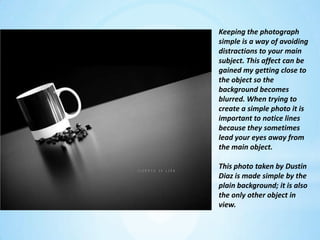
Keeping the photograph simple is a way of avoiding distractions to your main subject. This affect can be gained my getting close to the object so the background becomes blurred. When trying to create a simple photo it is important to notice lines because they sometimes lead your eyes away from the main object.This photo taken by Dustin Diaz is made simple by the plain background; it is also the only other object in view.
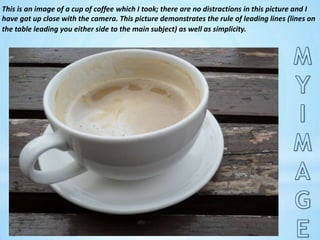
This is an image of a cup of coffee which I took; there are no distractions in this picture and I have got up close with the camera. This picture demonstrates the rule of leading lines (lines on the table leading you either side to the main subject) as well as simplicity.MY IMAGE
Rule of Thirds
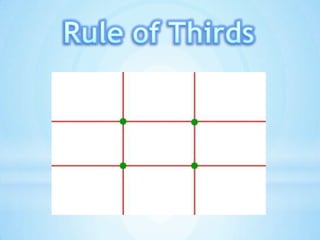
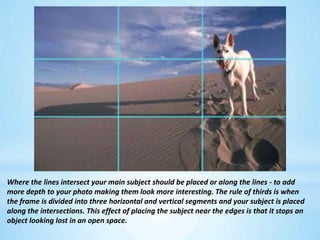
Where the lines intersect your main subject should be placed or along the lines - to add more depth to your photo making them look more interesting. The rule of thirds is when the frame is divided into three horizontal and vertical segments and your subject is placed along the intersections. This effect of placing the subject near the edges is that it stops an object looking lost in an open space.
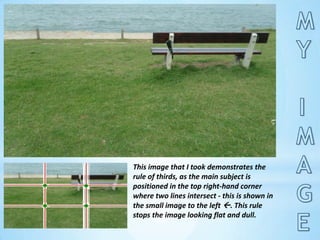
MY IMAGEThis image that I took demonstrates the rule of thirds, as the main subject is positioned in the top right-hand corner where two lines intersect - this is shown in the small image to the left . This rule stops the image looking flat and dull.
Leading Lines
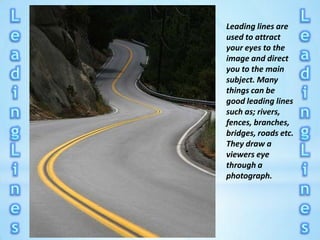
Leading LinesLeading LinesLeading lines are used to attract your eyes to the image and direct you to the main subject. Many things can be good leading lines such as; rivers, fences, branches, bridges, roads etc. They draw a viewers eye through a photograph.
MY IMAGEThis is a photograph I took that demonstrates leading lines, as the fence panels direct you to the main subject; the bushes around him also act as natural framing.
Balance
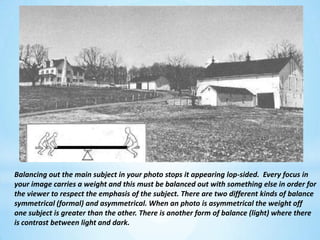
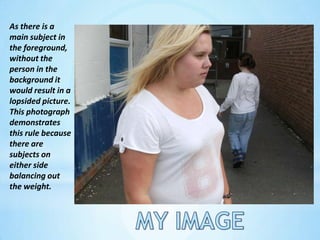
Balancing out the main subject in your photo stops it appearing lop-sided.  Every focus in your image carries a weight and this must be balanced out with something else in order for the viewer to respect the emphasis of the subject. There are two different kinds of balance symmetrical (formal) and asymmetrical. When an photo is asymmetrical the weight off one subject is greater than the other. There is another form of balance (light) where there is contrast between light and dark.
As there is a main subject in the foreground, without the person in the background it would result in a lopsided picture. This photograph demonstrates this rule because there are subjects on either side balancing out the weight.MY IMAGE
Framing
Framing is when you use your surrounding to border your main subject, this draws your eyes to it. This technique creates an interesting photograph and also emphasises the focus point. In the picture below the frame is positioned in the foreground and the focus is on the background.
MY IMAGEThis image demonstrates framing within the rules of composition, as the natural surrounding of the trees is a frame that edges the main subject and draws your eyes into the focus point.
MY IMAGEThis image was taken at school, I used the advantage of the huge trees to frame my main subject; the trunks on either side and the branches above act as a natural frame that draws you into the focus point.
Extension Images
SimplicityI took a second set of images; you are not distracted from the main subject because the pictures aren’t cluttered by a busy background.
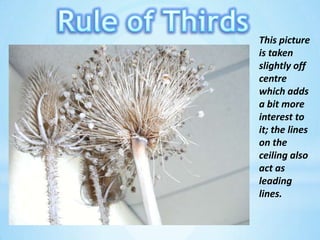
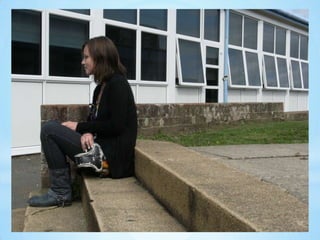
Rule of ThirdsThis picture is taken slightly off centre which adds a bit more interest to it; the lines on the ceiling also act as leading lines.
Leading LinesIn the next couple of pictures I tried to focus more on where the lines lead to as in recent pictures I included lines in my image but they didn’t lead to the main subject.
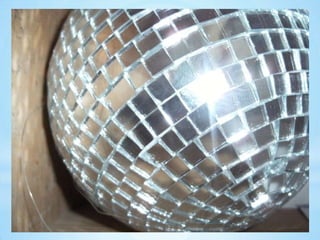
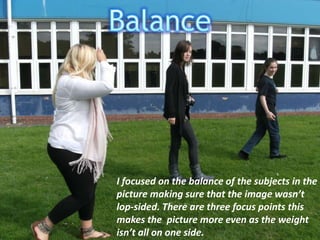
BalanceI focused on the balance of the subjects in the picture making sure that the image wasn’t   lop-sided. There are three focus points this makes the  picture more even as the weight isn’t all on one side.
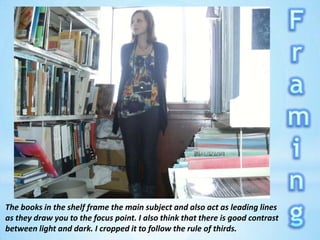
FramingThe books in the shelf frame the main subject and also act as leading lines as they draw you to the focus point. I also think that there is good contrast between light and dark. I cropped it to follow the rule of thirds.

Rules of composition K.Brett

  • 1.
  • 2.
  • 3.
    Keeping the photographsimple is a way of avoiding distractions to your main subject. This affect can be gained my getting close to the object so the background becomes blurred. When trying to create a simple photo it is important to notice lines because they sometimes lead your eyes away from the main object.This photo taken by Dustin Diaz is made simple by the plain background; it is also the only other object in view.
  • 4.
    This is animage of a cup of coffee which I took; there are no distractions in this picture and I have got up close with the camera. This picture demonstrates the rule of leading lines (lines on the table leading you either side to the main subject) as well as simplicity.MY IMAGE
  • 5.
  • 6.
    Where the linesintersect your main subject should be placed or along the lines - to add more depth to your photo making them look more interesting. The rule of thirds is when the frame is divided into three horizontal and vertical segments and your subject is placed along the intersections. This effect of placing the subject near the edges is that it stops an object looking lost in an open space.
  • 7.
    MY IMAGEThis imagethat I took demonstrates the rule of thirds, as the main subject is positioned in the top right-hand corner where two lines intersect - this is shown in the small image to the left . This rule stops the image looking flat and dull.
  • 8.
  • 9.
    Leading LinesLeading LinesLeadinglines are used to attract your eyes to the image and direct you to the main subject. Many things can be good leading lines such as; rivers, fences, branches, bridges, roads etc. They draw a viewers eye through a photograph.
  • 10.
    MY IMAGEThis isa photograph I took that demonstrates leading lines, as the fence panels direct you to the main subject; the bushes around him also act as natural framing.
  • 11.
  • 12.
    Balancing out themain subject in your photo stops it appearing lop-sided. Every focus in your image carries a weight and this must be balanced out with something else in order for the viewer to respect the emphasis of the subject. There are two different kinds of balance symmetrical (formal) and asymmetrical. When an photo is asymmetrical the weight off one subject is greater than the other. There is another form of balance (light) where there is contrast between light and dark.
  • 13.
    As there isa main subject in the foreground, without the person in the background it would result in a lopsided picture. This photograph demonstrates this rule because there are subjects on either side balancing out the weight.MY IMAGE
  • 14.
  • 15.
    Framing is whenyou use your surrounding to border your main subject, this draws your eyes to it. This technique creates an interesting photograph and also emphasises the focus point. In the picture below the frame is positioned in the foreground and the focus is on the background.
  • 16.
    MY IMAGEThis imagedemonstrates framing within the rules of composition, as the natural surrounding of the trees is a frame that edges the main subject and draws your eyes into the focus point.
  • 17.
    MY IMAGEThis imagewas taken at school, I used the advantage of the huge trees to frame my main subject; the trunks on either side and the branches above act as a natural frame that draws you into the focus point.
  • 18.
  • 19.
    SimplicityI took asecond set of images; you are not distracted from the main subject because the pictures aren’t cluttered by a busy background.
  • 23.
    Rule of ThirdsThispicture is taken slightly off centre which adds a bit more interest to it; the lines on the ceiling also act as leading lines.
  • 24.
    Leading LinesIn thenext couple of pictures I tried to focus more on where the lines lead to as in recent pictures I included lines in my image but they didn’t lead to the main subject.
  • 27.
    BalanceI focused onthe balance of the subjects in the picture making sure that the image wasn’t lop-sided. There are three focus points this makes the picture more even as the weight isn’t all on one side.
  • 28.
    FramingThe books inthe shelf frame the main subject and also act as leading lines as they draw you to the focus point. I also think that there is good contrast between light and dark. I cropped it to follow the rule of thirds.