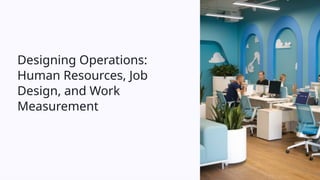
Designing Operations:
Human Resources, Job
Design, and Work
Measurement
Labor Planning
Employment-Stability Policies
Deciding whether to follow demand
exactly or hold employment constant.
Work Schedules
Designing flexible and efficient work
schedules for employees.
Job Classifications and Work
Rules
Establishing clear job roles and
guidelines to maximize productivity.
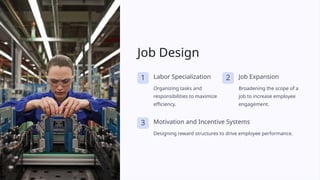
Job Design
1 Labor Specialization
Organizing tasks and
responsibilities to maximize
efficiency.
2 Job Expansion
Broadening the scope of a
job to increase employee
engagement.
3 Motivation and Incentive Systems
Designing reward structures to drive employee performance.
Ergonomics and the Work Environment
Comfortable Workstations
Designing workstations that
prioritize employee health and
wellbeing.
Optimized Lighting
Ensuring proper lighting to reduce
eye strain and fatigue.
Noise and Temperature
Control
Maintaining an environment with
minimal distractions and optimal
temperature.
Methods Analysis
1 Observe
Carefully observe and document current work processes.
2 Analyze
Identify opportunities for improvement and
optimization.
3 Implement
Implement changes to enhance efficiency and
productivity.
The Visual Workplace
Clear Dashboards
Displaying key metrics and KPIs in an easily digestible format.
Visible Schedules
Communicating production schedules and customer requirements.
Intuitive Visuals
Replacing complex paperwork with simple, informative graphics.
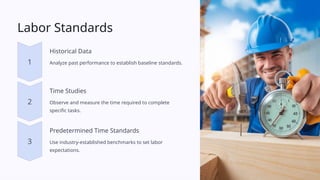
Labor Standards
Historical Data
Analyze past performance to establish baseline standards.
Time Studies
Observe and measure the time required to complete
specific tasks.
Predetermined Time Standards
Use industry-established benchmarks to set labor
expectations.
Ethics
1 Fair Practices
Ensuring employment decisions
and policies are ethical and
unbiased.
2 Workplace Safety
Prioritizing employee health and
wellbeing through proper safety
measures.
3 Environmental
Responsibility
Minimizing the environmental
impact of operations and
production processes.
Thank You

RPS 10 Learning Operation Management.ppt

  • 1.
    Designing Operations: Human Resources,Job Design, and Work Measurement
  • 2.
    Labor Planning Employment-Stability Policies Decidingwhether to follow demand exactly or hold employment constant. Work Schedules Designing flexible and efficient work schedules for employees. Job Classifications and Work Rules Establishing clear job roles and guidelines to maximize productivity.
  • 3.
    Job Design 1 LaborSpecialization Organizing tasks and responsibilities to maximize efficiency. 2 Job Expansion Broadening the scope of a job to increase employee engagement. 3 Motivation and Incentive Systems Designing reward structures to drive employee performance.
  • 4.
    Ergonomics and theWork Environment Comfortable Workstations Designing workstations that prioritize employee health and wellbeing. Optimized Lighting Ensuring proper lighting to reduce eye strain and fatigue. Noise and Temperature Control Maintaining an environment with minimal distractions and optimal temperature.
  • 5.
    Methods Analysis 1 Observe Carefullyobserve and document current work processes. 2 Analyze Identify opportunities for improvement and optimization. 3 Implement Implement changes to enhance efficiency and productivity.
  • 6.
    The Visual Workplace ClearDashboards Displaying key metrics and KPIs in an easily digestible format. Visible Schedules Communicating production schedules and customer requirements. Intuitive Visuals Replacing complex paperwork with simple, informative graphics.
  • 7.
    Labor Standards Historical Data Analyzepast performance to establish baseline standards. Time Studies Observe and measure the time required to complete specific tasks. Predetermined Time Standards Use industry-established benchmarks to set labor expectations.
  • 8.
    Ethics 1 Fair Practices Ensuringemployment decisions and policies are ethical and unbiased. 2 Workplace Safety Prioritizing employee health and wellbeing through proper safety measures. 3 Environmental Responsibility Minimizing the environmental impact of operations and production processes.
  • 9.