   Barcelona is the most populous city of the
    Autonomous Community of Catalonia and
    the second largest city in Spain.
   Founded as a Roman city, Barcelona
    became the capital of the Counts of
    Barcelona.
   As the capital of Catalonia, Barcelona
    houses the seat of the Catalan
    government, known as the Generalitat de
    Catalunya.
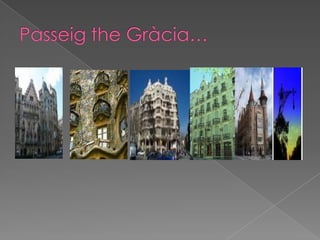
   Passeig de Gràcia is both one of the major
    avenues in Barcelona and also one of its
    most important shopping and business
    areas, containing several of the city's most
    celebrated pieces of architecture.
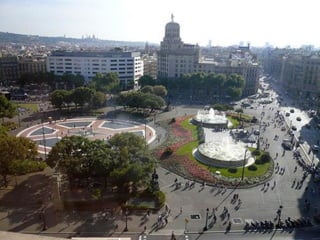
   Plaça Catalunya is a large square in central
    Barcelona that is generally considered to
    be both its city centre and the place where
    the old city and the 19th century-built
    Eixample meeting point.
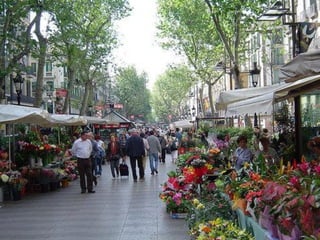
   La Rambla is a street in central
    Barcelona, popular with both tourists and
    locals alike. A 1.2 kilometer-long tree-
    lined pedestrian mall in the Barri Gòtic, it
    connects Plaça Catalunya in the center
    with the Christopher Columbus
    monument at Port Vell. Usually full of
    street theatre, cafés and market stalls, it
    serves as the emotional hub of
    Barcelona.
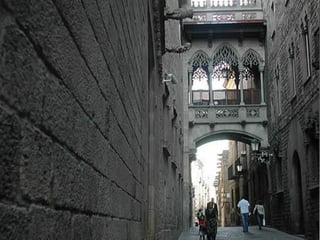
   The beautiful neighbourhood known as the
    Gothic Quarter is so called because it used
    to be the Roman village and thus has some
    remnants of its glorious past.
   The Gothic quarter has many peaceful
    squares (plaça) where you can relax and
    enjoy your surroundings. However one of
    the main attractions, right in the heart of
    the district is the huge Cathedral which has
    a stunning courtyard full of plants and oddly
    geese.
   Portal de l’ Angel

    The former entrance gate to the city in the
    Roman Wall, it takes its name from the
    angel which was put there in the 17th
    century as a memorial to the miracle of the
    Archangel Saint Michael, who appeared at
    the moment of the moving of the body of
    Saint Eulàlia. The original angel can be
    found in the History of the City Museum.
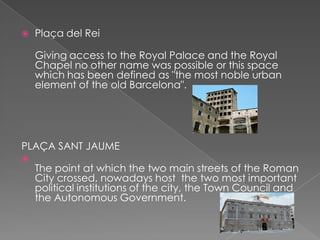
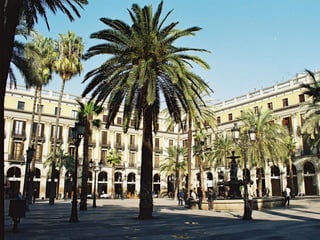
   Plaça del Rei

    Giving access to the Royal Palace and the Royal
    Chapel no other name was possible or this space
    which has been defined as "the most noble urban
    element of the old Barcelona".


PLAÇA SANT JAUME

    The point at which the two main streets of the Roman
    City crossed, nowadays host the two most important
    political institutions of the city, the Town Council and
    the Autonomous Government.
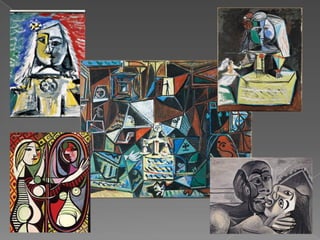
   The Picasso Museum in Barcelona is a key
    reference to understandi the formative
    years of Pablo Ruiz Picasso. The young artist
    is revealed through more than 3,800 works
    that make up the permanent collection.
    The Museum is very rich in regard to work
    from the training periods in the life of the
    artist; we could say that it is practically
    exhaustive up to the Blue Period, of which
    the Museum has a priceless group of works.
We hope you will enjoy
our city…

Routes 1

  • 2.
    Barcelona is the most populous city of the Autonomous Community of Catalonia and the second largest city in Spain.  Founded as a Roman city, Barcelona became the capital of the Counts of Barcelona.  As the capital of Catalonia, Barcelona houses the seat of the Catalan government, known as the Generalitat de Catalunya.
  • 3.
    Passeig de Gràcia is both one of the major avenues in Barcelona and also one of its most important shopping and business areas, containing several of the city's most celebrated pieces of architecture.  Plaça Catalunya is a large square in central Barcelona that is generally considered to be both its city centre and the place where the old city and the 19th century-built Eixample meeting point.
  • 6.
    La Rambla is a street in central Barcelona, popular with both tourists and locals alike. A 1.2 kilometer-long tree- lined pedestrian mall in the Barri Gòtic, it connects Plaça Catalunya in the center with the Christopher Columbus monument at Port Vell. Usually full of street theatre, cafés and market stalls, it serves as the emotional hub of Barcelona.
  • 8.
    The beautiful neighbourhood known as the Gothic Quarter is so called because it used to be the Roman village and thus has some remnants of its glorious past.  The Gothic quarter has many peaceful squares (plaça) where you can relax and enjoy your surroundings. However one of the main attractions, right in the heart of the district is the huge Cathedral which has a stunning courtyard full of plants and oddly geese.
  • 10.
    Portal de l’ Angel The former entrance gate to the city in the Roman Wall, it takes its name from the angel which was put there in the 17th century as a memorial to the miracle of the Archangel Saint Michael, who appeared at the moment of the moving of the body of Saint Eulàlia. The original angel can be found in the History of the City Museum.
  • 11.
    Plaça del Rei Giving access to the Royal Palace and the Royal Chapel no other name was possible or this space which has been defined as "the most noble urban element of the old Barcelona". PLAÇA SANT JAUME  The point at which the two main streets of the Roman City crossed, nowadays host the two most important political institutions of the city, the Town Council and the Autonomous Government.
  • 13.
    The Picasso Museum in Barcelona is a key reference to understandi the formative years of Pablo Ruiz Picasso. The young artist is revealed through more than 3,800 works that make up the permanent collection. The Museum is very rich in regard to work from the training periods in the life of the artist; we could say that it is practically exhaustive up to the Blue Period, of which the Museum has a priceless group of works.
  • 15.
    We hope youwill enjoy our city…