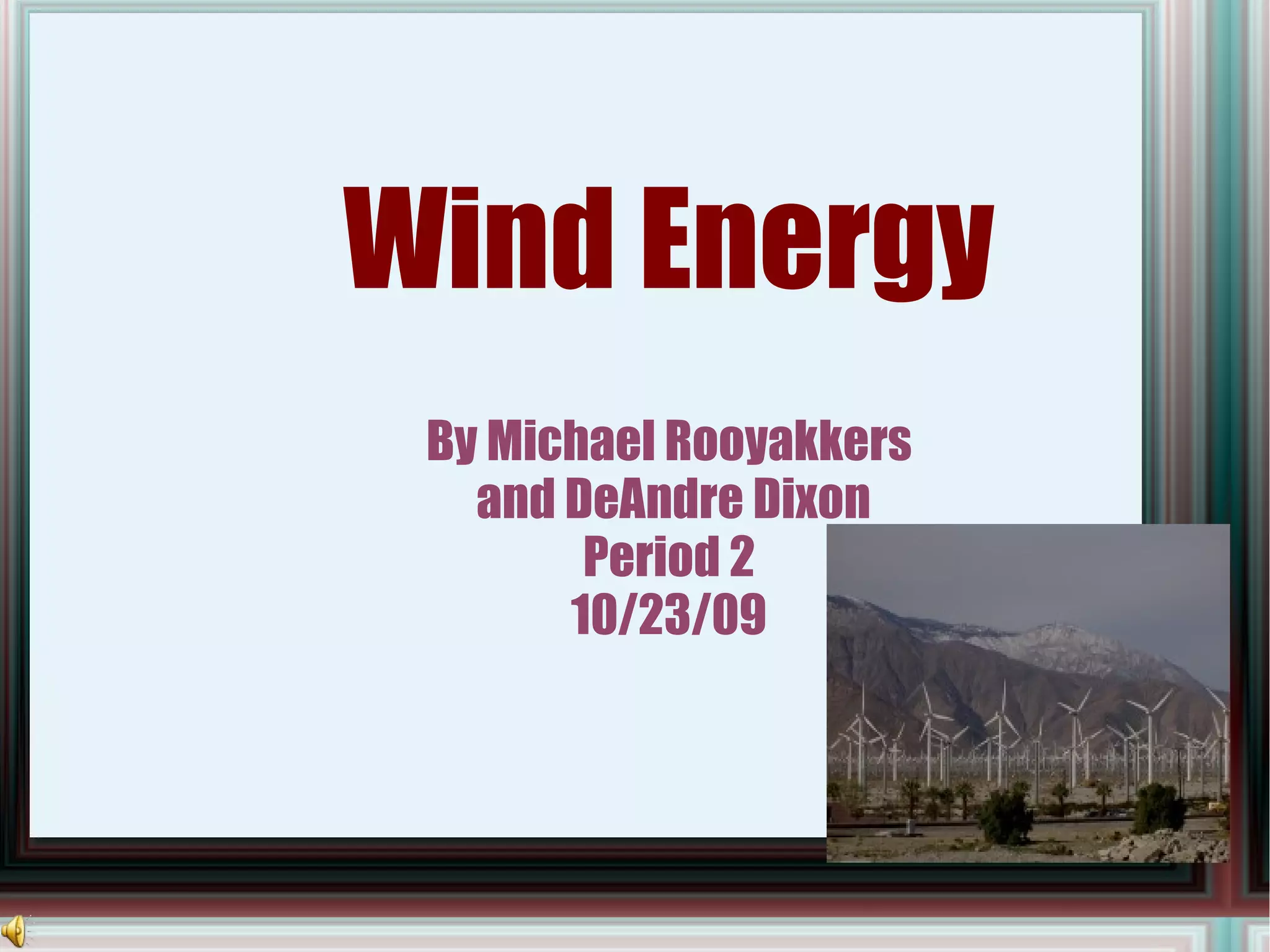
Wind Energy By Michael Rooyakkers and DeAndre Dixon Period 2 10/23/09
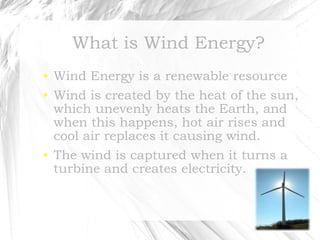
What is Wind Energy? Wind Energy is a renewable resource Wind is created by the heat of the sun, which unevenly heats the Earth, and when this happens, hot air rises and cool air replaces it causing wind. The wind is captured when it turns a turbine and creates electricity.
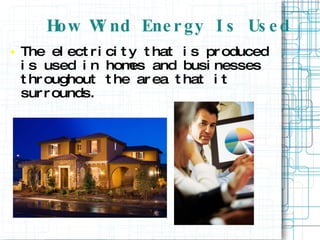
How Wind Energy Is Used The electricity that is produced is used in homes and businesses throughout the area that it surrounds.
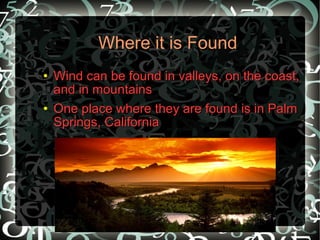
Where it is Found Wind can be found in valleys, on the coast, and in mountains One place where they are found is in Palm Springs, California
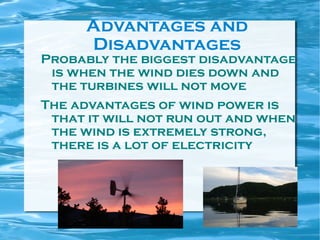
Advantages and Disadvantages Probably the biggest disadvantage is when the wind dies down and the turbines will not move The advantages of wind power is that it will not run out and when the wind is extremely strong, there is a lot of electricity
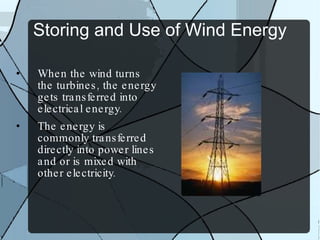
Storing and Use of Wind Energy When the wind turns the turbines, the energy gets transferred into electrical energy. The energy is commonly transferred directly into power lines and or is mixed with other electricity.
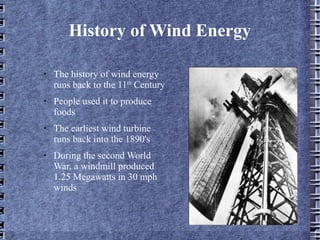
History of Wind Energy The history of wind energy runs back to the 11 th  Century People used it to produce foods The earliest wind turbine runs back into the 1890's During the second World War, a windmill produced 1.25 Megawatts in 30 mph winds
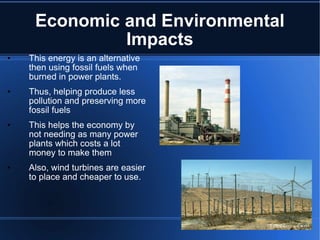
Economic and Environmental Impacts This energy is an alternative then using fossil fuels when burned in power plants. Thus, helping produce less pollution and preserving more fossil fuels This helps the economy by not needing as many power plants which costs a lot money to make them Also, wind turbines are easier to place and cheaper to use.
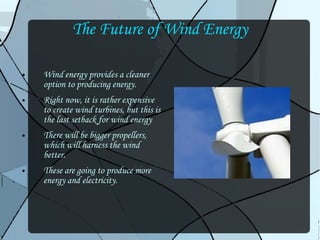
The Future of Wind Energy Wind energy provides a cleaner option to producing energy. Right now, it is rather expensive to create wind turbines, but this is the last setback for wind energy There will be bigger propellers, which will harness the wind better. These are going to produce more energy and electricity.
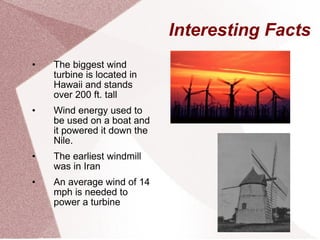
Interesting Facts The biggest wind turbine is located in Hawaii and stands over 200 ft. tall Wind energy used to be used on a boat and it powered it down the Nile. The earliest windmill was in Iran An average wind of 14 mph is needed to power a turbine
Bibliography &quot;EIA Energy Kids - Wind.”  Under Construction . Web. 04 Nov. 2009. <http://tonto.eia.doe.gov/kids/energy.cfm?page=wind_home-basics>. &quot;Wind and Hydropower Technologies Program: History of Wind Energy.&quot;  EERE: EERE Server Maintenance . Web. 04 Nov. 2009. <http://www1.eere.energy.gov/windandhydro/wind_history.html>. &quot;Wind Energy Basics.&quot;  American Wind Energy Association . Web. 04 Nov. 2009. <http://www.awea.org/faq/wwt_basics.html>. &quot;Wind power -.&quot;  Wikipedia, the free encyclopedia . Web. 04 Nov. 2009. <http://en.wikipedia.org/wiki/Wind_power>.
Credits “ Wind Energy” By Michael Rooyakkers and DeAndre Dixon Pictures found by Michael Rooyakkers Typing by Michael Rooyakkers and DeAndre Dixon Information found by Michael Rooyakkers and DeAndre Dixon

Rooyakers

  • 1.
    Wind Energy ByMichael Rooyakkers and DeAndre Dixon Period 2 10/23/09
  • 2.
    What is WindEnergy? Wind Energy is a renewable resource Wind is created by the heat of the sun, which unevenly heats the Earth, and when this happens, hot air rises and cool air replaces it causing wind. The wind is captured when it turns a turbine and creates electricity.
  • 3.
    How Wind EnergyIs Used The electricity that is produced is used in homes and businesses throughout the area that it surrounds.
  • 4.
    Where it isFound Wind can be found in valleys, on the coast, and in mountains One place where they are found is in Palm Springs, California
  • 5.
    Advantages and DisadvantagesProbably the biggest disadvantage is when the wind dies down and the turbines will not move The advantages of wind power is that it will not run out and when the wind is extremely strong, there is a lot of electricity
  • 6.
    Storing and Useof Wind Energy When the wind turns the turbines, the energy gets transferred into electrical energy. The energy is commonly transferred directly into power lines and or is mixed with other electricity.
  • 7.
    History of WindEnergy The history of wind energy runs back to the 11 th Century People used it to produce foods The earliest wind turbine runs back into the 1890's During the second World War, a windmill produced 1.25 Megawatts in 30 mph winds
  • 8.
    Economic and EnvironmentalImpacts This energy is an alternative then using fossil fuels when burned in power plants. Thus, helping produce less pollution and preserving more fossil fuels This helps the economy by not needing as many power plants which costs a lot money to make them Also, wind turbines are easier to place and cheaper to use.
  • 9.
    The Future ofWind Energy Wind energy provides a cleaner option to producing energy. Right now, it is rather expensive to create wind turbines, but this is the last setback for wind energy There will be bigger propellers, which will harness the wind better. These are going to produce more energy and electricity.
  • 10.
    Interesting Facts Thebiggest wind turbine is located in Hawaii and stands over 200 ft. tall Wind energy used to be used on a boat and it powered it down the Nile. The earliest windmill was in Iran An average wind of 14 mph is needed to power a turbine
  • 11.
    Bibliography &quot;EIA EnergyKids - Wind.” Under Construction . Web. 04 Nov. 2009. <http://tonto.eia.doe.gov/kids/energy.cfm?page=wind_home-basics>. &quot;Wind and Hydropower Technologies Program: History of Wind Energy.&quot; EERE: EERE Server Maintenance . Web. 04 Nov. 2009. <http://www1.eere.energy.gov/windandhydro/wind_history.html>. &quot;Wind Energy Basics.&quot; American Wind Energy Association . Web. 04 Nov. 2009. <http://www.awea.org/faq/wwt_basics.html>. &quot;Wind power -.&quot; Wikipedia, the free encyclopedia . Web. 04 Nov. 2009. <http://en.wikipedia.org/wiki/Wind_power>.
  • 12.
    Credits “ WindEnergy” By Michael Rooyakkers and DeAndre Dixon Pictures found by Michael Rooyakkers Typing by Michael Rooyakkers and DeAndre Dixon Information found by Michael Rooyakkers and DeAndre Dixon