Peterhof
Russian Tsars' summer residence
Peterhof was a summer residence built for the Emperor at the beginning of the
18th century. Initially it was a simple hunting lodge beside the Baltic Sea,
following a visit to Versailles, he decided to expand it according to the French
style
The architect, Jean-Baptiste Alexandre Leblond was also French
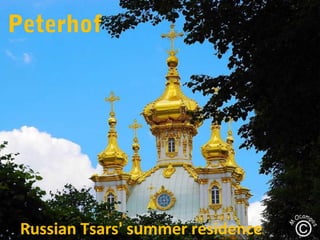
Entrance at the side of The Imperial Chapel
The view of the Grand Cascade with the Grand Palace behind it, first sight to
visitors arriving at Peterhof by sea, is truly breathtaking.
Grand Cascade
The Palace Park contains one hundred and seventy-six fountains
At the centre stands Rastrelli's statue of Samson wrestling with a lion.
The marble sculptures were made in Venice by the sculptor Giovanni Bonazza in
1718
ADAM AND EVE FOUNTAINS
The Dragon Hill or Chess Hill
Cascade in Peterhof
Erected in 1739, are situated in the Parterre Garden in front of the Chessboard
Hill. The architects Blank and Davydov rendered with some changes, the famous
fountains in the Square of Saint Peter in Rome
ROMAN
FOUNTAINS
Just Married in a Roman Fountain
At the Back, part of Chess Hill
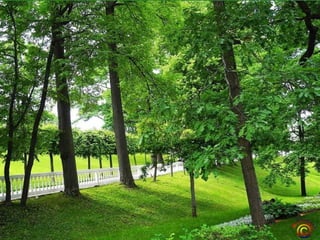
The garden is probably the smartest of all the gardens in Peterhof
Monplaisir Garden
The Sheaf Fountain issues from a rocky pedestal in the center of a small pool in
the gardens in front of the Monplaisir Palace in Peterhof
The Pavilion (originally the Elizabeth Pavilion) was built by Rastrelli in the place
of the old Monplaisir orangery in 1748-49
Monplaisir
The Monplaisir Palace (from French "mon plaisir“ ) faced the Baltic Sea
View of the Baltic Sea and Finland Gulf
AVIARIES
The Garden was made in 1717-24 as a menagerie analogical to the one Peter I had
seen in Versailles
Outside the pavilion is decorated with oyster shell. Nowadays, as well as under
Peter I, birds are kept here
The Orangery, or greenhouse is situated between the Grand Palace and
Monplaisir. It now houses a restaurant for visitors to Peterhof
Built by Braunstein and Zemtsov In 1722- 25
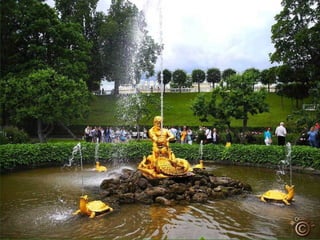
Triton Fountain (1726)
The sculpture of the fountain (Triton fighting with the sea monster and turtles)
was made after B.C. Rastrelli's design
Peterhof (from Dutch – PeterHoff ) meaning
in English - Peter's Yard) is the most
spectacular Russian site, often called 'The
Capital of Fountains' or 'The Russian
Versailles'.
It was modeled after the original French
Versailles which Czar Peter the Great had
visited during his 'Grand Embassy' to Europe
in 1697
Peterhof is the palace of the sea god. Here
the fountains are not mere accessories: they
are the essence of the place.
By Maria
mocampos@gmail.com
http://www.youtube.com/user/nikkitta8
Music: Aram Khachaturyan
“Masquerade”

Peterhof

  • 1.
  • 2.
    Peterhof was asummer residence built for the Emperor at the beginning of the 18th century. Initially it was a simple hunting lodge beside the Baltic Sea, following a visit to Versailles, he decided to expand it according to the French style The architect, Jean-Baptiste Alexandre Leblond was also French
  • 3.
    Entrance at theside of The Imperial Chapel
  • 4.
    The view ofthe Grand Cascade with the Grand Palace behind it, first sight to visitors arriving at Peterhof by sea, is truly breathtaking. Grand Cascade
  • 7.
    The Palace Parkcontains one hundred and seventy-six fountains
  • 11.
    At the centrestands Rastrelli's statue of Samson wrestling with a lion.
  • 13.
    The marble sculptureswere made in Venice by the sculptor Giovanni Bonazza in 1718 ADAM AND EVE FOUNTAINS
  • 14.
    The Dragon Hillor Chess Hill Cascade in Peterhof
  • 15.
    Erected in 1739,are situated in the Parterre Garden in front of the Chessboard Hill. The architects Blank and Davydov rendered with some changes, the famous fountains in the Square of Saint Peter in Rome ROMAN FOUNTAINS
  • 16.
    Just Married ina Roman Fountain At the Back, part of Chess Hill
  • 17.
    The garden isprobably the smartest of all the gardens in Peterhof Monplaisir Garden
  • 19.
    The Sheaf Fountainissues from a rocky pedestal in the center of a small pool in the gardens in front of the Monplaisir Palace in Peterhof
  • 24.
    The Pavilion (originallythe Elizabeth Pavilion) was built by Rastrelli in the place of the old Monplaisir orangery in 1748-49 Monplaisir
  • 25.
    The Monplaisir Palace(from French "mon plaisir“ ) faced the Baltic Sea
  • 26.
    View of theBaltic Sea and Finland Gulf
  • 27.
    AVIARIES The Garden wasmade in 1717-24 as a menagerie analogical to the one Peter I had seen in Versailles Outside the pavilion is decorated with oyster shell. Nowadays, as well as under Peter I, birds are kept here
  • 32.
    The Orangery, orgreenhouse is situated between the Grand Palace and Monplaisir. It now houses a restaurant for visitors to Peterhof Built by Braunstein and Zemtsov In 1722- 25
  • 35.
    Triton Fountain (1726) Thesculpture of the fountain (Triton fighting with the sea monster and turtles) was made after B.C. Rastrelli's design
  • 39.
    Peterhof (from Dutch– PeterHoff ) meaning in English - Peter's Yard) is the most spectacular Russian site, often called 'The Capital of Fountains' or 'The Russian Versailles'. It was modeled after the original French Versailles which Czar Peter the Great had visited during his 'Grand Embassy' to Europe in 1697 Peterhof is the palace of the sea god. Here the fountains are not mere accessories: they are the essence of the place. By Maria mocampos@gmail.com http://www.youtube.com/user/nikkitta8 Music: Aram Khachaturyan “Masquerade”