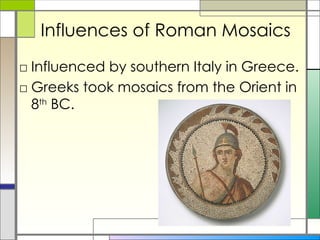
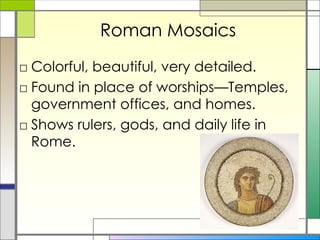
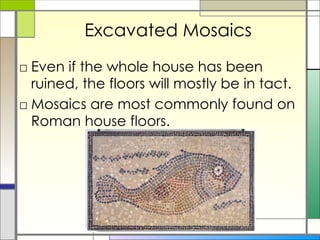
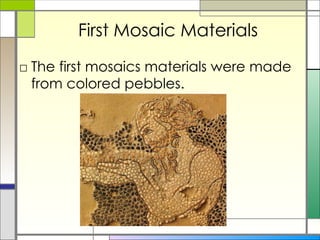
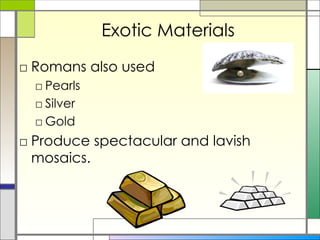
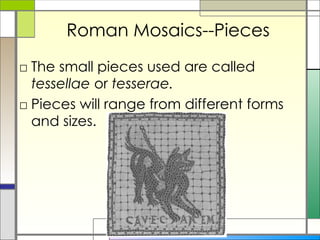
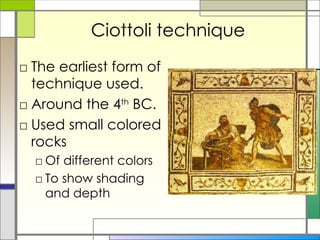
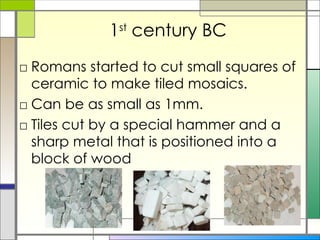
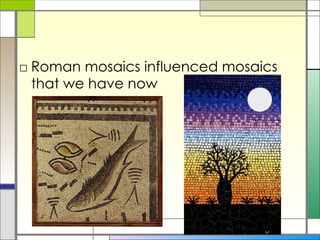
Roman mosaics were influenced by those in southern Italy and Greece, with the Greeks introducing mosaics from the Orient in the 8th century BC. Roman mosaics were colorful and detailed depictions found in places of worship, government buildings, and homes, often showing rulers, gods, and daily Roman life. Even when structures were in ruins, mosaics would often remain intact on floors. Early mosaics used colored pebbles, but glass, ceramics, and other materials like gold and silver were later employed. Individual pieces were called tesserae and could be as small as 1mm.