Roman Colosseum
There are many interesting things about the Colosseum in Rome, Italy.Built in 72 A.D, the Colosseum
has remained the largest amphitheater in the world and is considered to be Rome´s most popular
tourist attraction. Standing as the iconic symbol of Ancient Rome, this monument that once hosted
the inhuman games of Man vs. Beast, is considered a Day Of Wonder! But there is so much about the
Colosseum in Rome that people don’t really know about!
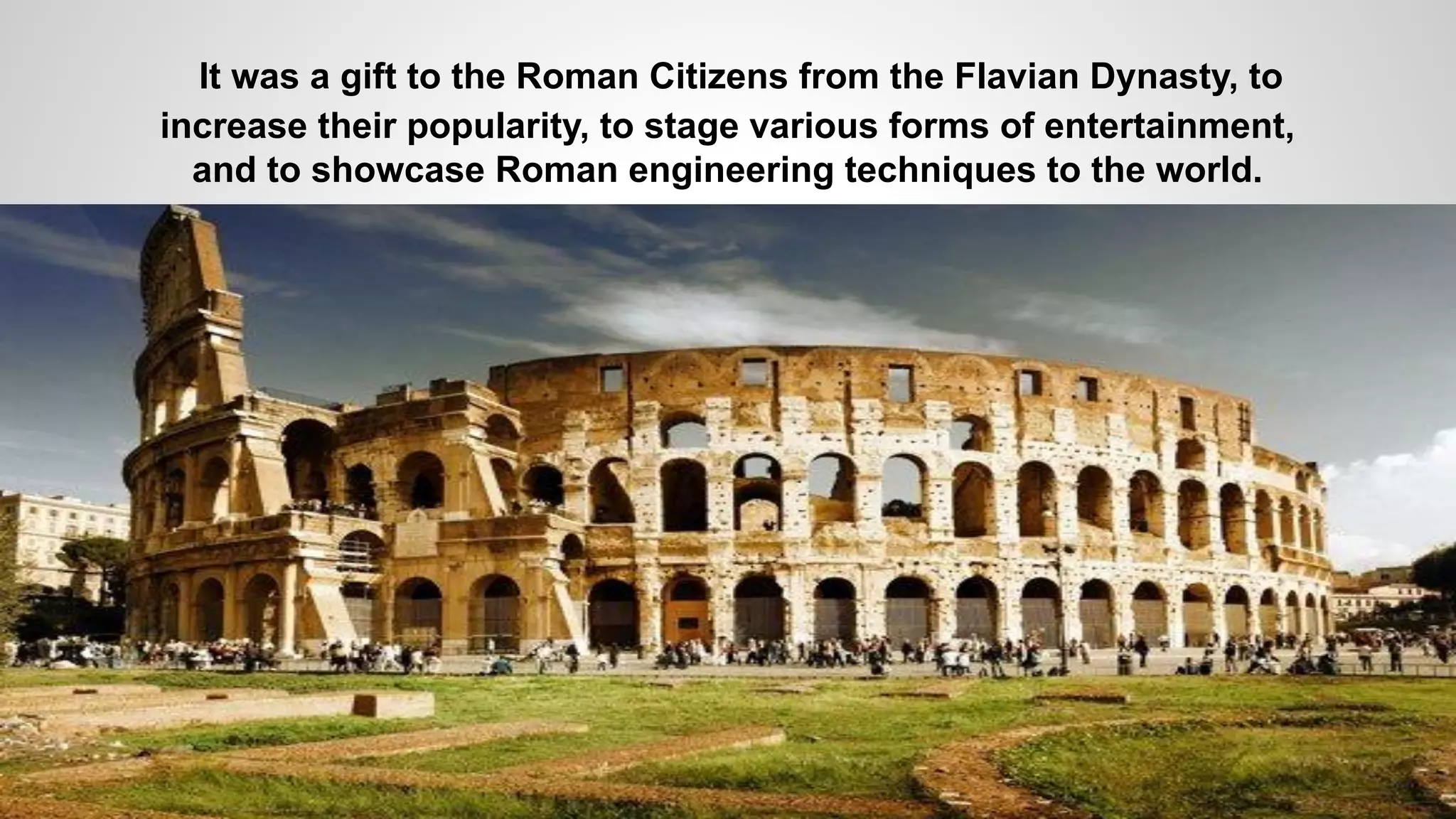
It was a gift to the Roman Citizens from the Flavian Dynasty, to
increase their popularity, to stage various forms of entertainment,
and to showcase Roman engineering techniques to the world.
Colosseum was built near the giant statue of
Colossus which was part of the Nero’s Park. The
current name was derived from the statue of
Colossus.
The colosseum was built because Vespasian or the Flavian family
had an idea to demolish the palace of Nero and construct a
permanent arena for housing free gladiator games and other
entertainment for the amusement of the spectators.
The Colosseum was built by Emperor Vespasian, founder of the
Flavian dynasty but Titus, Vespasian’s son followed his father’s
footsteps and finished the colosseum. It is an elliptical building
measuring 189 meters long and 156 meters wide and with a height of
more than 48 meter and also taking up 6 acres of land.
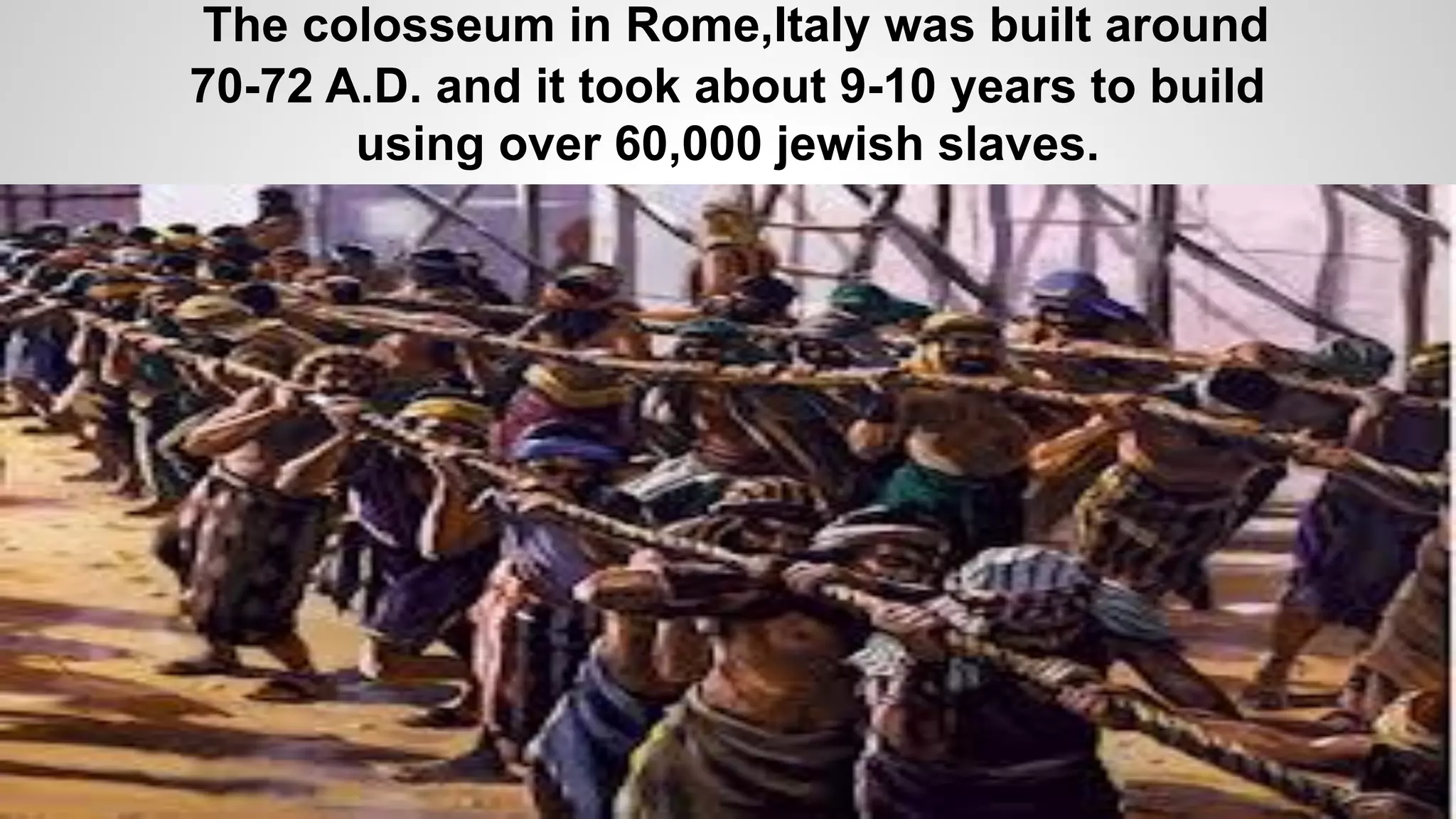
The colosseum in Rome,Italy was built around
70-72 A.D. and it took about 9-10 years to build
using over 60,000 jewish slaves.
Once the Colosseum was built it had over 80
entrances and can accommodate about 50,000
spectators.
Ancient Roman spectators had free entry to the
colosseum, also the spectators were fed throughout
the show.
Over 500,000 people lost their lives and over one
million wild animals were killed throughout the
games of Man vs. Beast
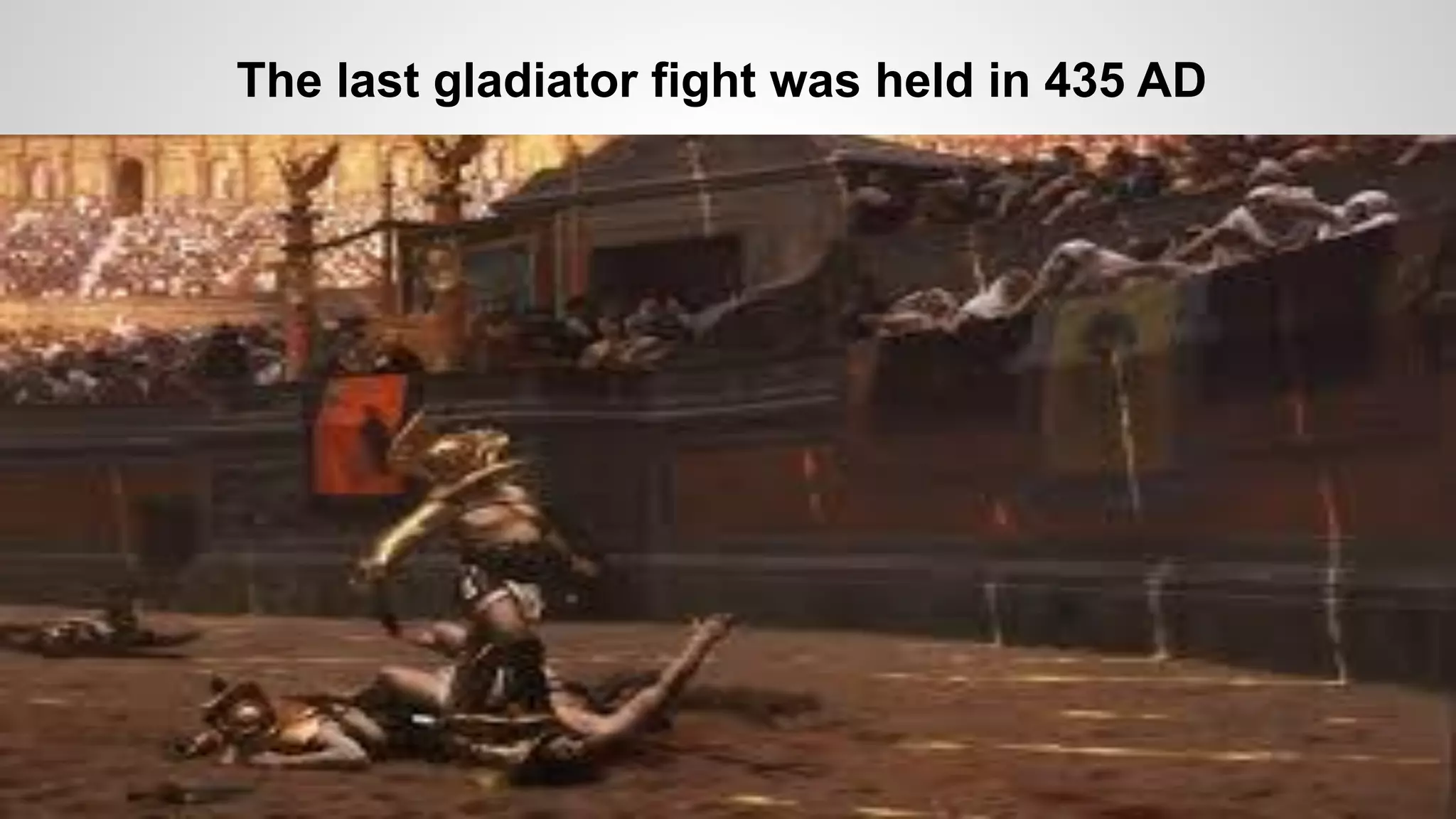
The last gladiator fight was held in 435 AD
Festivals as well as games lasted up to one
hundred days or more in the colosseum.
Many natural disasters devastated the structure of the Colosseum,
but it was the earthquakes of 847 AD and 1231 AD that caused most
of the damage you see today.
Deconstructing History:
Colosseum
Video

Roman Colisseum.pdf

  • 1.
  • 2.
    There are manyinteresting things about the Colosseum in Rome, Italy.Built in 72 A.D, the Colosseum has remained the largest amphitheater in the world and is considered to be Rome´s most popular tourist attraction. Standing as the iconic symbol of Ancient Rome, this monument that once hosted the inhuman games of Man vs. Beast, is considered a Day Of Wonder! But there is so much about the Colosseum in Rome that people don’t really know about!
  • 3.
    It was agift to the Roman Citizens from the Flavian Dynasty, to increase their popularity, to stage various forms of entertainment, and to showcase Roman engineering techniques to the world.
  • 4.
    Colosseum was builtnear the giant statue of Colossus which was part of the Nero’s Park. The current name was derived from the statue of Colossus.
  • 5.
    The colosseum wasbuilt because Vespasian or the Flavian family had an idea to demolish the palace of Nero and construct a permanent arena for housing free gladiator games and other entertainment for the amusement of the spectators.
  • 6.
    The Colosseum wasbuilt by Emperor Vespasian, founder of the Flavian dynasty but Titus, Vespasian’s son followed his father’s footsteps and finished the colosseum. It is an elliptical building measuring 189 meters long and 156 meters wide and with a height of more than 48 meter and also taking up 6 acres of land.
  • 7.
    The colosseum inRome,Italy was built around 70-72 A.D. and it took about 9-10 years to build using over 60,000 jewish slaves.
  • 8.
    Once the Colosseumwas built it had over 80 entrances and can accommodate about 50,000 spectators.
  • 9.
    Ancient Roman spectatorshad free entry to the colosseum, also the spectators were fed throughout the show.
  • 10.
    Over 500,000 peoplelost their lives and over one million wild animals were killed throughout the games of Man vs. Beast
  • 11.
    The last gladiatorfight was held in 435 AD
  • 12.
    Festivals as wellas games lasted up to one hundred days or more in the colosseum.
  • 13.
    Many natural disastersdevastated the structure of the Colosseum, but it was the earthquakes of 847 AD and 1231 AD that caused most of the damage you see today.
  • 14.