September/2020
Addis Ababa
Urban Productive Safety Net and Job
Project
(UPSNJP) Roll out plan
short summery
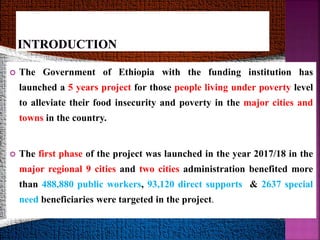
 The Government of Ethiopia with the funding institution has
launched a 5 years project for those people living under poverty level
to alleviate their food insecurity and poverty in the major cities and
towns in the country.
 The first phase of the project was launched in the year 2017/18 in the
major regional 9 cities and two cities administration benefited more
than 488,880 public workers, 93,120 direct supports & 2637 special
need beneficiaries were targeted in the project.
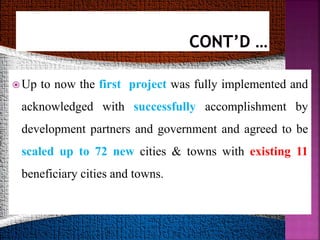
 Up to now the first project was fully implemented and
acknowledged with successfully accomplishment by
development partners and government and agreed to be
scaled up to 72 new cities & towns with existing 11
beneficiary cities and towns.
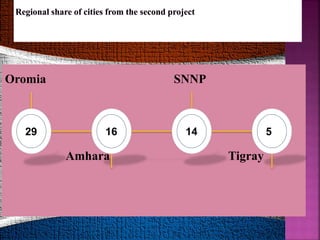
Oromia SNNP
Amhara Tigray
16 14 5
29
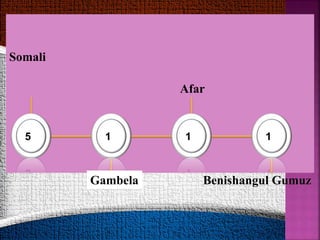
Somali
1 1 1
5
Gambela
Afar
Benishangul Gumuz
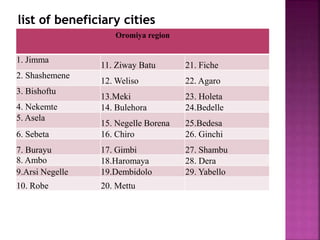
Oromiya region
1. Jimma
11. Ziway Batu 21. Fiche
2. Shashemene
12. Weliso 22. Agaro
3. Bishoftu
13.Meki 23. Holeta
4. Nekemte 14. Bulehora 24.Bedelle
5. Asela
15. Negelle Borena 25.Bedesa
6. Sebeta 16. Chiro 26. Ginchi
7. Burayu 17. Gimbi 27. Shambu
8. Ambo 18.Haromaya 28. Dera
9.Arsi Negelle 19.Dembidolo 29. Yabello
10. Robe 20. Mettu
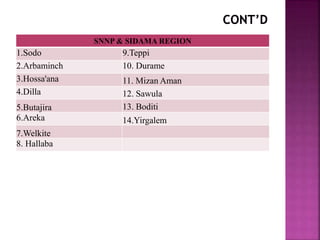
SNNP & SIDAMA REGION
1.Sodo 9.Teppi
2.Arbaminch 10. Durame
3.Hossa'ana 11. Mizan Aman
4.Dilla 12. Sawula
5.Butajira 13. Boditi
6.Areka 14.Yirgalem
7.Welkite
8. Hallaba
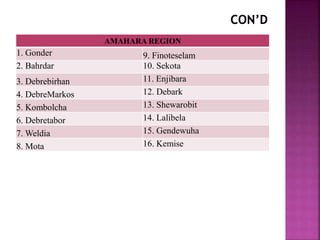
AMAHARA REGION
1. Gonder 9. Finoteselam
2. Bahrdar 10. Sekota
3. Debrebirhan 11. Enjibara
4. DebreMarkos 12. Debark
5. Kombolcha 13. Shewarobit
6. Debretabor 14. Lalibela
7. Weldia 15. Gendewuha
8. Mota 16. Kemise
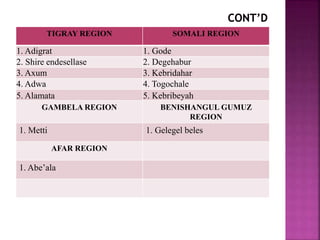
TIGRAY REGION SOMALI REGION
1. Adigrat 1. Gode
2. Shire endesellase 2. Degehabur
3. Axum 3. Kebridahar
4. Adwa 4. Togochale
5. Alamata 5. Kebribeyah
GAMBELA REGION BENISHANGUL GUMUZ
REGION
1. Metti 1. Gelegel beles
AFAR REGION
1. Abe’ala
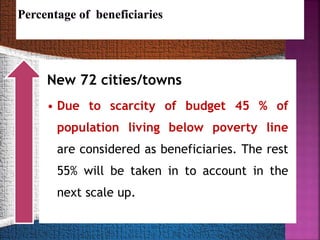
New 72 cities/towns
• Due to scarcity of budget 45 % of
population living below poverty line
are considered as beneficiaries. The rest
55% will be taken in to account in the
next scale up.
For the existing 11 cities from the remaining 45 %
only 21% of the population living below poverty
line was considered in this project. The remaining
24% of beneficiaries will be included in the next
scale up.
Cont’d…
All cities will start at the same time in the first
year but with different roll out of beneficiaries.
• 26 cities with a beneficiaries of more than
5,000 will have a three rounds roll out, ( 1st,
2nd & 3rd year) ( 25%,35%,40% proportion)
 25 cities with a beneficiaries of 3000 to 5000
have two rounds roll out ( first and second
year) (45% in the first year & 55% in the second
year based on their readiness ) and
 21 cities with a beneficiaries of less than 3000
have one round roll out in the first year 100%
based on their readiness.
 The proportion of beneficiaries will be 84% for
PW & 16% for direct support
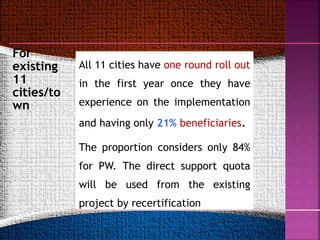
For
existing
11
cities/to
wn
All 11 cities have one round roll out
in the first year once they have
experience on the implementation
and having only 21% beneficiaries.
The proportion considers only 84%
for PW. The direct support quota
will be used from the existing
project by recertification
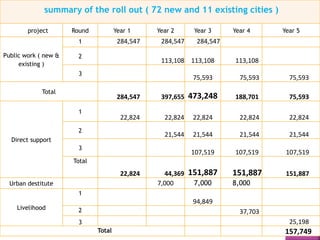
summary of the roll out ( 72 new and 11 existing cities )
project Round Year 1 Year 2 Year 3 Year 4 Year 5
Public work ( new &
existing )
1 284,547 284,547 284,547
2
113,108 113,108 113,108
3
75,593 75,593 75,593
Total
284,547 397,655 473,248 188,701 75,593
Direct support
1
22,824 22,824 22,824 22,824 22,824
2
21,544 21,544 21,544 21,544
3
107,519 107,519 107,519
Total
22,824 44,369 151,887 151,887 151,887
Urban destitute 7,000 7,000 8,000
Livelihood
1
94,849
2 37,703
3 25,198
Total 157,749
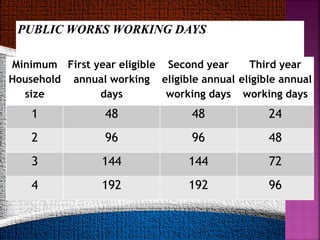
Minimum
Household
size
First year eligible
annual working
days
Second year
eligible annual
working days
Third year
eligible annual
working days
1 48 48 24
2 96 96 48
3 144 144 72
4 192 192 96
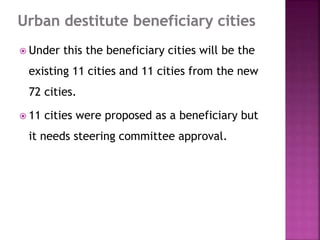
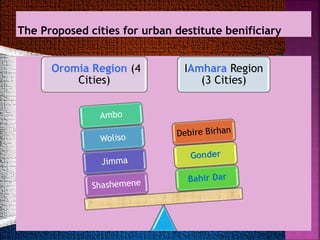
 Under this the beneficiary cities will be the
existing 11 cities and 11 cities from the new
72 cities.
 11 cities were proposed as a beneficiary but
it needs steering committee approval.
Oromia Region (4
Cities)
IAmhara Region
(3 Cities)
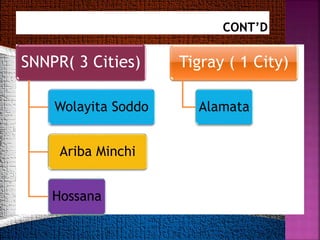
SNNPR( 3 Cities)
Wolayita Soddo
Ariba Minchi
Hossana
Tigray ( 1 City)
Alamata
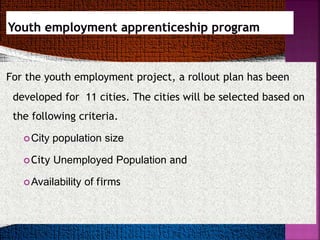
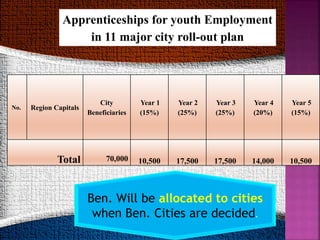
For the youth employment project, a rollout plan has been
developed for 11 cities. The cities will be selected based on
the following criteria.
City population size
City Unemployed Population and
Availability of firms
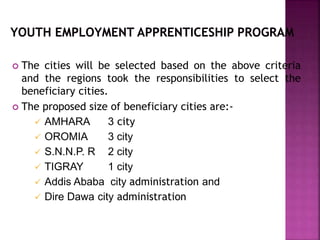
 The cities will be selected based on the above criteria
and the regions took the responsibilities to select the
beneficiary cities.
 The proposed size of beneficiary cities are:-
 AMHARA 3 city
 OROMIA 3 city
 S.N.N.P. R 2 city
 TIGRAY 1 city
 Addis Ababa city administration and
 Dire Dawa city administration
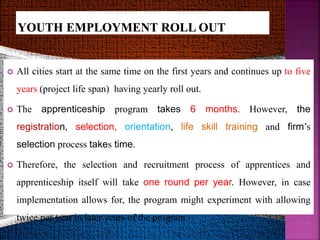
 All cities start at the same time on the first years and continues up to five
years (project life span) having yearly roll out.
 The apprenticeship program takes 6 months. However, the
registration, selection, orientation, life skill training and firm’s
selection process takes time.
 Therefore, the selection and recruitment process of apprentices and
apprenticeship itself will take one round per year. However, in case
implementation allows for, the program might experiment with allowing
twice per year in later years of the program.
No. Region Capitals
City
Beneficiaries
Year 1
(15%)
Year 2
(25%)
Year 3
(25%)
Year 4
(20%)
Year 5
(15%)
Total 70,000 10,500 17,500 17,500 14,000 10,500
Apprenticeships for youth Employment
in 11 major city roll-out plan
Ben. Will be allocated to cities
when Ben. Cities are decided.
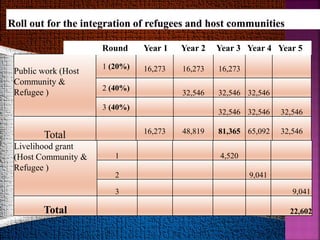
Public work (Host
Community &
Refugee )
1 (20%) 16,273 16,273 16,273
2 (40%)
32,546 32,546 32,546
3 (40%)
32,546 32,546 32,546
Total 16,273 48,819 81,365 65,092 32,546
Livelihood grant
(Host Community &
Refugee )
1 4,520
2 9,041
3 9,041
Total 22,602
Round Year 1 Year 2 Year 3 Year 4 Year 5
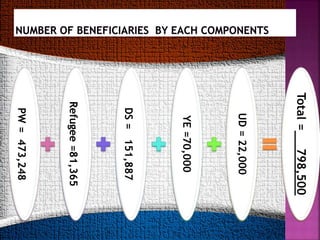
PW
=
473,248
Refugee
=81,365
DS
=
151,887
YE
=70,000
UD
=
22,000
Total
=
798,500
Thank you

roll out ( sep. 2020 ).ppt

  • 1.
    September/2020 Addis Ababa Urban ProductiveSafety Net and Job Project (UPSNJP) Roll out plan short summery
  • 2.
     The Governmentof Ethiopia with the funding institution has launched a 5 years project for those people living under poverty level to alleviate their food insecurity and poverty in the major cities and towns in the country.  The first phase of the project was launched in the year 2017/18 in the major regional 9 cities and two cities administration benefited more than 488,880 public workers, 93,120 direct supports & 2637 special need beneficiaries were targeted in the project.
  • 3.
     Up tonow the first project was fully implemented and acknowledged with successfully accomplishment by development partners and government and agreed to be scaled up to 72 new cities & towns with existing 11 beneficiary cities and towns.
  • 4.
  • 5.
  • 6.
    Oromiya region 1. Jimma 11.Ziway Batu 21. Fiche 2. Shashemene 12. Weliso 22. Agaro 3. Bishoftu 13.Meki 23. Holeta 4. Nekemte 14. Bulehora 24.Bedelle 5. Asela 15. Negelle Borena 25.Bedesa 6. Sebeta 16. Chiro 26. Ginchi 7. Burayu 17. Gimbi 27. Shambu 8. Ambo 18.Haromaya 28. Dera 9.Arsi Negelle 19.Dembidolo 29. Yabello 10. Robe 20. Mettu
  • 7.
    SNNP & SIDAMAREGION 1.Sodo 9.Teppi 2.Arbaminch 10. Durame 3.Hossa'ana 11. Mizan Aman 4.Dilla 12. Sawula 5.Butajira 13. Boditi 6.Areka 14.Yirgalem 7.Welkite 8. Hallaba
  • 8.
    AMAHARA REGION 1. Gonder9. Finoteselam 2. Bahrdar 10. Sekota 3. Debrebirhan 11. Enjibara 4. DebreMarkos 12. Debark 5. Kombolcha 13. Shewarobit 6. Debretabor 14. Lalibela 7. Weldia 15. Gendewuha 8. Mota 16. Kemise
  • 9.
    TIGRAY REGION SOMALIREGION 1. Adigrat 1. Gode 2. Shire endesellase 2. Degehabur 3. Axum 3. Kebridahar 4. Adwa 4. Togochale 5. Alamata 5. Kebribeyah GAMBELA REGION BENISHANGUL GUMUZ REGION 1. Metti 1. Gelegel beles AFAR REGION 1. Abe’ala
  • 10.
    New 72 cities/towns •Due to scarcity of budget 45 % of population living below poverty line are considered as beneficiaries. The rest 55% will be taken in to account in the next scale up.
  • 11.
    For the existing11 cities from the remaining 45 % only 21% of the population living below poverty line was considered in this project. The remaining 24% of beneficiaries will be included in the next scale up. Cont’d…
  • 12.
    All cities willstart at the same time in the first year but with different roll out of beneficiaries. • 26 cities with a beneficiaries of more than 5,000 will have a three rounds roll out, ( 1st, 2nd & 3rd year) ( 25%,35%,40% proportion)
  • 13.
     25 citieswith a beneficiaries of 3000 to 5000 have two rounds roll out ( first and second year) (45% in the first year & 55% in the second year based on their readiness ) and  21 cities with a beneficiaries of less than 3000 have one round roll out in the first year 100% based on their readiness.  The proportion of beneficiaries will be 84% for PW & 16% for direct support
  • 14.
    For existing 11 cities/to wn All 11 citieshave one round roll out in the first year once they have experience on the implementation and having only 21% beneficiaries. The proportion considers only 84% for PW. The direct support quota will be used from the existing project by recertification
  • 15.
    summary of theroll out ( 72 new and 11 existing cities ) project Round Year 1 Year 2 Year 3 Year 4 Year 5 Public work ( new & existing ) 1 284,547 284,547 284,547 2 113,108 113,108 113,108 3 75,593 75,593 75,593 Total 284,547 397,655 473,248 188,701 75,593 Direct support 1 22,824 22,824 22,824 22,824 22,824 2 21,544 21,544 21,544 21,544 3 107,519 107,519 107,519 Total 22,824 44,369 151,887 151,887 151,887 Urban destitute 7,000 7,000 8,000 Livelihood 1 94,849 2 37,703 3 25,198 Total 157,749
  • 16.
    Minimum Household size First year eligible annualworking days Second year eligible annual working days Third year eligible annual working days 1 48 48 24 2 96 96 48 3 144 144 72 4 192 192 96
  • 17.
     Under thisthe beneficiary cities will be the existing 11 cities and 11 cities from the new 72 cities.  11 cities were proposed as a beneficiary but it needs steering committee approval.
  • 18.
  • 19.
    SNNPR( 3 Cities) WolayitaSoddo Ariba Minchi Hossana Tigray ( 1 City) Alamata
  • 20.
    For the youthemployment project, a rollout plan has been developed for 11 cities. The cities will be selected based on the following criteria. City population size City Unemployed Population and Availability of firms
  • 21.
     The citieswill be selected based on the above criteria and the regions took the responsibilities to select the beneficiary cities.  The proposed size of beneficiary cities are:-  AMHARA 3 city  OROMIA 3 city  S.N.N.P. R 2 city  TIGRAY 1 city  Addis Ababa city administration and  Dire Dawa city administration
  • 22.
     All citiesstart at the same time on the first years and continues up to five years (project life span) having yearly roll out.  The apprenticeship program takes 6 months. However, the registration, selection, orientation, life skill training and firm’s selection process takes time.  Therefore, the selection and recruitment process of apprentices and apprenticeship itself will take one round per year. However, in case implementation allows for, the program might experiment with allowing twice per year in later years of the program.
  • 23.
    No. Region Capitals City Beneficiaries Year1 (15%) Year 2 (25%) Year 3 (25%) Year 4 (20%) Year 5 (15%) Total 70,000 10,500 17,500 17,500 14,000 10,500 Apprenticeships for youth Employment in 11 major city roll-out plan Ben. Will be allocated to cities when Ben. Cities are decided.
  • 24.
    Public work (Host Community& Refugee ) 1 (20%) 16,273 16,273 16,273 2 (40%) 32,546 32,546 32,546 3 (40%) 32,546 32,546 32,546 Total 16,273 48,819 81,365 65,092 32,546 Livelihood grant (Host Community & Refugee ) 1 4,520 2 9,041 3 9,041 Total 22,602 Round Year 1 Year 2 Year 3 Year 4 Year 5
  • 25.
  • 26.