ROCKS
Word Cryptogram
Directions: Arrange the letters to form the
correct words by placing the correct letter
sequence in the shaded box. Then, answer the
riddle below by using the corresponding
letters found in the numbered boxes in each
item.
E M N I S T D A Y E R
S E D I M E N T A R Y
1
O M A I H T P C M E R
2
G E N U S O C O R I K
3
O M A I H T P C M E R
M E T A M O R P H I C
2
G E N U S O C O R I K
I G N E O U S R O C K
3
V A C N L O O
4
C A S I L T C
6 5
S
1 2 3 4 5 6
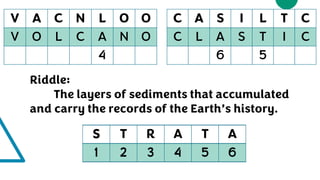
Riddle:
The layers of sediments that accumulated
and carry the records of the Earth’s history.
V A C N L O O
V O L C A N O
4
C A S I L T C
C L A S T I C
6 5
S T R A T A
1 2 3 4 5 6
ROCKS
is a naturally
occurring solid
aggregate of
one or more
minerals.
Si
Al
P
Mg
Fe
Ca
Na
O
Petrology
➢ is the scientific study of rocks.
Petrologist
➢ the scientist who study rocks and
their mineral composition.
Types of Rocks
1. Igneous Rock
2. Metamorphic
Rock
3. Sedimentary
Rock
IGNEOUS ROCK
➢ formed from hardening and crystallization of magma
or molten material that originates deep within the
earth.
➢ Sometimes referred as “fire-formed”.
➢ Igneous comes from the Latin word “igni” means
“coming from fire”
➢ But there is no actual fire involved in the formation of
igneous rocks.
➢ The tremendous heat produces magma and the
subsequent cooling and hardening of the magma
produce igneous rocks.
Two types of
Igneous Rocks
• Extrusive /
Volcanic Rock
• Intrusive /
Plutonic
Extrusive /
Volcanic Rock
➢forms when
magma makes its
way to Earth’s
surface as lava
and then cools.
Intrusive/Plutonic
• It cools slowly
beneath the Earth
surface and are
created by
magma.
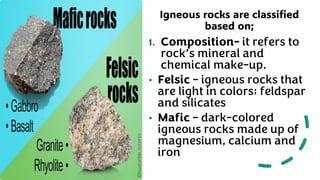
Igneous rocks are classified
based on;
1. Composition- it refers to
rock’s mineral and
chemical make-up.
• Felsic – igneous rocks that
are light in colors; feldspar
and silicates
• Mafic – dark-colored
igneous rocks made up of
magnesium, calcium and
iron
• Intermediate –
refers to igneous
rocks between
mafic and felsic
composition.
• Ultramafic – denotes
igneous rocks that
composed chiefly of
mafic minerals.
2. Texture - overall appearance of a rock
based on the size, shape, and arrangement of
interlocking mineral crystals.
• Aphanistic – fine-grained rocks with
crystals seen by aid of microscope.
• Phaneritic - coarse-grained rocks
• Porphyritic – large crystals with small
crystals
• Glassy - a rock that looks like colored
glass with no visible mineral crystal.
• Pyroclastic- results from explosive
fragmentation of volcanic material.
Examples:
Obsidian, pumice, basalt,
granite, diorite, gabbro
Metamorphic Rock
➢ forms from pre-existing rocks: either
metamorphic, igneous, sedimentary or
other metamorphic rocks that have been
altered by agents of metamorphism.
Examples:
quartzite, marble, slate, phyllite
• Metamorphism - transformation of one
rock type into another.
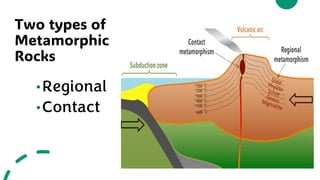
Two types of
Metamorphic
Rocks
•Regional
•Contact
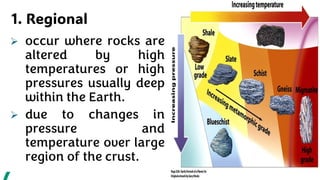
1. Regional
➢ occur where rocks are
altered by high
temperatures or high
pressures usually deep
within the Earth.
➢ due to changes in
pressure and
temperature over large
region of the crust.
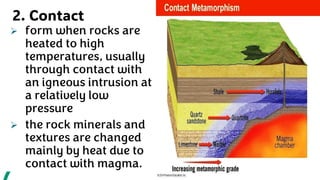
2. Contact
➢ form when rocks are
heated to high
temperatures, usually
through contact with
an igneous intrusion at
a relatively low
pressure
➢ the rock minerals and
textures are changed
mainly by heat due to
contact with magma.
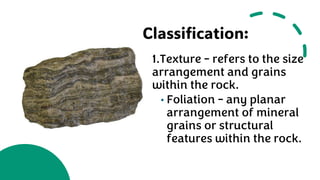
Classification:
1.Texture - refers to the size
arrangement and grains
within the rock.
• Foliation - any planar
arrangement of mineral
grains or structural
features within the rock.
a. Foliated rocks – can be arranged in terms of
increasing metamorphism, and it appeared layered
or banded with compressed mineral grains.
b. Non-foliated rocks – usually made up of only few
minerals.
SEDIMENTARY ROCK
➢ provide information about surface
conditions that existed in the
Earth’s past.
• Particles of sand, shells, pebbles,
and other fragments of materials
called sediments, accumulate in
layers and over long period of time
harden into rocks.
• Compaction-due to increase of
pressure of layered sediments it
bind together to form the
sedimentary rocks.
Three types of
Sedimentary
Rocks
a. Clastic
Sedimentary Rock
b. Chemical
c. Organic
a. Clastic
Sedimentary Rock
➢ formed from
accumulation of
clasts: little pieces
of broken rocks
and shells.
Examples:
conglomerate,
breccia,
sandstone,
shale
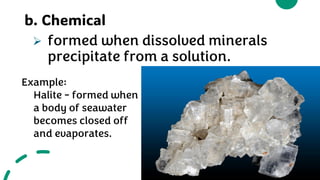
b. Chemical
➢ formed when dissolved minerals
precipitate from a solution.
Example:
Halite - formed when
a body of seawater
becomes closed off
and evaporates.
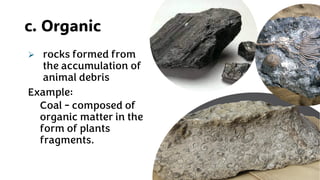
c. Organic
➢ rocks formed from
the accumulation of
animal debris
Example:
Coal - composed of
organic matter in the
form of plants
fragments.
ROCKS.pdf

ROCKS.pdf

  • 1.
  • 2.
    Word Cryptogram Directions: Arrangethe letters to form the correct words by placing the correct letter sequence in the shaded box. Then, answer the riddle below by using the corresponding letters found in the numbered boxes in each item.
  • 3.
    E M NI S T D A Y E R S E D I M E N T A R Y 1 O M A I H T P C M E R 2 G E N U S O C O R I K 3 O M A I H T P C M E R M E T A M O R P H I C 2 G E N U S O C O R I K I G N E O U S R O C K 3
  • 4.
    V A CN L O O 4 C A S I L T C 6 5 S 1 2 3 4 5 6 Riddle: The layers of sediments that accumulated and carry the records of the Earth’s history. V A C N L O O V O L C A N O 4 C A S I L T C C L A S T I C 6 5 S T R A T A 1 2 3 4 5 6
  • 5.
    ROCKS is a naturally occurringsolid aggregate of one or more minerals. Si Al P Mg Fe Ca Na O
  • 6.
    Petrology ➢ is thescientific study of rocks. Petrologist ➢ the scientist who study rocks and their mineral composition.
  • 7.
    Types of Rocks 1.Igneous Rock 2. Metamorphic Rock 3. Sedimentary Rock
  • 8.
    IGNEOUS ROCK ➢ formedfrom hardening and crystallization of magma or molten material that originates deep within the earth. ➢ Sometimes referred as “fire-formed”. ➢ Igneous comes from the Latin word “igni” means “coming from fire” ➢ But there is no actual fire involved in the formation of igneous rocks. ➢ The tremendous heat produces magma and the subsequent cooling and hardening of the magma produce igneous rocks.
  • 9.
    Two types of IgneousRocks • Extrusive / Volcanic Rock • Intrusive / Plutonic
  • 10.
    Extrusive / Volcanic Rock ➢formswhen magma makes its way to Earth’s surface as lava and then cools.
  • 11.
    Intrusive/Plutonic • It coolsslowly beneath the Earth surface and are created by magma.
  • 12.
    Igneous rocks areclassified based on; 1. Composition- it refers to rock’s mineral and chemical make-up. • Felsic – igneous rocks that are light in colors; feldspar and silicates • Mafic – dark-colored igneous rocks made up of magnesium, calcium and iron
  • 13.
    • Intermediate – refersto igneous rocks between mafic and felsic composition. • Ultramafic – denotes igneous rocks that composed chiefly of mafic minerals.
  • 14.
    2. Texture -overall appearance of a rock based on the size, shape, and arrangement of interlocking mineral crystals. • Aphanistic – fine-grained rocks with crystals seen by aid of microscope. • Phaneritic - coarse-grained rocks
  • 15.
    • Porphyritic –large crystals with small crystals • Glassy - a rock that looks like colored glass with no visible mineral crystal.
  • 16.
    • Pyroclastic- resultsfrom explosive fragmentation of volcanic material. Examples: Obsidian, pumice, basalt, granite, diorite, gabbro
  • 18.
    Metamorphic Rock ➢ formsfrom pre-existing rocks: either metamorphic, igneous, sedimentary or other metamorphic rocks that have been altered by agents of metamorphism. Examples: quartzite, marble, slate, phyllite • Metamorphism - transformation of one rock type into another.
  • 19.
  • 20.
    1. Regional ➢ occurwhere rocks are altered by high temperatures or high pressures usually deep within the Earth. ➢ due to changes in pressure and temperature over large region of the crust.
  • 21.
    2. Contact ➢ formwhen rocks are heated to high temperatures, usually through contact with an igneous intrusion at a relatively low pressure ➢ the rock minerals and textures are changed mainly by heat due to contact with magma.
  • 22.
    Classification: 1.Texture - refersto the size arrangement and grains within the rock. • Foliation - any planar arrangement of mineral grains or structural features within the rock.
  • 23.
    a. Foliated rocks– can be arranged in terms of increasing metamorphism, and it appeared layered or banded with compressed mineral grains. b. Non-foliated rocks – usually made up of only few minerals.
  • 25.
    SEDIMENTARY ROCK ➢ provideinformation about surface conditions that existed in the Earth’s past. • Particles of sand, shells, pebbles, and other fragments of materials called sediments, accumulate in layers and over long period of time harden into rocks. • Compaction-due to increase of pressure of layered sediments it bind together to form the sedimentary rocks.
  • 26.
    Three types of Sedimentary Rocks a.Clastic Sedimentary Rock b. Chemical c. Organic
  • 27.
    a. Clastic Sedimentary Rock ➢formed from accumulation of clasts: little pieces of broken rocks and shells. Examples: conglomerate, breccia, sandstone, shale
  • 28.
    b. Chemical ➢ formedwhen dissolved minerals precipitate from a solution. Example: Halite - formed when a body of seawater becomes closed off and evaporates.
  • 29.
    c. Organic ➢ rocksformed from the accumulation of animal debris Example: Coal - composed of organic matter in the form of plants fragments.