ROBOT SAFETY NORMS
SUB: Ensuring Safe Robotics Practices
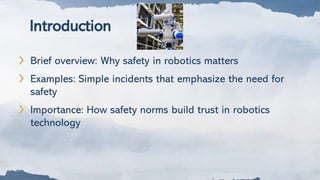
Introduction
❯ Brief overview: Why safety in robotics matters
❯ Examples: Simple incidents that emphasize the need for
safety
❯ Importance: How safety norms build trust in robotics
technology
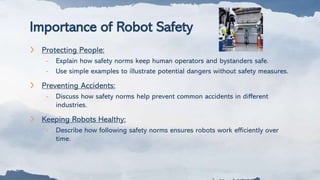
Importance of Robot Safety
❯ Protecting People:
- Explain how safety norms keep human operators and bystanders safe.
- Use simple examples to illustrate potential dangers without safety measures.
❯ Preventing Accidents:
- Discuss how safety norms help prevent common accidents in different
industries.
❯ Keeping Robots Healthy:
- Describe how following safety norms ensures robots work efficiently over
time.
Key Robot Safety Norms
❯ Physical Safety Measures:
 Emergency Stop:
o Explain the concept of emergency stop buttons for immediate halting.
❯ Barriers and Fencing:
 Describe how physical barriers protect people from robot movements.
❯ Programming and Operational Safety:
 Programming Practices:
o Highlight the importance of error-free programming for safe operations.
❯ Regular Maintenance:
 Emphasize routine checks to catch and fix potential issues early.
❯ Collaboration with Humans:
 Safe Interaction Guidelines:
o Simple rules for people working alongside robots.
❯ Operator Training:
 Explain the need for training to handle robots properly.
Physical Safety Measures:
Programming and Operational Safety:
Collaboration with Humans:
Barriers and Fencing:
Regular Maintenance:
Operator Training:
Compliance Standards
❯ International Standards:
- Mention ISO 10218 as an example.
❯ National Regulations:
- Explain how countries have rules for standardized safety.
❯ Importance:
- Briefly explain the significance of following standards for a
safe work environment.
Case Studies
❯ Success Stories:
- Share examples where following safety norms prevented accidents.
❯ Lessons Learned:
- Discuss incidents where safety norms were not followed and the
consequences.
❯ Impact on Industries:
– Explain how safety practices affect the reputation and success of
industries.
Training and Education
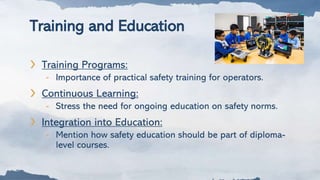
❯ Training Programs:
- Importance of practical safety training for operators.
❯ Continuous Learning:
- Stress the need for ongoing education on safety norms.
❯ Integration into Education:
- Mention how safety education should be part of diploma-
level courses.
Future Trends
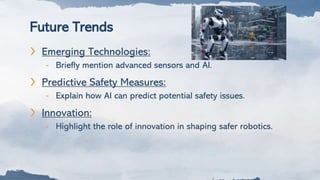
❯ Emerging Technologies:
- Briefly mention advanced sensors and AI.
❯ Predictive Safety Measures:
- Explain how AI can predict potential safety issues.
❯ Innovation:
- Highlight the role of innovation in shaping safer robotics.
Challenges and Solutions
❯ Common Challenges:
- Resistance to change, cost concerns, and technological
limitations.
❯ Solutions:
- Collaboration, sharing best practices, and continuous
improvement.
Conclusion
❯ Recap:
- Summarize key safety points.
❯ Encouragement:
- Encourage industries to prioritize safety.
❯ Future Outlook:
- Express optimism about continuous improvement in safety
norms.
THANK YOU !!
"Gratitude turns what we have into enough."

ROBOT SAFETY NORMS.pptx

  • 1.
    ROBOT SAFETY NORMS SUB:Ensuring Safe Robotics Practices
  • 3.
    Introduction ❯ Brief overview:Why safety in robotics matters ❯ Examples: Simple incidents that emphasize the need for safety ❯ Importance: How safety norms build trust in robotics technology
  • 4.
    Importance of RobotSafety ❯ Protecting People: - Explain how safety norms keep human operators and bystanders safe. - Use simple examples to illustrate potential dangers without safety measures. ❯ Preventing Accidents: - Discuss how safety norms help prevent common accidents in different industries. ❯ Keeping Robots Healthy: - Describe how following safety norms ensures robots work efficiently over time.
  • 5.
    Key Robot SafetyNorms ❯ Physical Safety Measures:  Emergency Stop: o Explain the concept of emergency stop buttons for immediate halting. ❯ Barriers and Fencing:  Describe how physical barriers protect people from robot movements. ❯ Programming and Operational Safety:  Programming Practices: o Highlight the importance of error-free programming for safe operations. ❯ Regular Maintenance:  Emphasize routine checks to catch and fix potential issues early. ❯ Collaboration with Humans:  Safe Interaction Guidelines: o Simple rules for people working alongside robots. ❯ Operator Training:  Explain the need for training to handle robots properly. Physical Safety Measures: Programming and Operational Safety: Collaboration with Humans: Barriers and Fencing: Regular Maintenance: Operator Training:
  • 6.
    Compliance Standards ❯ InternationalStandards: - Mention ISO 10218 as an example. ❯ National Regulations: - Explain how countries have rules for standardized safety. ❯ Importance: - Briefly explain the significance of following standards for a safe work environment.
  • 7.
    Case Studies ❯ SuccessStories: - Share examples where following safety norms prevented accidents. ❯ Lessons Learned: - Discuss incidents where safety norms were not followed and the consequences. ❯ Impact on Industries: – Explain how safety practices affect the reputation and success of industries.
  • 8.
    Training and Education ❯Training Programs: - Importance of practical safety training for operators. ❯ Continuous Learning: - Stress the need for ongoing education on safety norms. ❯ Integration into Education: - Mention how safety education should be part of diploma- level courses.
  • 9.
    Future Trends ❯ EmergingTechnologies: - Briefly mention advanced sensors and AI. ❯ Predictive Safety Measures: - Explain how AI can predict potential safety issues. ❯ Innovation: - Highlight the role of innovation in shaping safer robotics.
  • 10.
    Challenges and Solutions ❯Common Challenges: - Resistance to change, cost concerns, and technological limitations. ❯ Solutions: - Collaboration, sharing best practices, and continuous improvement.
  • 11.
    Conclusion ❯ Recap: - Summarizekey safety points. ❯ Encouragement: - Encourage industries to prioritize safety. ❯ Future Outlook: - Express optimism about continuous improvement in safety norms.
  • 12.
    THANK YOU !! "Gratitudeturns what we have into enough."