1. How did alliances,
imperialism, militarism,
and nationalism all
cause World War I?
2. What was the spark that
set off the powder keg?
3. What was the chain
reaction that caused
World War I?
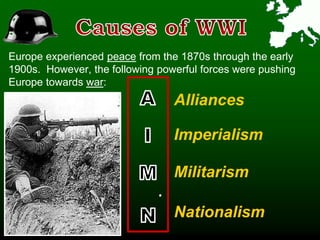
Europe experienced peace from the 1870s through the early
1900s. However, the following powerful forces were pushing
Europe towards war:
Imperialism
Militarism
Nationalism
Alliances
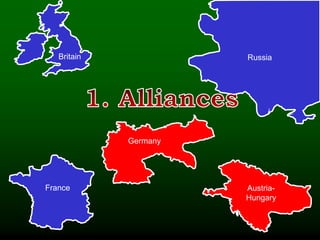
Austria-
Hungary
Germany
Russia
France
Britain
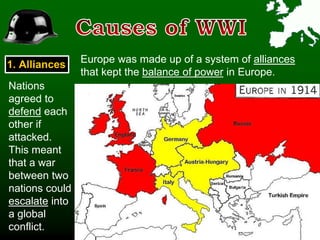
1. Alliances
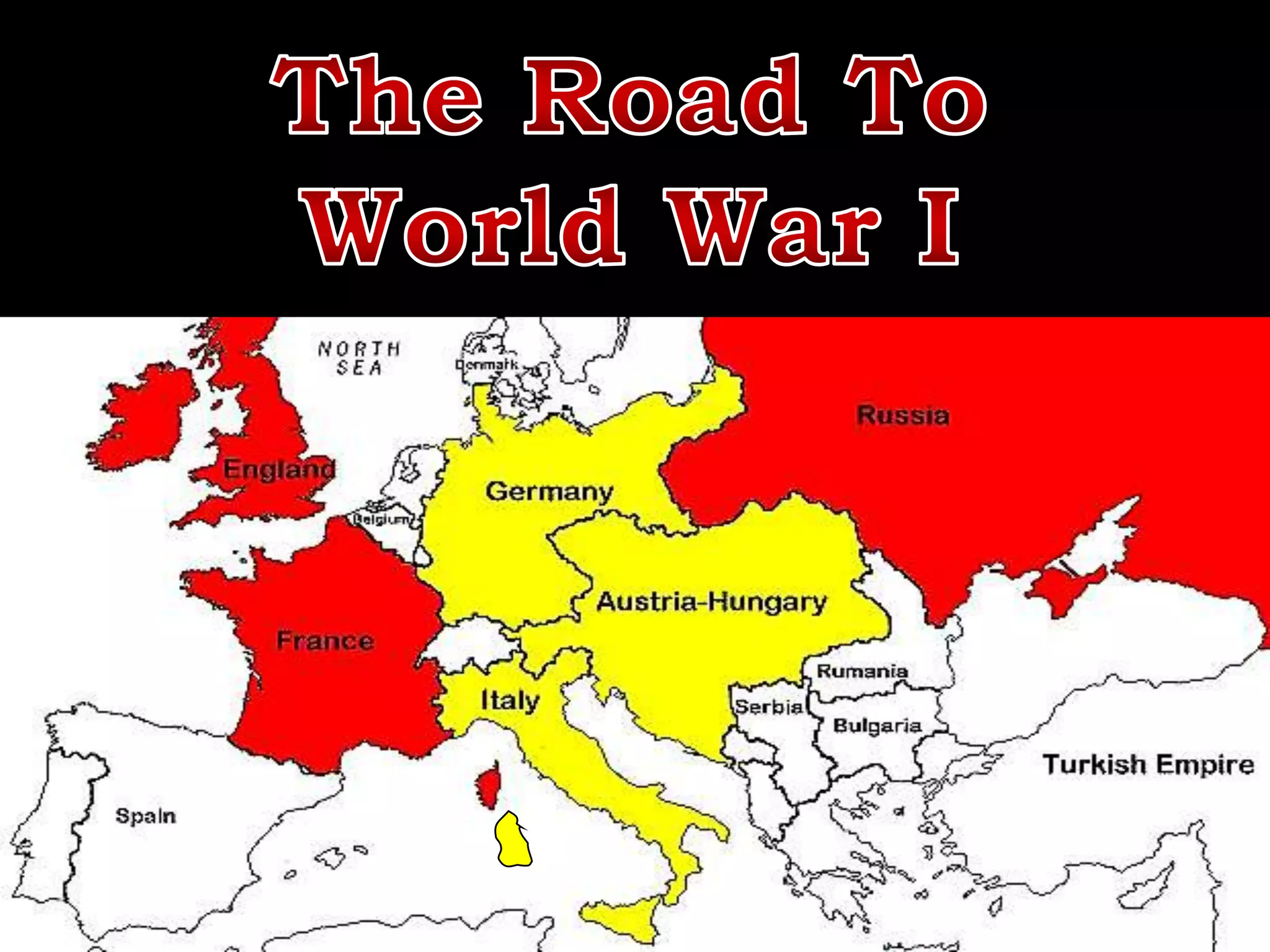
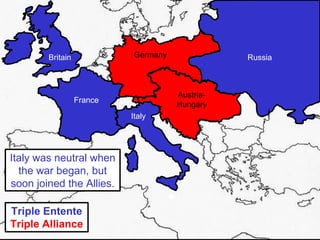
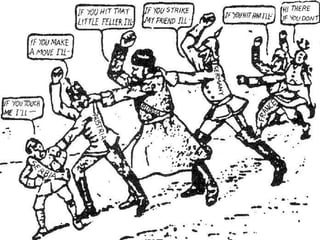
Europe was made up of a system of alliances
that kept the balance of power in Europe.
Nations
agreed to
defend each
other if
attacked.
This meant
that a war
between two
nations could
escalate into
a global
conflict.
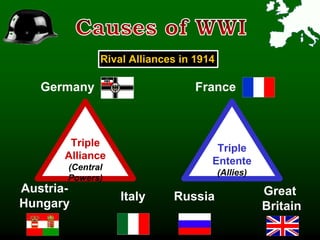
Triple
Alliance
(Central
Powers)
Germany
Austria-
Hungary
Italy
Triple
Entente
(Allies)
France
Russia Great
Britain
Rival Alliances in 1914
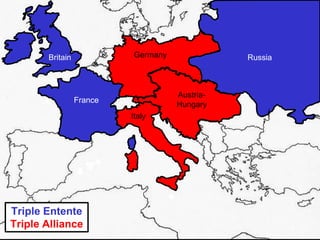
Russia
France
Britain
Austria-
Hungary
Germany
Italy
Triple Entente
Triple Alliance
Russia
France
Britain
Austria-
Hungary
Germany
Italy
Triple Entente
Triple Alliance
Italy was neutral when
the war began, but
soon joined the Allies.
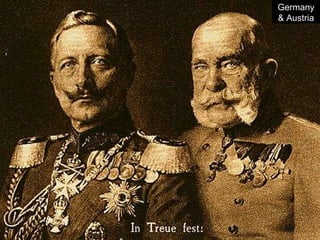
Germany
& Austria
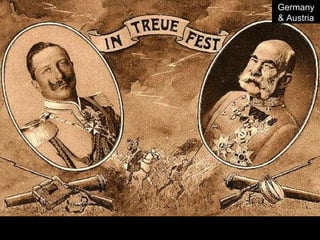
Germany
& Austria
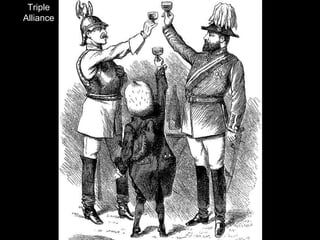
Triple
Alliance
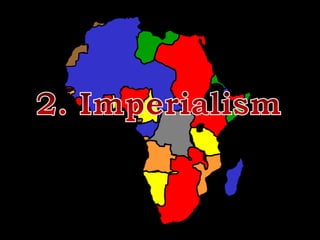
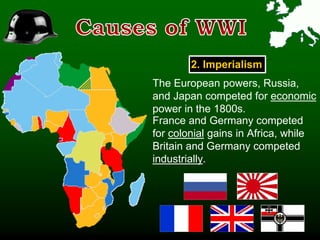
2. Imperialism
The European powers, Russia,
and Japan competed for economic
power in the 1800s.
France and Germany competed
for colonial gains in Africa, while
Britain and Germany competed
industrially.
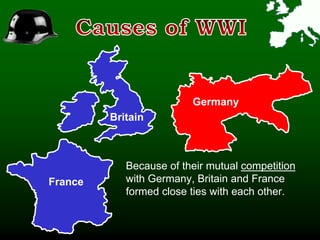
Because of their mutual competition
with Germany, Britain and France
formed close ties with each other.
Germany
France
Britain
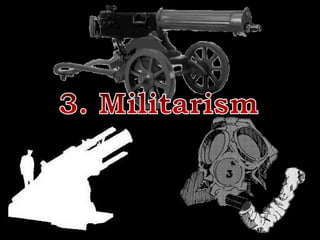
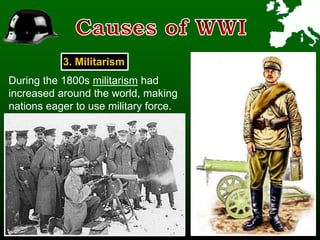
3. Militarism
During the 1800s militarism had
increased around the world, making
nations eager to use military force.
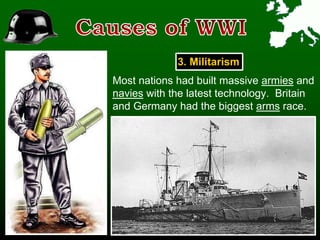
Most nations had built massive armies and
navies with the latest technology. Britain
and Germany had the biggest arms race.
3. Militarism
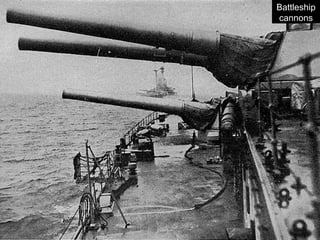
Battleship
cannons
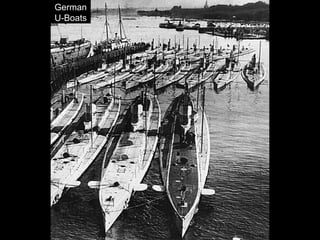
German
U-Boats
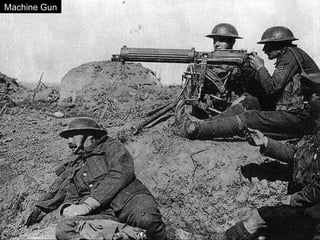
Machine Gun
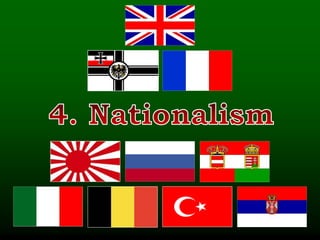
4. Nationalism
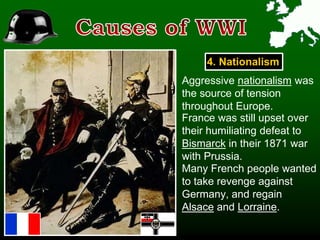
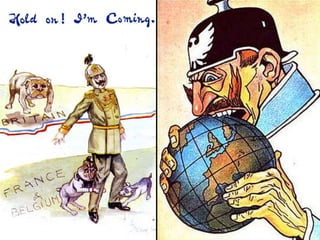
Aggressive nationalism was
the source of tension
throughout Europe.
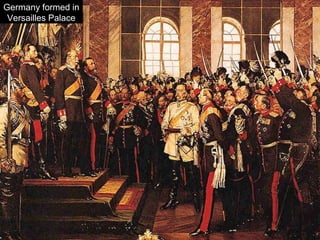
France was still upset over
their humiliating defeat to
Bismarck in their 1871 war
with Prussia.
Many French people wanted
to take revenge against
Germany, and regain
Alsace and Lorraine.
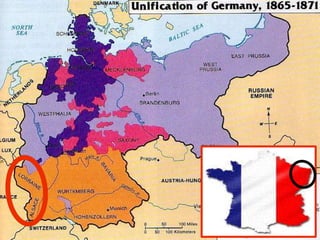
Germany formed in
Versailles Palace
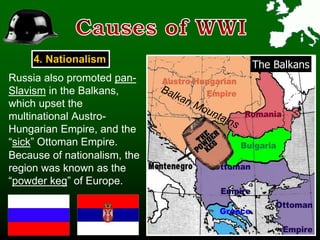
4. Nationalism
The Balkans
Because of nationalism, the
region was known as the
“powder keg” of Europe.
Russia also promoted pan-
Slavism in the Balkans,
which upset the
multinational Austro-
Hungarian Empire, and the
“sick” Ottoman Empire.
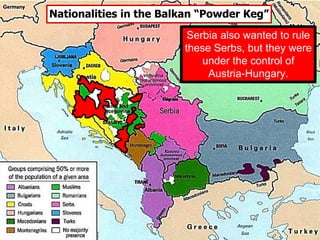
Nationalities in the Balkan “Powder Keg”
Serbia also wanted to rule
these Serbs, but they were
under the control of
Austria-Hungary.
▪ M.A.I.N. Causes of WWI
▪ Triple Alliance (Central Powers)
▪ Triple Entente (Allies)
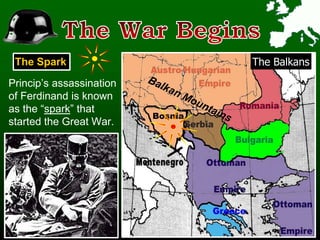
The Spark
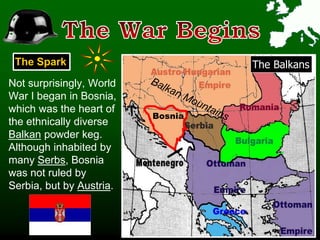
Not surprisingly, World
War I began in Bosnia,
which was the heart of
the ethnically diverse
Balkan powder keg.
Although inhabited by
many Serbs, Bosnia
was not ruled by
Serbia, but by Austria.
Bosnia
The Balkans
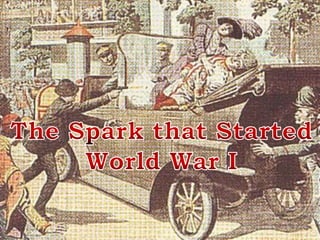
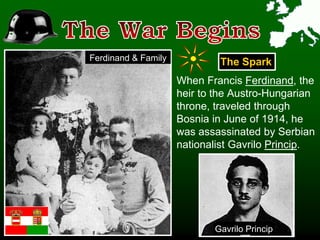
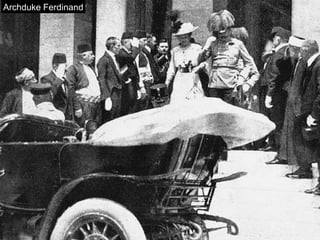
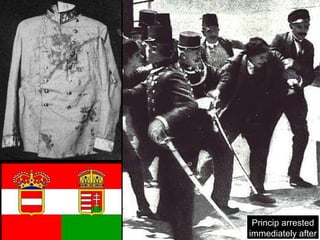
When Francis Ferdinand, the
heir to the Austro-Hungarian
throne, traveled through
Bosnia in June of 1914, he
was assassinated by Serbian
nationalist Gavrilo Princip.
Gavrilo Princip
The Spark
Ferdinand & Family
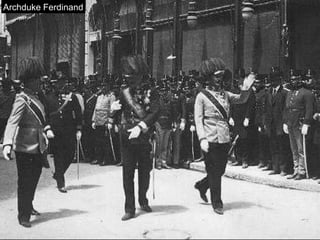
Archduke Ferdinand
Archduke Ferdinand
Princip arrested
immediately after
Princip’s assassination
of Ferdinand is known
as the “spark” that
started the Great War.
Bosnia
The Balkans
The Spark
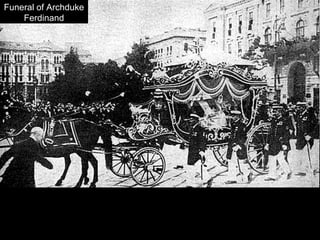
Funeral of Archduke
Ferdinand
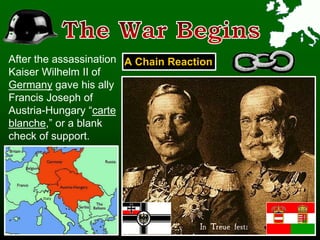
A Chain Reaction
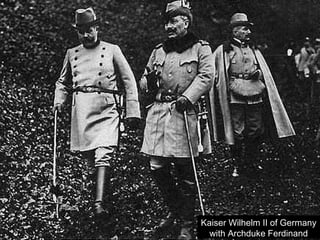
After the assassination
Kaiser Wilhelm II of
Germany gave his ally
Francis Joseph of
Austria-Hungary “carte
blanche,” or a blank
check of support.
Italy
Kaiser Wilhelm II of Germany
with Archduke Ferdinand
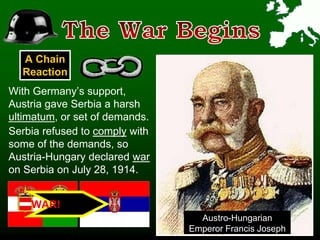
A Chain
Reaction
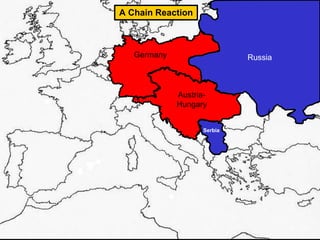
With Germany’s support,
Austria gave Serbia a harsh
ultimatum, or set of demands.
Austro-Hungarian
Emperor Francis Joseph
Serbia refused to comply with
some of the demands, so
Austria-Hungary declared war
on Serbia on July 28, 1914.
WAR!
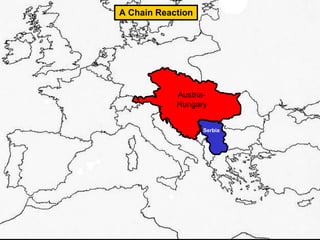
Austria-
Hungary
Serbia
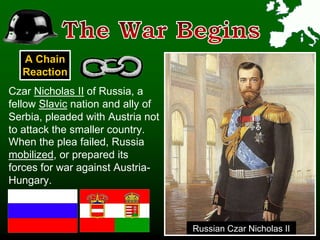
A Chain Reaction
Czar Nicholas II of Russia, a
fellow Slavic nation and ally of
Serbia, pleaded with Austria not
to attack the smaller country.
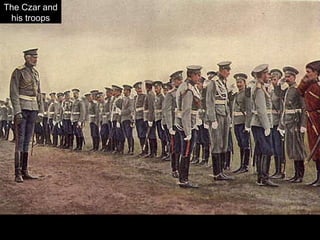
Russian Czar Nicholas II
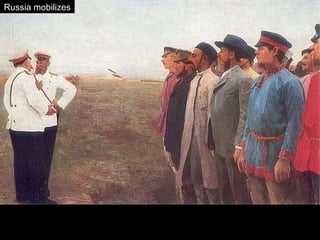
When the plea failed, Russia
mobilized, or prepared its
forces for war against Austria-
Hungary.
A Chain
Reaction
Russia mobilizes
The Czar and
his troops
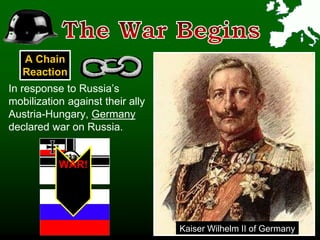
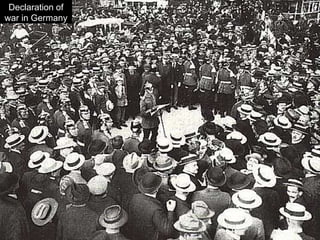
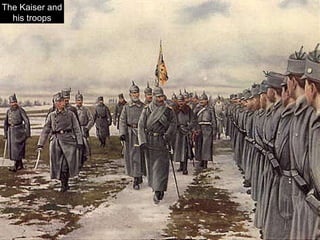
In response to Russia’s
mobilization against their ally
Austria-Hungary, Germany
declared war on Russia.
Kaiser Wilhelm II of Germany
WAR!
A Chain
Reaction
Declaration of
war in Germany
The Kaiser and
his troops
Austria-
Hungary
Germany Russia
Serbia
A Chain Reaction
Kaiser Wilhelm II of Germany
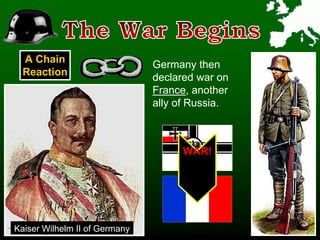
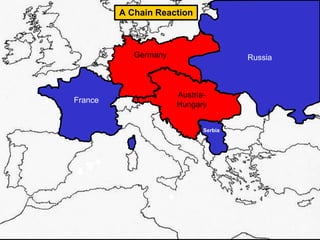
Germany then
declared war on
France, another
ally of Russia.
WAR!
A Chain
Reaction
Austria-
Hungary
Serbia
Germany Russia
France
A Chain Reaction
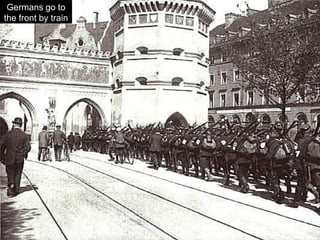
Germans go to
the front by train
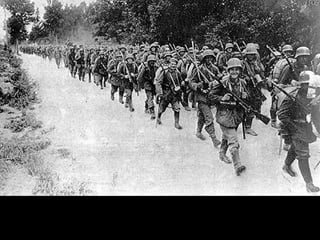
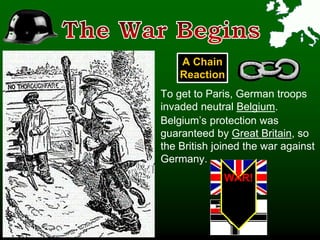
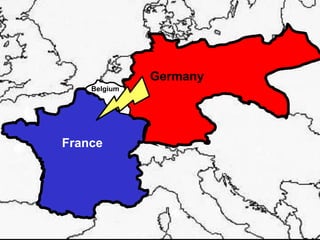
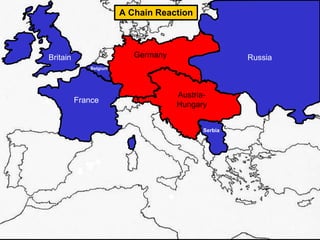
To get to Paris, German troops
invaded neutral Belgium.
Belgium’s protection was
guaranteed by Great Britain, so
the British joined the war against
Germany.
WAR!
A Chain
Reaction
Germany
France
Belgium
Austria-
Hungary
Germany Russia
France
Britain
Serbia
A Chain Reaction
Belgium
A Chain
Reaction
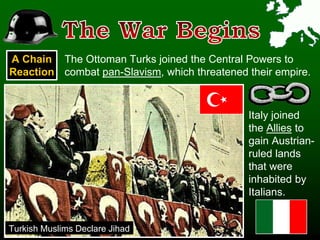
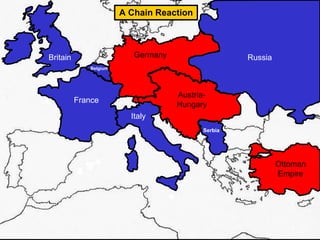
The Ottoman Turks joined the Central Powers to
combat pan-Slavism, which threatened their empire.
Turkish Muslims Declare Jihad
Italy joined
the Allies to
gain Austrian-
ruled lands
that were
inhabited by
Italians.
Austria-
Hungary
Germany Russia
France
Britain
Italy
Ottoman
Empire
Serbia
A Chain Reaction
Belgium
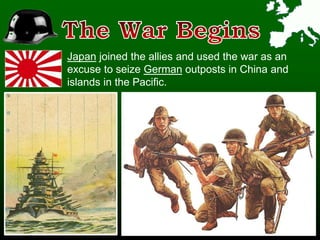
Japan joined the allies and used the war as an
excuse to seize German outposts in China and
islands in the Pacific.
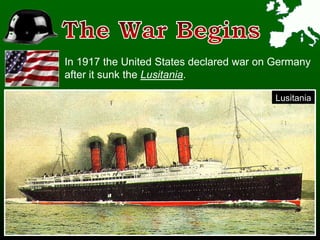
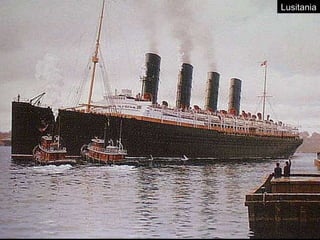
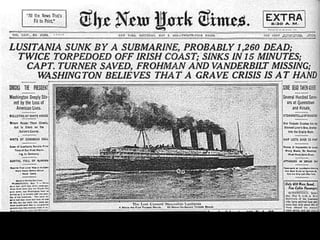
In 1917 the United States declared war on Germany
after it sunk the Lusitania.
Lusitania
Lusitania
Austria-
Hungary
Germany Russia
France
Belgium
Britain
Italy
Ottoman
Empire
Serbia
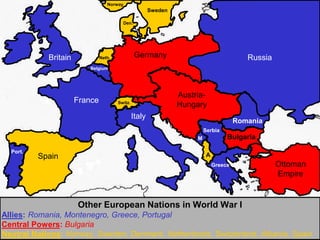
Other European Nations in World War I
Allies: Romania, Montenegro, Greece, Portugal
Central Powers: Bulgaria
Neutral Nations: Norway, Sweden, Denmark, Netherlands, Switzerland, Albania, Spain
Romania
M
Greece
Port.
Bulgaria
A
Switz.
Neth.
Spain
Norway
Sweden
Den.
Serbia
(Slavic)
Austria-
Hungary
(Germanic)
Germany
(Germanic)
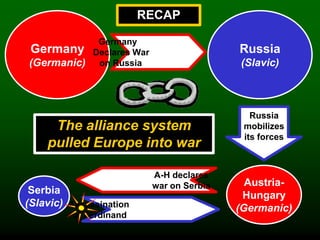
Assassination
of Ferdinand
Russia
(Slavic)
A-H declares
war on Serbia
Russia
mobilizes
its forces
The alliance system
pulled Europe into war
Germany
Declares War
on Russia
RECAP
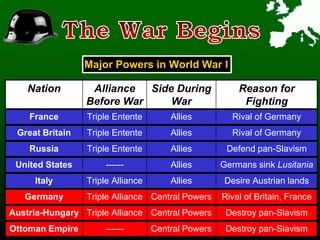
Nation Alliance
Before War
Side During
War
Reason for
Fighting
Major Powers in World War I
France Triple Entente Allies Rival of Germany
Great Britain Triple Entente Allies Rival of Germany
Russia Triple Entente Allies Defend pan-Slavism
Italy Triple Alliance Allies Desire Austrian lands
United States ------ Allies Germans sink Lusitania
Germany Triple Alliance Central Powers Rival of Britain, France
Austria-Hungary Triple Alliance Central Powers Destroy pan-Slavism
Ottoman Empire ------ Central Powers Destroy pan-Slavism
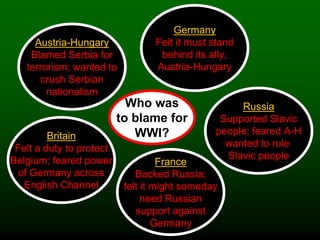
Who was
to blame for
WWI?
Austria-Hungary
Blamed Serbia for
terrorism; wanted to
crush Serbian
nationalism
Germany
Felt it must stand
behind its ally,
Austria-Hungary
Russia
Supported Slavic
people; feared A-H
wanted to rule
Slavic people
France
Backed Russia;
felt it might someday
need Russian
support against
Germany
Britain
Felt a duty to protect
Belgium; feared power
of Germany across
English Channel

Road to WWI PPT (1).pptx