What Are Road Signs?
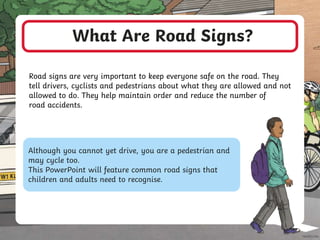
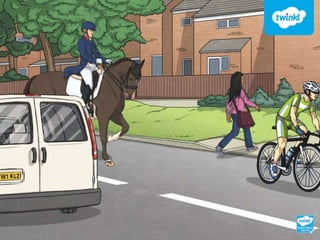
Road signs are very important to keep everyone safe on the road. They
tell drivers, cyclists and pedestrians about what they are allowed and not
allowed to do. They help maintain order and reduce the number of
road accidents.
Although you cannot yet drive, you are a pedestrian and
may cycle too.
This PowerPoint will feature common road signs that
children and adults need to recognise.
Sign Shapes and Colours
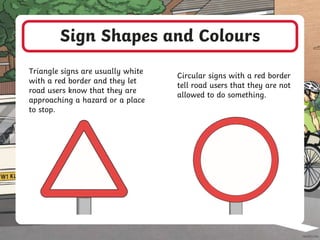
Triangle signs are usually white
with a red border and they let
road users know that they are
approaching a hazard or a place
to stop.
Circular signs with a red border
tell road users that they are not
allowed to do something.
Sign Shapes and Colours
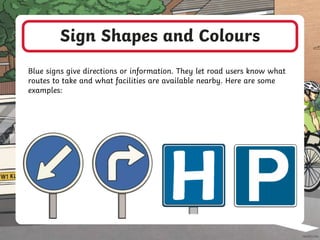
Blue signs give directions or information. They let road users know what
routes to take and what facilities are available nearby. Here are some
examples:
Sign Shapes and Colours
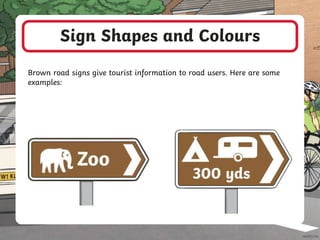
Brown road signs give tourist information to road users. Here are some
examples:
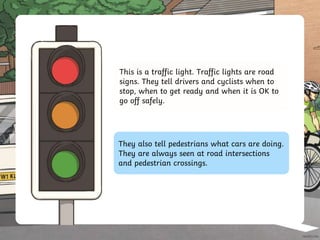
This is a traffic light. Traffic lights are road
signs. They tell drivers and cyclists when to
stop, when to get ready and when it is OK to
go off safely.
They also tell pedestrians what cars are doing.
They are always seen at road intersections
and pedestrian crossings.
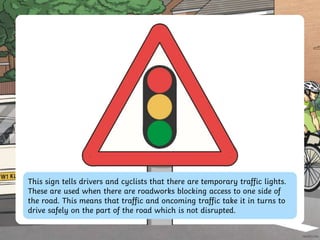
This sign tells drivers and cyclists that there are temporary traffic lights.
These are used when there are roadworks blocking access to one side of
the road. This means that traffic and oncoming traffic take it in turns to
drive safely on the part of the road which is not disrupted.
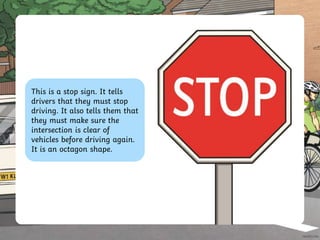
This is a stop sign. It tells
drivers that they must stop
driving. It also tells them that
they must make sure the
intersection is clear of
vehicles before driving again.
It is an octagon shape.
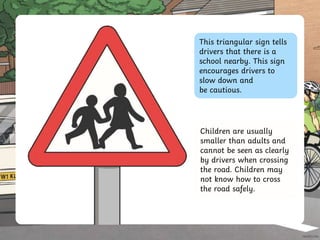
This triangular sign tells
drivers that there is a
school nearby. This sign
encourages drivers to
slow down and
be cautious.
Children are usually
smaller than adults and
cannot be seen as clearly
by drivers when crossing
the road. Children may
not know how to cross
the road safely.
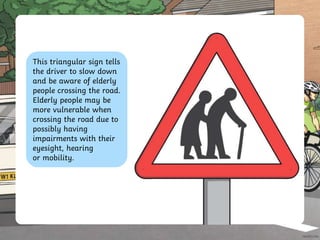
This triangular sign tells
the driver to slow down
and be aware of elderly
people crossing the road.
Elderly people may be
more vulnerable when
crossing the road due to
possibly having
impairments with their
eyesight, hearing
or mobility.
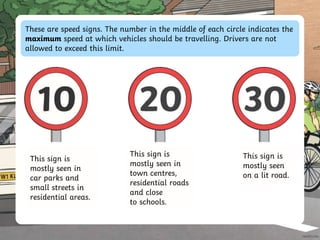
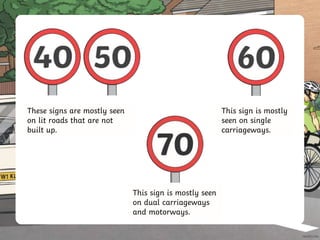
These are speed signs. The number in the middle of each circle indicates the
maximum speed at which vehicles should be travelling. Drivers are not
allowed to exceed this limit.
This sign is
mostly seen in
town centres,
residential roads
and close
to schools.
This sign is
mostly seen in
car parks and
small streets in
residential areas.
This sign is
mostly seen
on a lit road.
These signs are mostly seen
on lit roads that are not
built up.
This sign is mostly seen
on dual carriageways
and motorways.
This sign is mostly
seen on single
carriageways.
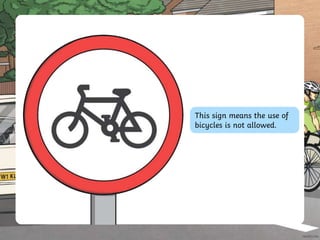
This sign means the use of
bicycles is not allowed.
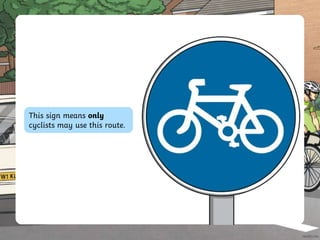
This sign means only
cyclists may use this route.
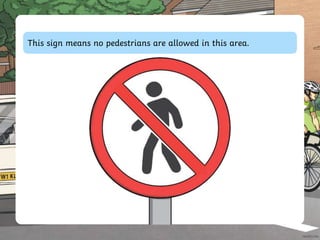
This sign means no pedestrians are allowed in this area.
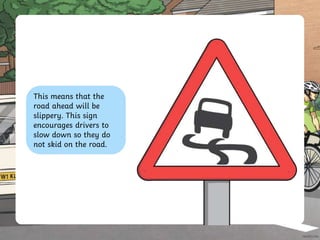
This means that the
road ahead will be
slippery. This sign
encourages drivers to
slow down so they do
not skid on the road.
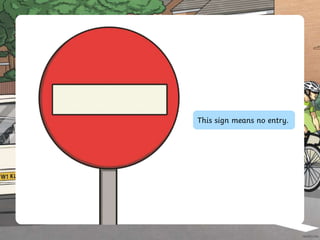
This sign means no entry.
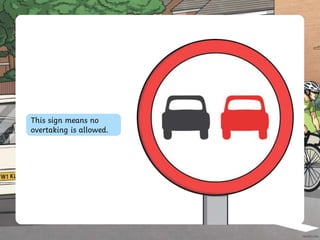
This sign means no
overtaking is allowed.
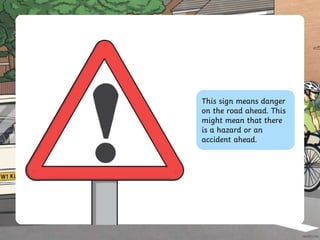
This sign means danger
on the road ahead. This
might mean that there
is a hazard or an
accident ahead.
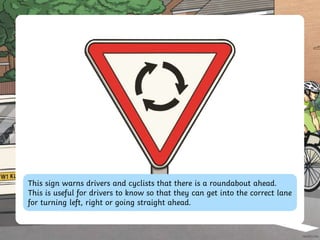
This sign warns drivers and cyclists that there is a roundabout ahead.
This is useful for drivers to know so that they can get into the correct lane
for turning left, right or going straight ahead.
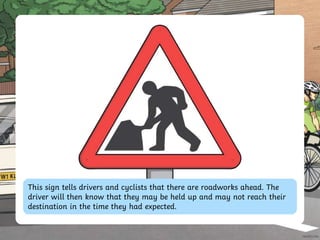
This sign tells drivers and cyclists that there are roadworks ahead. The
driver will then know that they may be held up and may not reach their
destination in the time they had expected.
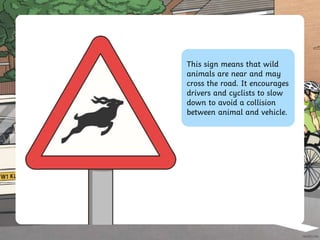
This sign means that wild
animals are near and may
cross the road. It encourages
drivers and cyclists to slow
down to avoid a collision
between animal and vehicle.
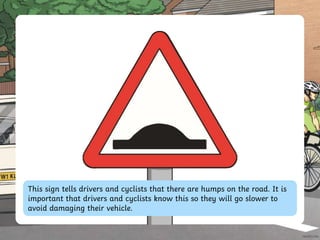
This sign tells drivers and cyclists that there are humps on the road. It is
important that drivers and cyclists know this so they will go slower to
avoid damaging their vehicle.
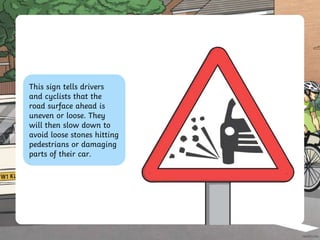
This sign tells drivers
and cyclists that the
road surface ahead is
uneven or loose. They
will then slow down to
avoid loose stones hitting
pedestrians or damaging
parts of their car.
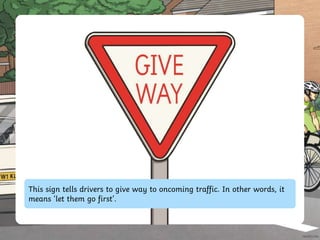
This sign tells drivers to give way to oncoming traffic. In other words, it
means ‘let them go first’.
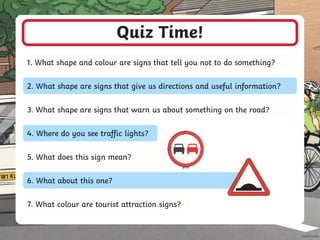
Quiz Time!
1. What shape and colour are signs that tell you not to do something?
2. What shape are signs that give us directions and useful information?
3. What shape are signs that warn us about something on the road?
4. Where do you see traffic lights?
7. What colour are tourist attraction signs?
5. What does this sign mean?
6. What about this one?
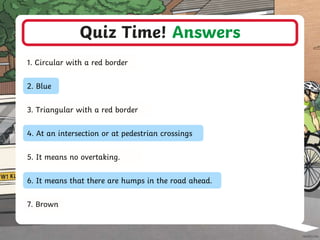
Quiz Time! Answers
1. Circular with a red border
2. Blue
3. Triangular with a red border
4. At an intersection or at pedestrian crossings
5. It means no overtaking.
6. It means that there are humps in the road ahead.
7. Brown
Road Signs

Road Signs

  • 2.
    What Are RoadSigns? Road signs are very important to keep everyone safe on the road. They tell drivers, cyclists and pedestrians about what they are allowed and not allowed to do. They help maintain order and reduce the number of road accidents. Although you cannot yet drive, you are a pedestrian and may cycle too. This PowerPoint will feature common road signs that children and adults need to recognise.
  • 3.
    Sign Shapes andColours Triangle signs are usually white with a red border and they let road users know that they are approaching a hazard or a place to stop. Circular signs with a red border tell road users that they are not allowed to do something.
  • 4.
    Sign Shapes andColours Blue signs give directions or information. They let road users know what routes to take and what facilities are available nearby. Here are some examples:
  • 5.
    Sign Shapes andColours Brown road signs give tourist information to road users. Here are some examples:
  • 6.
    This is atraffic light. Traffic lights are road signs. They tell drivers and cyclists when to stop, when to get ready and when it is OK to go off safely. They also tell pedestrians what cars are doing. They are always seen at road intersections and pedestrian crossings.
  • 7.
    This sign tellsdrivers and cyclists that there are temporary traffic lights. These are used when there are roadworks blocking access to one side of the road. This means that traffic and oncoming traffic take it in turns to drive safely on the part of the road which is not disrupted.
  • 8.
    This is astop sign. It tells drivers that they must stop driving. It also tells them that they must make sure the intersection is clear of vehicles before driving again. It is an octagon shape.
  • 9.
    This triangular signtells drivers that there is a school nearby. This sign encourages drivers to slow down and be cautious. Children are usually smaller than adults and cannot be seen as clearly by drivers when crossing the road. Children may not know how to cross the road safely.
  • 10.
    This triangular signtells the driver to slow down and be aware of elderly people crossing the road. Elderly people may be more vulnerable when crossing the road due to possibly having impairments with their eyesight, hearing or mobility.
  • 11.
    These are speedsigns. The number in the middle of each circle indicates the maximum speed at which vehicles should be travelling. Drivers are not allowed to exceed this limit. This sign is mostly seen in town centres, residential roads and close to schools. This sign is mostly seen in car parks and small streets in residential areas. This sign is mostly seen on a lit road.
  • 12.
    These signs aremostly seen on lit roads that are not built up. This sign is mostly seen on dual carriageways and motorways. This sign is mostly seen on single carriageways.
  • 13.
    This sign meansthe use of bicycles is not allowed.
  • 14.
    This sign meansonly cyclists may use this route.
  • 15.
    This sign meansno pedestrians are allowed in this area.
  • 16.
    This means thatthe road ahead will be slippery. This sign encourages drivers to slow down so they do not skid on the road.
  • 17.
    This sign meansno entry.
  • 18.
    This sign meansno overtaking is allowed.
  • 19.
    This sign meansdanger on the road ahead. This might mean that there is a hazard or an accident ahead.
  • 20.
    This sign warnsdrivers and cyclists that there is a roundabout ahead. This is useful for drivers to know so that they can get into the correct lane for turning left, right or going straight ahead.
  • 21.
    This sign tellsdrivers and cyclists that there are roadworks ahead. The driver will then know that they may be held up and may not reach their destination in the time they had expected.
  • 22.
    This sign meansthat wild animals are near and may cross the road. It encourages drivers and cyclists to slow down to avoid a collision between animal and vehicle.
  • 23.
    This sign tellsdrivers and cyclists that there are humps on the road. It is important that drivers and cyclists know this so they will go slower to avoid damaging their vehicle.
  • 24.
    This sign tellsdrivers and cyclists that the road surface ahead is uneven or loose. They will then slow down to avoid loose stones hitting pedestrians or damaging parts of their car.
  • 25.
    This sign tellsdrivers to give way to oncoming traffic. In other words, it means ‘let them go first’.
  • 26.
    Quiz Time! 1. Whatshape and colour are signs that tell you not to do something? 2. What shape are signs that give us directions and useful information? 3. What shape are signs that warn us about something on the road? 4. Where do you see traffic lights? 7. What colour are tourist attraction signs? 5. What does this sign mean? 6. What about this one?
  • 27.
    Quiz Time! Answers 1.Circular with a red border 2. Blue 3. Triangular with a red border 4. At an intersection or at pedestrian crossings 5. It means no overtaking. 6. It means that there are humps in the road ahead. 7. Brown