



Exploratory research
• Secondary data
• Experience survey
• Pilot studies
Exploratory Research

• Initial research conducted to clarify and
  define the nature of a problem
• Does not provide conclusive evidence
• Subsequent research expected
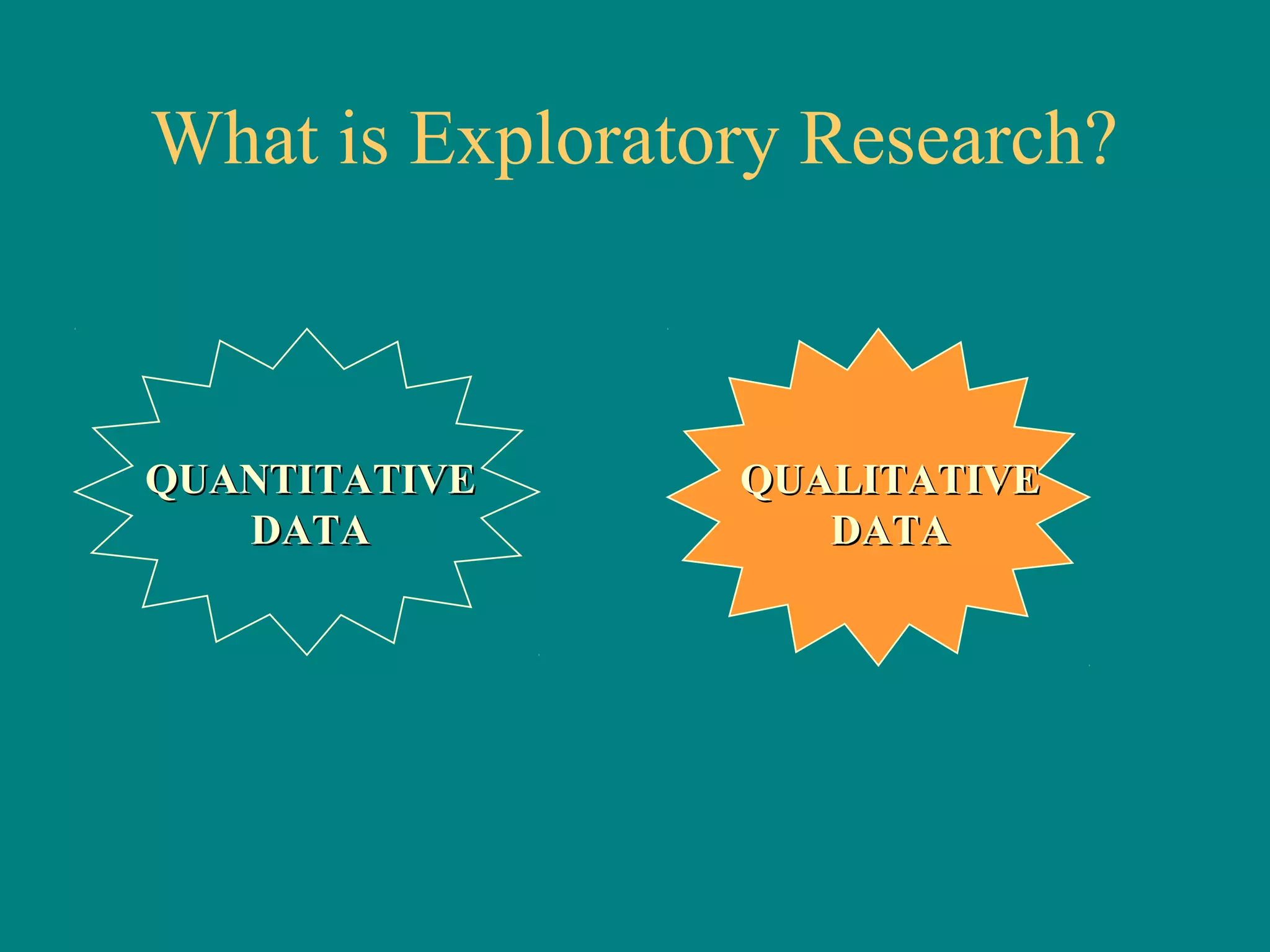
What is Exploratory Research?


QUANTITATIVE     QUALITATIVE
   DATA             DATA
Why Conduct Exploratory
      Research?
     Diagnose a situation

   Screening of alternatives

     Discover new ideas
Concept Testing

• Exploratory research procedure that tests
  some sort of stimulus as a proxy for an idea
  about a new, revised, or repositioned
  product
Categories of Exploratory
               Research
•   Experience surveys
•   Secondary data analysis
•   Case studies
•   Pilot studies
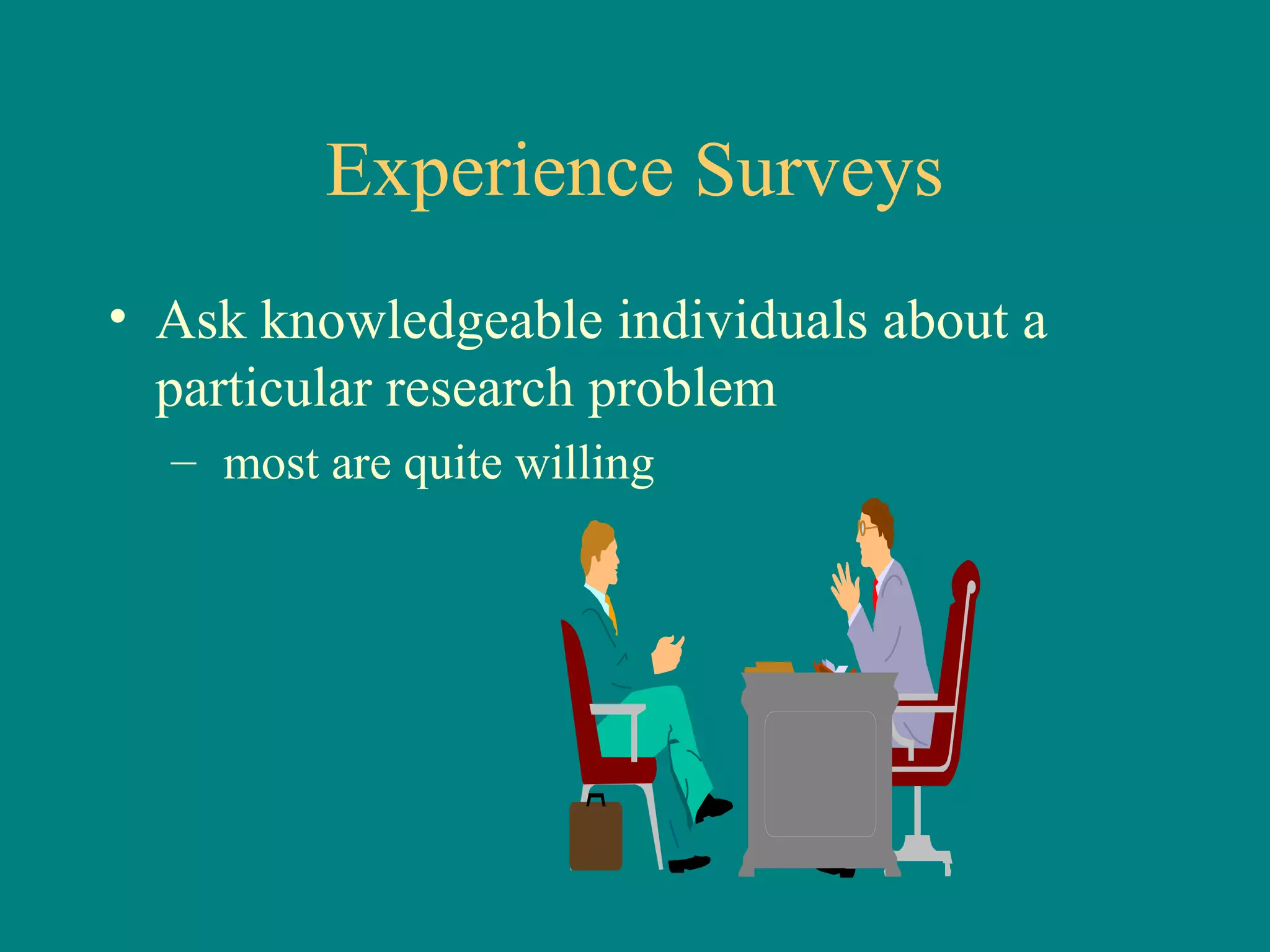
Experience Surveys
• Ask knowledgeable individuals about a
  particular research problem
  – most are quite willing
“If you wish to know the road up the
mountain, you must ask the man who
goes back and forth on it.”
                            - Zenrinkusi
Secondary Data Analysis

• Data collected for a purpose other than the
  project at hand
• Economical
• Quick source for background information
Case Study Method

• Intensely investigates one or a few
  situations similar to the problem
• Investigate in depth
• Careful study
• May require cooperation
Pilot Study

• A collective term
• Any small scale exploratory study that uses
  sampling
• But does not apply rigorous standards
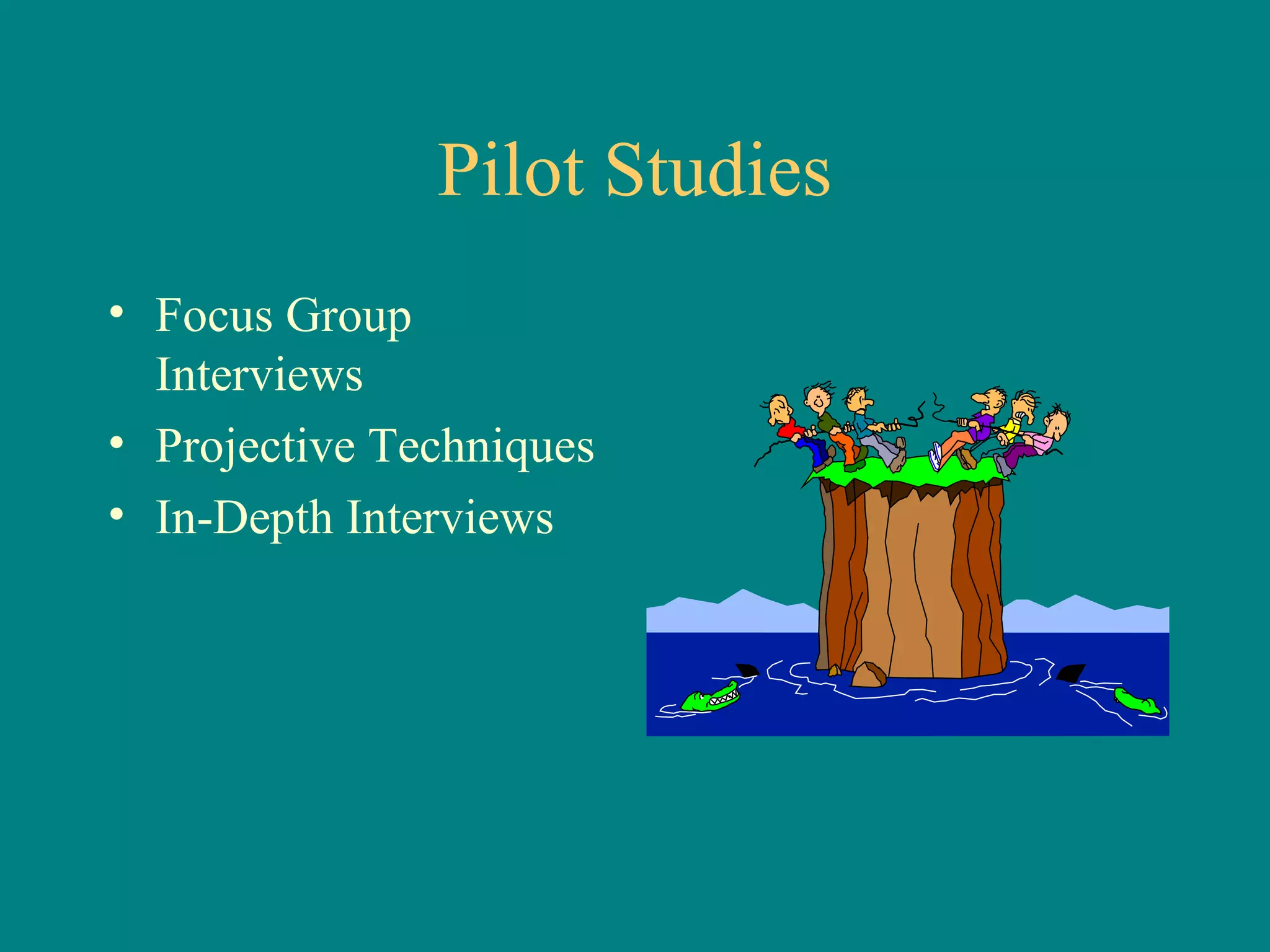
Pilot Studies
• Focus Group
  Interviews
• Projective Techniques
• In-Depth Interviews
Projective Techniques

•   Word association tests
•   Sentence completion method
•   Third-person technique
•   Role playing
•   T.A.T.
•   Picture frustration version of T.A.T.
“A man is least himself when he talks
in his own person; when given a mask
he will tell the truth.”
                           --Oscar Wilde
Word Association

• Subject is presented with a list of words
• Asked to respond with first word that comes
  to mind
Word Association Examples

• GREEN        • Money
               • Lawn
               • Eggs and chicken
Word Association Examples

• CHEESE       •   Goat
               •   Sheep
               •   Mouse
               •   jerry
Sentence Completion
People who drink beer are ______________________

A man who drinks light beer is ___________________
Sentence Completion
• People who never reaches on time
  are__________
• Females are more preferred as boss
  by__________
• People who work late are_________
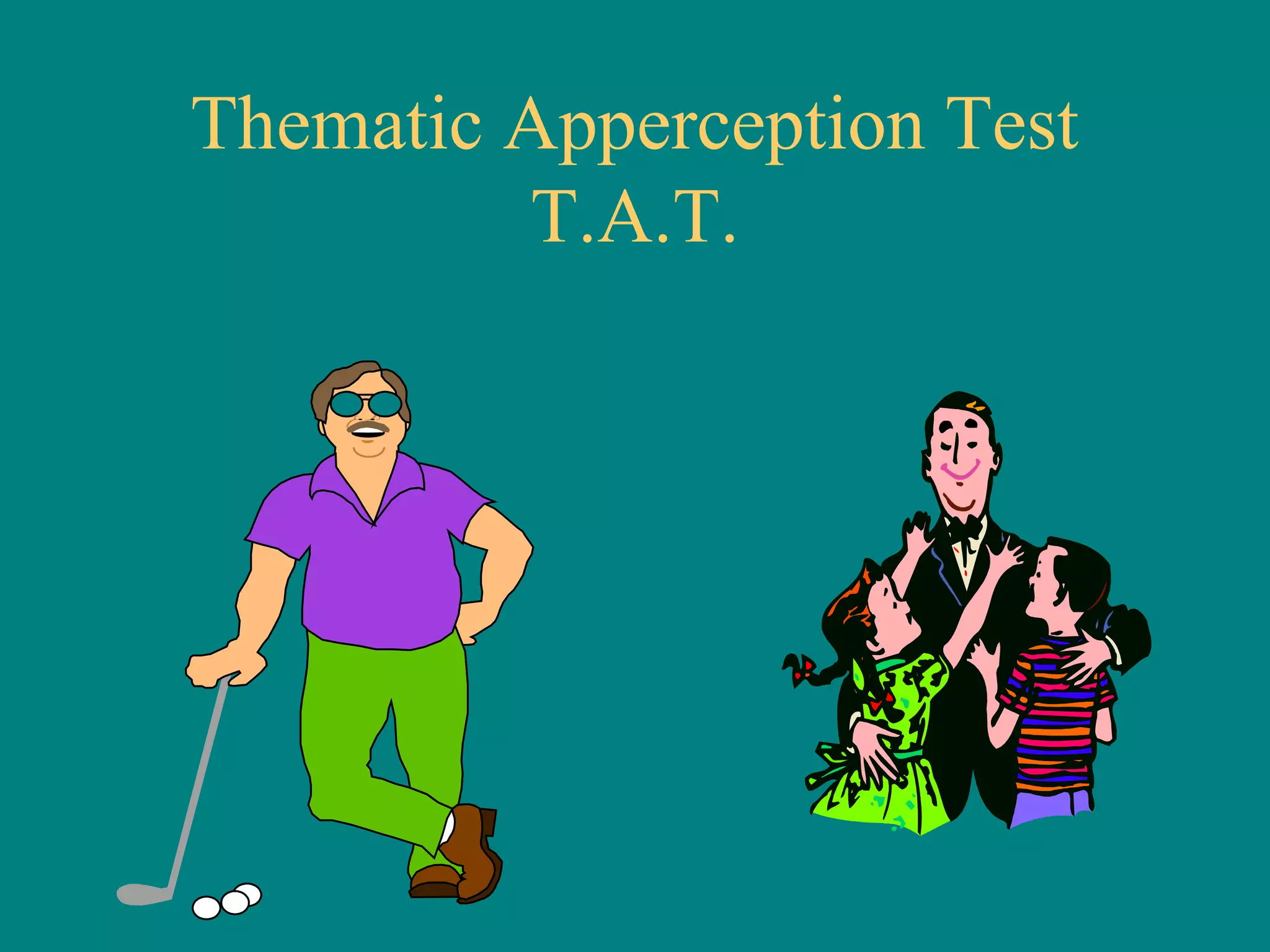
Thematic Apperception Test
         T.A.T.
Focus Group Interviews

           •   Unstructured
           •   Free flowing
           •   Group interview
           •   Start with broad topic
               and focus in on
               specific issues
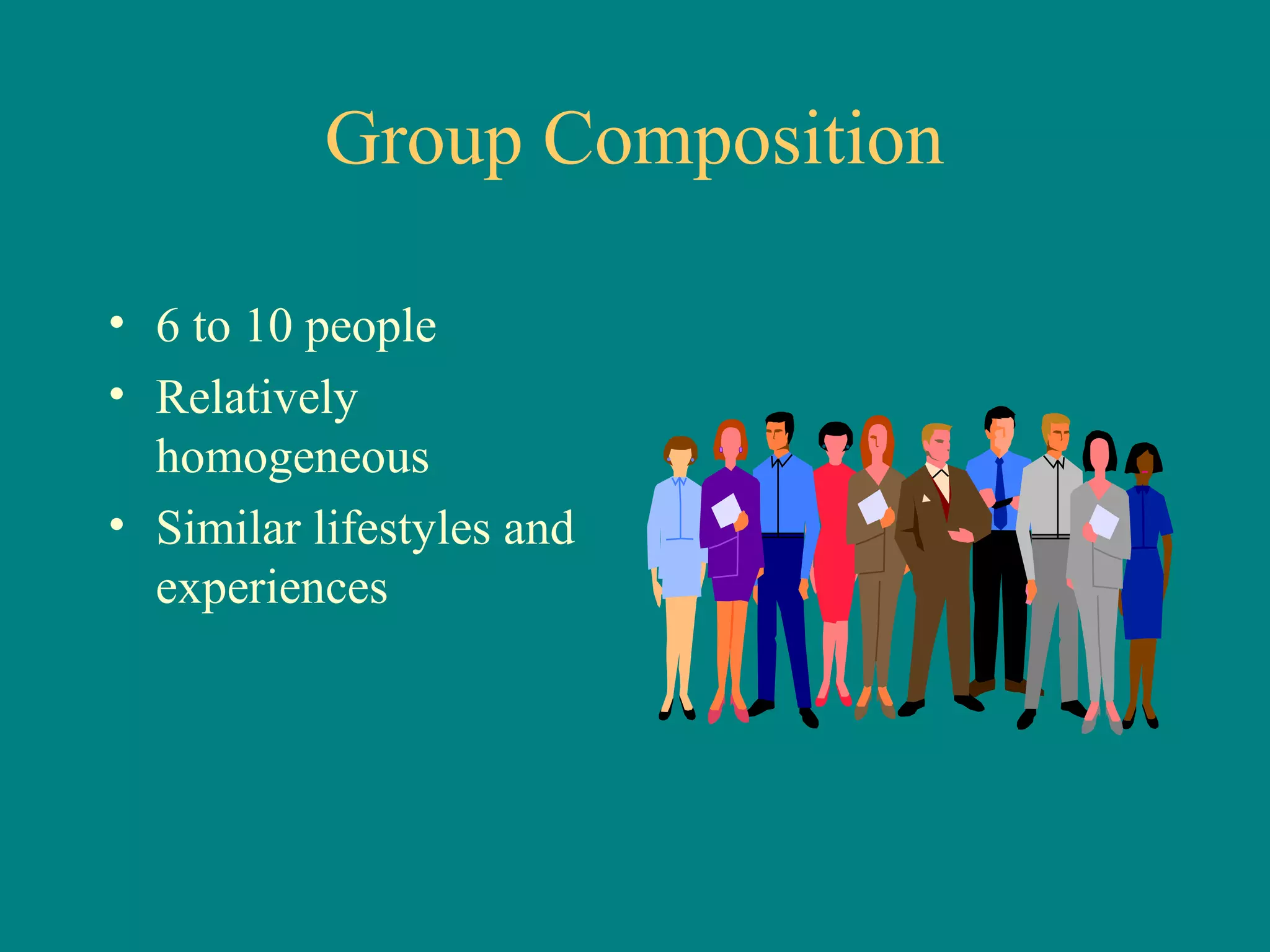
Group Composition

• 6 to 10 people
• Relatively
  homogeneous
• Similar lifestyles and
  experiences
Outline for a Focus Group
•   Establish a rapport
•   Begin with broad topic
•   Focus in on specific topic
•   Generate discussion and interaction
The Moderator

• Develops rapport -
  helps people relax
• Interacts
• Listens to what people
  have to say
• Everyone gets a
  chance to speak
The Focus Group Moderator
• Maintains loose control and focuses
  discussion
• Stimulates spontaneous responses
Advantages of focus Group
               Interview
•   Synergy
•   Snowballing
•   Stimulation
•   Security
•   Spontaneity
•   Specialization
•   Scrutiny
•   Structure
•   speed
Advantages of Online
          Focus Groups
• Fast
• Inexpensive
• Bring together many participants from
  wide-spread geographical areas
• Respondent anonymity
• Transcript automatically recorded
Disadvantages of Online
          Focus Groups
• Less group interaction
• Absence of tactile stimulation
• Absence of facial expression and body
  language
• Moderator’s job is different
Streaming Media
Caution

• Results of exploratory research are
  qualitative in nature
• Sometimes it may give vague results also
• Results can be ambiguous too

Rm

  • 1.
    Exploratory research • Secondarydata • Experience survey • Pilot studies
  • 2.
    Exploratory Research • Initialresearch conducted to clarify and define the nature of a problem • Does not provide conclusive evidence • Subsequent research expected
  • 3.
    What is ExploratoryResearch? QUANTITATIVE QUALITATIVE DATA DATA
  • 4.
    Why Conduct Exploratory Research? Diagnose a situation Screening of alternatives Discover new ideas
  • 5.
    Concept Testing • Exploratoryresearch procedure that tests some sort of stimulus as a proxy for an idea about a new, revised, or repositioned product
  • 6.
    Categories of Exploratory Research • Experience surveys • Secondary data analysis • Case studies • Pilot studies
  • 7.
    Experience Surveys • Askknowledgeable individuals about a particular research problem – most are quite willing
  • 8.
    “If you wishto know the road up the mountain, you must ask the man who goes back and forth on it.” - Zenrinkusi
  • 9.
    Secondary Data Analysis •Data collected for a purpose other than the project at hand • Economical • Quick source for background information
  • 10.
    Case Study Method •Intensely investigates one or a few situations similar to the problem • Investigate in depth • Careful study • May require cooperation
  • 11.
    Pilot Study • Acollective term • Any small scale exploratory study that uses sampling • But does not apply rigorous standards
  • 12.
    Pilot Studies • FocusGroup Interviews • Projective Techniques • In-Depth Interviews
  • 13.
    Projective Techniques • Word association tests • Sentence completion method • Third-person technique • Role playing • T.A.T. • Picture frustration version of T.A.T.
  • 14.
    “A man isleast himself when he talks in his own person; when given a mask he will tell the truth.” --Oscar Wilde
  • 15.
    Word Association • Subjectis presented with a list of words • Asked to respond with first word that comes to mind
  • 16.
    Word Association Examples •GREEN • Money • Lawn • Eggs and chicken
  • 17.
    Word Association Examples •CHEESE • Goat • Sheep • Mouse • jerry
  • 18.
    Sentence Completion People whodrink beer are ______________________ A man who drinks light beer is ___________________
  • 19.
    Sentence Completion • Peoplewho never reaches on time are__________ • Females are more preferred as boss by__________ • People who work late are_________
  • 20.
  • 21.
    Focus Group Interviews • Unstructured • Free flowing • Group interview • Start with broad topic and focus in on specific issues
  • 22.
    Group Composition • 6to 10 people • Relatively homogeneous • Similar lifestyles and experiences
  • 23.
    Outline for aFocus Group • Establish a rapport • Begin with broad topic • Focus in on specific topic • Generate discussion and interaction
  • 24.
    The Moderator • Developsrapport - helps people relax • Interacts • Listens to what people have to say • Everyone gets a chance to speak
  • 25.
    The Focus GroupModerator • Maintains loose control and focuses discussion • Stimulates spontaneous responses
  • 26.
    Advantages of focusGroup Interview • Synergy • Snowballing • Stimulation • Security • Spontaneity • Specialization • Scrutiny • Structure • speed
  • 27.
    Advantages of Online Focus Groups • Fast • Inexpensive • Bring together many participants from wide-spread geographical areas • Respondent anonymity • Transcript automatically recorded
  • 28.
    Disadvantages of Online Focus Groups • Less group interaction • Absence of tactile stimulation • Absence of facial expression and body language • Moderator’s job is different
  • 29.
  • 30.
    Caution • Results ofexploratory research are qualitative in nature • Sometimes it may give vague results also • Results can be ambiguous too