Risk Reporting
BY: V.JAYA MOHAN KRISHNA
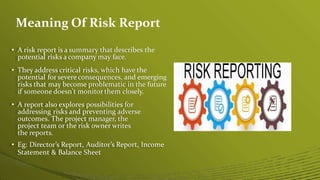
Meaning Of Risk Report
• A risk report is a summary that describes the
potential risks a company may face.
• They address critical risks, which have the
potential for severe consequences, and emerging
risks that may become problematic in the future
if someone doesn't monitor them closely.
• A report also explores possibilities for
addressing risks and preventing adverse
outcomes. The project manager, the
project team or the risk owner writes
the reports.
• Eg: Director’s Report, Auditor’s Report, Income
Statement & Balance Sheet
Objectives of Risk Reporting
• To fulfill statutory requirements.
• To provide a record of activity underconsideration.
• To aid planning & control.
• Toensure continuity in policies & programs of the firm.
• To provide a quick review
.
• To facilitate timelycommunication.
Risk Report Importance...
• Risk reports are important because they help project managers,
project owners and clients better understand various risks the
company is taking whileworking on a project.
• Having an accurate and informative report ensures that senior
management knows of existing risks. This knowledge can help a
companycreate a plan to avoid unwanted surprises and
unauthorized actions.
Risk Report Include's...
Risk reports often include the following information:
• Risk register: This identifies potential risks in an organization, their
impact, probability, owner, how it ranks compared toother risks and the
risk response.
• Risk corrective action plan: This is a plan for mitigating the risk if it
occurs.
• Work performance data reviews: These include any data collected to use
to assess risks.
• Project schedule and updates on the progress: This includes the planned
project schedule and anyexpected changes to the program.
• Status of the project outcome: This compares the current status of a
project to the expected plan.
INTERNAL REPORTING
• Corporate level
• Businessunit level
• Desk level
EXTERNAL REPORTIG
• Regulatory norms
• Voluntary disclosure
Risk Reporting Types...
Major Types of Risk Reports
OPERATIONAL REPORTS
FINANCIAL REPORTS
ROUTINE REPORTS
SPECIAL REPORTS
INVESTIGATIVE REPORTS
BUDGET PROPOSAL REPORTS
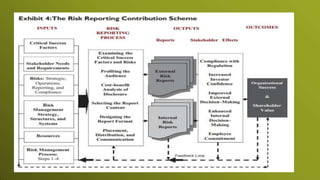
There are various risk reporting agencies
There is a separate course for this risk reporting process
Conclusion:
Risk reports are important because they help
project managers, project owners and clients
better understand various risks the company is
taking while working on a project. Having an
accurate and informative report ensures that
senior management knows of existing risks.
risk reportingg final.pptx

risk reportingg final.pptx

  • 1.
  • 3.
    Meaning Of RiskReport • A risk report is a summary that describes the potential risks a company may face. • They address critical risks, which have the potential for severe consequences, and emerging risks that may become problematic in the future if someone doesn't monitor them closely. • A report also explores possibilities for addressing risks and preventing adverse outcomes. The project manager, the project team or the risk owner writes the reports. • Eg: Director’s Report, Auditor’s Report, Income Statement & Balance Sheet
  • 4.
    Objectives of RiskReporting • To fulfill statutory requirements. • To provide a record of activity underconsideration. • To aid planning & control. • Toensure continuity in policies & programs of the firm. • To provide a quick review . • To facilitate timelycommunication.
  • 5.
    Risk Report Importance... •Risk reports are important because they help project managers, project owners and clients better understand various risks the company is taking whileworking on a project. • Having an accurate and informative report ensures that senior management knows of existing risks. This knowledge can help a companycreate a plan to avoid unwanted surprises and unauthorized actions.
  • 6.
    Risk Report Include's... Riskreports often include the following information: • Risk register: This identifies potential risks in an organization, their impact, probability, owner, how it ranks compared toother risks and the risk response. • Risk corrective action plan: This is a plan for mitigating the risk if it occurs. • Work performance data reviews: These include any data collected to use to assess risks. • Project schedule and updates on the progress: This includes the planned project schedule and anyexpected changes to the program. • Status of the project outcome: This compares the current status of a project to the expected plan.
  • 7.
    INTERNAL REPORTING • Corporatelevel • Businessunit level • Desk level EXTERNAL REPORTIG • Regulatory norms • Voluntary disclosure Risk Reporting Types...
  • 8.
    Major Types ofRisk Reports OPERATIONAL REPORTS FINANCIAL REPORTS ROUTINE REPORTS SPECIAL REPORTS INVESTIGATIVE REPORTS BUDGET PROPOSAL REPORTS
  • 10.
    There are variousrisk reporting agencies
  • 11.
    There is aseparate course for this risk reporting process
  • 13.
    Conclusion: Risk reports areimportant because they help project managers, project owners and clients better understand various risks the company is taking while working on a project. Having an accurate and informative report ensures that senior management knows of existing risks.