Rights-based
Civic Actions
for Food
Module “Social Food Movements”
Master Food, Law & Finance
March 2017 – Turin
JOSE LUIS VIVERO POL
PhD Research Fellow
in Food Governance
Achievements
Challenges
Barriers
Proposals
3
4
Food & Nutrition
Security Law 2006
Constitutional Reform
2010
5
FNS Law Mexico DF 2009
Constitutional Reform 2011
Legal Common Sense
Associated to right to life, right to be,
right to thrive, freedom from want
Immediate dimension: free of hunger
Progressive: Access to adequate food
Understood as commons sense in most
cultures & groups (Hossain et al., 2015)
• Pasamos de la “Seguridad Alimentaria
existe cuando…” a “la realización de un
derecho…”,
Leyes de SAN de Guatemala y Brasil (2005 y 2006)
• De “situación” a “derecho”, que se ha de
garantizar (por el Estado) y se puede exigir
(por los ciudadanos)
• El DA está desarrollándose desde hace 20
años (PIDESC), luego su reconocimiento
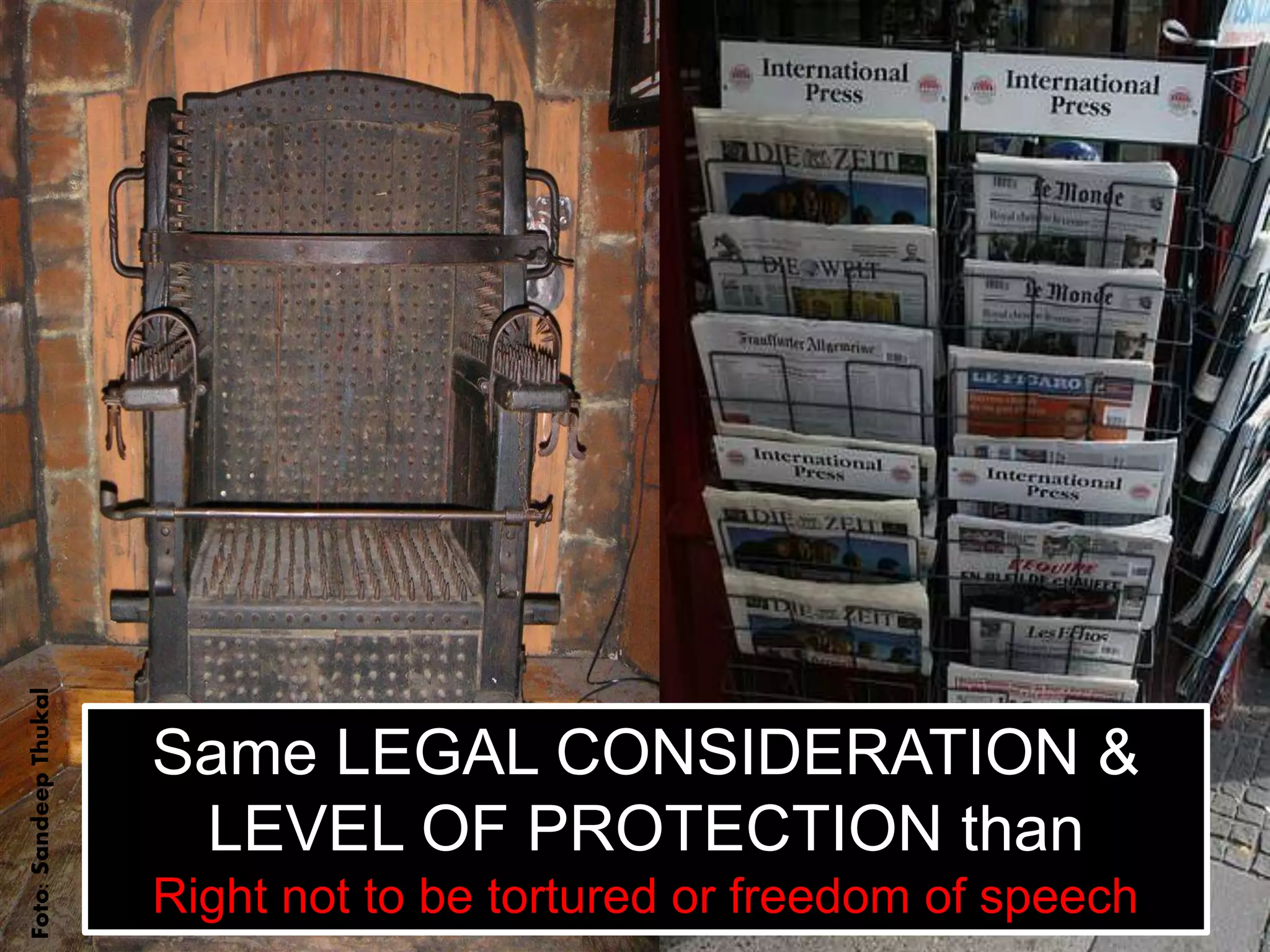
en los países y ahora con la justiciabilidad.Same LEGAL CONSIDERATION &
LEVEL OF PROTECTION than
Right not to be tortured or freedom of speech
Foto:SandeepThukal
8
THE RIGHT TO FOOD
is a right (duties and
entitlements).
States must respect,
protect & fulfill
As a legal approach, it
does not question the
proprietary rights,
specially the private
property right (a sacred
pillar of capitalism).
ICESCR
is a binding
agreement
for 156
states
Justiciable
Foto: Jorge Salamanca
Latin America is leading
• Awareness, protection and
justiciability (Vivero, 2010)
• 17 Parliamentary Fronts Against
Hunger
• Regional Framework Law (Parlatino,2012)
Legal Frameworks
FNS Framework Laws (12)
Armenia (2002), Argentina (2003), Guatemala (2005),
Brazil (2006), Venezuela (2008), Ecuador (2009), Mexico
DF (2009), Nicaragua (2009), Honduras (2011), Zanzibar
(2011), Indonesia (2012), India (2013)
FNS draft laws in Parliaments (13)
Bolivia, Costa Rica, Dominican Republic, El Salvador,
Haiti, Malawi, Mexico, Mozambique, Panama, Paraguay,
Peru, Philippines, Uganda
LAC (13% of world´s countries)
• 65% (15 out of 23 countries) explicit RtF in
Constitution (Knuth & Vidar, 2011)
• 66% (8 out of 12) FNS Laws including RtF
• 70% FNS law drafts in Parliaments
• 28% signatories of OP ICESCR (2016)
11
Food Security Laws
(Vivero, 2010; 2011)
• Although not main driving forces, anchor
institutional set up and keep momentum in
transitions between governments
• Create national FNS systems
• Process as important as results: Enable civil
society to participate, implement & monitor
(accountability)
• Necessary but not sufficient
Justiciability
• Jurisprudence is mounting: More 60 RTF
cases (IDLO, 2015)
• LAC leading: Honduras (2007), Guatemala
(2006), Argentina (2007), Paraguay (2002,
2006) (Vivero, 2011)
• Judges/lawyers become more aware of
possibilities (Vidar et al., 2014)
Main actors
supporting the
Right to Food
Countries supporting RtF
Few countries
investing in the
Right to Food
Lessons learned for RTF
achievements to date
• Useful Policy Guide to question balance of power
in food systems (De Schutter, 2013)
• Subversive analysis of root causes (Lambek, 2015)
(avoiding the “we have a situation”)
• Glue of diverse constituencies (Claeys, 2015; Callenius et al.,
2014)
• Aspirational driver, becoming object of social
struggles (Hossain et al., 2015)
• Mutually reinforcing food sovereignty (De Schutter, 2014;
Lambek, 2014)
• Process as important as output (Vivero, 2010)
• Opening up spaces for civil society participation
and monitoring (Lambek, 2015; Vivero, 2011)
Political challenges
• Excessive emphasis on State obligations (Claeys,
2015)
• Clash of roles: State as violator and
guarantor at same time (Lambek, 2015)
• Neglecting responsibility of consumers,
TNCs, non-state actors (NGOs) (Narula, 2015)
• Lack of constituency & representativeness
because failed to capture imagination of
hungry communities (Claeys, 2015).
Paradigm Barriers
• Food as a human right (moral) collides
with food as a commodity (amoral)
• Food not considered a public good or a
commons (Vivero, 2017)
• Other ESCR (health, education, water) are
considered public goods & they have
progressed as enforceable rights
Normative Barriers
• RtF not justiciable as Civil & Political Rights
(Chilton, 2009) because is feared (Vivero, 2011)
• Not in America (San Salvador Protocol),
Africa (CHRP) or Europe (Vivero & Schuftan, 2016) but yes
in OP ICESCR
• RtF actively rejected by US (Messer & Cohen, 2009) &
Canada (Margulis, 2015) + Int. Org. (G8, G20, WEF,
WTO, WB, IMF) & Corporations (Lambek, 2014)
• Rationale: RtF is imprecise, subject to
available resources and progressive
realization (Vidar et al., 2014)
Operational Barriers
• A law that citizens and judges are unaware
of is not applied (Vivero, 2011)
• How the hungry are reaching the judge?
• Lack of pro-bono lawyers (who contracts
the defenders?)
• No financial support by development
agencies, UN or private foundations
• Meagre budgetary obligations to
progressively fulfill it
Legal technicalities that
hamper justiciability
• Diffuse responsibility: what ministry is
responsible of anyone’s hunger?
• Lack of classification of crimes, offenses &
punishment on RtF violations
• Hunger is not legally a cause of death in
most countries (forensic certificates)
• Different responsibilities for hunger (lack of
choices) & obesity (bad choices)
EUROPA
leaving many behind
because food is not a right
• 123 M poor EU people
(1/4) (Oxfam, 2015)
• 50 M severe material
deprivation: food,
water…(EUROSTAT, 2015)
• 2009-15, + 7.5 M
poor
• 30-40% children (6
EU members) below
poverty line (UNICEF, 2014)
• Increasing children
at school with no
breakfast (UK,
Netherlands, Spain)
No RtF in EU: How is that possible?
• NOT in European Social Charter
• NOT in any EU constitution
• NOT in MDGs & SDGs narrative
• Proposal in Belgium: National Food Policy
Council including whole food chain (Eggen, 2014)
• Proposal in Spain: RtF in Constitution
• European Citizen´s Initiative + EP: water as
human right + commons
• Universal Food Coverage (non-existing)
Proposals for
International Actors
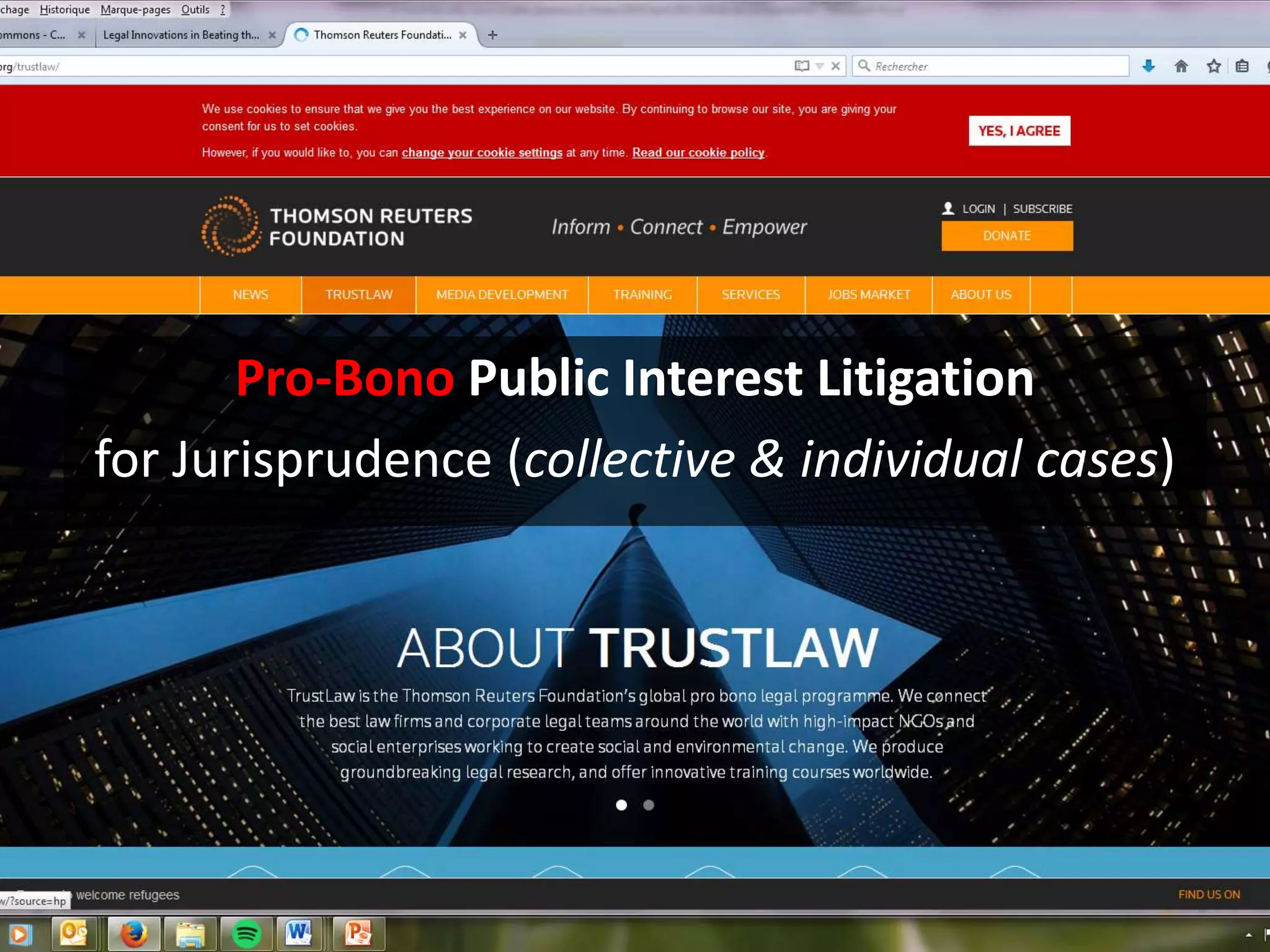
Pro-Bono Public Interest Litigation
for Jurisprudence (collective & individual cases)
27
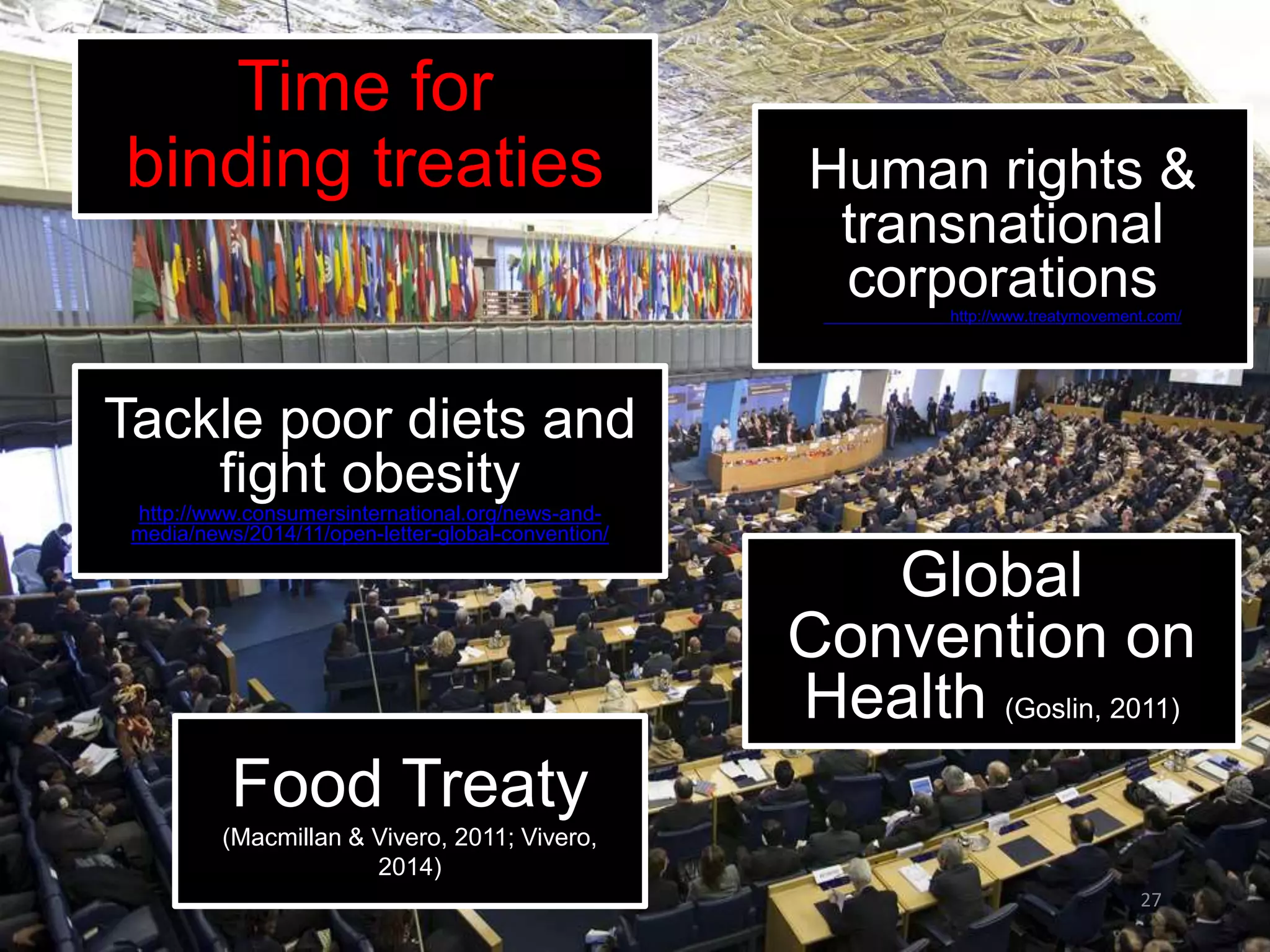
Time for
binding treaties
Global
Convention on
Health (Goslin, 2011)
Food Treaty
(Macmillan & Vivero, 2011; Vivero,
2014)
Human rights &
transnational
corporationshttp://www.treatymovement.com/
Tackle poor diets and
fight obesity
http://www.consumersinternational.org/news-and-
media/news/2014/11/open-letter-global-convention/
Proposals for
Civic Food
Movements 28
To guarantee school
meals for all students in
public schools
29
Stricter & innovative rules to
avoid food waste
To recycle all expired food (i.e. France)
Supporting citizens´ collective actions to
reduced waste,
promote food sharing
and co-producing
30
Shifting from charitable food
(Food Banks) to food as right
(Universal Food Coverage)
A food bank network that is
universal, accountable, compulsory
and not voluntary, random, targeted
31
Bibliography
• Callenius, C., Oenema, S., & Valente, F. (2014). Preface. In Right to food and nutrition watch: The years of
the right to food guidelines: Gains, concerns and struggles. http://www.rtfn-watch.org/fileadmin/media/rtfn-
watch.org/ENGLISH/pdf/Watch_2014/Watch_2014_PDFs/R_t_F_a_N_Watch_2014_eng.pdf
• Claeys, P. (2015). The right to food: Many developments, more challenges. Canadian Food Studies, Vol. 2,
No. 2, pp. 60–67.
https://www.academia.edu/15471376/The_right_to_food_Many_developments_more_challenges_in_Canadian_Food_Studies_
• Claeys, P. and Lambek, N. (2014) Creating an Environment for a Fully Realized Right to Food: Progress,
Challenges and Emerging Alternative Policy Models. A Ten-Year Retrospective on Voluntary Guidelines,
FIAN International.
• Chilton, M. (2009). A rights-based approach to food insecurity in the United States. American Journal of
Public Health, 99 (7): 1203–1211.
• De Schutter, O. (2012). From charity to entitlement: Implementing the right to food in Southern and
Eastern Africa. Briefing Note No. 5.
http://www.srfood.org/images/stories/pdf/otherdocuments/20120620_briefing_note_05_en.pdf
• De Schutter, O. (2013). Assessing a decade of right to food progress. Report presented to the 68th Session
of the UN General Assembly, A/68/288. United Nations
• De Schutter, S. (2014). Final report: The Transformative Potential of the Right to Food, UN Human Rights
Council, Report of the Special Rapporteur on the right to food.
• Eggen, M (2014). The law on the right to adequate food: a necessary step in the fight against food
insecurity and malnutrition in Belgium. In: Right to food and nutrition watch: The years of the right to
food guidelines: Gains, concerns and struggles. Pp. 74-75 http://www.rtfn-watch.org/fileadmin/media/rtfn-
watch.org/ENGLISH/pdf/Watch_2014/Watch_2014_PDFs/R_t_F_a_N_Watch_2014_eng.pdf
• EUROSTAT (2015). http://ec.europa.eu/eurostat/statistics-explained/index.php/Glossary:Severe_material_deprivation_rate
• UNICEF (2014). Children of the Recession: The impact of the economic crisis on child well-being in rich
countries’, Innocenti Report Card 12, UNICEF, www.unicef-irc.org/publications/pdf/rc12-eng-web.pdf
• Gostin LO. (2012). A Framework Convention on Global Health: health for all, justice for all.
JAMA;307:2087–92. doi:10.1001/jama.2012.4395PMID:22665108
• Golay, C. (2011). The Right to Food and Access to Justice: Examples at the National, Regional and
International Levels. FAO, Rome.
• Hossain, N., D. te Lintelo, A. Wanjiku-Kelbert (2015). A commons sense approach to the right to food. IDS
working paper 458. Institute of Development Studies. http://www.ids.ac.uk/publication/a-common-sense-
approach-to-the-right-to-food
• IDLO (in press). Realizing the Right to Food: Legal Strategies and Approaches. International Development
Law Organization
• Knuth, L. & M. Vidar (2011). Constitutional and legal protection of the right to food around the world.
Right to Food Studies, FAO, Rome. http://www.fao.org/docrep/016/ap554e/ap554e.pdf
• Lambek, N. (2015). The right to food: Reflecting on the past and future possibilities—Synthesis Paper.
Canadian Food Studies, Vol. 2, No. 2, pp. 68–74.
• Lambek, N. (2014). 10 years of the right to adequate food guidelines: Progress, obstacles and the way
head. Civil Society Synthesis Paper for the 41st Session of the UN Committee on World Food Security. FIAN
International. Retrieved from
http://www.fian.org/fileadmin/media/publications/10yearGuidelines_CivilSociety_SynthesisPaper_en_01.pdf
• MacMillan, A. & J.L. Vivero (2011). The governance of hunger. Innovative proposals to make the right to
be free from hunger a reality. In: Martín-López, M.A. & J.L. Vivero, eds. New challenges to the Right to
Food. CEHAP, Cordoba and Editorial Huygens, Barcelona.
https://www.academia.edu/1860979/The_Governance_of_Hunger_legal_innovations_to_improve_accountability_on_food_security
• Margulis, M.E. (2015). Forum-Shopping for Global Food Security Governance? Canada’s Approach at the
G8 and UN Committee on World Food Security. Canadian Foreign Policy Journal 21(2), 164-178.
• Optional Protocol (5 Mayo 2013). 21 countries (6 LAC, 11 Europe).
https://treaties.un.org/Pages/ViewDetails.aspx?src=TREATY&mtdsg_no=IV-3-a&chapter=4&lang=en
• OXFAM (2015). Europe for the many, not the few. Working Paper.
https://www.oxfam.org/sites/www.oxfam.org/files/file_attachments/bp206-europe-for-many-not-few-090915-en.pdf
• Vidar, M., Y.J. Kim & L. Cruz (2014). Legal developments in the progressive realization of the right
to adequate food. Thematic study, FAO Legal Office. http://www.fao.org/3/a-i3892e.pdf
• Vivero Pol, J.L. (2010). El enfoque legal contra el hambre: el derecho a la alimentación y las leyes de
seguridad alimentaria. En X. Erazo, L. Pautassi & A. Santos, eds. Exigibilidad y realización de
derechos sociales. Impacto en la política pública. Pp 163-188. Editorial LOM, Santiago, Chile.
https://www.academia.edu/15343980/El_enfoque_legal_contra_el_hambre_el_derecho_a_la_alimentaci%C3%B3n_y_las_leyes_de_seguridad_alim
entaria
• Vivero Pol, J.L. (2011). Hunger for justice in Latin America. The justiciability of the right to food, In
Martin, M. A. & Vivero Pol, J.L. (eds). New Challenges to the Right to Food, CEHAP, Cordoba and
Huygens Editorial, Barcelona.
https://www.academia.edu/1860935/Hunger_for_Justice_in_Latin_America._The_justiciability_of_the_right_to_food
• Vivero Pol, J.L. (2014). The commons-based international Food Treaty: A legal architecture to
sustain a fair and sustainable food transition. In: Collart-Dutilleul, F. & T. Breger, eds. Penser une
démocratie alimentaire Volume II. Lascaux European Research Programme. Nantes. Pp. 177-206.
https://www.academia.edu/5899060/The_commons-based_international_Food_Treaty_a_legal_architecture_to_sustain_the_transition
• Vivero Pol, J.L. (2015). Food is a public good. World Nutrition 6 (4): 306-309.
• Vivero Pol, J.L. & C. Schuftan (2016). No right to food and nutrition in the SDGs: mistake or
success? BMJ Global Health 1: e000040 http://gh.bmj.com/content/1/1/e000040
• Vivero-Pol, J.L. (2017). Food as Commons or Commodity? Exploring the Links between Normative
Valuations and Agency in Food Transition. Sustainability 2017, 9, 442. http://www.mdpi.com/2071-
1050/9/3/442
• Zepeda, R. (2014). The struggle for right to Food Justiciability in Guatemala: A Follow up on the
Child Malnutrition litigation Case in Camotán Municipality. In: Right to food and nutrition watch:
The years of the right to food guidelines: Gains, concerns and struggles. Pp. 60-62 Retrieved from
http://www.rtfn-watch.org/fileadmin/media/rtfn-watch.org/ENGLISH/pdf/Watch_2014/Watch_2014_PDFs/R_t_F_a_N_Watch_2014_eng.pdf
35
I am eager to exchange on right to
food, hunger eradication & food
as a commons
@joselviveropol
joseluisviveropol
http://hambreyderechoshumanos.blogspot.com
http://hungerpolitics.wordpress.com
Jose Luis Vivero Pol
joseluisvivero@gmail.com

Rights-based Civic Actions for Food

  • 1.
    Rights-based Civic Actions for Food Module“Social Food Movements” Master Food, Law & Finance March 2017 – Turin JOSE LUIS VIVERO POL PhD Research Fellow in Food Governance
  • 2.
  • 3.
  • 4.
    4 Food & Nutrition SecurityLaw 2006 Constitutional Reform 2010
  • 5.
    5 FNS Law MexicoDF 2009 Constitutional Reform 2011
  • 6.
    Legal Common Sense Associatedto right to life, right to be, right to thrive, freedom from want Immediate dimension: free of hunger Progressive: Access to adequate food Understood as commons sense in most cultures & groups (Hossain et al., 2015)
  • 7.
    • Pasamos dela “Seguridad Alimentaria existe cuando…” a “la realización de un derecho…”, Leyes de SAN de Guatemala y Brasil (2005 y 2006) • De “situación” a “derecho”, que se ha de garantizar (por el Estado) y se puede exigir (por los ciudadanos) • El DA está desarrollándose desde hace 20 años (PIDESC), luego su reconocimiento en los países y ahora con la justiciabilidad.Same LEGAL CONSIDERATION & LEVEL OF PROTECTION than Right not to be tortured or freedom of speech Foto:SandeepThukal
  • 8.
    8 THE RIGHT TOFOOD is a right (duties and entitlements). States must respect, protect & fulfill As a legal approach, it does not question the proprietary rights, specially the private property right (a sacred pillar of capitalism). ICESCR is a binding agreement for 156 states Justiciable Foto: Jorge Salamanca
  • 9.
    Latin America isleading • Awareness, protection and justiciability (Vivero, 2010) • 17 Parliamentary Fronts Against Hunger • Regional Framework Law (Parlatino,2012)
  • 10.
    Legal Frameworks FNS FrameworkLaws (12) Armenia (2002), Argentina (2003), Guatemala (2005), Brazil (2006), Venezuela (2008), Ecuador (2009), Mexico DF (2009), Nicaragua (2009), Honduras (2011), Zanzibar (2011), Indonesia (2012), India (2013) FNS draft laws in Parliaments (13) Bolivia, Costa Rica, Dominican Republic, El Salvador, Haiti, Malawi, Mexico, Mozambique, Panama, Paraguay, Peru, Philippines, Uganda
  • 11.
    LAC (13% ofworld´s countries) • 65% (15 out of 23 countries) explicit RtF in Constitution (Knuth & Vidar, 2011) • 66% (8 out of 12) FNS Laws including RtF • 70% FNS law drafts in Parliaments • 28% signatories of OP ICESCR (2016) 11
  • 12.
    Food Security Laws (Vivero,2010; 2011) • Although not main driving forces, anchor institutional set up and keep momentum in transitions between governments • Create national FNS systems • Process as important as results: Enable civil society to participate, implement & monitor (accountability) • Necessary but not sufficient
  • 13.
    Justiciability • Jurisprudence ismounting: More 60 RTF cases (IDLO, 2015) • LAC leading: Honduras (2007), Guatemala (2006), Argentina (2007), Paraguay (2002, 2006) (Vivero, 2011) • Judges/lawyers become more aware of possibilities (Vidar et al., 2014)
  • 14.
  • 15.
    Countries supporting RtF Fewcountries investing in the Right to Food
  • 16.
    Lessons learned forRTF achievements to date • Useful Policy Guide to question balance of power in food systems (De Schutter, 2013) • Subversive analysis of root causes (Lambek, 2015) (avoiding the “we have a situation”) • Glue of diverse constituencies (Claeys, 2015; Callenius et al., 2014) • Aspirational driver, becoming object of social struggles (Hossain et al., 2015) • Mutually reinforcing food sovereignty (De Schutter, 2014; Lambek, 2014) • Process as important as output (Vivero, 2010) • Opening up spaces for civil society participation and monitoring (Lambek, 2015; Vivero, 2011)
  • 17.
    Political challenges • Excessiveemphasis on State obligations (Claeys, 2015) • Clash of roles: State as violator and guarantor at same time (Lambek, 2015) • Neglecting responsibility of consumers, TNCs, non-state actors (NGOs) (Narula, 2015) • Lack of constituency & representativeness because failed to capture imagination of hungry communities (Claeys, 2015).
  • 18.
    Paradigm Barriers • Foodas a human right (moral) collides with food as a commodity (amoral) • Food not considered a public good or a commons (Vivero, 2017) • Other ESCR (health, education, water) are considered public goods & they have progressed as enforceable rights
  • 19.
    Normative Barriers • RtFnot justiciable as Civil & Political Rights (Chilton, 2009) because is feared (Vivero, 2011) • Not in America (San Salvador Protocol), Africa (CHRP) or Europe (Vivero & Schuftan, 2016) but yes in OP ICESCR • RtF actively rejected by US (Messer & Cohen, 2009) & Canada (Margulis, 2015) + Int. Org. (G8, G20, WEF, WTO, WB, IMF) & Corporations (Lambek, 2014) • Rationale: RtF is imprecise, subject to available resources and progressive realization (Vidar et al., 2014)
  • 20.
    Operational Barriers • Alaw that citizens and judges are unaware of is not applied (Vivero, 2011) • How the hungry are reaching the judge? • Lack of pro-bono lawyers (who contracts the defenders?) • No financial support by development agencies, UN or private foundations • Meagre budgetary obligations to progressively fulfill it
  • 21.
    Legal technicalities that hamperjusticiability • Diffuse responsibility: what ministry is responsible of anyone’s hunger? • Lack of classification of crimes, offenses & punishment on RtF violations • Hunger is not legally a cause of death in most countries (forensic certificates) • Different responsibilities for hunger (lack of choices) & obesity (bad choices)
  • 22.
  • 23.
    • 123 Mpoor EU people (1/4) (Oxfam, 2015) • 50 M severe material deprivation: food, water…(EUROSTAT, 2015) • 2009-15, + 7.5 M poor • 30-40% children (6 EU members) below poverty line (UNICEF, 2014) • Increasing children at school with no breakfast (UK, Netherlands, Spain)
  • 24.
    No RtF inEU: How is that possible? • NOT in European Social Charter • NOT in any EU constitution • NOT in MDGs & SDGs narrative • Proposal in Belgium: National Food Policy Council including whole food chain (Eggen, 2014) • Proposal in Spain: RtF in Constitution • European Citizen´s Initiative + EP: water as human right + commons • Universal Food Coverage (non-existing)
  • 25.
  • 26.
    Pro-Bono Public InterestLitigation for Jurisprudence (collective & individual cases)
  • 27.
    27 Time for binding treaties Global Conventionon Health (Goslin, 2011) Food Treaty (Macmillan & Vivero, 2011; Vivero, 2014) Human rights & transnational corporationshttp://www.treatymovement.com/ Tackle poor diets and fight obesity http://www.consumersinternational.org/news-and- media/news/2014/11/open-letter-global-convention/
  • 28.
  • 29.
    To guarantee school mealsfor all students in public schools 29
  • 30.
    Stricter & innovativerules to avoid food waste To recycle all expired food (i.e. France) Supporting citizens´ collective actions to reduced waste, promote food sharing and co-producing 30
  • 31.
    Shifting from charitablefood (Food Banks) to food as right (Universal Food Coverage) A food bank network that is universal, accountable, compulsory and not voluntary, random, targeted 31
  • 32.
    Bibliography • Callenius, C.,Oenema, S., & Valente, F. (2014). Preface. In Right to food and nutrition watch: The years of the right to food guidelines: Gains, concerns and struggles. http://www.rtfn-watch.org/fileadmin/media/rtfn- watch.org/ENGLISH/pdf/Watch_2014/Watch_2014_PDFs/R_t_F_a_N_Watch_2014_eng.pdf • Claeys, P. (2015). The right to food: Many developments, more challenges. Canadian Food Studies, Vol. 2, No. 2, pp. 60–67. https://www.academia.edu/15471376/The_right_to_food_Many_developments_more_challenges_in_Canadian_Food_Studies_ • Claeys, P. and Lambek, N. (2014) Creating an Environment for a Fully Realized Right to Food: Progress, Challenges and Emerging Alternative Policy Models. A Ten-Year Retrospective on Voluntary Guidelines, FIAN International. • Chilton, M. (2009). A rights-based approach to food insecurity in the United States. American Journal of Public Health, 99 (7): 1203–1211. • De Schutter, O. (2012). From charity to entitlement: Implementing the right to food in Southern and Eastern Africa. Briefing Note No. 5. http://www.srfood.org/images/stories/pdf/otherdocuments/20120620_briefing_note_05_en.pdf • De Schutter, O. (2013). Assessing a decade of right to food progress. Report presented to the 68th Session of the UN General Assembly, A/68/288. United Nations • De Schutter, S. (2014). Final report: The Transformative Potential of the Right to Food, UN Human Rights Council, Report of the Special Rapporteur on the right to food. • Eggen, M (2014). The law on the right to adequate food: a necessary step in the fight against food insecurity and malnutrition in Belgium. In: Right to food and nutrition watch: The years of the right to food guidelines: Gains, concerns and struggles. Pp. 74-75 http://www.rtfn-watch.org/fileadmin/media/rtfn- watch.org/ENGLISH/pdf/Watch_2014/Watch_2014_PDFs/R_t_F_a_N_Watch_2014_eng.pdf • EUROSTAT (2015). http://ec.europa.eu/eurostat/statistics-explained/index.php/Glossary:Severe_material_deprivation_rate • UNICEF (2014). Children of the Recession: The impact of the economic crisis on child well-being in rich countries’, Innocenti Report Card 12, UNICEF, www.unicef-irc.org/publications/pdf/rc12-eng-web.pdf
  • 33.
    • Gostin LO.(2012). A Framework Convention on Global Health: health for all, justice for all. JAMA;307:2087–92. doi:10.1001/jama.2012.4395PMID:22665108 • Golay, C. (2011). The Right to Food and Access to Justice: Examples at the National, Regional and International Levels. FAO, Rome. • Hossain, N., D. te Lintelo, A. Wanjiku-Kelbert (2015). A commons sense approach to the right to food. IDS working paper 458. Institute of Development Studies. http://www.ids.ac.uk/publication/a-common-sense- approach-to-the-right-to-food • IDLO (in press). Realizing the Right to Food: Legal Strategies and Approaches. International Development Law Organization • Knuth, L. & M. Vidar (2011). Constitutional and legal protection of the right to food around the world. Right to Food Studies, FAO, Rome. http://www.fao.org/docrep/016/ap554e/ap554e.pdf • Lambek, N. (2015). The right to food: Reflecting on the past and future possibilities—Synthesis Paper. Canadian Food Studies, Vol. 2, No. 2, pp. 68–74. • Lambek, N. (2014). 10 years of the right to adequate food guidelines: Progress, obstacles and the way head. Civil Society Synthesis Paper for the 41st Session of the UN Committee on World Food Security. FIAN International. Retrieved from http://www.fian.org/fileadmin/media/publications/10yearGuidelines_CivilSociety_SynthesisPaper_en_01.pdf • MacMillan, A. & J.L. Vivero (2011). The governance of hunger. Innovative proposals to make the right to be free from hunger a reality. In: Martín-López, M.A. & J.L. Vivero, eds. New challenges to the Right to Food. CEHAP, Cordoba and Editorial Huygens, Barcelona. https://www.academia.edu/1860979/The_Governance_of_Hunger_legal_innovations_to_improve_accountability_on_food_security • Margulis, M.E. (2015). Forum-Shopping for Global Food Security Governance? Canada’s Approach at the G8 and UN Committee on World Food Security. Canadian Foreign Policy Journal 21(2), 164-178. • Optional Protocol (5 Mayo 2013). 21 countries (6 LAC, 11 Europe). https://treaties.un.org/Pages/ViewDetails.aspx?src=TREATY&mtdsg_no=IV-3-a&chapter=4&lang=en • OXFAM (2015). Europe for the many, not the few. Working Paper. https://www.oxfam.org/sites/www.oxfam.org/files/file_attachments/bp206-europe-for-many-not-few-090915-en.pdf
  • 34.
    • Vidar, M.,Y.J. Kim & L. Cruz (2014). Legal developments in the progressive realization of the right to adequate food. Thematic study, FAO Legal Office. http://www.fao.org/3/a-i3892e.pdf • Vivero Pol, J.L. (2010). El enfoque legal contra el hambre: el derecho a la alimentación y las leyes de seguridad alimentaria. En X. Erazo, L. Pautassi & A. Santos, eds. Exigibilidad y realización de derechos sociales. Impacto en la política pública. Pp 163-188. Editorial LOM, Santiago, Chile. https://www.academia.edu/15343980/El_enfoque_legal_contra_el_hambre_el_derecho_a_la_alimentaci%C3%B3n_y_las_leyes_de_seguridad_alim entaria • Vivero Pol, J.L. (2011). Hunger for justice in Latin America. The justiciability of the right to food, In Martin, M. A. & Vivero Pol, J.L. (eds). New Challenges to the Right to Food, CEHAP, Cordoba and Huygens Editorial, Barcelona. https://www.academia.edu/1860935/Hunger_for_Justice_in_Latin_America._The_justiciability_of_the_right_to_food • Vivero Pol, J.L. (2014). The commons-based international Food Treaty: A legal architecture to sustain a fair and sustainable food transition. In: Collart-Dutilleul, F. & T. Breger, eds. Penser une démocratie alimentaire Volume II. Lascaux European Research Programme. Nantes. Pp. 177-206. https://www.academia.edu/5899060/The_commons-based_international_Food_Treaty_a_legal_architecture_to_sustain_the_transition • Vivero Pol, J.L. (2015). Food is a public good. World Nutrition 6 (4): 306-309. • Vivero Pol, J.L. & C. Schuftan (2016). No right to food and nutrition in the SDGs: mistake or success? BMJ Global Health 1: e000040 http://gh.bmj.com/content/1/1/e000040 • Vivero-Pol, J.L. (2017). Food as Commons or Commodity? Exploring the Links between Normative Valuations and Agency in Food Transition. Sustainability 2017, 9, 442. http://www.mdpi.com/2071- 1050/9/3/442 • Zepeda, R. (2014). The struggle for right to Food Justiciability in Guatemala: A Follow up on the Child Malnutrition litigation Case in Camotán Municipality. In: Right to food and nutrition watch: The years of the right to food guidelines: Gains, concerns and struggles. Pp. 60-62 Retrieved from http://www.rtfn-watch.org/fileadmin/media/rtfn-watch.org/ENGLISH/pdf/Watch_2014/Watch_2014_PDFs/R_t_F_a_N_Watch_2014_eng.pdf
  • 35.
    35 I am eagerto exchange on right to food, hunger eradication & food as a commons @joselviveropol joseluisviveropol http://hambreyderechoshumanos.blogspot.com http://hungerpolitics.wordpress.com Jose Luis Vivero Pol joseluisvivero@gmail.com