Social Food
Movements
Theoretical approaches
to understand
constituencies & claims
JOSE LUIS VIVERO POL
University of Louvain
PhD Research Fellow
in Food Governance
“Social Food Movements”
Master in Food, Law & Finance
International University College,
Turin, Italy (March, 2017)
What is a social food
movement?
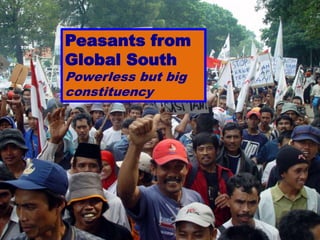
Peasants from
Global South
Powerless but big
constituency
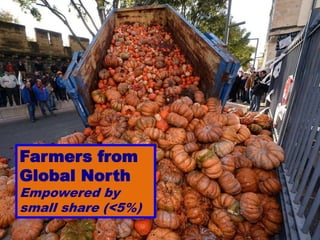
Farmers from
Global North
Empowered by
small share (<5%)
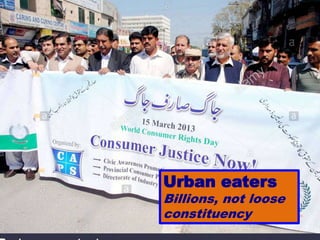
Urban eaters
Billions, not loose
constituency
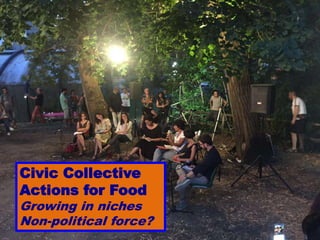
Civic Collective
Actions for Food
Growing in niches
Non-political force?
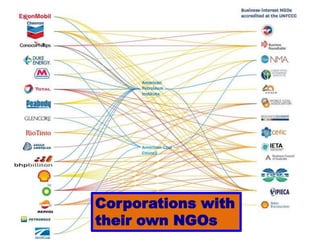
Corporations with
their own NGOs
Transition Theory: Innovative Social
Movements (Niches VS Regimes)
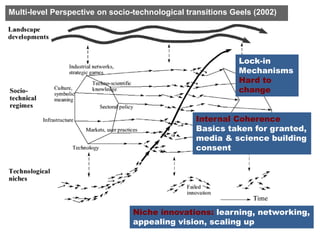
Multi-level Perspective on socio-technological transitions Geels (2002)
Lock-in
Mechanisms
Hard to
change
Niche innovations: learning, networking,
appealing vision, scaling up
Internal Coherence
Basics taken for granted,
media & science building
consent
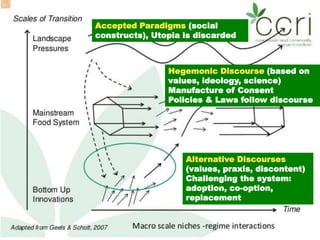
Accepted Paradigms (social
constructs), Utopia is discarded
Hegemonic Discourse (based on
values, ideology, science)
Manufacture of Consent
Policies & Laws follow discourse
Alternative Discourses
(values, praxis, discontent)
Challenging the system:
adoption, co-option,
replacement
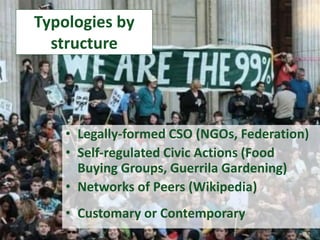
Typologies by
structure
• Legally-formed CSO (NGOs, Federation)
• Self-regulated Civic Actions (Food
Buying Groups, Guerrila Gardening)
• Networks of Peers (Wikipedia)
• Customary or Contemporary
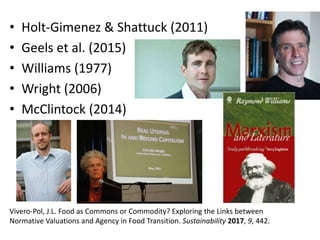
• Holt-Gimenez & Shattuck (2011)
• Geels et al. (2015)
• Williams (1977)
• Wright (2006)
• McClintock (2014)
Vivero-Pol, J.L. Food as Commons or Commodity? Exploring the Links between
Normative Valuations and Agency in Food Transition. Sustainability 2017, 9, 442.
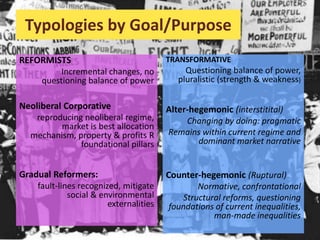
Typologies by Goal/Purpose
REFORMISTS
Incremental changes, no
questioning balance of power
Neoliberal Corporative
reproducing neoliberal regime,
market is best allocation
mechanism, property & profits R
foundational pillars
Gradual Reformers:
fault-lines recognized, mitigate
social & environmental
externalities
TRANSFORMATIVE
Questioning balance of power,
pluralistic (strength & weakness)
Alter-hegemonic (interstitital)
Changing by doing: pragmatic
Remains within current regime and
dominant market narrative
Counter-hegemonic (Ruptural)
Normative, confrontational
Structural reforms, questioning
foundations of current inequalities,
man-made inequalities
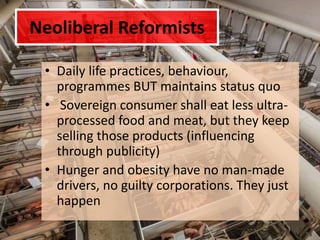
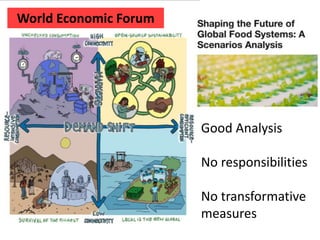
Neoliberal Reformists
• Daily life practices, behaviour,
programmes BUT maintains status quo
• Sovereign consumer shall eat less ultra-
processed food and meat, but they keep
selling those products (influencing
through publicity)
• Hunger and obesity have no man-made
drivers, no guilty corporations. They just
happen
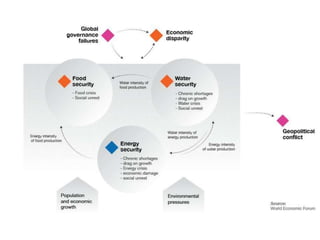
Good Analysis
No responsibilities
No transformative
measures
World Economic Forum
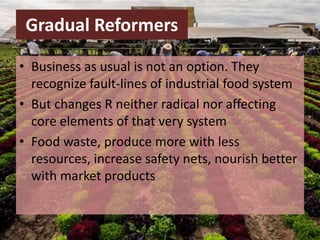
Gradual Reformers
• Business as usual is not an option. They
recognize fault-lines of industrial food system
• But changes R neither radical nor affecting
core elements of that very system
• Food waste, produce more with less
resources, increase safety nets, nourish better
with market products
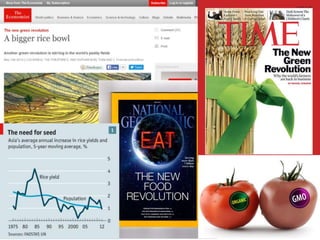
3 PARADOXES (NO responsible actors): food waste,
malnutrition-obesity, distortion of resource use
22
GMO
Labelling
in USA
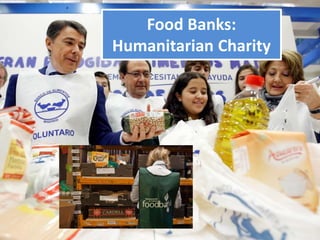
Food Banks:
Humanitarian Charity
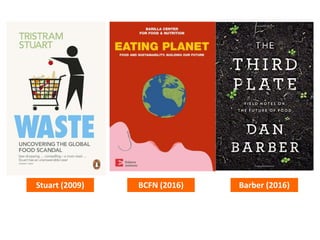
Stuart (2009) BCFN (2016) Barber (2016)
Alter-hegemonic Transformative
• Incremental erosion of structures through
different praxis. More doing than protesting.
• Not so demanding: each one at his pace, no
political engagement required, keeping our
livelihoods but changing some habits
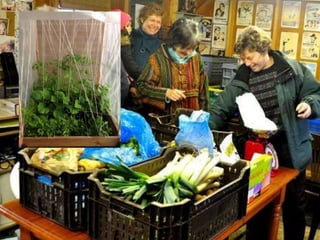
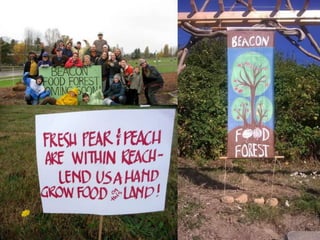
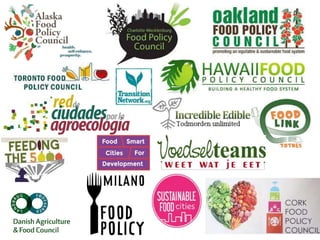
• Interstices (Food Policy Councils) and edges
(Urban gardens in abandoned lots)
• Remain within capitalistic narratives. Better
markets, more governmental control
Counter-hegemonic Transformative
• Clash of narratives seeking hegemony in the
world of ideas. First ideas, then policies & legal
frameworks
• Social struggles, do not refuse conflict bcs it
facilitates disjunctures & changes
• Complete over haul of status quo, utopian,
moral-based, giving voice to neglected groups
• Extremely political. Highly Normative (strength &
weakness). Demanding compromise
• Food producers, rural peasants, indigenous
groups
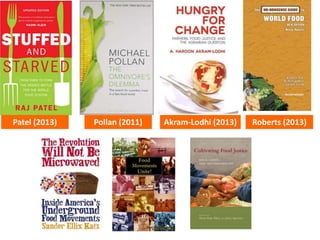
Pollan (2011)Patel (2013) Akram-Lodhi (2013) Roberts (2013)
Which one is more
relevant to you?
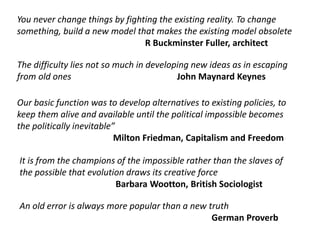
You never change things by fighting the existing reality. To change
something, build a new model that makes the existing model obsolete
R Buckminster Fuller, architect
The difficulty lies not so much in developing new ideas as in escaping
from old ones John Maynard Keynes
Our basic function was to develop alternatives to existing policies, to
keep them alive and available until the political impossible becomes
the politically inevitable”
Milton Friedman, Capitalism and Freedom
An old error is always more popular than a new truth
German Proverb
It is from the champions of the impossible rather than the slaves of
the possible that evolution draws its creative force
Barbara Wootton, British Sociologist
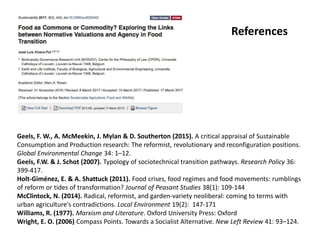
Geels, F. W., A. McMeekin, J. Mylan & D. Southerton (2015). A critical appraisal of Sustainable
Consumption and Production research: The reformist, revolutionary and reconfiguration positions.
Global Environmental Change 34: 1–12.
Geels, F.W. & J. Schot (2007). Typology of sociotechnical transition pathways. Research Policy 36:
399-417.
Holt-Giménez, E. & A. Shattuck (2011). Food crises, food regimes and food movements: rumblings
of reform or tides of transformation? Journal of Peasant Studies 38(1): 109-144
McClintock, N. (2014). Radical, reformist, and garden-variety neoliberal: coming to terms with
urban agriculture's contradictions. Local Environment 19(2): 147-171
Williams, R. (1977). Marxism and Literature. Oxford University Press: Oxford
Wright, E. O. (2006) Compass Points. Towards a Socialist Alternative. New Left Review 41: 93–124.
References

Social Food Movements

  • 1.
    Social Food Movements Theoretical approaches tounderstand constituencies & claims JOSE LUIS VIVERO POL University of Louvain PhD Research Fellow in Food Governance “Social Food Movements” Master in Food, Law & Finance International University College, Turin, Italy (March, 2017)
  • 2.
    What is asocial food movement?
  • 3.
  • 4.
  • 5.
    Urban eaters Billions, notloose constituency
  • 6.
    Civic Collective Actions forFood Growing in niches Non-political force?
  • 7.
  • 8.
    Transition Theory: InnovativeSocial Movements (Niches VS Regimes)
  • 9.
    Multi-level Perspective onsocio-technological transitions Geels (2002) Lock-in Mechanisms Hard to change Niche innovations: learning, networking, appealing vision, scaling up Internal Coherence Basics taken for granted, media & science building consent
  • 10.
    Accepted Paradigms (social constructs),Utopia is discarded Hegemonic Discourse (based on values, ideology, science) Manufacture of Consent Policies & Laws follow discourse Alternative Discourses (values, praxis, discontent) Challenging the system: adoption, co-option, replacement
  • 11.
    Typologies by structure • Legally-formedCSO (NGOs, Federation) • Self-regulated Civic Actions (Food Buying Groups, Guerrila Gardening) • Networks of Peers (Wikipedia) • Customary or Contemporary
  • 12.
    • Holt-Gimenez &Shattuck (2011) • Geels et al. (2015) • Williams (1977) • Wright (2006) • McClintock (2014) Vivero-Pol, J.L. Food as Commons or Commodity? Exploring the Links between Normative Valuations and Agency in Food Transition. Sustainability 2017, 9, 442.
  • 13.
    Typologies by Goal/Purpose REFORMISTS Incrementalchanges, no questioning balance of power Neoliberal Corporative reproducing neoliberal regime, market is best allocation mechanism, property & profits R foundational pillars Gradual Reformers: fault-lines recognized, mitigate social & environmental externalities TRANSFORMATIVE Questioning balance of power, pluralistic (strength & weakness) Alter-hegemonic (interstitital) Changing by doing: pragmatic Remains within current regime and dominant market narrative Counter-hegemonic (Ruptural) Normative, confrontational Structural reforms, questioning foundations of current inequalities, man-made inequalities
  • 14.
    Neoliberal Reformists • Dailylife practices, behaviour, programmes BUT maintains status quo • Sovereign consumer shall eat less ultra- processed food and meat, but they keep selling those products (influencing through publicity) • Hunger and obesity have no man-made drivers, no guilty corporations. They just happen
  • 17.
    Good Analysis No responsibilities Notransformative measures World Economic Forum
  • 18.
    Gradual Reformers • Businessas usual is not an option. They recognize fault-lines of industrial food system • But changes R neither radical nor affecting core elements of that very system • Food waste, produce more with less resources, increase safety nets, nourish better with market products
  • 21.
    3 PARADOXES (NOresponsible actors): food waste, malnutrition-obesity, distortion of resource use
  • 22.
  • 23.
  • 24.
    Stuart (2009) BCFN(2016) Barber (2016)
  • 25.
    Alter-hegemonic Transformative • Incrementalerosion of structures through different praxis. More doing than protesting. • Not so demanding: each one at his pace, no political engagement required, keeping our livelihoods but changing some habits • Interstices (Food Policy Councils) and edges (Urban gardens in abandoned lots) • Remain within capitalistic narratives. Better markets, more governmental control
  • 31.
    Counter-hegemonic Transformative • Clashof narratives seeking hegemony in the world of ideas. First ideas, then policies & legal frameworks • Social struggles, do not refuse conflict bcs it facilitates disjunctures & changes • Complete over haul of status quo, utopian, moral-based, giving voice to neglected groups • Extremely political. Highly Normative (strength & weakness). Demanding compromise • Food producers, rural peasants, indigenous groups
  • 36.
    Pollan (2011)Patel (2013)Akram-Lodhi (2013) Roberts (2013)
  • 37.
    Which one ismore relevant to you?
  • 38.
    You never changethings by fighting the existing reality. To change something, build a new model that makes the existing model obsolete R Buckminster Fuller, architect The difficulty lies not so much in developing new ideas as in escaping from old ones John Maynard Keynes Our basic function was to develop alternatives to existing policies, to keep them alive and available until the political impossible becomes the politically inevitable” Milton Friedman, Capitalism and Freedom An old error is always more popular than a new truth German Proverb It is from the champions of the impossible rather than the slaves of the possible that evolution draws its creative force Barbara Wootton, British Sociologist
  • 39.
    Geels, F. W.,A. McMeekin, J. Mylan & D. Southerton (2015). A critical appraisal of Sustainable Consumption and Production research: The reformist, revolutionary and reconfiguration positions. Global Environmental Change 34: 1–12. Geels, F.W. & J. Schot (2007). Typology of sociotechnical transition pathways. Research Policy 36: 399-417. Holt-Giménez, E. & A. Shattuck (2011). Food crises, food regimes and food movements: rumblings of reform or tides of transformation? Journal of Peasant Studies 38(1): 109-144 McClintock, N. (2014). Radical, reformist, and garden-variety neoliberal: coming to terms with urban agriculture's contradictions. Local Environment 19(2): 147-171 Williams, R. (1977). Marxism and Literature. Oxford University Press: Oxford Wright, E. O. (2006) Compass Points. Towards a Socialist Alternative. New Left Review 41: 93–124. References