The Why andHow of Integrating
Rich Art Experiences into Instruction for
English Learners:
What’s Good for EL’s is Good for All!
Presented by:
Dr. Lisa Gonzales, Ed.D. Coordinator
Santa Clara County Office of Education
Nora Guerra
Director of Educational Innovation & Development
Oak Grove School District
2.
Outcomes
Provide anoverview of the changes in
ELA/ELD standards with Common Core
How the changes impact EL students
The role of the 4 C’s for EL students & all
The value of the arts for EL’s and all
Model programs – Oak Grove & Alum Rock
School Districts
3.
Changes with CCSS
Students must be able to:
Engage with complex, informational text
Use evidence in writing and research
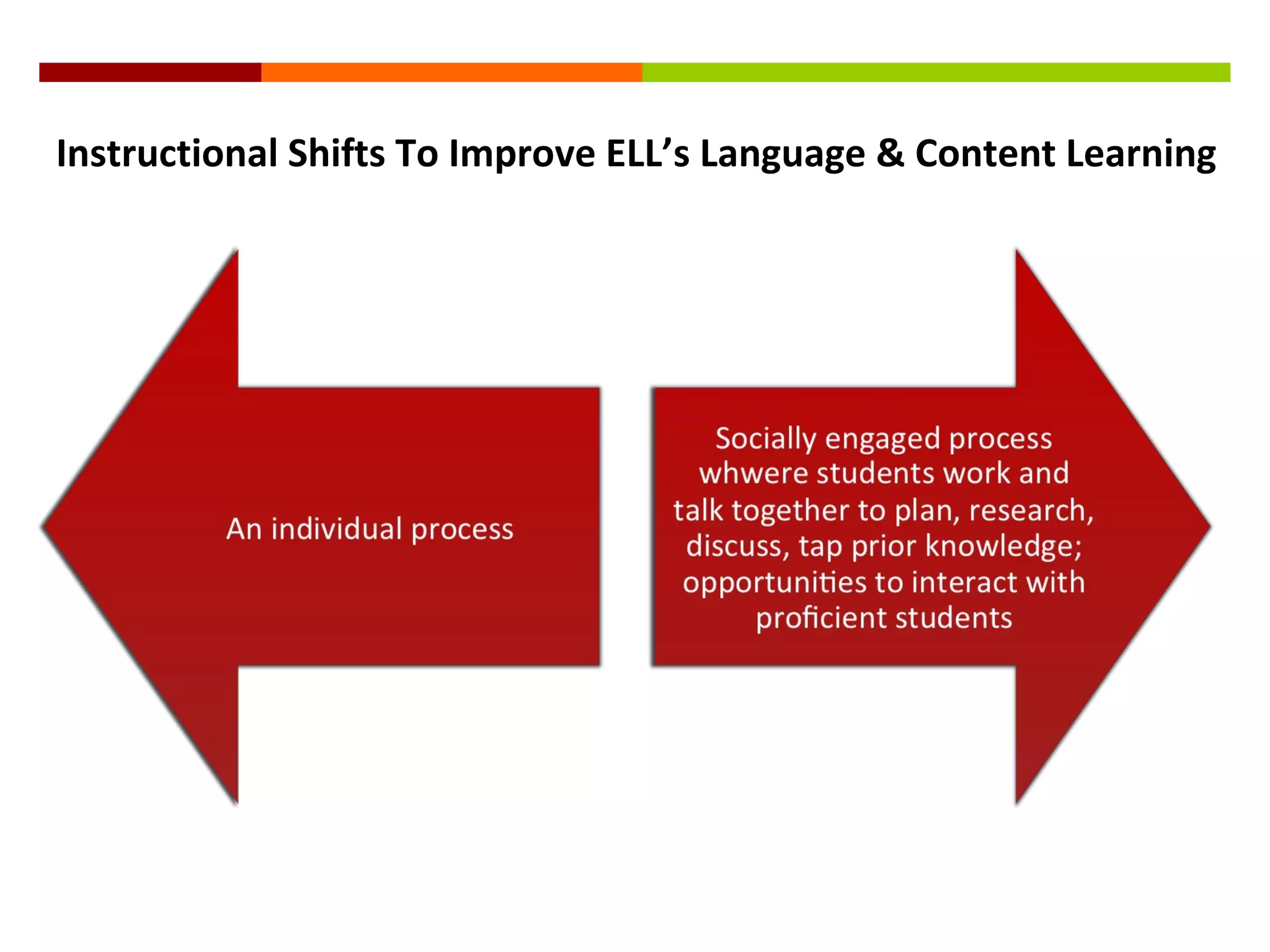
Work collaboratively to present ideas
and communicate multiple perspectives
4.
Overview of CaliforniaELD Standards
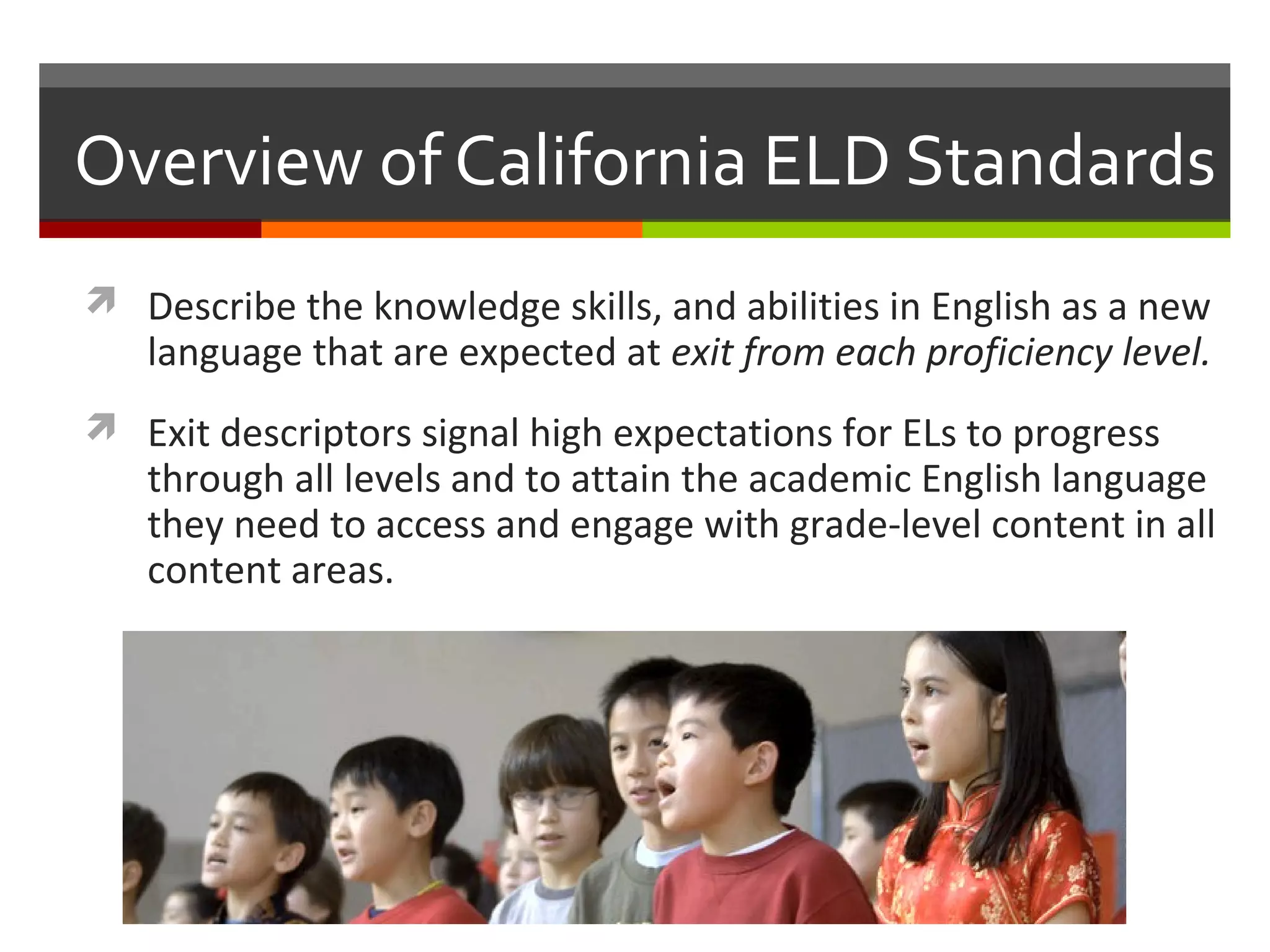
Describe the knowledge skills, and abilities in English as a new
language that are expected at exit from each proficiency level.
Exit descriptors signal high expectations for ELs to progress
through all levels and to attain the academic English language
they need to access and engage with grade-level content in all
content areas.
5.
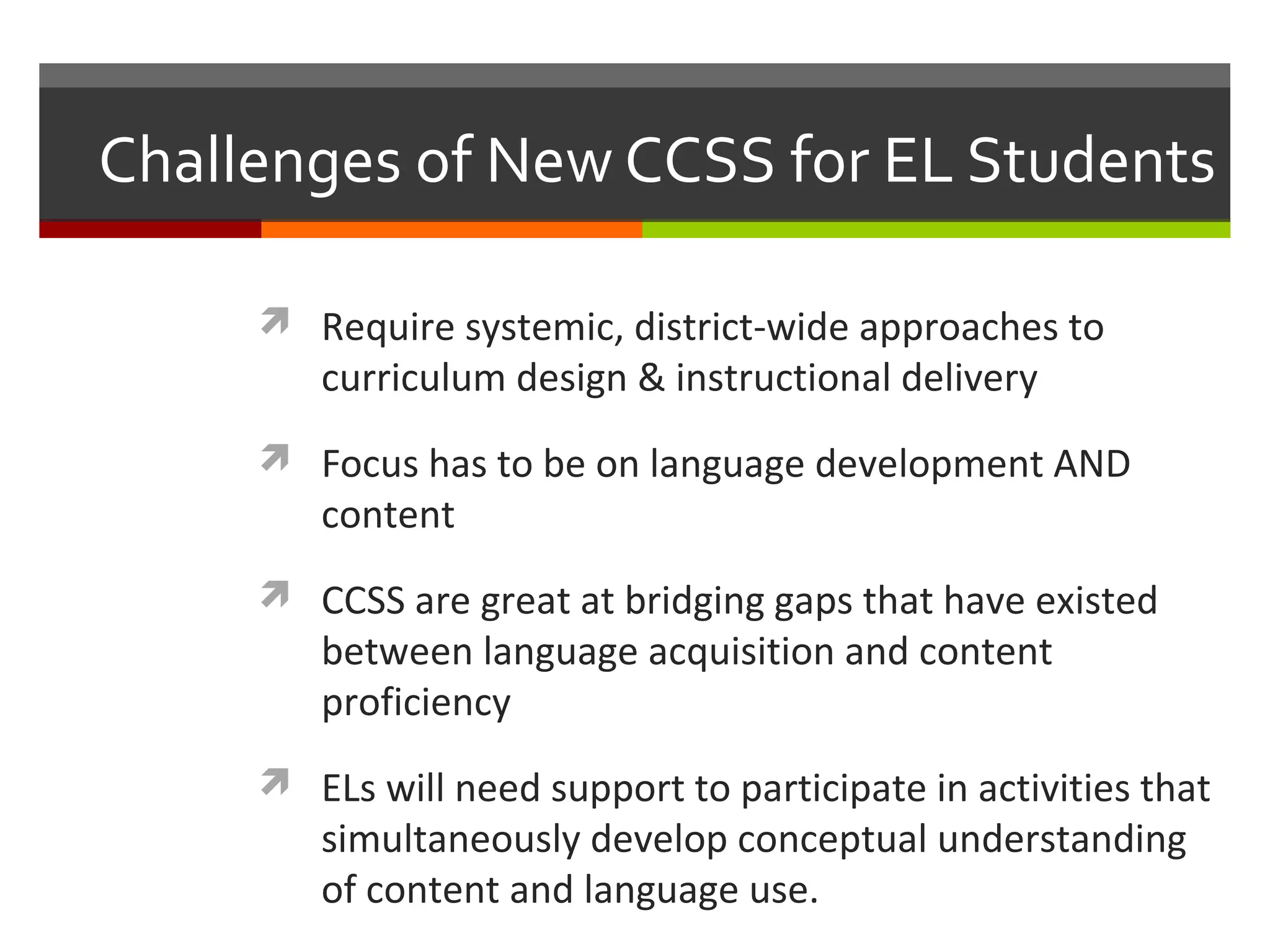
Challenges of NewCCSS for EL Students
Require systemic, district-wide approaches to
curriculum design & instructional delivery
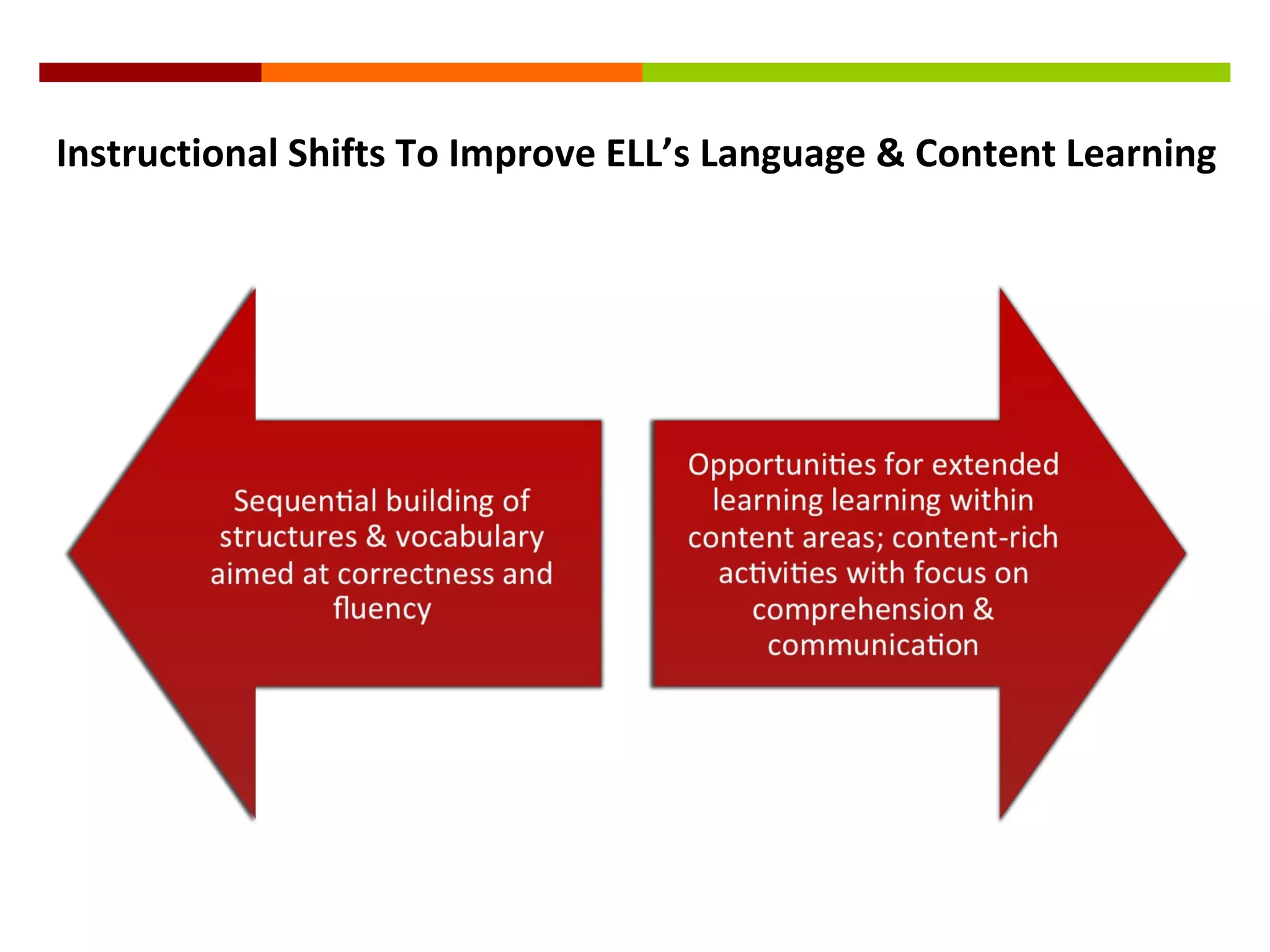
Focus has to be on language development AND
content
CCSS are great at bridging gaps that have existed
between language acquisition and content
proficiency
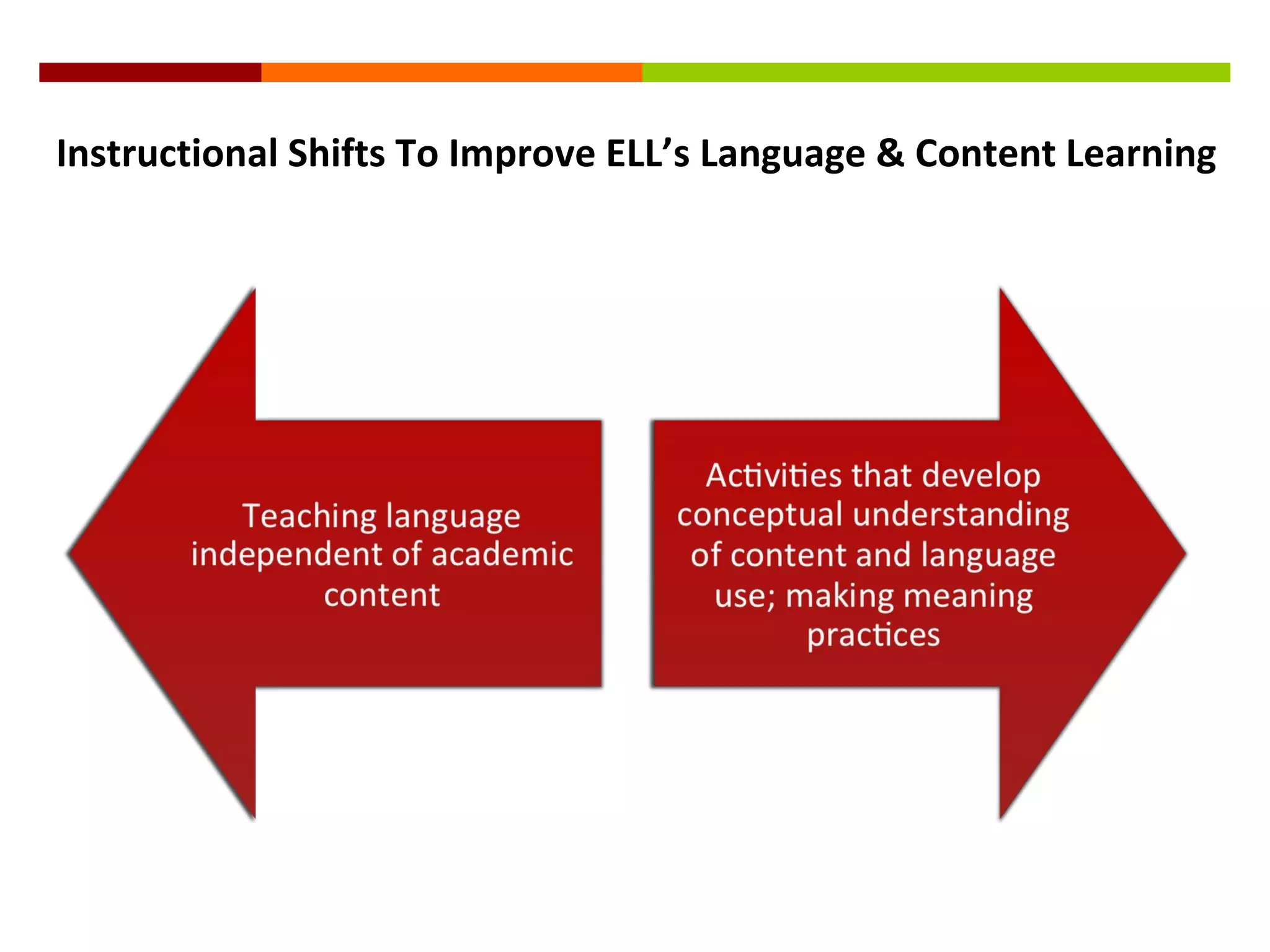
ELs will need support to participate in activities that
simultaneously develop conceptual understanding
of content and language use.
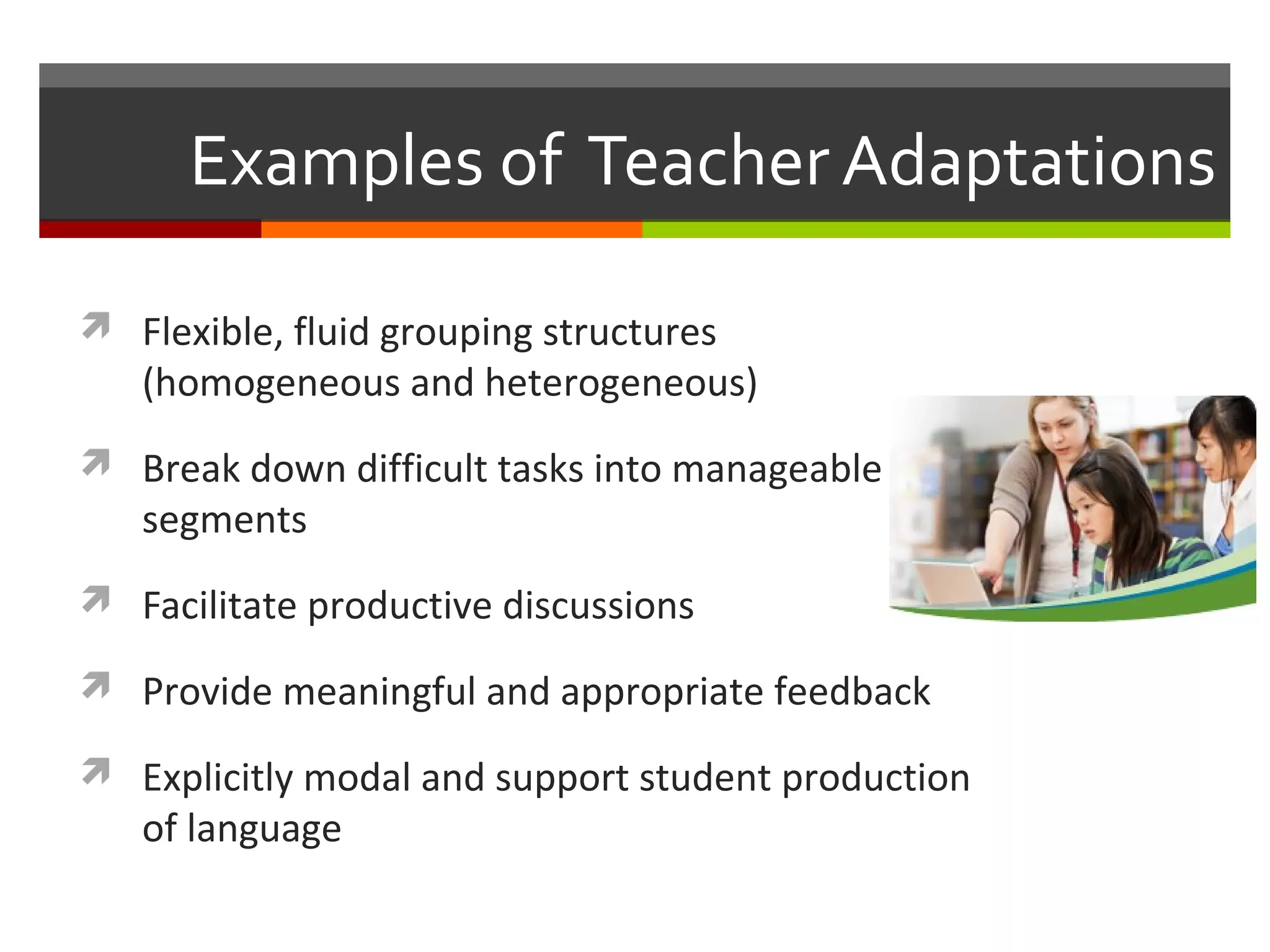
Examples of TeacherAdaptations
Flexible, fluid grouping structures
(homogeneous and heterogeneous)
Break down difficult tasks into manageable
segments
Facilitate productive discussions
Provide meaningful and appropriate feedback
Explicitly modal and support student production
of language
10.
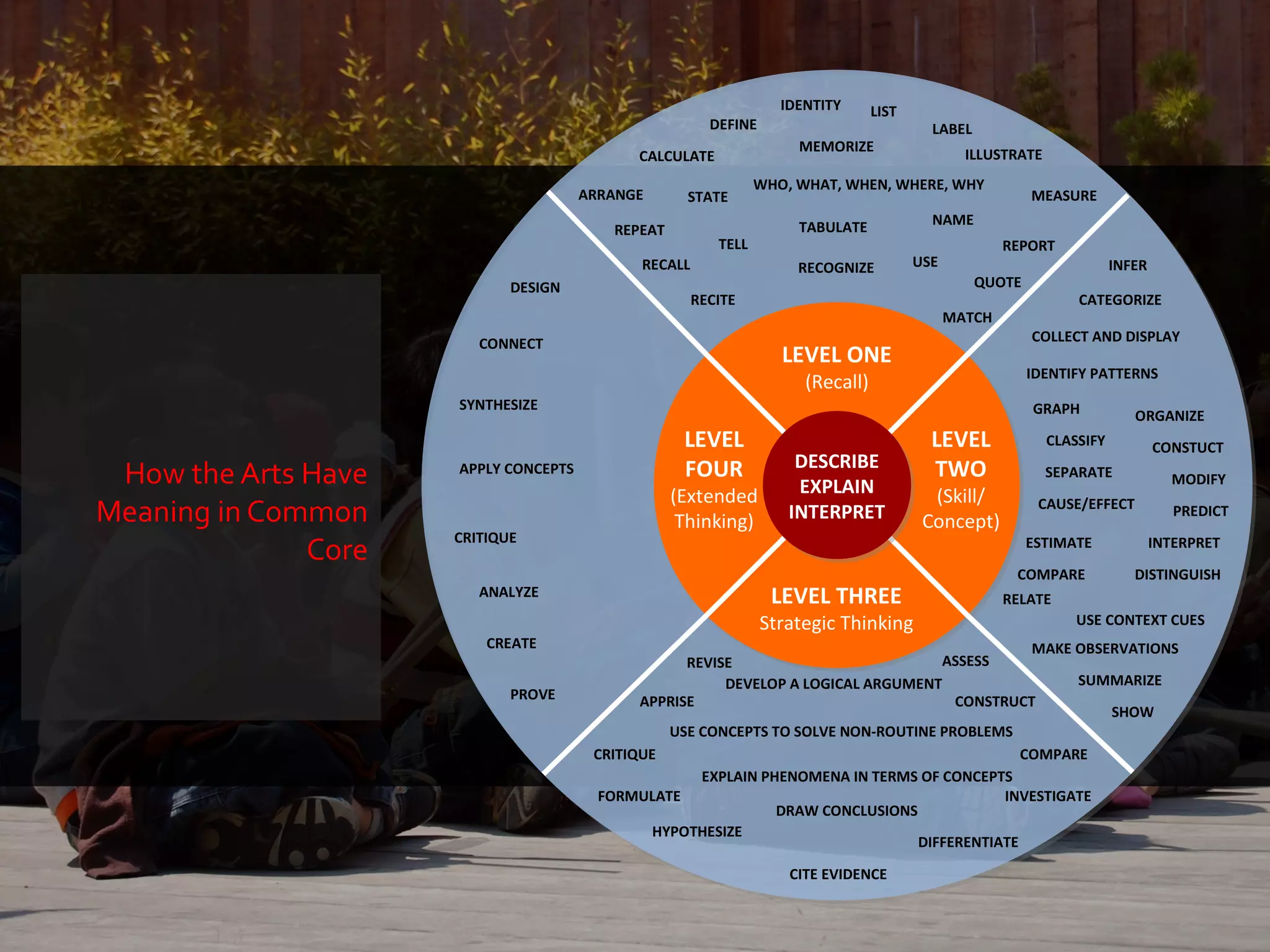
IDENTITY LIST
DEFINE LABEL
MEMORIZE
CALCULATE ILLUSTRATE
WHO, WHAT, WHEN, WHERE, WHY
ARRANGE STATE MEASURE
TABULATE NAME
REPEAT
TELL REPORT
RECALL RECOGNIZE USE INFER
DESIGN QUOTE
RECITE CATEGORIZE
MATCH
CONNECT COLLECT AND DISPLAY
LEVEL ONE
IDENTIFY PATTERNS
(Recall)
SYNTHESIZE GRAPH ORGANIZE
LEVEL LEVEL CLASSIFY CONSTUCT
FOUR DESCRIBE TWO
How the Arts Have APPLY CONCEPTS
EXPLAIN
SEPARATE MODIFY
(Extended (Skill/
Meaning in Common Thinking) INTERPRET Concept)
CAUSE/EFFECT PREDICT
CRITIQUE
Core ESTIMATE INTERPRET
COMPARE DISTINGUISH
ANALYZE LEVEL THREE RELATE
Strategic Thinking USE CONTEXT CUES
CREATE MAKE OBSERVATIONS
REVISE ASSESS
DEVELOP A LOGICAL ARGUMENT SUMMARIZE
PROVE APPRISE CONSTRUCT
SHOW
USE CONCEPTS TO SOLVE NON-ROUTINE PROBLEMS
CRITIQUE COMPARE
EXPLAIN PHENOMENA IN TERMS OF CONCEPTS
FORMULATE INVESTIGATE
DRAW CONCLUSIONS
HYPOTHESIZE
DIFFERENTIATE
CITE EVIDENCE
11.
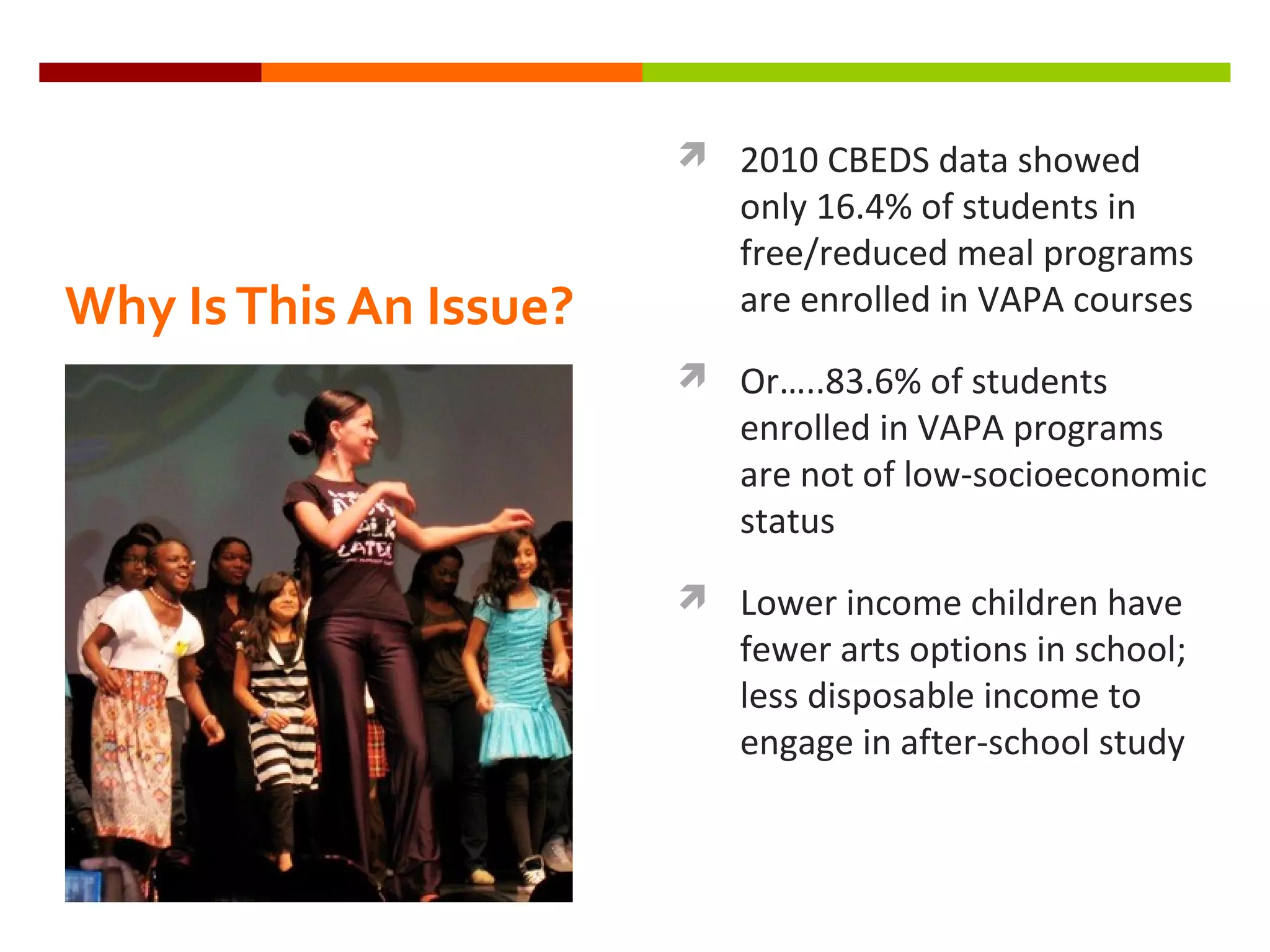
2010 CBEDSdata showed
only 16.4% of students in
free/reduced meal programs
Why Is This An Issue? are enrolled in VAPA courses
Or…..83.6% of students
enrolled in VAPA programs
are not of low-socioeconomic
status
Lower income children have
fewer arts options in school;
less disposable income to
engage in after-school study
12.
But there’s more…
Attention only to the impact of poverty limits how
educators approach the whole child
Language and culture affirm positive traits of
heritage, identity, and resilience which energize a
child’s ability to learn, make meaning, create,
contribute
Recent CA statewide research – CA middle schools
who teach a majority of Latino, African American
and American Indian students are far less likely to
provide arts with reduced budgets
20.
This is avideo from YouTube –
http://youtu.be/h_pWZBOR4ec
21.
Discussion Question
Discuss withothers near you:
How do the skills of description transfer across
content areas?
How is this good for EL students?
How is this good for ALL students?
22.
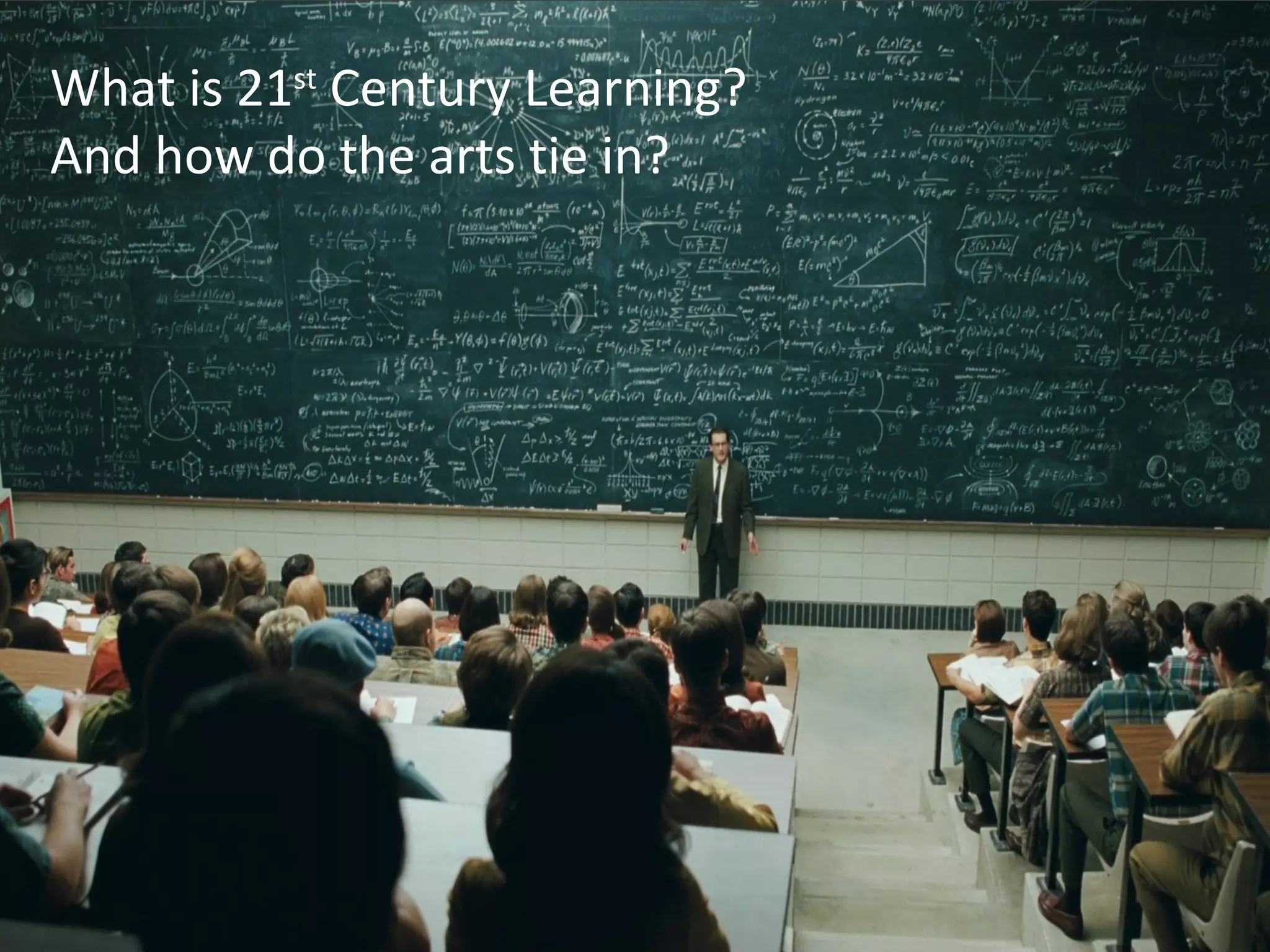
What is 21stCentury Learning?
And how do the arts tie in?
26.
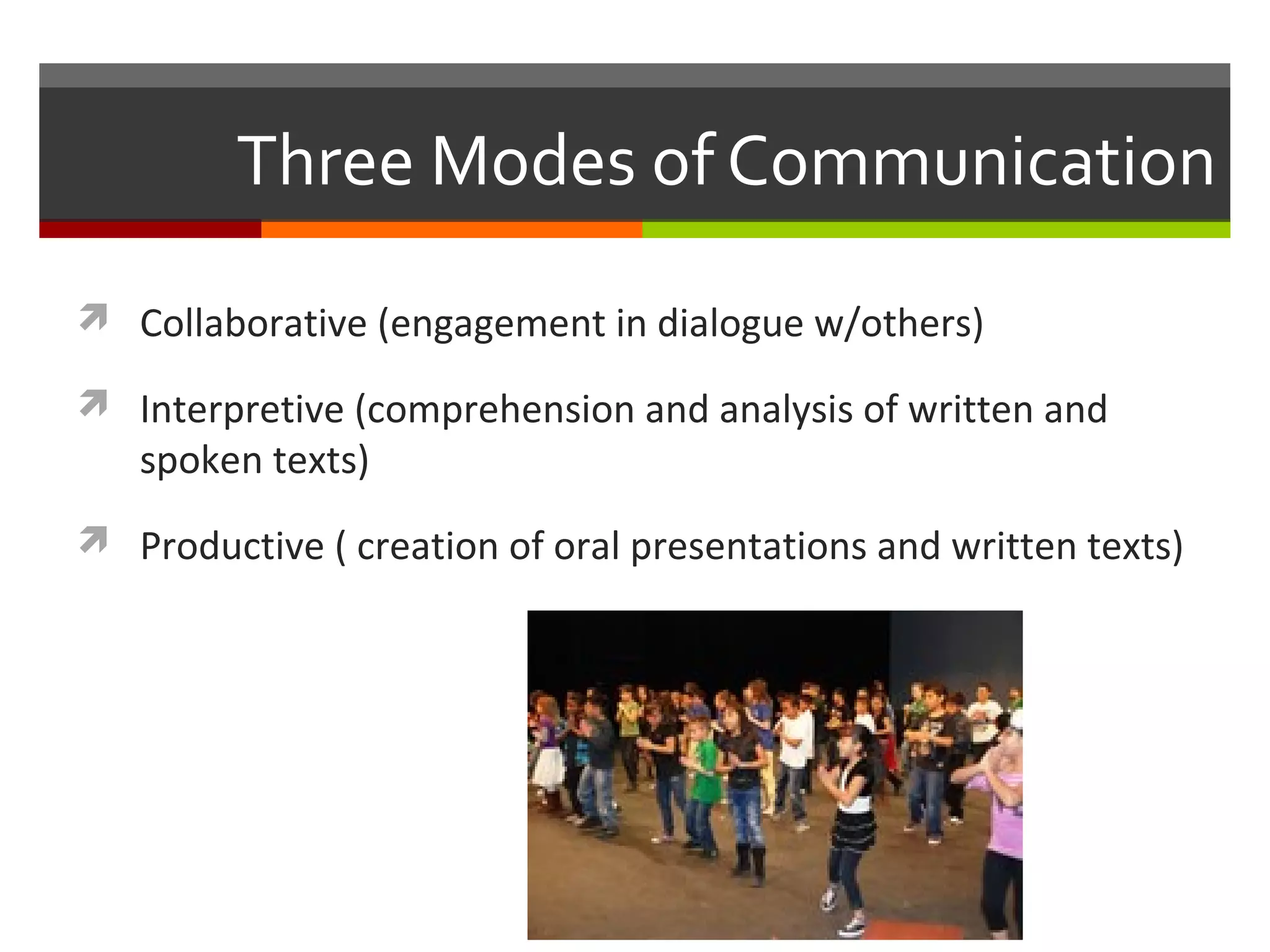
Three Modes ofCommunication
Collaborative (engagement in dialogue w/others)
Interpretive (comprehension and analysis of written and
spoken texts)
Productive ( creation of oral presentations and written texts)
27.
Model Programs
ElementarySchools:
Integration of arts into daily instructional program
Discrete arts classes during the school day
Extra-curricular VAPA classes after school
Chorus, mariachi, handbell choir
Instrumental music: recorders, band, concerts
Dance class: dance festival
Drama/Theatre class: full-scale musical production
Art & Music appreciation program: showcase
28.
Model Programs
MiddleSchools:
Integration of VAPA standards into core
Elective courses during the day
After school courses
Chorus, Honor chorus
Visual arts
Band, jazz band, Honor band
Drum corps
Digital photography
Dance
Drama/Theatre
29.
Professional Development forTeachers
Integrating VAPA standards into core curricula
Integrating Arts in Math
Drama/Theater for ELs
Reader’s Theatre
Marion Cilker Arts Really Teach
Montalvo Art Splash
Teacher Action Network
County Arts Network
30.
Partnerships
SCCOE Theatre Express
SFSU San Jose Repertory Theatre
YMCA San Francisco Symphony
Ballet San Jose Artists in Residence
San Jose Jazz Society
San Jose Children’s Museum of Art
Bay Area Children’s Art Project
Arts Assessment
Arts Curriculum – K-6 and
Middle School
Advocacy
Leadership
Arts in After-School Programs
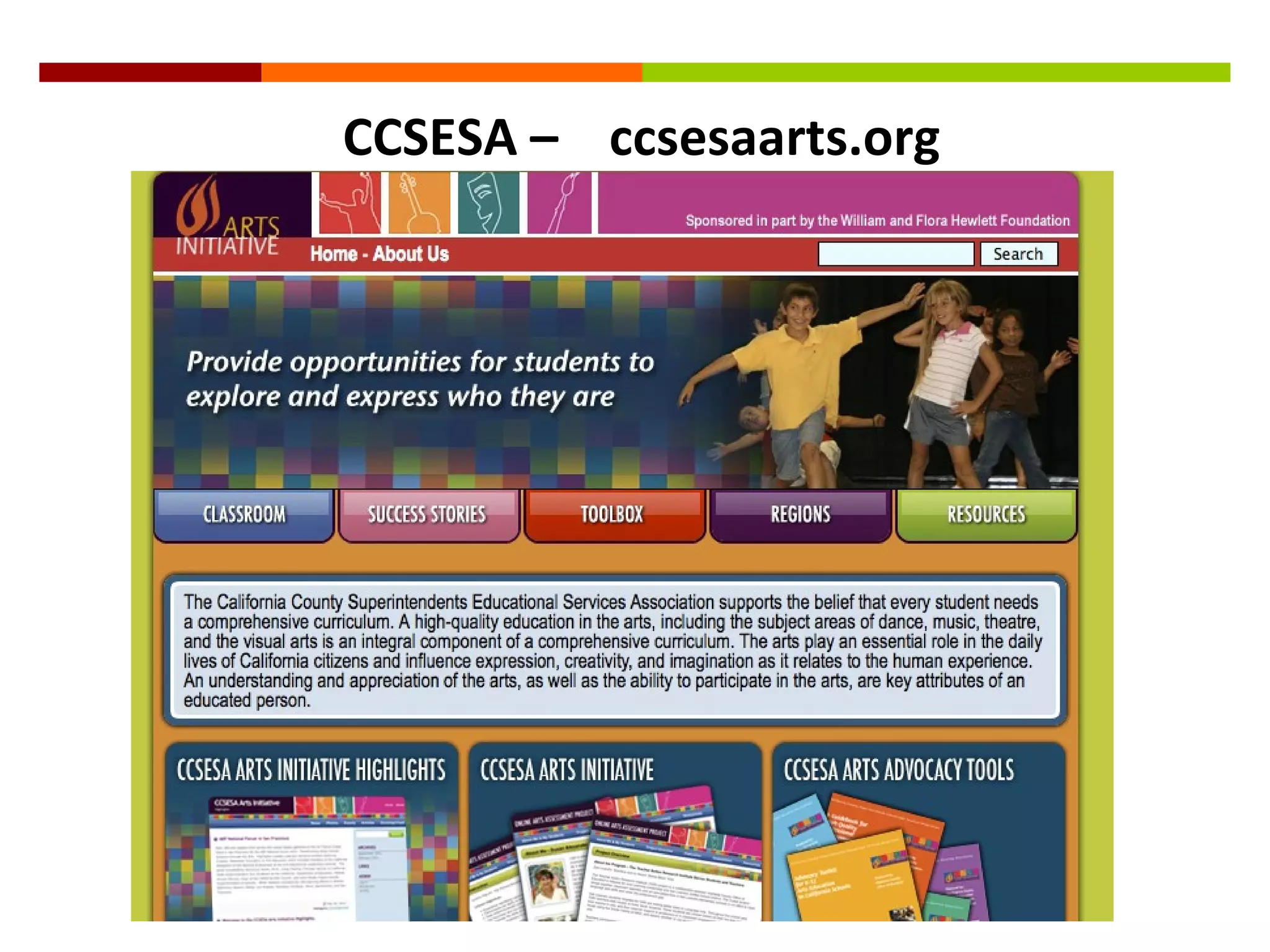
CCSESA Resources
Professional Development
Ccsesaarts.org
Click on “Toolbox”
36.
Review of OurOutcomes
Provide an overview of the changes in ELA/ELD
standards with Common Core
How the changes impact EL students
The role of the 4 C’s for EL students & all
The value of the arts for EL’s and all
Model programs – Oak Grove & Alum Rock
School Districts
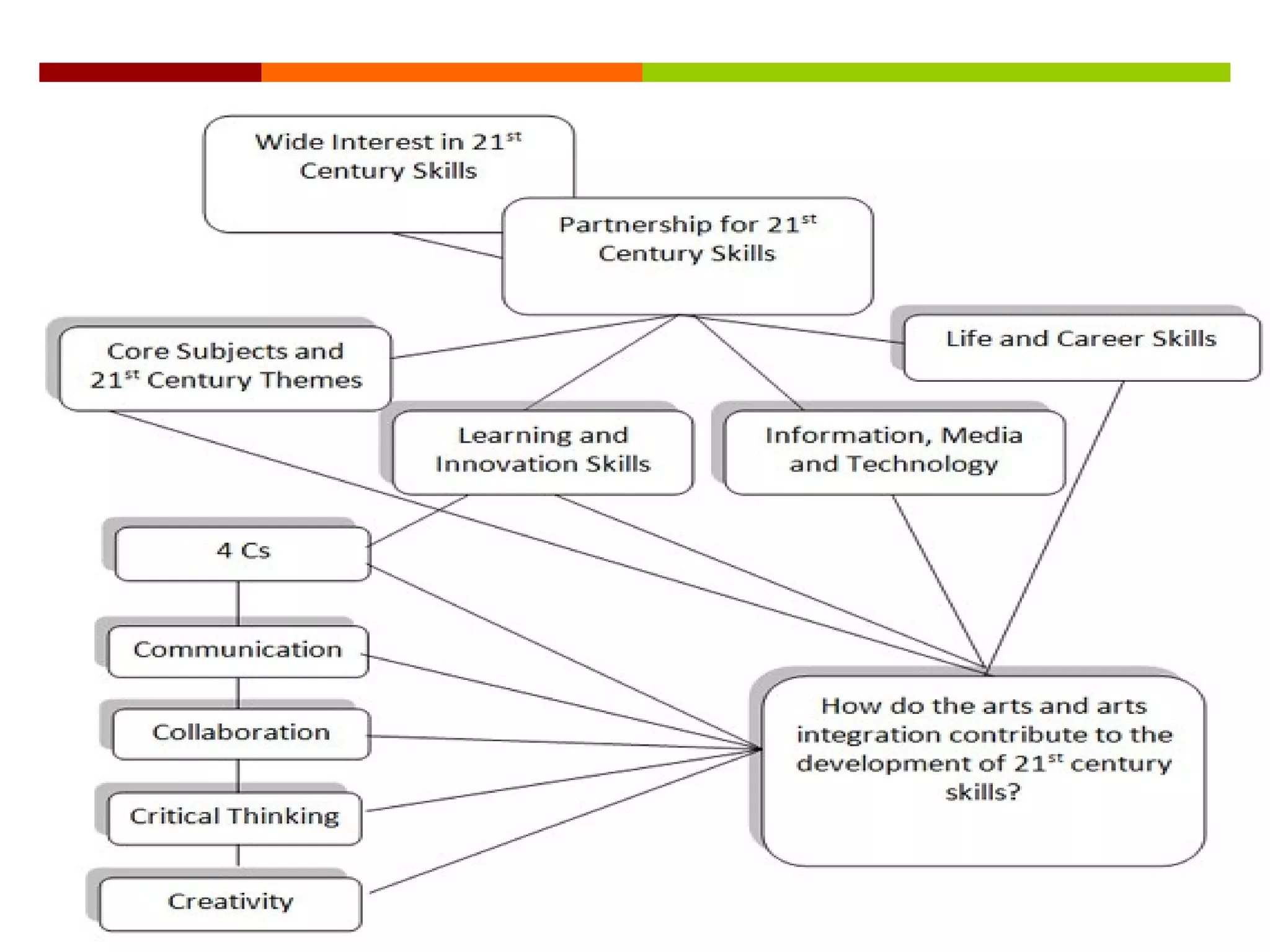
#11 Lisa 8:50 Purpose: The 4 C’s are 21 st century skills. Each is embodied in the 21 st century rainbow that are you all familiar with. Talking points: The 4 C’s really are some of the 21 st century skills and they tie the arts into the common core. So how do the arts fit in the CC? The arts provide for and reinforce the skills that allow students to be problem solvers and then demonstrate their learning via the outcomes established by their teachers in the form of projects. BUT HERE is how we tie the arts into Common Core… Please take a minute to talk with your tablemates about the big “ aha ’ s ” you see in this picture. At the heart of this picture are two key words ARTS INTEGRATION.
#14 Lisa 9:00 Intent: Explain what arts integration is… Talking points: Arts integration as defined by the Kennedy Center. What is it? This does NOT mean you are expected to master the art of teaching the arts. You won’t be teaching how to do a plie, use charcoal to sketch a replica of the Statue of David, or even sing holiday songs on key while playing the piano. Let’s see some examples of arts integration so we better understand what it is…
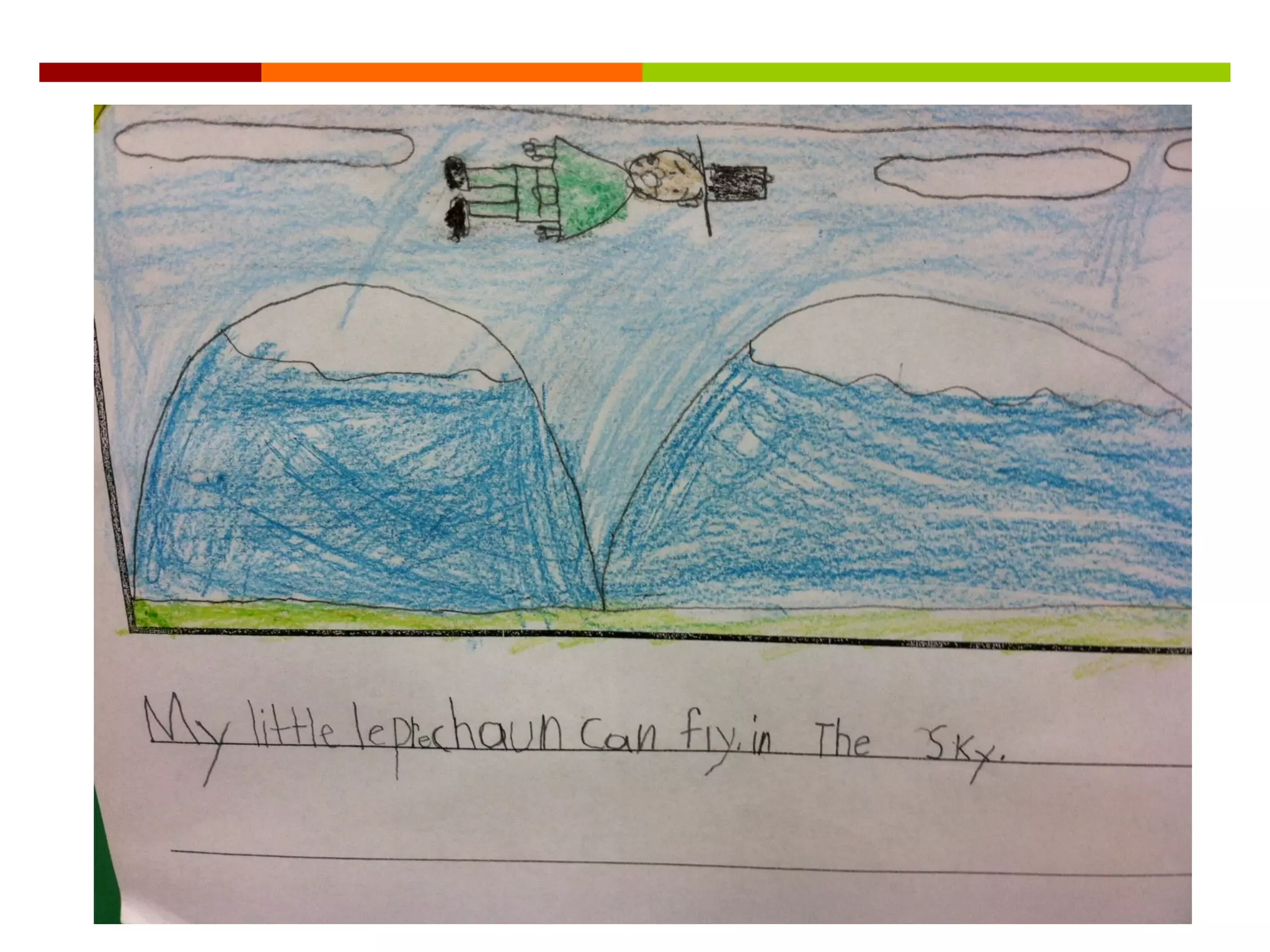
#15 Talking points: Kinders drawing and writing – its such a focus of who they are and what they do….and the most important things we learn, we learned in kindergarten. So perhaps this move to CCSS is really all about those best practices of kinder teachers! In this pic – “My little leprechaun can fly in the sky.”
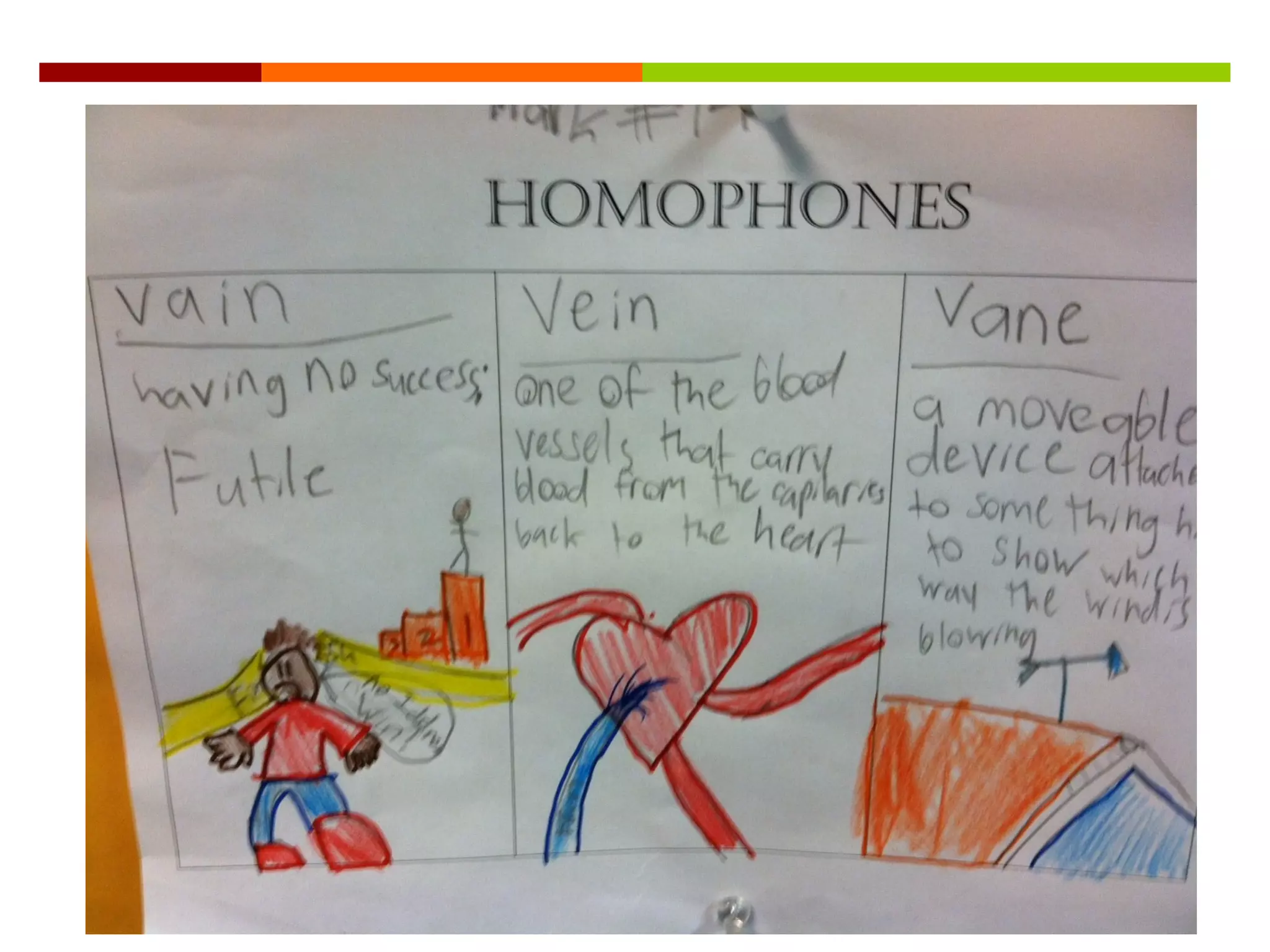
#16 Talking points: Here a 3 rd grade student has worked on the ELA/ELD standard of homophones
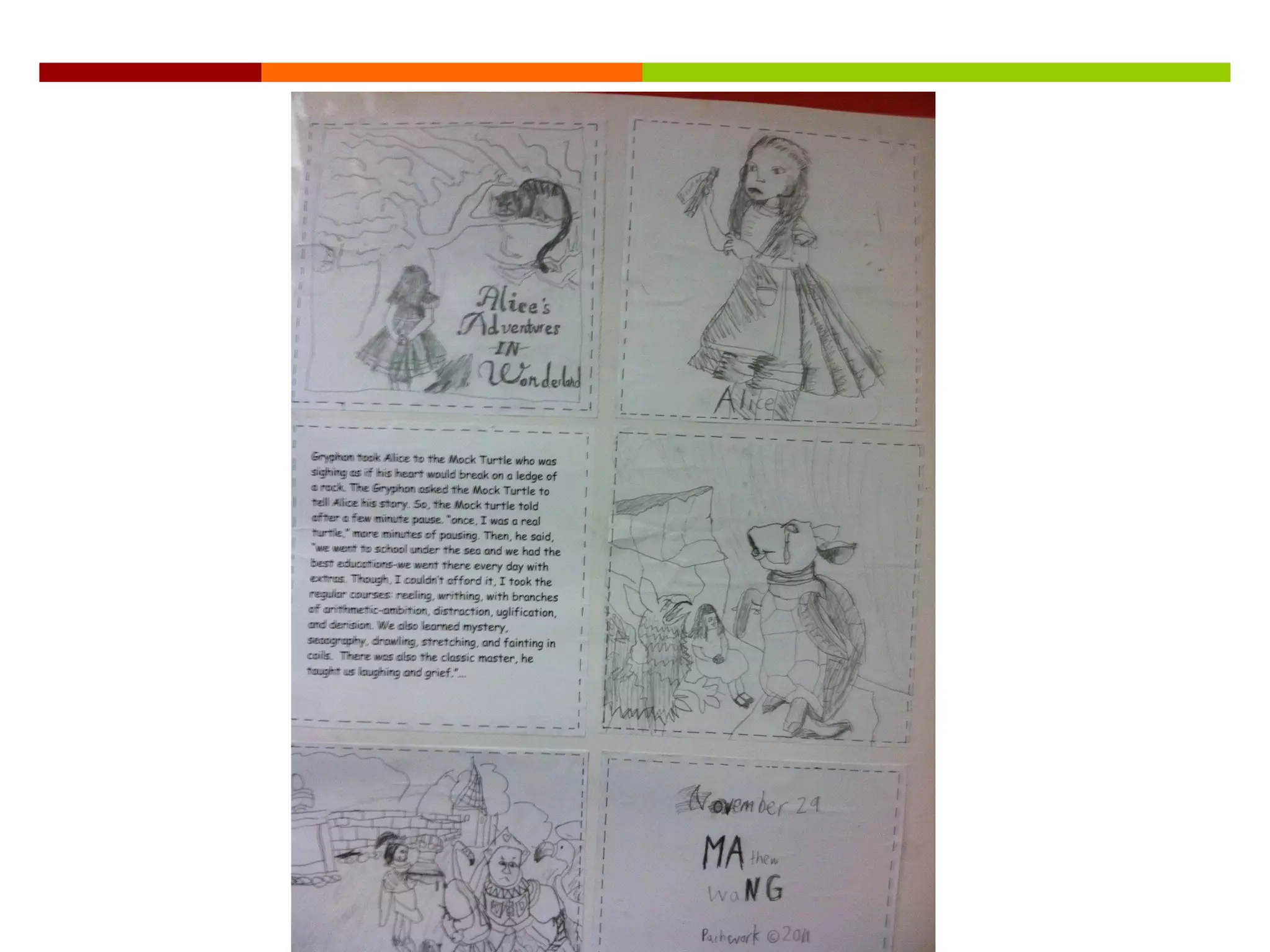
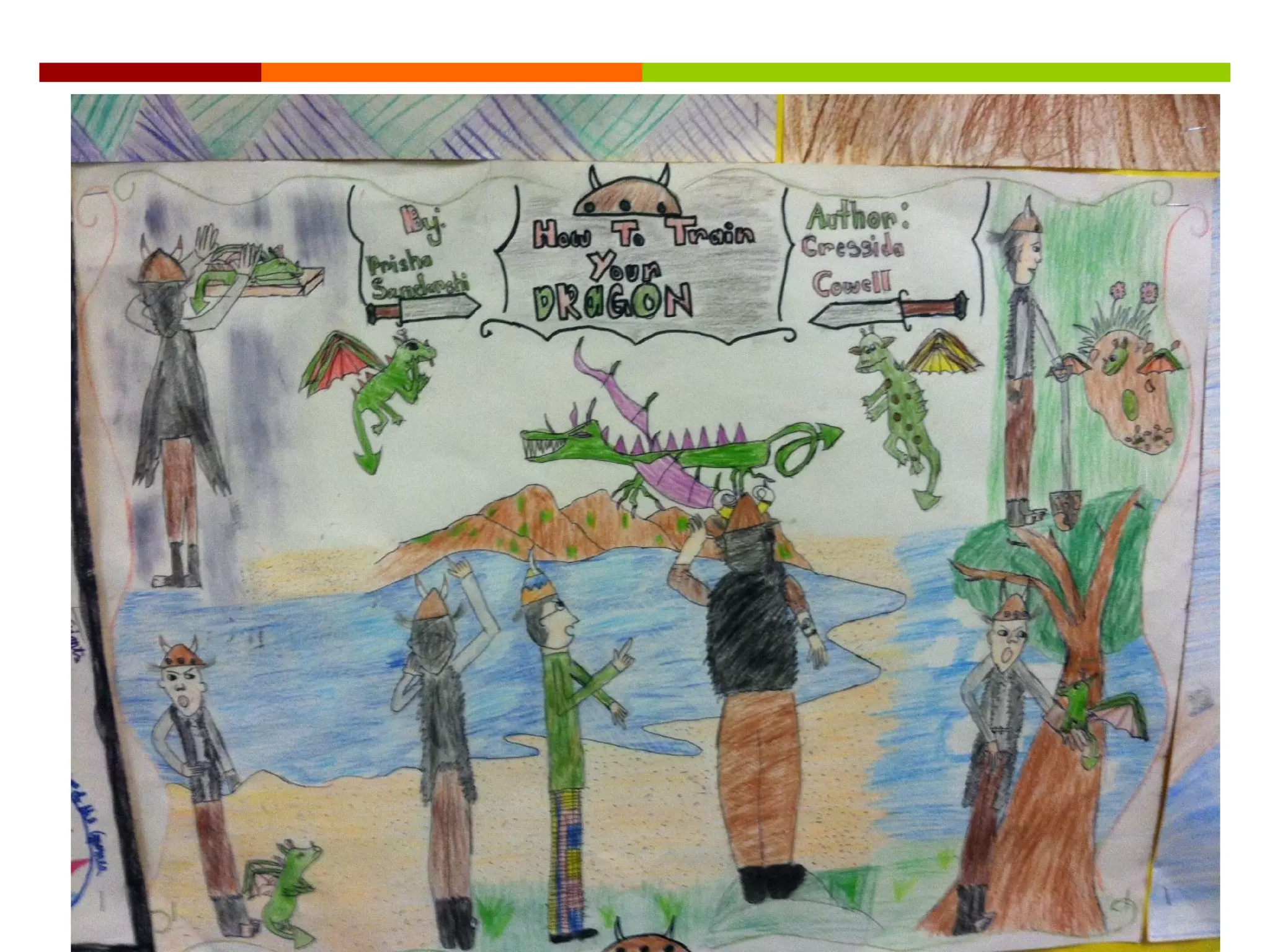
#17 Talking points: Here a 4 th grade book report that incorporates freehand drawing, use of color/shading (visual arts standards) in this example of Alice’s Adventure in Wonderland
#18 Talking points: Here another 4 th grader who recreated the cover of a book and had to incorporate the key sections of a story: Characters, plot, climax
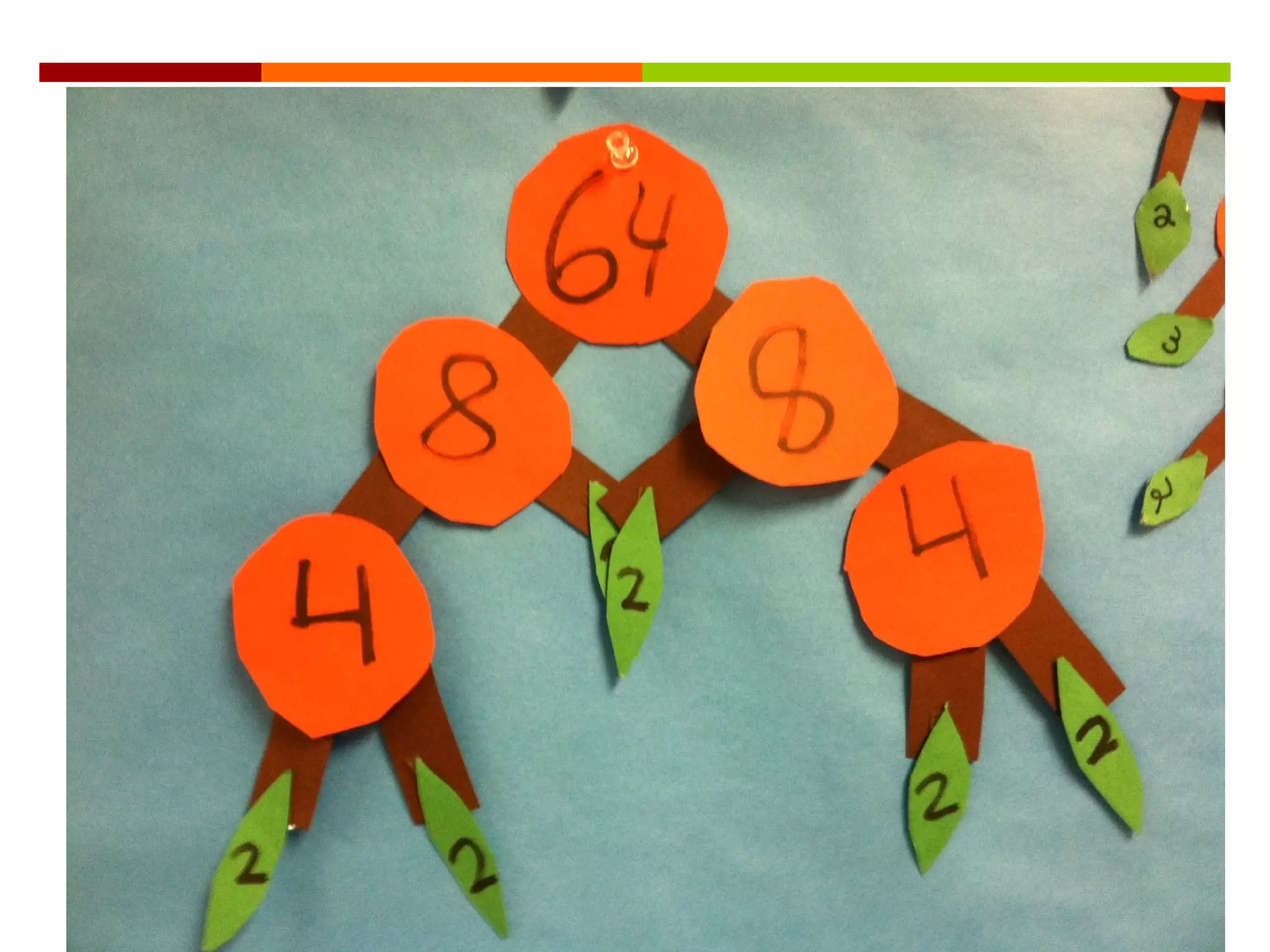
#19 Talking points: Here a 4 th grade example of prime factoring adding artwork in the form of a cherry tree – with the red cherries as the numbers to be reduced and the green sections being the prime numbers.
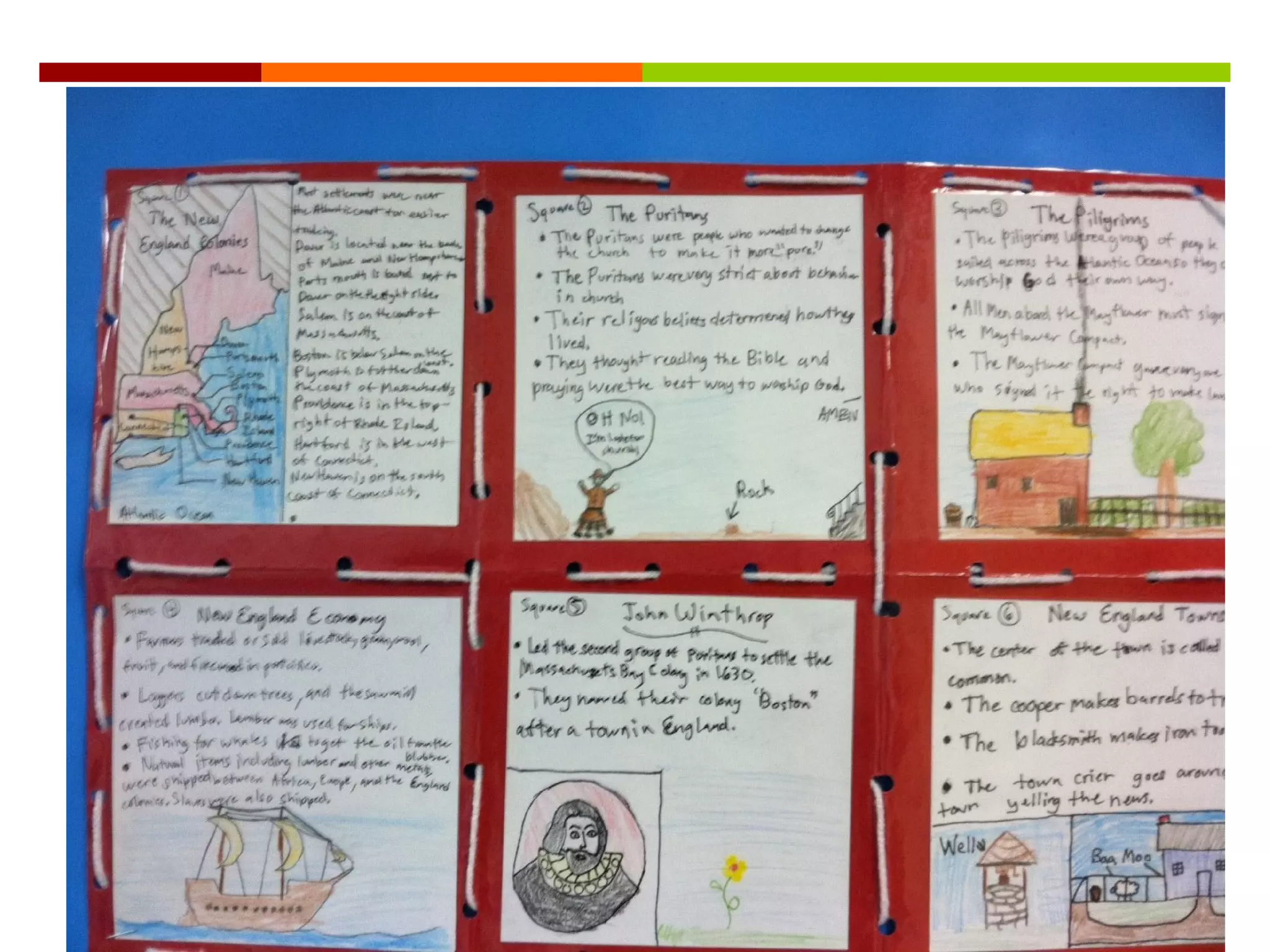
#20 Talking points : Here is an example of a 5 th grade history report that incorporates history, language arts and arts with a project on the New England colonies using different textures and mediums. Add story from book.
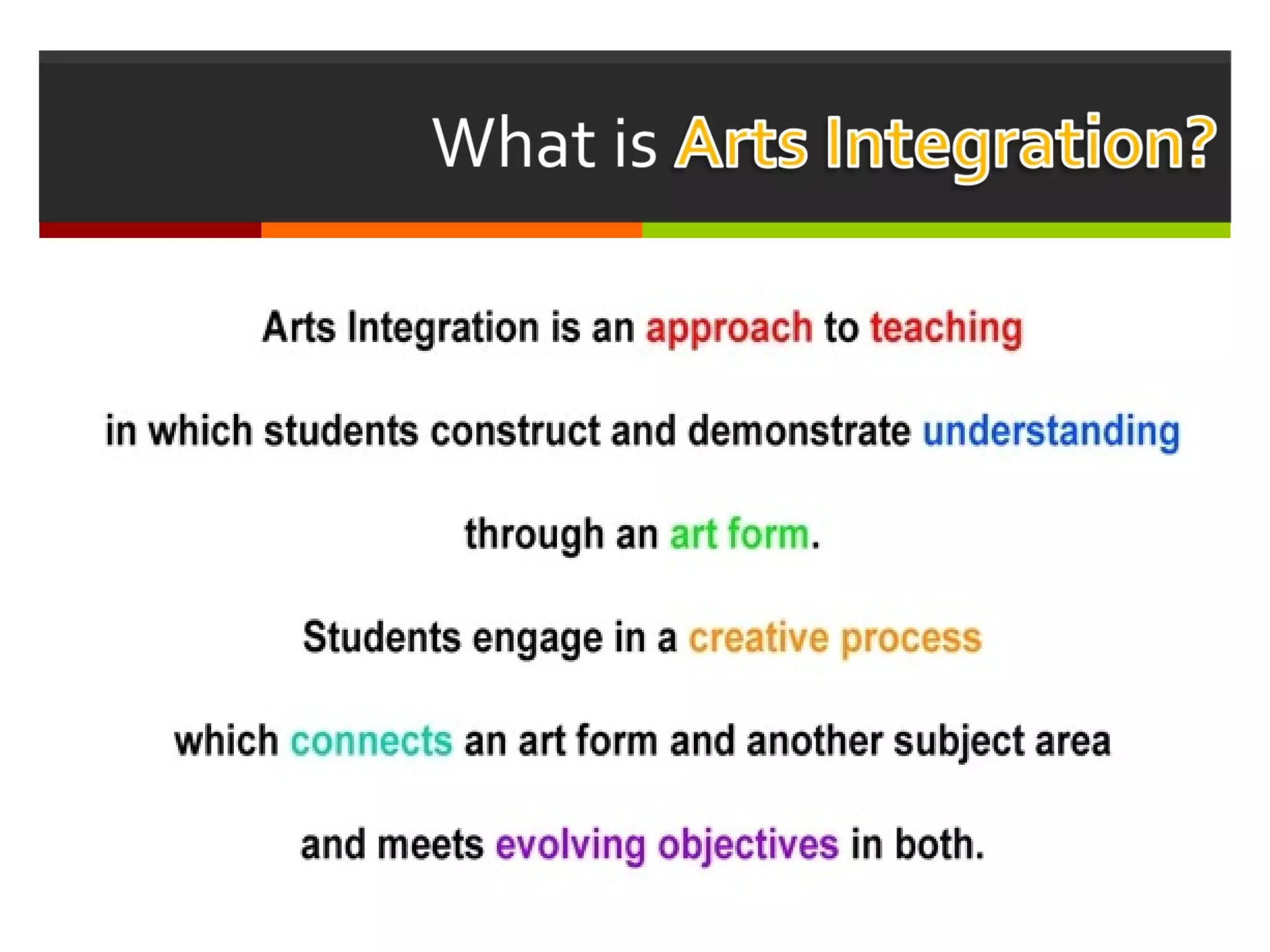
#21 9:15 am ACTIVITY - Lisa Talking Points: We are going to watch a silent video viewing artwork by Dutch post- impressionist artist Vincent van Gogh. You will be asked to reflect on specific elements of Starry Night. Stop Video at 2:18 We want students to be able to use art as a way to practice oral language, writing, math, etc. How do the skills of description transfer across content areas?
#22 Lisa 9:20 Intent : Participants will discuss how skills of description transfer across content areas. Talking Points: Share responses in table groups. Share whole group in both rooms. Curriculum Leadership Council 2011-2012 CLC General Session February 2, 2012
#23 Nora 9:22 Talk with an elbow partner – how do YOU think the arts tie into 21 st century learning? What we have not discussed is HOW THE ARTS TIE INTO THE 21 st century skills and with the Common Core. What are the 4 C’s and how do they tie in?
#24 Lisa 9:25 The Partnership for 21 st Century skills focuses on certain skills that they feel those of us in education should focus on to ensure student readiness for the workplace and post-secondary studies. Arts integration is central to the work proposed by Partnership – supporting career and life skills, tying to info and media technology, both the learning process and innovative approaches to it….as well as tying to all of the core subjects.
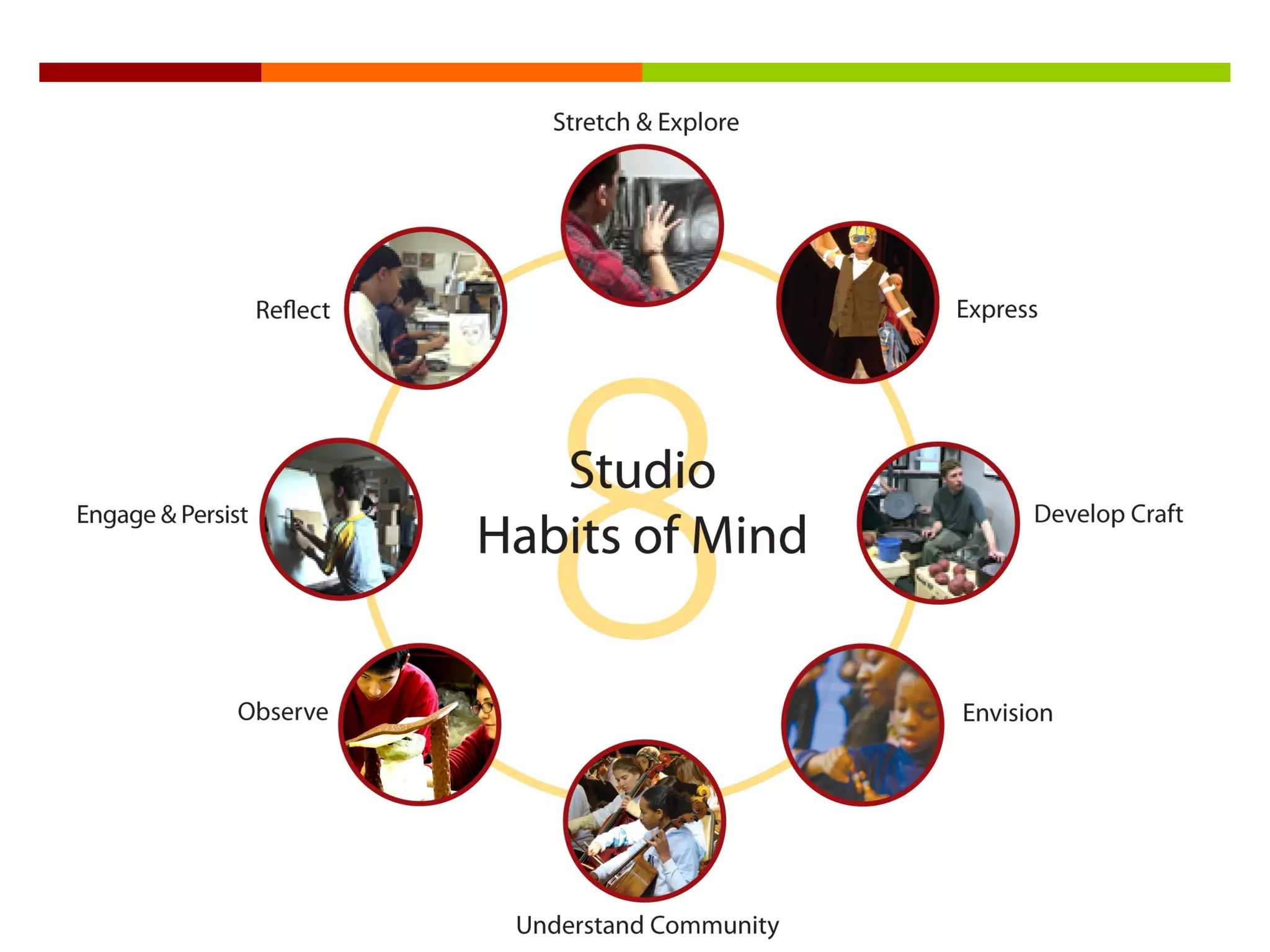
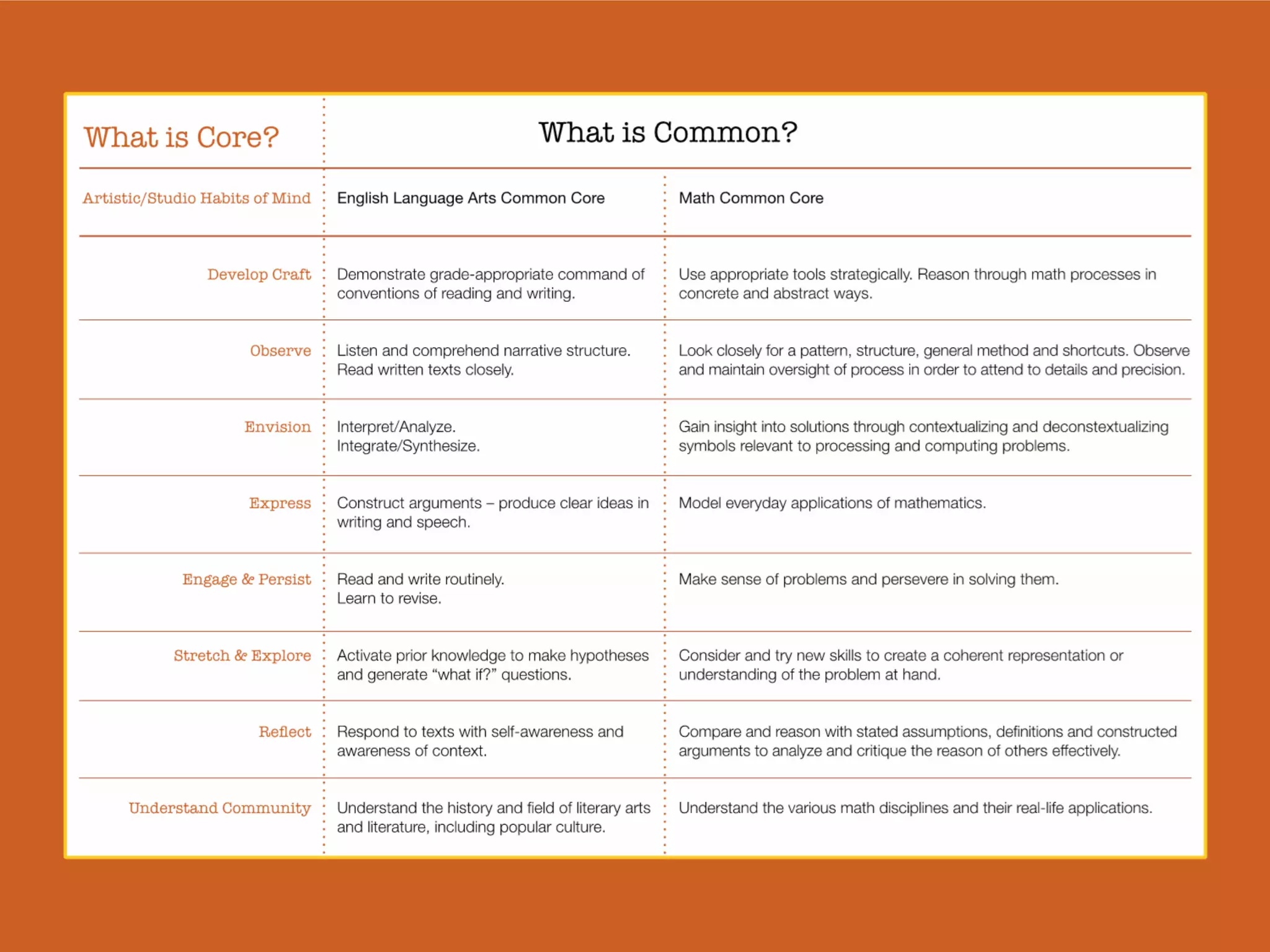
#25 9:30 Tie in how these principles out of Project ZERO have been adopted by arts teachers nationwide…and how what the arts teachers are teaching are really life skills – give examples of each, starting with developing craft…and go around the circle. Add story from book.
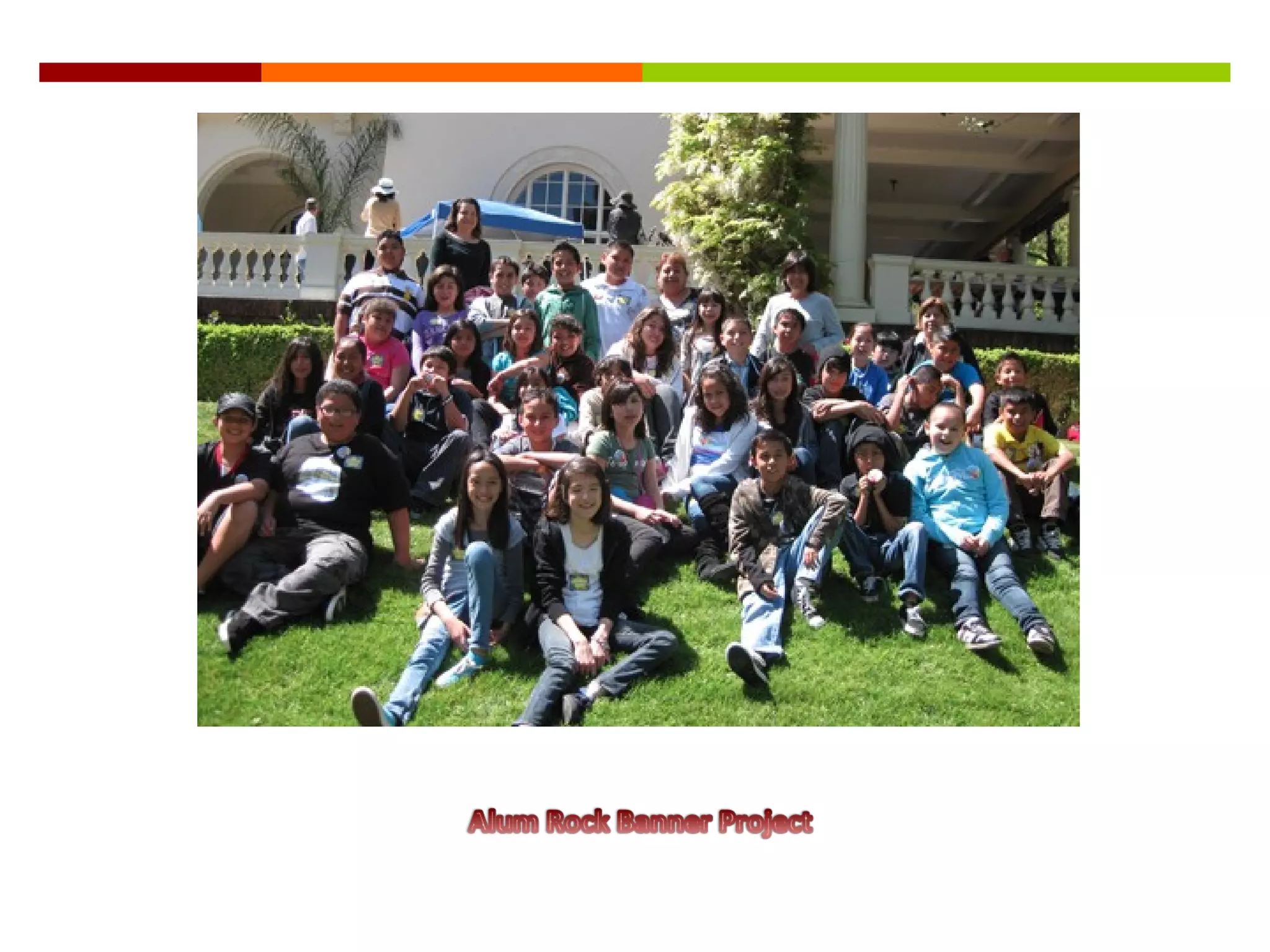
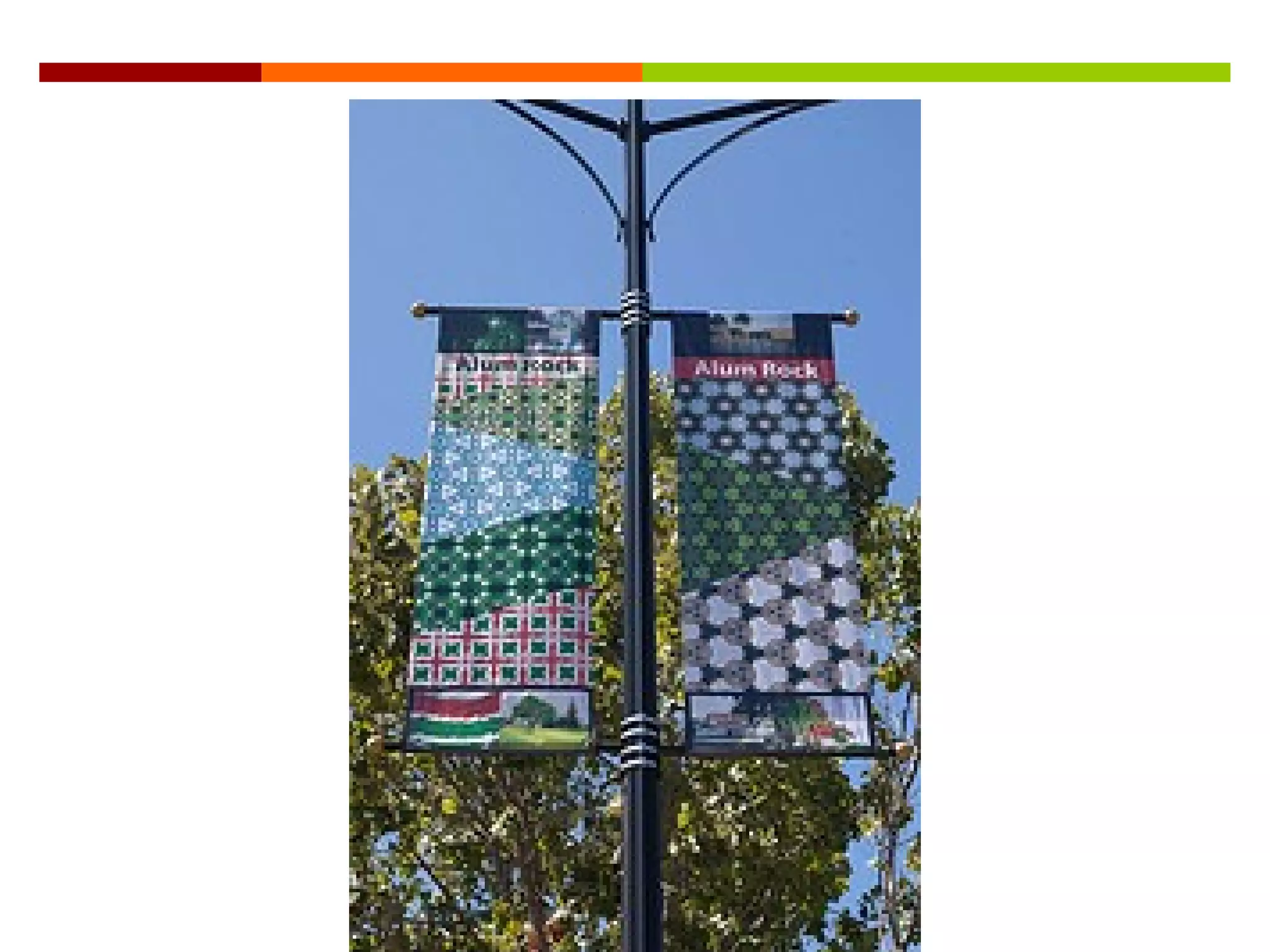
#32 Nora Talking points: Students in the Alum Rock School District were part of an interdisciplinary banner project whereby they raised the funds, made presentations in the community, shared the design process at the ArtSplash event at Montalvo last April, and then put banners up in the Alum Rock area from their unique cultural designs. Curriculum Leadership Council 2011-2012 CLC General Session February 2, 2012
#33 Nora Talking Points: The banner project integrates ideas of tessellations that can link back to the Syrian Tile Pattern Curriculum Leadership Council 2011-2012 CLC General Session February 2, 2012