Mohan Madgulkar-Compensation Management/2006
Compensation Management
Mohan Madgulkar
Mohan Madgulkar-Compensation Management/2006
Introduction to
Compensation and rewards
management
Mohan Madgulkar-Compensation Management/2006
Compensation
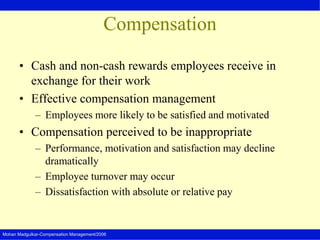
• Cash and non-cash rewards employees receive in
exchange for their work
• Effective compensation management
– Employees more likely to be satisfied and motivated
• Compensation perceived to be inappropriate
– Performance, motivation and satisfaction may decline
dramatically
– Employee turnover may occur
– Dissatisfaction with absolute or relative pay
Mohan Madgulkar-Compensation Management/2006
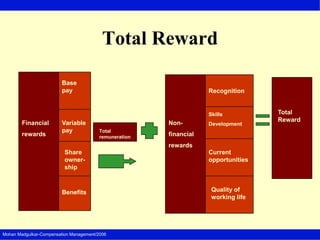
Total Reward
Financial
rewards
Base
pay
Variable
pay
Share
owner-
ship
Benefits
Total
remuneration
Non-
financial
rewards
Recognition
Skills
Development
Current
opportunities
Quality of
working life
Total
Reward
Mohan Madgulkar-Compensation Management/2006
Reward management defined
• “Reward management is concerned with the
formulation and implementation of strategies
and policies the purposes of which are to
reward people fairly, equitably and
consistently in accordance with their value to
the organisation and to help the organisation to
achieve its strategic goals”
Mohan Madgulkar-Compensation Management/2006
Objectives of Compensation
Effective
Compensation
Legal
compliance
Administrative
efficiency
Control
costs
Retain
employees
Acquire
personnel
Ensure
equity
Reward
behaviour
Mohan Madgulkar-Compensation Management/2006
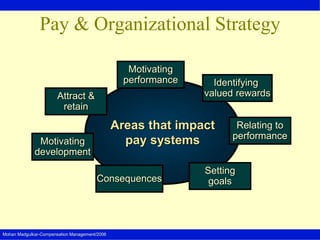
Pay & Organizational Strategy
Areas that impact
pay systems
Attract &
retain
Identifying
valued rewards
Motivating
development
Relating to
performance
Setting
goals
Consequences
Motivating
performance
Mohan Madgulkar-Compensation Management/2006
The concept
• Wages and salaries constitute the greatest single cost
of doing business.
• Establishing equitable and competitive pay structure
is important from attracting point of view . the
organization can also hold out the possibility of
varying compensation, the payment of which is
dependant on specific behavior. Supplementary pay
plans ( fringe benefits ) can retain the employees in
the organization on a long term basis
Mohan Madgulkar-Compensation Management/2006
The concept
• Development, implementation, maintenance ,
communication and evaluation of reward
processes
• Assessment of relative job values, the design
and management of pay structures,
performance management, paying for
performance, competence or skills , the
provision of employee benefits and pensions,
management of reward procedures
Mohan Madgulkar-Compensation Management/2006
Aims of Compensation and reward
management
• Support the achievement of organizations strategic and short
term objectives
• Support culture management and change
• Drive and support desired behavior
• Encourage value added performance
• Promote continuous development
• Compete in employment market
• Motivate all members of the organization
• Promote teamwork
• Promote flexibility
• Provide value for money
• Achieve fairness and equity

Reward Management.ppt

  • 1.
  • 2.
    Mohan Madgulkar-Compensation Management/2006 Introductionto Compensation and rewards management
  • 3.
    Mohan Madgulkar-Compensation Management/2006 Compensation •Cash and non-cash rewards employees receive in exchange for their work • Effective compensation management – Employees more likely to be satisfied and motivated • Compensation perceived to be inappropriate – Performance, motivation and satisfaction may decline dramatically – Employee turnover may occur – Dissatisfaction with absolute or relative pay
  • 4.
    Mohan Madgulkar-Compensation Management/2006 TotalReward Financial rewards Base pay Variable pay Share owner- ship Benefits Total remuneration Non- financial rewards Recognition Skills Development Current opportunities Quality of working life Total Reward
  • 5.
    Mohan Madgulkar-Compensation Management/2006 Rewardmanagement defined • “Reward management is concerned with the formulation and implementation of strategies and policies the purposes of which are to reward people fairly, equitably and consistently in accordance with their value to the organisation and to help the organisation to achieve its strategic goals”
  • 6.
    Mohan Madgulkar-Compensation Management/2006 Objectivesof Compensation Effective Compensation Legal compliance Administrative efficiency Control costs Retain employees Acquire personnel Ensure equity Reward behaviour
  • 7.
    Mohan Madgulkar-Compensation Management/2006 Pay& Organizational Strategy Areas that impact pay systems Attract & retain Identifying valued rewards Motivating development Relating to performance Setting goals Consequences Motivating performance
  • 8.
    Mohan Madgulkar-Compensation Management/2006 Theconcept • Wages and salaries constitute the greatest single cost of doing business. • Establishing equitable and competitive pay structure is important from attracting point of view . the organization can also hold out the possibility of varying compensation, the payment of which is dependant on specific behavior. Supplementary pay plans ( fringe benefits ) can retain the employees in the organization on a long term basis
  • 9.
    Mohan Madgulkar-Compensation Management/2006 Theconcept • Development, implementation, maintenance , communication and evaluation of reward processes • Assessment of relative job values, the design and management of pay structures, performance management, paying for performance, competence or skills , the provision of employee benefits and pensions, management of reward procedures
  • 10.
    Mohan Madgulkar-Compensation Management/2006 Aimsof Compensation and reward management • Support the achievement of organizations strategic and short term objectives • Support culture management and change • Drive and support desired behavior • Encourage value added performance • Promote continuous development • Compete in employment market • Motivate all members of the organization • Promote teamwork • Promote flexibility • Provide value for money • Achieve fairness and equity