REWARD
MANAGEMENT
presentrd by : Nadiya Masood
Introduction to
Reward
Management
Reward management is the
process of designing and
implementing strategies to reward
employees fairly and consistently
in alignment with organizational
goals.
Objective: To attract,
motivate, and retain
employees.
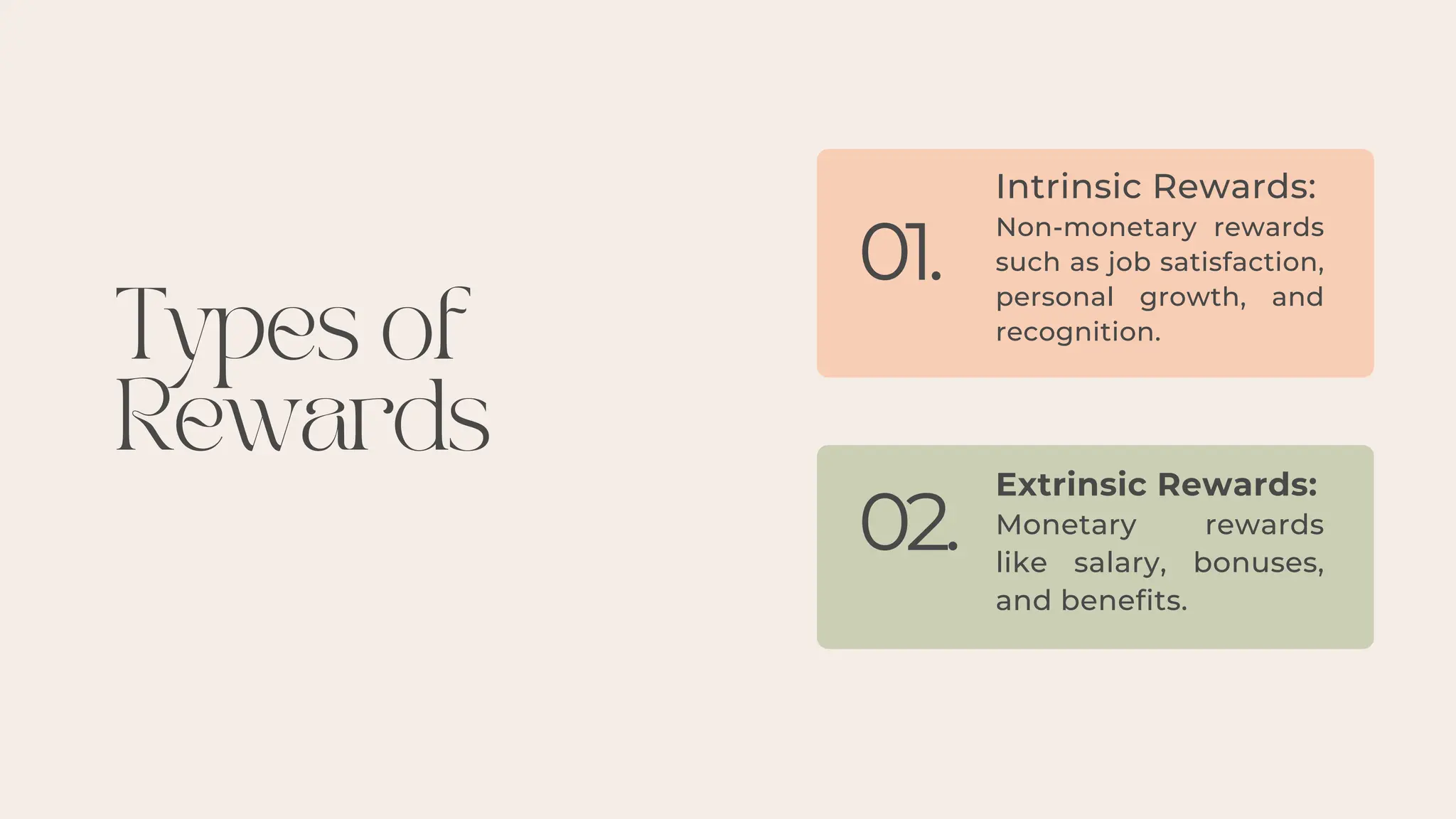
Types of
Rewards
01.
02.
Intrinsic Rewards:
Non-monetary rewards
such as job satisfaction,
personal growth, and
recognition.
Extrinsic Rewards:
Monetary rewards
like salary, bonuses,
and benefits.
Monetary
Rewards
Examples: Benefits:
Salary,
bonuses,
incentives,
profit-sharing.
Increases
employee
satisfaction
and financial
security.
Challenges:
Can lead to
competition
rather than
collaboration
.
Non-Monetary
Rewards
Examples: Benefits:
Recognition,
flexible
working hours,
opportunities
for personal
growth.
Improves
employee
engagement,
fosters loyalty.
Challenges:
Harder to
measure and
standardize.
Designing an
Effective
Reward
System
Key Considerations:
Align with company goals.
Ensure fairness and transparency.
Cater to different employee needs and
preferences.
Involvement of Employees:
Getting employee input can improve
satisfaction with rewards.
Challenges in
Reward
Management
Equity and
Fairness:
Budget
Constraints:
Ensuring all
employees feel
equally valued.
Balancing
rewards with
financial
realities.
Retention vs.
Motivation:
Keeping long-
term
employees
motivated.
Conclusion
Reward management is essential for maintaining a
motivated and engaged workforce.
Final Thought: An effective reward system aligns
with both organizational objectives and employee
needs, fostering mutual growth.
ANY
QUESTIONS
THANK YOU
VERY MUCH!

Reward Management in education for improve learning