1
FEDERAL TEACHING HOSPITAL KATSINA.
DEPARTMENT OF OBSTETRICS AND
GYNAECOLOGY.
Procedural Presentation On
MANAGEMENT OF RETAINED PLACENTA
By
Dr Nafisa Abubakar Haruna {Registrar}
Supervised by
Dr Shehu Jamiu {Senior Registrar}
8th
/02/ 2024
2
outline
 Introduction
 Definition
 Types
 Predisposing factors
 management
 Complications
 Conclusion
 Reference
3
Introduction
 Retained placenta is a recognized cause of
primary post partum haemorrhage
associated with increased risk of maternal
morbidity and mortality
 Incidence is based on the time chosen, in
90% placenta delivers within 15mins, in 96%
within 30mins and within 60mins in 98%.
 Delivery timing of placenta depends on the
type of management .
 Treatment can be medical or surgical
4
definition
 Retained placenta: Failure to deliver
the placenta within 30mins after
delivery of the fetus.
 There is a 10 fold increased in the risk
of hemorrhage and the chance of
spontaneous delivery of the placenta
decreases if the third stage exceed
30mins.
5
Types & risk factors
Trapped placenta Placenta adherence Placenta accreta
Premature
contraction of lower
uterine segment
Preterm labour preeclampsia
Iv ergometrine Uterine fibroids miscarriage
Full bladder Induction of labour Uterine anomaly
Oxytocin
augmentation
Uterine scar
6
management
 Resuscitation
 History
 Examination
 Investigations
 Treatment
7
Treatment
 Managing underlying causes
 Controlled cord traction
 Manual removal of placenta
 Instrument extraction
8
Manual removal of
placenta
 Is one of the treatment modalities , a
life saving procedure associated with
maternal morbidity and mortality if
not done carefully.
 Should be done by trained health
care provider in the operating room
under anaesthesia.
9
Manual removal placenta
Pre- procedure:
 Counsel
 Consent
 Investigations
 Book theatre and inform anesthetist
 Empty urinary bladder
 Pre -induction broad spectrum
antibiotics
10
procedure
 Transfer the patient to theatre
 Provide general anaesthesia that relaxes the
uterus
 Place patient in lithotomy position
 Surgeons scrub and gown
 Clean and drape patient
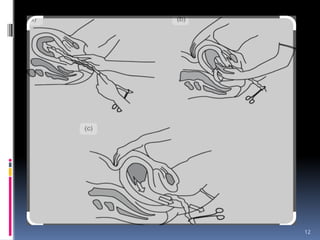
 Attempt controlled cord traction
 Hold umbilical cord with the left hand and
insert the right hand {cone shaped} into the
vagina, trace the placenta along the cord to its
insertion in the uterus
11
Cont….
 Gently use the cone shaped hand to dilate
the cervix incase its partially closed
 Drop the umbilical cord on the left hand
and move the hand to the anterior
abdominal wall to grasp and stabilize the
uterine fundus
 Located the cleavage plane between the
placenta and the uterus with the ulnar
border of the right hand
 With a see-saw movement ,gradually shell
the placenta from the uterus
12
13
Cont…
 Hold the placenta in the cupped right hand and
provide counter traction on the uterus using the
hand on the anterior abdominal wall while
withdrawing the right hand holding the placenta
from the uterus
 After complete removal , hand over the placenta to
assistant to examine for completeness
 Ovum forceps maybe used to explore the uterus
if there is any missing cotyledon or part of the
membranes.
 Examine patient for genital tract tear and repair
 Clean patient, reposition and revert anaesthesia
14
Post -procedure
 Administer 10 i.u oxytocin IV
 Set up high dose oxytocin infusion
over 4-6hrs
 Parenteral antibiotics and IVF for 24-
48hrs
 Transfuse appropriately
 Monitor for vital signs closely
 Monitor for vaginal bleeding
 Debrief the woman.
15
complications
Early late
Post partum Hemorrhage Uterine synechia
Uterine perforation Secondary infertility
Infection Chronic pelvic pain
Uterine Inversion
16
conclusion
 Active management of third stage of
labour can prevent and reduce the
incidence of retained placenta
 Manual removal of placenta is a life
saving procedure that must be
known by all trainees
17
Reference
 Paterson-brown S. Obstetrics emergencies In: Edmond D, K(ed) dewhurst
textbook of Obstetrics and Gynaecology. 9th
edition Oxford: John Wiley &
Sons Ltd; 2018. 336-353.
 Weeks AD. Retained placenta. In:Thomas FB,Andrew A.C,Sabaratnam A
(eds.) Munro Kerr’s Operative Obstetrics, 12th
ed.London :Saunders
Elsevier Ltd ;2014:207-10.
 Konar H.DC Dutta’s Textbook of obstetrics 7th
ed.New Delhi : Jaypee
Brothers Medical Publishers LTD; 2013:p418-9
 Andrew DW. The Retained Placenta. Best practice & Research Clinical
Obstetrics and Gynaecology 2008;22(6); 1103-1117
 Lo Lawani , Basic steps in obstetrics and gynaecological procedures 2nd
edition 2021: 244-247
18
Thank you

retained placenta presentation_030424.pptx

  • 1.
    1 FEDERAL TEACHING HOSPITALKATSINA. DEPARTMENT OF OBSTETRICS AND GYNAECOLOGY. Procedural Presentation On MANAGEMENT OF RETAINED PLACENTA By Dr Nafisa Abubakar Haruna {Registrar} Supervised by Dr Shehu Jamiu {Senior Registrar} 8th /02/ 2024
  • 2.
    2 outline  Introduction  Definition Types  Predisposing factors  management  Complications  Conclusion  Reference
  • 3.
    3 Introduction  Retained placentais a recognized cause of primary post partum haemorrhage associated with increased risk of maternal morbidity and mortality  Incidence is based on the time chosen, in 90% placenta delivers within 15mins, in 96% within 30mins and within 60mins in 98%.  Delivery timing of placenta depends on the type of management .  Treatment can be medical or surgical
  • 4.
    4 definition  Retained placenta:Failure to deliver the placenta within 30mins after delivery of the fetus.  There is a 10 fold increased in the risk of hemorrhage and the chance of spontaneous delivery of the placenta decreases if the third stage exceed 30mins.
  • 5.
    5 Types & riskfactors Trapped placenta Placenta adherence Placenta accreta Premature contraction of lower uterine segment Preterm labour preeclampsia Iv ergometrine Uterine fibroids miscarriage Full bladder Induction of labour Uterine anomaly Oxytocin augmentation Uterine scar
  • 6.
    6 management  Resuscitation  History Examination  Investigations  Treatment
  • 7.
    7 Treatment  Managing underlyingcauses  Controlled cord traction  Manual removal of placenta  Instrument extraction
  • 8.
    8 Manual removal of placenta Is one of the treatment modalities , a life saving procedure associated with maternal morbidity and mortality if not done carefully.  Should be done by trained health care provider in the operating room under anaesthesia.
  • 9.
    9 Manual removal placenta Pre-procedure:  Counsel  Consent  Investigations  Book theatre and inform anesthetist  Empty urinary bladder  Pre -induction broad spectrum antibiotics
  • 10.
    10 procedure  Transfer thepatient to theatre  Provide general anaesthesia that relaxes the uterus  Place patient in lithotomy position  Surgeons scrub and gown  Clean and drape patient  Attempt controlled cord traction  Hold umbilical cord with the left hand and insert the right hand {cone shaped} into the vagina, trace the placenta along the cord to its insertion in the uterus
  • 11.
    11 Cont….  Gently usethe cone shaped hand to dilate the cervix incase its partially closed  Drop the umbilical cord on the left hand and move the hand to the anterior abdominal wall to grasp and stabilize the uterine fundus  Located the cleavage plane between the placenta and the uterus with the ulnar border of the right hand  With a see-saw movement ,gradually shell the placenta from the uterus
  • 12.
  • 13.
    13 Cont…  Hold theplacenta in the cupped right hand and provide counter traction on the uterus using the hand on the anterior abdominal wall while withdrawing the right hand holding the placenta from the uterus  After complete removal , hand over the placenta to assistant to examine for completeness  Ovum forceps maybe used to explore the uterus if there is any missing cotyledon or part of the membranes.  Examine patient for genital tract tear and repair  Clean patient, reposition and revert anaesthesia
  • 14.
    14 Post -procedure  Administer10 i.u oxytocin IV  Set up high dose oxytocin infusion over 4-6hrs  Parenteral antibiotics and IVF for 24- 48hrs  Transfuse appropriately  Monitor for vital signs closely  Monitor for vaginal bleeding  Debrief the woman.
  • 15.
    15 complications Early late Post partumHemorrhage Uterine synechia Uterine perforation Secondary infertility Infection Chronic pelvic pain Uterine Inversion
  • 16.
    16 conclusion  Active managementof third stage of labour can prevent and reduce the incidence of retained placenta  Manual removal of placenta is a life saving procedure that must be known by all trainees
  • 17.
    17 Reference  Paterson-brown S.Obstetrics emergencies In: Edmond D, K(ed) dewhurst textbook of Obstetrics and Gynaecology. 9th edition Oxford: John Wiley & Sons Ltd; 2018. 336-353.  Weeks AD. Retained placenta. In:Thomas FB,Andrew A.C,Sabaratnam A (eds.) Munro Kerr’s Operative Obstetrics, 12th ed.London :Saunders Elsevier Ltd ;2014:207-10.  Konar H.DC Dutta’s Textbook of obstetrics 7th ed.New Delhi : Jaypee Brothers Medical Publishers LTD; 2013:p418-9  Andrew DW. The Retained Placenta. Best practice & Research Clinical Obstetrics and Gynaecology 2008;22(6); 1103-1117  Lo Lawani , Basic steps in obstetrics and gynaecological procedures 2nd edition 2021: 244-247
  • 18.